





Month: December 2019
Santa Trinita, another look
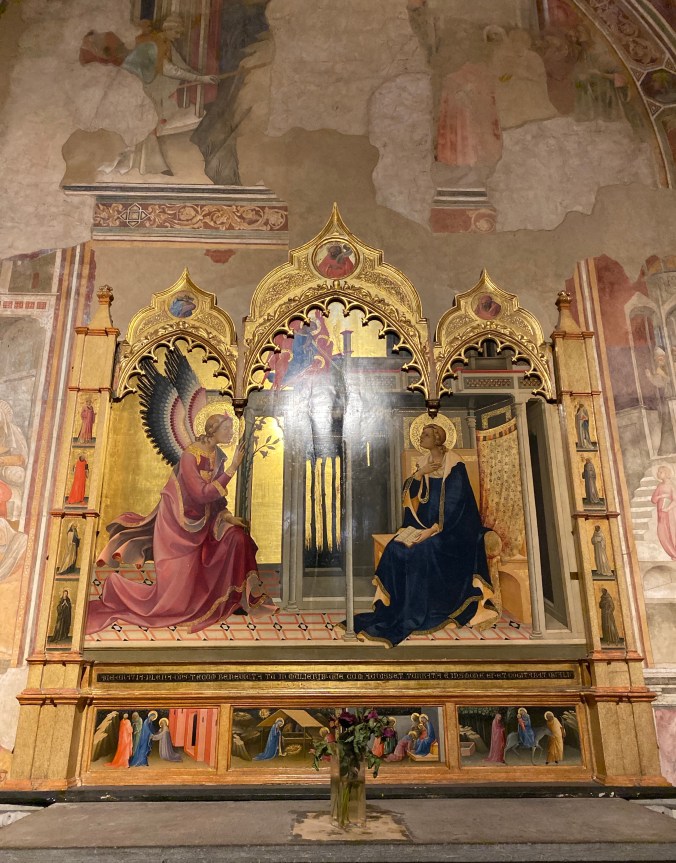
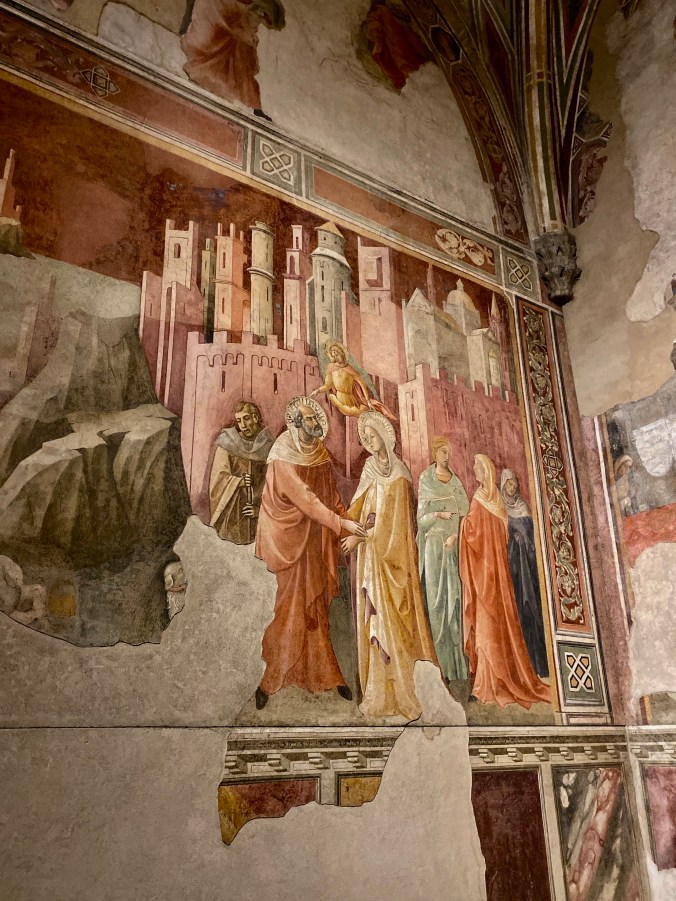
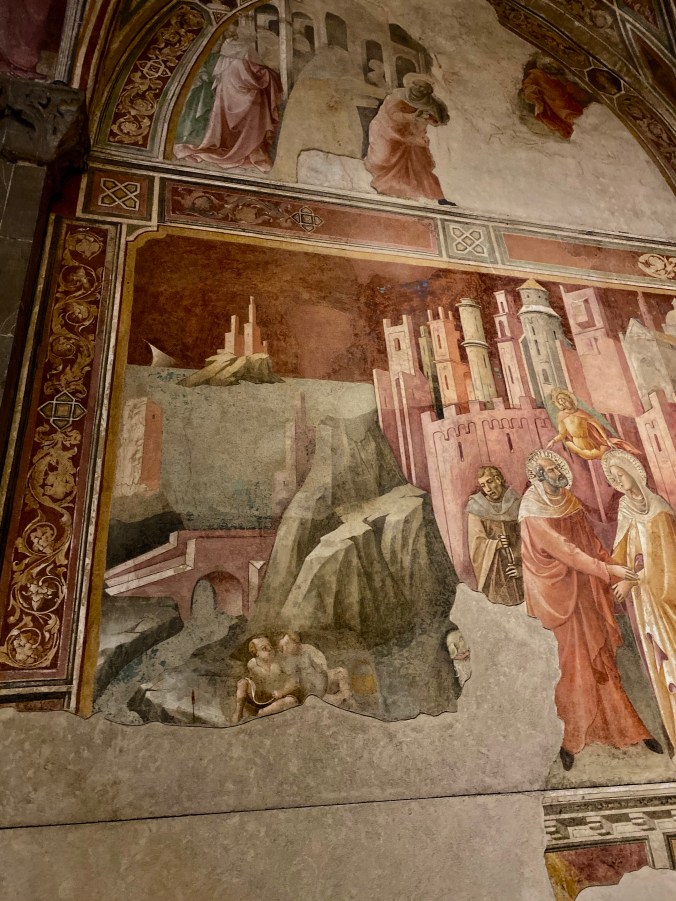
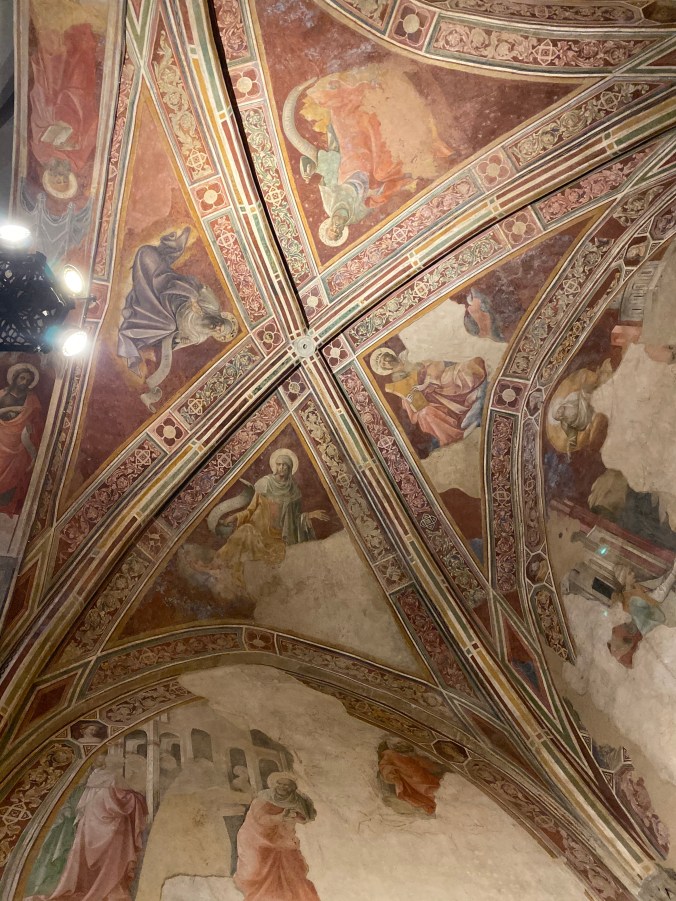
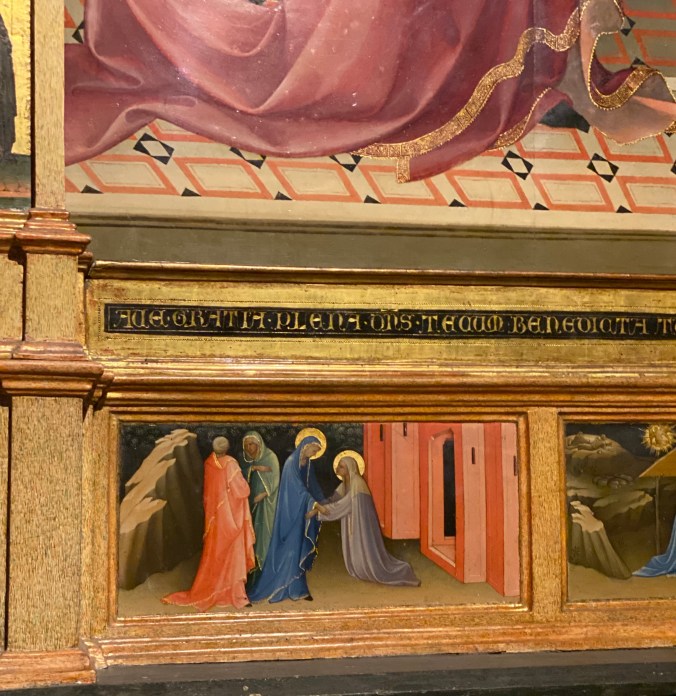
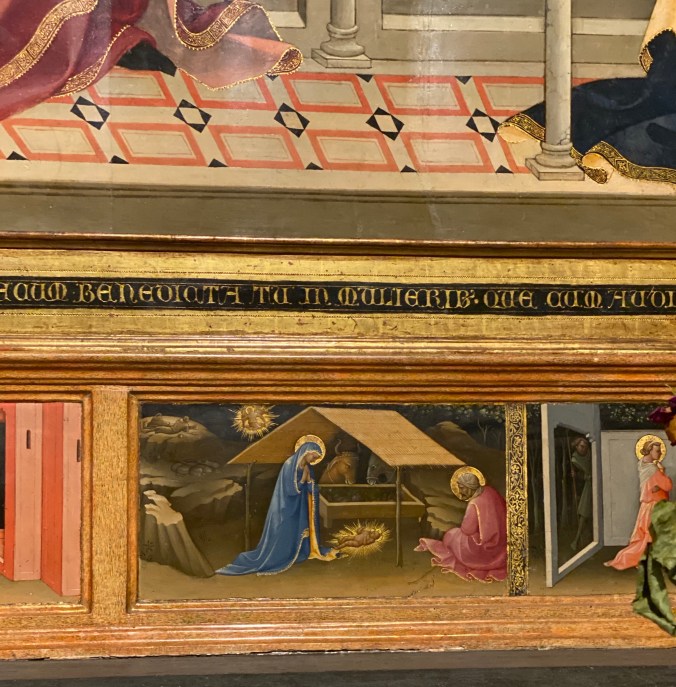
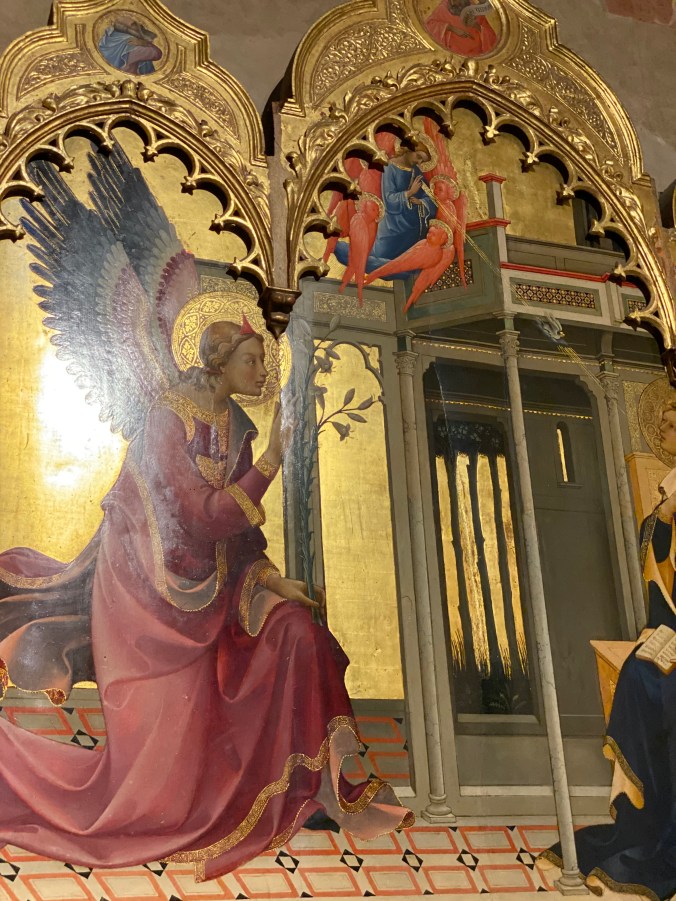
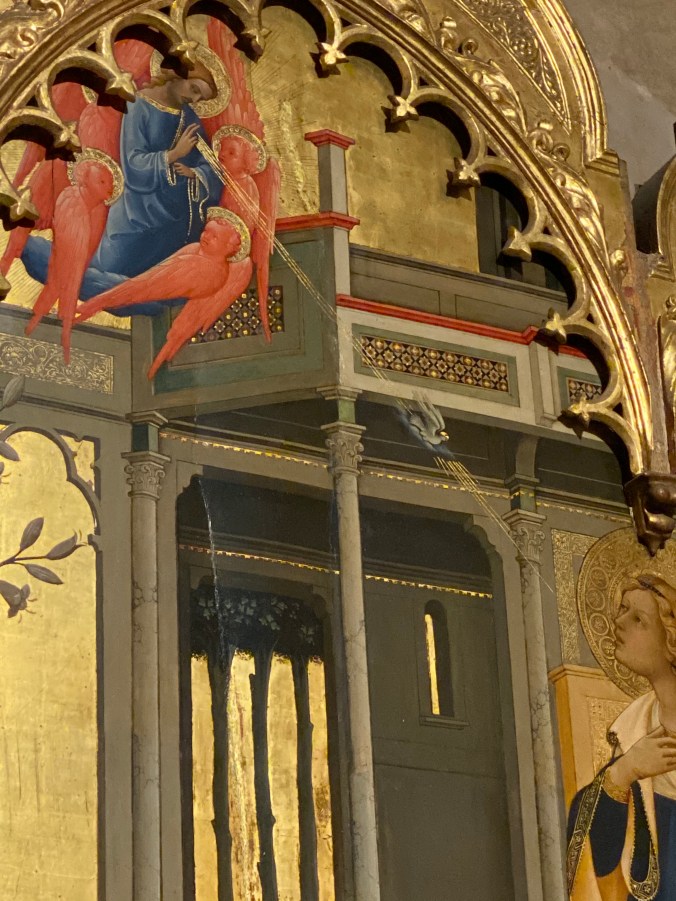
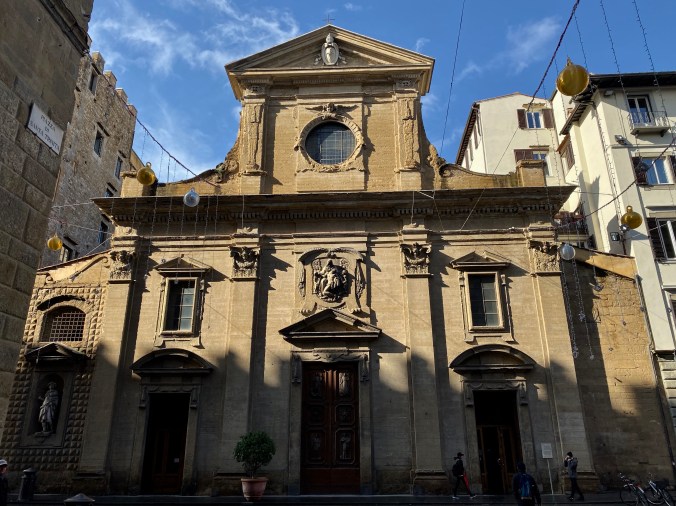
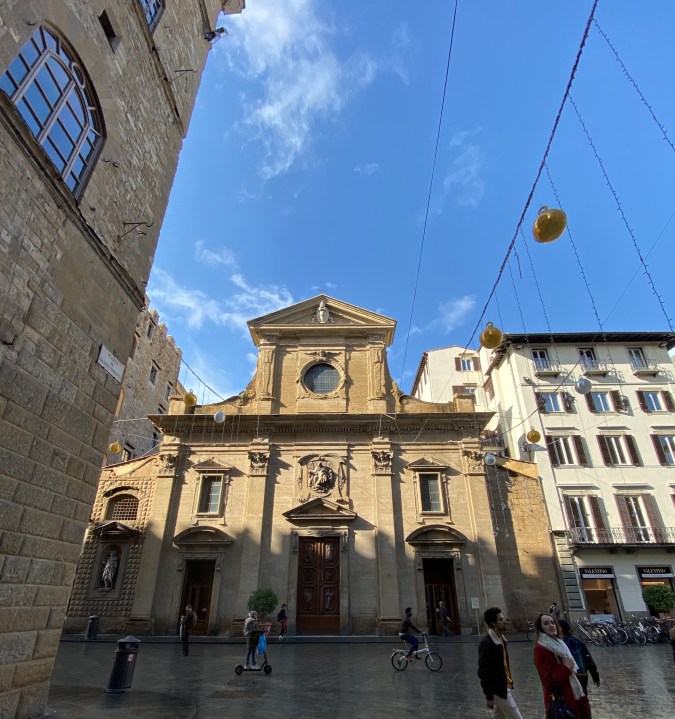
Recently I posted about Santa Trinita and I just had another chance to pay it another visit. It was a sunny day following a week of rain, and it just felt good to be out and in the sunshine. You might notice that the city of Florence has begun decorating for Christmas already!
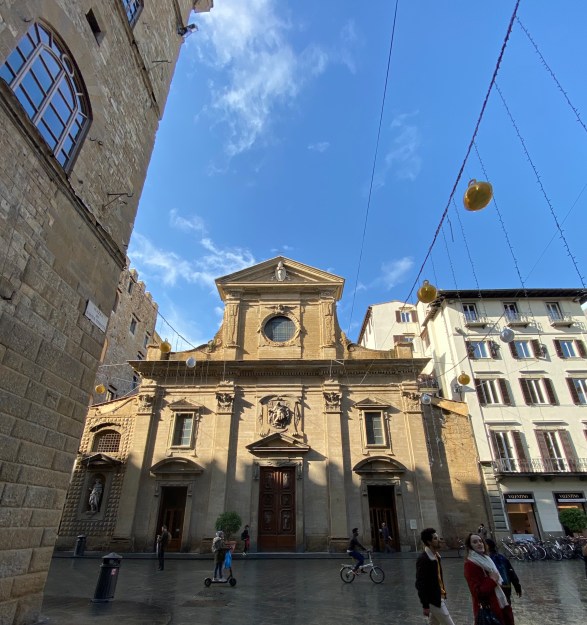
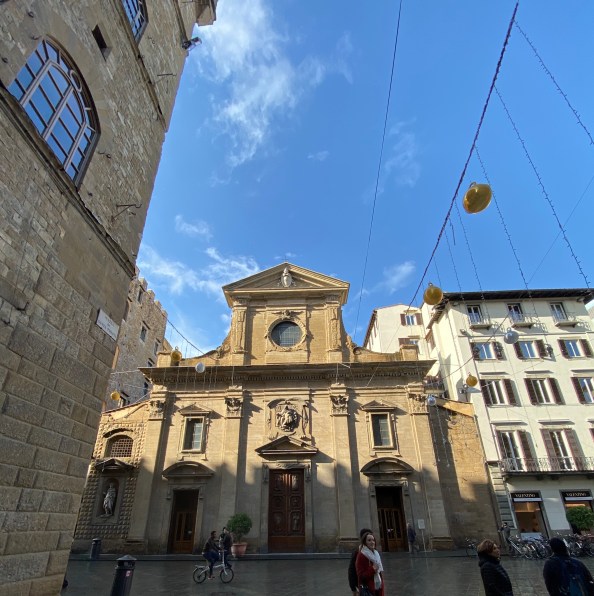
The Mannerist facade by Buontalenti:

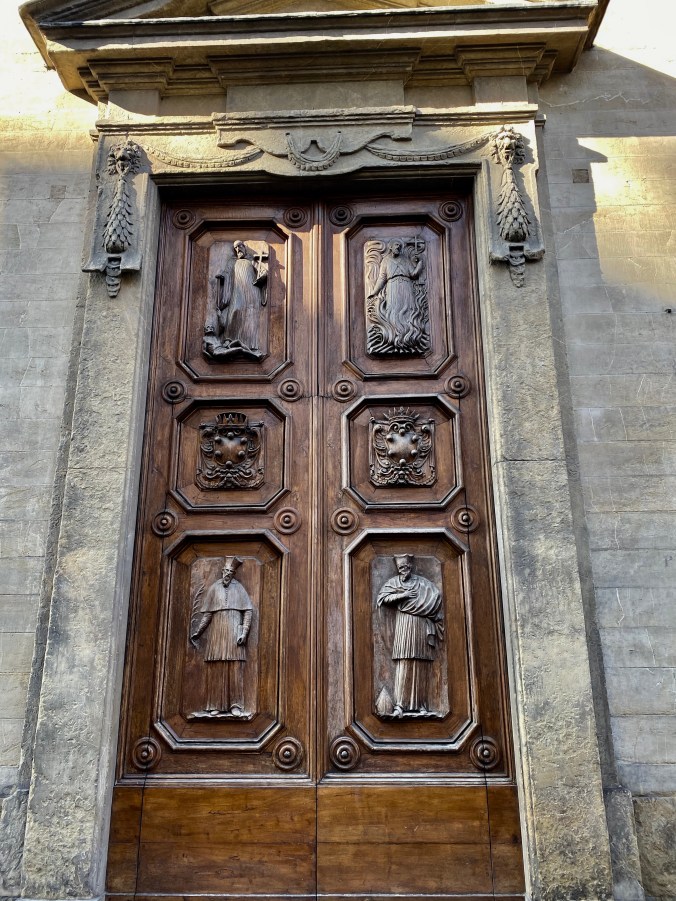
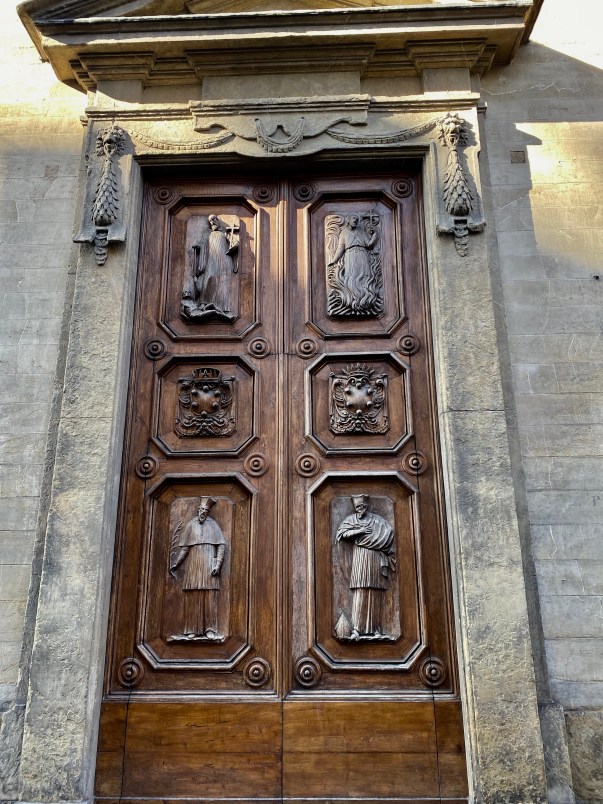
The beautifully carved central doors:
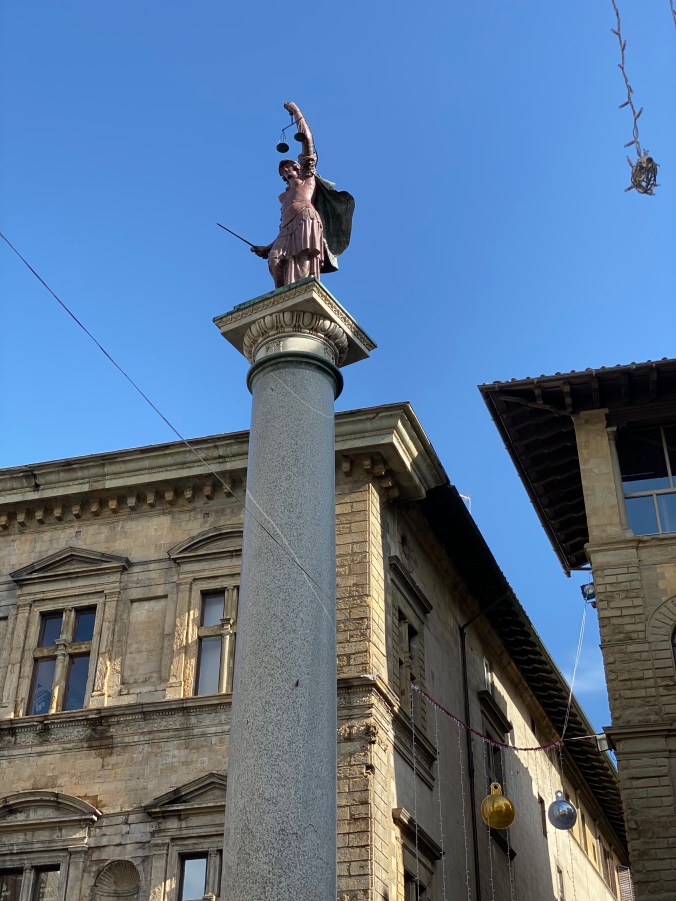
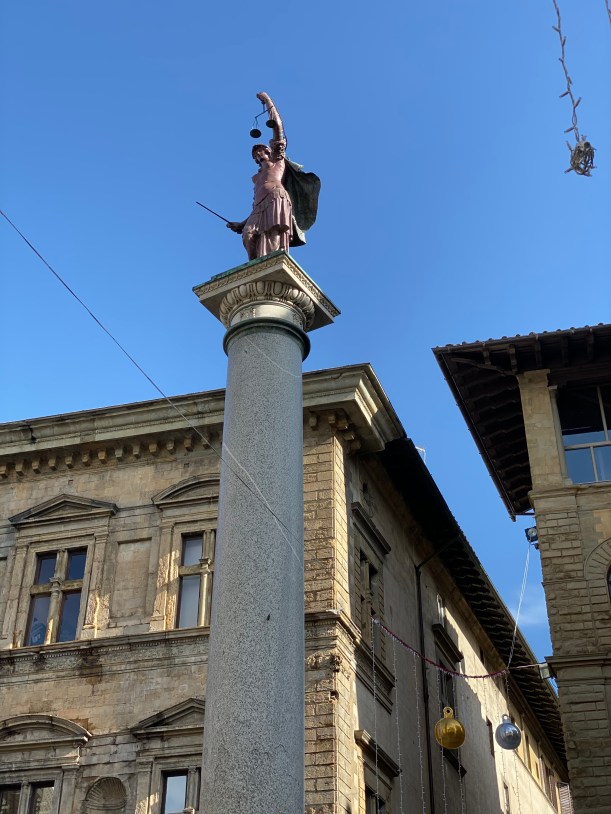
You must never forget the fabulous column and Roman statue in the piazza outside the church:
Once more, the facade:
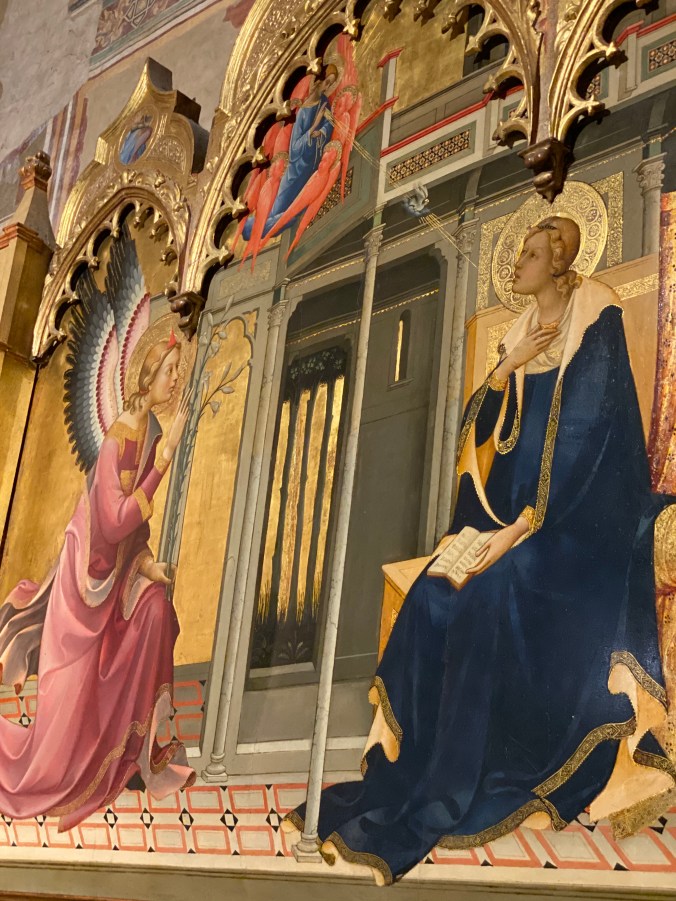
Inside the church we are fortunate to see the extant old Romanesque facade of the church. Luckily for posterity, they didn’t destroy it when they constructed the new front for the church:

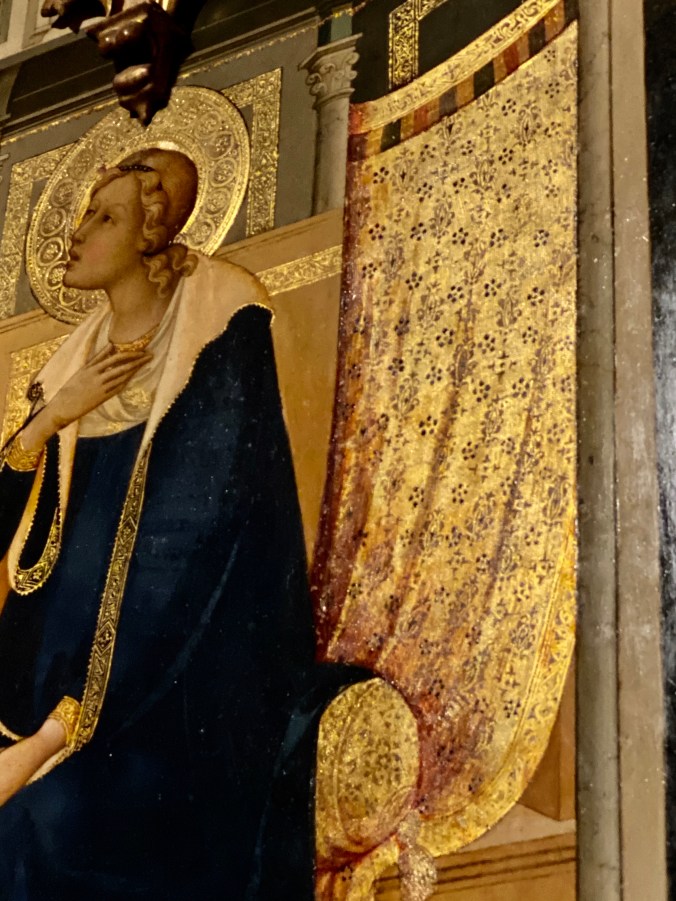
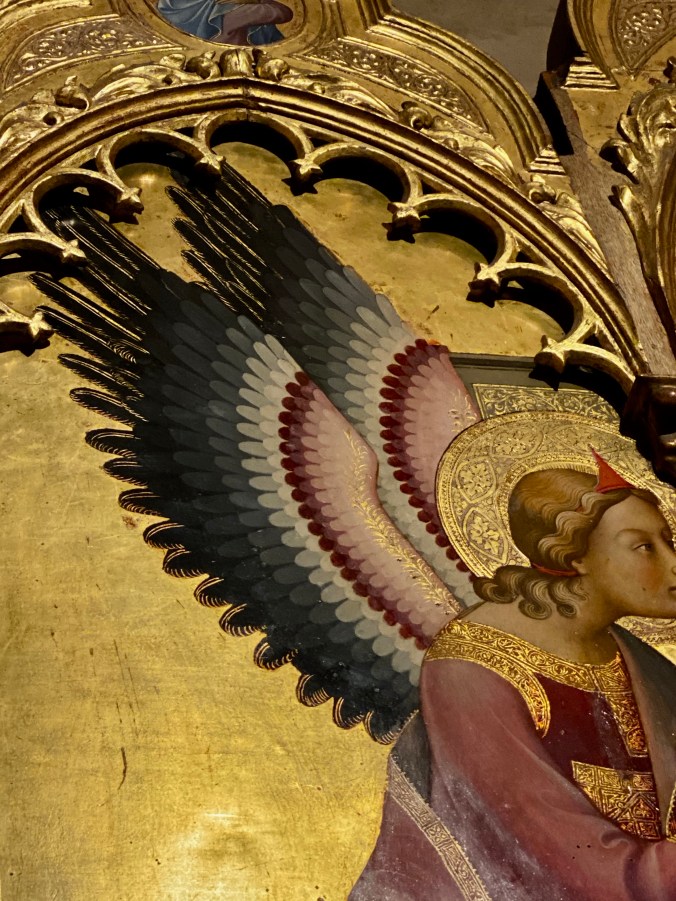
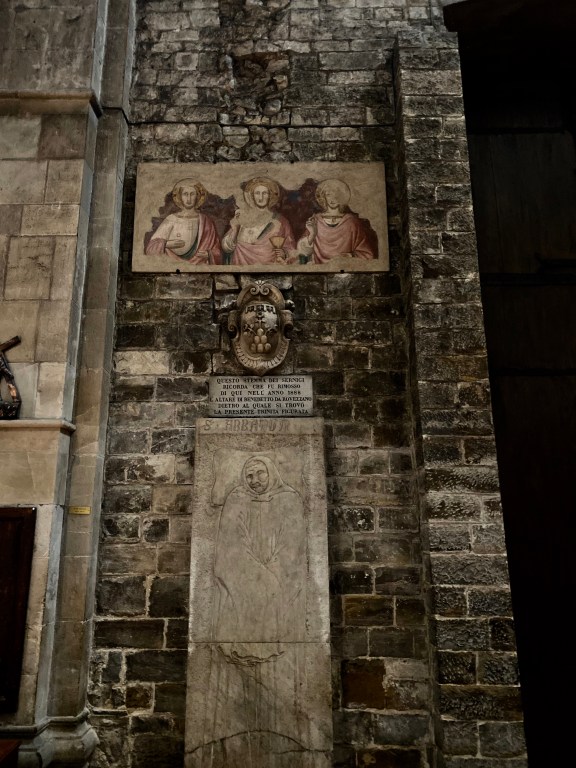
One either side of the central door, inside the church are these tombstones and paintings:
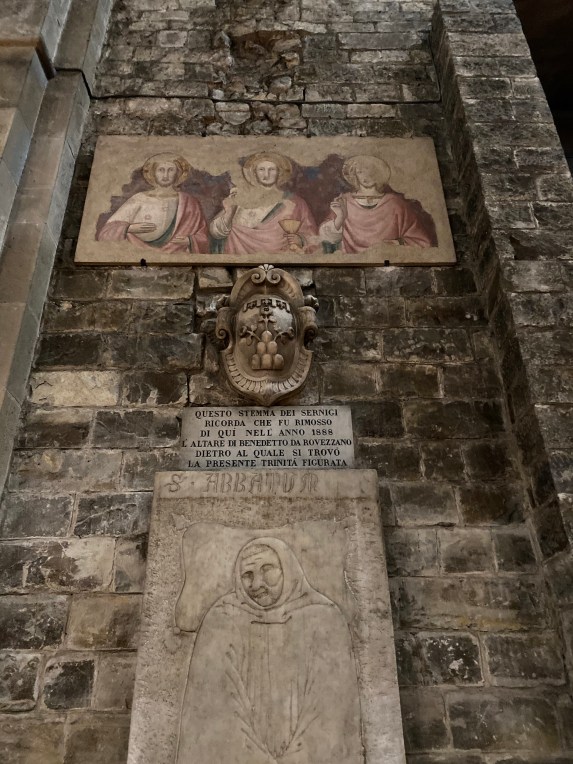
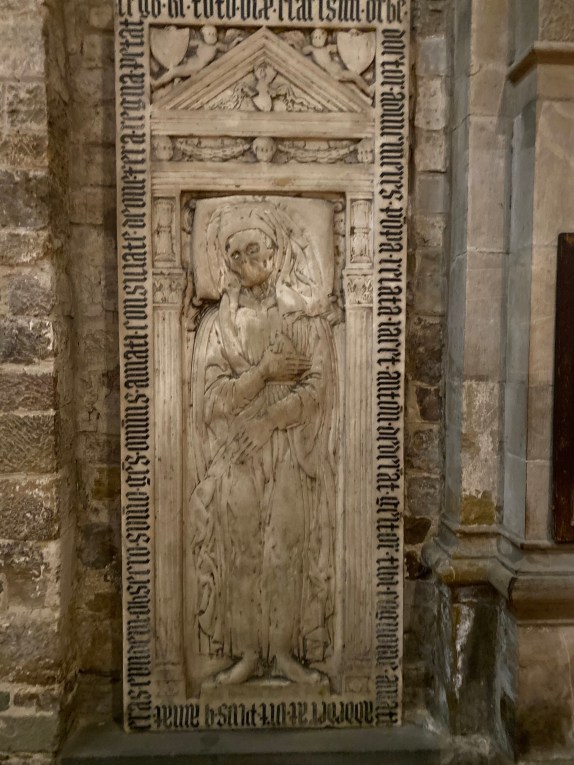
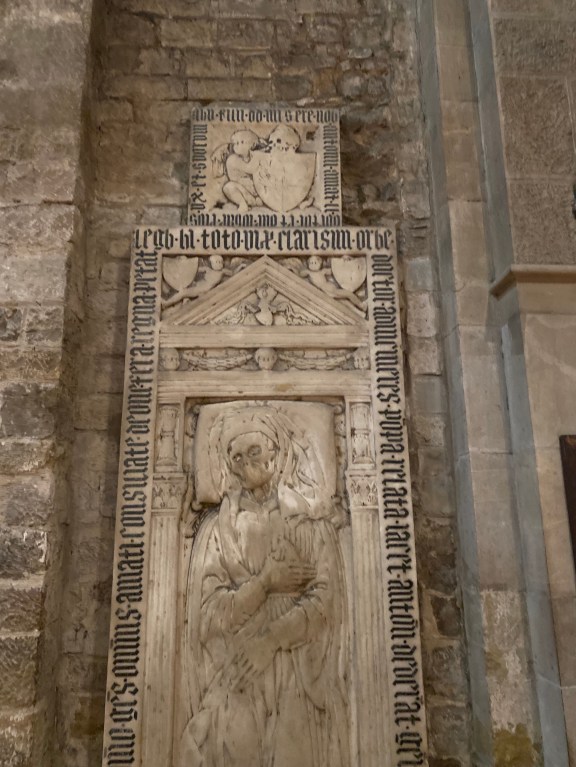
The interior:


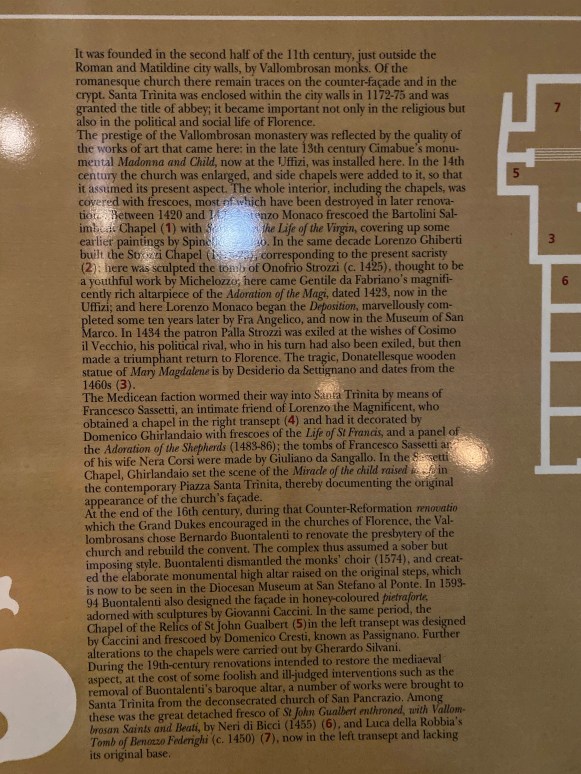
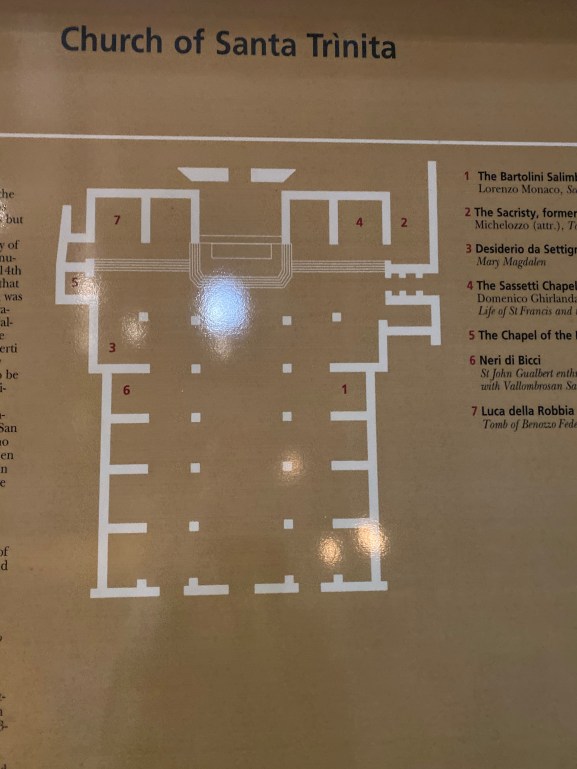
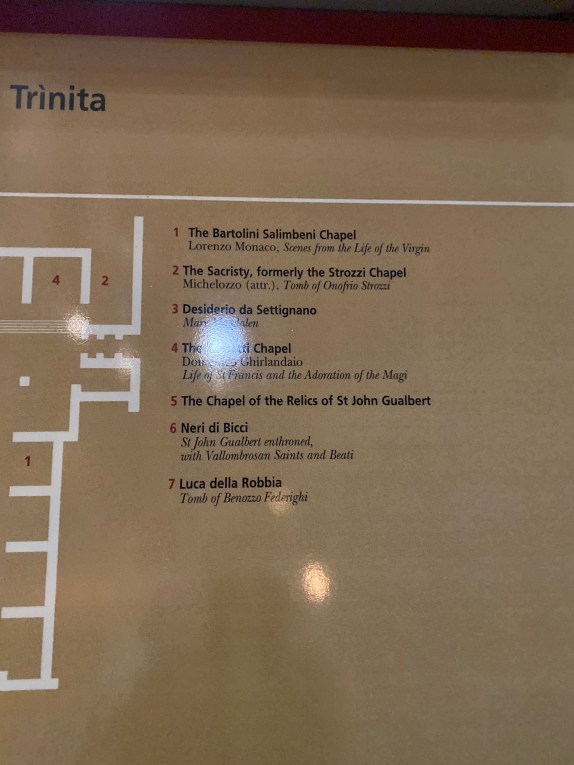
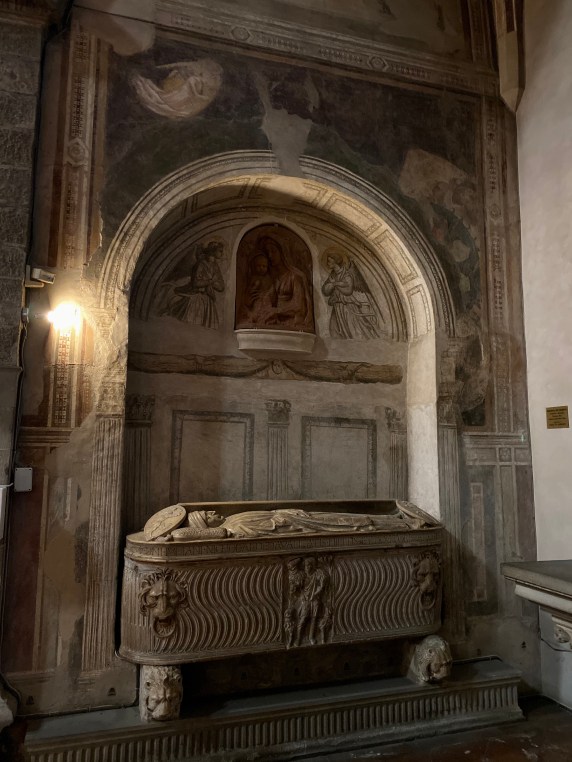
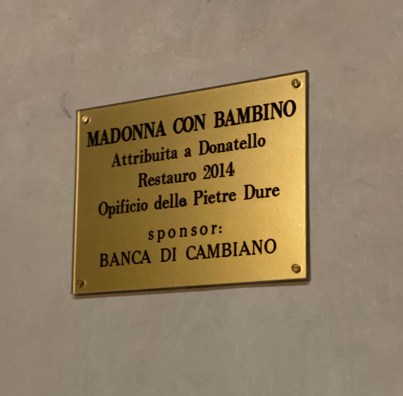
The Chapel containing the (presumed) Donatello:

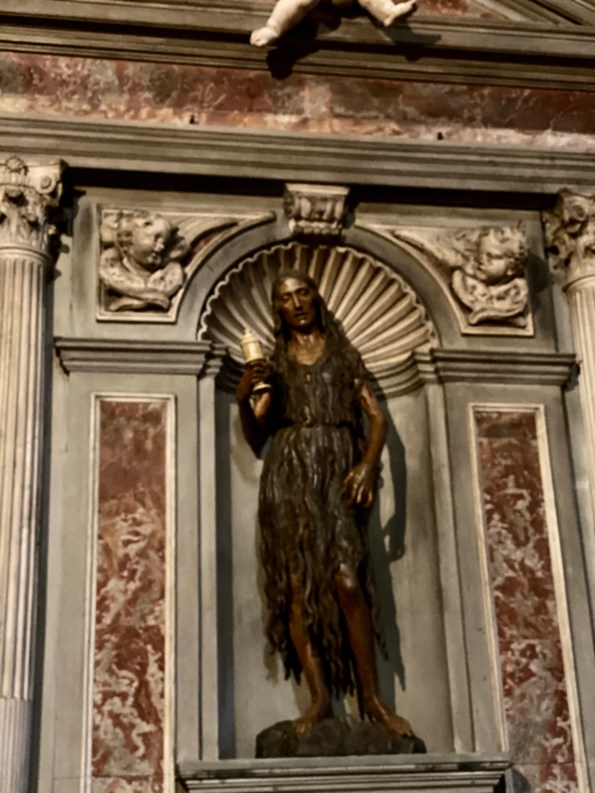
The statue of Mary Magdalene by Desiderio di Settignano:

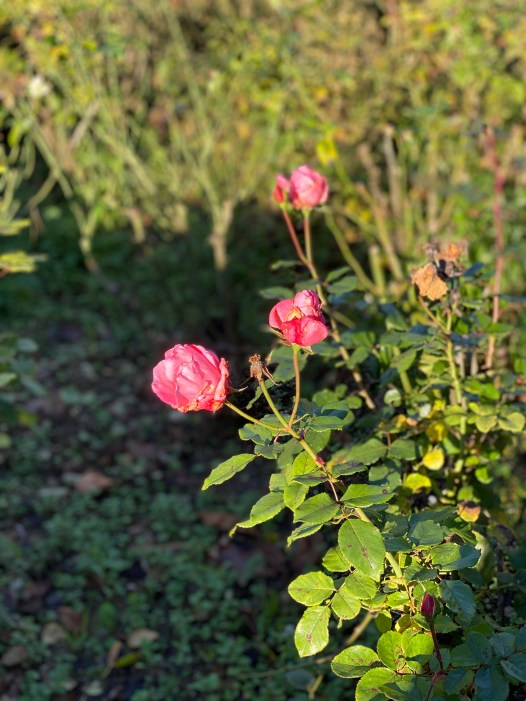
December 4, 2019; this week at the Boboli






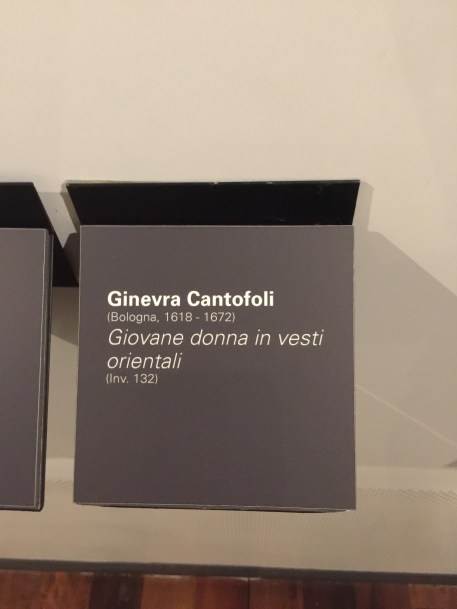
Ginevra Cantofoli, who are you?
On a recent visit to Padova, I was arrested by some paintings in the Museo Civici, both done by Ginevra Cantofoli. I vowed to write a post on this intriguing painter, and here it is. It isn’t much…I hope someday to add more.



All I can add right now is this info from Wiki:
|
Ginevra Cantofoli
|
|
|---|---|
| Born | 1618
Bologna, Italy
|
| Died | 1672 (aged 53–54) |
| Nationality | Italian |
| Known for | Painting |
| Movement | Baroque |
Ginevra Cantofoli (1618–1672) was an Italian painter. She was active in the Baroque period.

Scena Allegorica. Date unknown.
Cantofoli was born in Bologna, Italy in 1618.
Cantfoli received her training as an artist from Elisabetta Sirani in Bologna. She painted works for several churches. These works included a Last Supper for the Church of San Procolo, a St. Thomas of Villanova for San Giacomo Maggiore, and a St. Apollonia for the Church of La Morte.
 |
Wikimedia Commons has media related to Ginevra Cantofoli. |
- Bryan, Michael (1886). Robert Edmund Graves (ed.). Dictionary of Painters and Engravers, Biographical and Critical(Volume I: A-K). York St. #4, Covent Garden, London; Original from Fogg Library, Digitized May 18, 2007: George Bell and Sons. p. 227.
A very Italian Christmas tradition, an elaborate crèche
Walking down the Via Maggio in the Oltrarno today, I spotted this elaborate crèche. I tried to capture it, but think I must return and try again.
In the meantime, here’s what I captured so far…
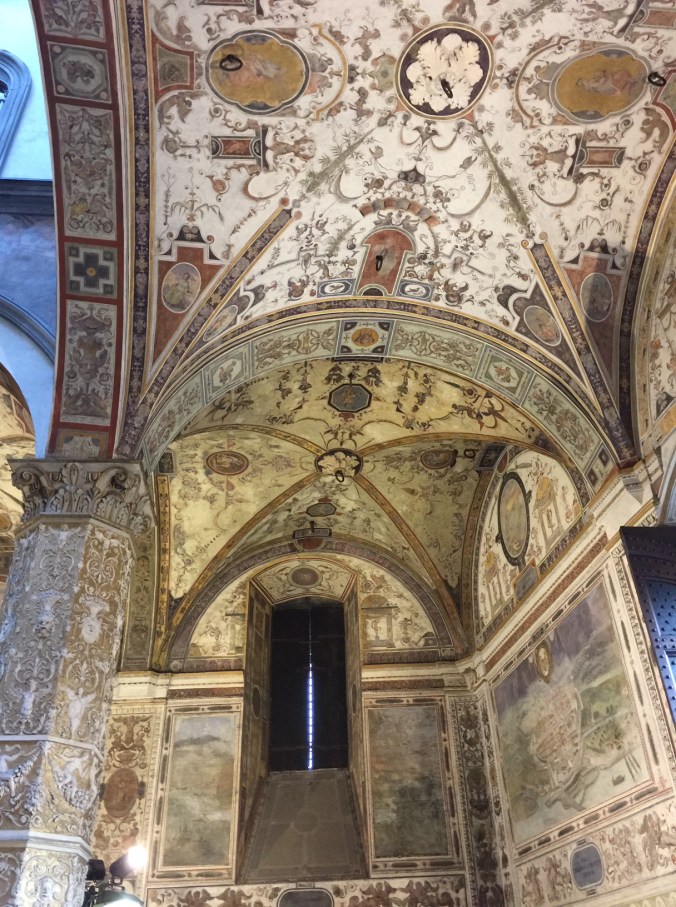
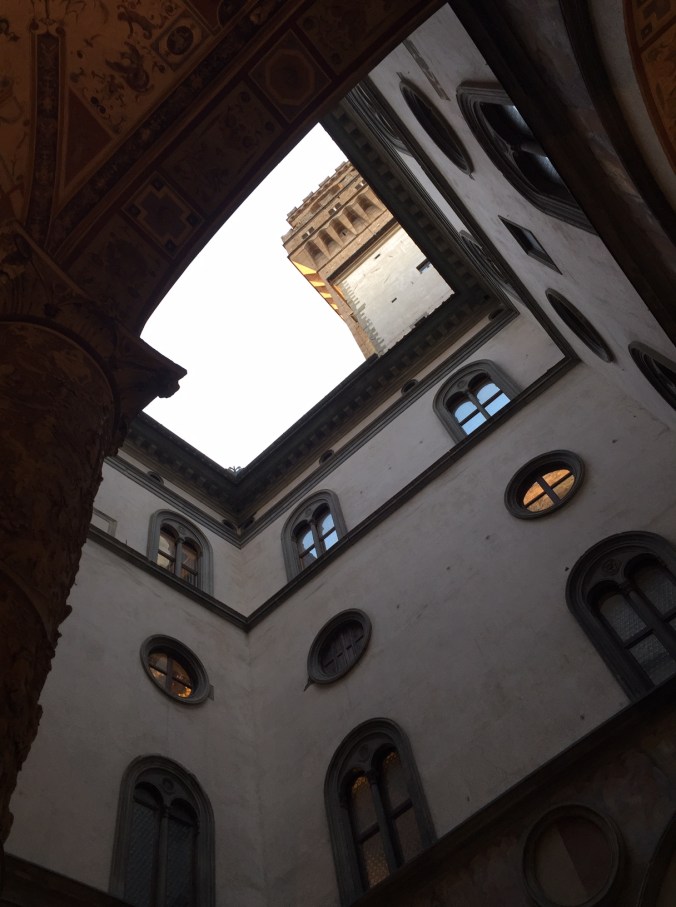
The Michelozzo cortile, Palazzo Vecchio, Florence, a snapshot





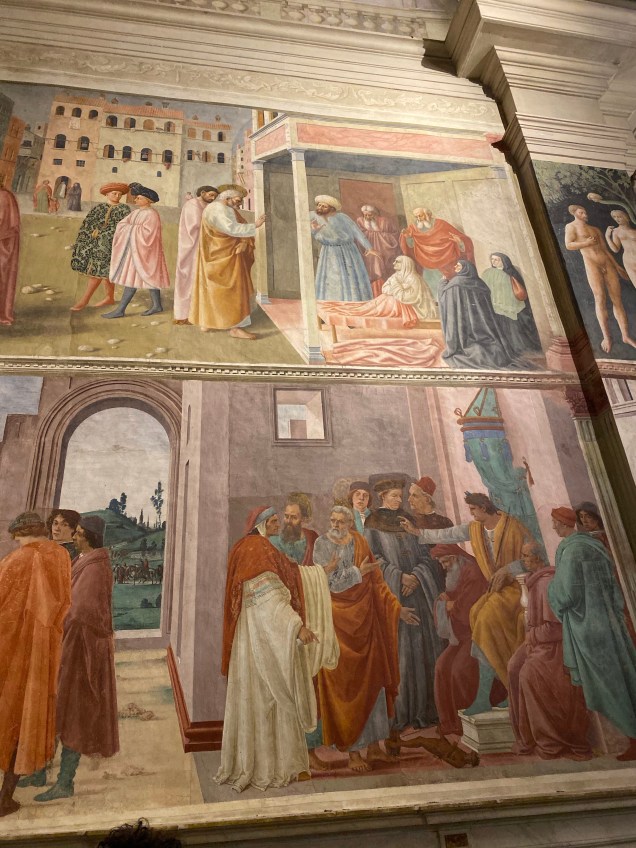
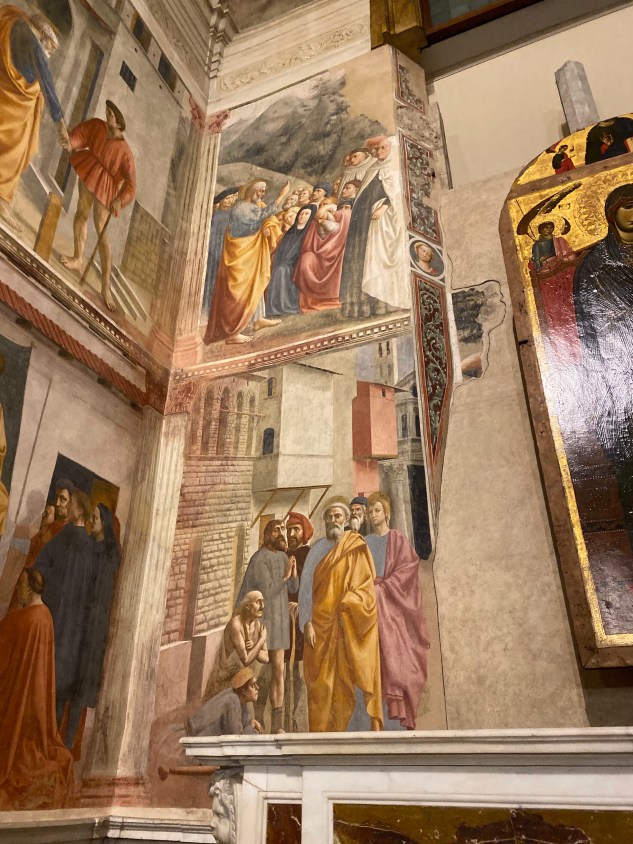
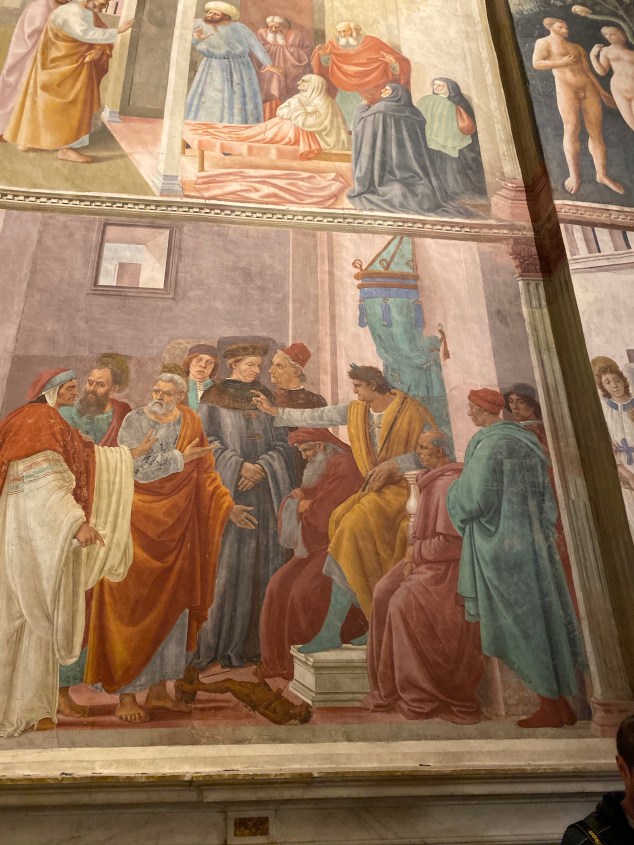
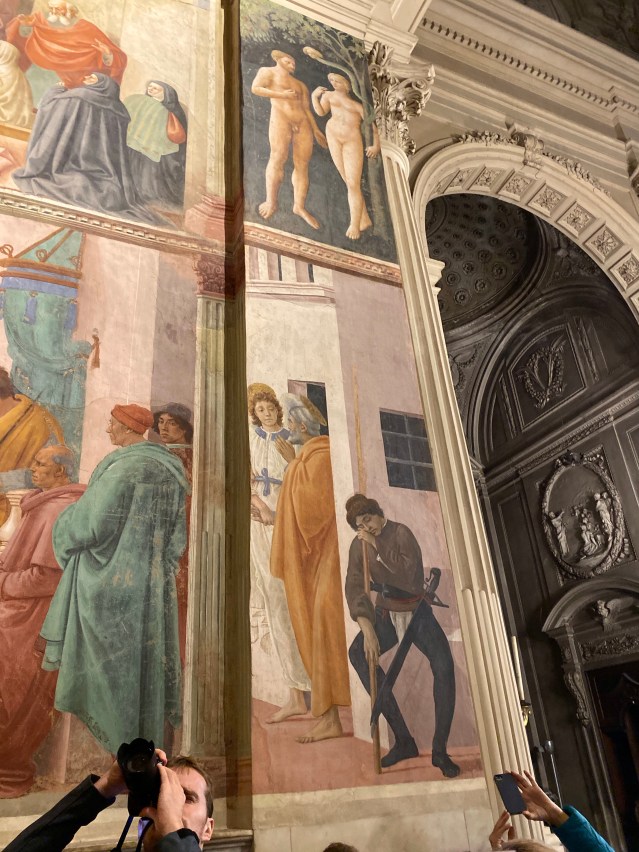
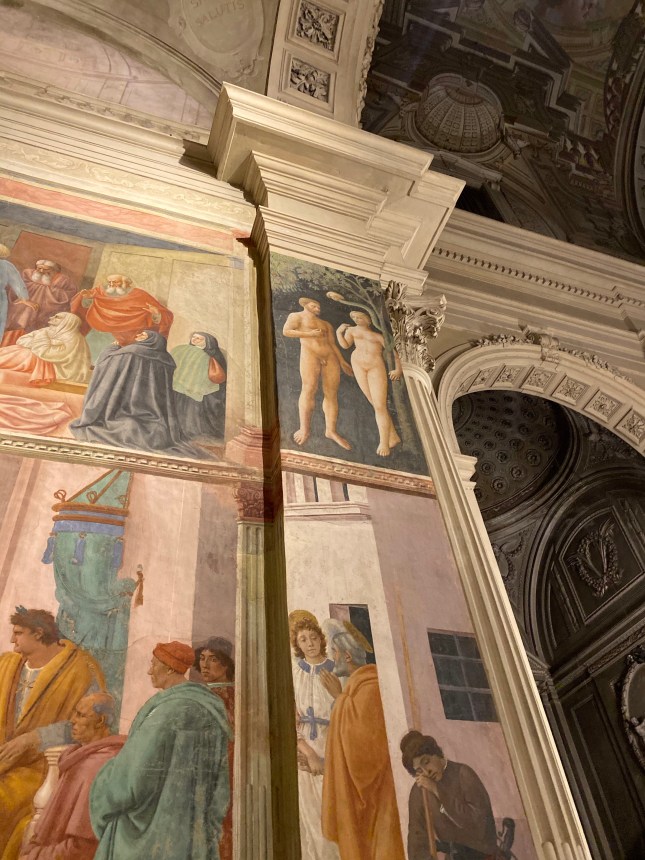
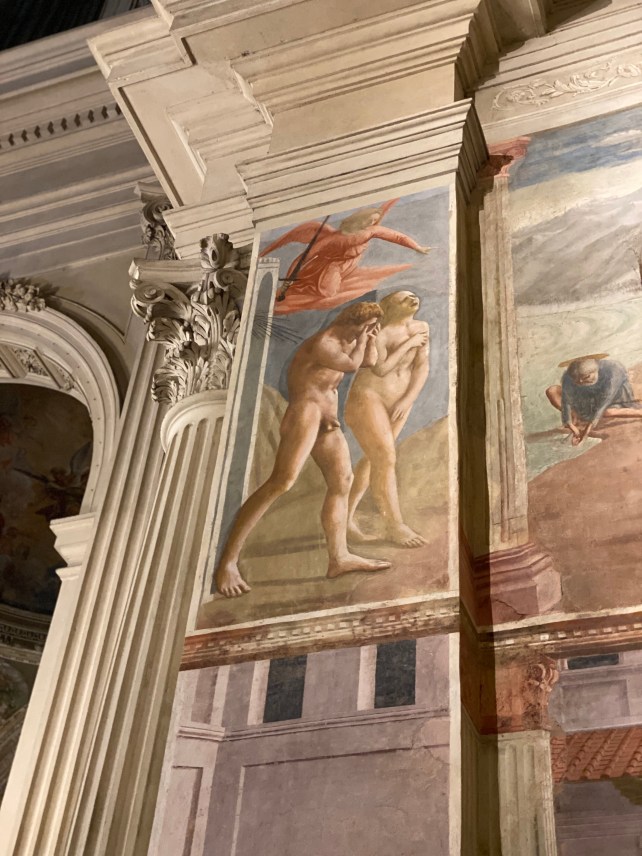
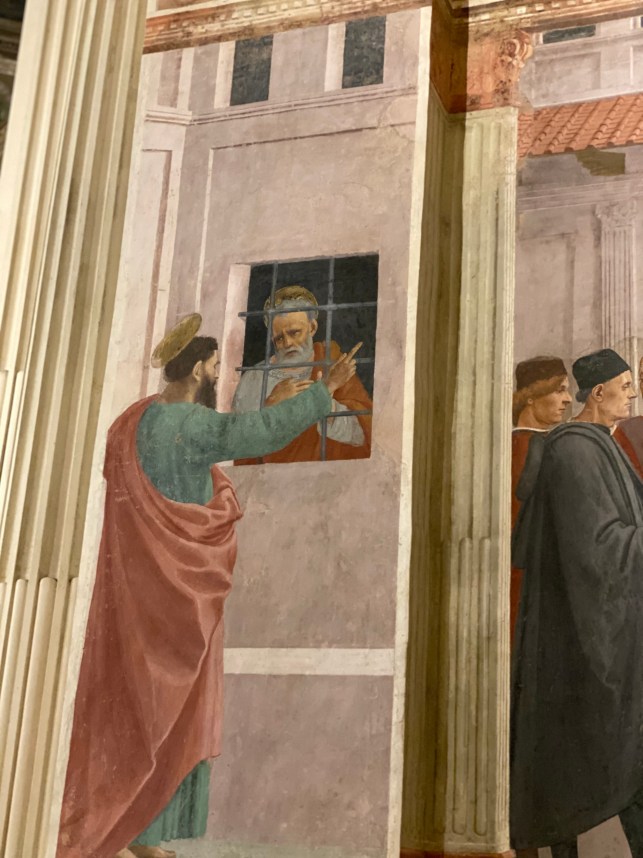
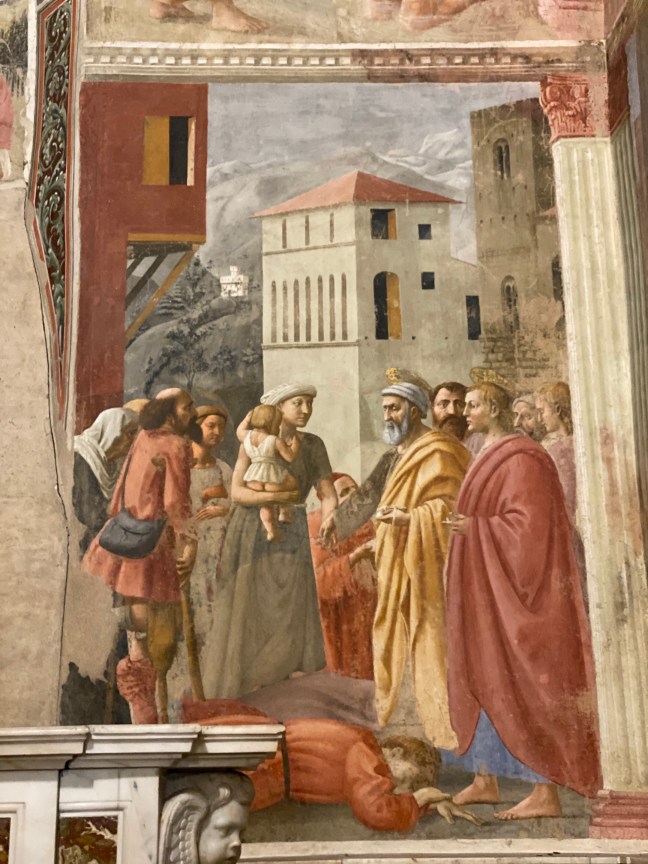
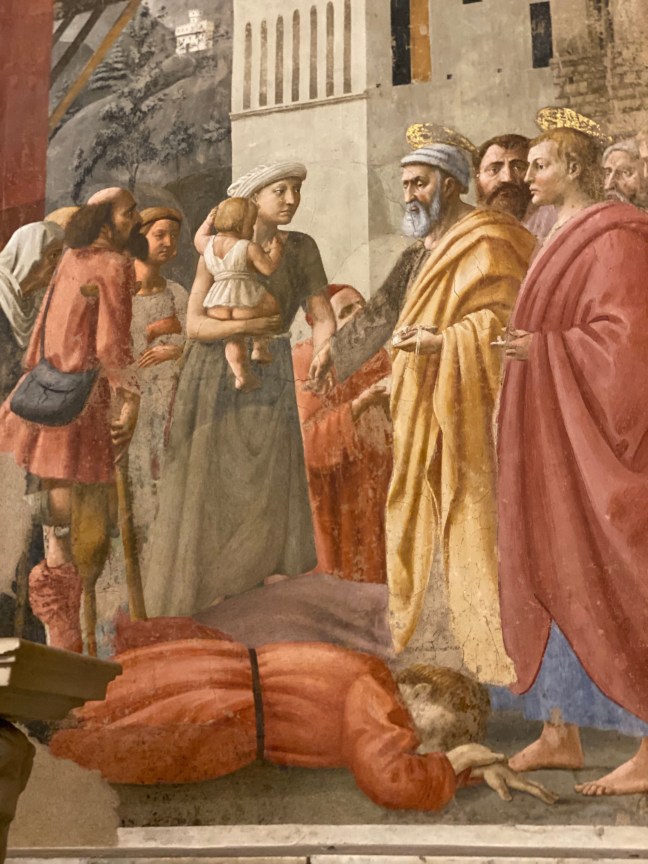
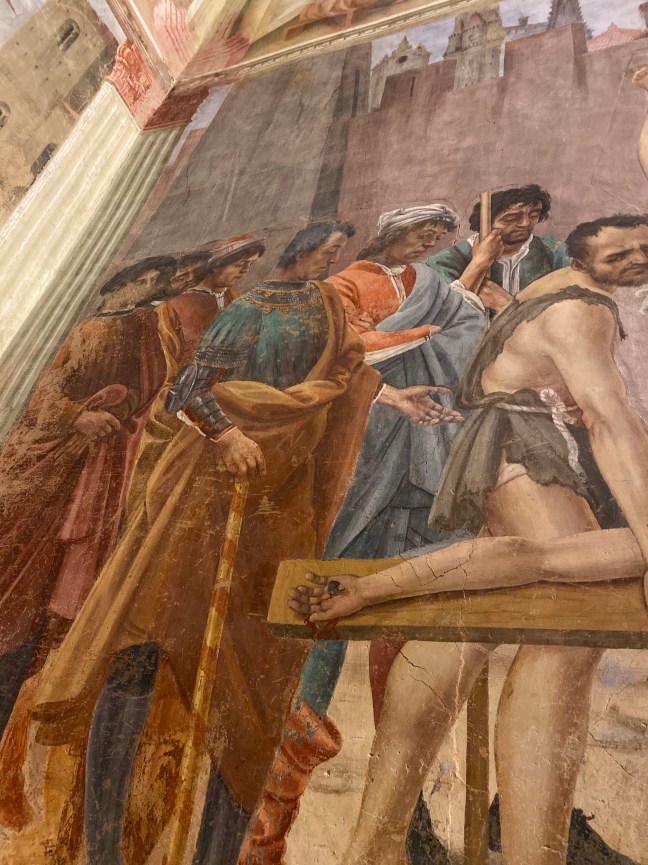
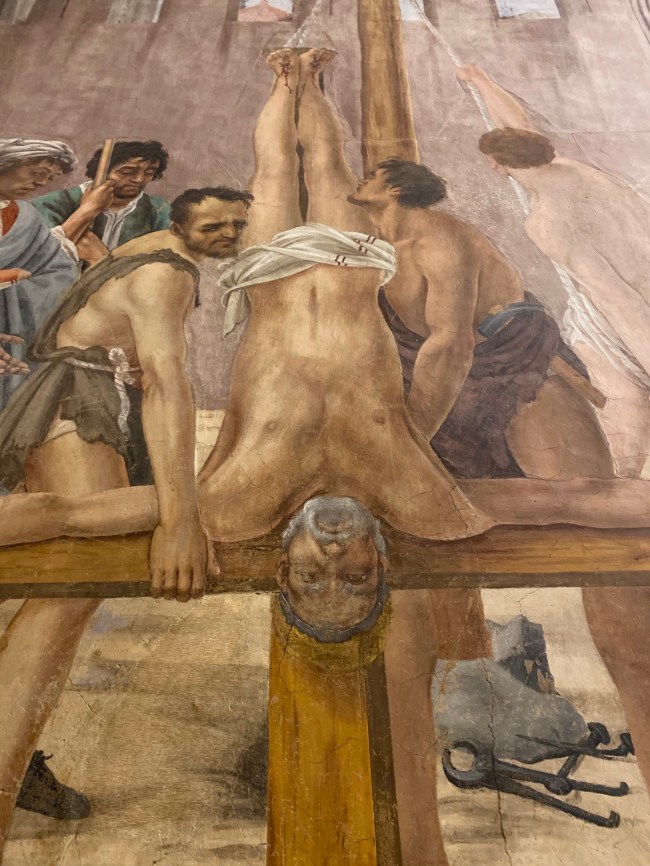
The Brancacci Chapel, Florence
How lovely to stop by and see this old friend for an hour or so on a winter afternoon. Masaccio’s work is always a joy to behold!

Pomegranate sorbetto
The tastes of fall in artiginal gelato/sorbetto. Nothing could be finer!


The Brenta Canal

The Brenta is an Italian river that runs from Trentino to the Adriatic Sea just south of the Venetian lagoon in the Veneto region.
During the Roman era, it was called Medoacus and near Padua it divided in two branches, Medoacus Maior and Medoacus Minor. The river changed its course in the early Middle Ages, and its former bed through Padua was by then occupied by the Bacchiglione.
The 108 mile long stretch was first channelled by the Venetian Republic in the 16th century, when a canal was built from the village of Stra to the Adriatic Sea, bypassing the Venetian lagoon.

The Brenta canal made use of the system of rivers and canals that had connected the Venetian cities with each other and with the Venice lagoon since ancient times. The goods directed from the hinterland to the Serenissima Republic of Venice passed on these river routes: building materials such as wood, marble, stones from the Vicentine Hills and trachyte from the Euganean Hills as well as grains and other agricultural products. The transport took place with barges called bùrci pulled along the horse banks.

In construction the canal, the Republic of Venice imposed hydraulic changes (which several times required the engineering advise of Leonardo Da Vinci) which diverted the main river course further south, moving it away from the Venetian lagoon and leading it to flow directly into the Adriatic Sea. These hydraulic works are represented by the cuts of the Brenta Nuova and the Brenta Nuovissima, and consist of sluices and mobile bridges that have made the river navigable.
A branch of the Brenta, named Naviglio del Brenta, was left to connect directly Venice and Padova (which was a kind of second capital of the Venice Republic). The Brenta canal runs through Stra, Fiesso d’Artico, Dolo, Mira, Oriago and Malcontenta to Fusina, which is part of the comune of Venice.
With this new stretch of the Brenta connecting Venice with Padua, it came to be called the Riviera del Brenta by the 16th century. Wealthy Venetian families began to build elaborate river houses which they called villa (“villa” in the language of the time meant “country”). This was a perfect situation for these patrician families because there new homes could be easily reached from Venice with their gondolas. In fact, it has been said that with all the new building along the Canal, it was almost as if the Brenta canal was an extension of Venice’s Grand Canal.

It also became the custom of aristocratic Venetian families to spend summer holidays in their new country houses. These homes could be reached by richly decorated, luxurious wooden burchielli, or ships.

These vessels had elegant cabins, with three or four balconies. The interiors were finely decorated and adorned with mirrors, paintings and precious carvings. On the way to the lagoon they were propelled by wind or oars, while on the route from Fusina to Padua along the Brenta Riviera, they could be pulled by horses.
Cargo was carried on traditional barges known as burci.
After 1797 , with the fall of the Venetian Republic and the consequent decline of the Venetian patriciate, the burchielli fell into disuse.

Among the first villas to be built, and one of the most important, is Casa Foscari designed by Andrea Palladio at Malcontenta (located shortly after the gates of the Moransani). The illustrious Foscari family was established by the 15th century, when a Foscari was a popular doge in the Venetian Republic for 34 years.
Another Palladian villa, which was built for Senator Leonardo Mocenigo around 1560-61, was destroyed. But its very existence, along with Casa Foscari, shows how quickly patrician settlements multiplied on the shores of the Brenta Canal. In the Mocenigo Villa, the architect created a rather original design with respect to the typical pattern of Venetian villas, which he later published in the second of his Four Books of Architecture. Sadly, that villa fell into disrepair by the late 18th century and was demolished.
After the Foscari and Mocenigo ville, most new homes along the canal were not as important architecturally. They were mostly homes of modest size. But the trend for vacationing along the canal, and the taste for villa life, was well established. Homes known as barchesse contained large rooms and were almost always ornamented with decorative frescoes. Extant examples include buildings of the Villa Valmarana, the Villa Contarini Venier in Mira (currently the seat of the Regional Institute for Venetian Villas), and the Villa Foscarini Rossi in Stra.
Thus, the villeggiatura (life of the villas) understood in its original meaning, the Riviera del Brenta has become other than a residential and productive facility, a touristic infrastructure of great importance that ideally links the Euganean Hills to the Laguna, the thermal baths of Abano to the beaches of the Lido, and again, Padua toVenice.
https://it.wikipedia.org/wiki/Naviglio_del_Brenta
http://lamalcontenta.com/index.php/en/riviera-of-brenta/description
Antonio Foscari, Acque, Terre e Ville, in “Ville Venete: la Provincia di Venezia”, I.R.V.V, Marsilio, Venezia 2005, pp. XXX-XLII
Antonio Foscari, Tumult and Order, Lars Mueller Publisher Zurigo, 2011
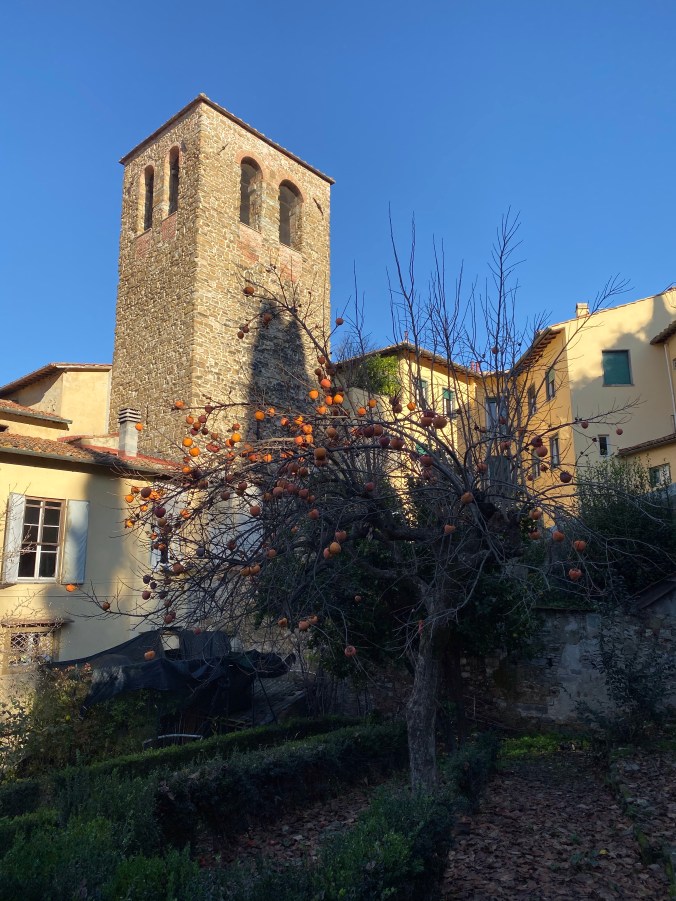
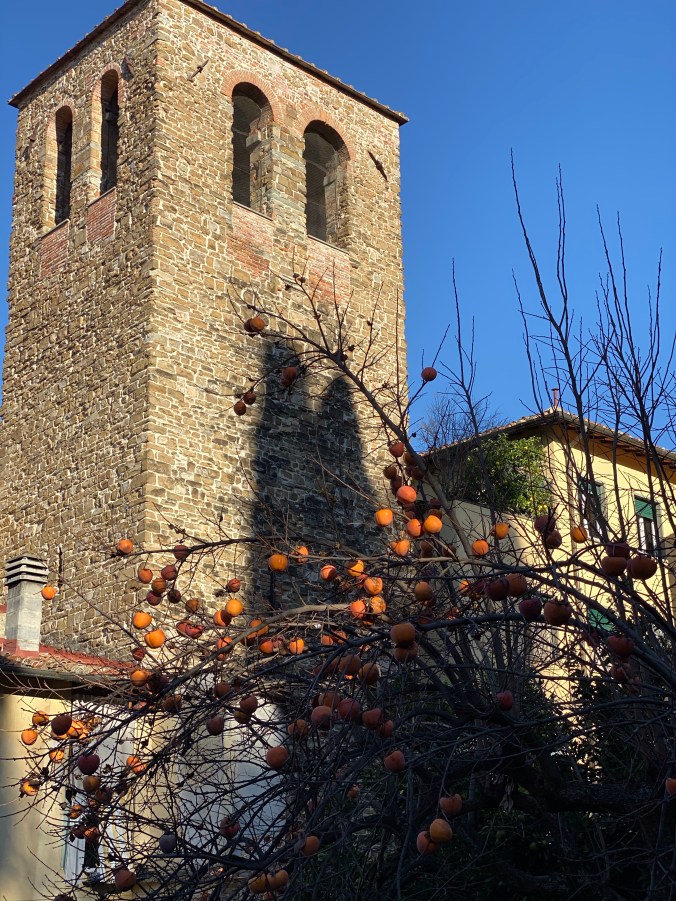
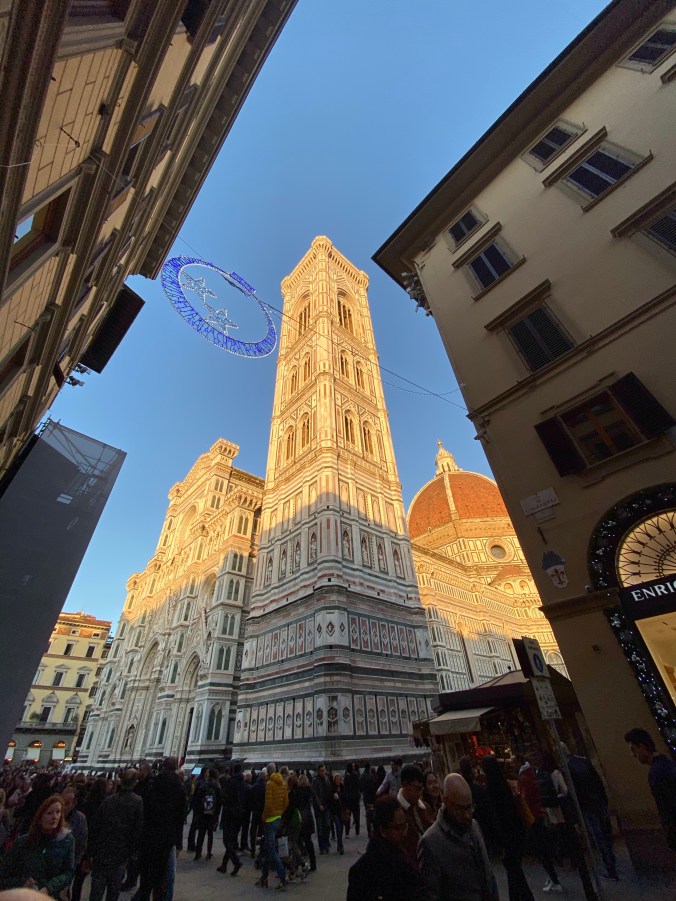
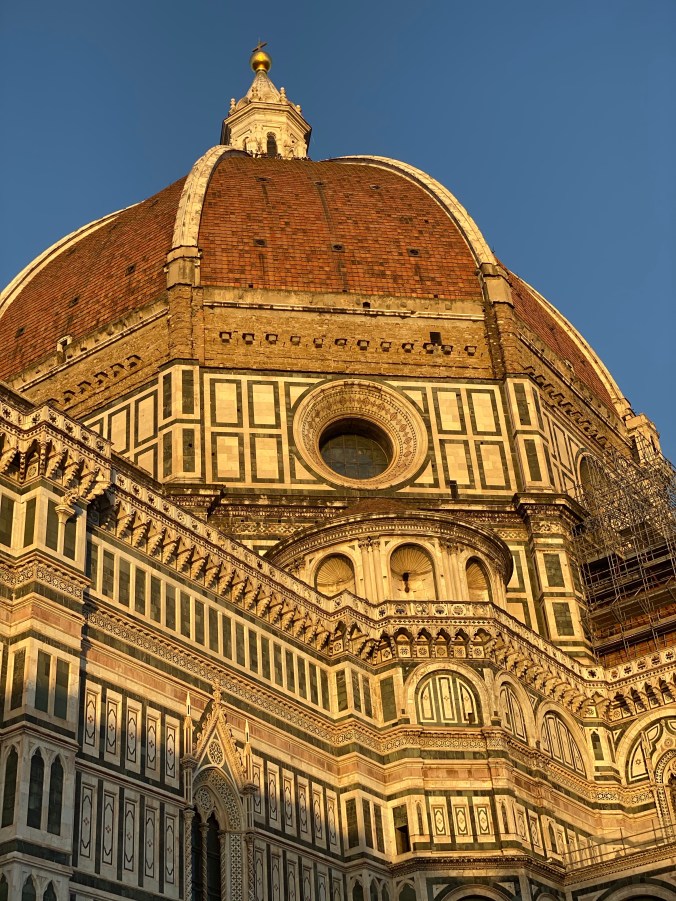
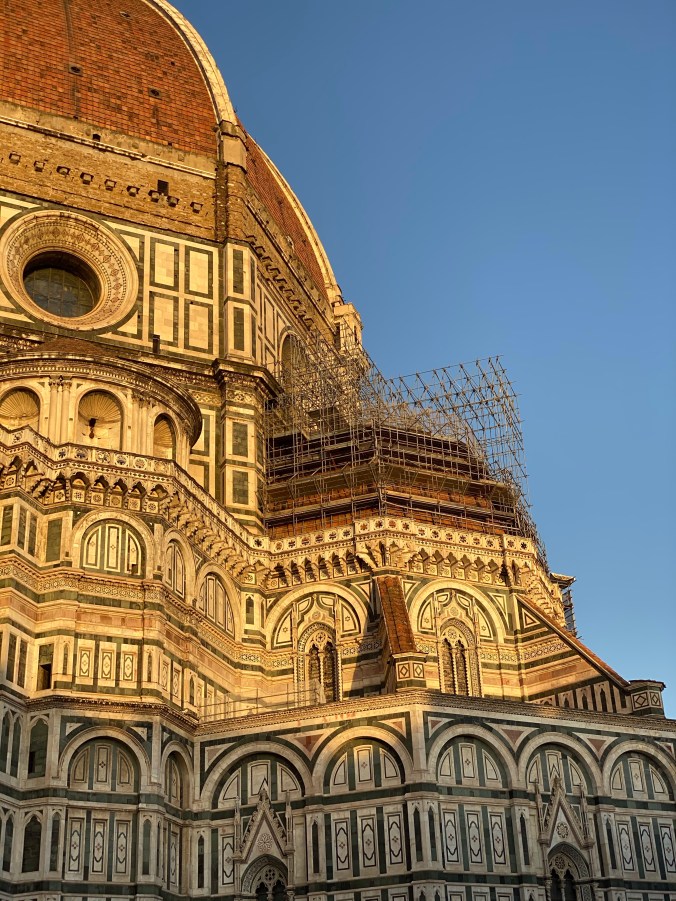
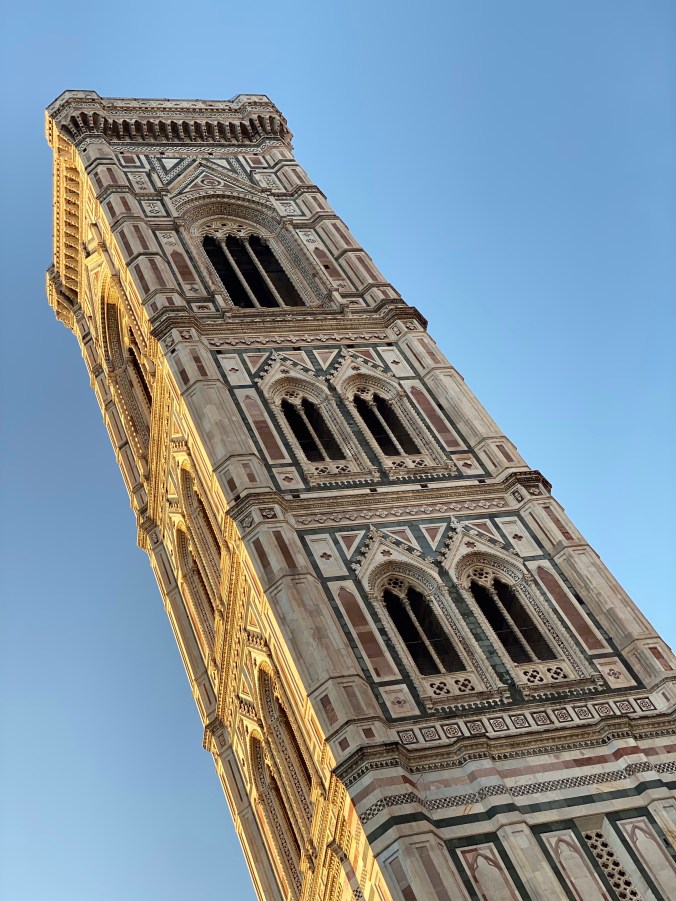
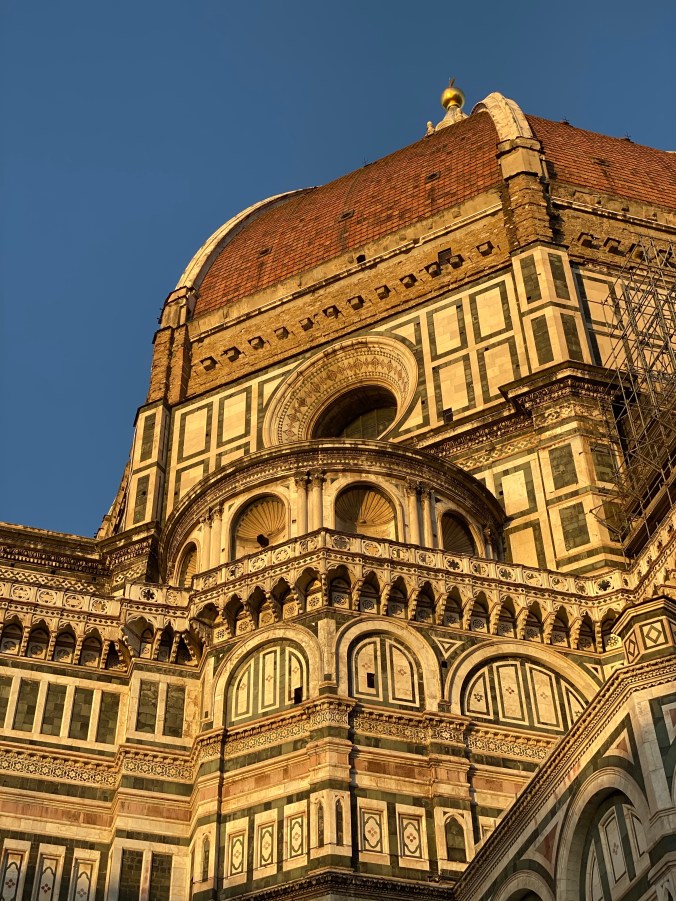
On a clear winter day, Florence shimmers in the golden sunlight



 get back, lauretta!
You must be logged in to post a comment.