The arts in Volterra: Rosso Fiorentino and a sculpture studio

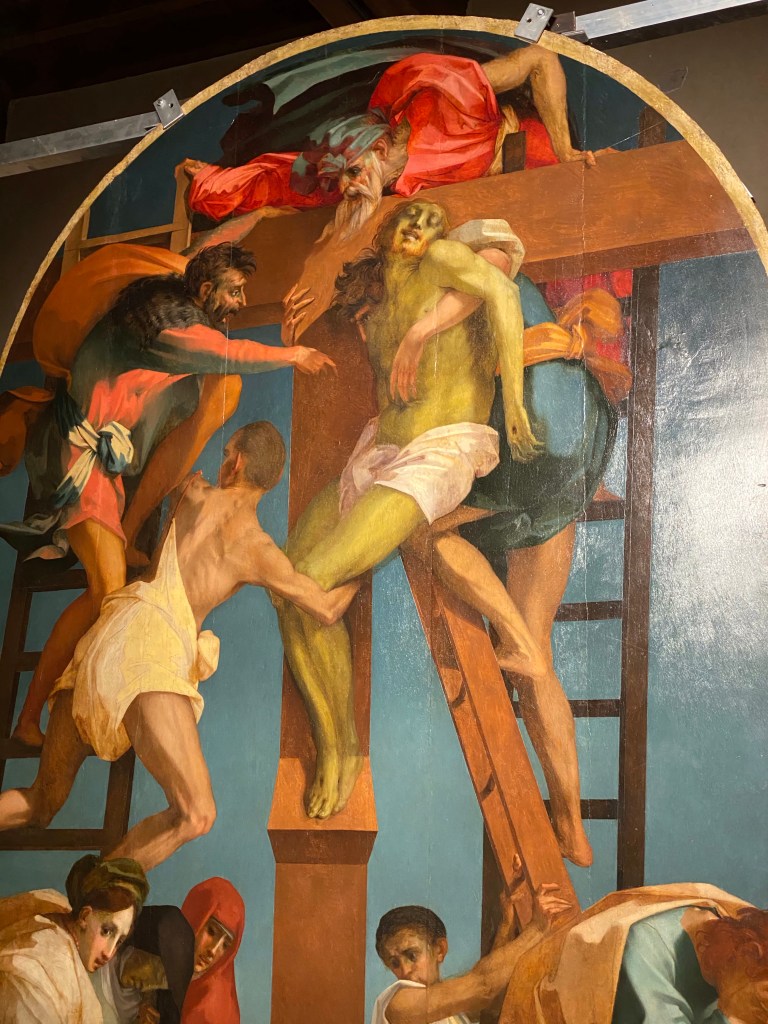
Ask an art historian about Volterra and Rosso Fiorentino and his masterpiece, The Deposition, will be mentioned.
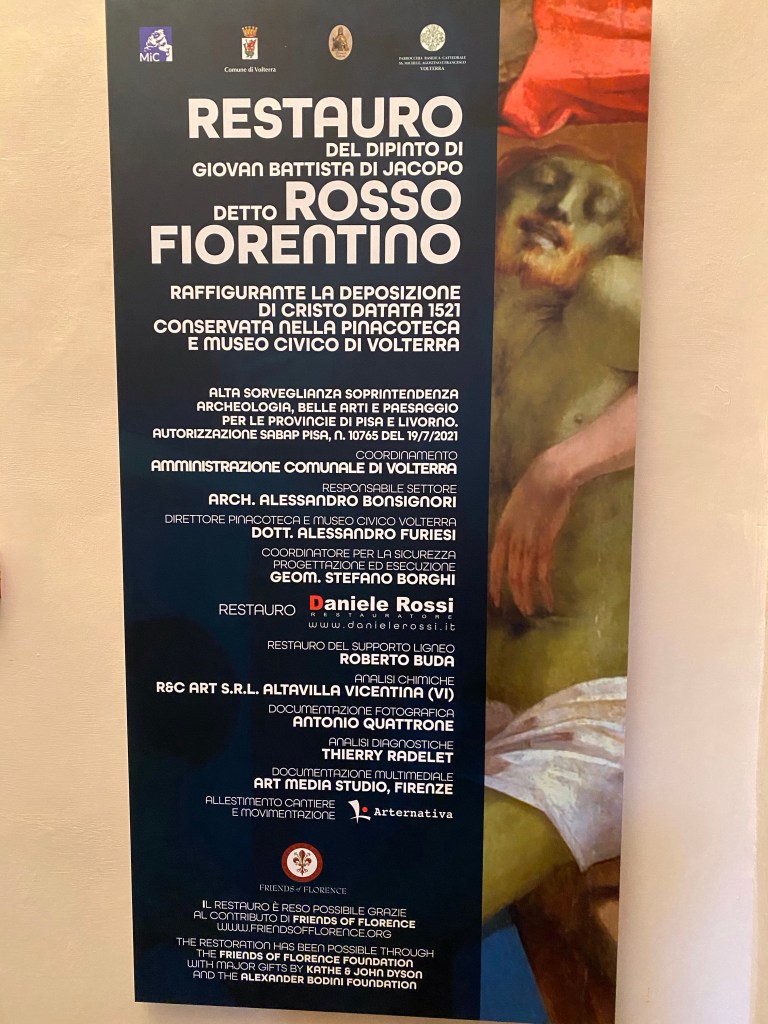
I got to see this fabulous altarpiece last month and it did not disappoint.
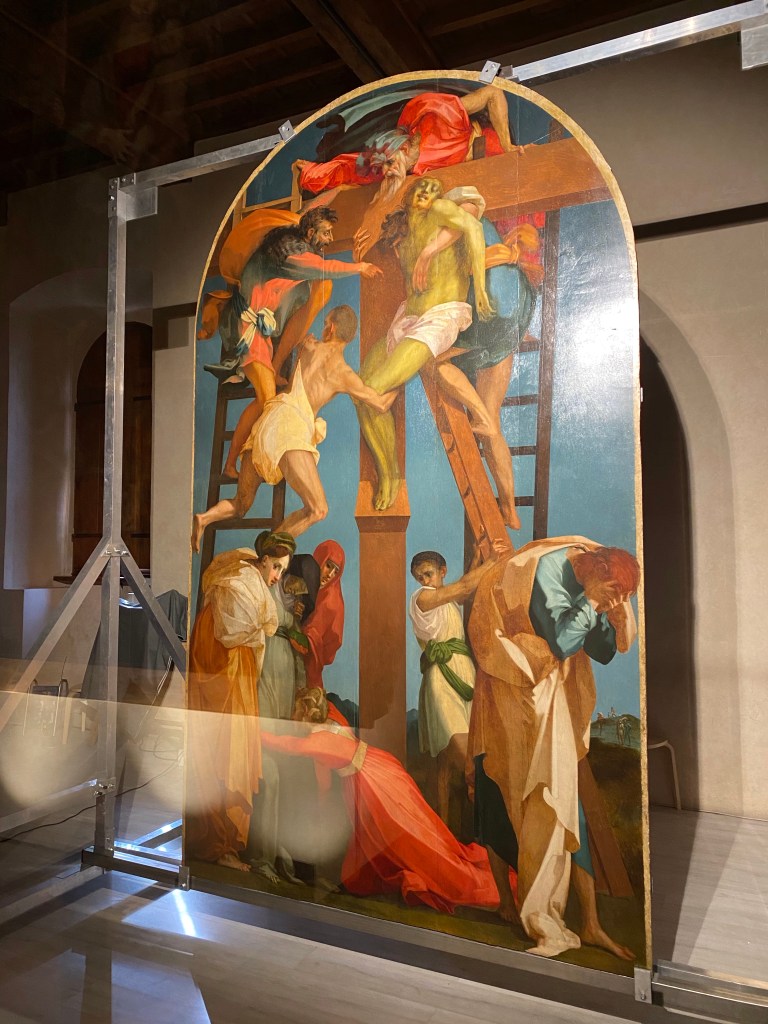
The painting is currently under restoration, so I could not get up as close as I would like, but I’m happy the painting is being well cared for!
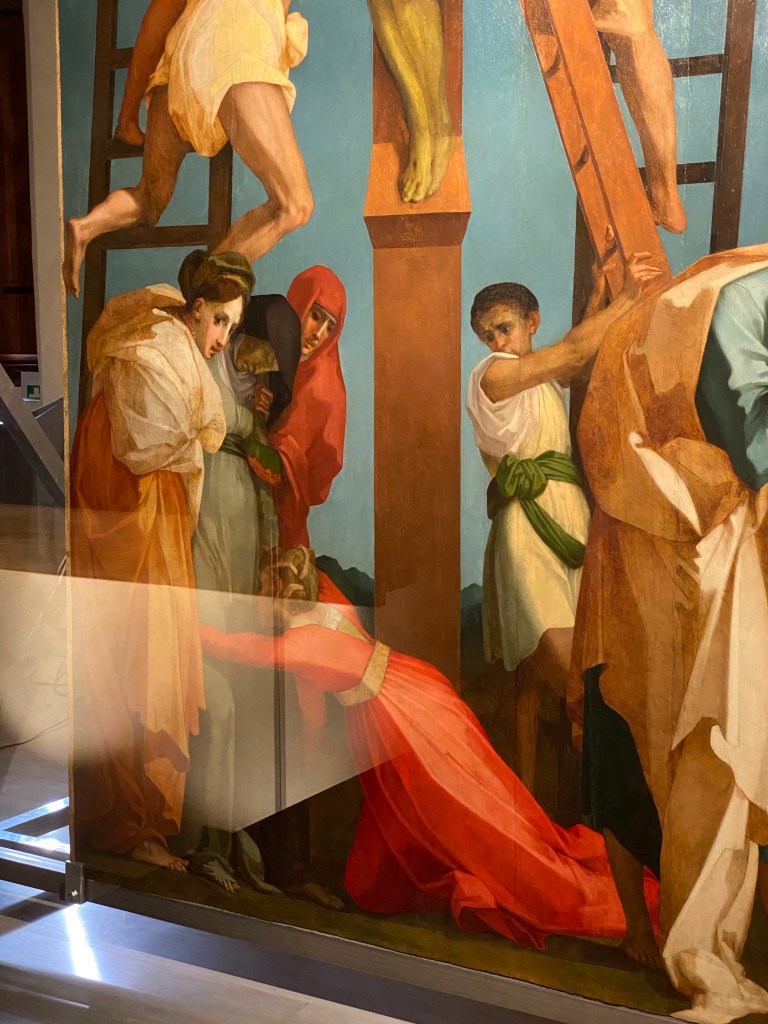
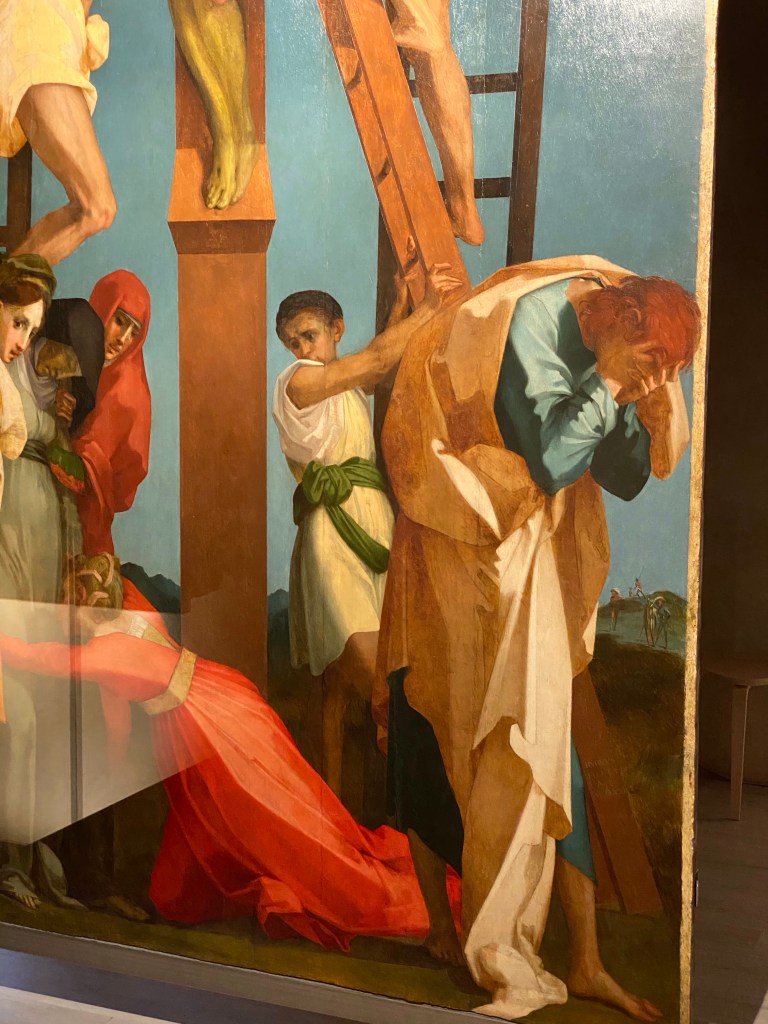
The Deposition is housed within the Art Gallery and Civic Museum of Volterra. The Museum is housed within the Palazzo Minucci Solaini, from the Renaissance era. The collection contains paintings, sculpture, medals, ceramics and coins from the Medieval to modern times. The collection is strong in Sienese and Florentine schools of the 14th and 15th centuries.

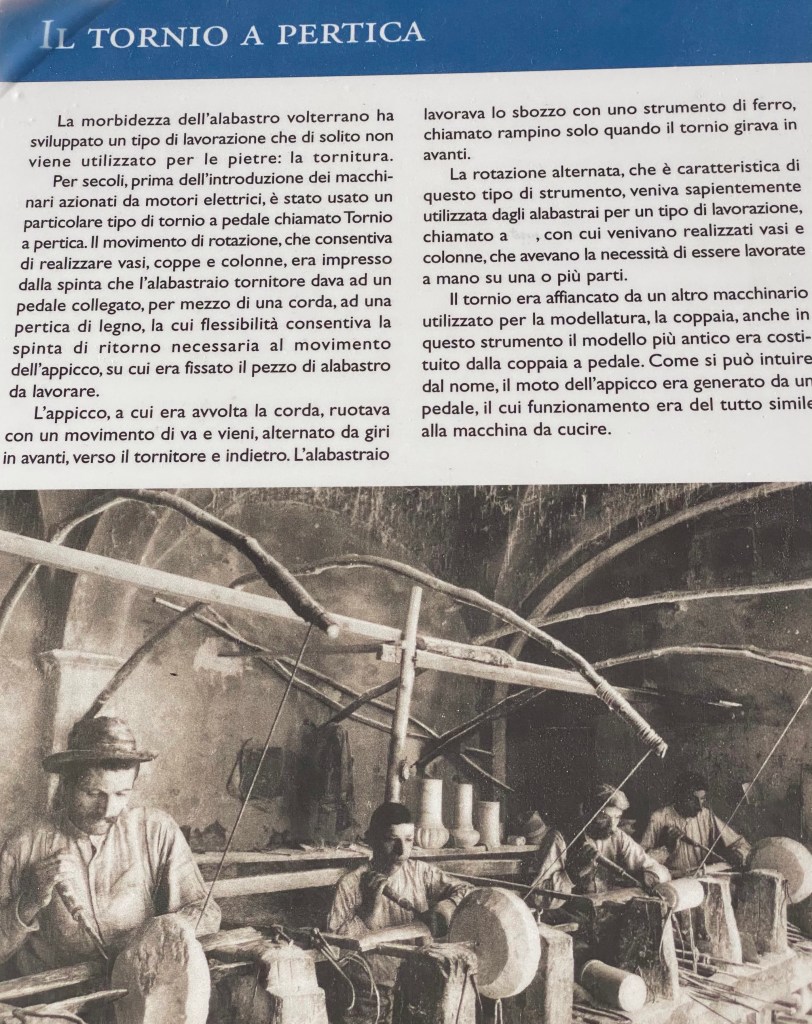
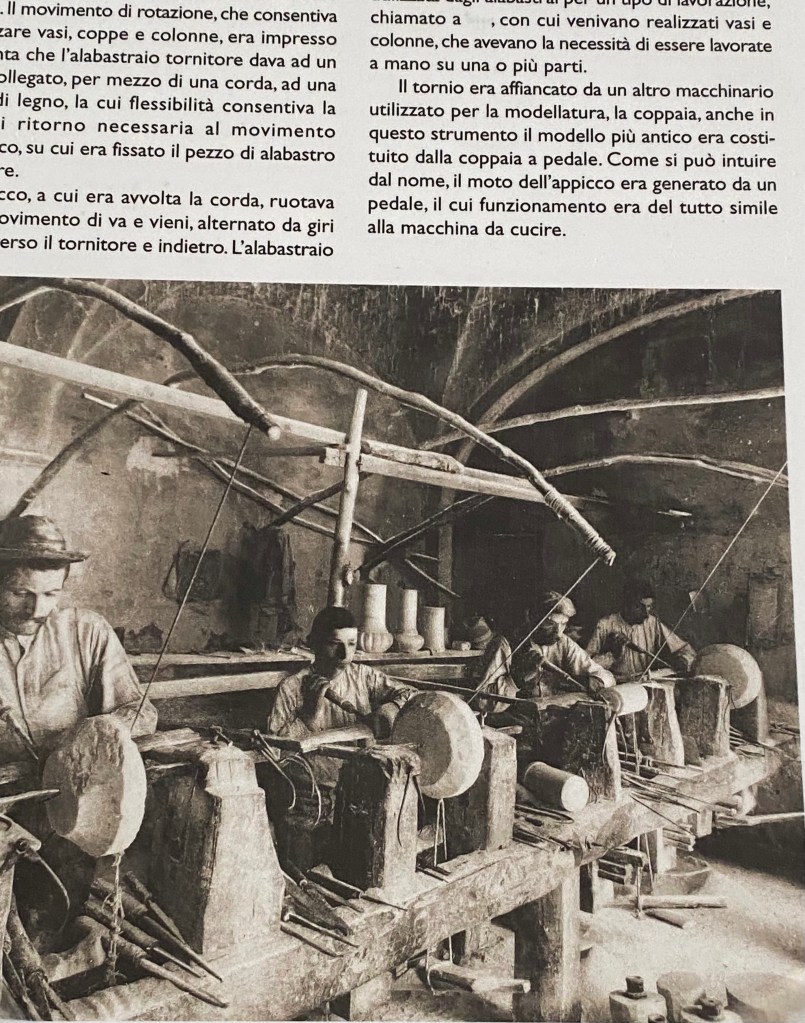
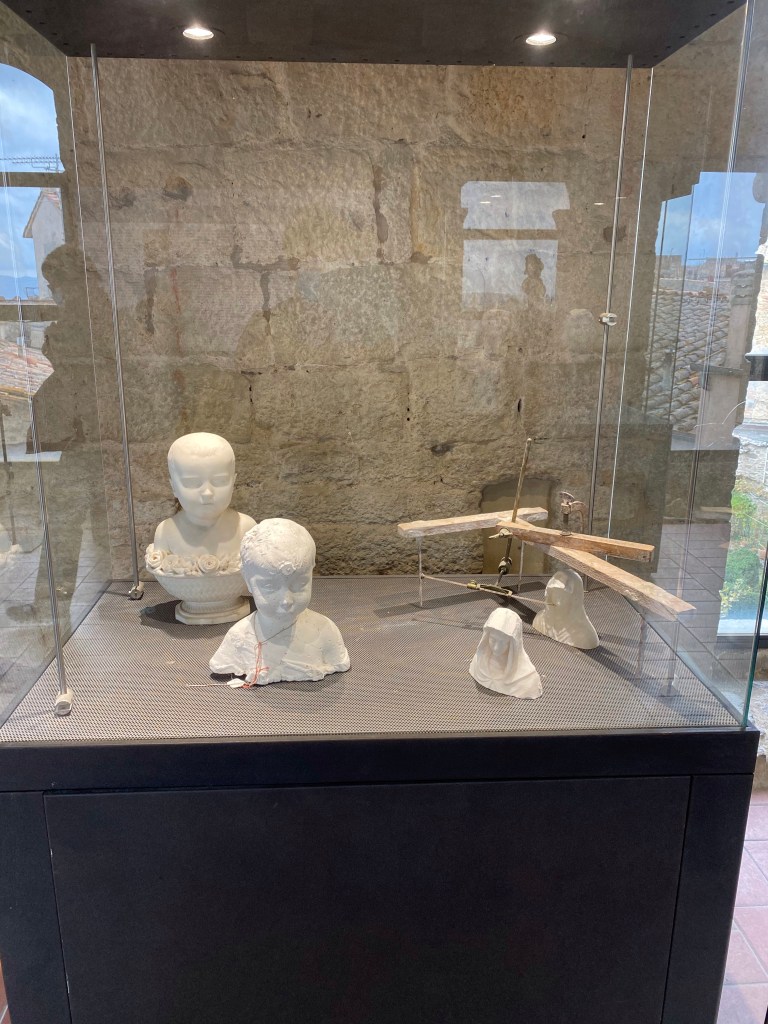
The museum also is home to this completely authentic 19th century sculpture studio, the Ecomuseo dell’Alabastro. The brochure says “In this museum, you can follow the history of the working and selling of alabaster that, for centuries, was at the base of Volterra’s economy. This stone has been known and has been worked on since the Etruscan period but it was only in the 18th century that an active industry centered on it, arose. Here you can admire vases, sculptures, and other objects’ there is also a large area dedicated to design and to works of art made in alabaster.”
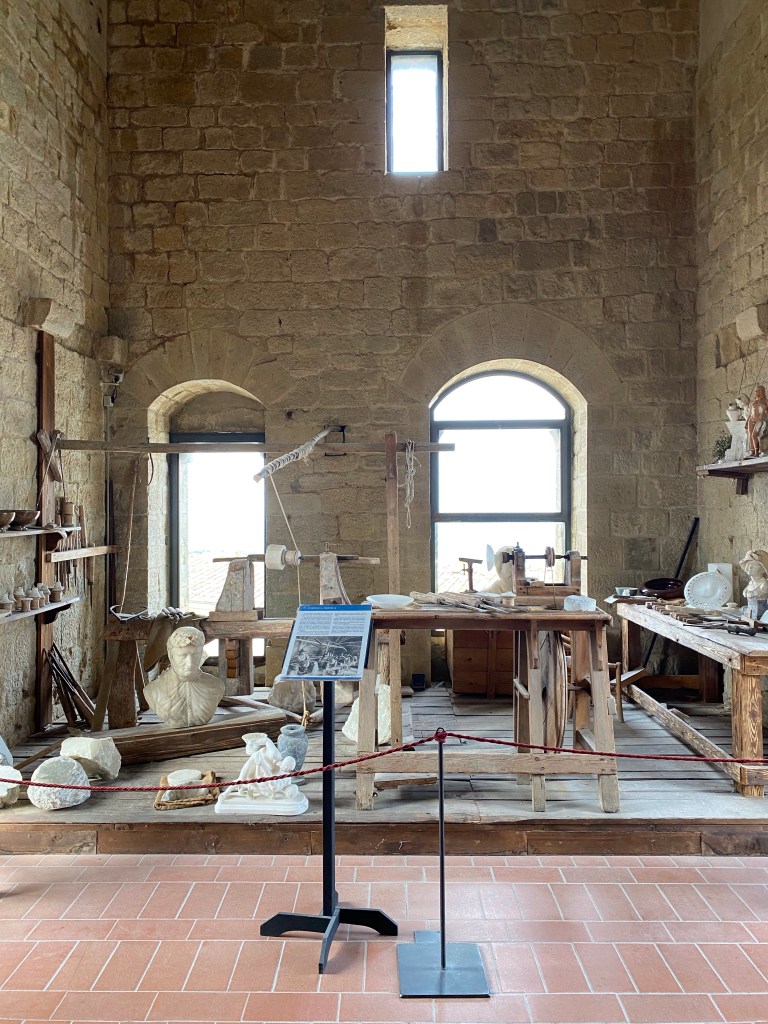
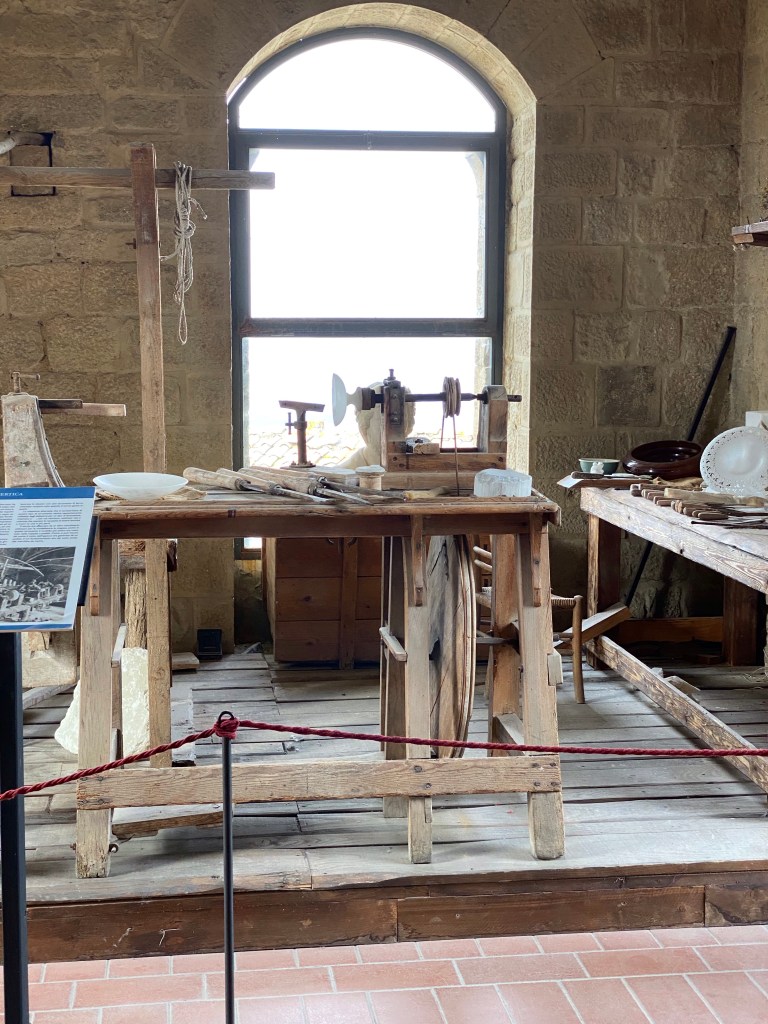
Bottega Pagni: I didn’t get to visit this site, but I want to give it some mention for anyone planning a visit to Volterra. Bottega Pagni shows how alabaster was worked before the use of power tools. There are drawings, tools, hand-powered machinery and rough stones in various stages of processing, as well as information about how artisans spent their days.

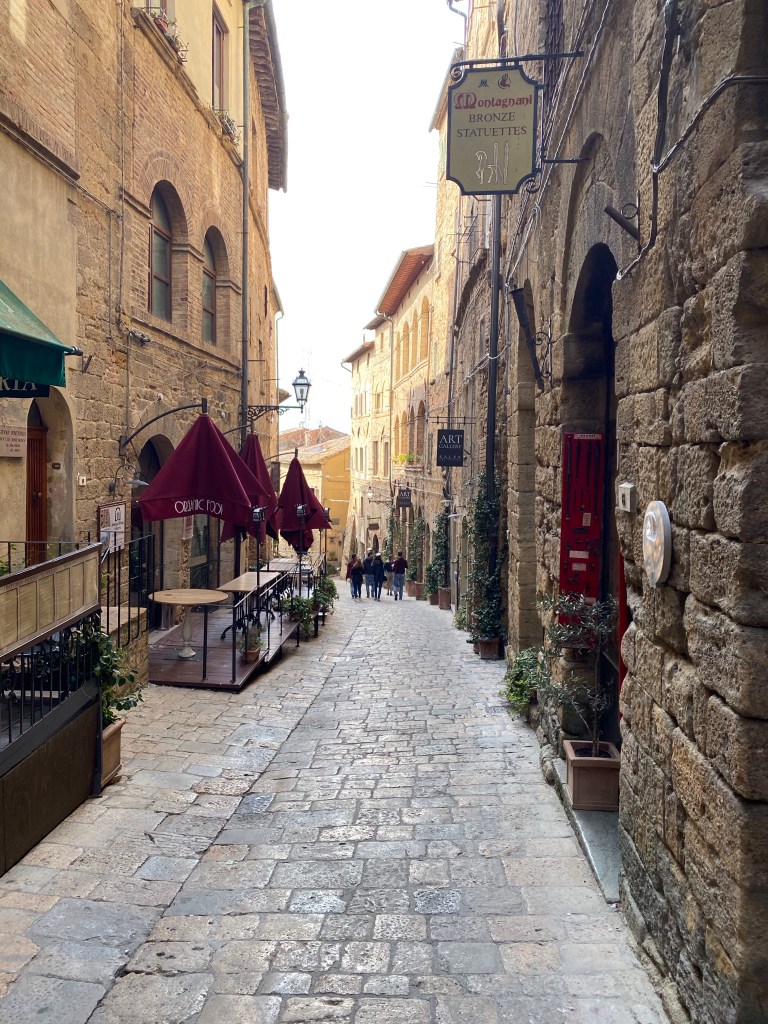
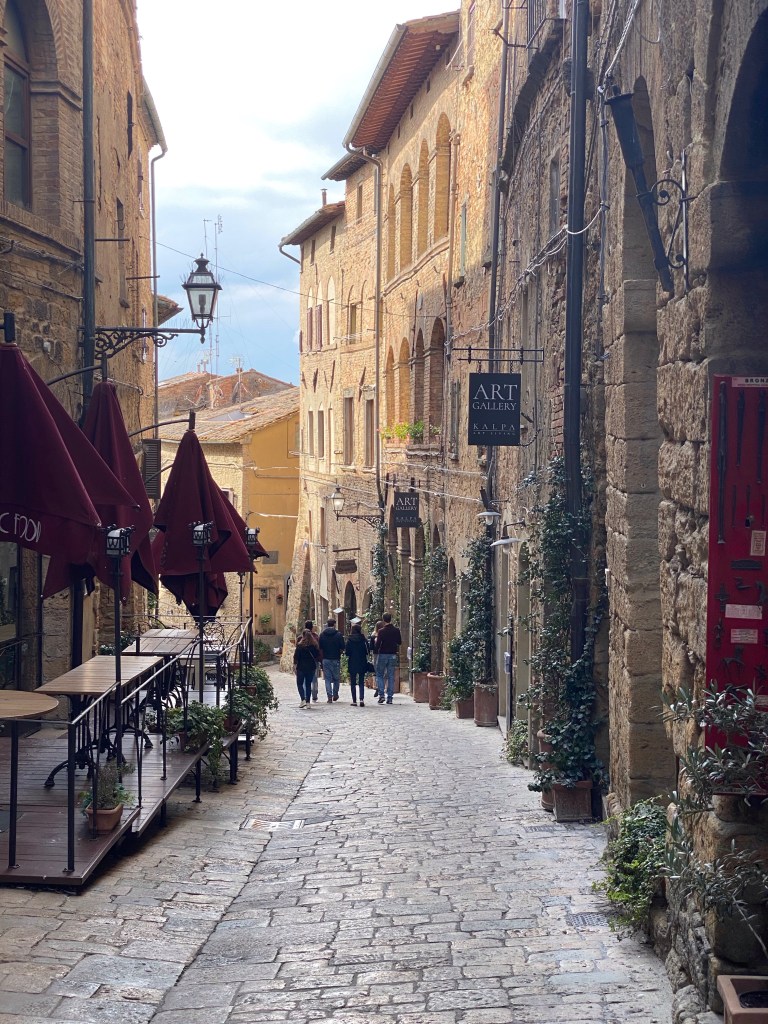
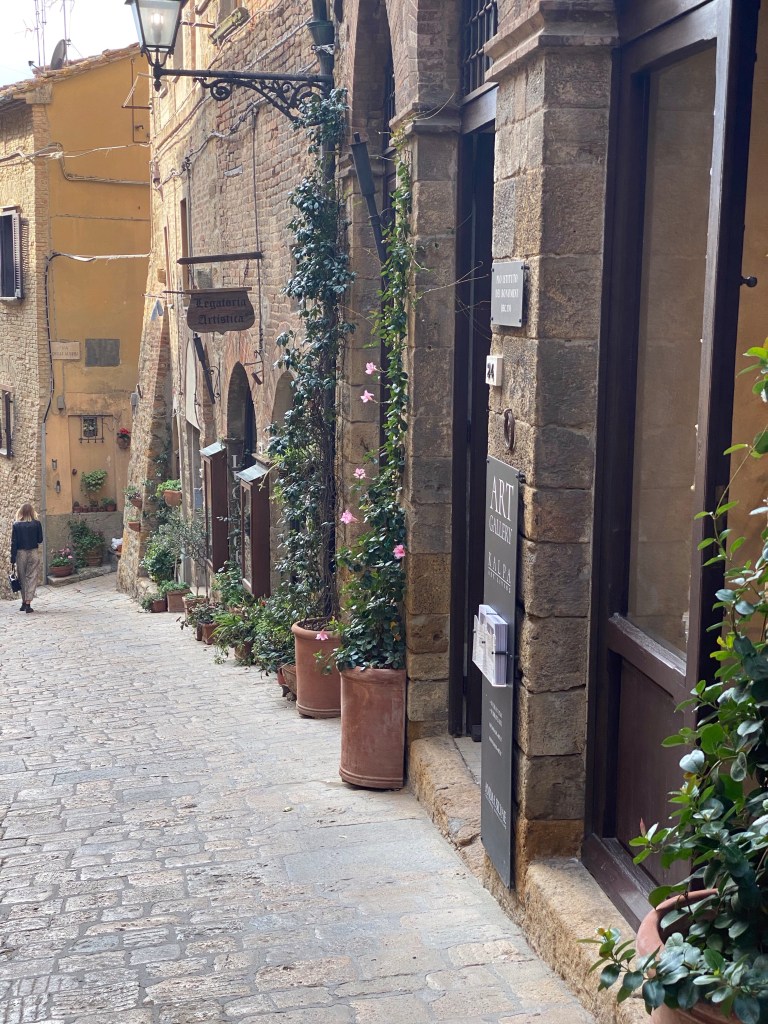
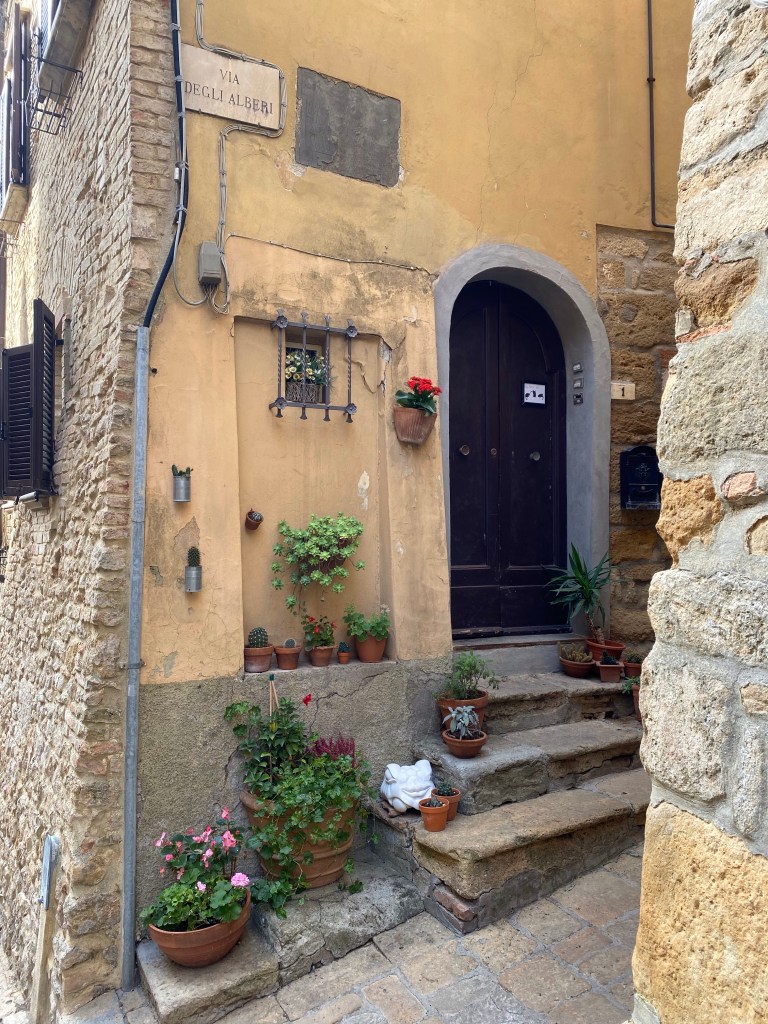
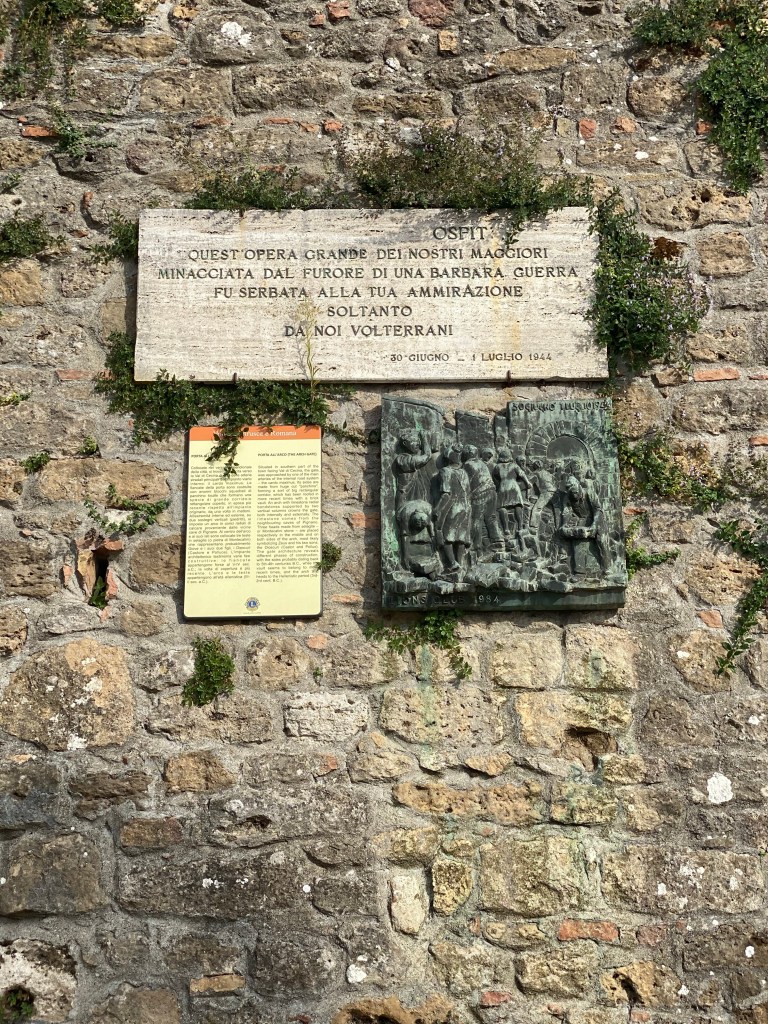
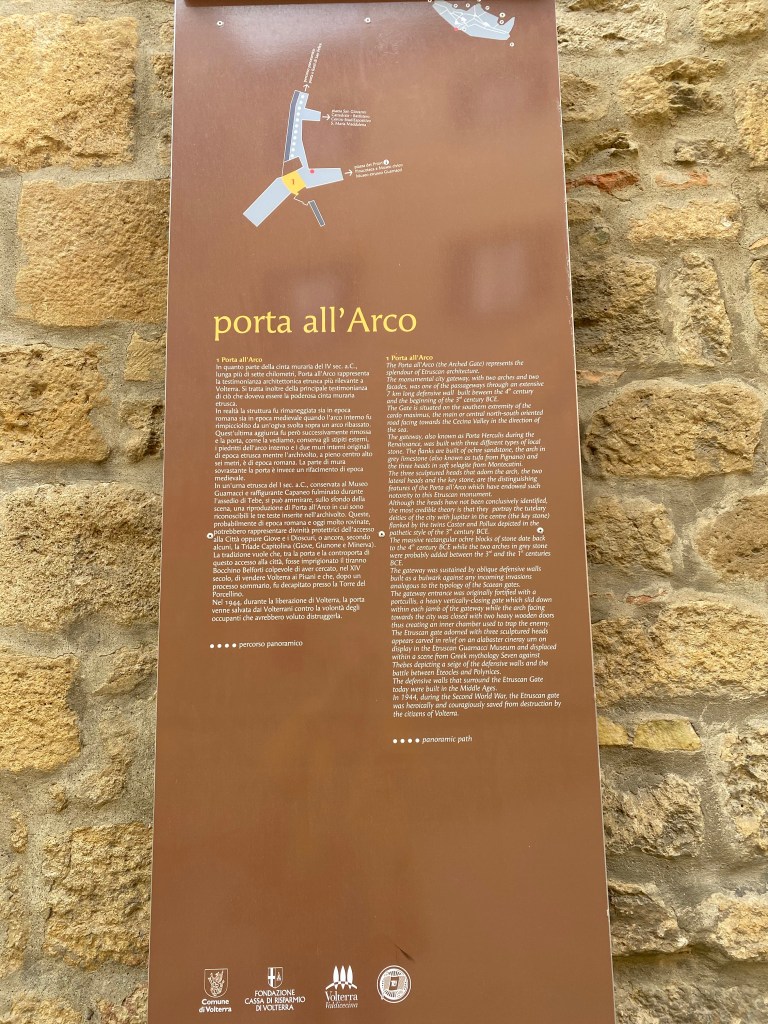
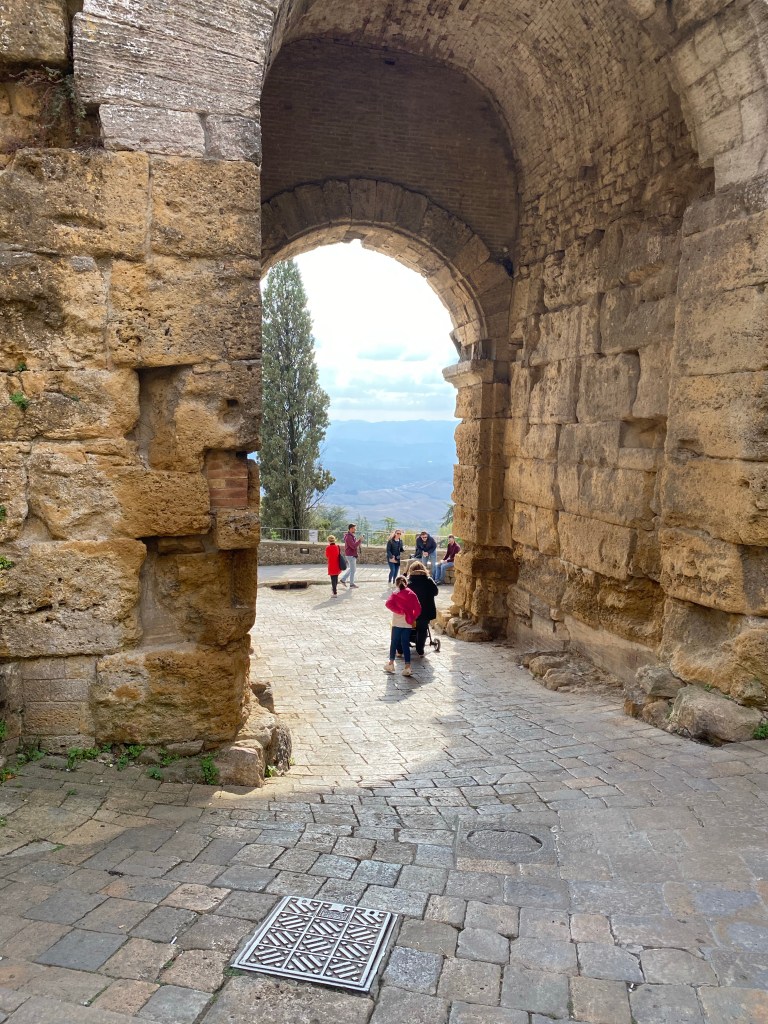
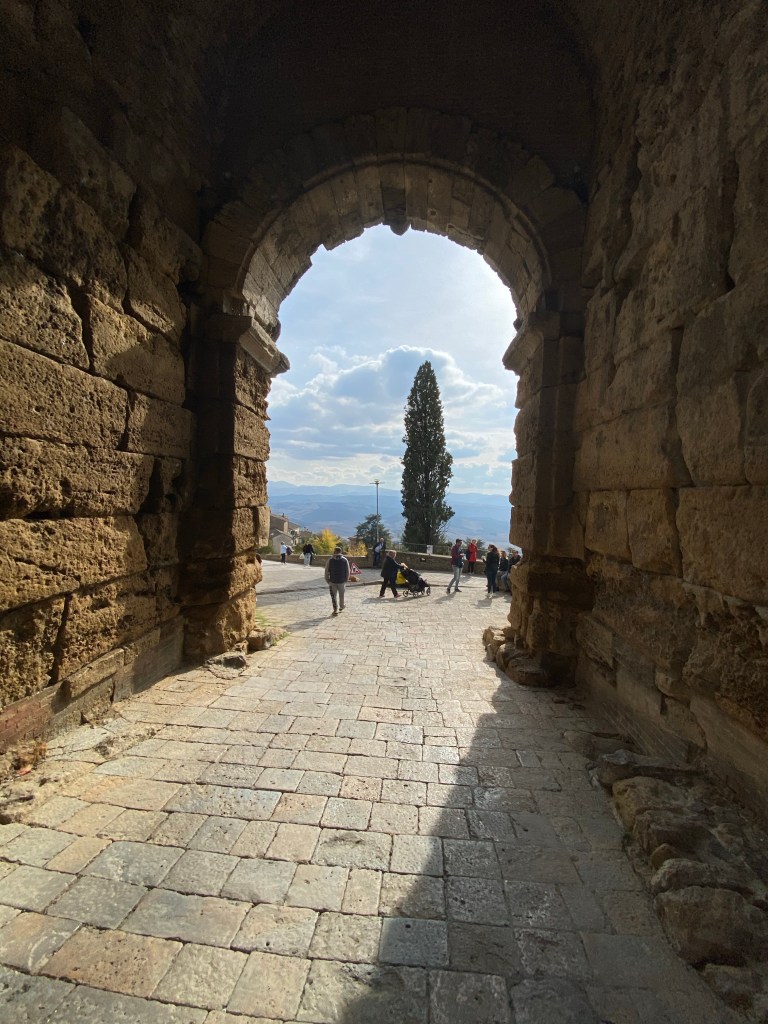
For more of the arts of Volterra, including Etruscan and Roman ruins, see my earlier post on Volterra, Nov. 1, 2021.
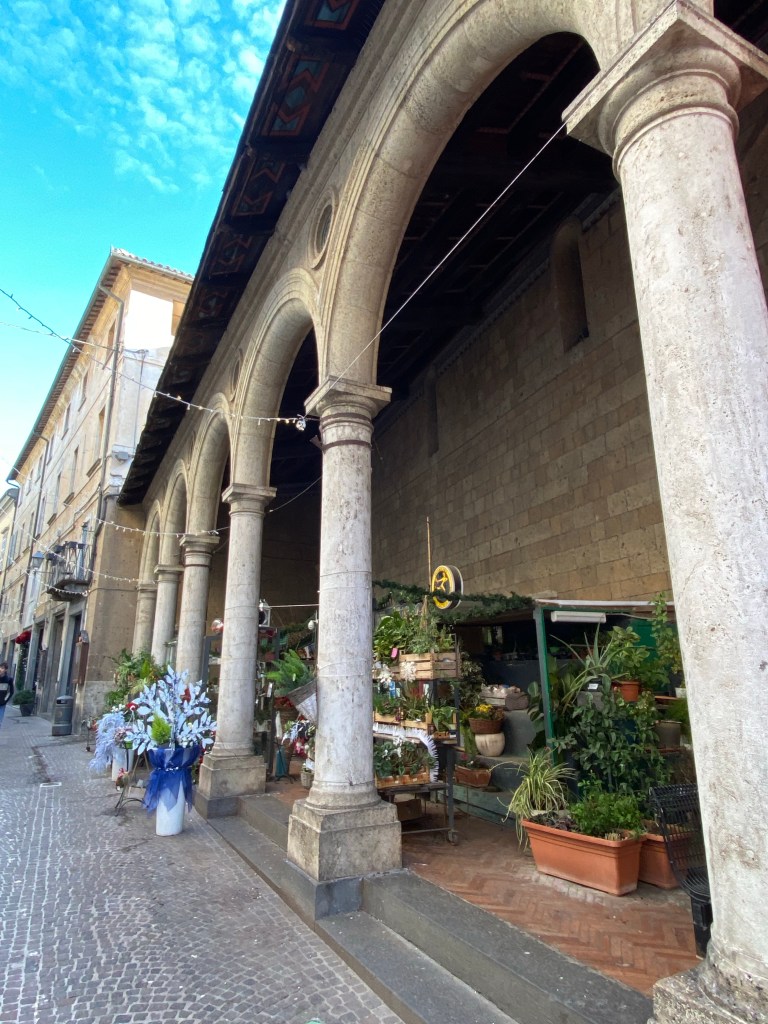
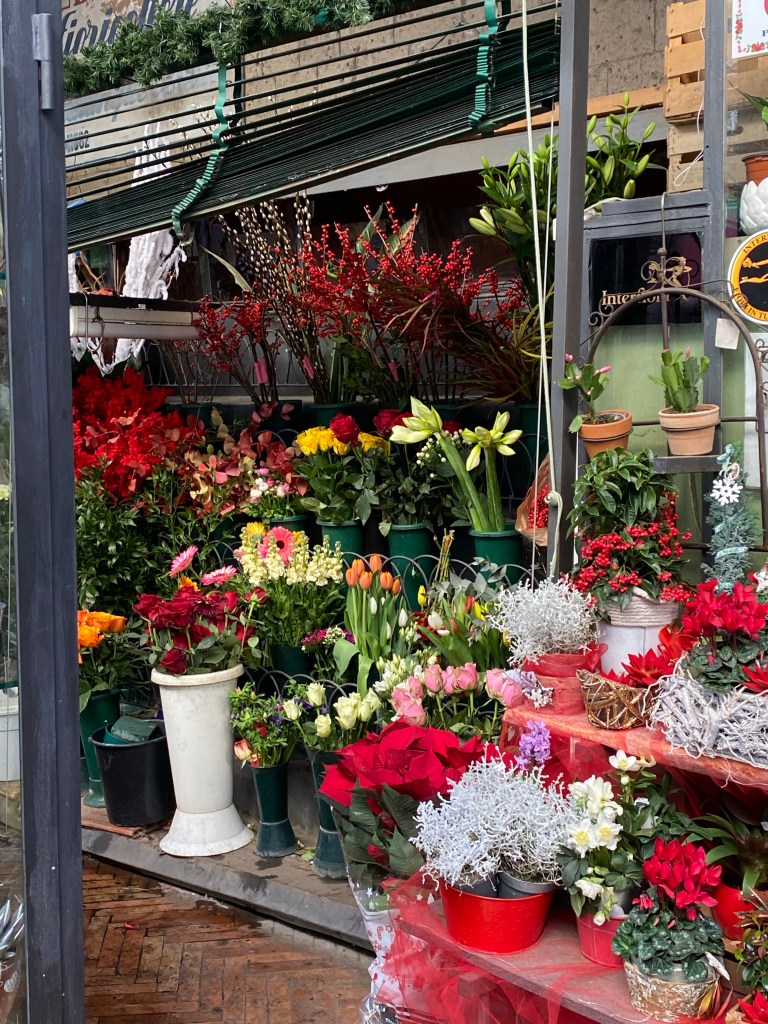
Volterra, November 1, 2021

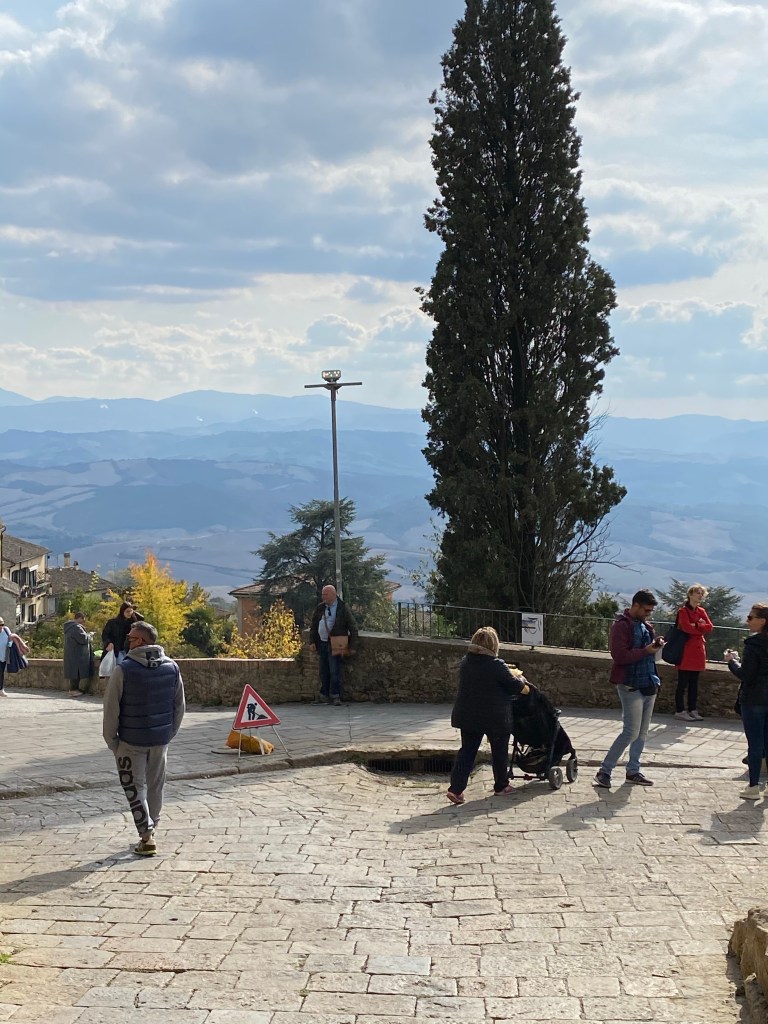
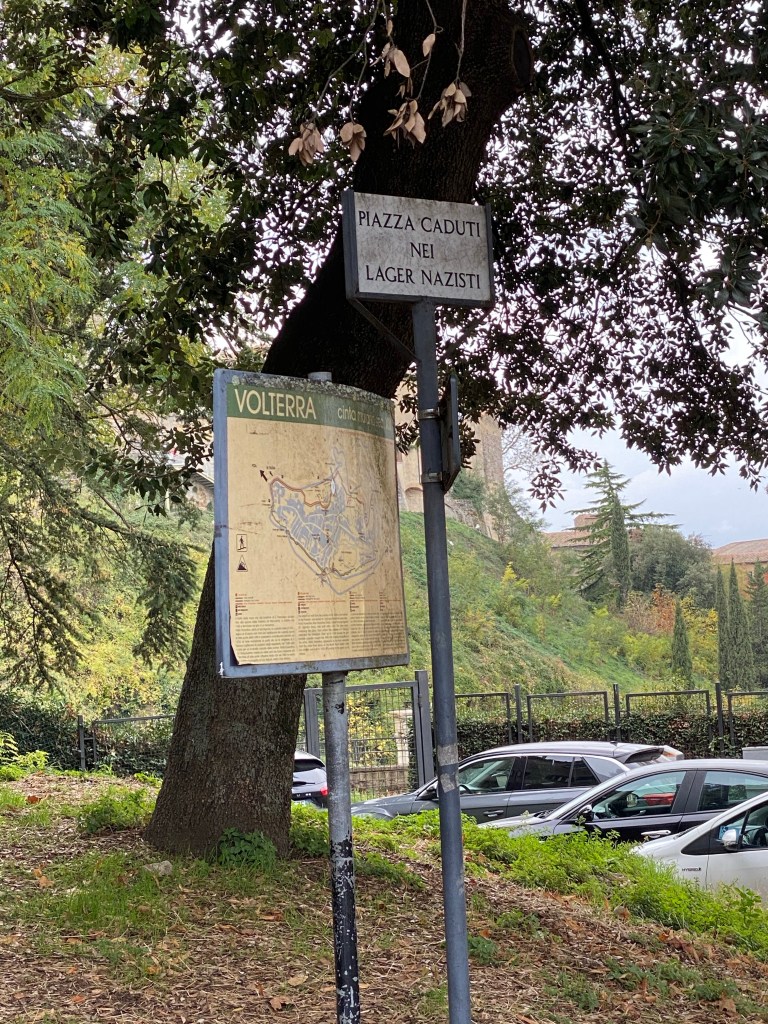
Last month, on a beautiful fall Saturday, a friend and I went to Volterra. I’ve always wanted to go there and finally got to! It was wonderful!
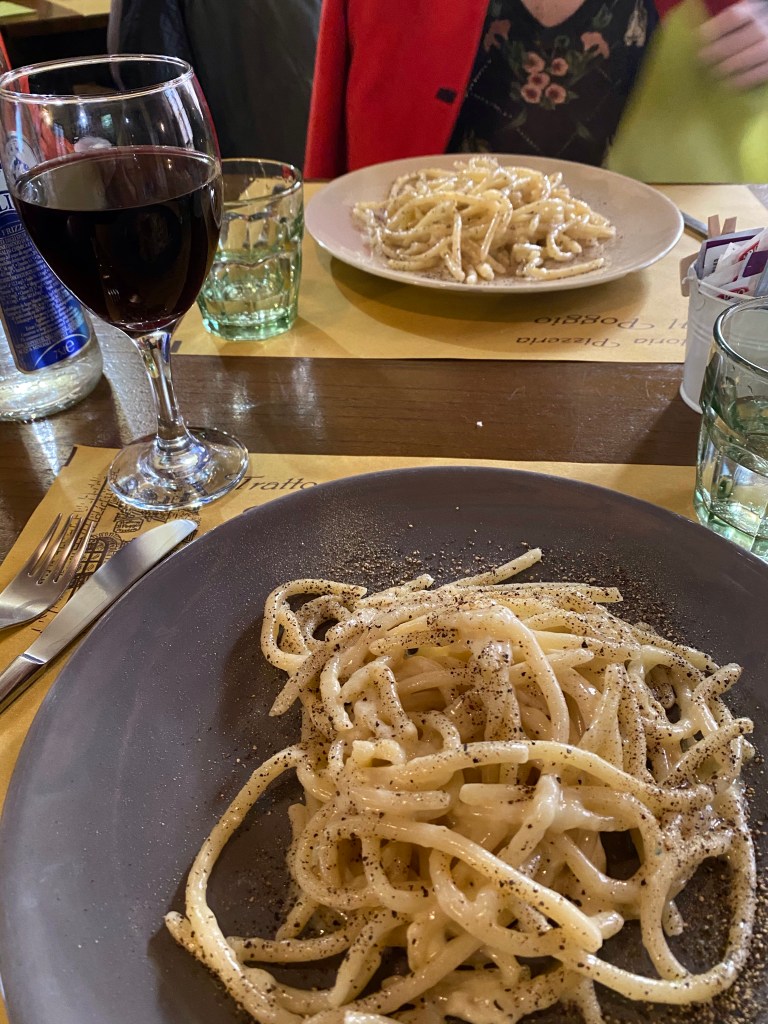
Pici with cacio e pepe

https://www.cucchiaio.it/ricetta/cacio-e-pepe/

I didn’t get to visit some of the sights in Volterra, including the Guarnacci Etruscan Museum, which is one of the oldest and most important Etruscan museums in Italy. Established in 1731, it holds works of exceptional importance in the history of ancient Volterra. The collection begins with the Villanovan section (the oldest phase of Etruscan civilization) with tombs in which bronze objects of the 9th C BC have been found: arms, tools and jewels. The extremely large collection of Etruscan urns makes this museum unique in the world: more than 600 examples of funerary caskets dating to between the 4th and 1st century BC, decorated with mythological scenes as well as with scenes of daily life. The museum also houses wonderful archeological finds such as the “ombra della Sera”, the shadow of the evening, 3rd C BC, showing a young man. You can also admire the lid of the “Urna degli Sposi” 1st c bc, the Stele of the warrior Avile Tite (4th century BC) or the “Kyathos di Monteriggioni (7th c bc).

Palazzo Viti, which I didn’t see but wanted to, is also notable. It is one of the finest private residential buildings in Italy. 12 rooms are open to the public, beautifully fitted with furniture, porcelains, alabaster collections and other valuable items representing Italian, European and Oriental art of the 15-20th centuries. The palace is still arranged as it was when kings and princes visited; and it was used by directors such as Luchino Visconti to shoot film. The palace is still inhabited by descendants of the Viti family.

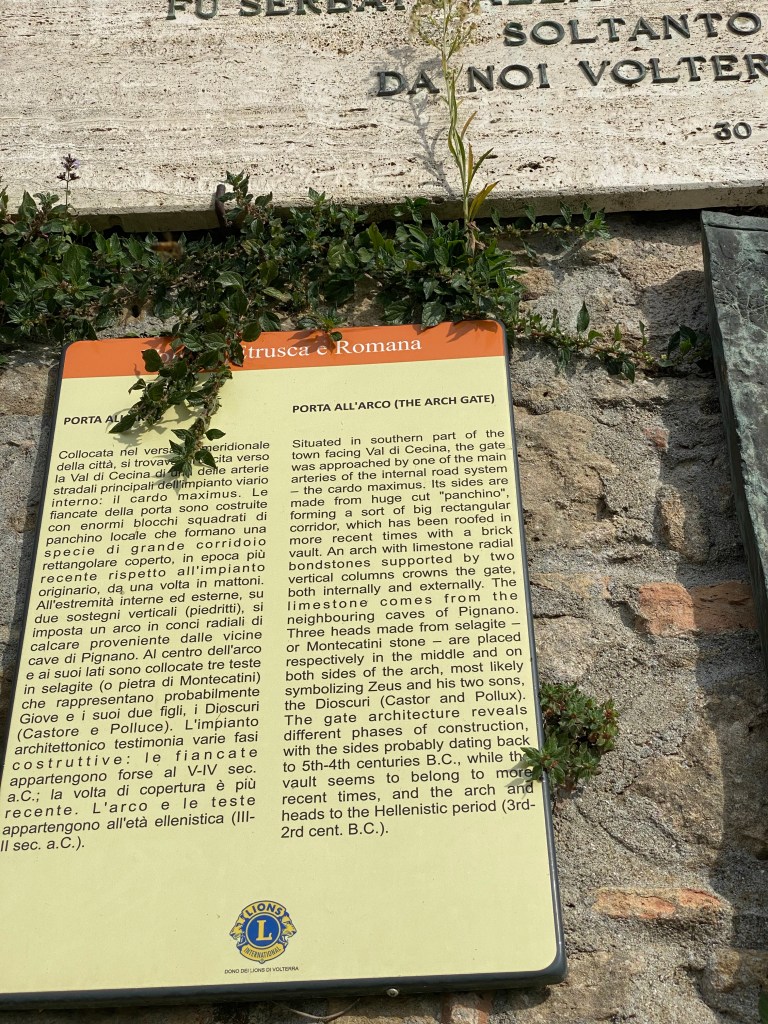
The Etruscans sites in Volterra. Several excavations have brought the light of day to the remains of a district planned to hold the main temples of this formerly Etruscan city. the Acropolis began to take form in and around the 7th C BC with the construction of its first temple. The remains visible today are those of 2 large temples and other buildings around them, dating back to the Hellenistic era.

You can also visit a large Roman underground reservoir that once supplied the city with nearly all its water.

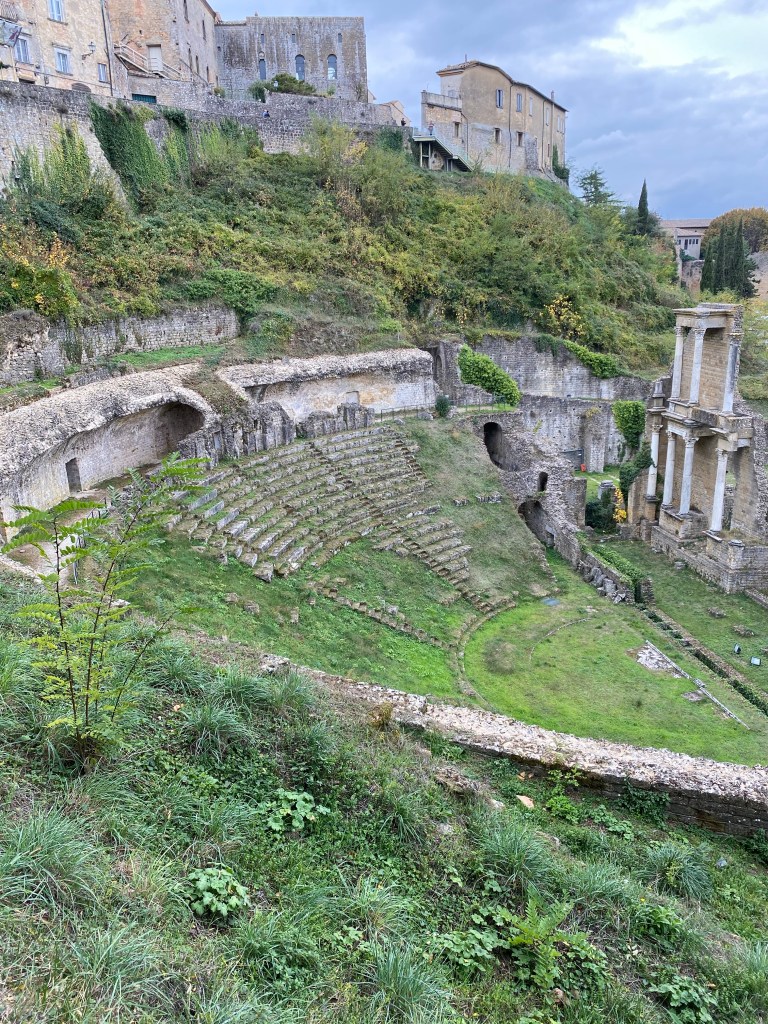
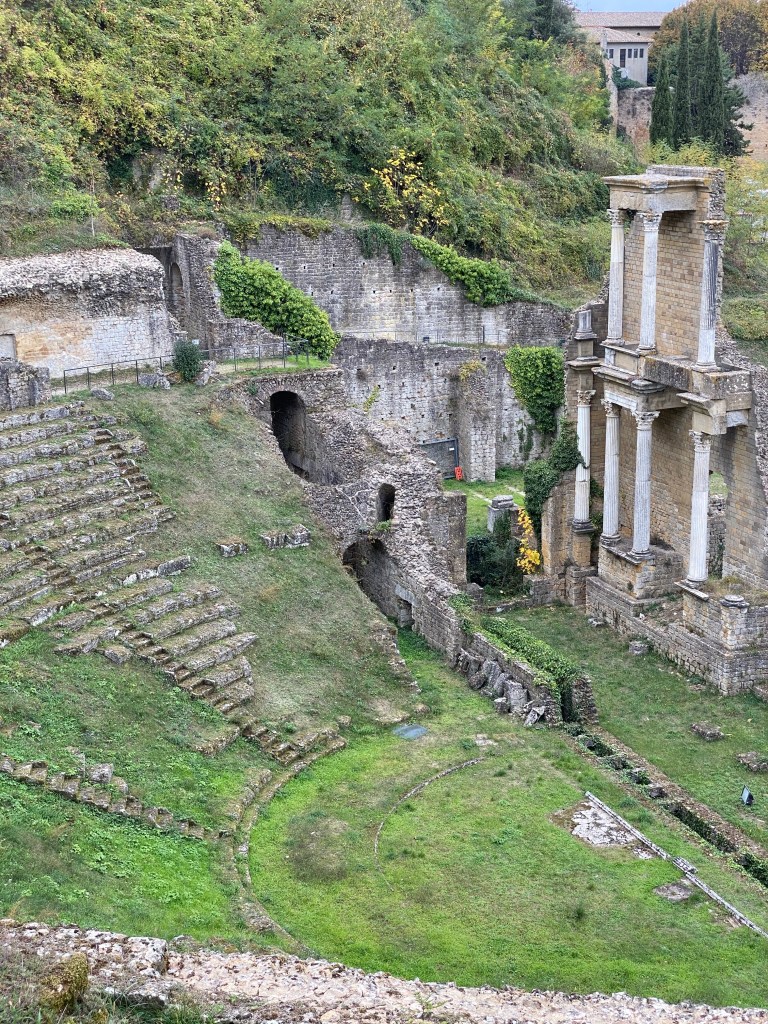
Teatro Romano: In the Vallebuona are remains of the most important Roman building in Volterra: the theater. Built at the end of the 1st C BC, it could hold more than 2000 people; it was abandoned at the beginning of the 3rd C AD. Its remains were used to build a thermal complex in the center of the porch, which stood behind the stage. Many of its original parts were decorated with marble and statues.

Colle di Val d’Elsa

Colle di Val d’Elsa

Colle di Val d’Elsa

Colle di Val d’Elsa

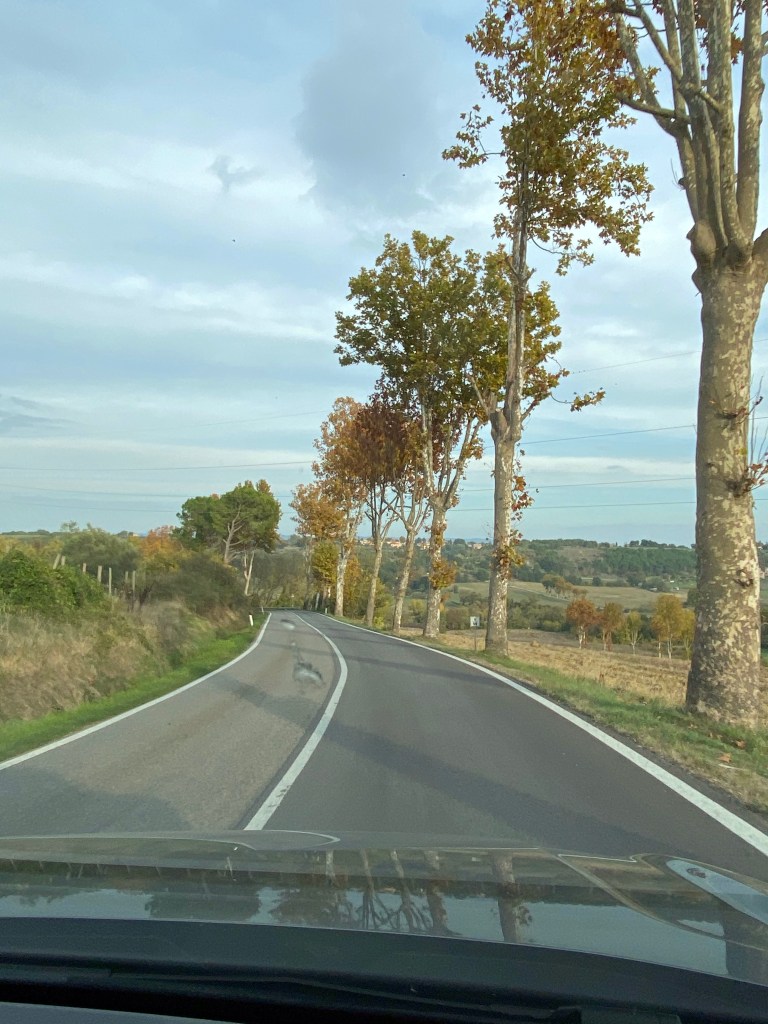
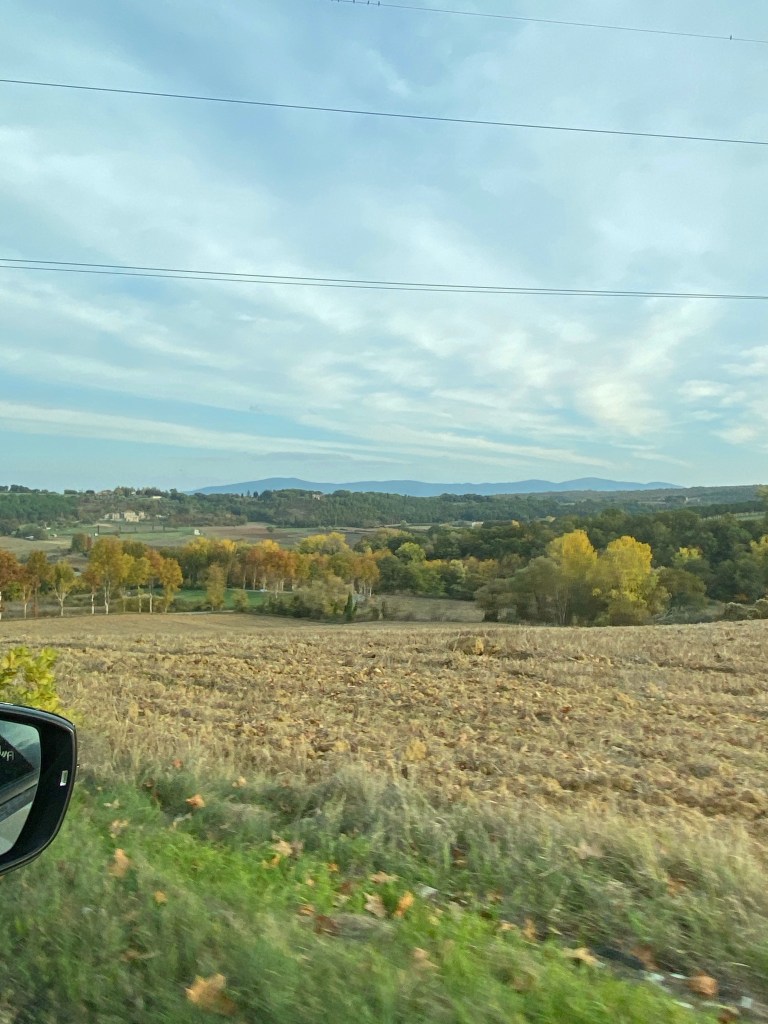
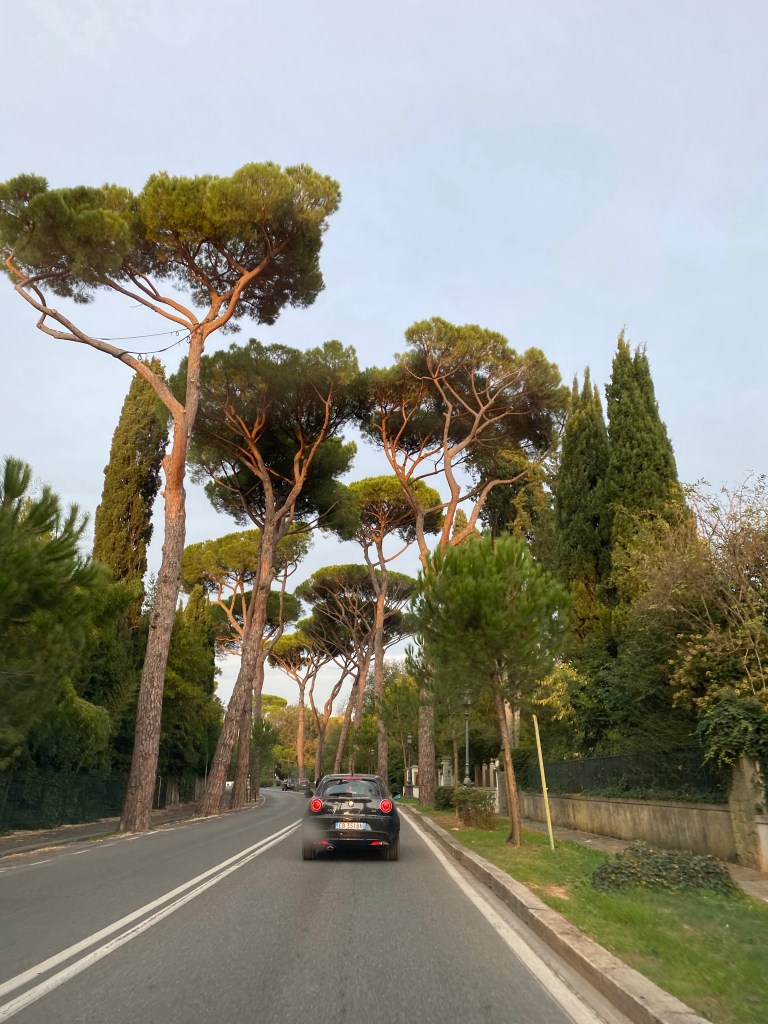
Driving back into Florence at the end of a happy day!

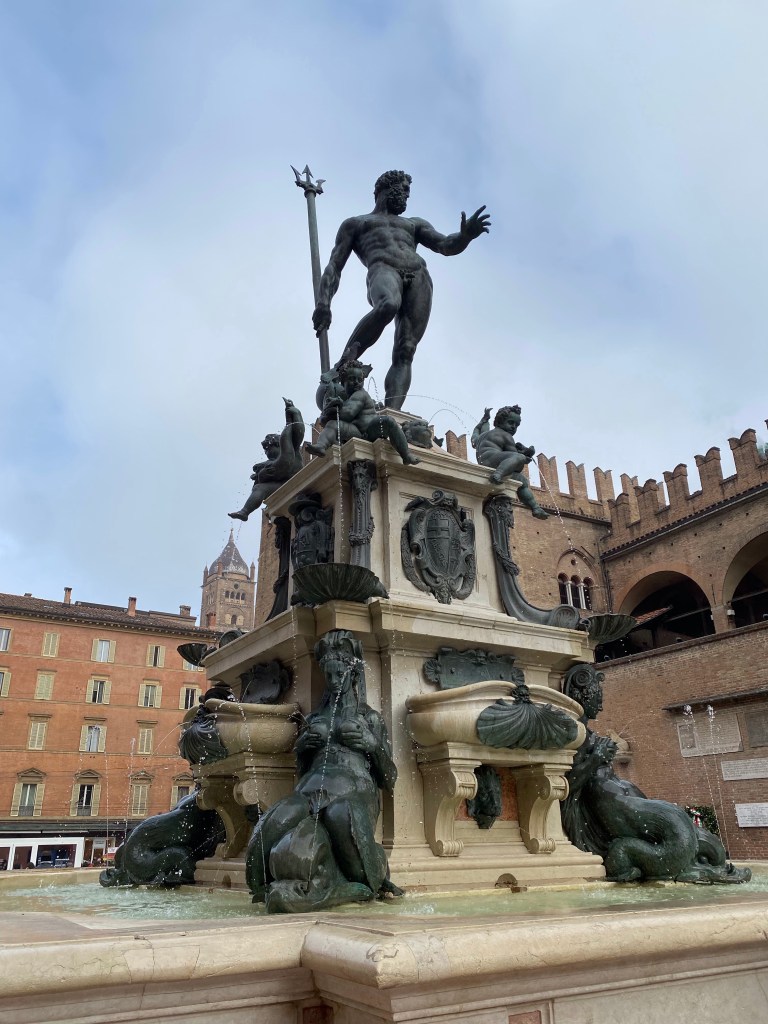
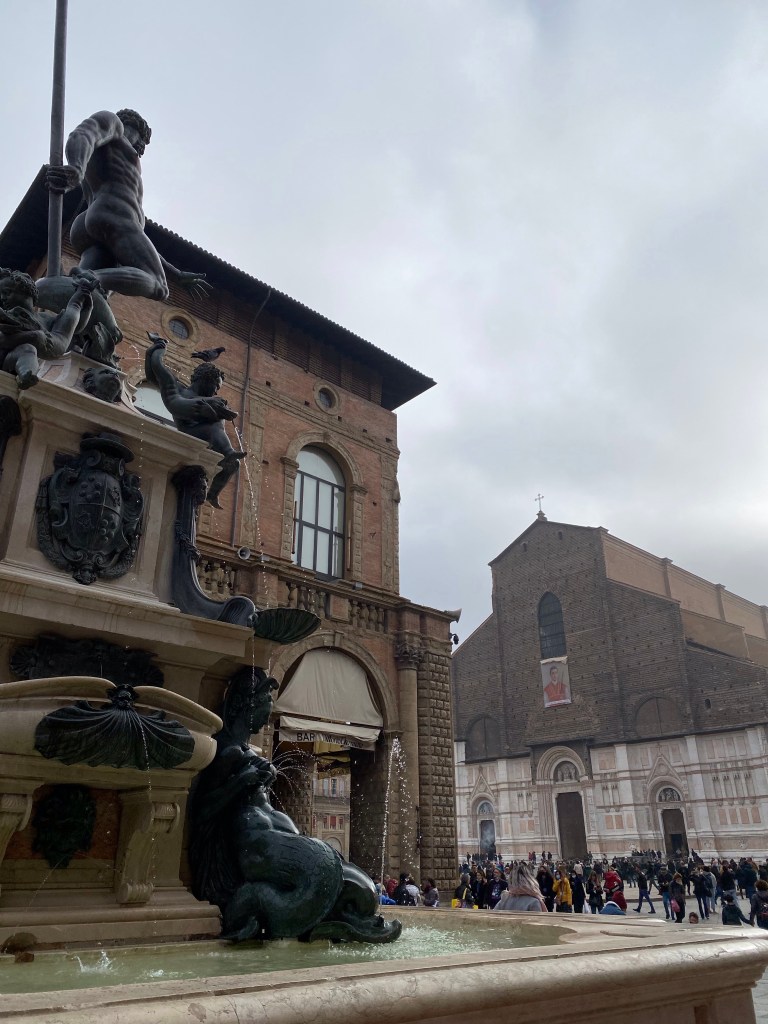
The magnificent Neptune fountain in Bologna by Giambologna

The Fountain of Neptune is a monumental civic fountain located in Piazza del Nettuno, next to Piazza Maggiore, in Bologna. The fountain is a model example of Mannerist taste of the Italian courtly elite in the mid-sixteenth century.

The construction of the fountain was commissioned by the Cardinal Legate Charles Borromeo, to symbolize the fortunate recent election of Borromeo’s uncle as Pope Pius IV. To clear space for the fountain, an entire edifice had to be demolished.

The design and assembly of the fountain was completed by the Palermitan architect Tommaso Laureti in 1563. The fountain was completed in 1565.

The over-life-size bronze figure of the god Neptune was completed and fixed in place around 1566. The statue was an early design by Giambologna, who had submitted a model for the Fountain of Neptune in Florence, but had lost the commission to Baccio Bandinelli.


The Neptune Fountain has its base on three steps, on which it is situated a tank made of local stone and covered by marble from Verona. In the center of the tank, there is a base where there are four Nereids who holding their breasts, from which jets of water emerge. The base is decorated with pontifical emblems, ornaments that – connected to four cherubs – hold dolphins (which are allegorical representation of major rivers from the then-known corners of the world: the Ganges, the Nile, the Amazon River, and the Danube.) In the center of this base raises the majestic figure of the Neptune sculpted by Giambologna; the statue is a typical expressions of the manneristic theatricality.

The Neptune stretches his left hand in a lordly gesture, appearing to be aiming to placate the waves; this posture is interpreted as symbolic exaltation of the new power of the Pope Pius IV: just as Neptune was the master of the seas, the Pope was the master of Bologna and of the world.

Inscriptions
On the four sides of the marble tank there are four inscriptions in Latin provide the background to the fountain’s construction:

Fori Ornamento (to decorate the square);
Aere Publico (built thanks to public money);
Populi Commodo (built for the people);
MDLXIIII (built in 1564; the date is wrong though, since the fountain was officially finished in 1566).


The four main sources of political power for Bologna then are also inscribed on the base:

Pius IIII Pont. Max (Pope Pius IV)
Petrus Donatus Caesius Gubernator;
Carolus Borromaeus Cardinalis; (Cardinal Carlo Borromeo)
S.P.Q.B. (Senatus Populusque Bonononiensis) (Senate and the People of Bologna)

The trident of the Neptune’s statue inspired and it was used by Maserati brothers as the emblem for their first car, the Maserati Tipo 26. The logo was created in 1920 by one of the brothers, Mario Maserati, at the suggestion of a family friend, Marquis Diego de Sterlich. This is still today the logo of the Maserati car company.

The fountain and its sculpture are one of the most iconic symbols of the city and references to them can be found in many symbols, commercials and logos. This includes the historical students’ fraternity (Goliardia) “Excelsa Neptuni Balla”, on whose emblem figure two tridents.

The trident logo of the Maserati car company was considered particularly appropriate for the sports car company due to the fact that Neptune represents strength and vigour; additionally the statue is a characteristic symbol of the company’s original home city.