
Am I back in Chianti?
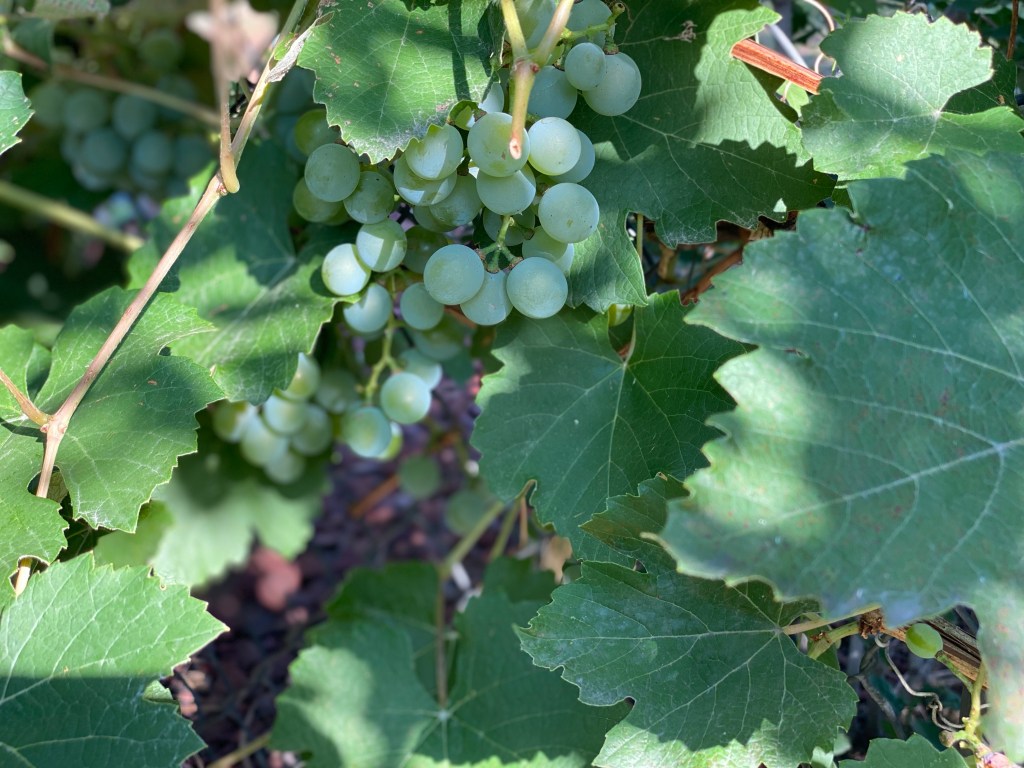
Or, am I in Napa?
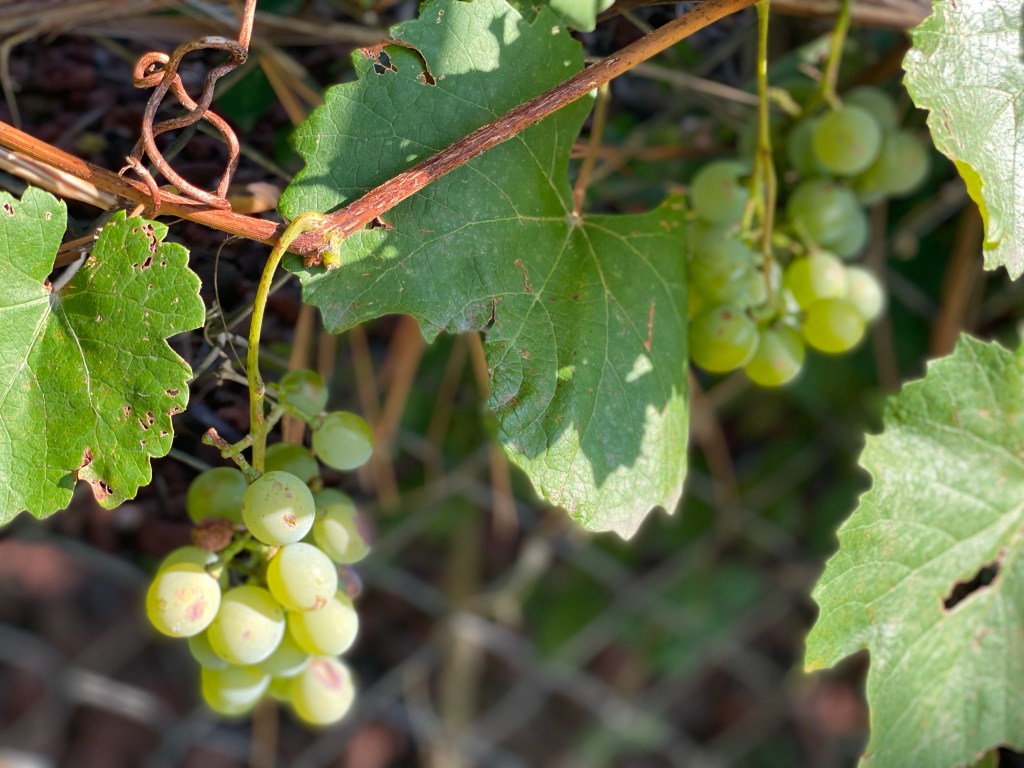
No, I’m in my backyard in Denver! I planted these grape vines 28 years ago and they are still going strong!
Am I back in Chianti?
Or, am I in Napa?
No, I’m in my backyard in Denver! I planted these grape vines 28 years ago and they are still going strong!
March 1, 2022. Rabbit, rabbit. I’m in Naples! I’m already enjoying good fortune!
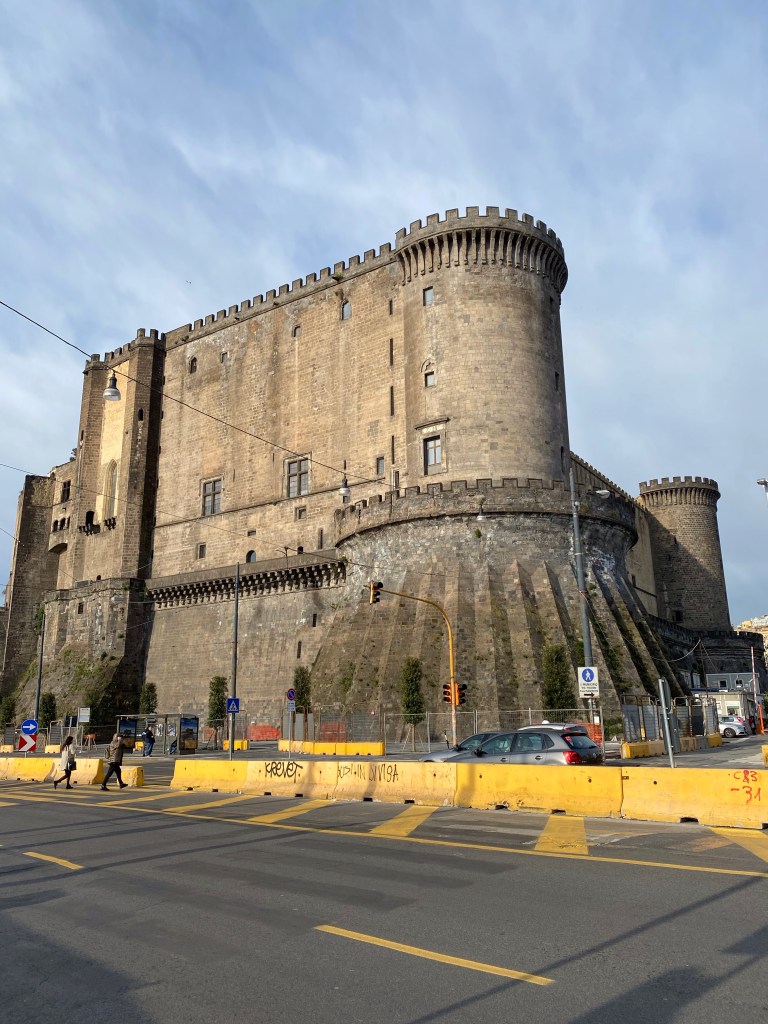
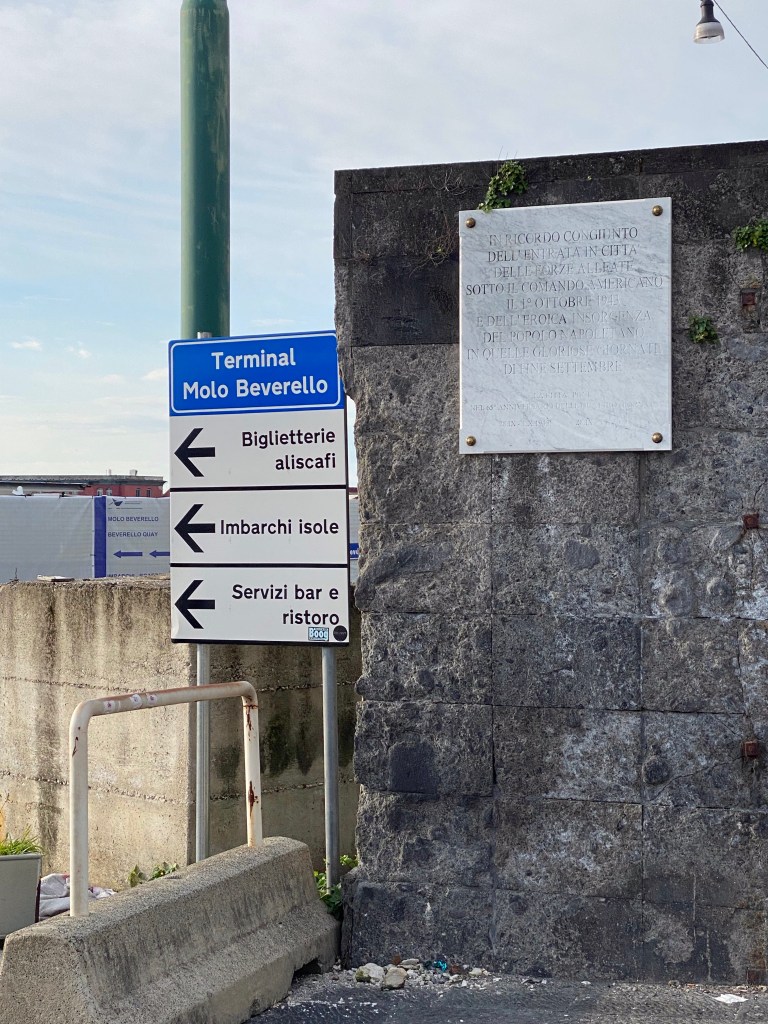
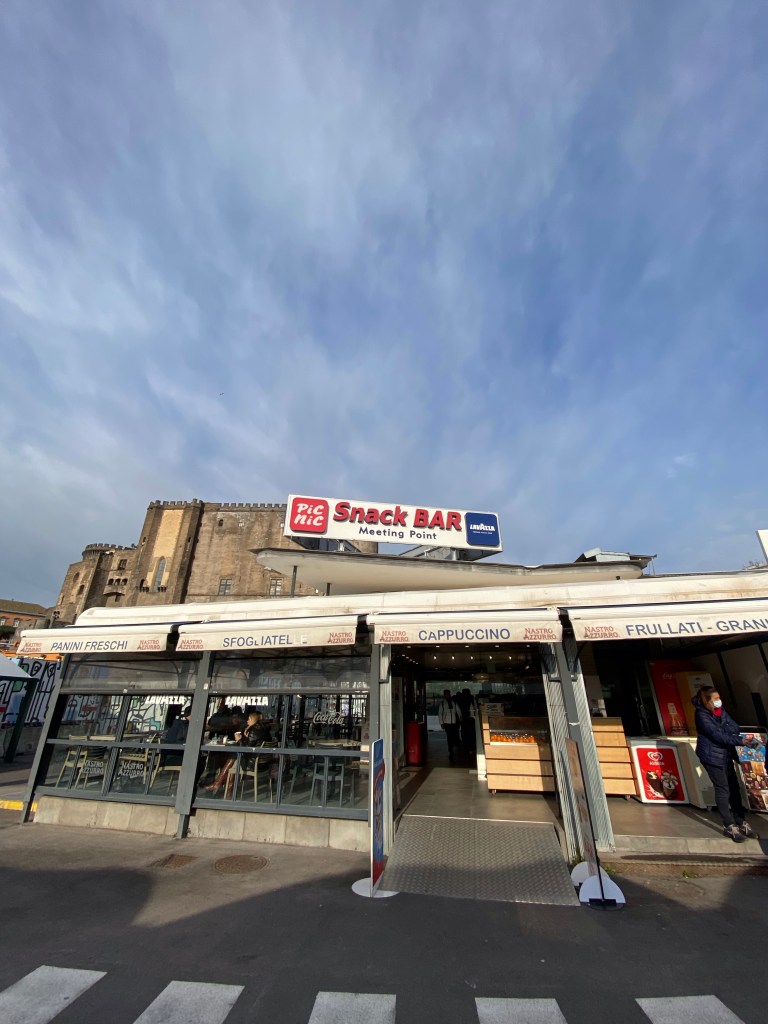
Tomorrow I’ll take the ferry from Naples to Capri. Just locating the exit point: Molo (wharf) Beverello. My hotel is ideally situated between the wharves and a metro stop (Universita).
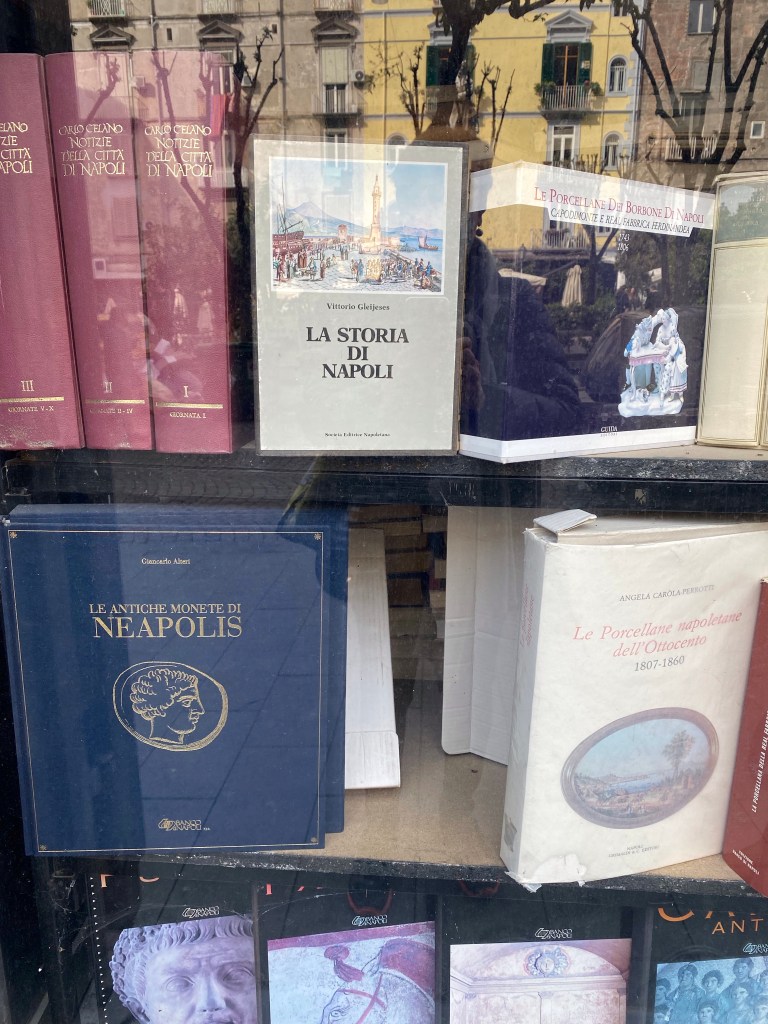
Above, looking in a bookstore window, there are lots and lots and lots of books written about Naples!

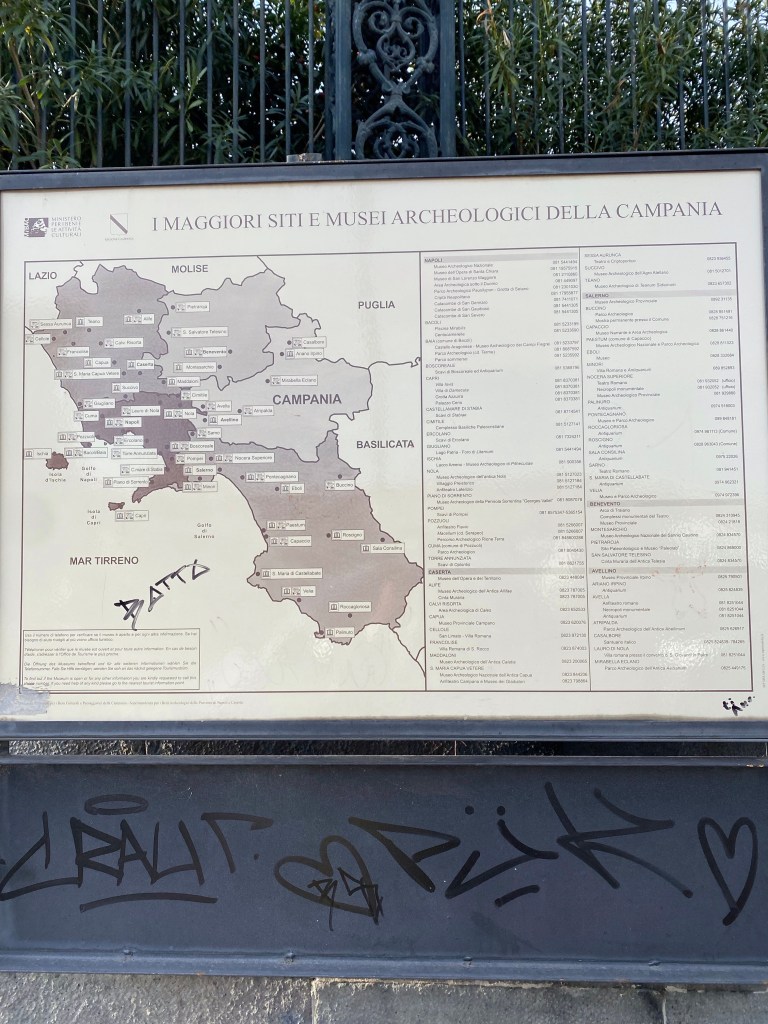

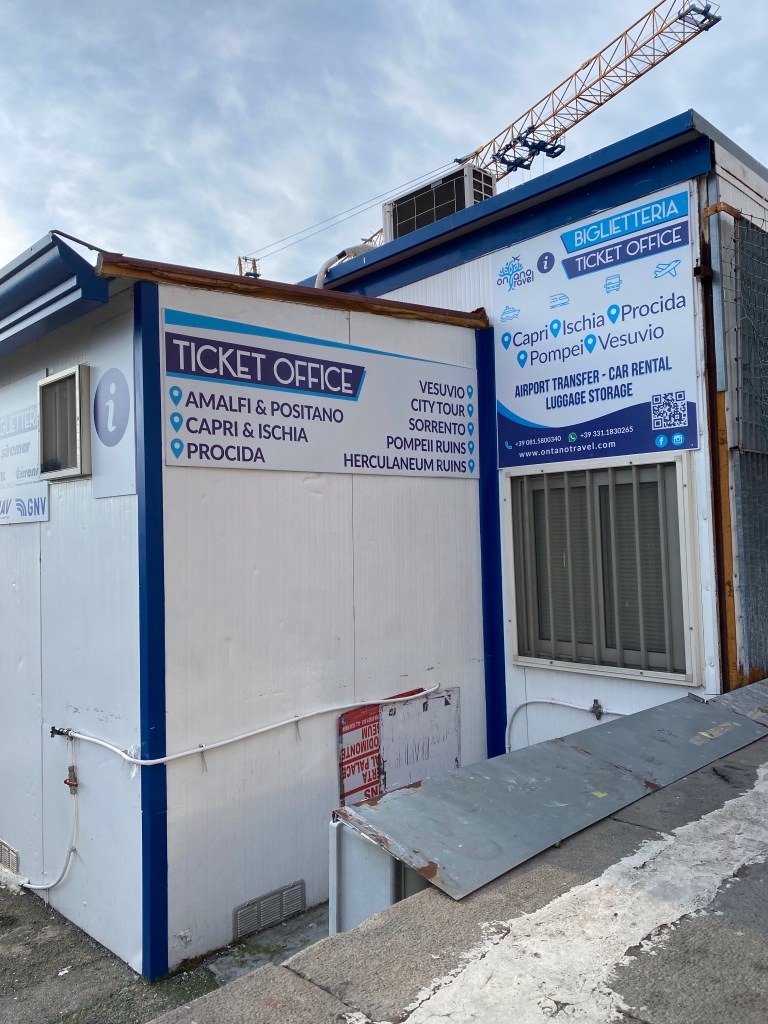
Random sign explains major archeological points of interest in this incredible area!


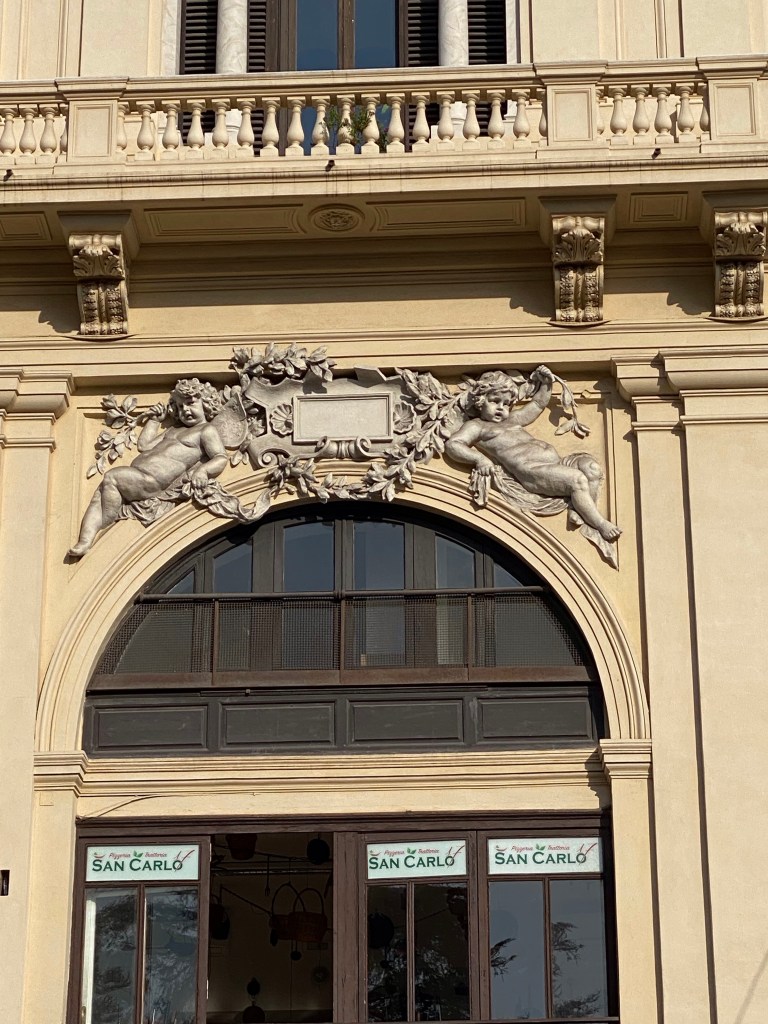
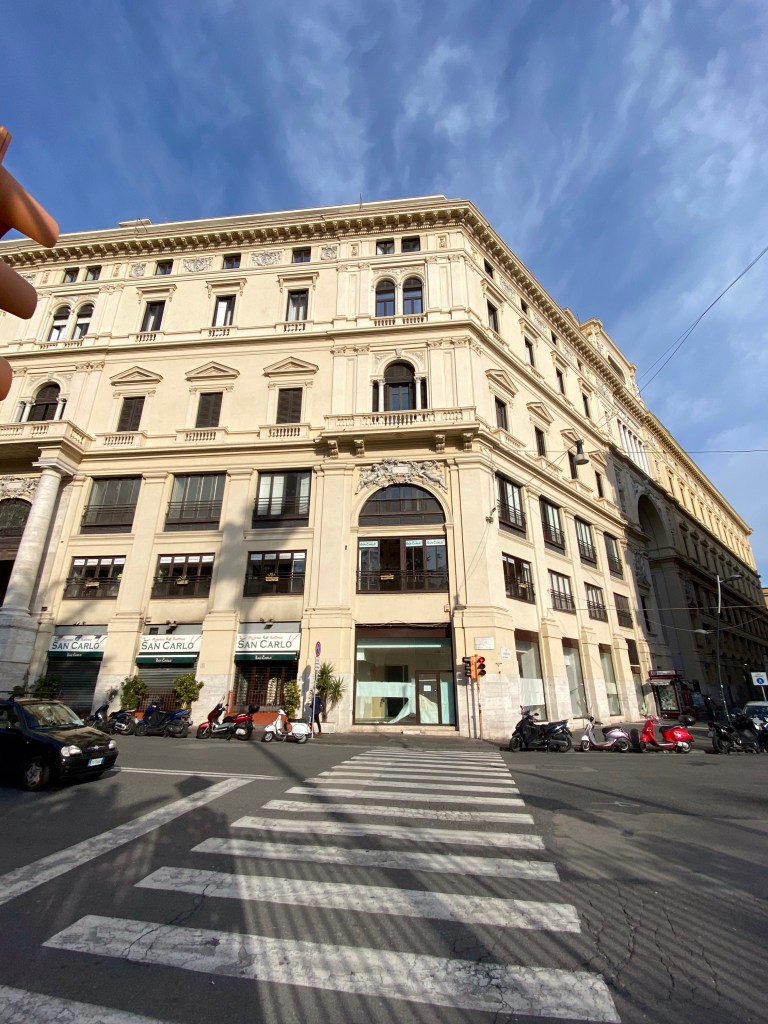
The putti above are so evocative of Naples. In Florence you find representations of young putti, well-formed and in shape and busy being productive. In Naples, it would seem, they are seed and relaxed!!
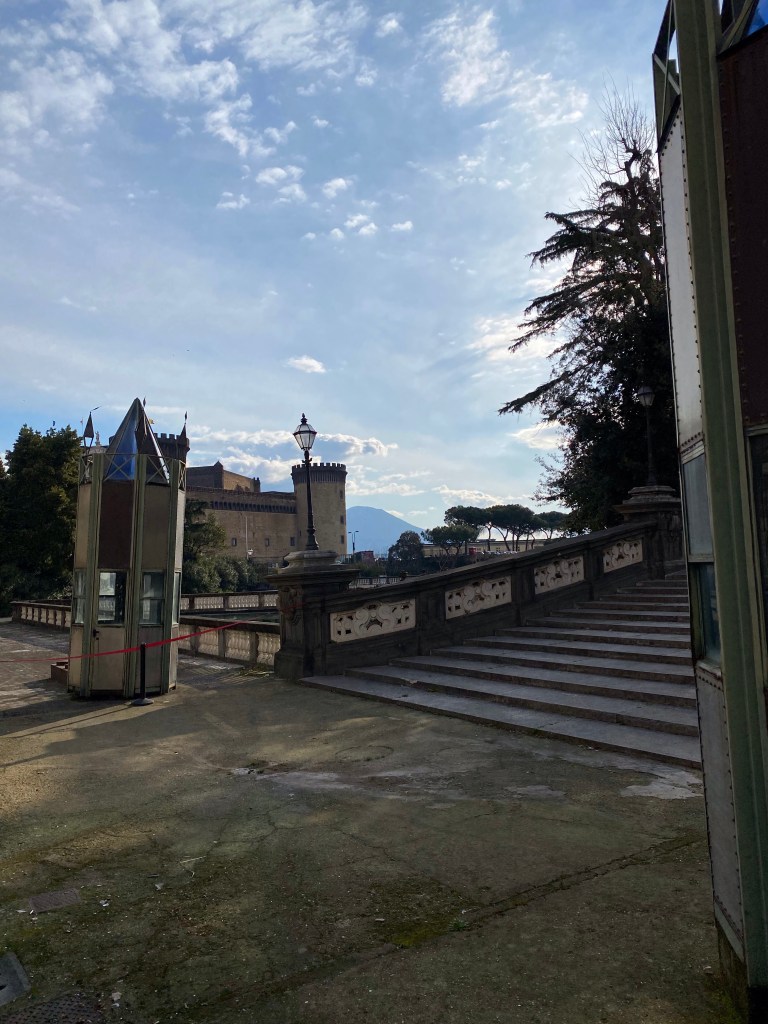
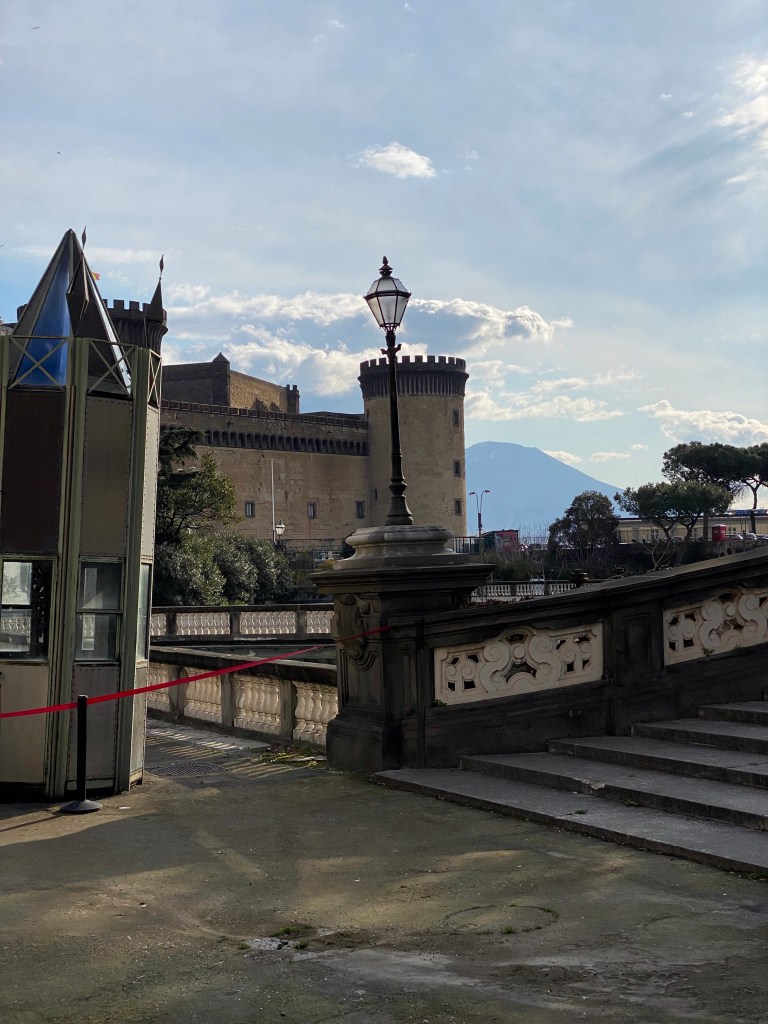
See Mt. Vesuvius, the only active volcano in Europe, lurking?
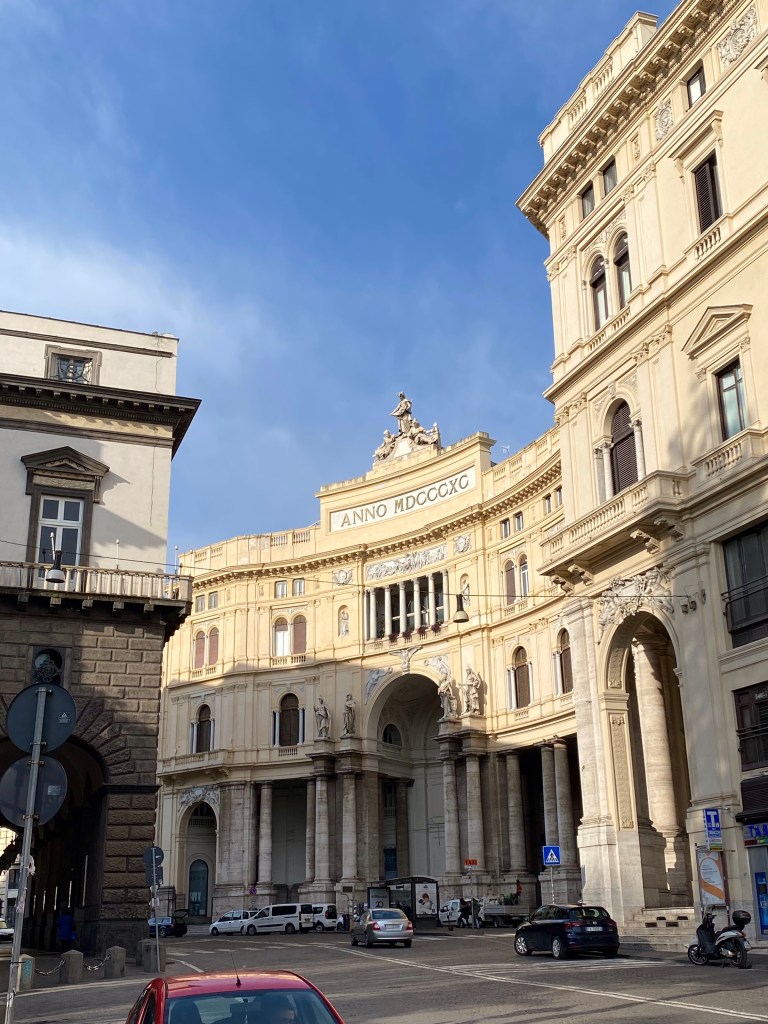
The photo above is the exterior of the Galleria Umberto I and the San Carlo theater is housed in the brown brick building to the left. I’ll be posting on both of those locales soon.
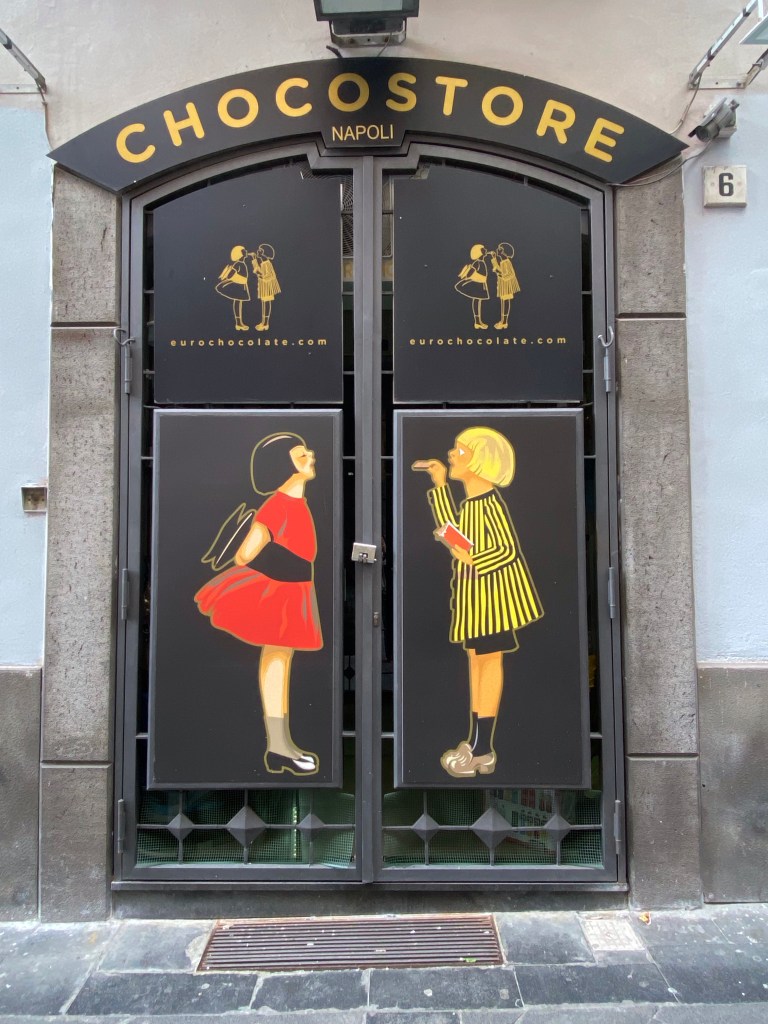
I soon found my way onto Via Toledo, which is much more upscale than the shopping streets I was on yesterday. Here the shops are much tonier!
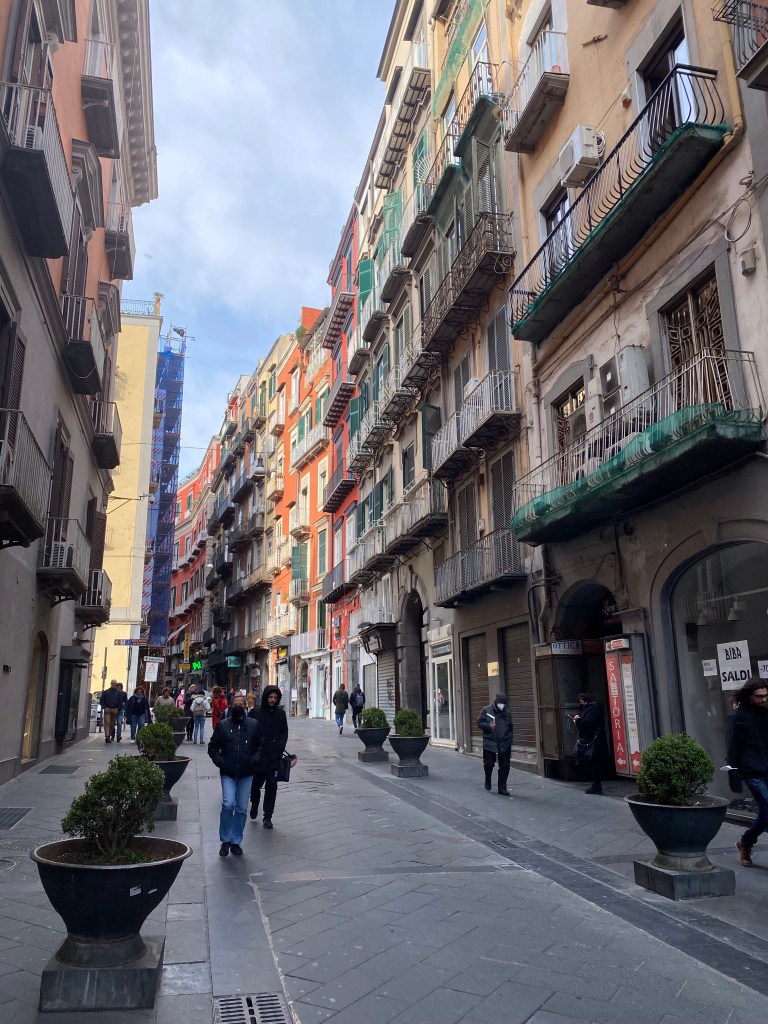
Below: a sweet children’s clothing store called “milk and kisses”

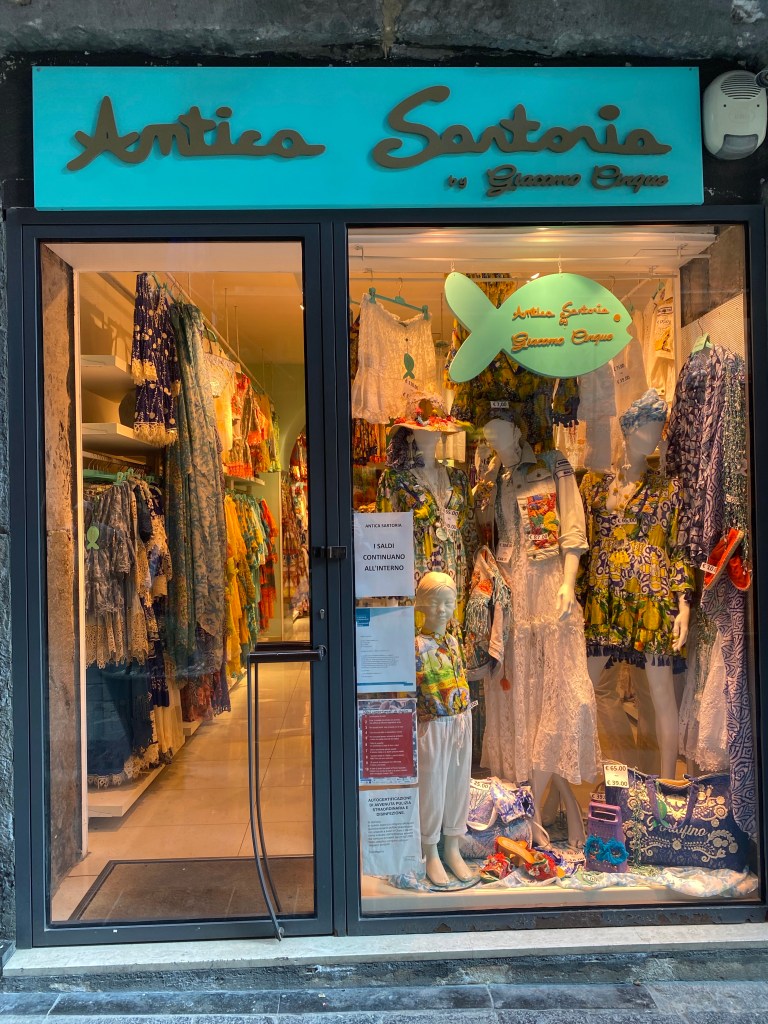
I love the clothes in the Antica Sartoria (the old dressmaker). It’s a chain, there’s one in Florence.
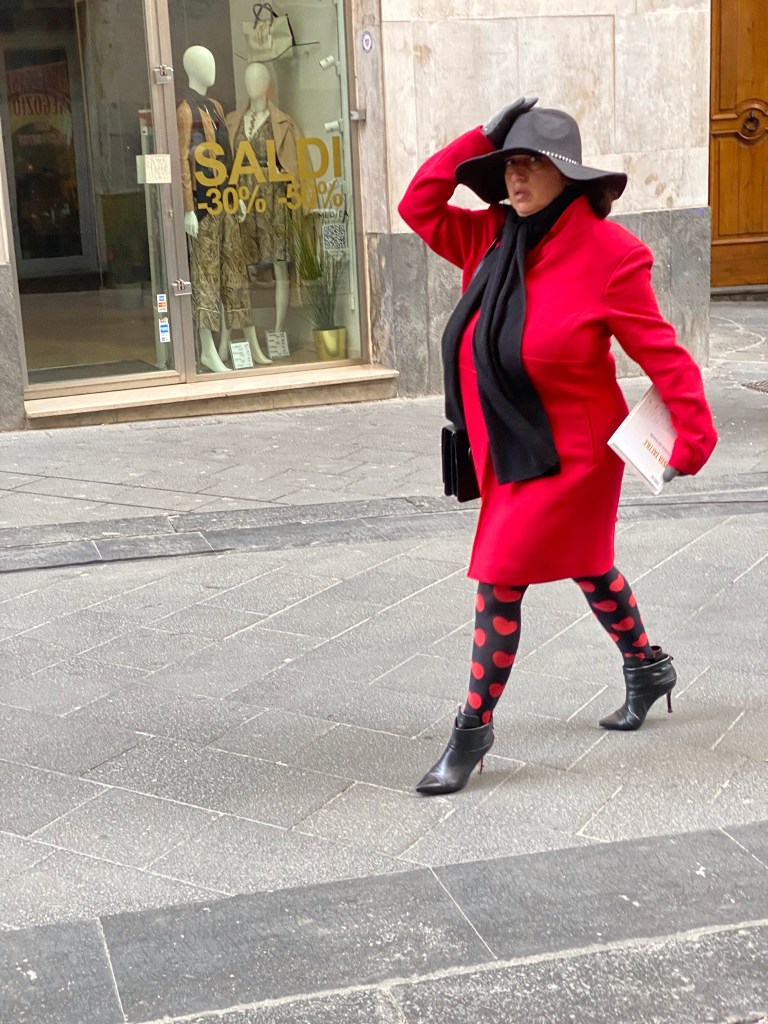
I saw and felt this woman coming down the street and I tried to surreptitiously take her photo, but her eyes show you she’s on to me. Wow! What an outfit!

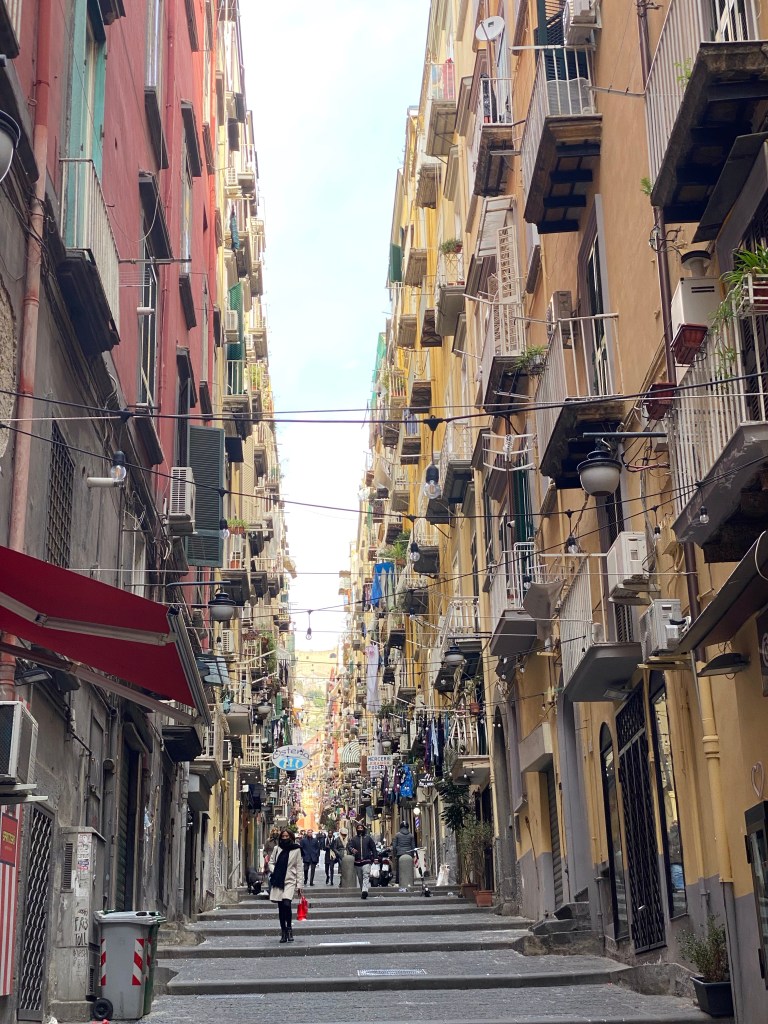
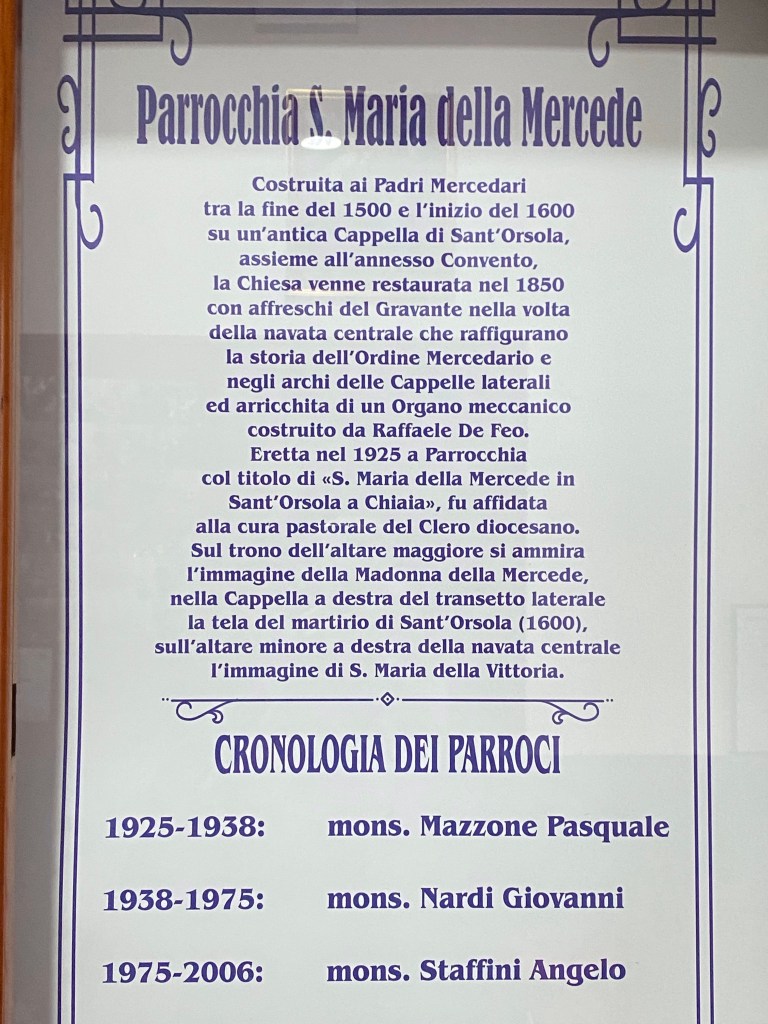
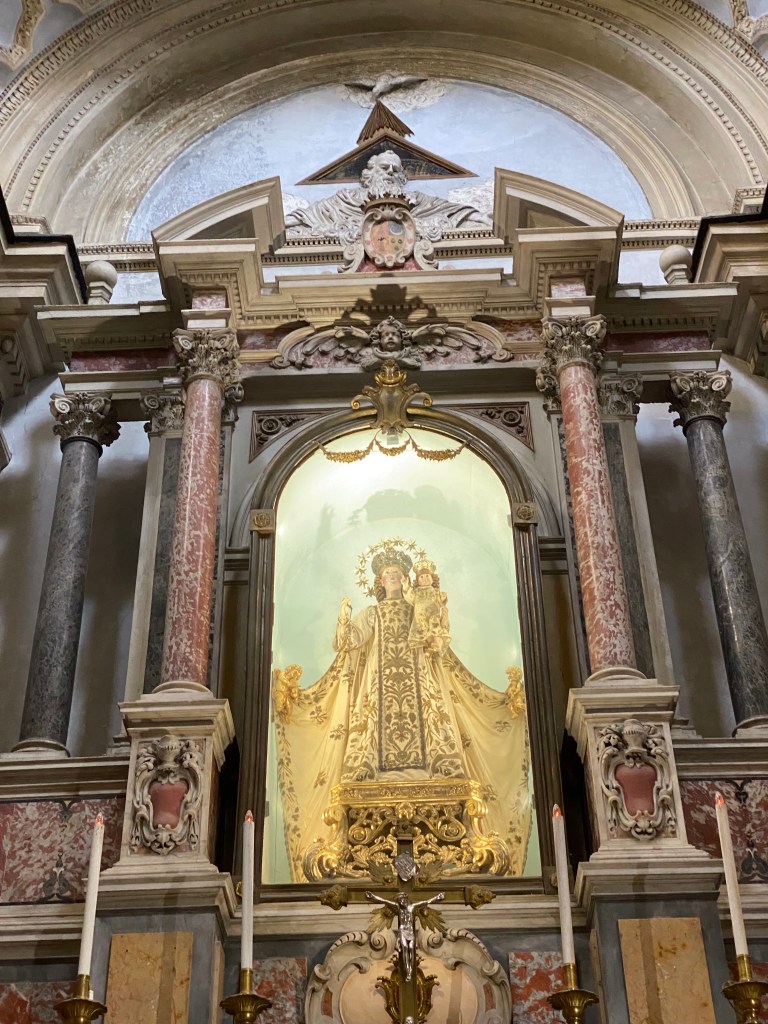
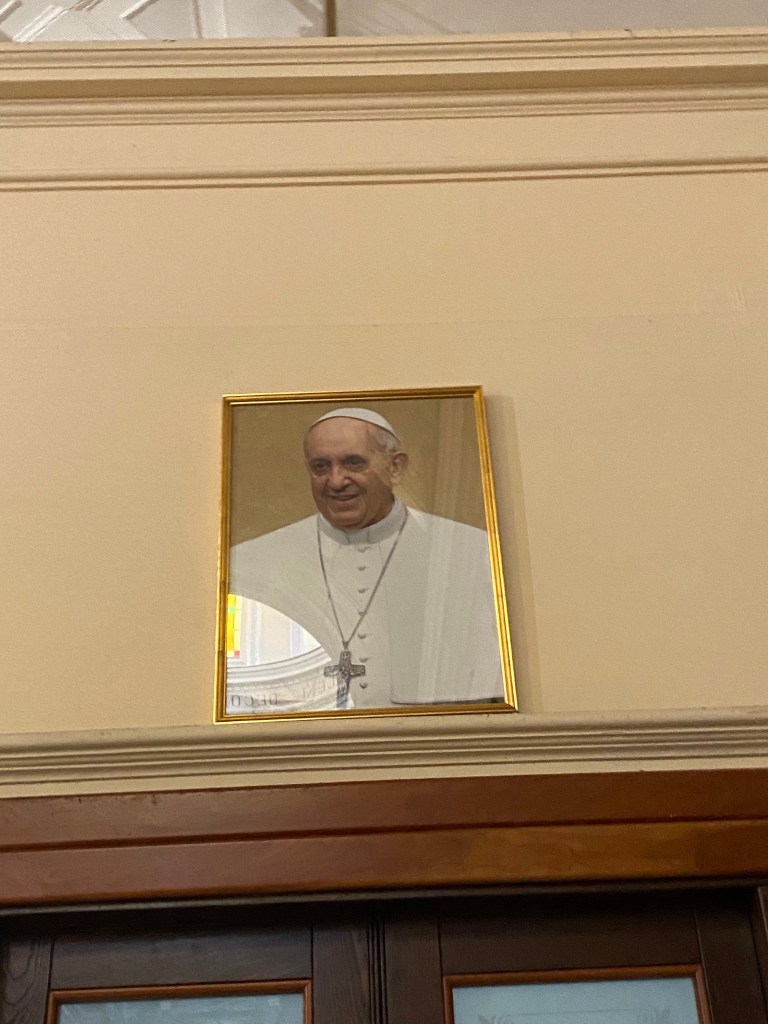
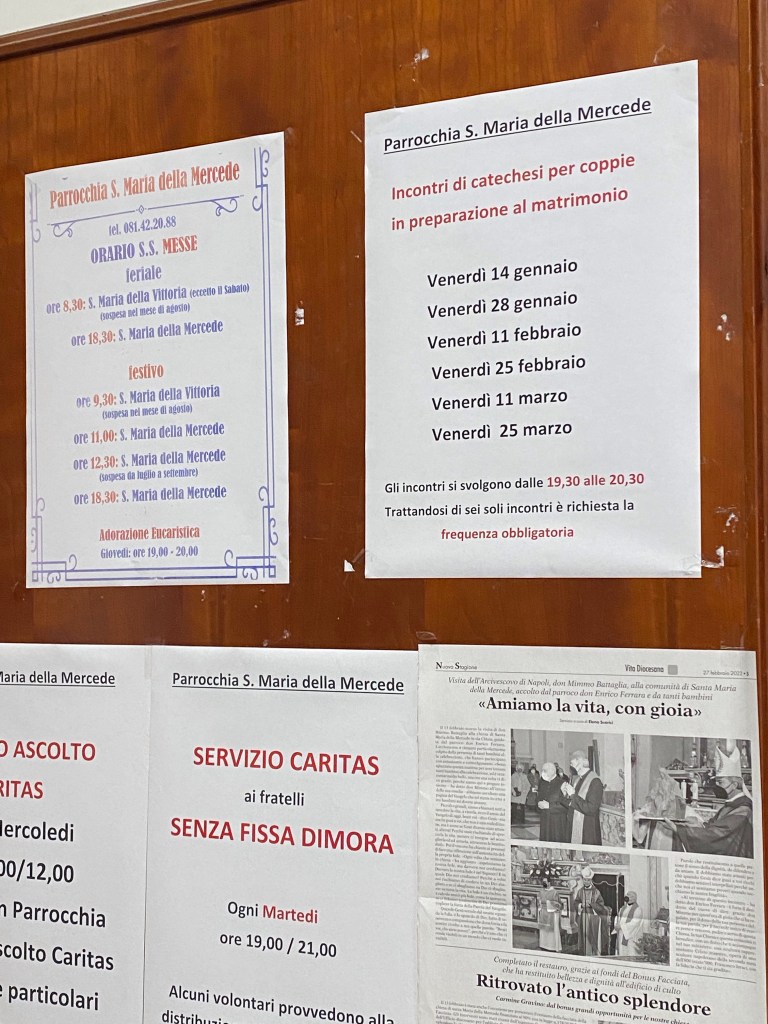
Next, I ducked into a modest church in this part of town, the Parrish of St. Mary of the Mercede. It’s history is outlined in a sign at the front entrance:
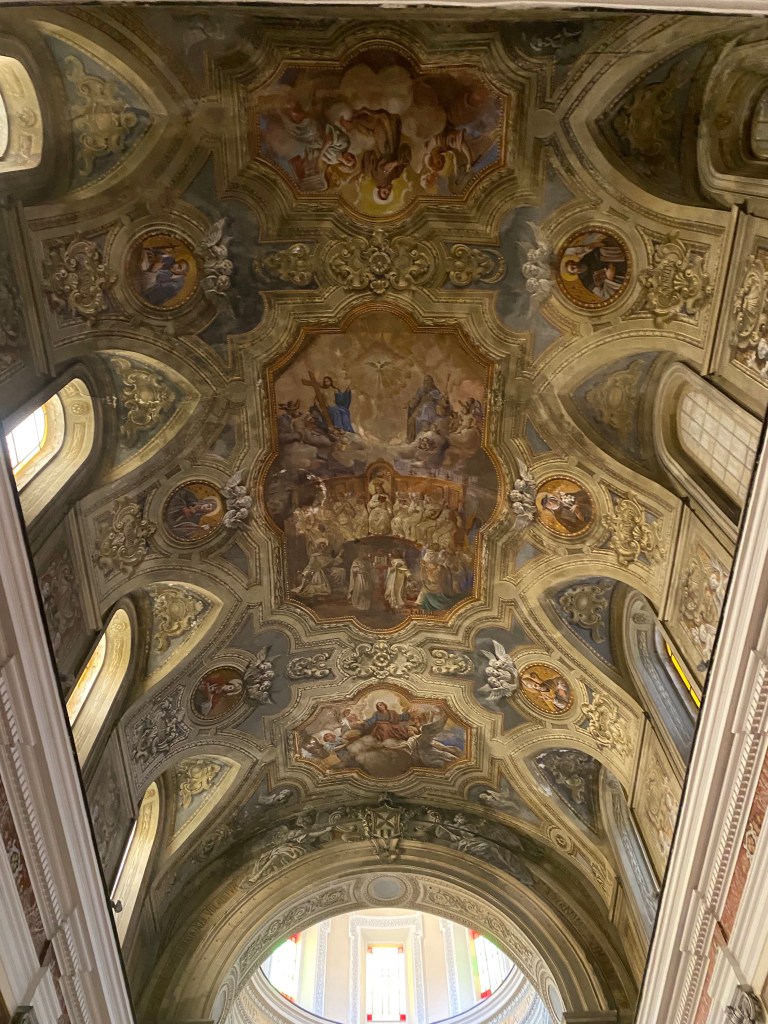
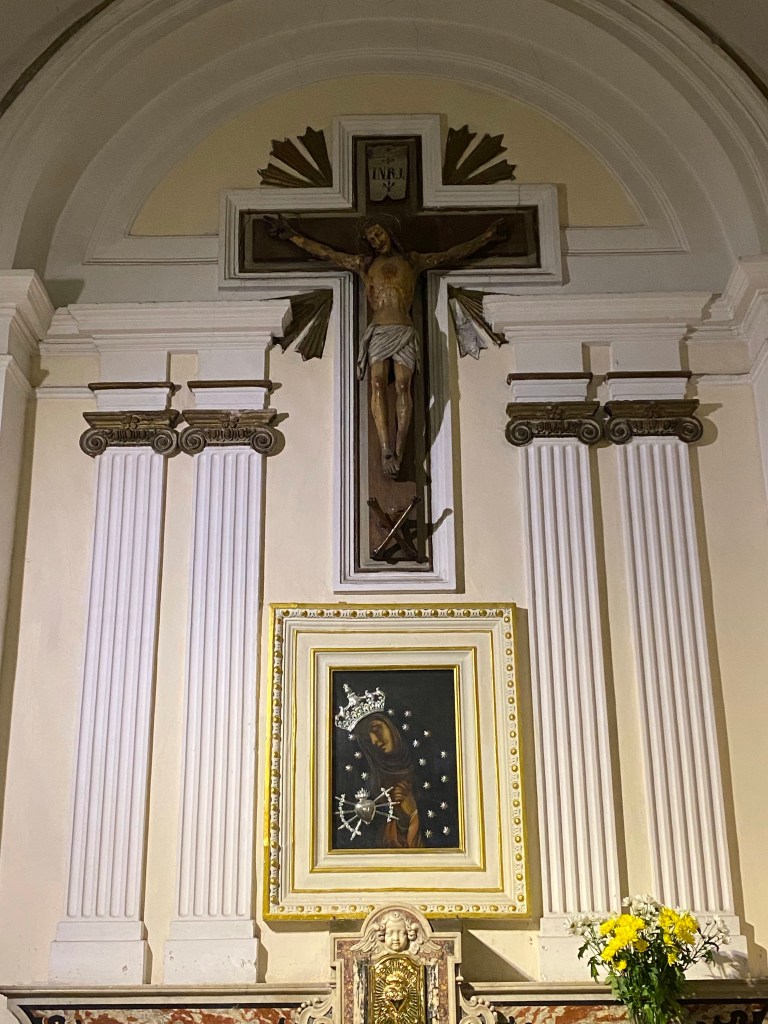
The interior is pretty splendid:

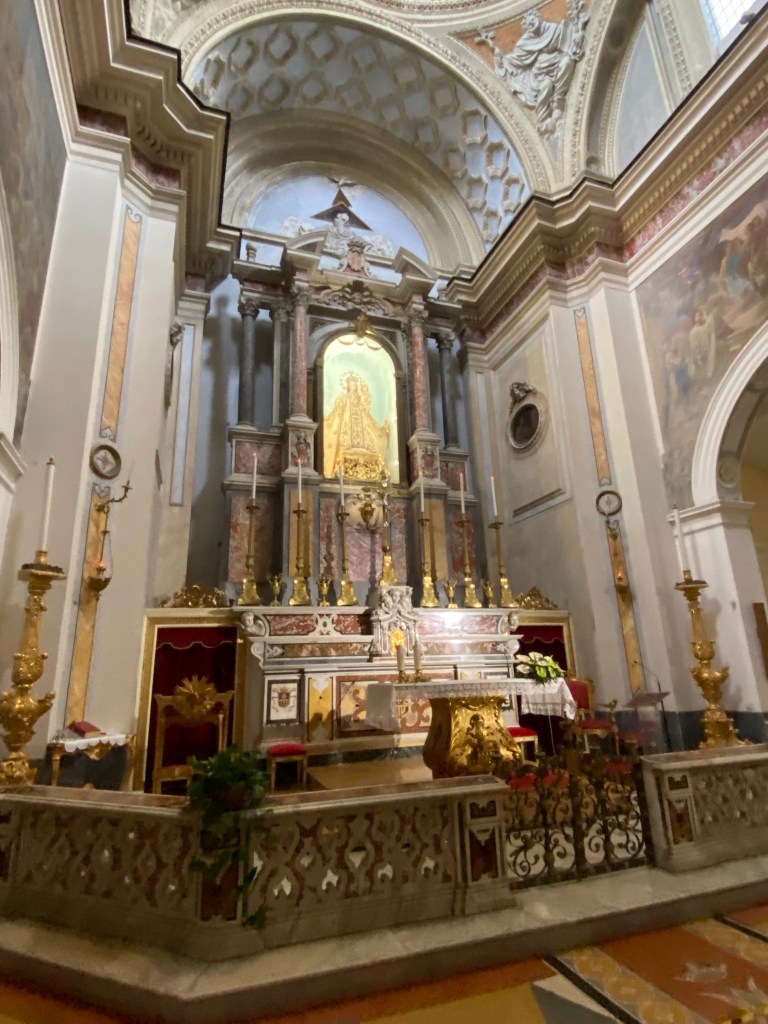

The ceiling fresco is impressive!
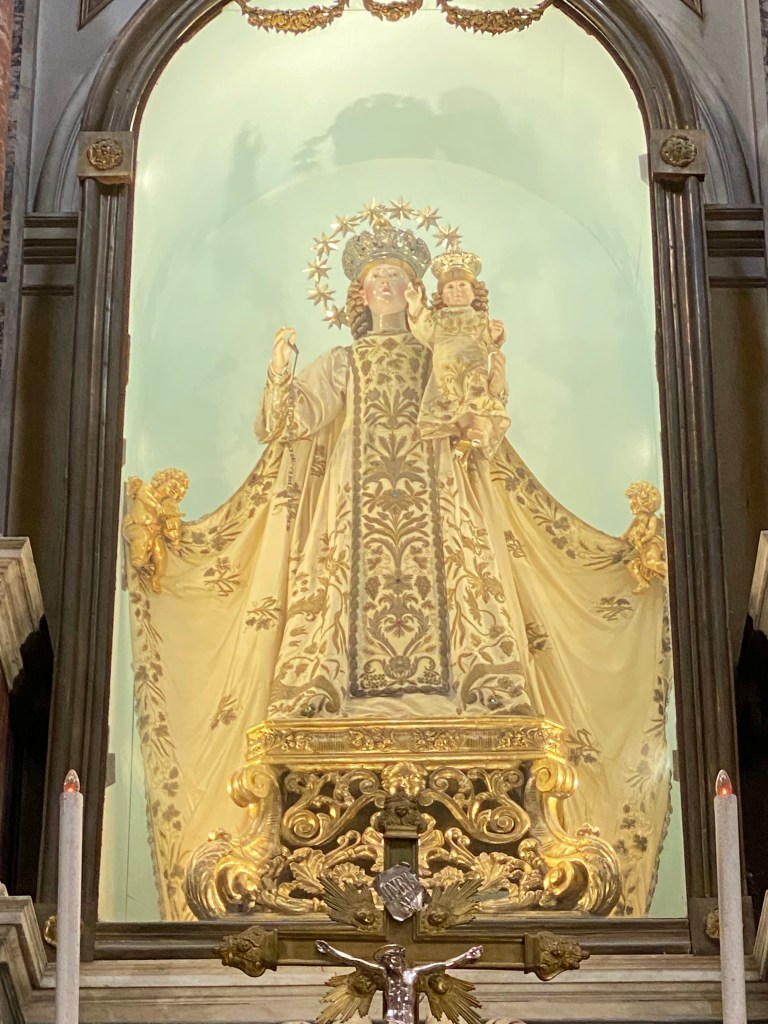
The high altar pays homage to Mary of Mercede:
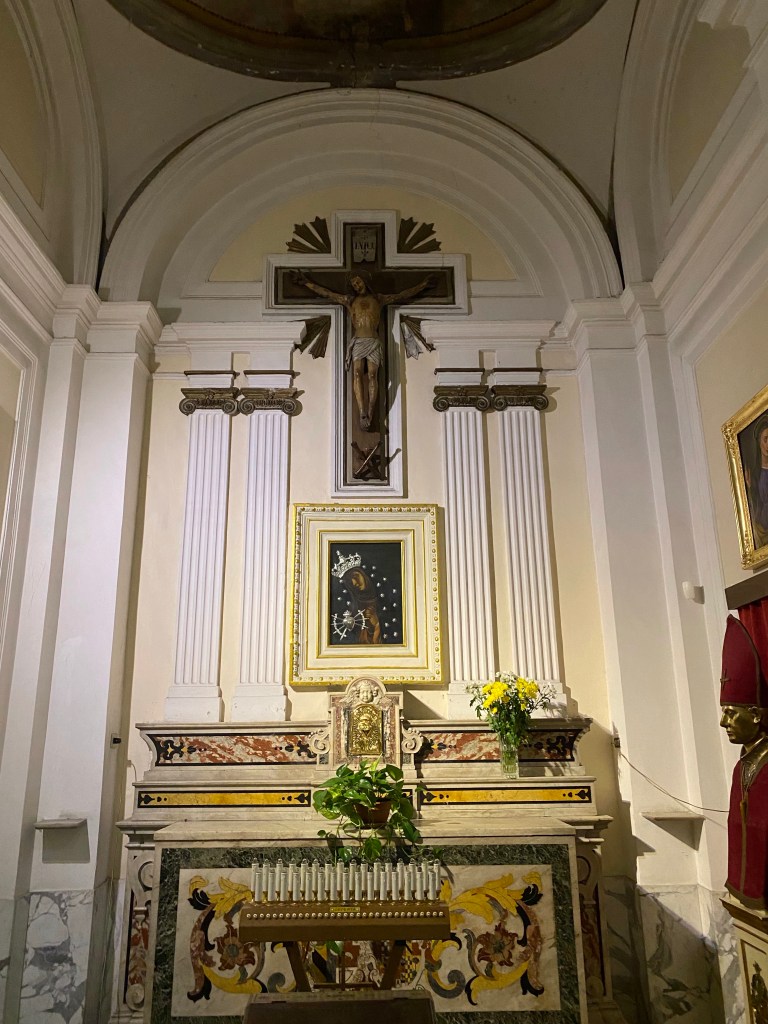
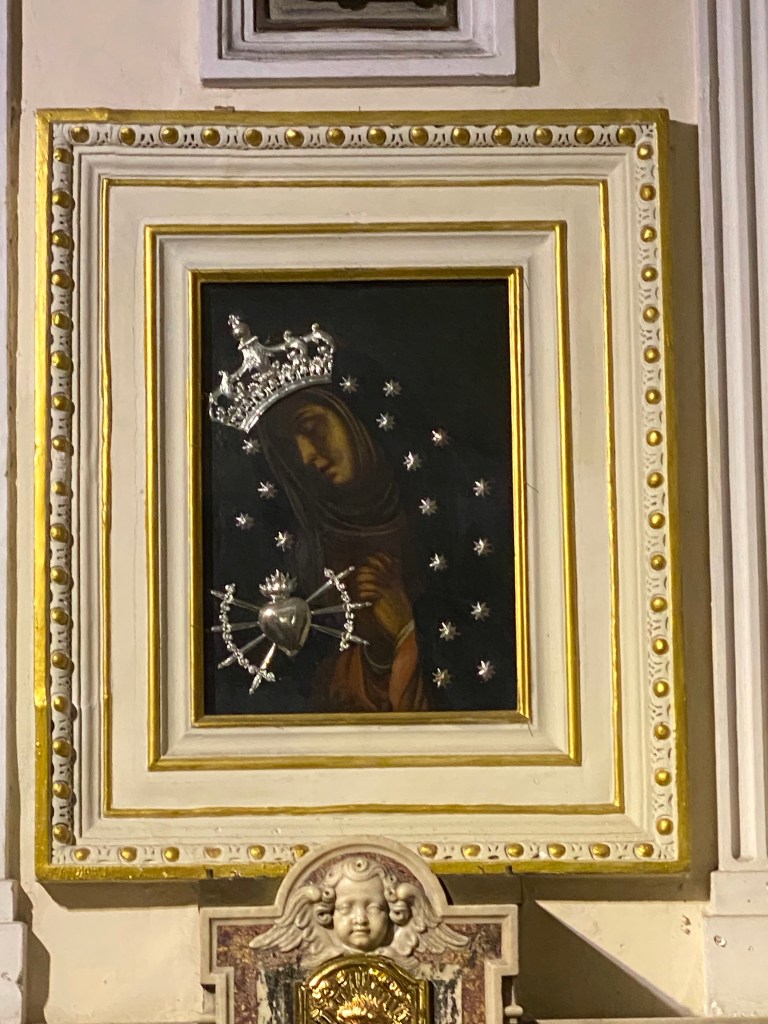
One of the many side chapels has an interesting image of ? Mary? There were several similar 2 d images of a head shot and all of them were decorated with sparkling jewel-like things. The sparkles caught my eye.
Like San Francisco, Naples is built on hills. There are many flyovers like this one:
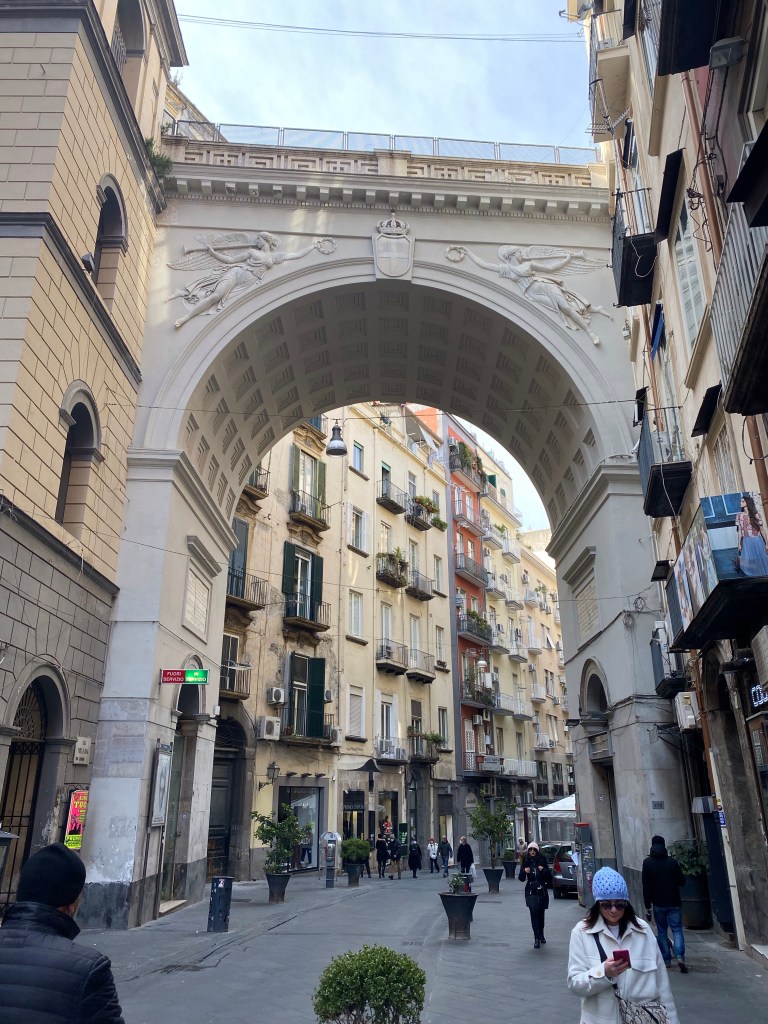
Love the heraldic angels in public architecture!

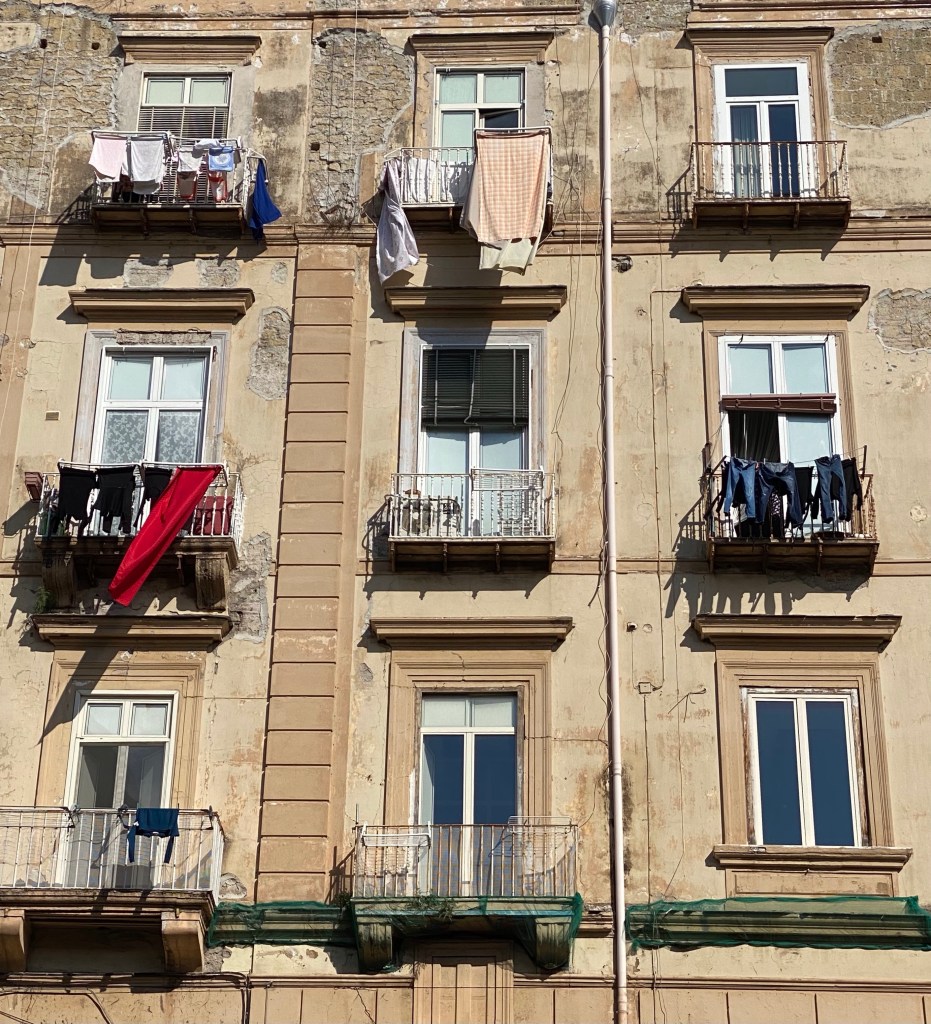
Naples.
I was here once before about 12 years ago. It was high time for another visit, to see again my favorite places and to try out new ones.
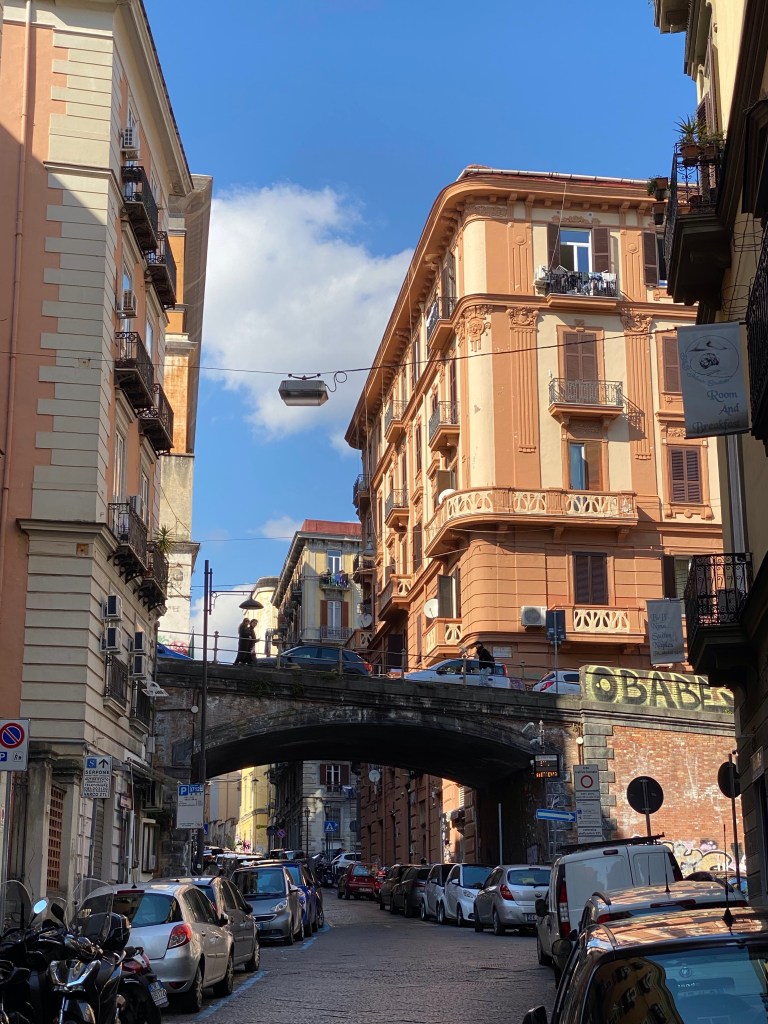
I arrived on Feb. 28, 2022 on a sunny but still chilly afternoon. I arrived by train from Florence, a 3 hour journey on the fast Italo train, and rode the Neapolitan subway for the first time. All went well except of course many of the escalators weren’t working which is only a problem when you have to lug a suitcase up. Which I did.

After checking into my hotel and getting settled, off I went to explore. I went straight into the heart of the historic center, spending my time on the dark and narrow central streets that are really more like allies. They often run right into an open piazza, where the February sunshine was brilliant and a bit shocking after the dark innards.
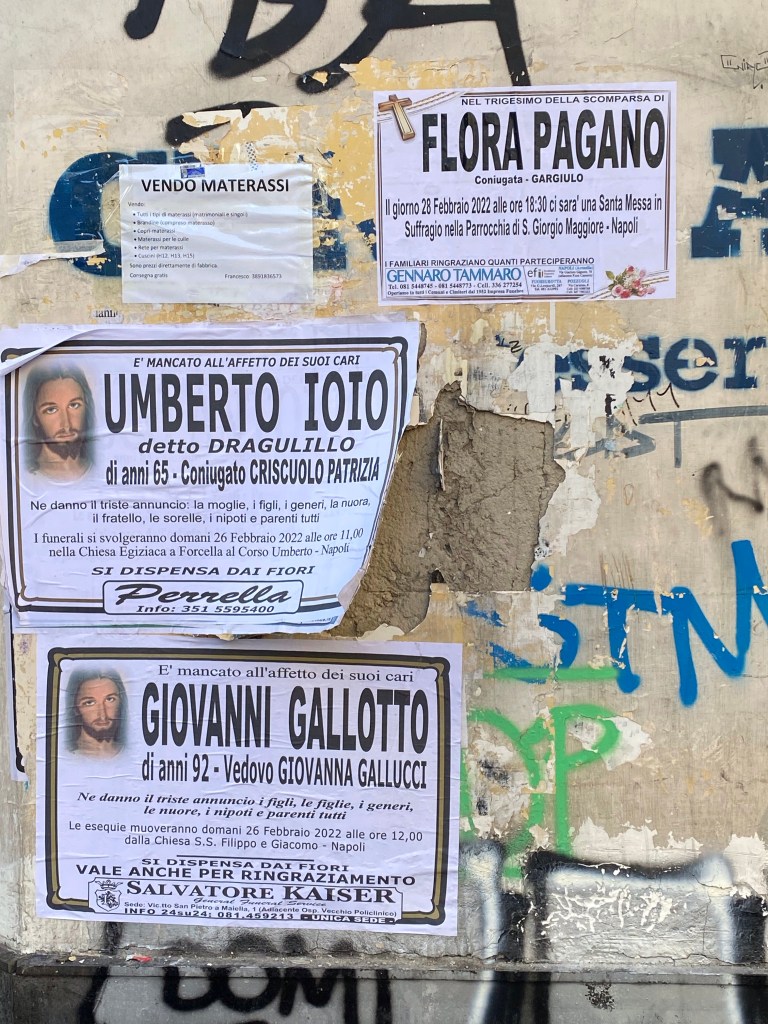

If you read my blog posts, you know I am very fond of the quaint Italian tradition of posting death notices. In the well cared for towns of the central and northern parts of Italy, the part I am fortunate to call home for the past 7 years, there are dedicated places for these notices. In Siena and Parma, for example, there are spaced designated for the notices and they are neatly hung.
But in Naples, I discovered that a death notice can be hung on any available street space and sometimes the notice for the same deceased person is hung multiple times in a single neighborhood. I’ve never seen that up north. The two photos above are not of the same wall; it’s two neighboring walls with the same notices repeated.

And then there is this death notice, glued to an electrical box. Also, as you can see by the pavement in front, Naples isn’t clean.

You’ve got to be careful when taking pictures. There aren’t sidewalks in the narrow streets and you could easily get hit by a cycle or bike. This rider zoomed into frame while I was focusing on the storekeeper and the peppers hanging above his head. Whoosh! If you aren’t careful, the next stop is the ospedale!

Lots of things here aren’t elegant. I’m spoiled by the well kept streets of Florence. Even the mom and pop stores usually have some nice design feature; items artfully displayed to catch your eye.
But, in Naples, even the store of the elegant profumery, “Carthusia, I profumi di Capri” has this tacky metal door over the front. Metal fronts are ubiquitous in Italy for securing closed businesses. But usually they are blank. This painted metal door is clearly an intentional work of art by an artist who signed it.
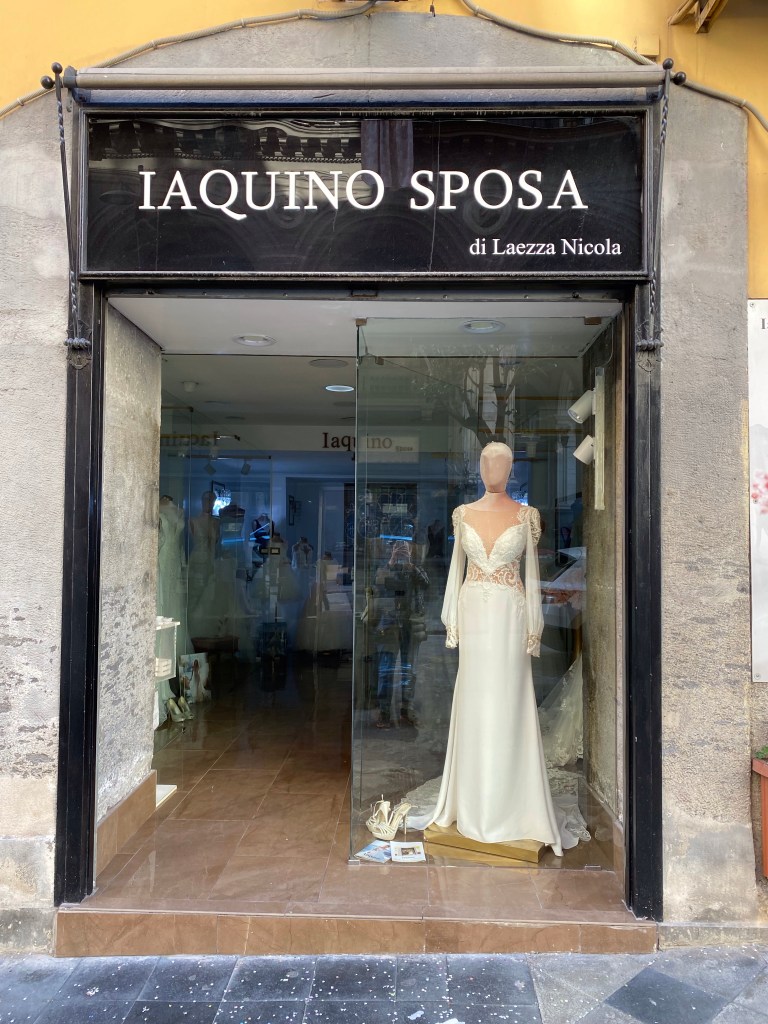
A very tacky wedding gown in a tacky store.
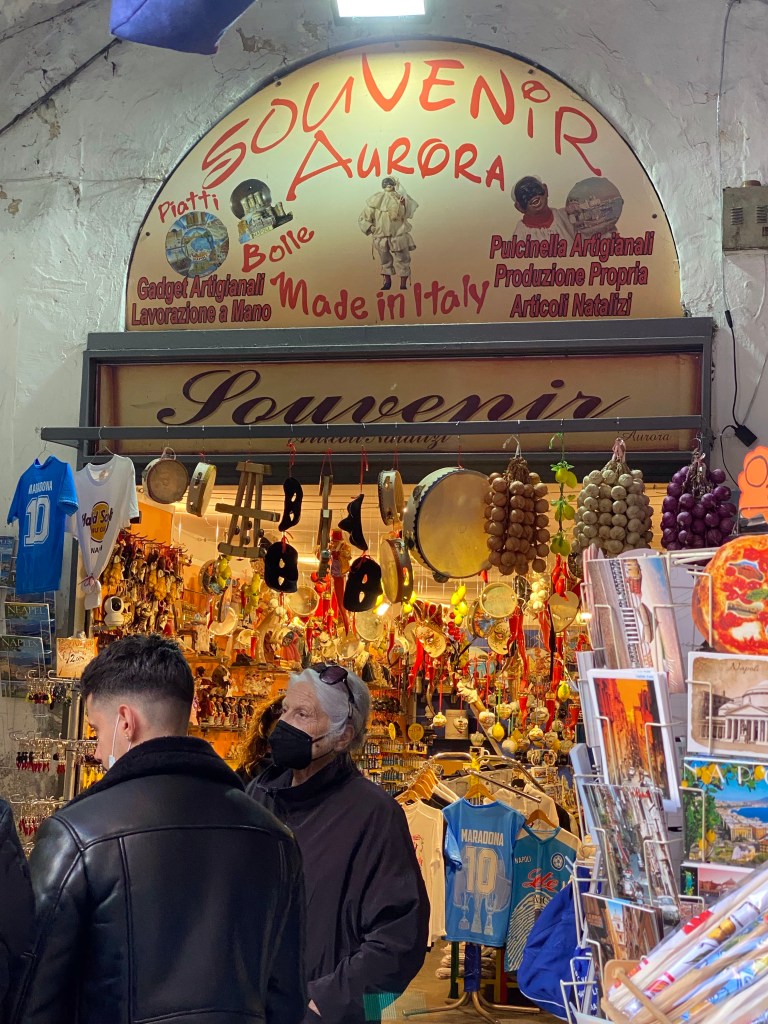
And, below, a souvenir store so unapologetically tacky that I love it!
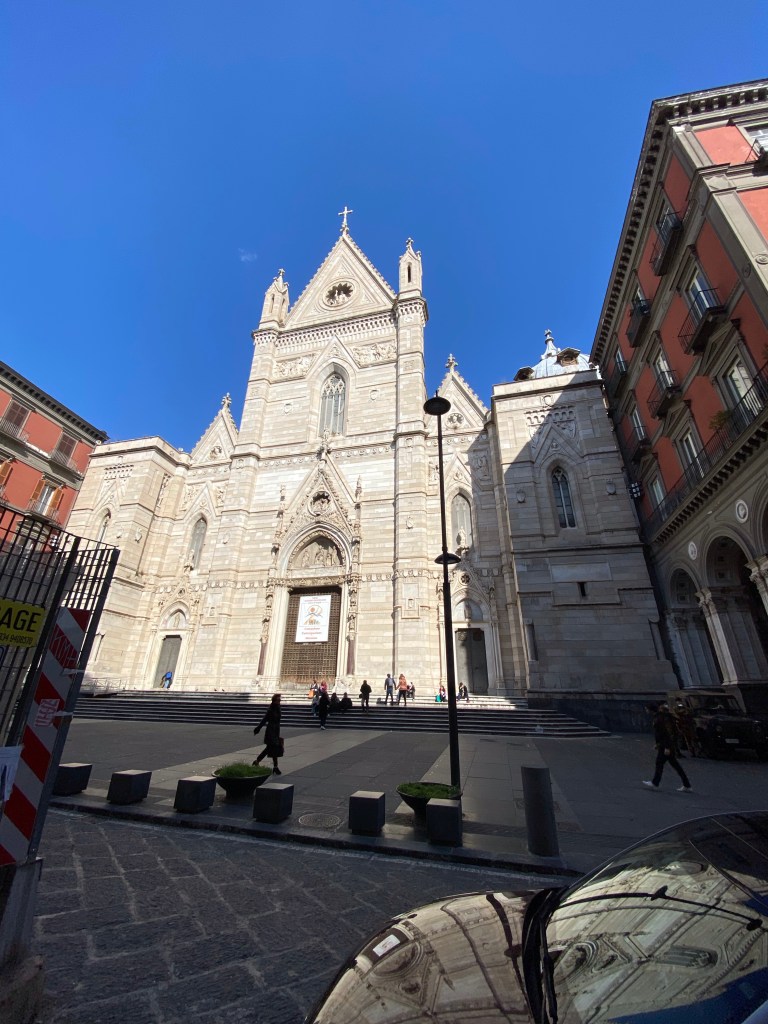
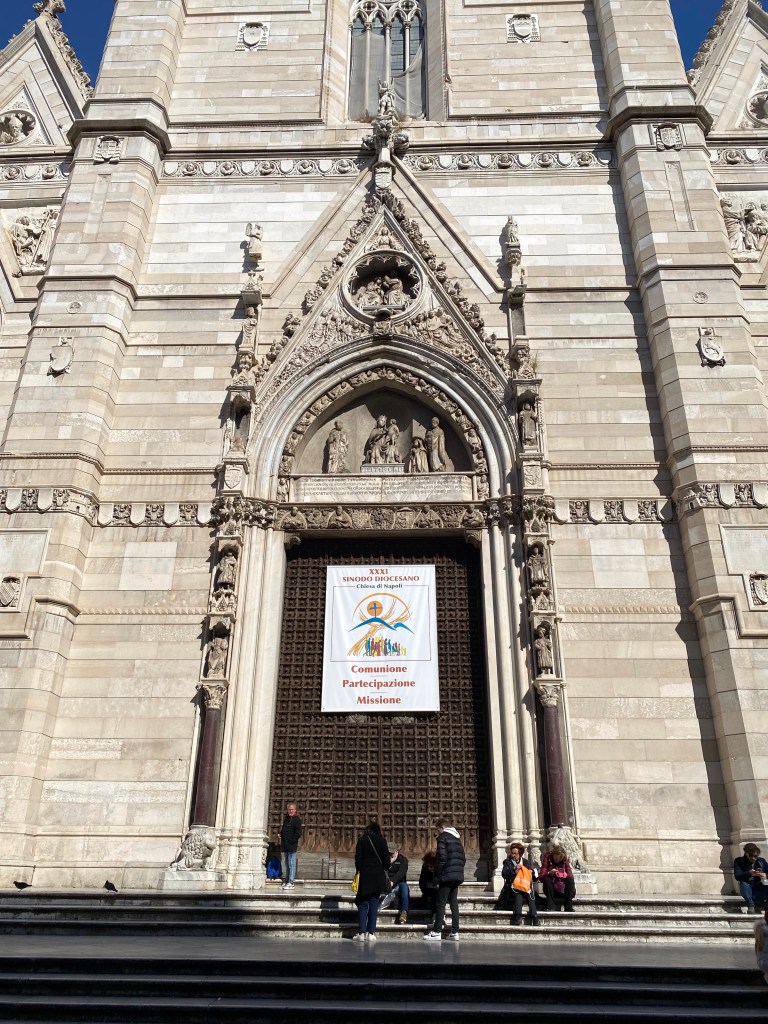
I set out to find the duomo of Naples and here it is. Very lovely, but closed of course during the time I was there. I’ll go back when it’s open.



Piazzetta Nilo


Another open, bright piazza, enjoyed to the fullest by the Neapolitans on this sunny afternoon!


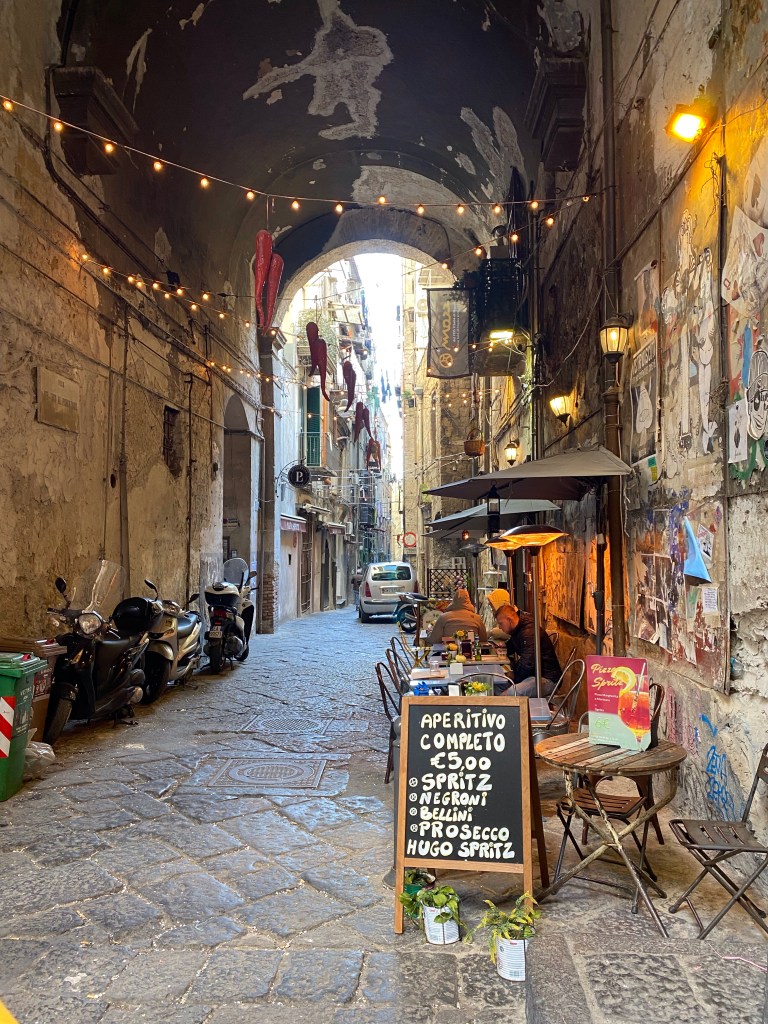


Above, another bright open piazza. A Romanish river god statue graces the centerish. Pendino

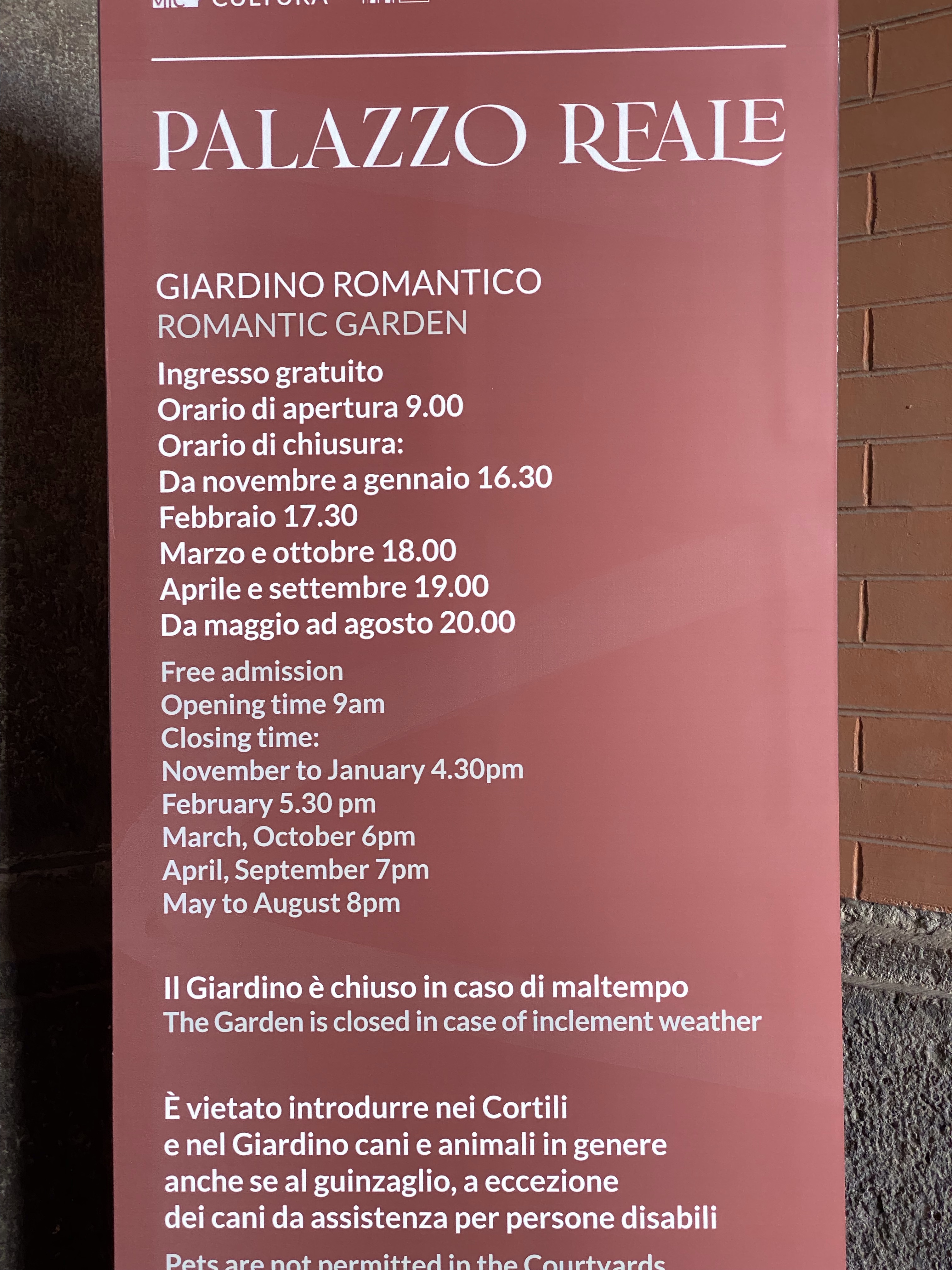
The Royal Palace of Naples is a palace and now a museum. It was one of the 4 residences near Naples used by the House of Bourbon during their rule of the Kingdom of Naples (1735–1816) and later the Kingdom of the Two Sicilies (1816-1861). The others were the palaces of Caserta, Capodimonte overlooking Naples and Portici on the slopes of Vesuvius.




Statues of kings of Naples
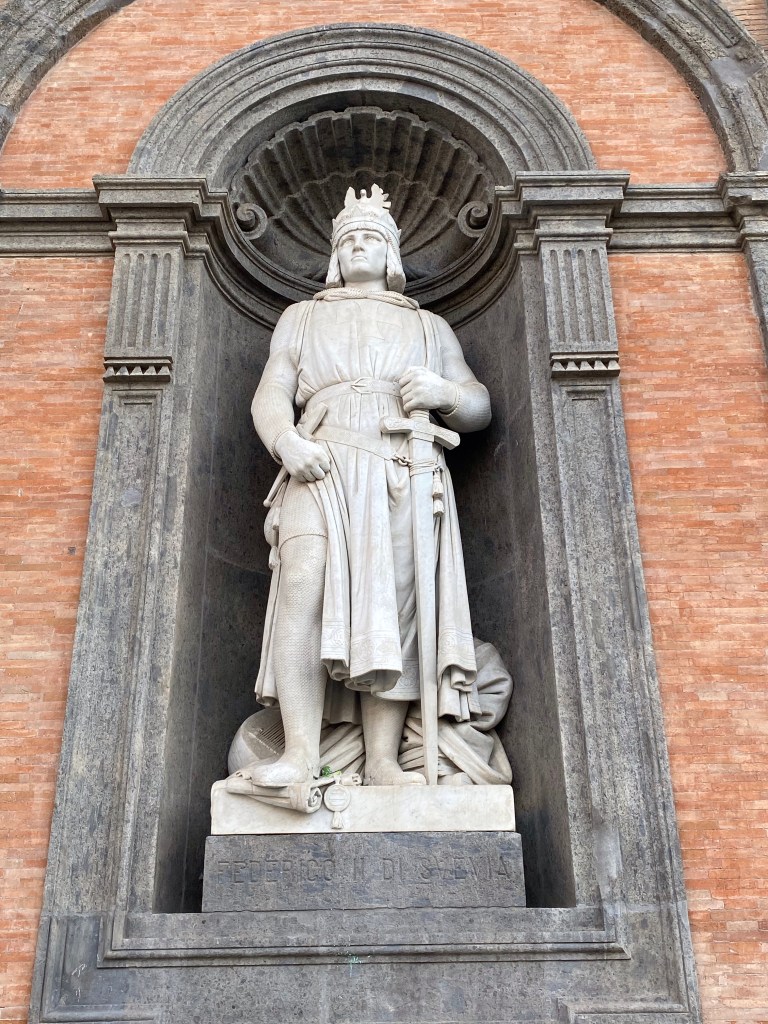
In 1888, King Umberto I of Savoy made changes to the western façade side of the building (fronting on Piazza del Plebiscito), by displaying in niches a series of statues of prominent rulers of Naples since the foundation of the Kingdom of Naples in the 12th century. The statues are displayed in chronological order, based on the separate dynasty of each ruler.
The series starts with Roger the Norman, and ends with Vittorio Emanuele II, the tallest statue and the last to be added. The other figures represent:
Frederick II Hohenstaufen (by Emanuele Caggiano)
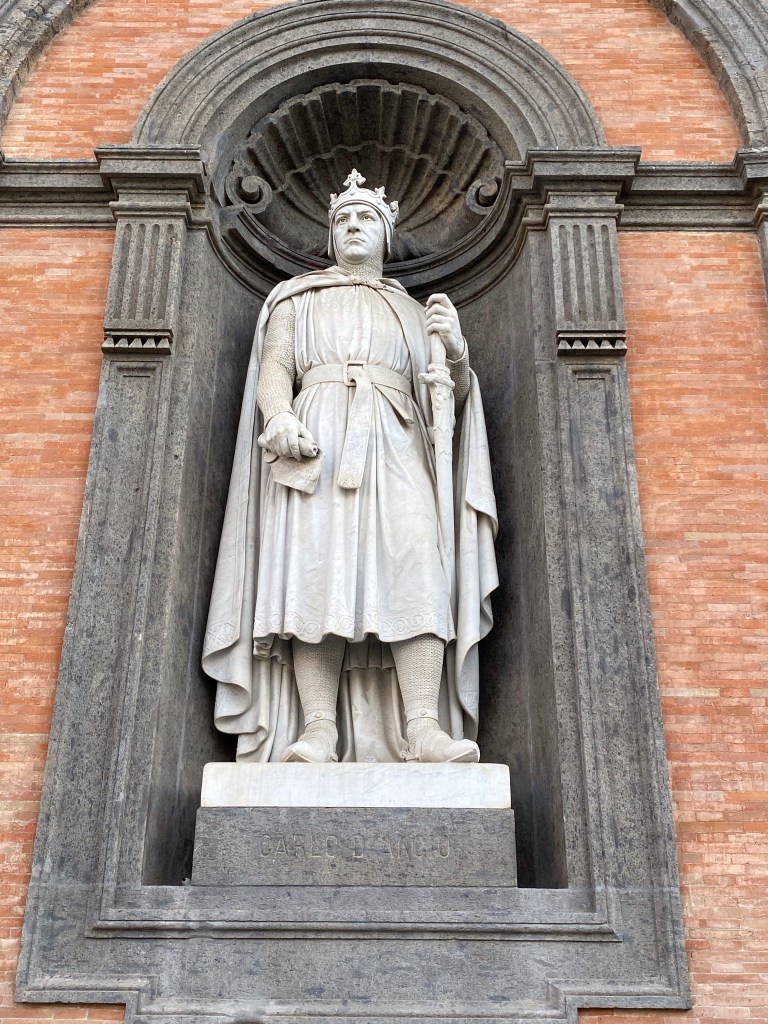
Charles I of Anjou (sculpted by Tommaso Solari)Alfonse of Aragon (sculpted by Achille D’Orsi)
Emperor Charles V (sculpted by Vincenzo Groan)
Charles III of Spain (sculpted by Raffaele Belliazzi)
Joachim Murat (sculpted by Giovanni Battista Amendola)
None of the statues refers to the Bourbon dynasty, not even Charles of Bourbon, who is actually engraved with the name of Charles III.
Frederick II (Holy Roman Emperor)
Charles I of Anjou

Alfonso V of Aragon (Alfonso I of Naples)


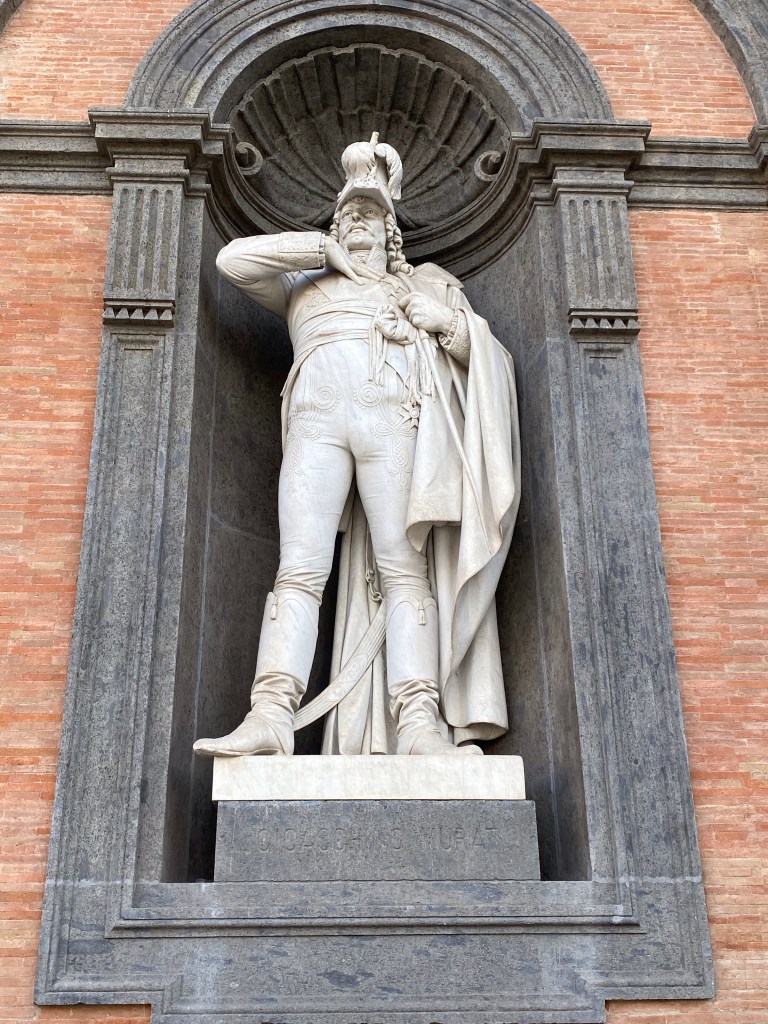
Gioacchino Murat

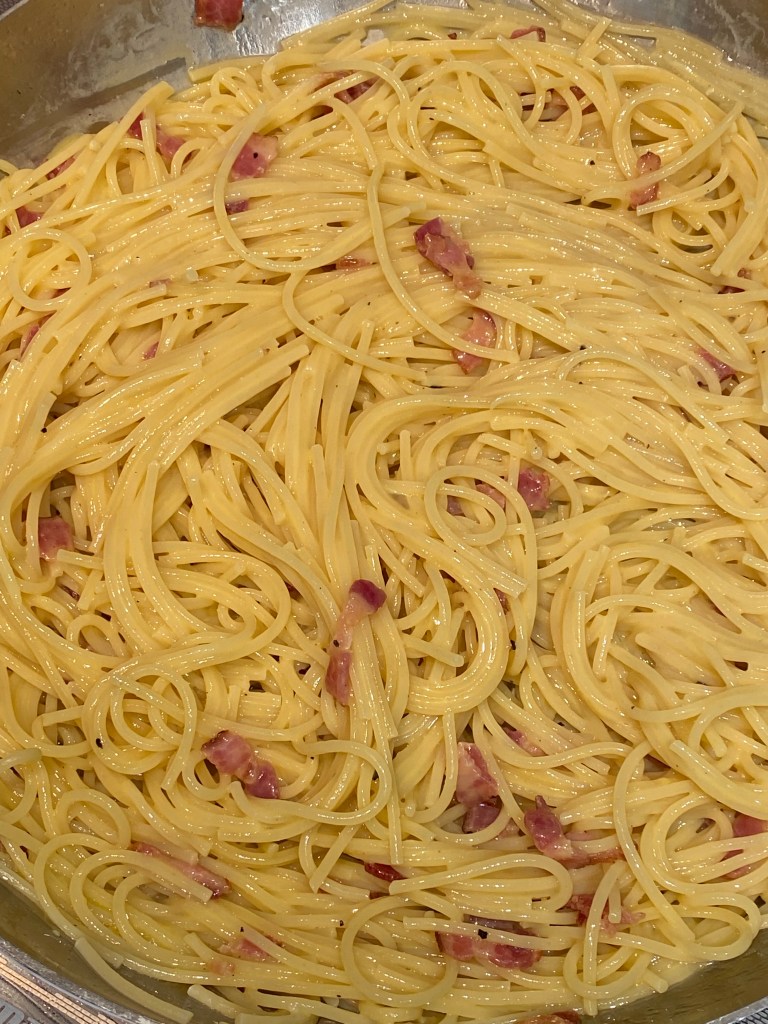
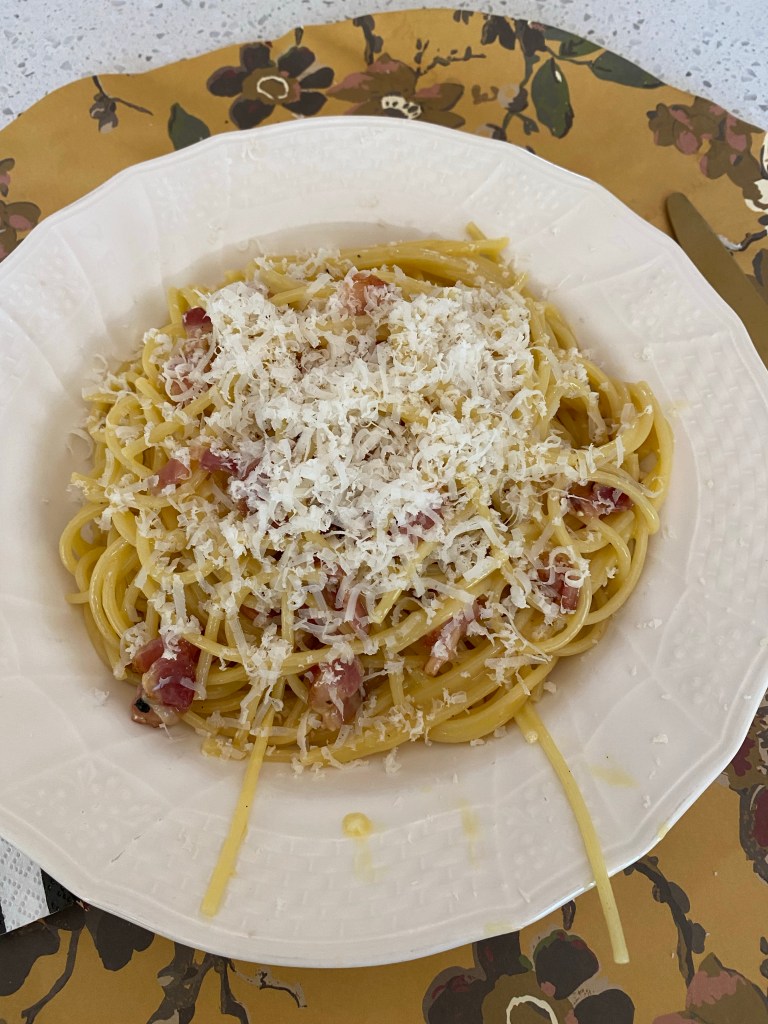
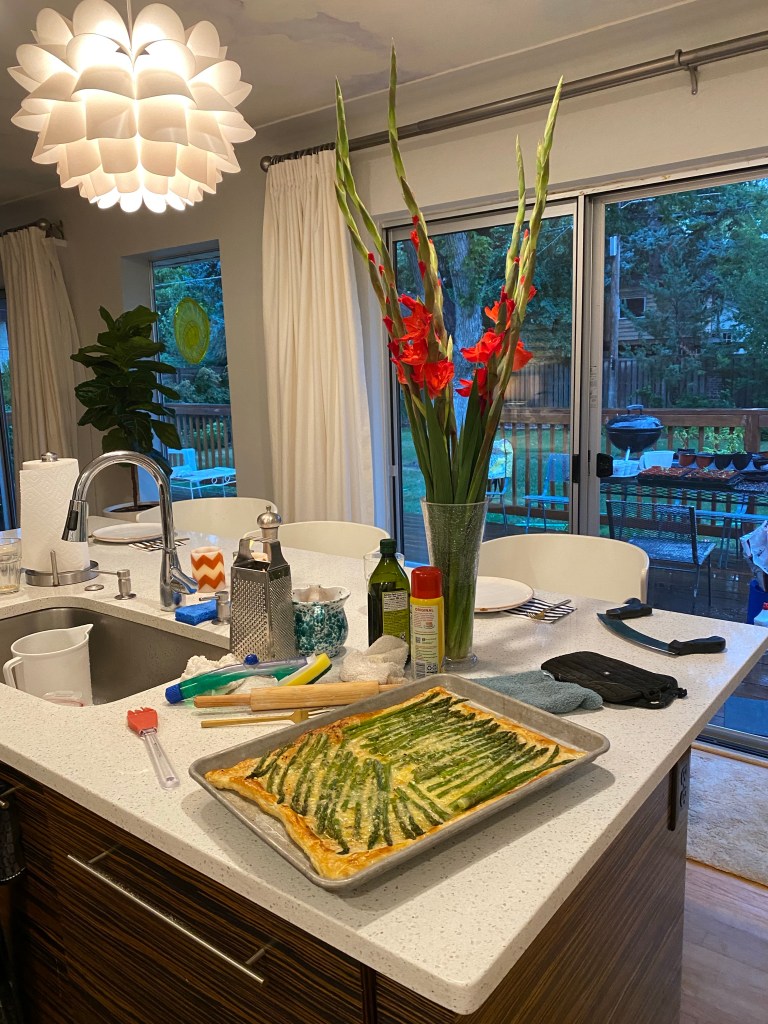
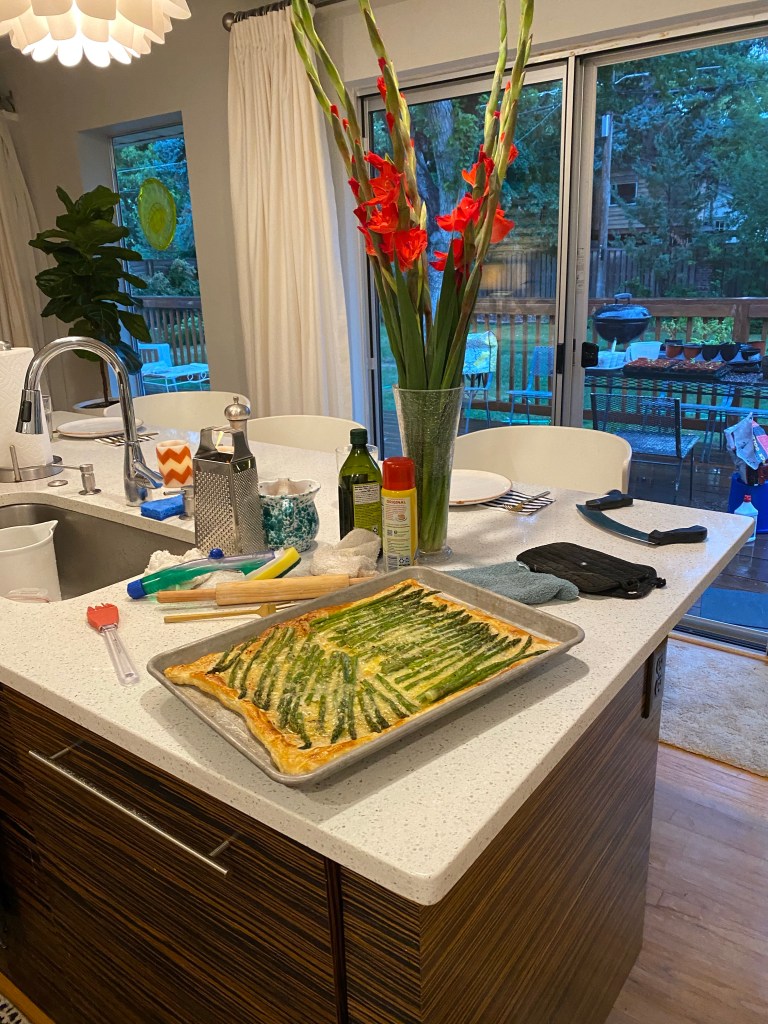
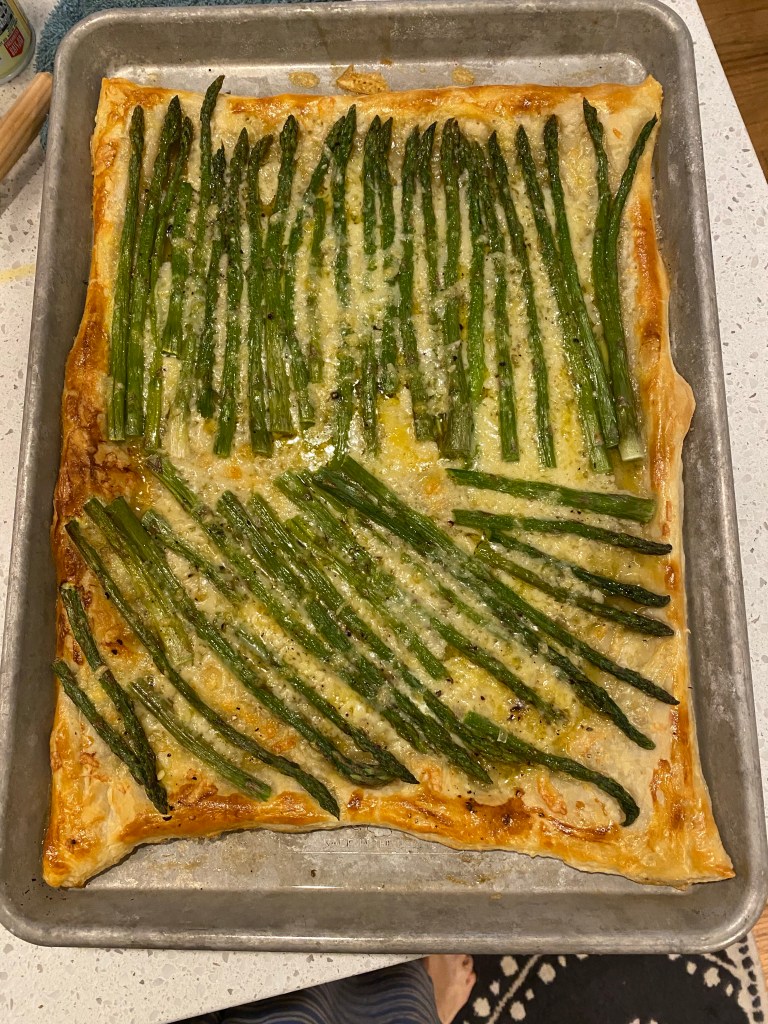
My houseguest from Florence made spaghetti carbonara and I baked a Gruyère and asparagus tart. Nothing like a few carbs to chase the blues away!
The Last Supper by Andrea del Castagno, 1447
 get back, lauretta!
You must be logged in to post a comment.