
On a fine spring afternoon my lovely young friend, Nadia (who is from Denmark and is my classmate at language school in Florence) and I set off by train. We went to a smaller town called Montecatini Terme and from there we took the funicolare to Montecatini Alto for the better part of the afternoon.
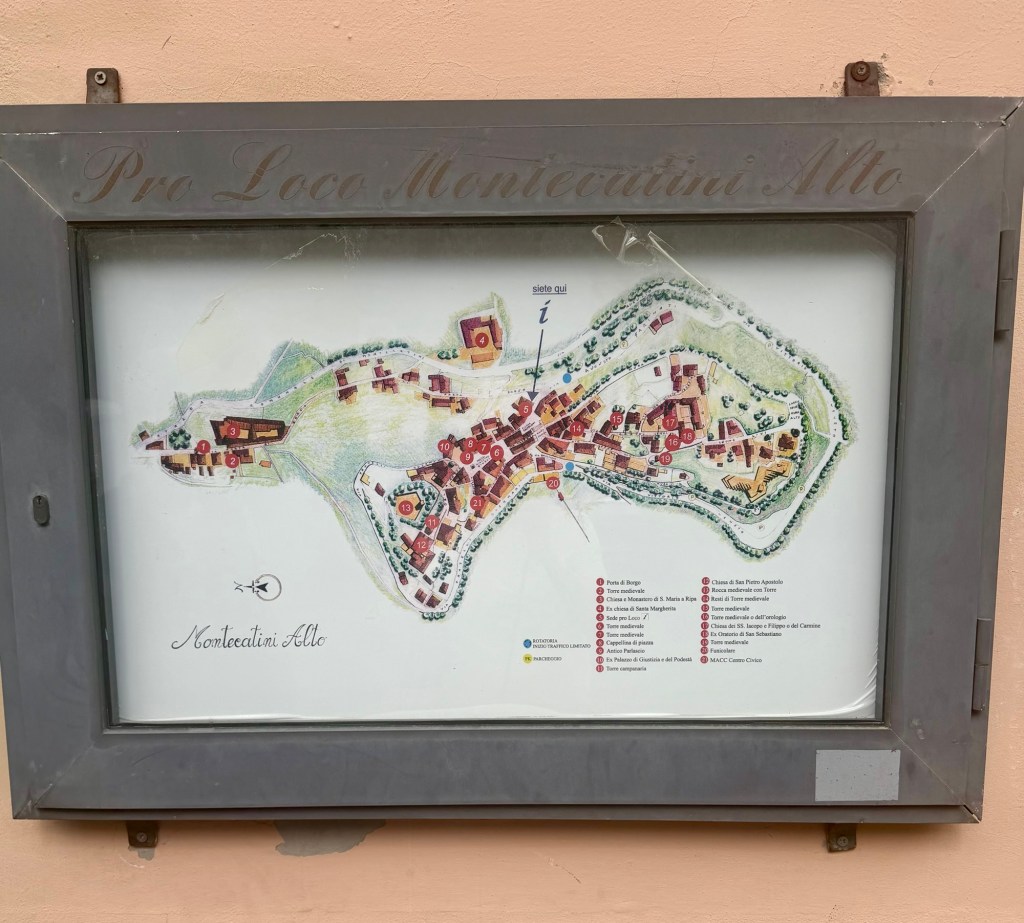
The small village of Montecatini Alto is located 300 meters above sea level, has medieval origins and still shows the layout of the ancient walls that were destroyed in 1554 by the Florentines of Cosimo I de’ Medici who were preparing to conquer the area.
In the upper part of the village, the Fortress and Mastio Tower are features. On the central Piazzetta Giusti are the medieval remains of the Podestà Palace with the picturesque Loggia del Parlascio, originally the site of public assemblies and the market.
Montecatini Alto also enjoys a small square in which there are many restaurants and wine bars offering excellent food and wine.
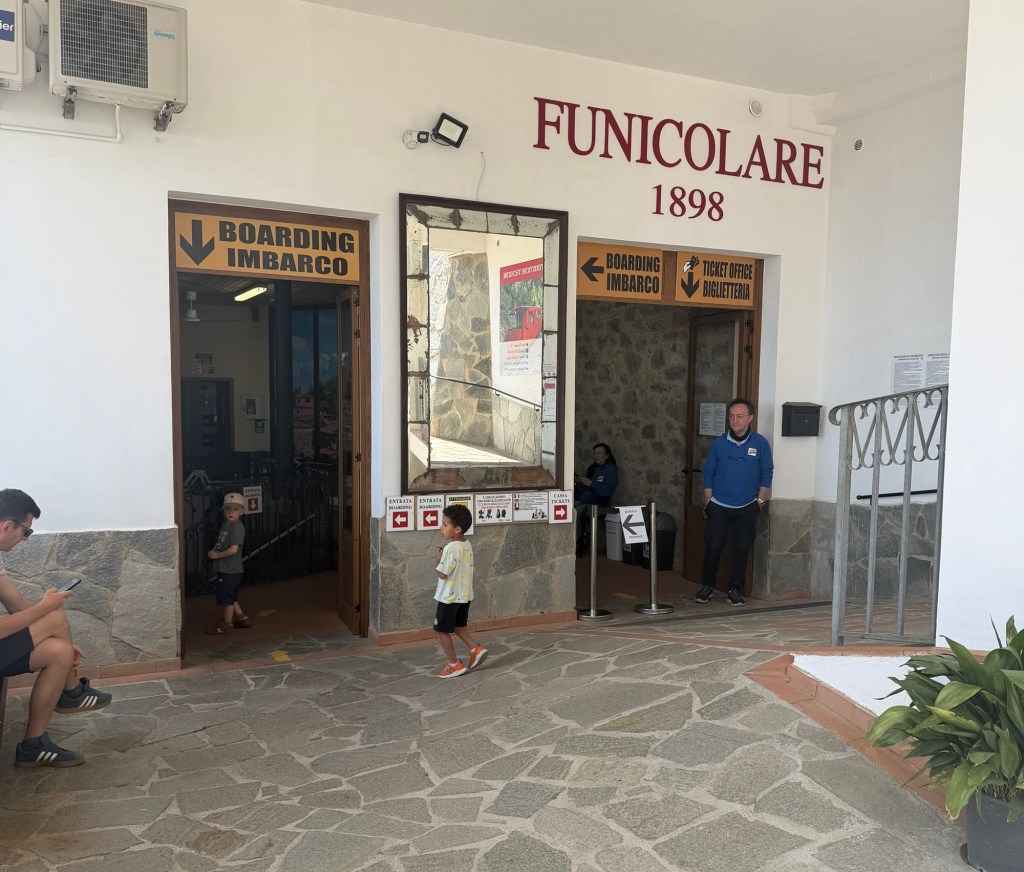
The following are some of the photos we took on our perfect Italian day!
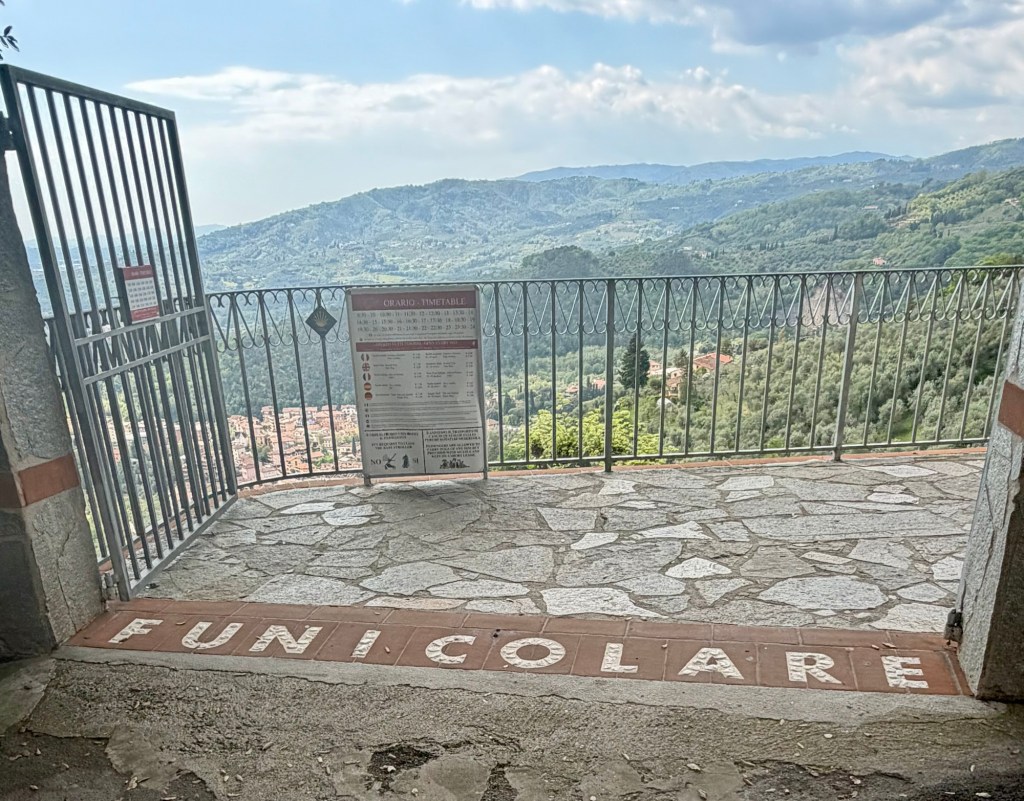
There are two trains that lead to and from the tiny hilltop village of Montecatini Alto. They even have names: Gigio and Gigia, once simply known as Number 1 and Number 2. These two bright red trains compose the Montecatini Terme Funicular.
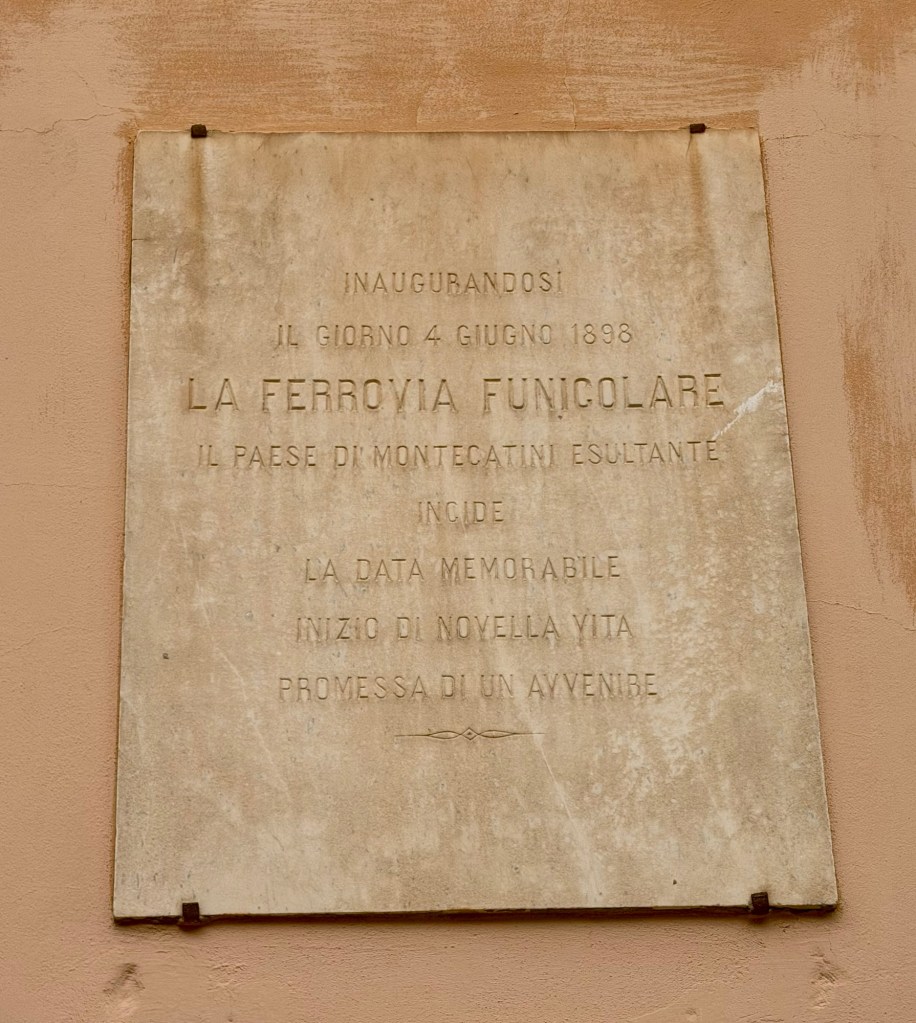
This unique and characteristic transportation method hasn’t lost its charm since its inauguration on June 4, 1898, witnessed by Giuseppe Verdi himself. Riding up on either one of the red cars, you experience the wooden benches and/or the space to stand on the car’s exterior balcony. Millions of people have enjoyed the views from these charming cars.
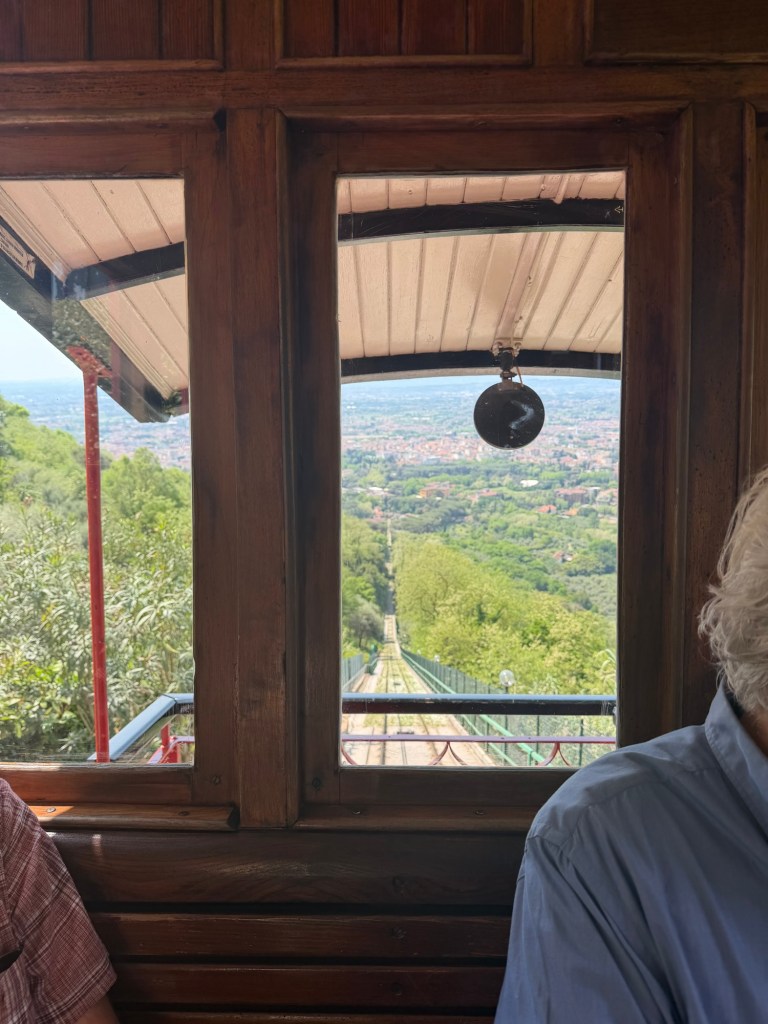
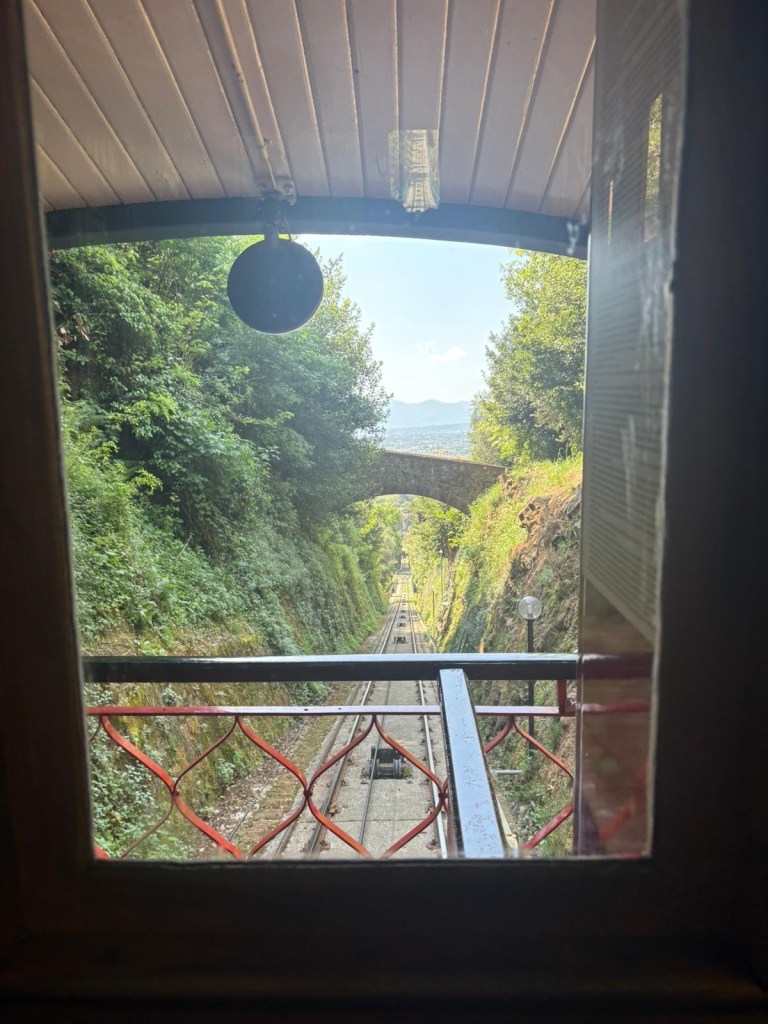
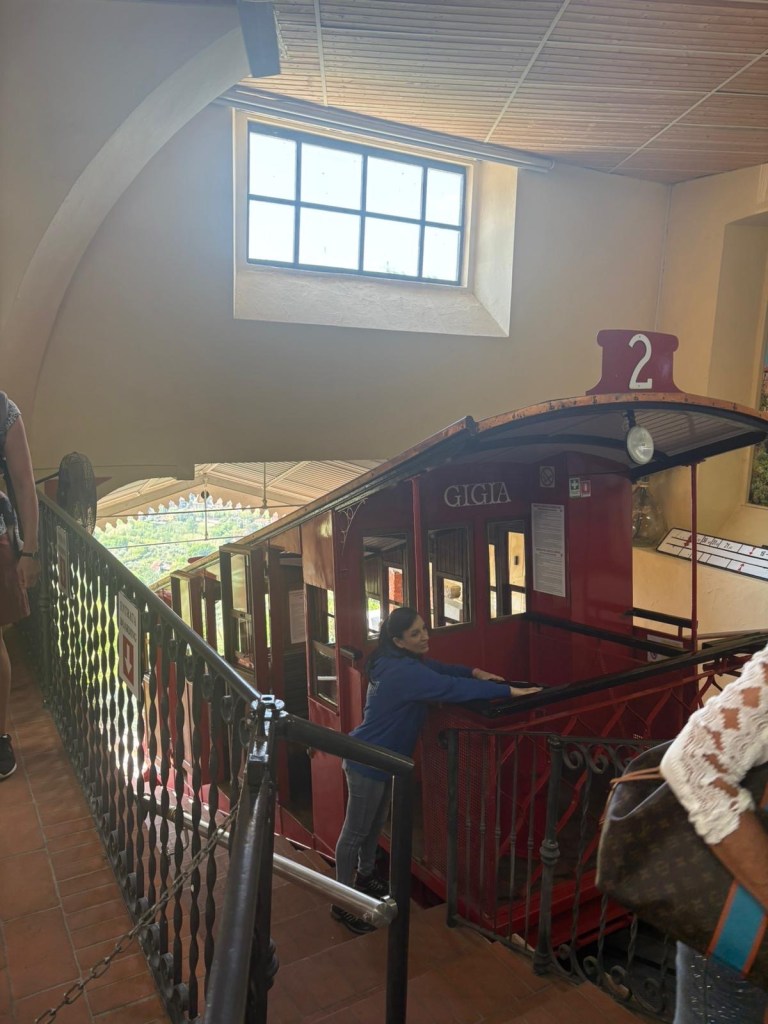

La Torre dell’Orologio in Montecatini Alto
Montecatini Castello, today’s Montecatini Alto, was documented by medieval times. In the settlement there was already a spa, thanks to the salt waters of the city, which later also flowed into the plain below. There is evidence for this in a document from 1340 which refers to the extraction of salt from the water. There is also proof in a letter sent by the well-known Prato merchant Francesco di Marco Datini in which he requests from his doctor the healing water of the Montecatini baths.
Other evidence comes from the famous doctor Ugolino of Montecatini who examined the waters scientifically for the first time. He also tells us that there were three baths in Montecatini; the Bagno Della Regina, the Bagno dei Merli and the Bagno Nuovo. Today the Bagno Nuovo is known as the Tettuccio. I will be posting about this later.
Conditions in the town during medieval times were difficult, the region was plagued by epidemics, paludic diseases (attributed to the influence of marshes, such diseases including malaria) and wars. The battles locally between Florence, Pisa and Lucca, often forced townsfolk to seek refuge to the surrounding hills, because the town was the scene of continuous clashes. We must also remember that Montecatini was mainly constituted of padule (marshes). Livy confirms this when he described how Hannibal of Carthage passed by the padule of Fucecchio in his march to the south.
From the 10th – 13th centuries the area saw many battles. In these muddy waters of the area, many soldiers died at the Battle of Montecatini in 1315. It is thought that Dante Alighieri participated in this battle. In 1328 the Medici came to power and the locks that had been dismantled with the reclamation were restored.
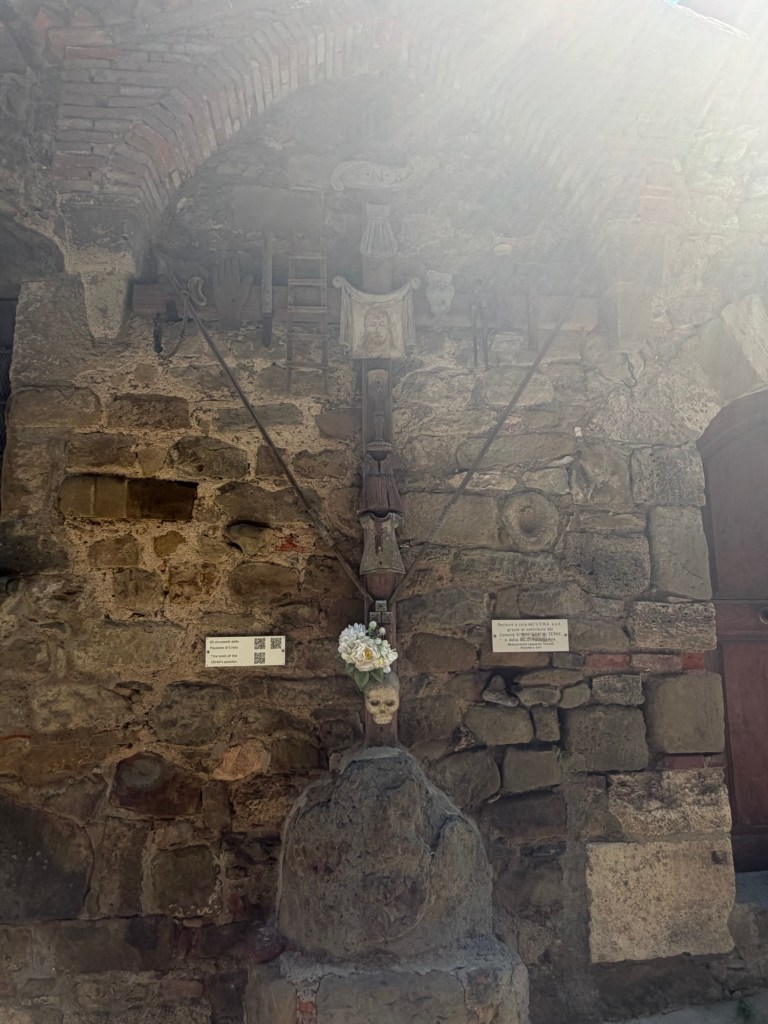
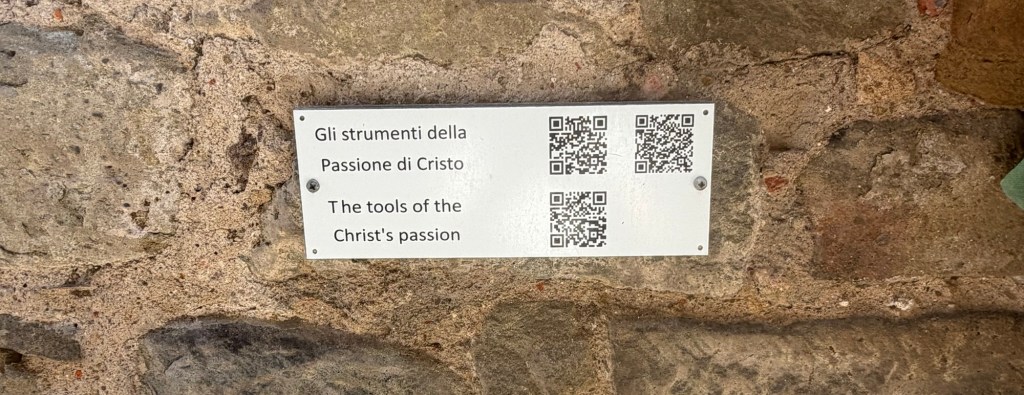
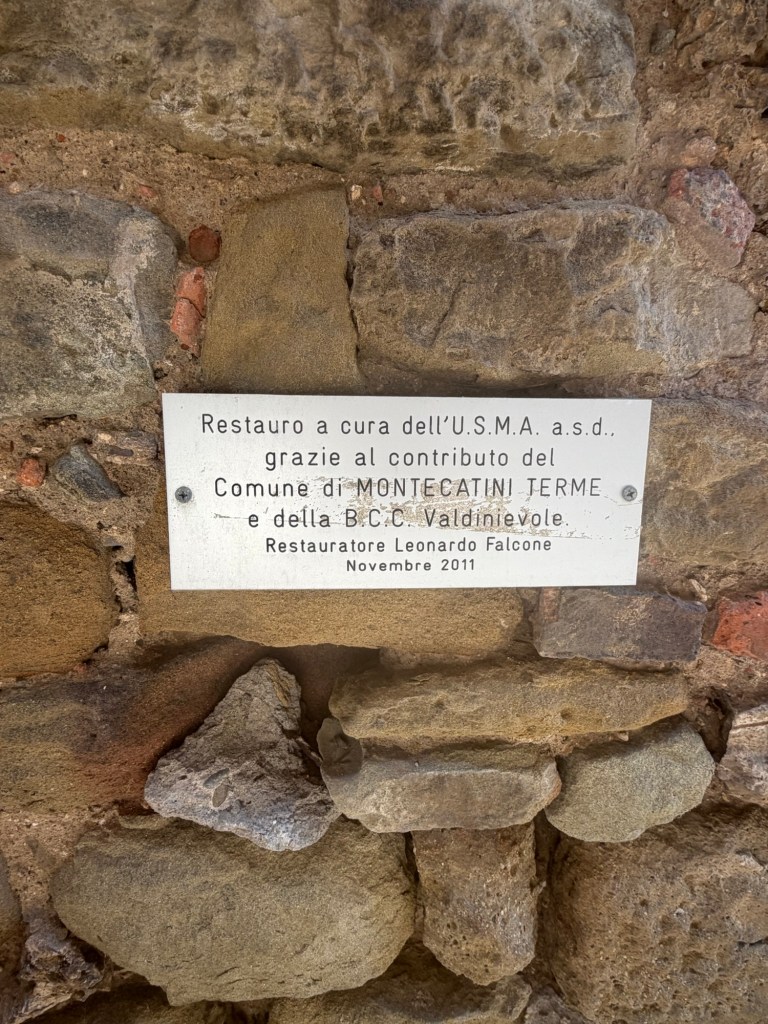
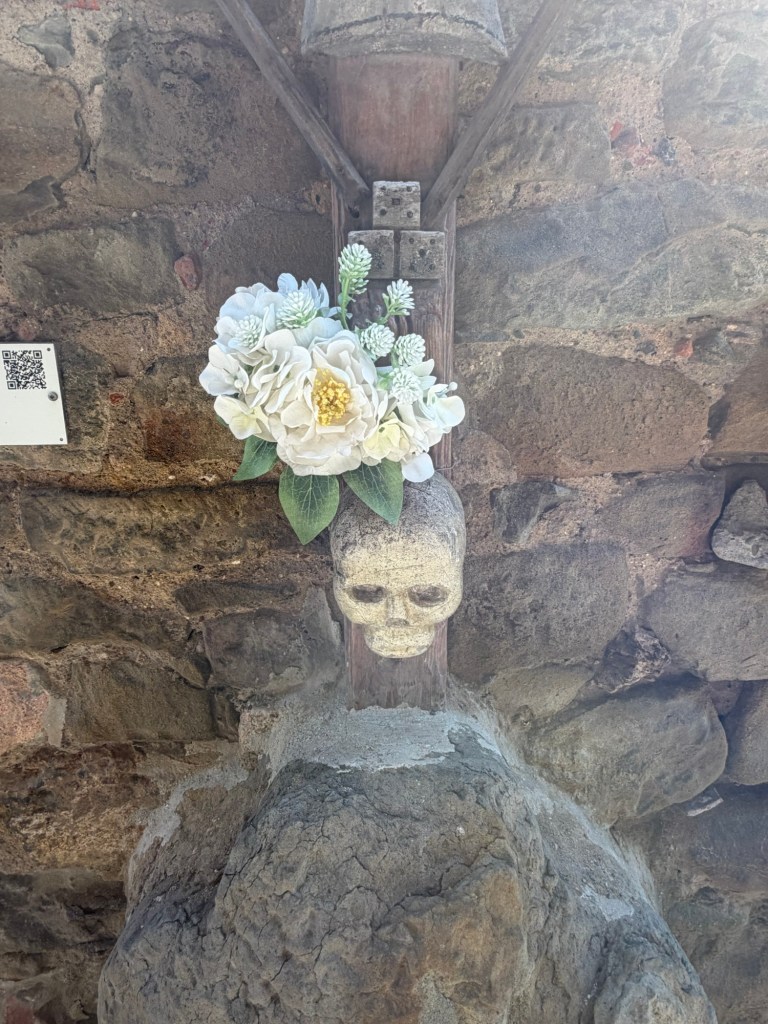
On the side of a building was a gruesome installation of the tools of Christ’s passion. You can tell this is a popular site with the QR codes added to the sign. Wow! What a modern thing on an ancient wall!
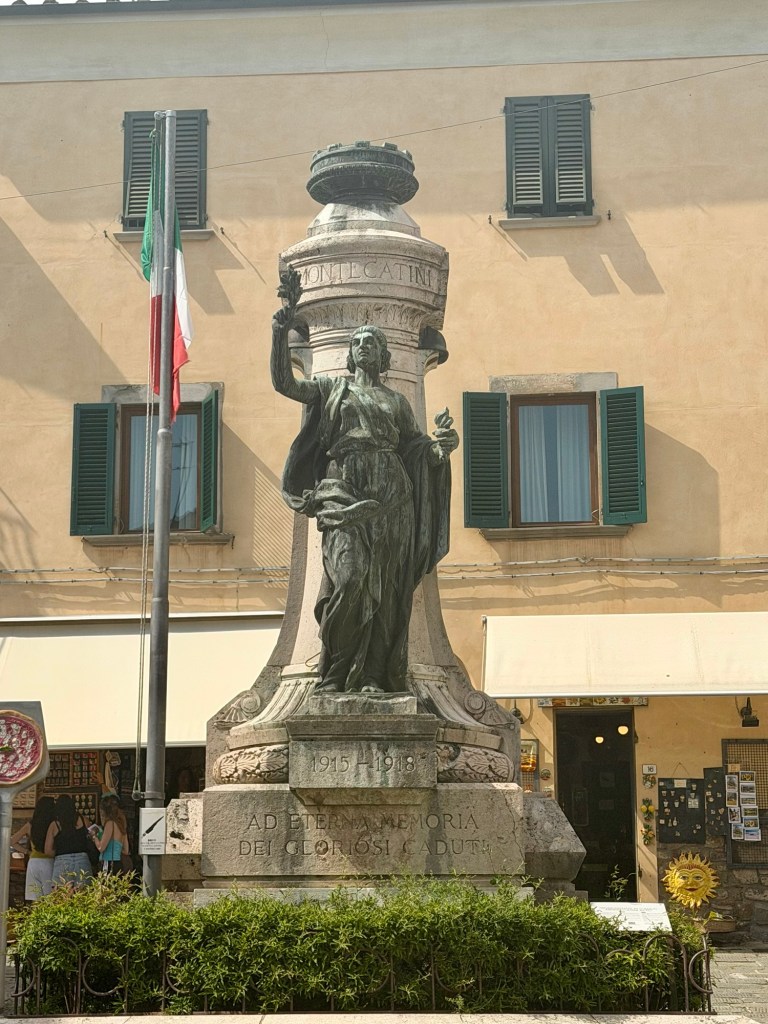
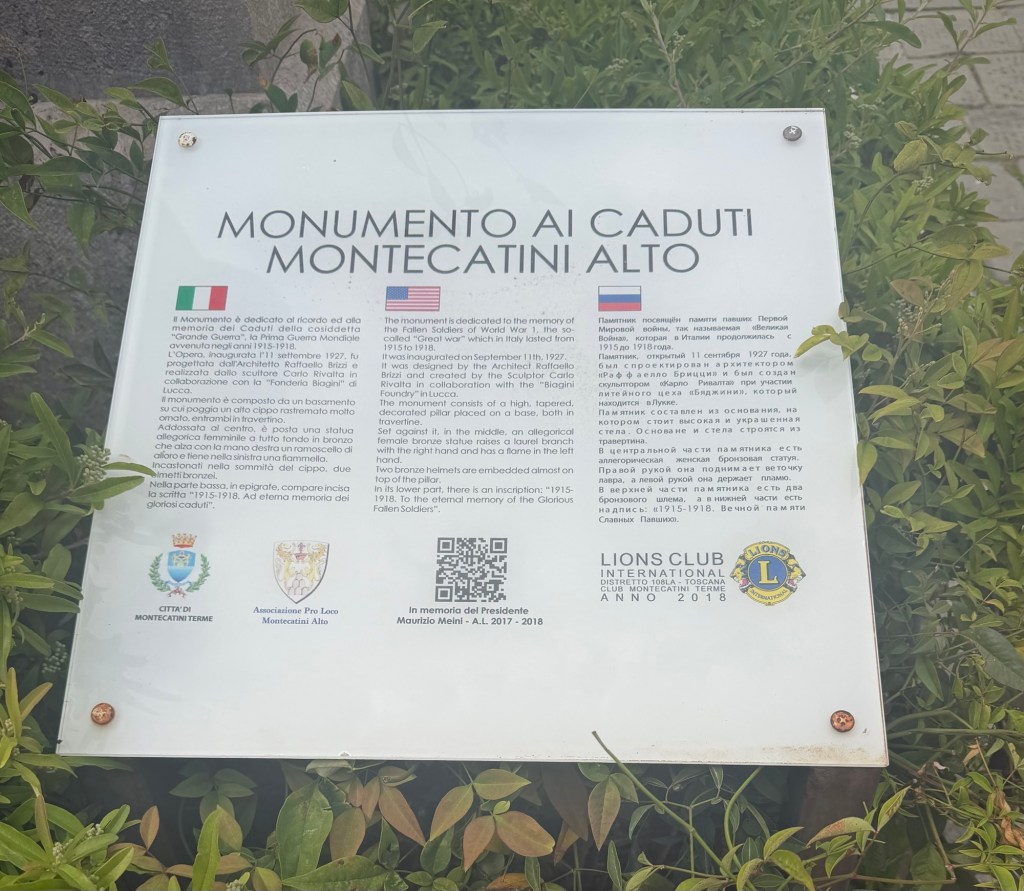
Every Italian city pays homage in one way or another to its fallen war heroes.
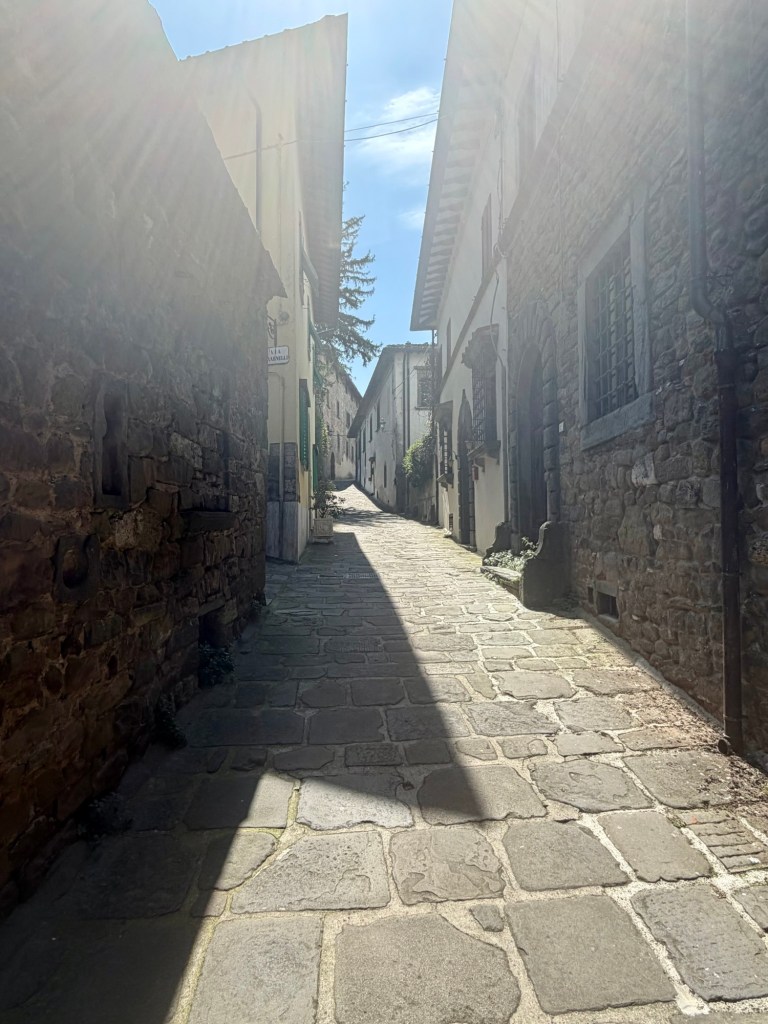
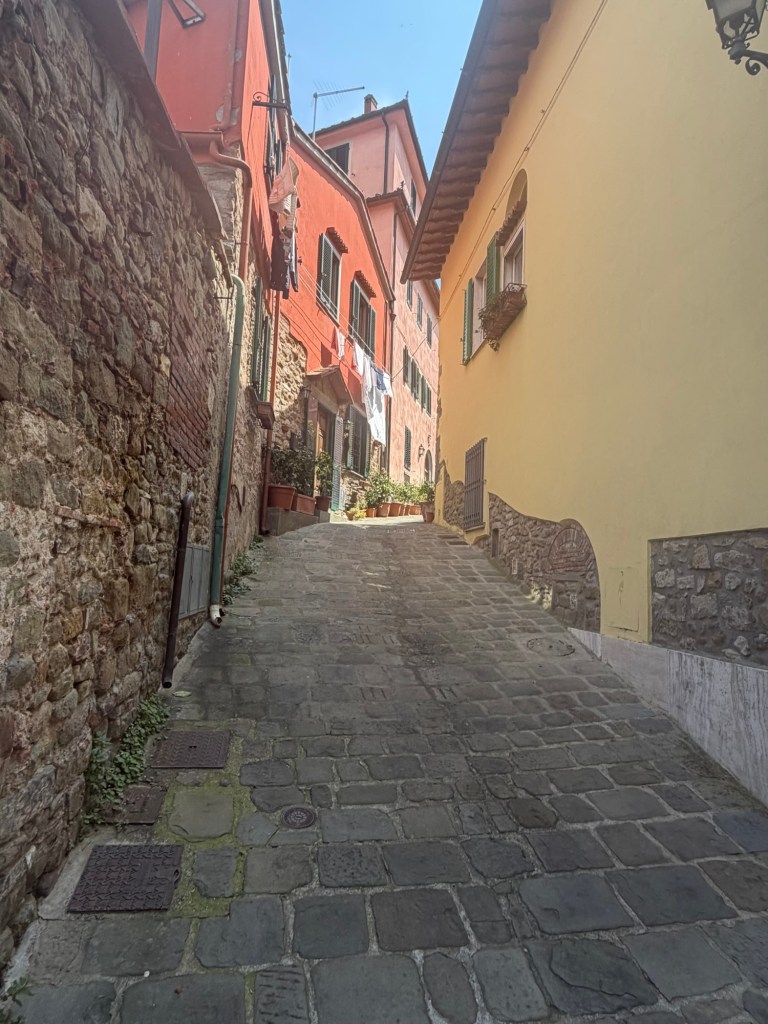
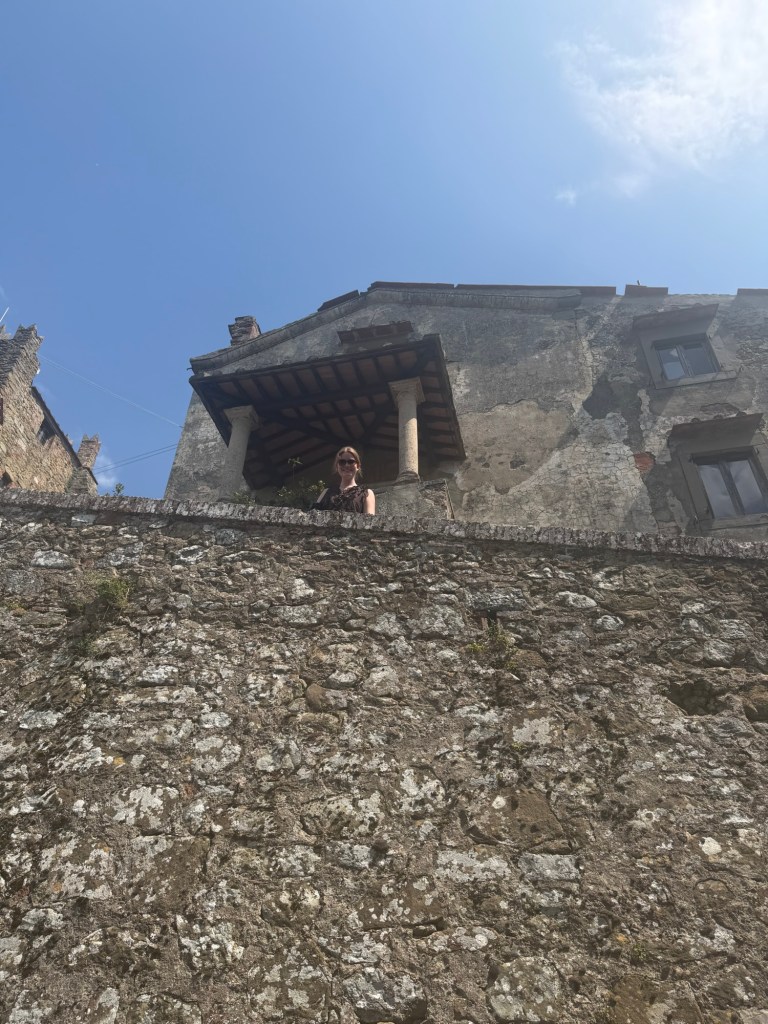
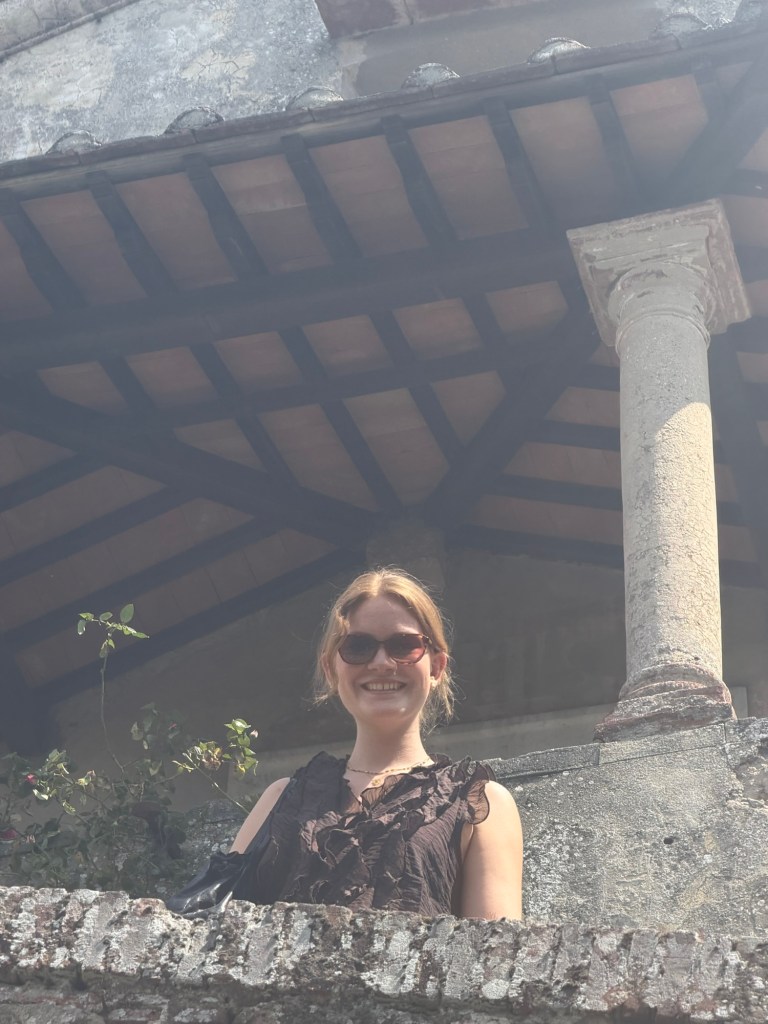
Here’s darling Nadia, above and following.
A frequent site is a group of older gentlemen having a chat. I asked Nadia if one ever sees this in Denmark and she said, no, it’s never warm enough to sit outside. The day we were in Montecatini Alto was April 18 and it was warm and sunny, about 75 degrees F. Nadia said a day like this in Denmark would be at the height of summer and everyone would go to the beach.
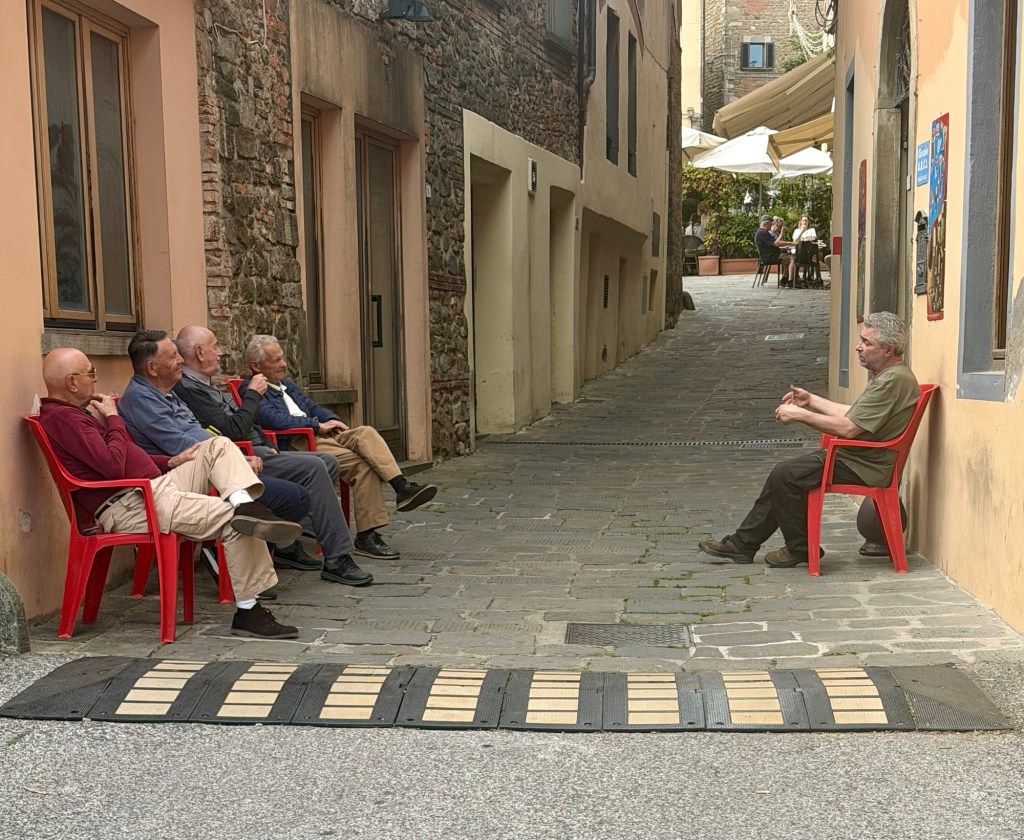
I was able to capture some of the chat.
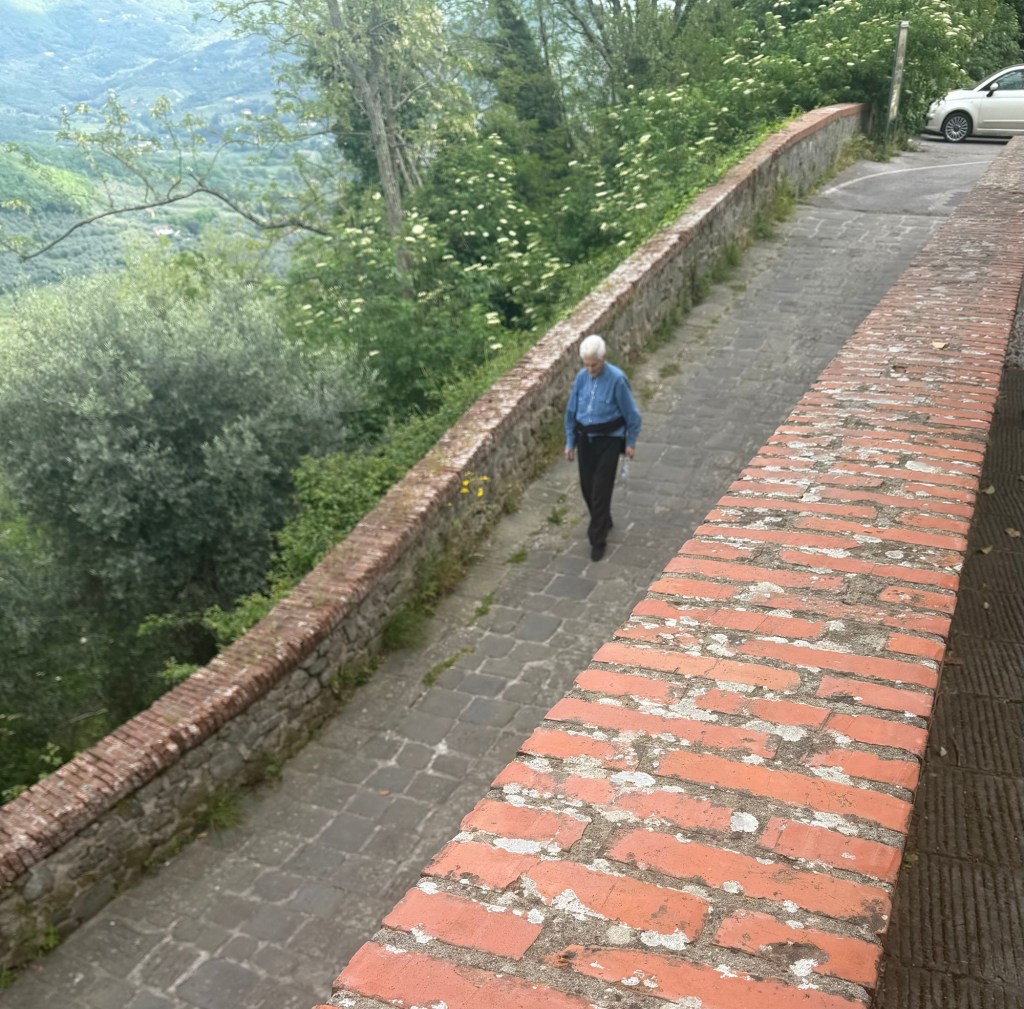
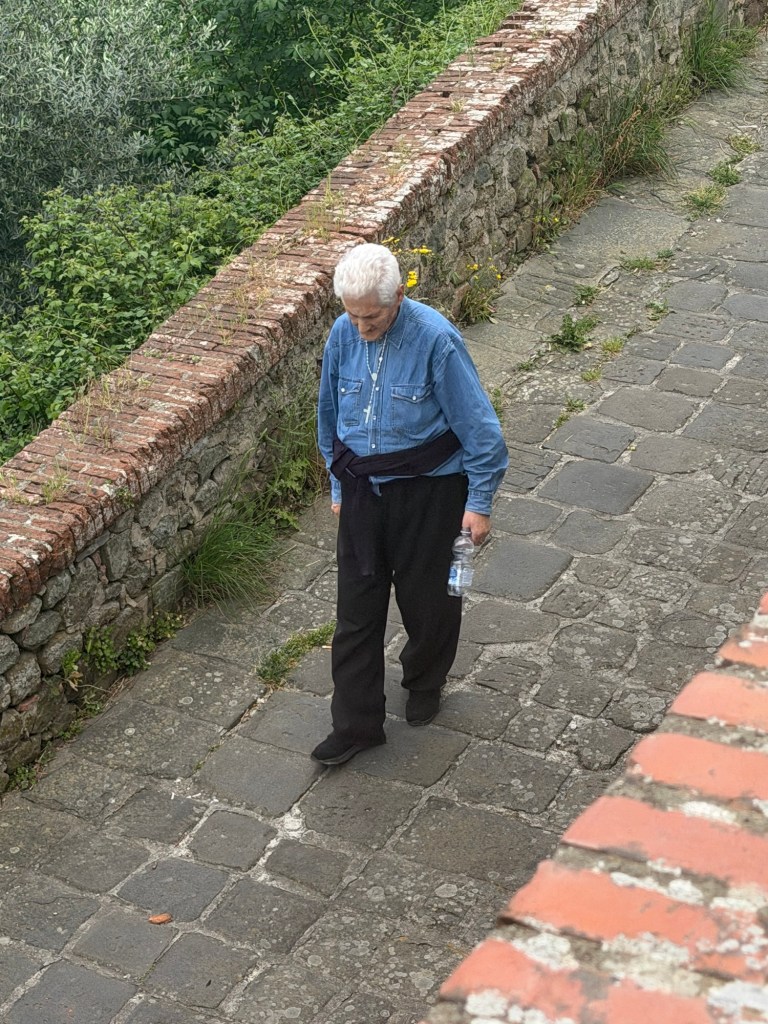
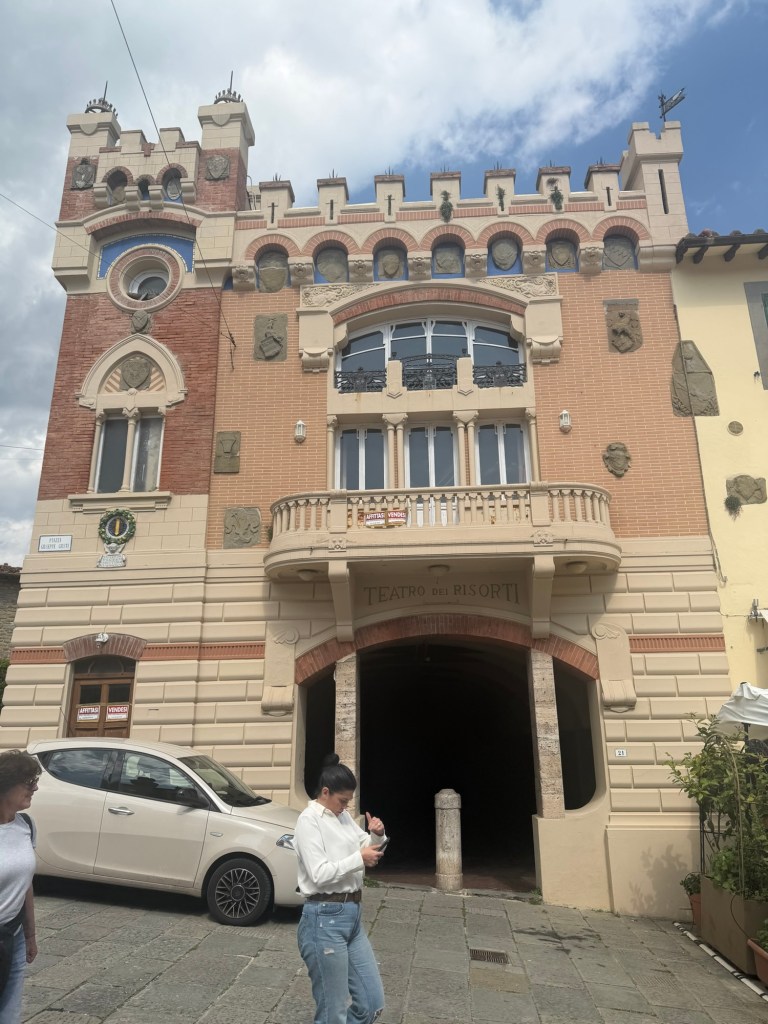
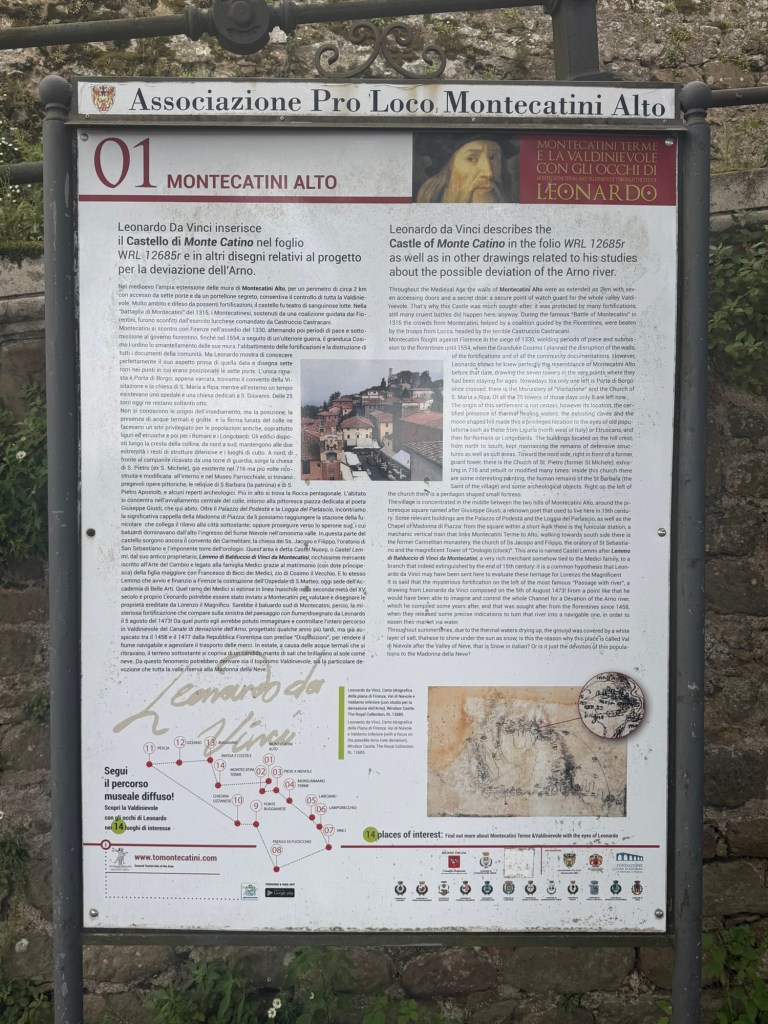
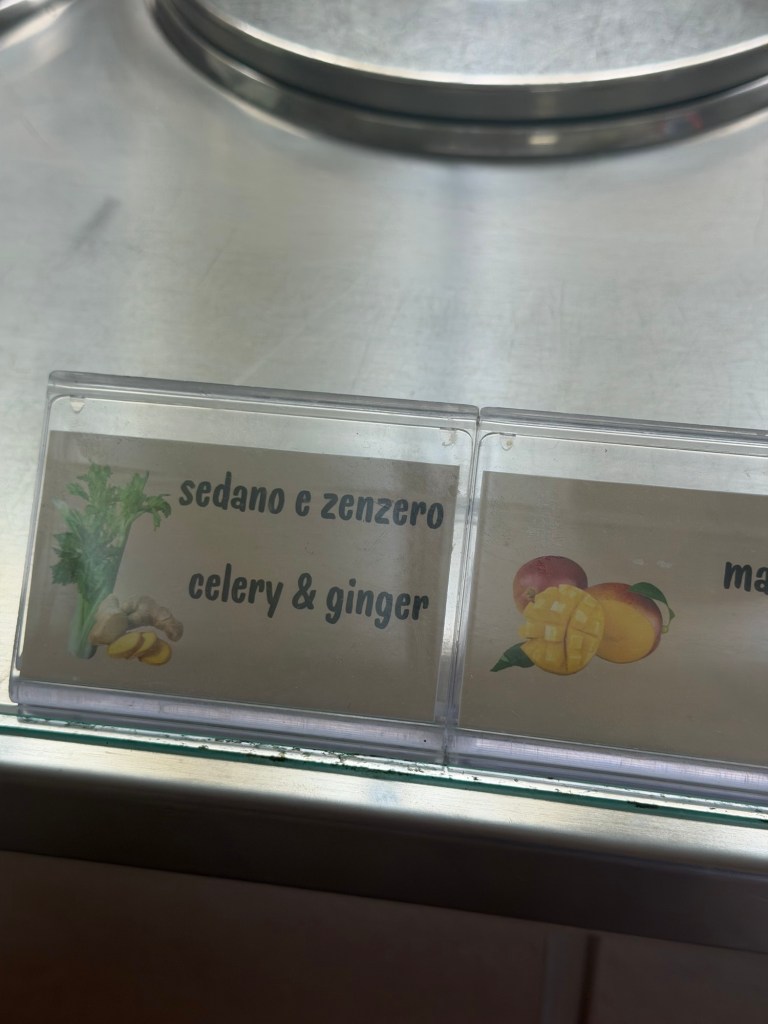
In a gelato shop we noticed an unusual flavor. The fact that the signage is in Italian and English tells us that lots of foreign visitors come here. And not just Americans, Brits, and Australians. People from many countries visit and if they don’t speak Italian, they usually have some English.
Fun, fun day! Thanks Nadia!

