Paestum was begun by some ancient Greeks in southern Italy, about 55 miles southeast of present-day Naples. Originally founded as the Greek colony of Poseidonia around 600 BCE, it is famous today for housing three of the best-preserved ancient Greek Doric temples in the world. My first post on the site was devoted to the Temple of Athena, situated by itself on one far end of the site, see here: https://getbacklauretta.com/2026/09/01/the-temple-of-athena-paestum-italy-🇮🇹/.
In my research I found this succinct video that will explain the basics of what you want to know about this ancient city, not far from Naples. Just open the link.
https://www.britannica.com/video/video-tour-ruins-colony-Greek-Italy-Paestum/-207974
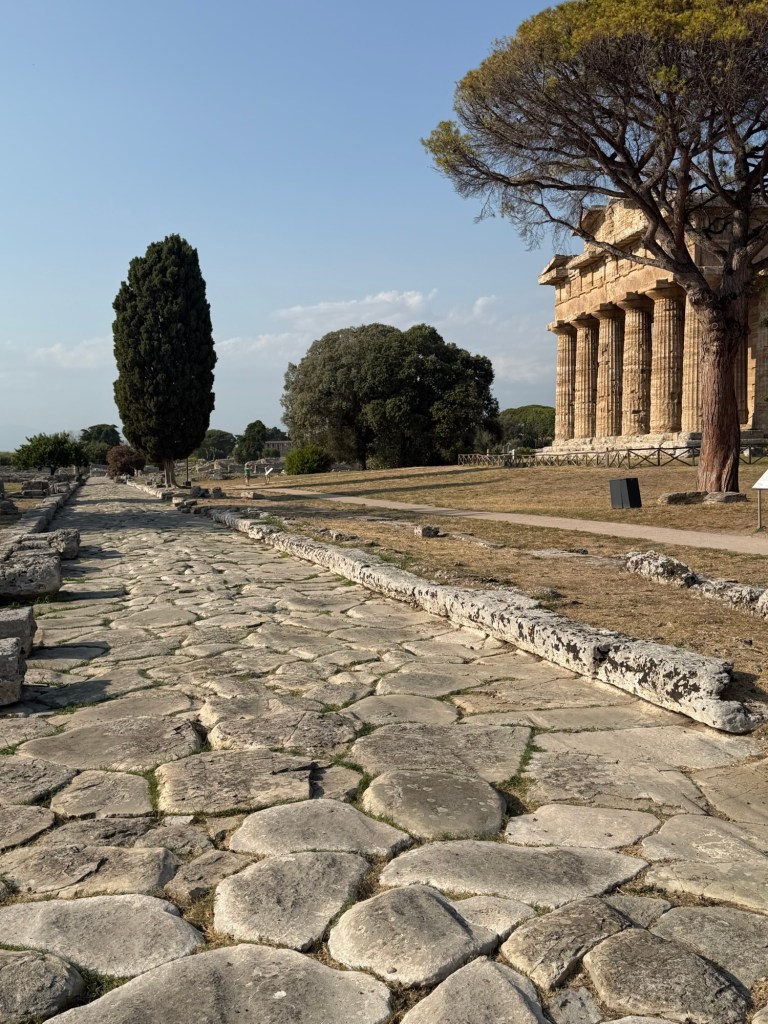
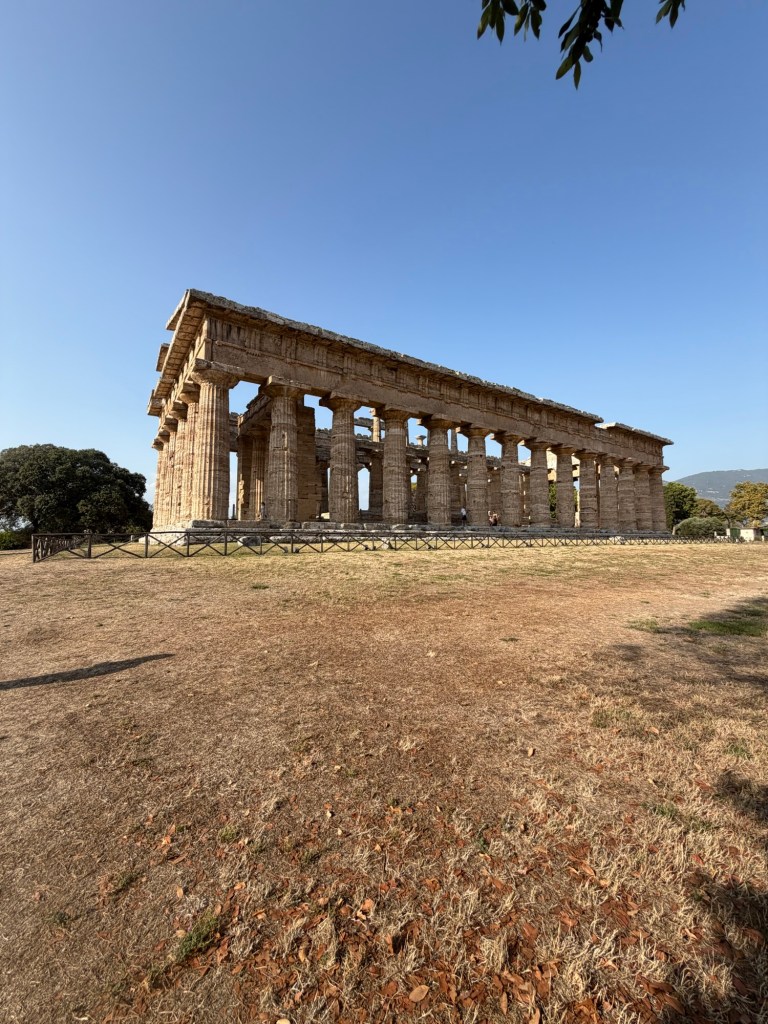
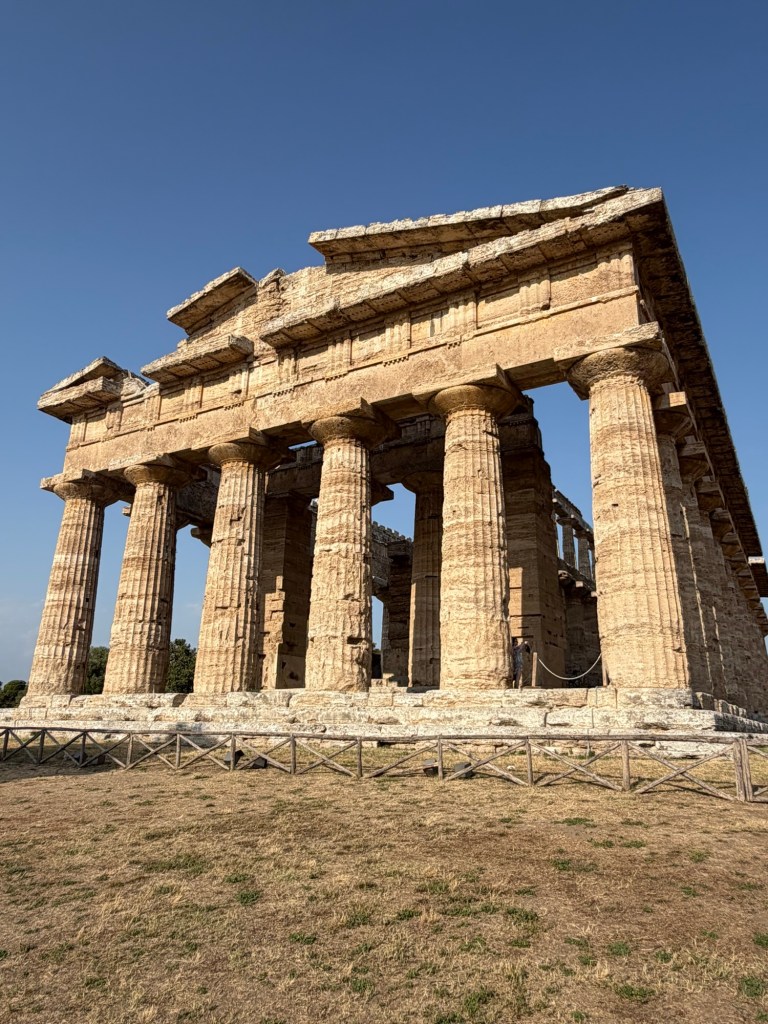
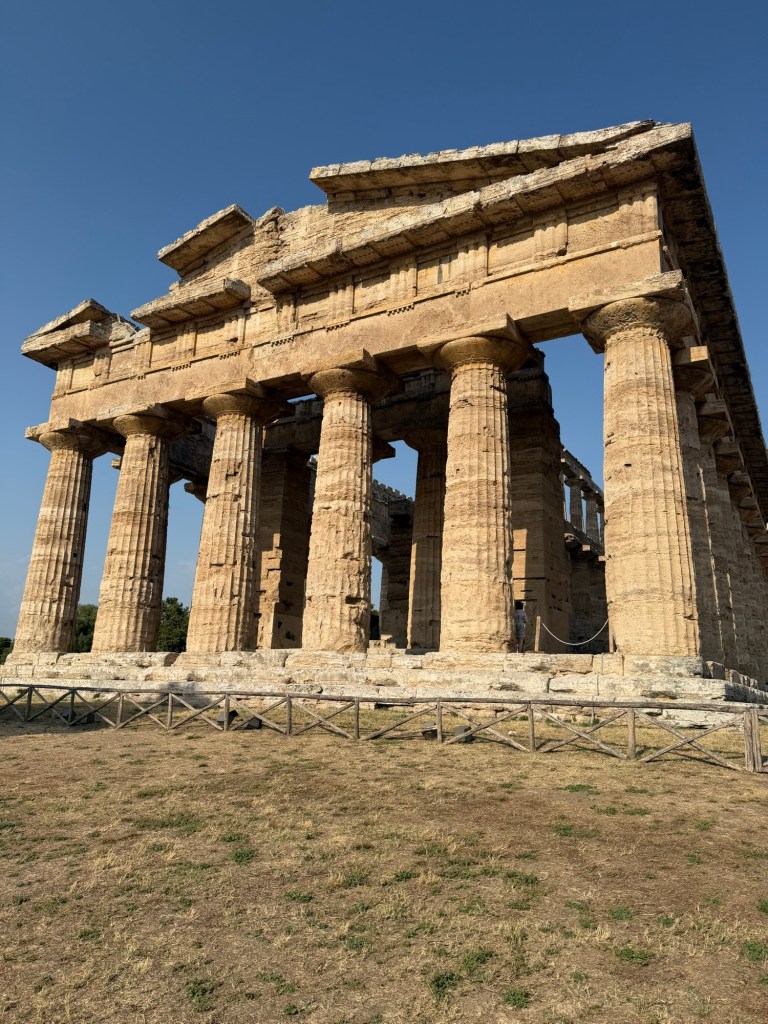
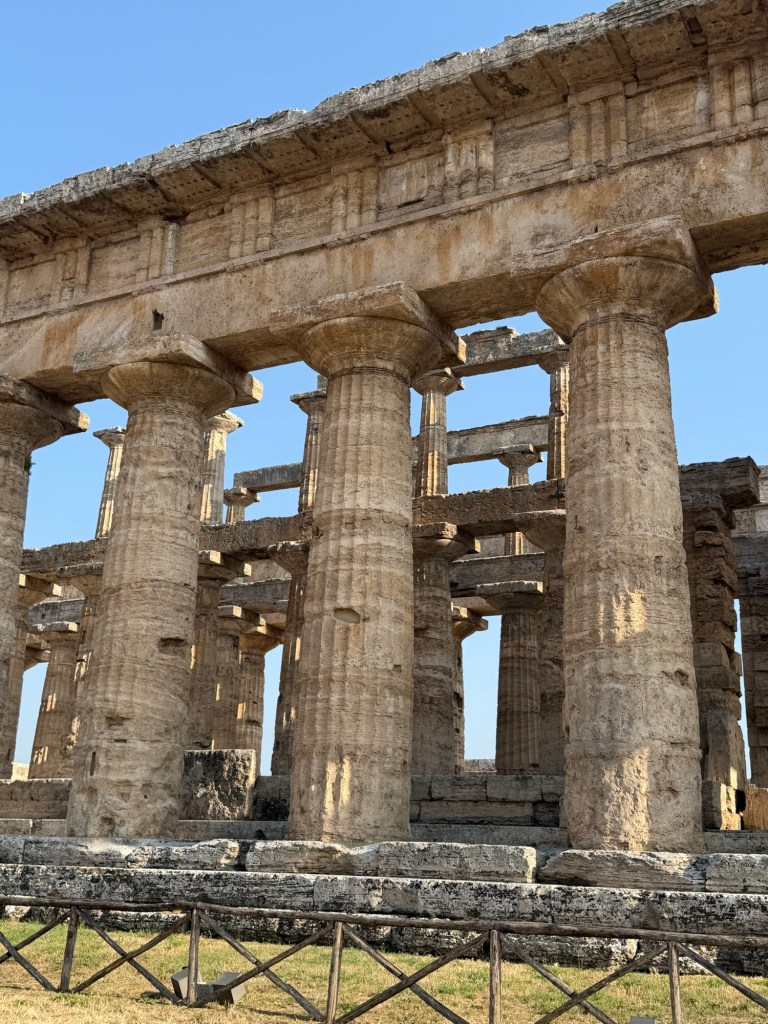
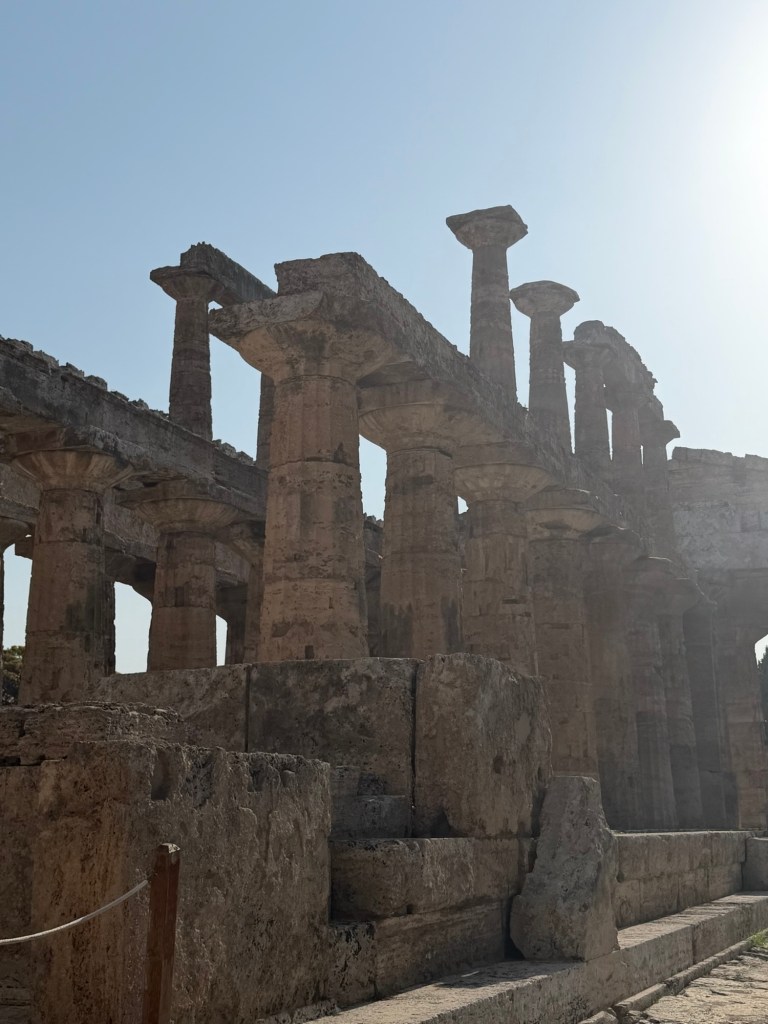
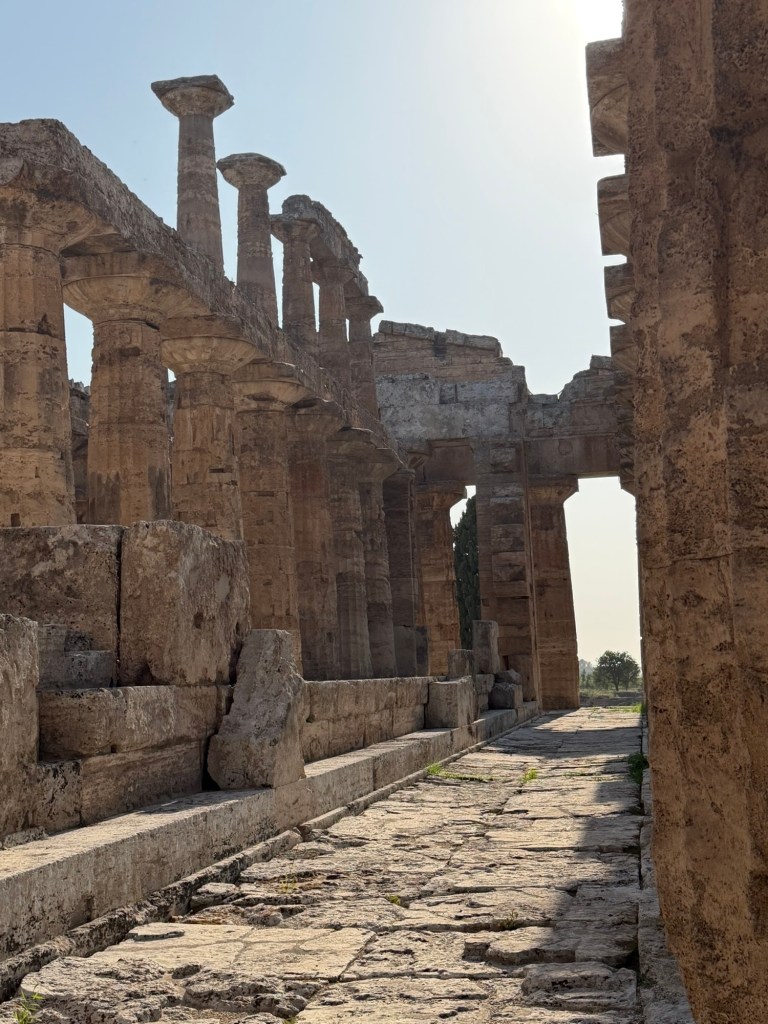
Above and below, you see the Second Temple of Hera, c. 450 BCE, the earliest of the 3 well-preserved temples on the site.
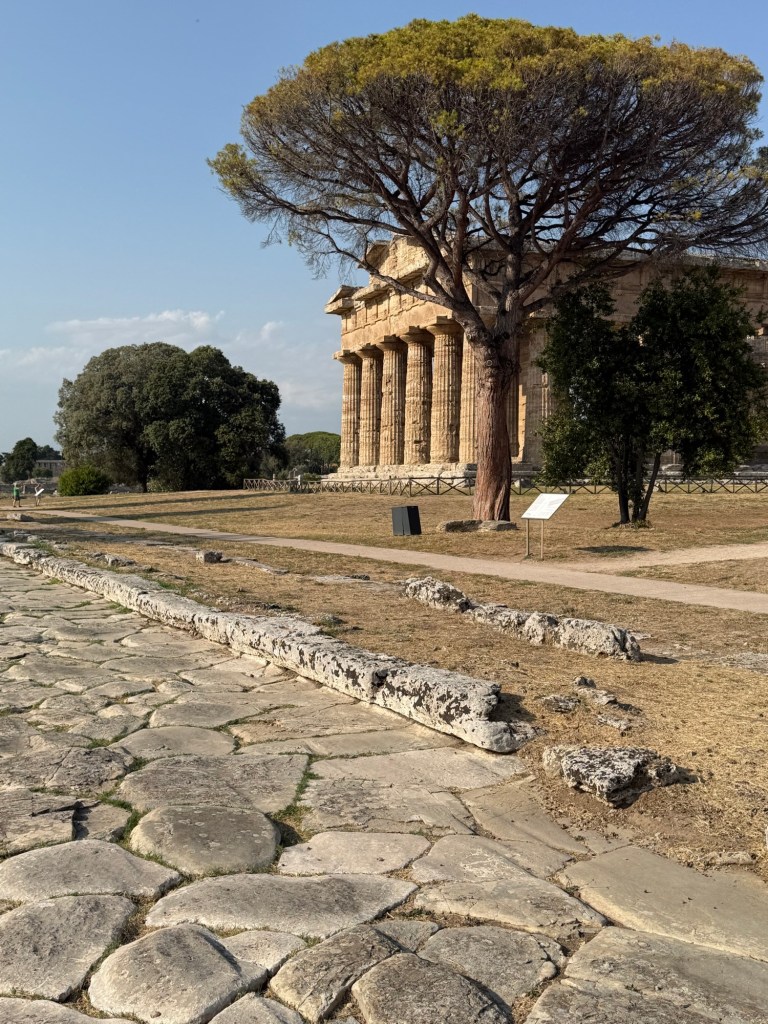
There are other remarkable structures still standing as well as the 3 famous temples. The city walls and amphitheater are largely intact, and the bottom of the walls of many other structures remain, as well as paved roads, that are reminiscent of what you see in Pompeii.
The site is open to the public and a short walk from the train station. There is a modern national museum within it, which also contains the finds from the associated Greek site of Foce del Sele, a place which I did not, unfortunately, get to visit.
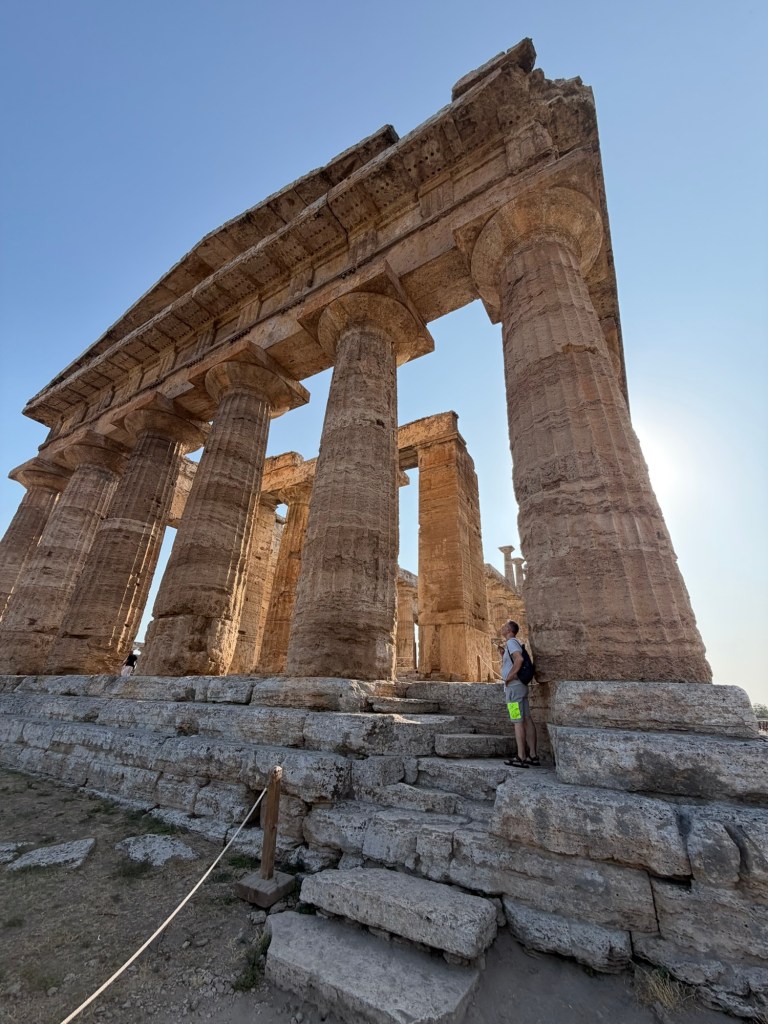
Below, the earliest or first Temple of Hera, 550 BCE
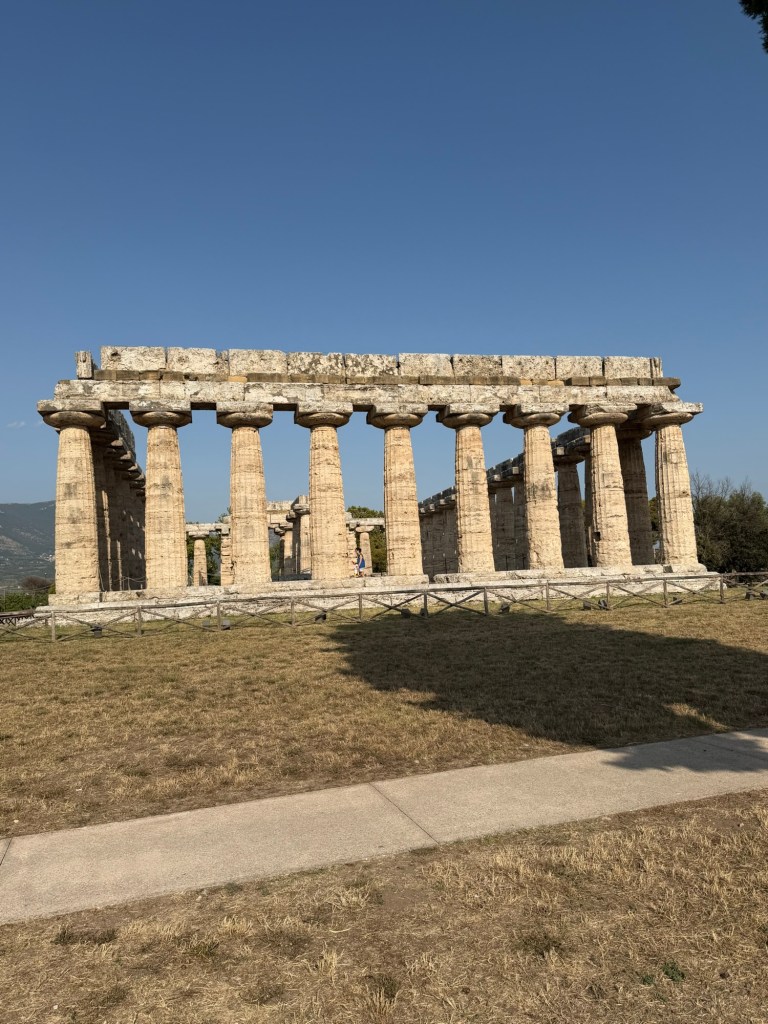
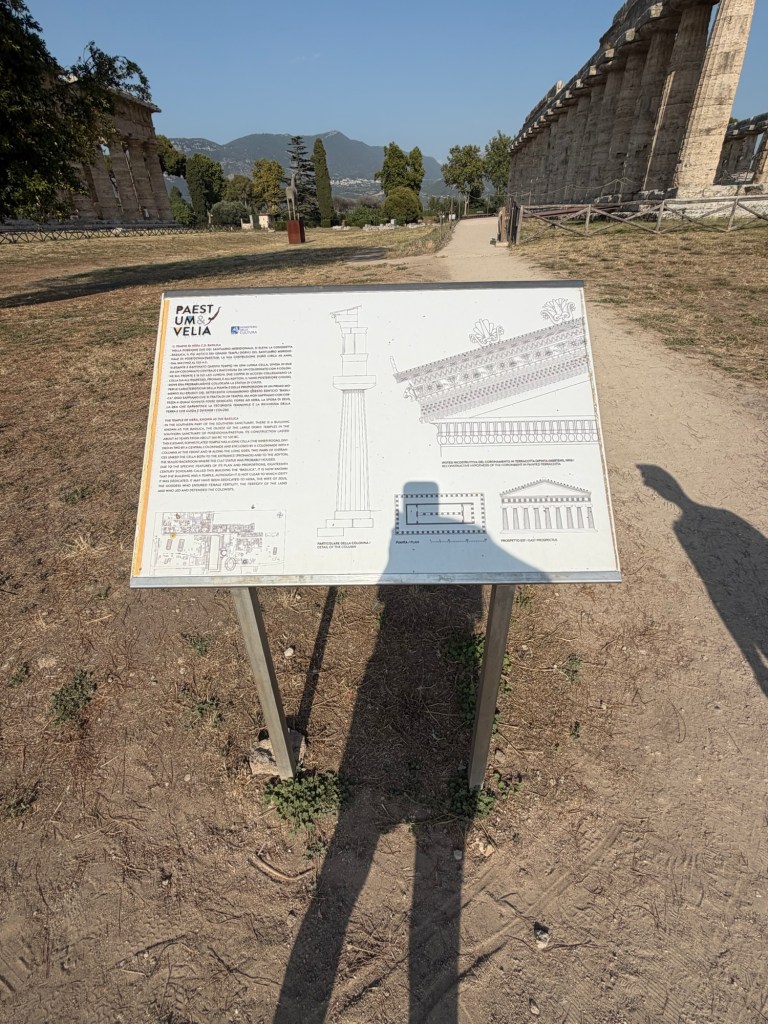
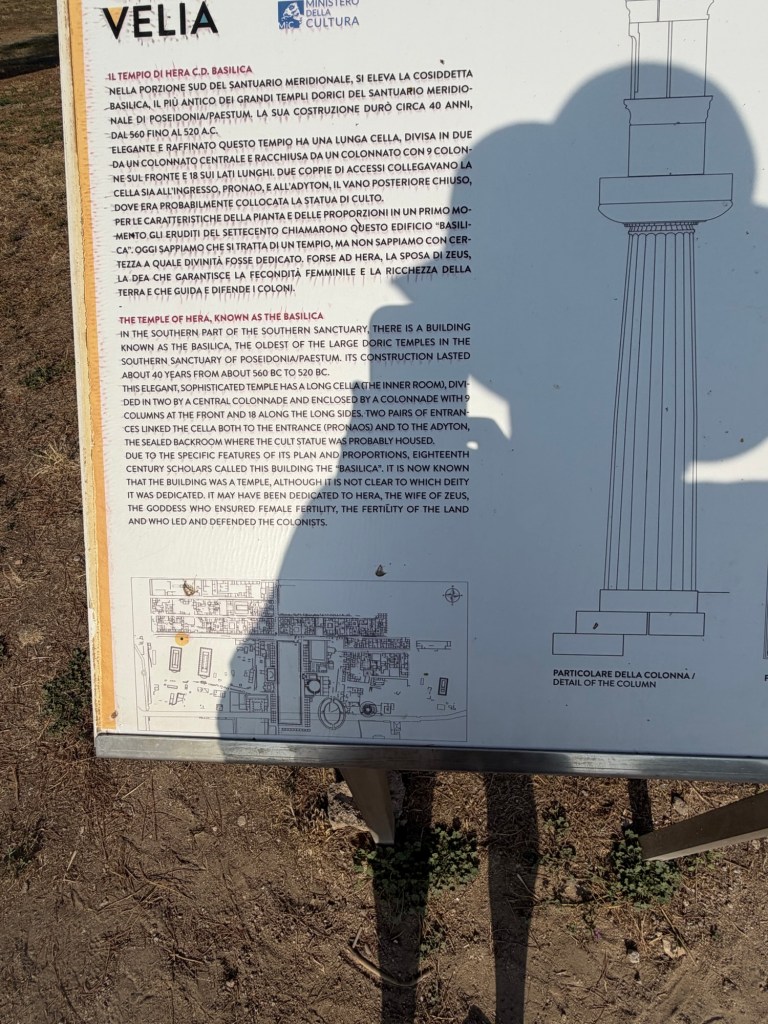
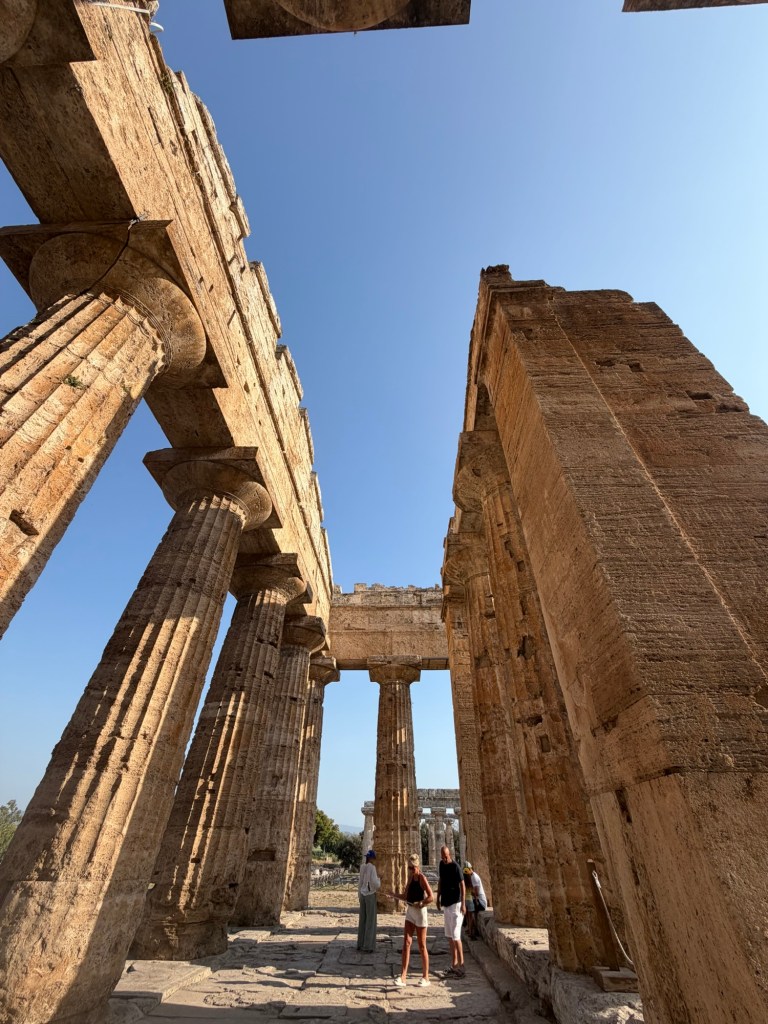
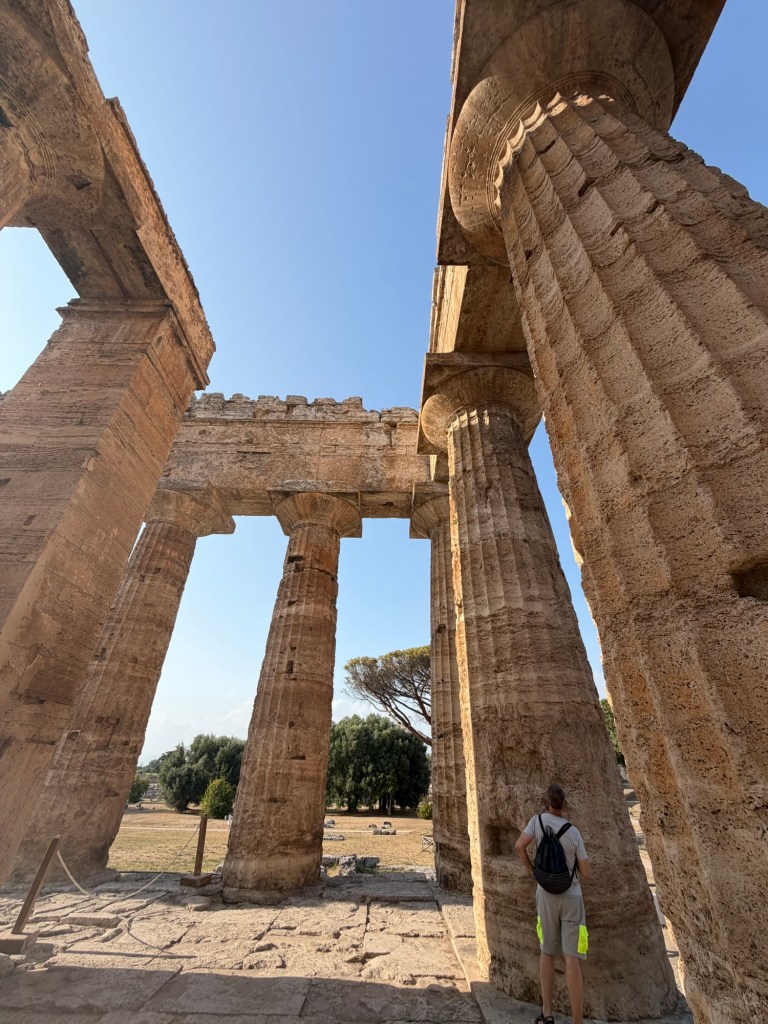
Amazingly, it is possible to enter and walk through this ancient structure.
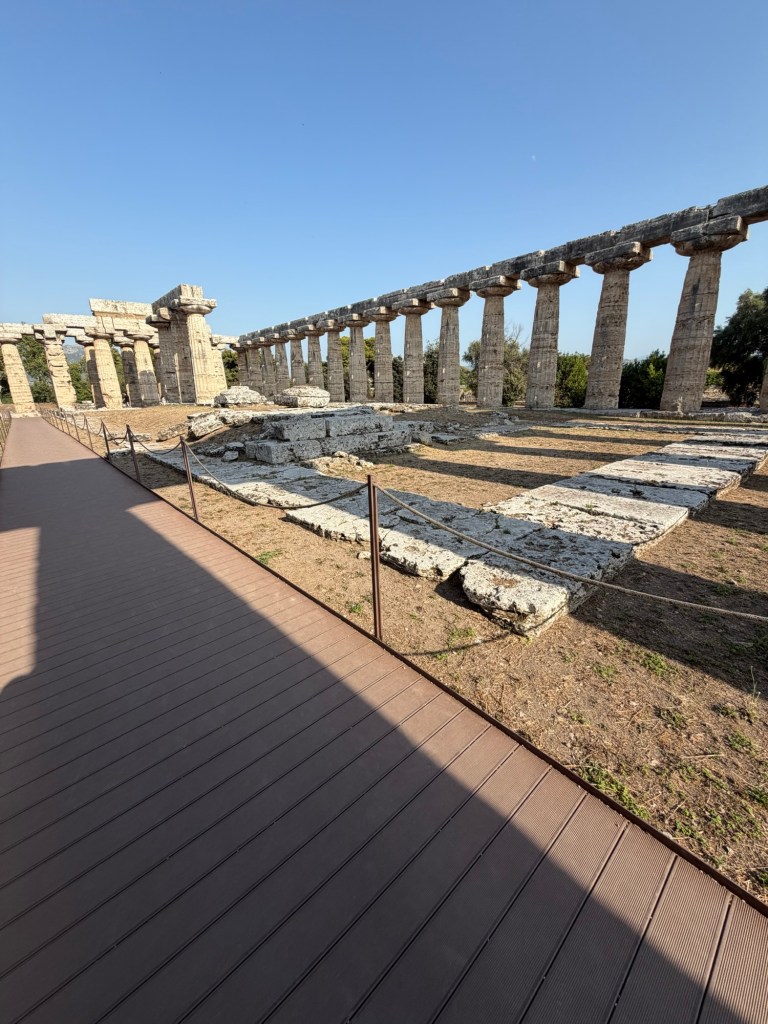
The first Temple of Hera, c. 550 BCE
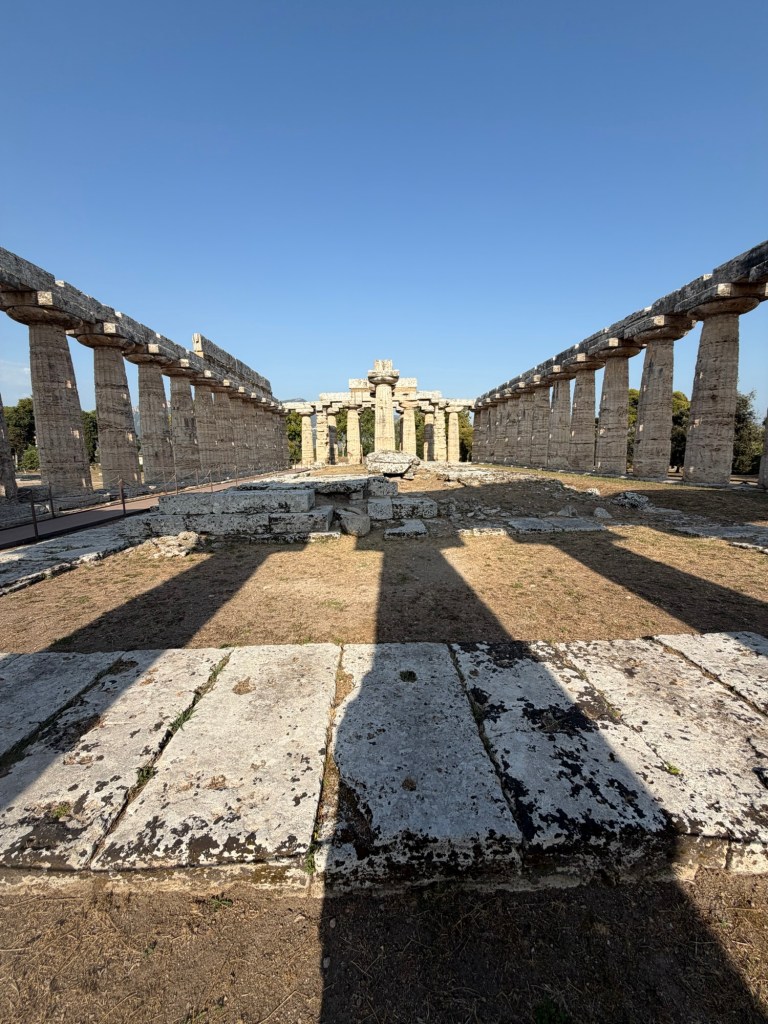
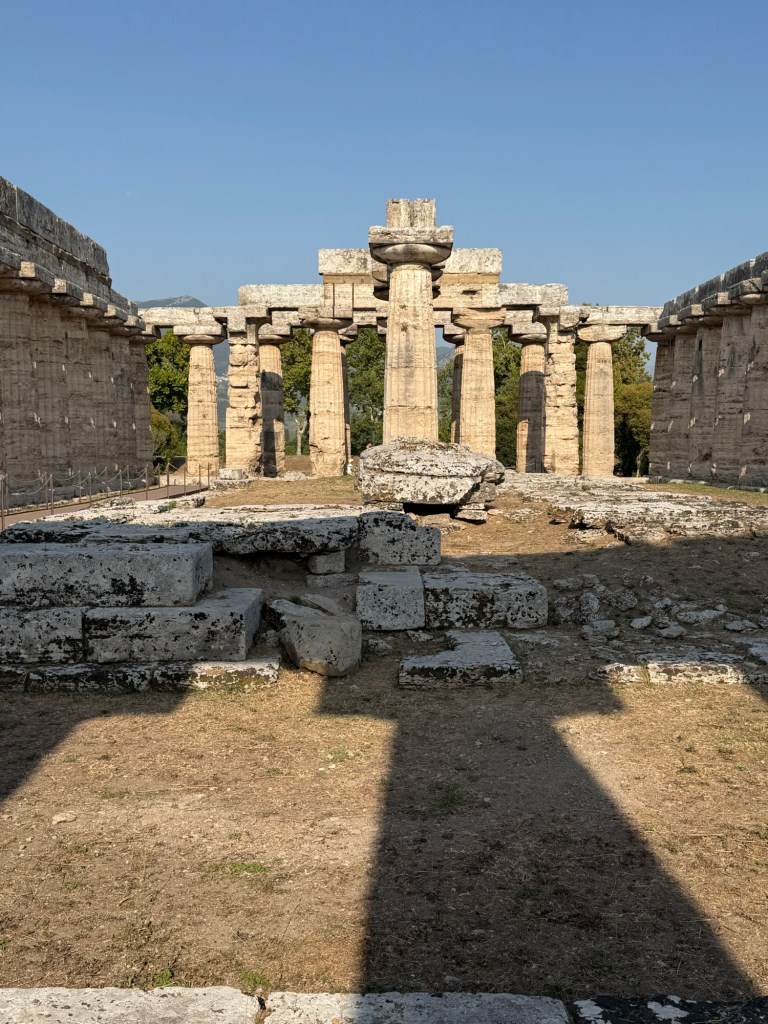
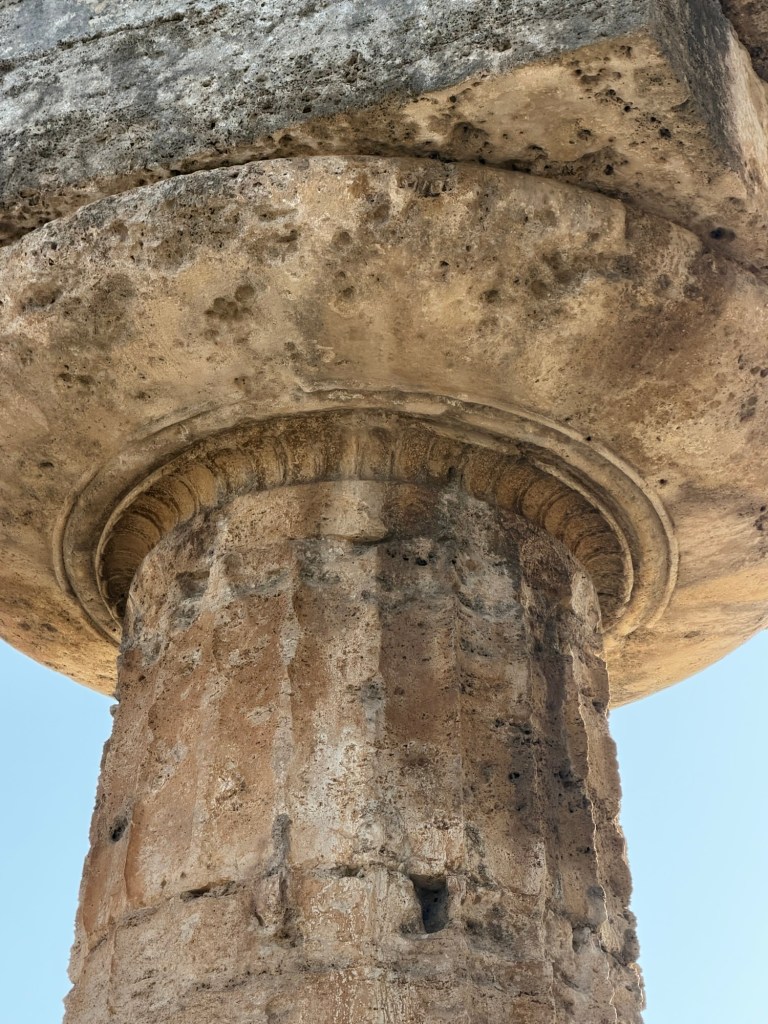
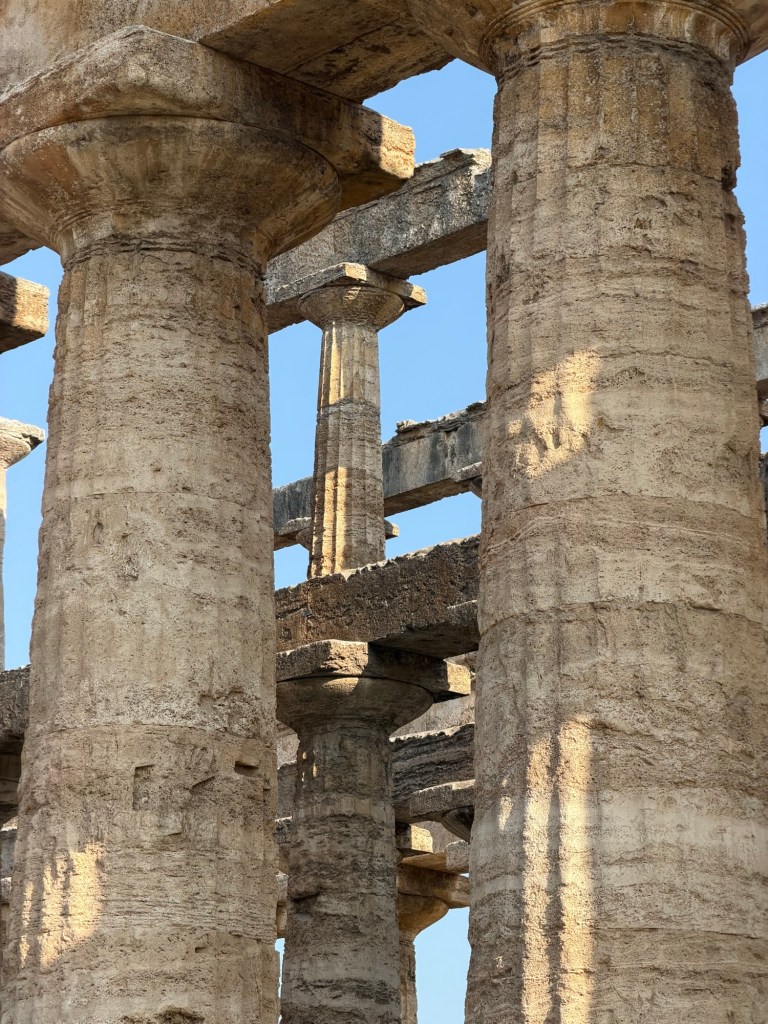
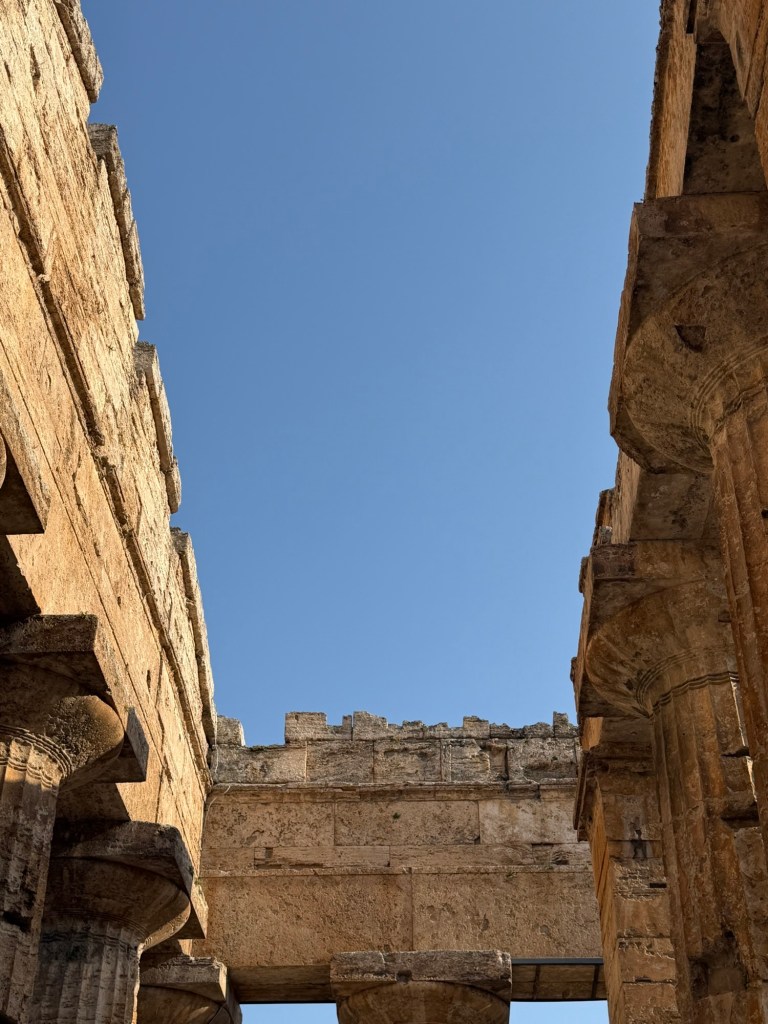
Walking through the Second Temple of Hera allows a close up of some details.
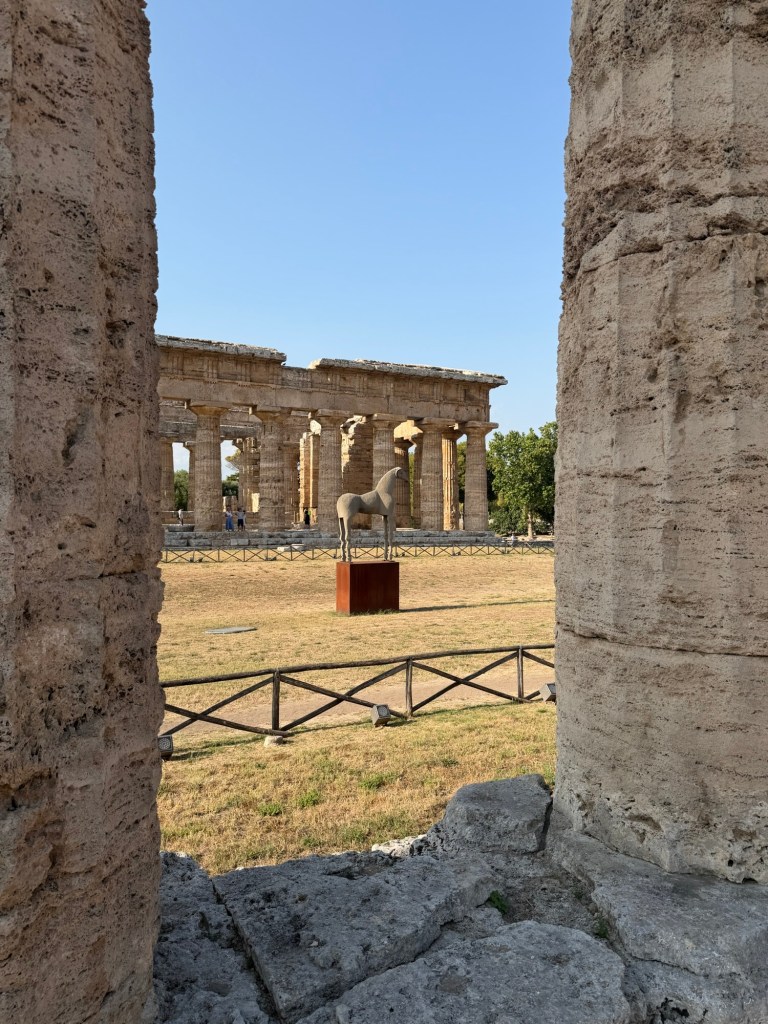
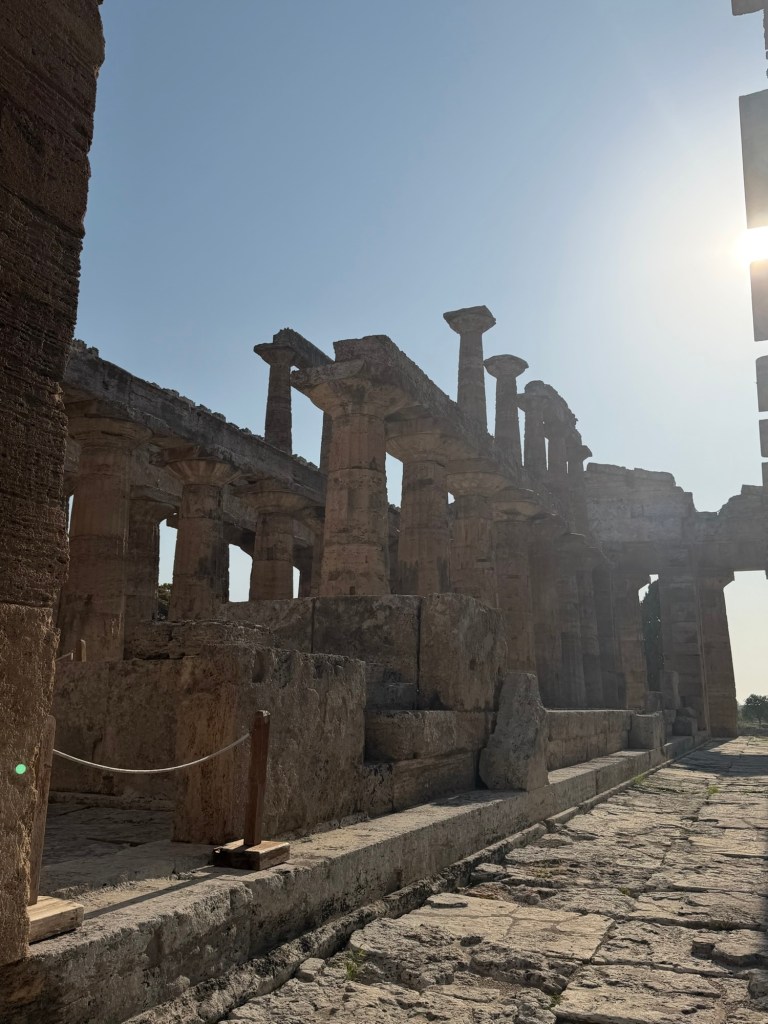
In the photo above, you can see how closely situated the 2 temples dedicated to Hera are.
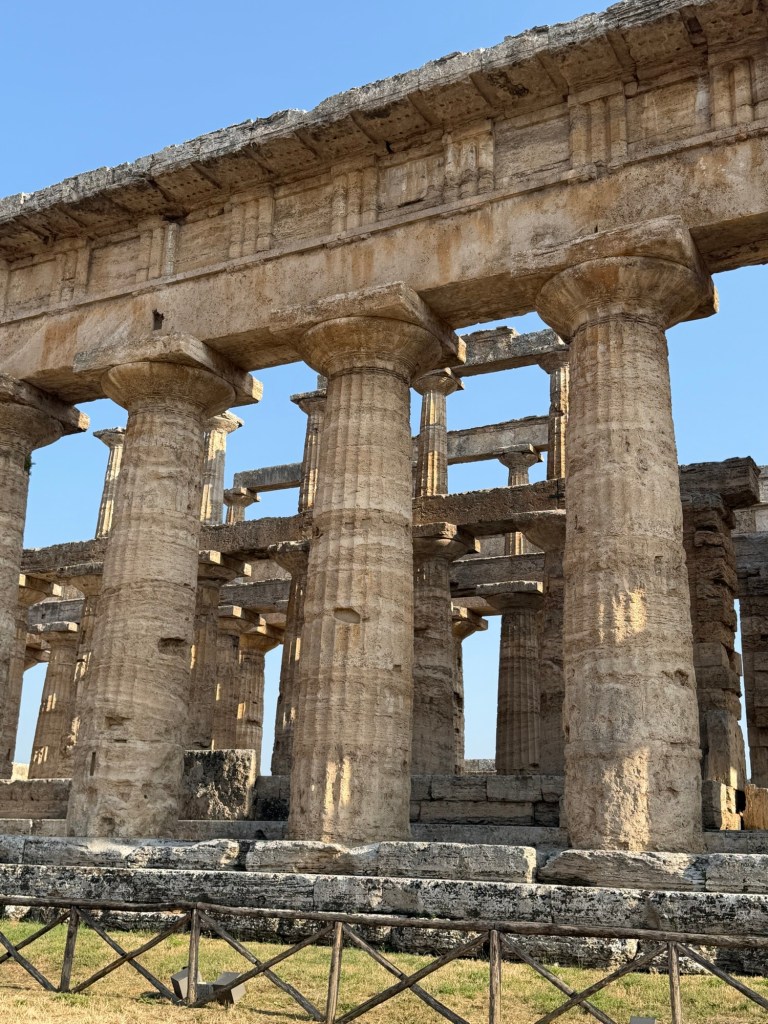
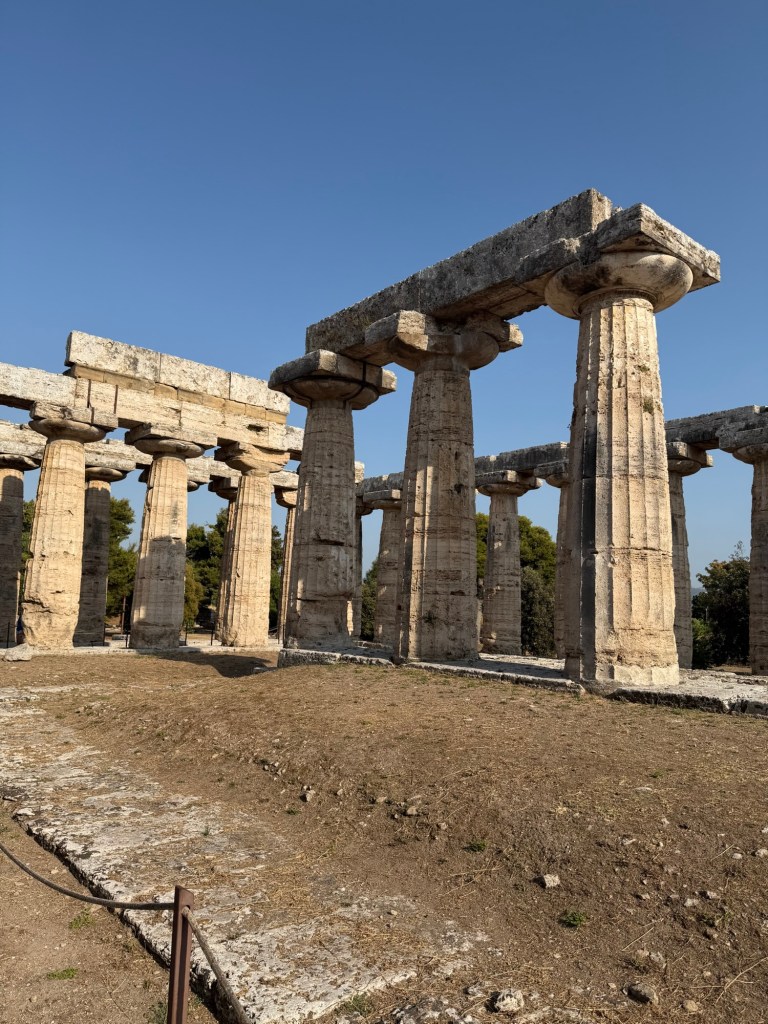
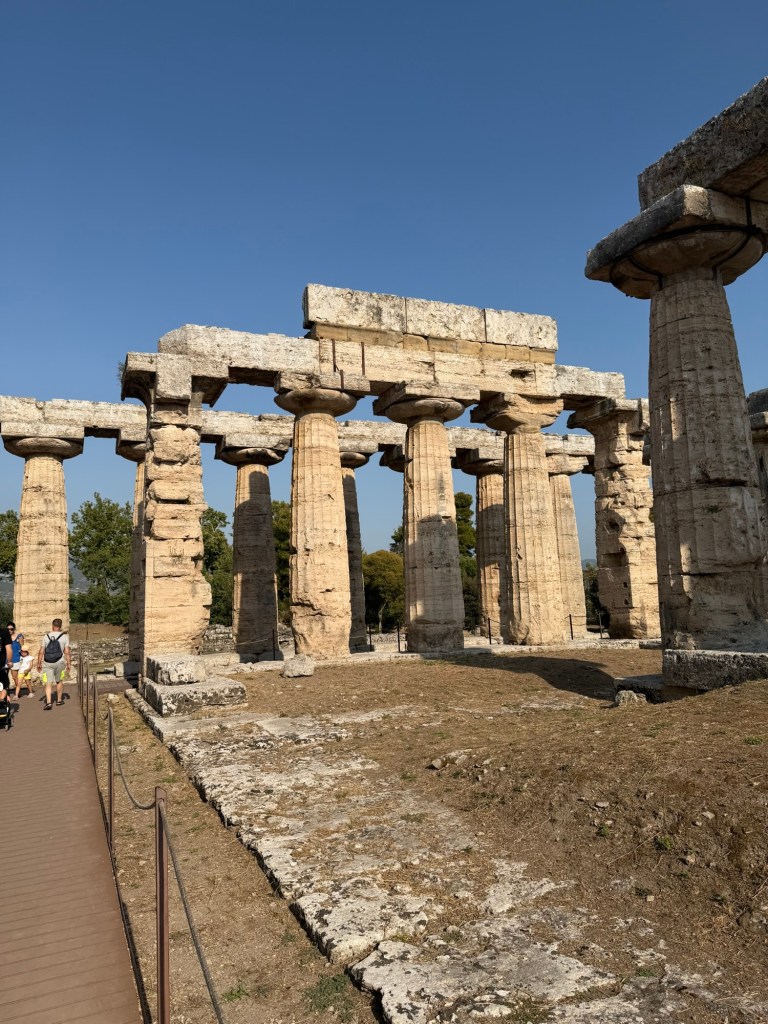
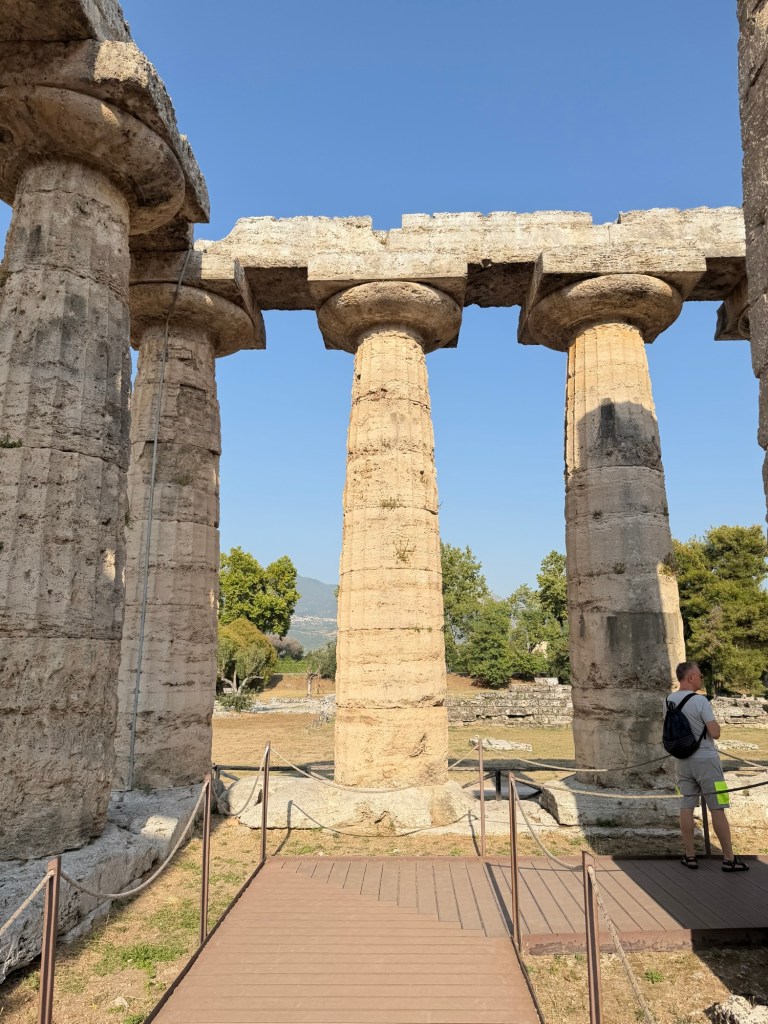
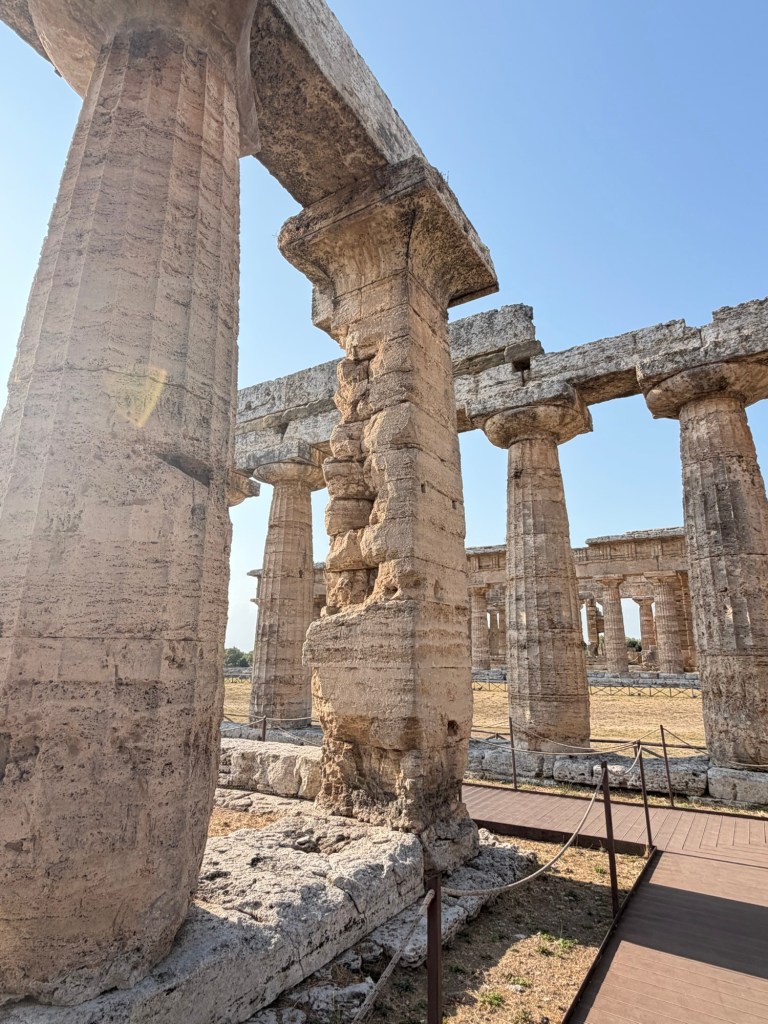
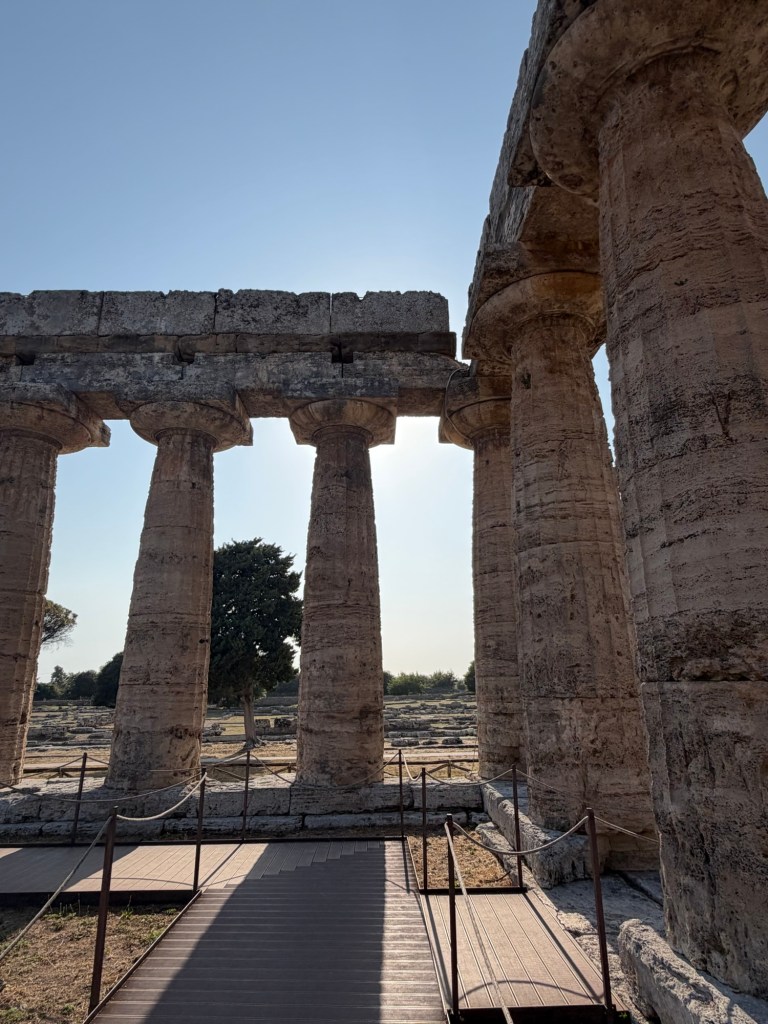
All three of the large temples at Paestum were constructed in the Archaic version of the Greek Doric order, dating from about 550 to 450 BCE. All are typical of the period, with massive colonnades having a very pronounced entasis (widening as they go down), and very wide capitals resembling upturned mushrooms. Above the columns, only the second Temple of Hera retains most of its entablature, the other two having only the architrave in place.
There are two Temples of Hera, right next to each other, while the Temple of Athena (see my earlier post https://getbacklauretta.com/2026/09/01/the-temple-of-athena-paestum-italy-🇮🇹/ ) is on the other side of the town center. There were many other temples, both Greek and Roman, which are far less well preserved.
Paestum is far from any sources of good marble. Unsurprisingly, the three main temples had few stone reliefs, perhaps using painting instead. Painted terracotta was used for some detailed parts of the structure. The large pieces of terracotta that have survived are in the related museum.
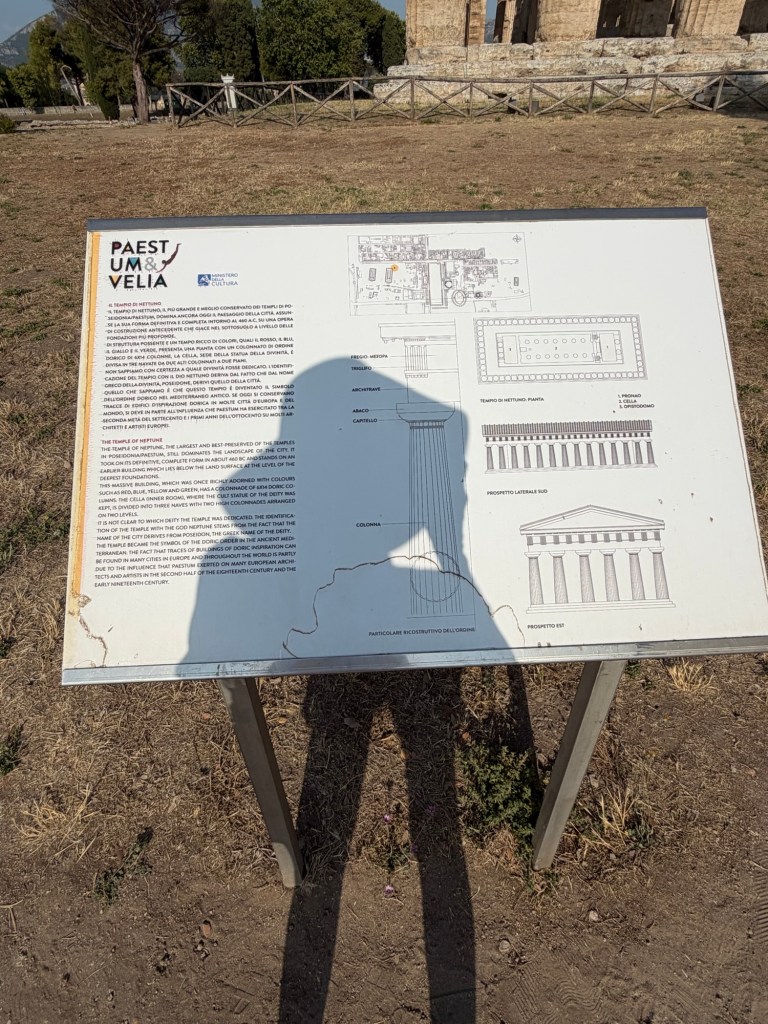
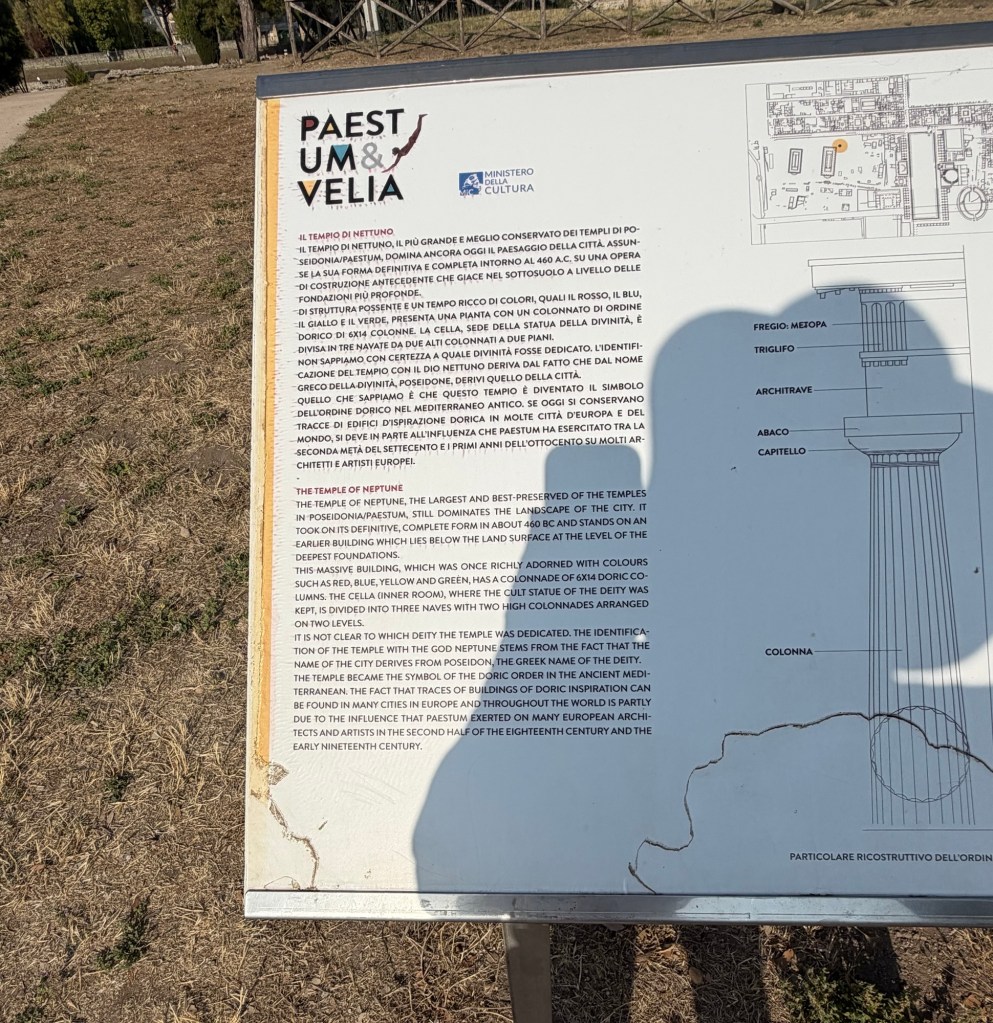
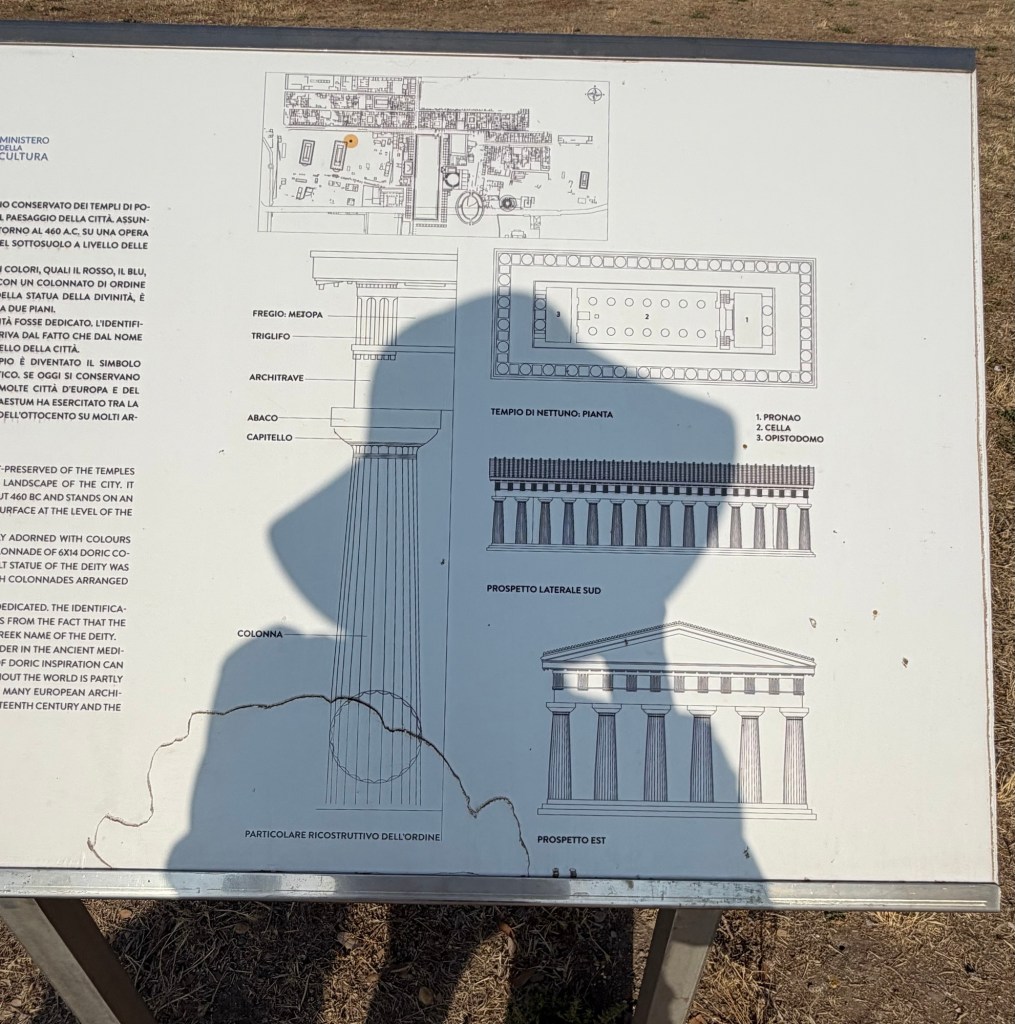
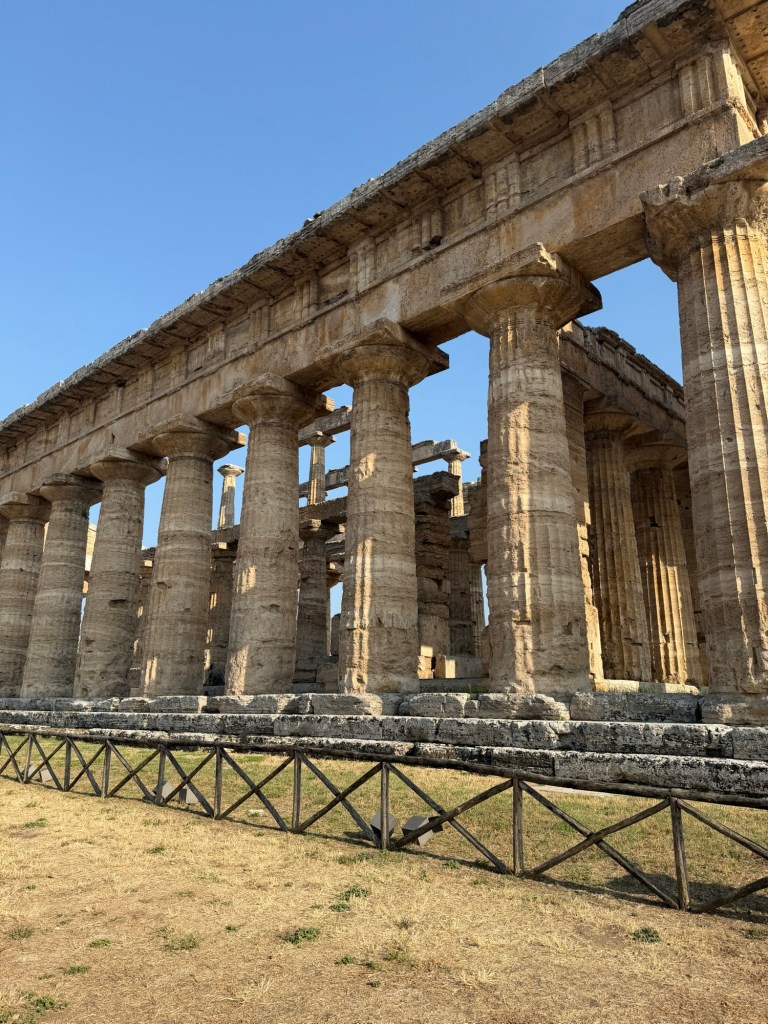
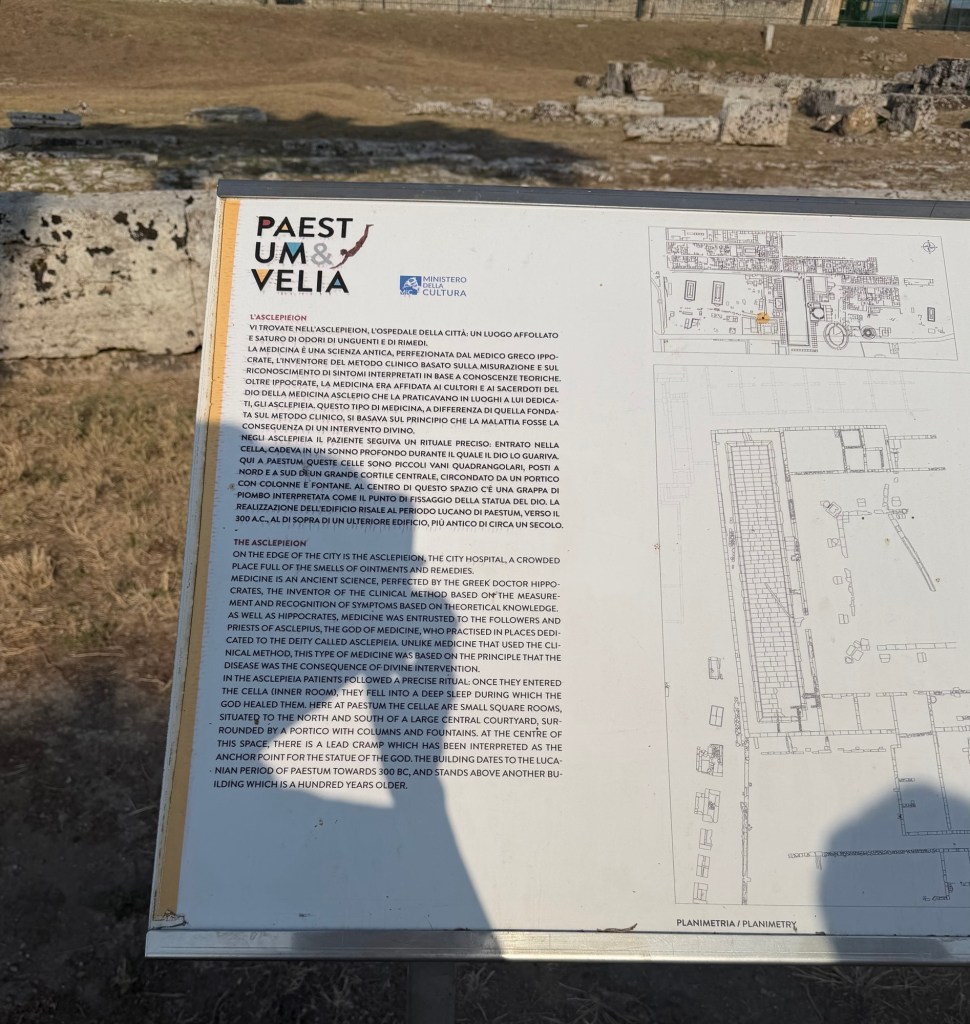
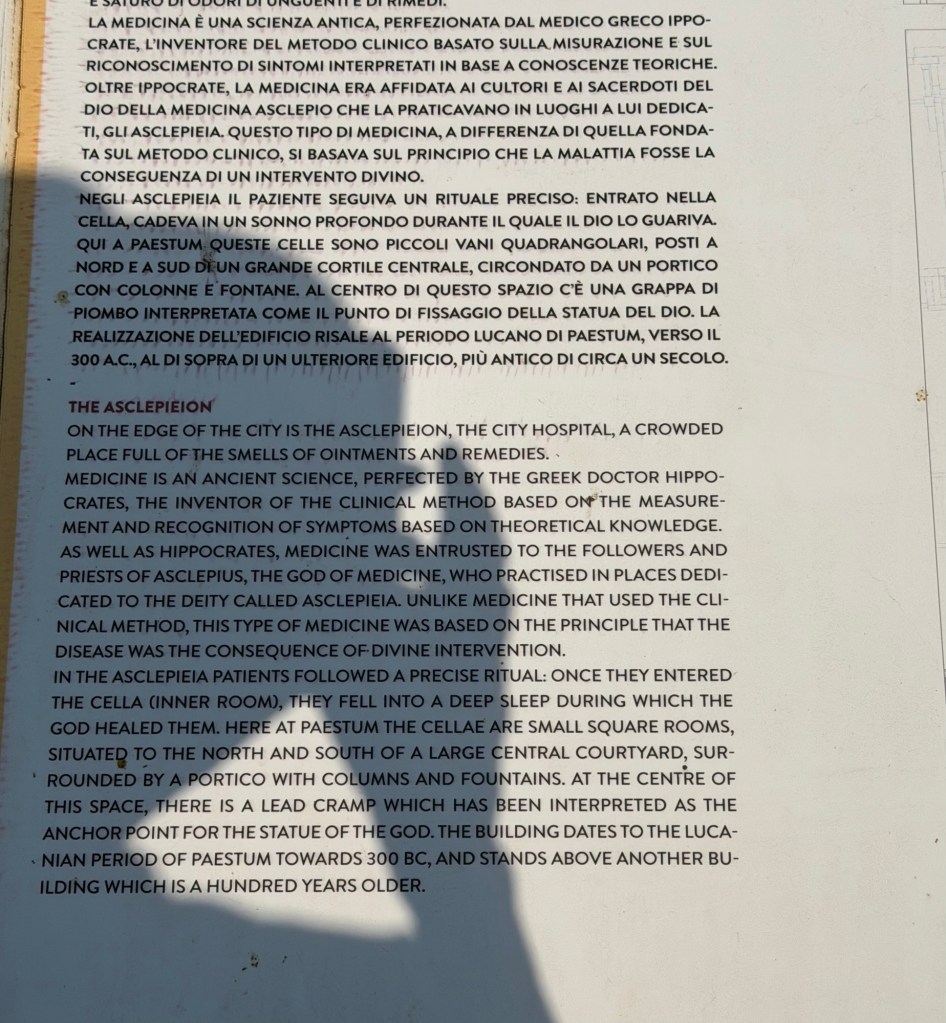
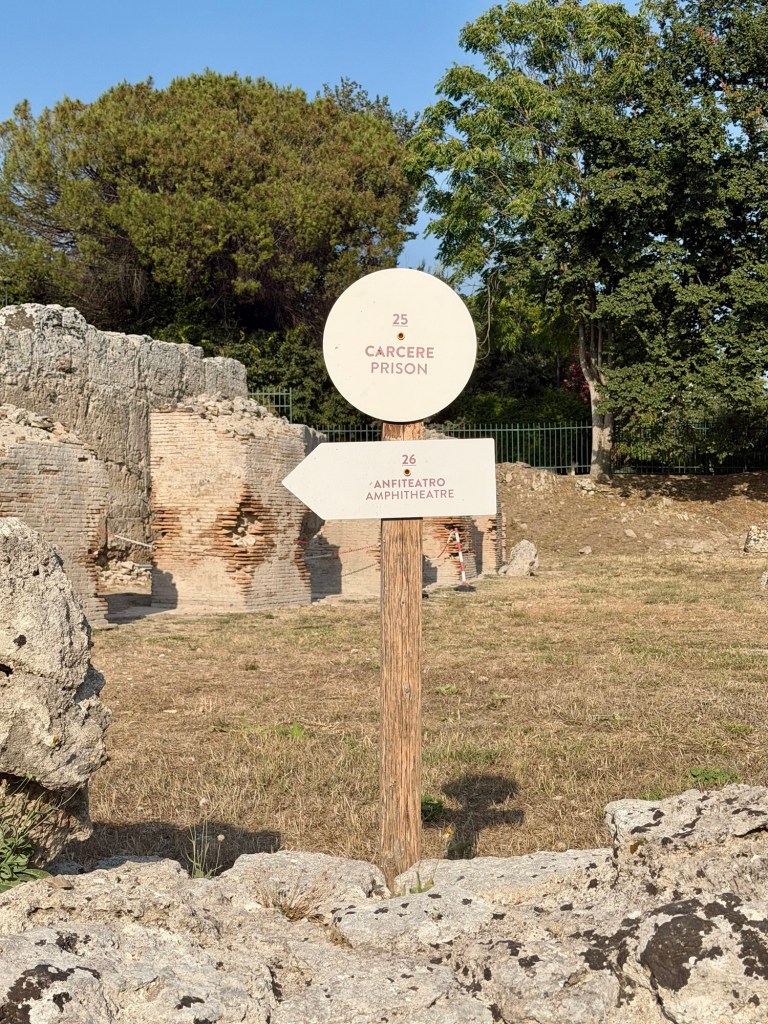
The whole ancient city of Paestum covered an area of approximately 120 hectares. Only the 25 hectares that contain the three main temples and the other main buildings have been excavated. The other 95 hectares remain on private land and have not been studied.
The ancient city was surrounded by defensive walls, which are largely intact. The walls are approximately 4.75 km (3 mi) long in its polygonal perimeter, typically 7 m (23 ft) high, and 5–7 m (16–23 ft) thick. Corresponding with the cardinal points, there were four main openings in the wall: Porta Sirena (east to the hills); Porta Giustizia (south, now to the modern village Paestum); Porta Marina (west to the sea); and Porta Aurea (north), which was later destroyed. Positioned along the wall were 24 square or round towers. There may have been as many as 28, but some of them (and Porta Aurea) were destroyed during the construction of a highway during the 18th century that effectively cut the ancient site in two.
If you are lucky enough to visit Paestum, I’d recommend a visit in late spring, early fall or winter, and suggest you need at least half a day to truly see the site. I would highly advise also visiting the related museum.

