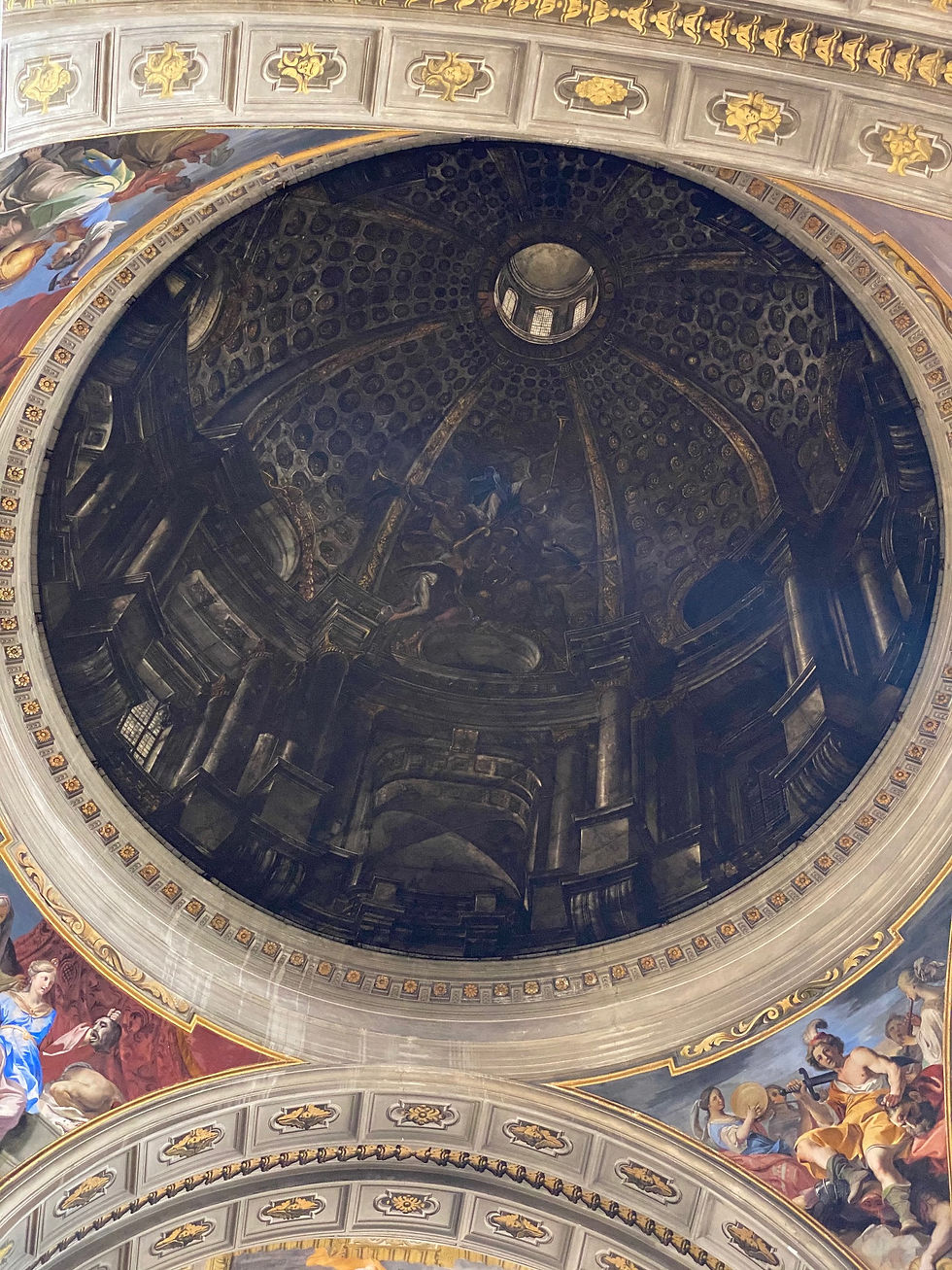
The false dome of the Church of Saint Ignatius of Loyola in Rome is one of the world’s most celebrated masterpieces of trompe-l’œil (fool the eye) and quadratura (illusionistic perspective painting). Painted by Jesuit lay brother, mathematician, and artist Andrea Pozzo between 1685 and 1694, it mimics a soaring, ribbed architectural cupola on a completely flat surface.
The original architectural blueprints by Orazio Grassi called for a grand, physical stone dome over the church transept crossing. However, two major complications halted its construction:
1. By 1642, the Jesuit Order had completely run out of funds allocated for the structure.
2. The massive height of the planned dome sparked protests from the neighboring Dominican monastery, as it threatened to completely block light from reaching their extensive library.
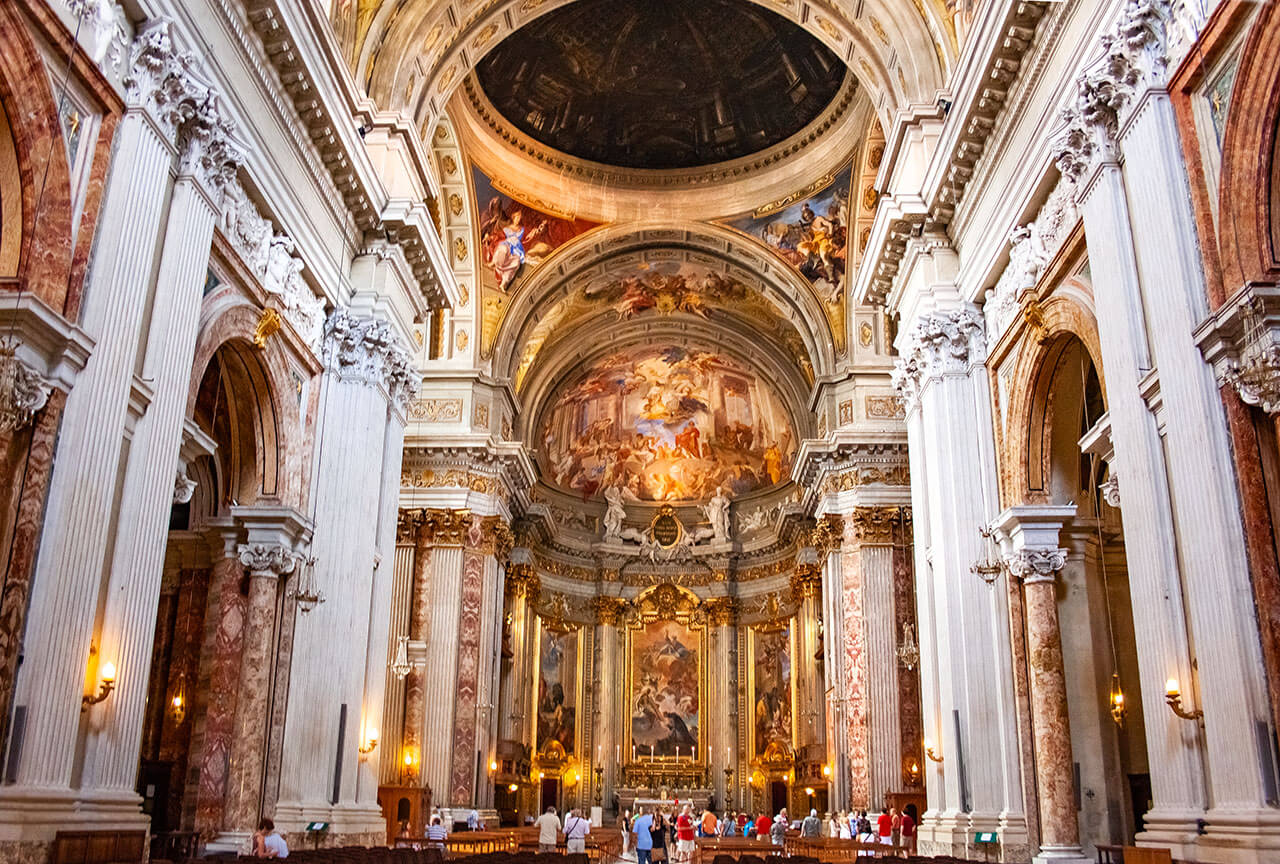
Rather than leaving the interior roof flat and bare, Pozzo was commissioned to paint a 13-meter-wide canvas that would simulate the missing architecture.

