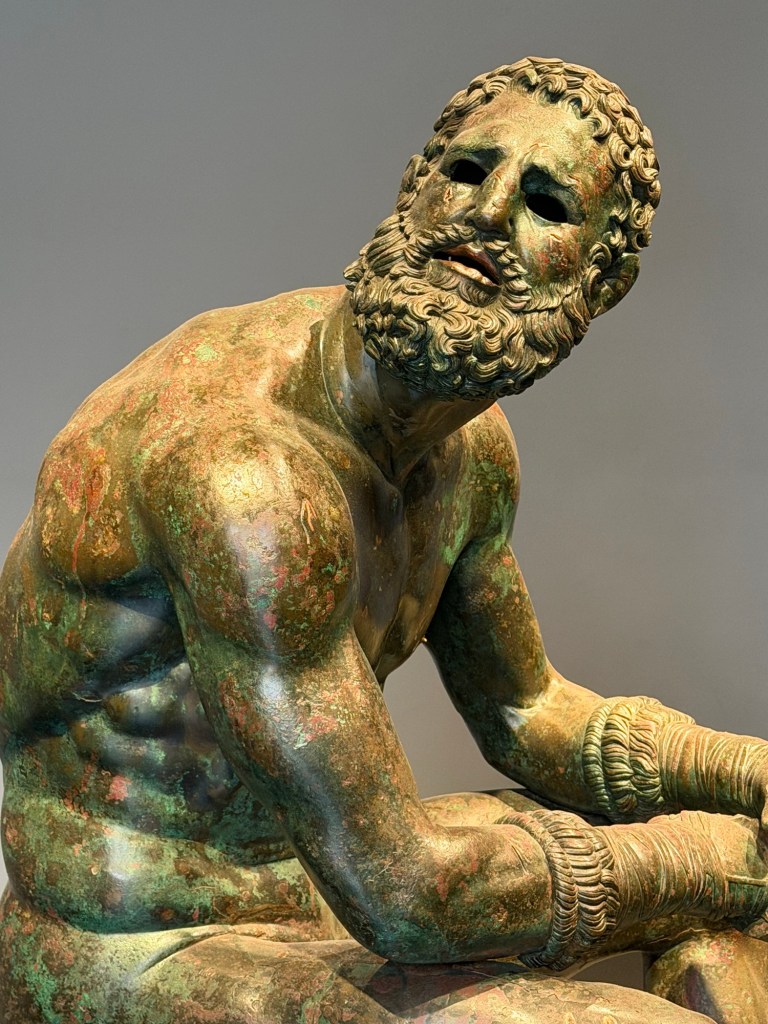
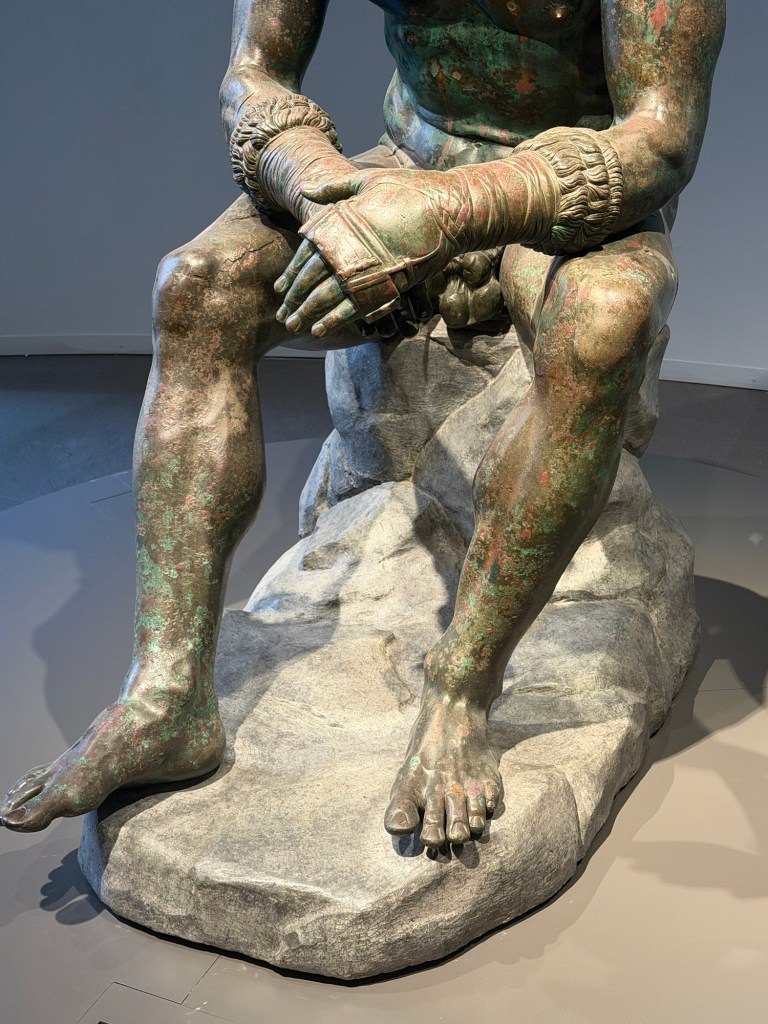
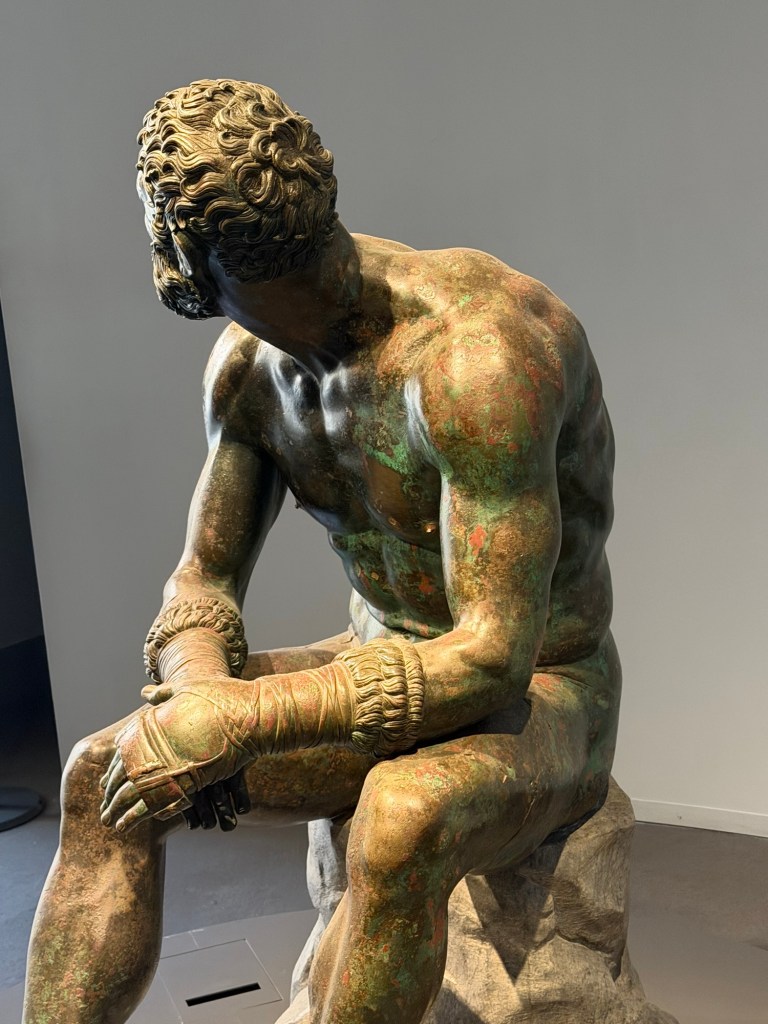
There are a host of masterpieces housed within the Palazzo Massimo alle Terme, a part of the National Roman Museum organization. None is finer nor more arresting than this work, The Boxer, created in Greece sometime between 330-50 BCE using the lost-wax bronze casting technique. The sculpture was brought to Rome to enhance a public building and impress viewers.
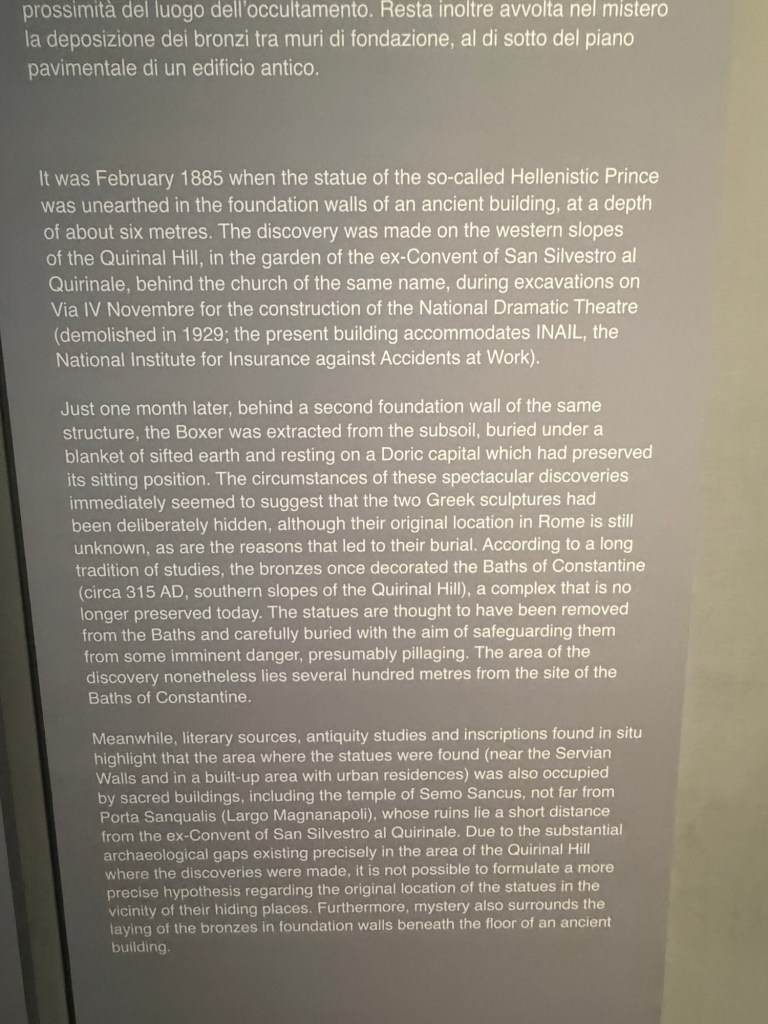
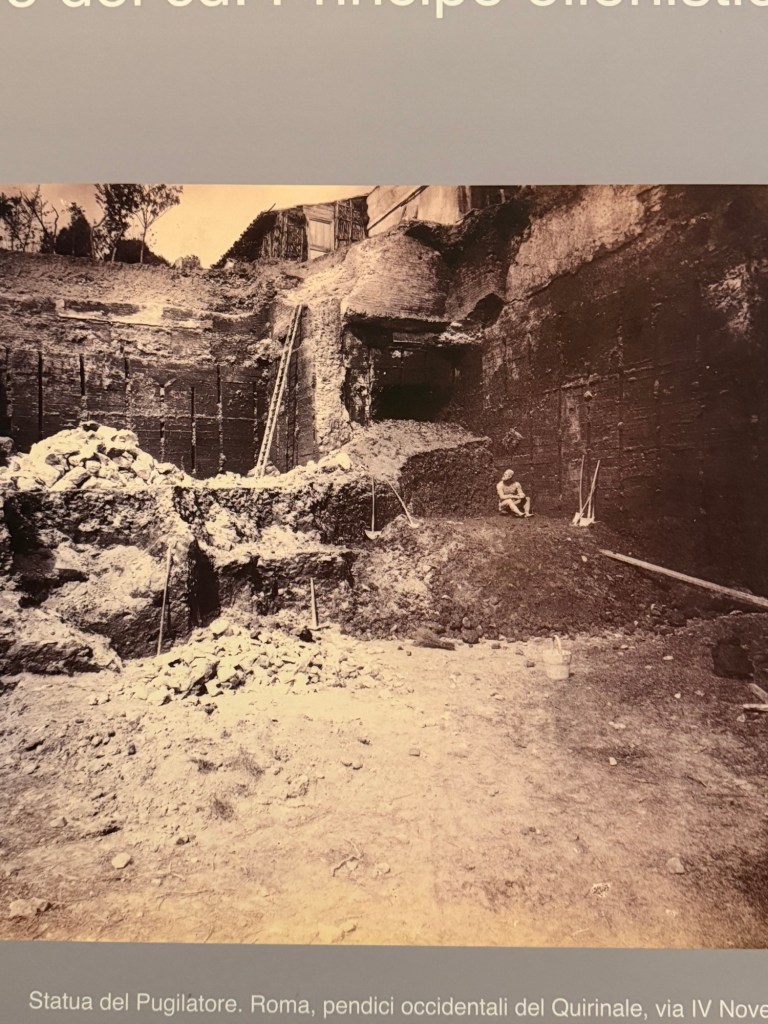
It is very rare for a life-size ancient Greek bronze statue to survive into the modern era. As the labels from the museum tell us, most bronze statues were melted down and used for weaponry or coins. This statue was discovered in the 1880s buried near on the slopes of the Quirinale in Rome. It appeared to have been carefully buried in antiquity; presumably, to protect it from pillagers.
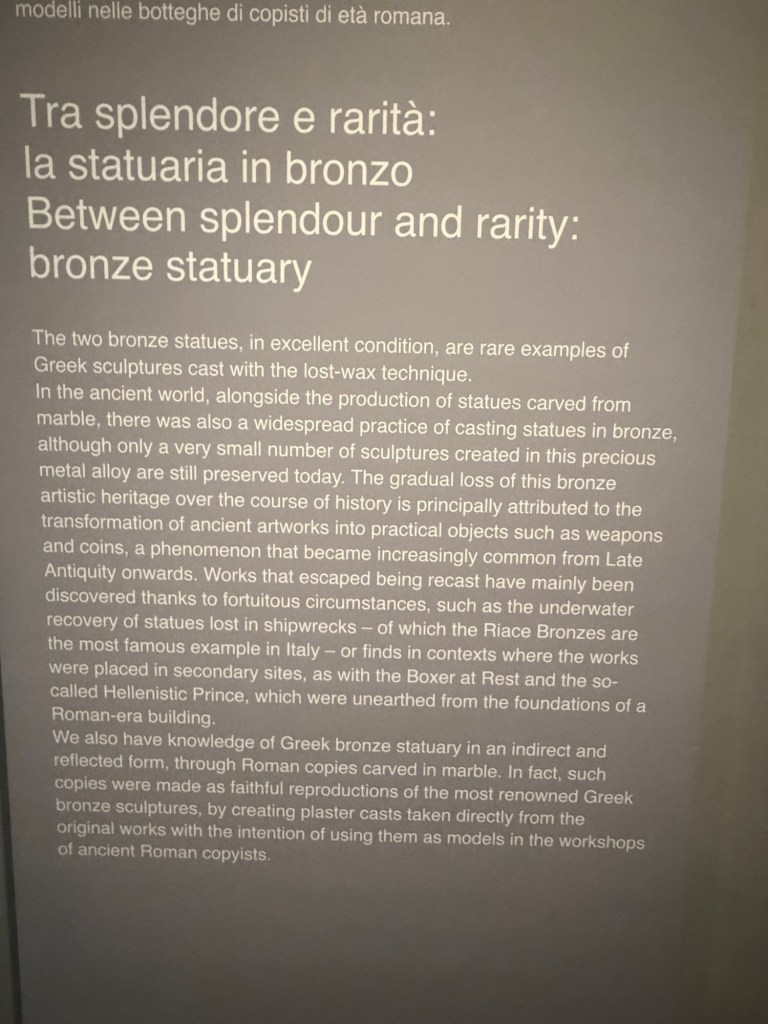
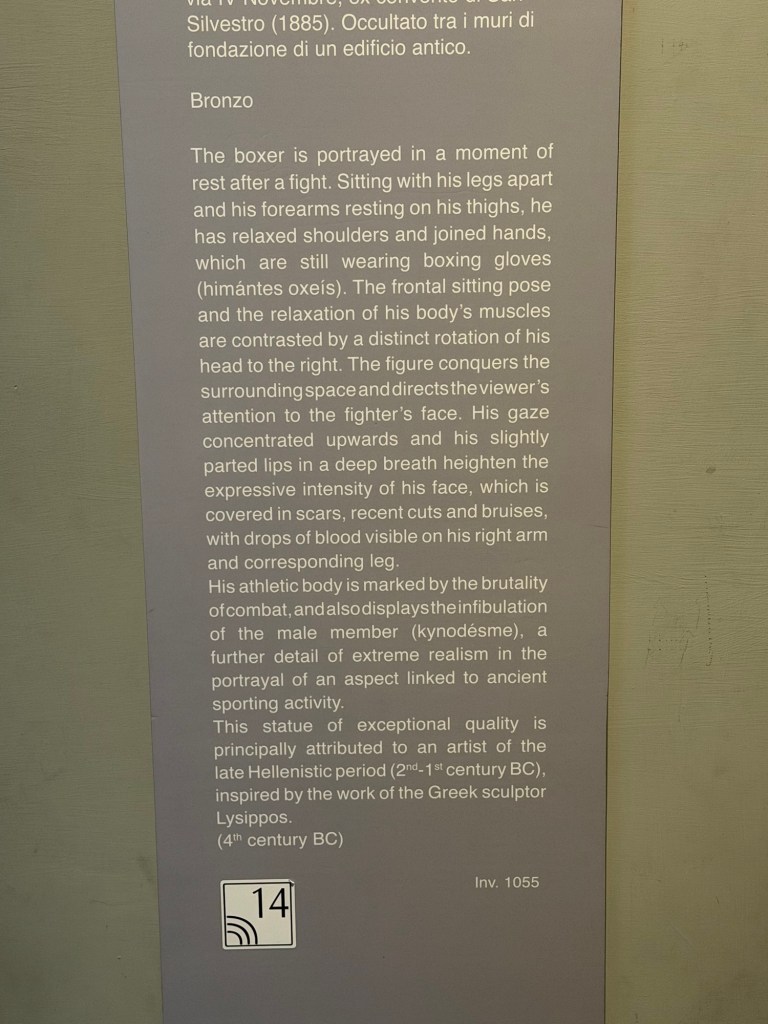
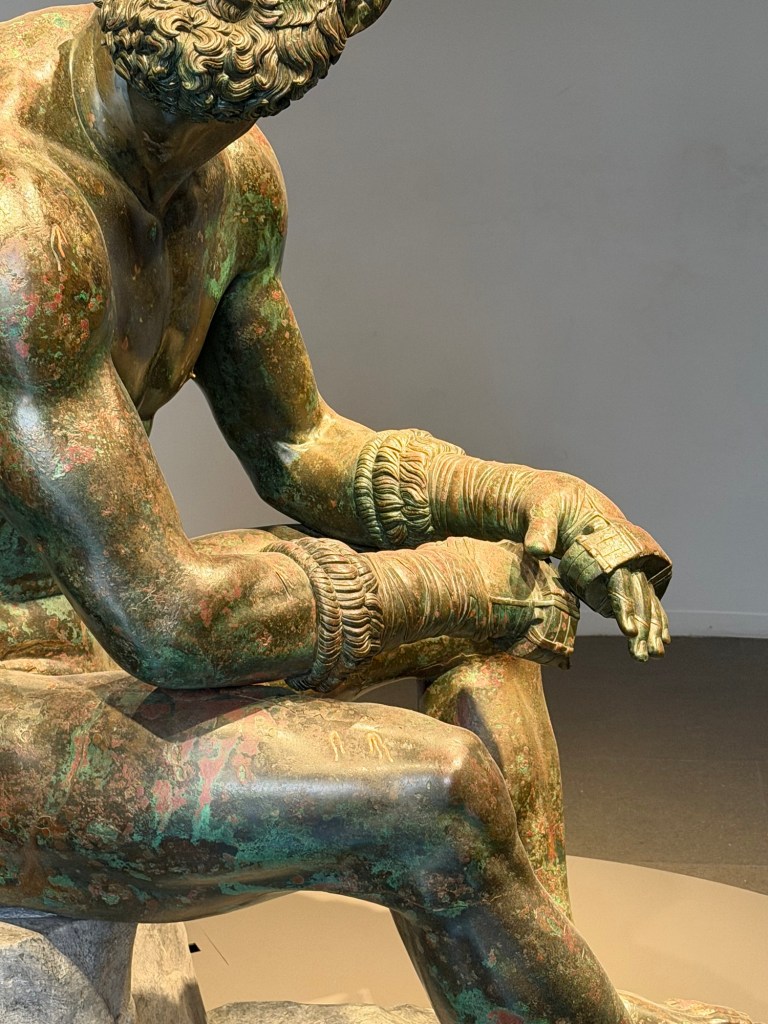
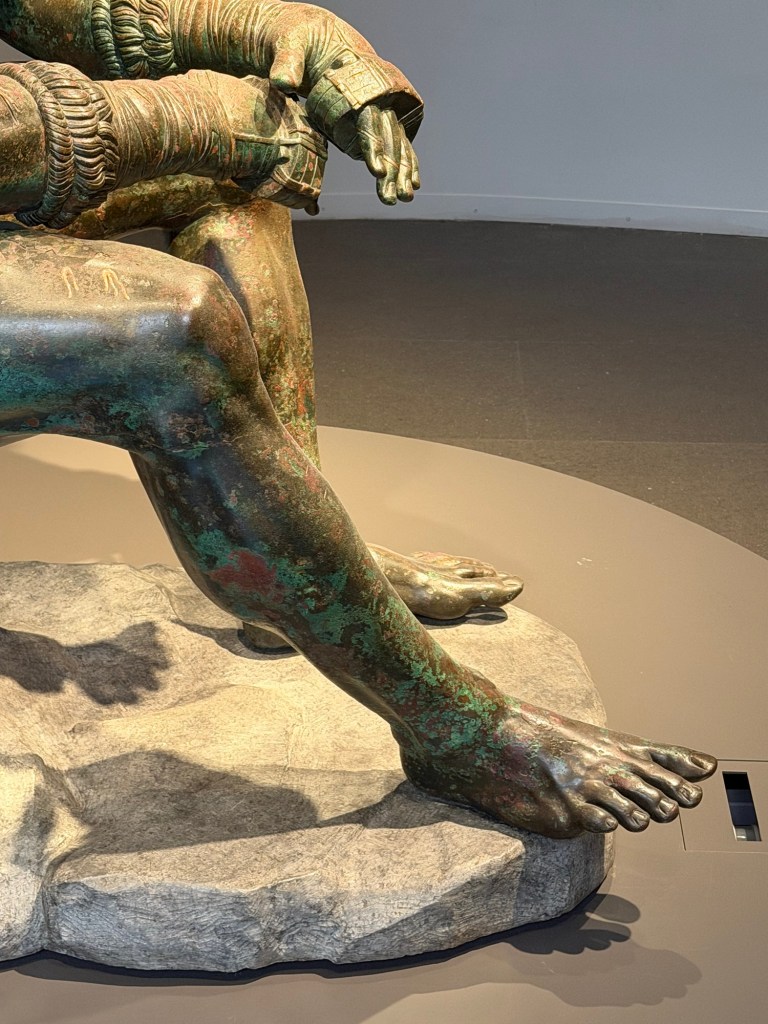
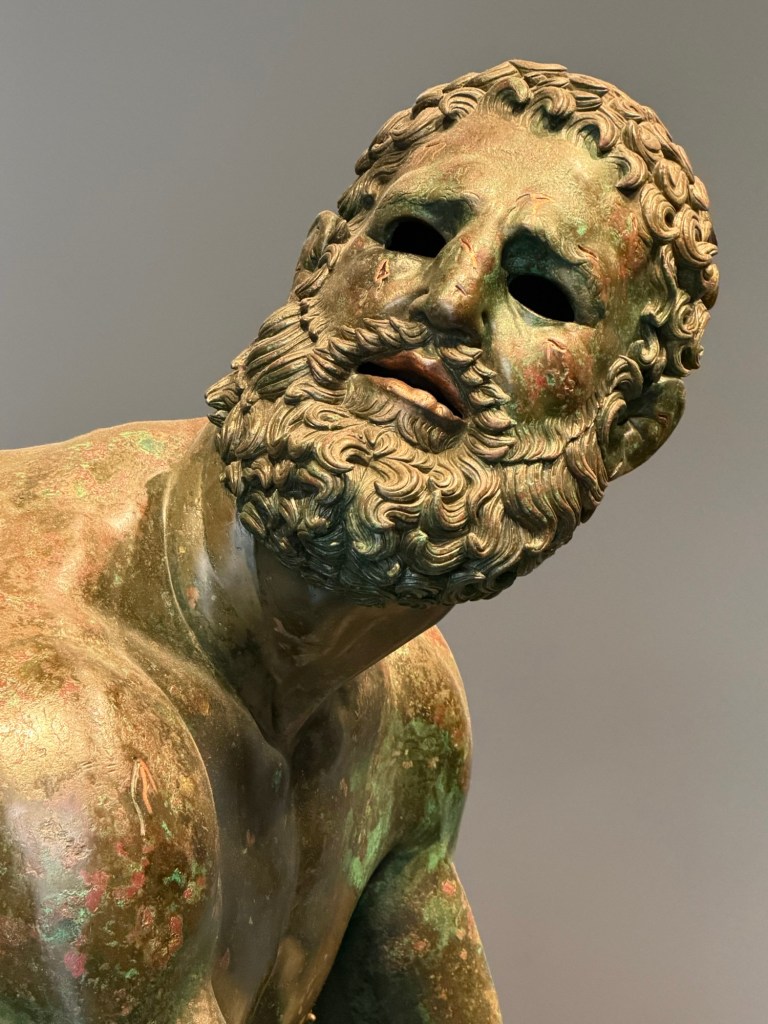
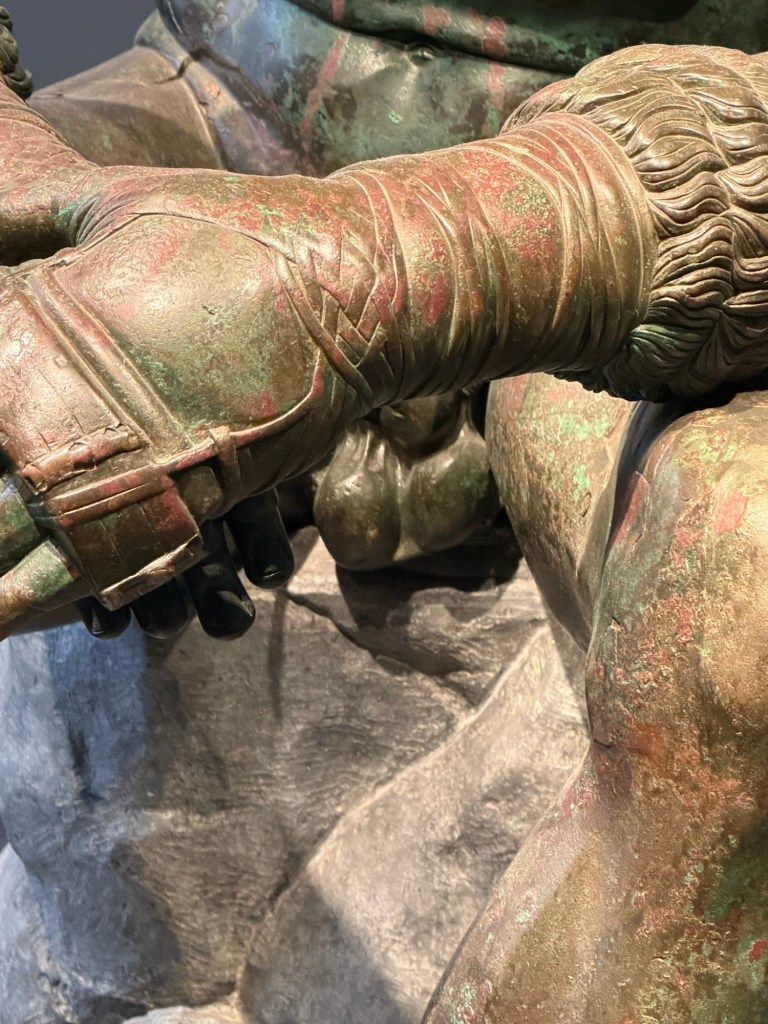
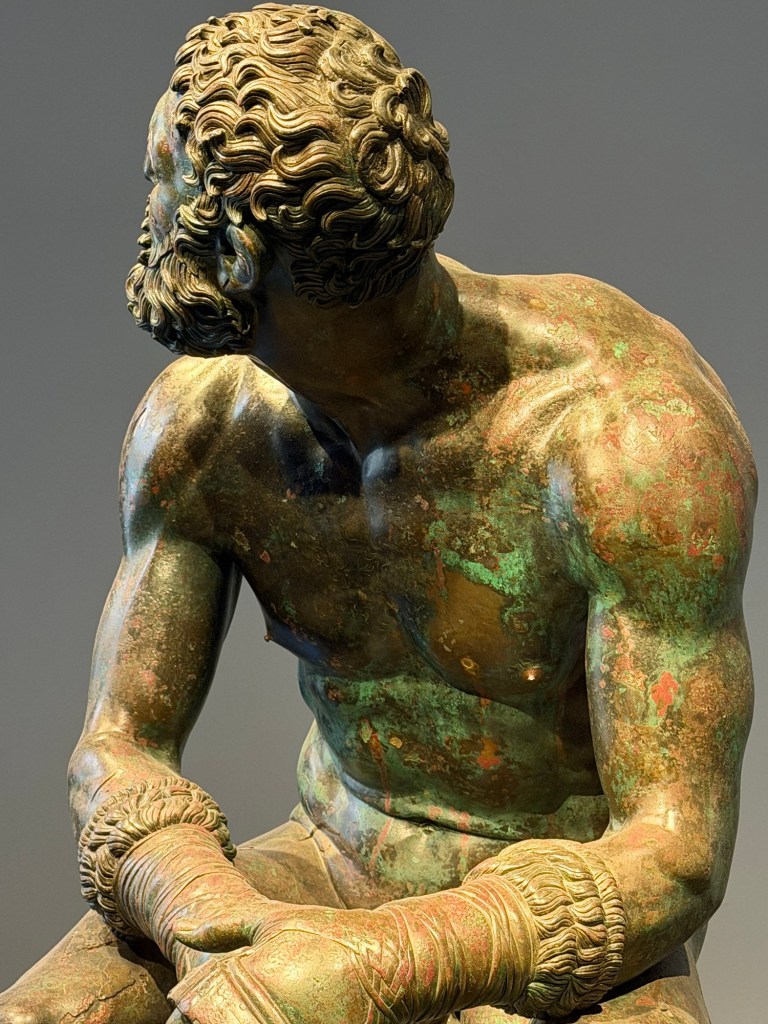
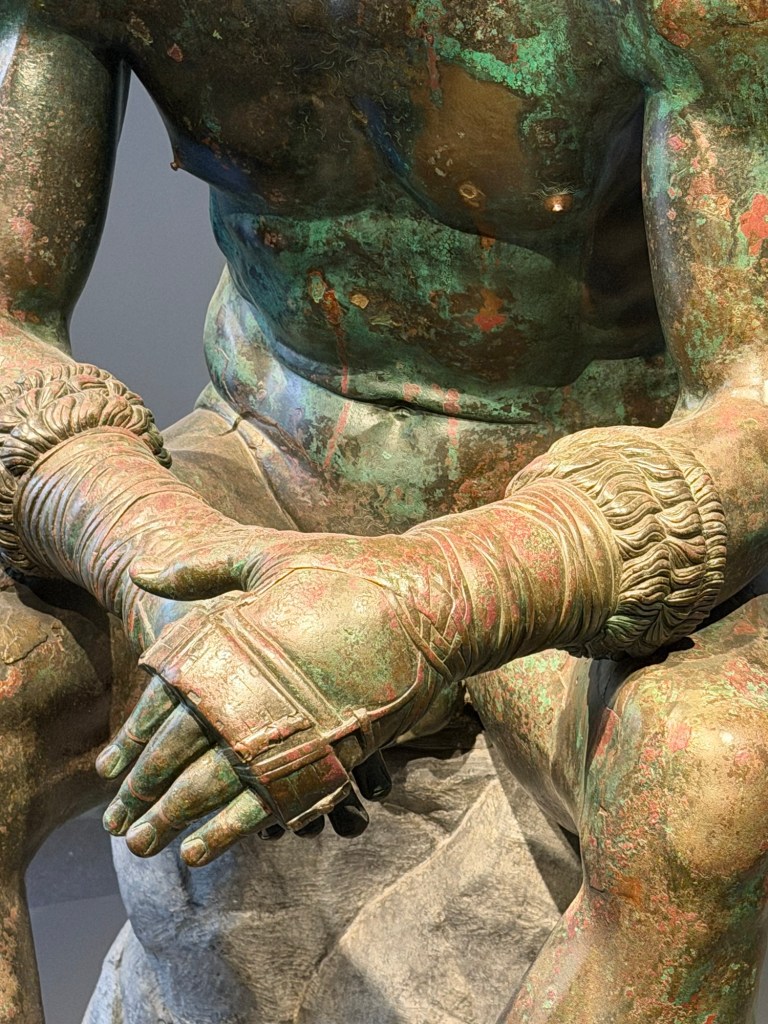
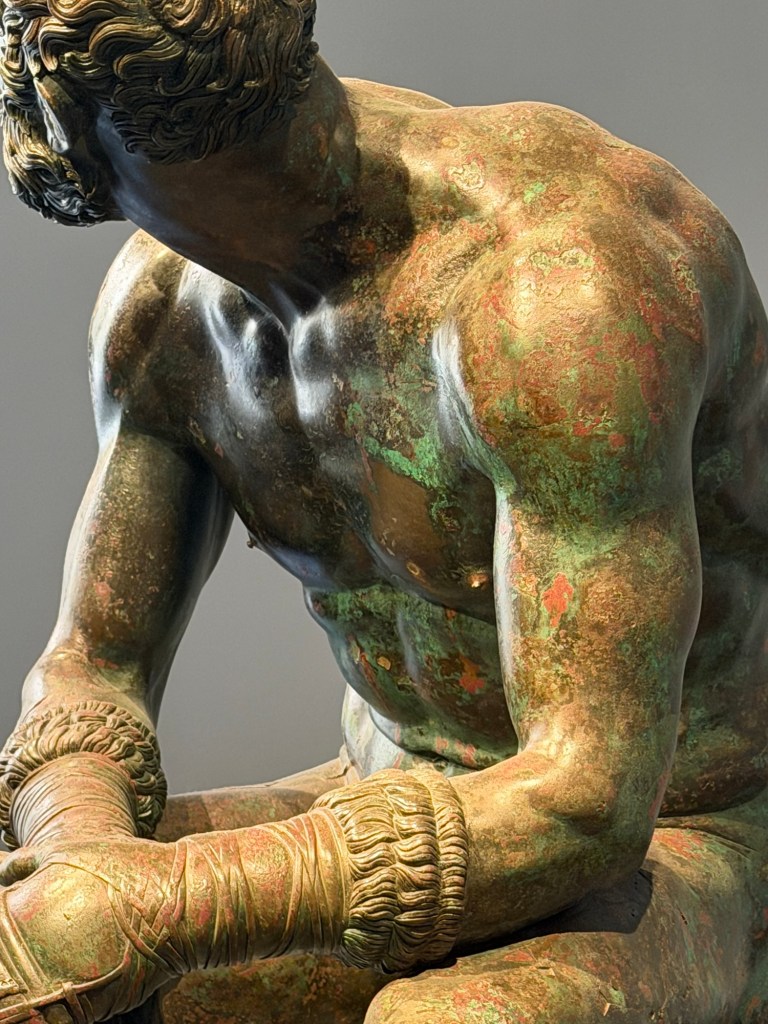
The Boxer is astonishing in its very survival, as well as in its arresting pose and the quality and quantity of finely worked details, such as the drops of blood visible on one arm and leg and the scars that tell the story of a boxer’s difficult life. All these factors are well-described in the museum’s labels, which I have included here.
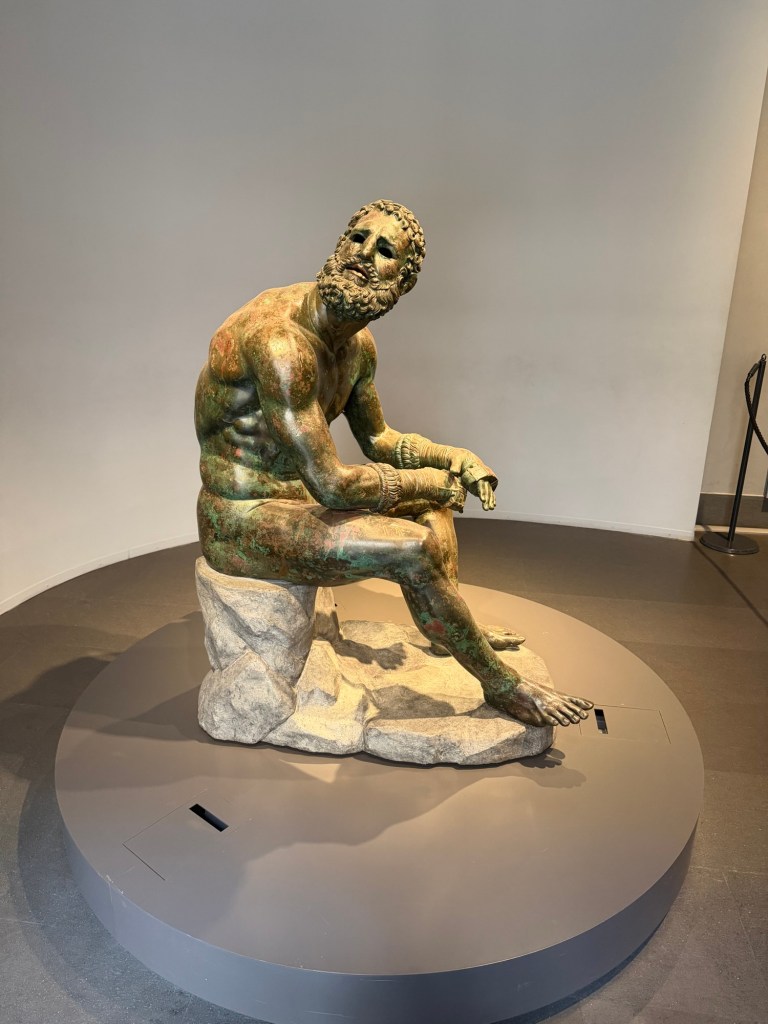
The Boxer was created during a period when Greek artists were moving away from idealized heroic depictions of the body and youth and an emphasis on the exploration of emotional and psychological themes and greater realism. These Hellenistic traits are obvious in this masterpiece.
And, there’s more! Another sculpture from the same period and also in bronze was discovered nearby at the same time. Post coming soon!
Ci vediamo presto!


Vicious gloves
He is one powerful figure and it is astonishing that he has survived.