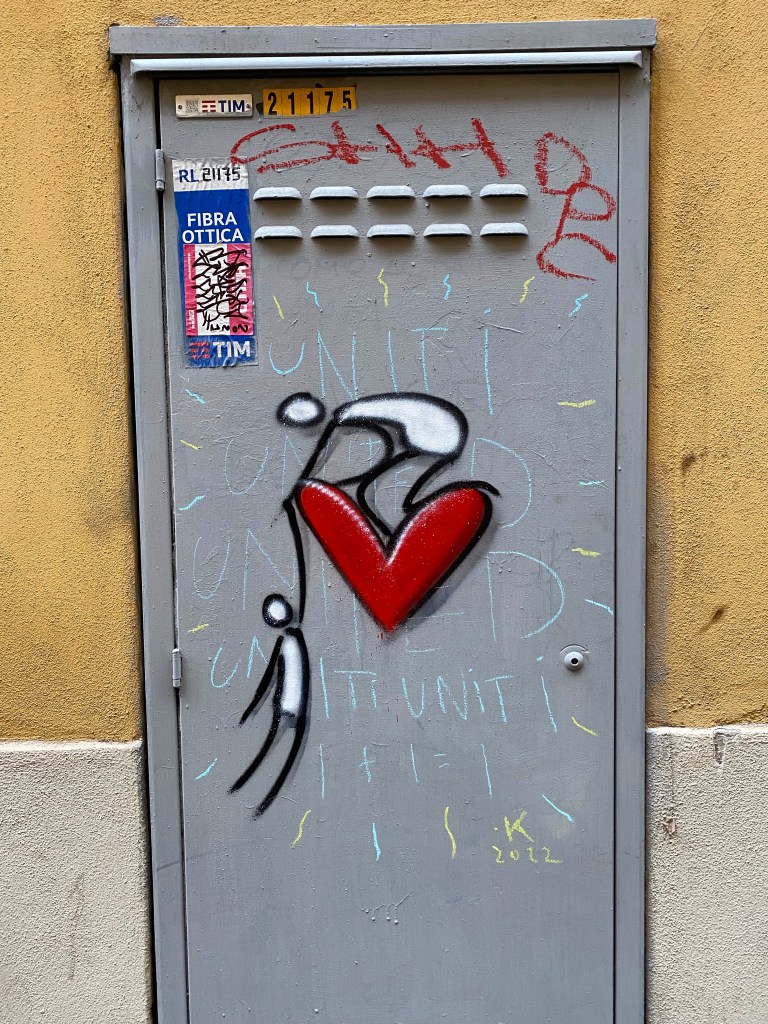
It’s been a long time since I posted an image from “Exit Enter” street artist. I enjoyed this painting on the street recently.
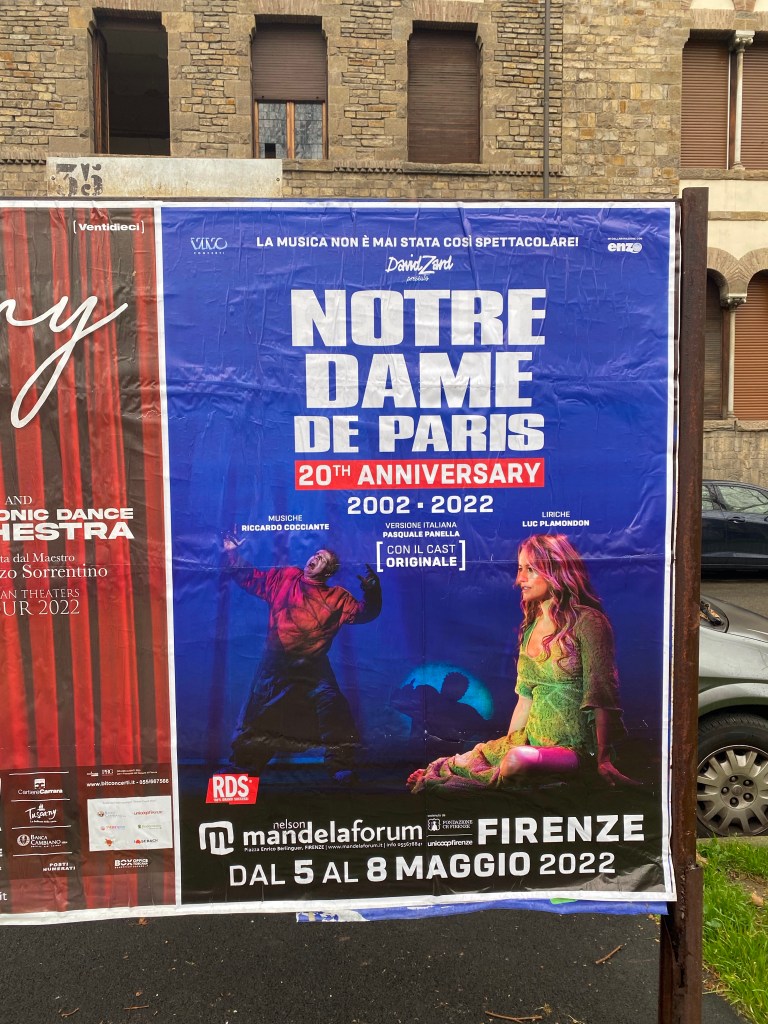
Billboard near my house for a musical, “Notre Dame of Paris.” I’m dreaming of Paris right now!
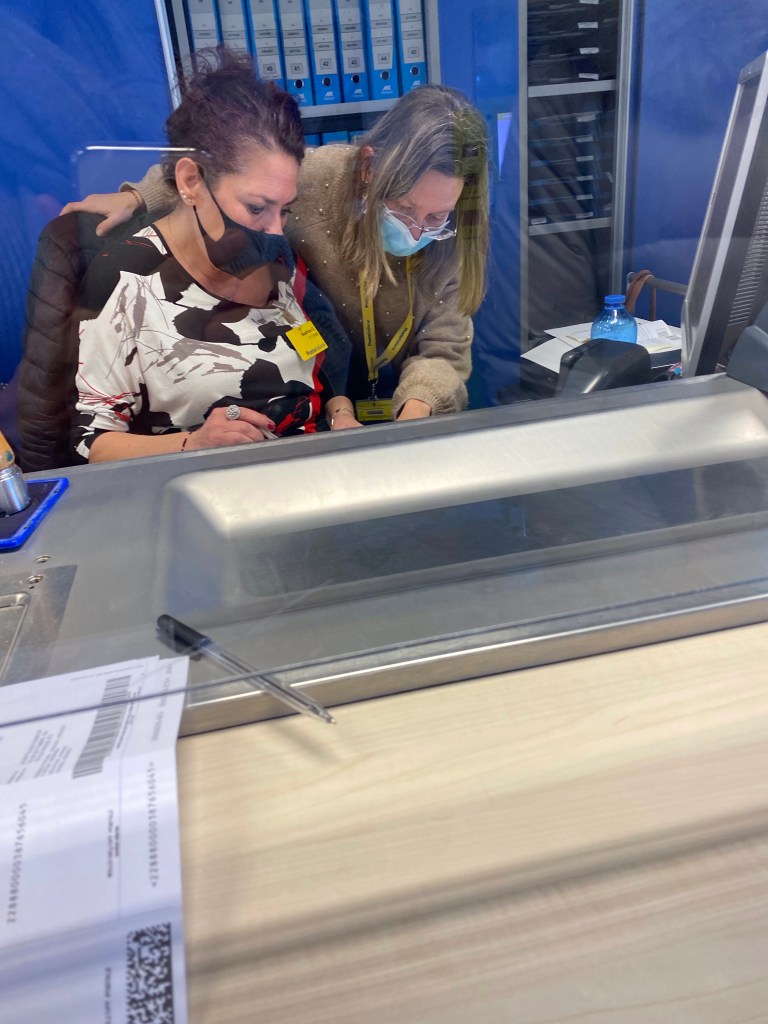
Note to self: whenever you are daydreaming about the “dolce vita” in Italia, remember the flip side. Here I am working for an hour in the Post Office trying to trace a package I shipped to France on November 3, 2021. They are both trying to figure out how to file a “reclaim” form to trace the stupid box. I doubt I will ever see it again and I’m 99% sure it will never arrive in France.
By the same token, recall that it took 1.5 hours at another Post Office to close out my bank account. Yes, my bank account in Italy was with the Post Office.
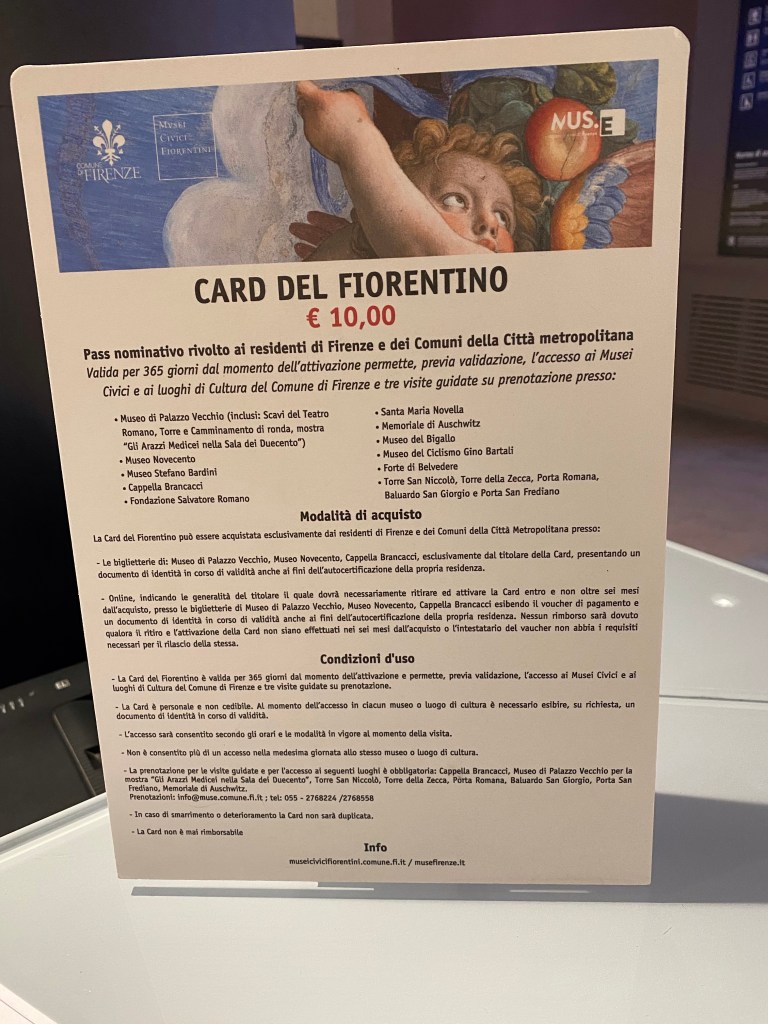
I recently bought the “Florentine card” which allows me free entrance into many city museums. Not all the museums in Florence, but some that are run by the city.
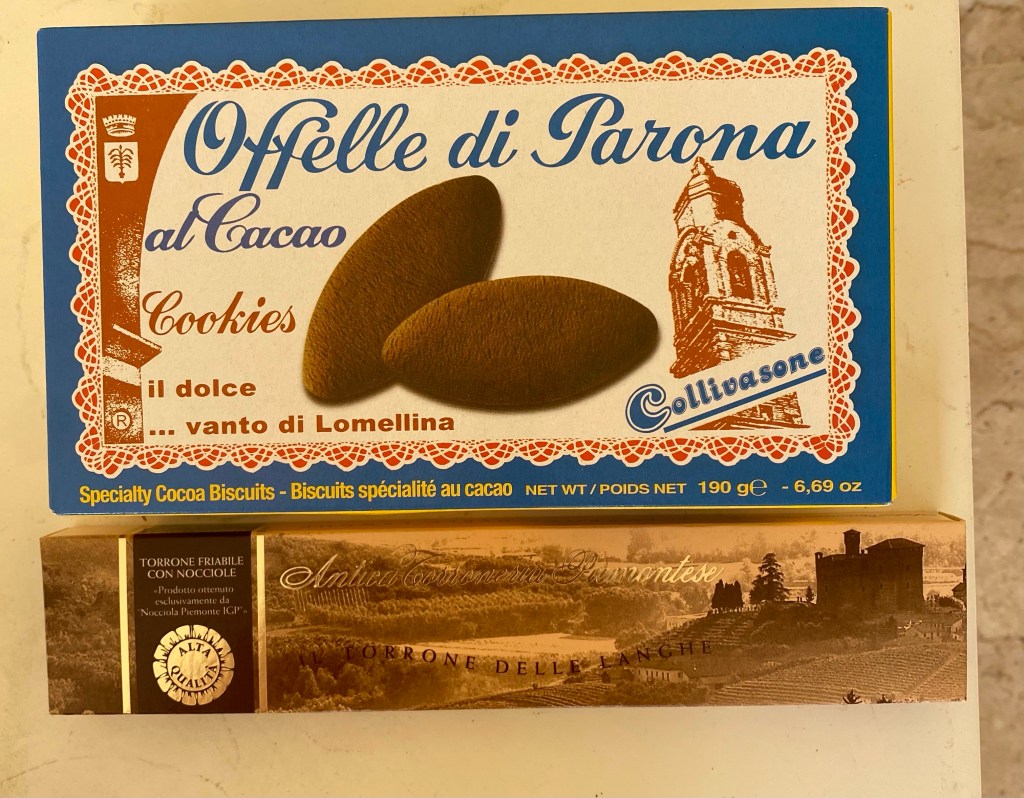
On a sweet note, a dear Italian friend has been feting me with treats from various regions of Italy. Two are below in the one photo. She is a mighty nice friend!
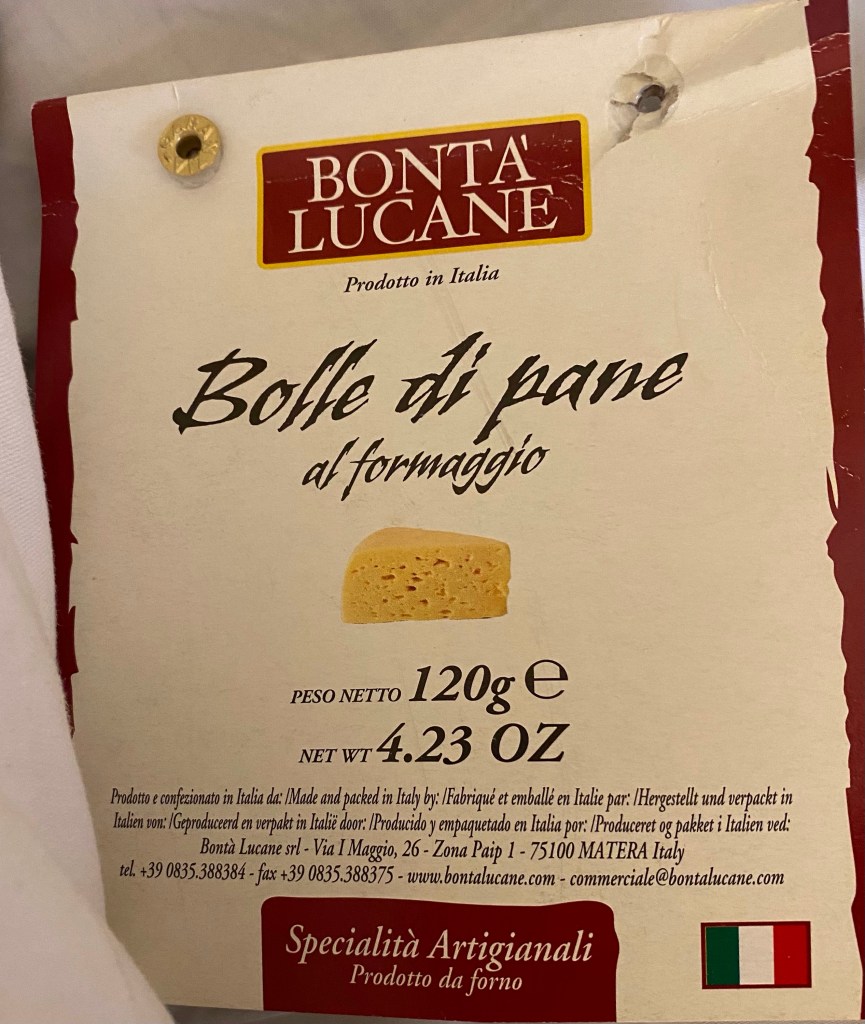
And, to end on a savory note, the same friend also treated me to these cheesy crackers. Yummy!
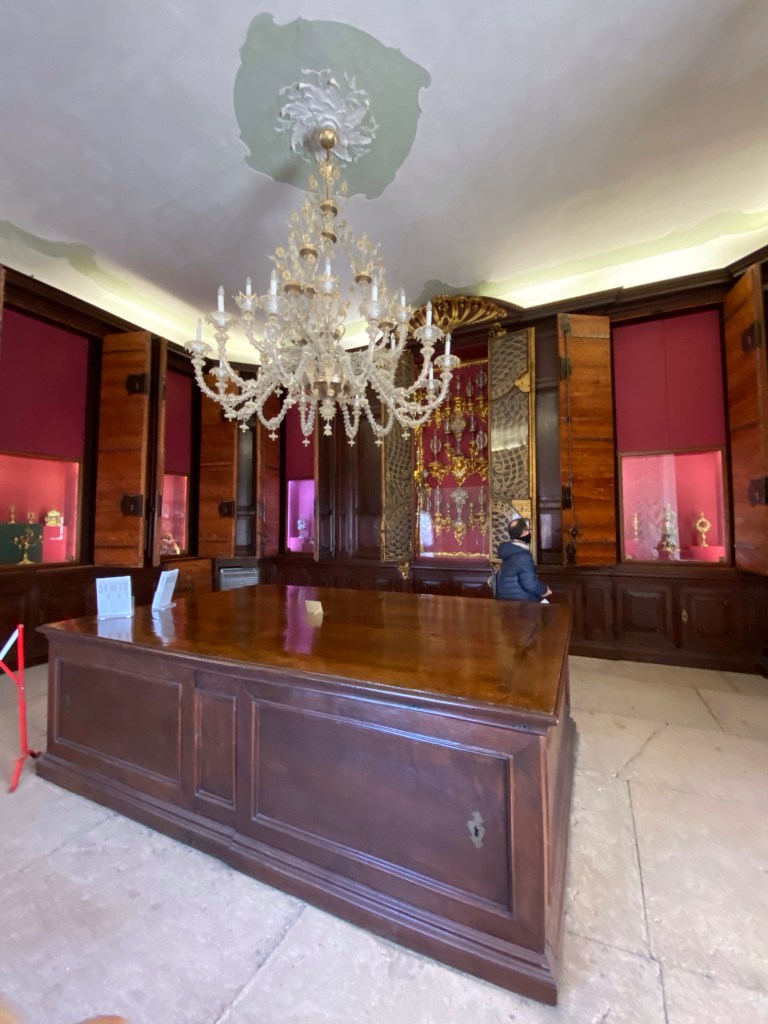
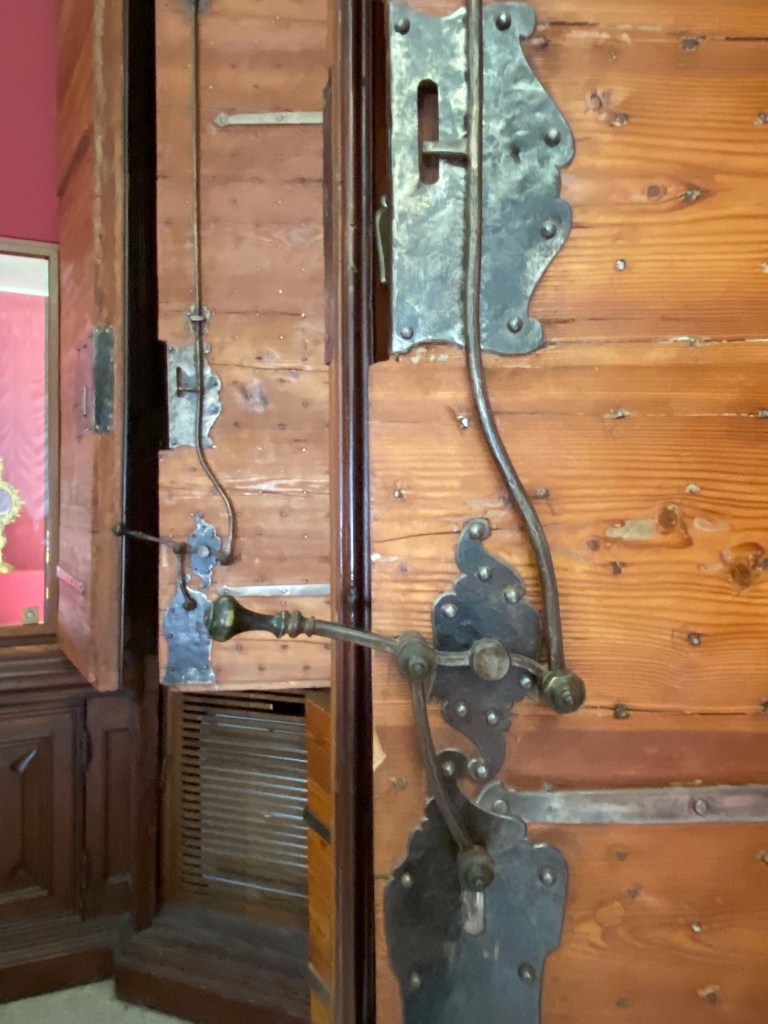
/DSC_0041-5c76c96f46e0fb0001edc75b.jpg)
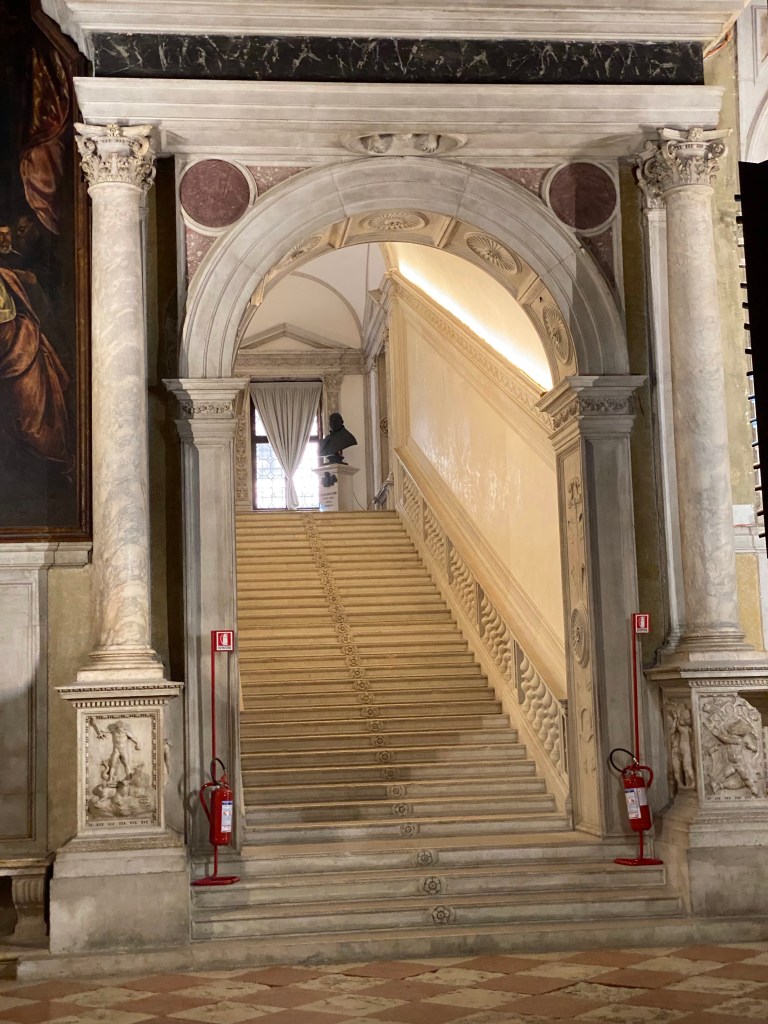
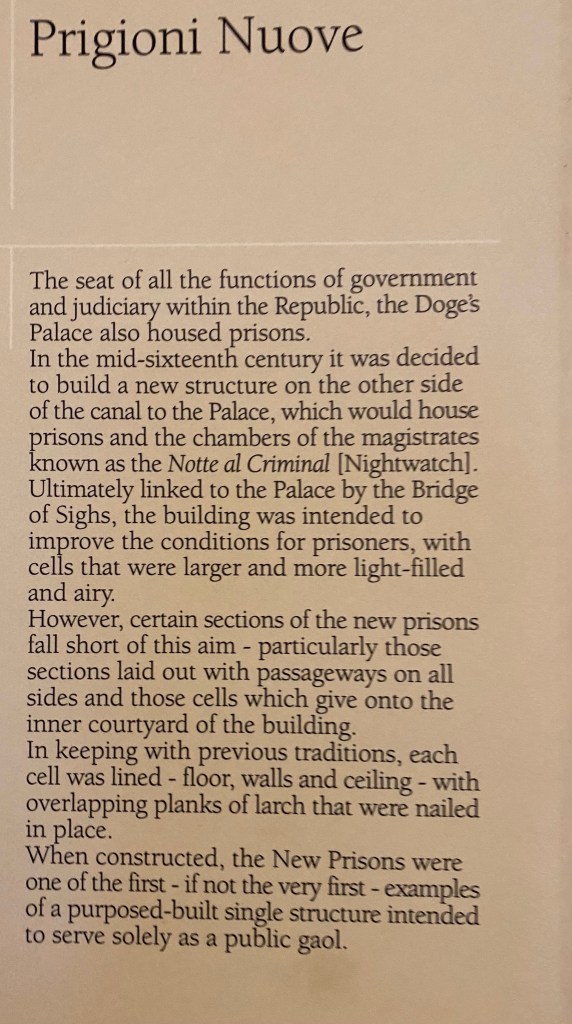
We all admire the Ponte dei Sospiri from the outside. It is truly lovely. But, think about what happened when you passed over that bridge on the inside. Definitely not so lovely!
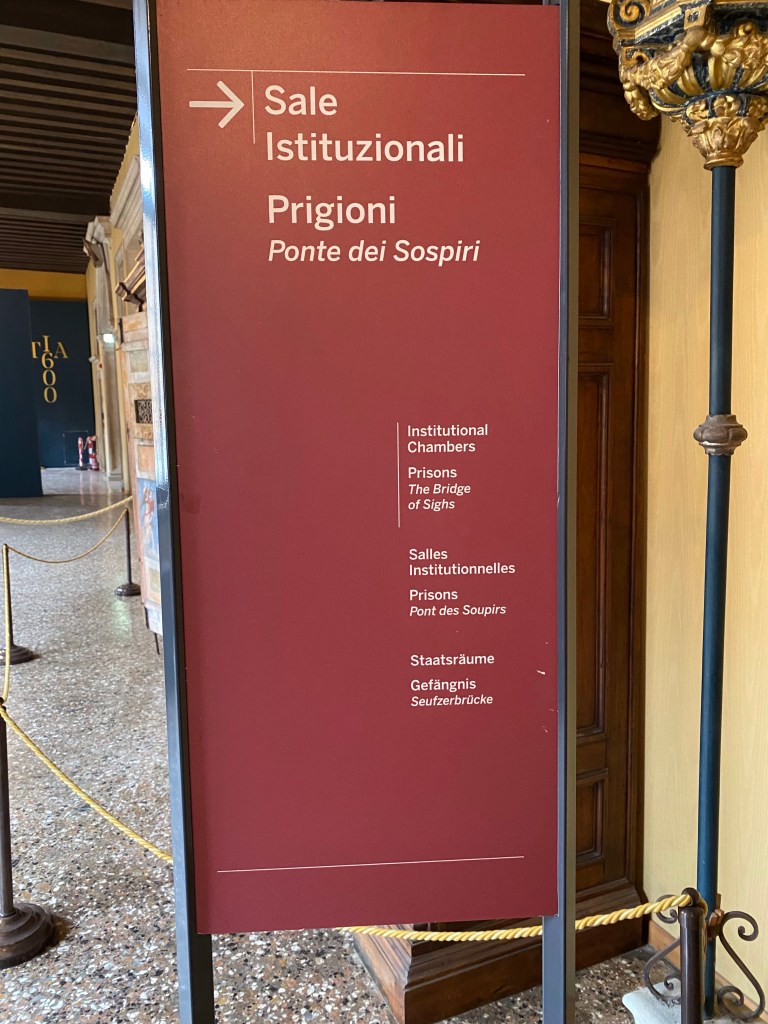
On my recent trip to Venice, I spent some time looking at the interior of the bridge and the nearby prison cells. I remained calm and took photos, but honestly, with my imagination, I couldn’t wait to get out of that space! Please join me on what I hope will be my one and only time in prison.
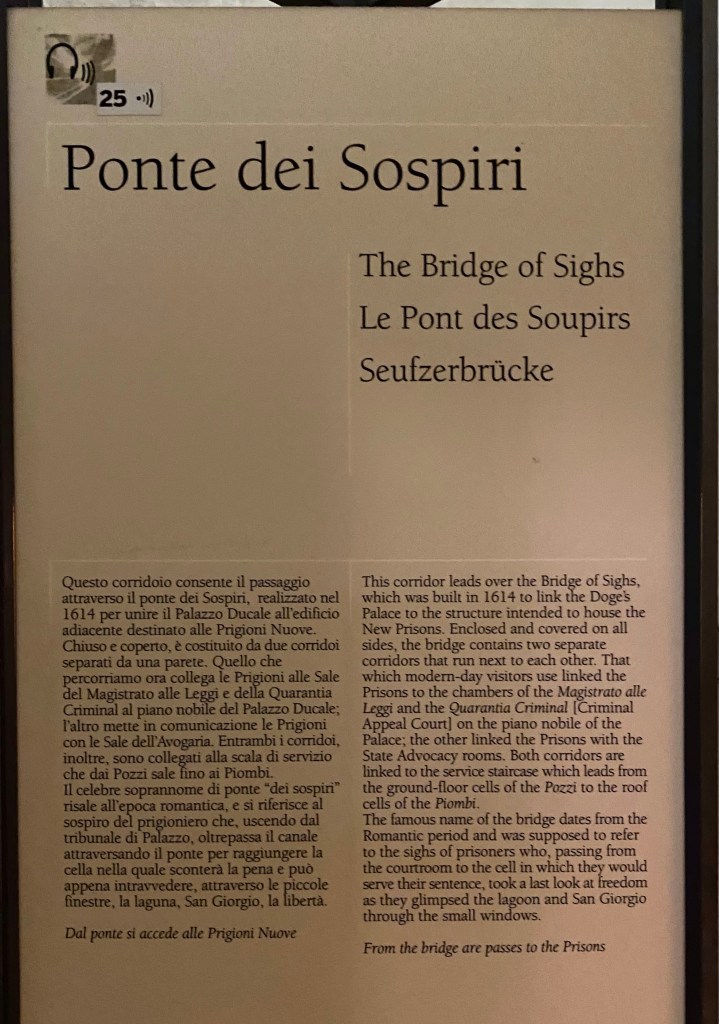
Below is a look at the corridor that passes over the canal, with my fellow prisoners looking out the window for one last glance at the world outside.
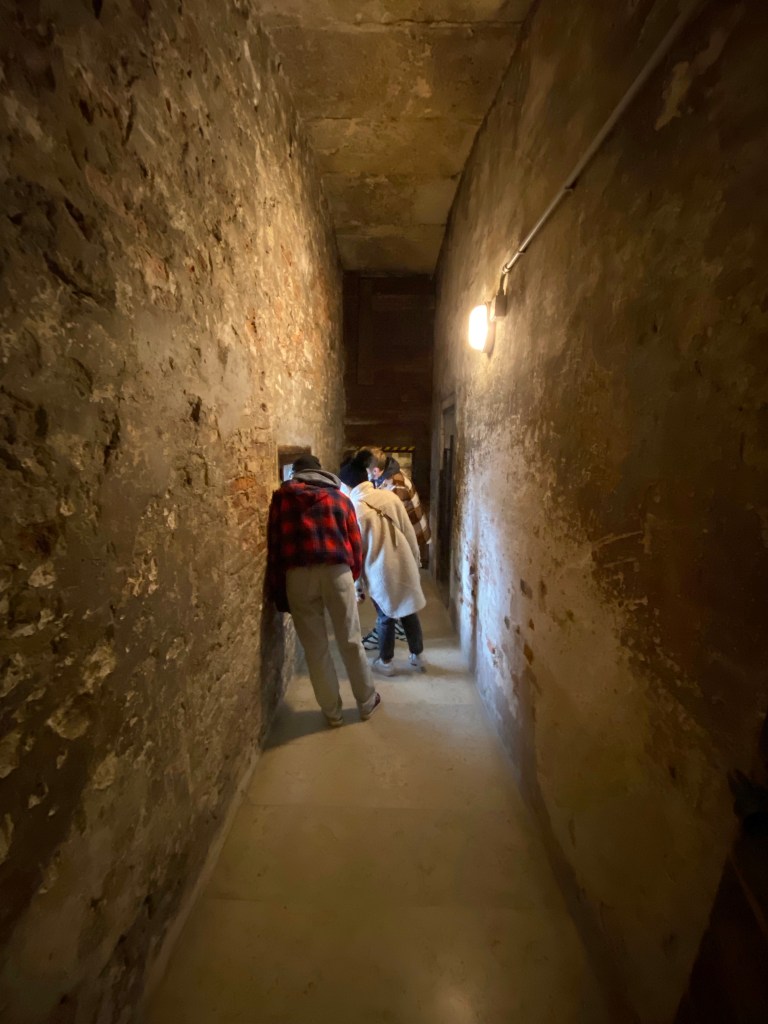
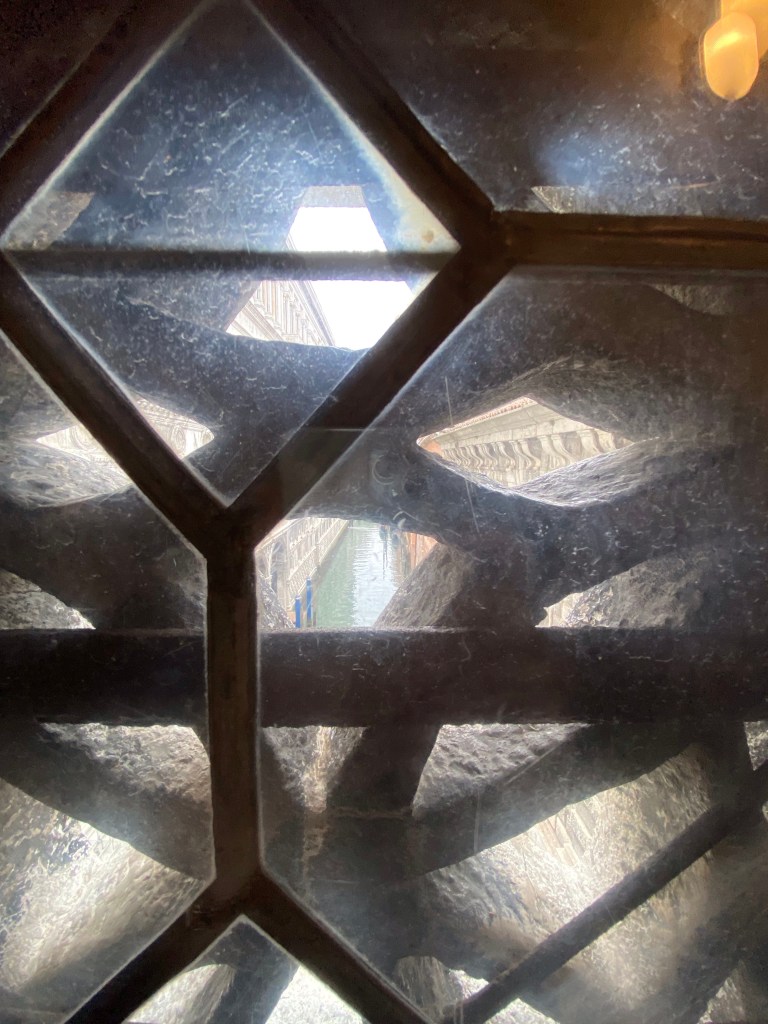
The next few pictures show our view from the prisoner’s corridor. The views look over the canal and leads into the heart of Venice, not the so-called romantic look that points towards the lagoon.
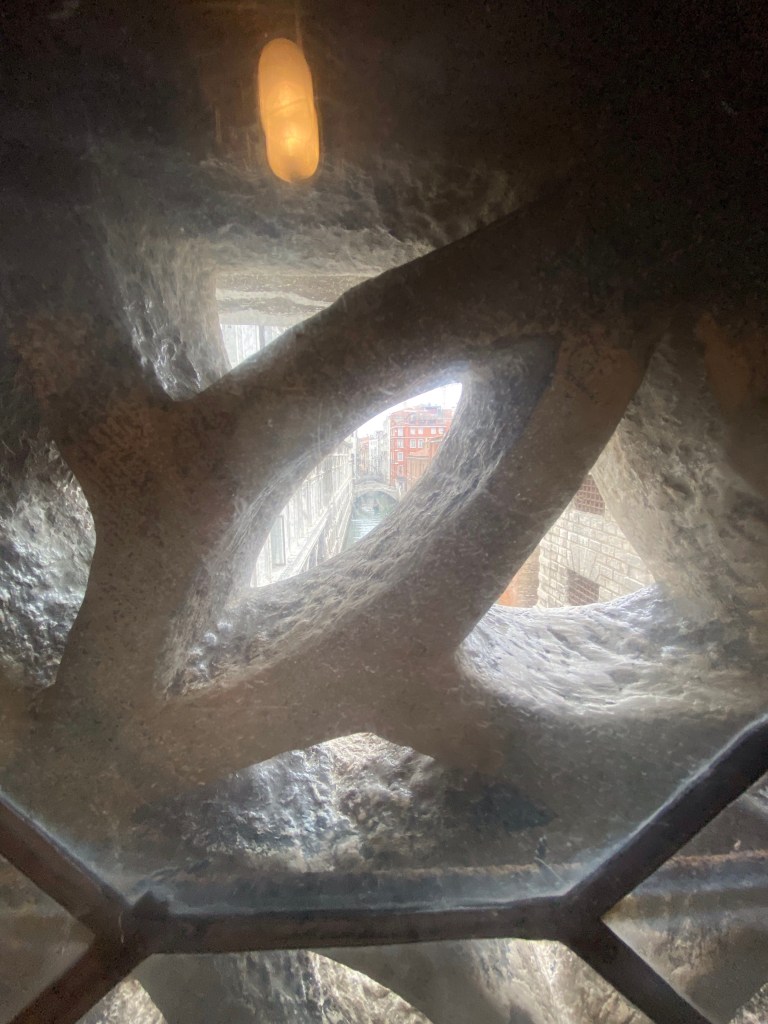
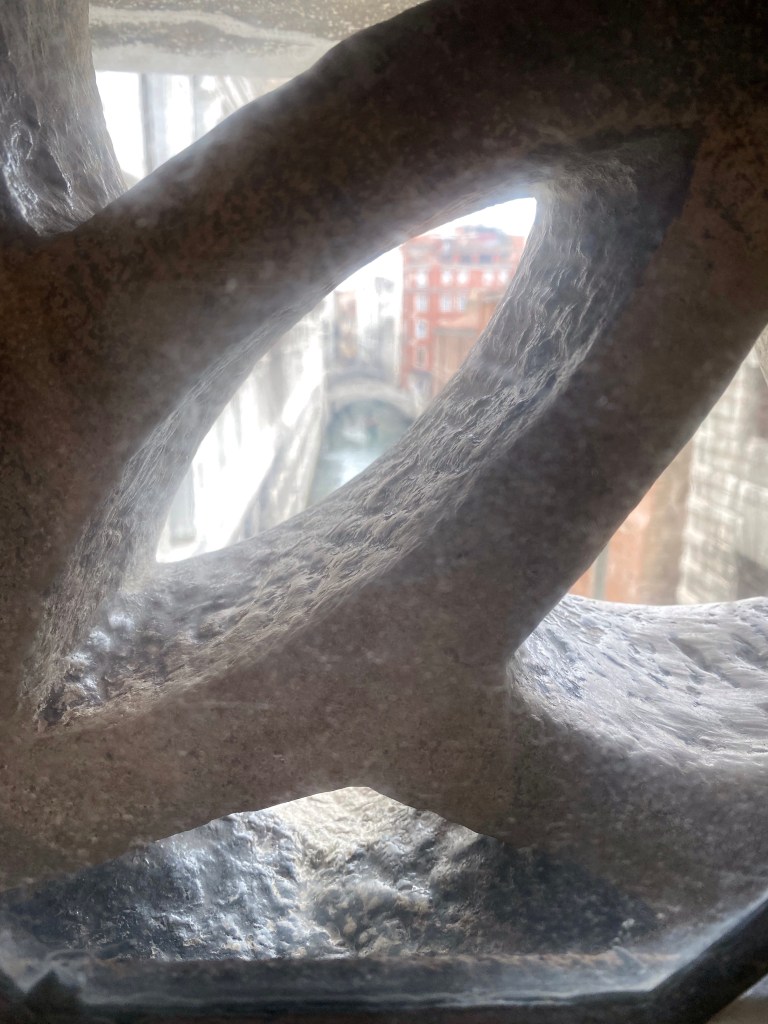
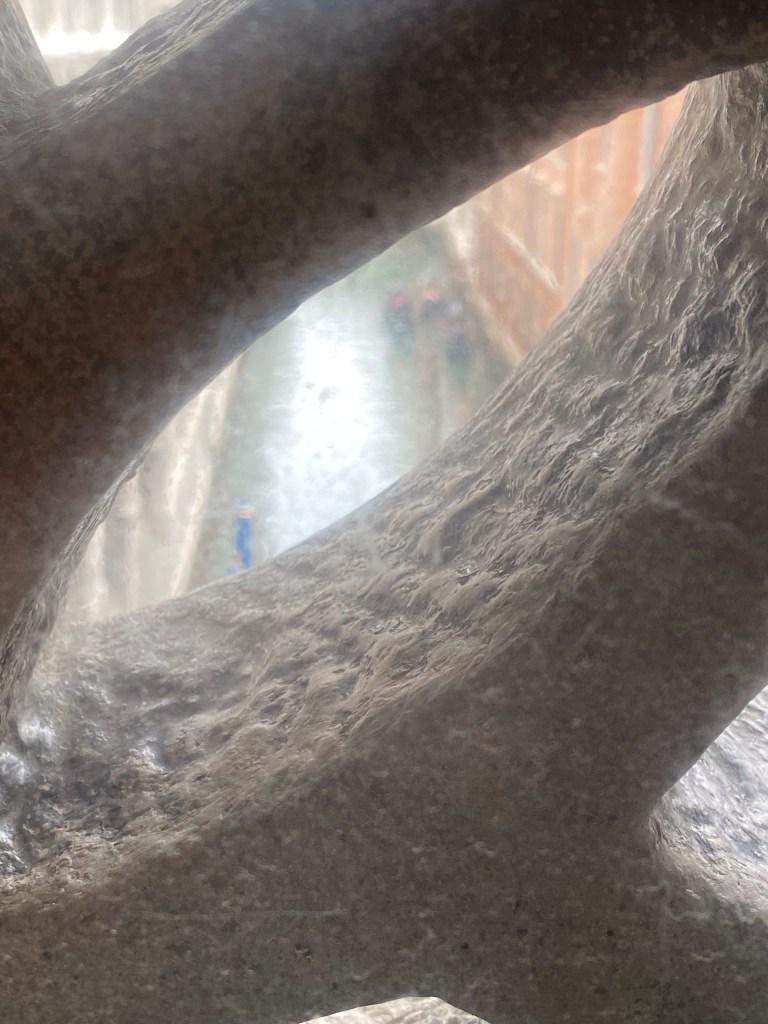
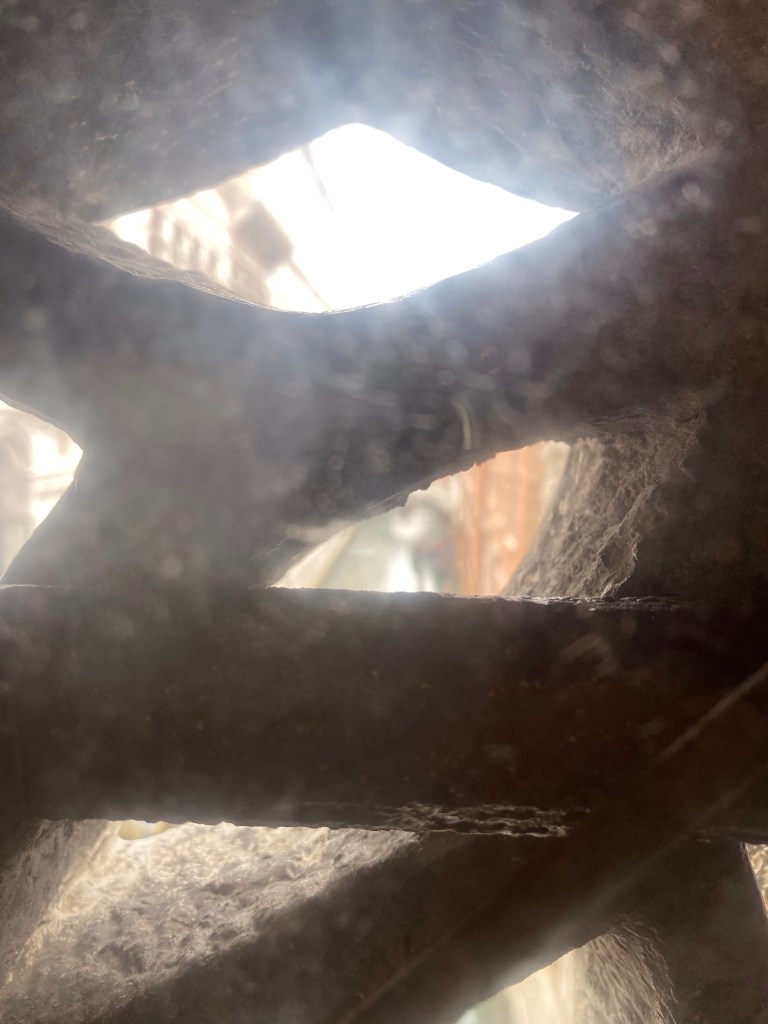
Above were my last desperate looks at the freedom of the outside world.
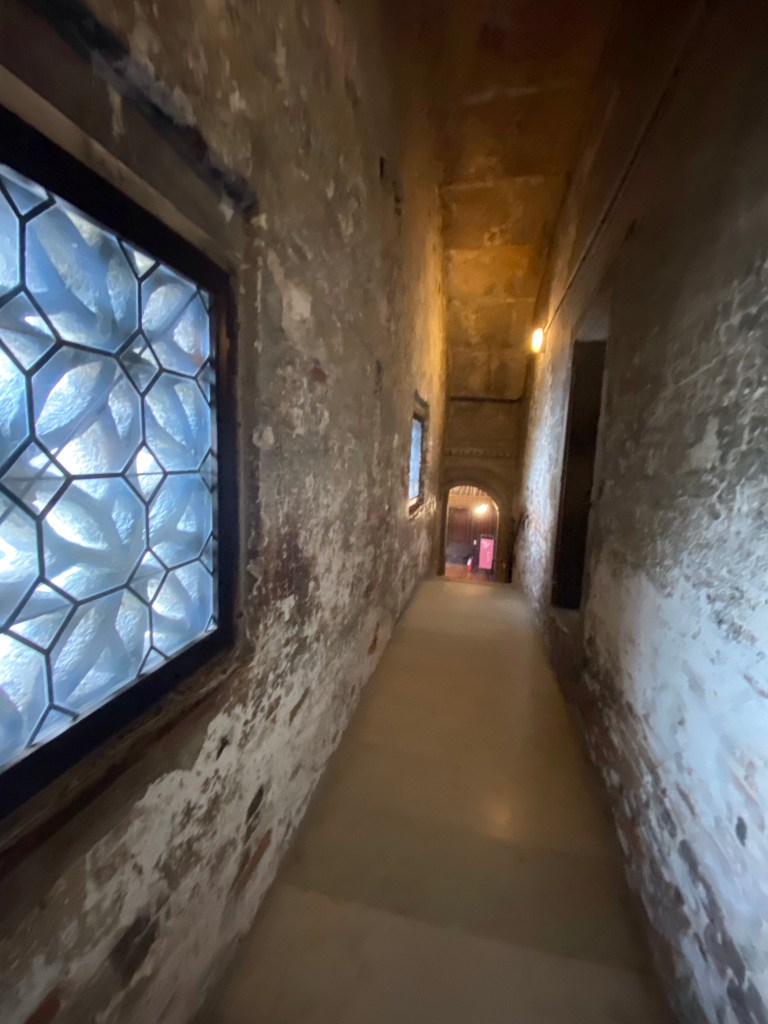
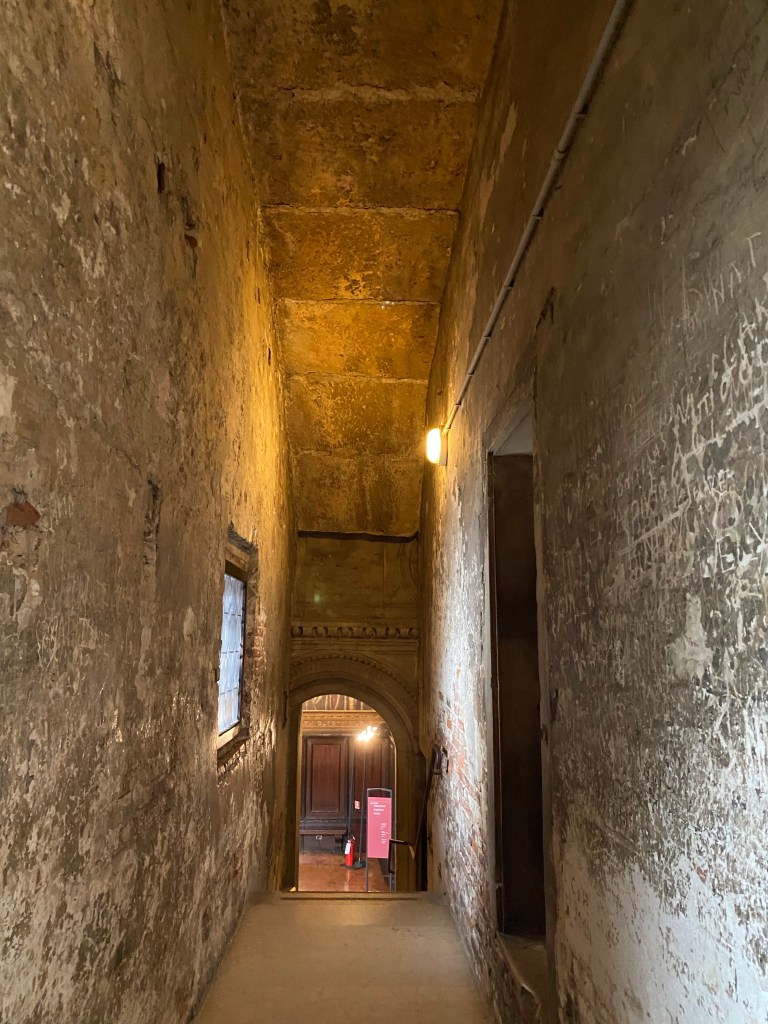
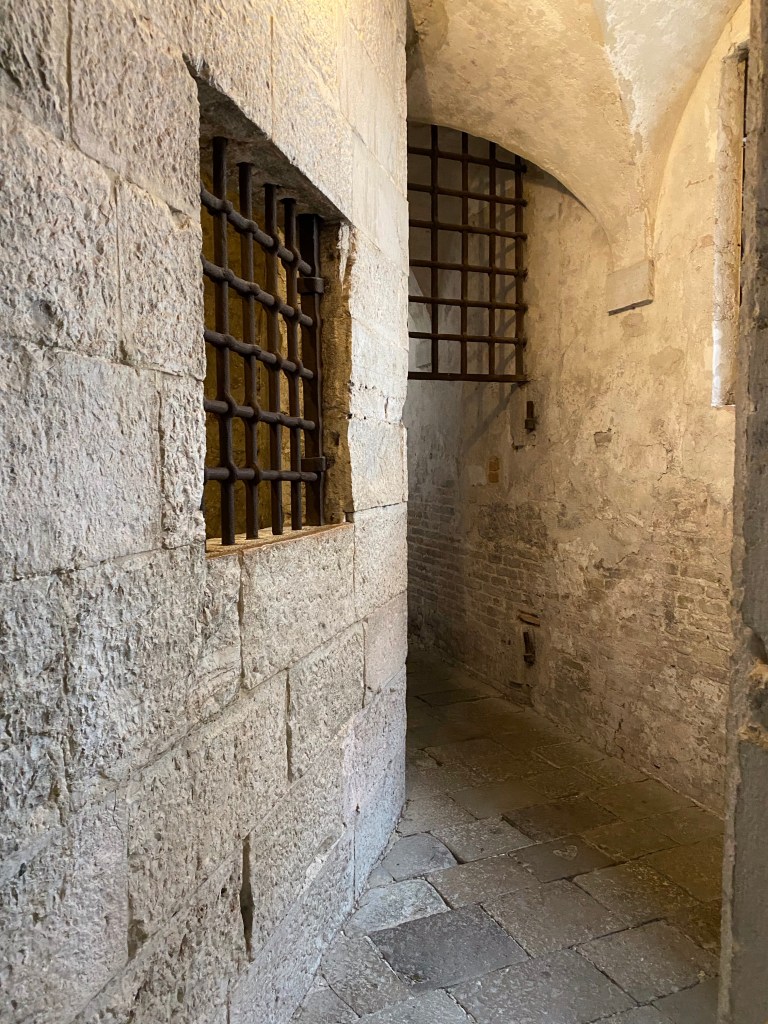
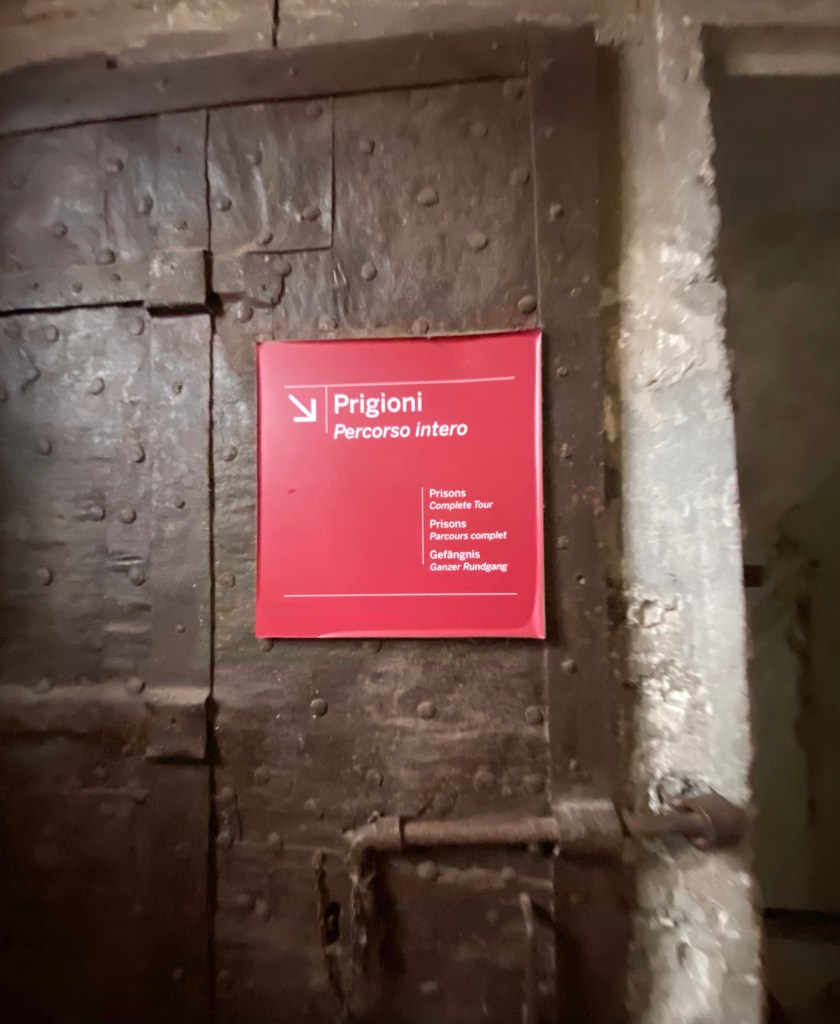
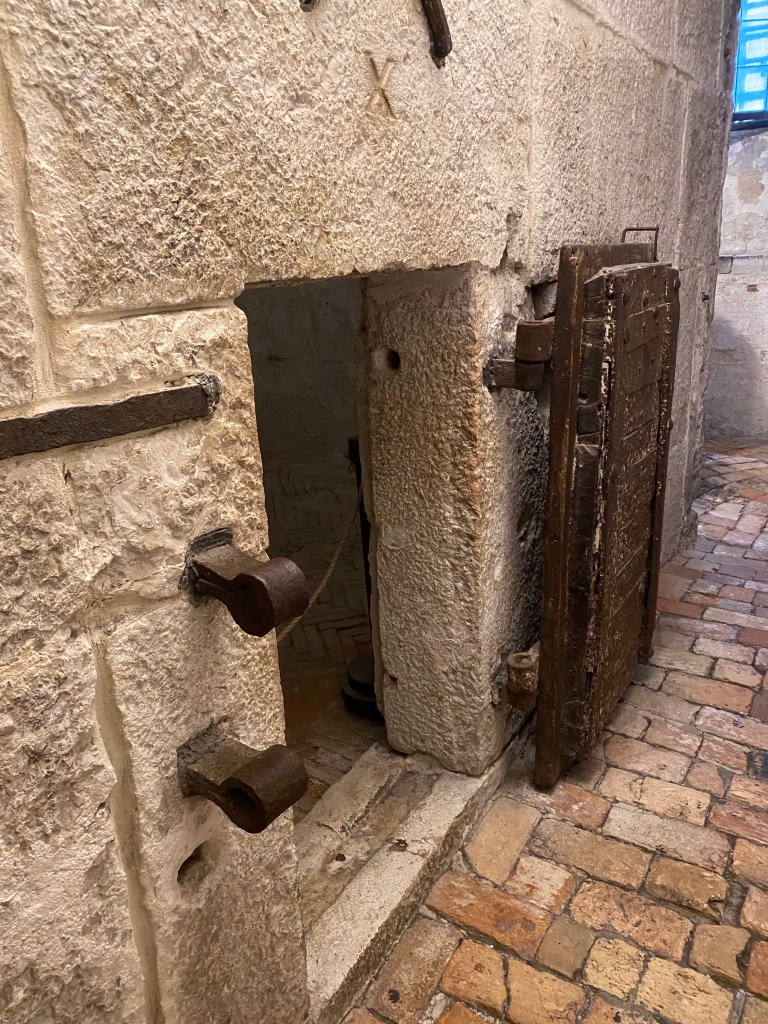
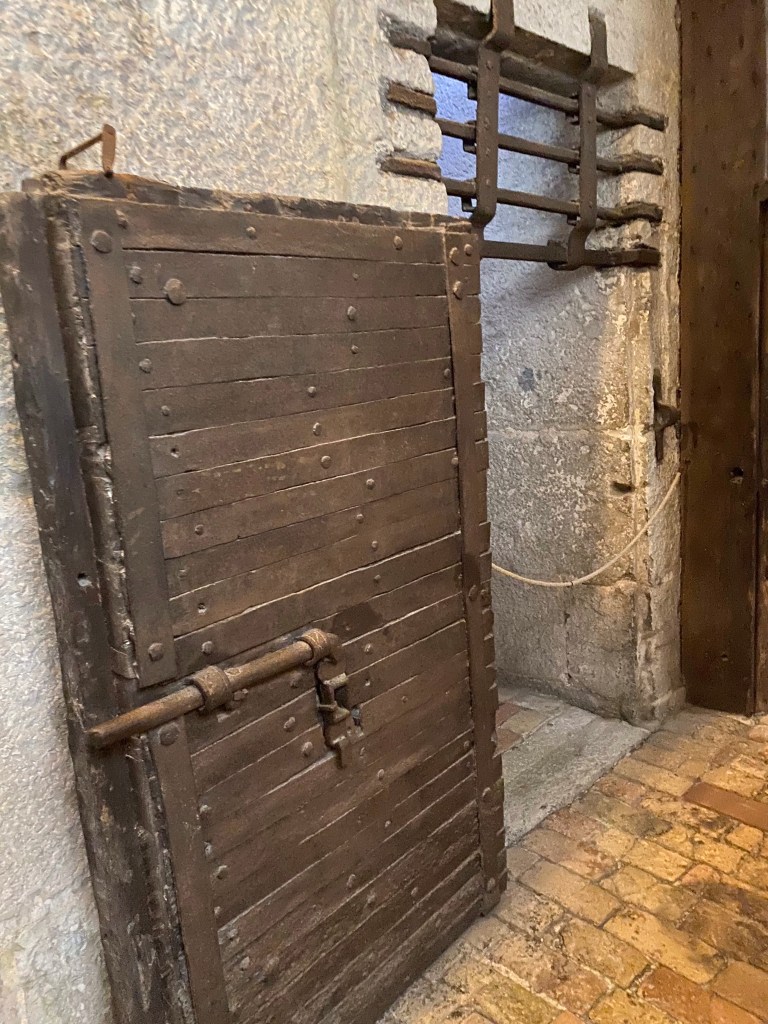
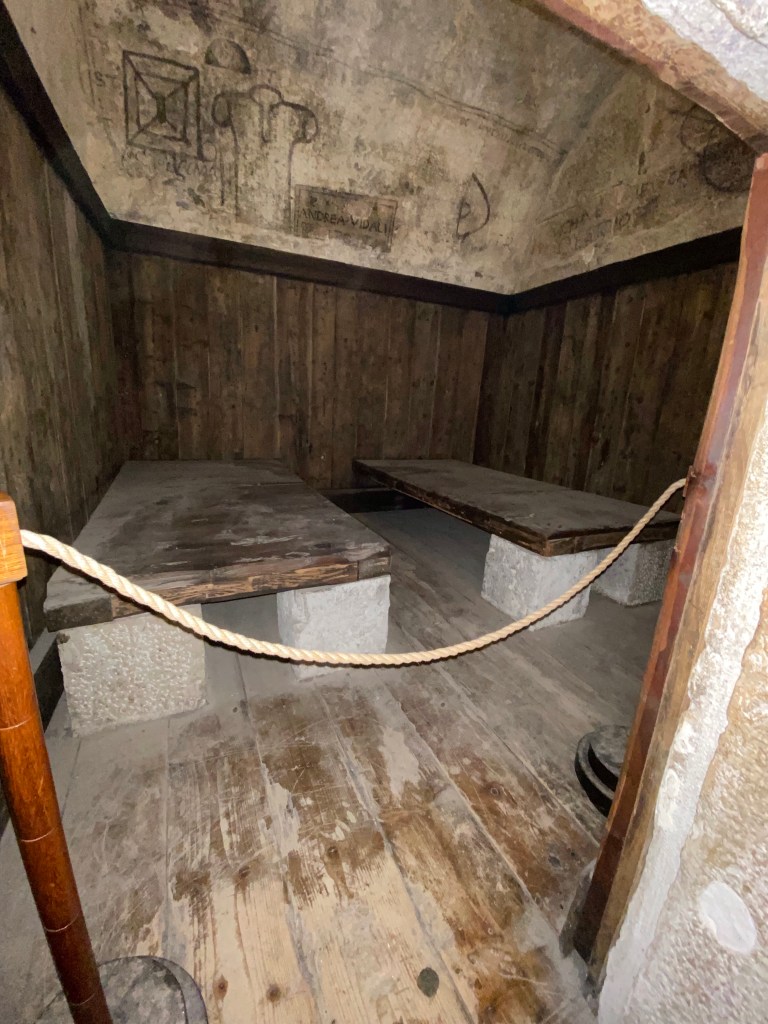
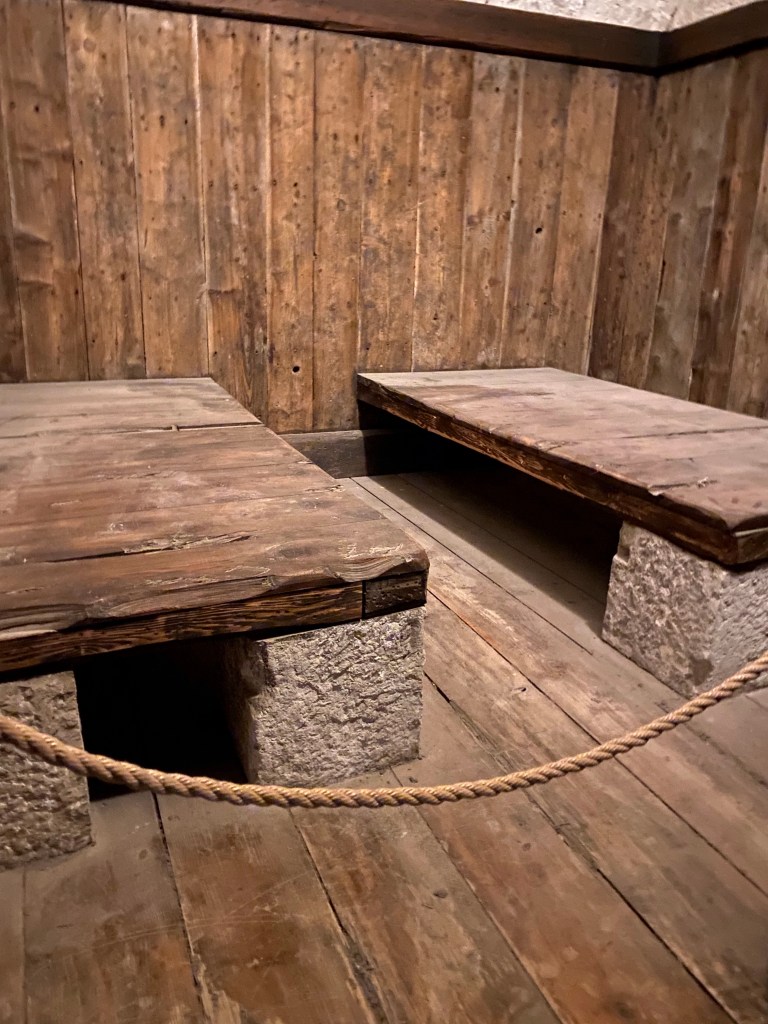
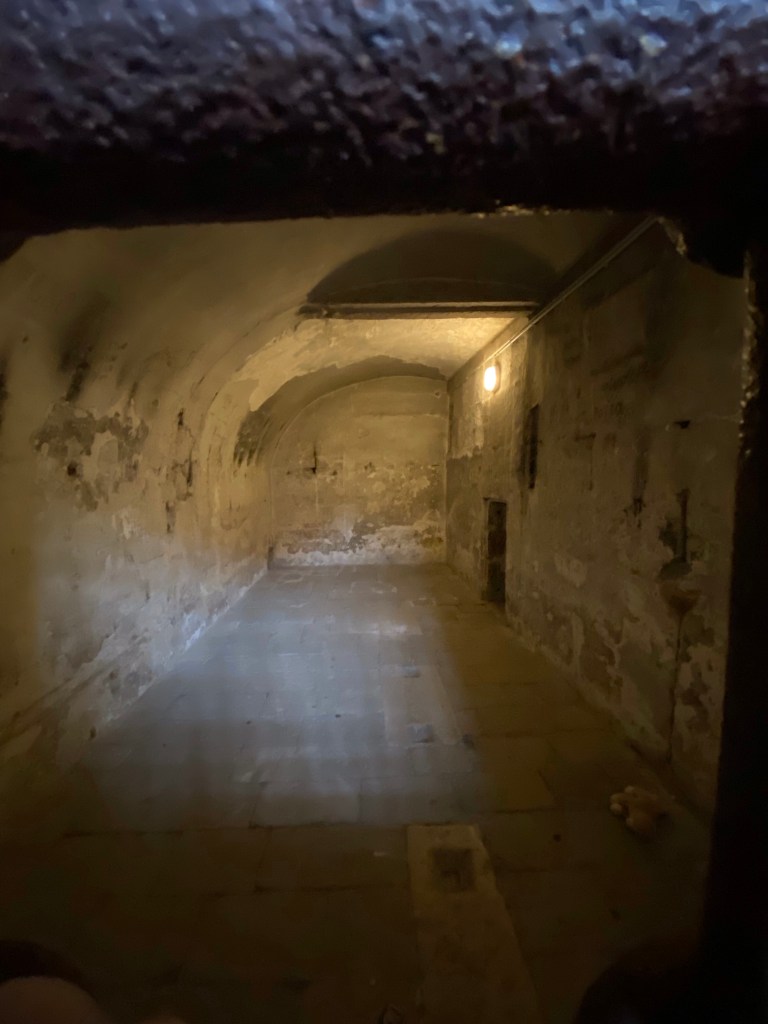
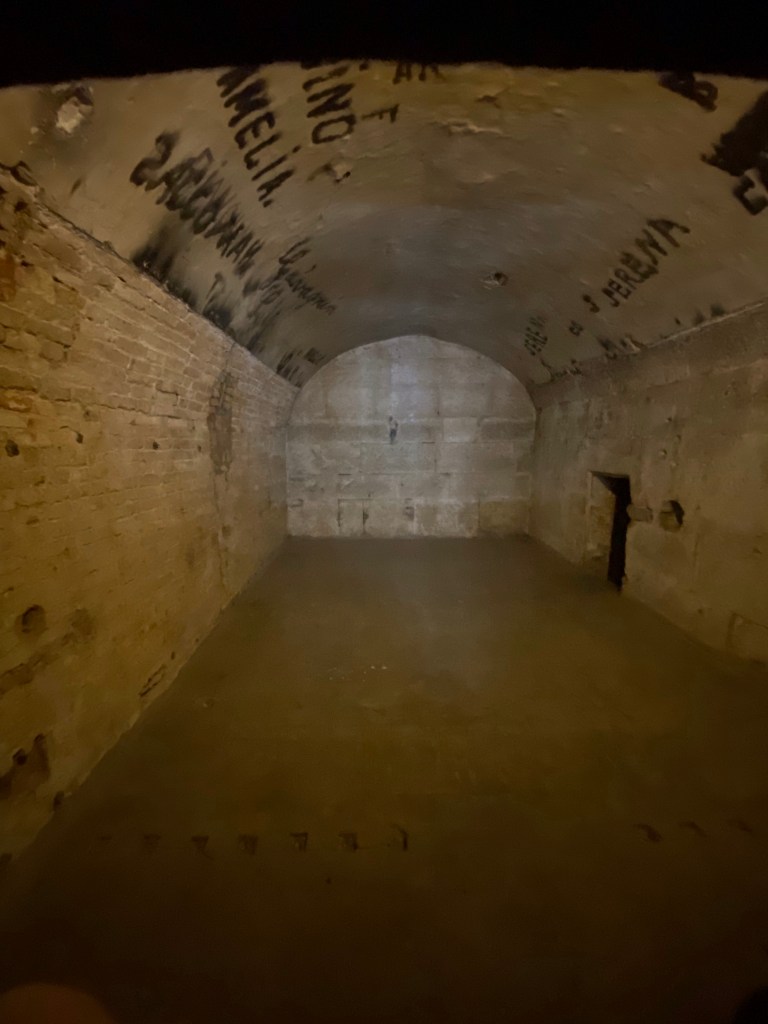
Ok, enough prison for today! I find the way out:
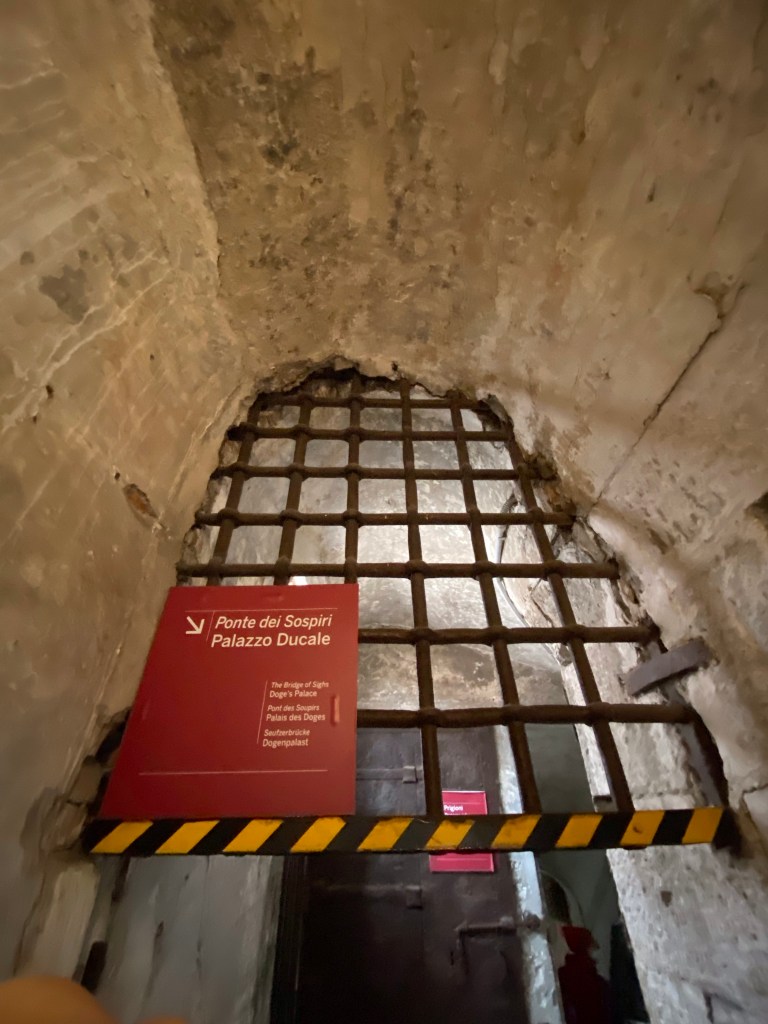
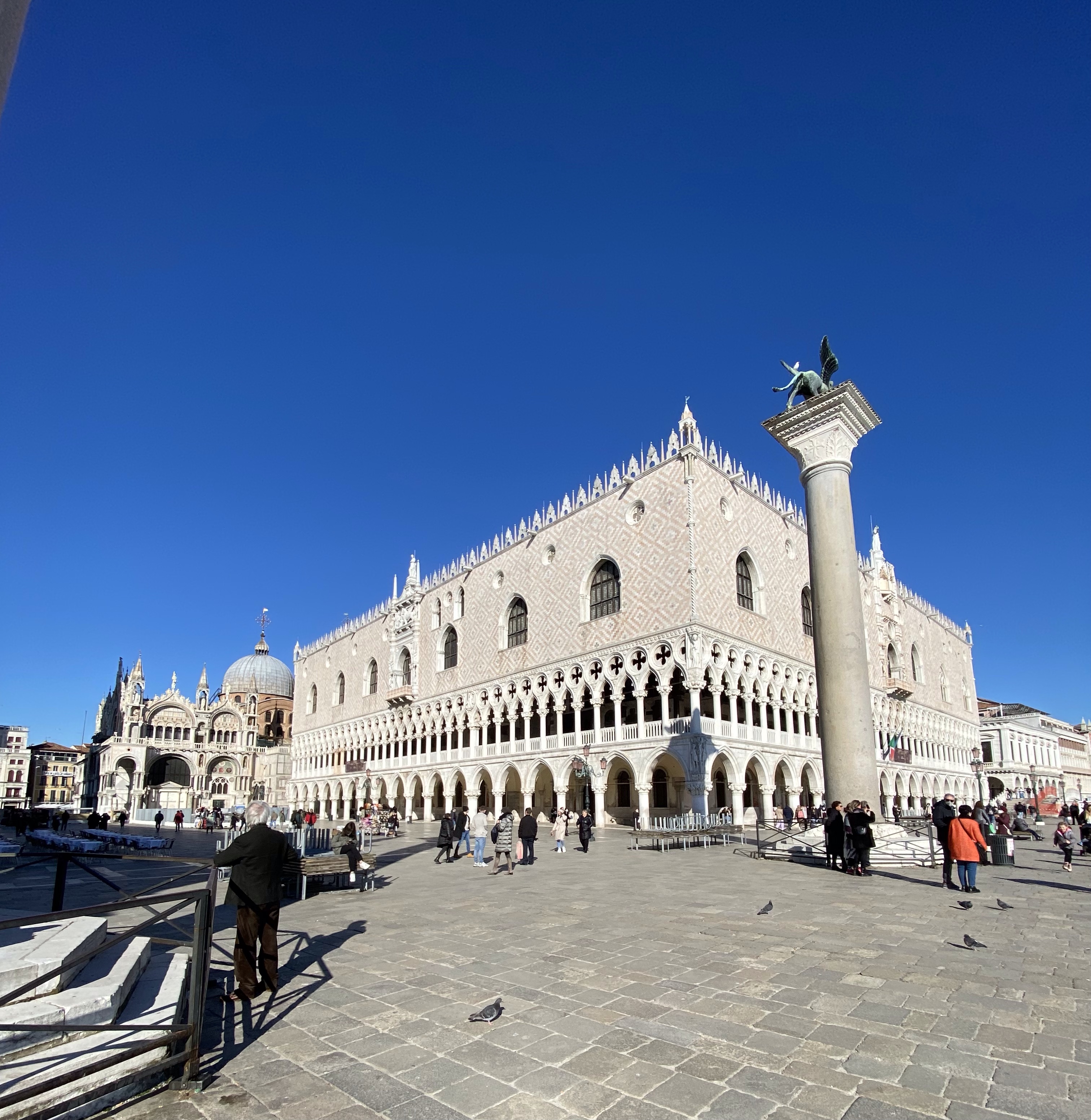
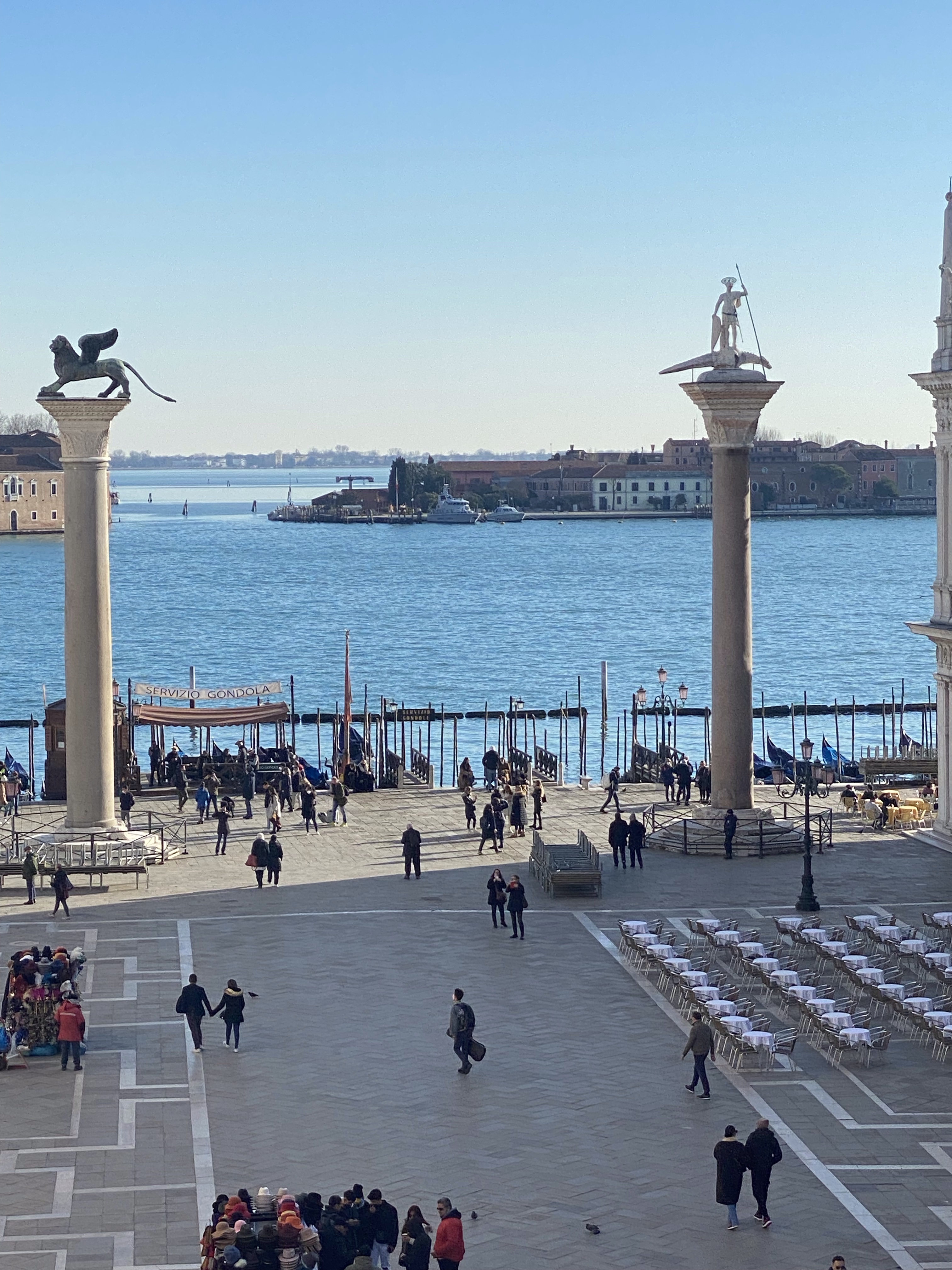
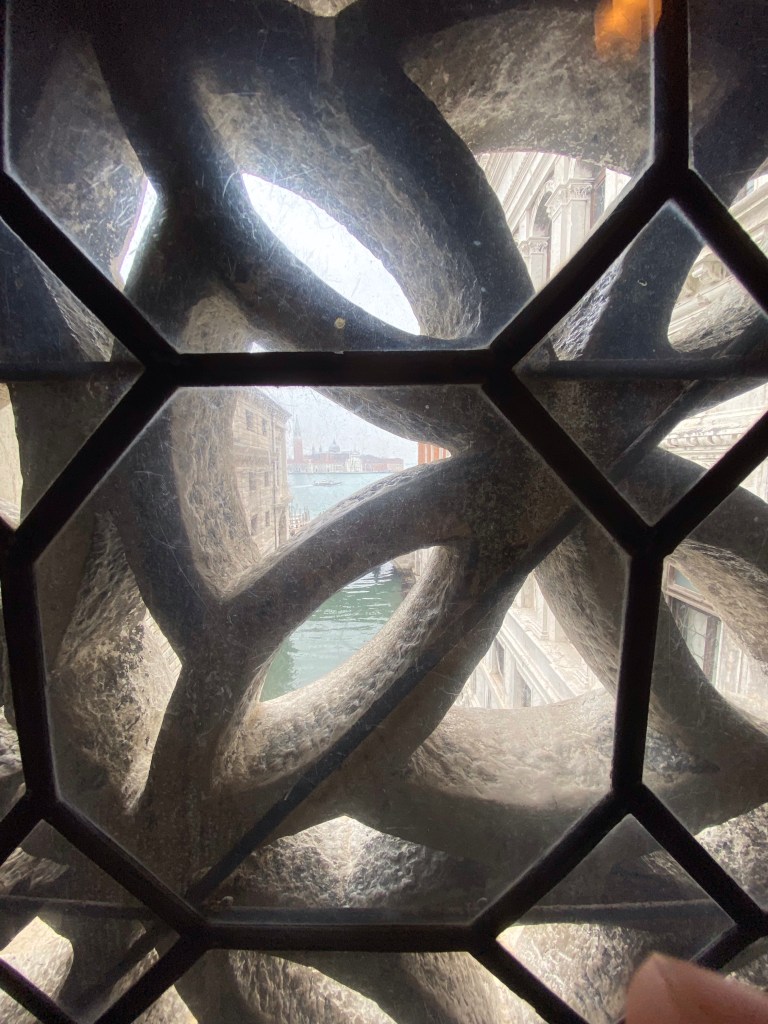
Returning to the Ducal Palace, I get to pass over the bridge again, but this time the views out the window are toward the lagoon. To me, that means freedom! Andiamo! Sbrigati!
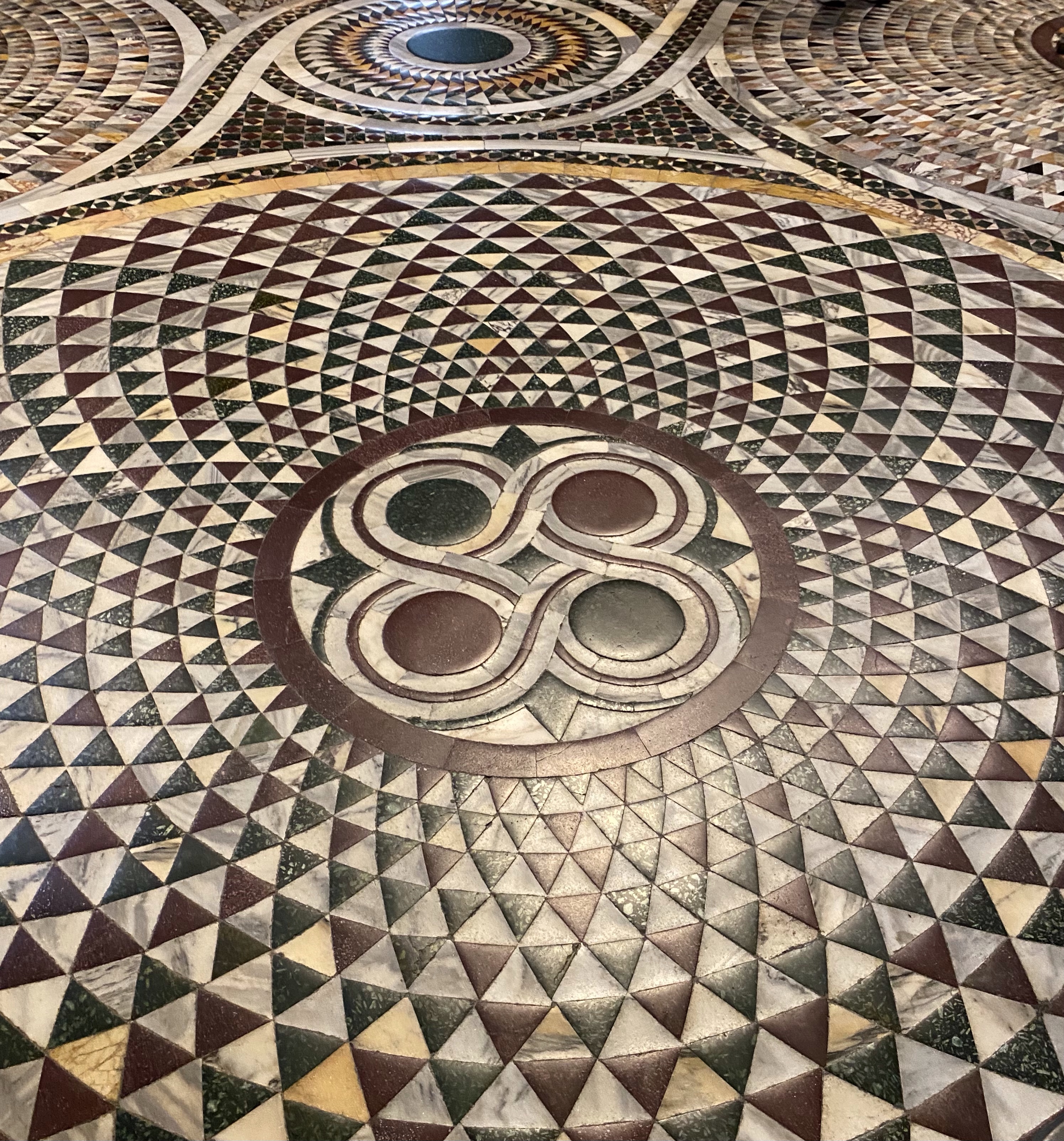
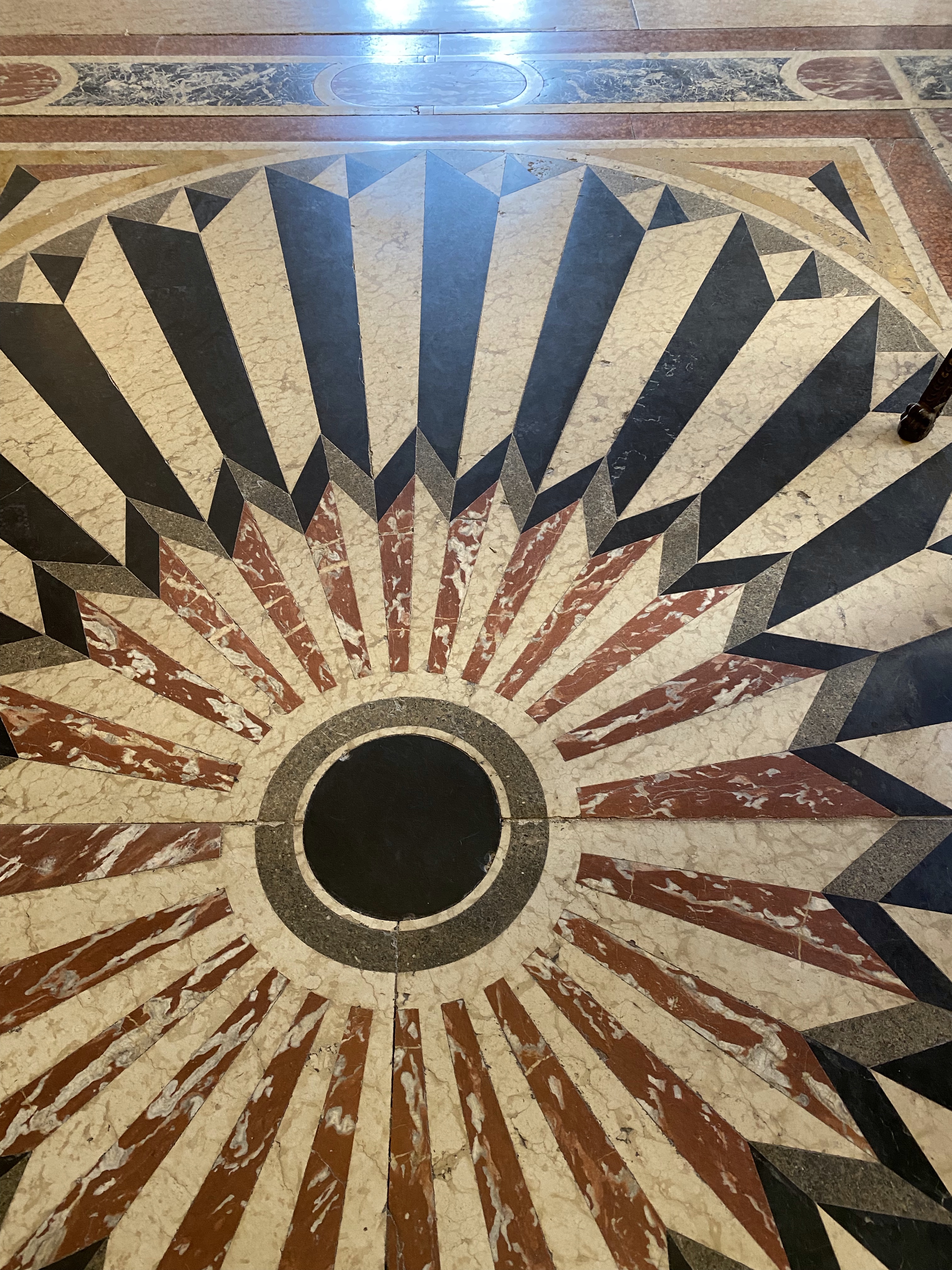
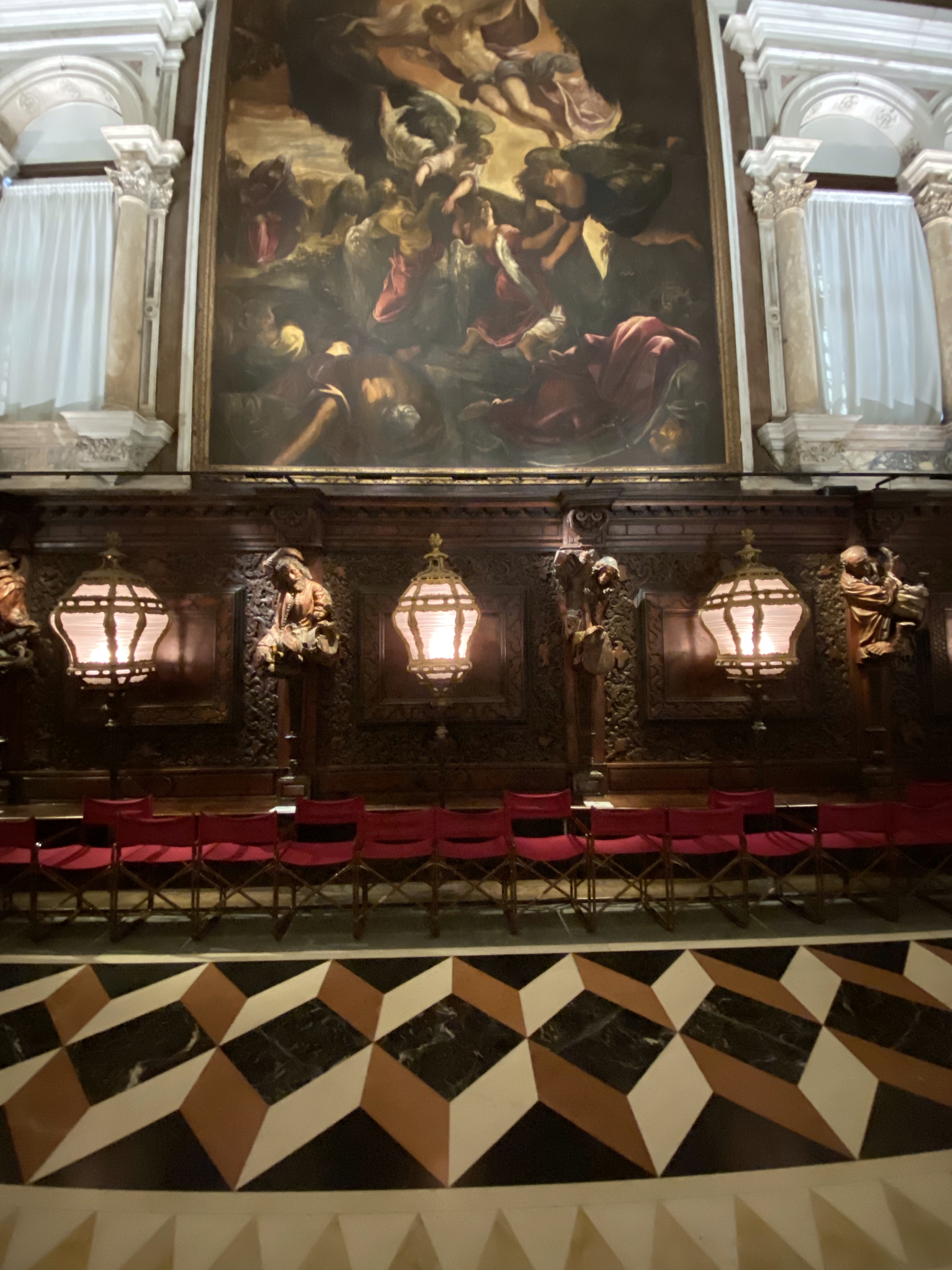
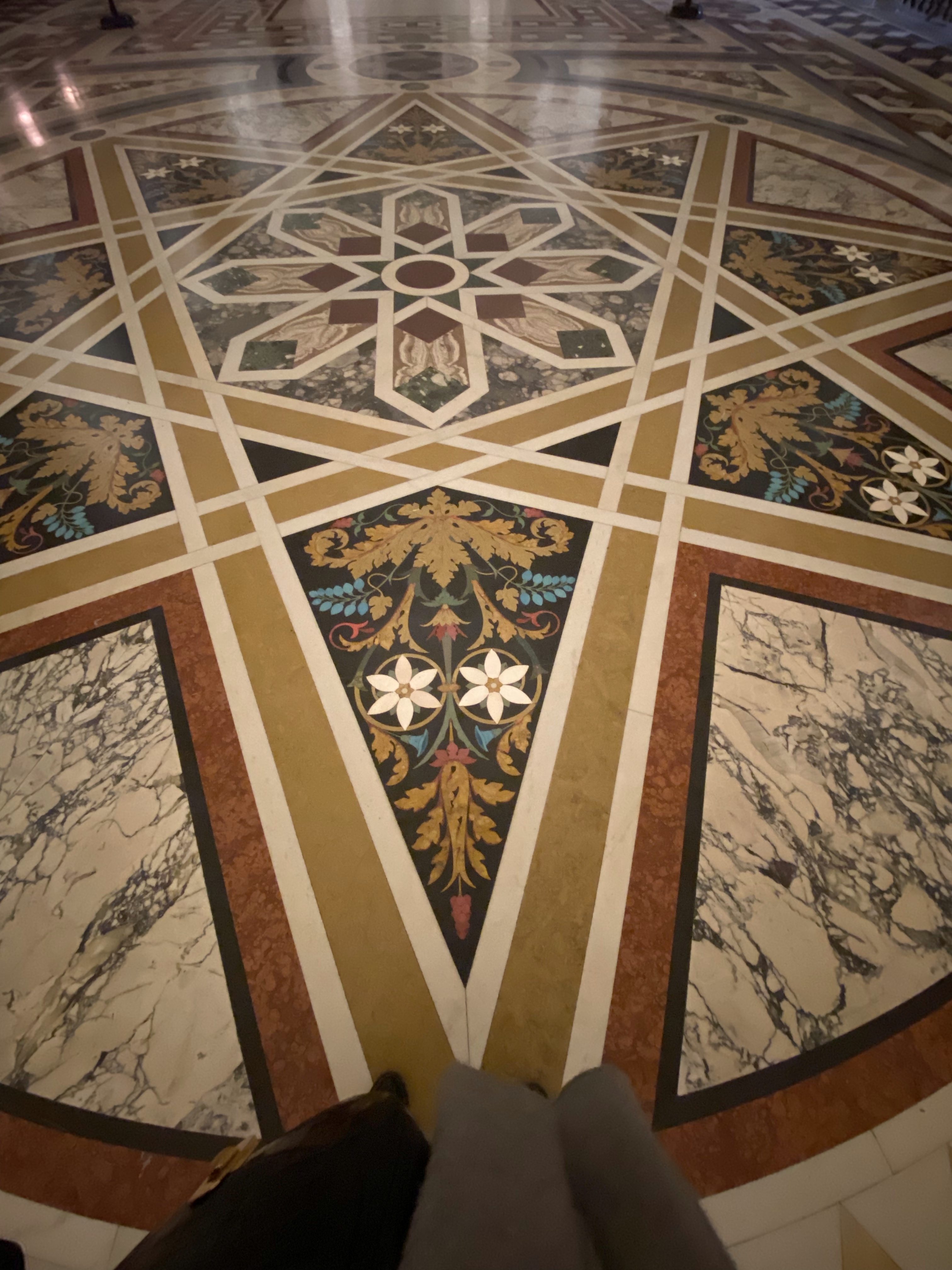
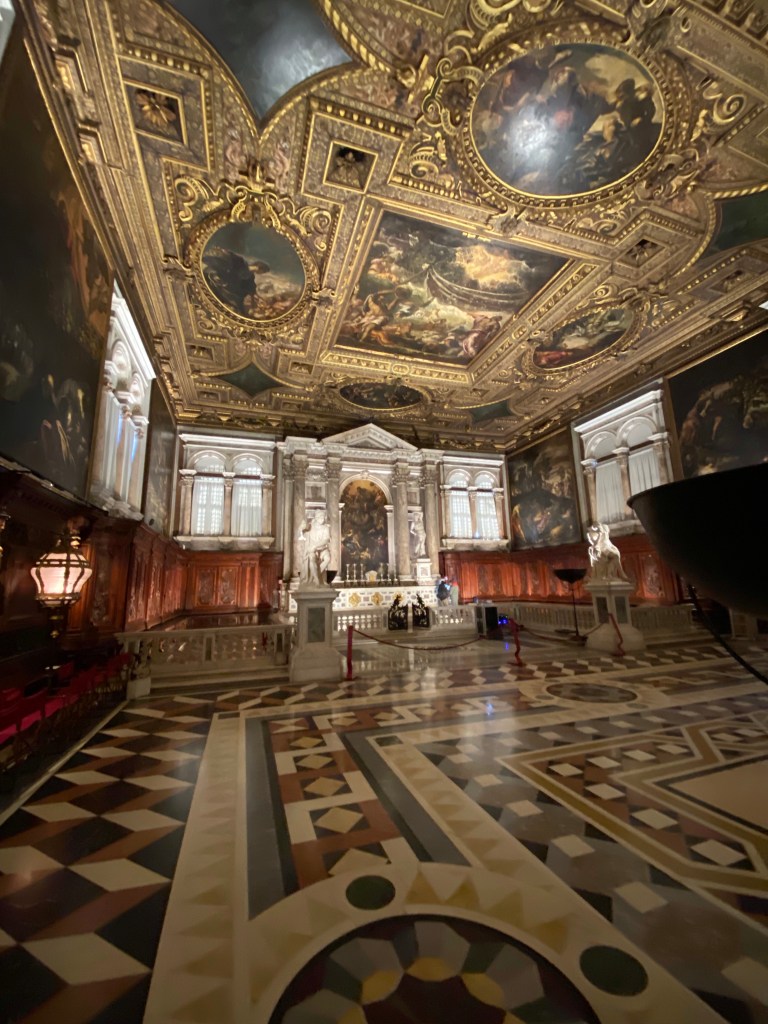
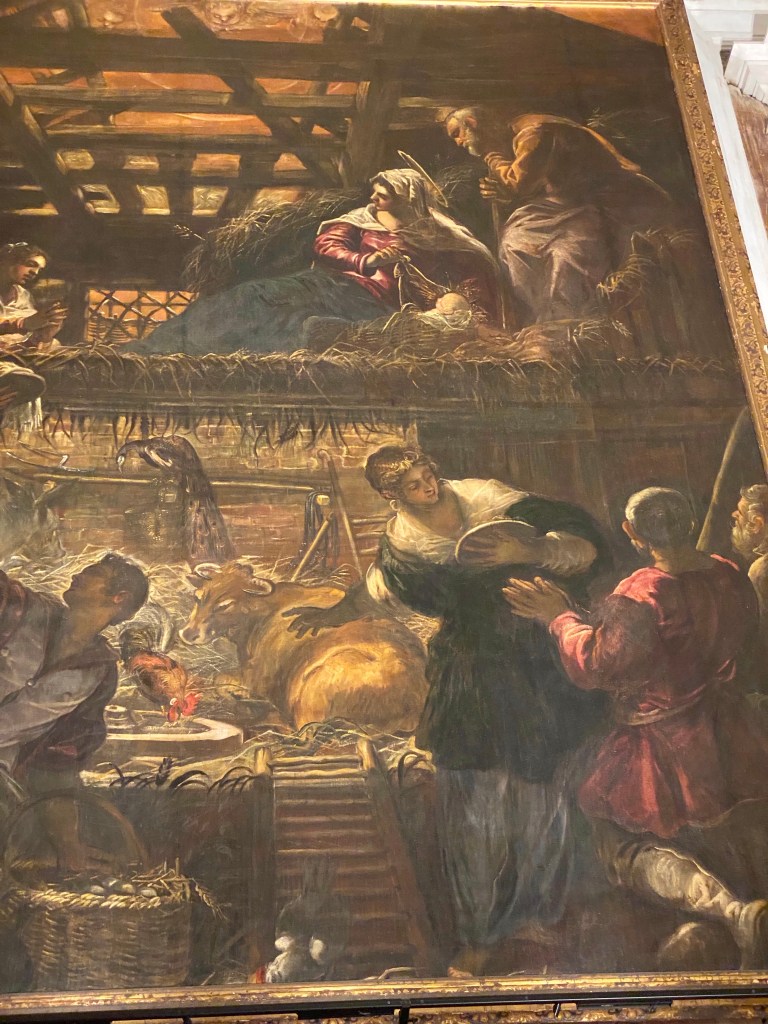
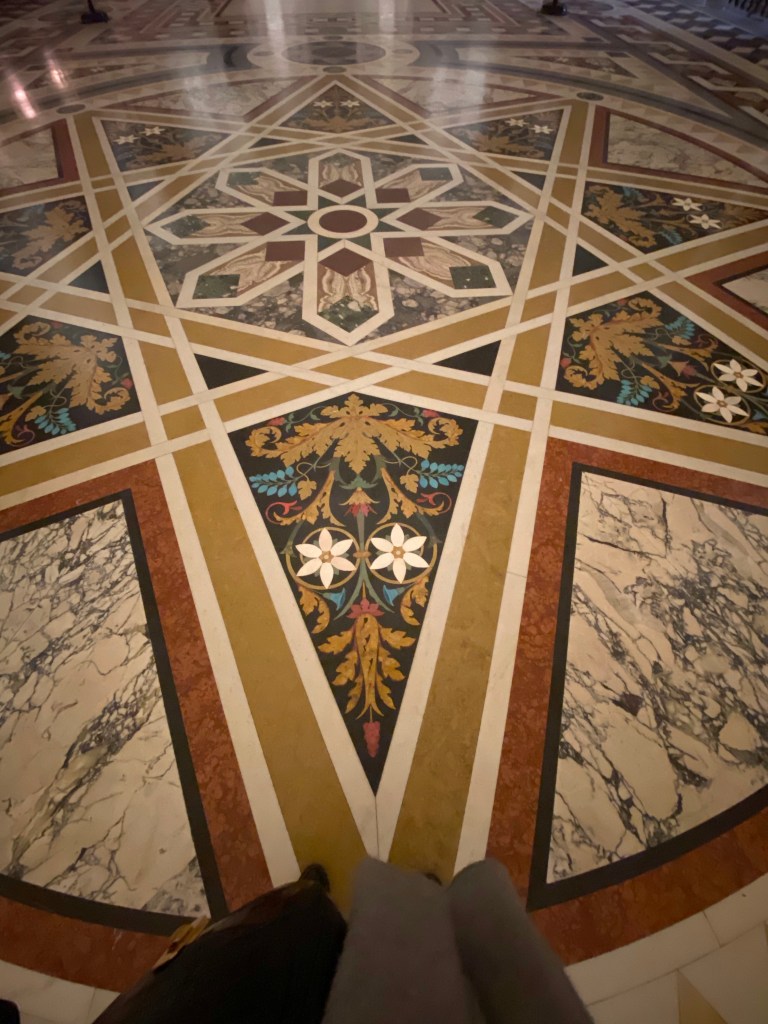
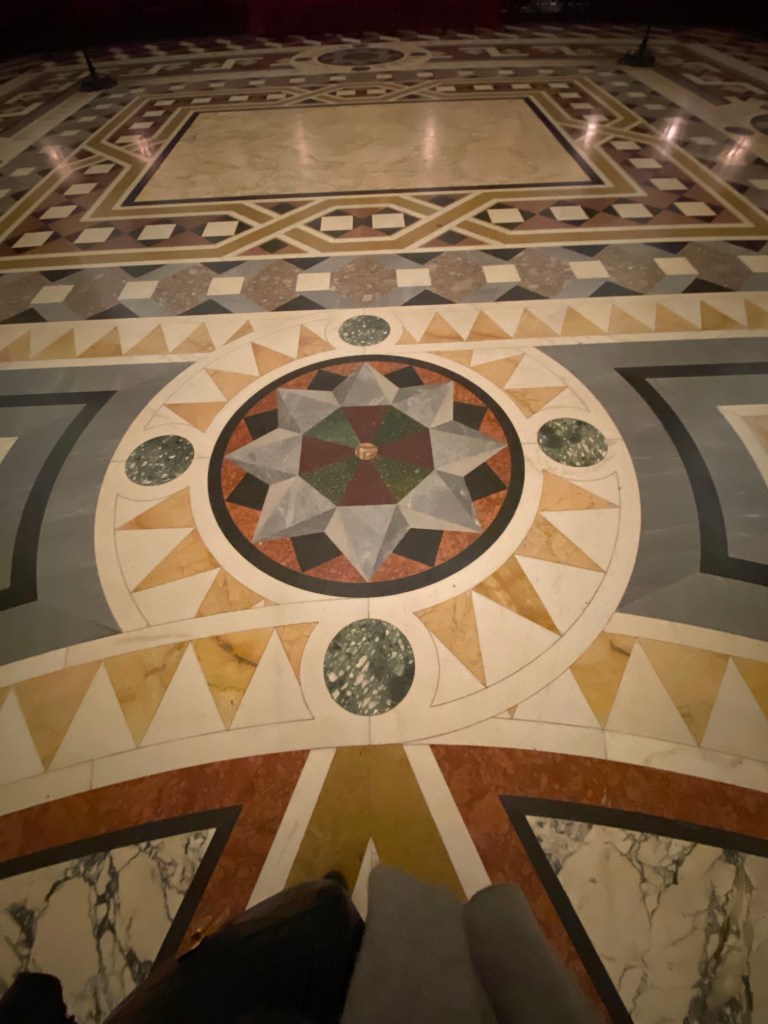
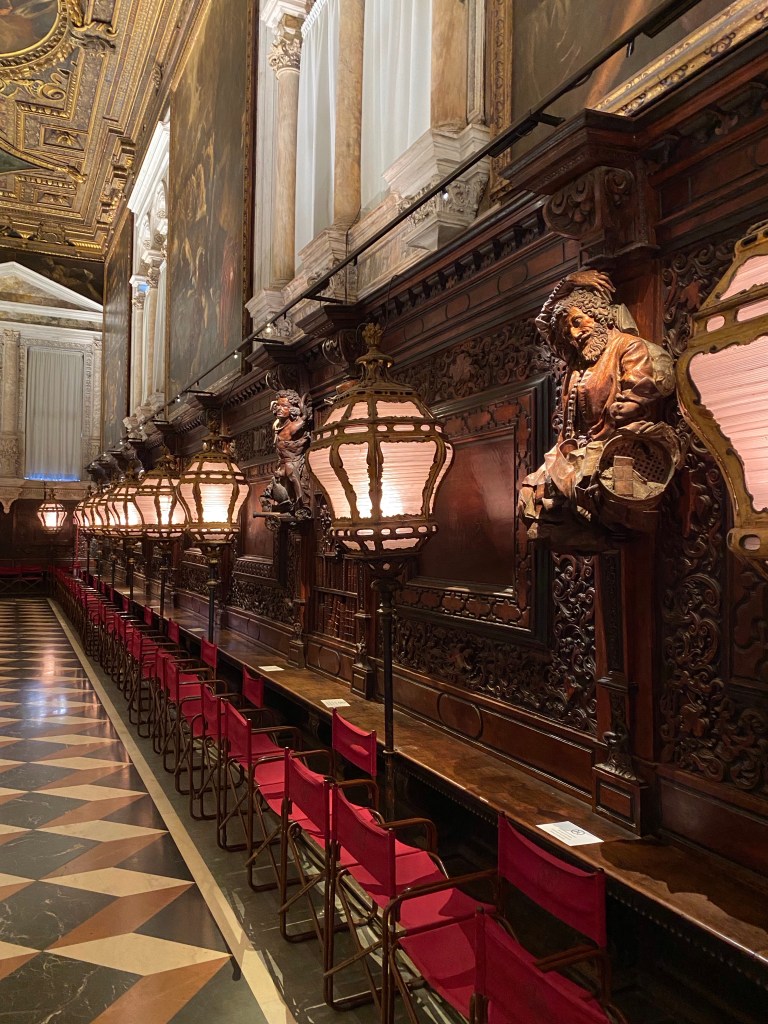
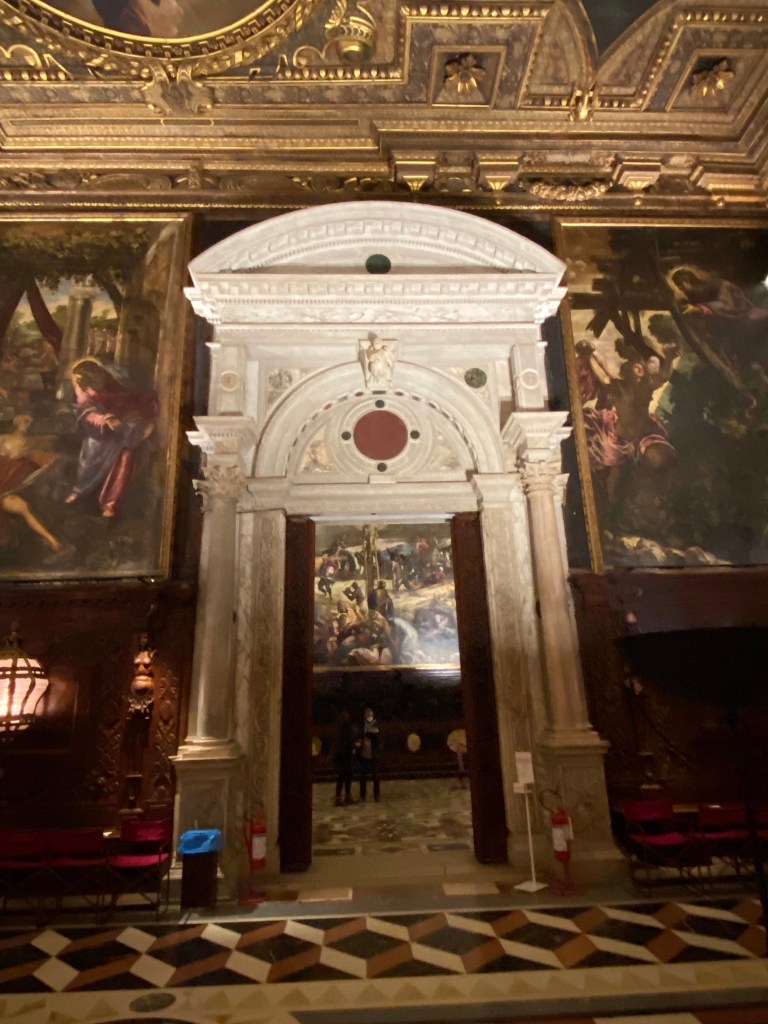
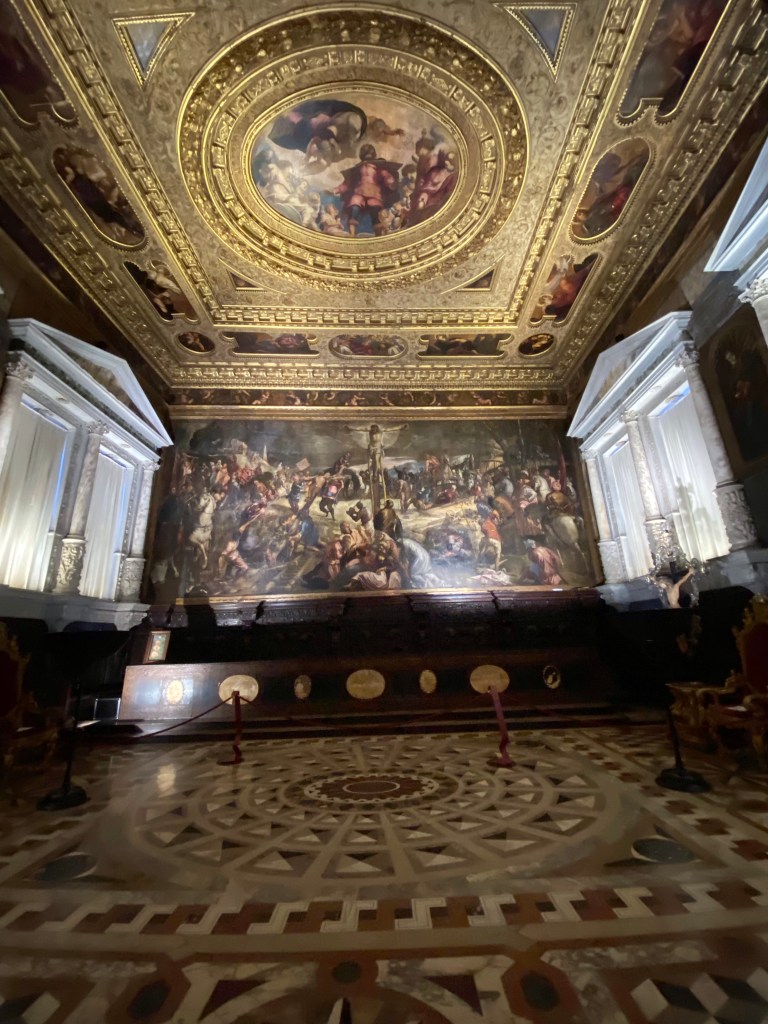
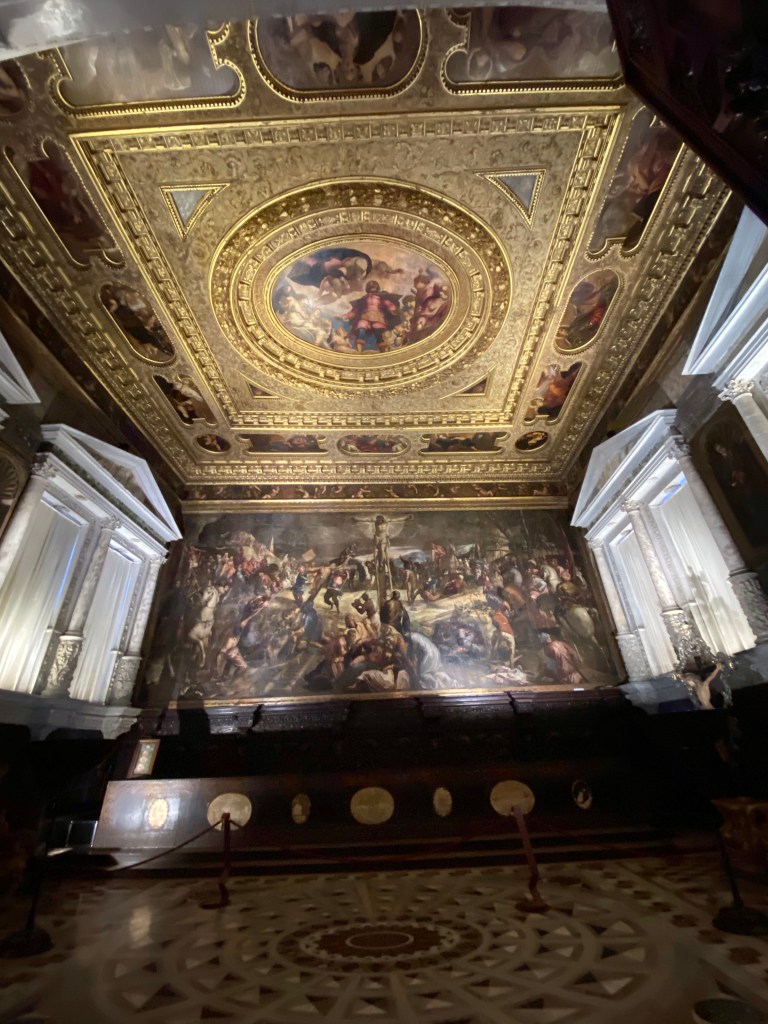
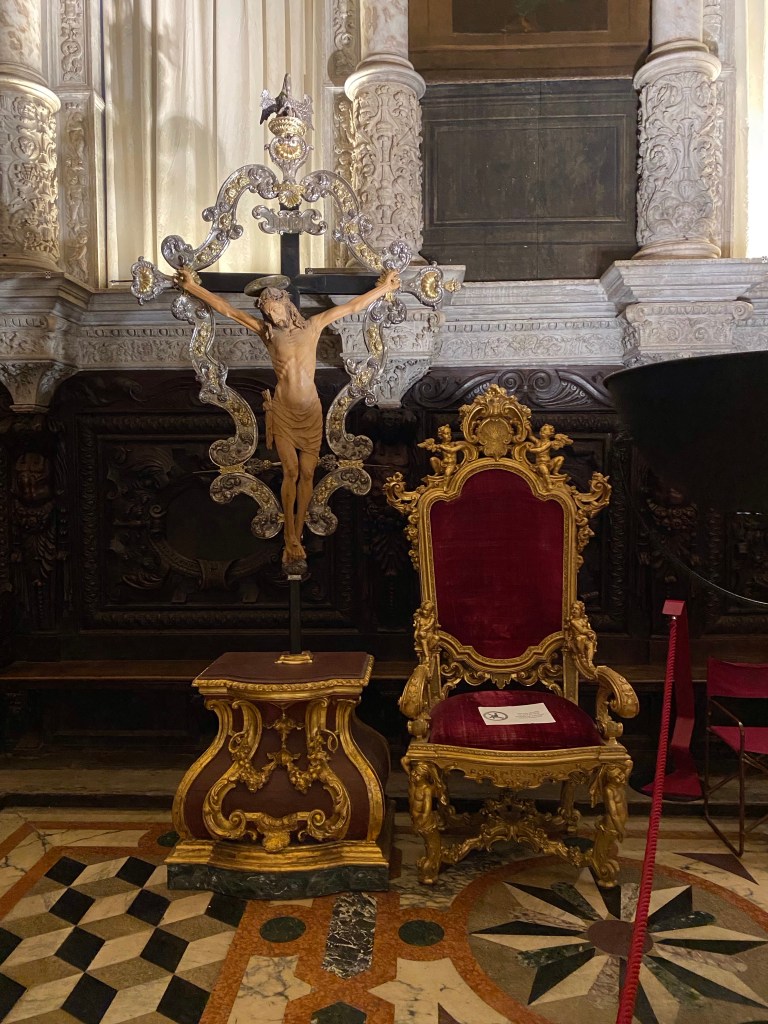
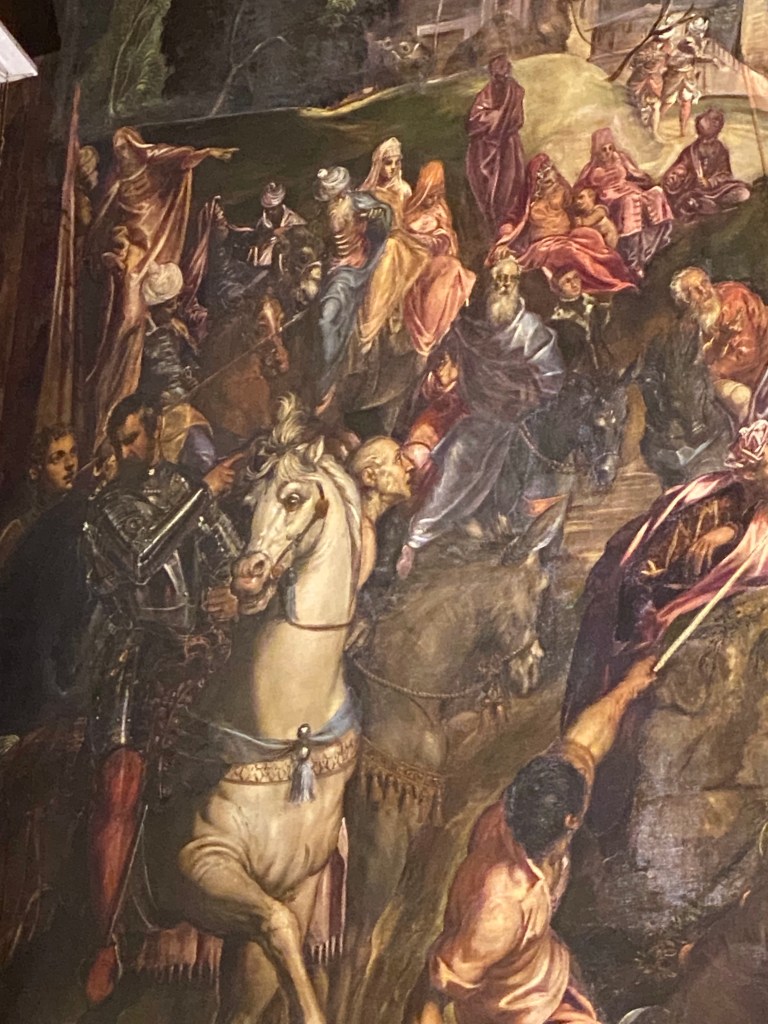
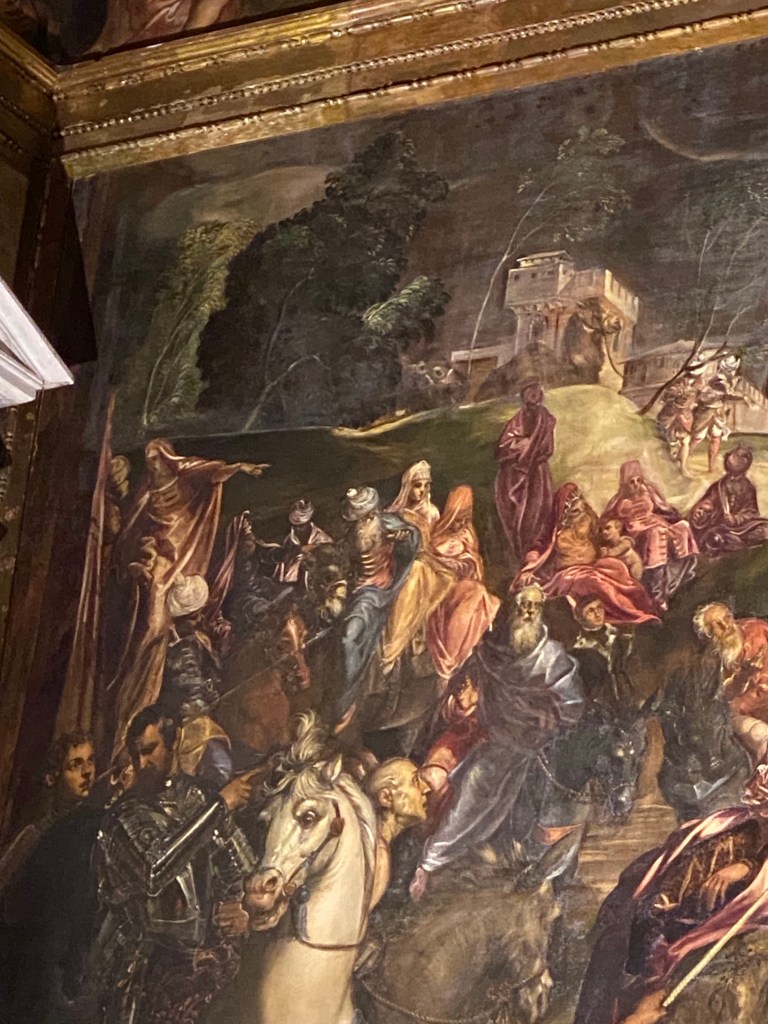
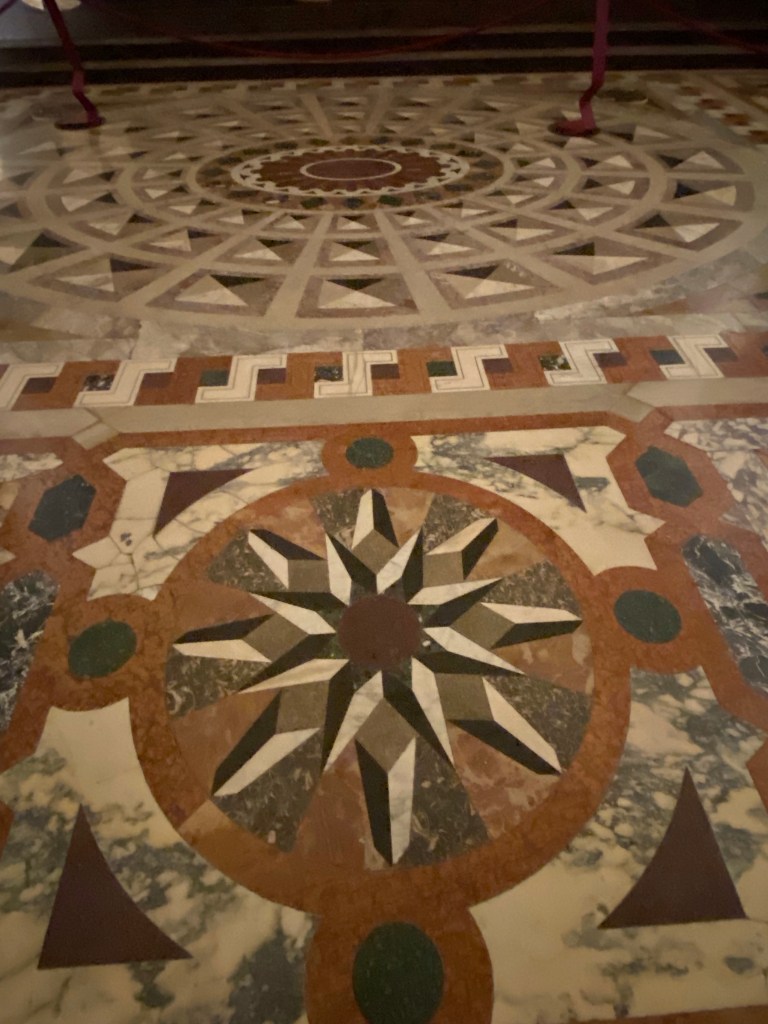
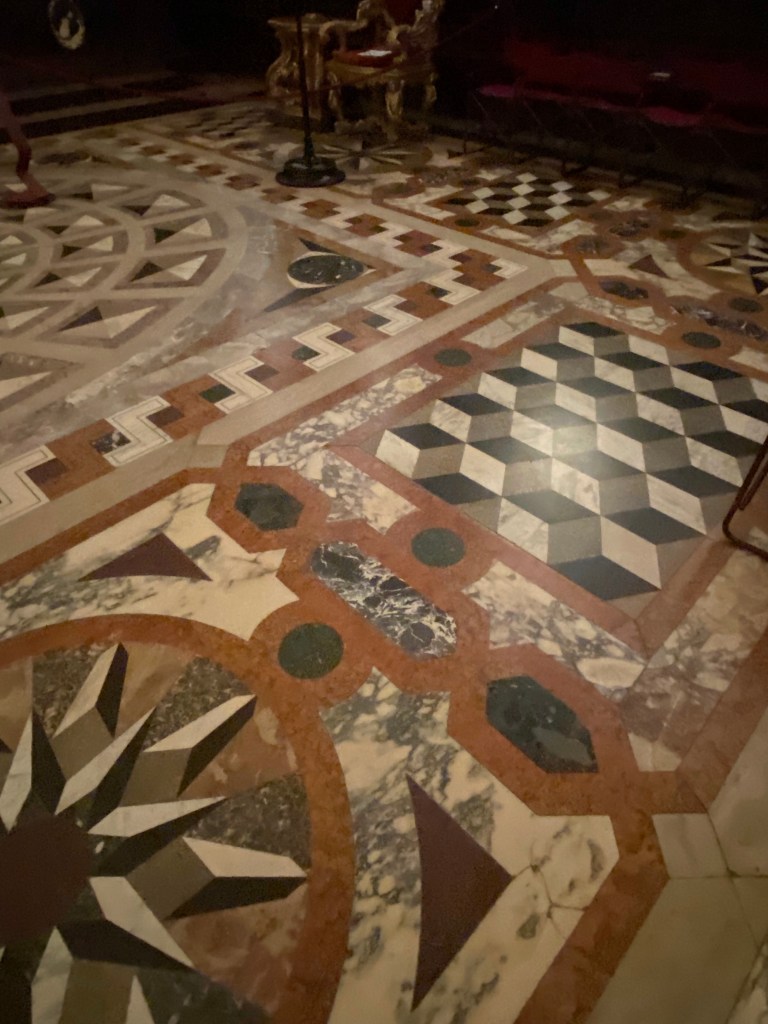
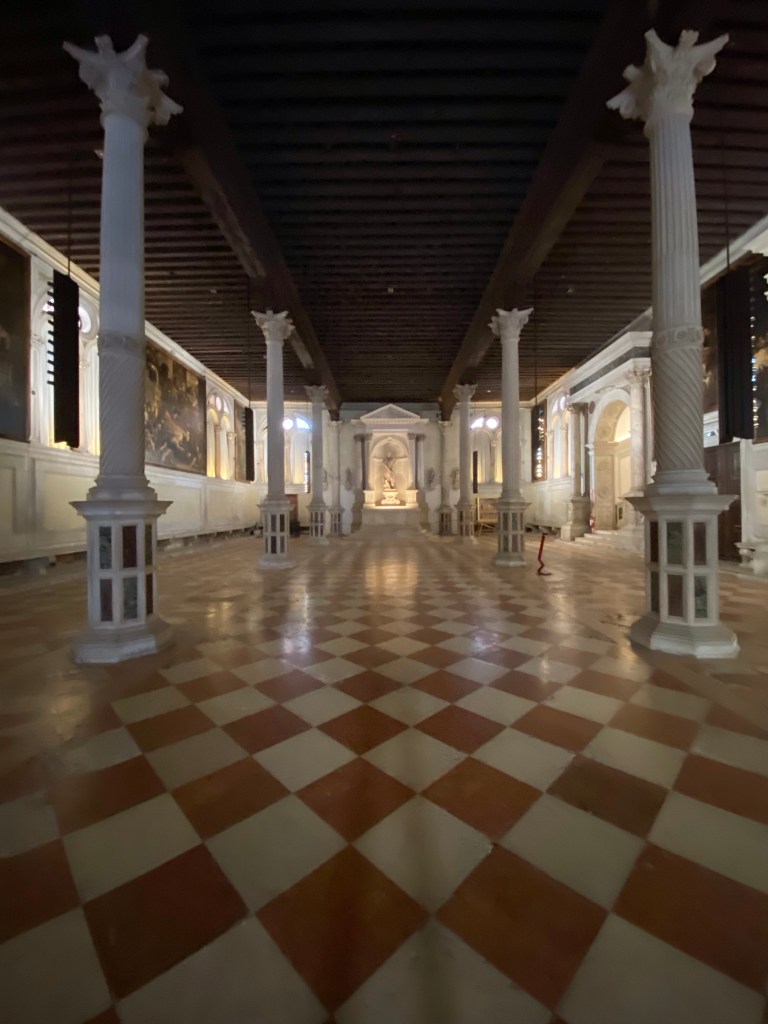
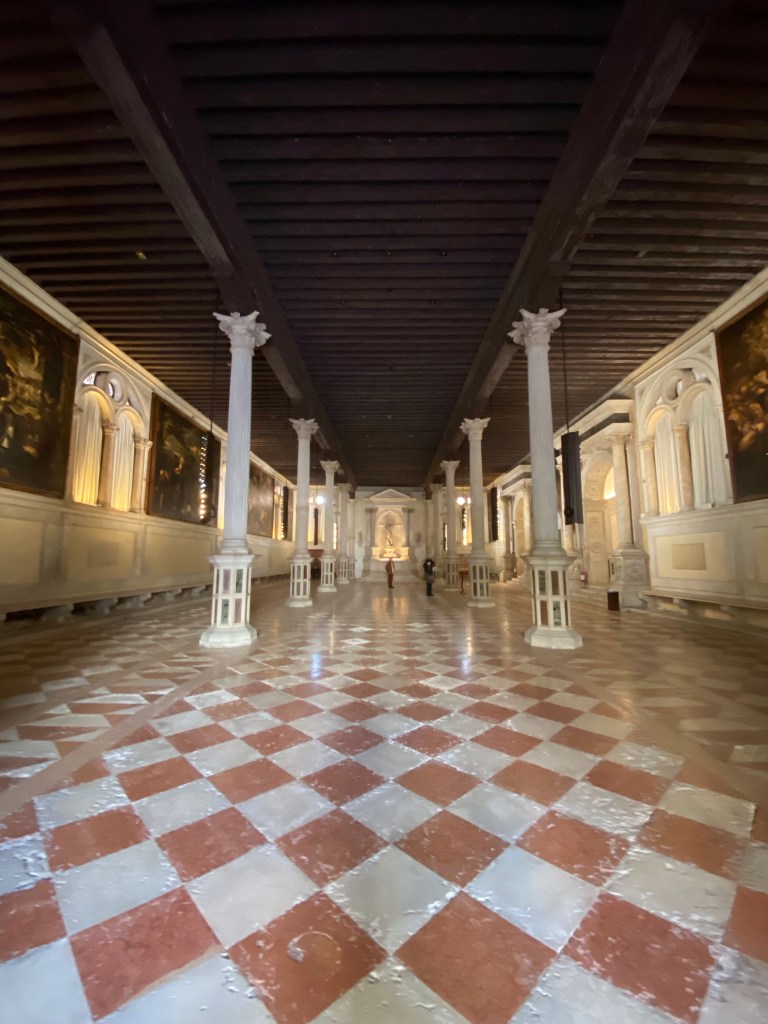
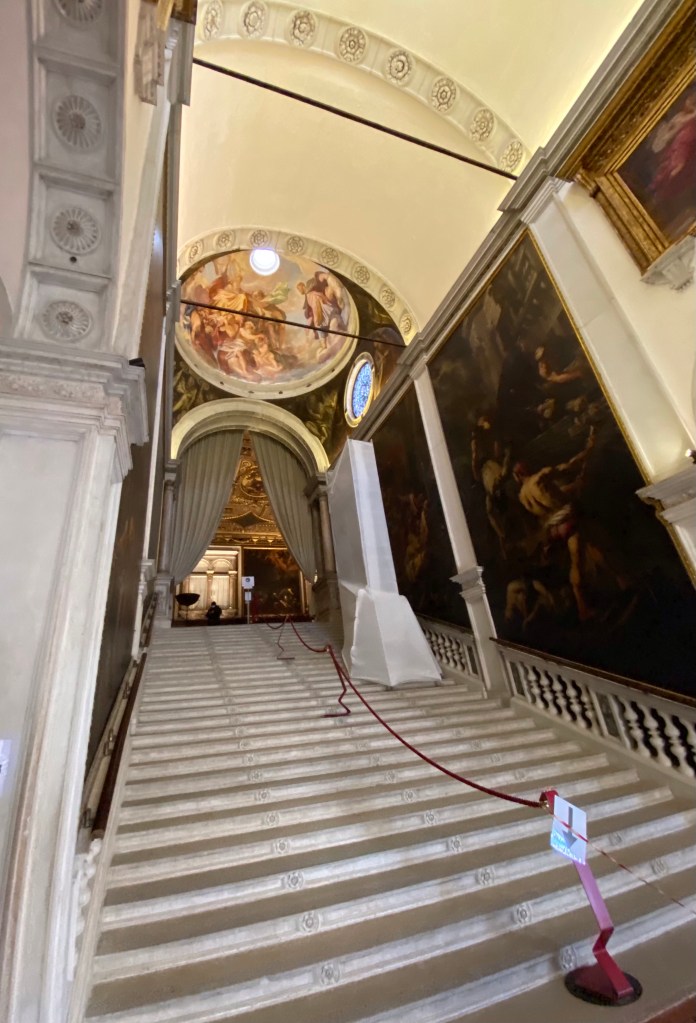
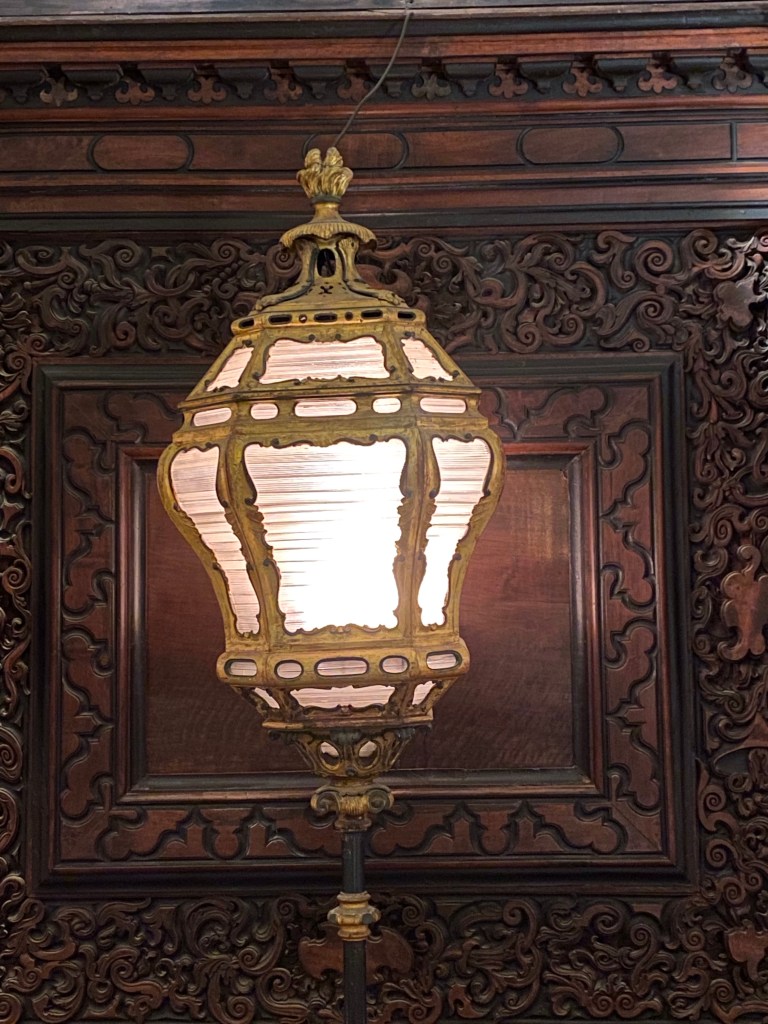
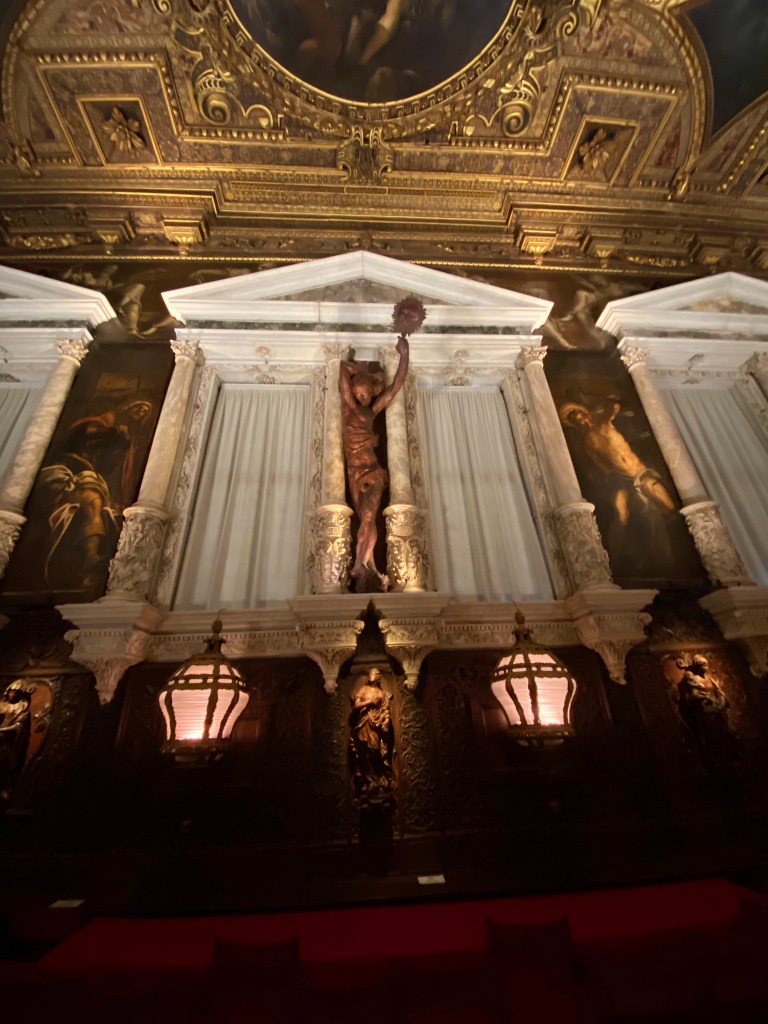
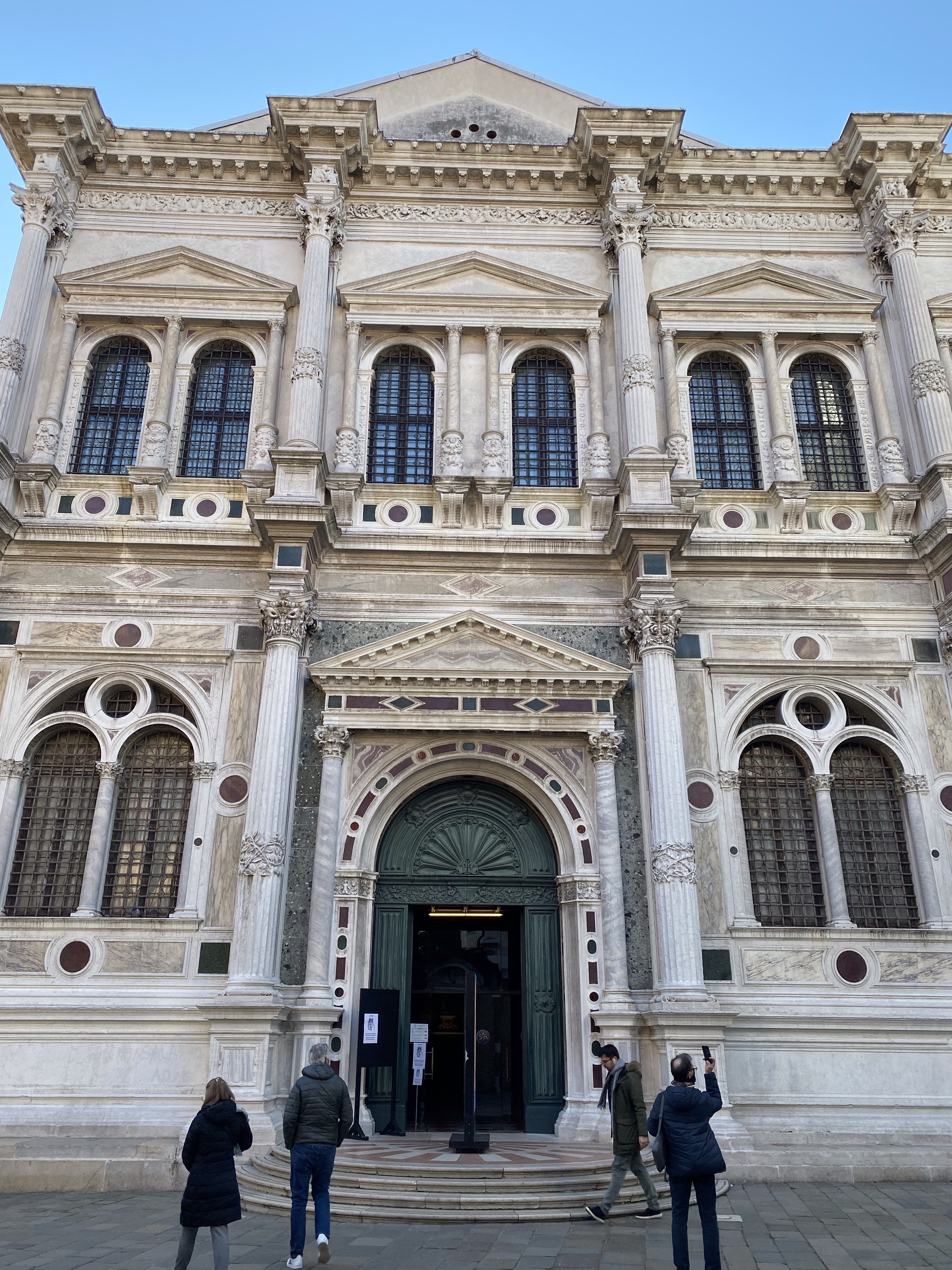
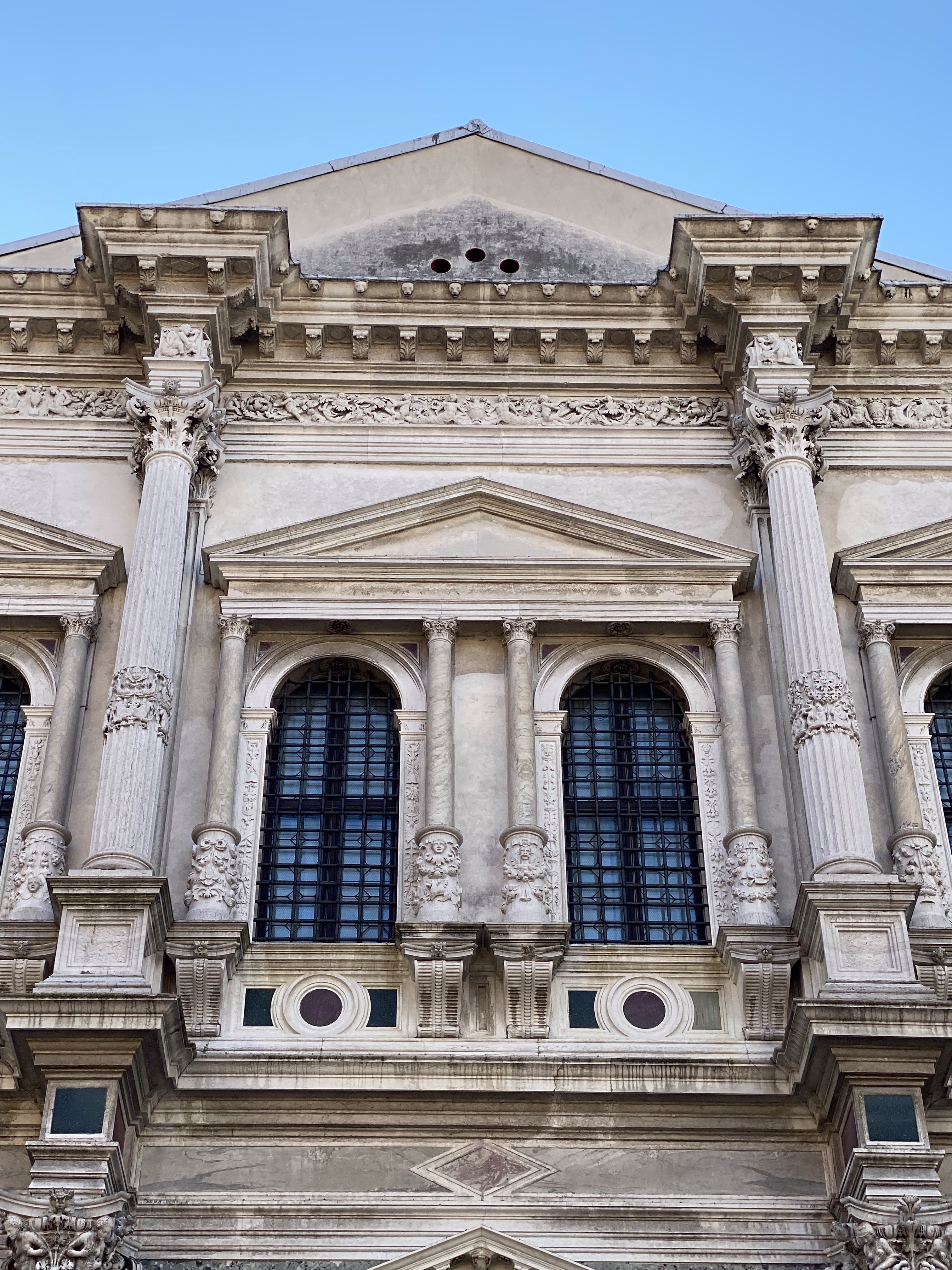
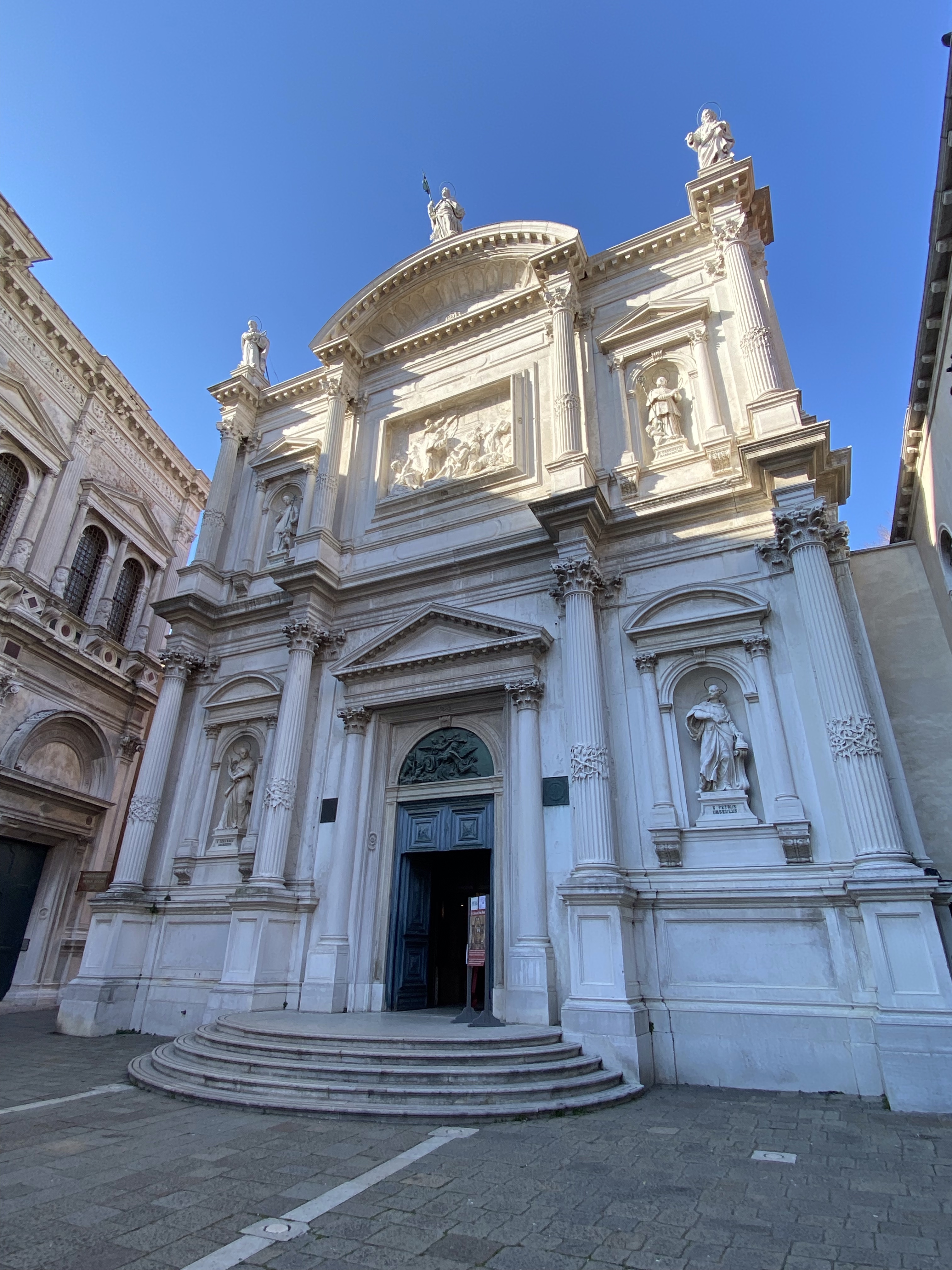
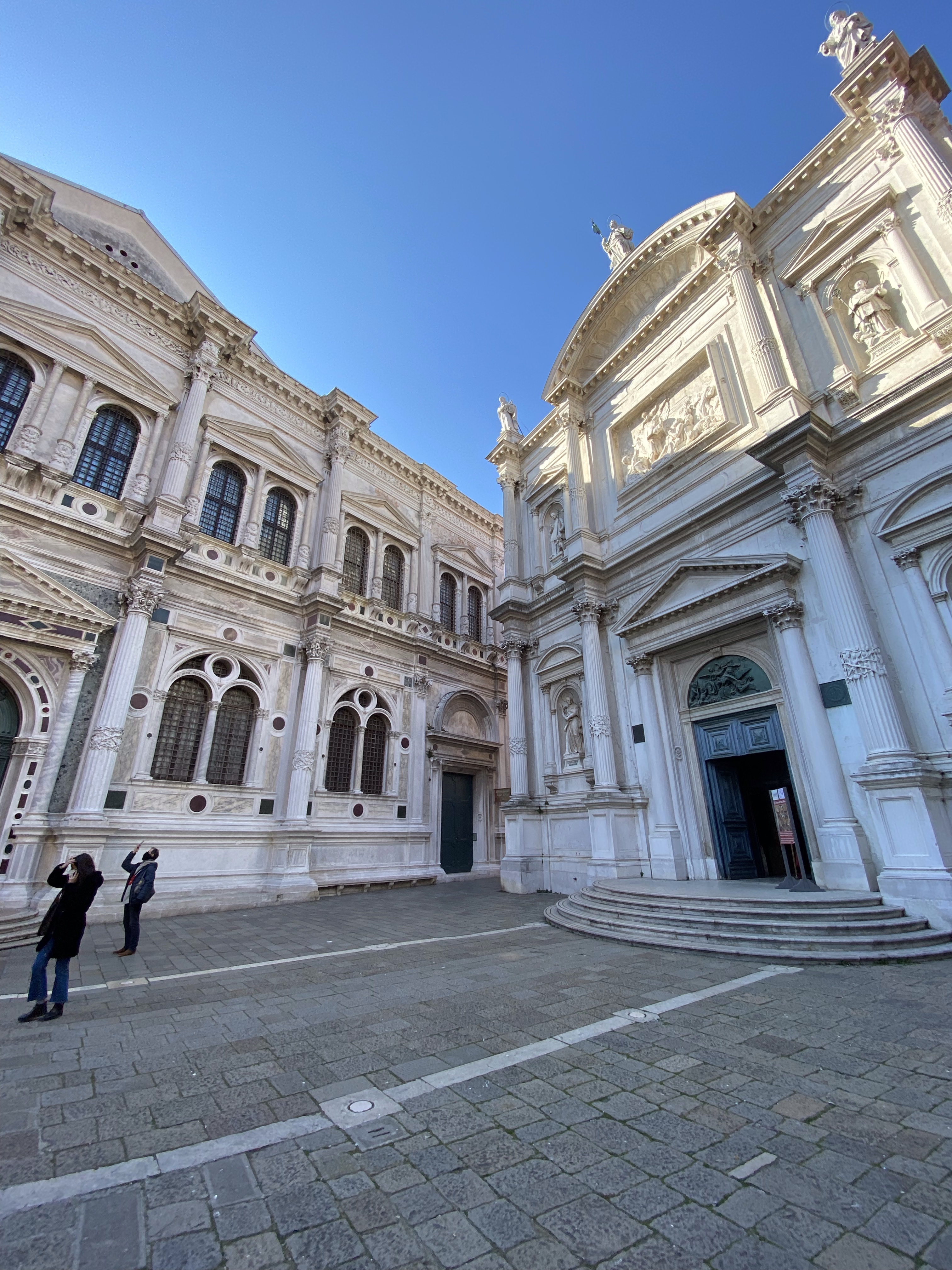
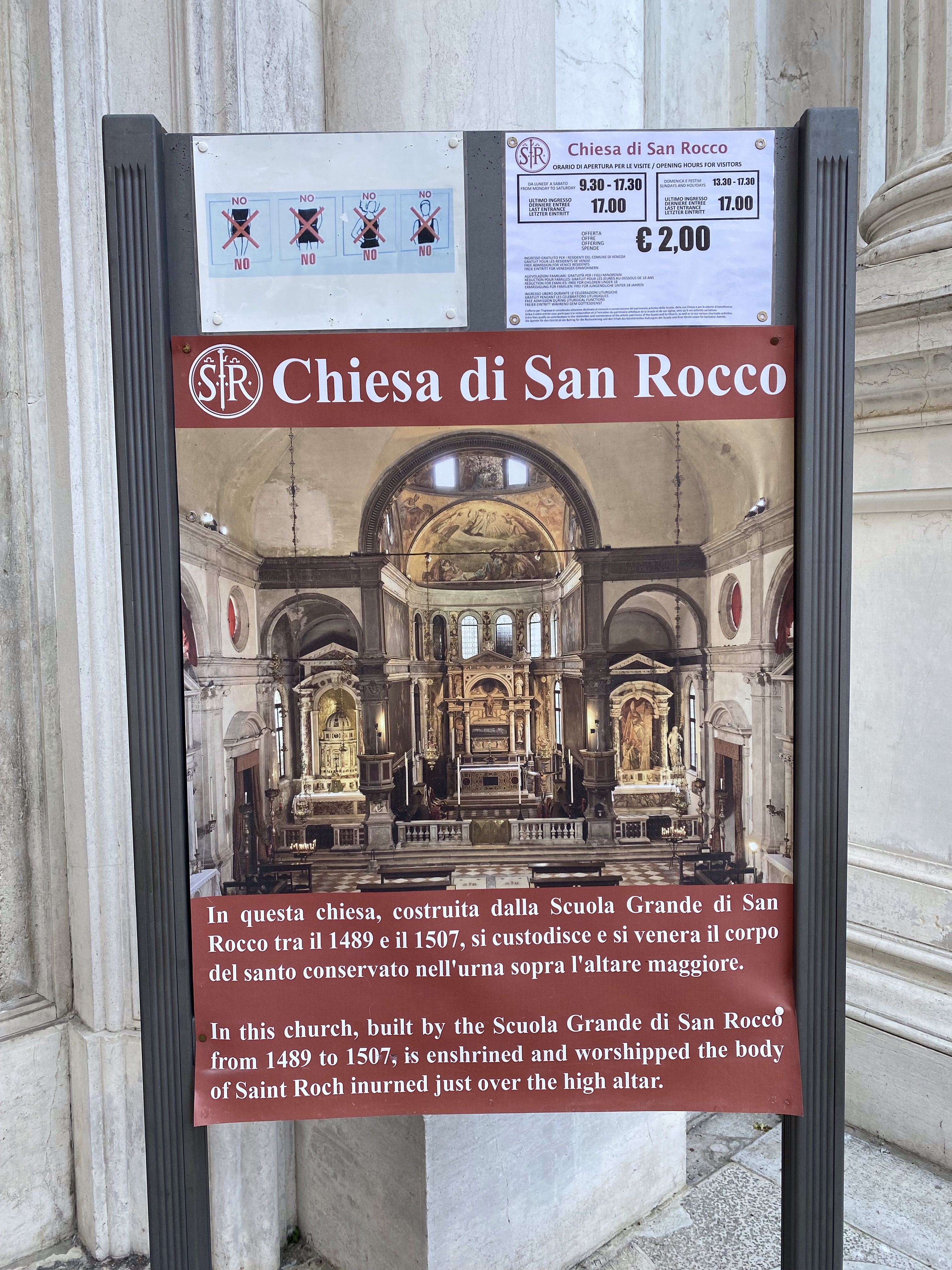
Of the hundreds (thousands?) of masterpieces to be found in Venice, the ensemble at San Rocco consisting of an intact Renaissance palazzo with its extensive interior decorative program is remarkable. The interior program include unrivaled paintings by the Venetian master, Tintoretto, as well as sculpture, sublime woodworking, divine lighting fixtures and incredible inlaid marble pavements. And those are just the highlights. San Rocco is so much more.
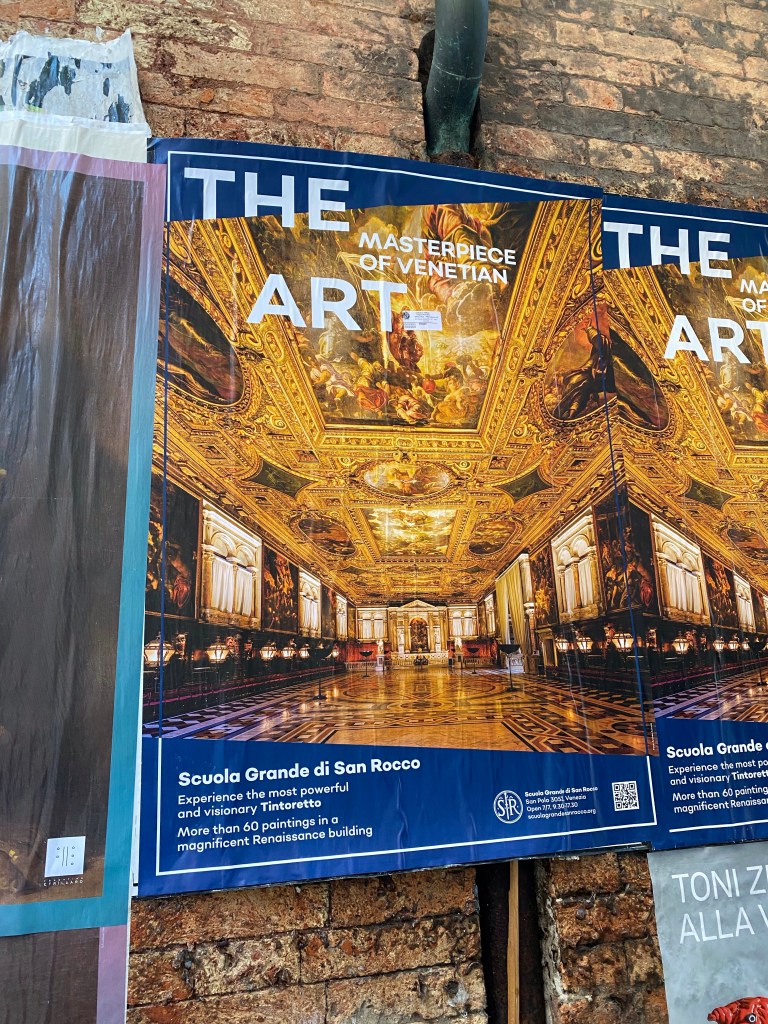
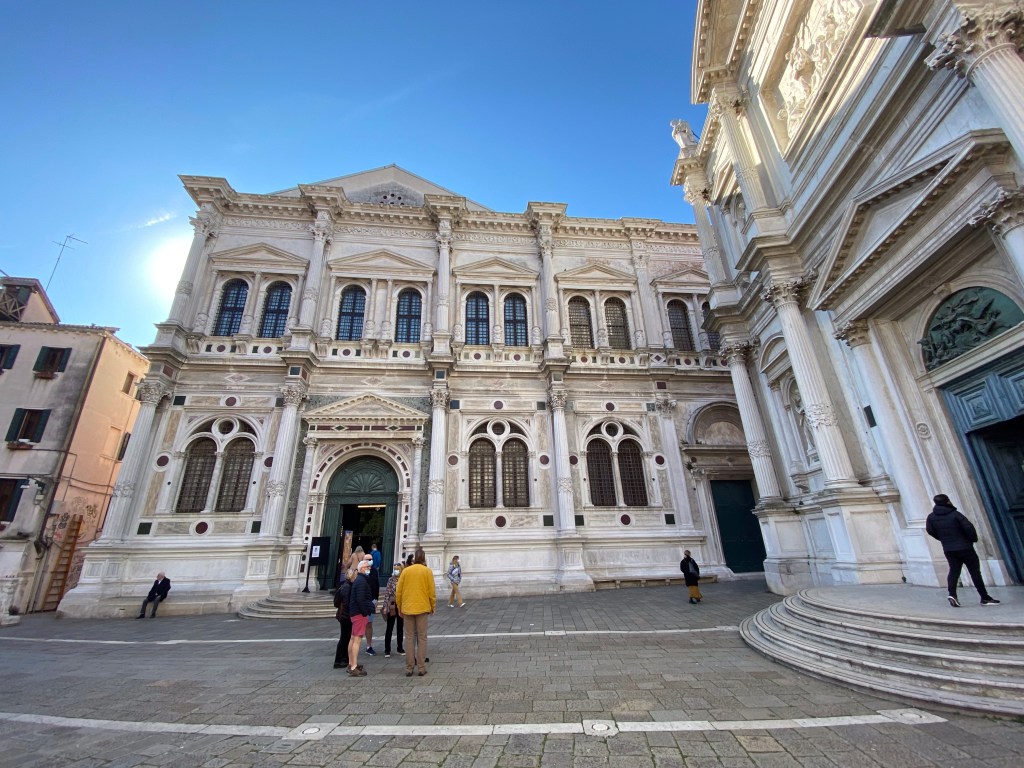
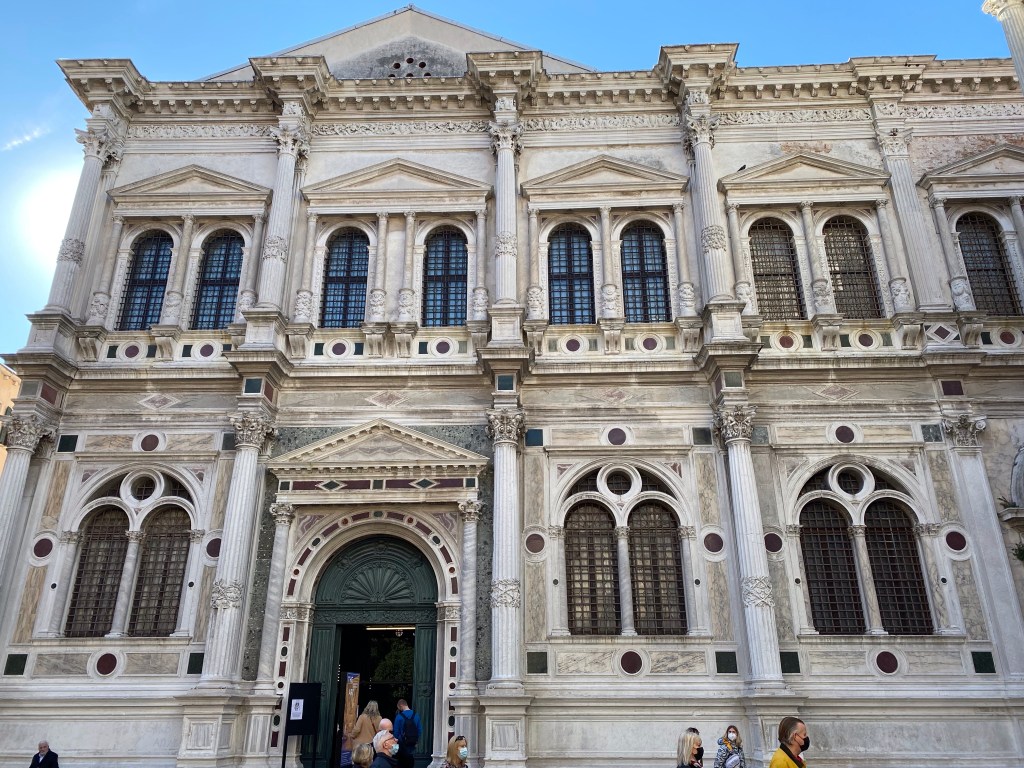
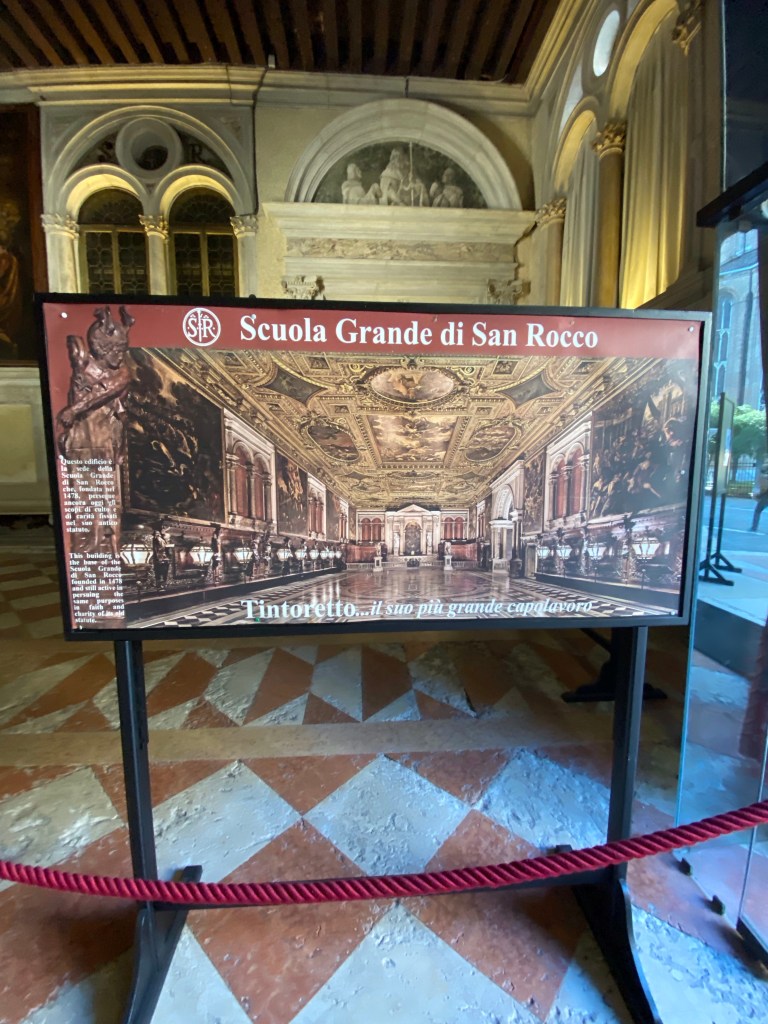
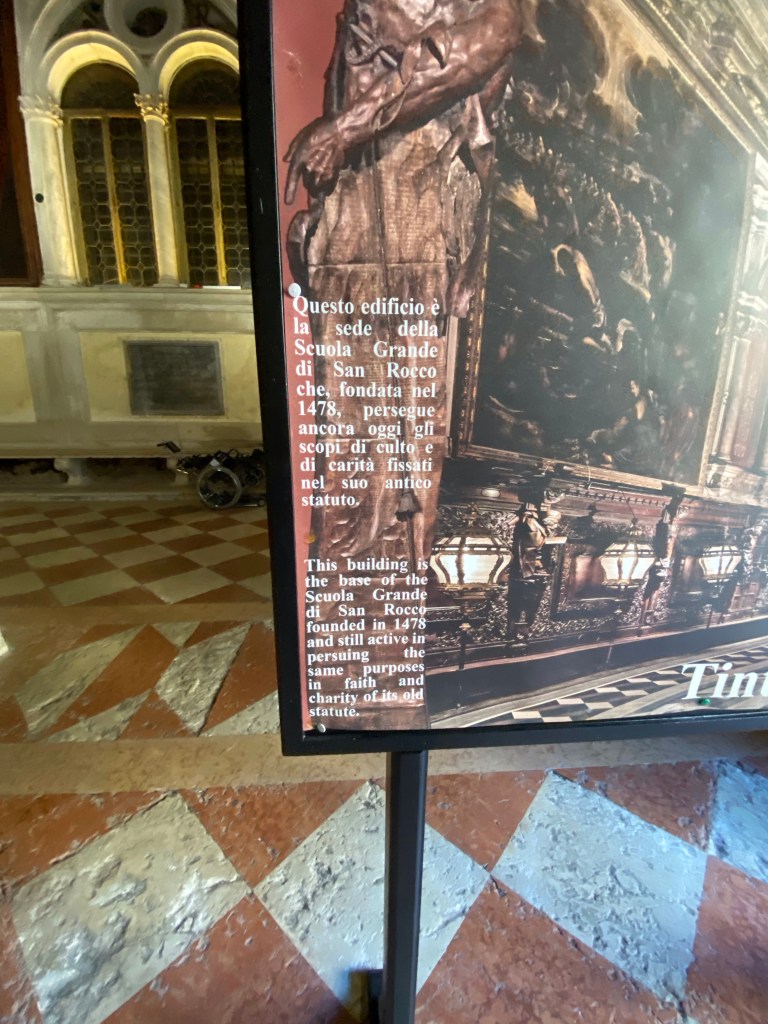
San Rocco was a 13th century mendicant pilgrim, who, it was said, contracted the plague from which he was healed miraculously and he went on to heal others so afflicted Venice was particularly susceptible to outbreaks of the plague as it lay at the crossroads between the East and West. The word “quarantine” as everyone must know after our recent ordeal with Covid, is in fact a Venetian word. It refers to the 40 days which travelers had to isolate before being allowed into the Serenissima.
During the 15th century, San Rocco’s relics were brought to Venice, although he is buried in Voghera, in the Province of Pavia. Lay Confraternity, community leadership to citizen class
Venice divided: nobility, citizens (could be richer than nobility), the working classes. Citizens could’t have roles in government, only nobles. But Confraternity gave them chance to lead. Only members could be elected to office.
Micro governmental
This confraternity very important in Venice
Grandiose architecture, with polychromed marbles, rich facade. Wanted to decorate in big way. Upper Hall. Board Room, ground floor hall for passage and organizing parades
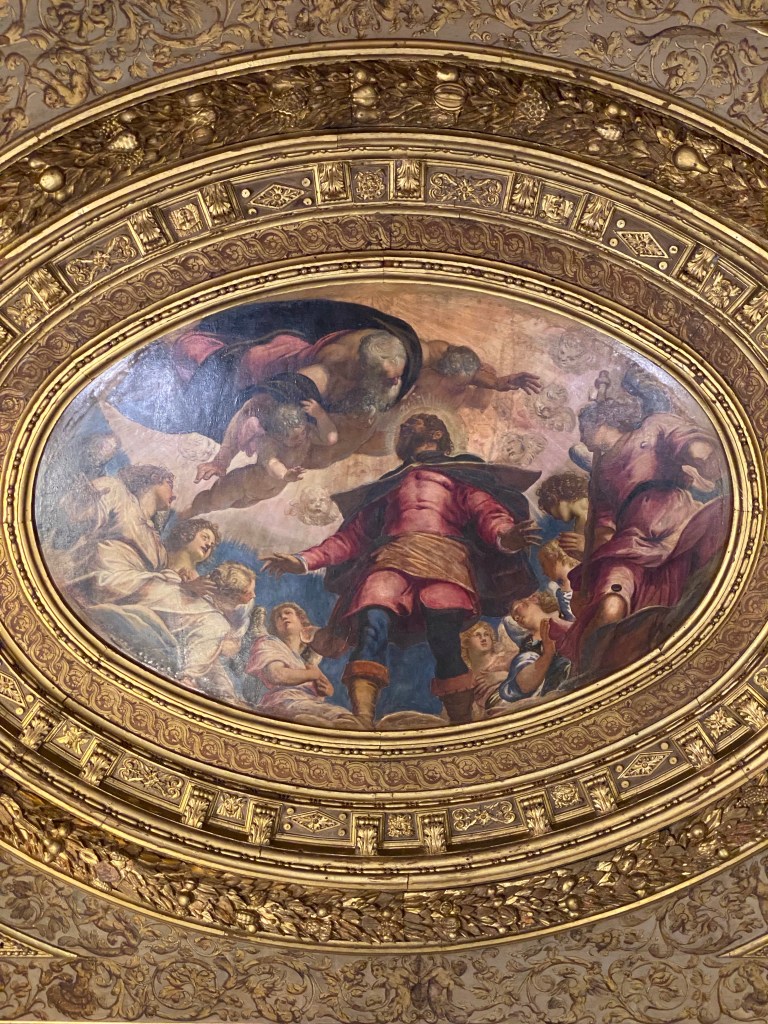
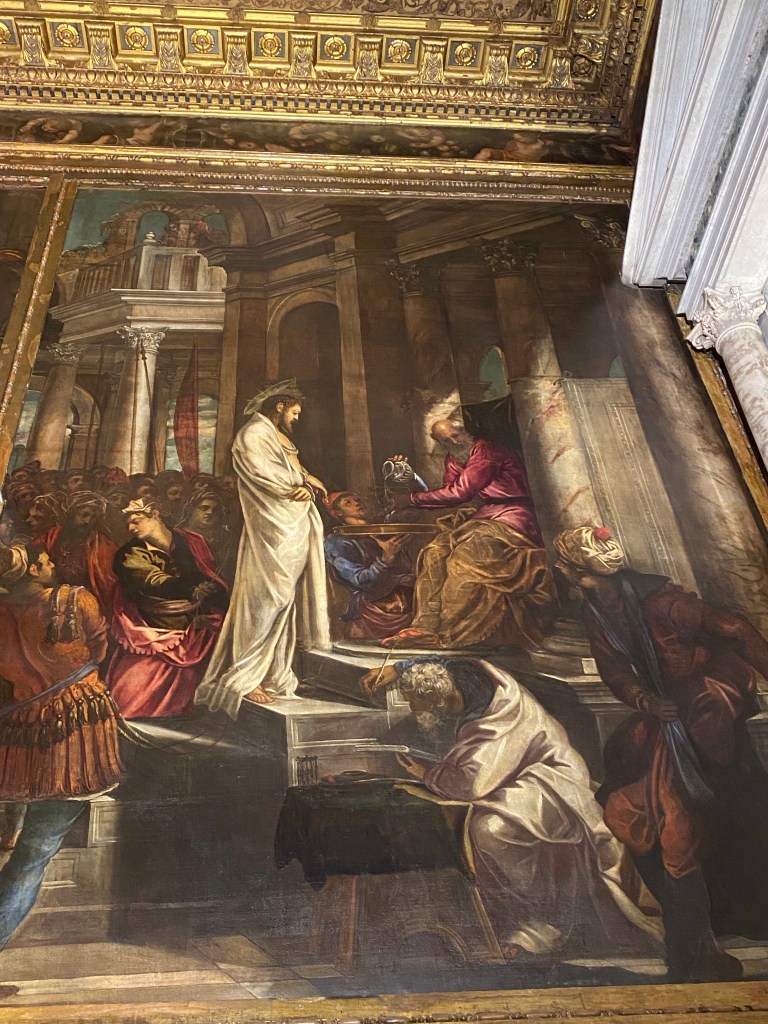
Tintoretto becomes involved in decorating all 3 halls. This work gets him in the door: St. Paul in Glory, ceiling painting in Sala dell’ Albergo, Board Room. Apotheosis of St. Rich, 1564, di sotto in su,
To begin decorating the scuola, the committee held a competition, inviting prominent artists in Italy. T was invited. They are all told to make a prep drawing of this subject, that could eventually be finished and placed in ceiling.
T. Doesn’t follow direction. He makes the finished product very quickly, in weeks, the night before the judging, he sneaks in and hangs it in finished location.
All his competitors are mad, he says, this is my gift, and the statutes of the confraternity say they can’t refuse any gift. He says, I can continue painting for you and this works. A year later, he is made a member of confraternity
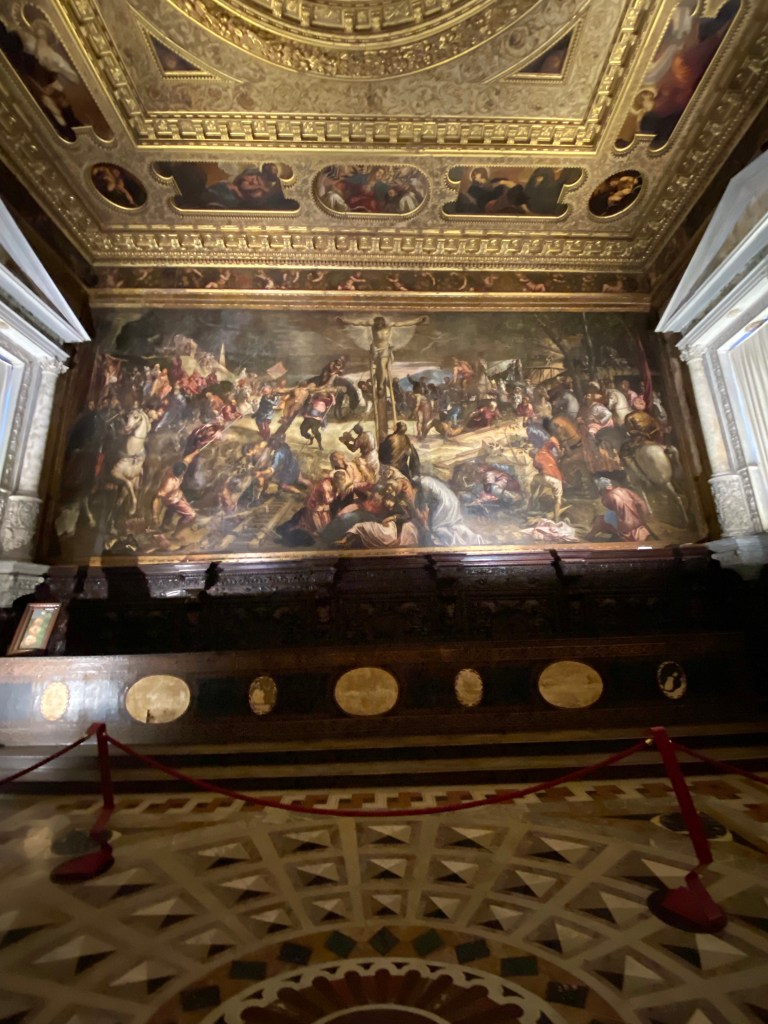
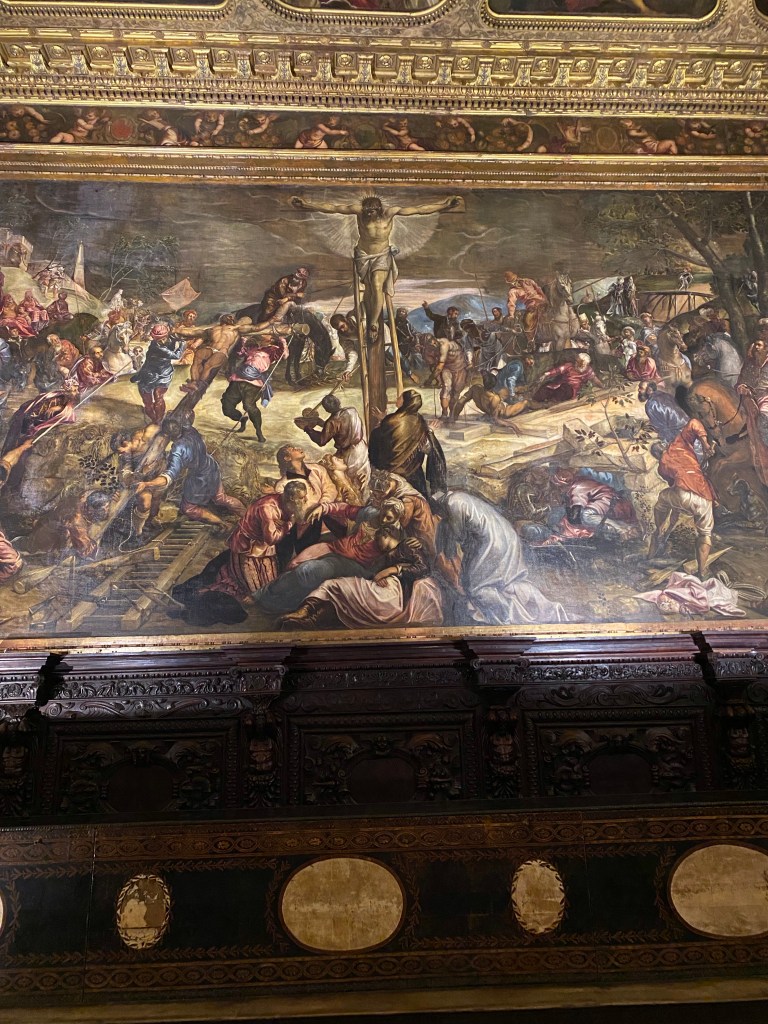
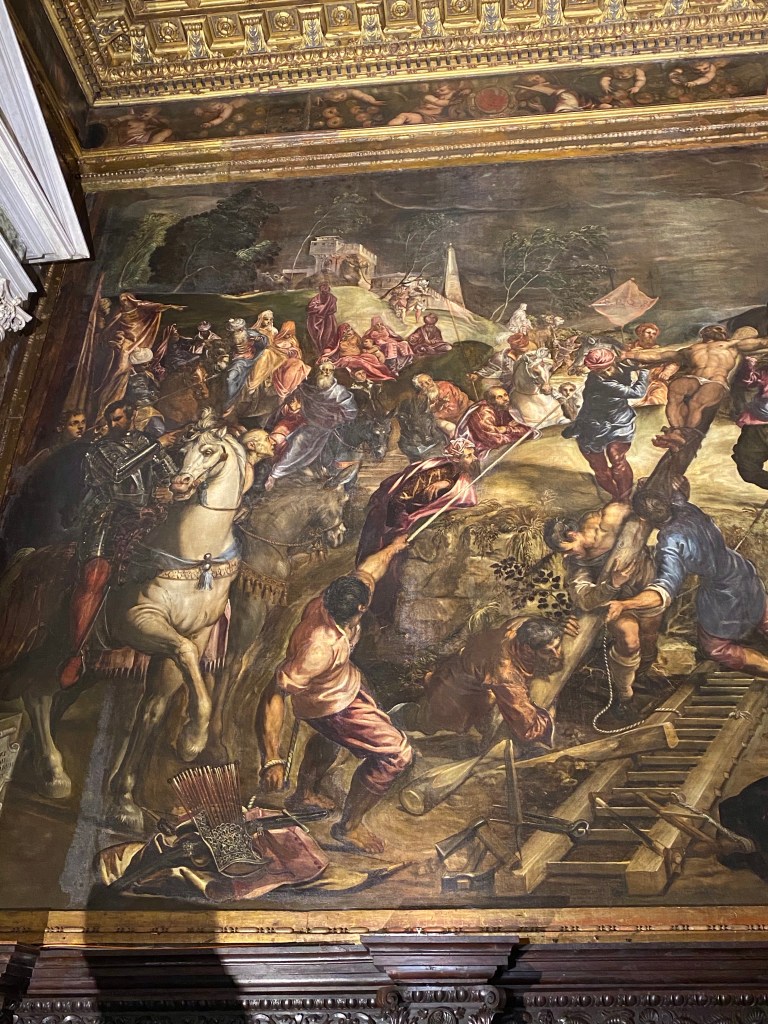
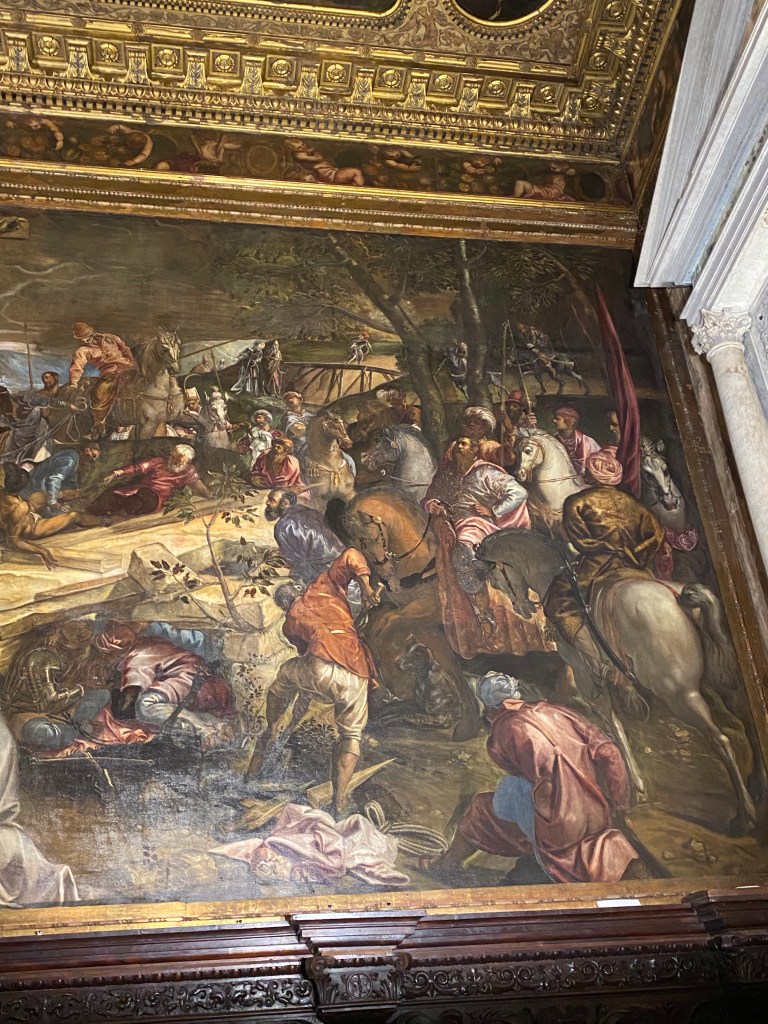
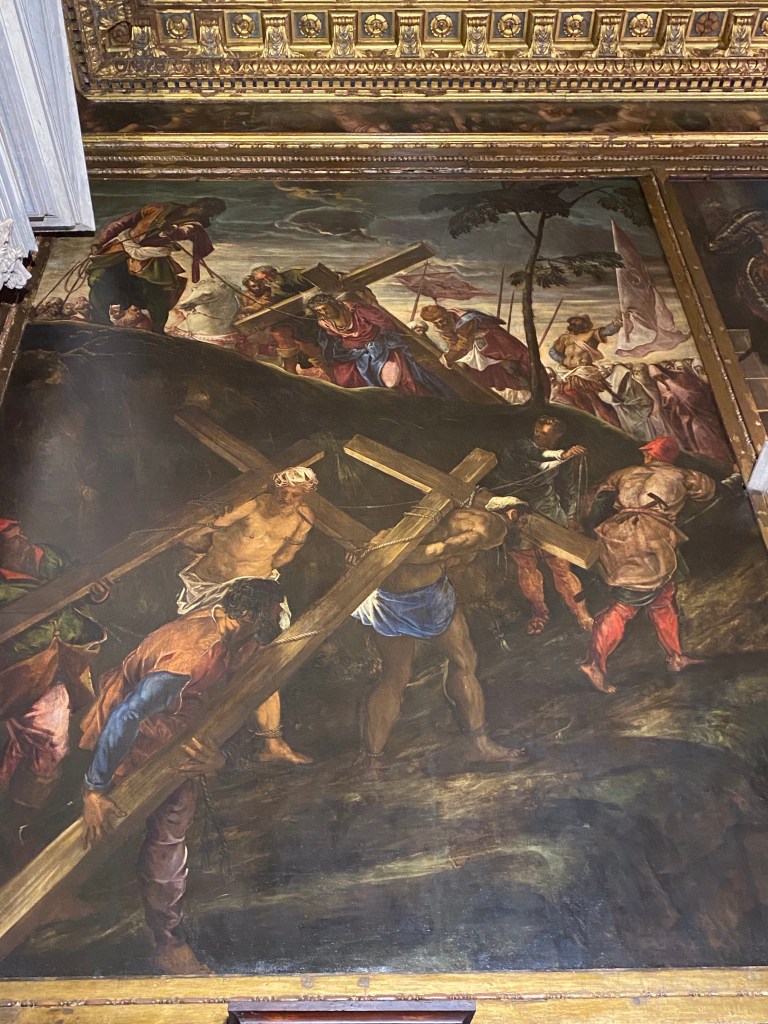
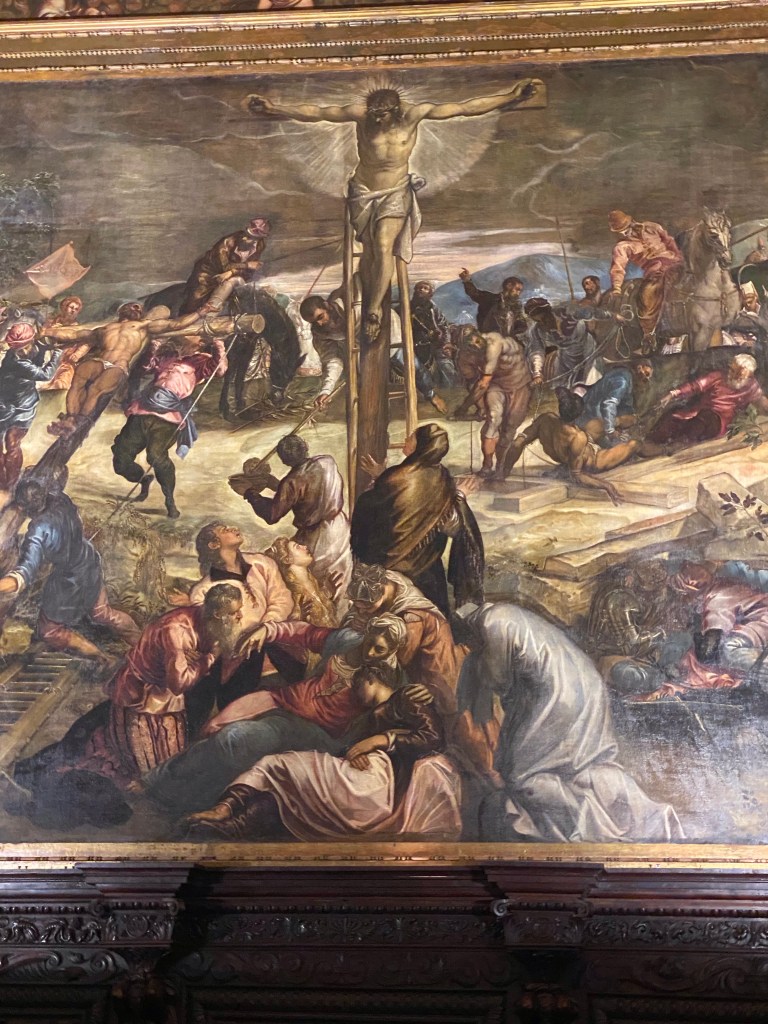
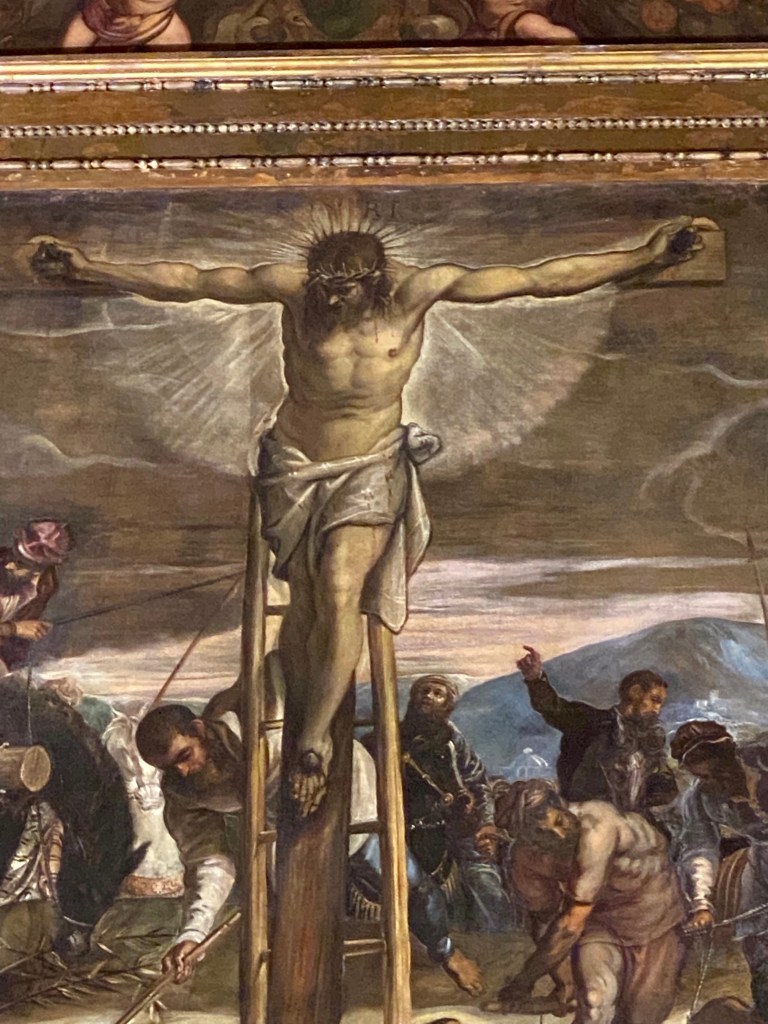
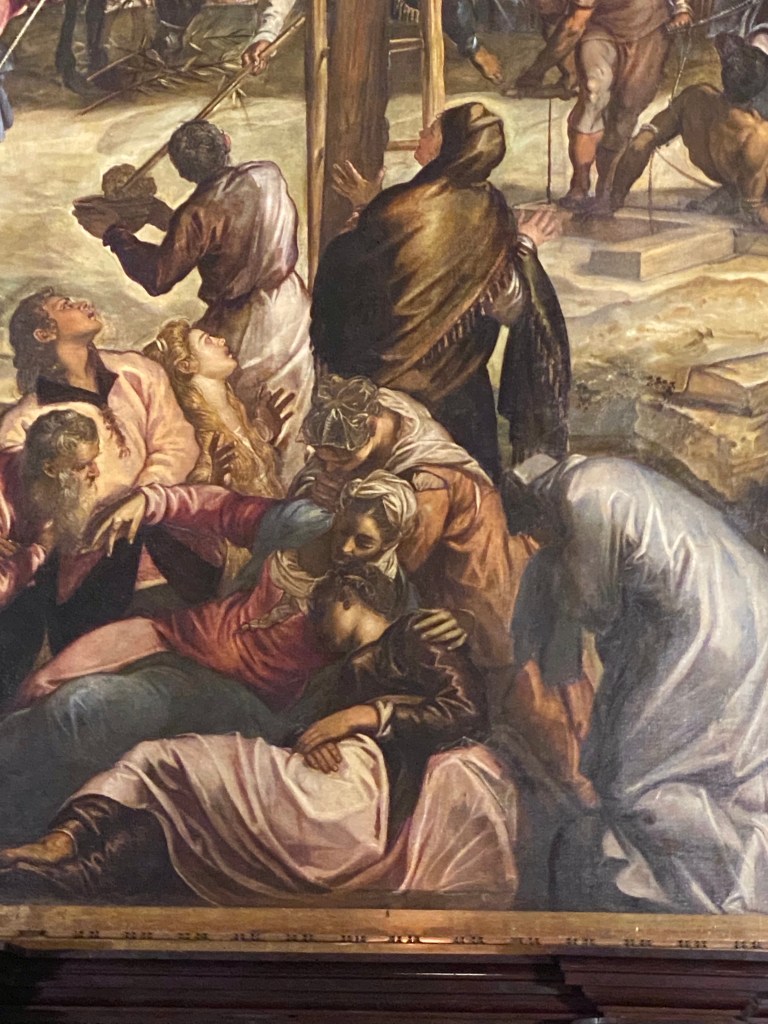
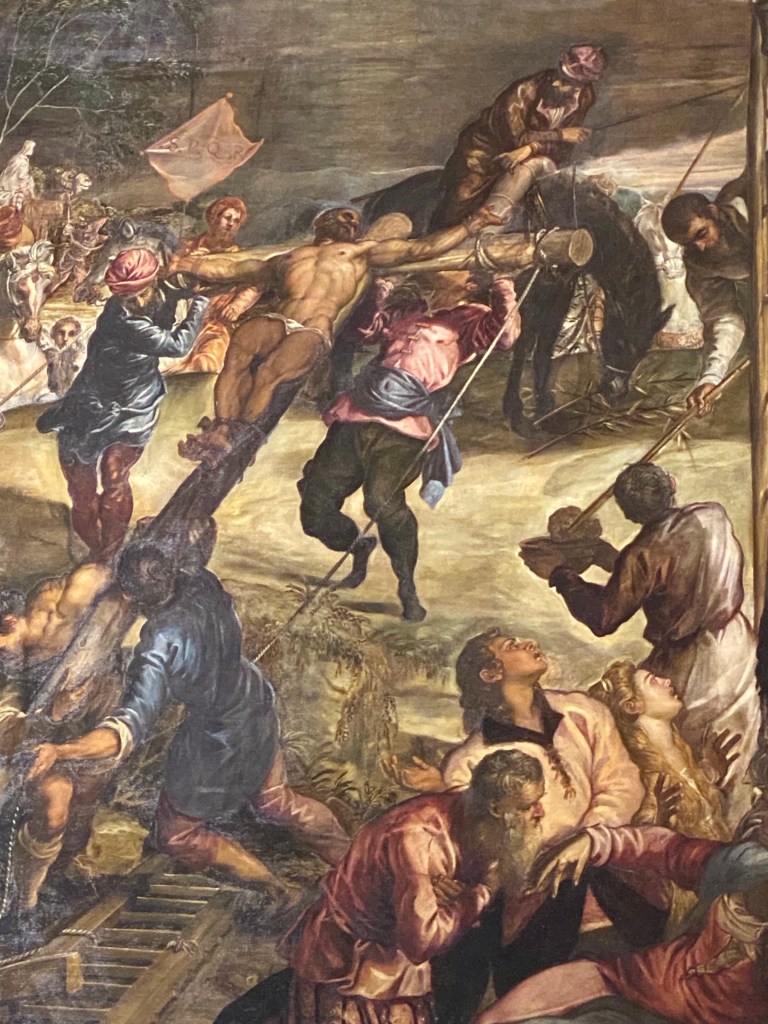
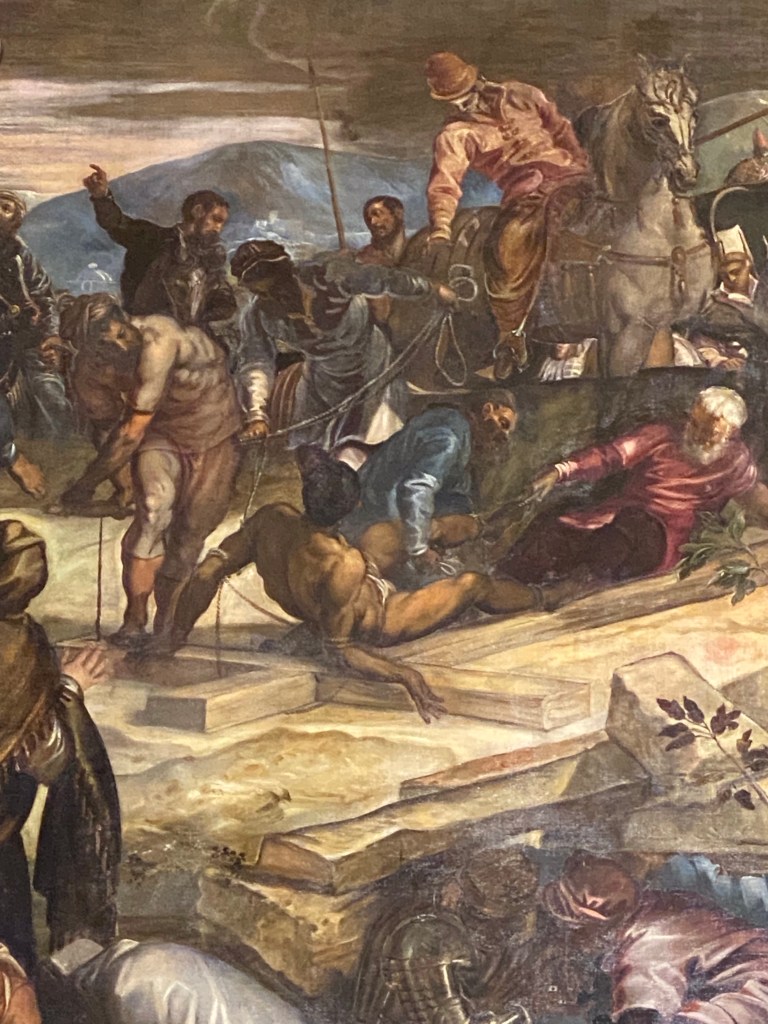
Crucifixion: on wall directly below the ceiling ptg above1564-7
Broad composition, large space, above benches where committee members would sit
Hundreds of figures, but very organized and balanced.
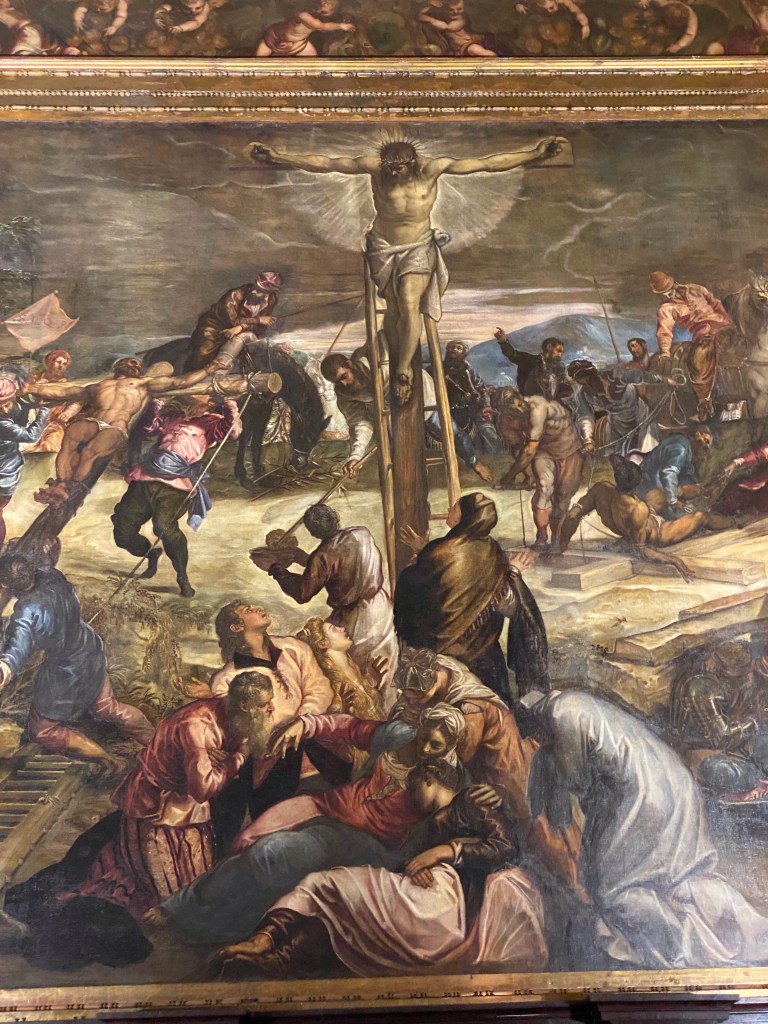
X on Cross at center, with mourners below. Virgin swooning being held up by other Mary’s . Magdalene calling out
Top of Canvas, we see X right up at front of space, cross is set into space, but at top, he seems to be projecting out to confront us
Incredible halos emanate from his body
On left, the ladder is foreshortened, the cross is on same diagonal. One of thieves who is crucified.
On X’s right side is the repentant thief
On left side of X, bad thief is being attached to cross
All the angles lead us to center
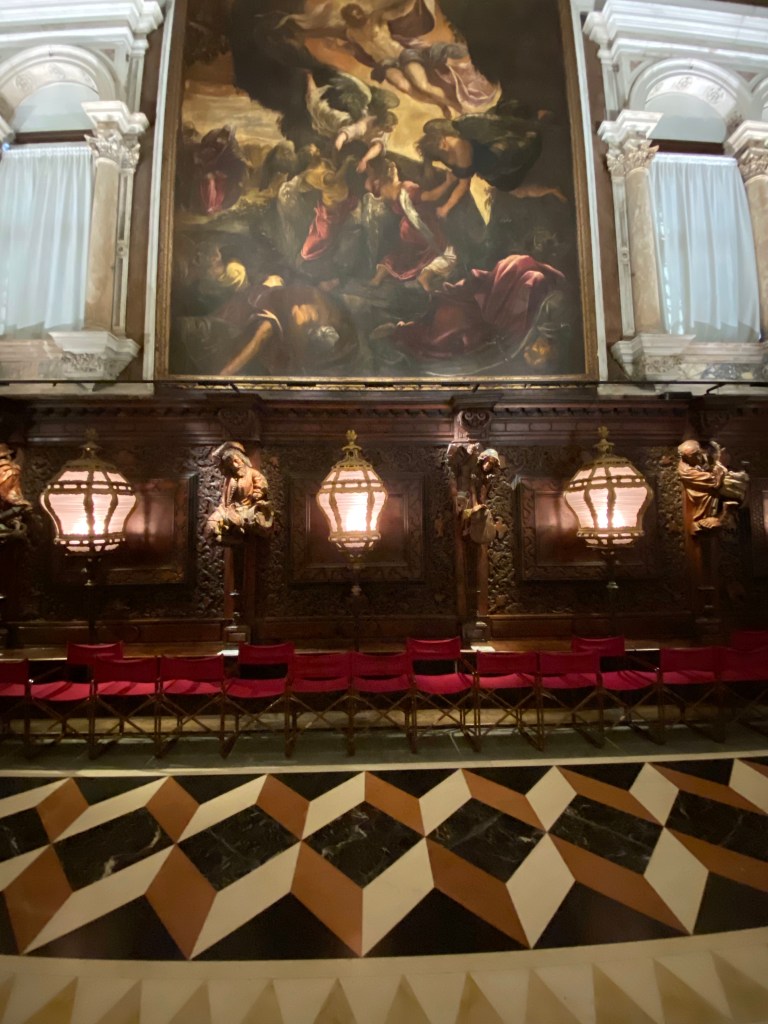
Upper meeting room:
T. Gets contract to paint the ceiling. I will be your official pier, produce 3 canvases for you per year, I’m on retainer. So all ptgs were done by him and in situ.
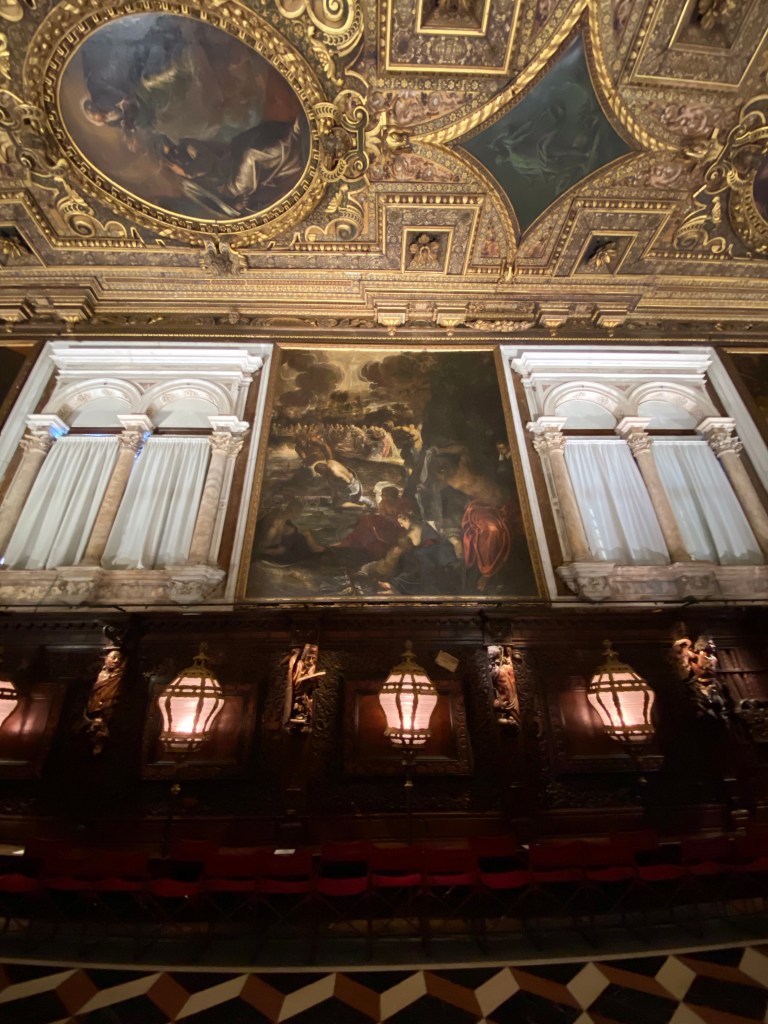
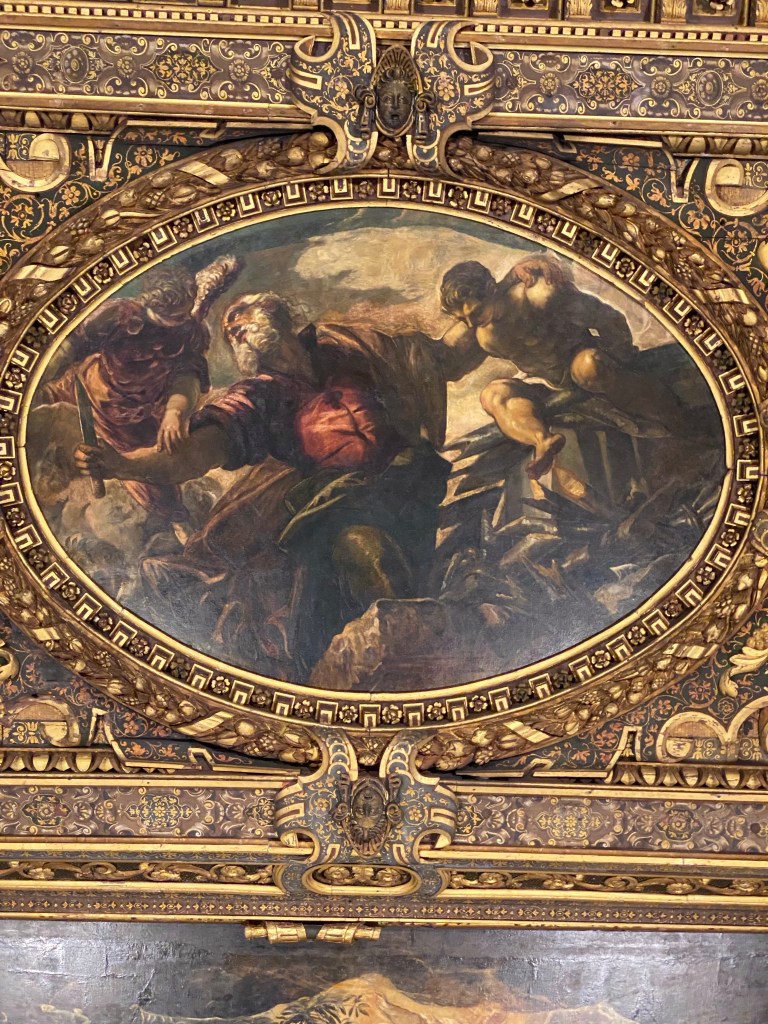
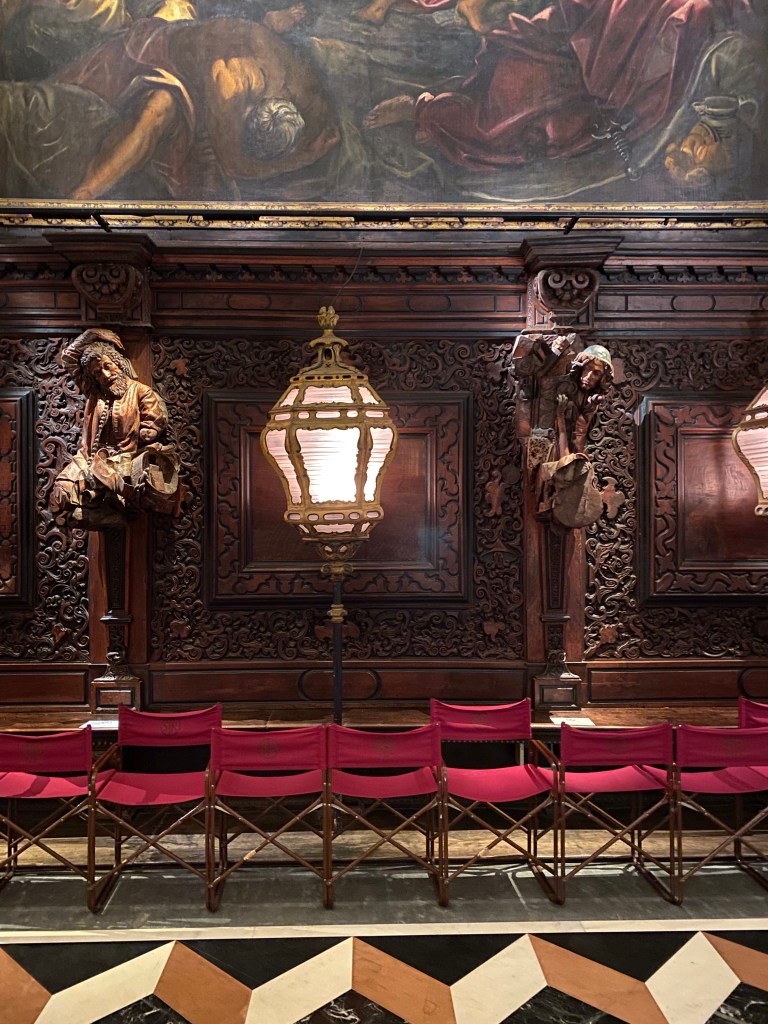
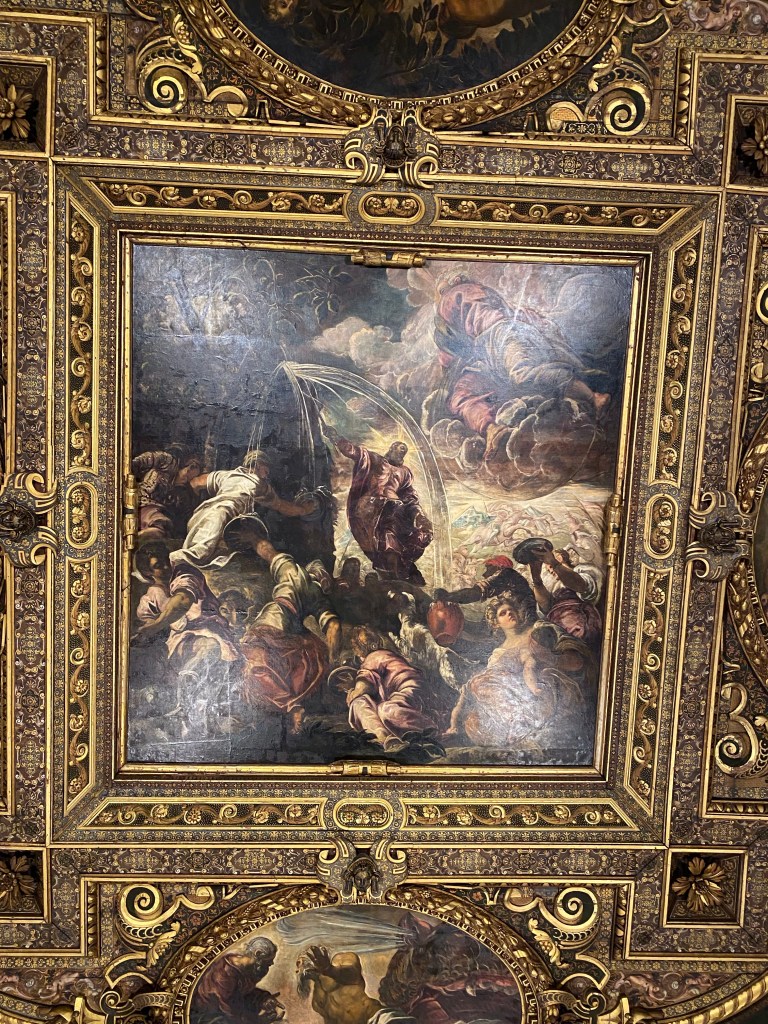
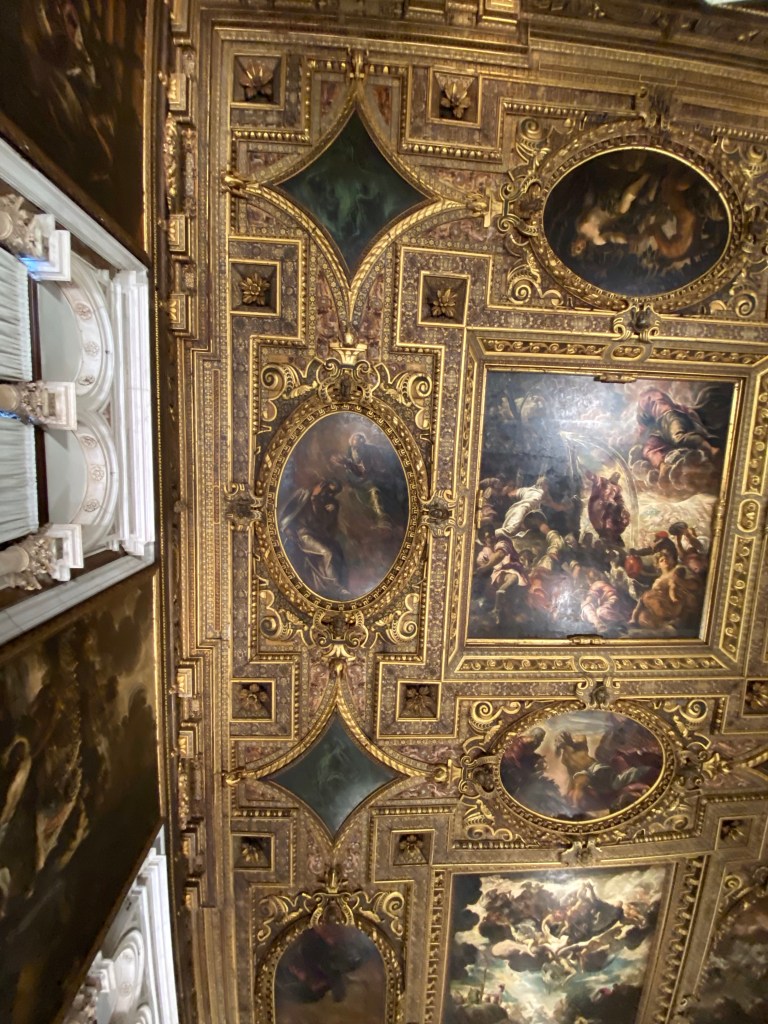
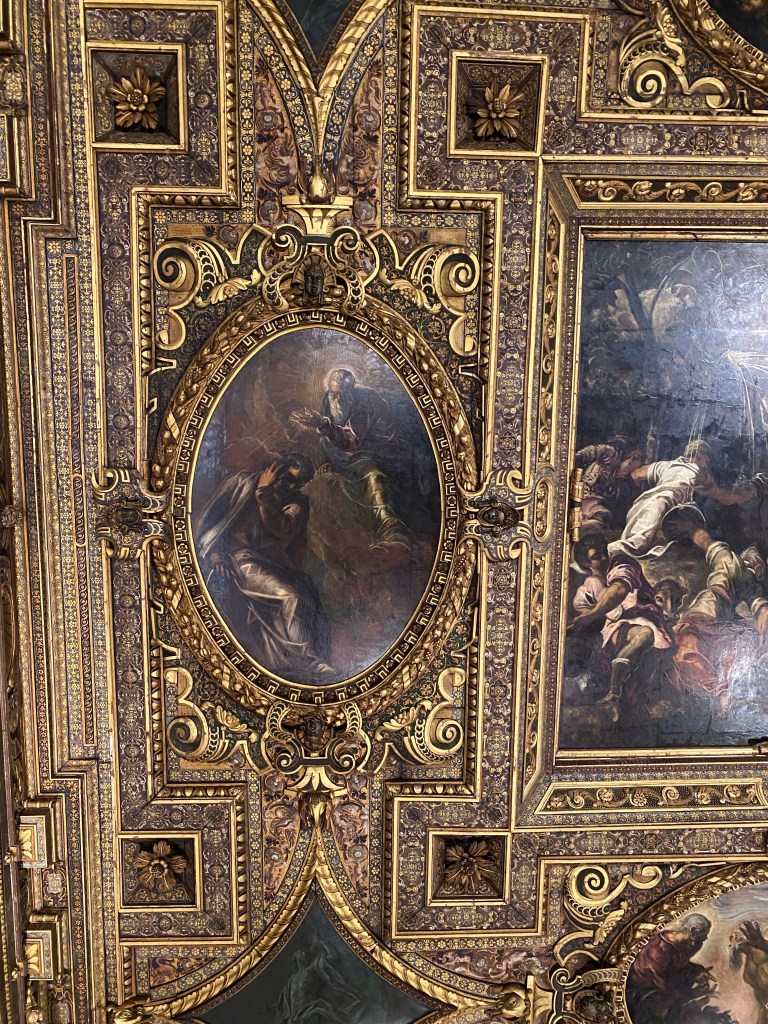
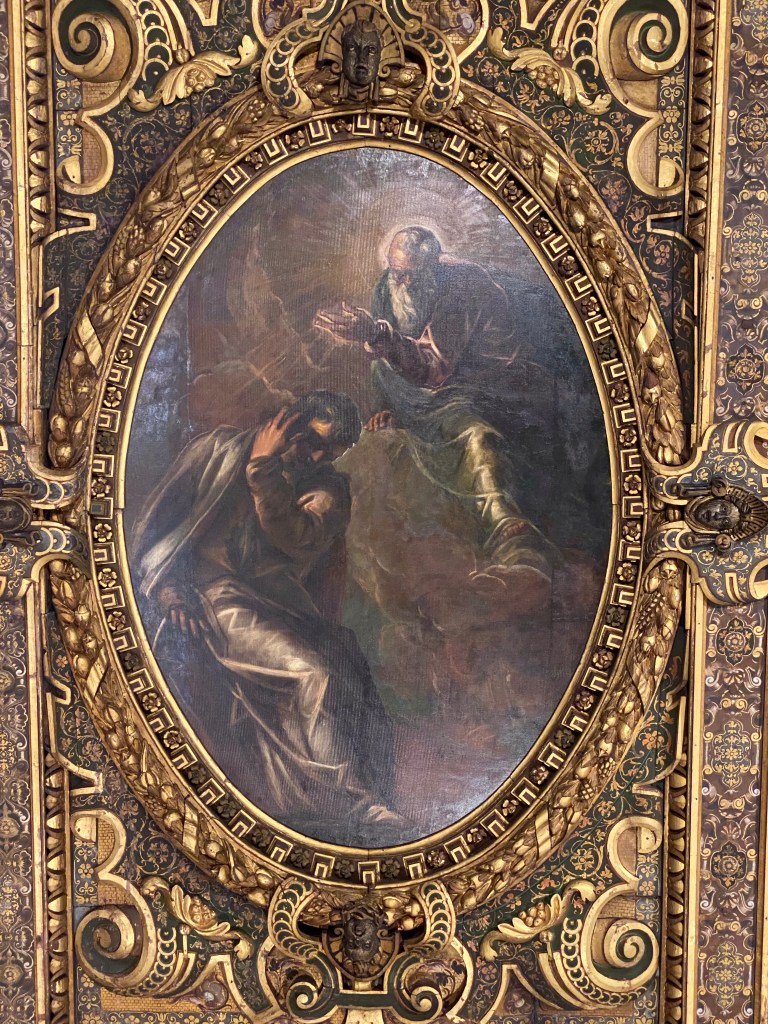
Elaborate woodwork, ceiling
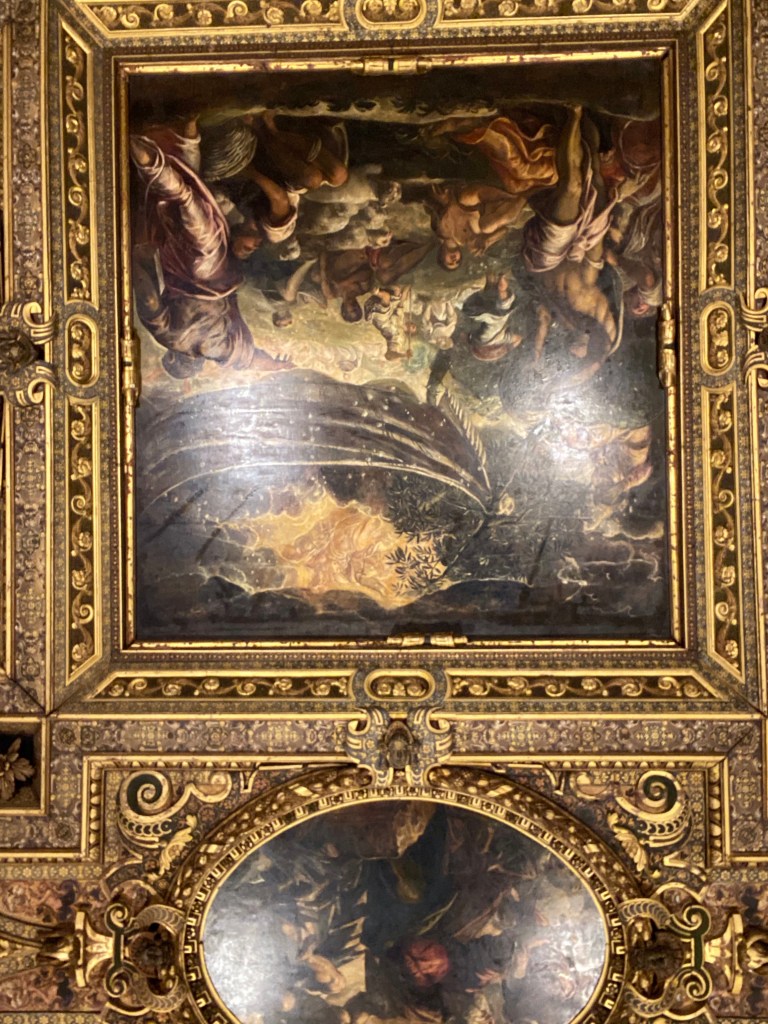
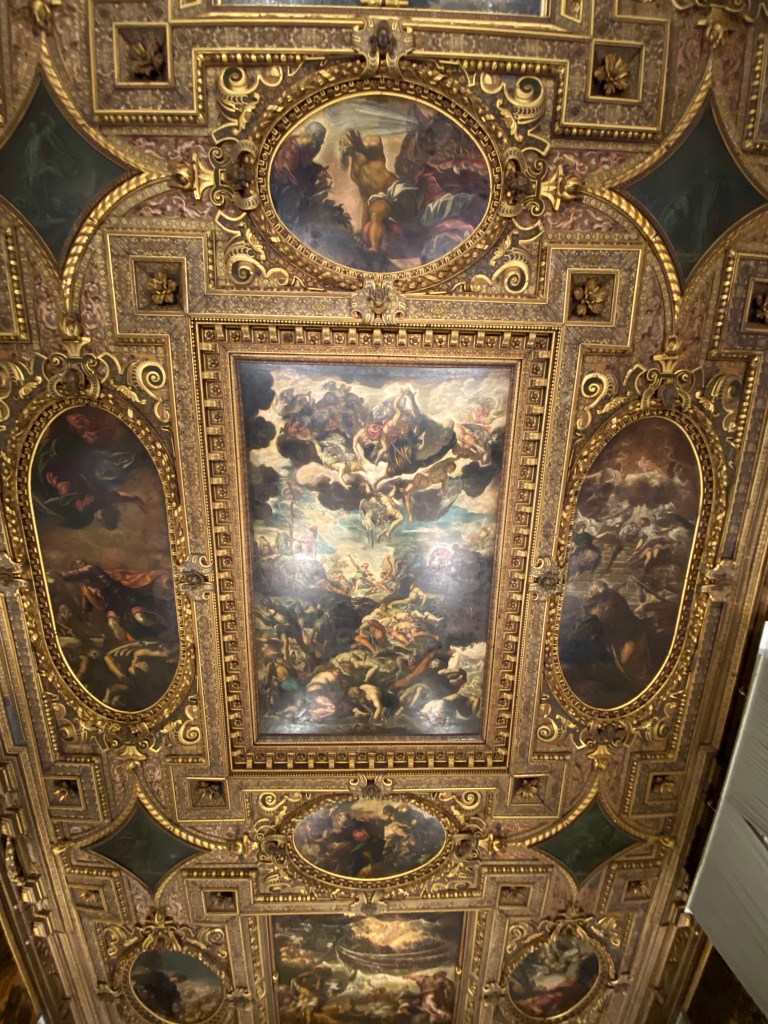
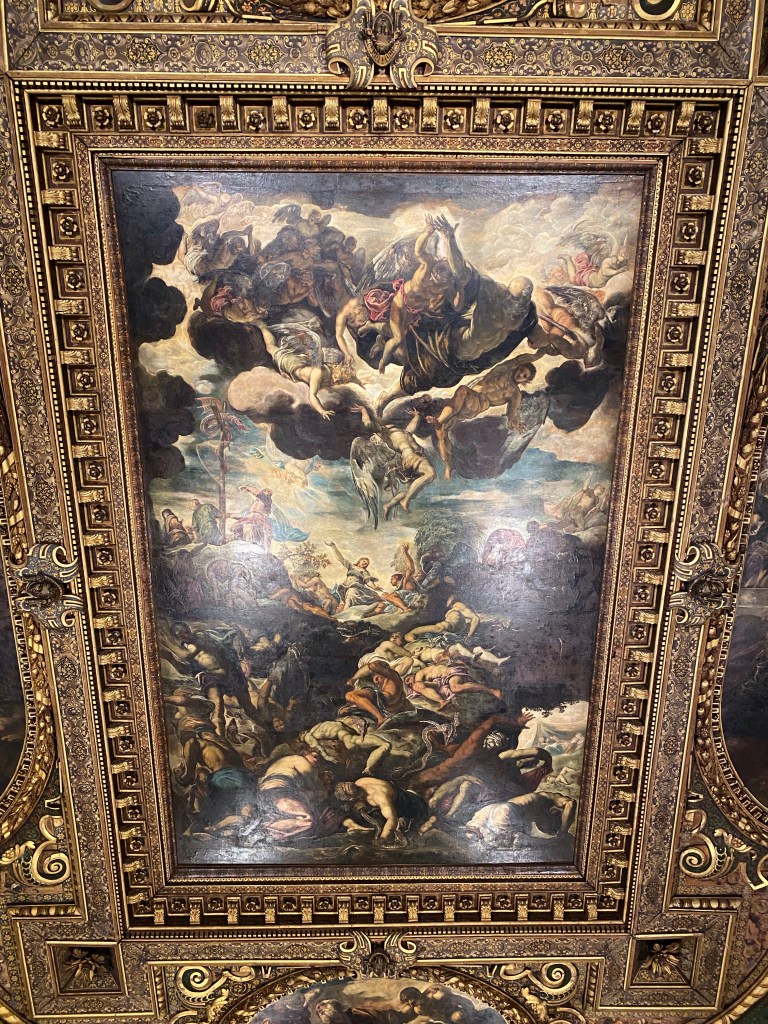
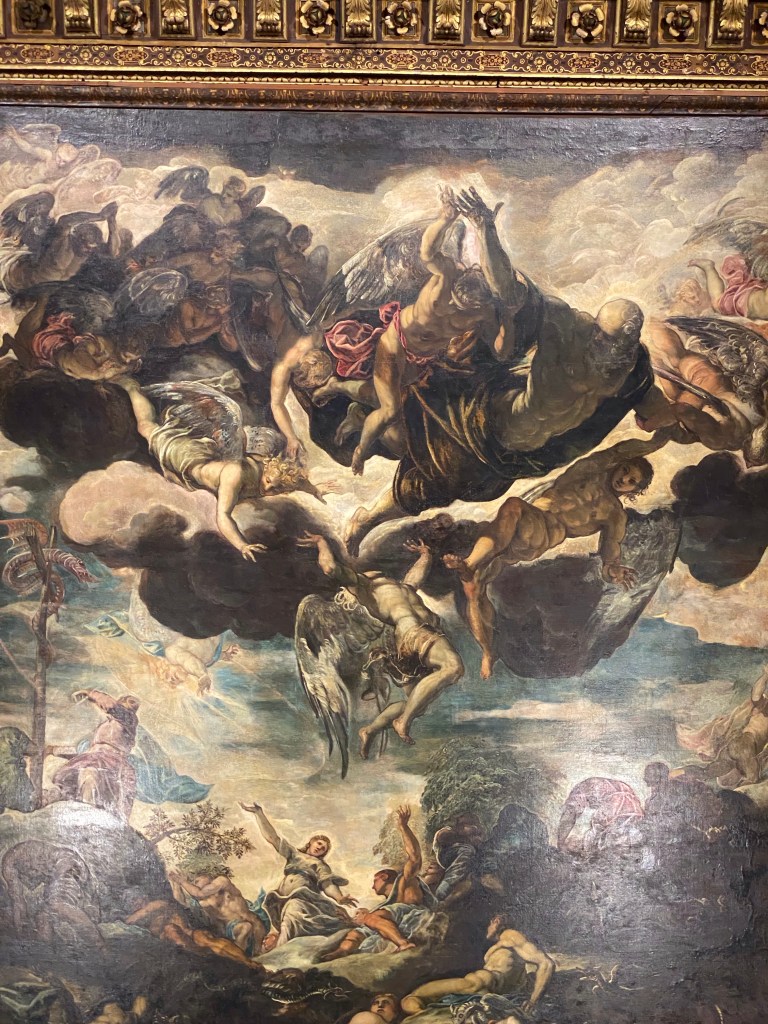
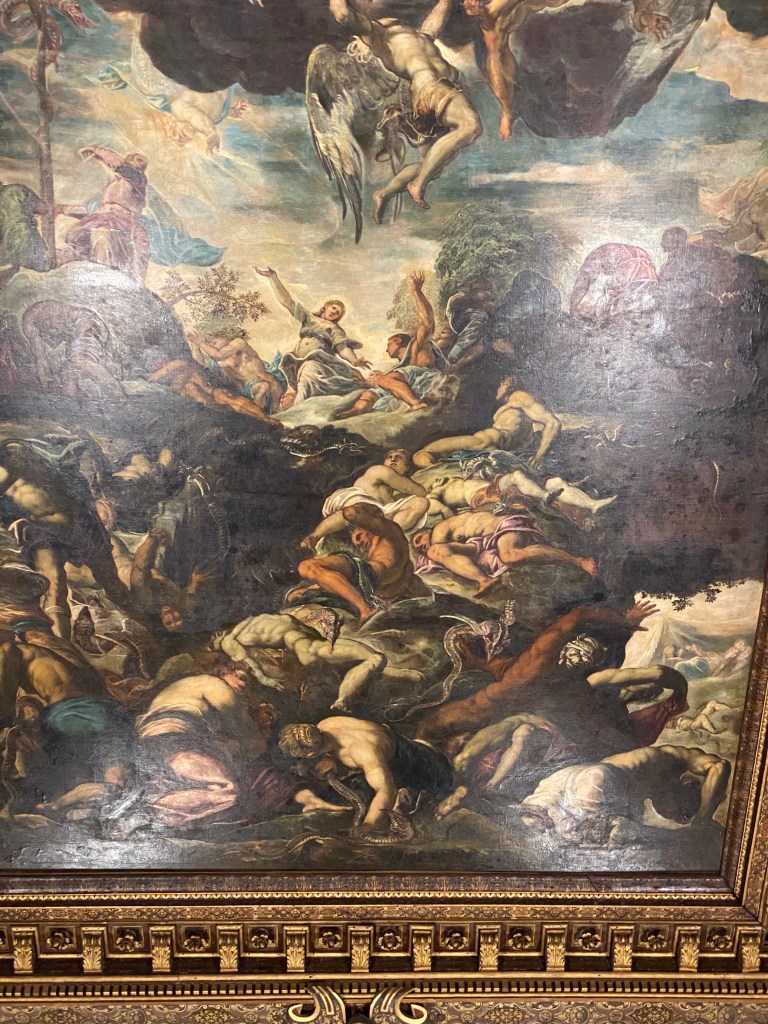
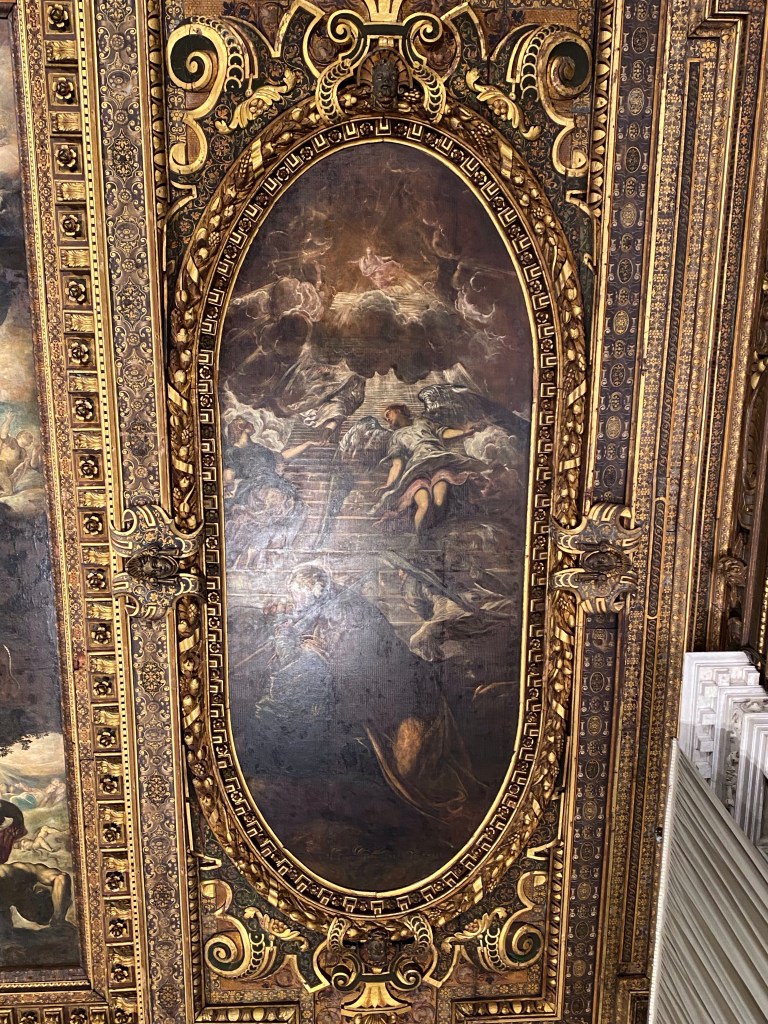
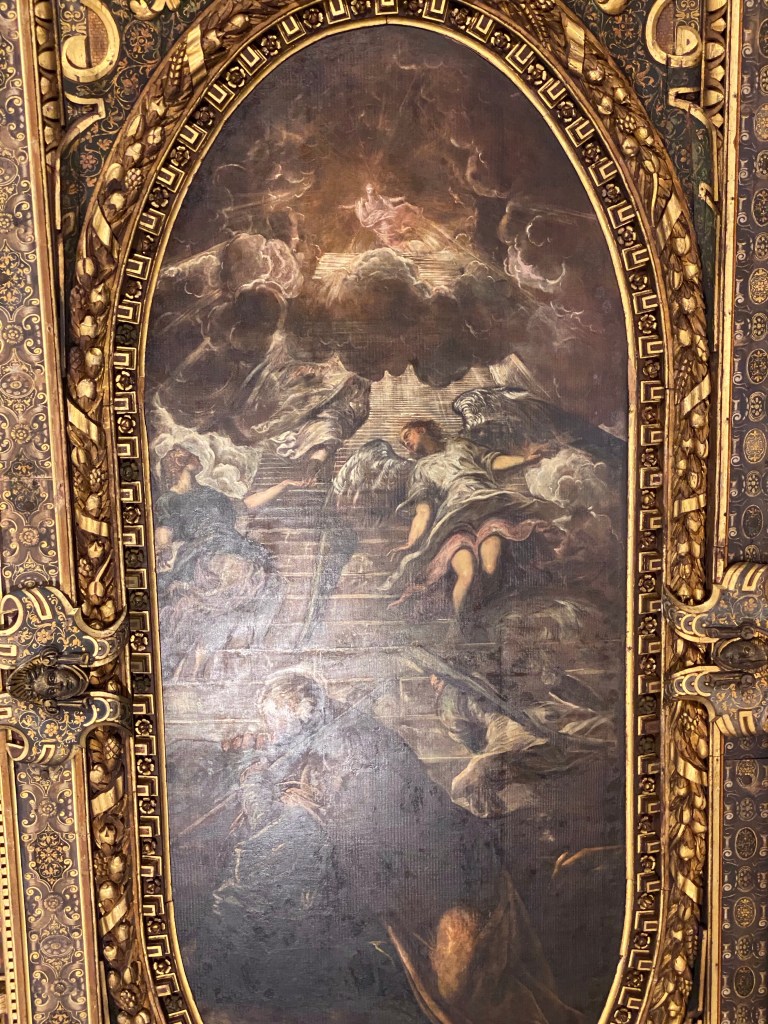
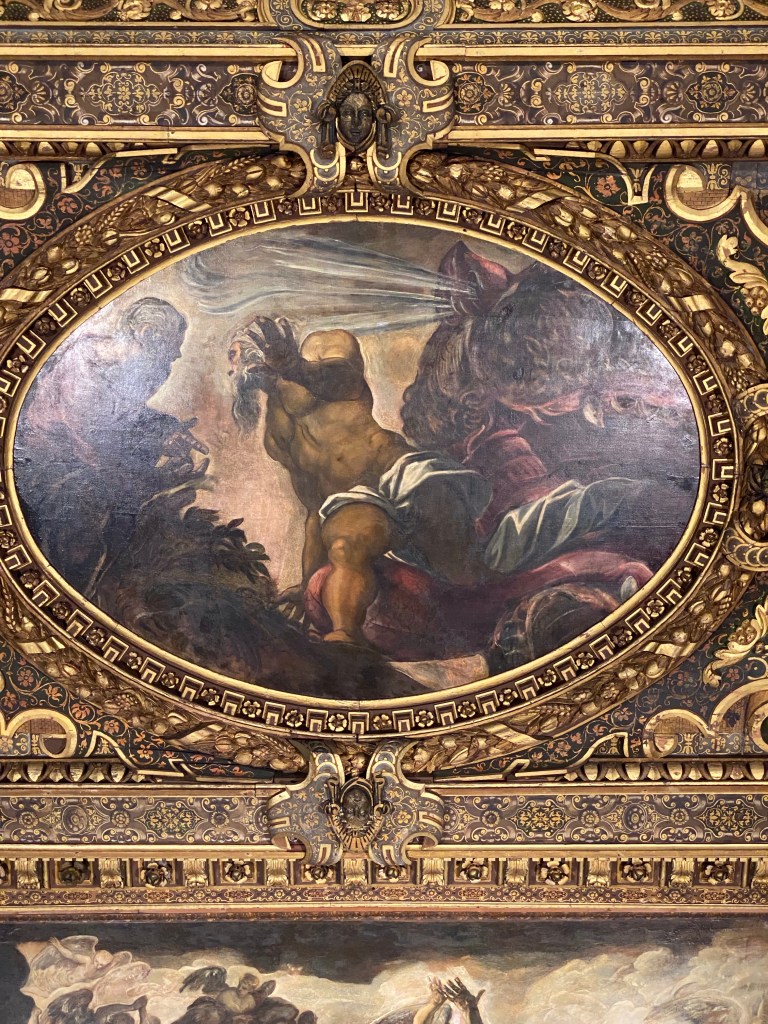
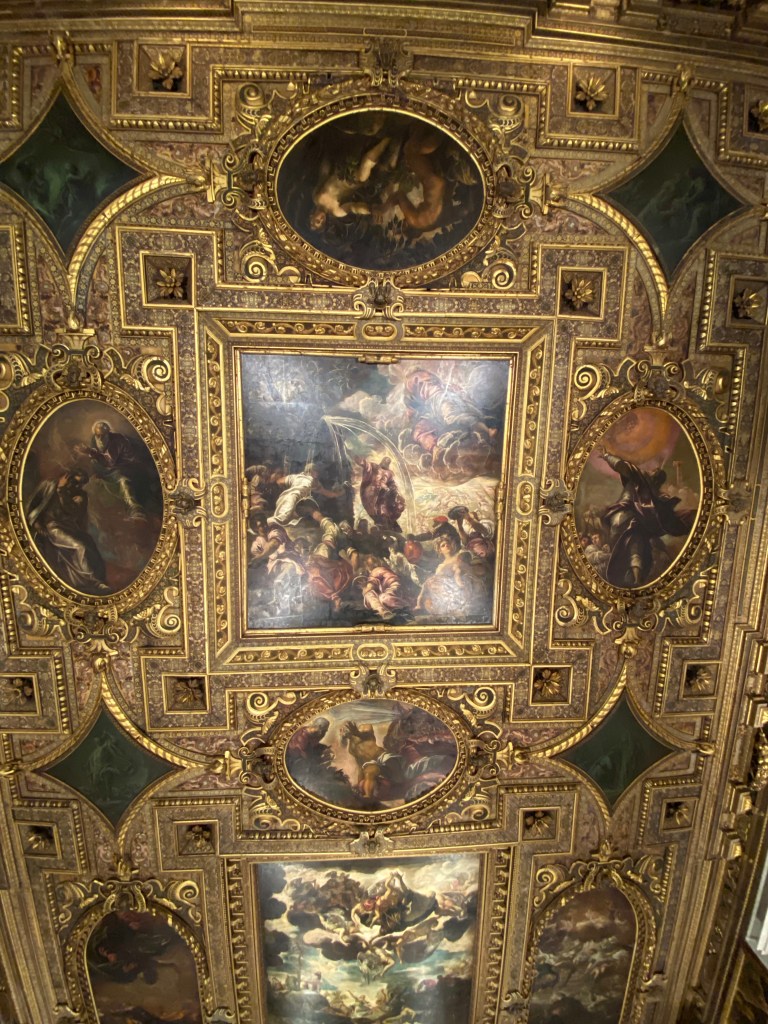
Central, largest, The Brazen Serpent. 1575-6 We see how T uses di sotto in su
Seems like maelstrom of bodies falling on us. All of ceiling ptgs are from old testament. Moses is in desert with Israelites, god has sent plague of fiery serpents.
Creatures biting bodies who try to free themselves from these snakes
God tells Moses to make a serpent from bronze (brazen) and place it on tall pole. When Israelites look at it, they will be saved. Prefigures Crucifixion. Tall wooden poles. Lives saved by looking at bronze serpent. Like lives will be saved by X’s crucifixion
Chiarascuro again. God figure in shade, silhouetted. Human anatomy in various poses, like Last Judgement
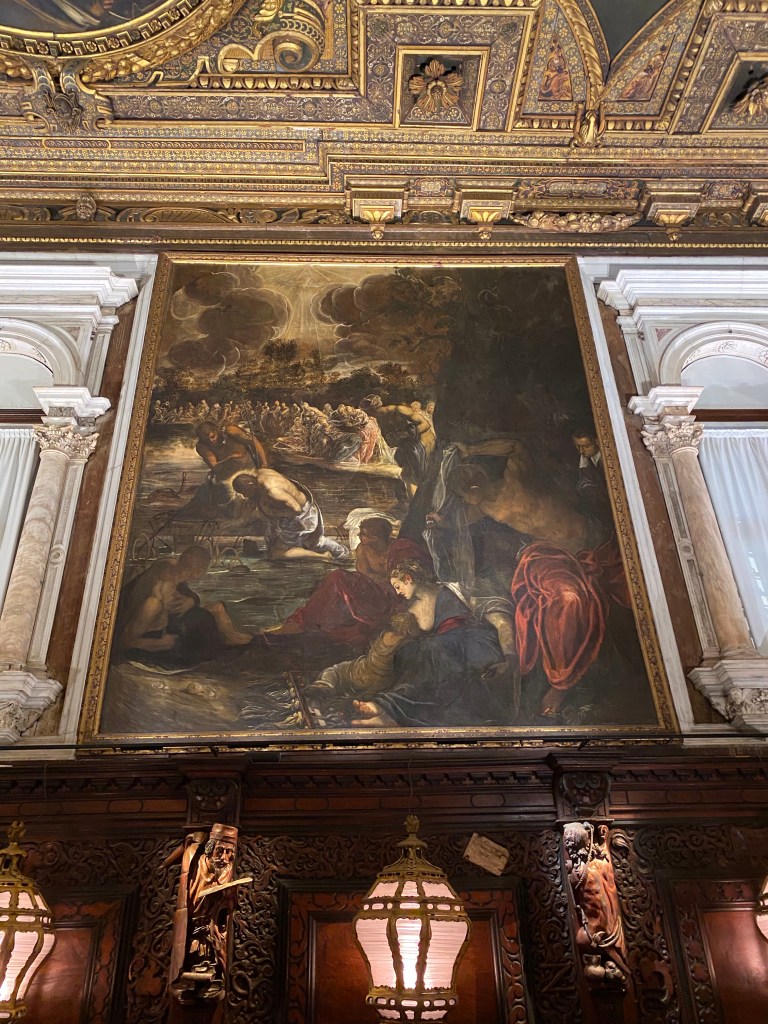
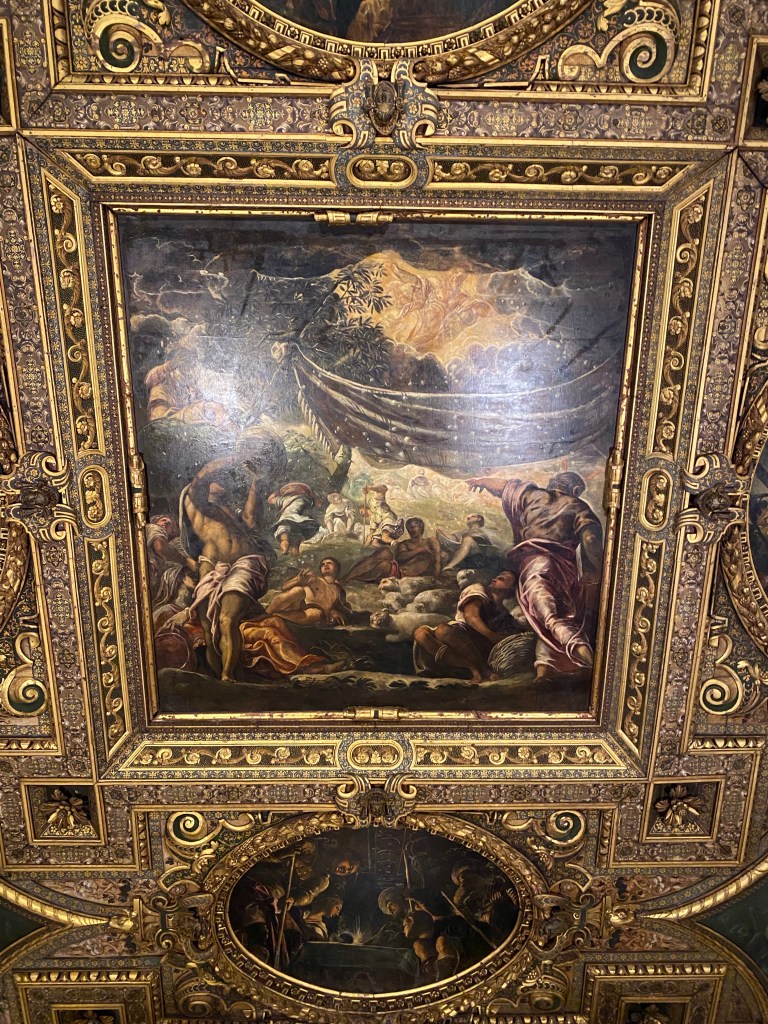
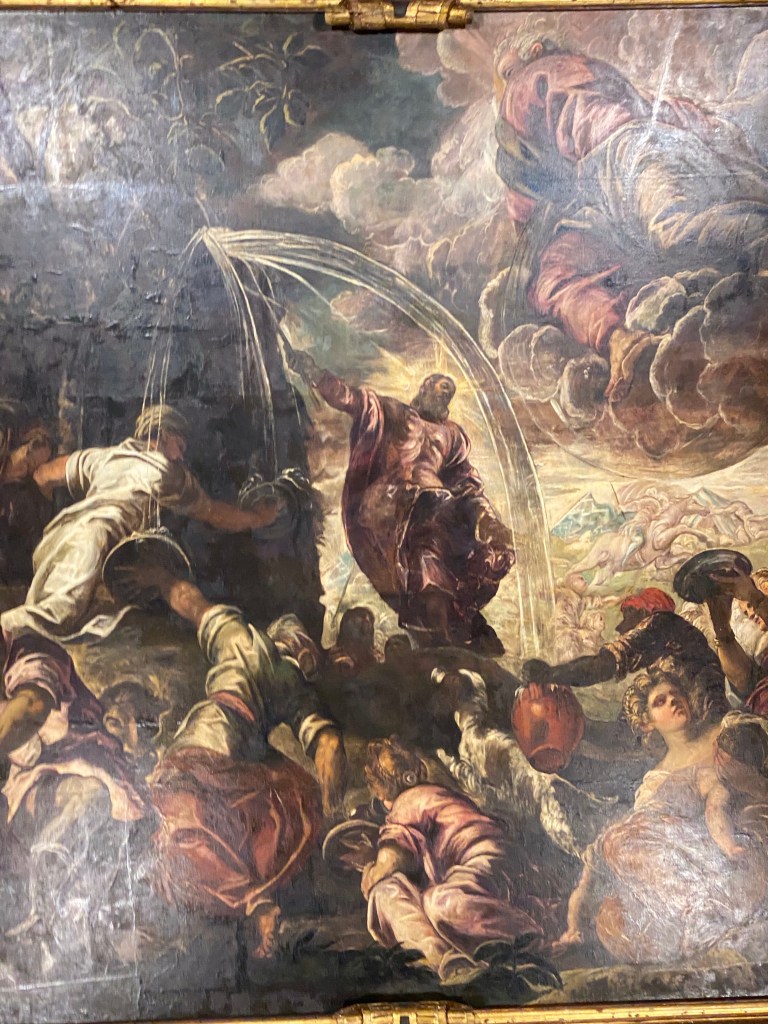
Moses Striking the Rock, 1575, God tells Moses to strike rock and a spring bursts forth, Mose and Israelites in desert, dying of thirst
Streams of water gushing forward, remove that jug, the water would hit us
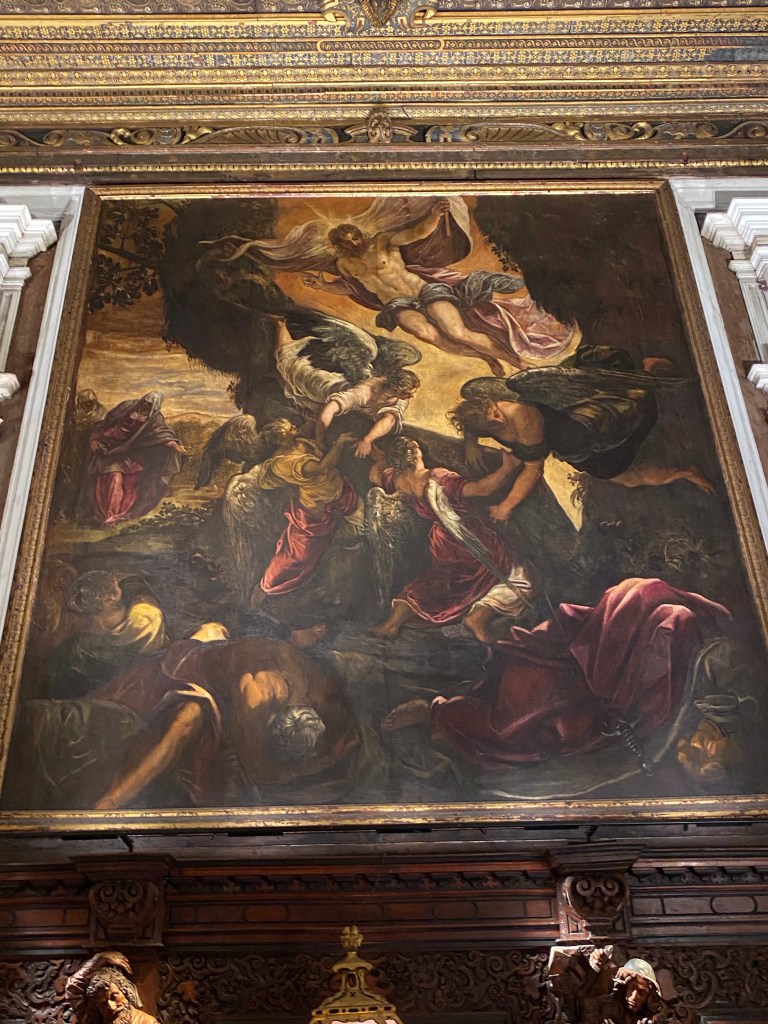
Fall of Manna, 1575, God sends heavenly nourshishment to starving people. The manna could fall on us it seems
These ptgs are old Testament subject
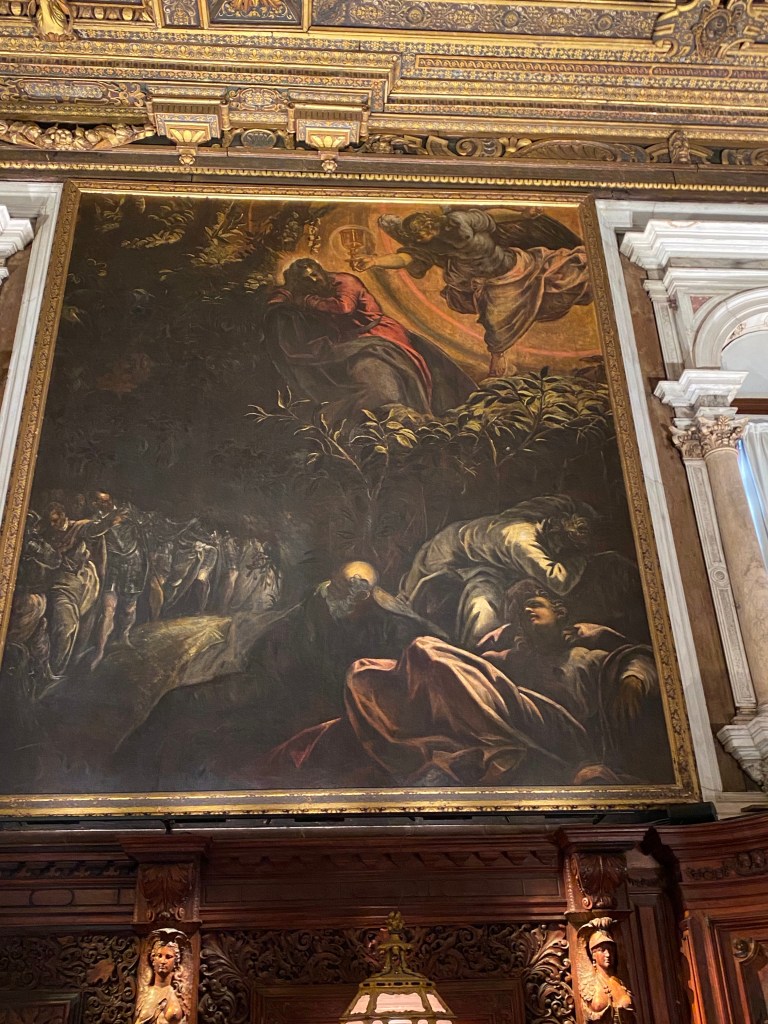
On walls, scenes of Life of X from New Test.
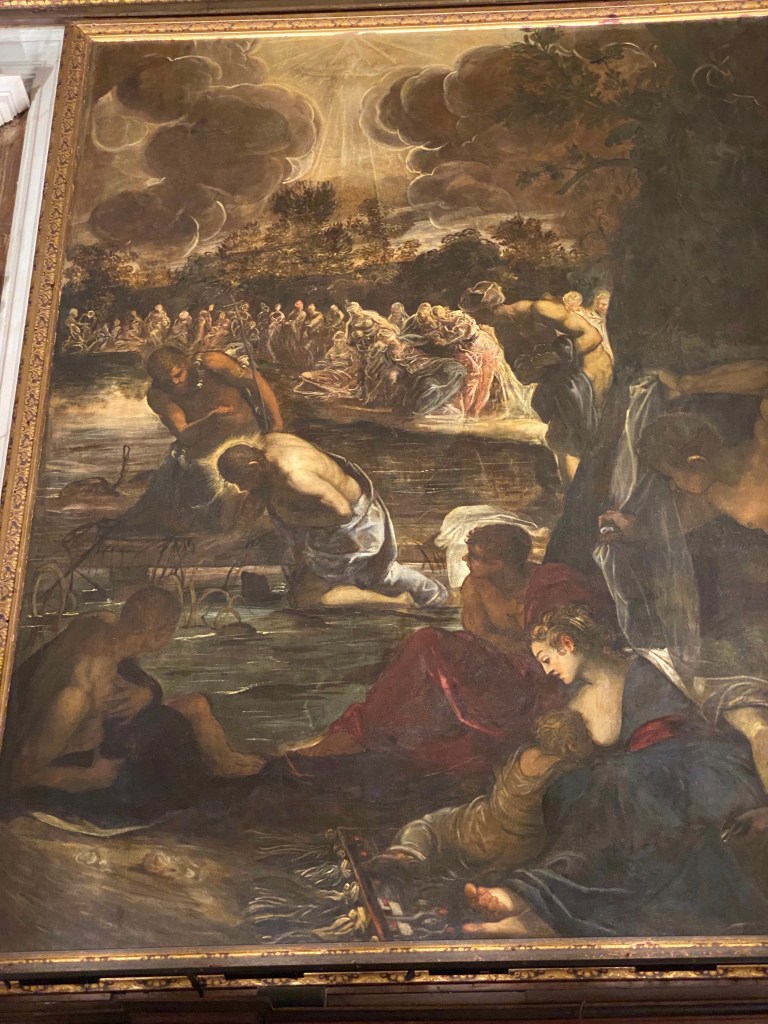
Left wall, Baptism of Christ, 1579-81, healing power of water. J the Baptist, night time scene
Figures quickly painted, more like drawing in paint
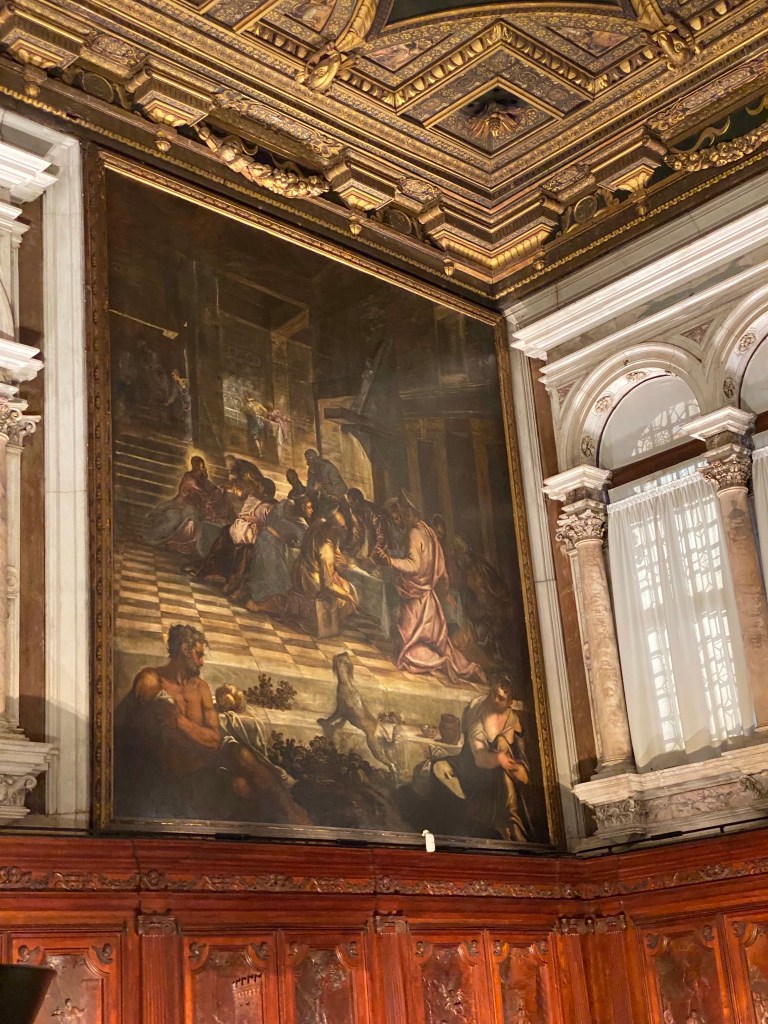
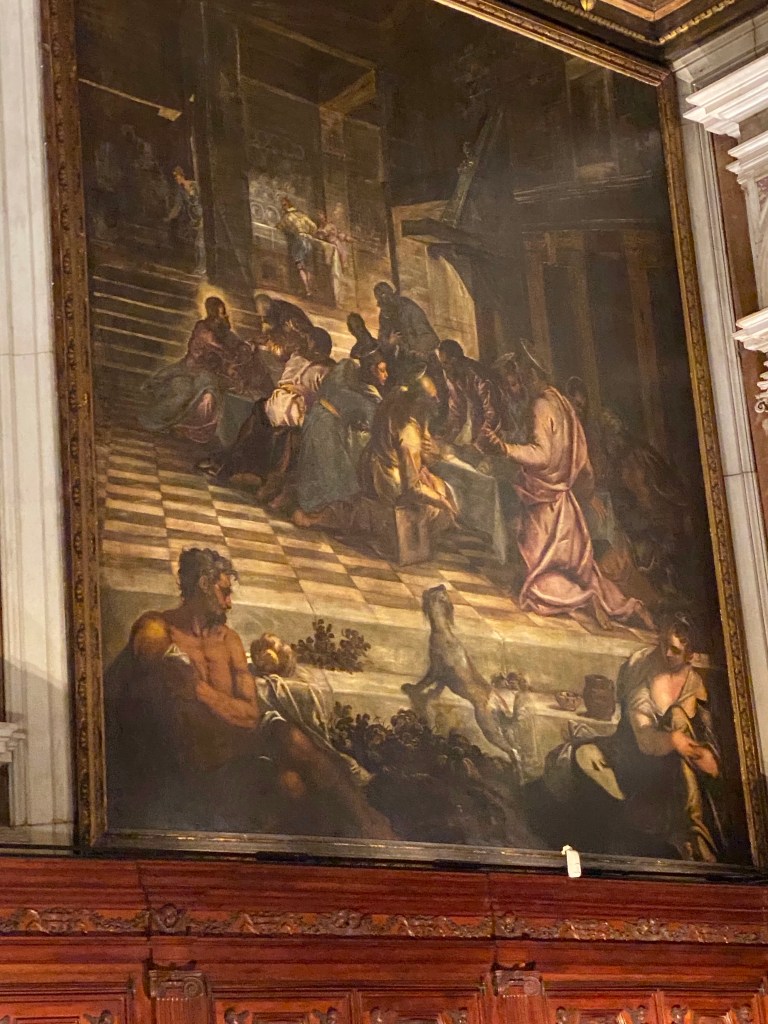
Last Supper 1579
Theme of nourishment, from God. Think of Leonardo’s Last Supper, T’s is very different , different proportions (narrow) so can’t have horizontal composition, but at angel, disciples all around table. Christ is furthest in depth with bright halo.
See figs at foreground, aim of confraternity, to help the poor, to provide food etc for them, the figures here, godlike figures
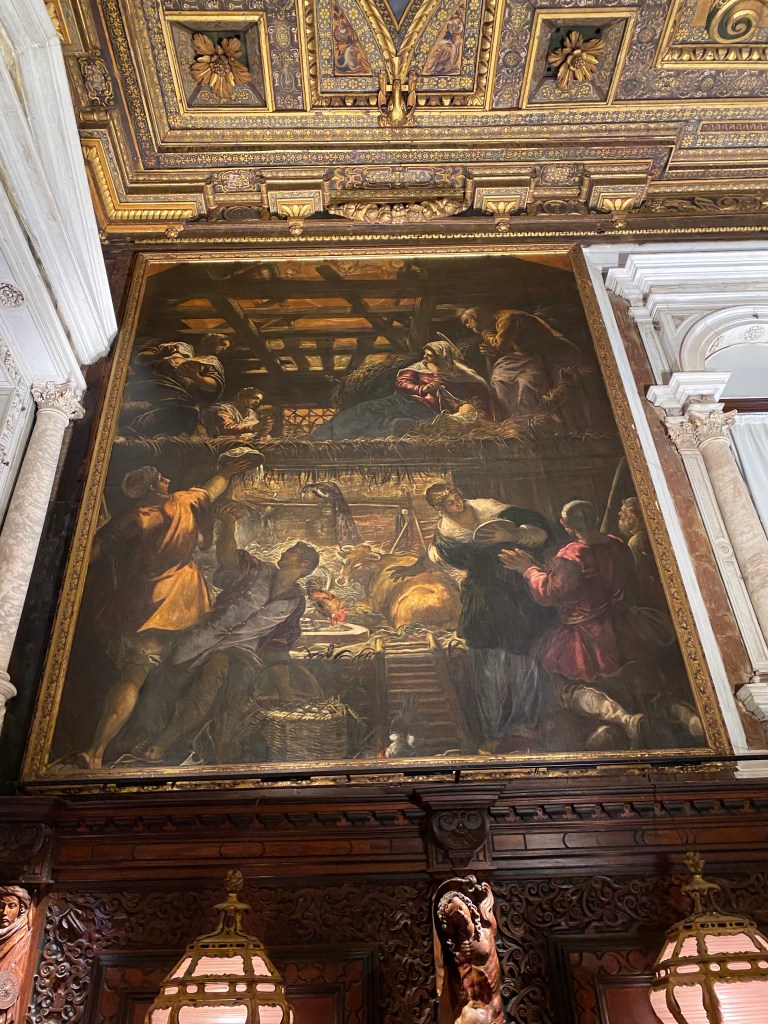
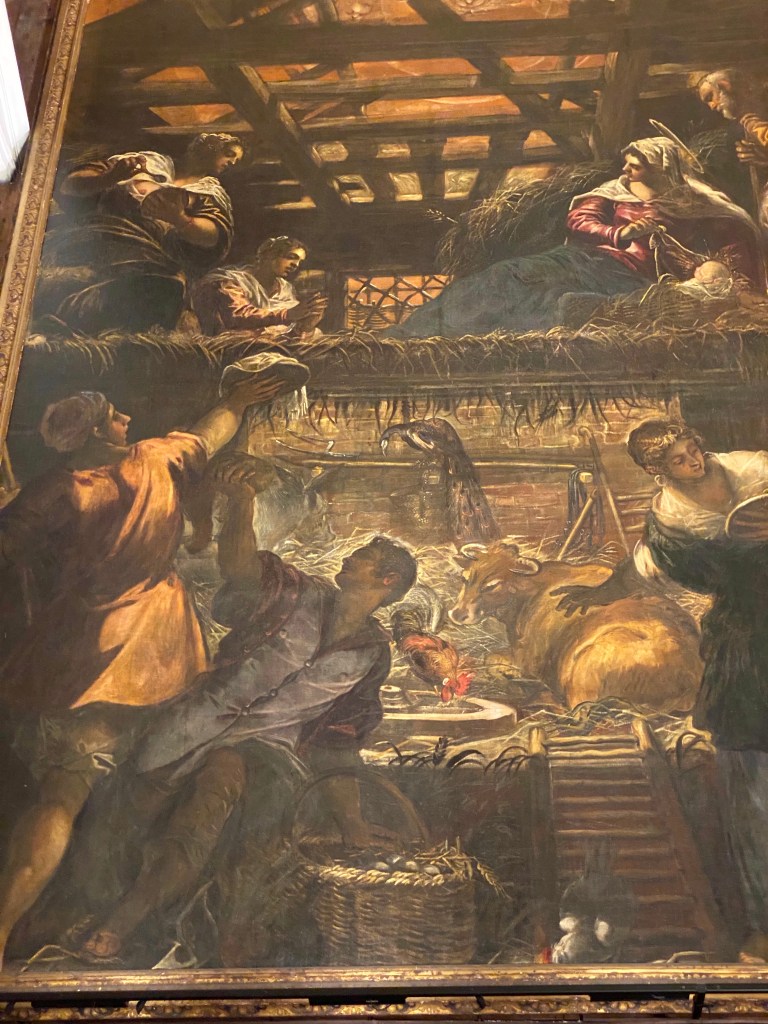
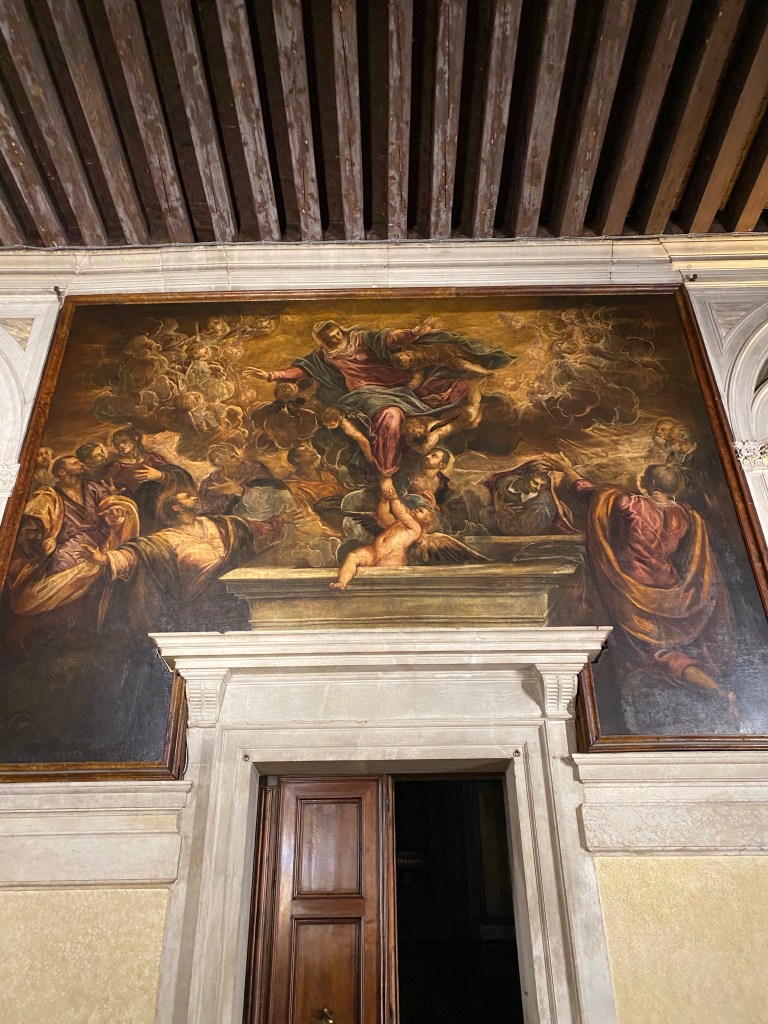
Ground floor paintings: last canvases he made for Confraternity. 1580s. Relies on his large, family workshop, his daughter and sons
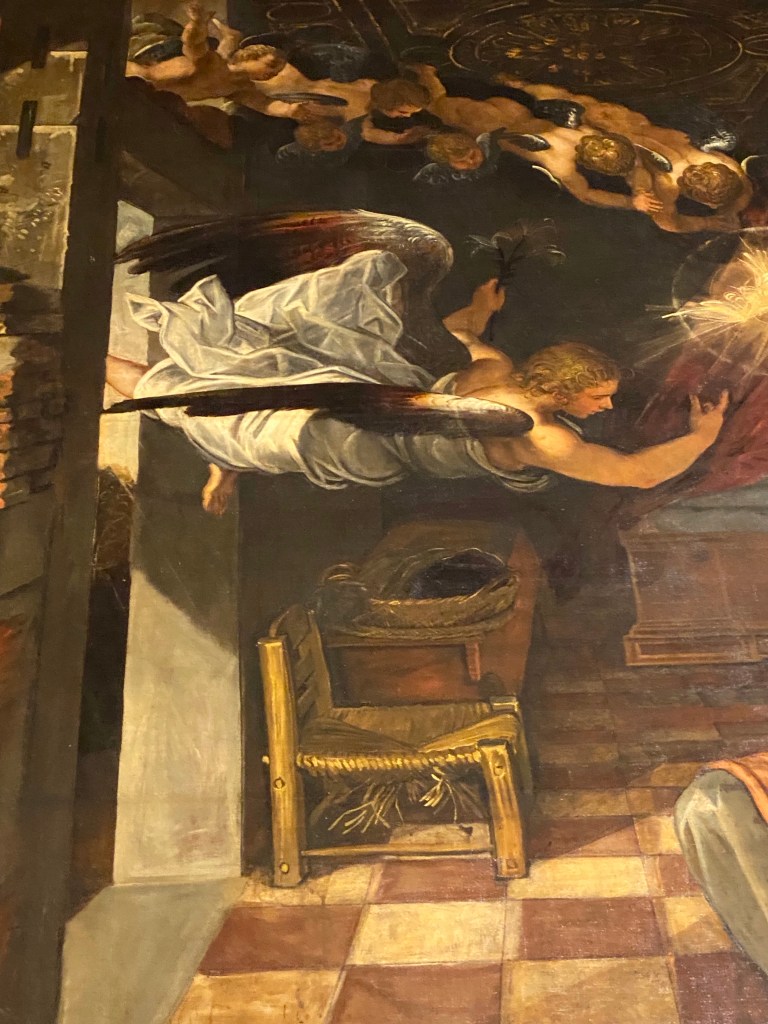
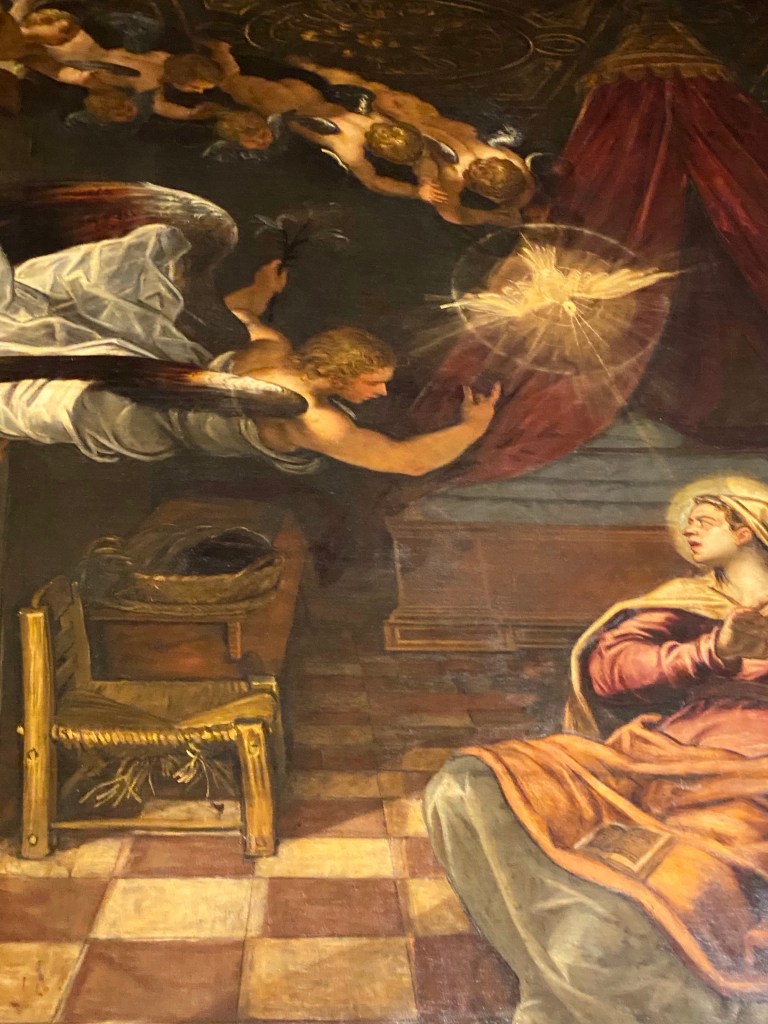
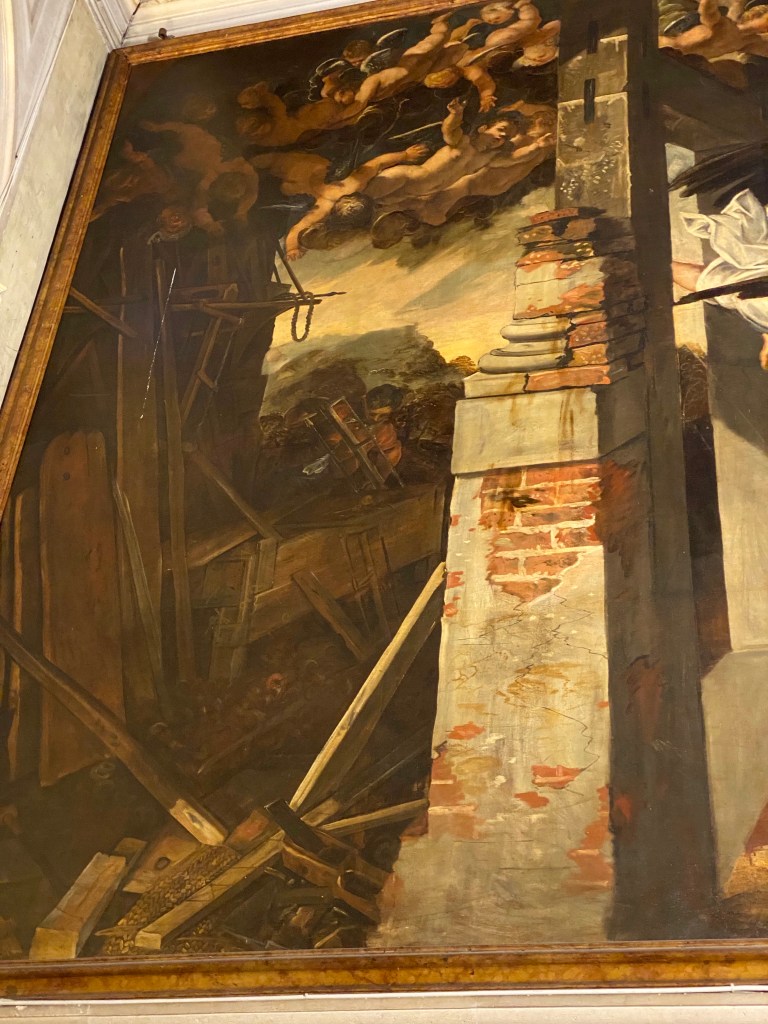
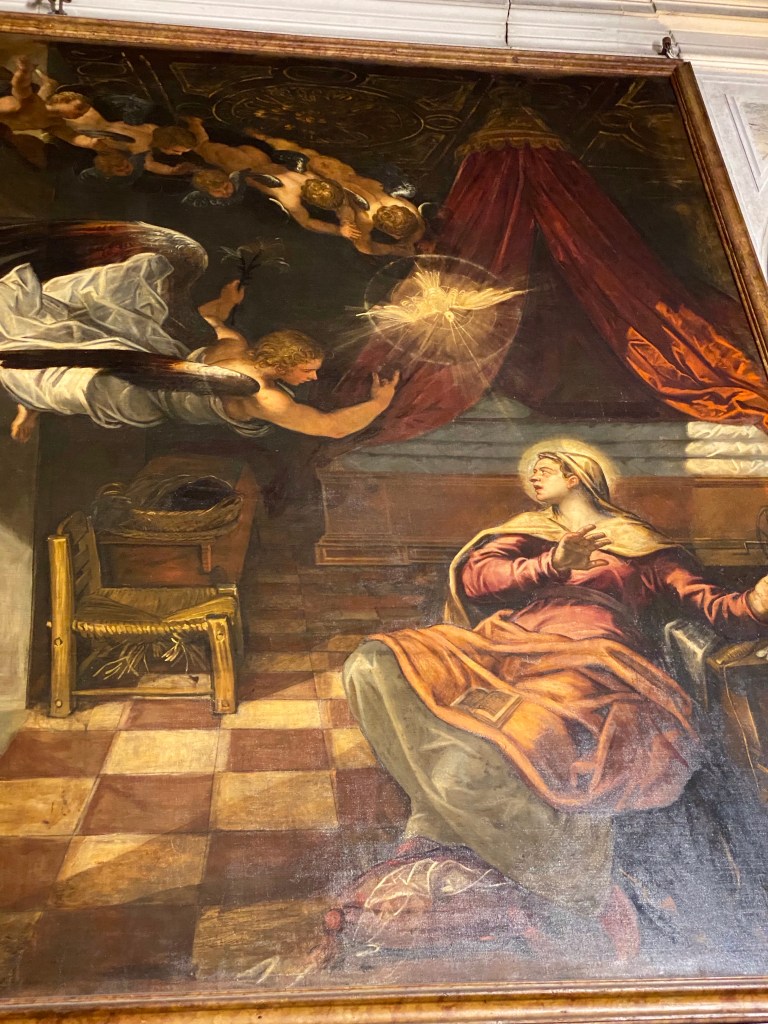
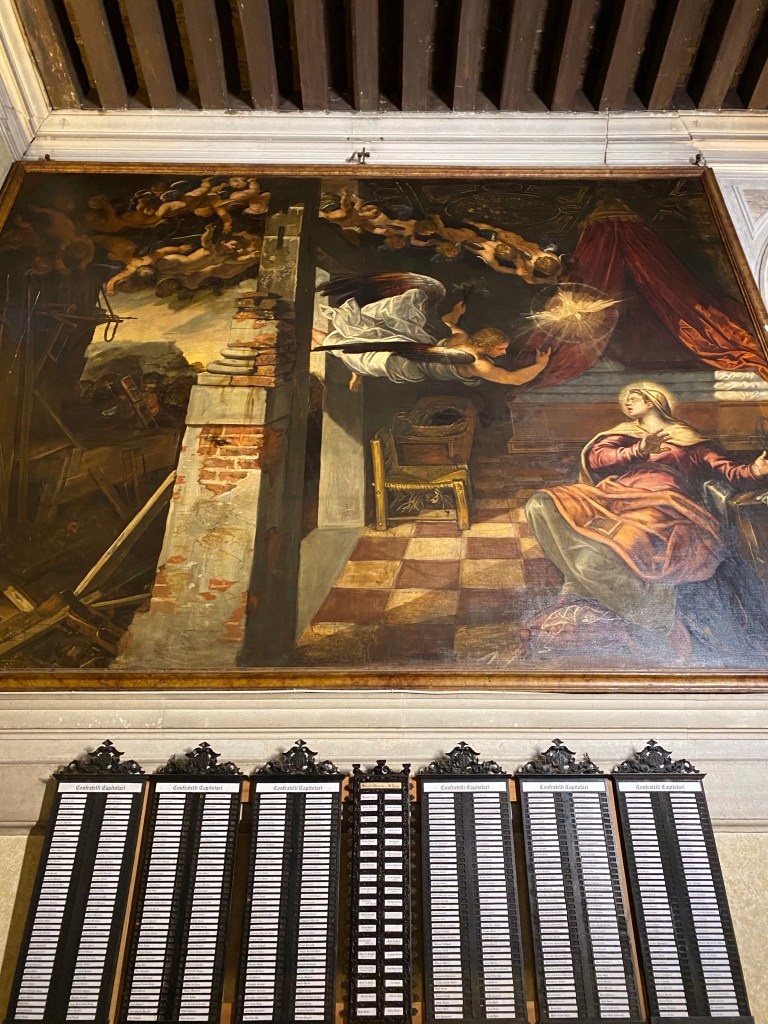
Annunciation: 1581, first work in the cycle, Life of V Mary. Annuciation. Gabriel with a host of angels, very dynamic composition. Gabriel dives in through open door, following brilliant dove. The setting itself: an opulent bedroom, bed canopy and luxurious fabric, straw chair falling apart, architecture crumbling. Outside, carpentry workshop of Joseph. Seem to echo the built space it is shown in. Alternatly red and white marble (red from Verona) columns, piers relate
Humility, reflect the confraternity. But dissonant. The confraternities were criticized for spending so much on decoration. They didn’t pay T a lot, though
The Flight into Egypt, most lyrical in T’s oeuvre. He had a lot of help by workshop, a Flemish painter,
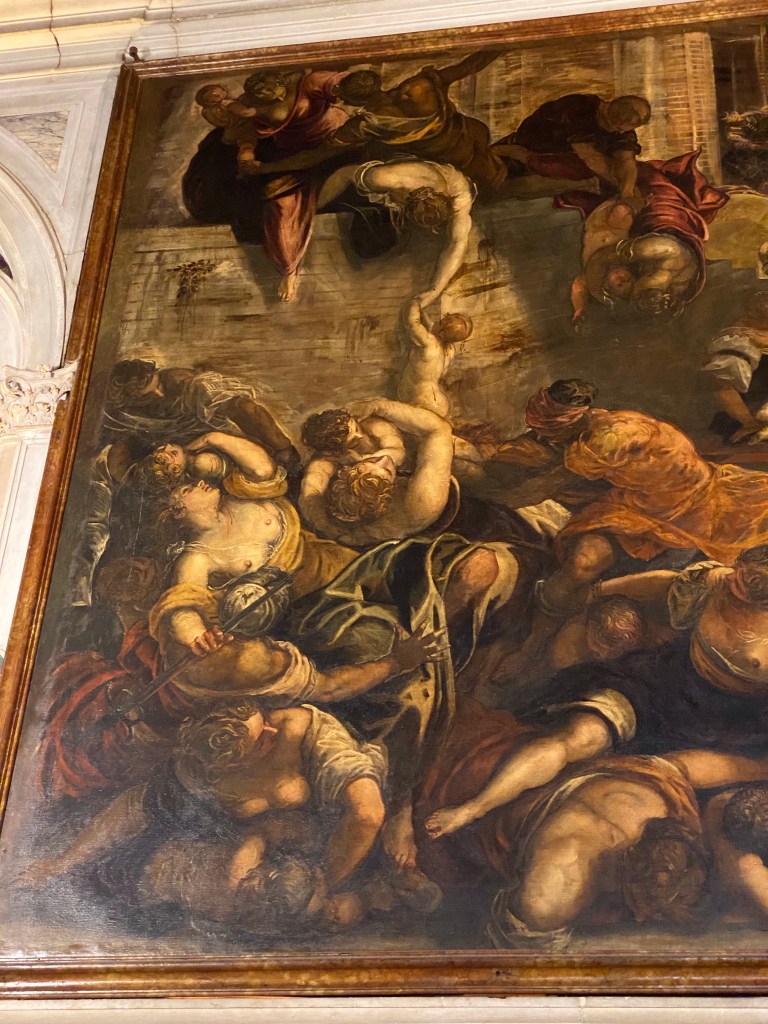
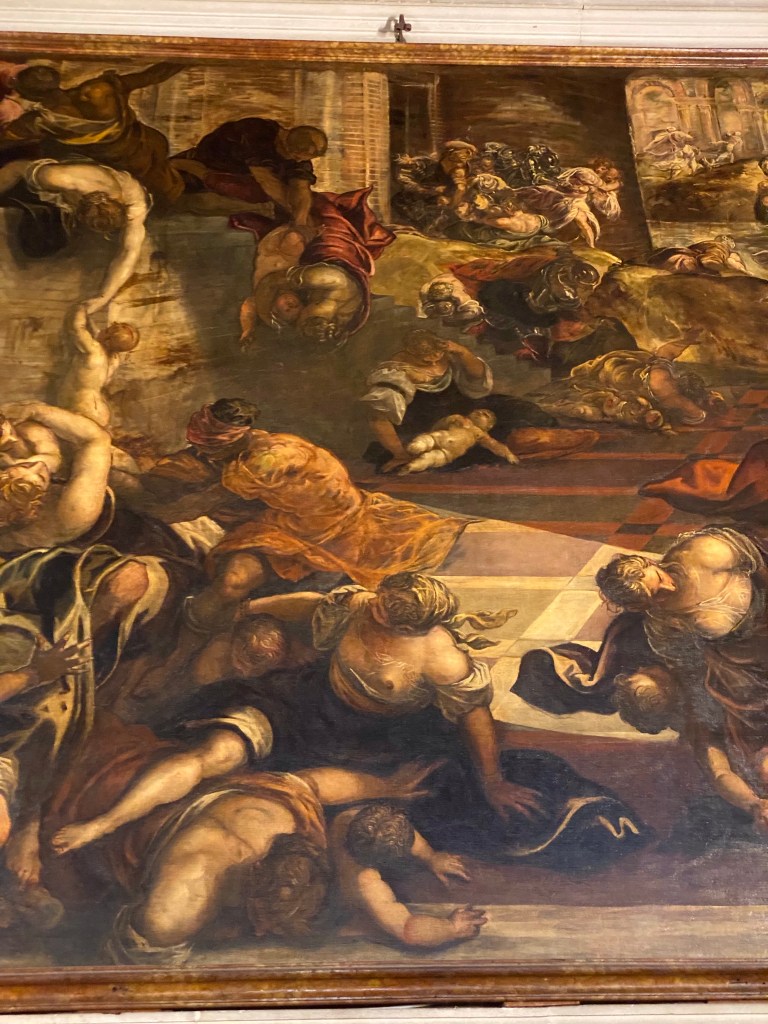
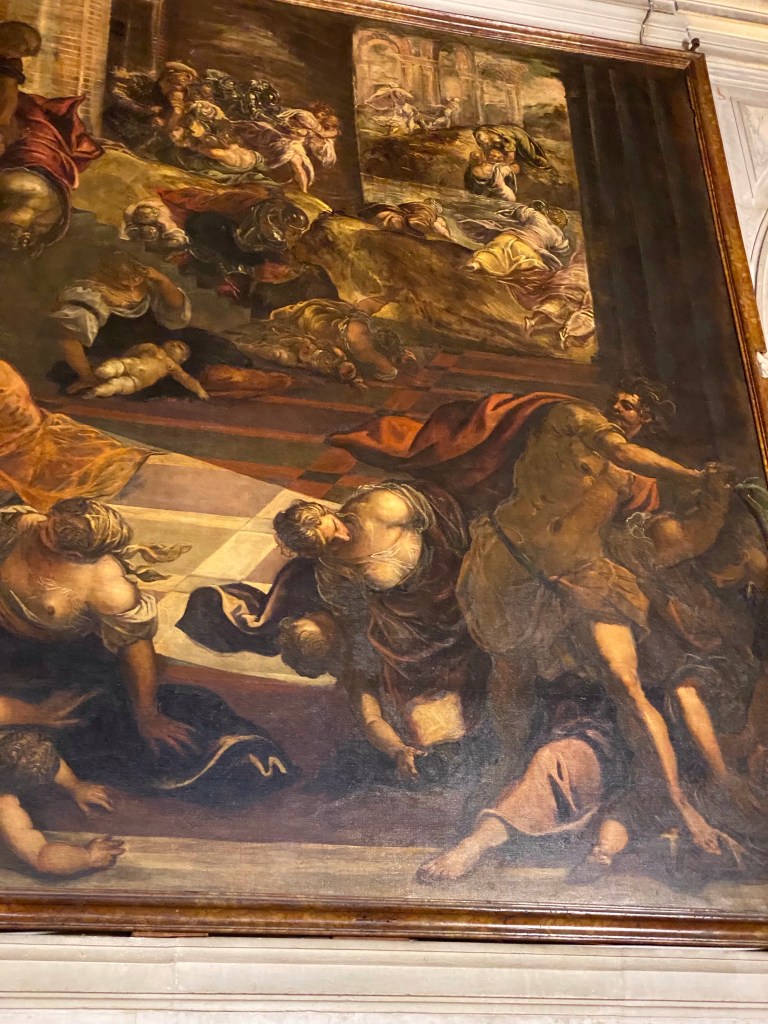
Massacre of the Innocents, 1583
King Herod orders death of all infants (under 2)
Visual chaos drives home the hideous subject matter
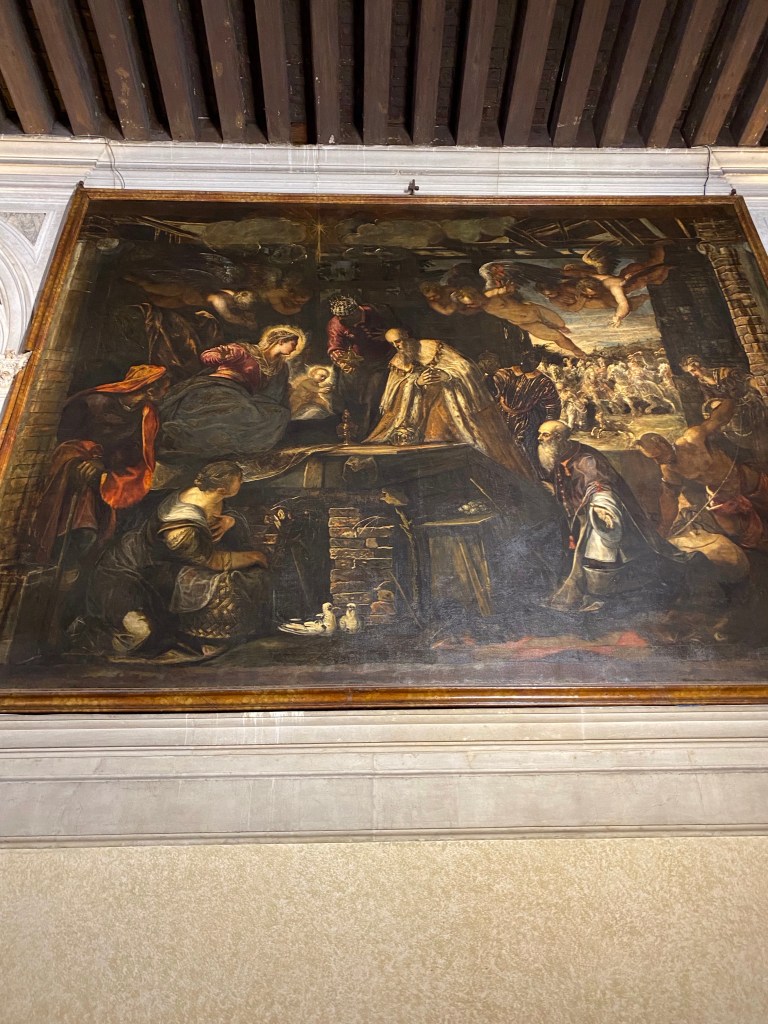
Circumsicion of Christ, entrusted to his son, Domenico, his most prolific collaborator, the heir to the family workshop. The figures and faces the architecture, the curtains, are all different from Jacopo T’s work
San Giorgio Maggiore, take vaporetto, from Pza San Marco, wee see church by Palladio, most imp architect of Venice 16th c.
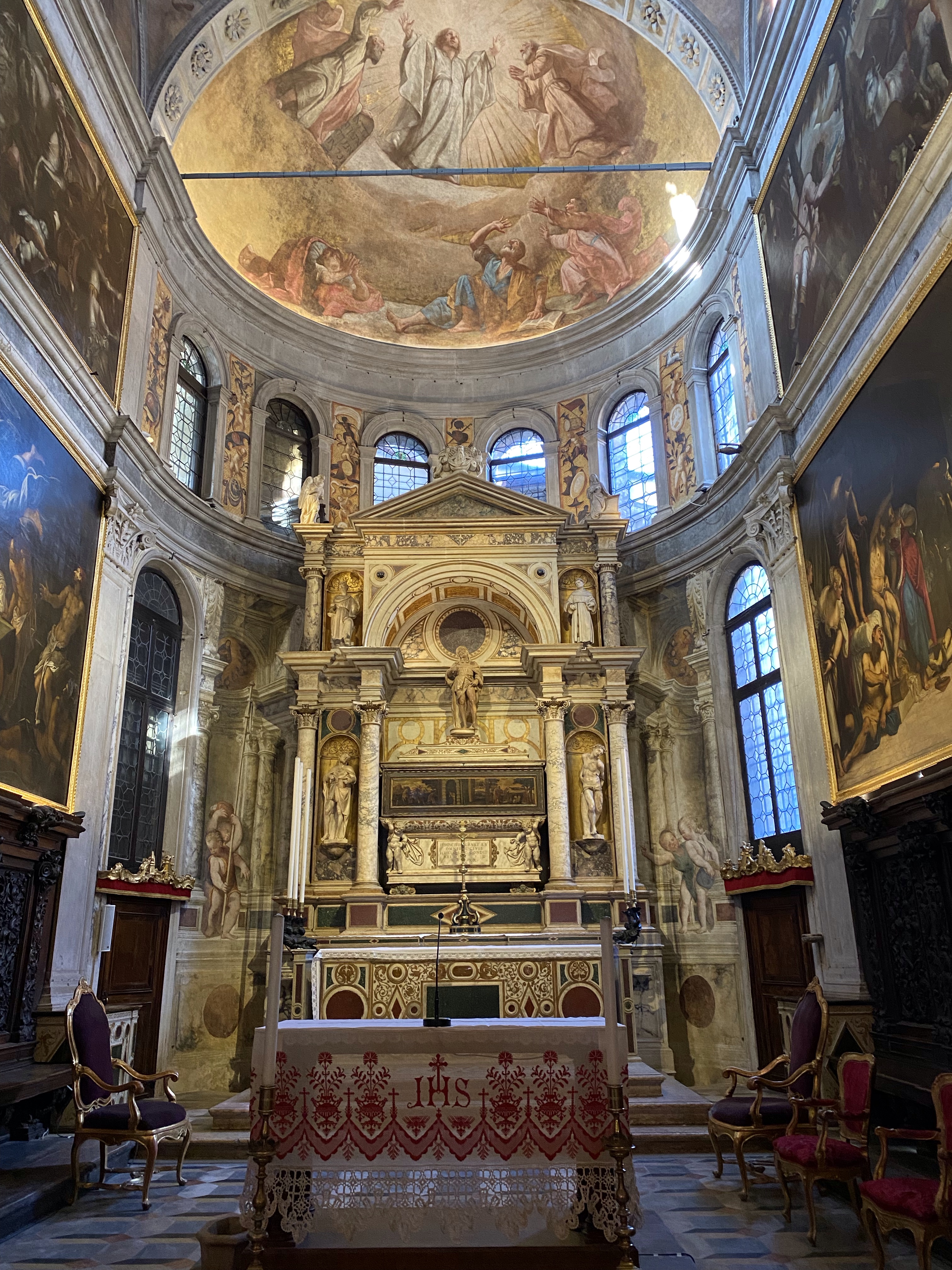
High altar: 2 ptgs on either side of altar in the presbytery
Fall of Manna and Last Supper
Last Supper, 1592-94, dramatic narrative, great drama, long table, on angle, extends deep into space, most figures on one side of table, look at how he uses light and shadow, dark background, 2 light sources, halo of X and ceiling lamp.
Angels coalesce out of light from lamp
He paints the moment when X institution of the eucharist, take eat, the bread is my body. X feeds a disciple
It aligns in space with the altar. Extends as same angle. The altar is the site of the consecration of the host. Reenacted every time priests raise the host
Clergy enters from behind altar, they see painting relate very clearly as the altar. Gives them a great sense of participation.
\\
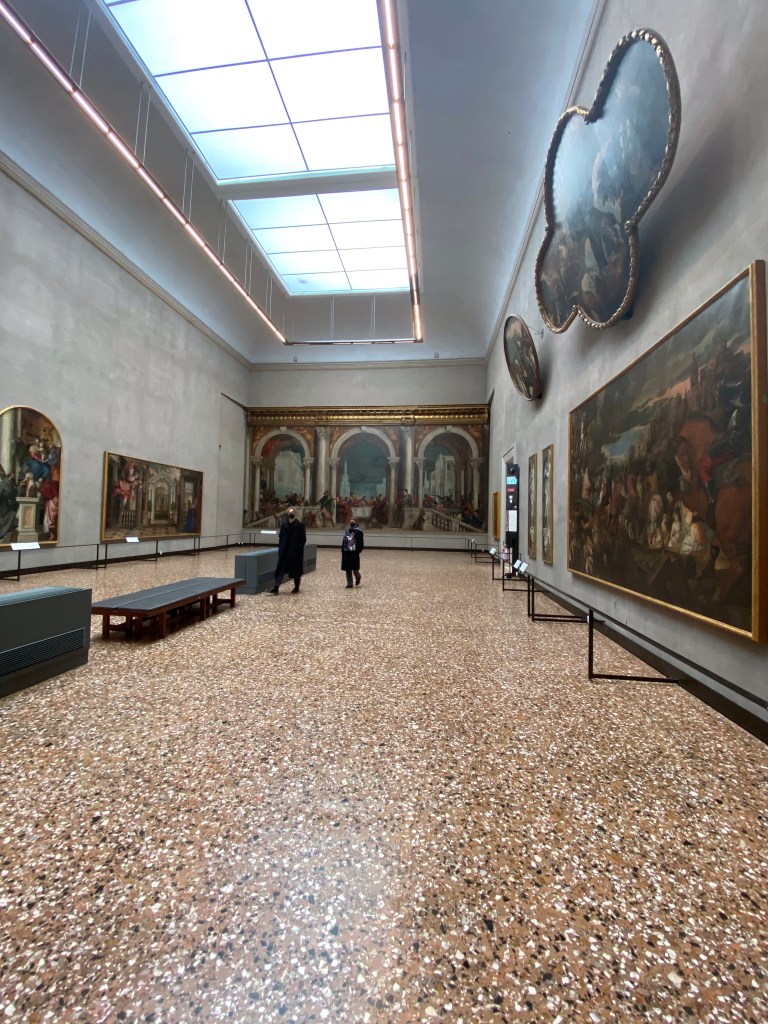
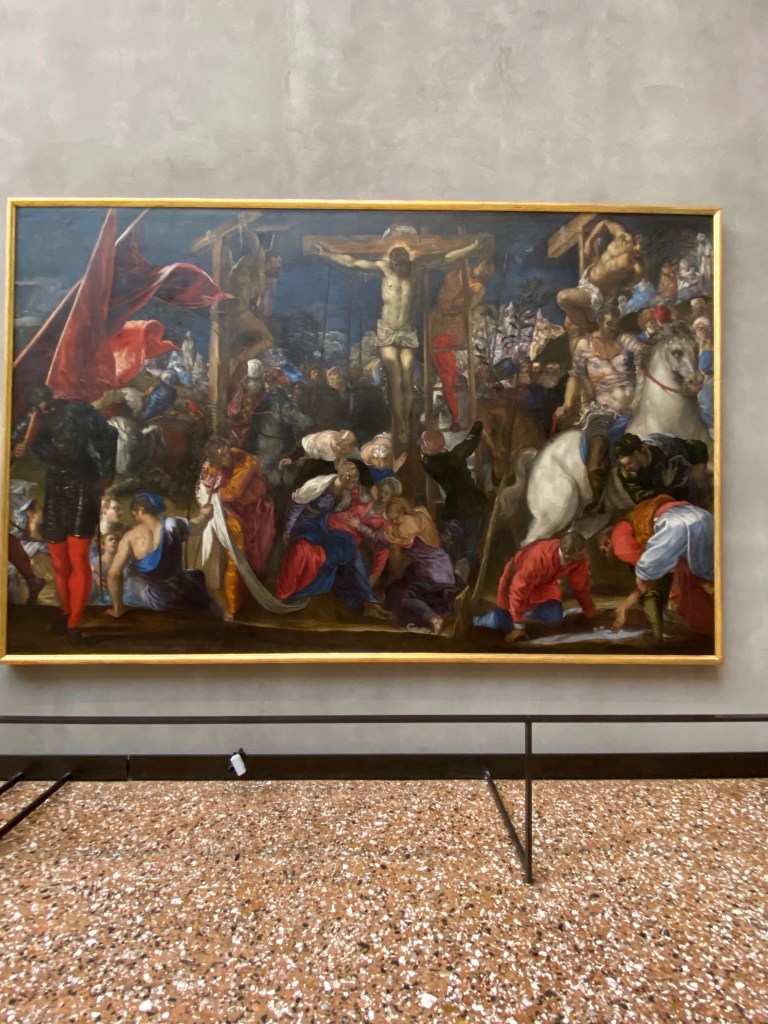
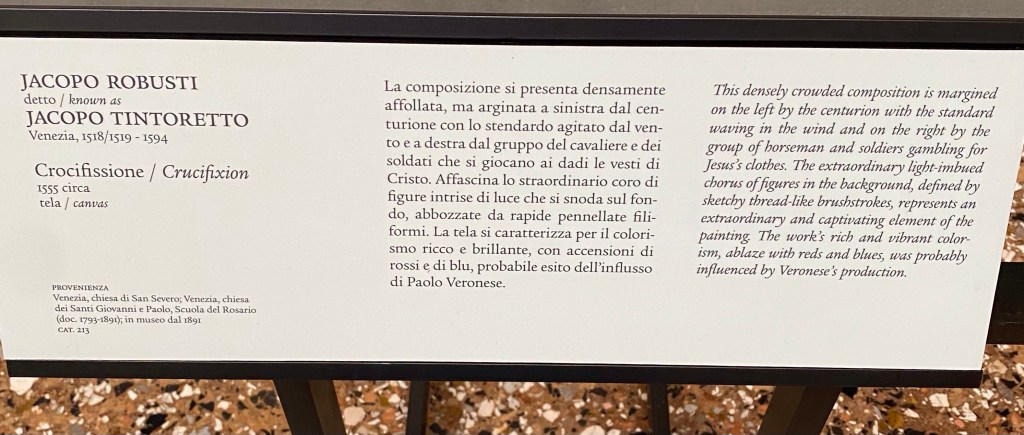
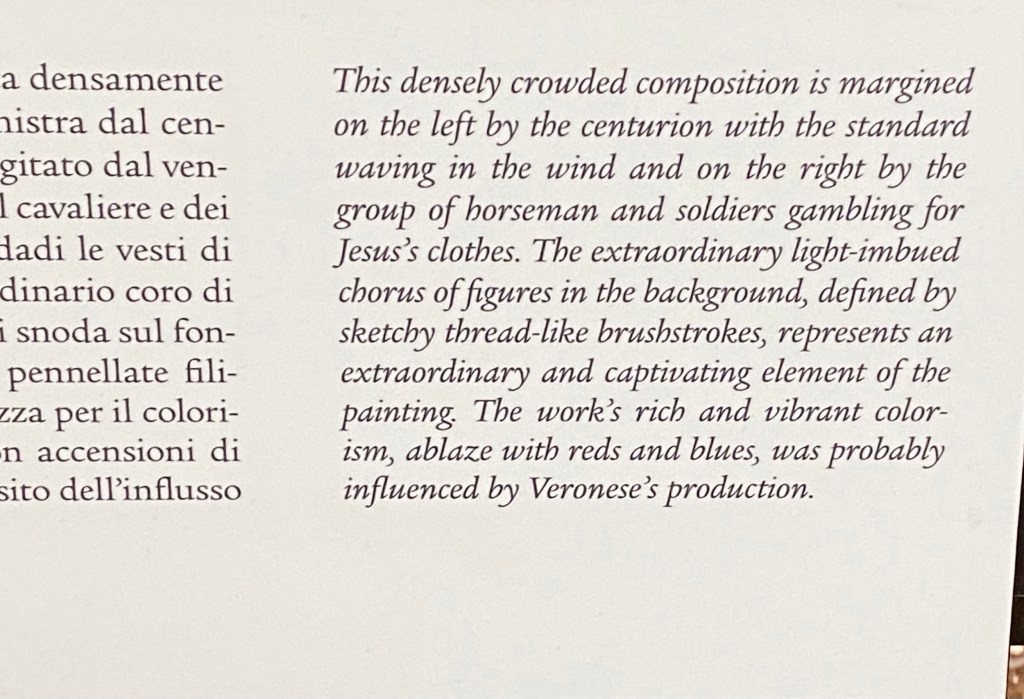
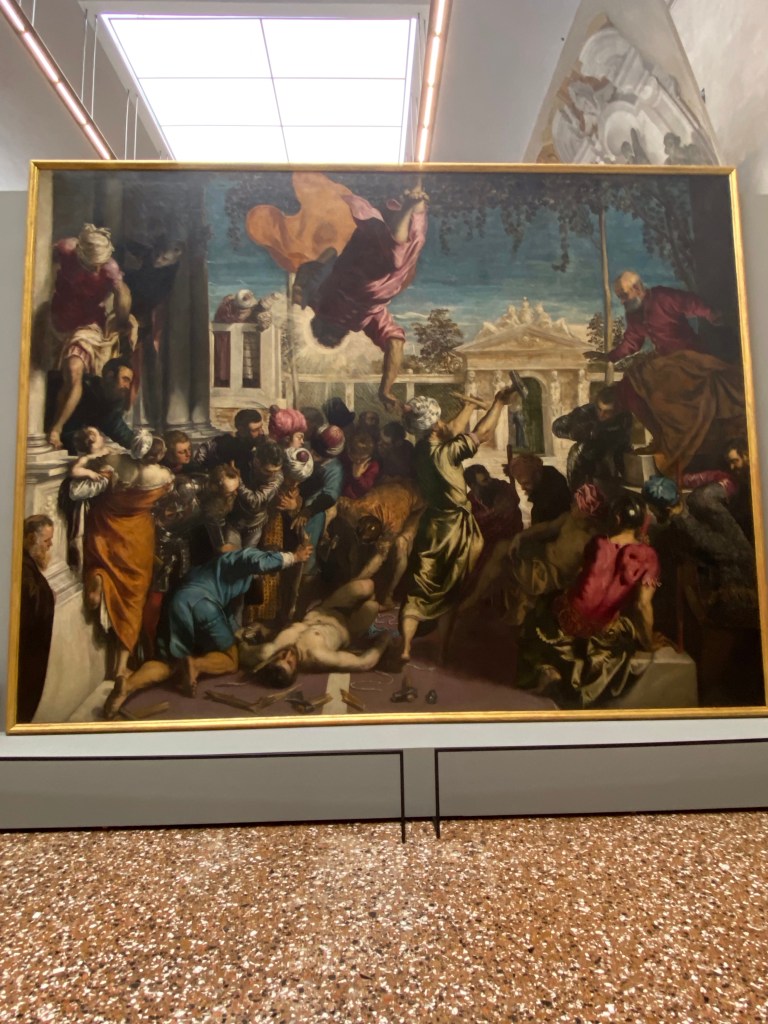
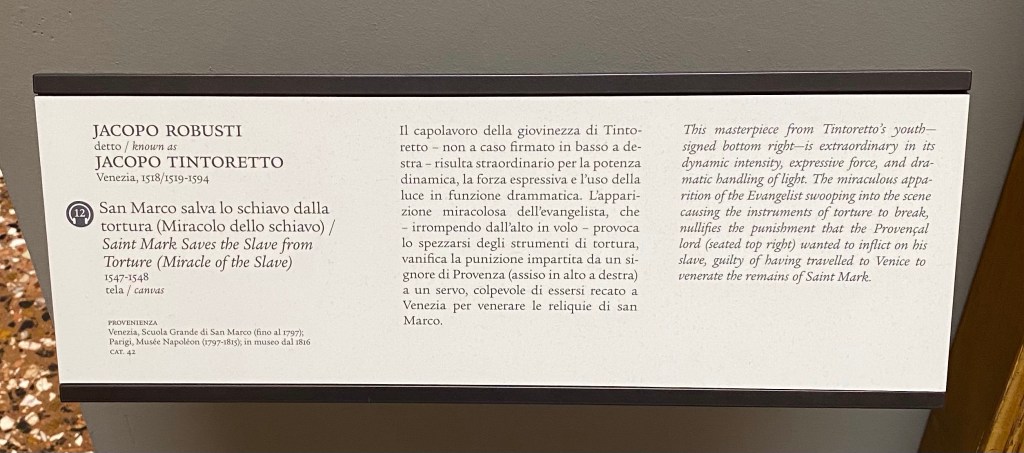
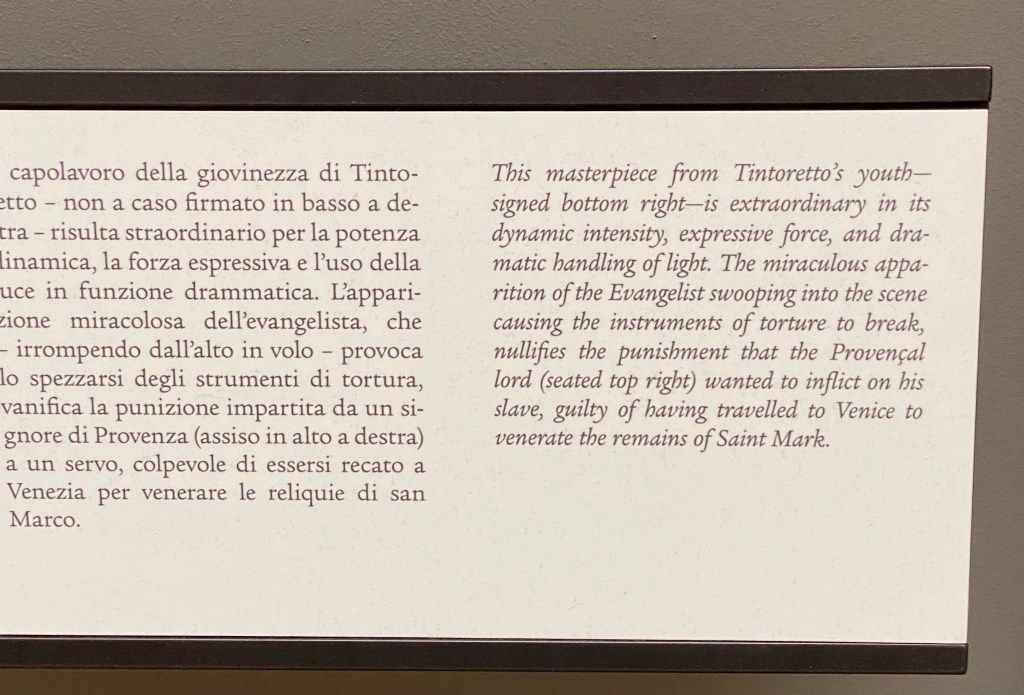
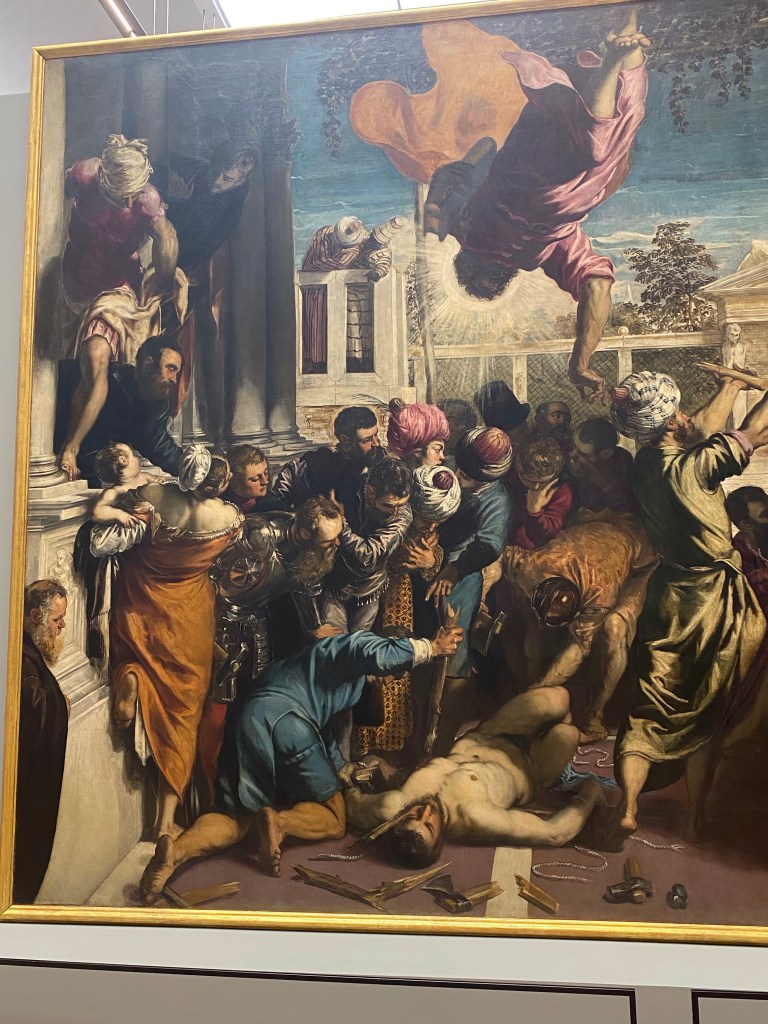
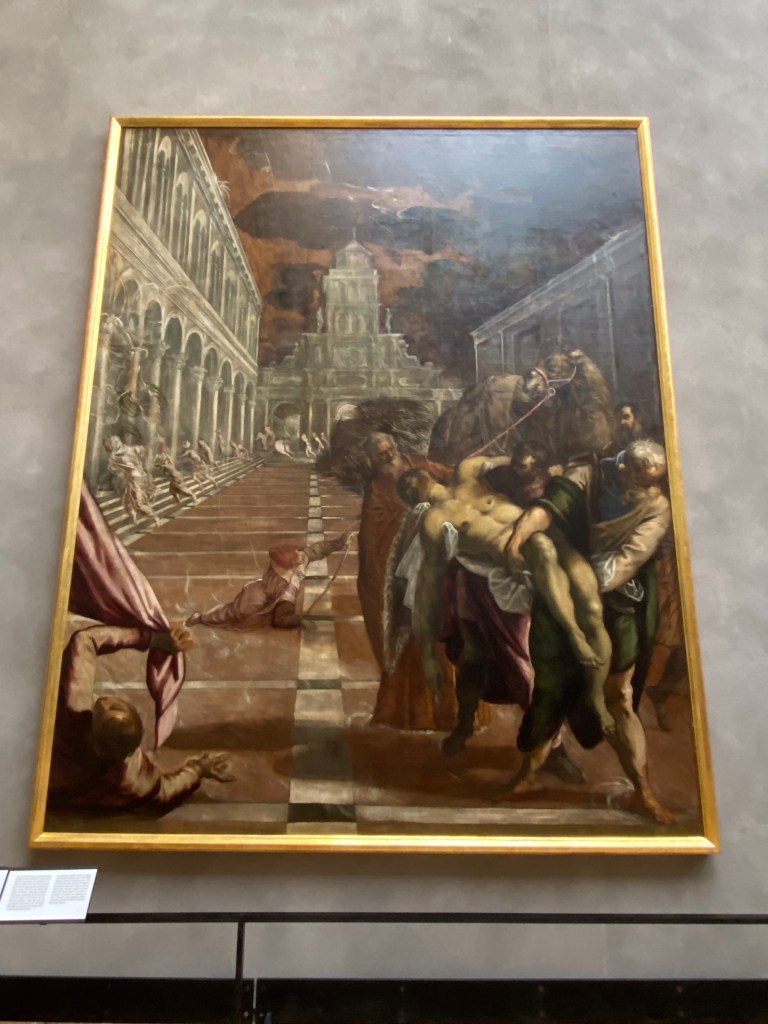
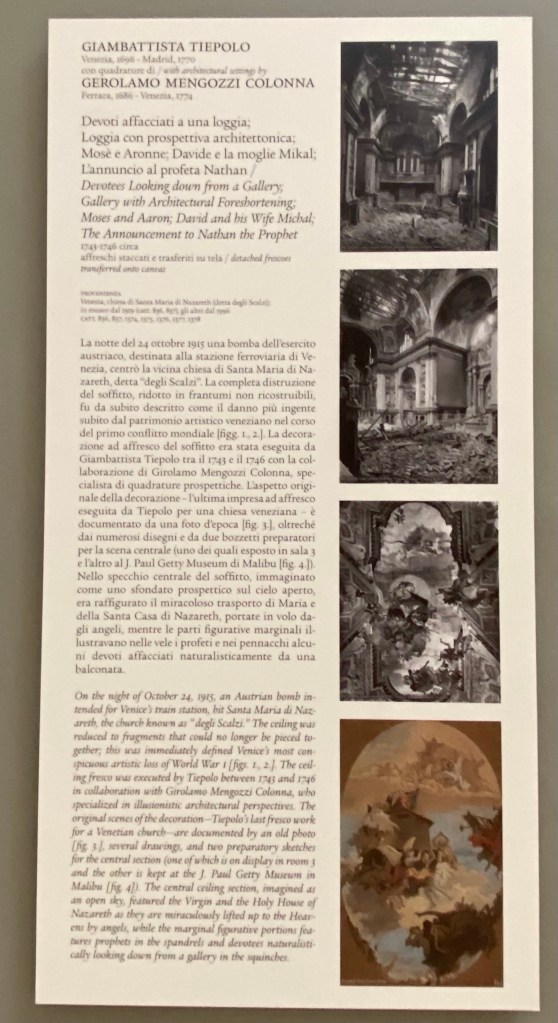
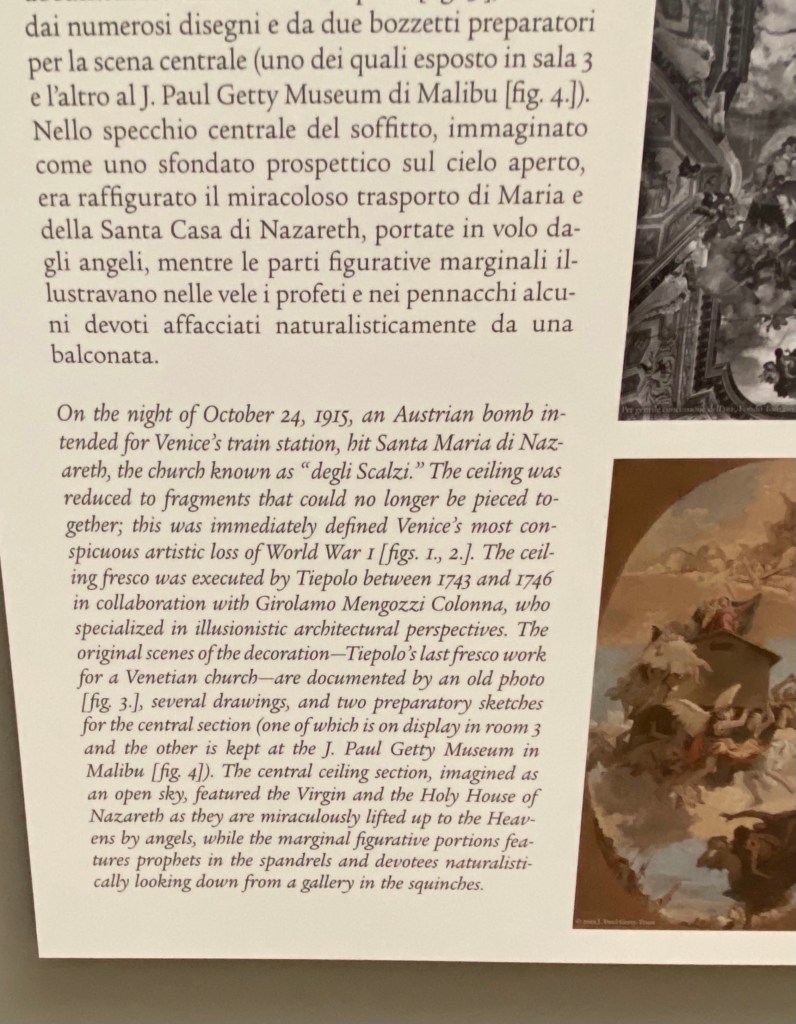
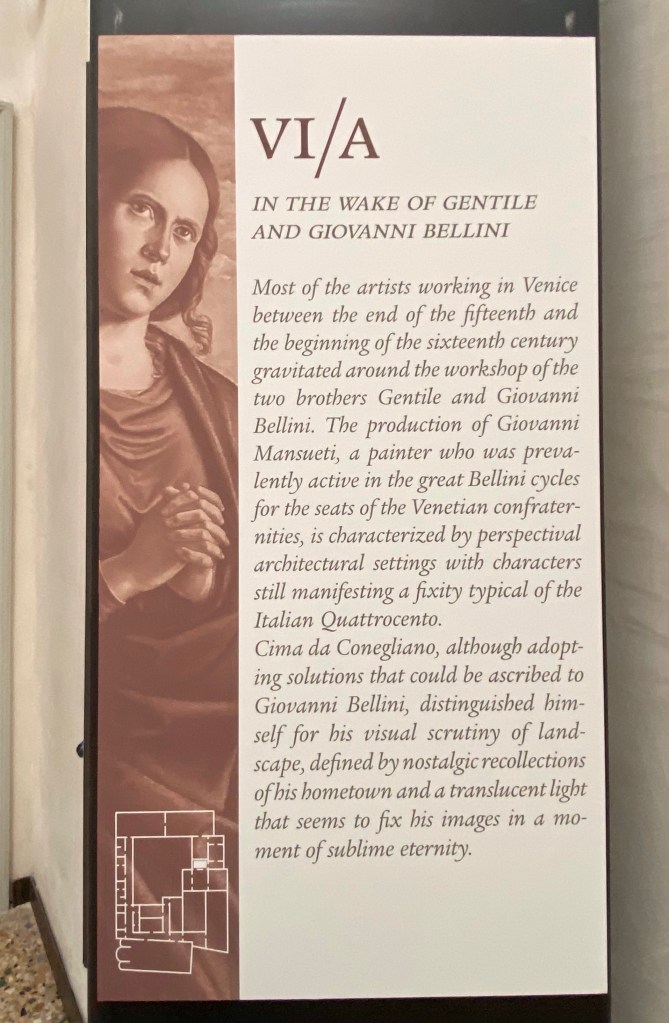
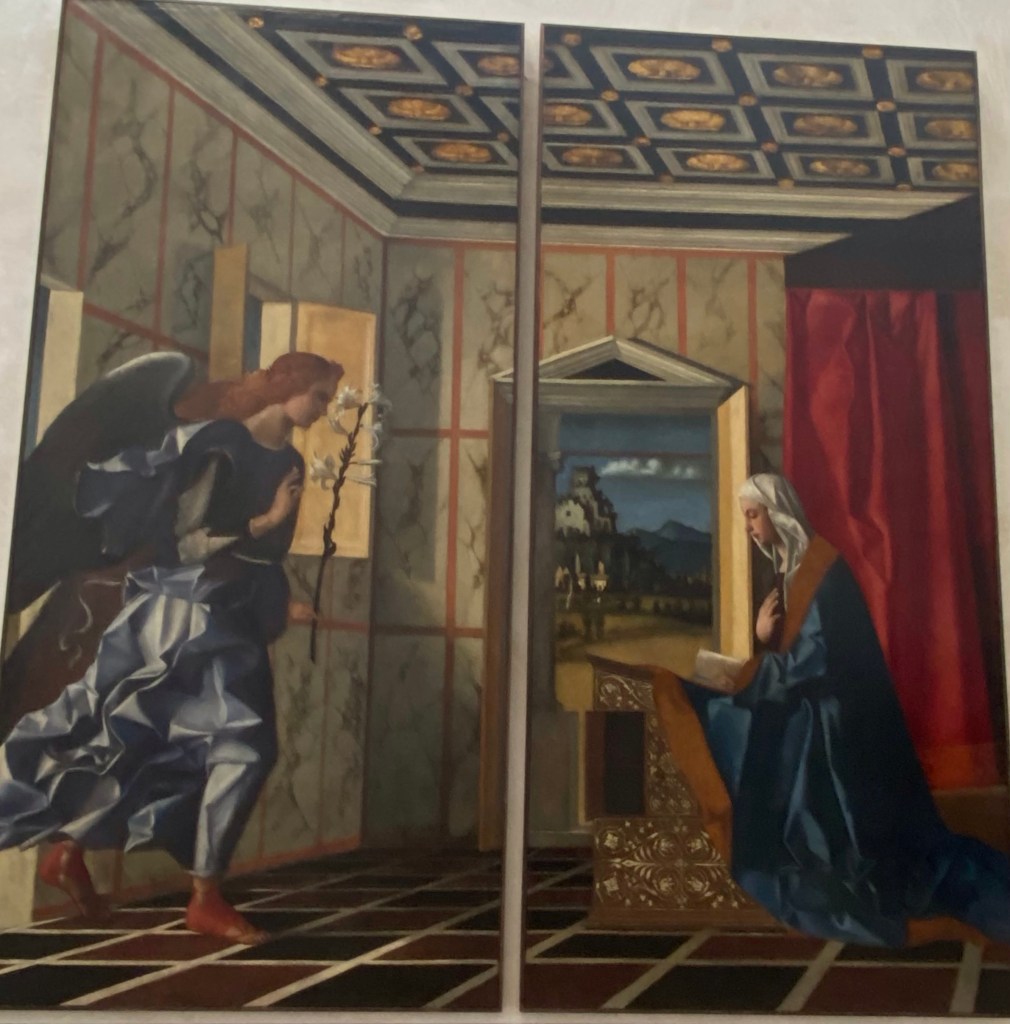
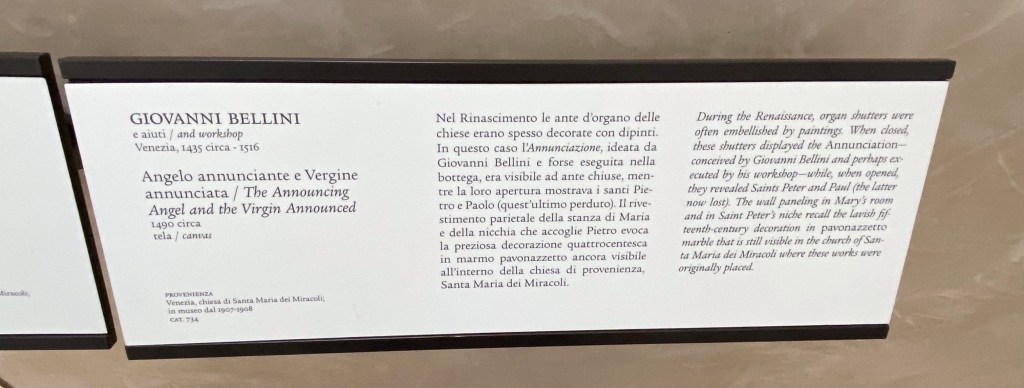
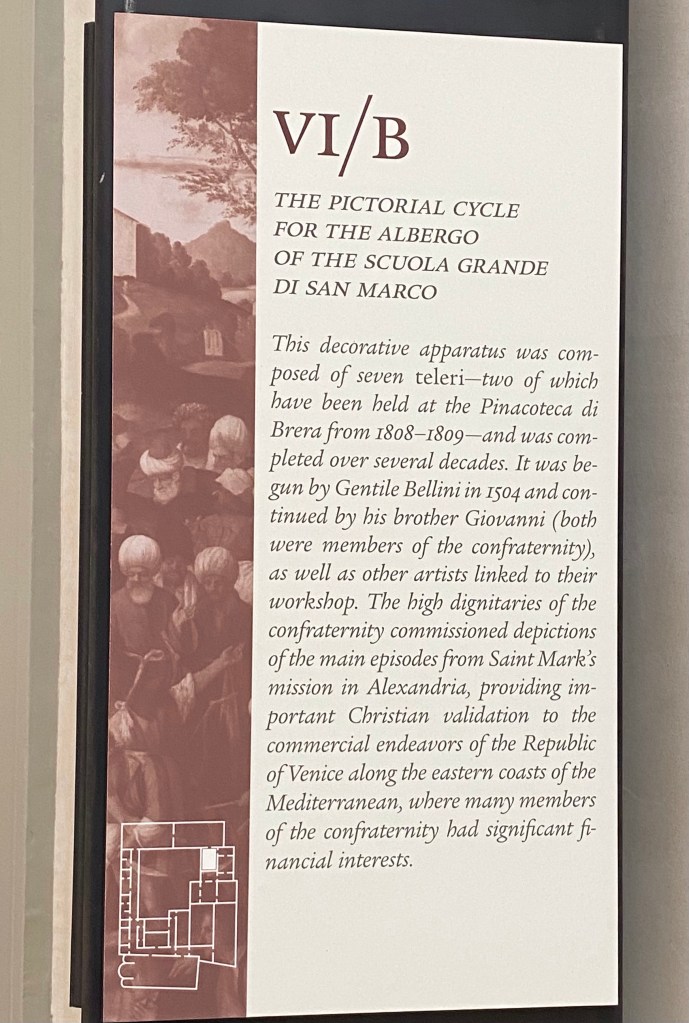
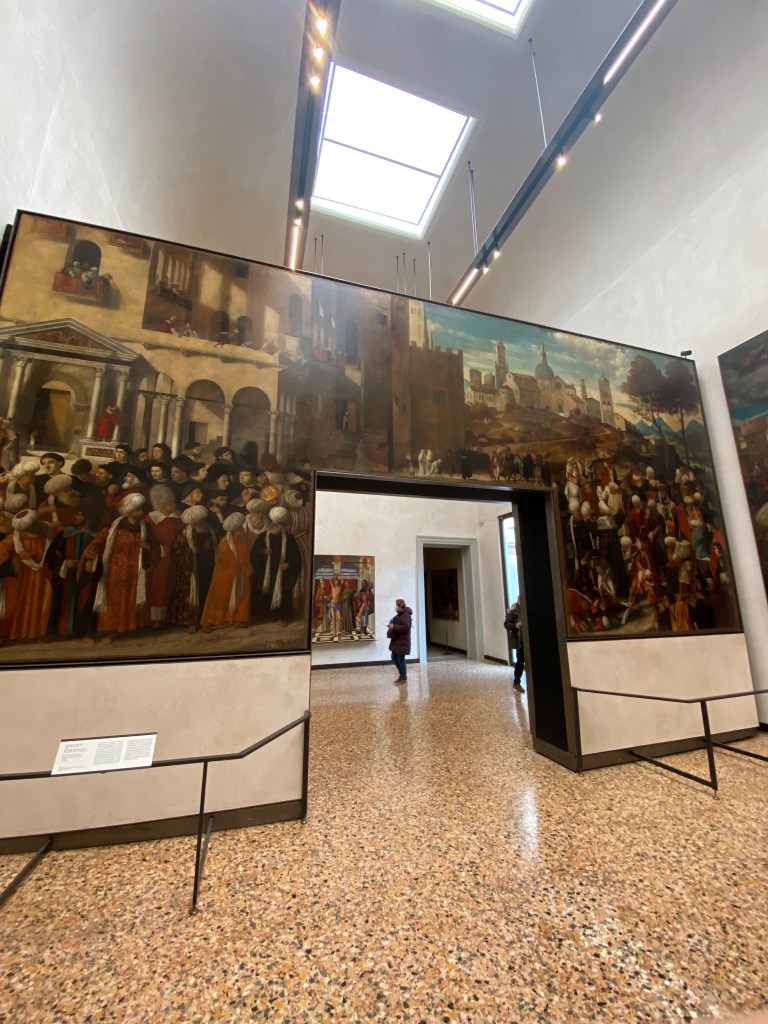
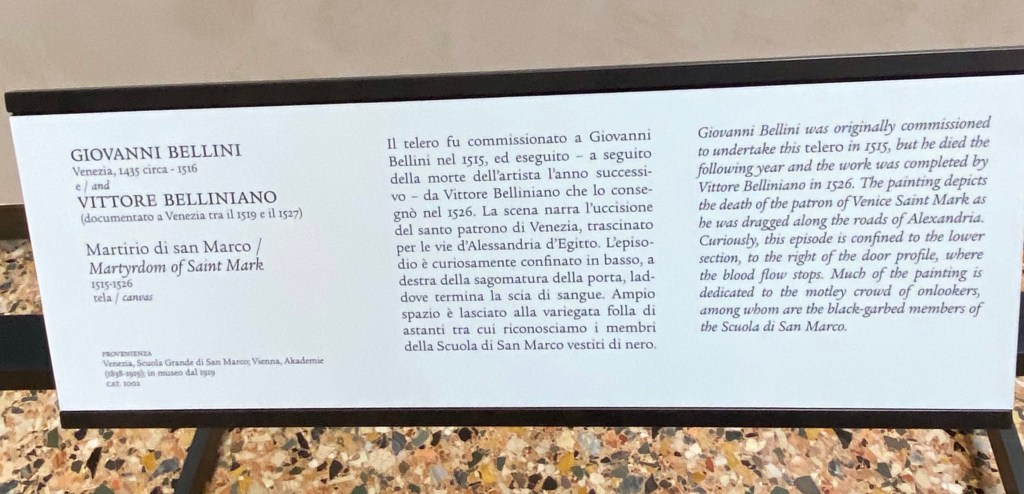
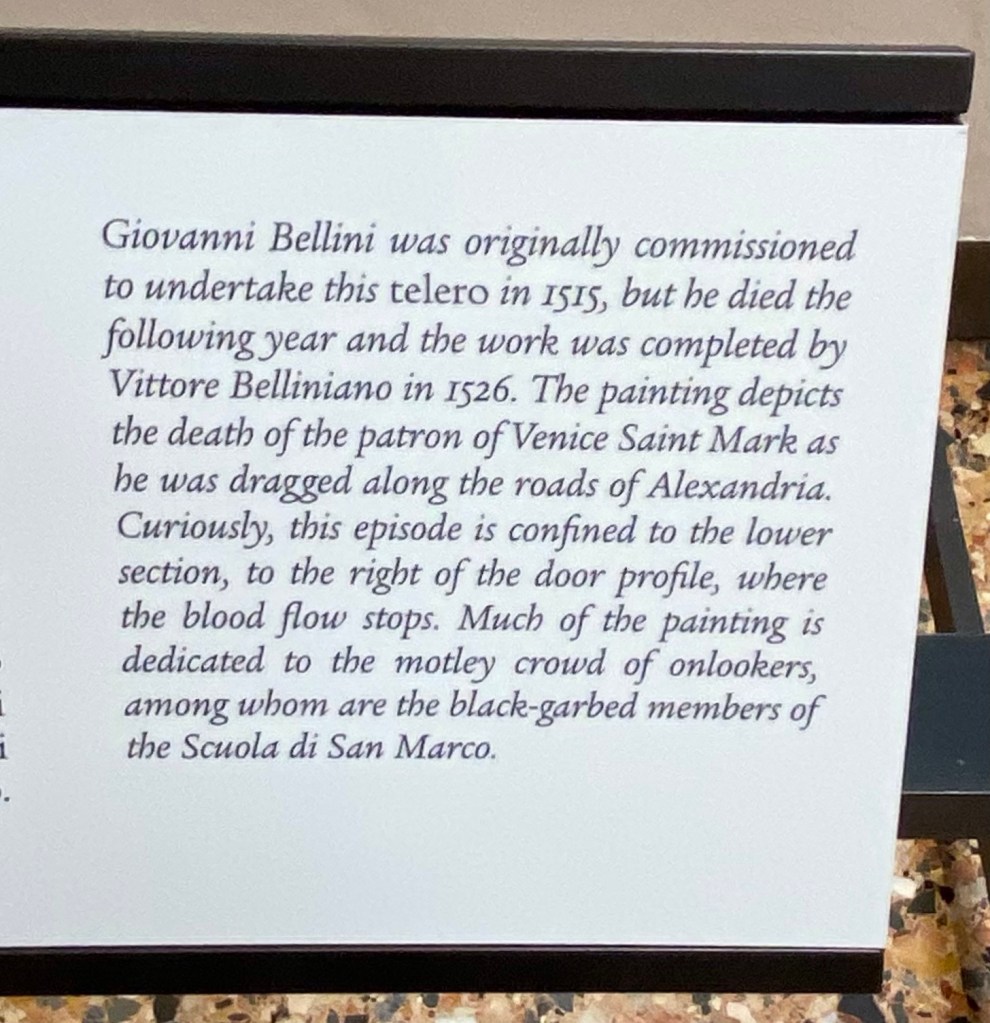
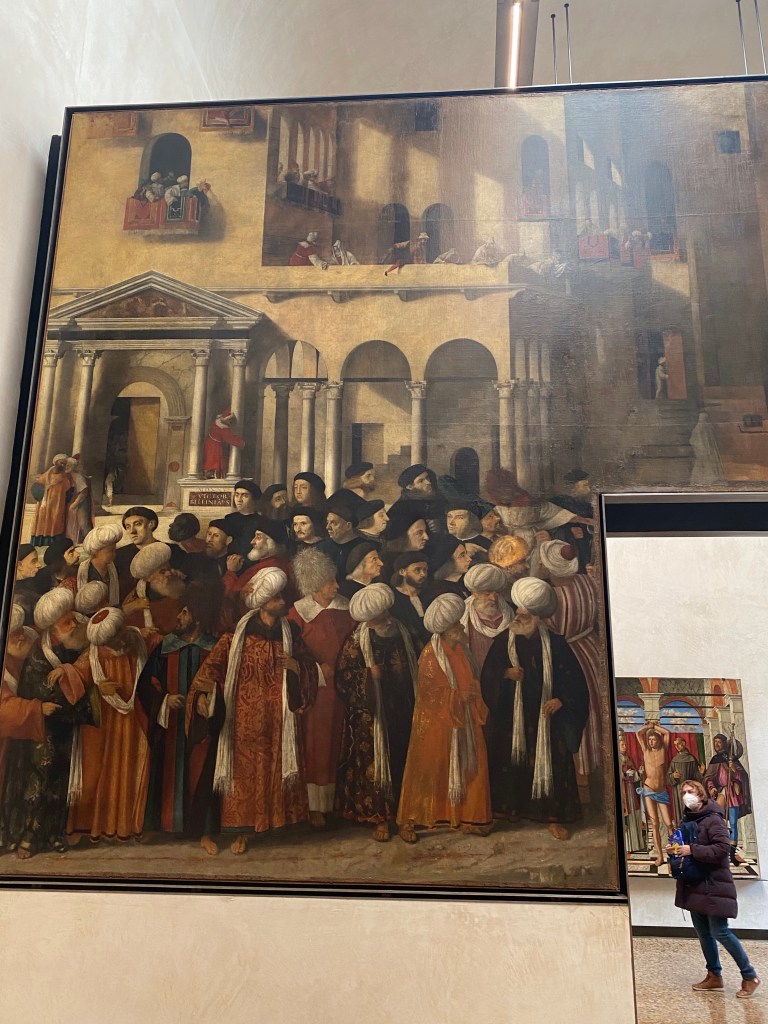
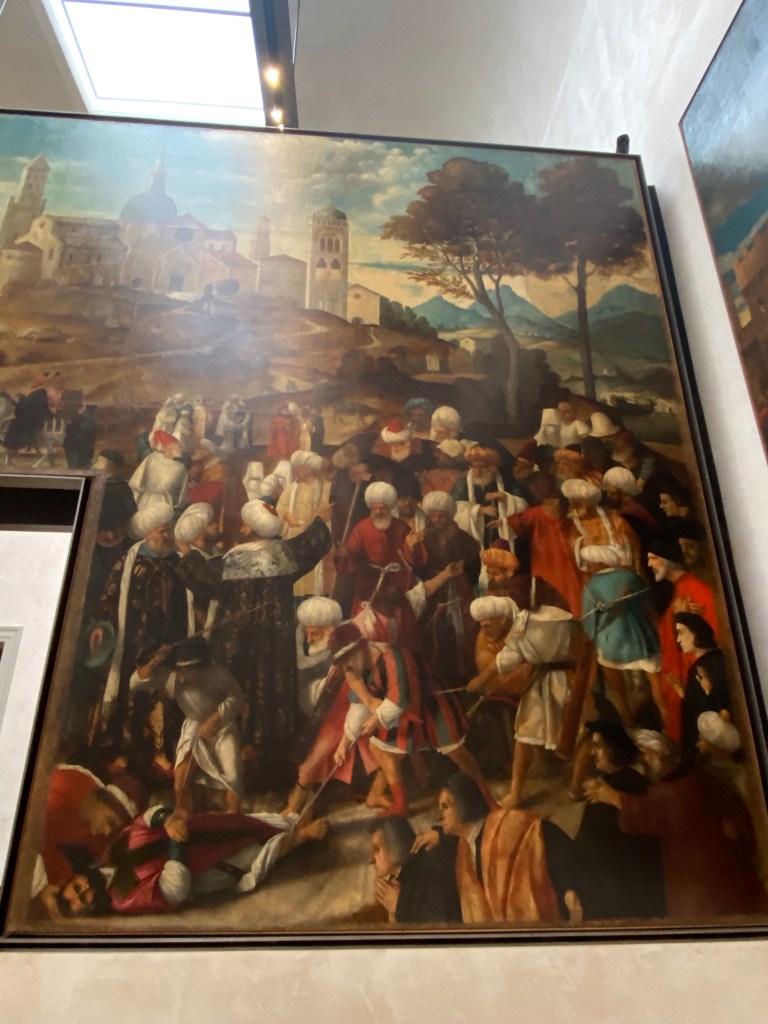
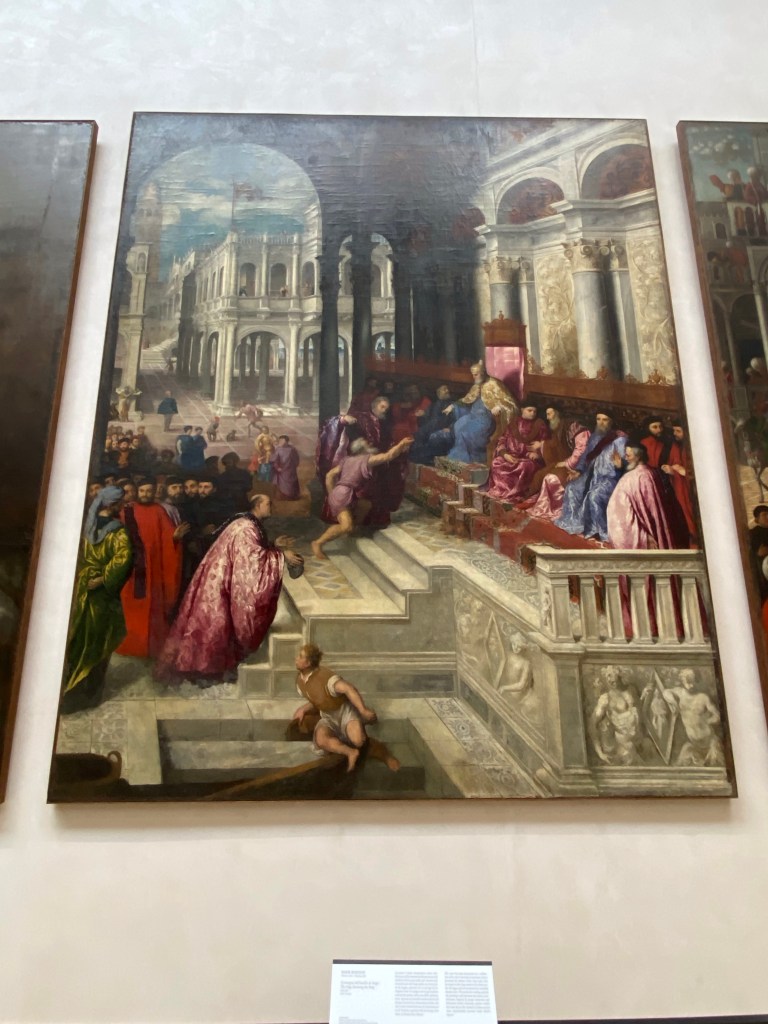
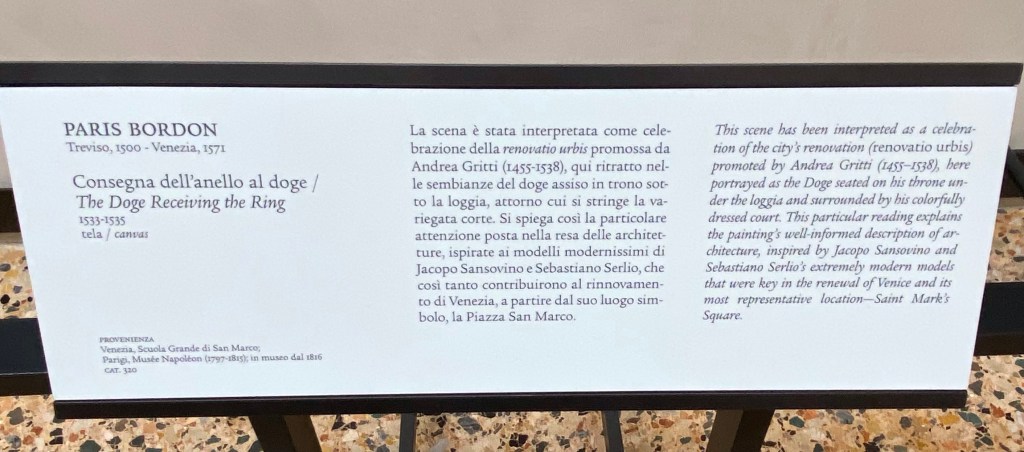
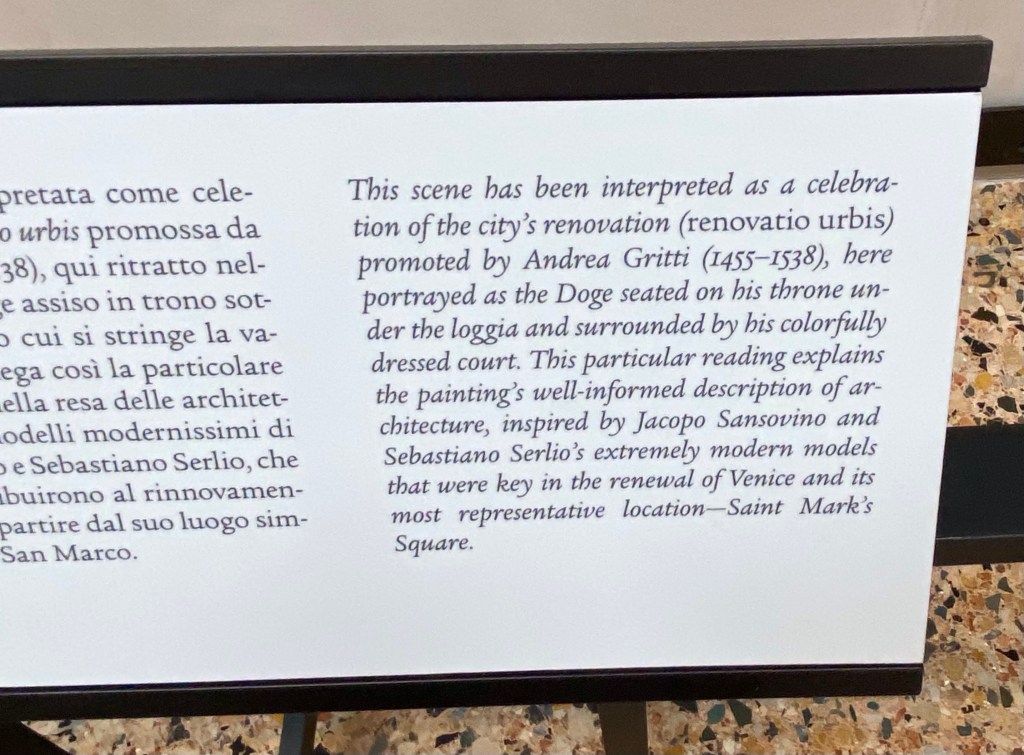
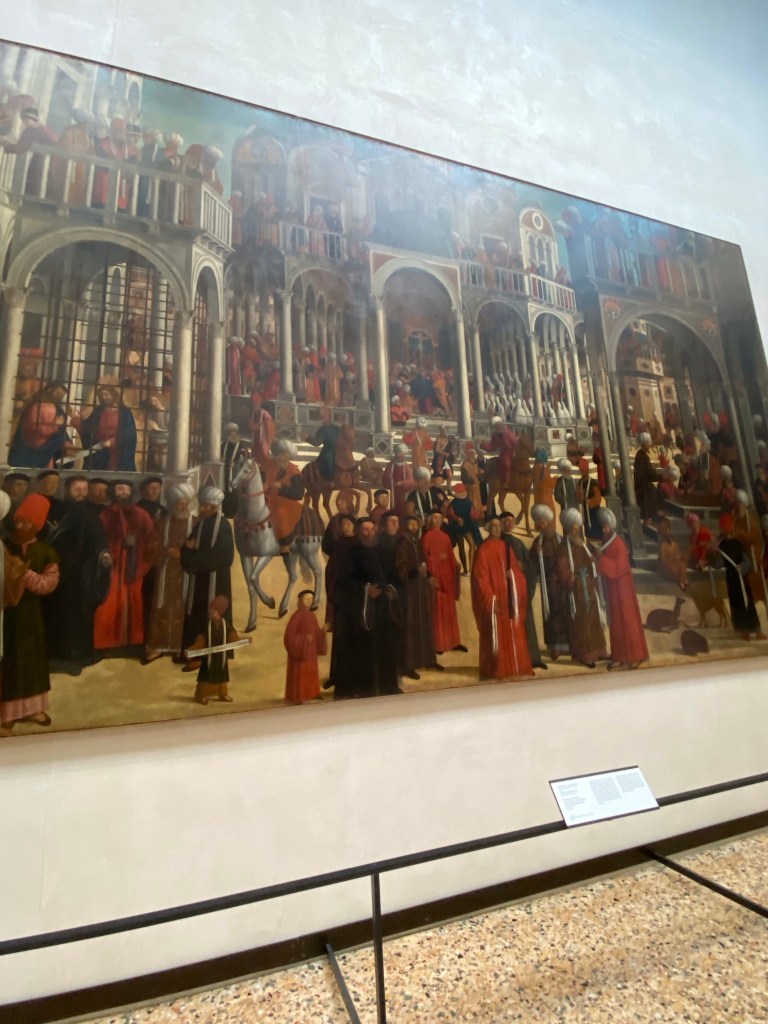
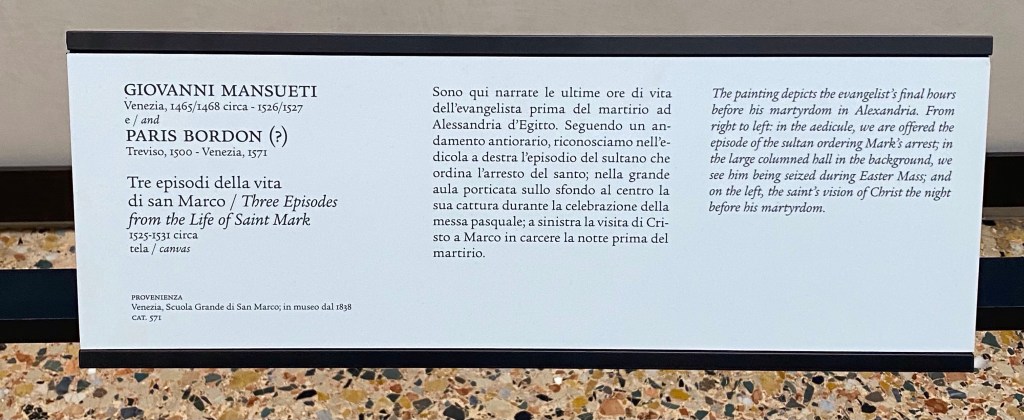
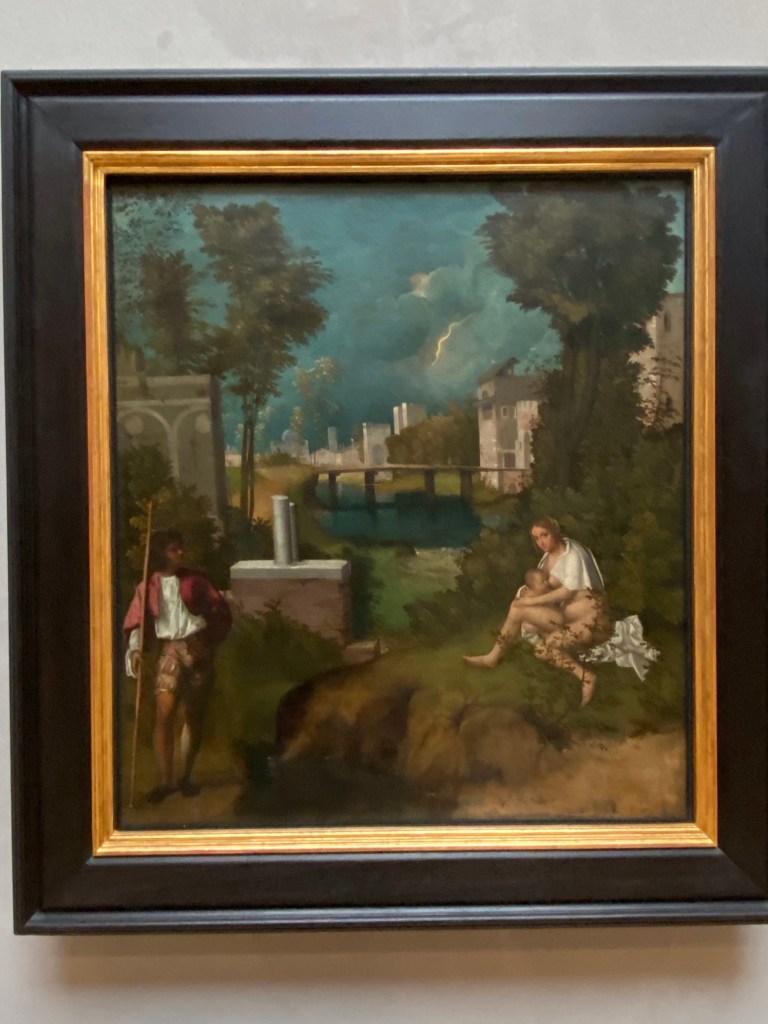
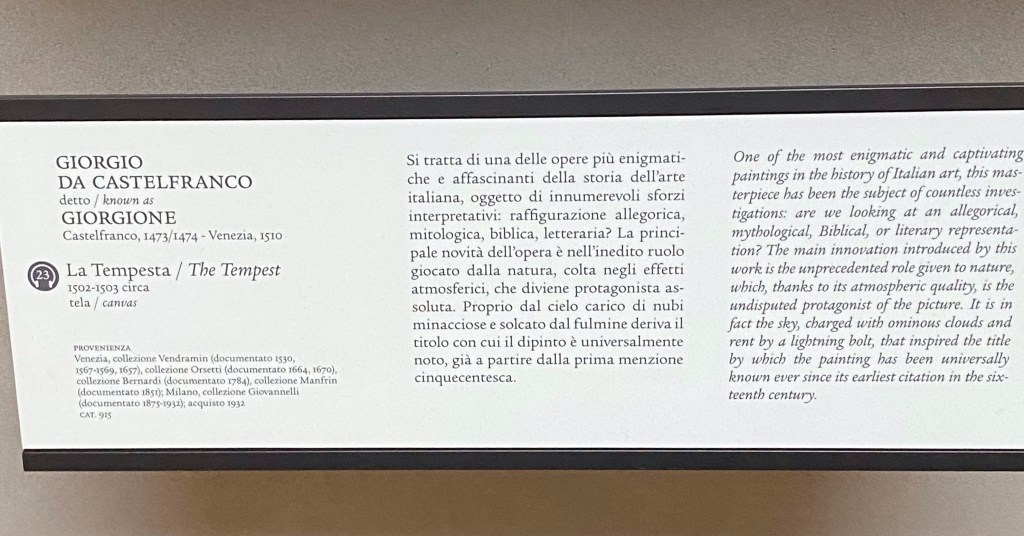
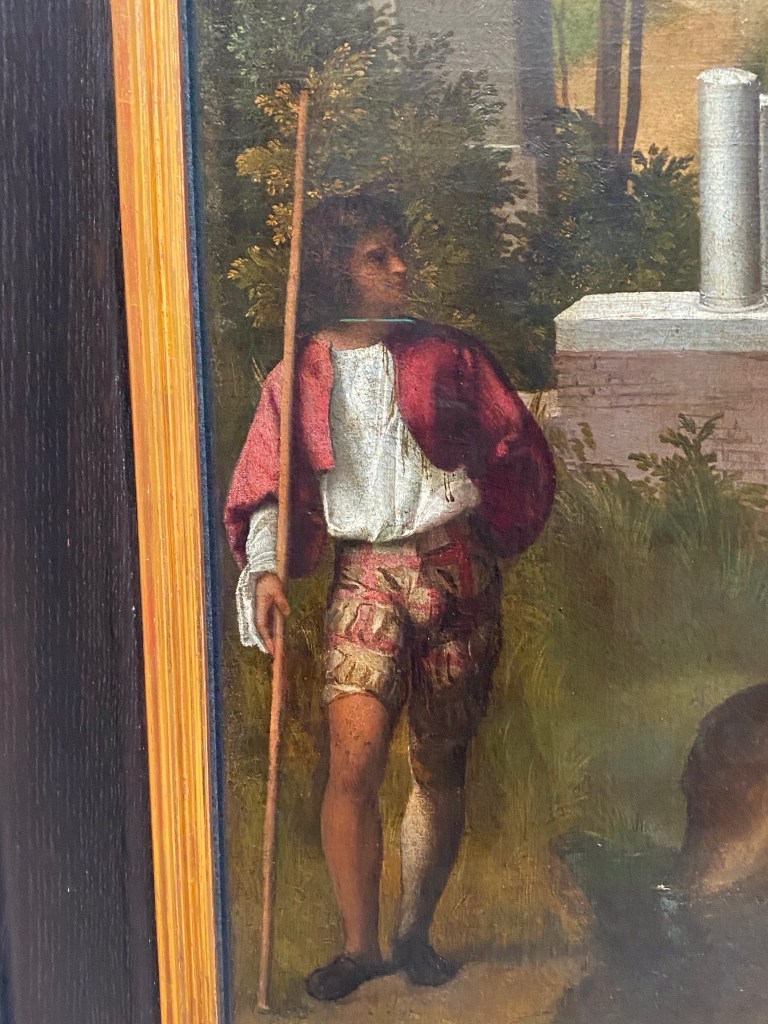
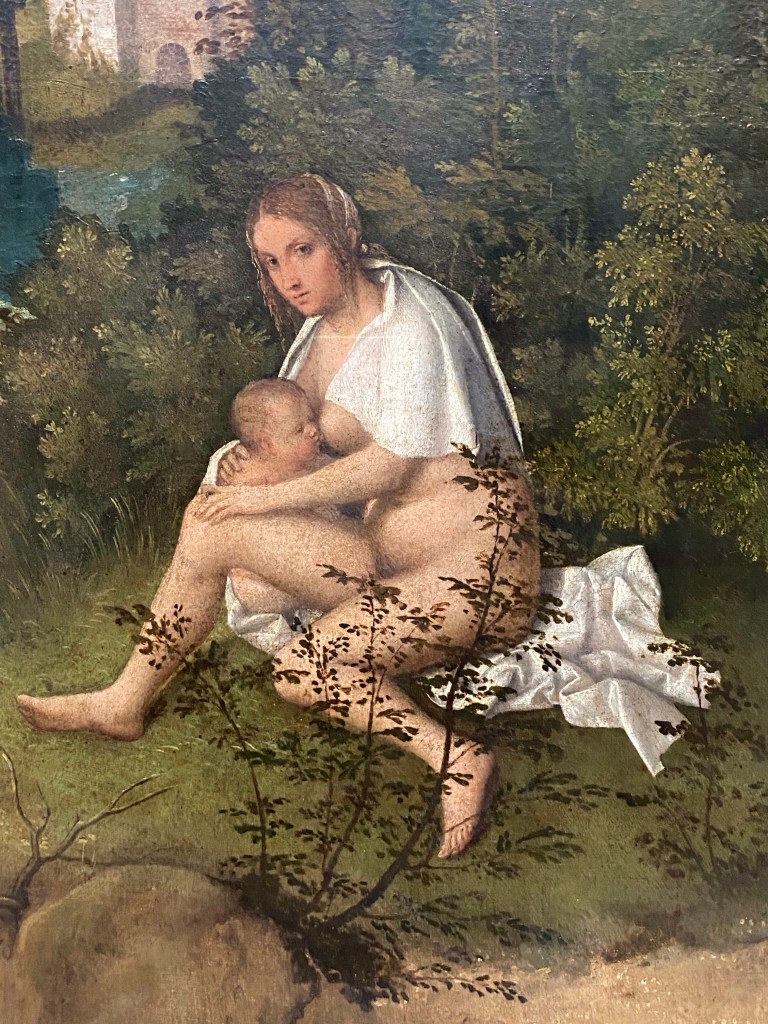
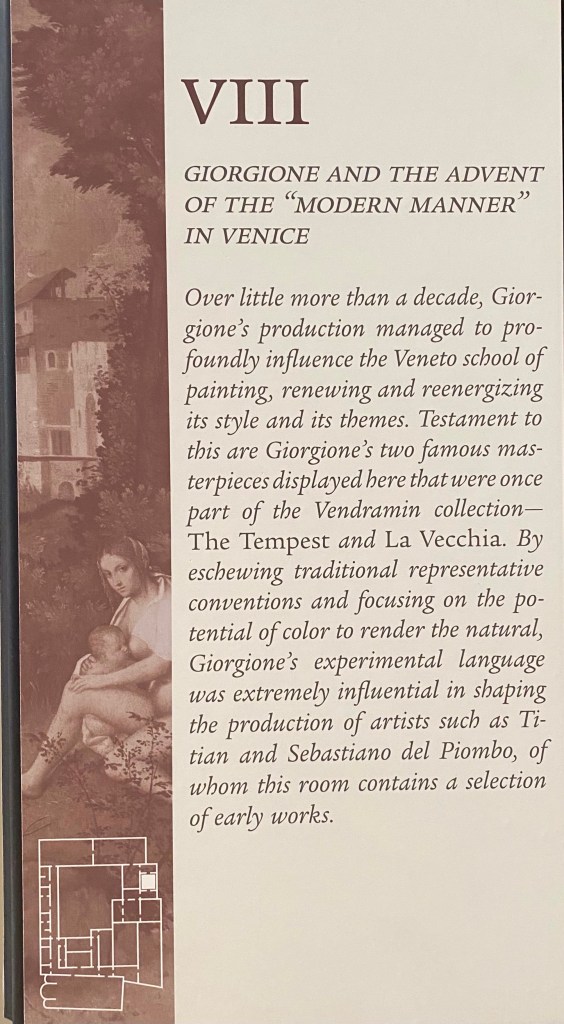
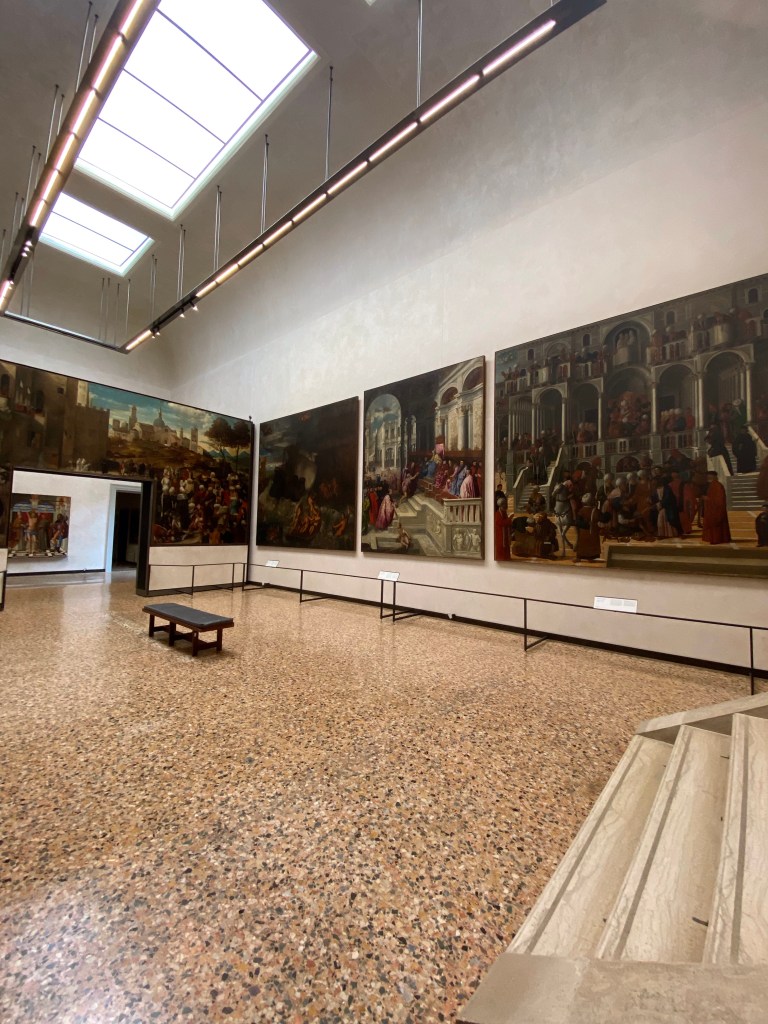
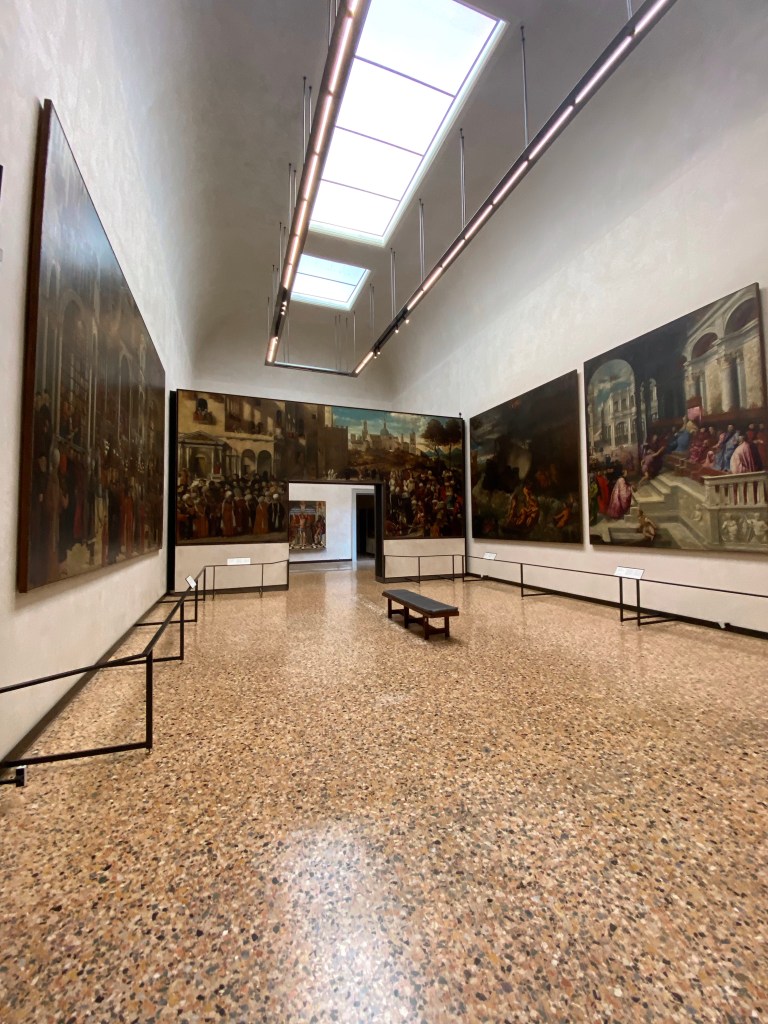
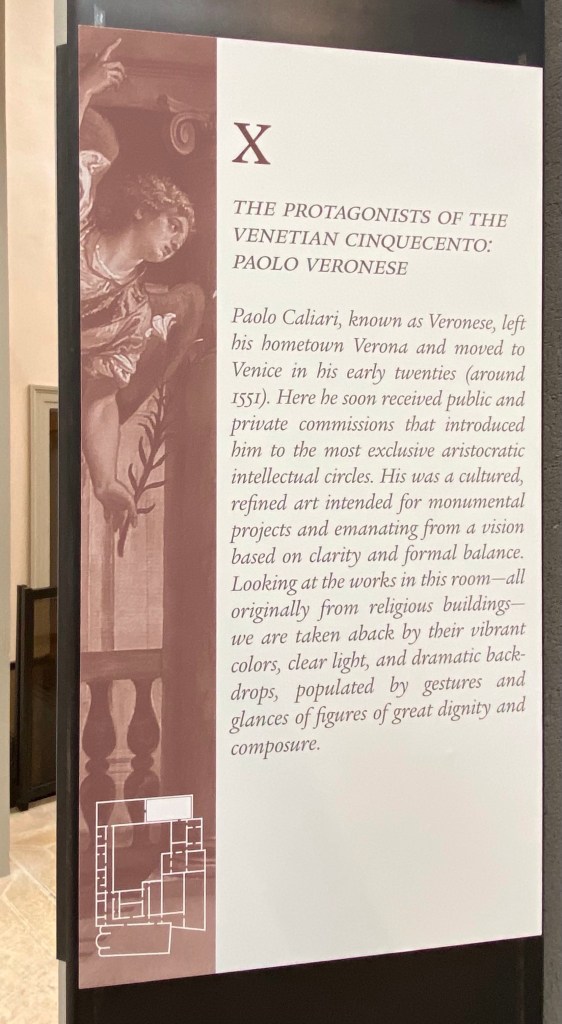
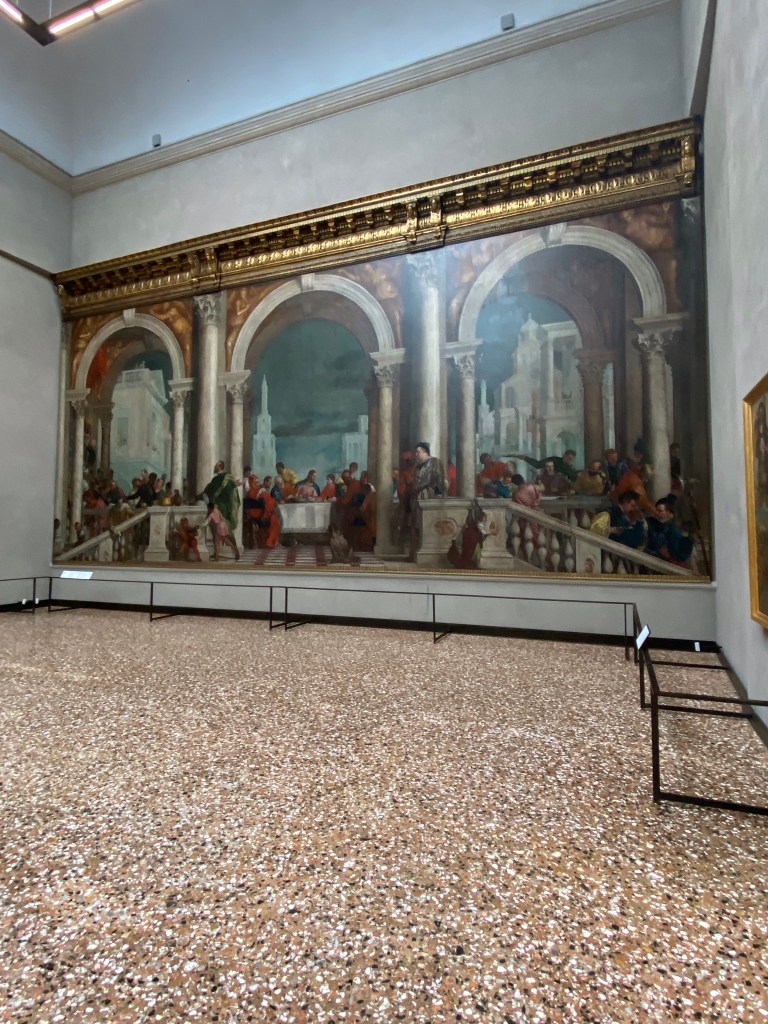
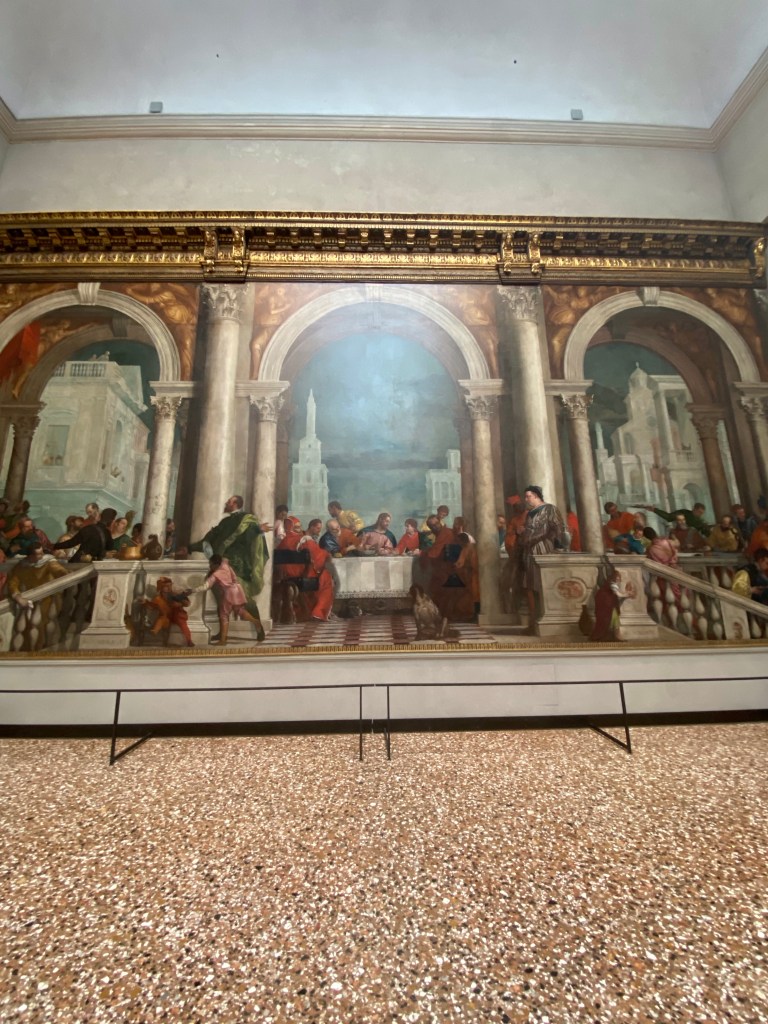
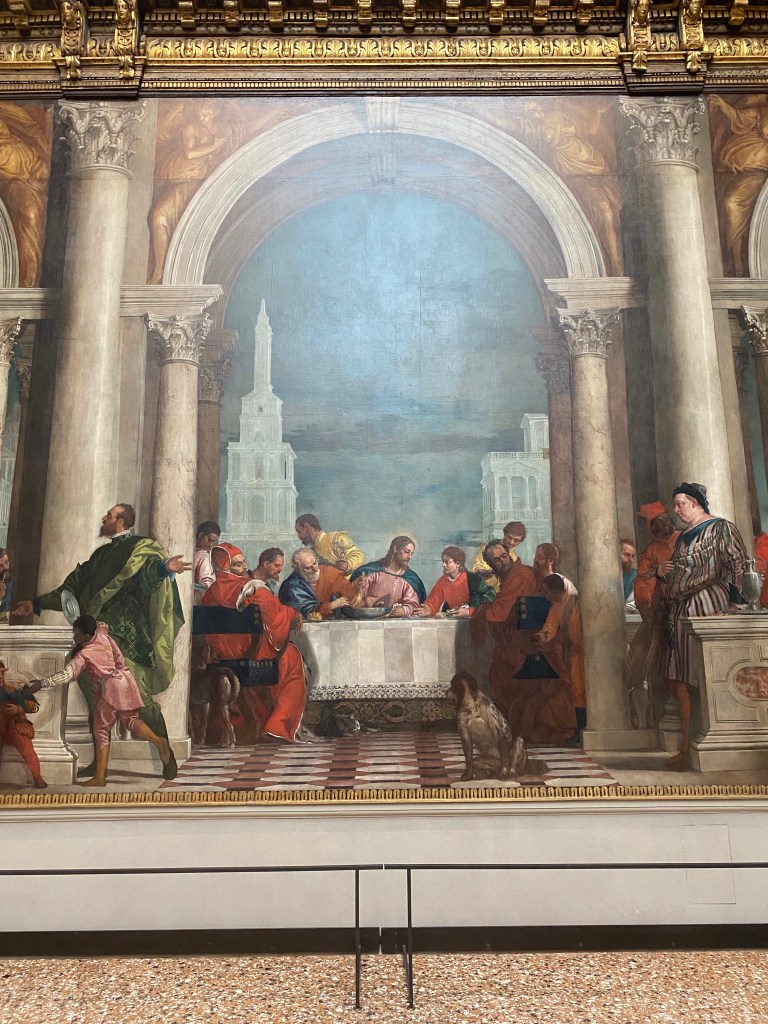
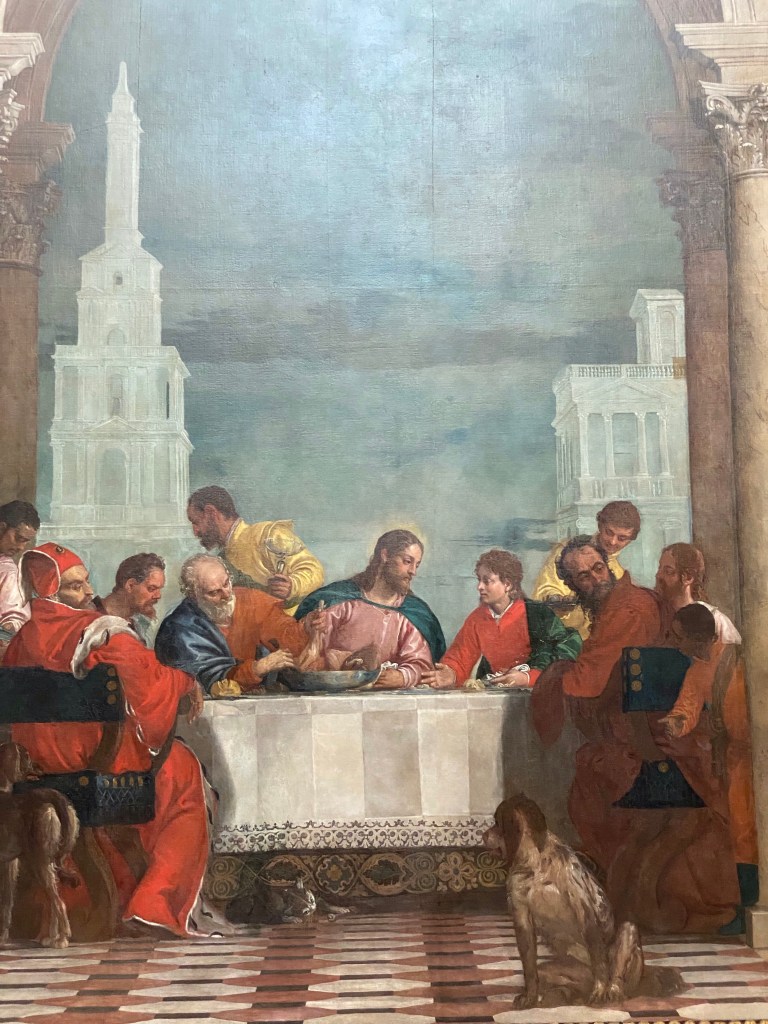
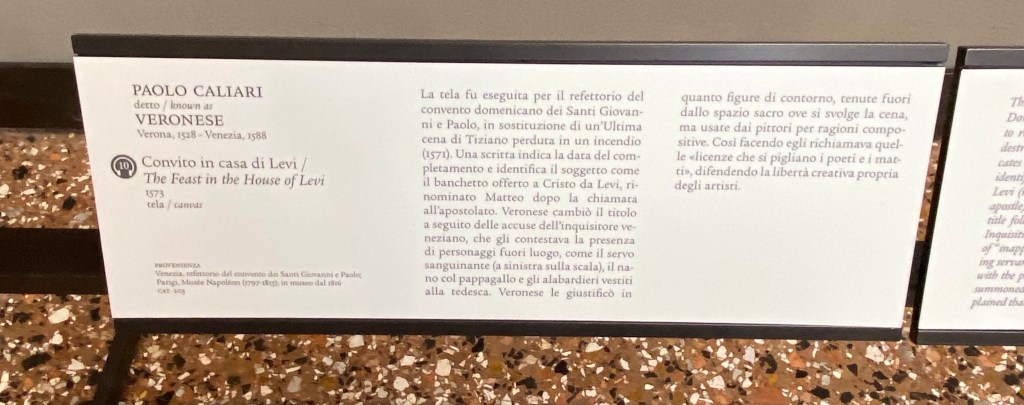
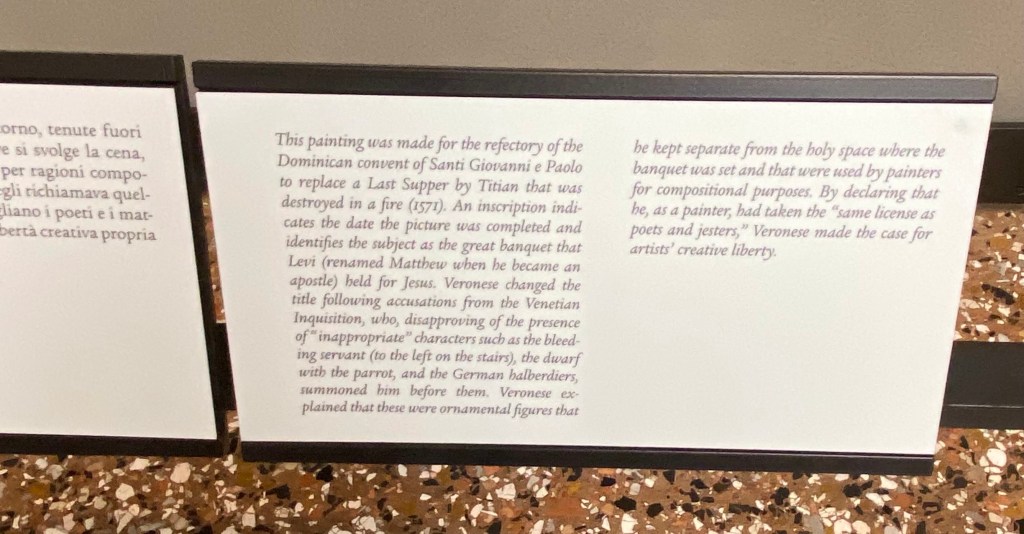
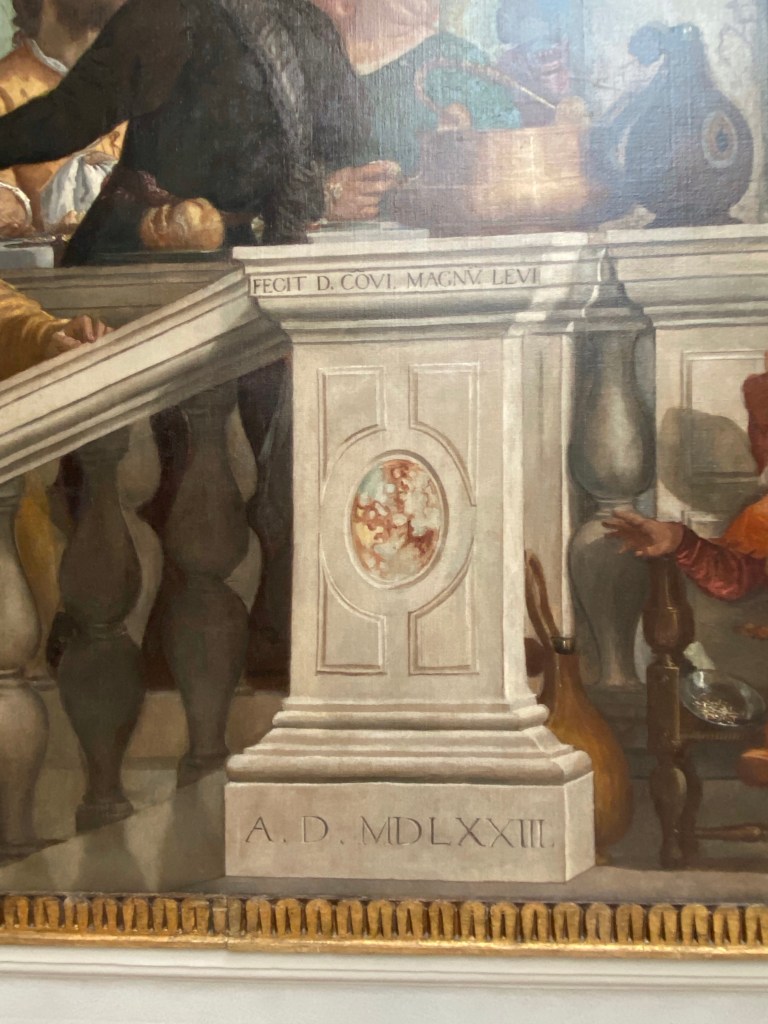
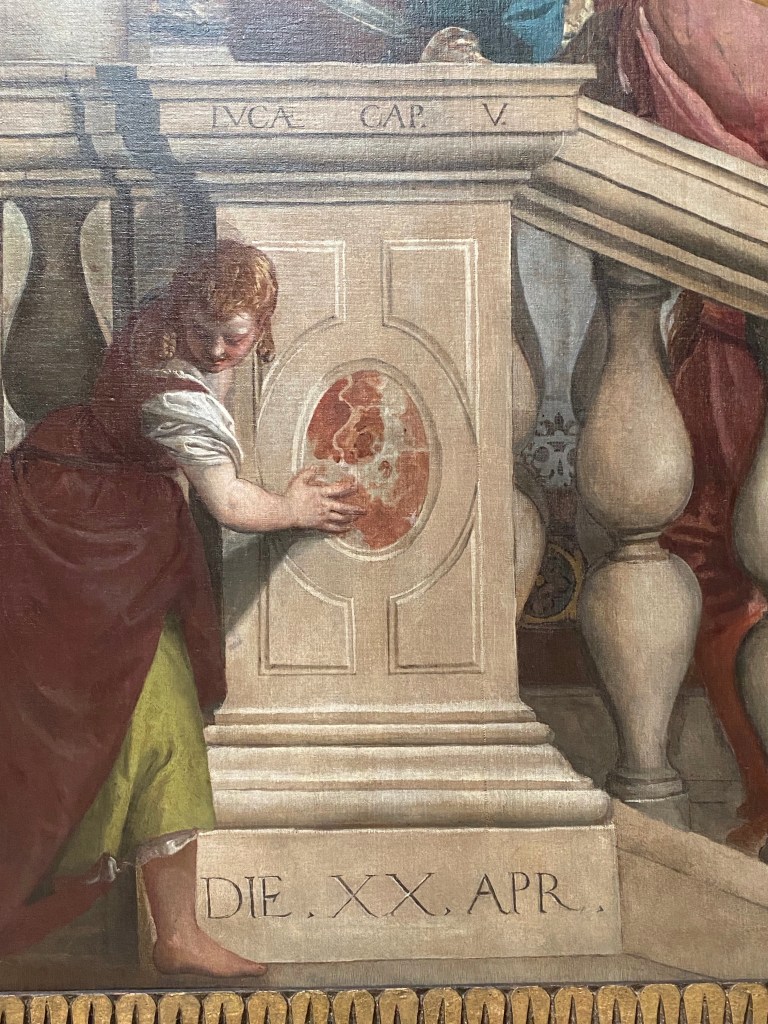
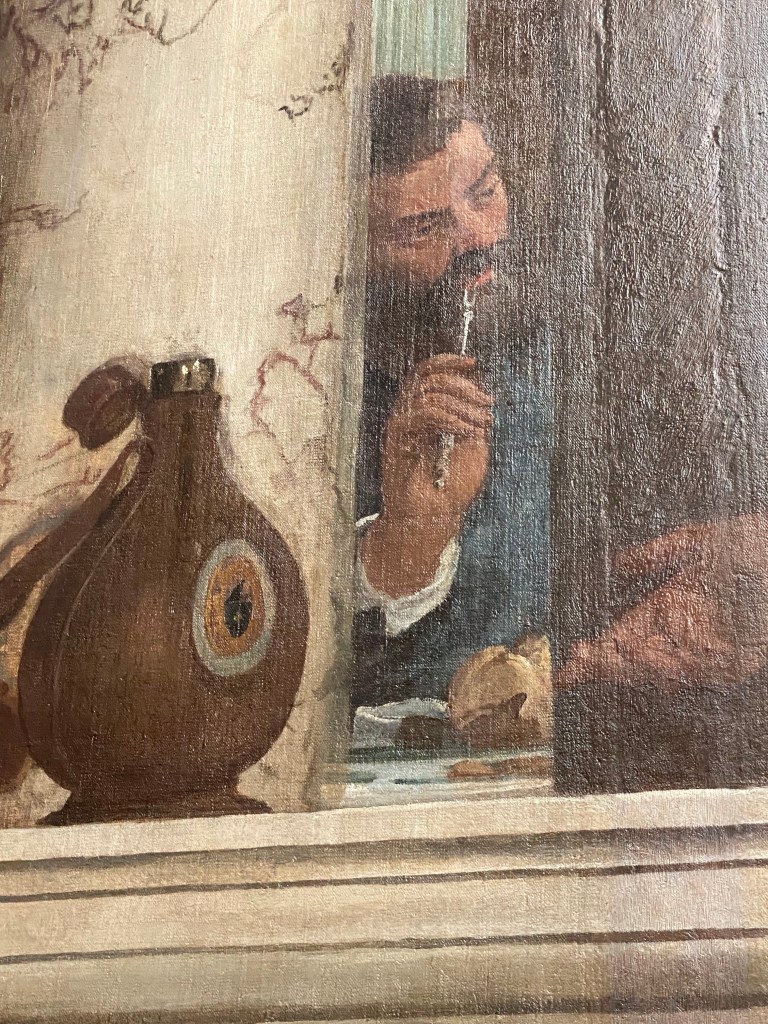
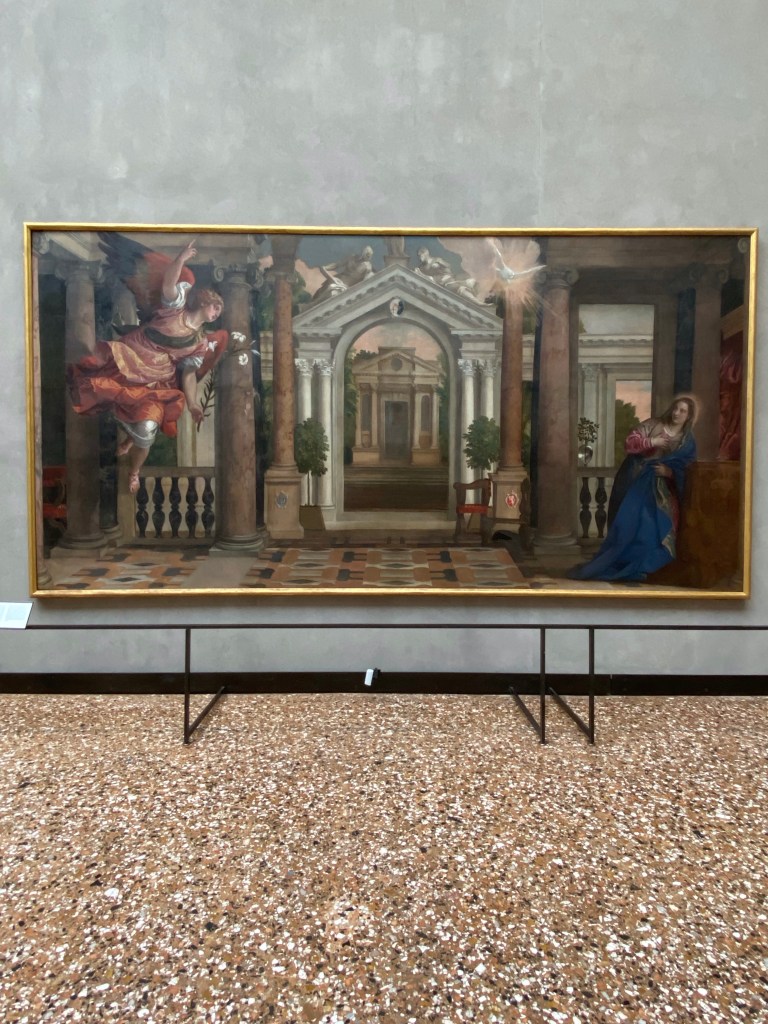
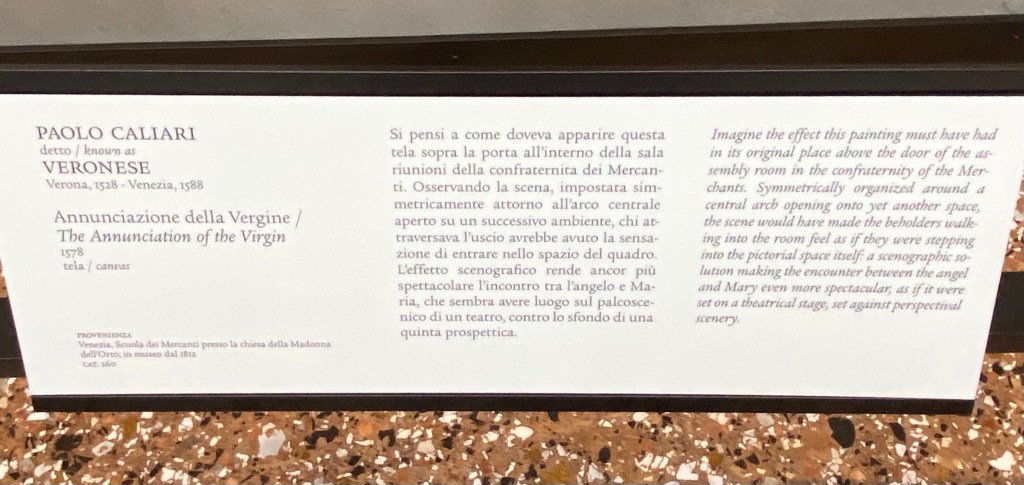
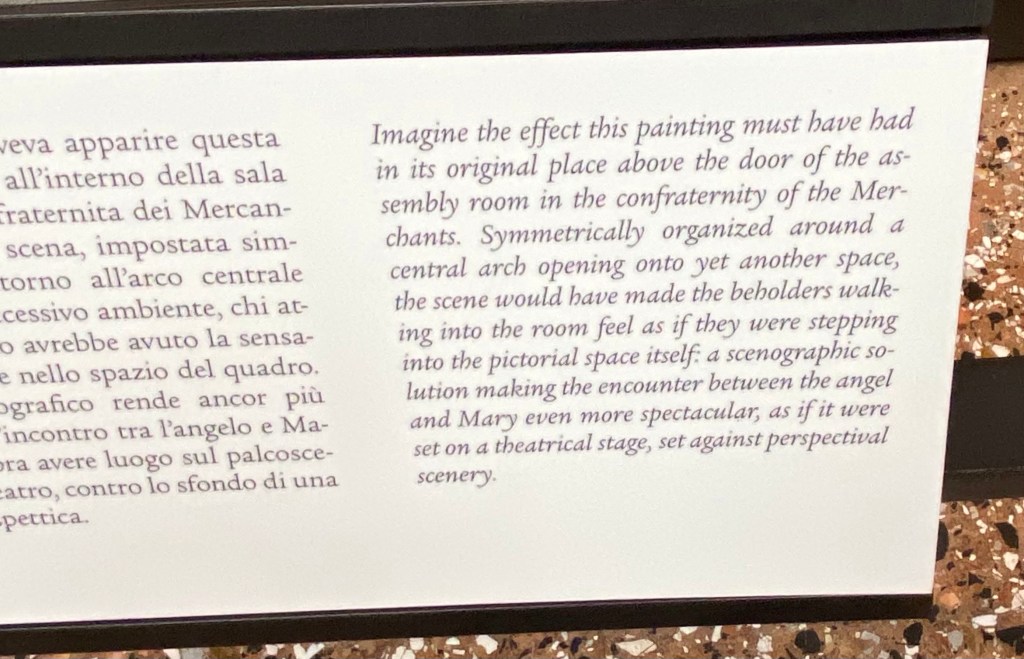
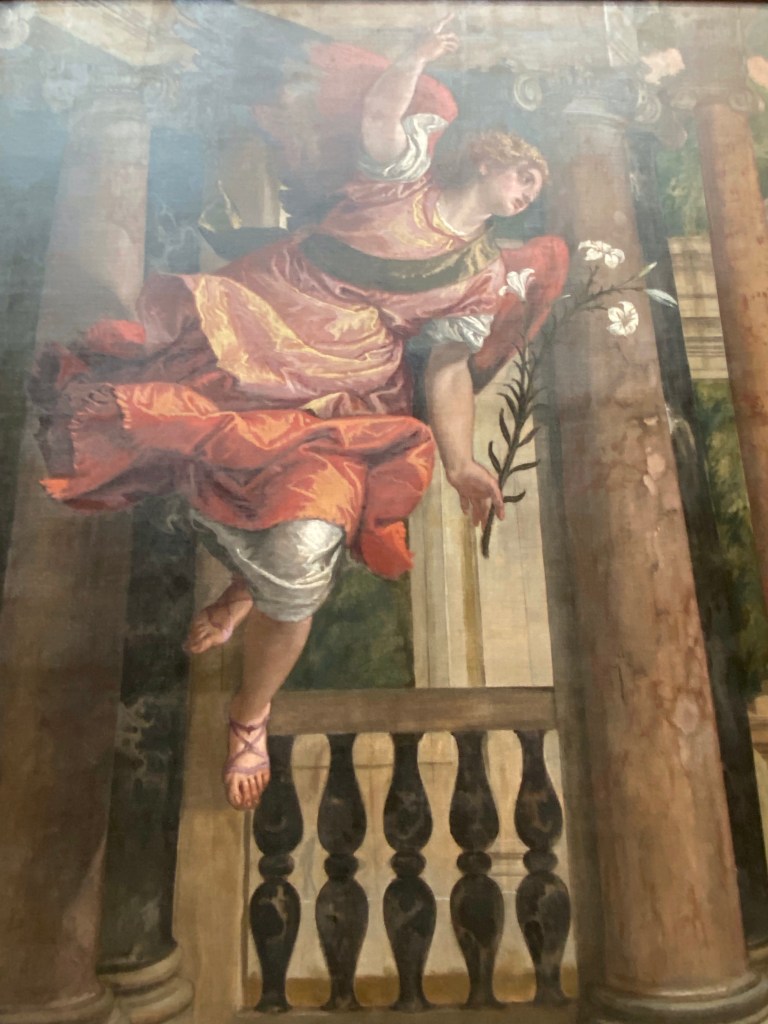
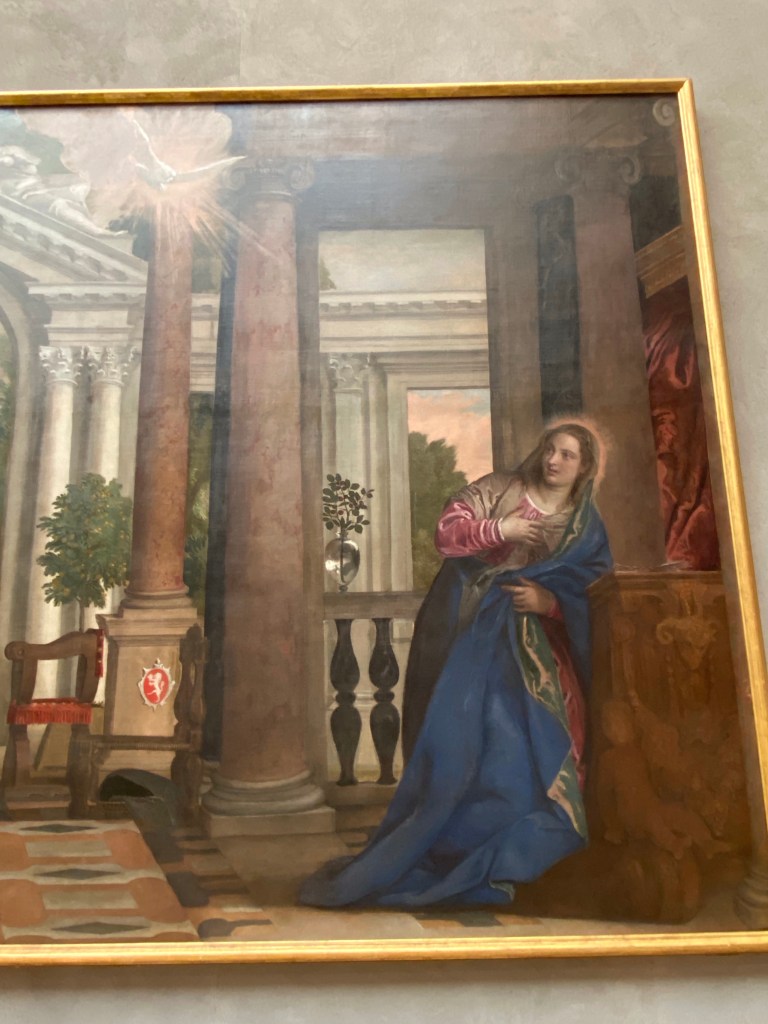
By the time I visited the Accademia collection in Venice in early February of this year, I was already suffering a bit from the Stendhal Syndrome, or an overload of beauty. This happens to me all of the time when I’m visiting Italian cities, or London, or Paris, or New York. Overstimulation of my senses.
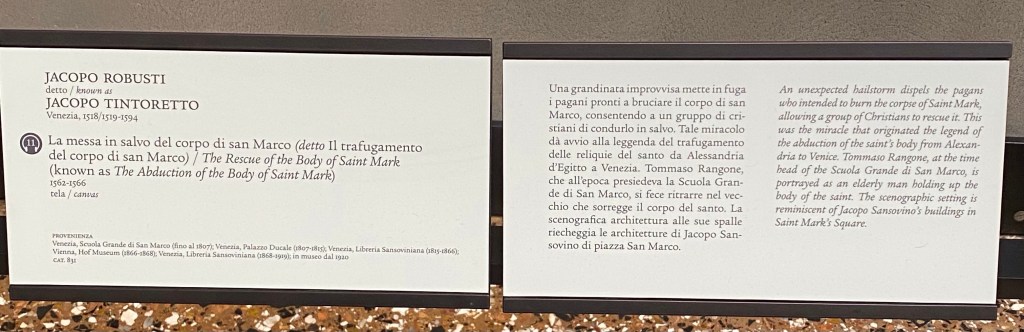
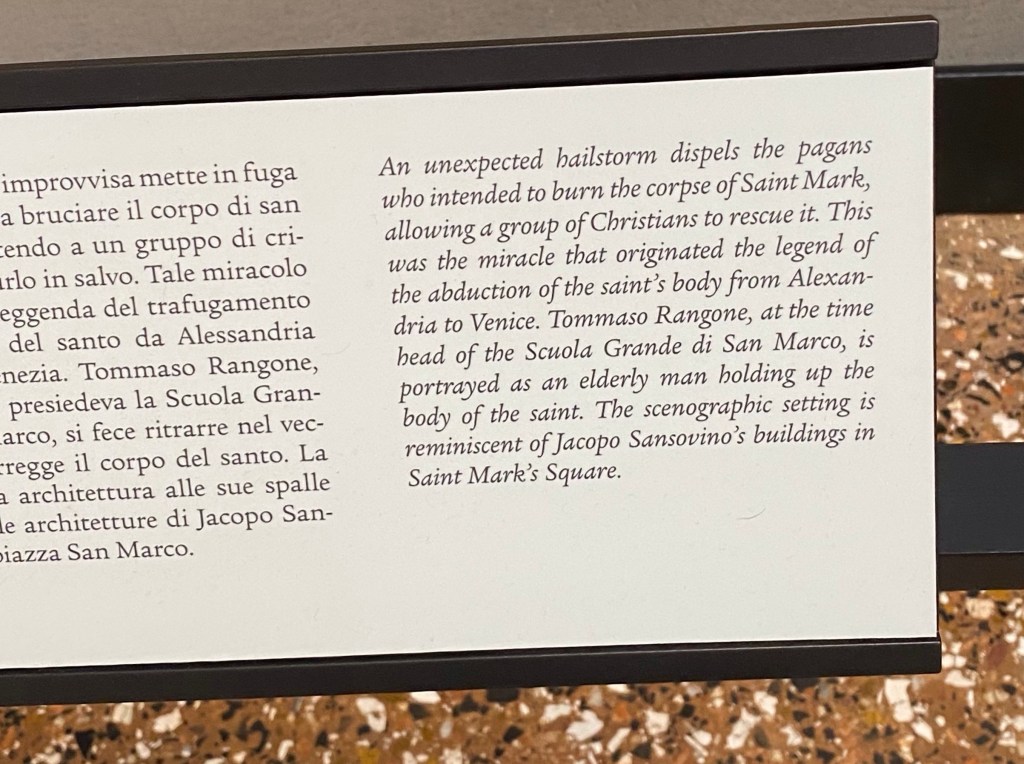
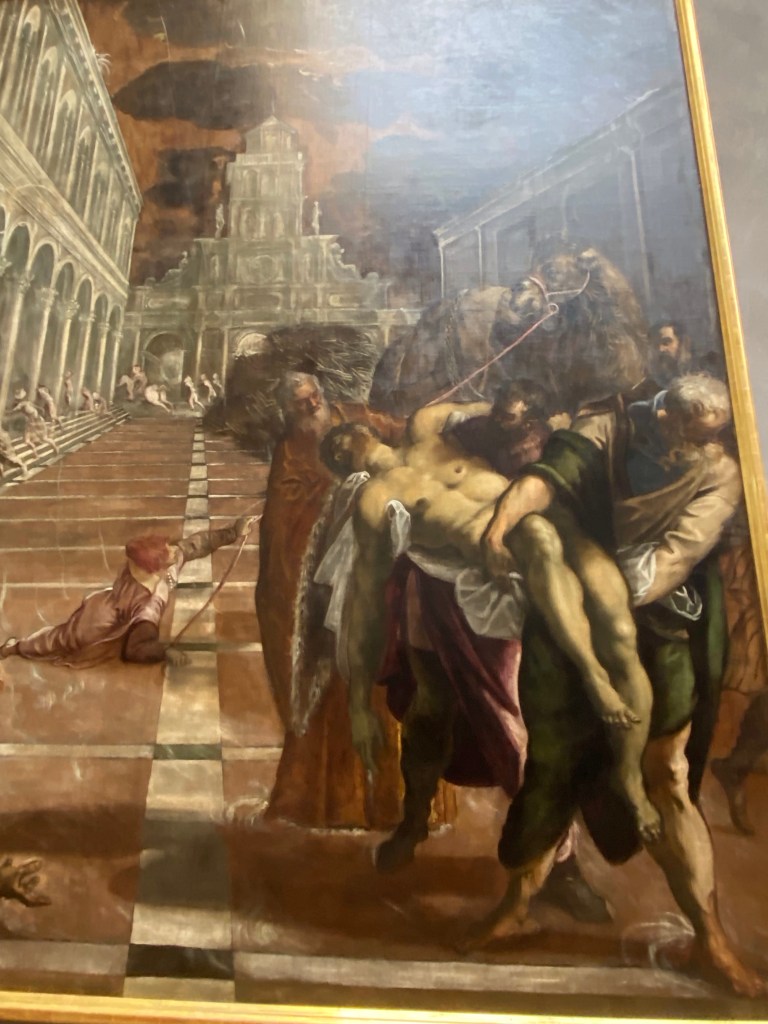
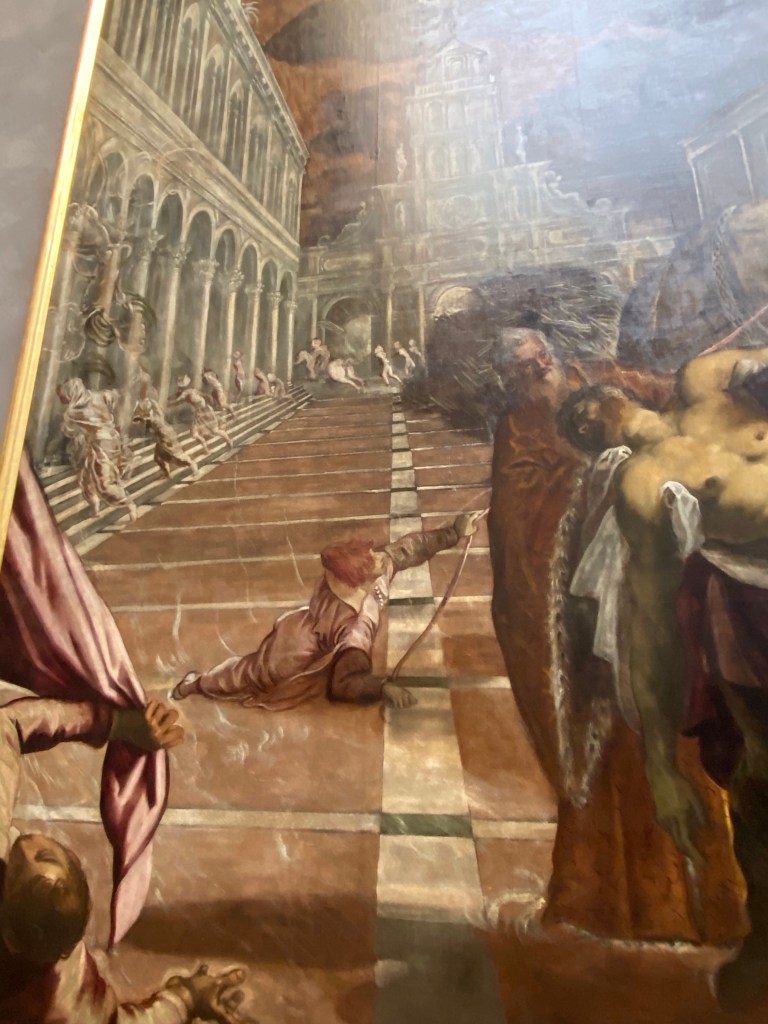
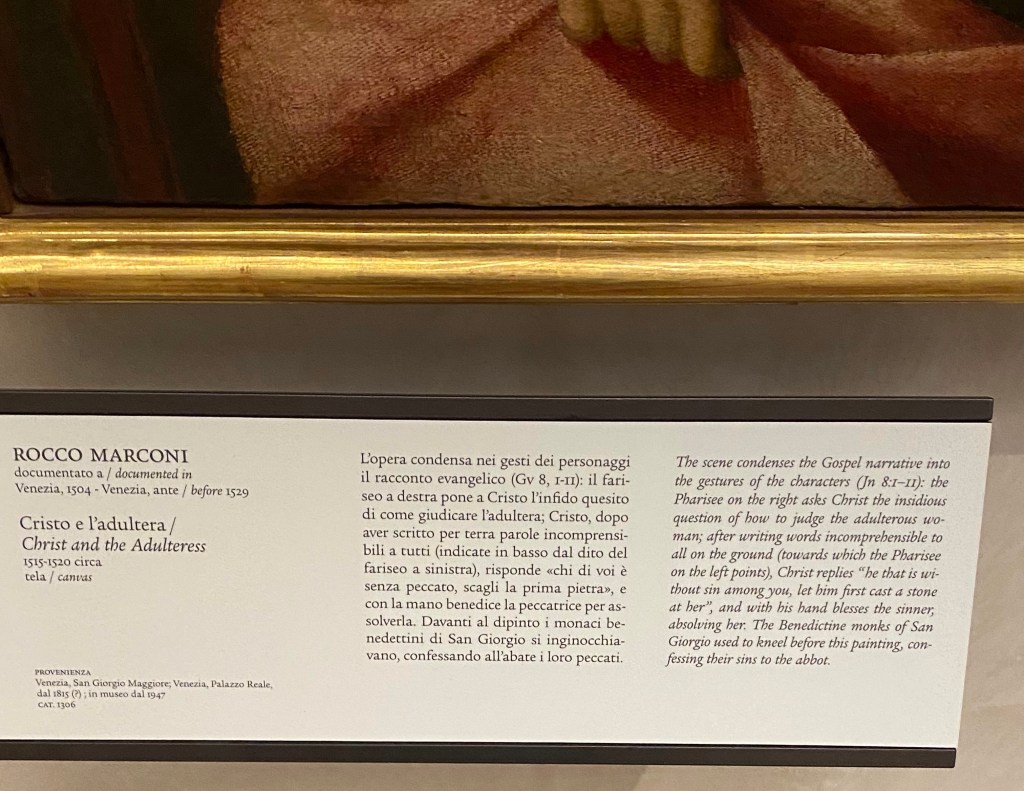
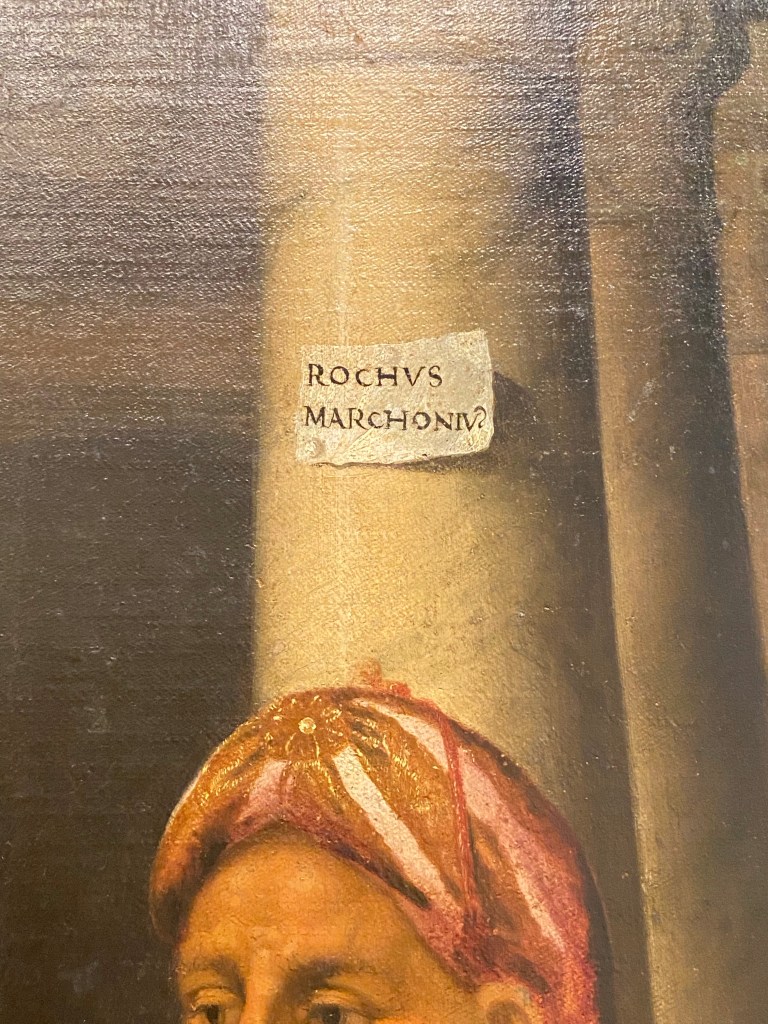
As I am writing this post a week after my visit, I can actually see where the overload begins, as my photographs begin to take on a more random nature. Clearly I am walking into a space and experiencing it with all my senses; looking up at the ceiling, down at the pavement, and like a magpie, my eye is caught by shining things. Usually when visiting an art exhibition, I will take a photo of a label describing the work of art for later use as an aide memoire. When I’m later writing a post and don’t find any pictures of labels, I know Stendhal had kicked in!
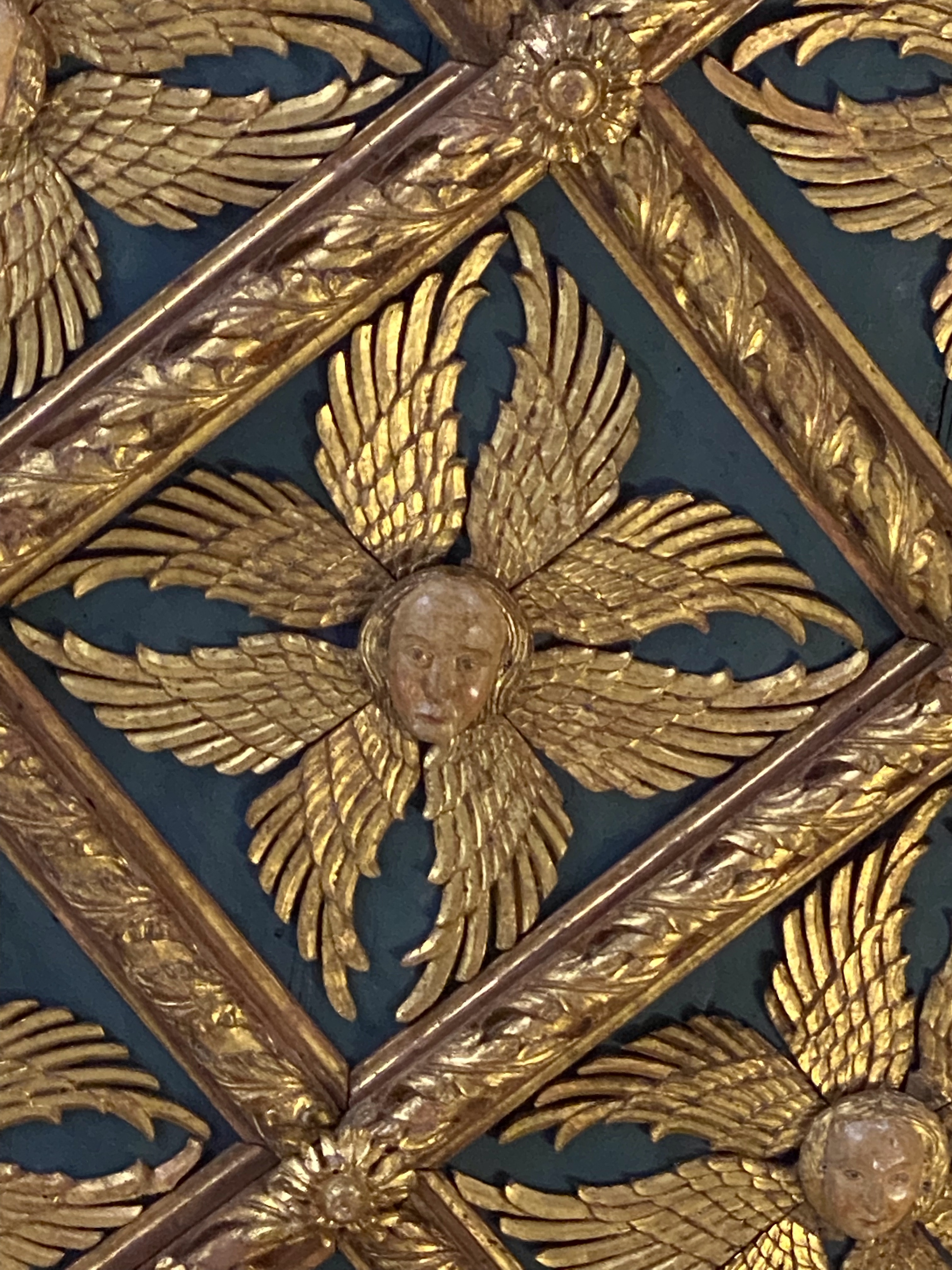
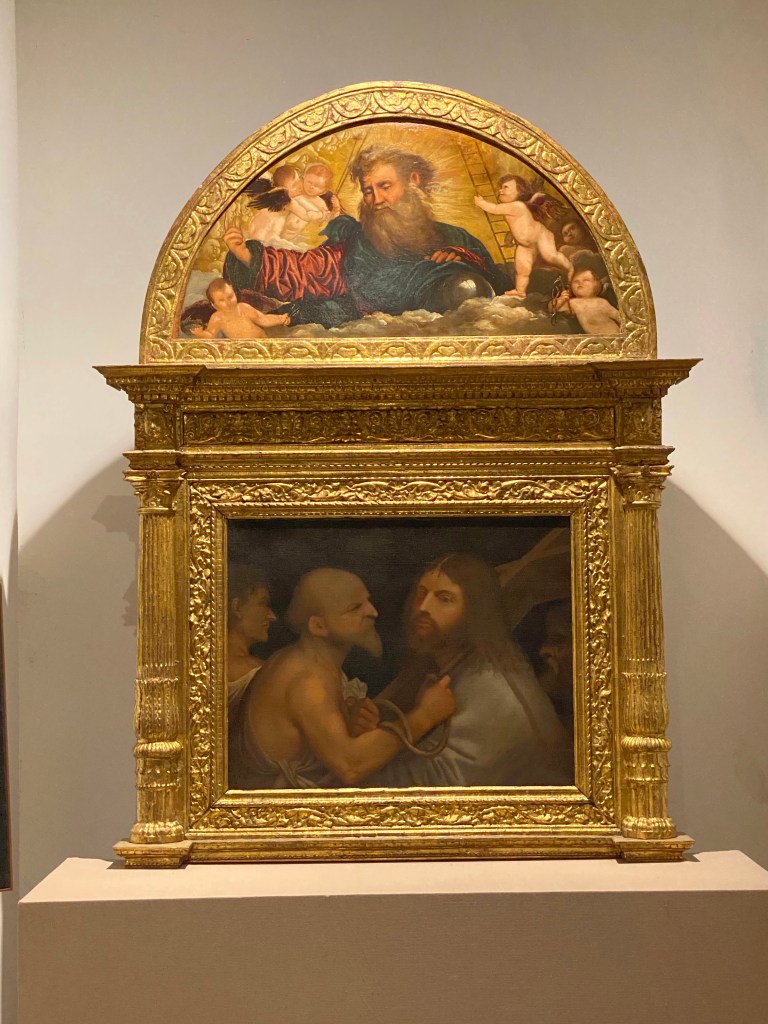
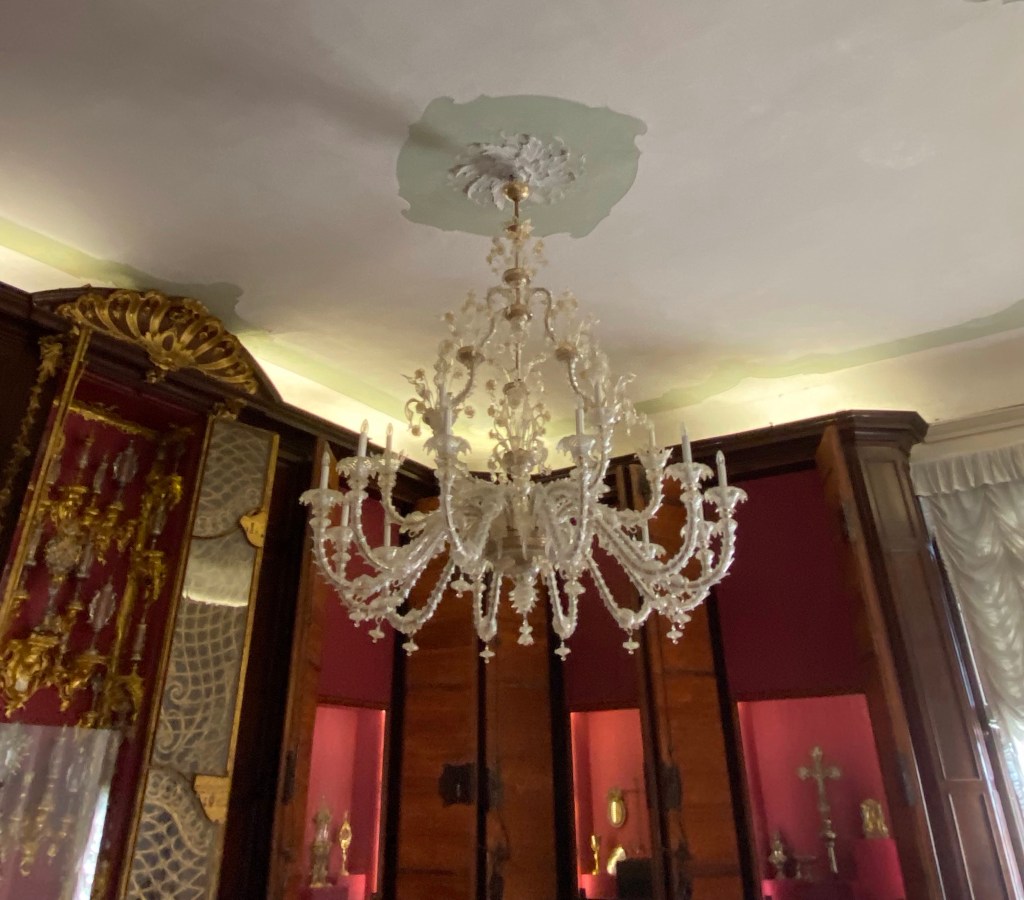
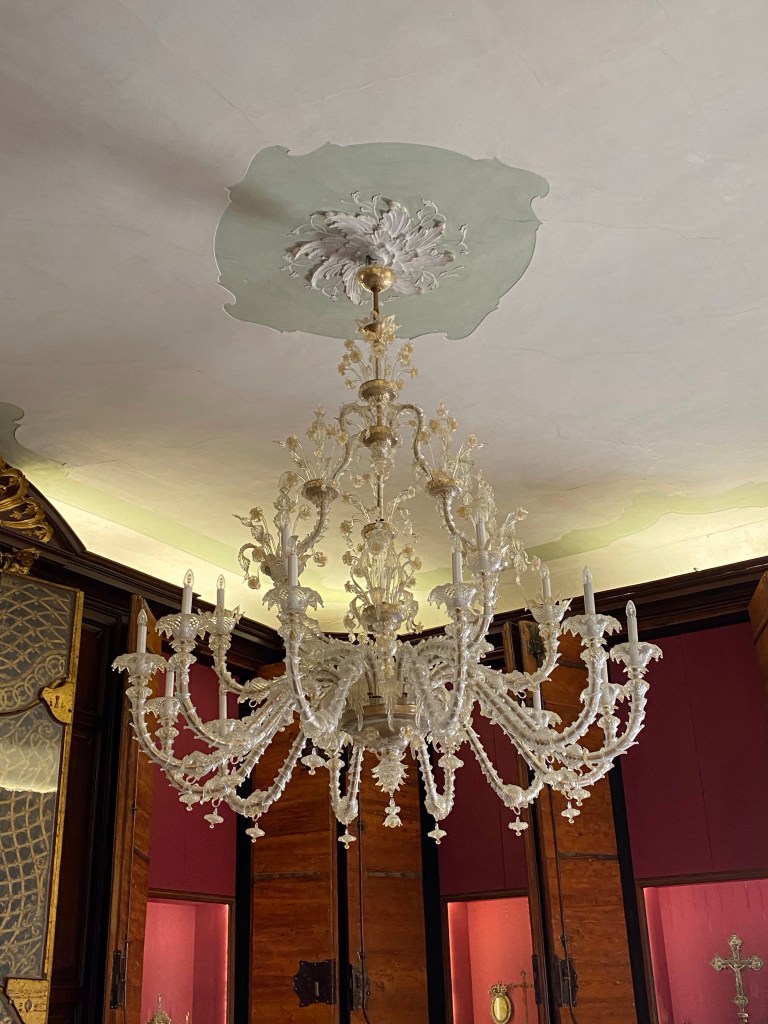
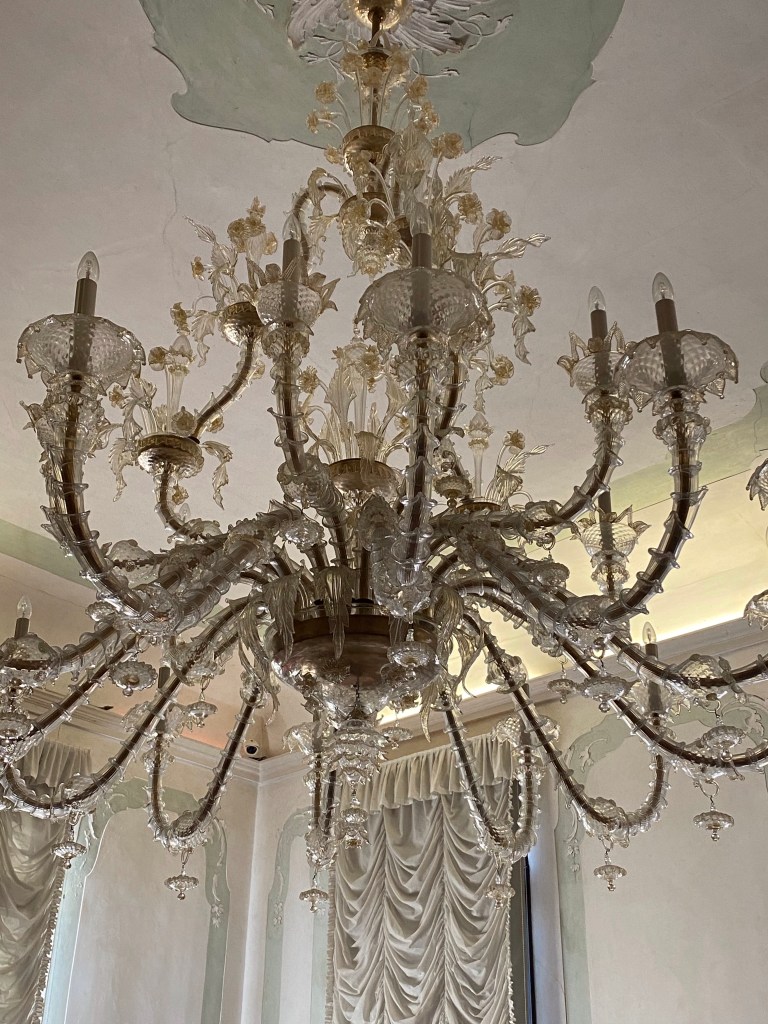
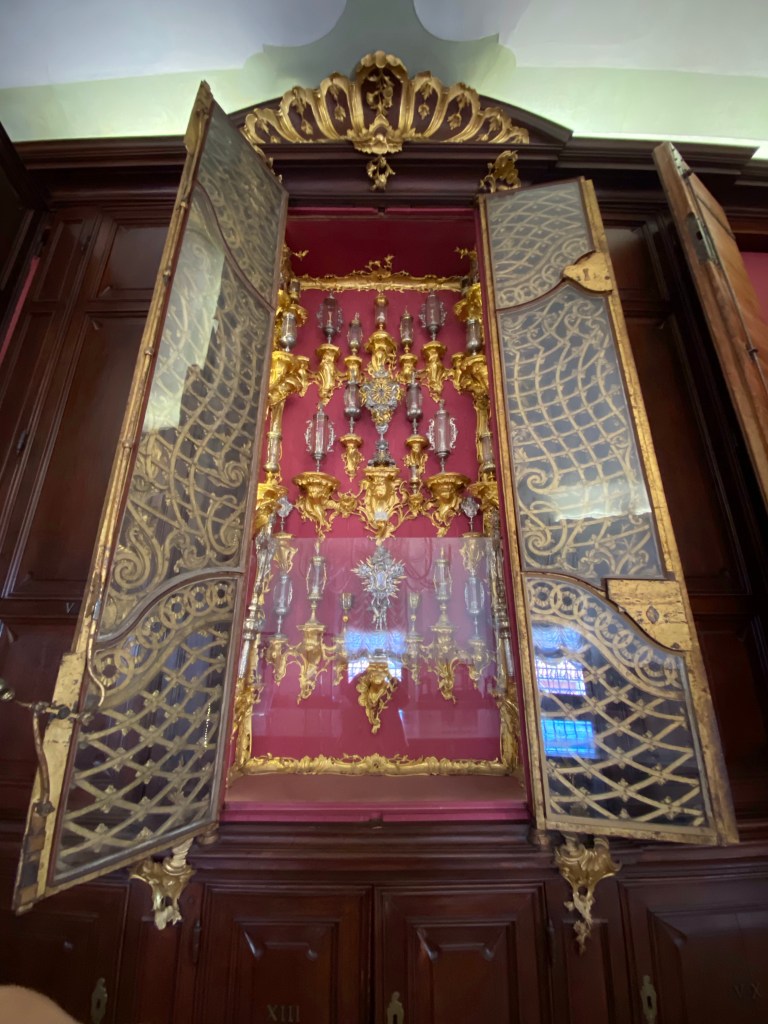
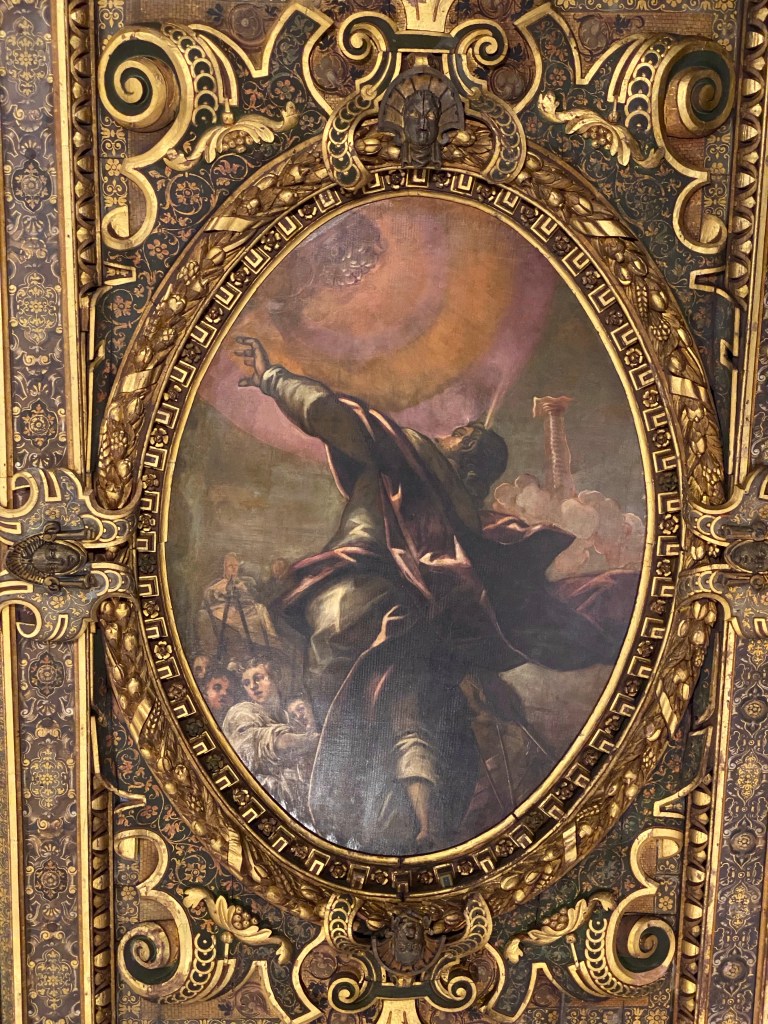
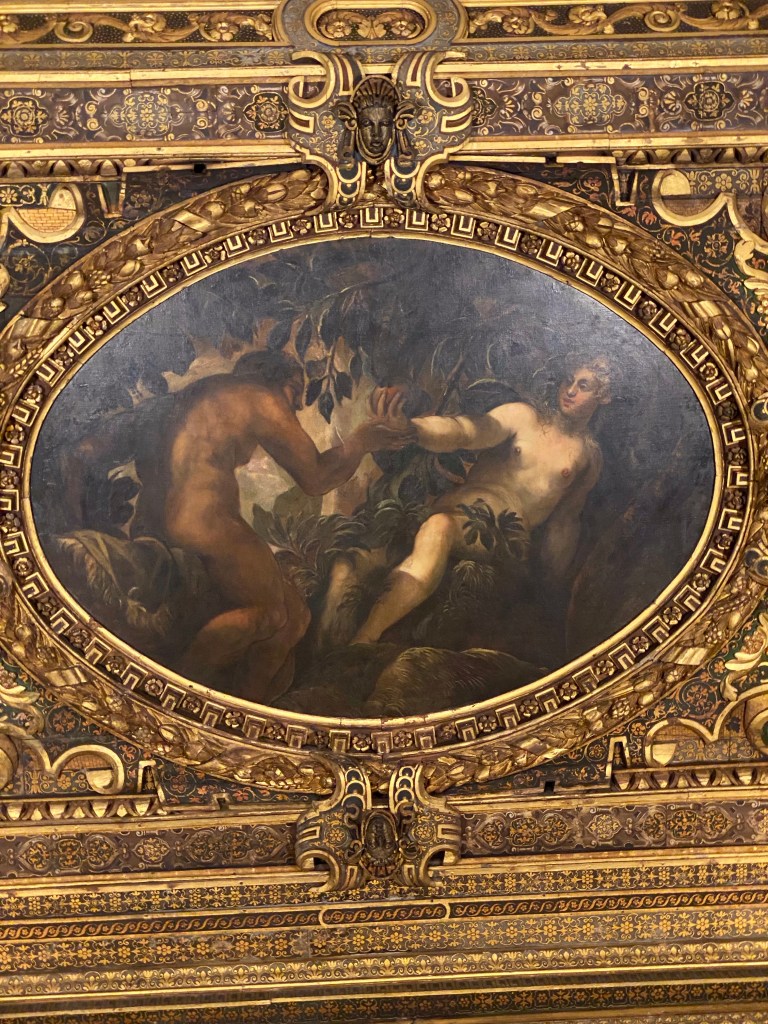
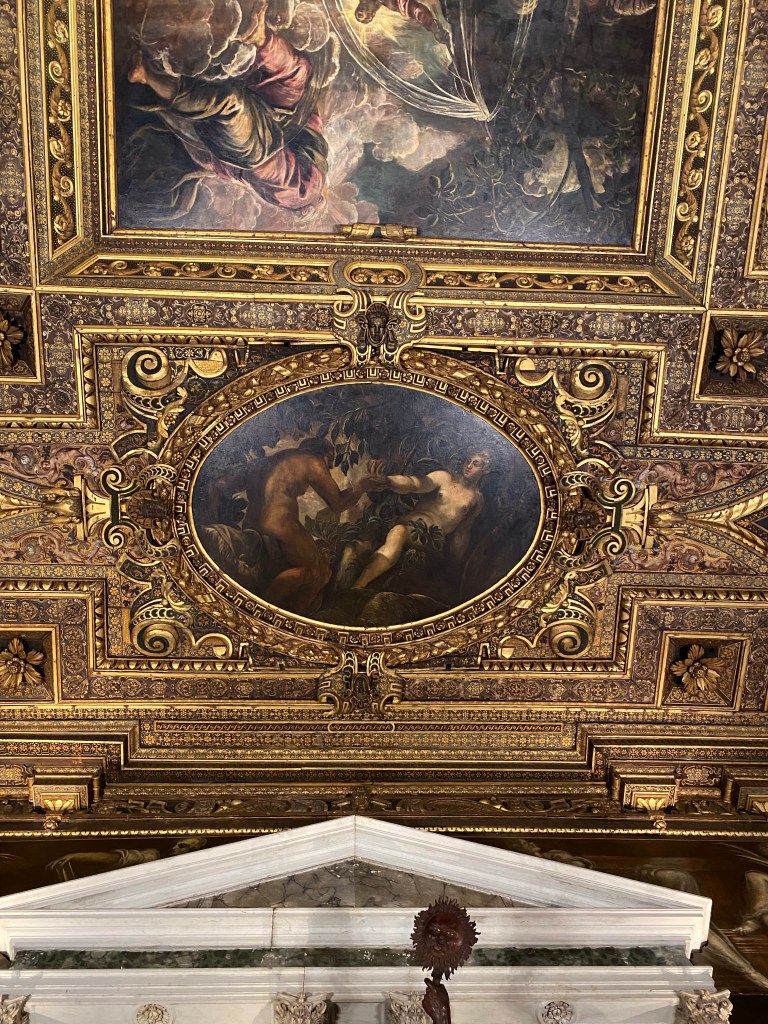
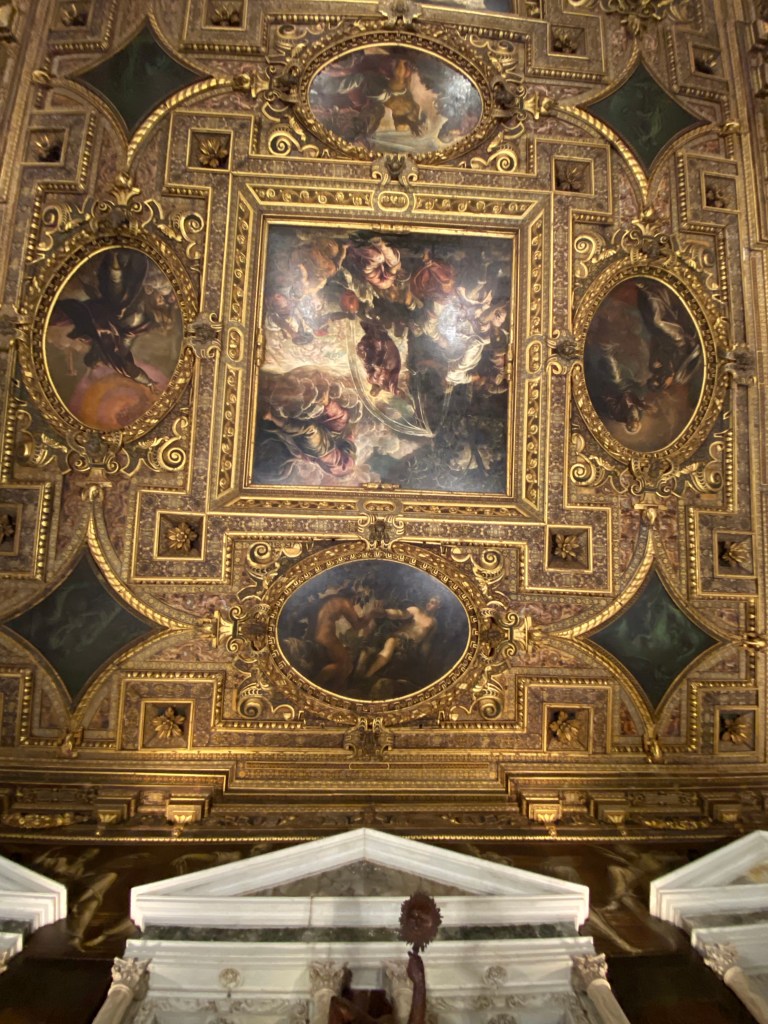
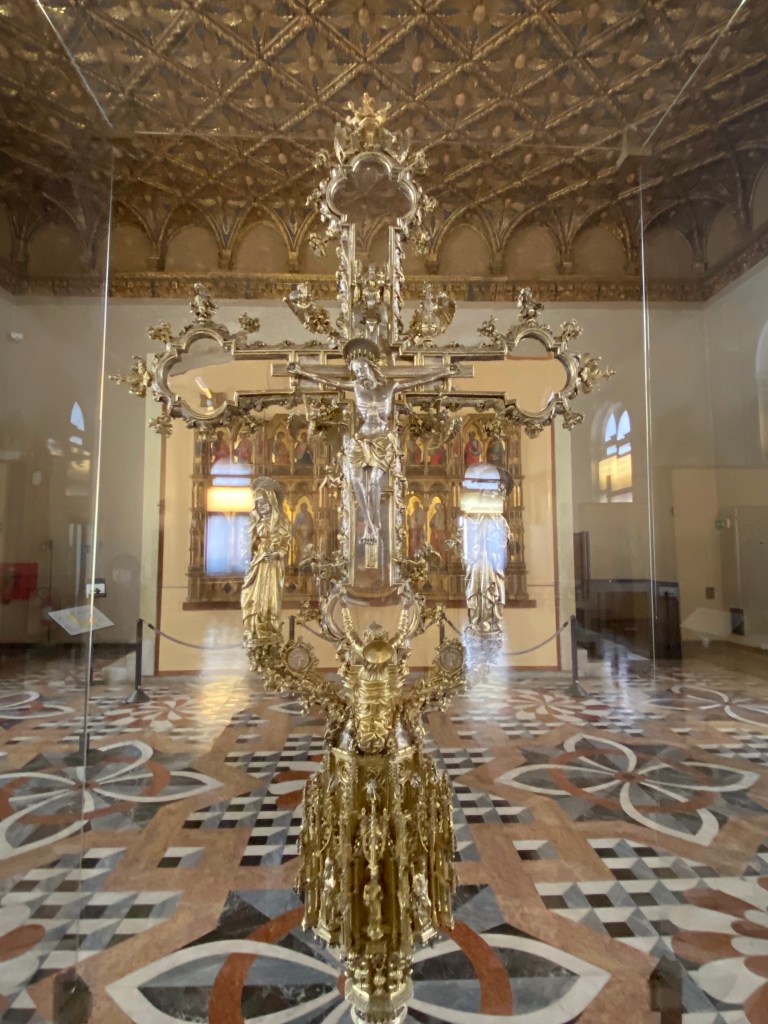
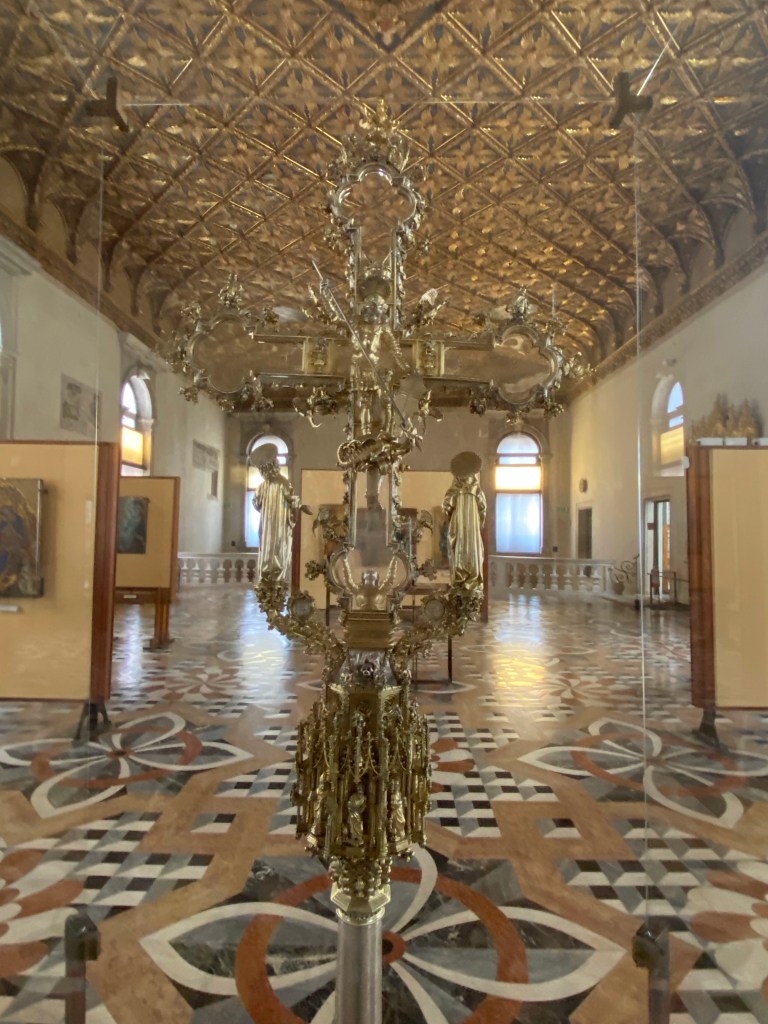
Case in point. Look at this ceiling and reliquary in the Accademia. With no picture of any label! I mean, it’s impressive! But, how about some details? Who made it? When? Why? As an art historian, my brain needs to ask these questions.
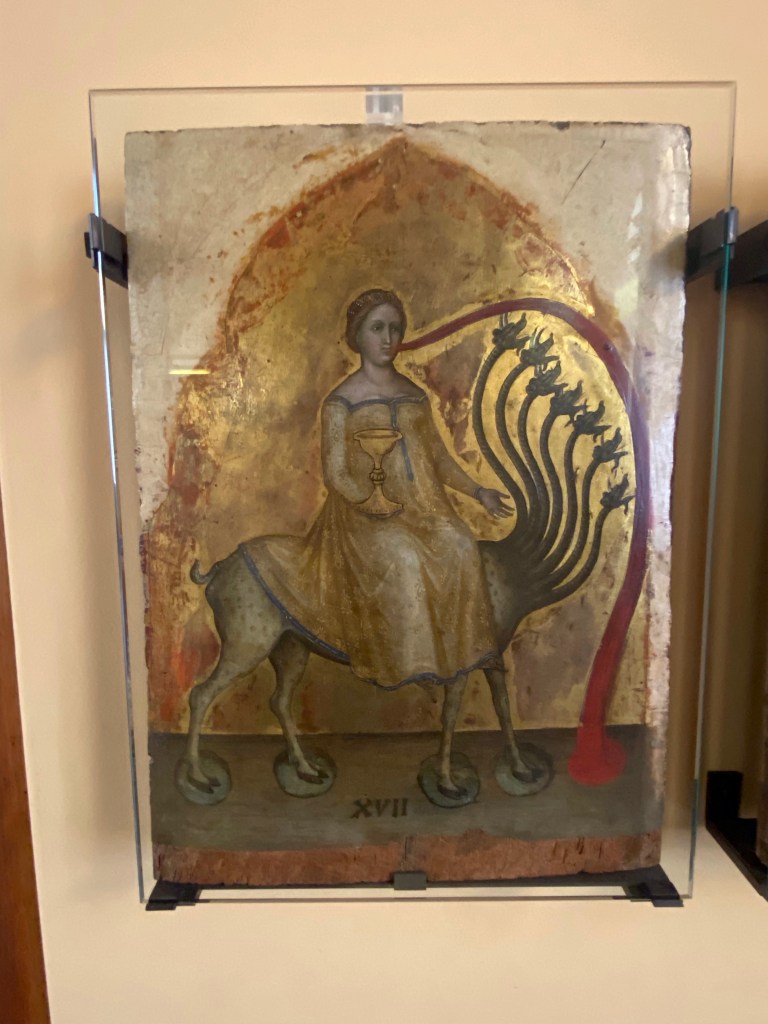
And then, I presume, the painting below caught my eye and I took a picture. It’s an odd presentation of some feminine church related figure riding a very strange beast. I’m sure that’s why I took a picture, but where’s the label? Presumably it was right beside the work. We may never know.
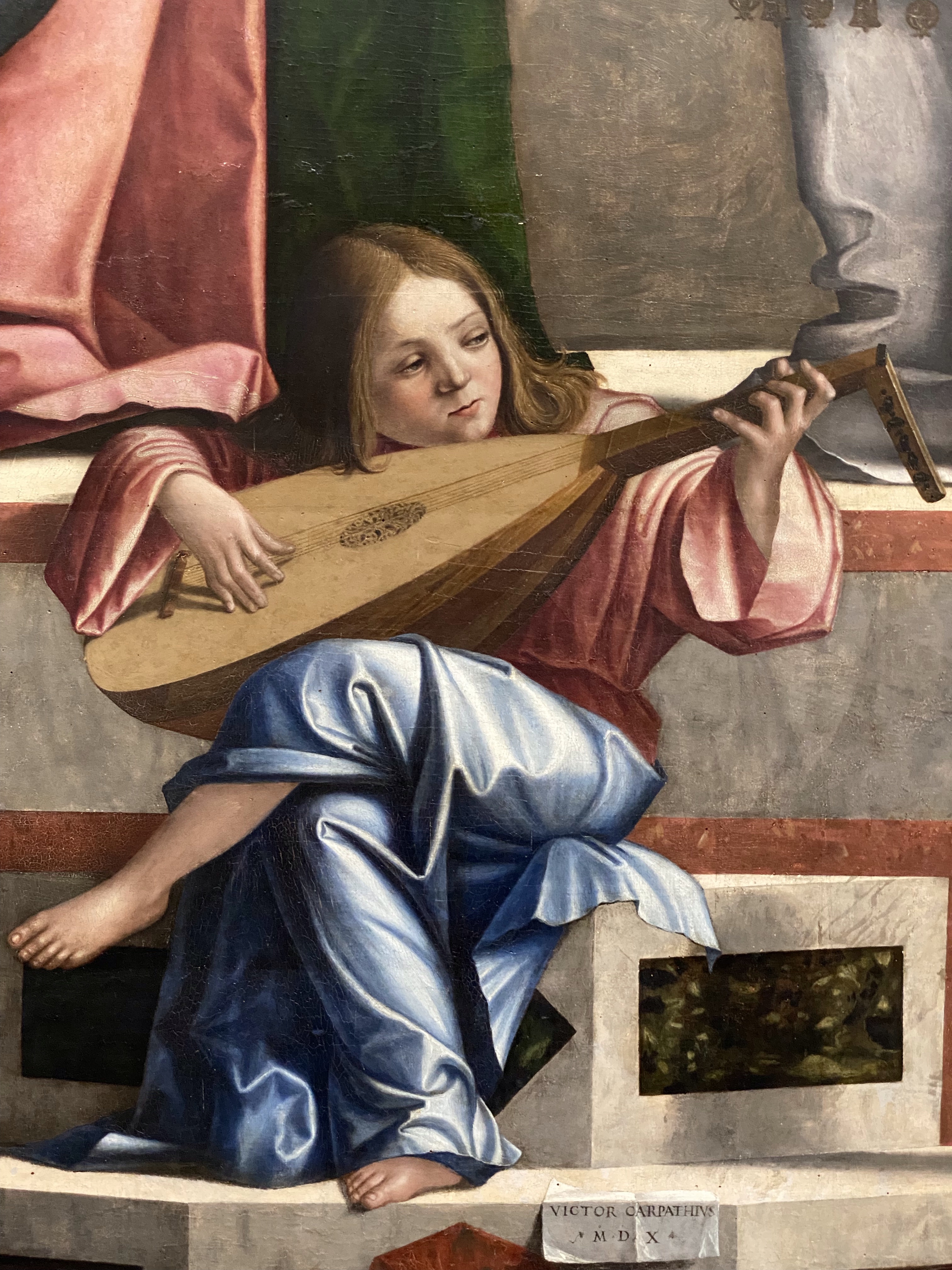
Ah, but then my senses focus again upon encountering this masterpiece by Carpaccio! OMG. So gorgeous!
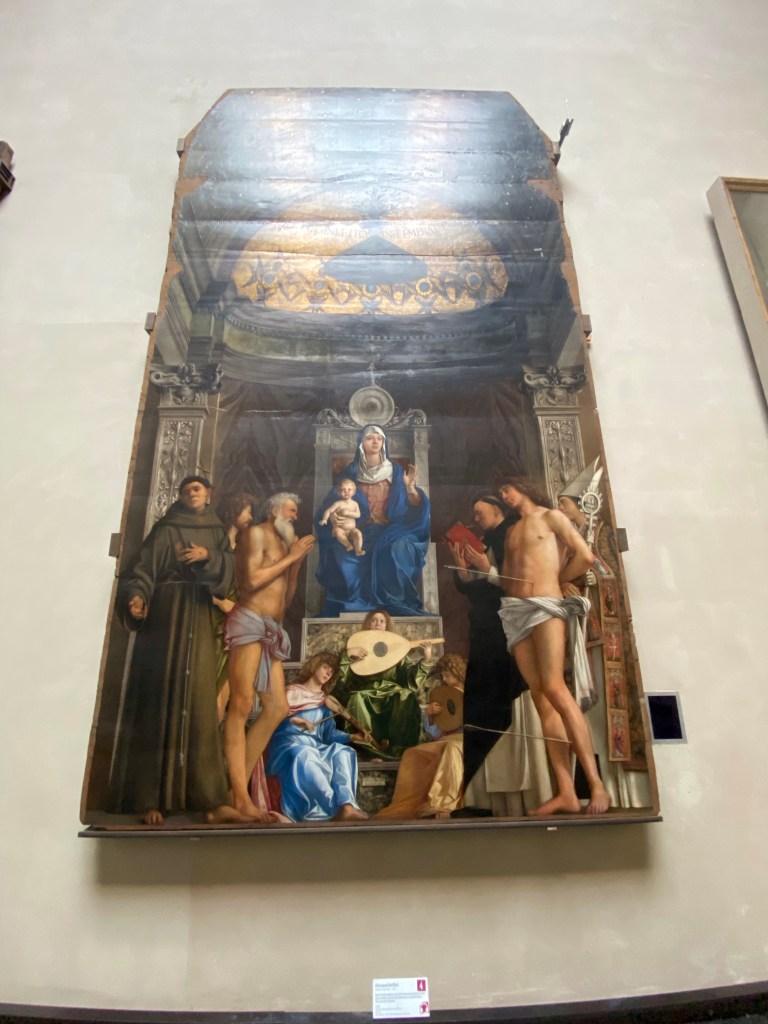
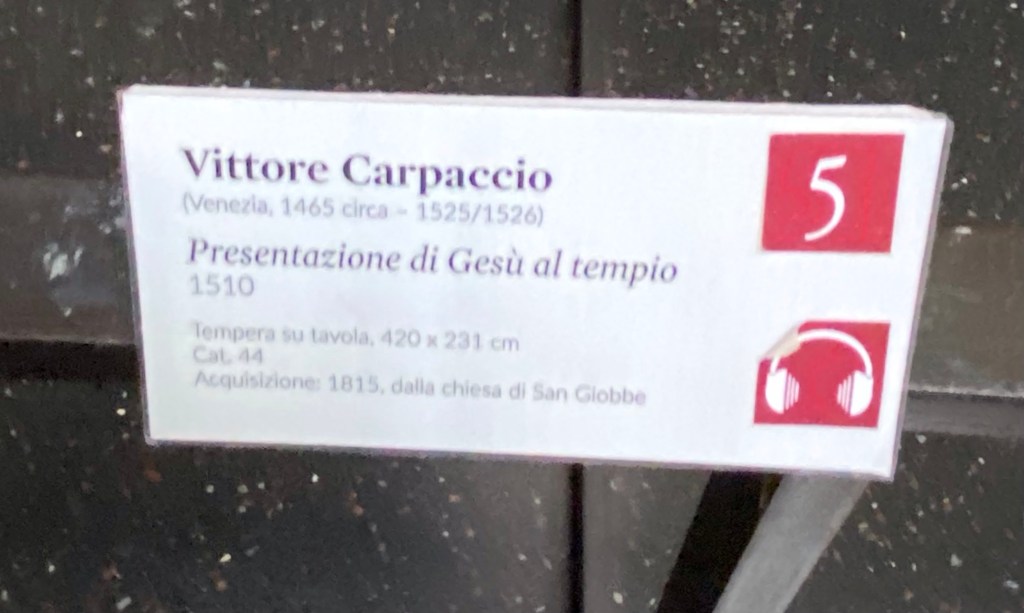
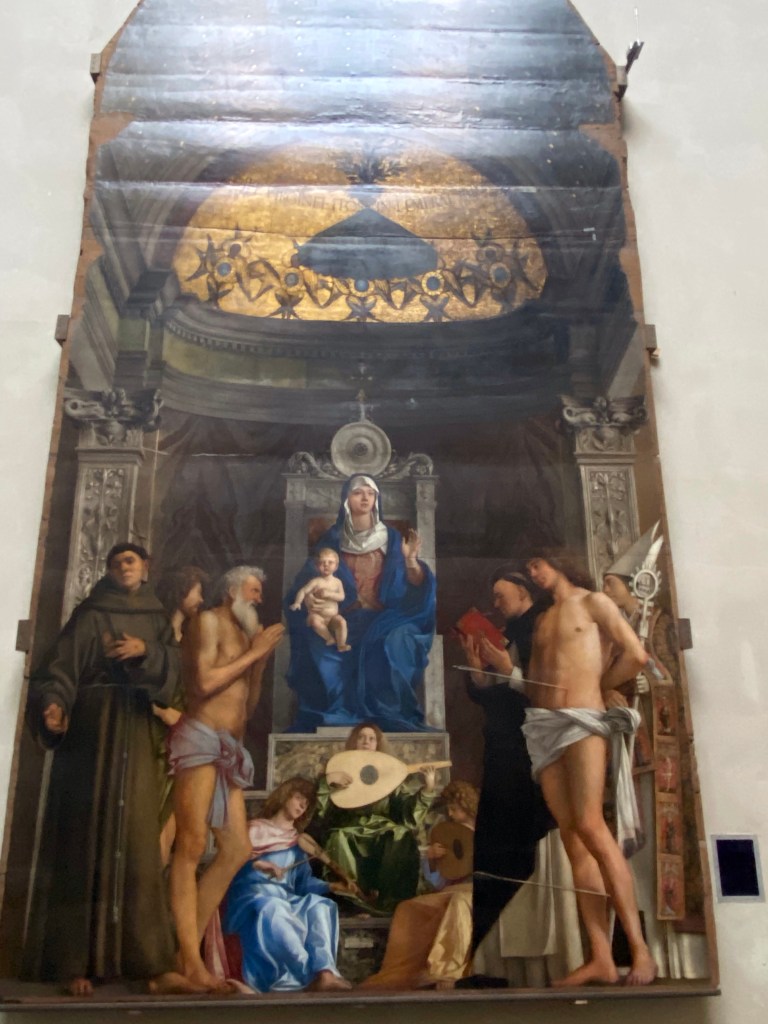
And, next to the first magnificent painting by Carpaccio above, is this second one, depicting the presentation of Christ in the temple.
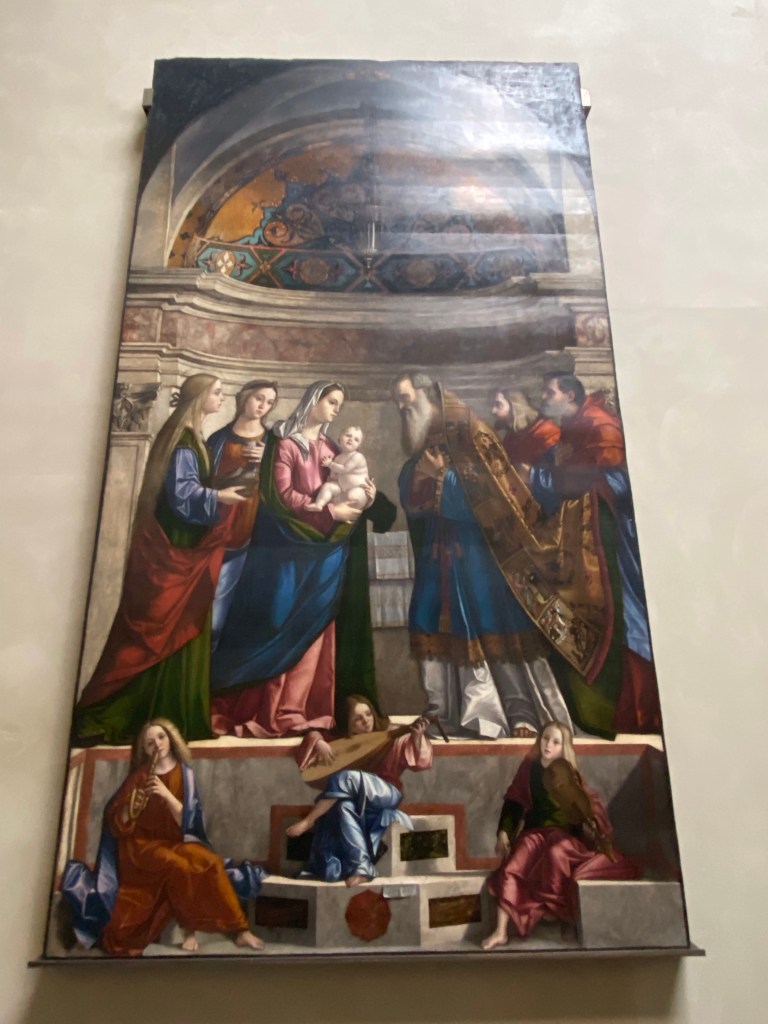
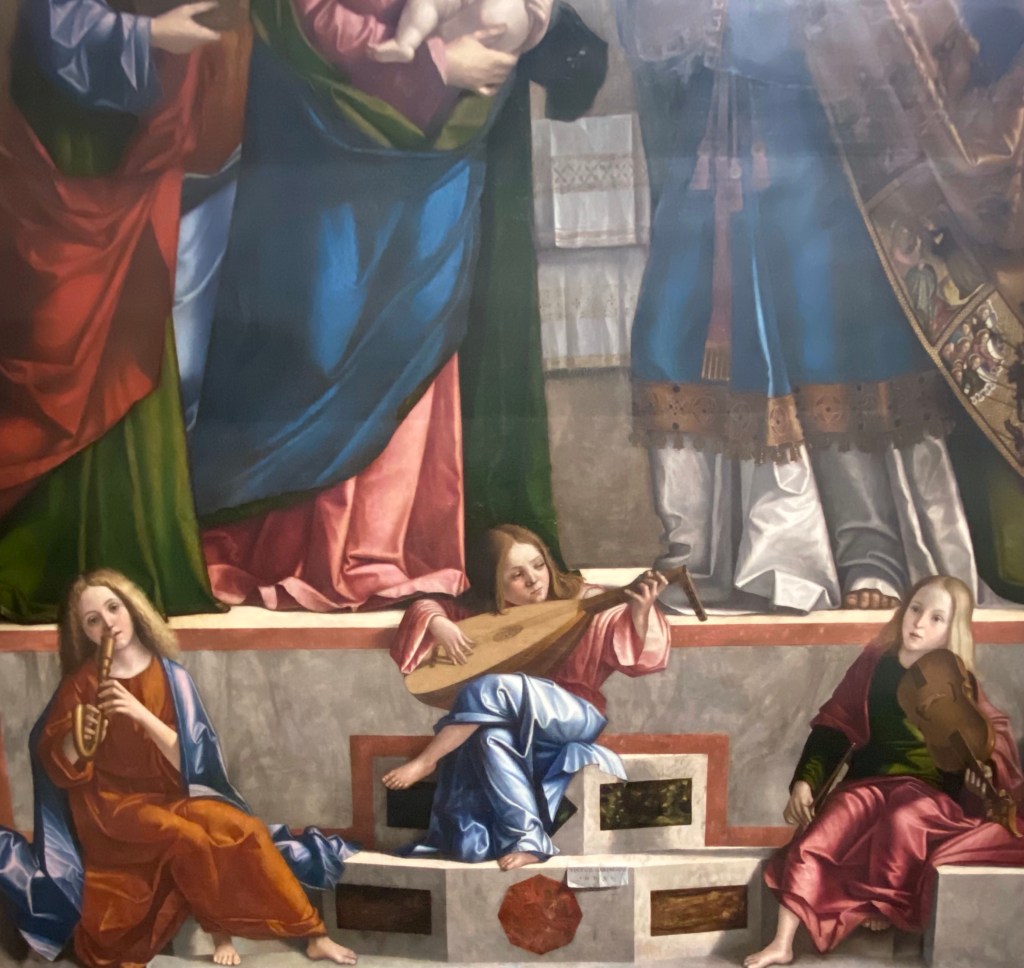
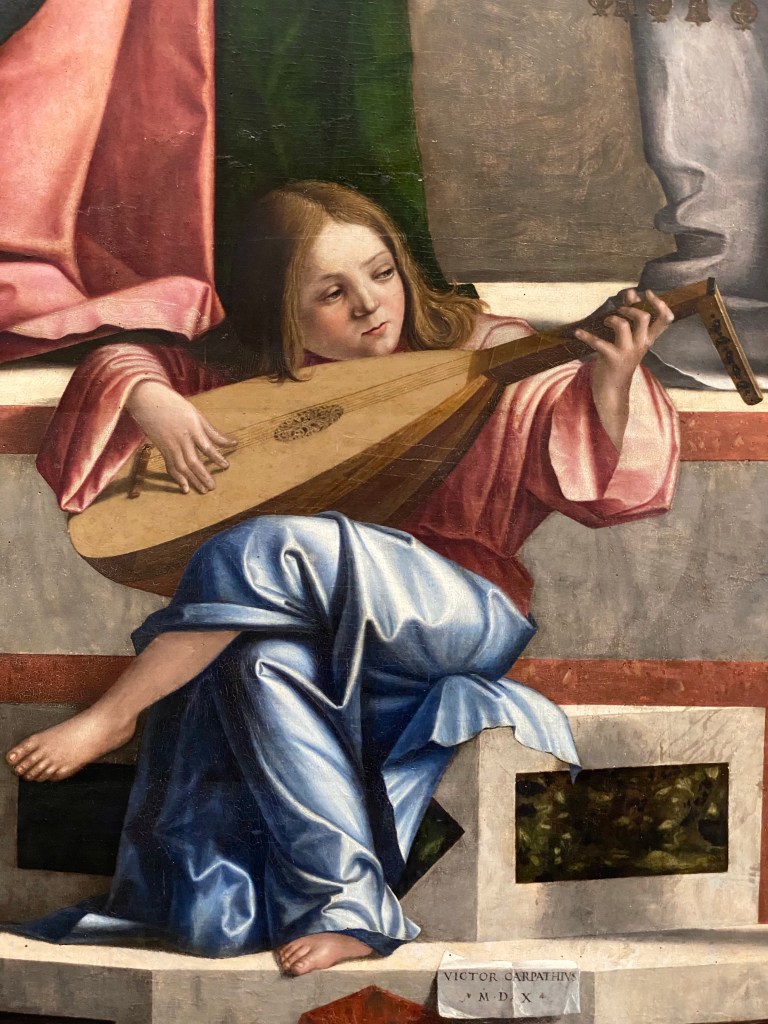
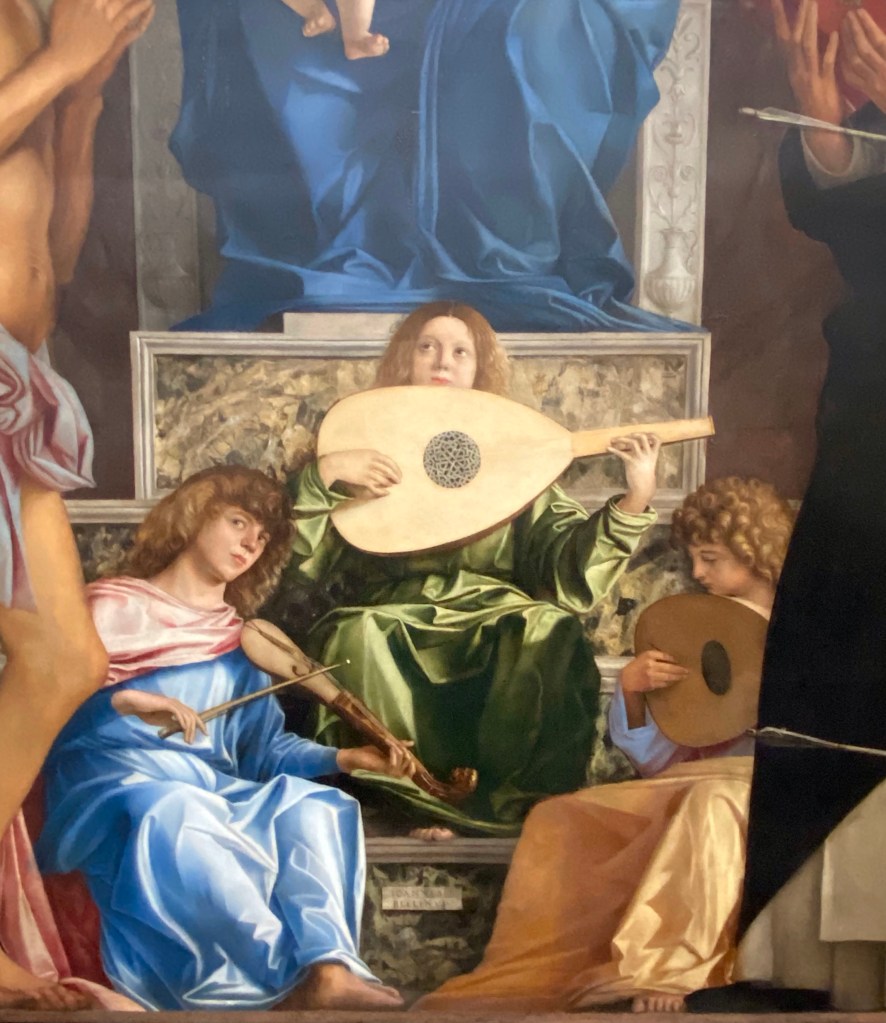
I know for a fact that what initially took my attention to these 2 Carpaccio altarpieces were the musician angels at the bottom, right at eye level. Plus, look how Carpaccio signed this latter work. Right on the virtual marble plinth on which the angel props his right foot. Charmed, I’m sure! Dated 1510.
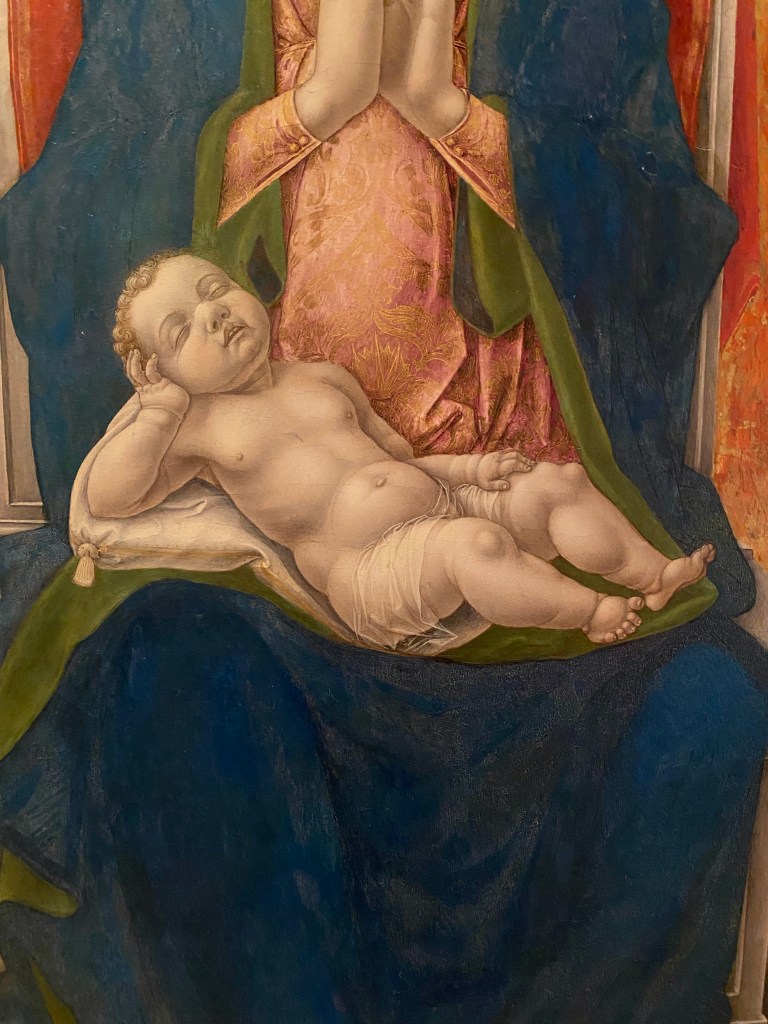
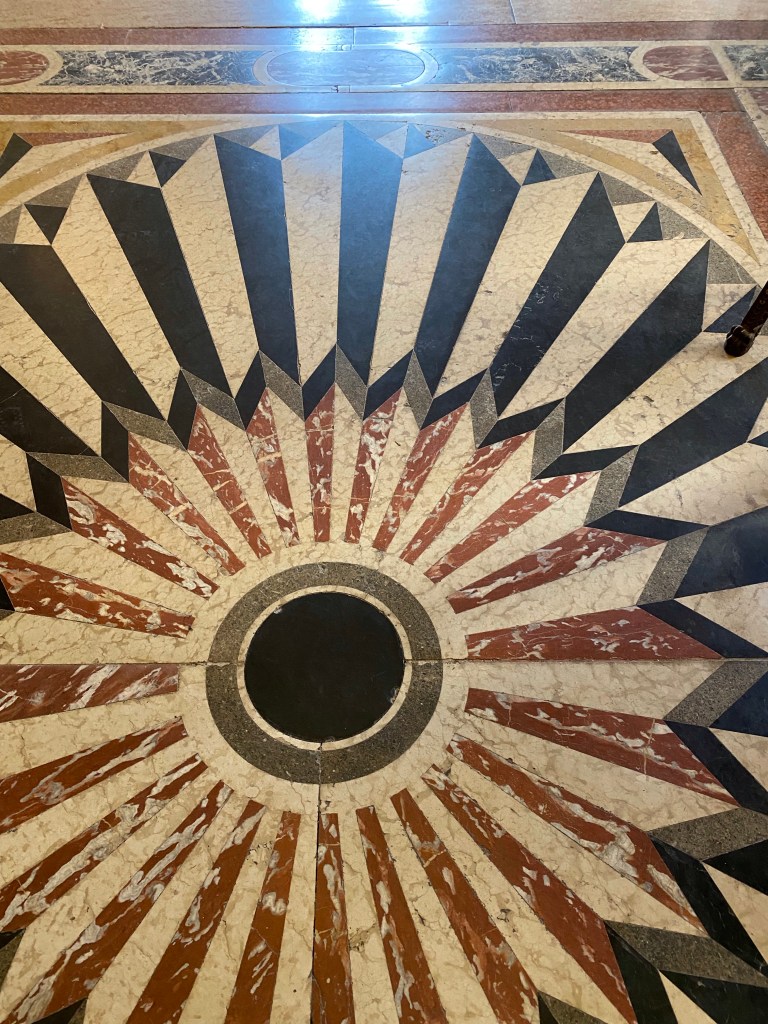
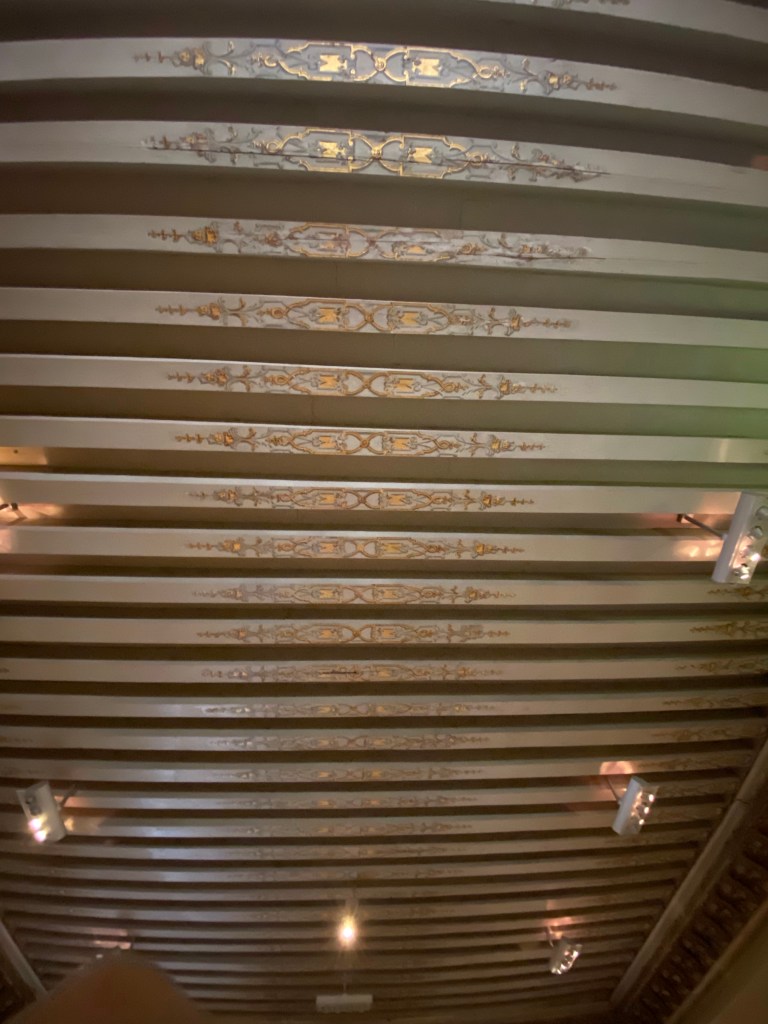
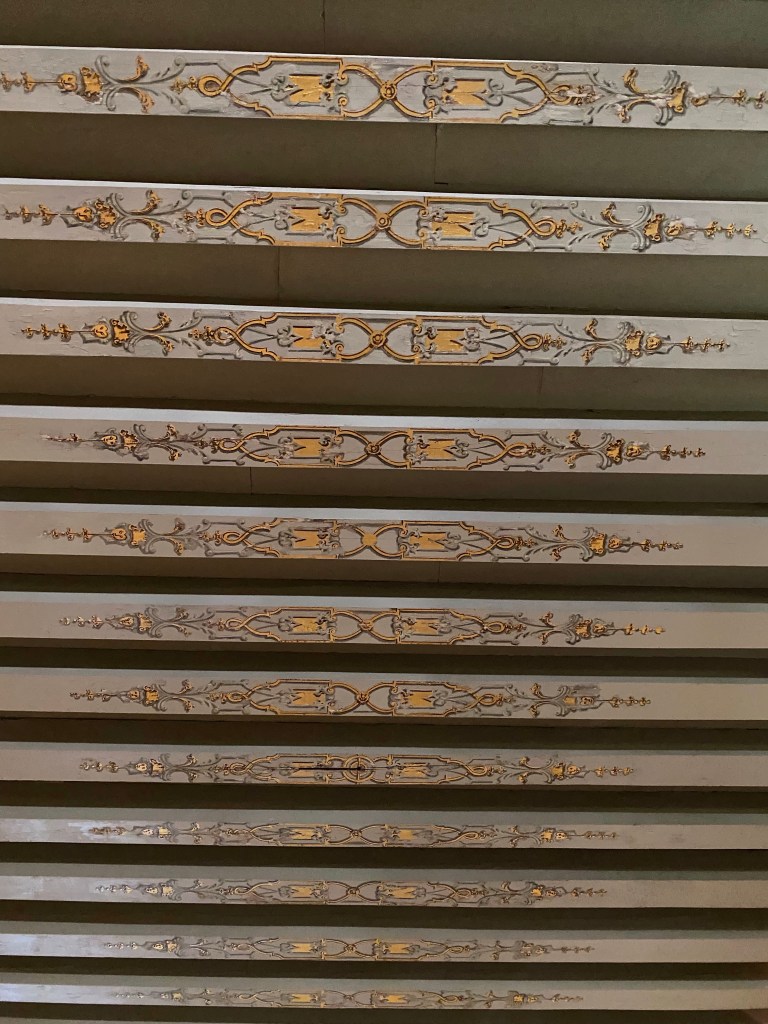
And, then once again, my eyes travel up to the beautifully decorated ceiling. If you have to have wooden beams in a room, why not decorate them like this?!
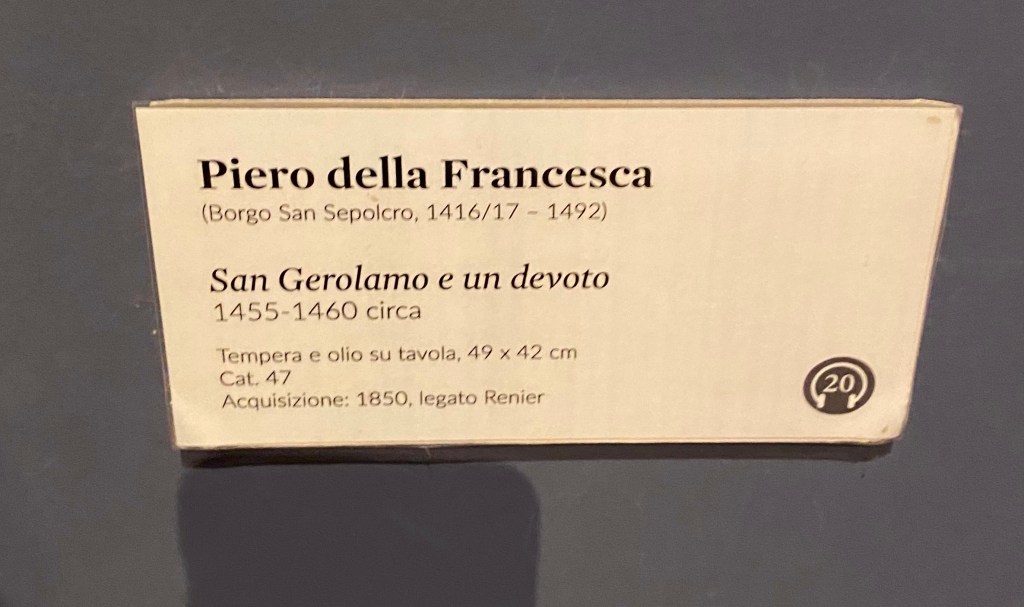
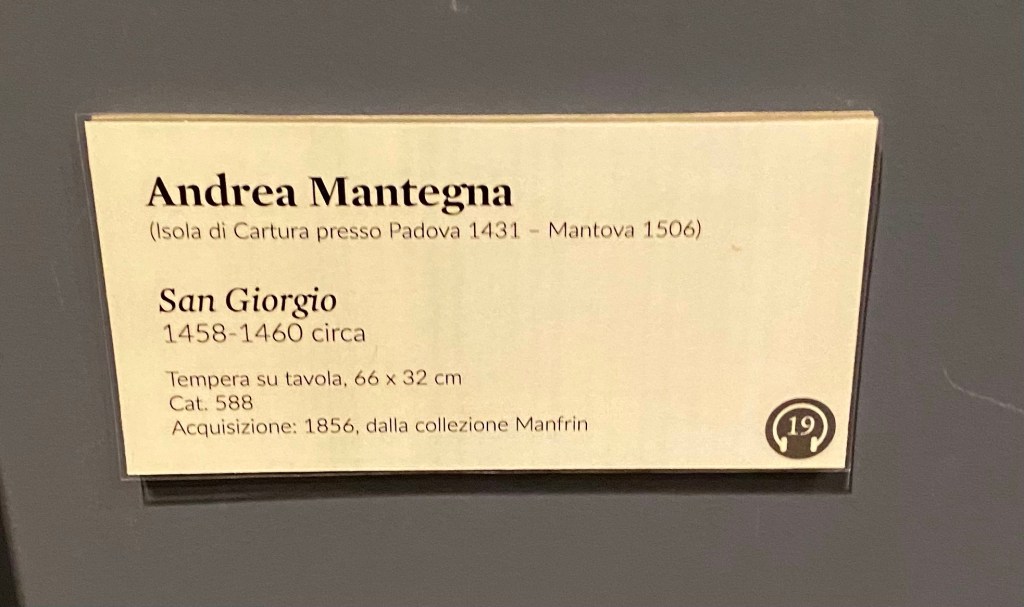
I will finish this post with works by 2 of my favorite northern Italian painters, Piero della Francesca and Andrea Mantegna.
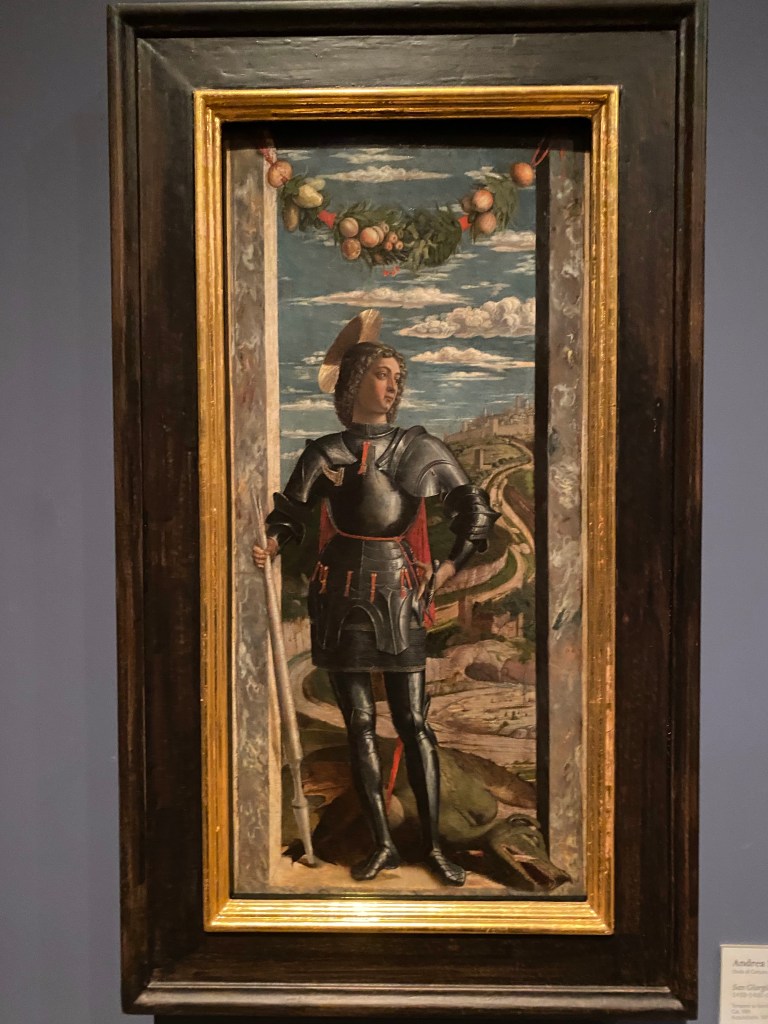
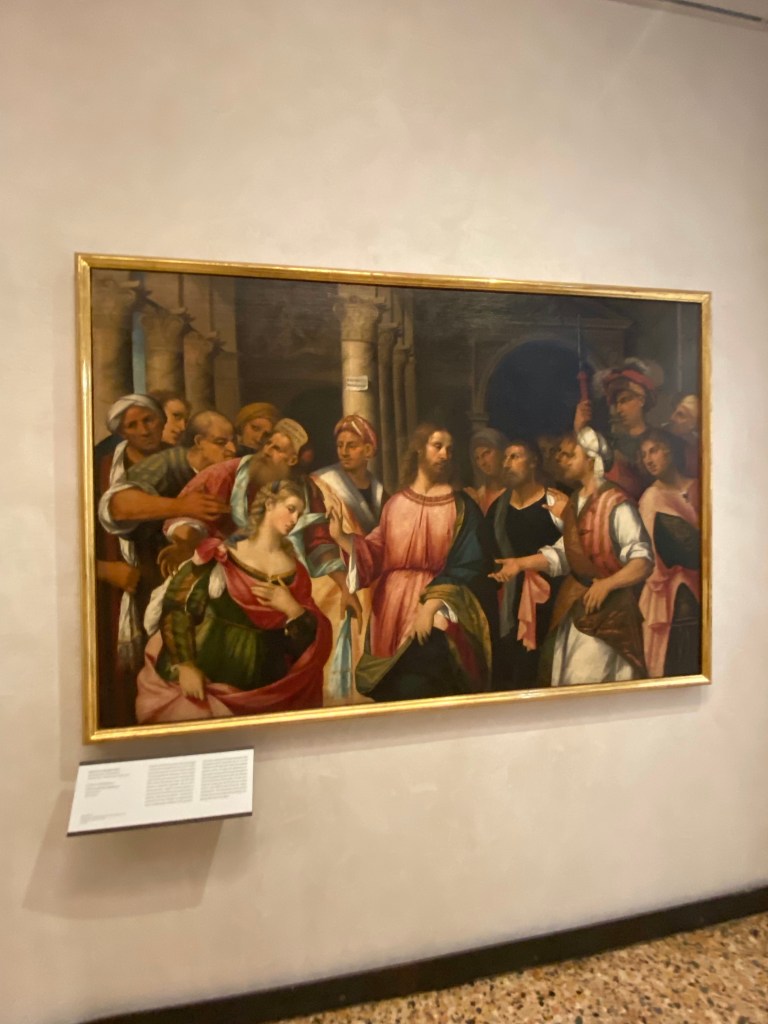
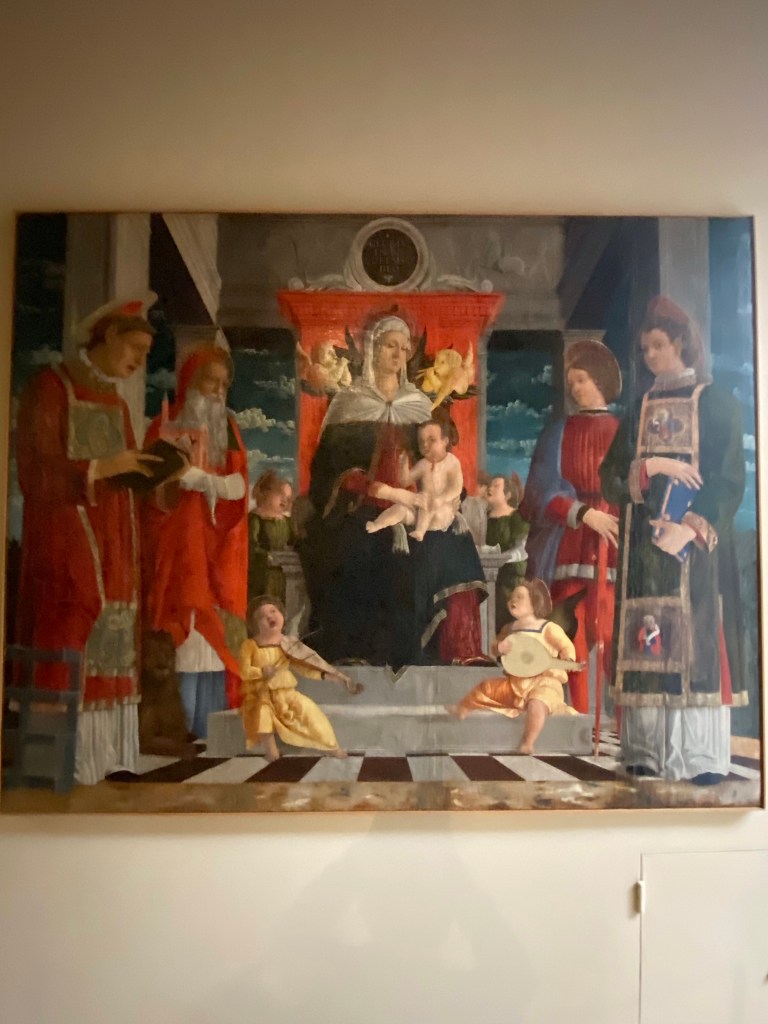
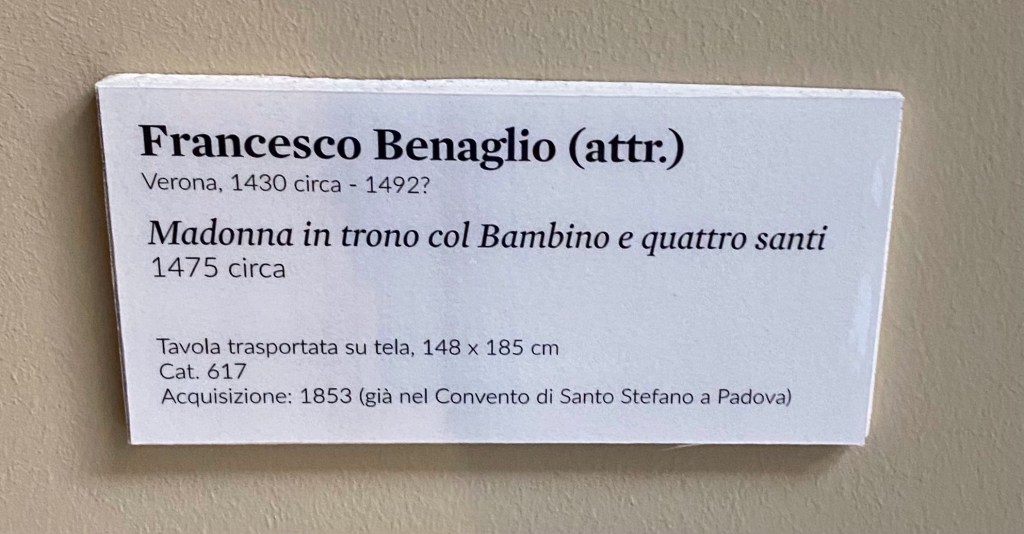
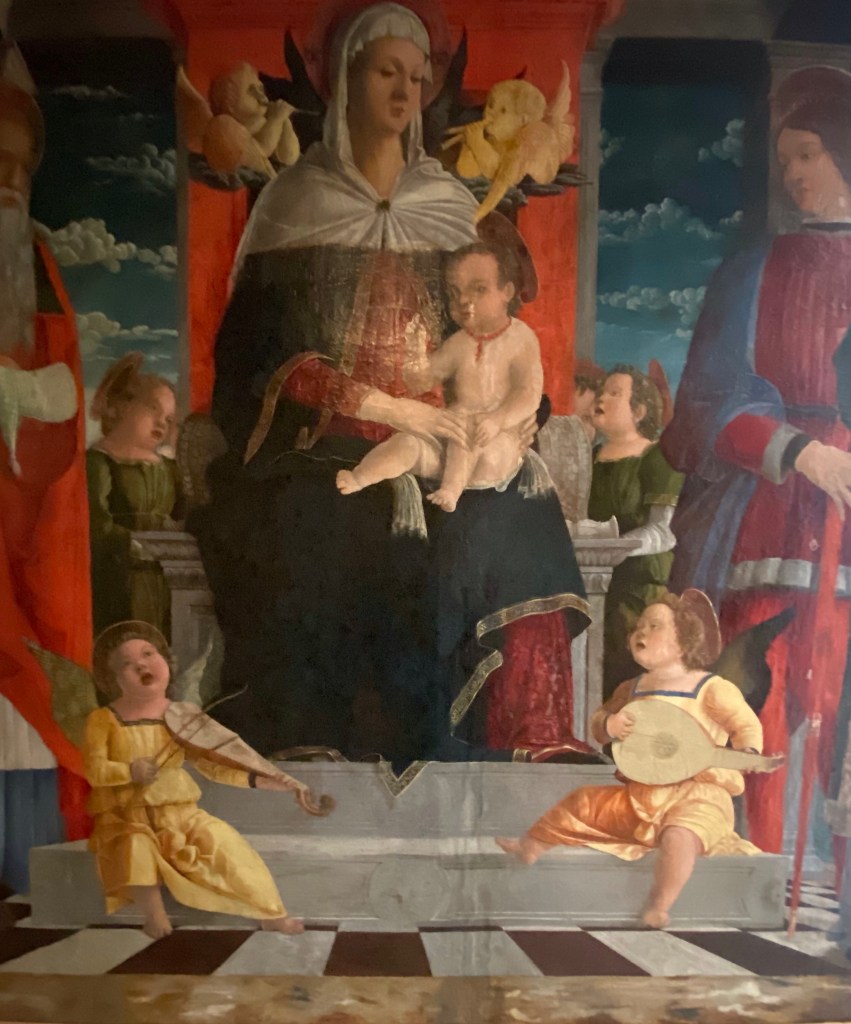
Oh, and I’ll throw in this painting too, which obviously I photographed because it relates to the 2 Carpaccio paintings I love above.
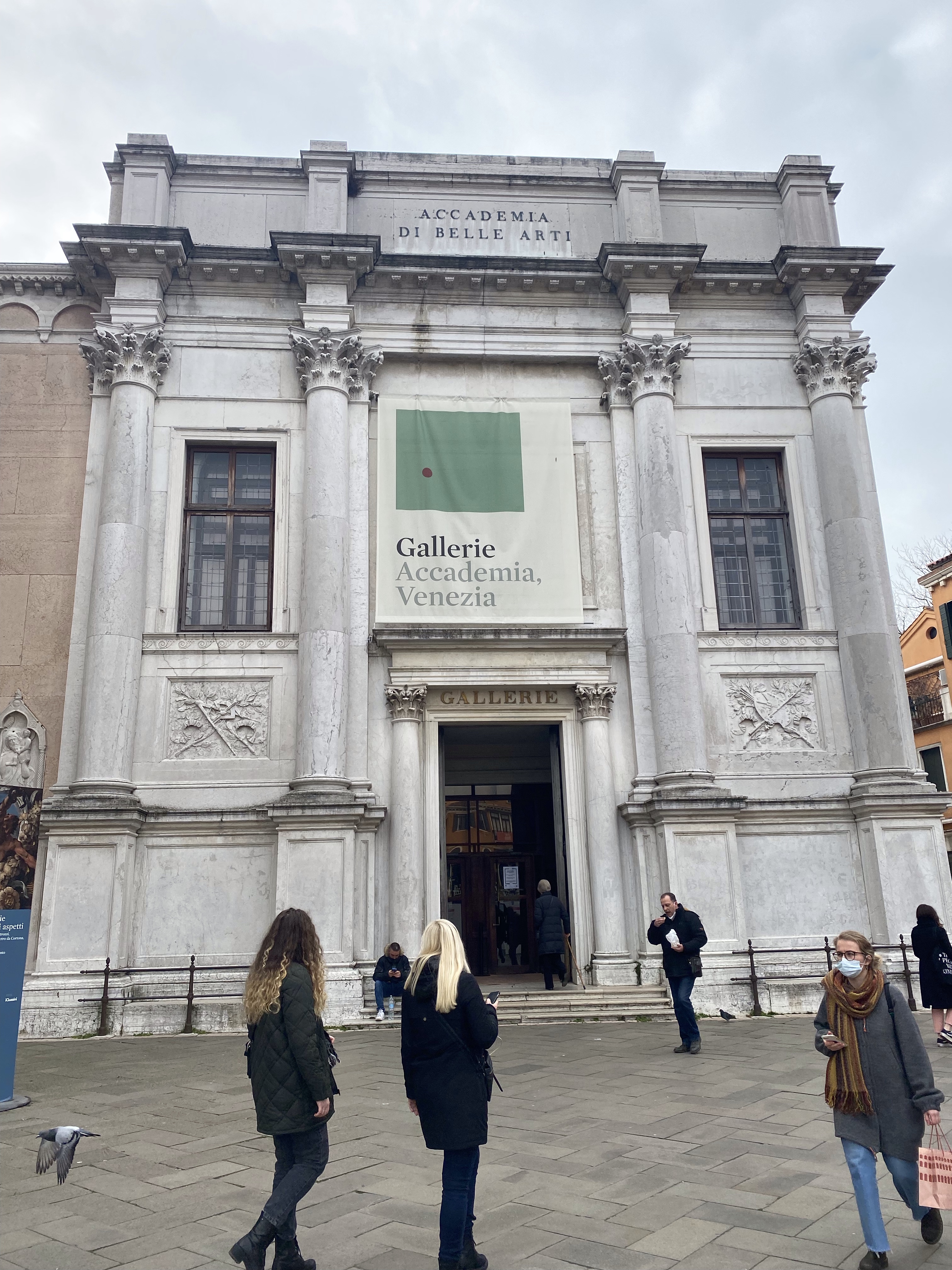
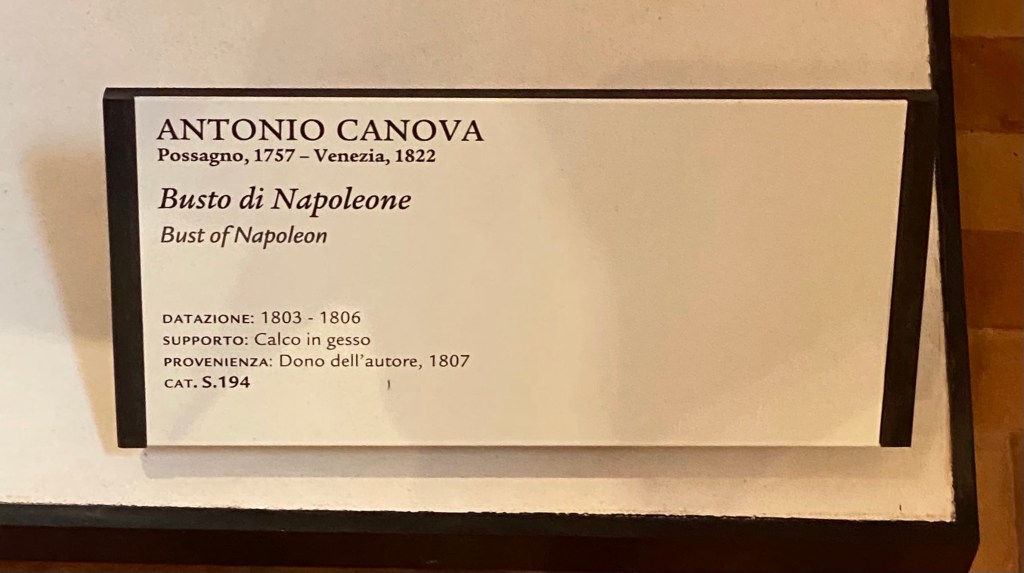
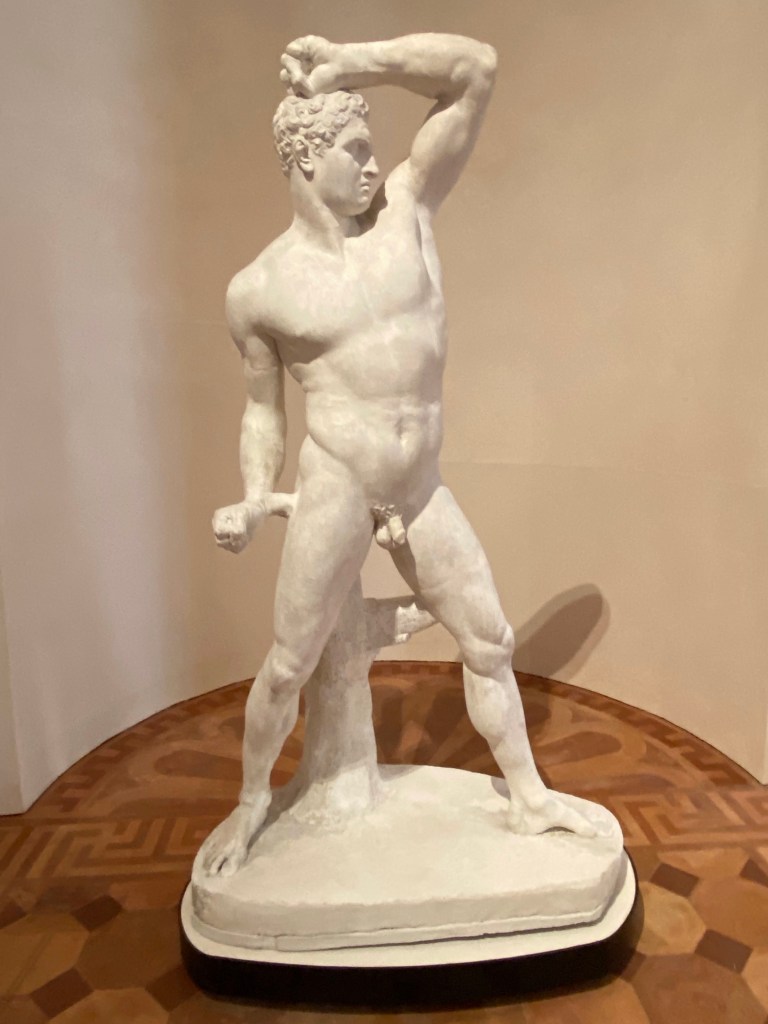
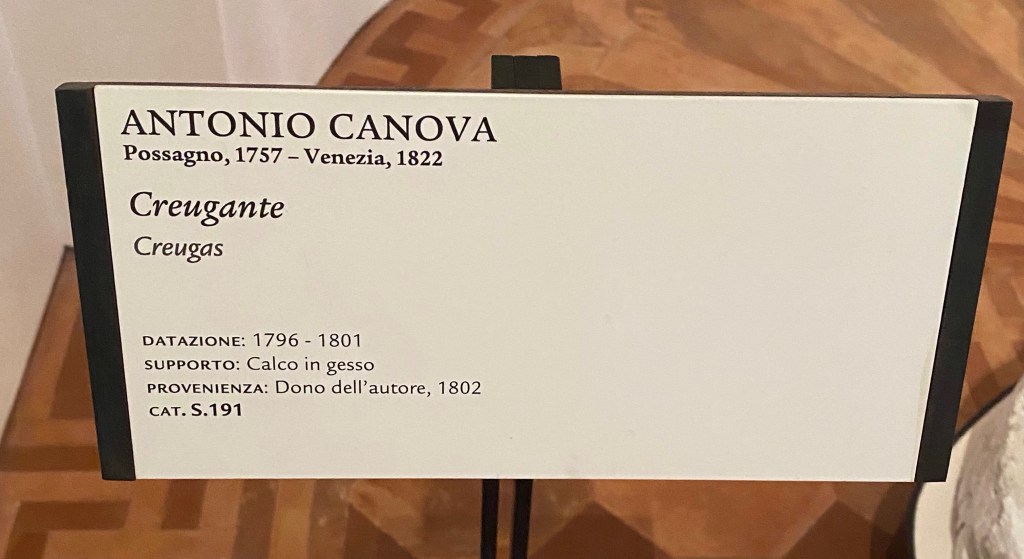
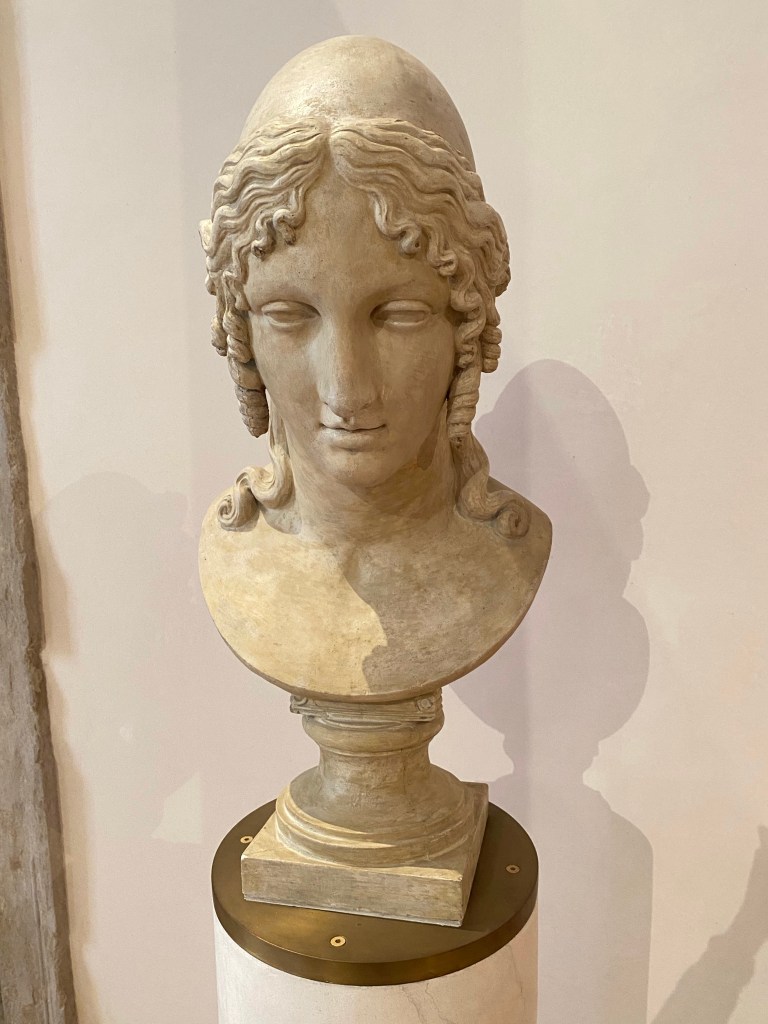
The subject of today’s slide show are the plaster casts of works by Antonio Canova and similar casts after antique sculpture collected by the Academia.
Canova:
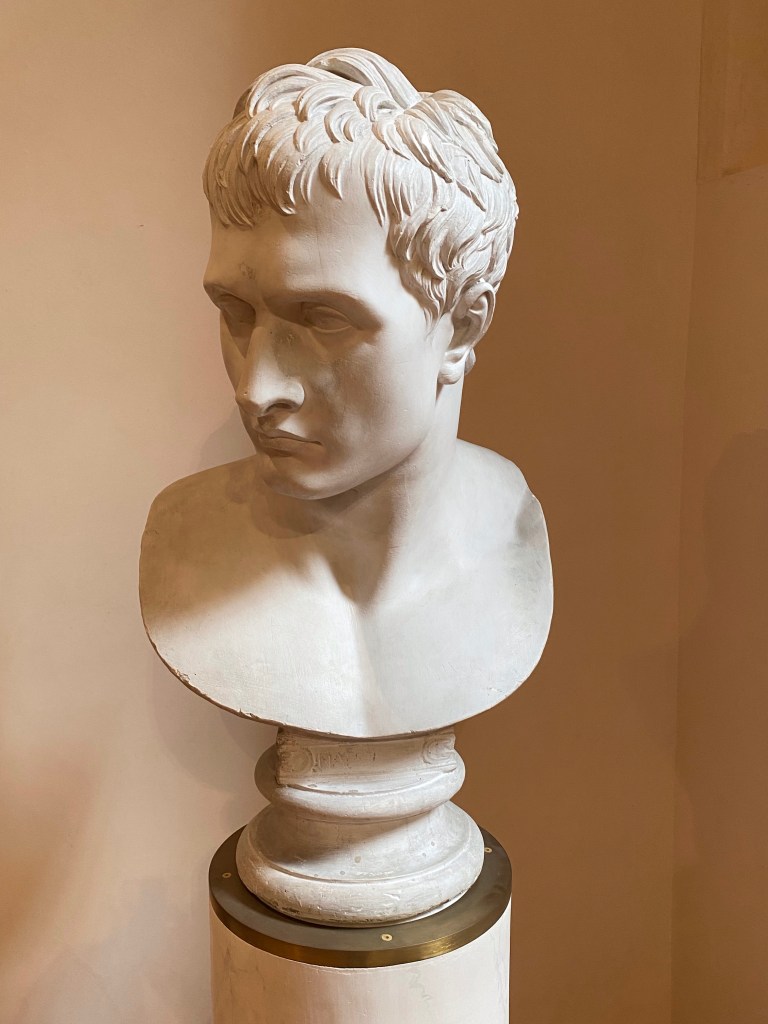
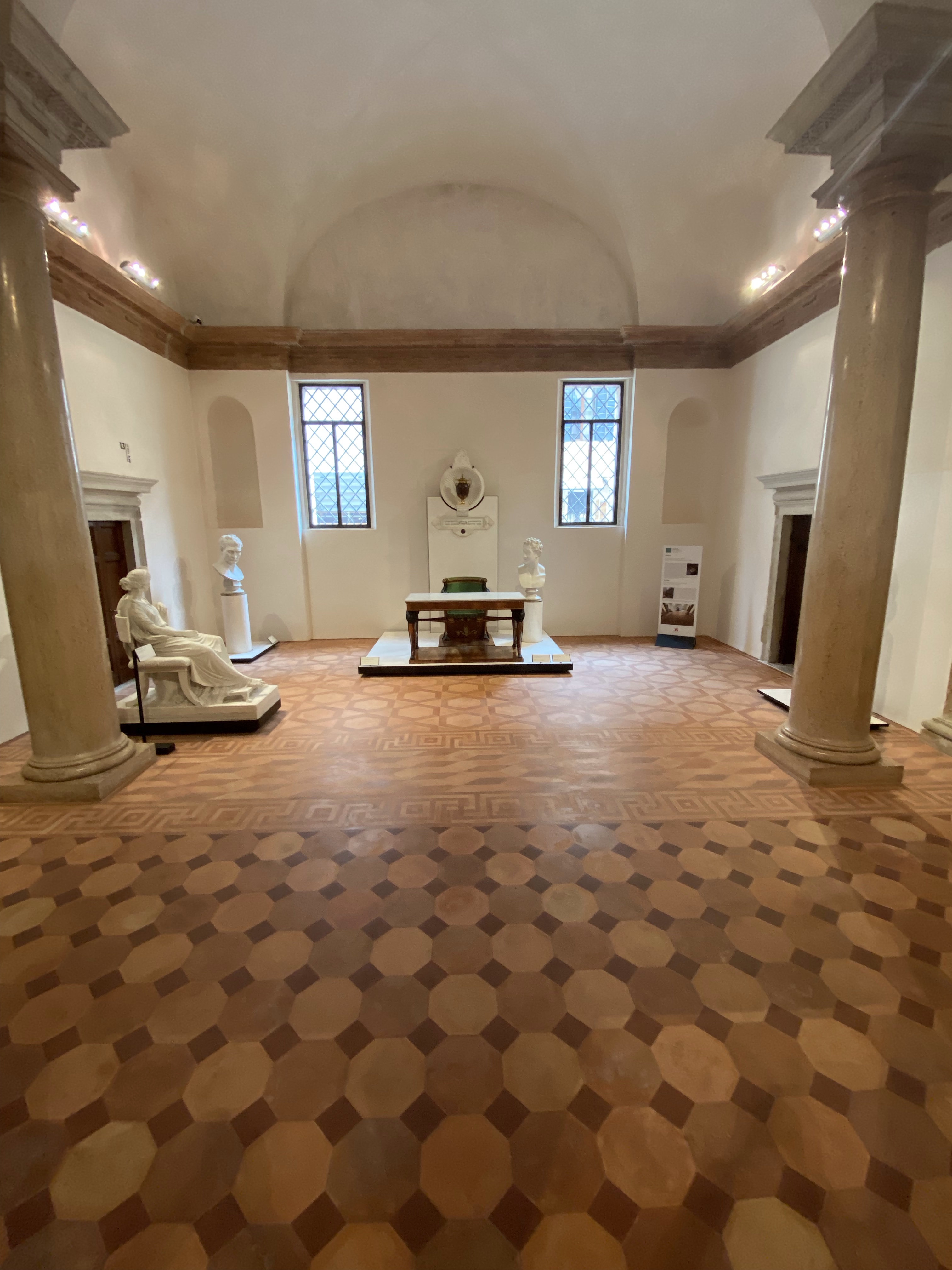
Casts of antique sculpture:
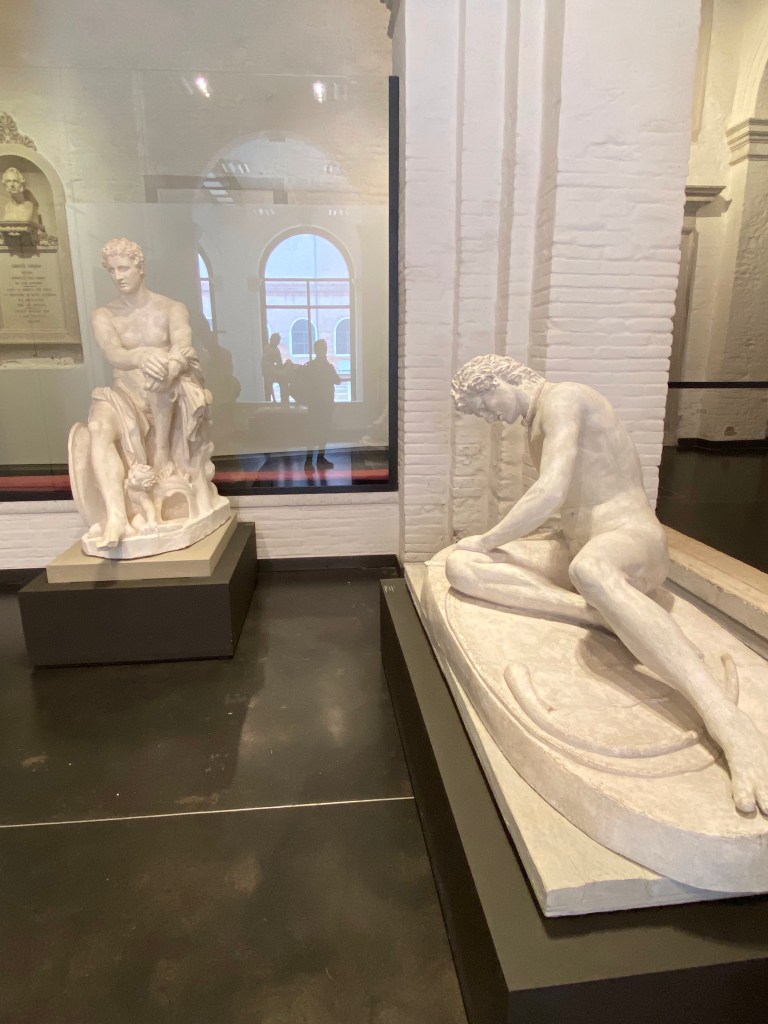
Shall we begin?
A few decades ago, I was just wild about the work of Antonio Canova (1757–1822), the Italian neoclassical sculptor. While I still admire a few of his statues, my tastes have changed. Nevertheless, my heart always beats a little faster when happening upon a work by Canova: maybe it is because it is like a hug from home. It’s easy, I understand it.
I’d been girding my loins in Venice, knowing full well I would be going to the Accademia and prepping myself for some serious looking and thinking. Admiring artworks is hard work, I don’t care what anybody says. Especially when you are a serious student. I was all set to start reading labels, performing quick formal analyses in my mind. And, when I saw a section at the beginning of the museum devoted to Canova casts, I headed right in! A bit of an appetizer before the main course.
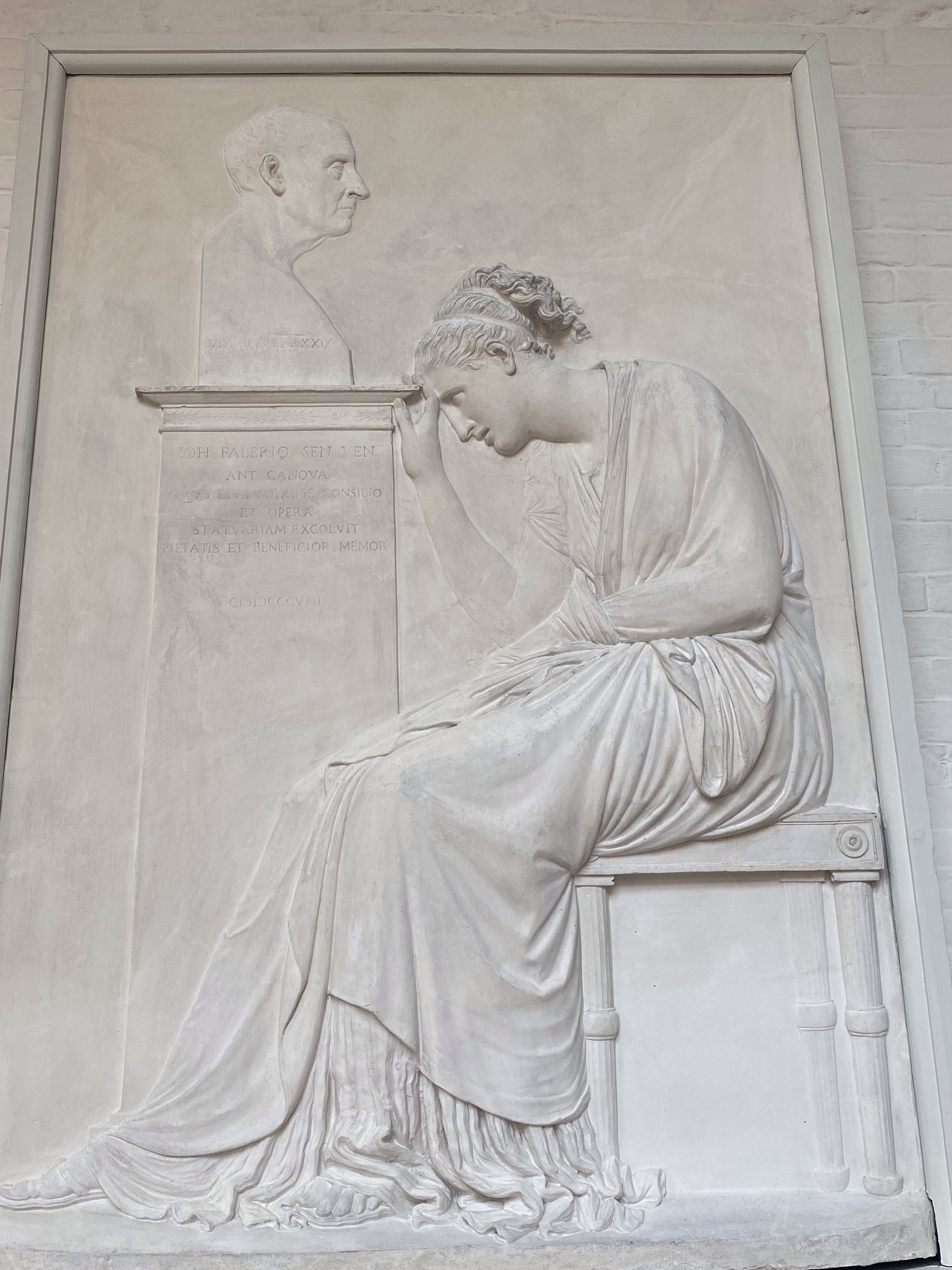
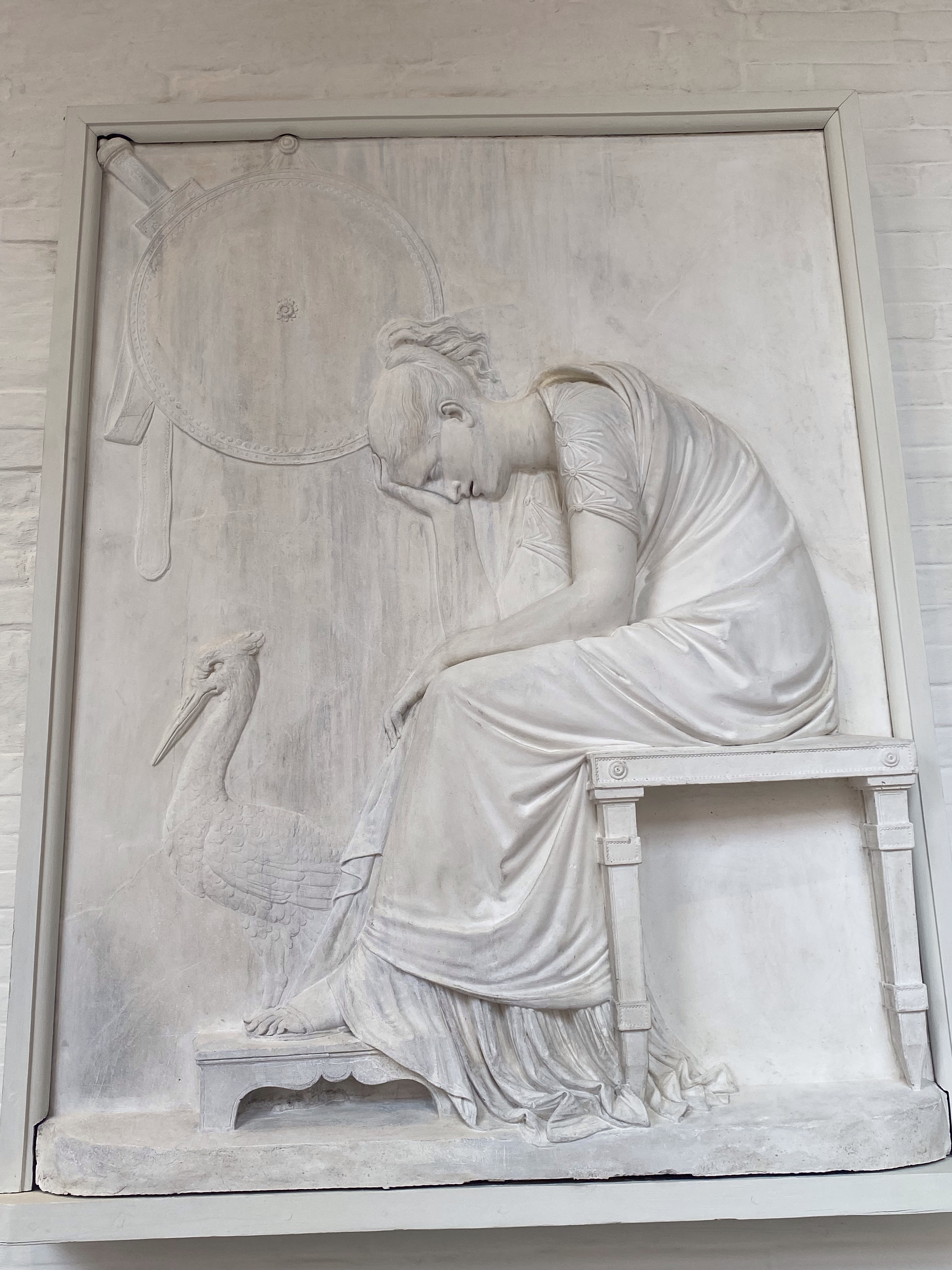
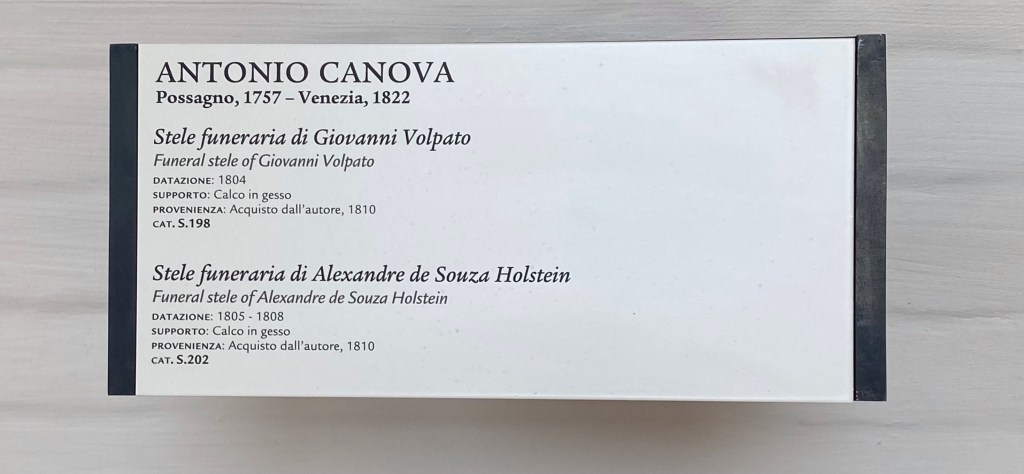
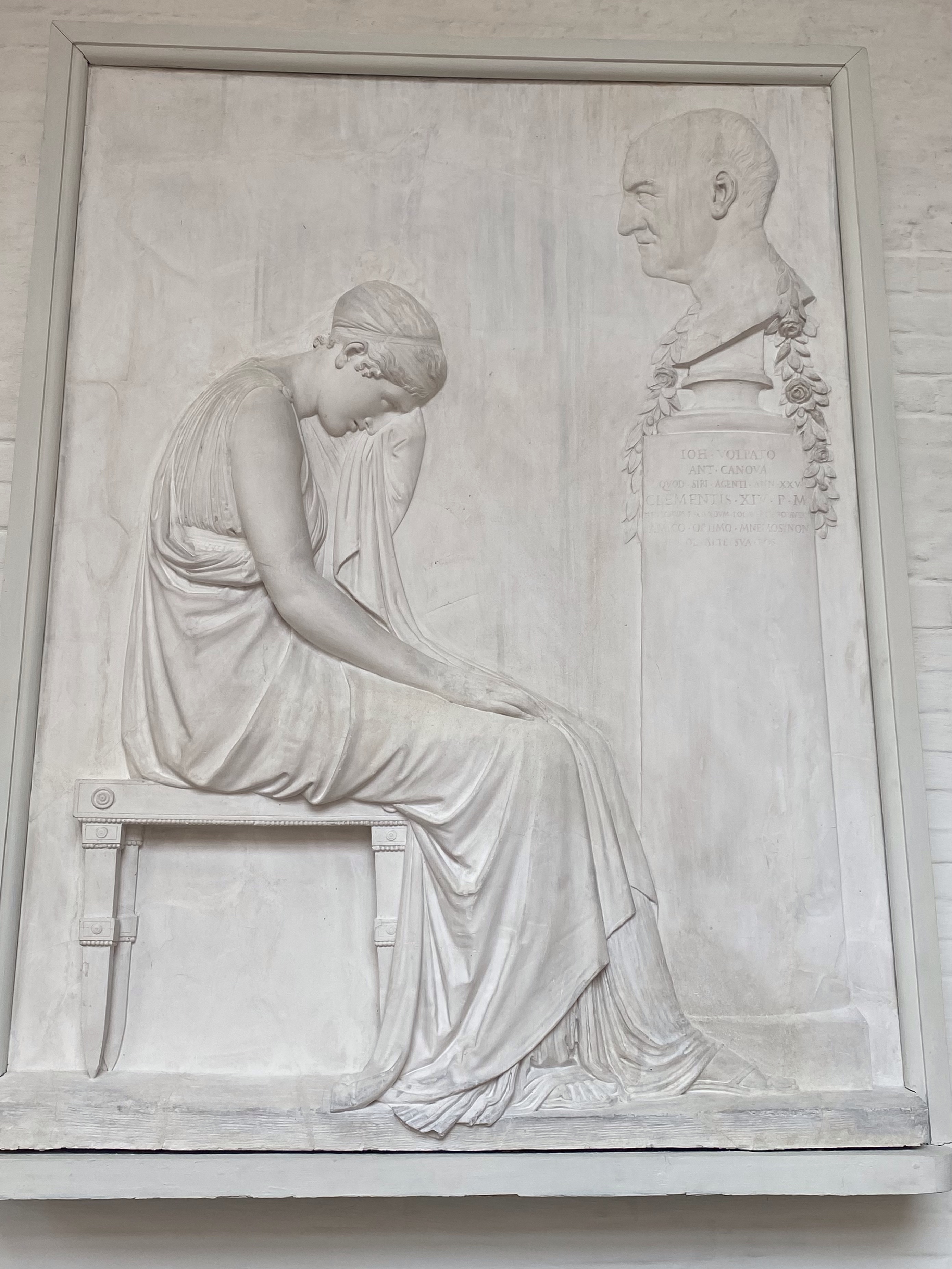
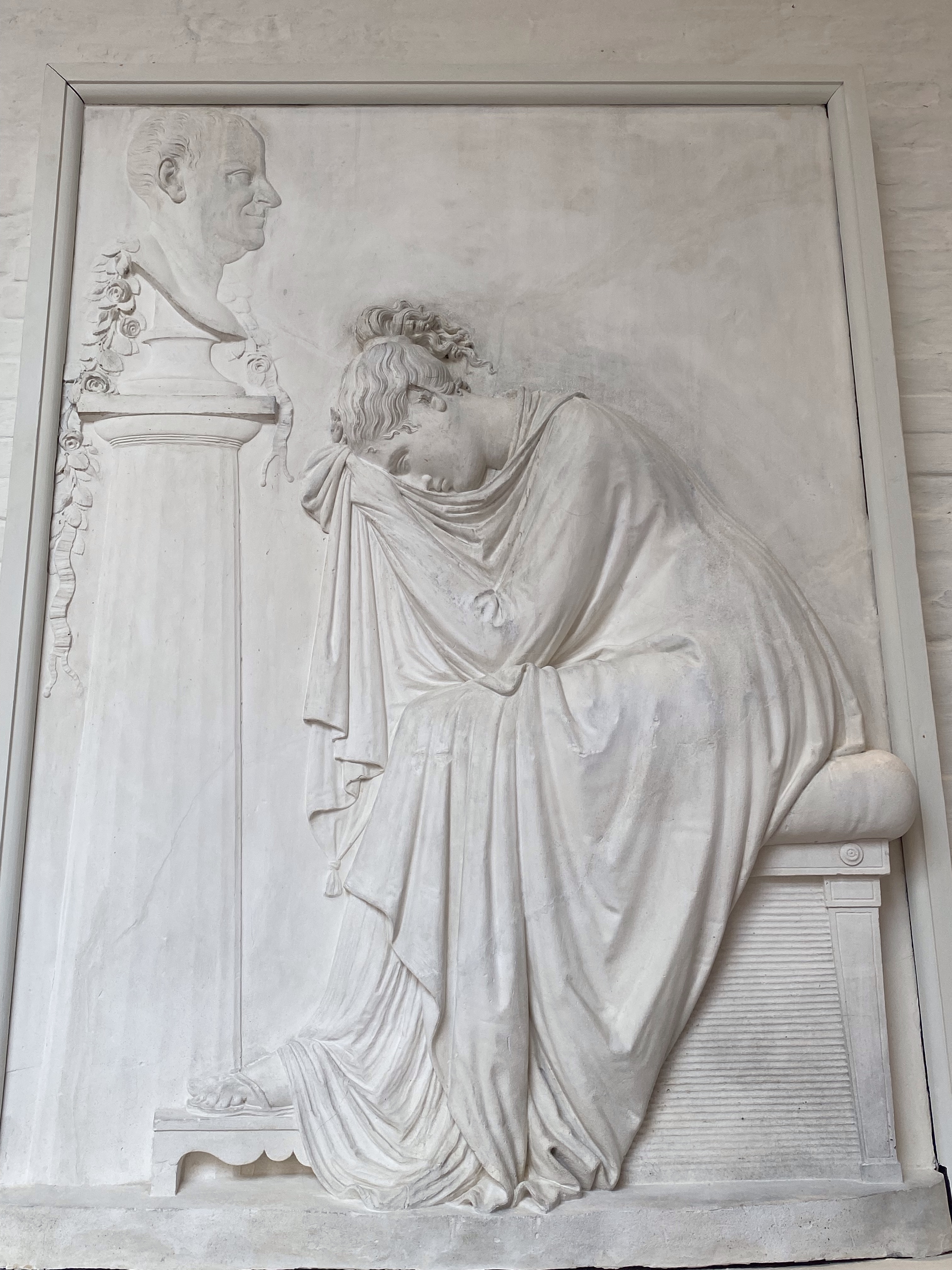
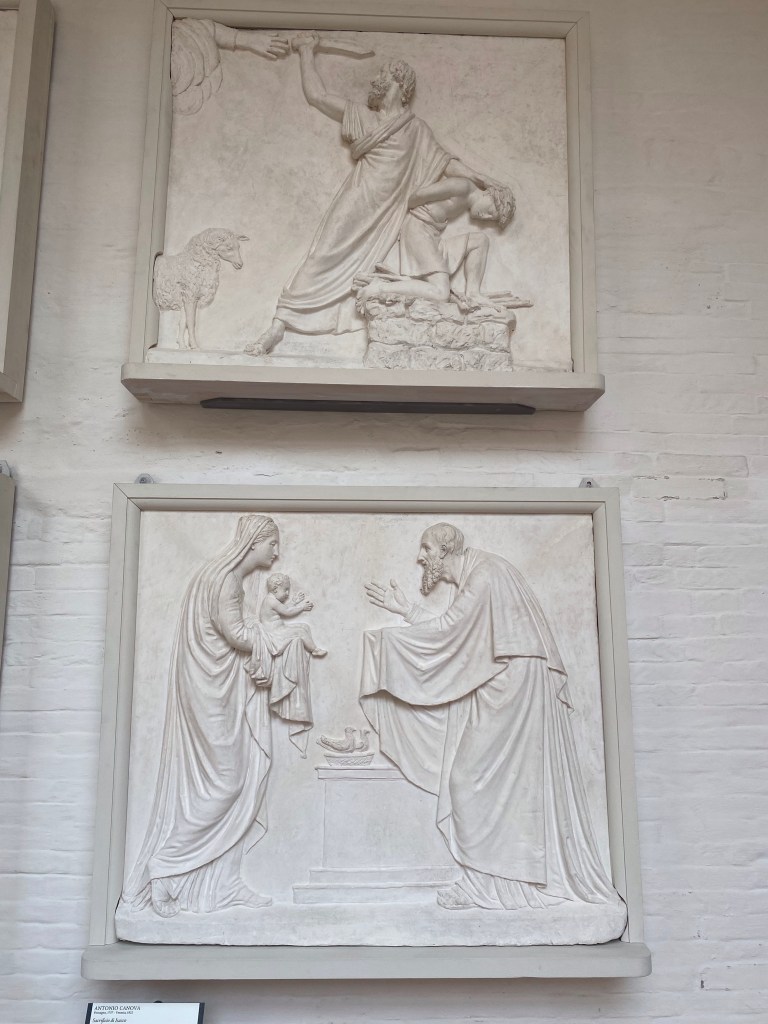
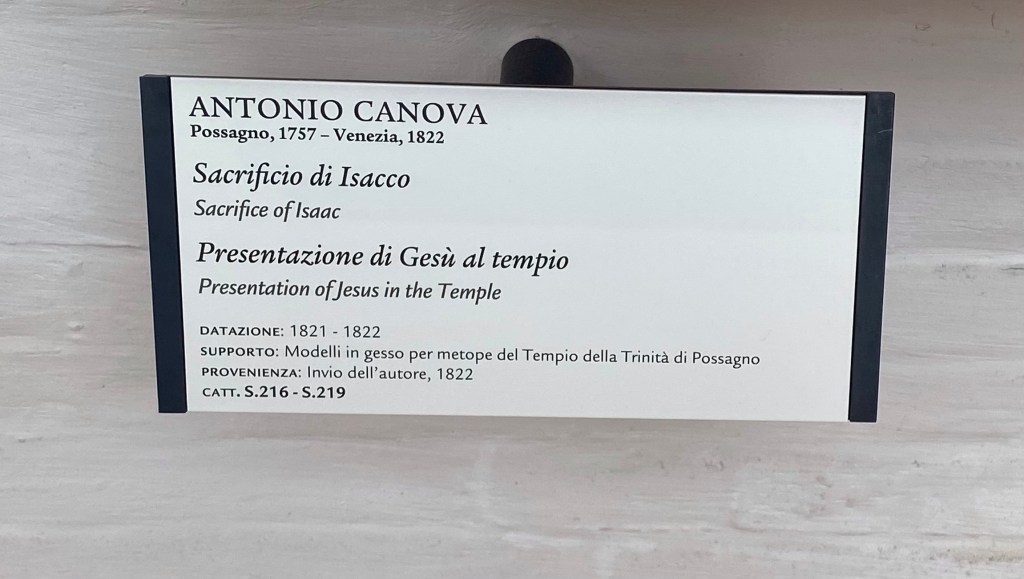
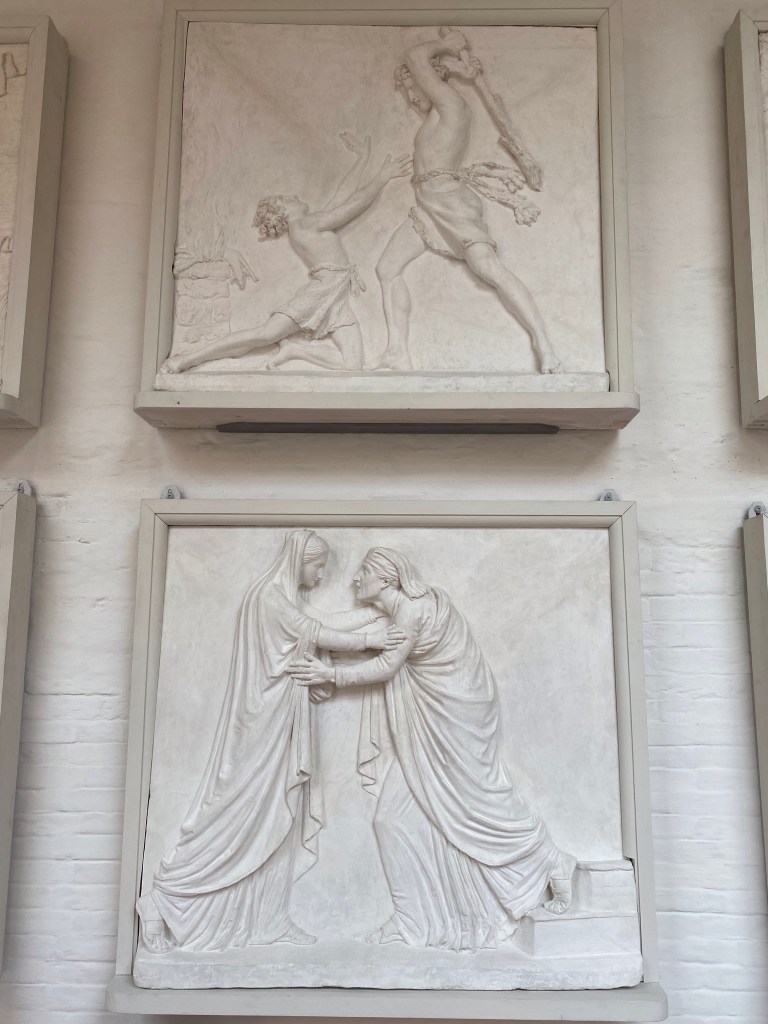
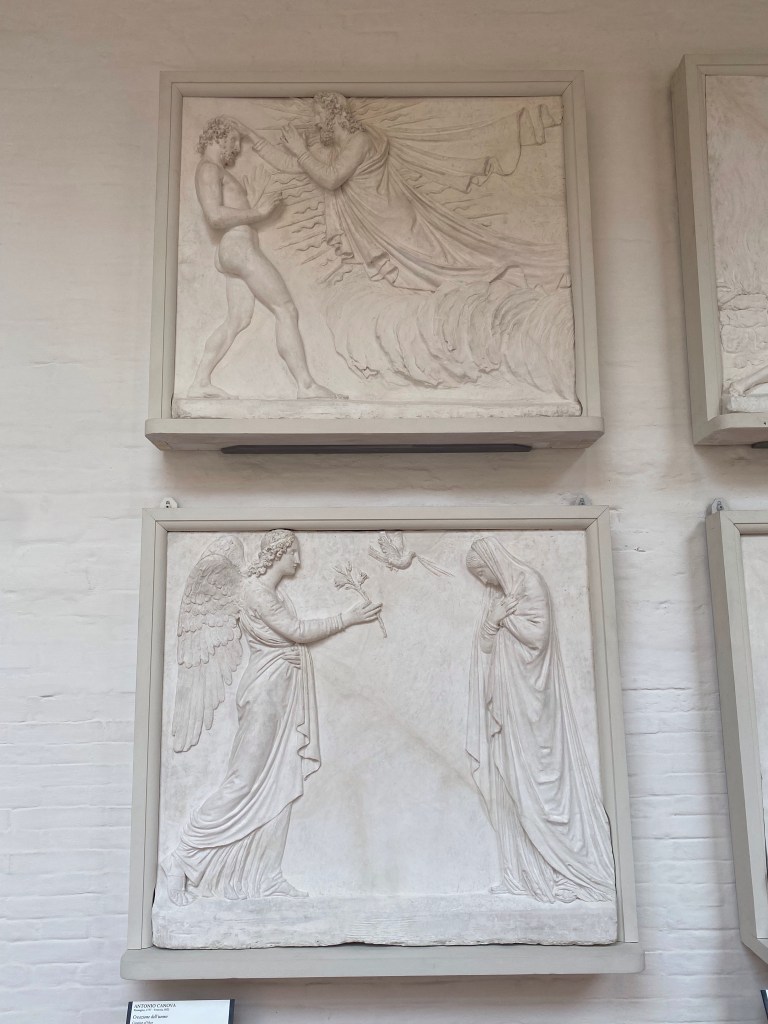
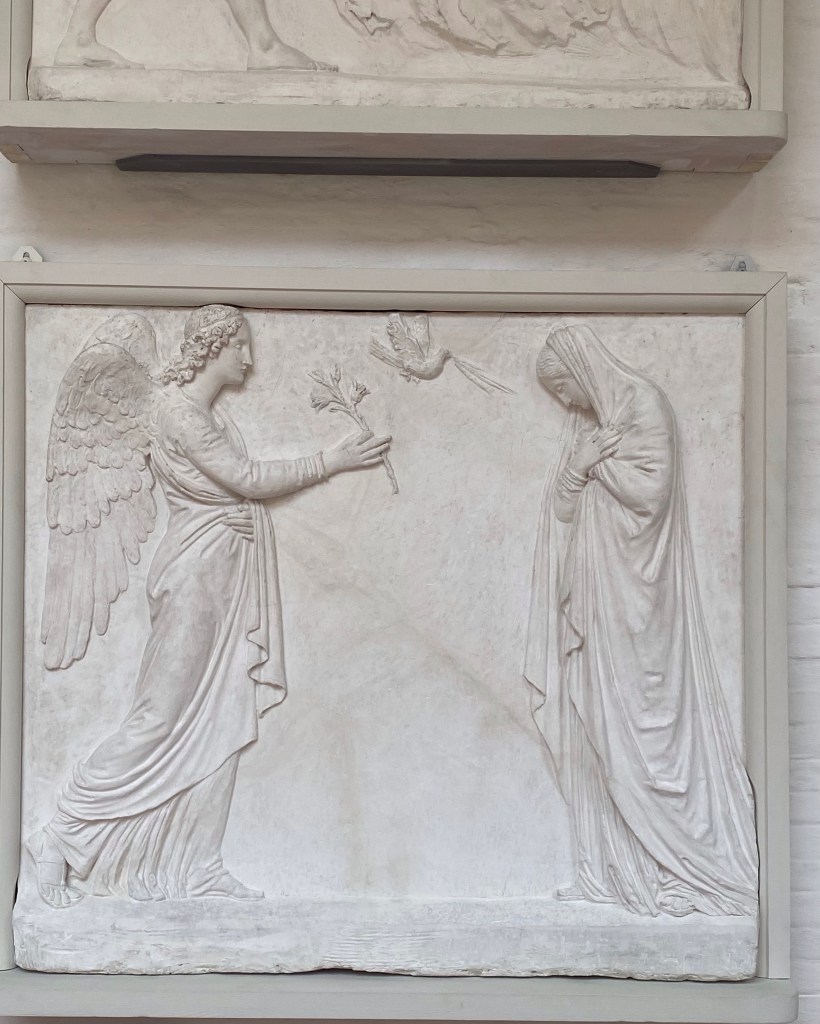
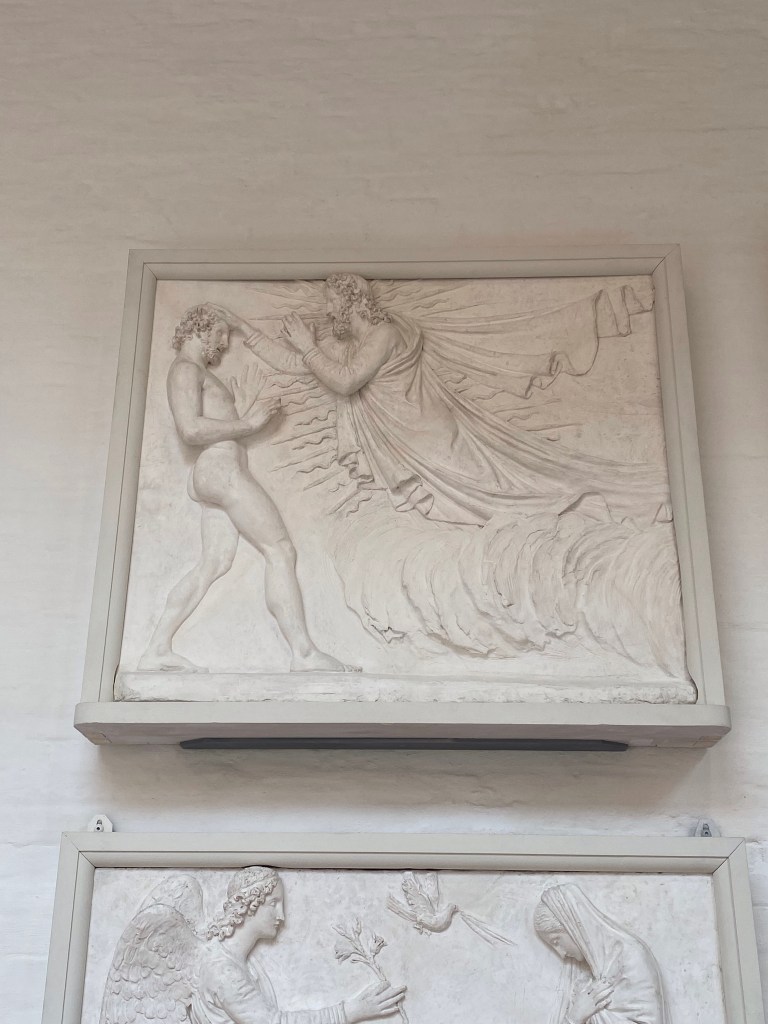
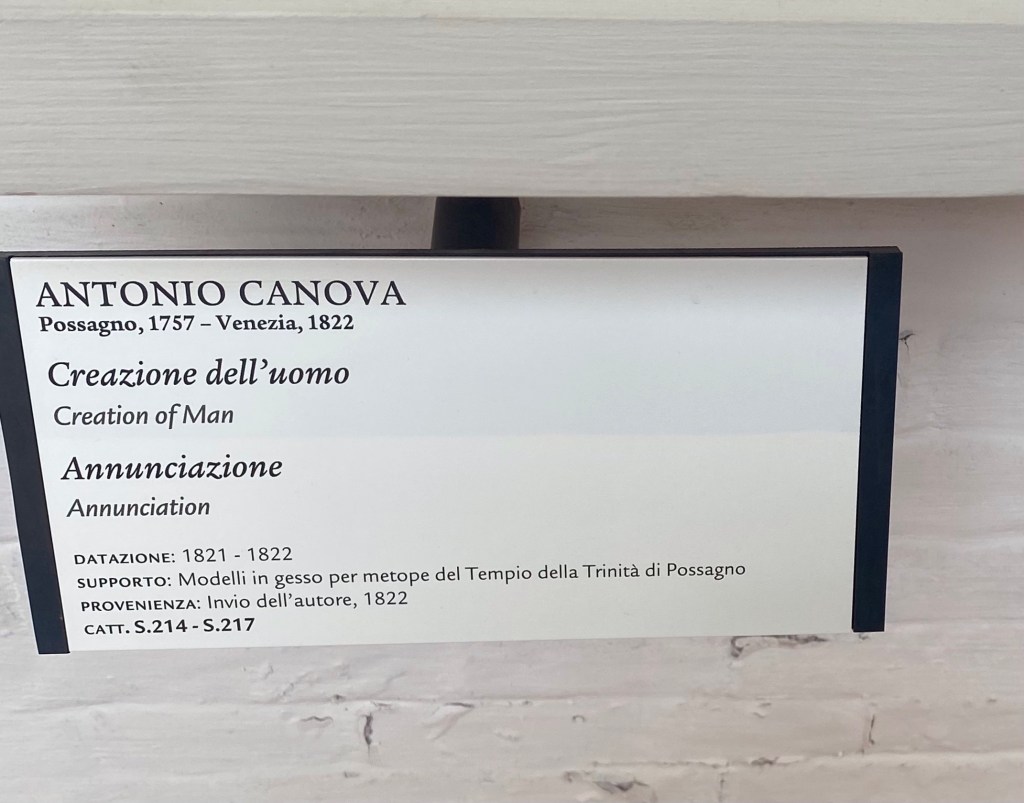
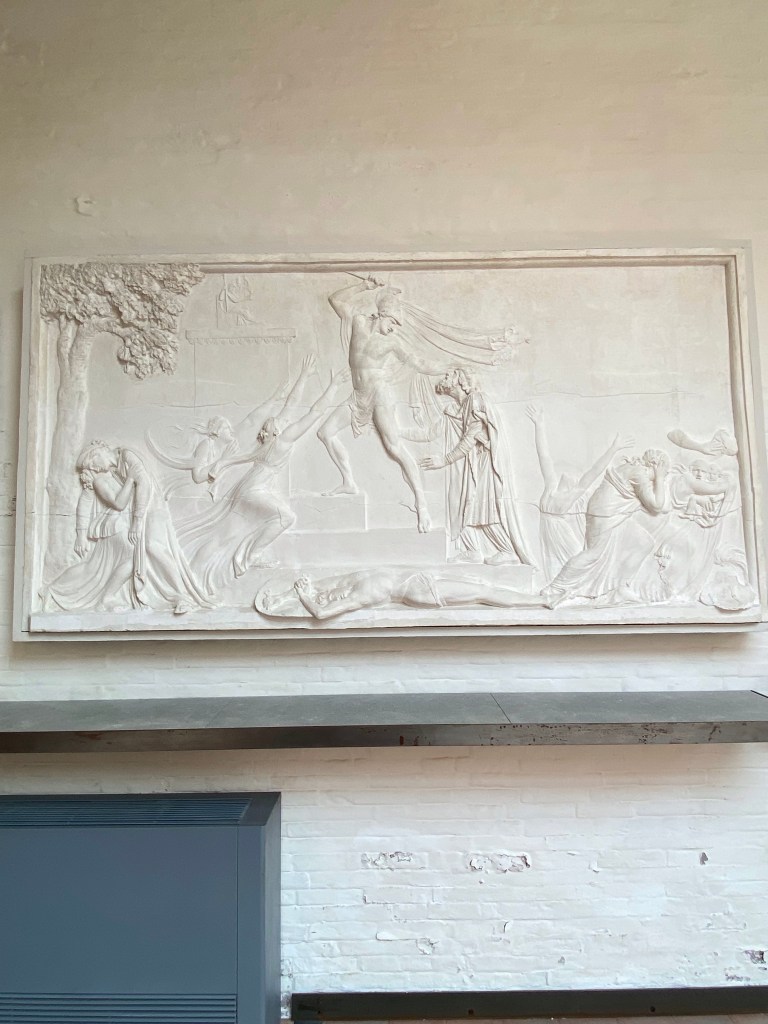
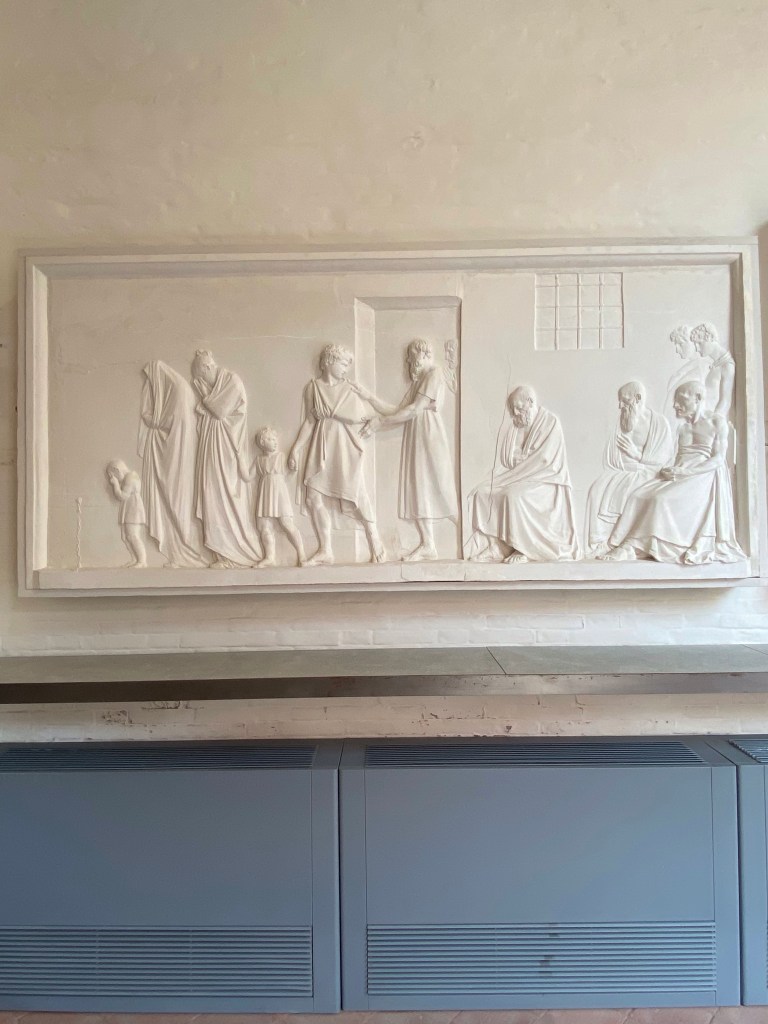
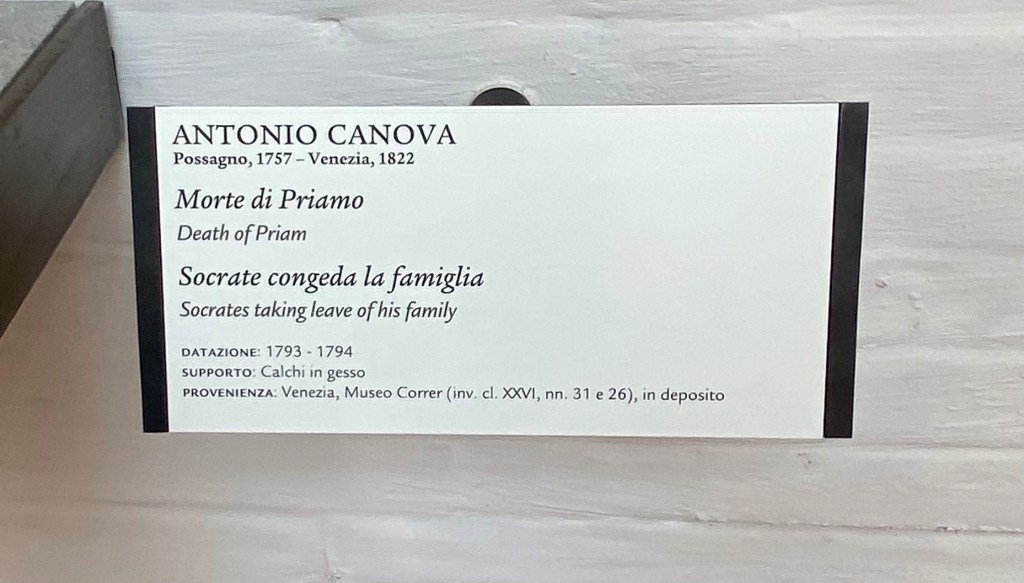
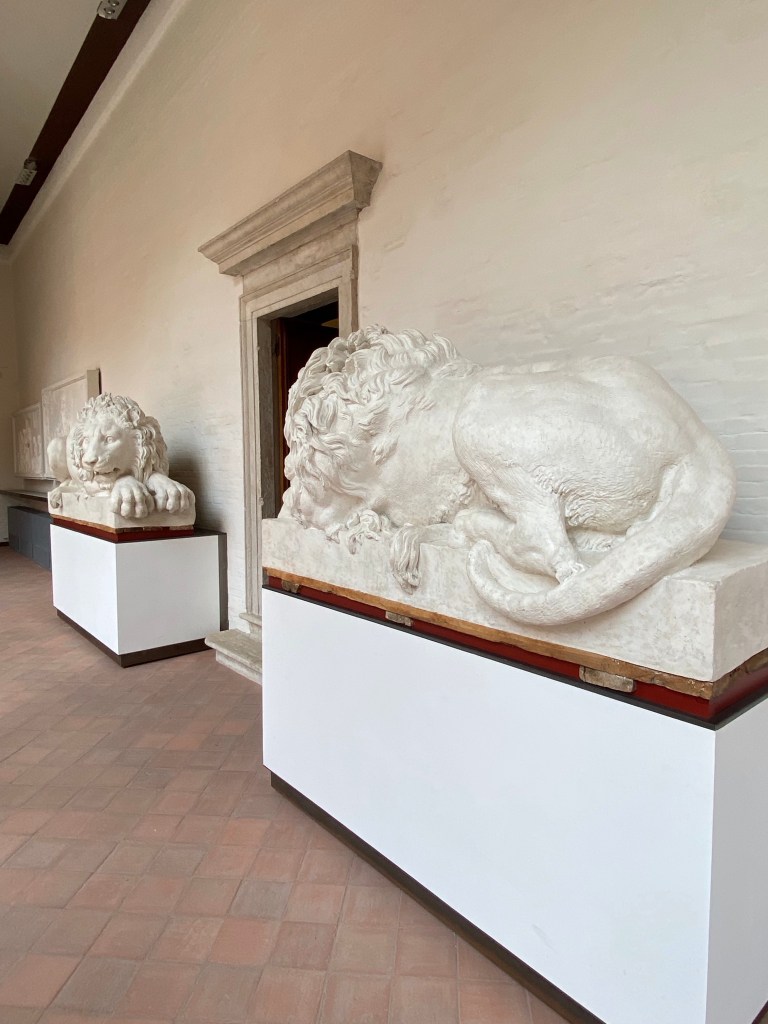
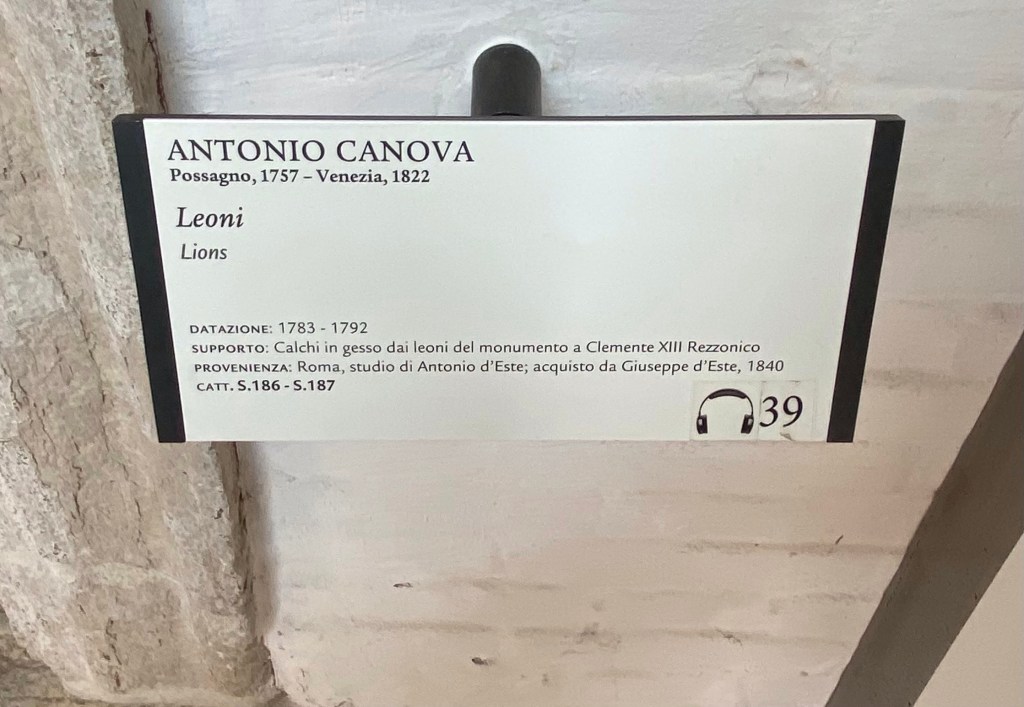
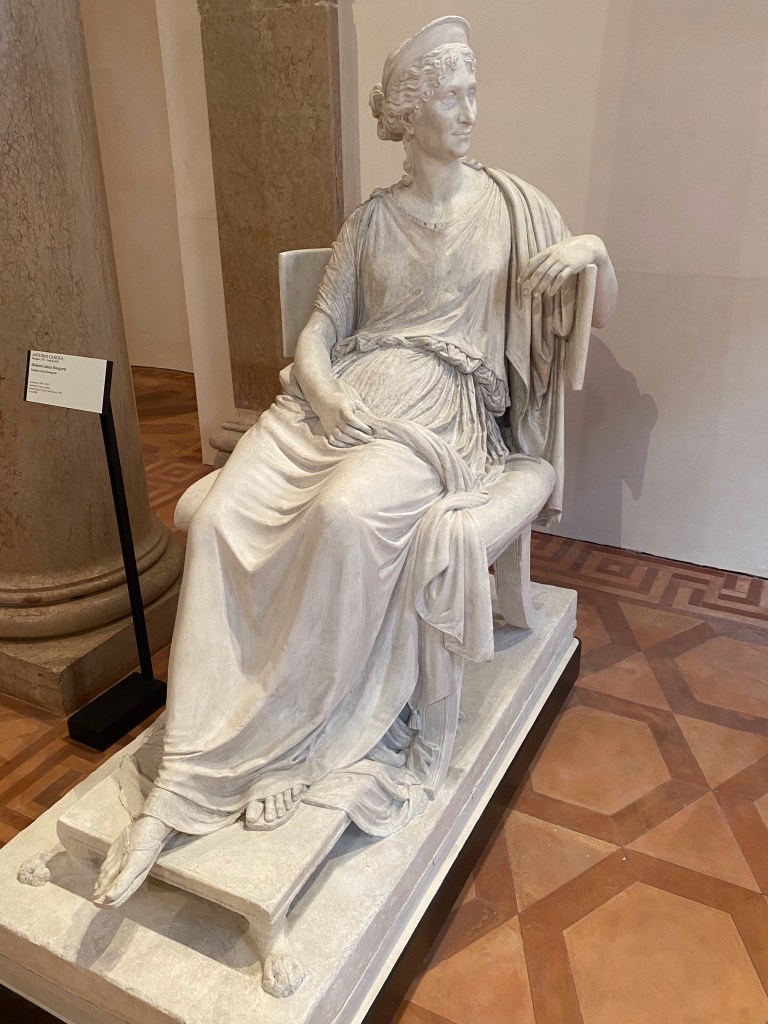
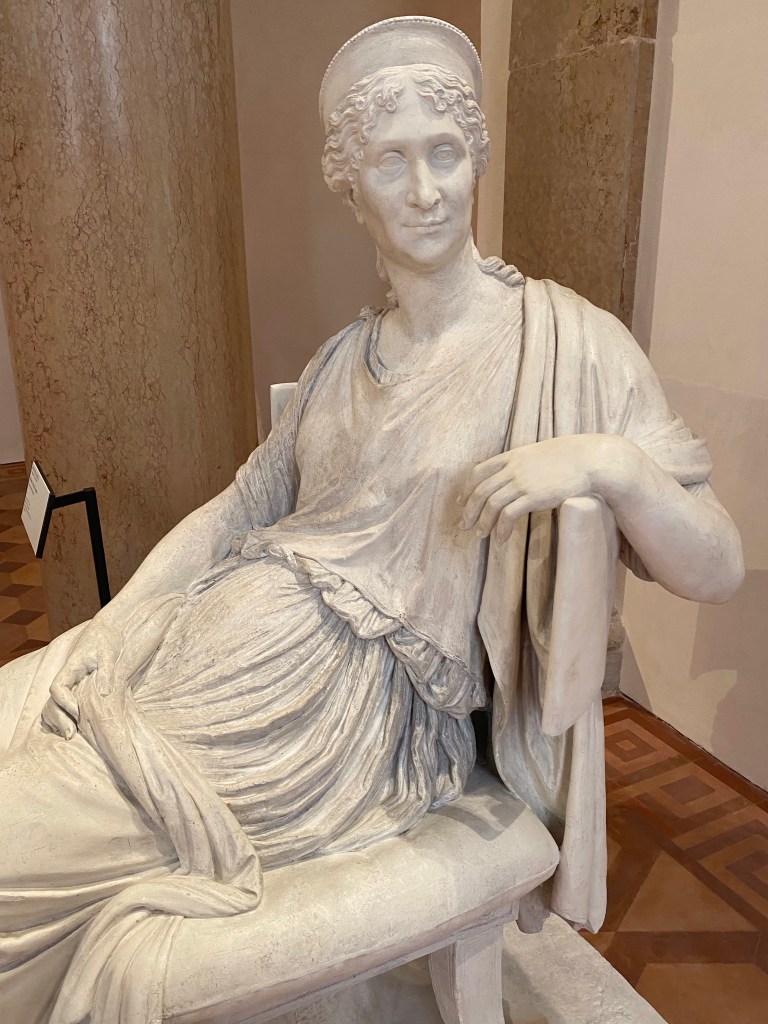
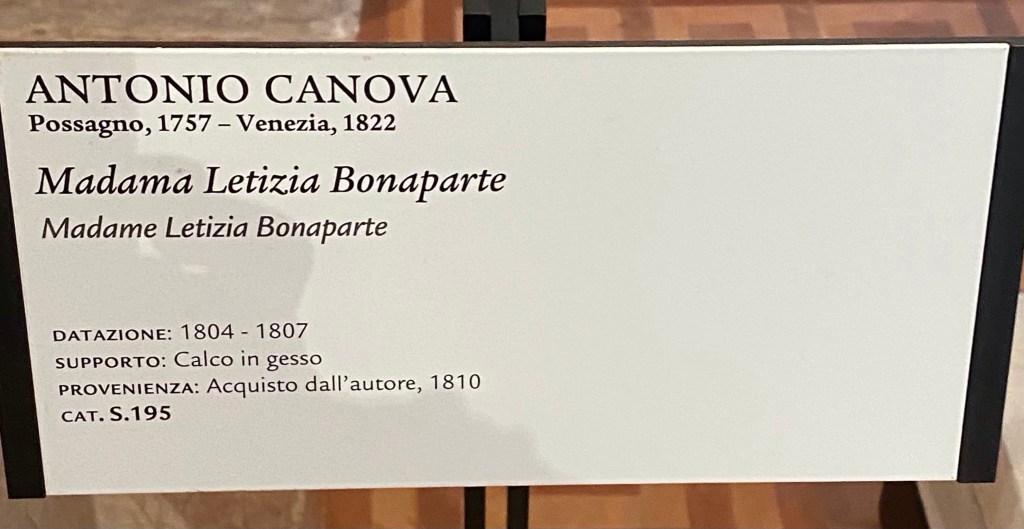
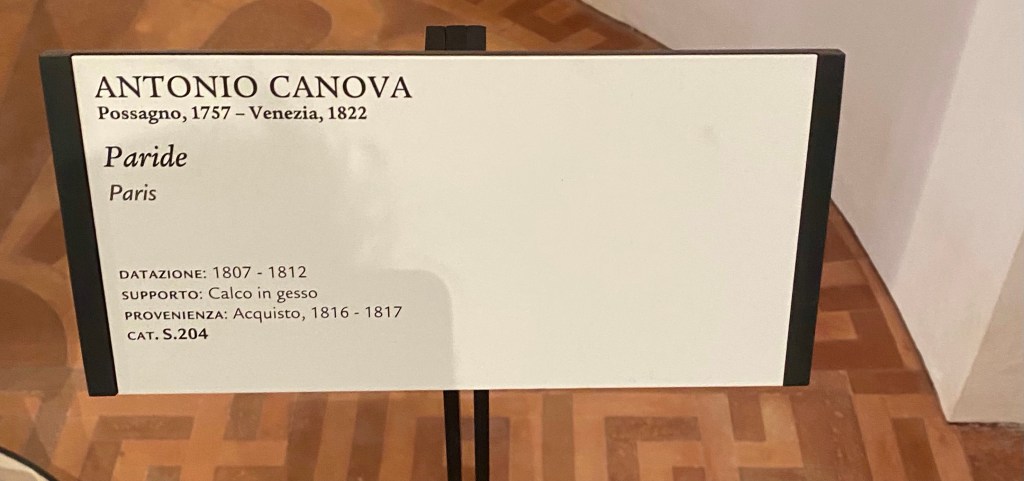
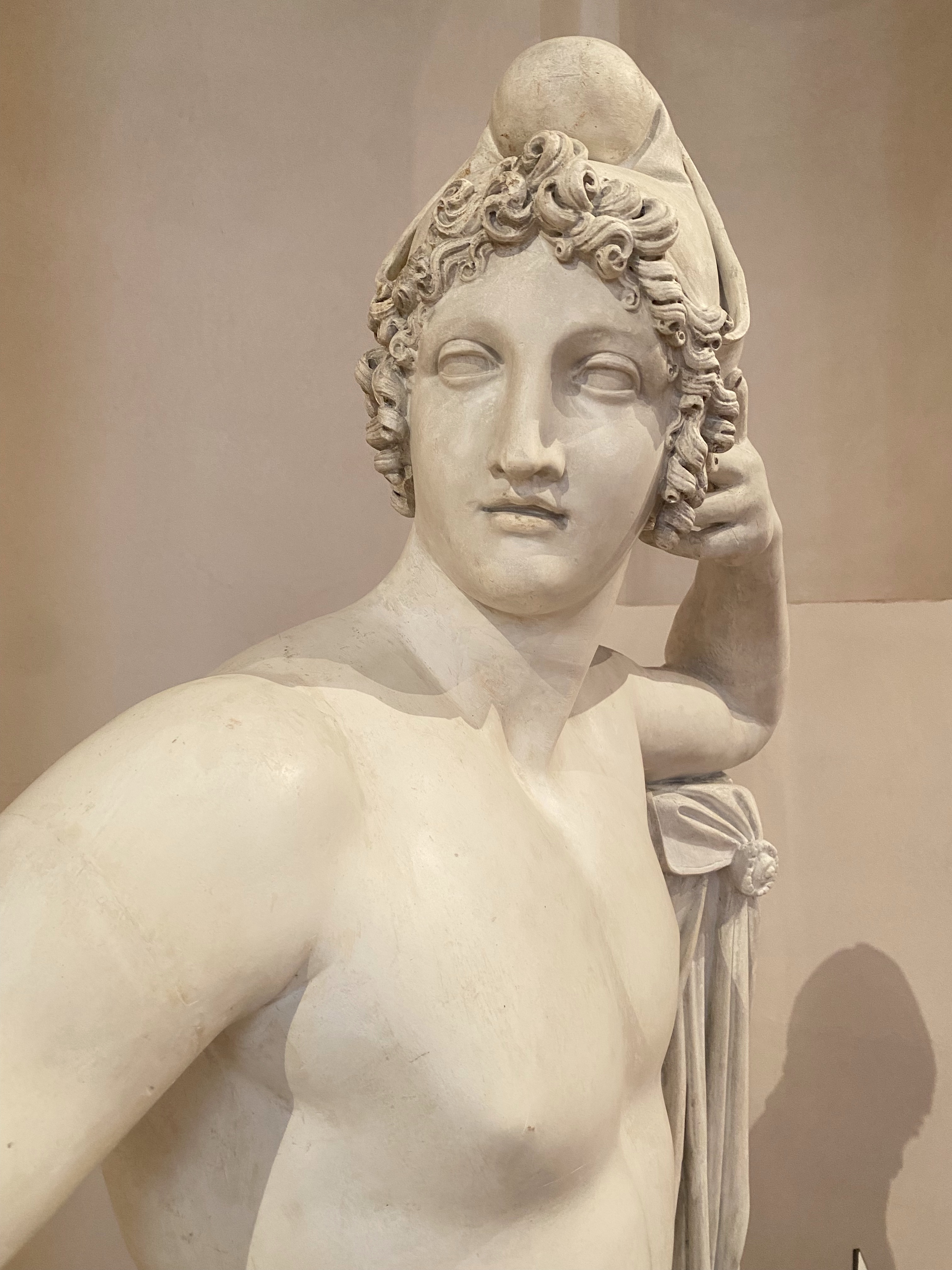
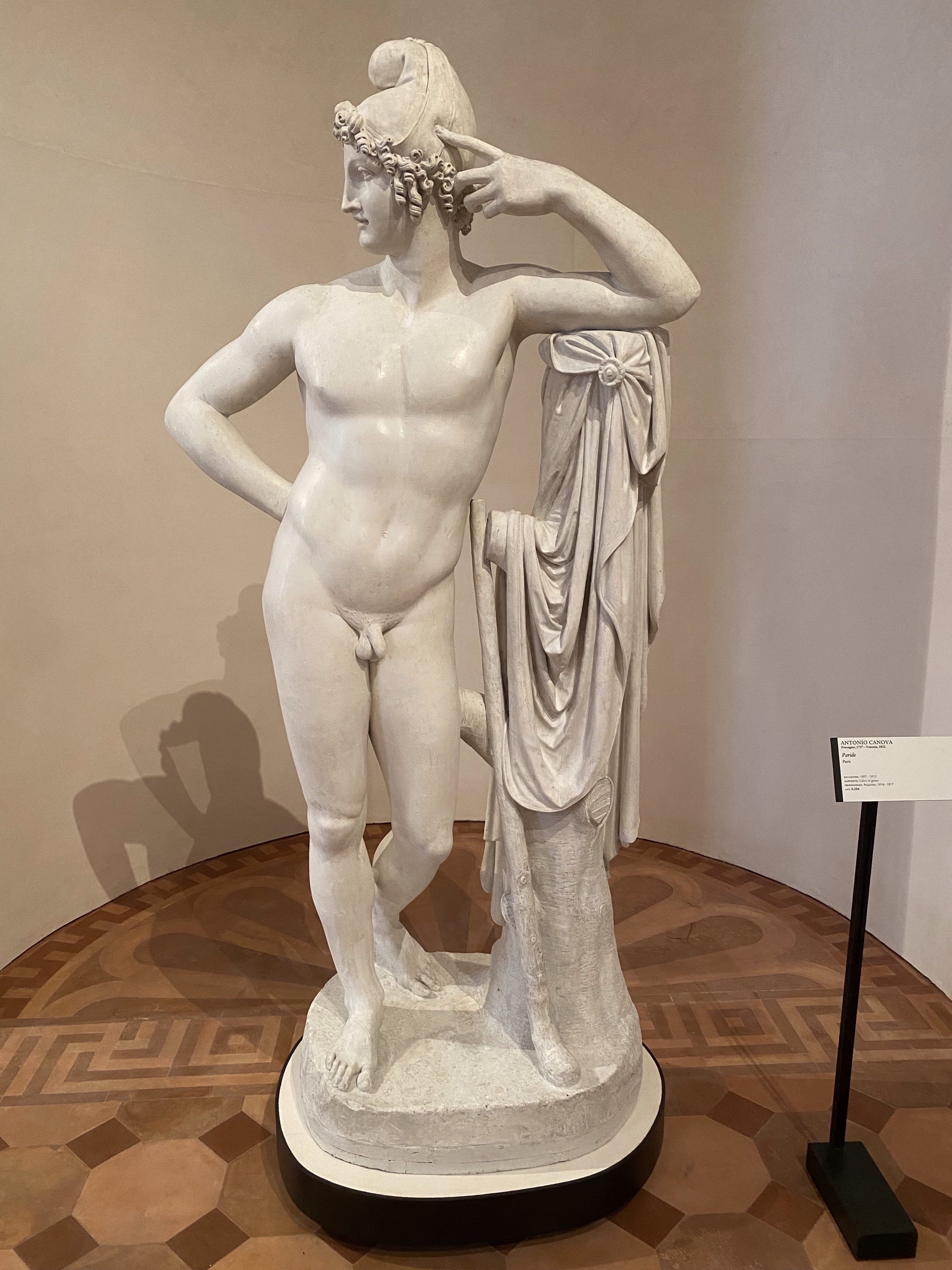
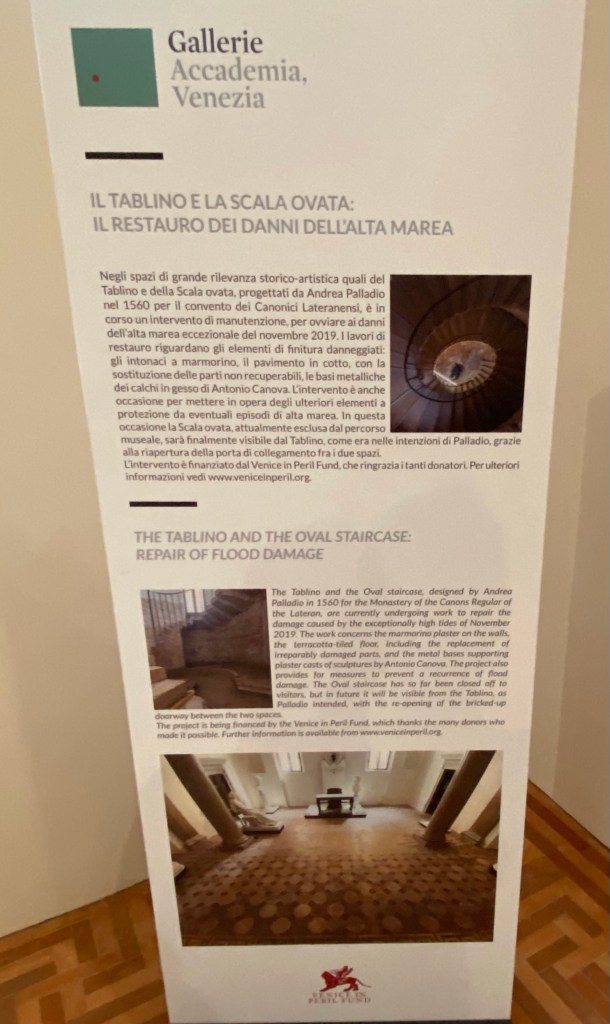
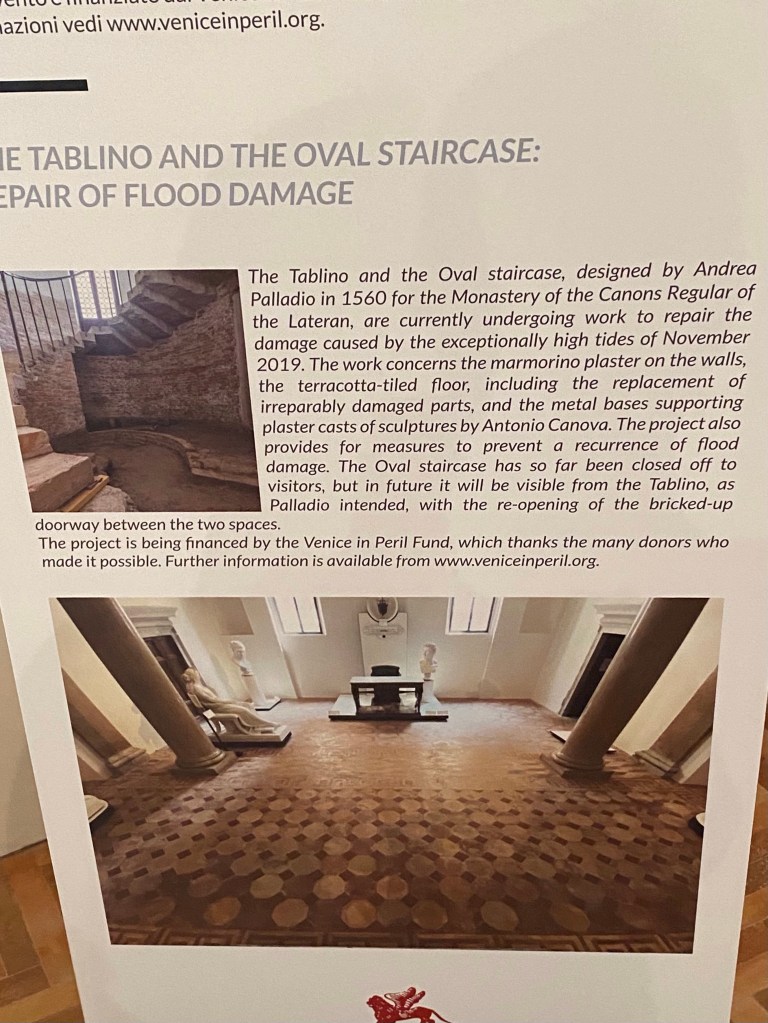
The collection of plaster casts after antique sculptures:
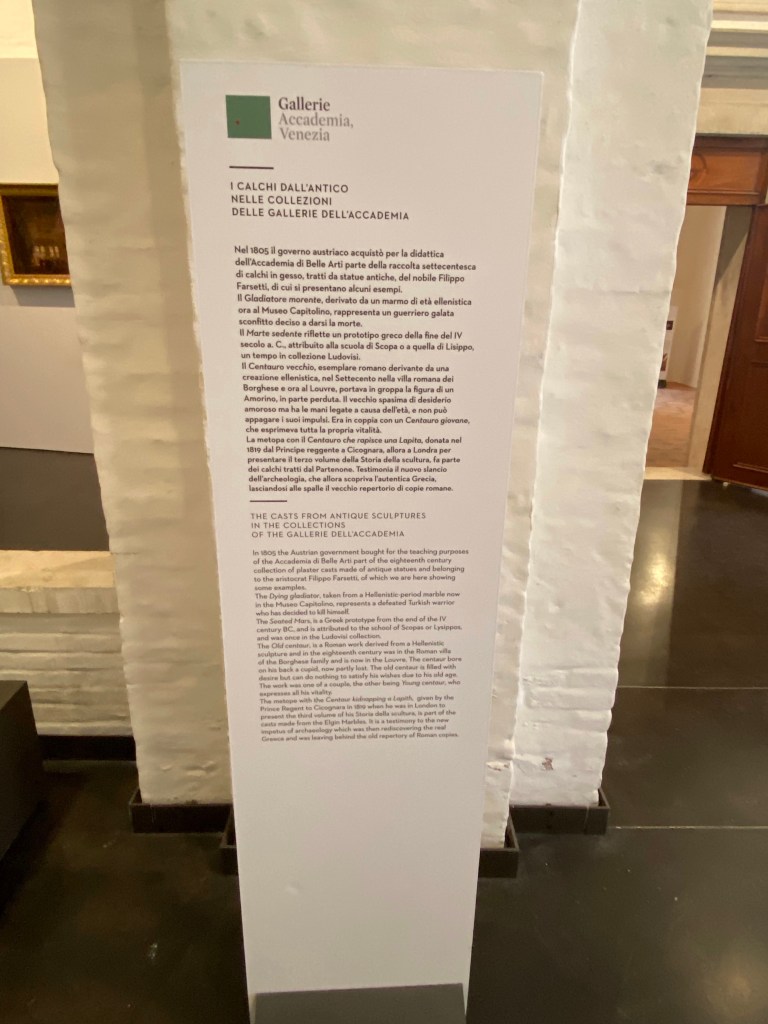
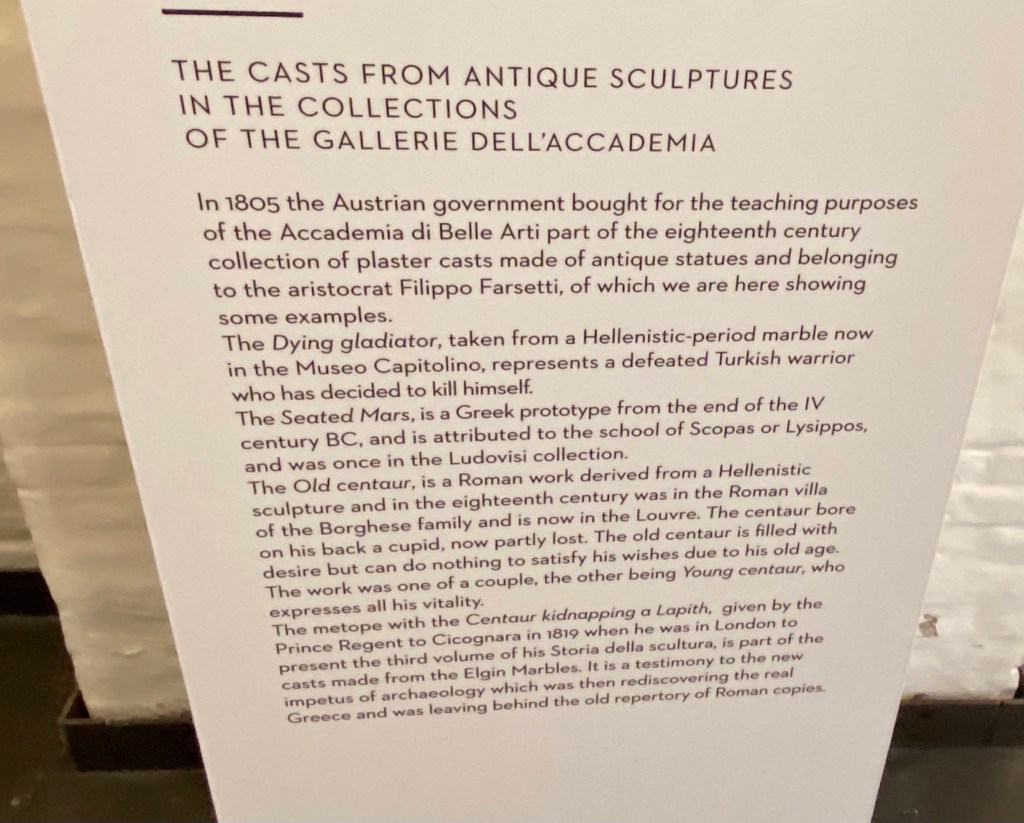
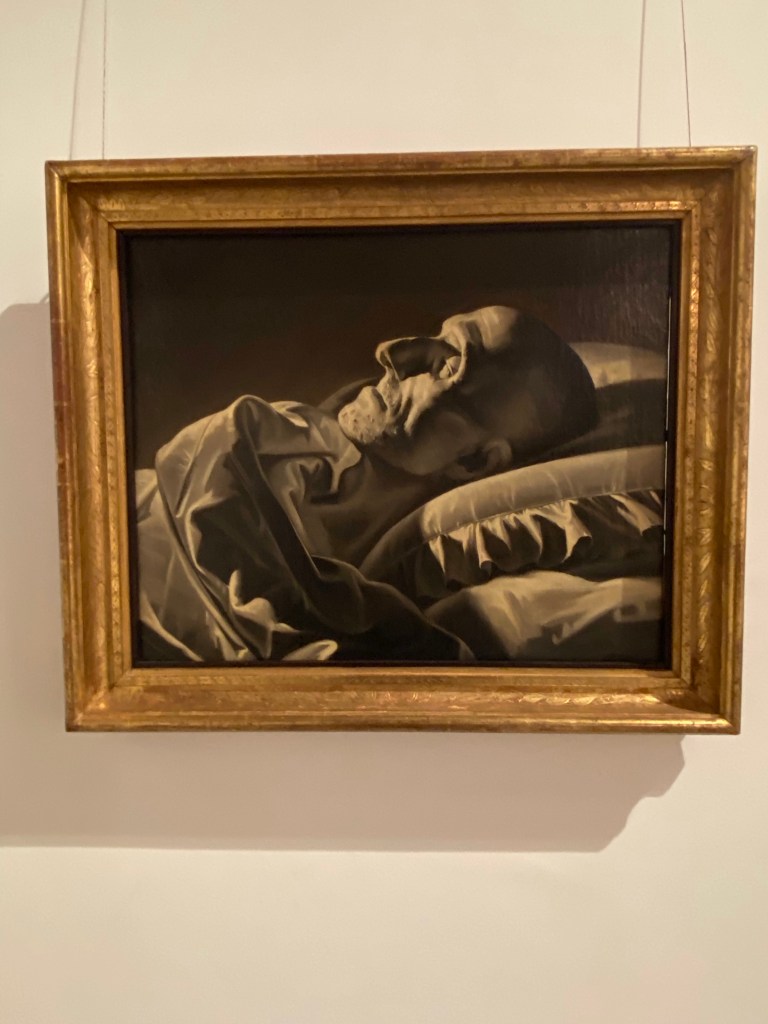
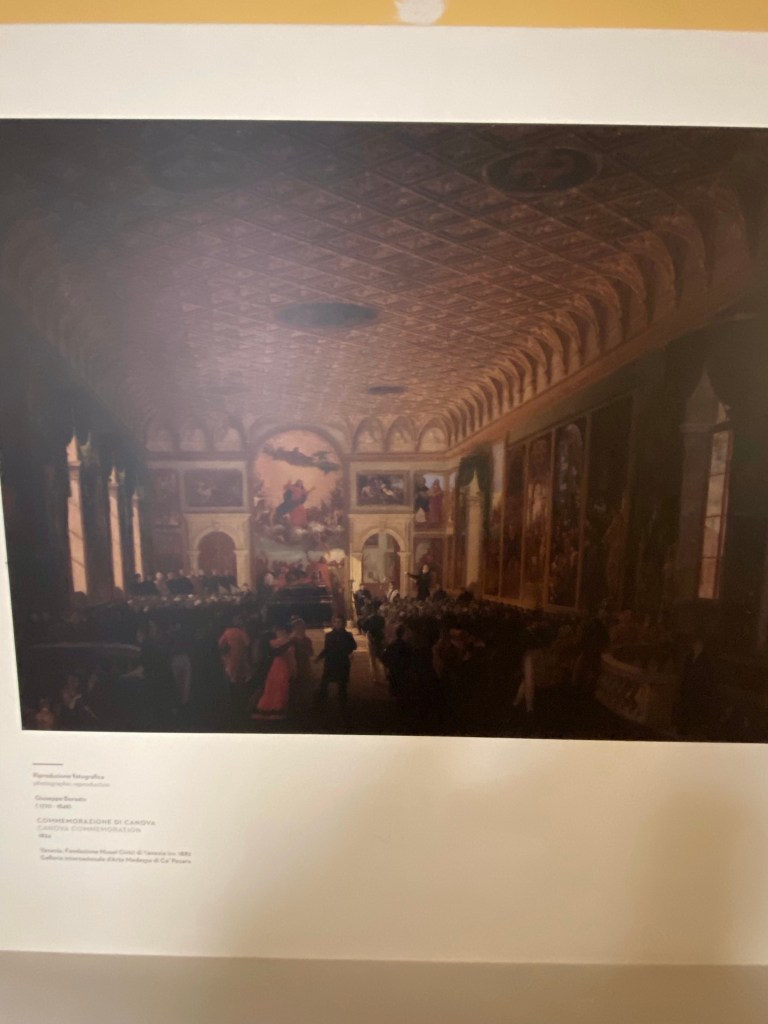
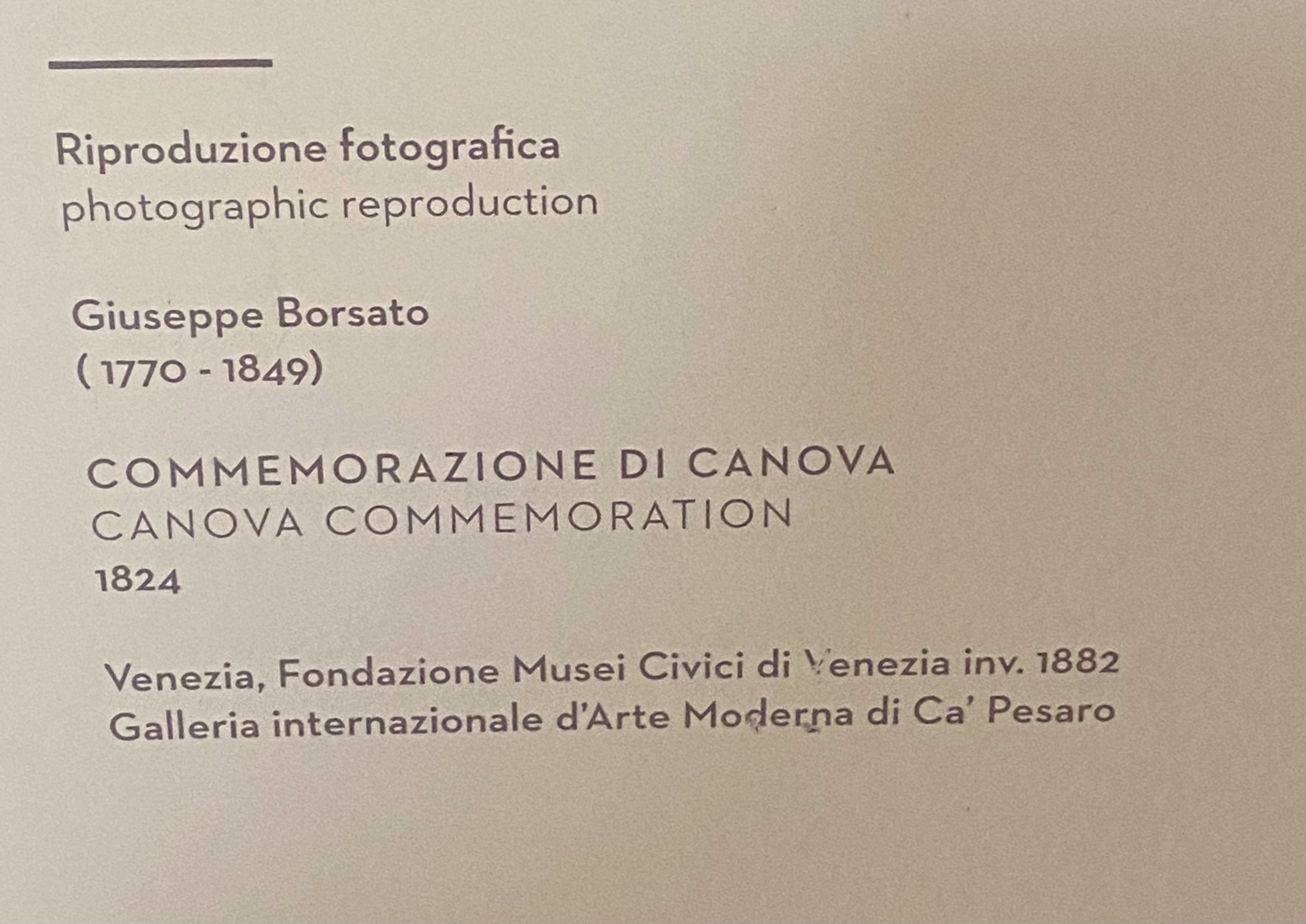
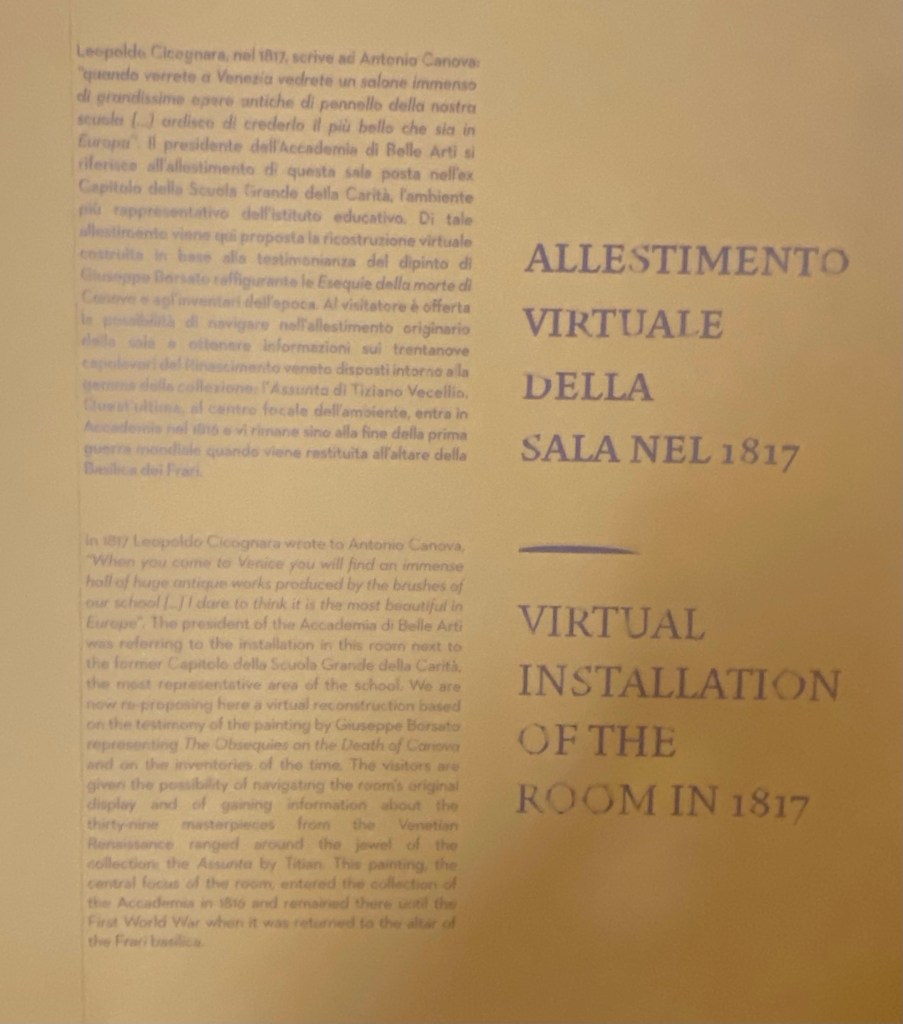
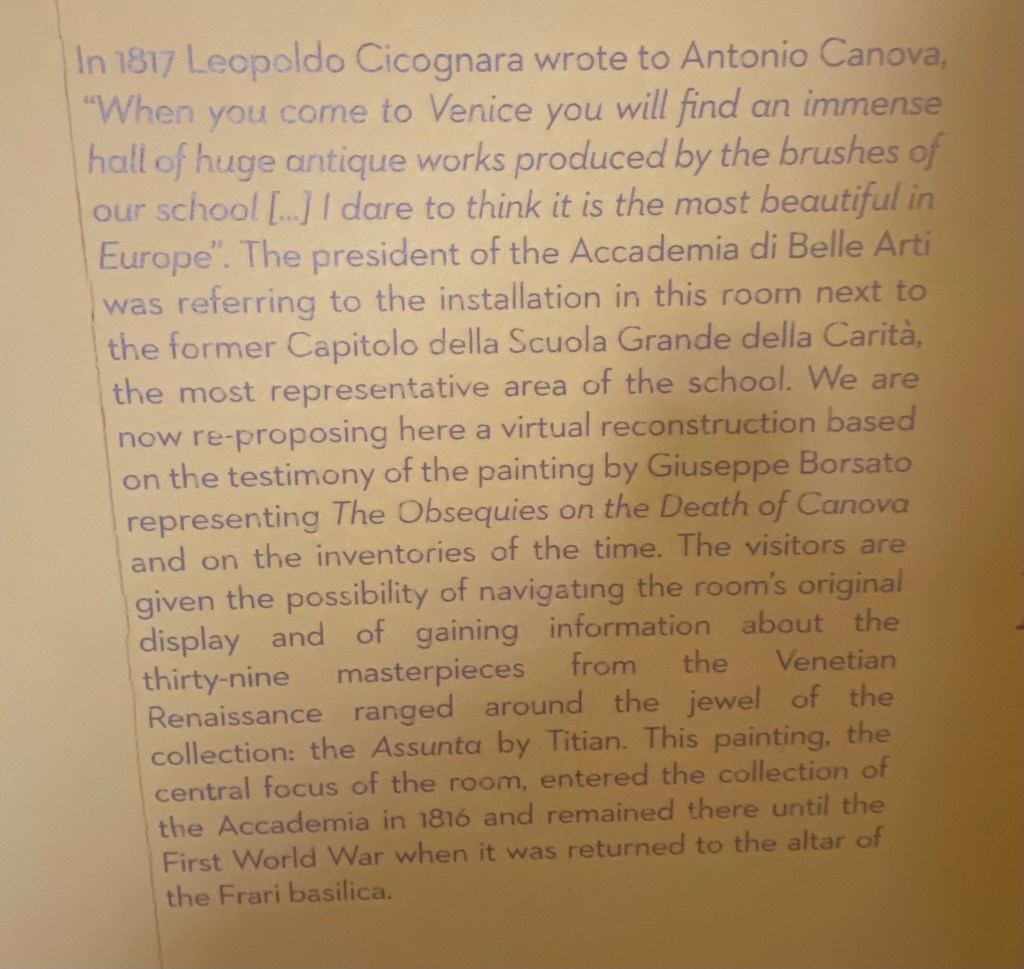
And, to close this post, it was interesting to learn that in this very building, in the 1824, Canova’s life and art were commemorated in an impressive ceremony.
 get back, lauretta!
You must be logged in to post a comment.