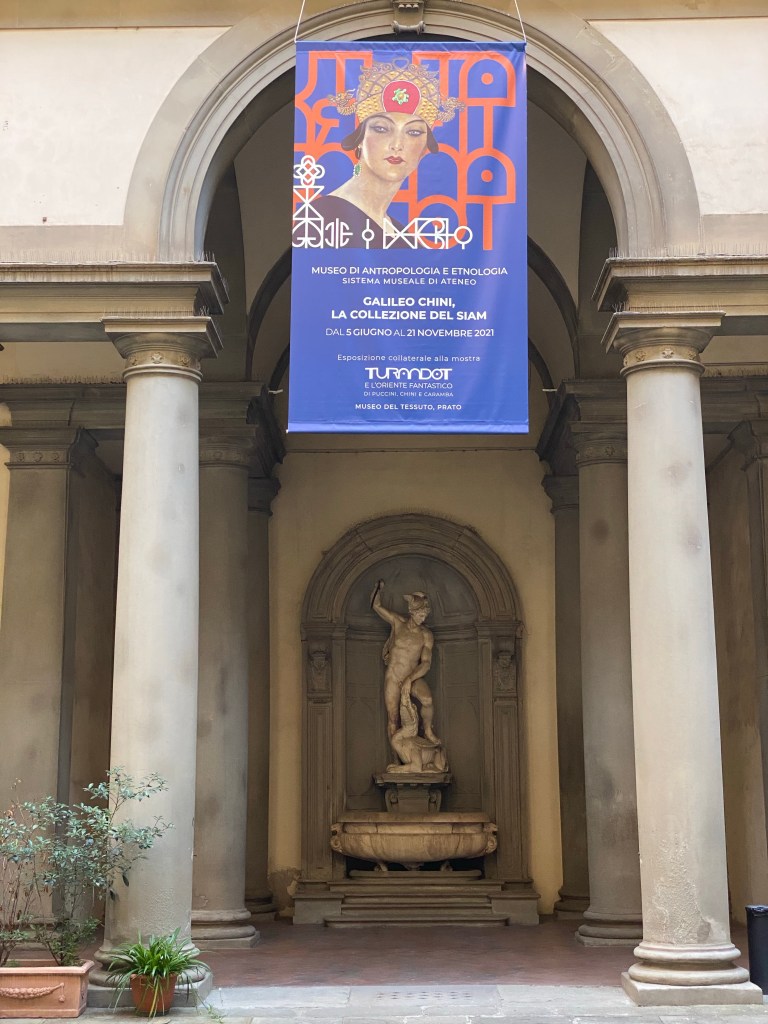
Through this month in Florence, there is a small but fine exhibition at the anthropology museum.
Here is the exhibition’s premise:
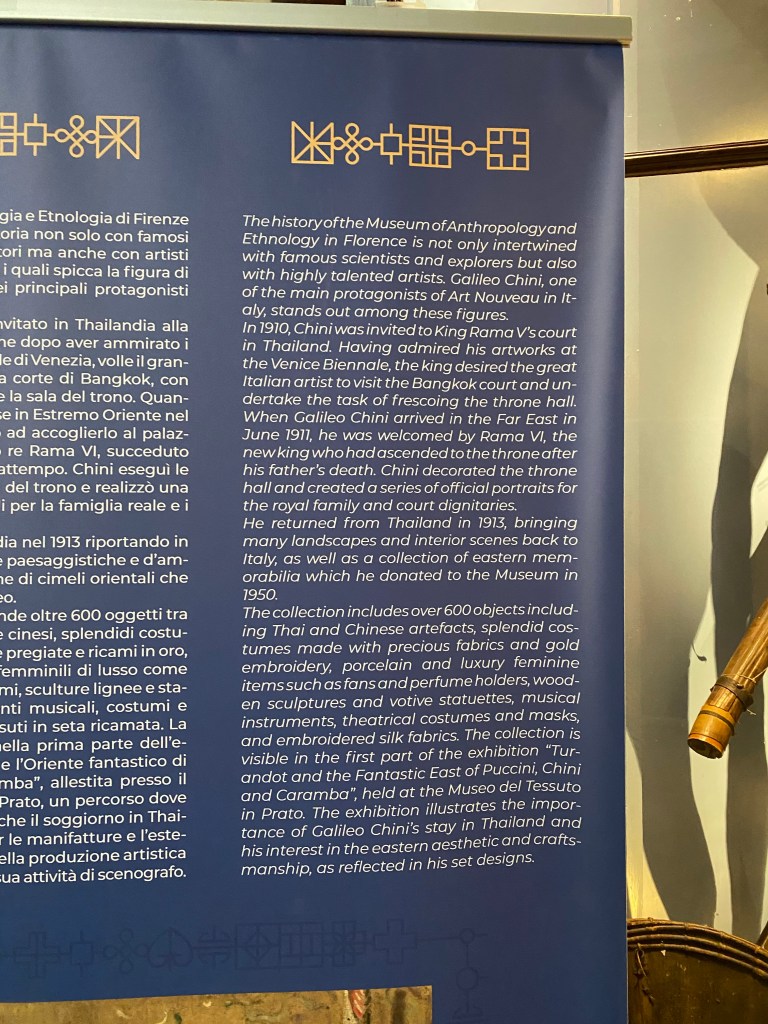
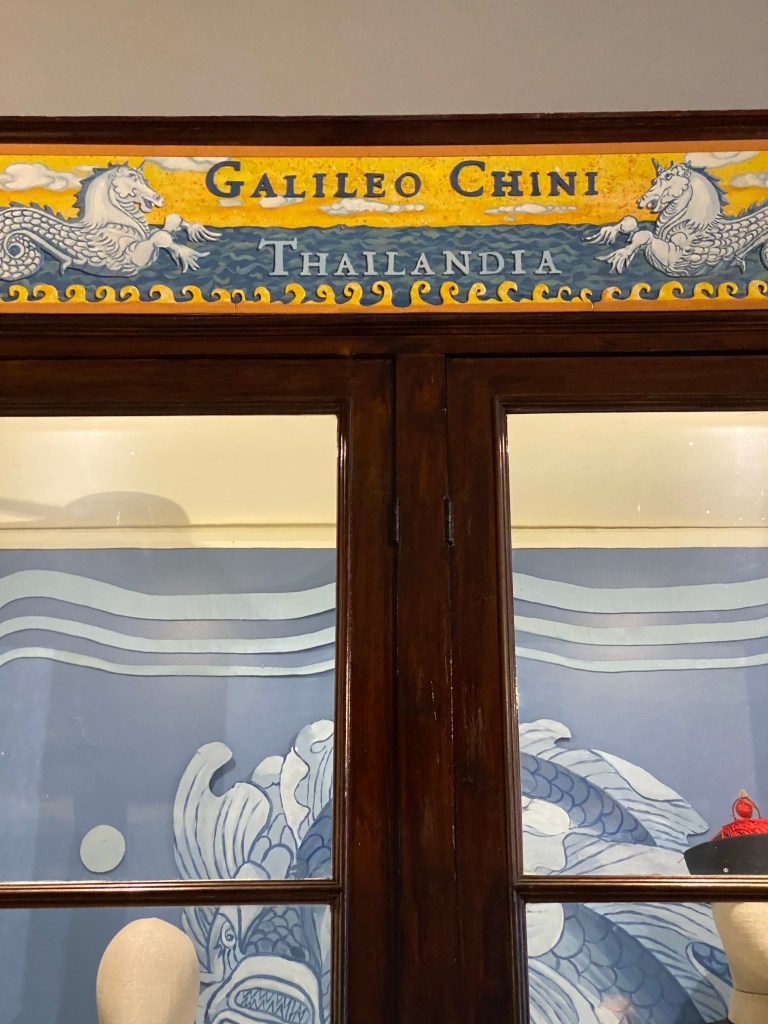
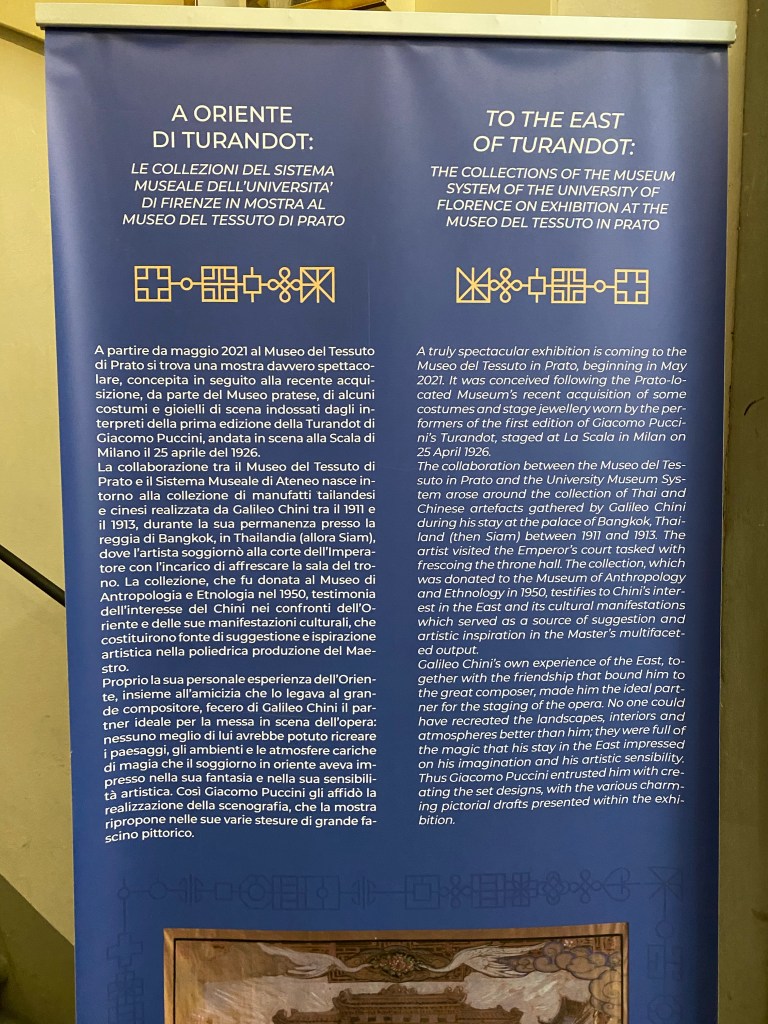
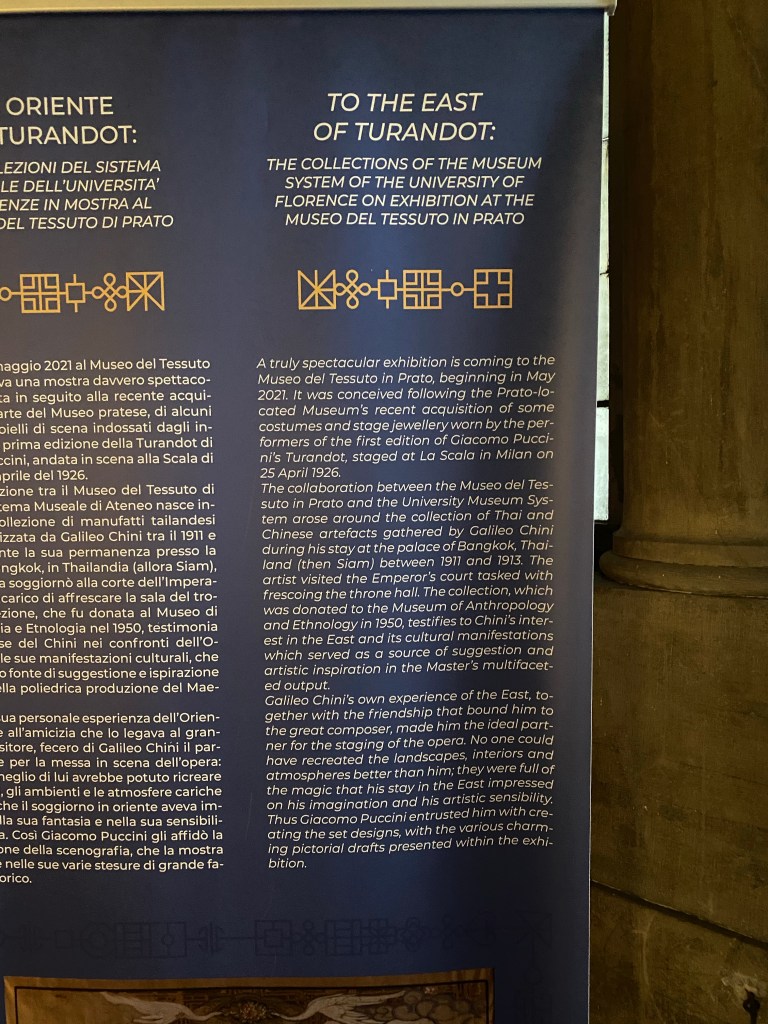
“The discovery of a set of costumes and set jewels realized by the costume designer Luigi Sapelli (aka Caramba), dating back to the première of the Turandot by Puccini (1926) and coming from the private wardrobe of Iva Pacetti, great soprano from Prato, is at the base of the exhibition ‘Turandot e il fantastico Oriente di Puccini, Chini e Caramba’, opening on 22 May at the Museo del Tessuto in Prato. The interdisciplinary exhibition – music, theatre, art, dance, and anthropology – has its core in the friendship between the great composer Giacomo Puccini and Galileo Chini, one of the most important representatives of Art Nouveau in Italy and the brilliant author of the production and set design for the Turandot. The University Museum System (SMA), co-organizer of the exhibition, participates with 120 objects from the collection of over 600 oriental memorabilia brought back by Chini on his return trip from Siam (now Thailand) in 1913. Donated in 1950 to the Museum of Anthropology in Florence, by Chini himself, these include precious textiles, dance accessories, theatrical masks and costumes, painted porcelain objects, musical instruments, sculptures, weapons, and custom artifacts of Thai and Chinese production. The exhibition is curated by Daniela Degl’Innocenti (Prato Textile Museum) and Monica Zavattaro (Museum of Anthropology and Ethnology of the University of Florence). Other public and private bodies collaborated and contributed to the wealth of the exhibits, including the Ricordi Historical Archives, the Giacomo Puccini Foundation, the Uffizi, and the Teatro alla Scala Museum.
It is precisely to coincide with the exhibition in Prato that a room was set up at the Museum of Anthropology and Ethnology – ahead of its full reopening – with some precious objects of the Chini Collection, especially selected for the occasion, which testifies the dialogue between the institutions and the territory.
Turandot e l’Oriente fantastico di Puccini, Chini e Caramba
22 May ̶21 November 2021, Museo del Tessuto, Prato”
Among the curiosities are the musical instruments assembled by the Tuscan painter Galileo Chini in the first decades of this century. Chini was summoned by the King of Siam to decorate his palace. Skulls from all over the world constitute the most important part of the anthropological collection.
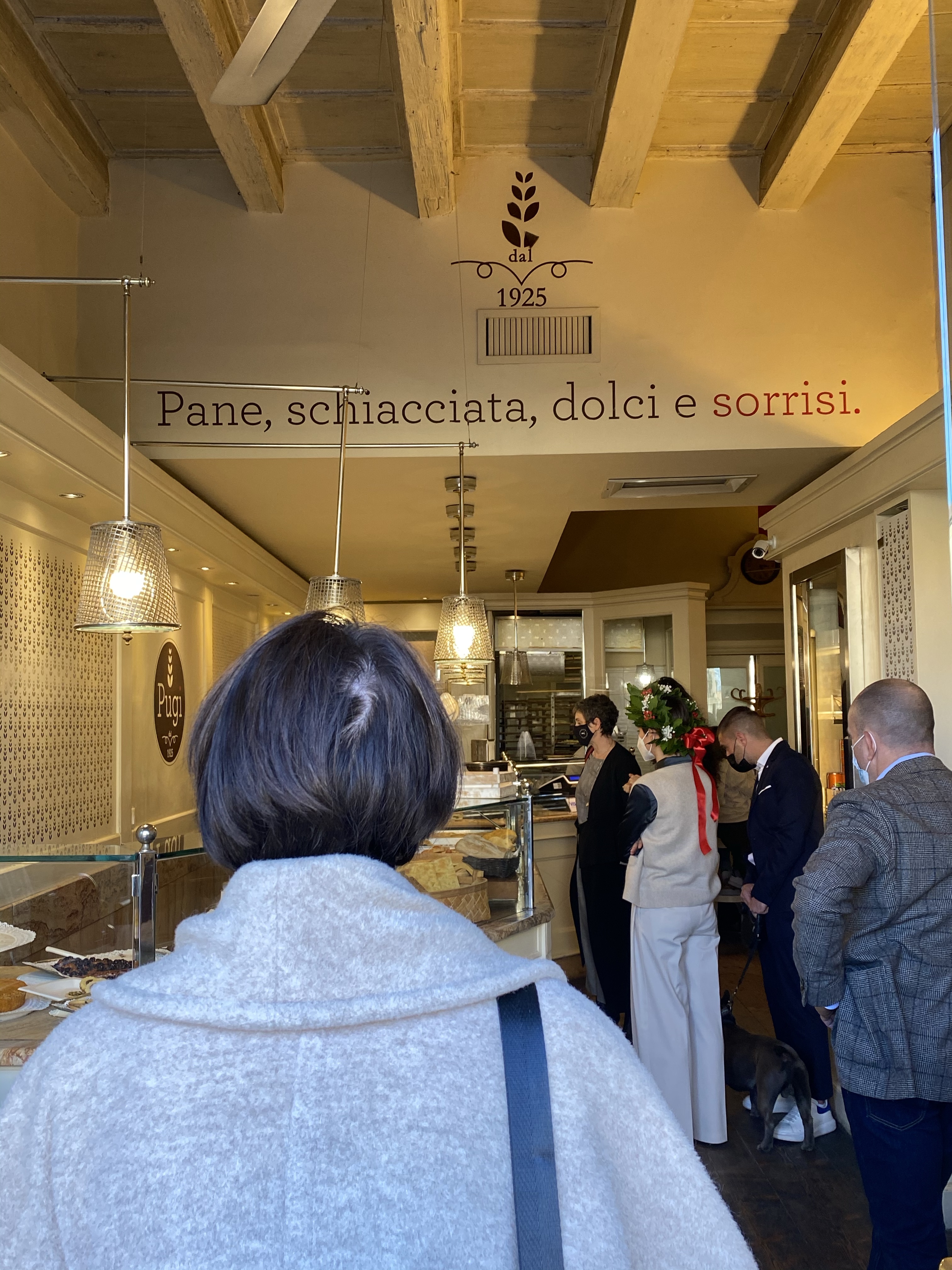
A happy day includes a stop at Forno Pugi, a Florentine bakery specializing in schiacciata in Piazza San Marco, Florence. Schiacciata is a delicious savory heated bread that topped with olive oil and salt and squished down to make it almost flat. The name come from the verb schiacciare, which means to squish or mash. The sign says, “bread, schiacciata, sweets and smiles.” I know I am smiling when I leave!
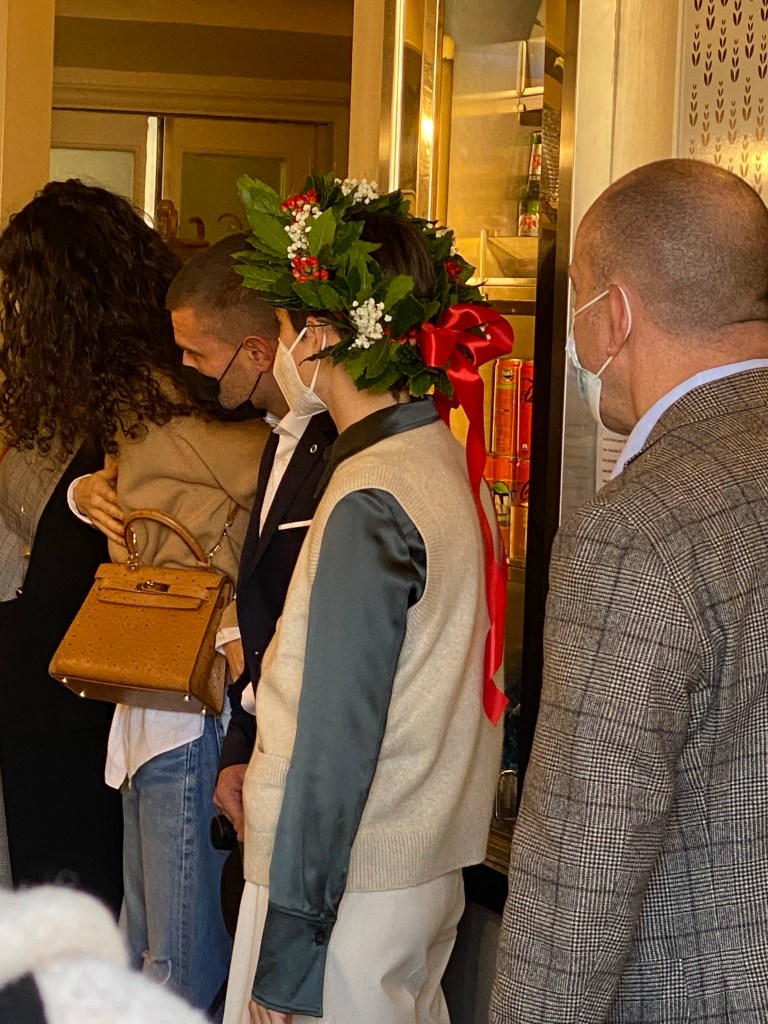
What I loved on this particular day, however, was the young woman with the corona of laurel leaves, festooned with red ribbons, berries and baby’s breath. I love this Italian custom of presenting a new college graduate with a laurel wreath, which they parade around the town in for a day of celebration with family and friends.
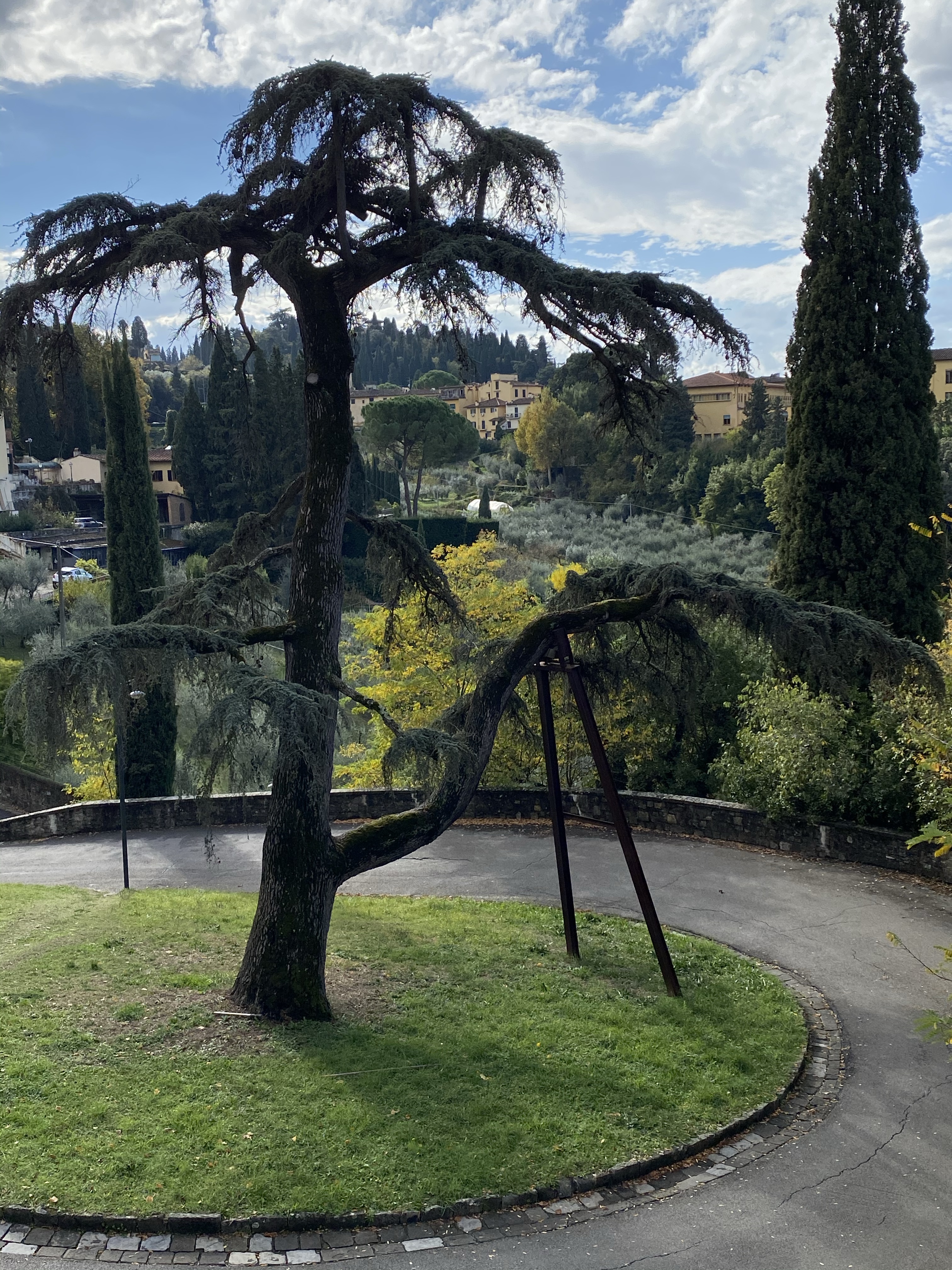
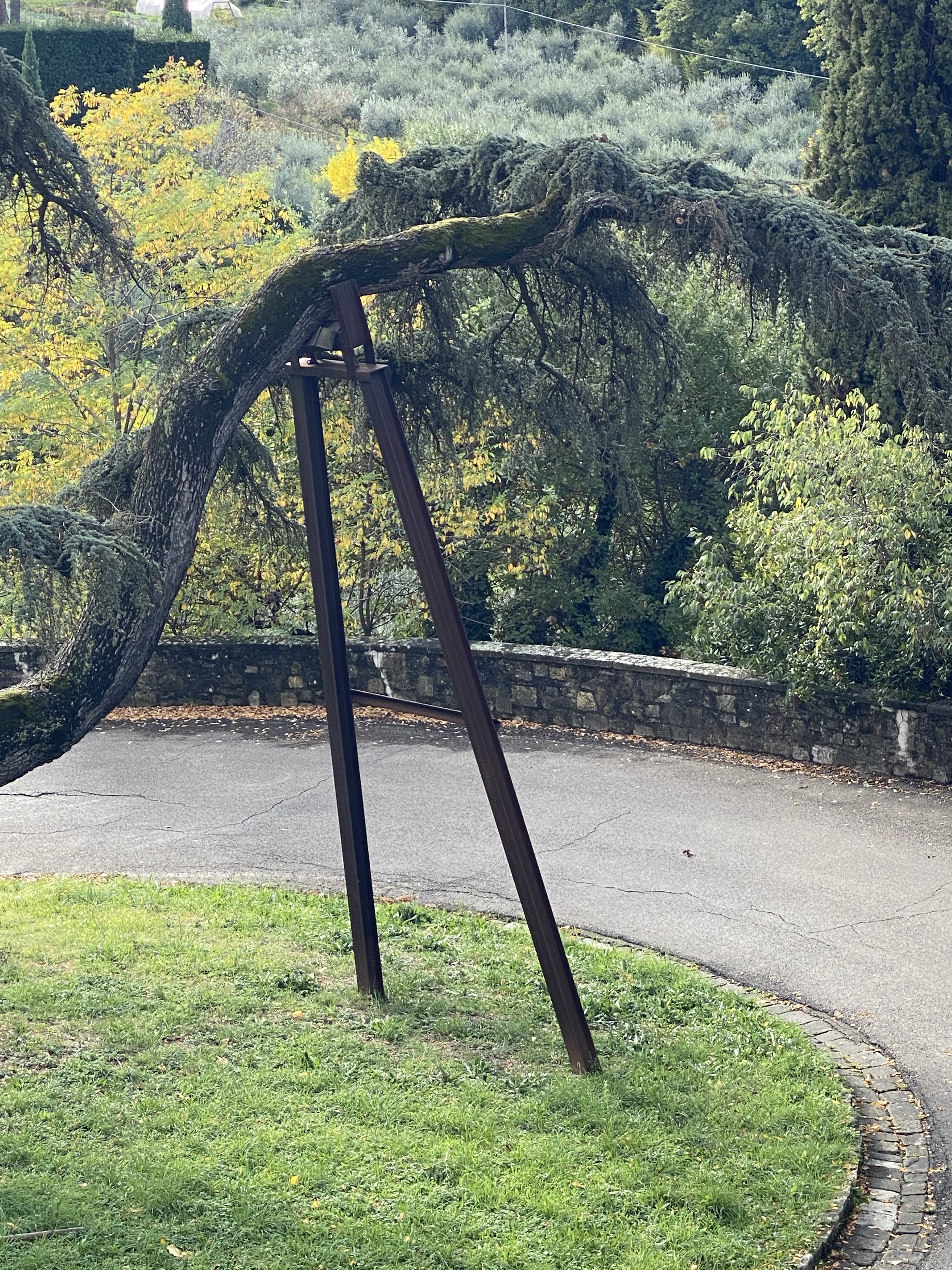
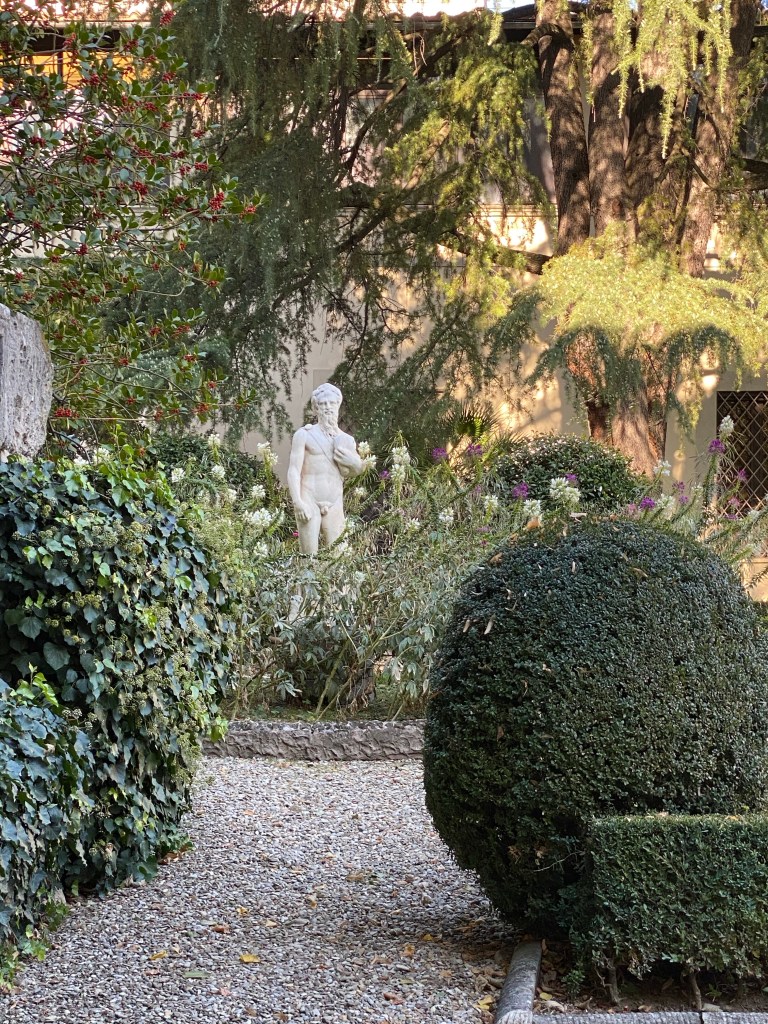
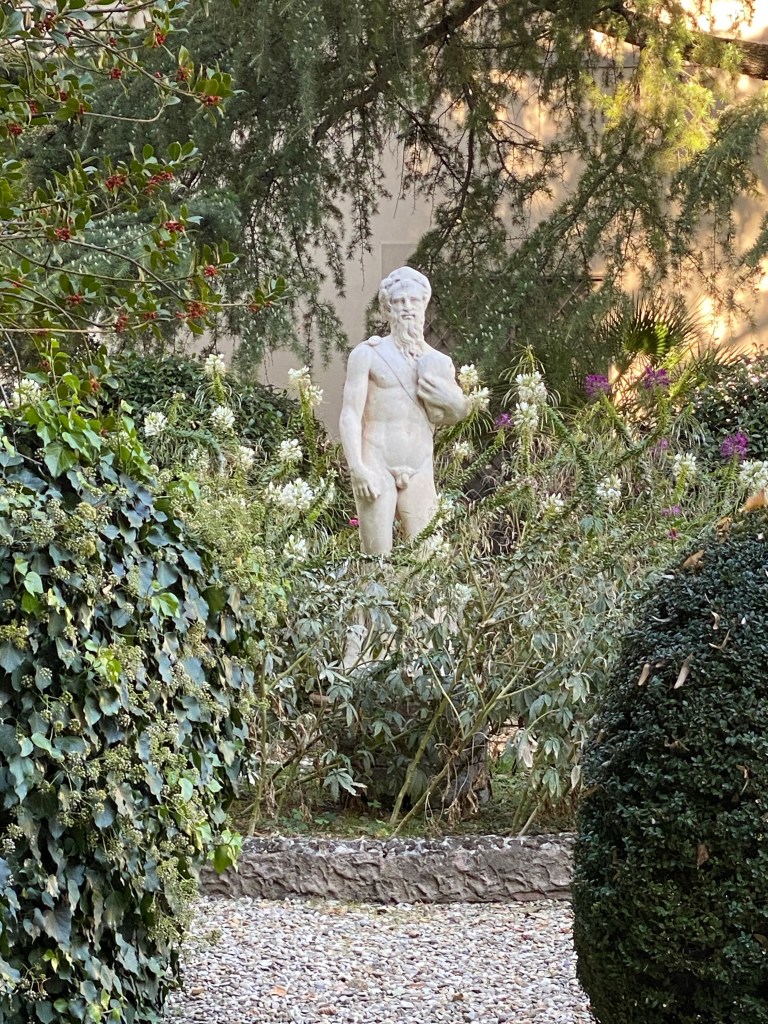
Walking away with my warm, fragrant schiacchiata, I wandered by the garden of the archaeology museum, which is always a delight. Today I noticed this classical sculpture, artfully set off by shrubs and flowers still blooming in late October. Ah….
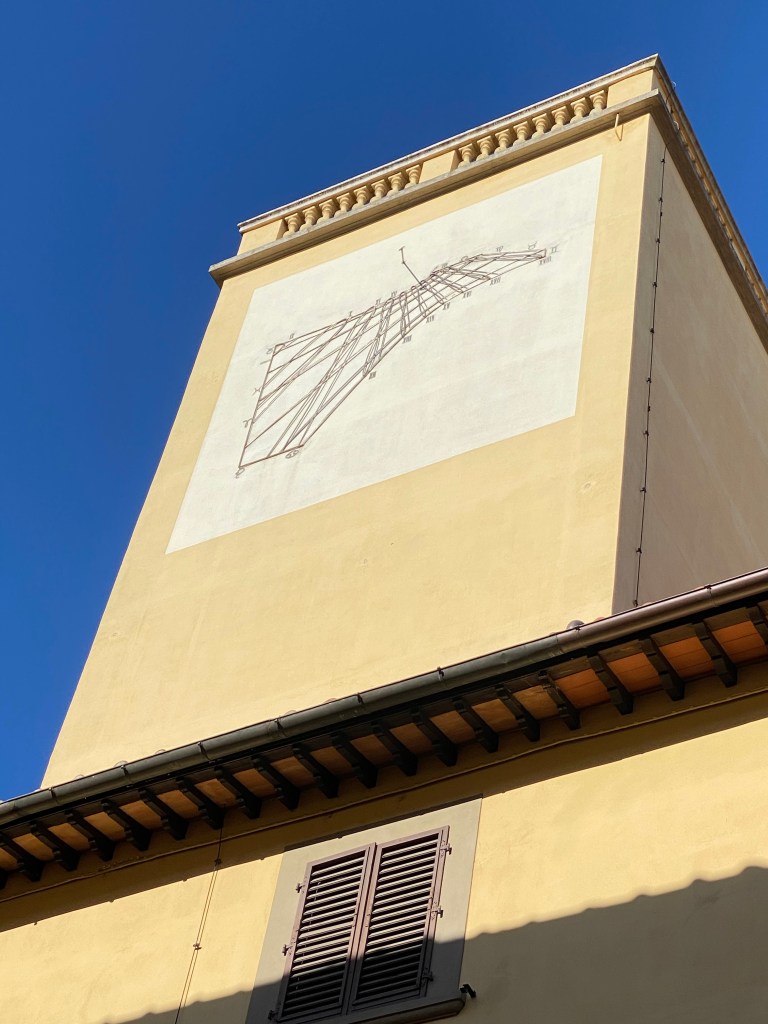
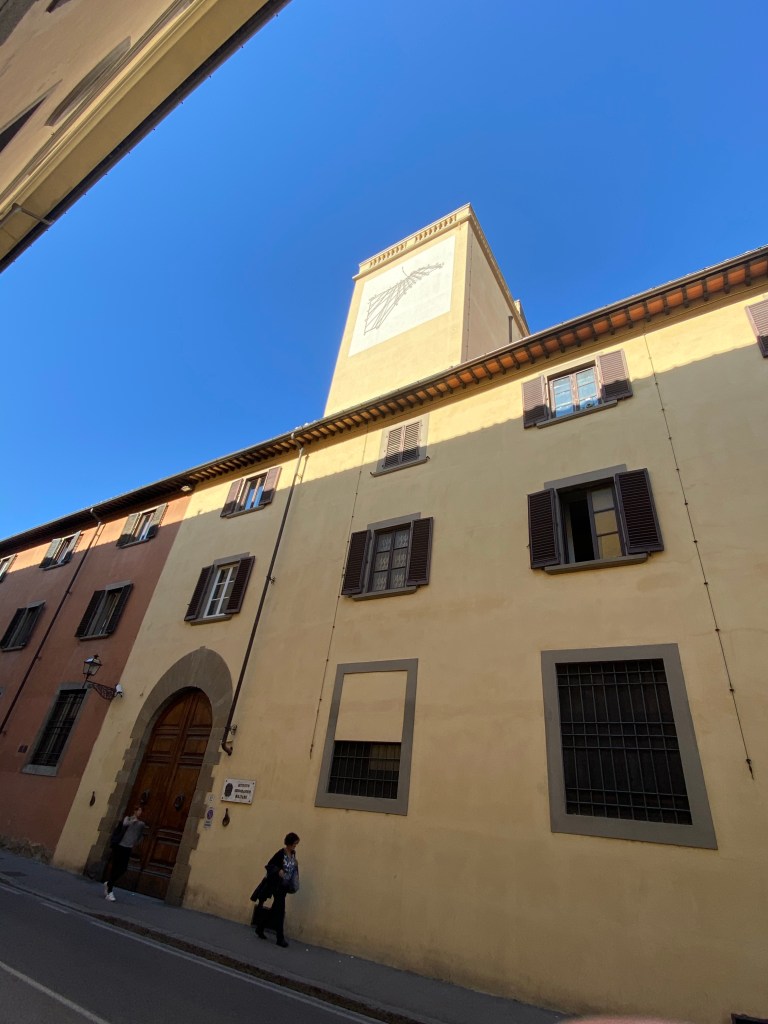
A few blocks away, I noticed for the first time another sun dial. This one is high atop the Geographical Military palazzo, and although I walk down this street at least weekly, I never saw the sun dial before. It is extremely elaborate, just what you would expect from a military institution.
I’m making a list, and checking it twice. There are still so many places in Italy I want to see and now that Covid is more or less under control, it is possible once again to travel to my heart’s content. I love hopping on a train in Florence and seeing the whole country!
Here’s my ride through Emilia Romagna.
Next up on my list was Modena, famous for Ferrari and Lamborghini sports cars, opera heritage, and unbelievably wonderful balsamic vinegar.
What I saw and felt the minute I walked into the center was the university atmosphere. The center swarmed with young people. I also saw lots of handsome young men in military uniforms. The age-old question: what is it about a man in uniform?
The University of Modena, founded in 1175 and expanded by Francesco II d’Este in 1686, focuses on economics, medicine and law, and is the second oldest athenaeum in Italy. Italian military officers are trained at the Military Academy of Modena, and partly housed in the Baroque Ducal Palace.
The Biblioteca Estense houses historical volumes and 3,000 manuscripts.
The Cathedral of Modena, the Torre della Ghirlandina and the whole Piazza Grande form a UNESCO World Heritage Site, granted in 1997.
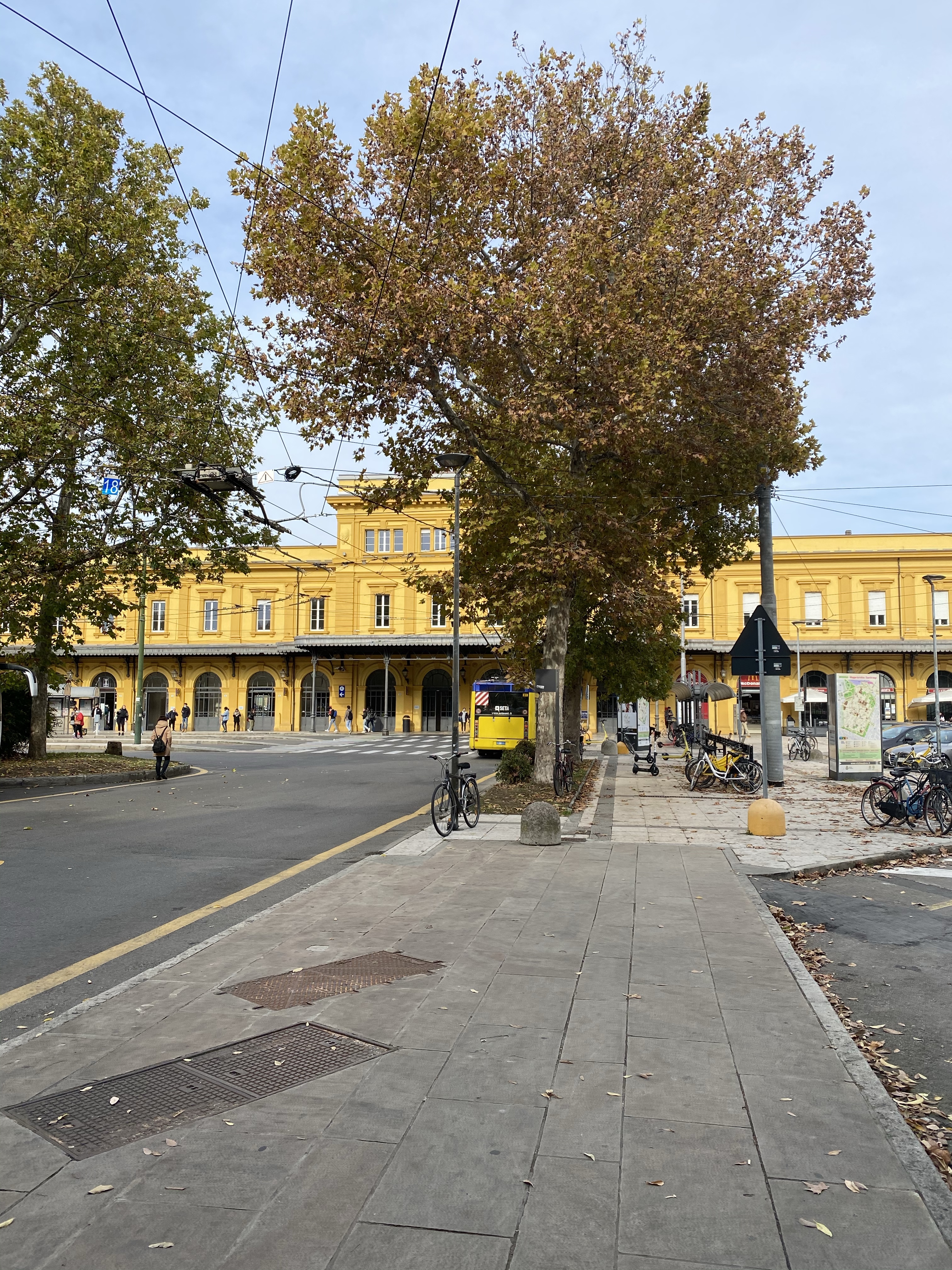
Above, the brightly colored train station is a charming but still active reminder of yesteryear.
Famous Modenesi include Mary of Modena, the Queen consort of England and Scotland; operatic tenor Luciano Pavarotti and soprano Mirella Freni; Enzo Ferrari, founder of the Ferrari motor company; Catholic priest Gabriele Amorth; chef Massimo Bottura; comics artist Franco Bonvicini; the band Modena City Ramblers and singer-songwriter Francesco Guccini who lived here for several decades.
Modena lies on the Pianura Padana, and is bounded by the two rivers, the Secchia and the Panaro, both affluents of the Po River. Their presence is symbolized by the Two Rivers Fountain in the city’s center, by Giuseppe Graziosi. The city is connected to the Panaro by the Naviglio channel.
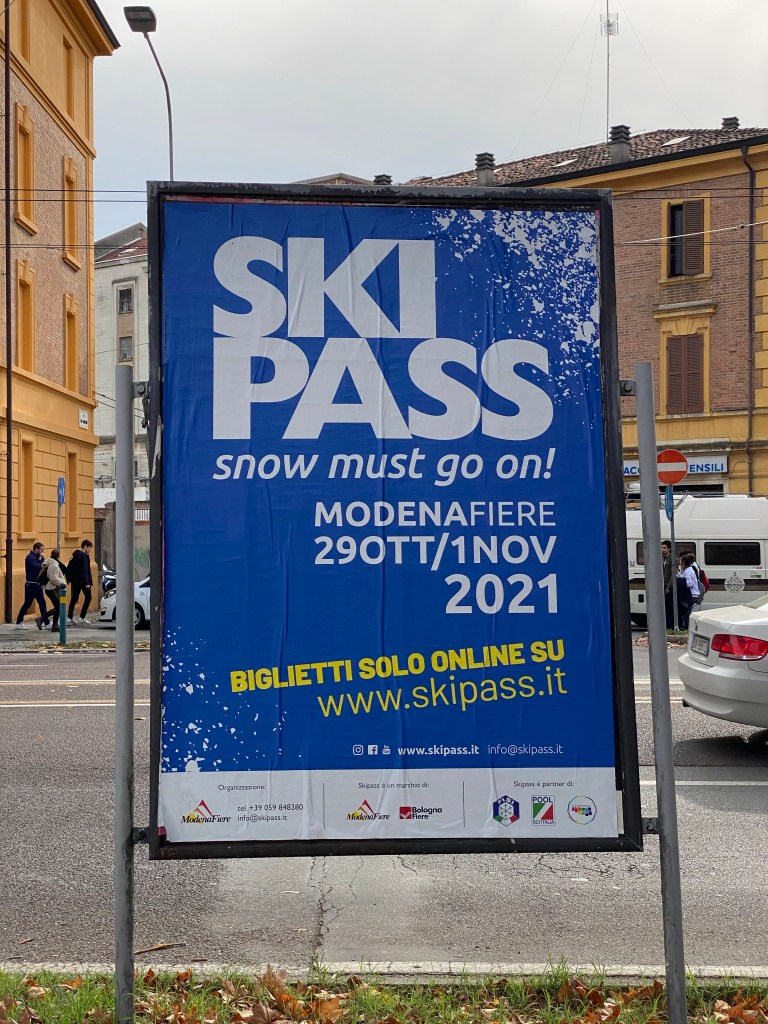
Posters near the train station let you know winter is coming and skiing will soon be available! I almost felt as if I were back in Colorado!
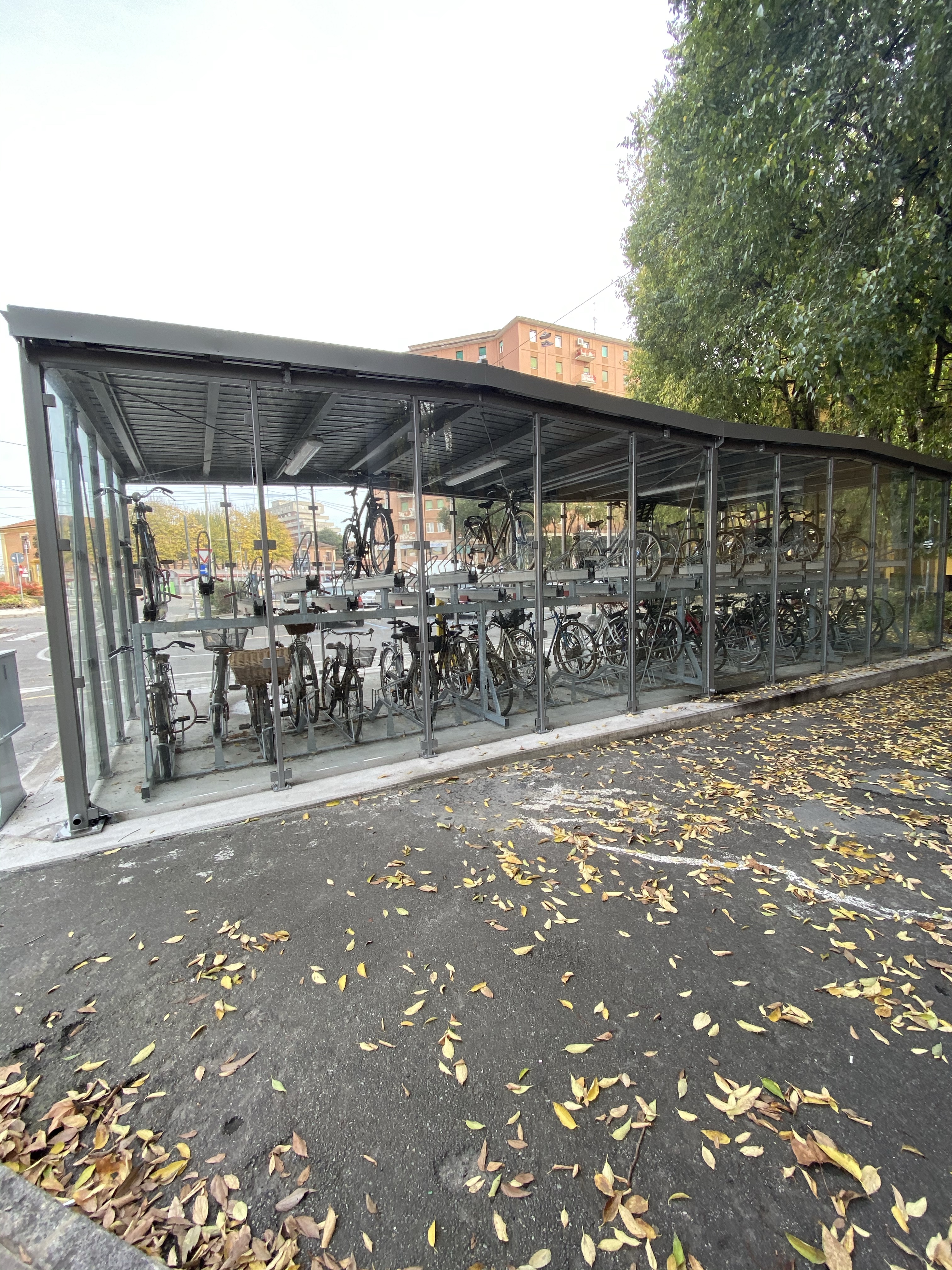
A glass barn that is nearly full of bicycles near the station tells you immediately that you are in a college town.
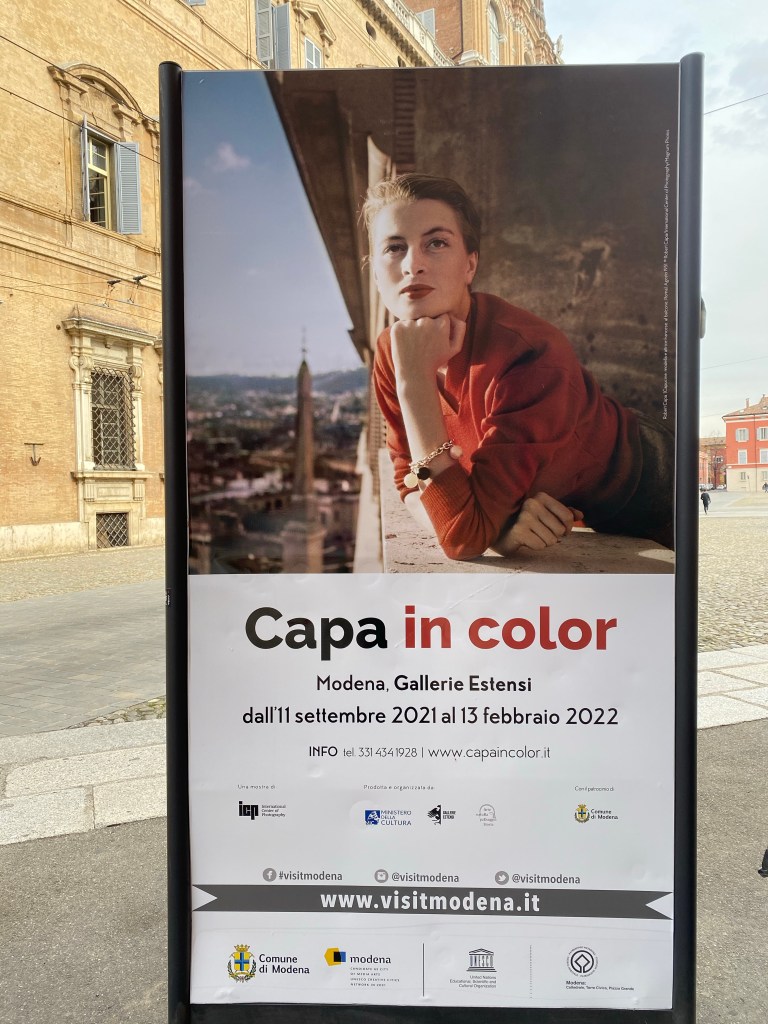
Another poster announces an intriguing exhibition. I know I want to see it! I will try to on my next visit later in November 2021.
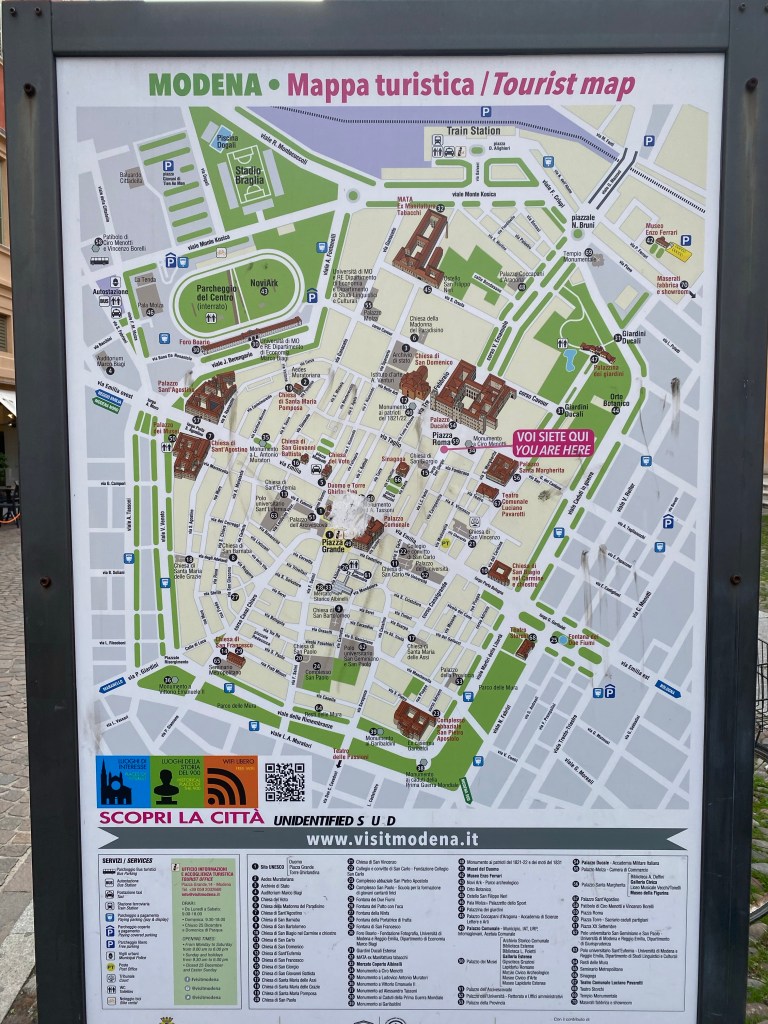
Below, a helpful map:
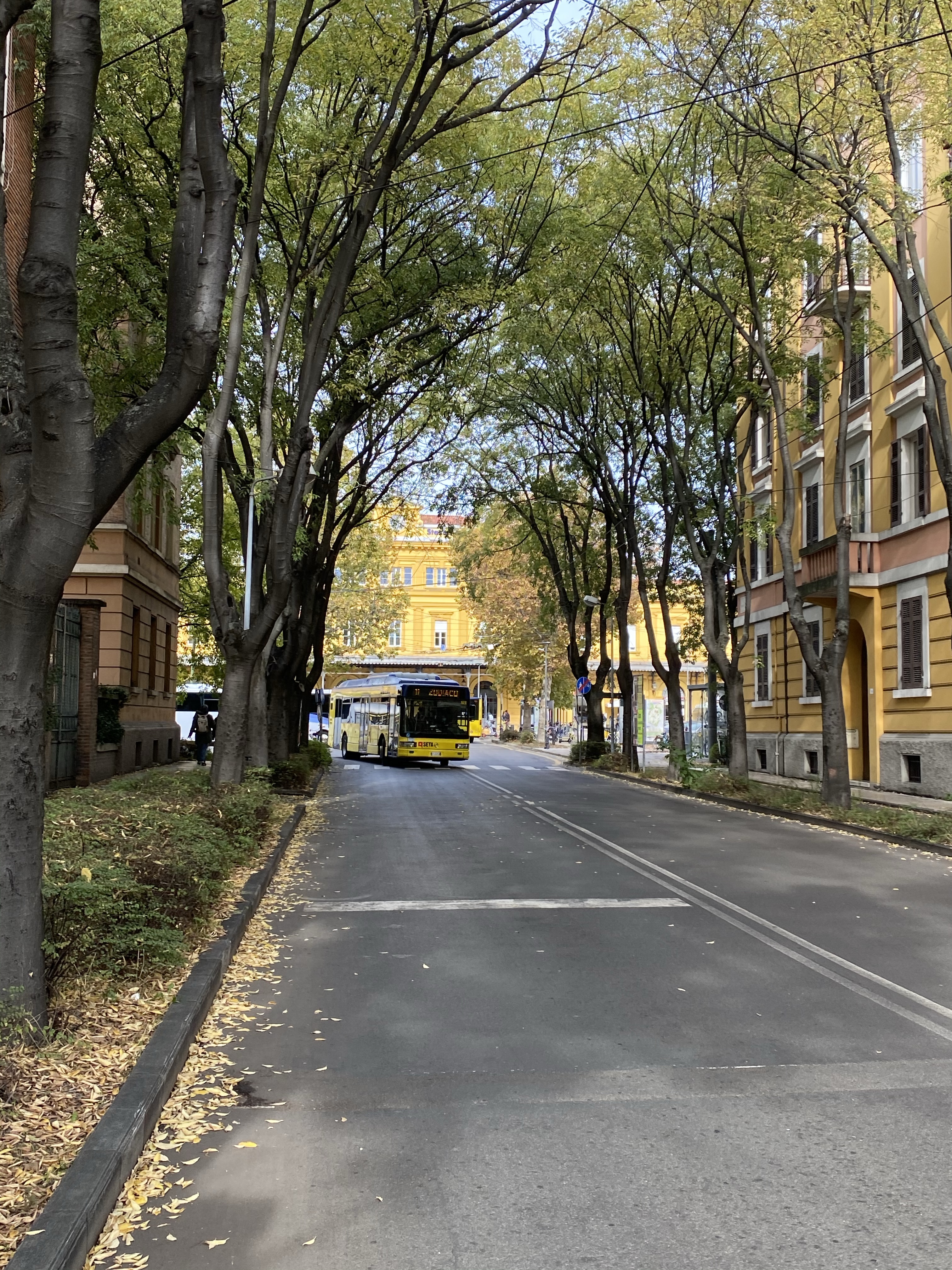
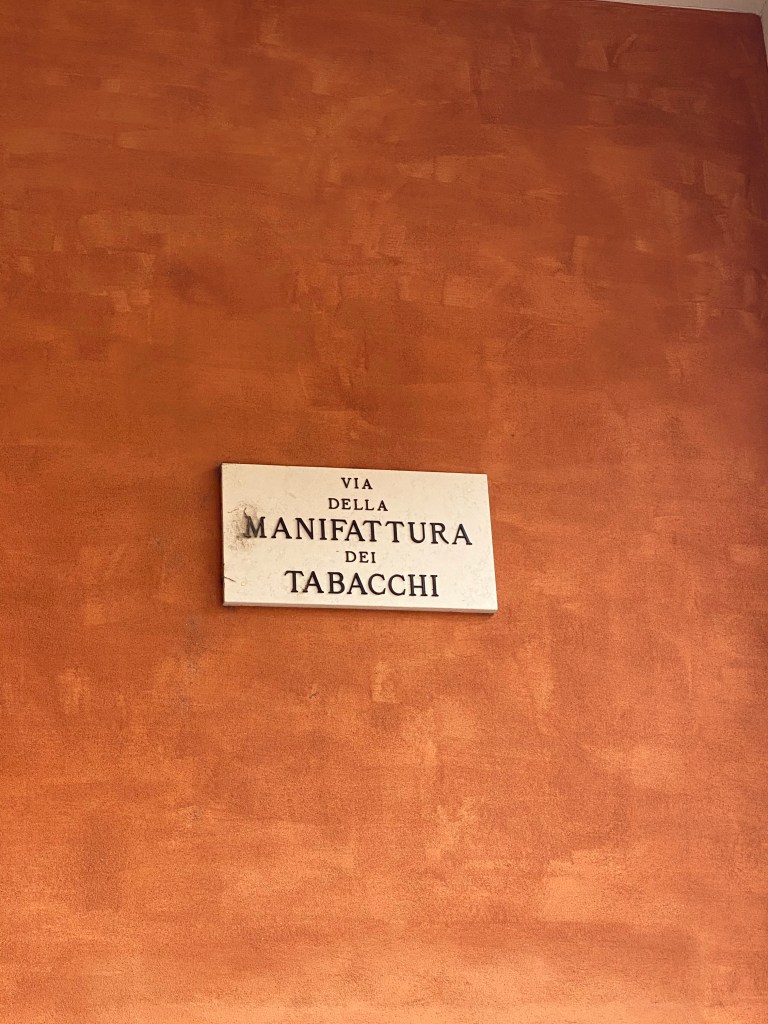
Walking from the train station to the center takes you along the Via della Manifattura dei Tabacchi. A small reminder, for an American like me, that the New World and its products had a profound influence upon the old world.
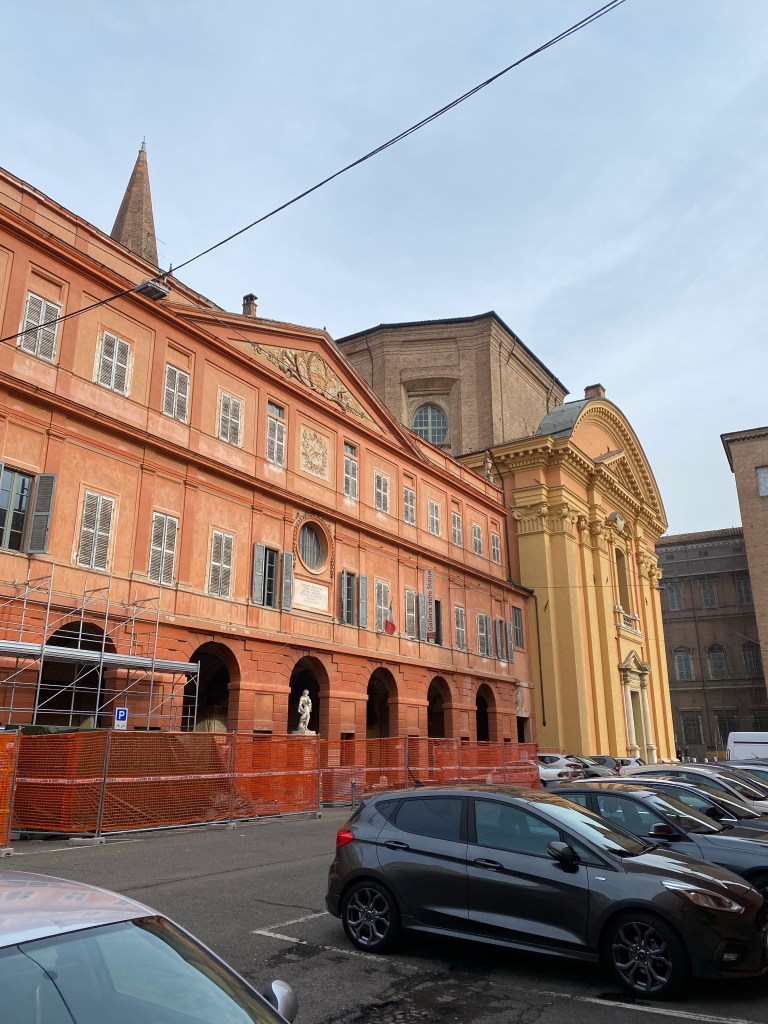
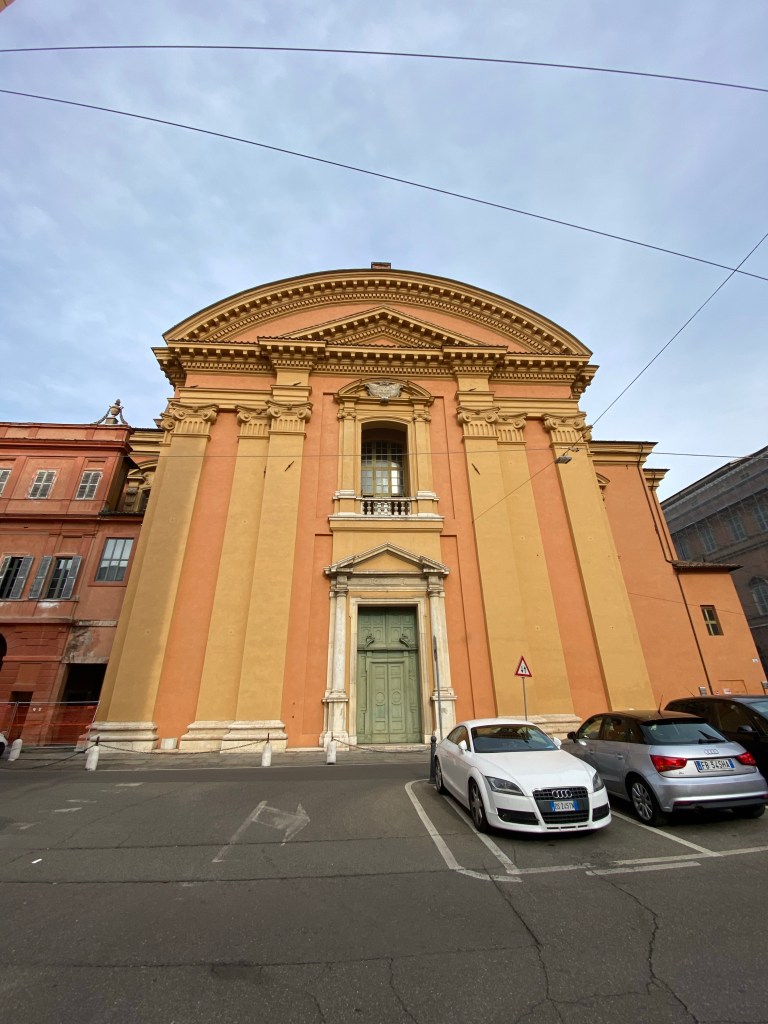
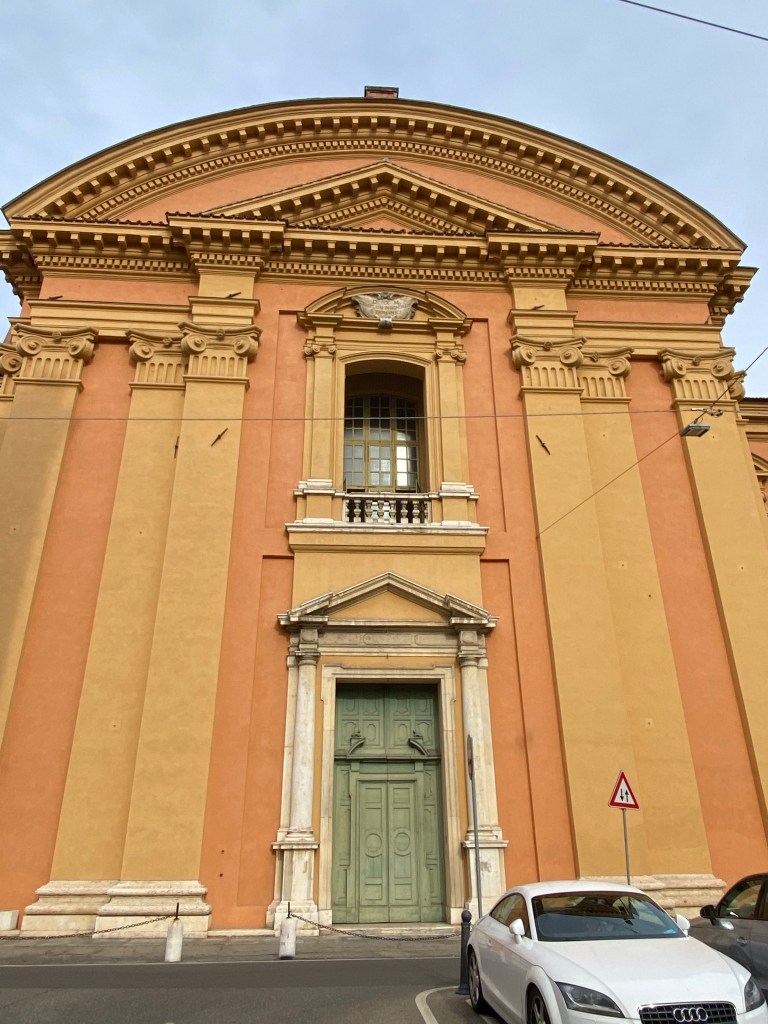
One of the first thing that struck me about Modena was the bright use of colors. While the palette is much the same as I see in Tuscany, the colors are more saturated up here. I wonder if it is because the sky is often gray here?
Above, the brightly colored stucco exterior of Chiesa di San Domenico, reconstructed by the Dukes between 1708-31.
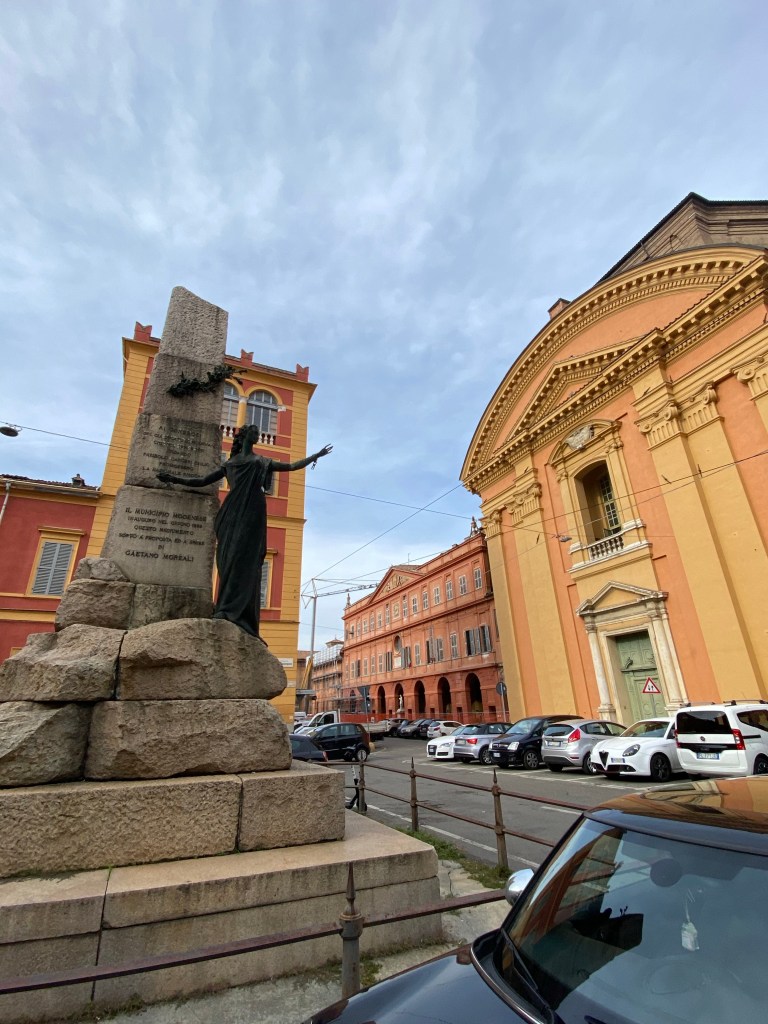
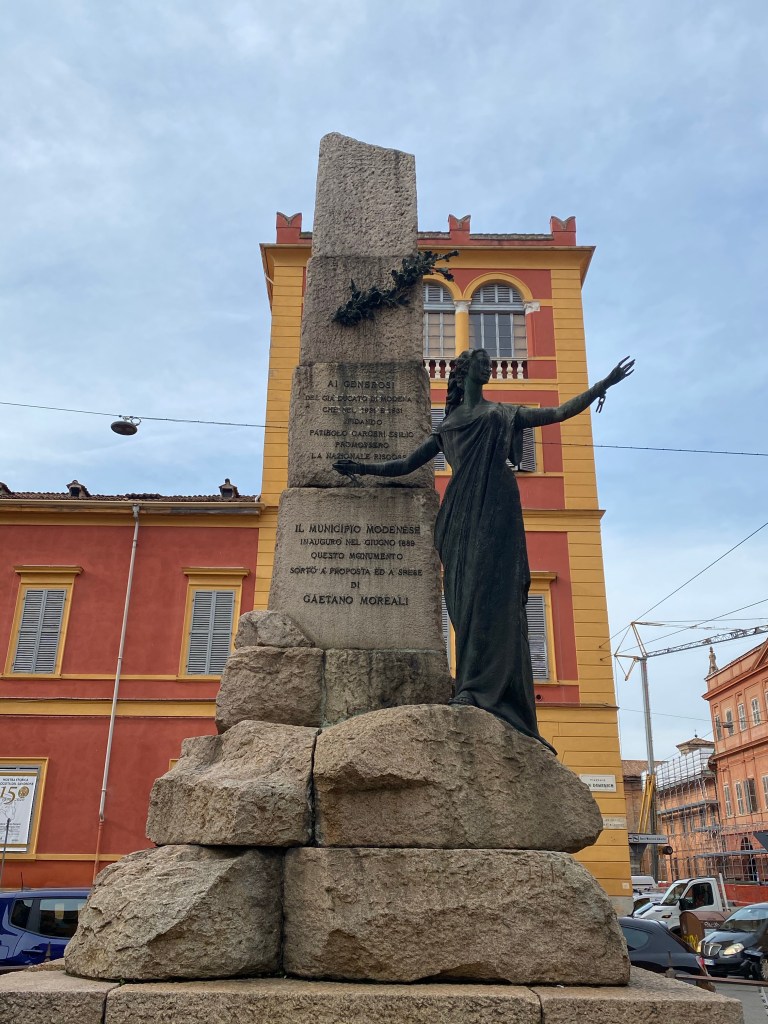
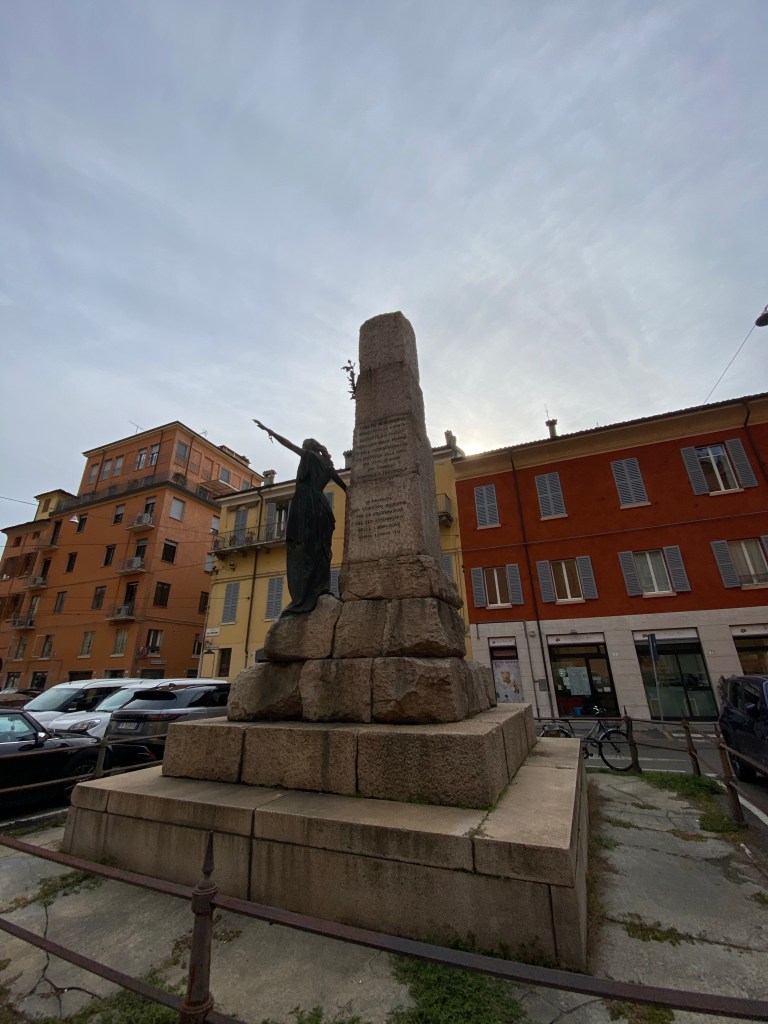
Not far from the facade of San Domenico is the Monumento ai Martiri del 1821 e 1831. It is a strangely mixed amalgam of styles, see below.
This monument features a bronze statue (modern replacement, see below) of a young woman who symbolizes redeemed Italy who, having broken the chains of slavery, calls us to read the commemorative epigraph of the patriots. The epigraph is written on a granite boulder that forms the tall, truncated obelisk composed of large blocks of vermilion granite, placed on a square base with three steps.
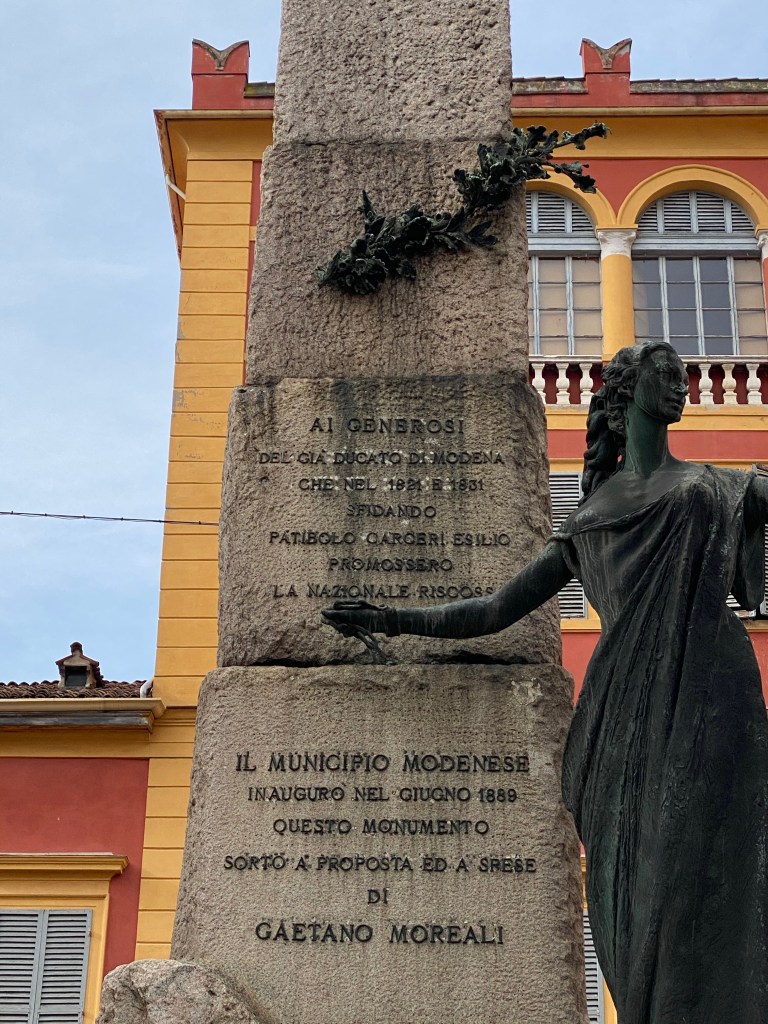
The monument reminds us of the patriots who died during the Risorgimento uprisings of 1821 and 1831. The idea to build a monument to them was put forward by the illustrious Modenese, Gaetano Moreali (1795-1889), in December 1886 and immediately accepted by the Municipality. The square in front of the church of San Domenico was chosen for its site. Moreali paid for the work and commissioned its conception and execution to Silvestro Barberini of Modena in 1888. The monument was inaugurated on 2 June 1899.
The original monument had an almost 10 foot tall bronze statue by Barberini which depicted “Italy” in the more traditional iconography of the late 19th century (think of the Statue of Liberty in New York). It was a female figure dressed in abundant Roman-inspired drapery, with her classically inspired head and hair topped with a turreted crown.
The history of the monument encapsulates the modern history of Italy.
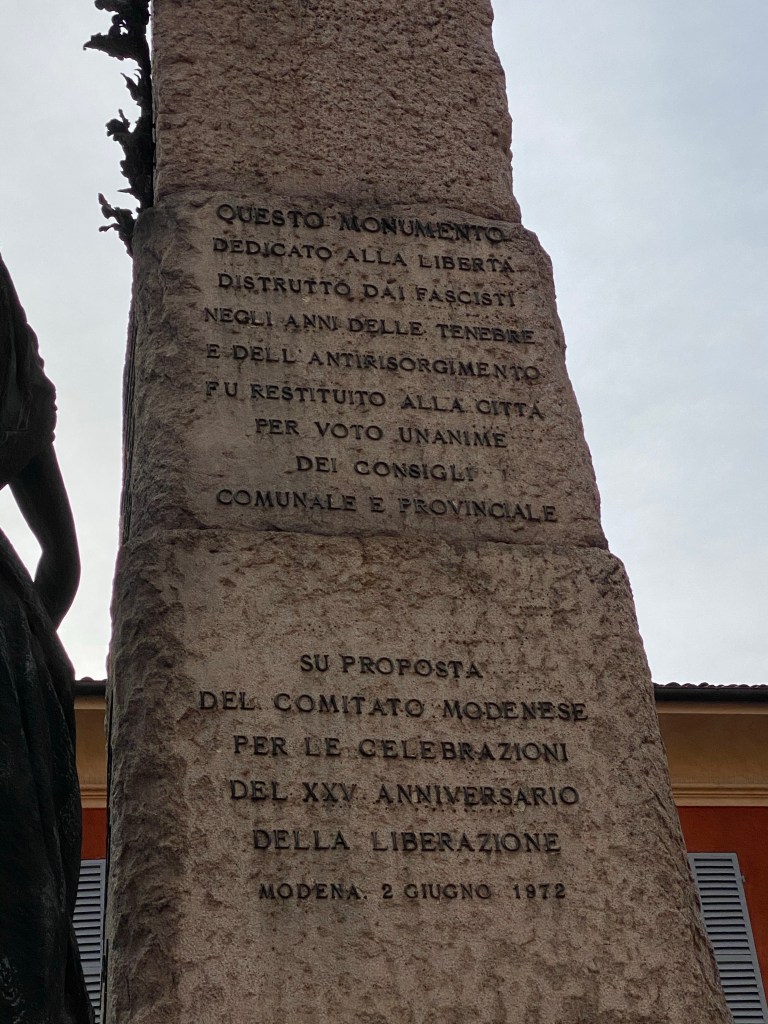
Barberini’s statue of “Italia” was removed in 1942 by the Fascists and melted down for war time use. The replacement, which we see today, is an attenuated figure of a young woman by the Modenese sculptor Marino Quartieri. This statue dates to 1972, when the renewed monument was inaugurated.
A 3rd epigraph was added to the two earlier, celebratory inscriptions on the obelisk, giving the story of the Fascist removal and the decision to renovate the monument on the proposal of the Committee for the Celebrations of the Liberation, the Municipality and the Province.
The monument celebrates the martyrs of the revolts of 1821-1822 and 1831; these occurred in various places in Italy and Europe. These uprisings were the first manifestations of the urge for Italian Reunification (Risorgimento). Conspiracies in the duchy of Modena of 1821-1822 ended with the ferocious repression by Duke Francesco IV (1779-1846), which led to the sacrifice of Don Giuseppe Andreoli (1789-1822). Andreoli was beheaded by the guillotine in the ducal fort of Rubiera, while seven others sentenced to death had managed to escape.
I’ll post again soon with more about my visit to Modena.
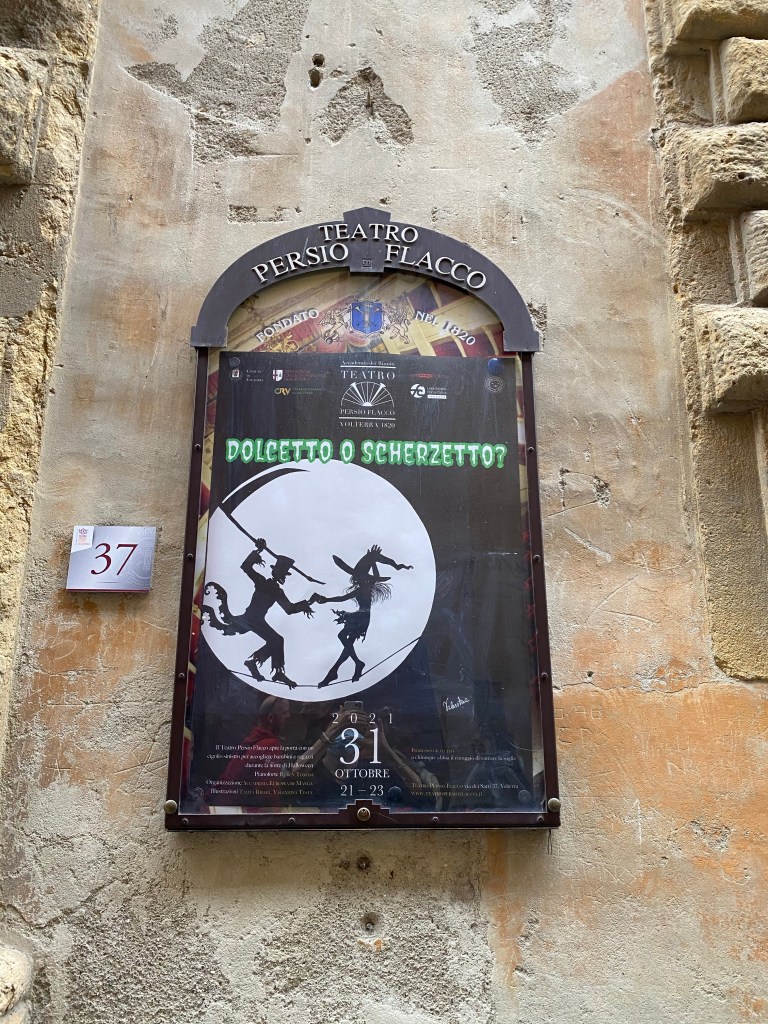
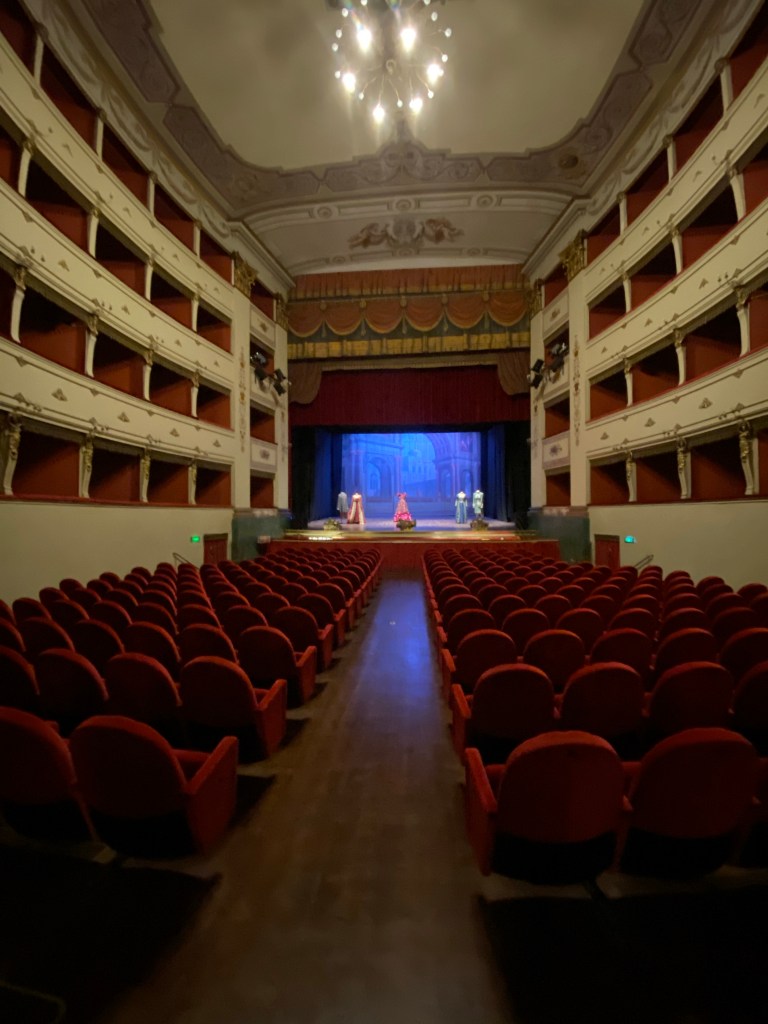
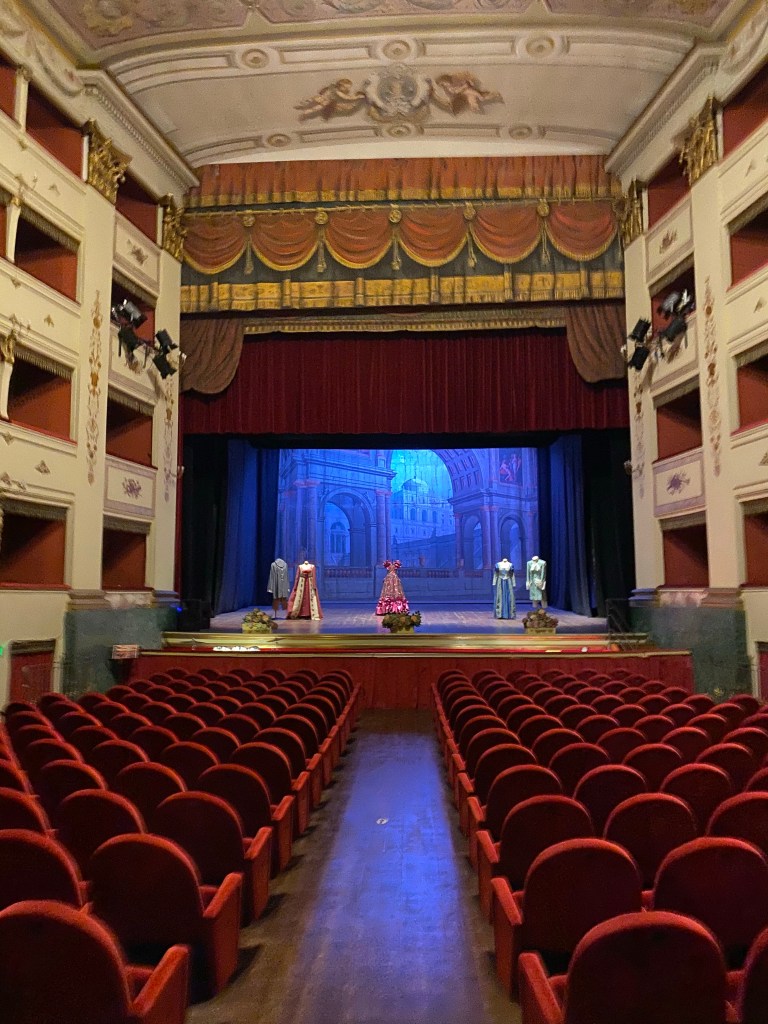
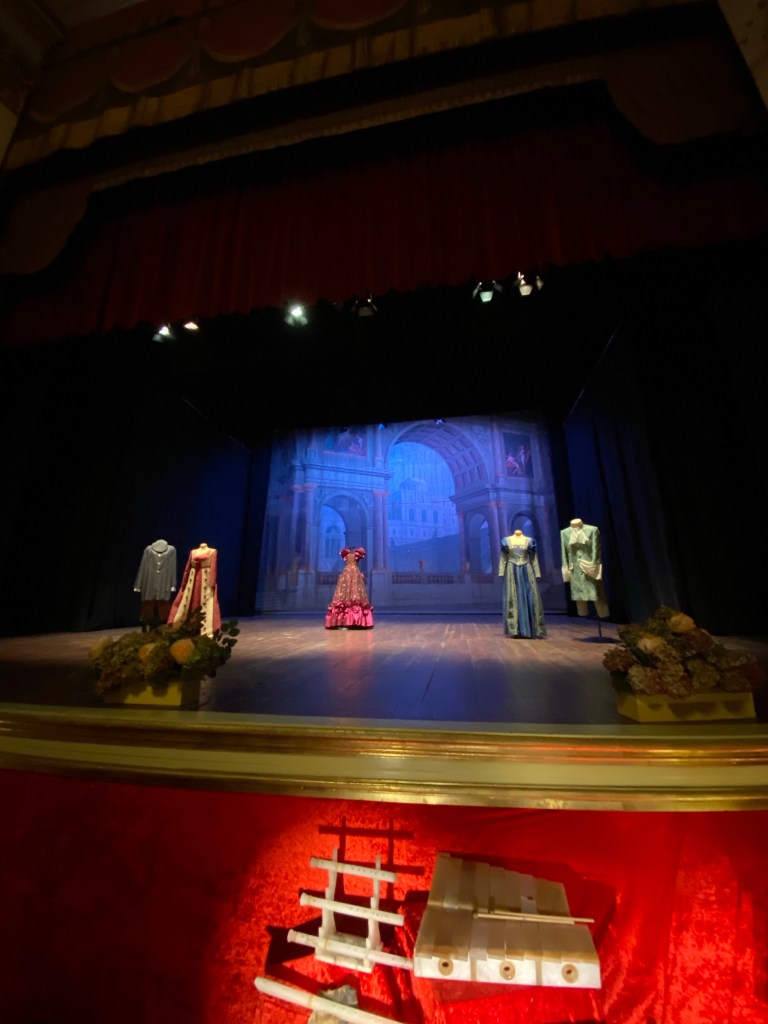
Last weekend I visited Volterra for the first time and stumbled upon an open house of this lovely historic theater. Of course I could not resist taking pictures.
The sign out front is for a show on 10/31, with the title “Trick or treat?” Cute, right?!
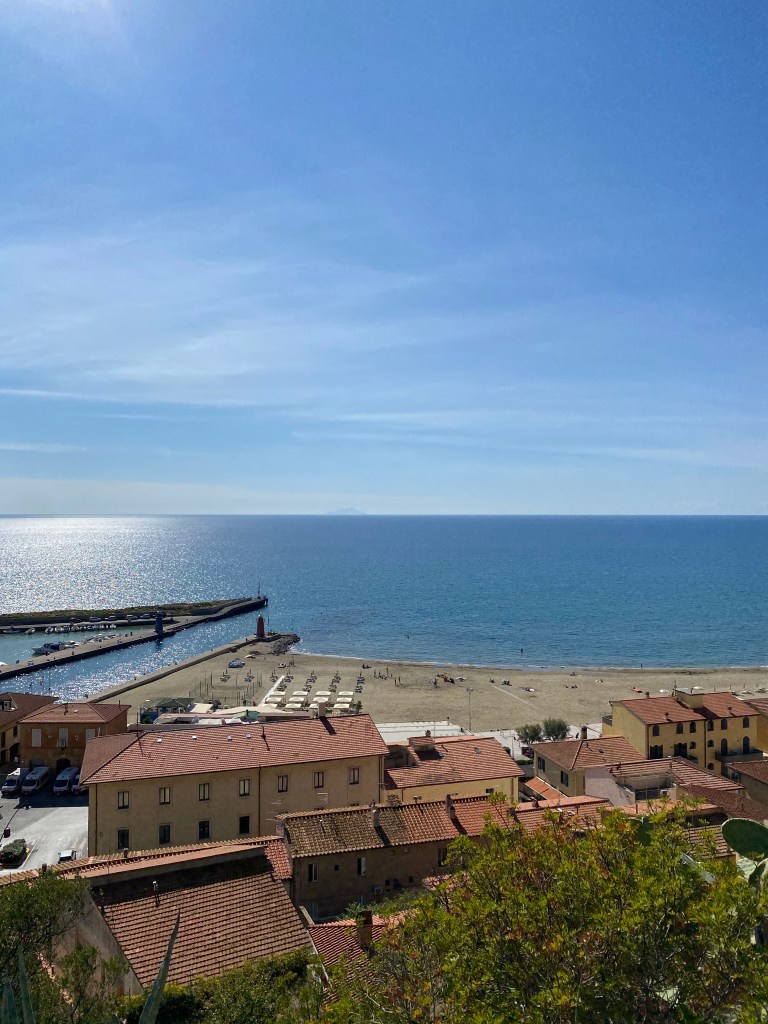
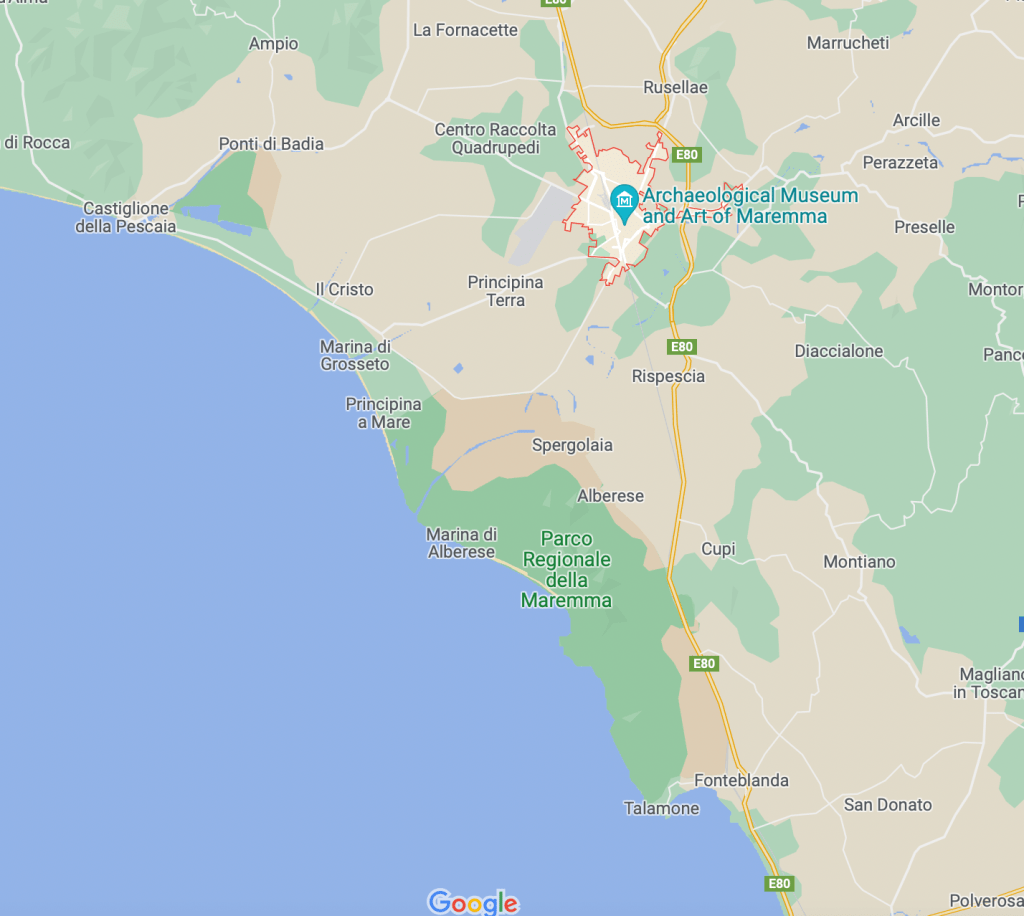
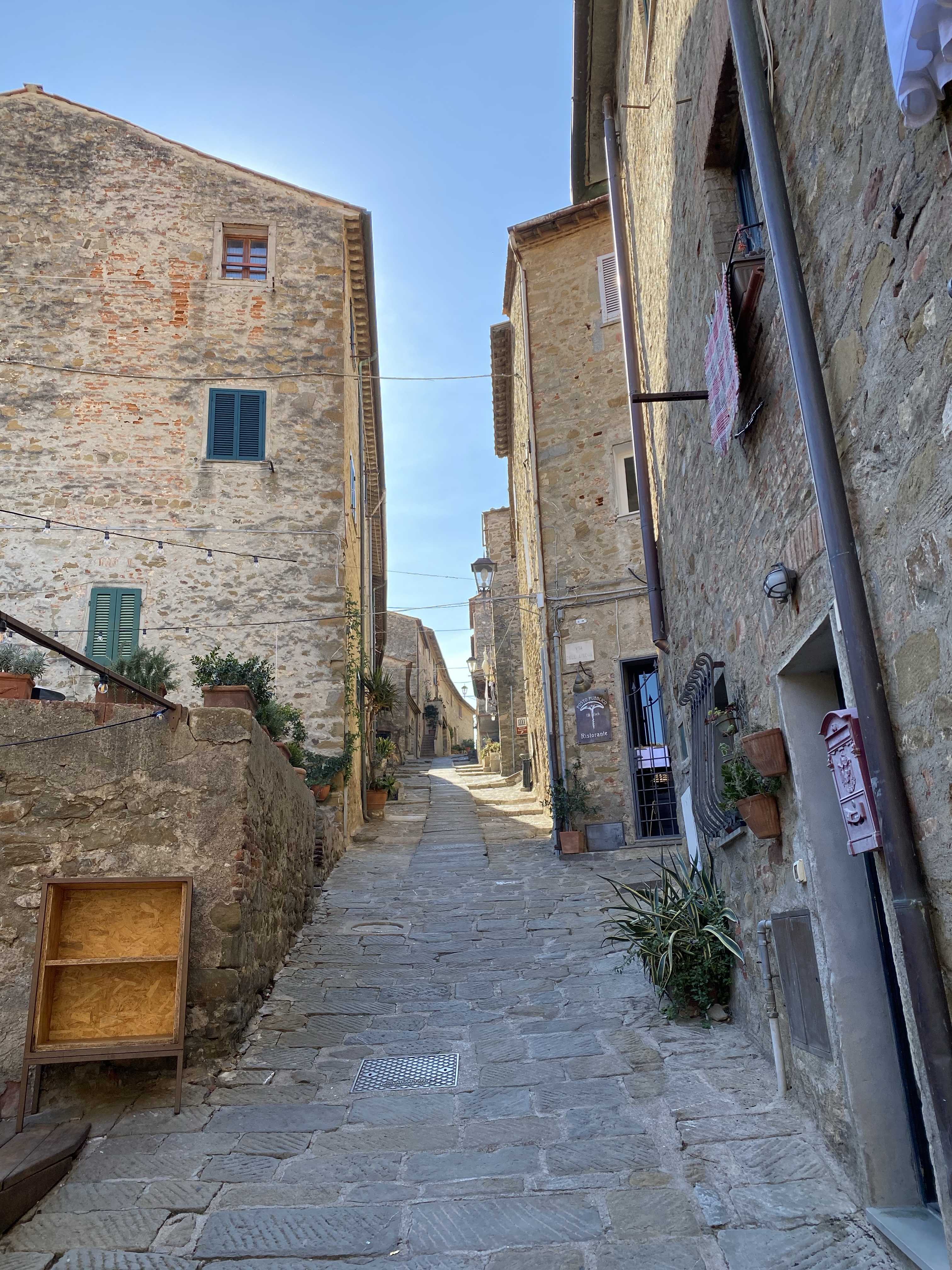
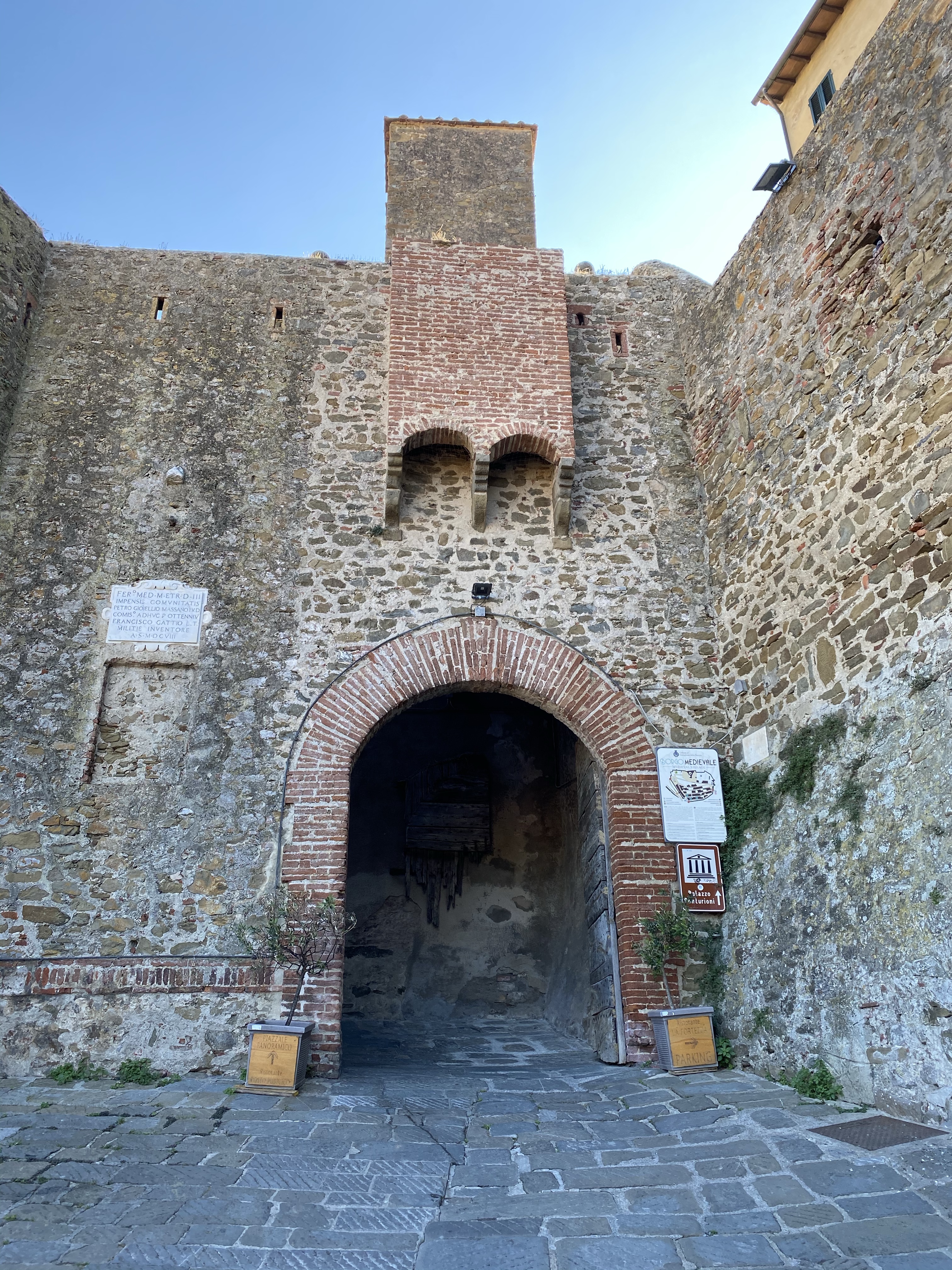
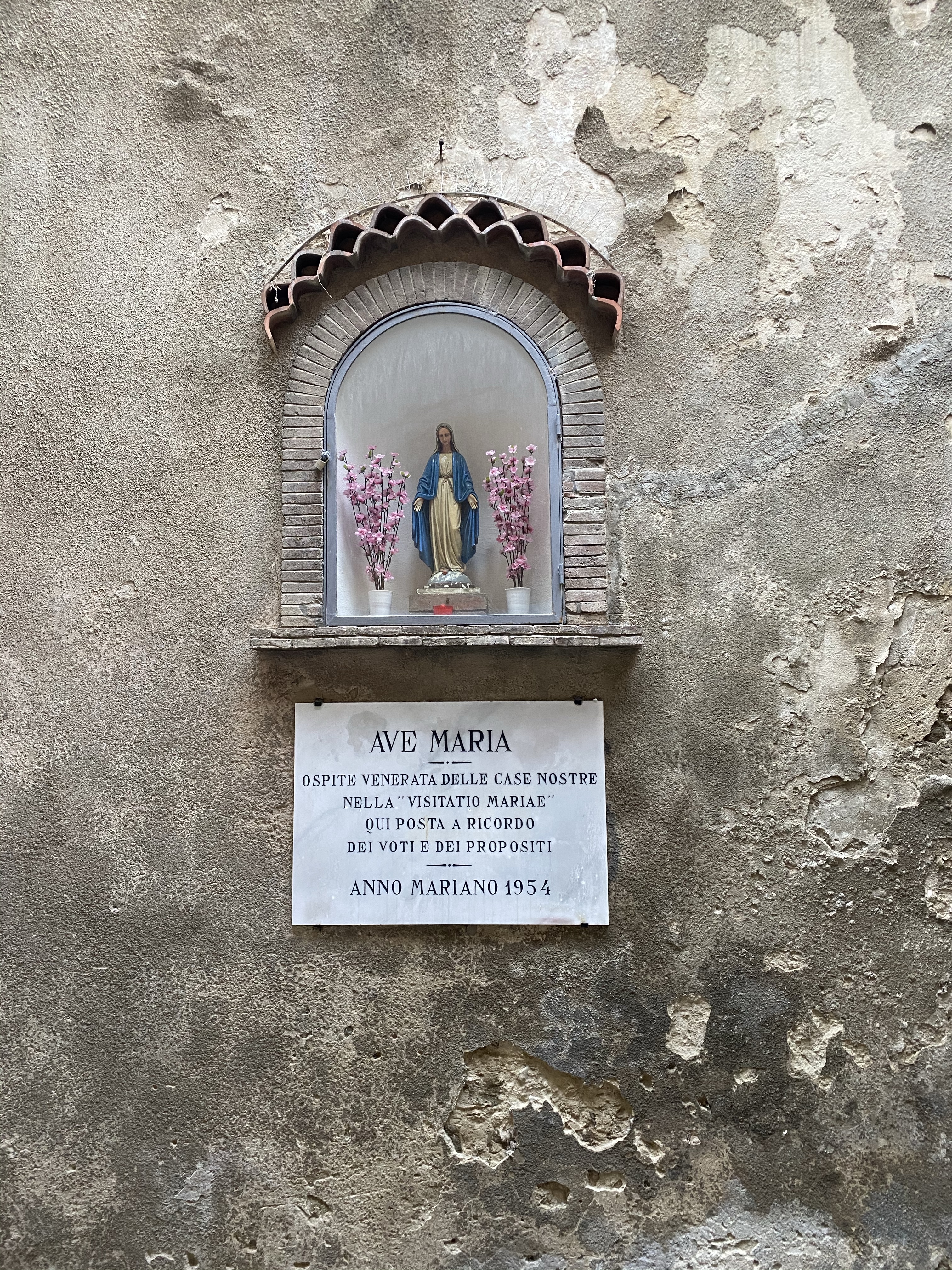
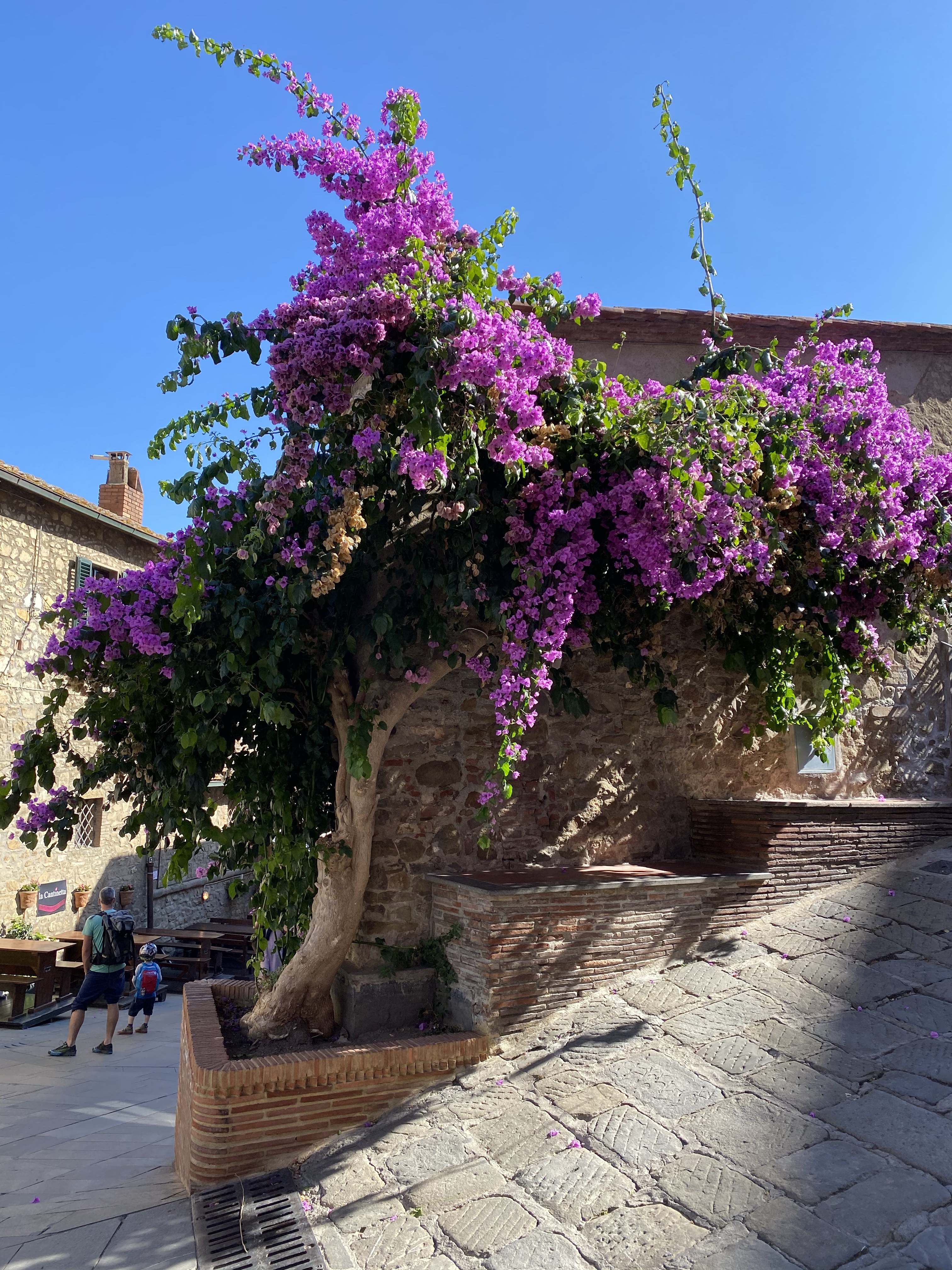
Some last looks at the amazing sights of La Maremma, which I was fortunate to visit, at long last, in October 2021.
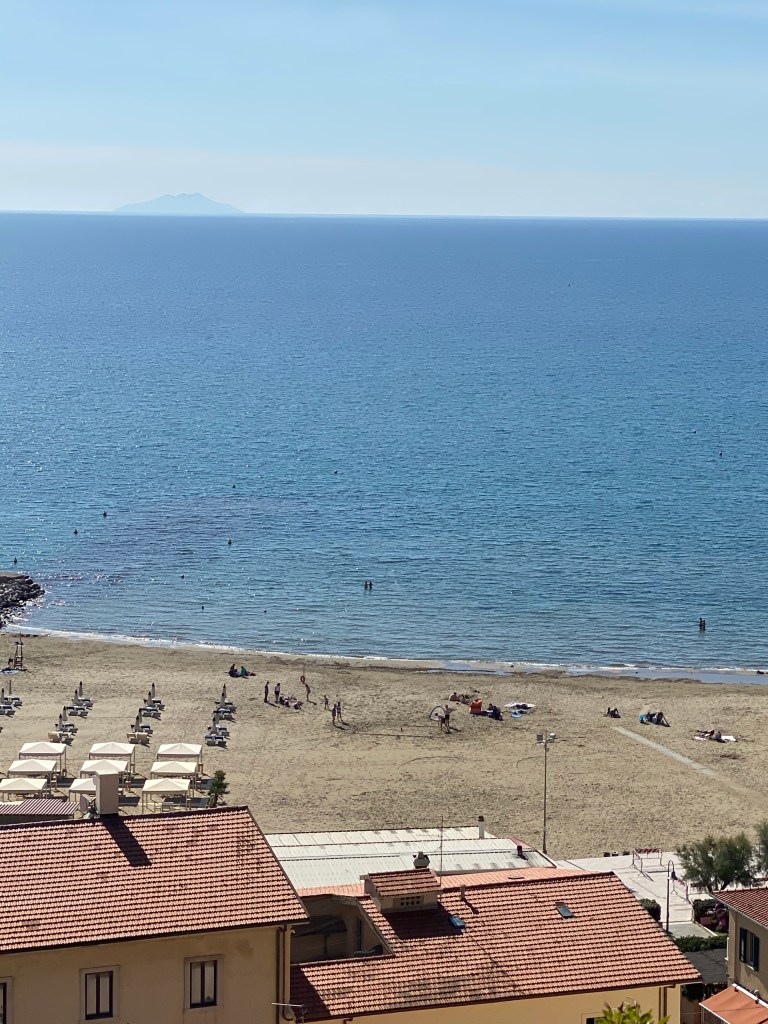
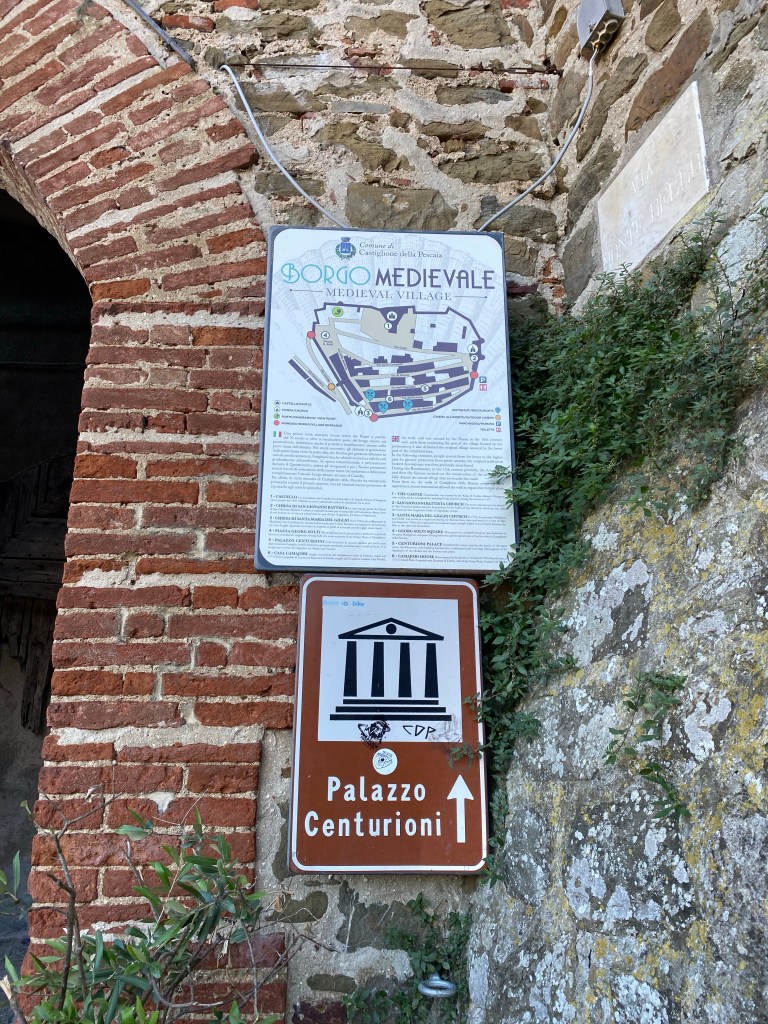
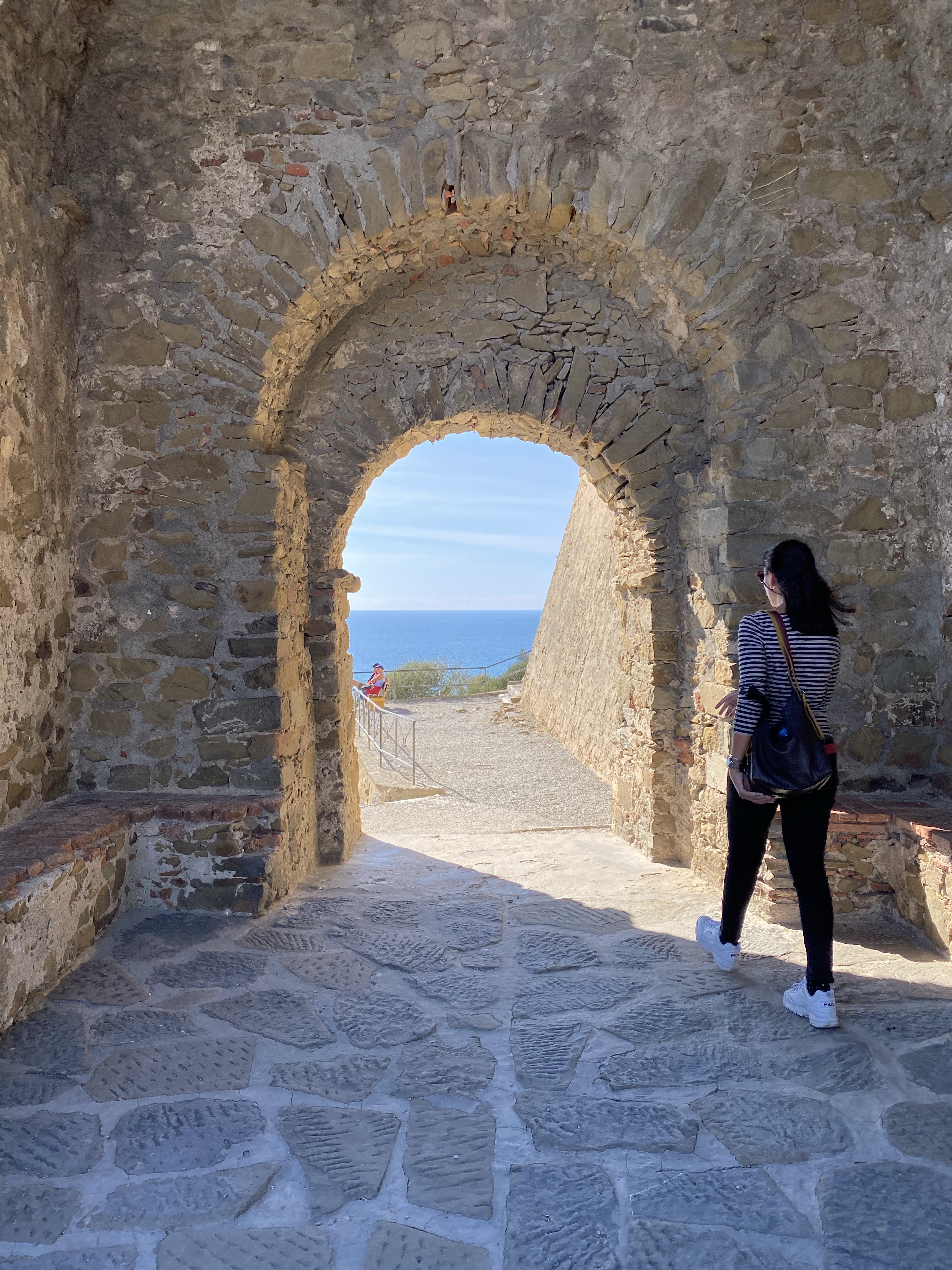
Our last stop of the day was in Castiglione della Pescaia, a coastal town in Tuscany. The hilltop Castello di Castiglione della Pescaia is a medieval fortress with sweeping views of the Tyrrhenian Sea. Skirted by the Pineta del Tombolo pine forest, the wetlands of Natural Reserve Diaccia Botrona have flamingos and herons, plus the Casa Rossa Ximenes observation point. Northwest, the resort town of Punta Ala offers beaches with calm waters.
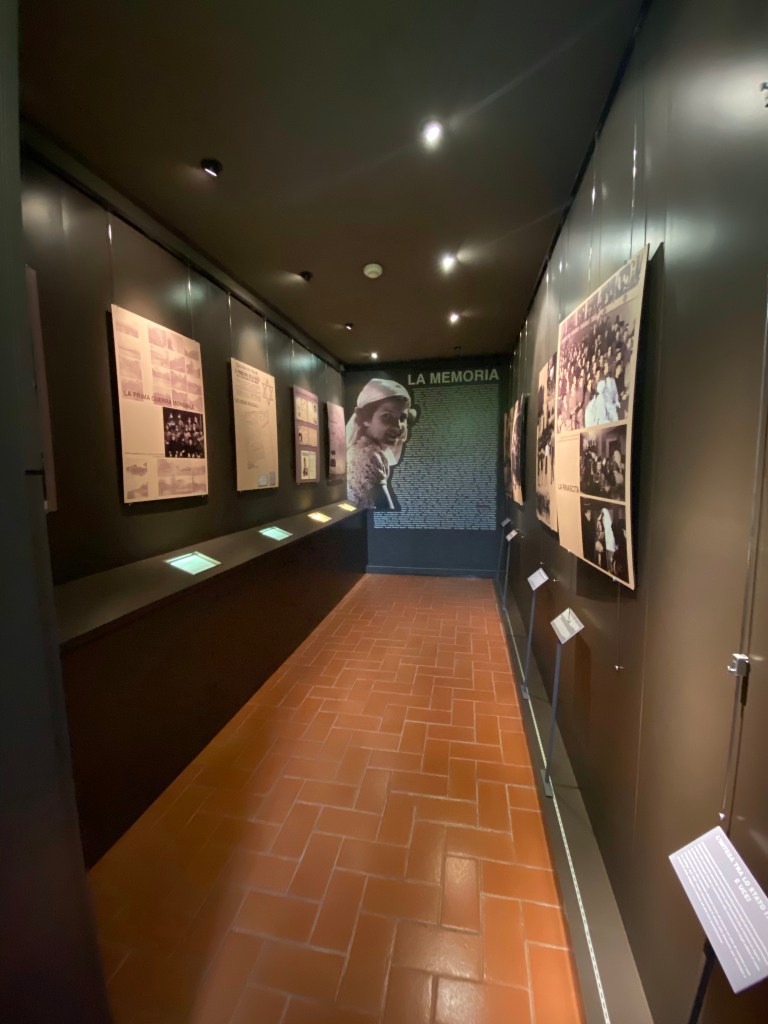
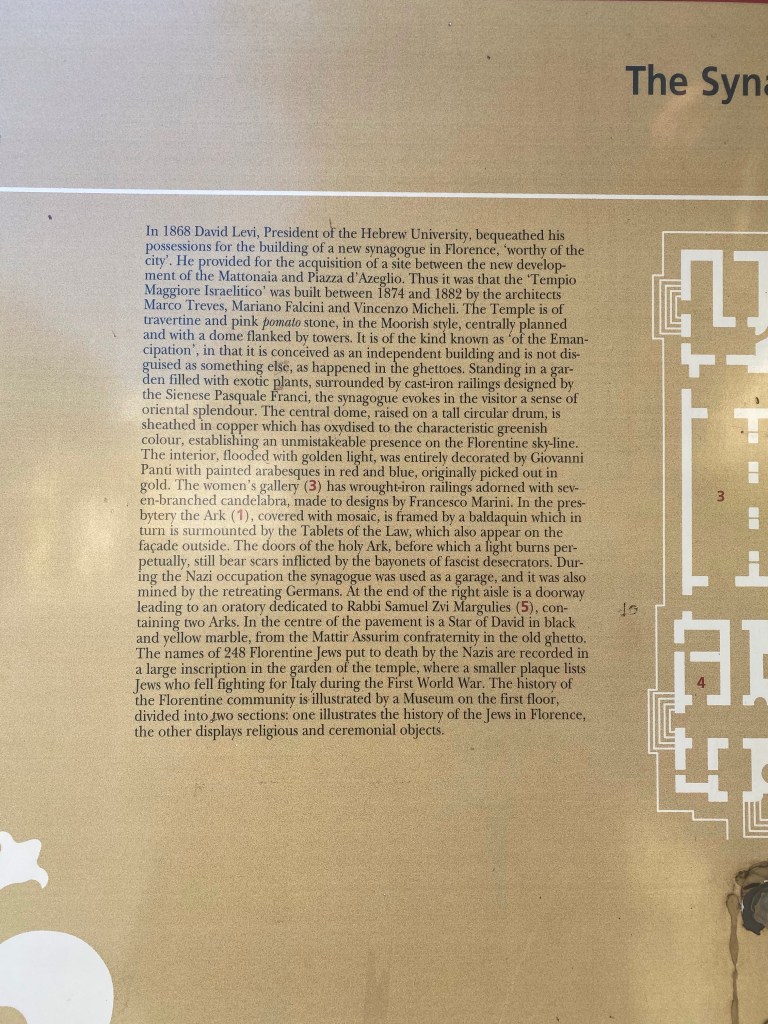
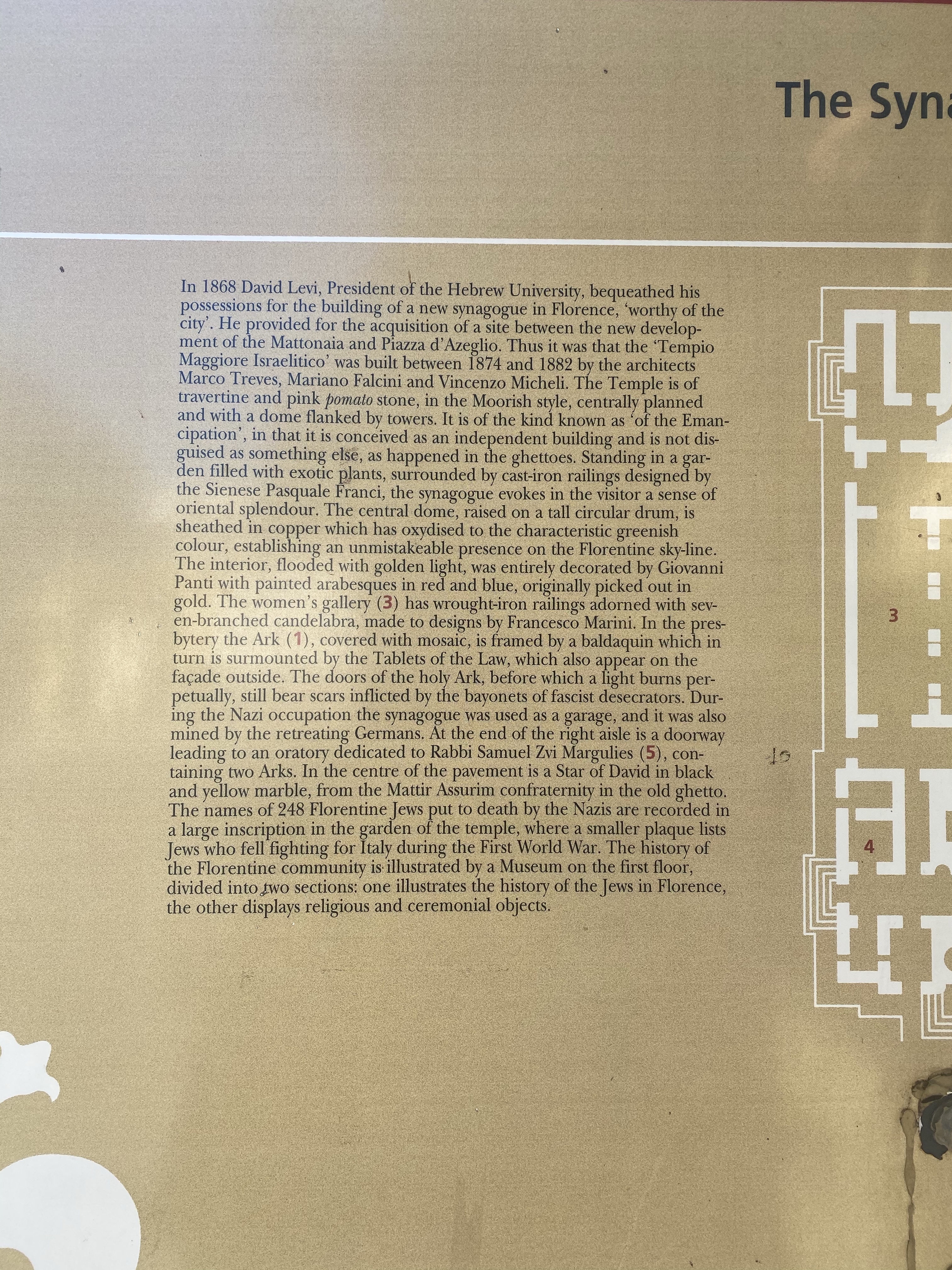
Inside this magnificent synagogue is a small but fine museum.
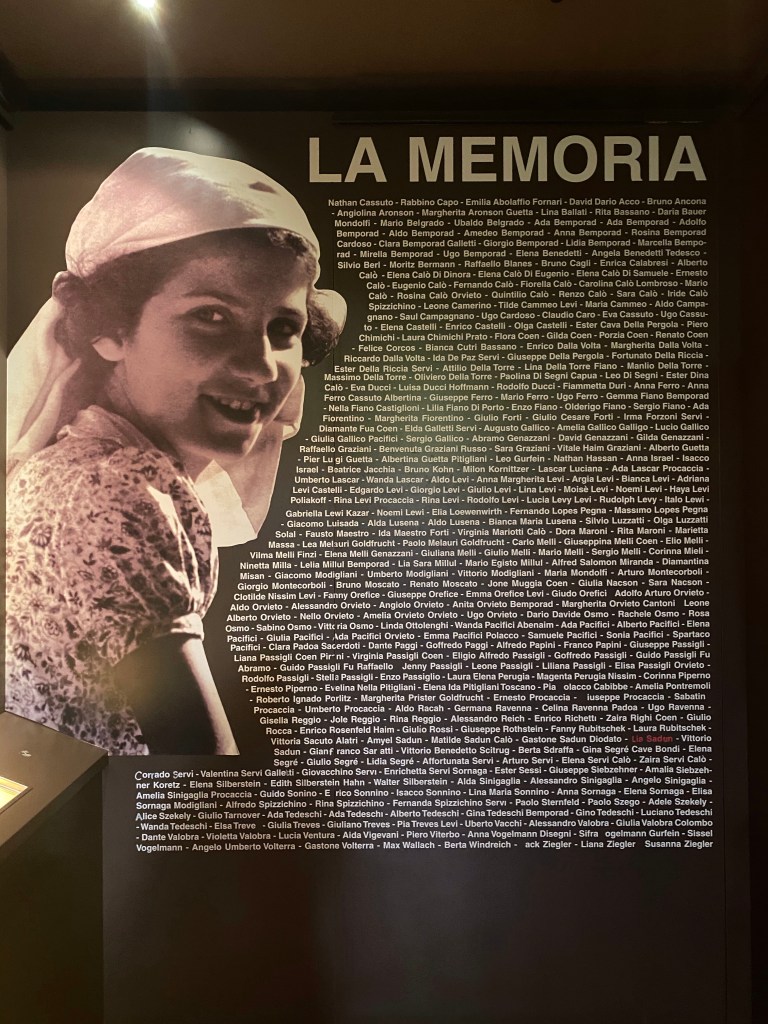
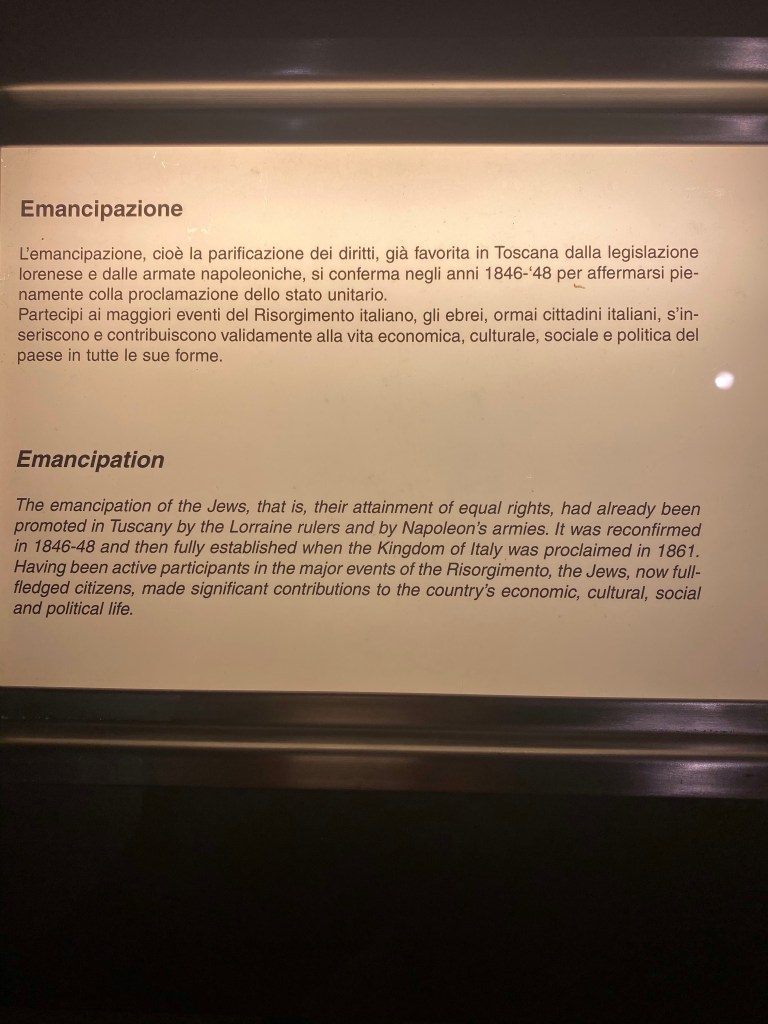
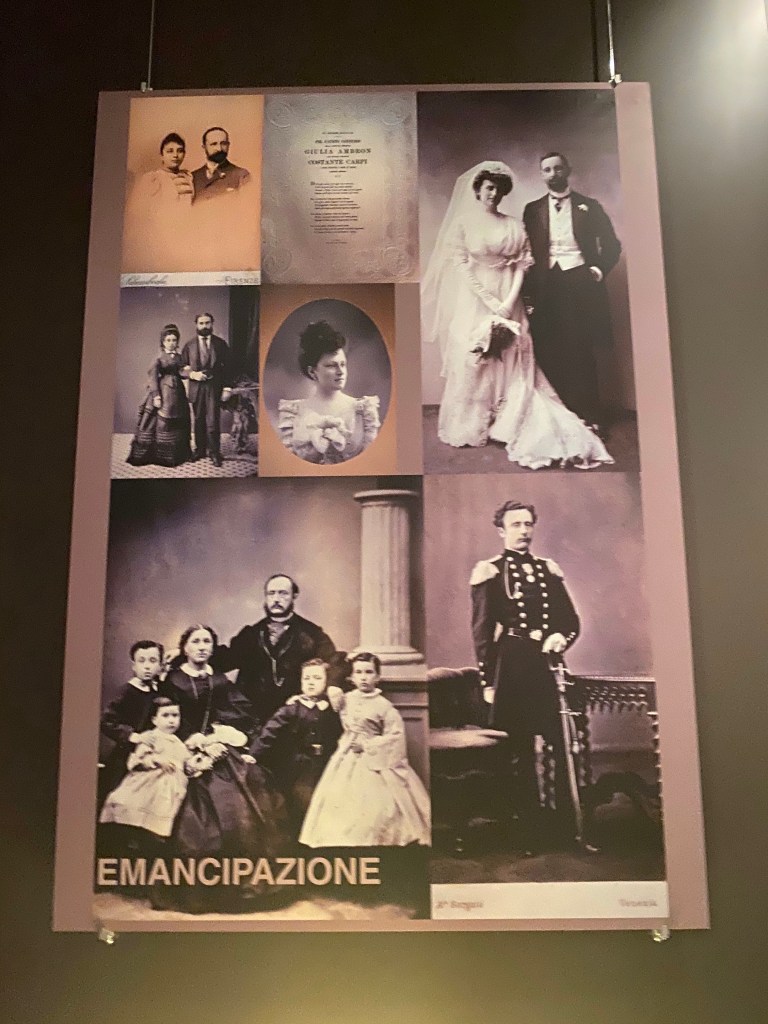
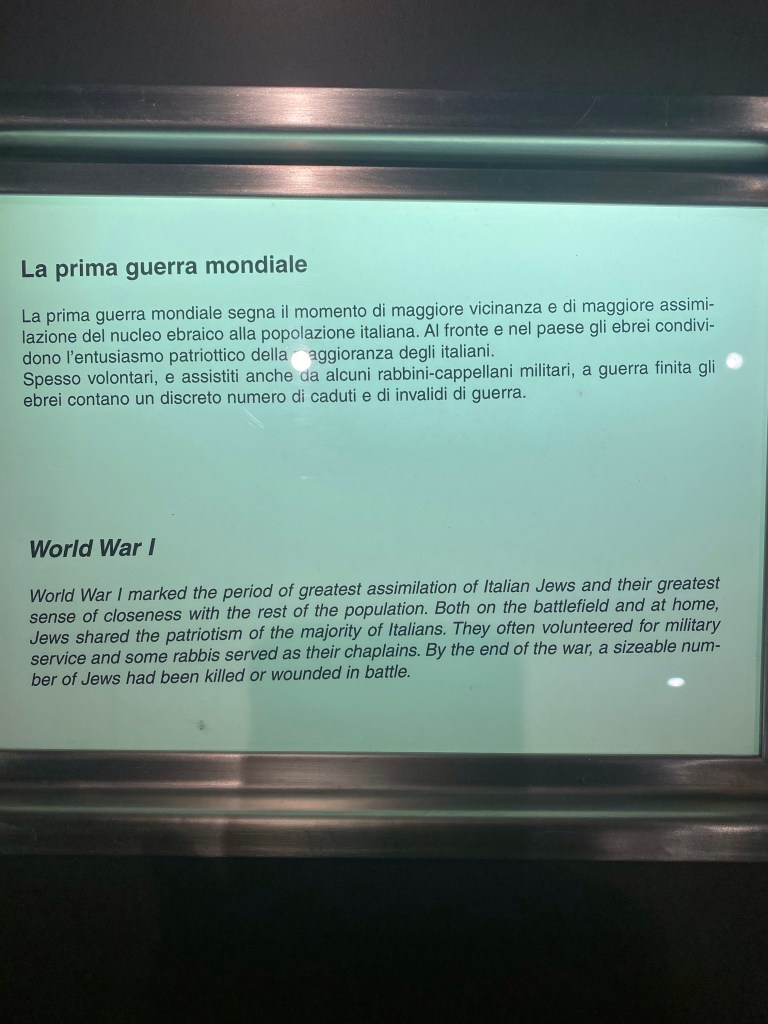
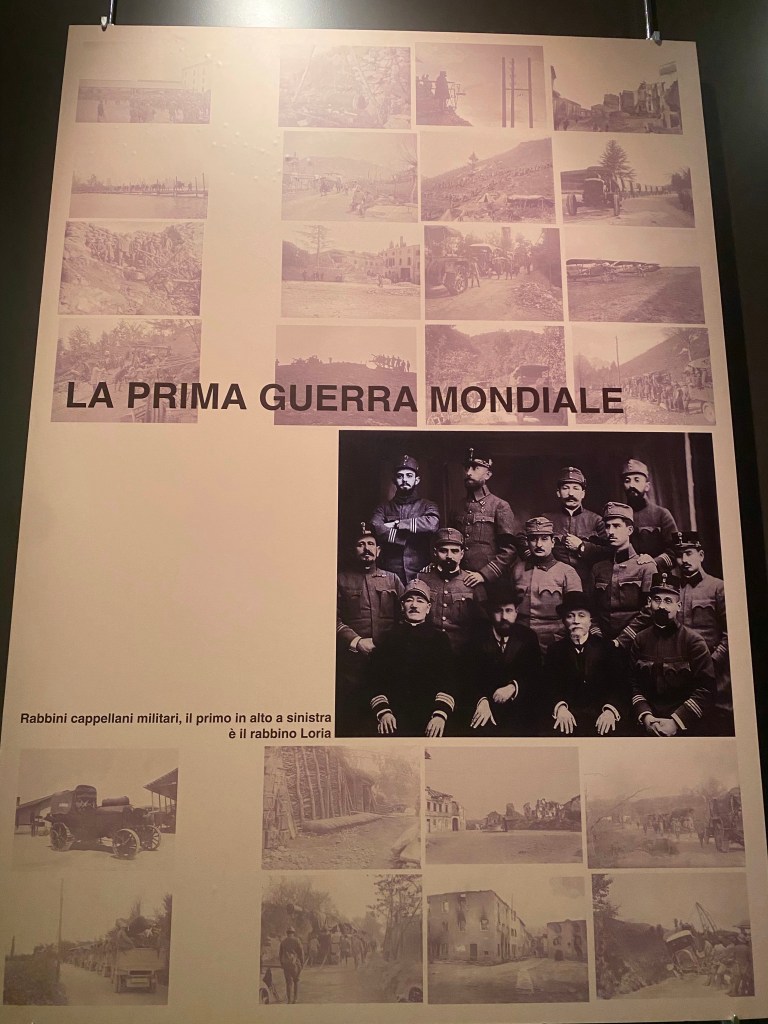
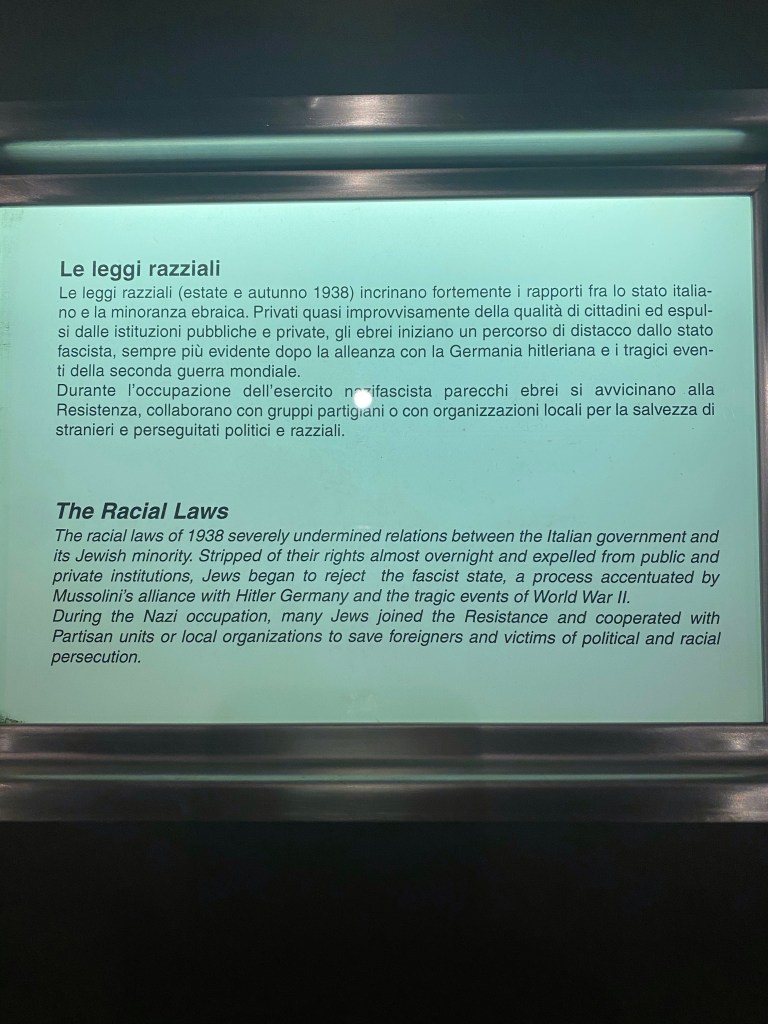
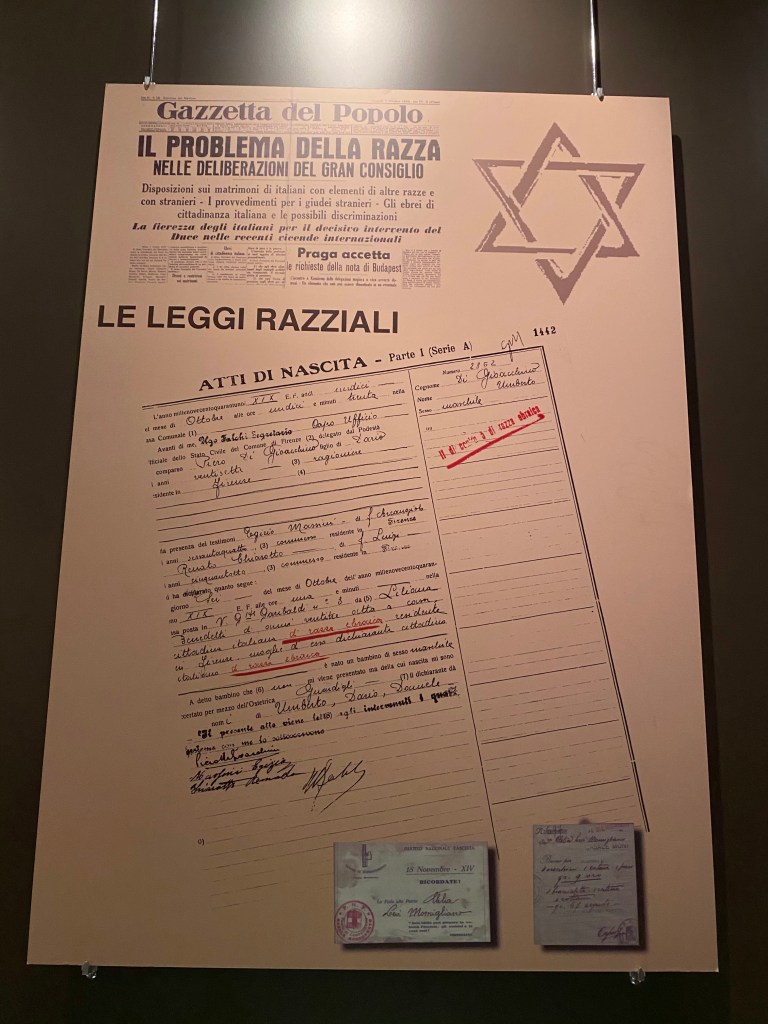
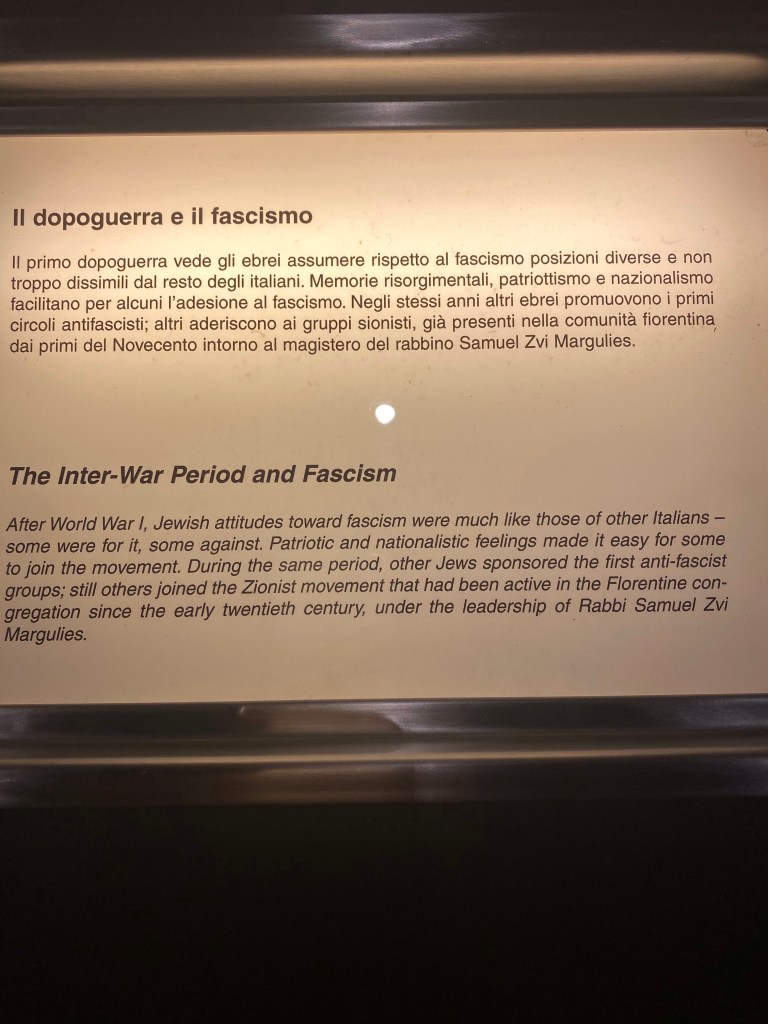
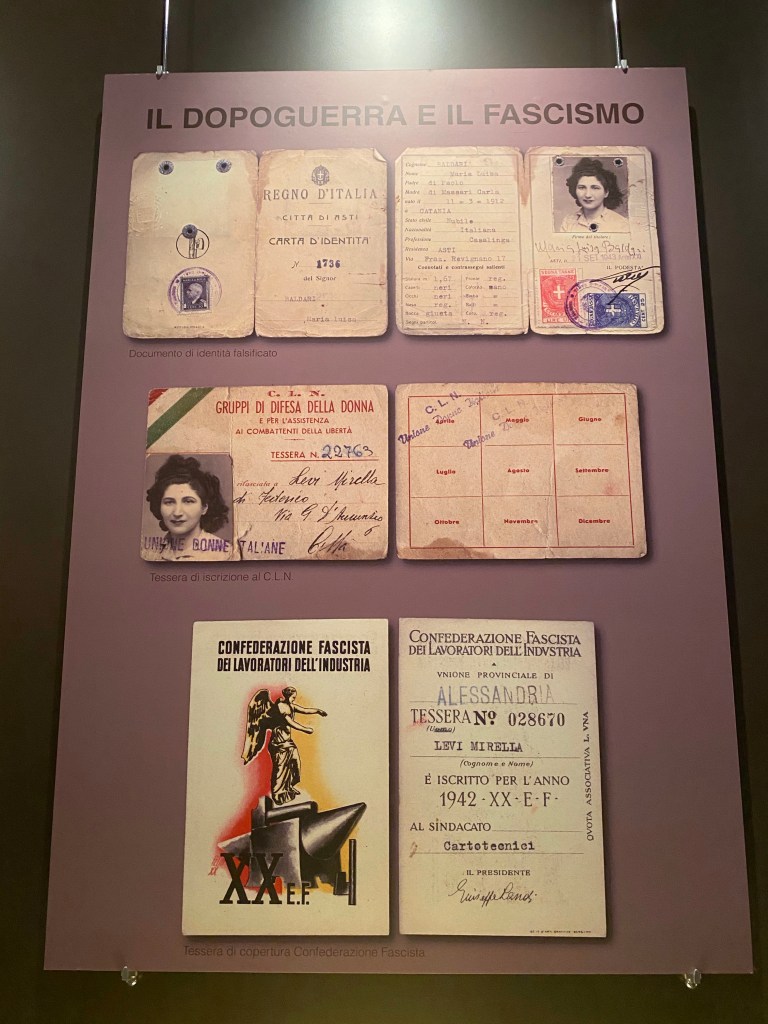
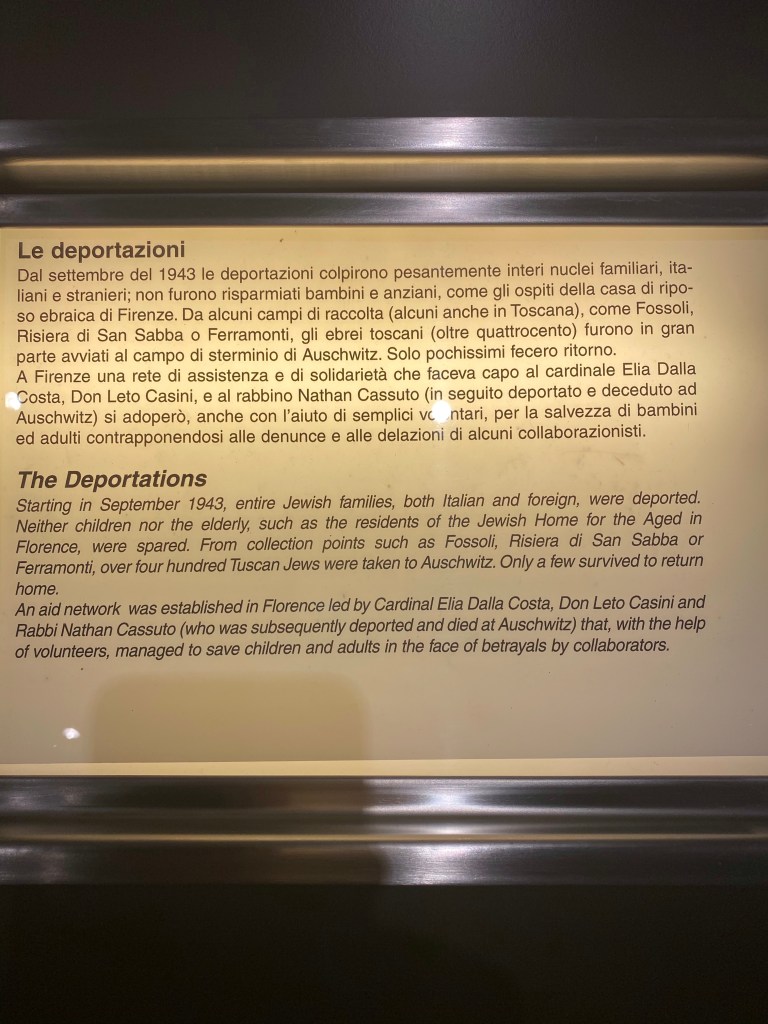
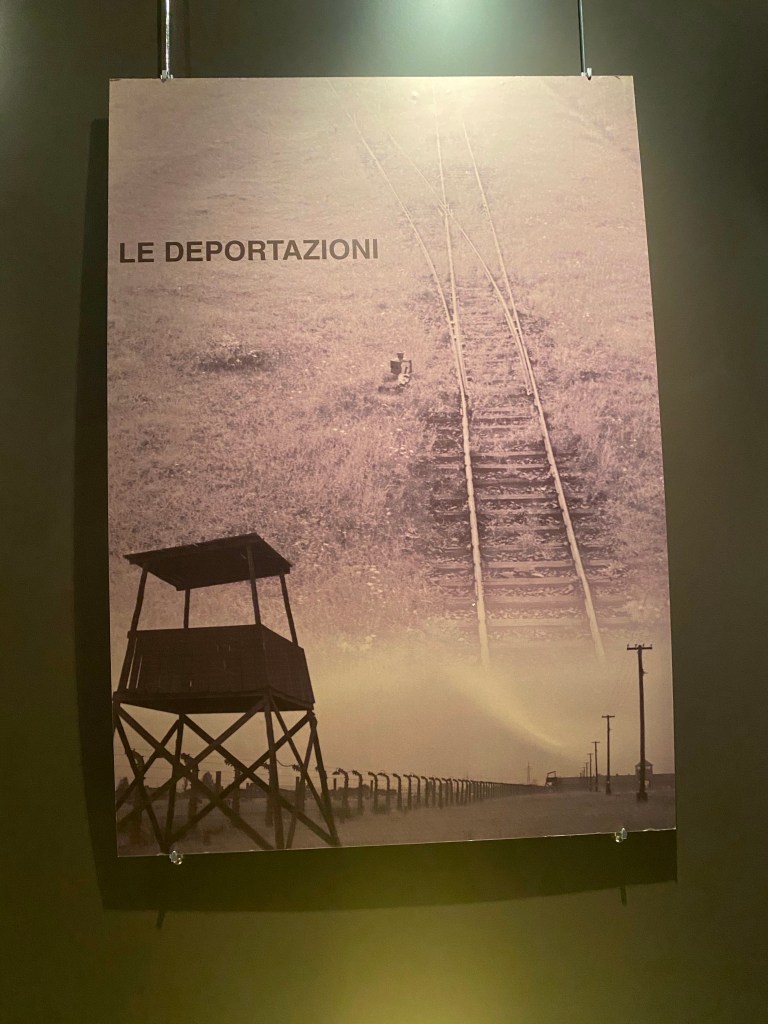
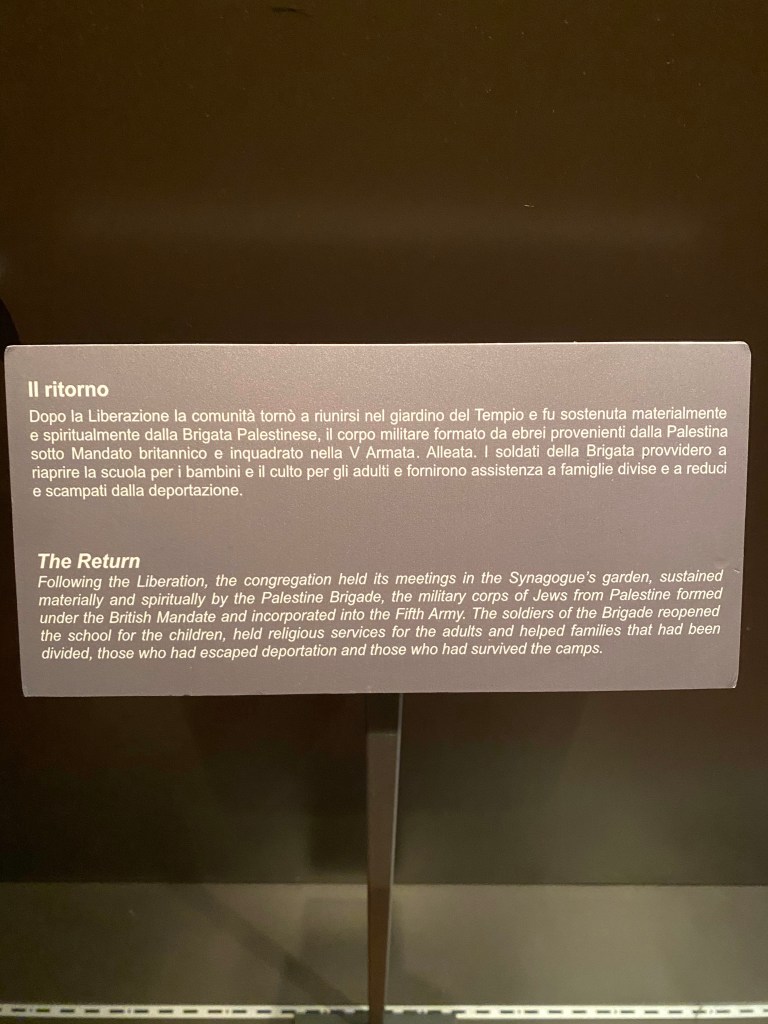
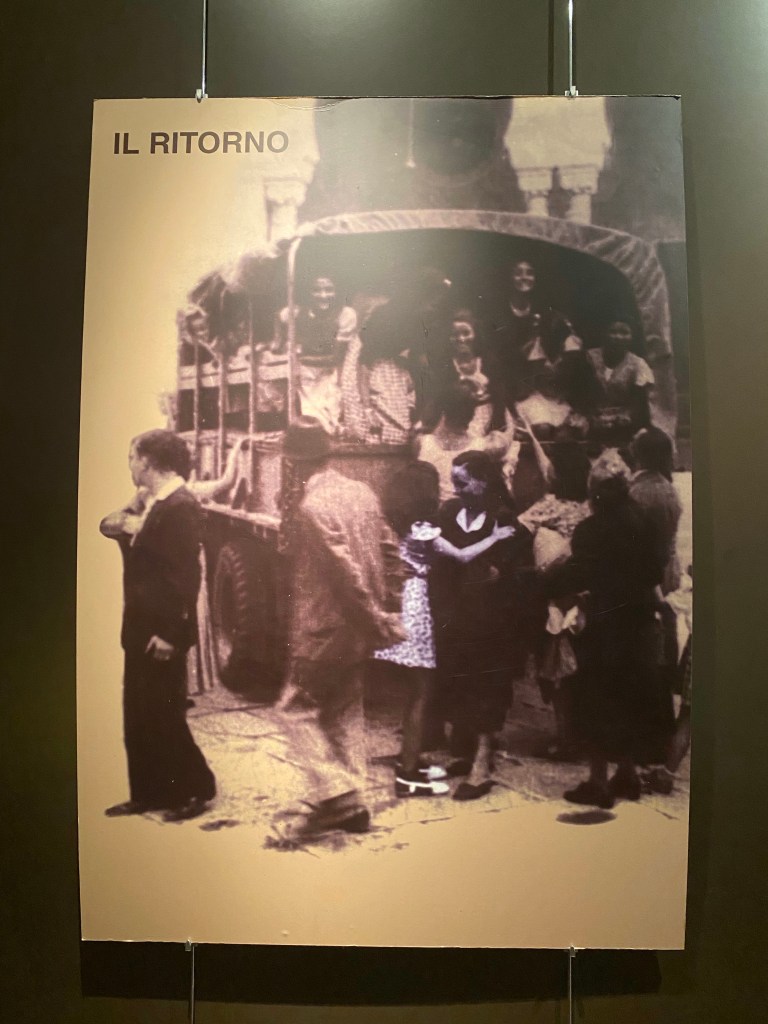
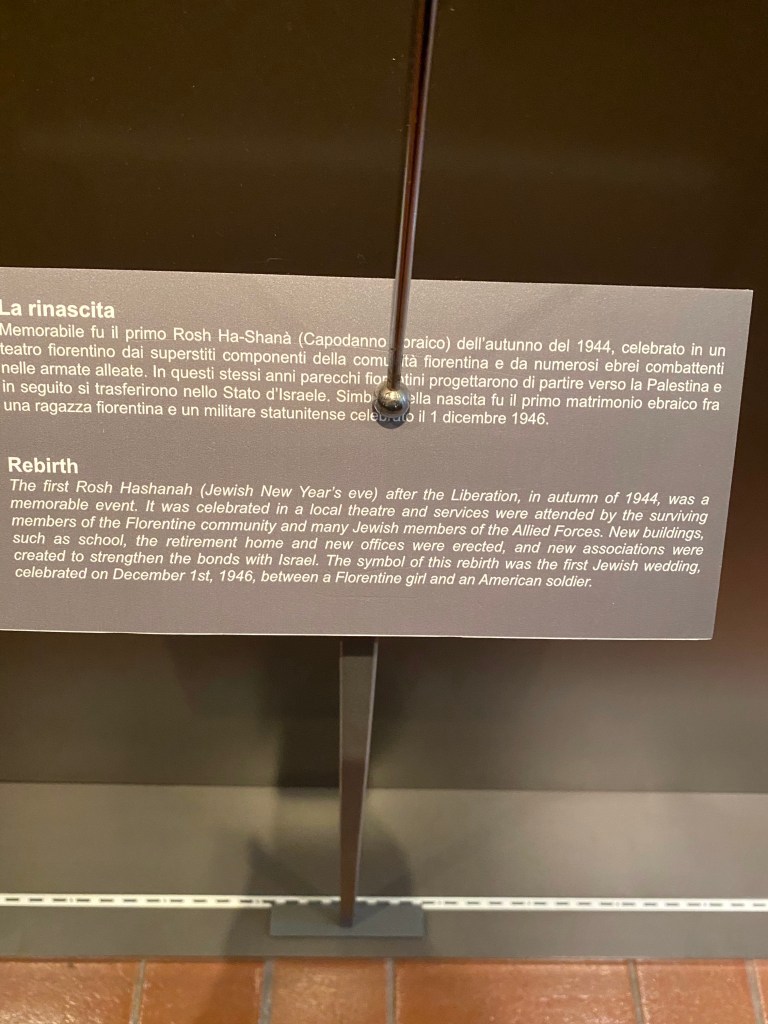
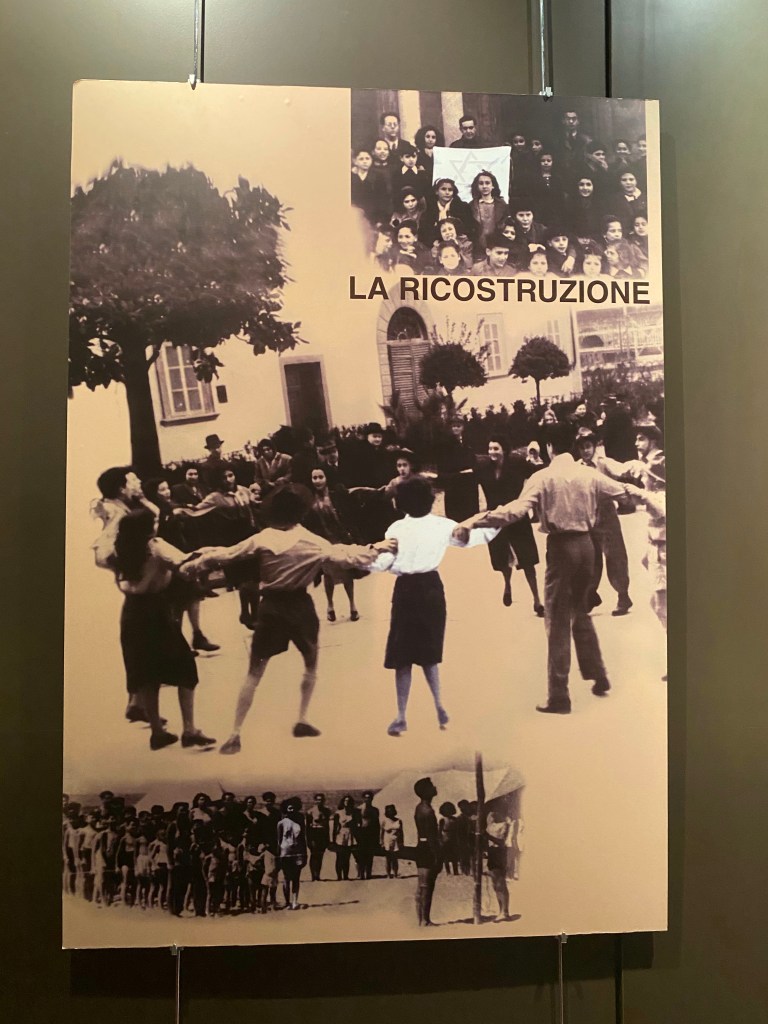
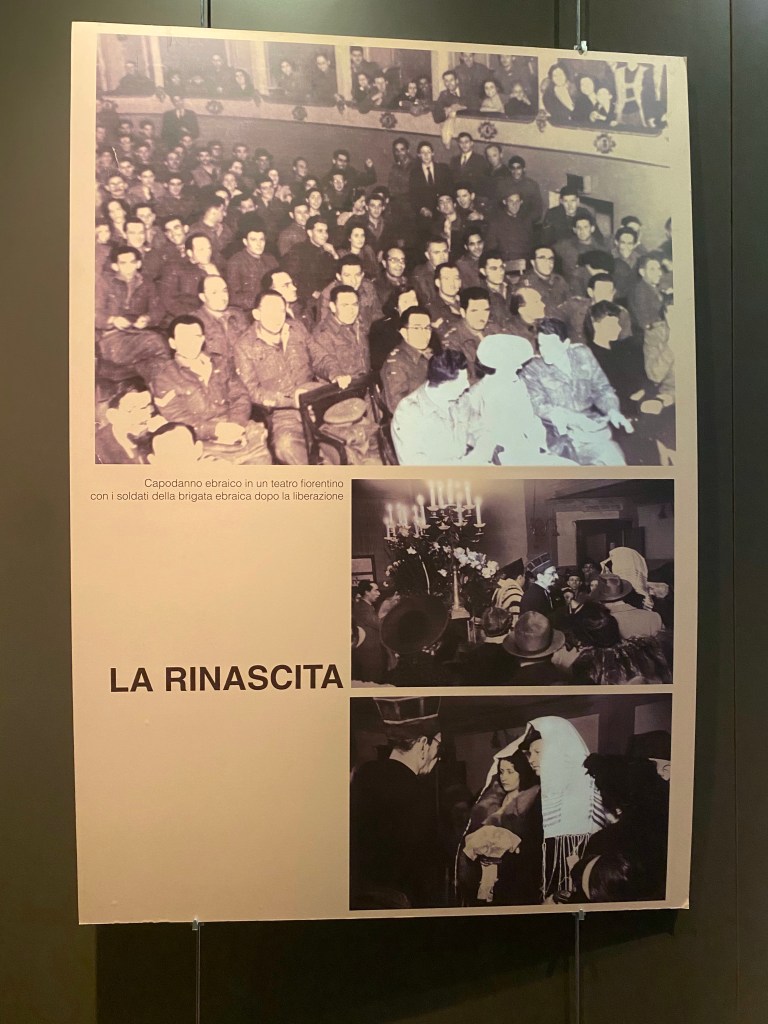
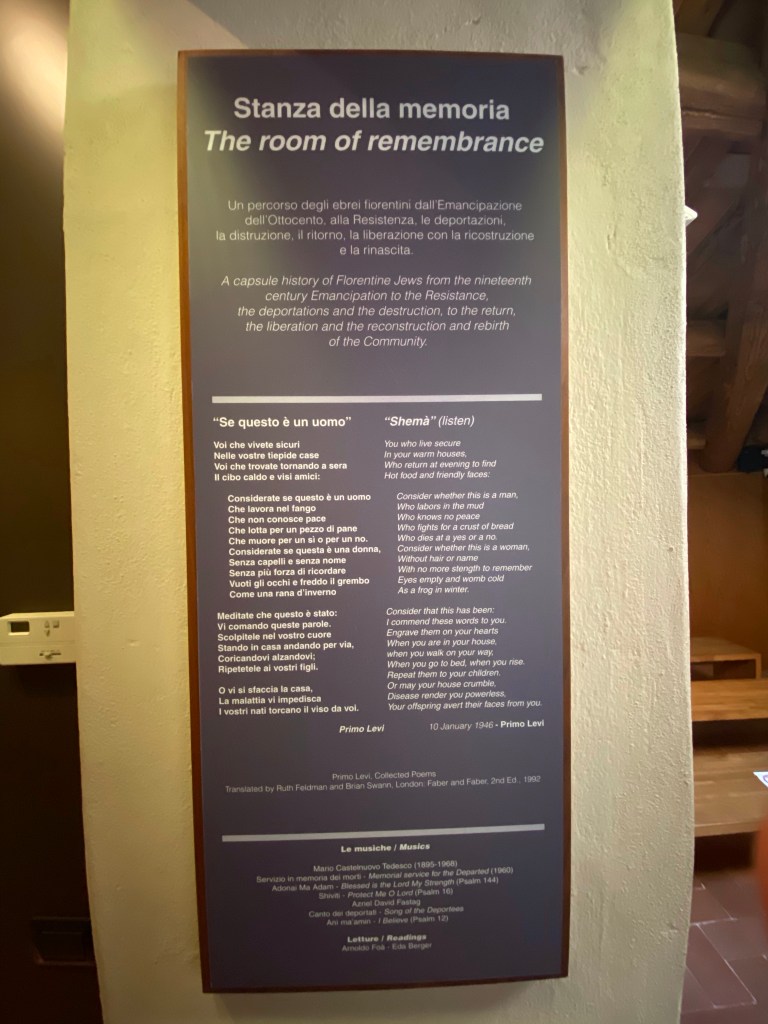
The Jewish Museum of Florence (Museo Ebraico di Firenze) is located in the Great Synagogue of Florence, Italy, which I posted about last month. The museum is small but holds an important collection of ancient objects of Jewish ceremonial art, evidence of the high artistic level achieved by the Jewish-Italian communities in the field of applied arts. Exhibitions illustrate the history of Florentine Jews from the first settlements to the post-war reconstruction, featuring old photographs, films and a large number of objects of daily and commemorative use.
This was my first visit to the synagogue and museum, and it was very interesting. And heart-wrenching too. Oh, the story of the Jews….
To get to the museum, you can take an elevator with a beautiful view of the 19th century stained glass windows. I caught the video on the way down from the museum.
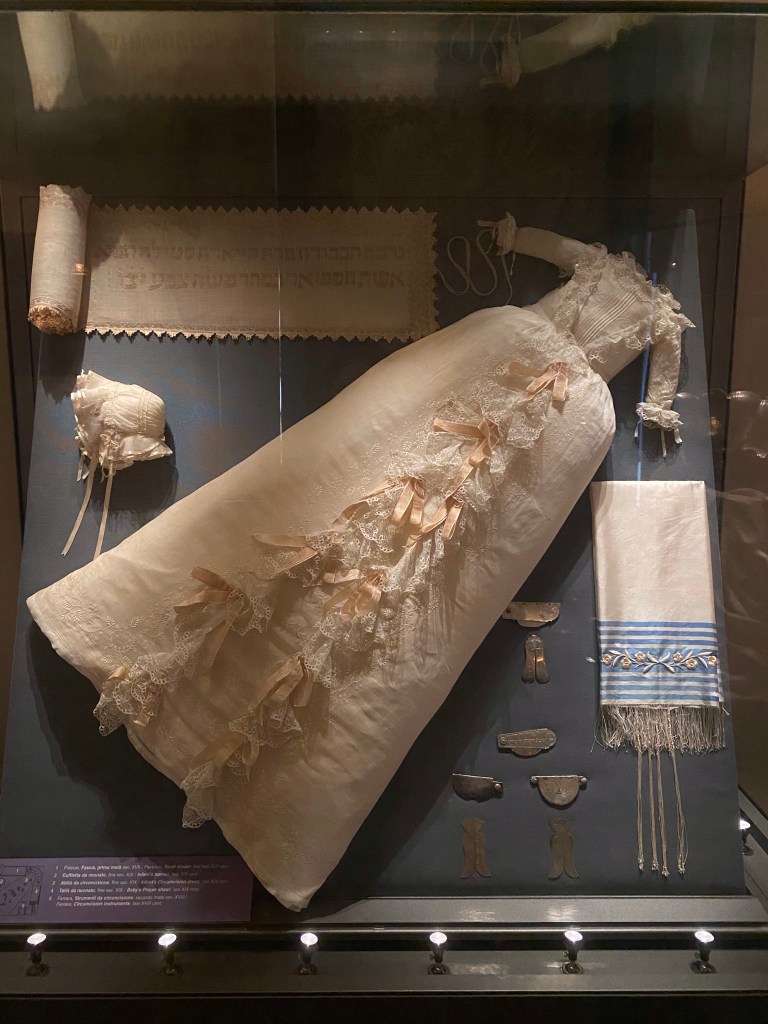
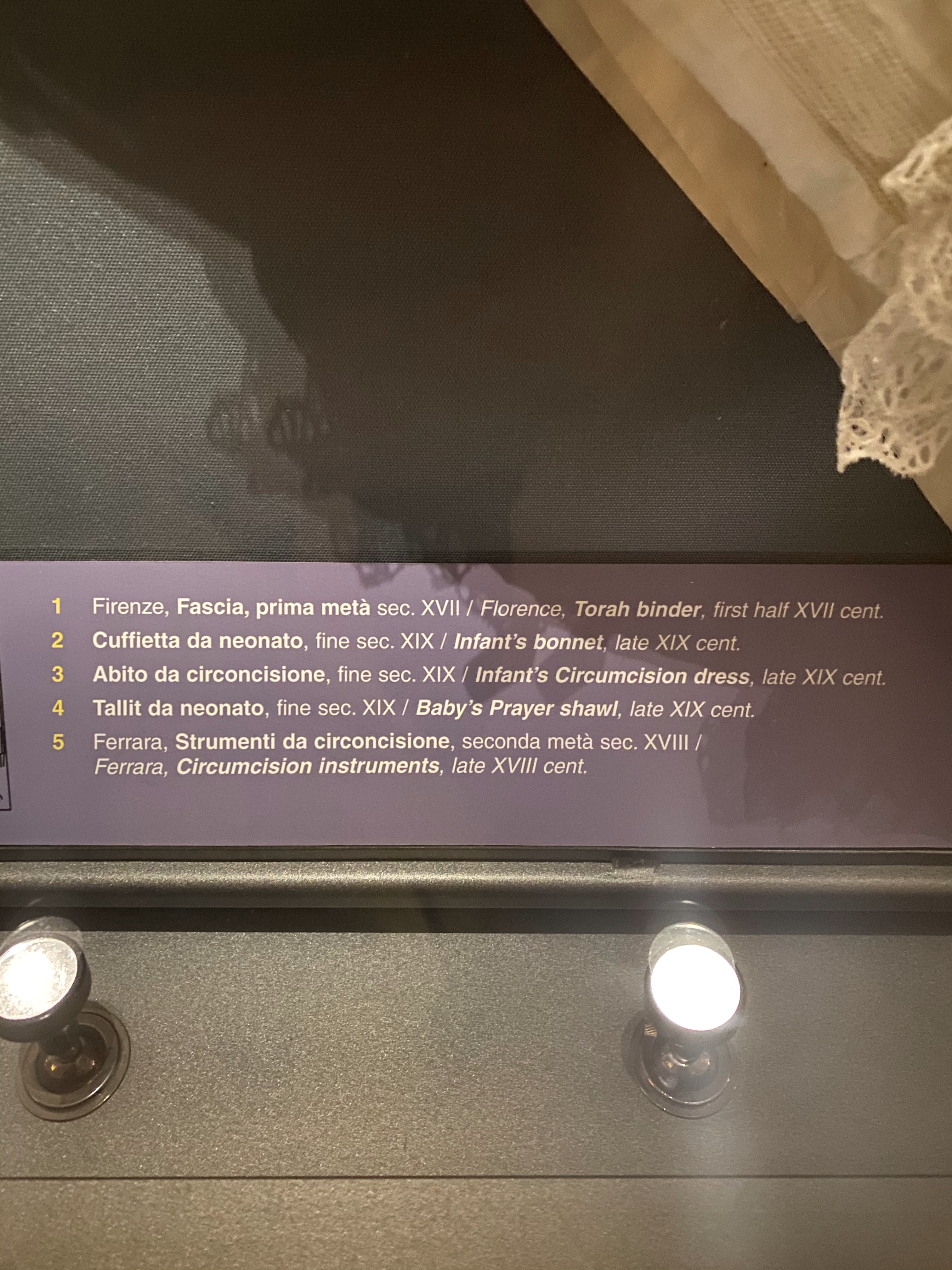
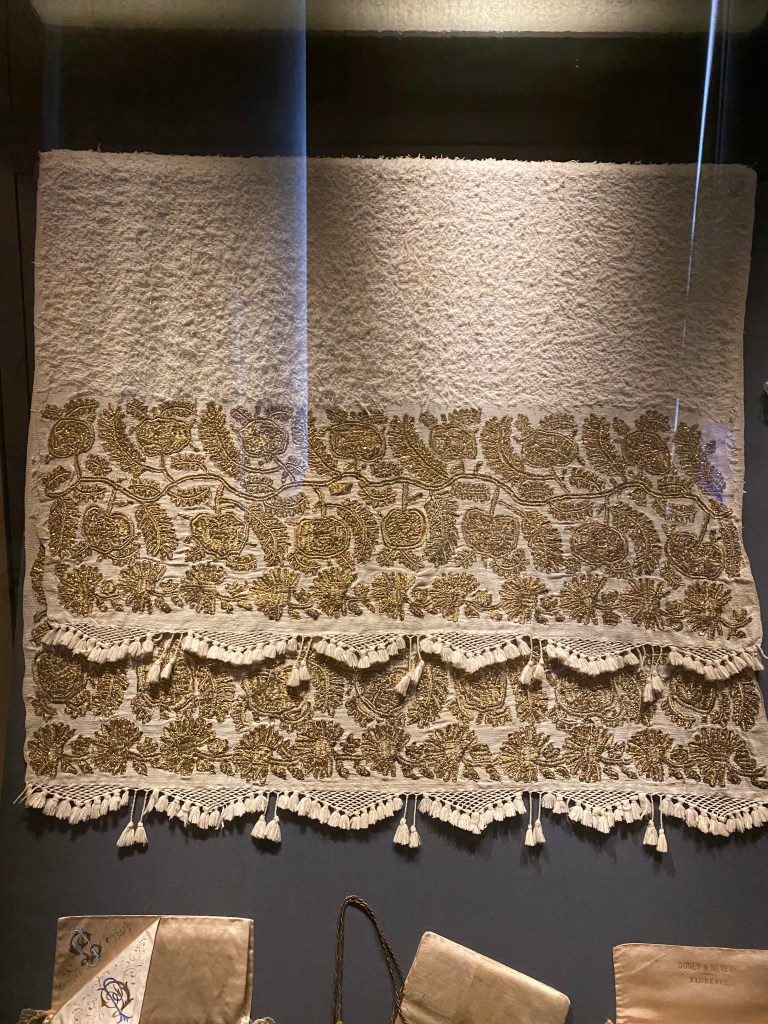
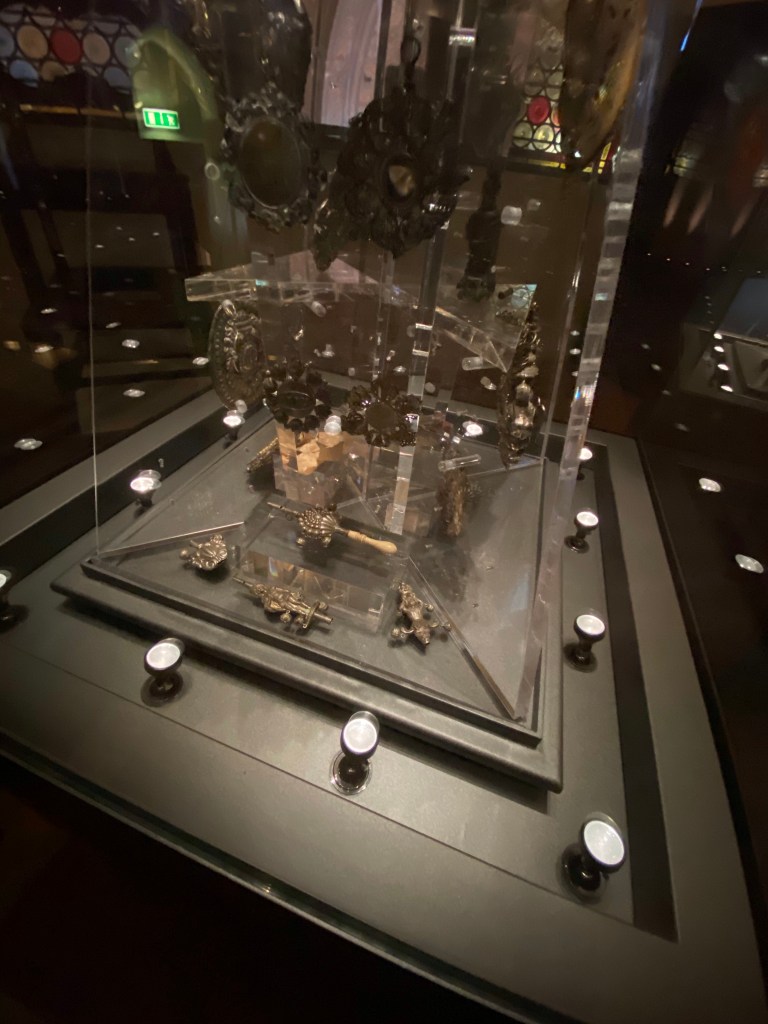
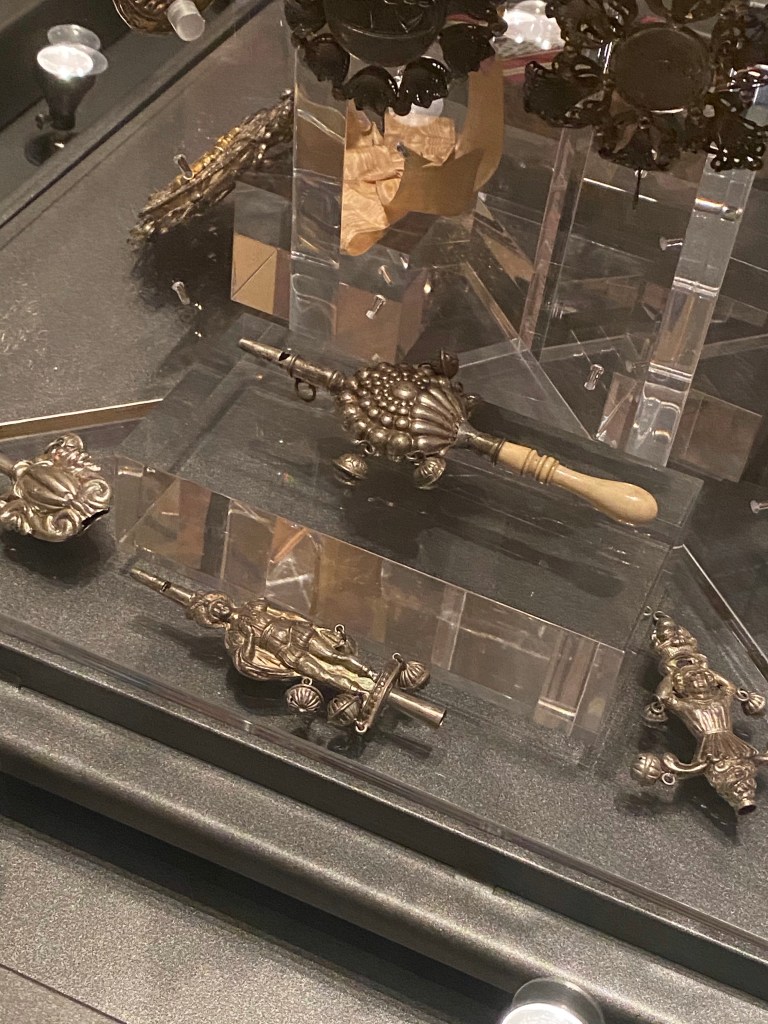
The museum staff change the exhibitions from time to time and I was lucky enough to visit while these fascinating items from the ceremonial part of a baby’s life. The elaborate and exquisite gown is a dress for the day of circumcision. Below the dress are the tools used to perform the surgery. A baby’s prayer shawl. A bonnet. So evocative.
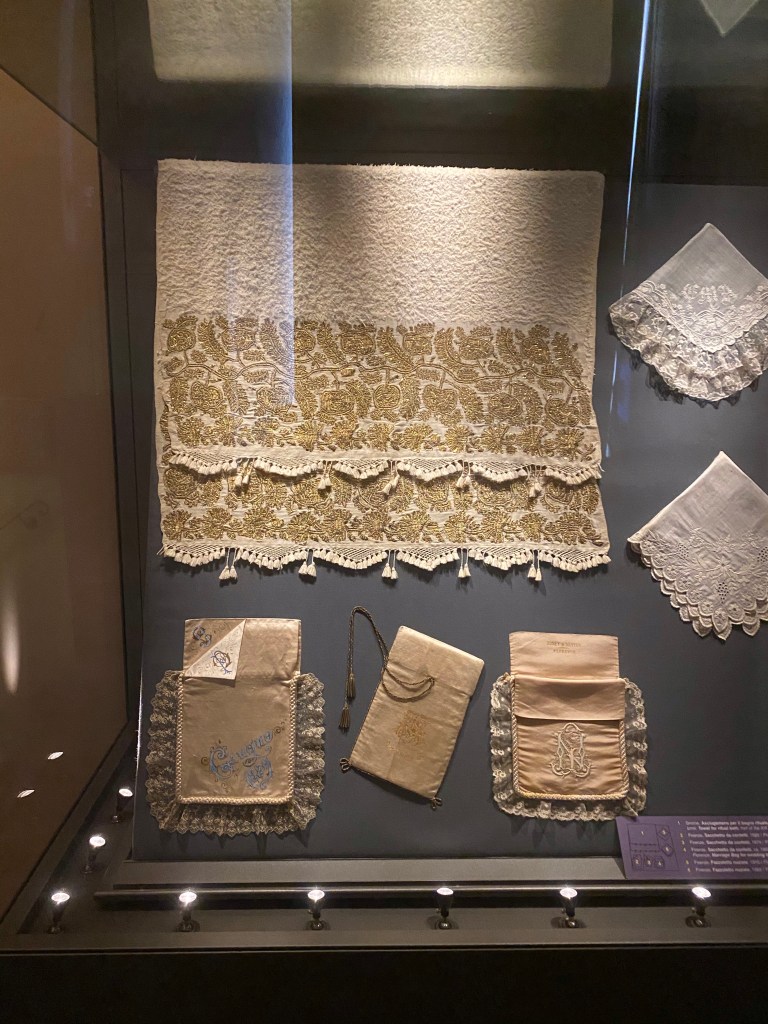
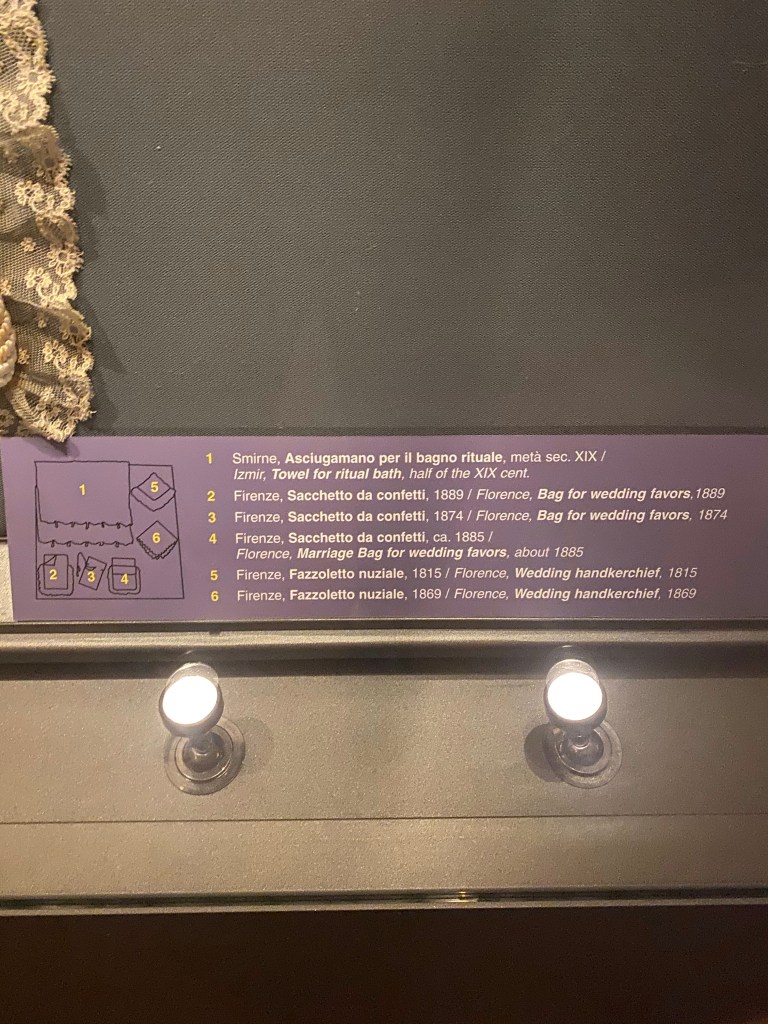
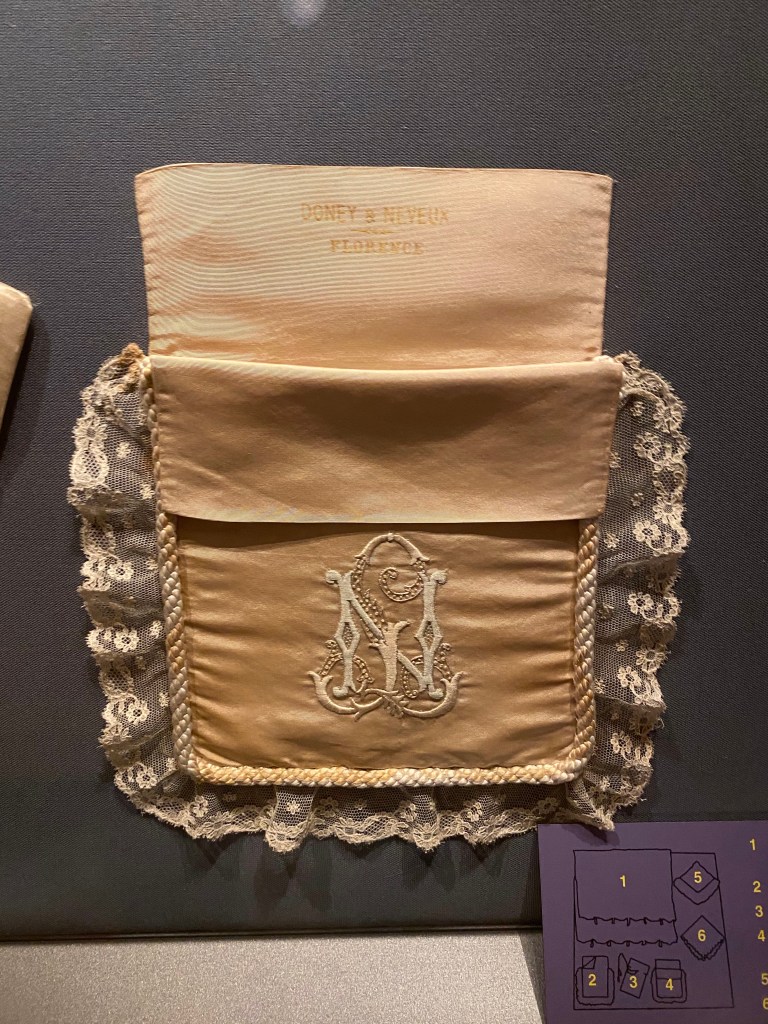
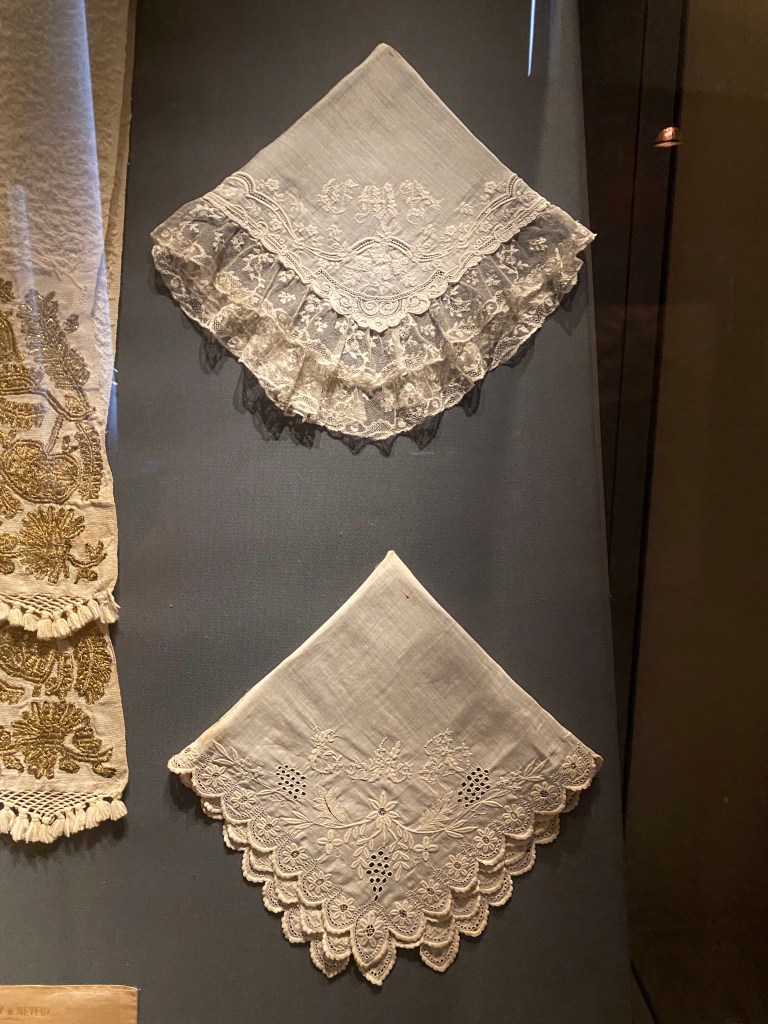
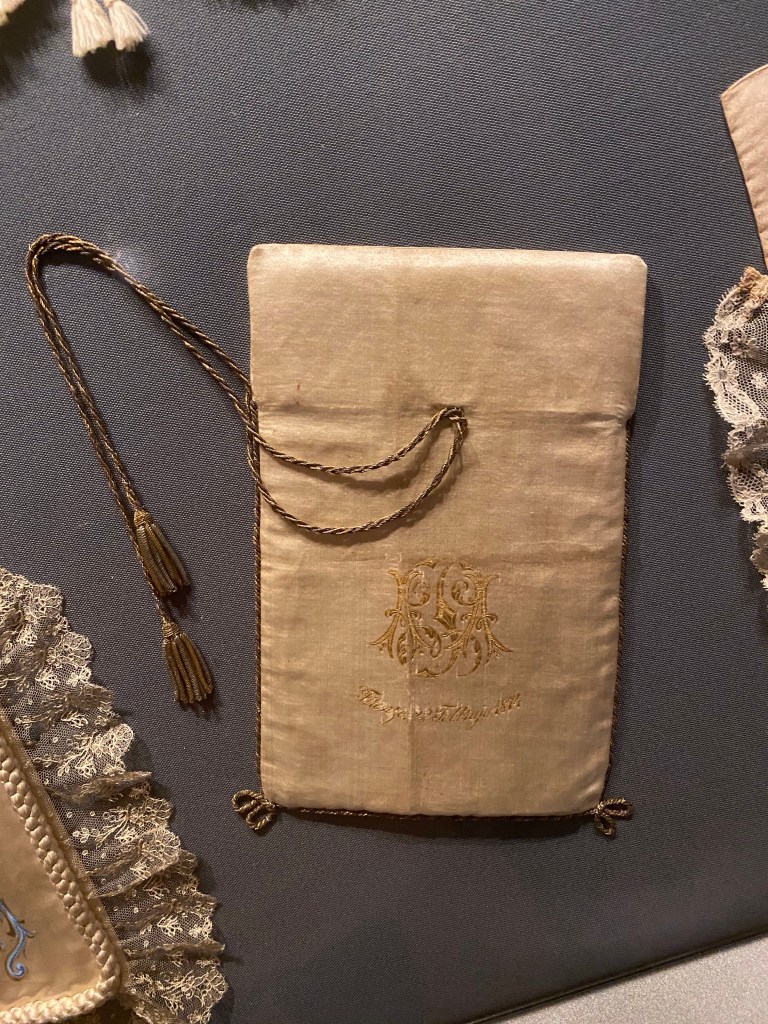
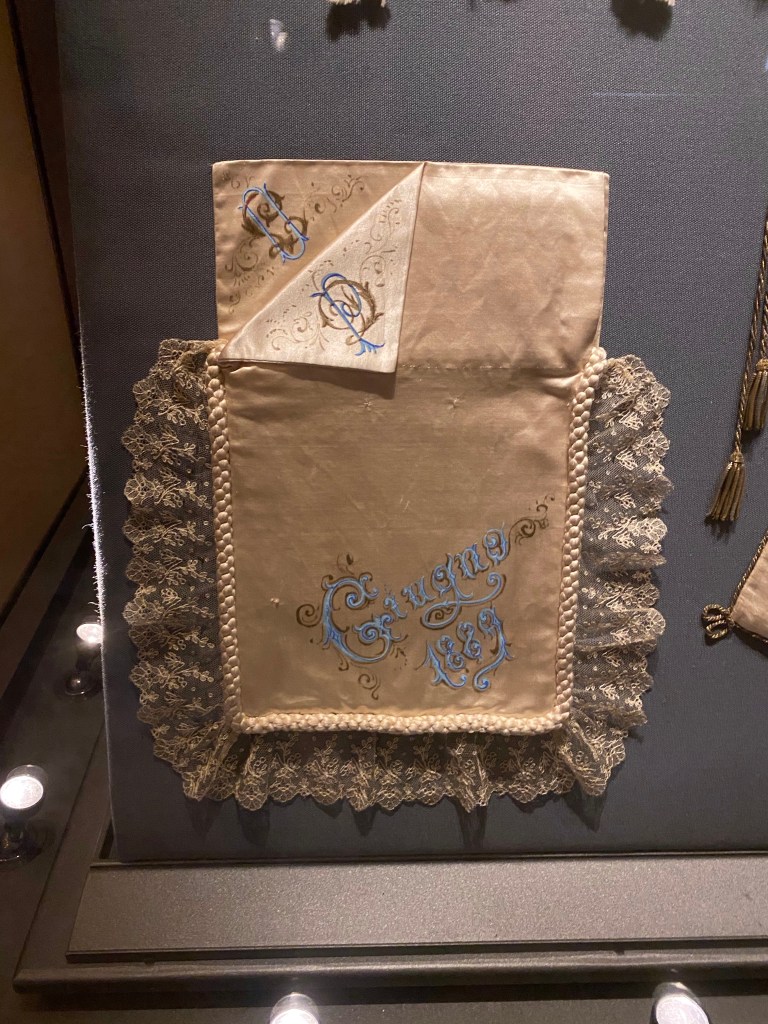
The next display case featured a embroidered tool for the ritual bath, as well as wedding handkerchiefs and silk bags to hold confetti (confetti here is sugar covered almonds).
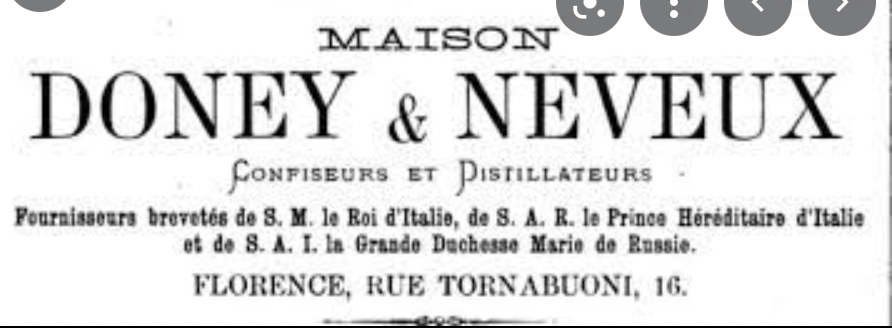
I particularly loved the wedding favor bag above. It still has its card from the pastry shop that presumably provided the candies: Doney & Neveux. A quick look on Google images found an advertisement for this famous 19th century Florentine establishment. They were makers of sweets and were distillers.
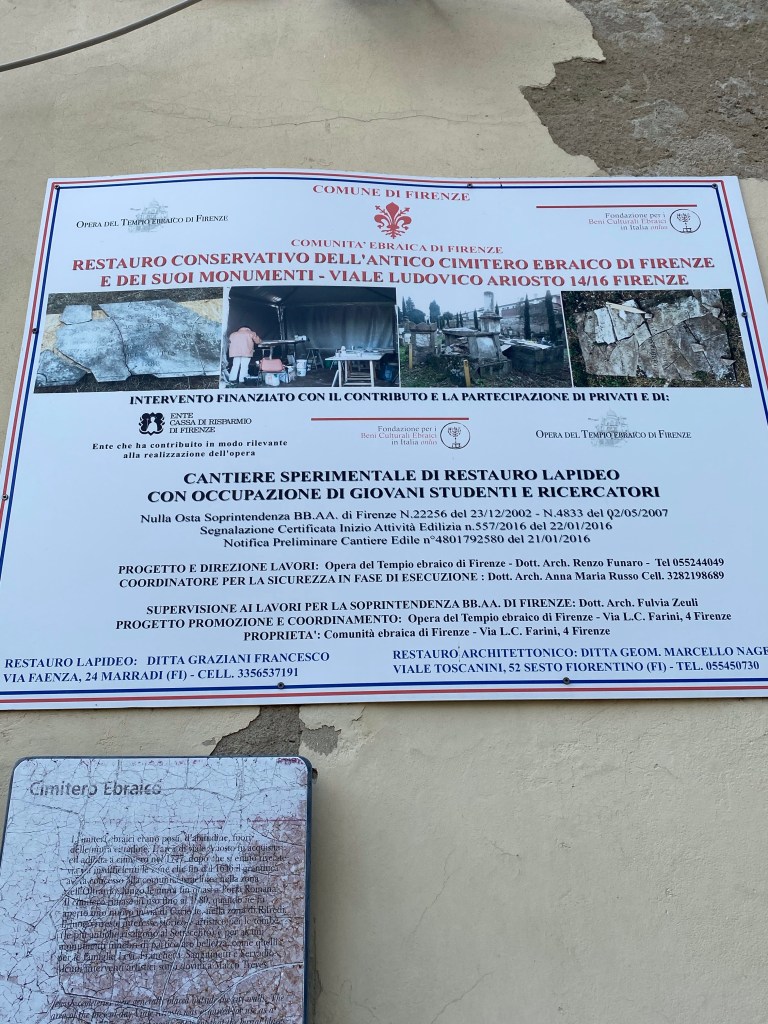
I tried to pay a visit to this cemetery in October of this year (2021). Unfortunately, it was closed and a sign posted said it is under restoration.
Appena fuori porta San Frediano, in un angolo poco conosciuto agli stessi fiorentini, si trova il Cimitero monumentale ebraico. Un luogo da scoprire tra cappelle e monumenti funebri logorati dal tempo ma altamente suggestivi e rappresentativi del mondo ebraico. Eccezionalmente domenica 14 maggio il cimitero sarà aperto e lo si potrà visitare in compagnia di una guida con due possibilità di visita promosse alle 11 e alle 15.30 dalla cooperativa CoopCulture.
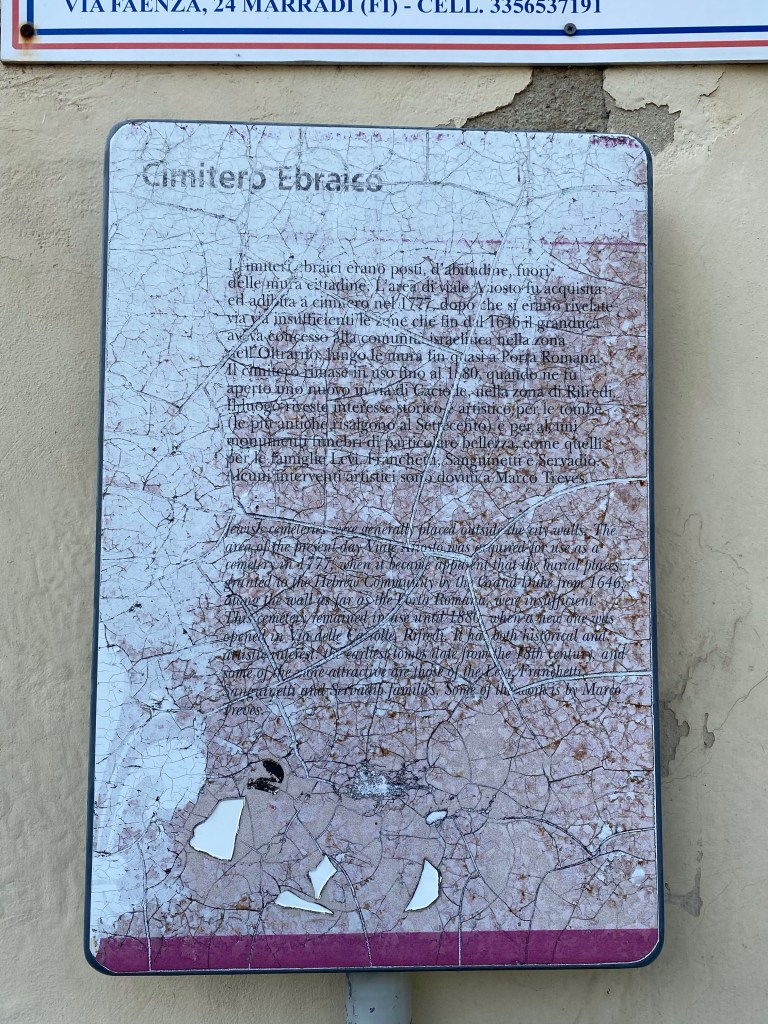
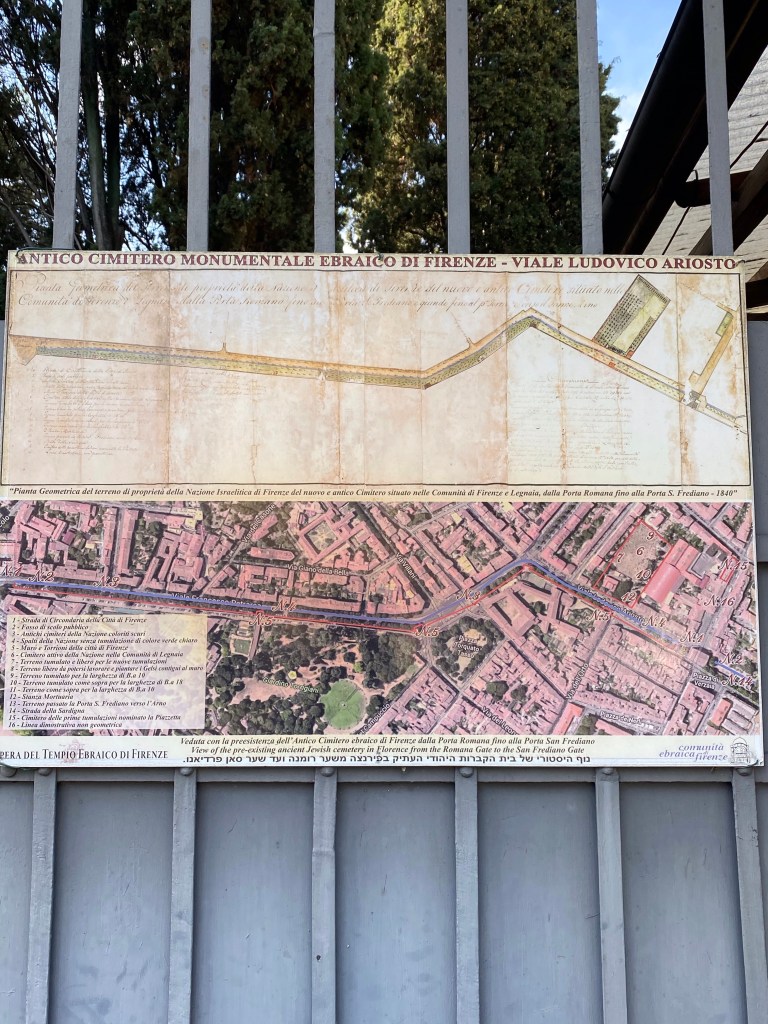
Il Cimitero, aperto nel 1777 in viale Ariosto, rimase in attività per circa un secolo fino a quando fu inaugurato il nuovo sito in zona Rifredi. Un alto muro di cinta custodisce con gelosa riservatezza un importante tesoro culturale costituito da cappelle funerarie e monumenti, tra questi spicca quello a forma di piramide egizia in memoria di David Levi, presidente della Comunità ebraica fiorentina.
La piramide fu costruita nell’Ottocento e disegnata da Marco Treves, del gruppo di architetti che realizzò anche la Sinagoga di Firenze. Pur prive di figurazioni alcune tombe sono vere e proprie sculture di valore artistico, così come le cappelle funerarie in stile neoegizio e neorinascimentale, fra tutte quella della famiglia Franchetti.
Per partecipare alla visita guidata, è necessario presentarsi al cancello del cimitero 15 minuti prima dell’inizio (viale Ariosto 16). La prenotazione obbligatoria al numero 055 234 6654 o sinagoga.firenze@coopculture.it. Il costo della visita è di 9 euro.
Non solo chiese e musei. A Firenze esistono altri luoghi artistici meno conosciuti, ma non per questo meno suggestivi. Uno di questi è sicuramente il cimitero monumentale ebraico di viale Ariosto. Ubicato ai piedi delle antiche mura, a due passi da Porta San Frediano, si trova il cimitero ebraico più antico della città. Costruito nel 1777, rimase in funzione fino al 1870, anno in cui venne aperto quello in via di Caciolle, nella zona di Rifredi, tutt’oggi in uso.
Secondo la tradizione israelita, le tombe non hanno l’immagine del defunto e presentano le forme più svariate. Oltre alle lapidi semplici, vi si trovano monumenti funebri a forma di sarcofago o di piccolo tempio. Su tutte spicca la cappella funeraria della famiglia Levi: una piramide posta su un alto basamento, realizzata in blocchi squadrati di pietra e illuminata all’interno da un piccolo occhio sul lato meridionale, oltre che dal portale d’ingresso.
Accanto alla piramide si trova poi un’altra tomba più piccola in stile neoegizio, appartenente alla famiglia Servadio e realizzata verso la fine dell’Ottocento. Il monumento funebre presenta colonne a fascio e all’interno il simbolo del sole alato, mentre sul sarcofago è scolpita una corona. Vi è poi la cappella della famiglia Franchetti realizzata da Marco Treves, lo stesso architetto della sinagoga di Firenze, un’edicola composta da colonne e decorazioni molto ricche.
Oggi con pacchetto ServiceCare incluso, puoi guidarla sempre nelle condizioni migliori. Scopri di più Contenuto Sponsor
Sebbene non sia più in uso da diverso tempo, il cimitero apre le sue porte al pubblico la prima domenica del mese. Un’occasione da non perdere.
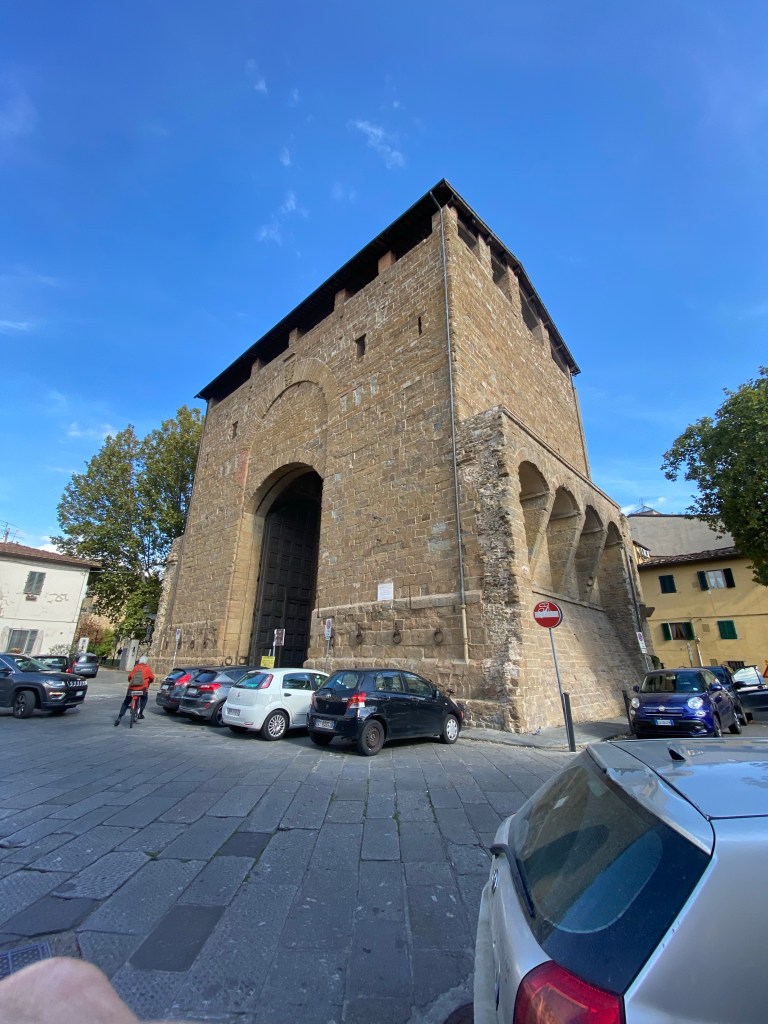
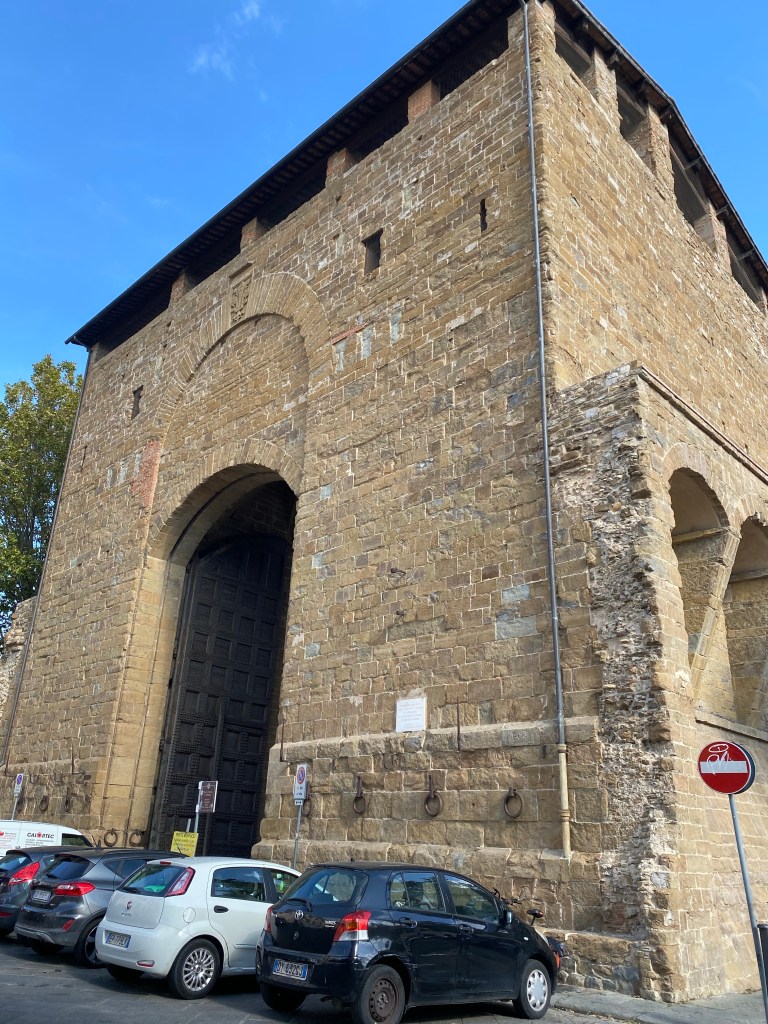
A couple of weeks ago, I set out to visit the Jewish Cemetery which lies near the gate of San Frediano in the Oltrarno district of Florence. Sadly, the cemetery was closed and a sign said they are in the middle of restoring the place. Who know when that will be finished? With Covid for the past 2 years and Italian bureaucracy which makes even easy jobs hard and long, chissa?
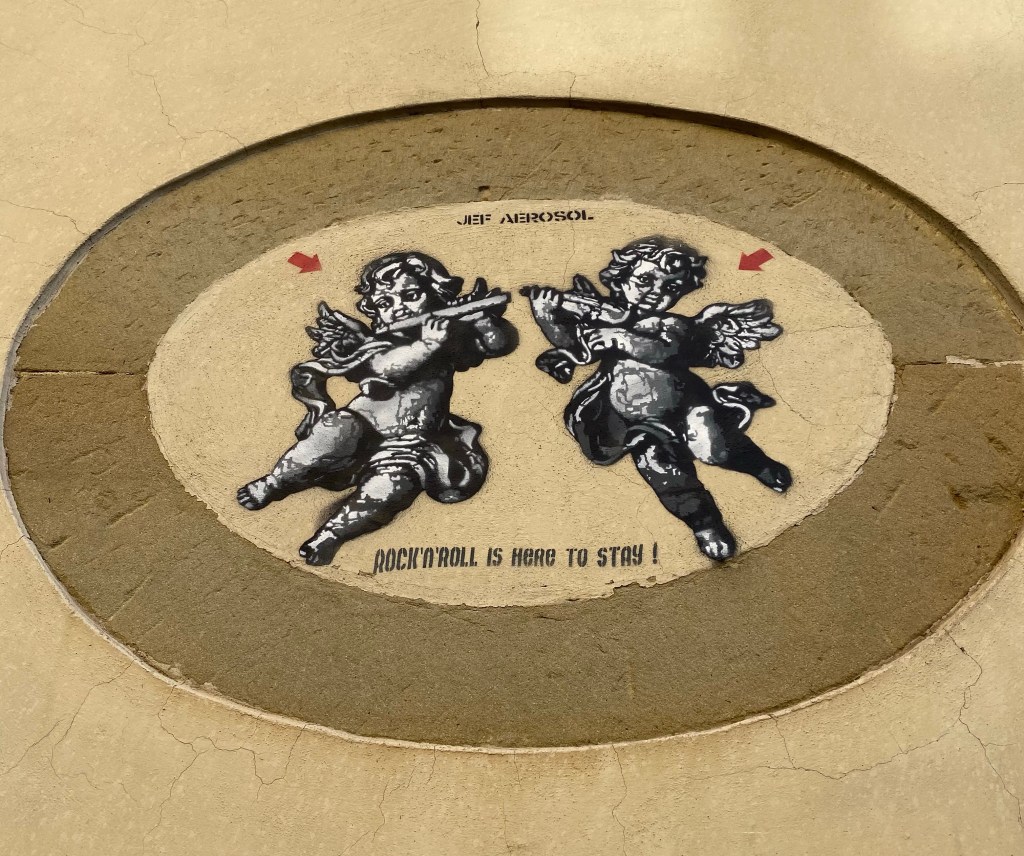
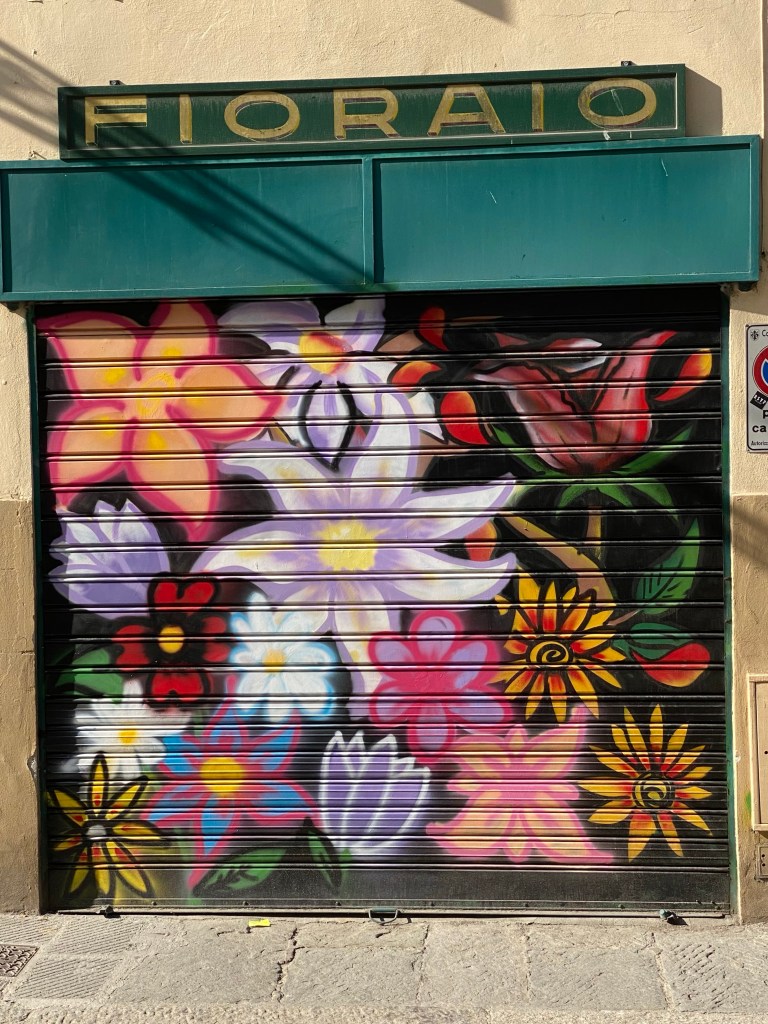
Despite my disappointment with the closed cemetery, I enjoyed my walk around the gate:
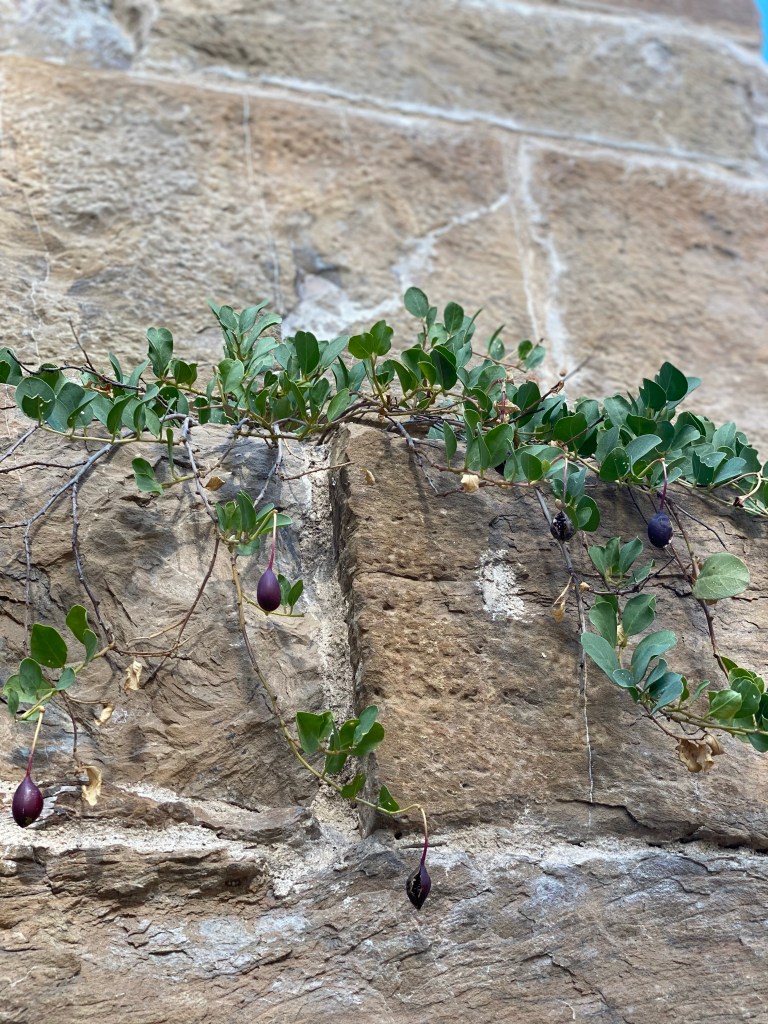
The ubiquitous caper plant, which grows like weeds in Italy, was growing in the cracks of the gate. You can see the berries.
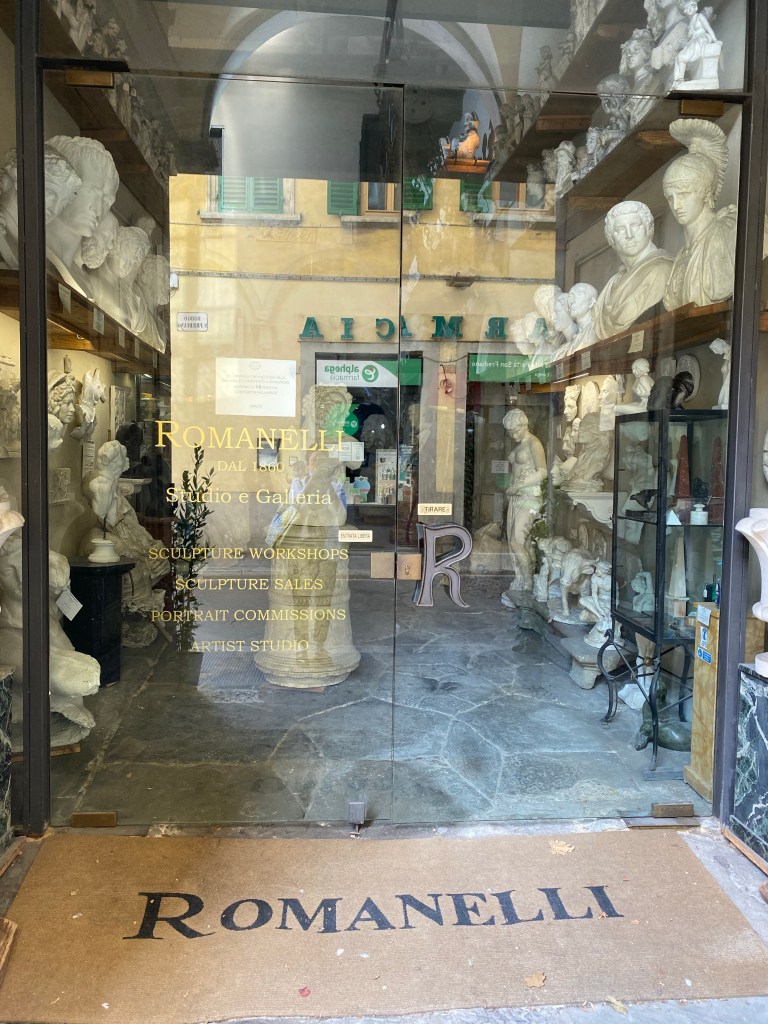
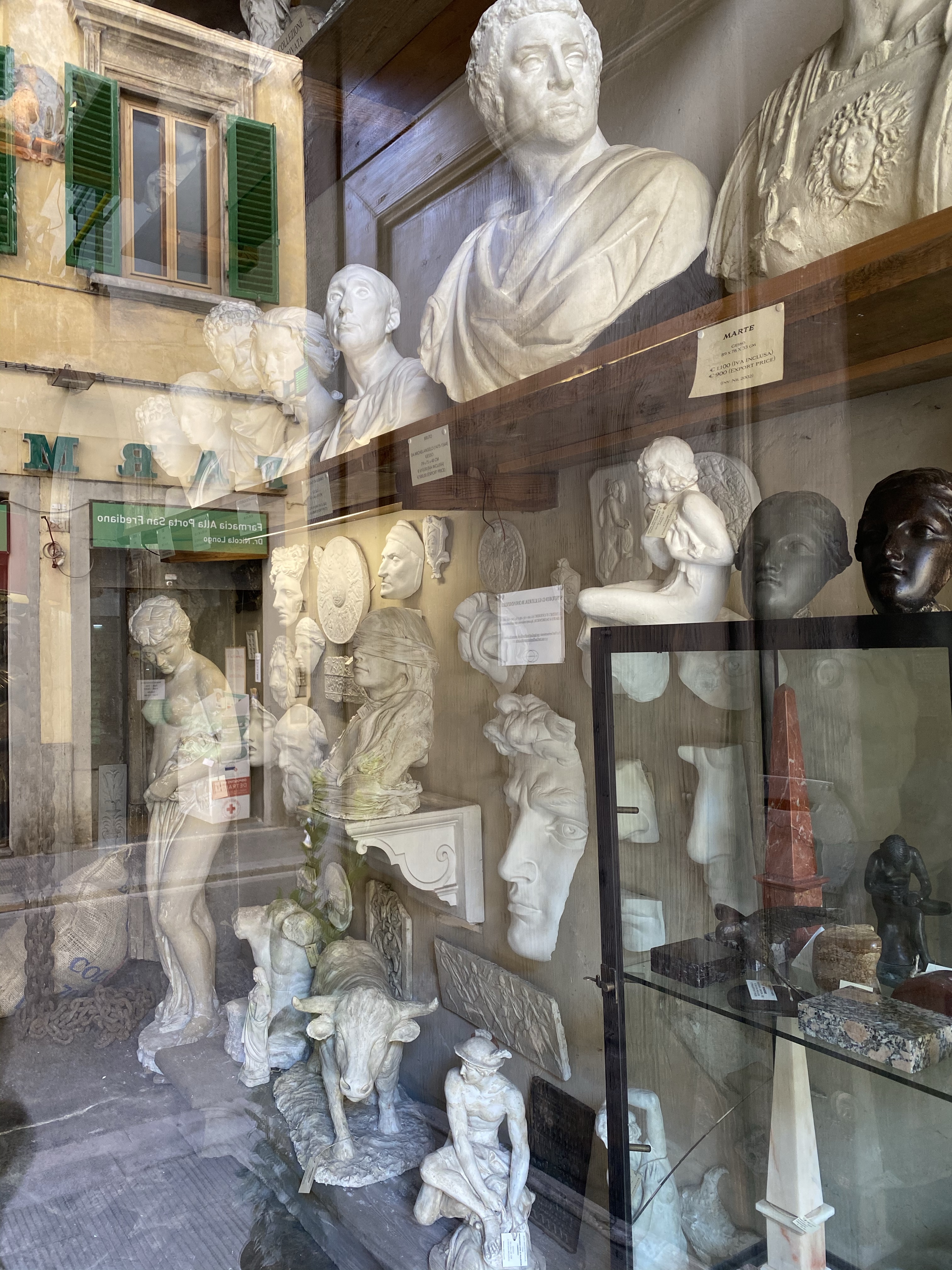
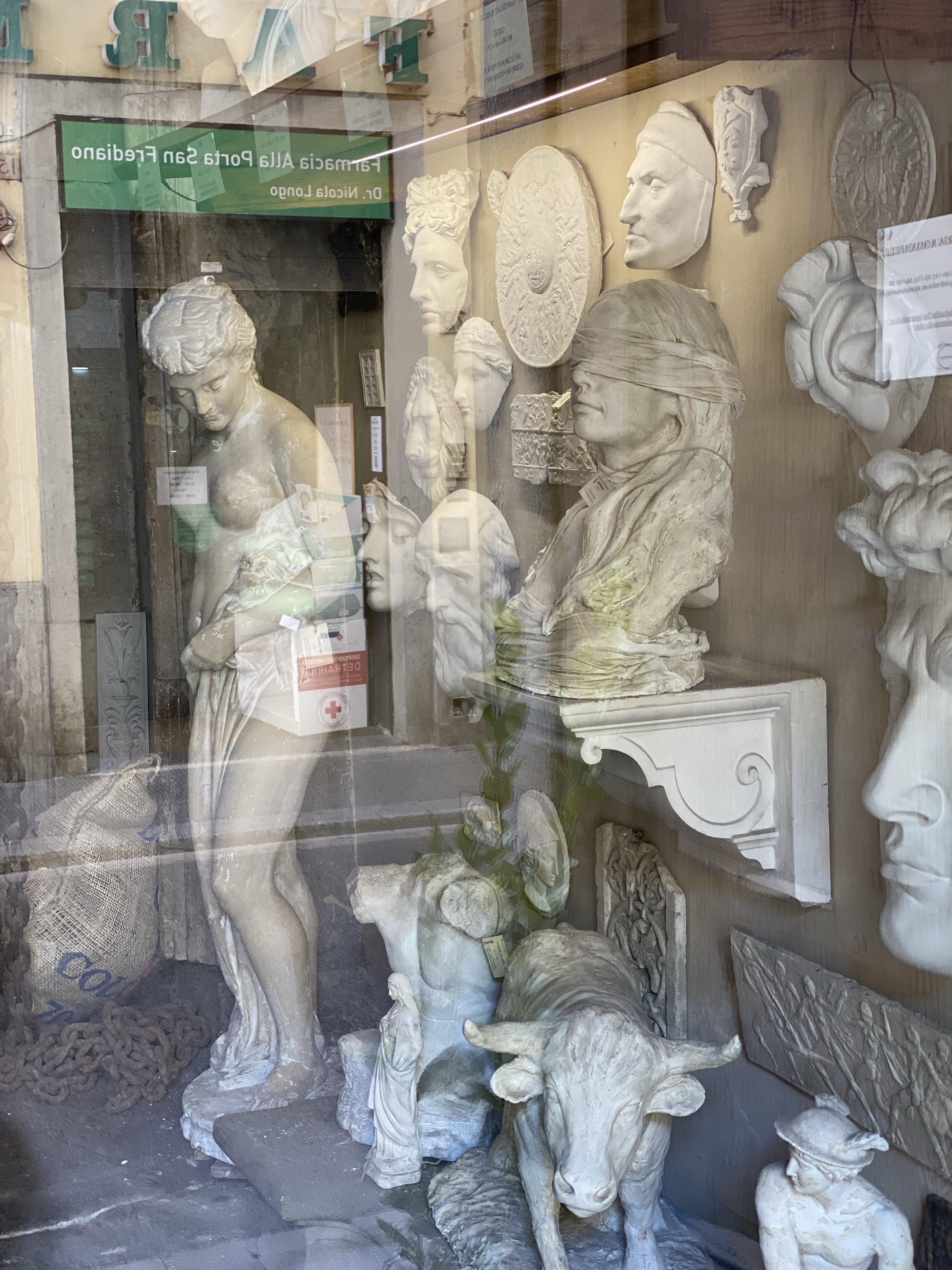
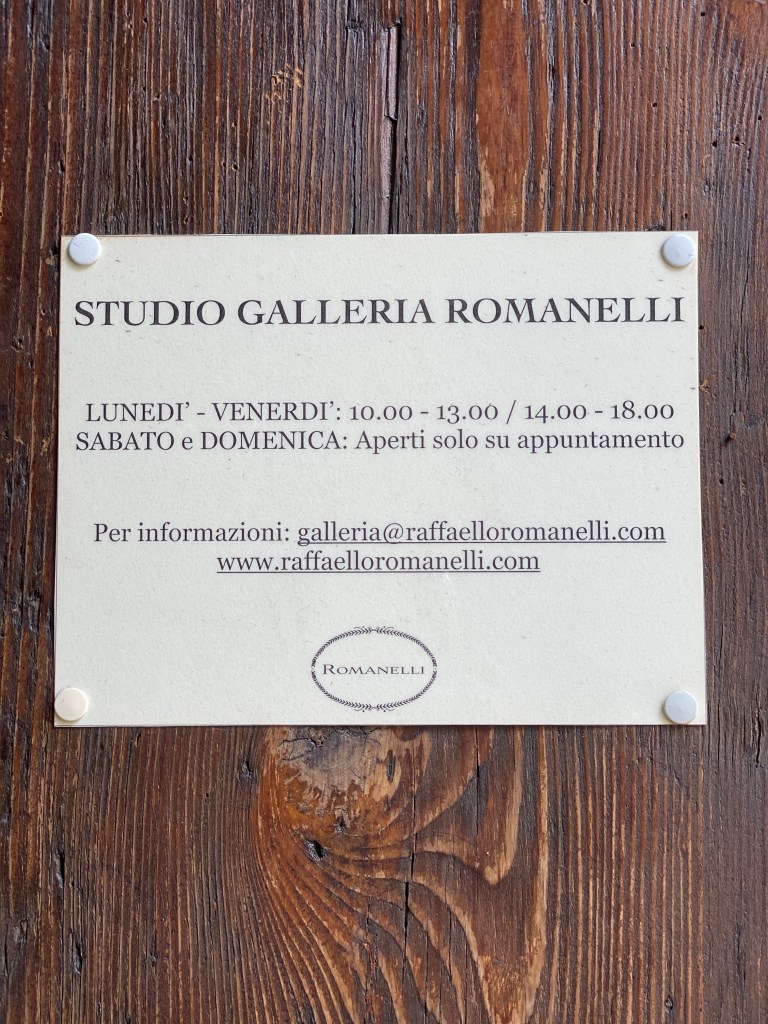
The fine old Romanelli Sculpture Studio and Gallery is alive in well in this district. It is a sculpture lover’s dream.


 get back, lauretta!
You must be logged in to post a comment.