





Art
Santa Trinita, another look
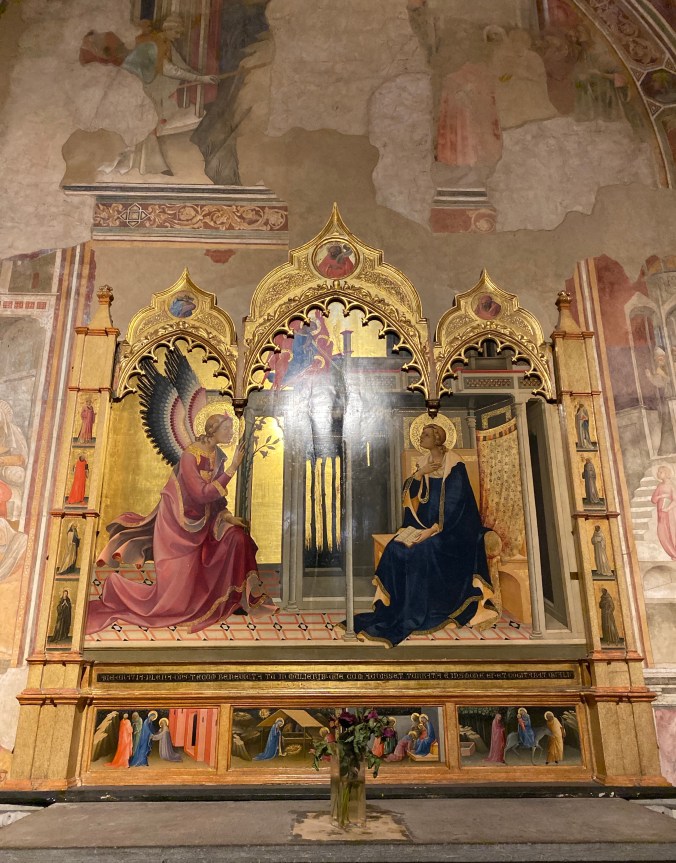
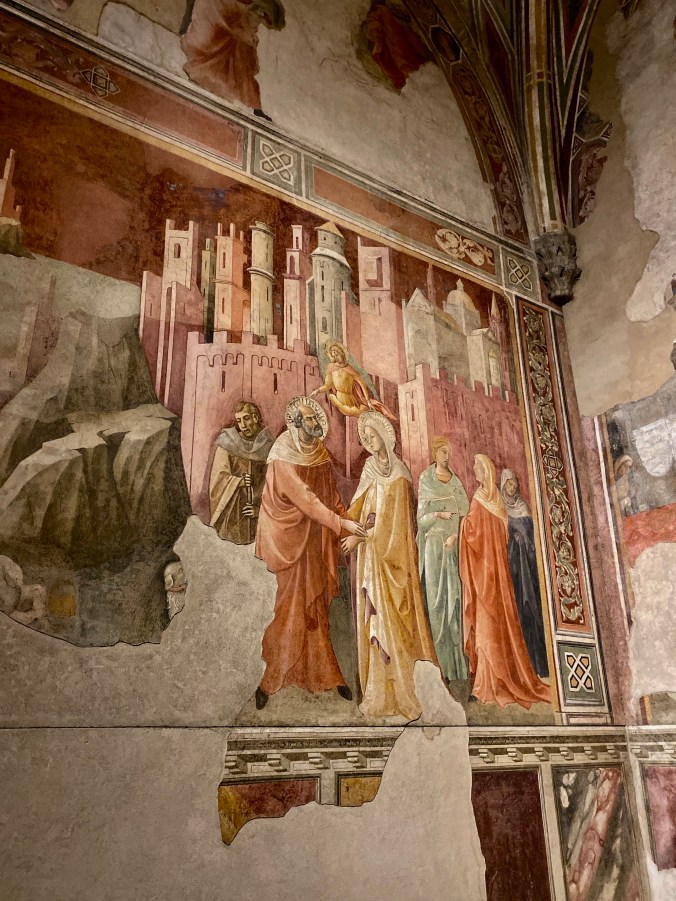
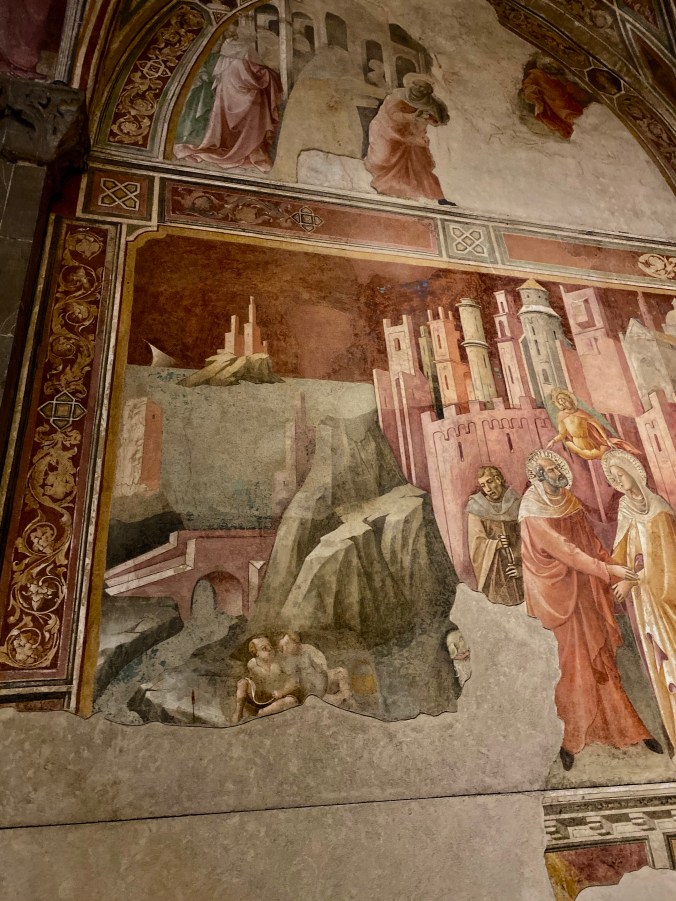
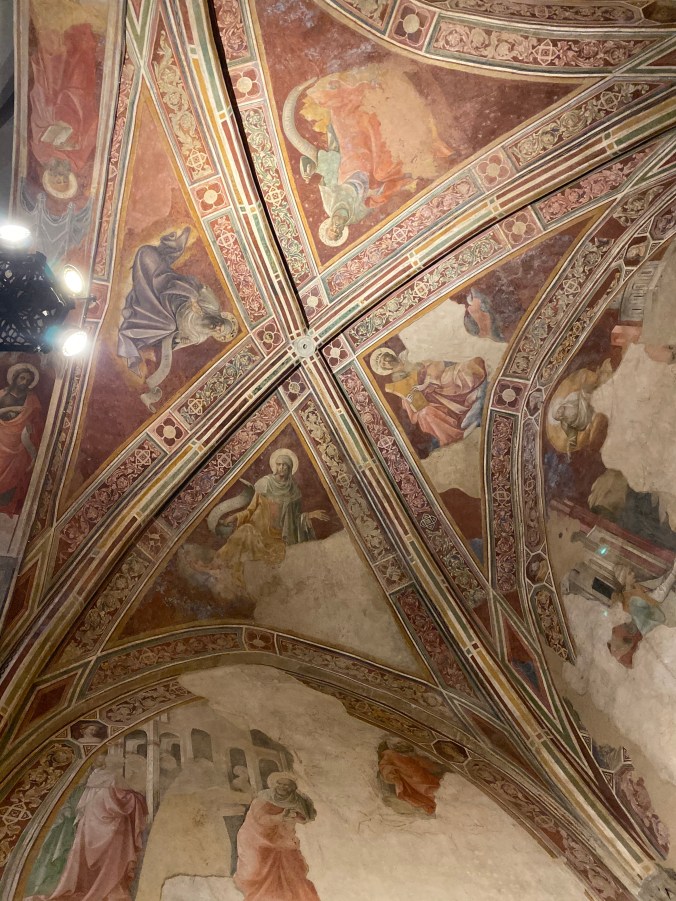
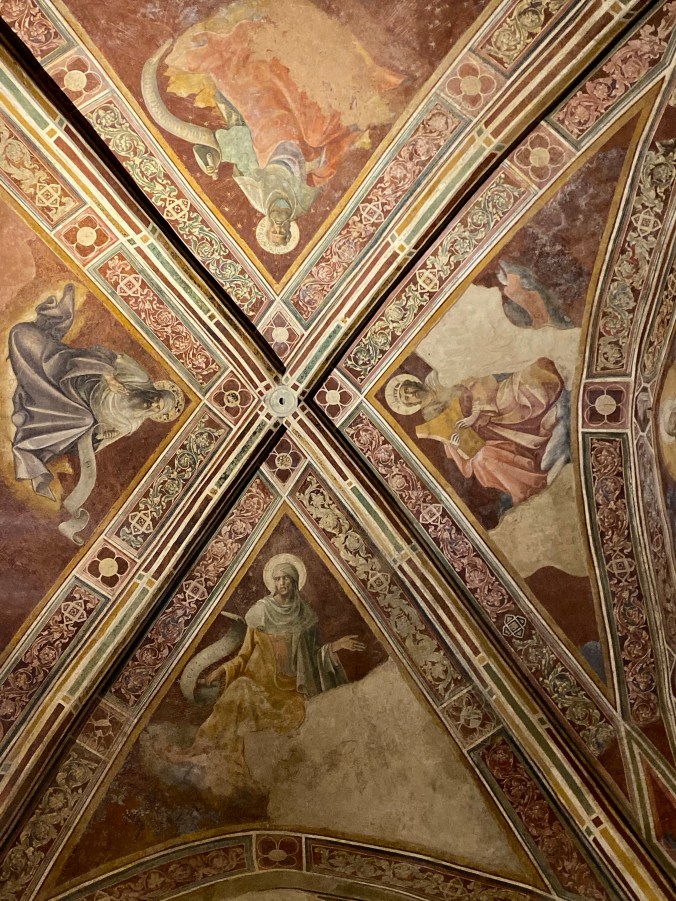
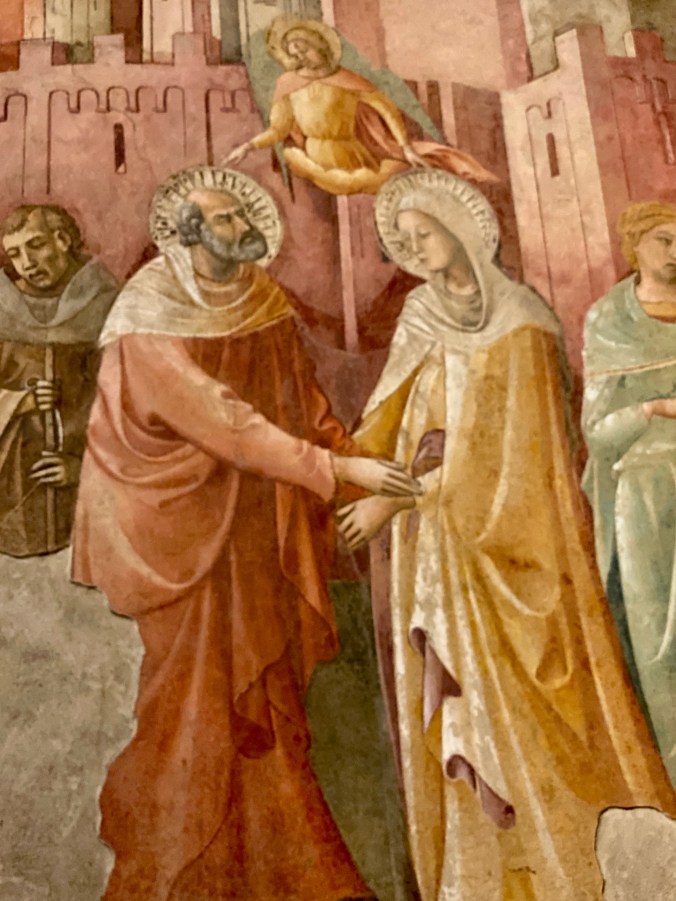
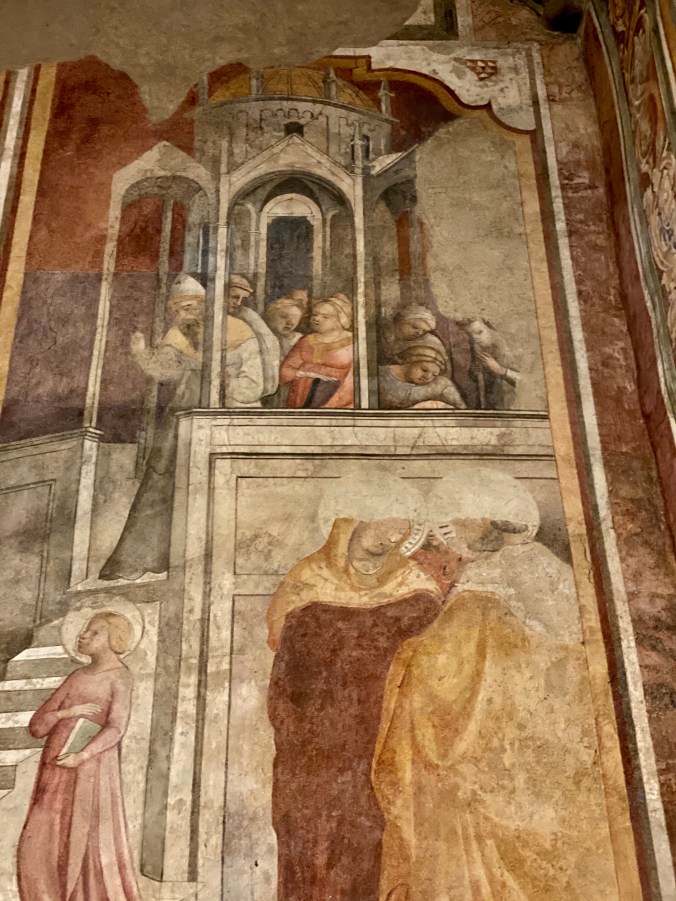
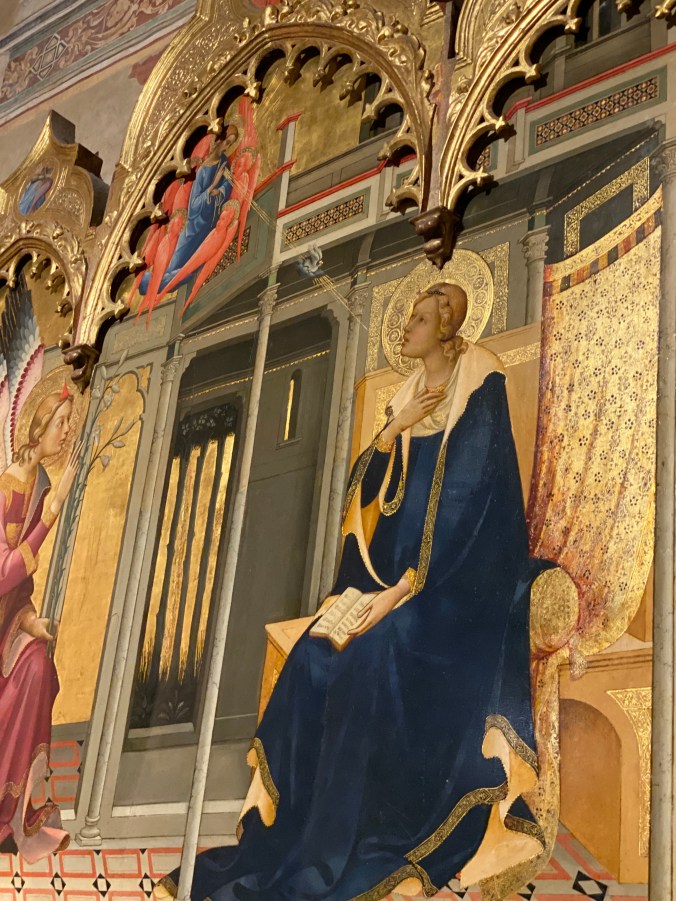
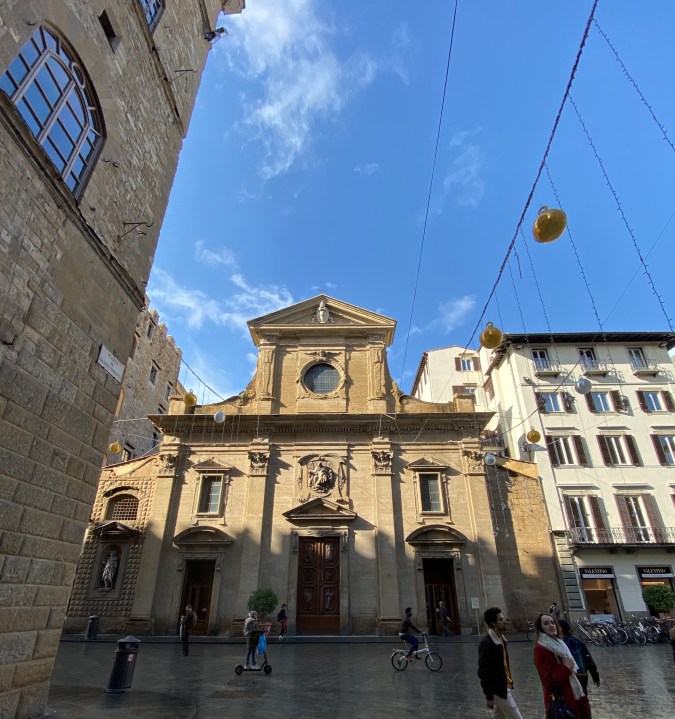
Recently I posted about Santa Trinita and I just had another chance to pay it another visit. It was a sunny day following a week of rain, and it just felt good to be out and in the sunshine. You might notice that the city of Florence has begun decorating for Christmas already!
The Mannerist facade by Buontalenti:

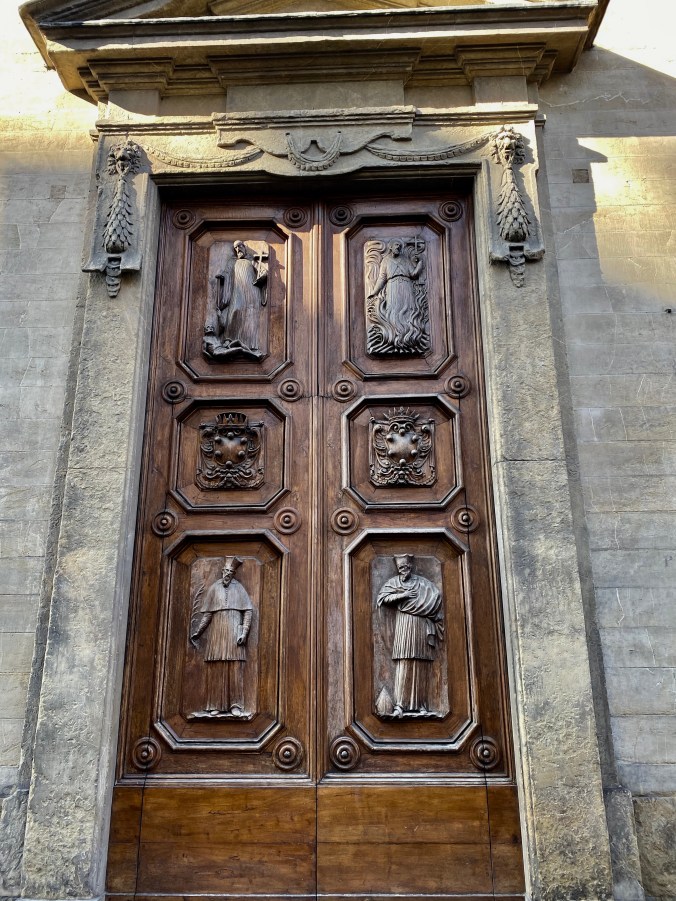
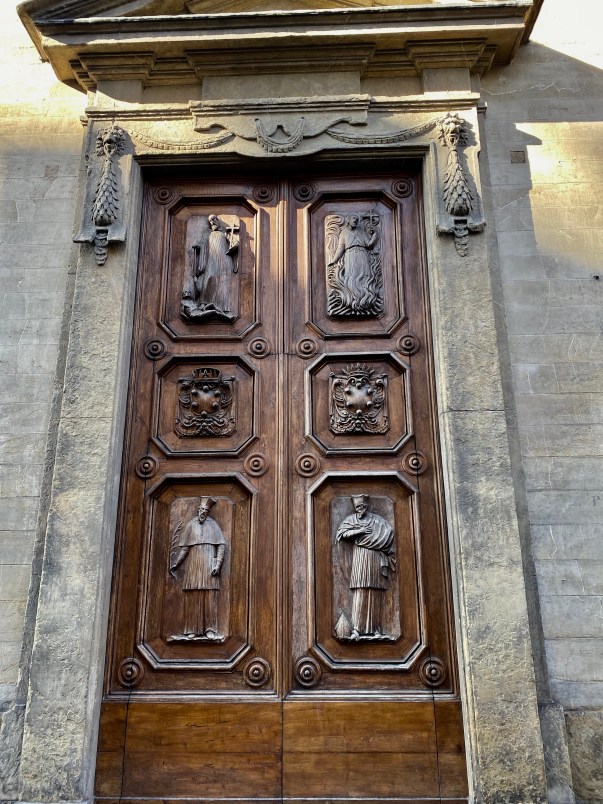
The beautifully carved central doors:
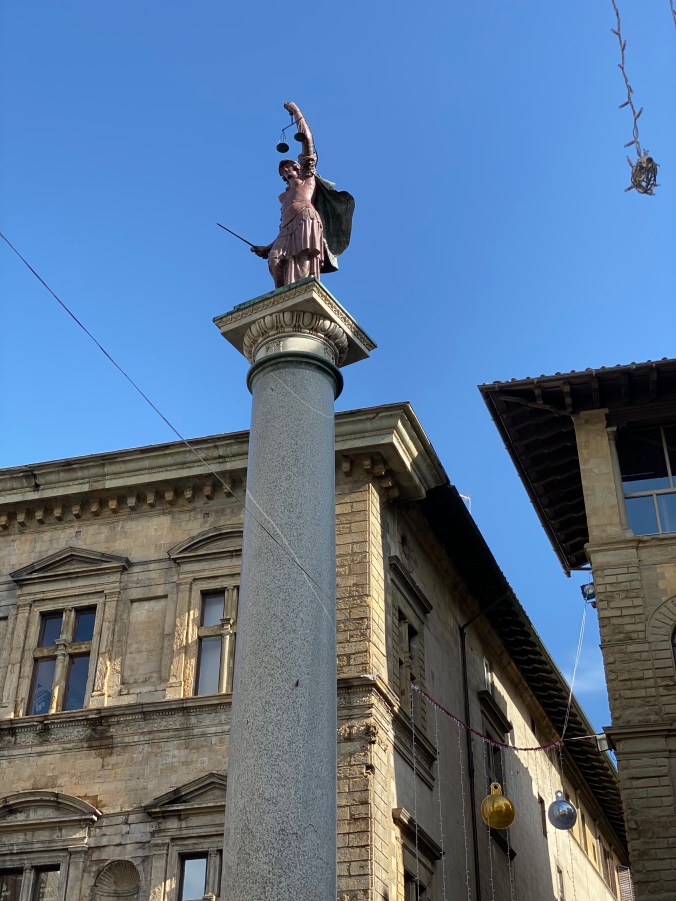
You must never forget the fabulous column and Roman statue in the piazza outside the church:
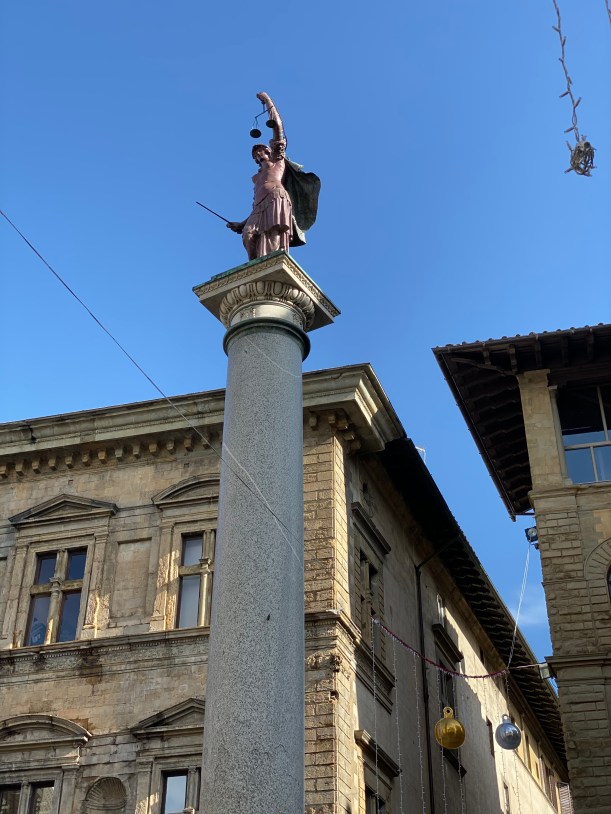
Once more, the facade:
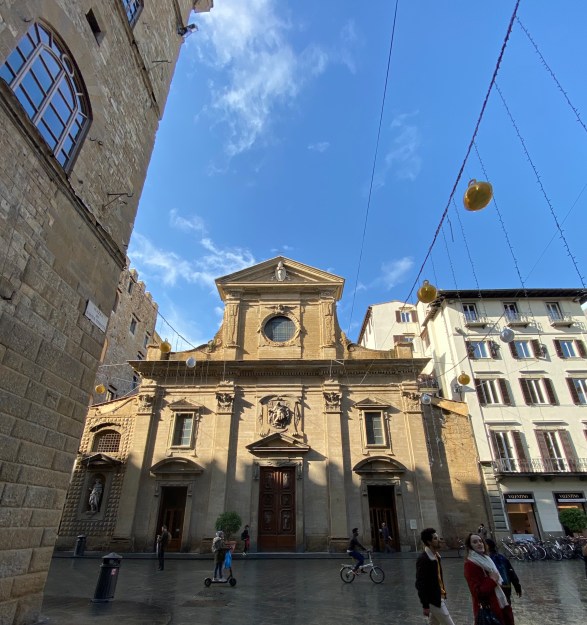
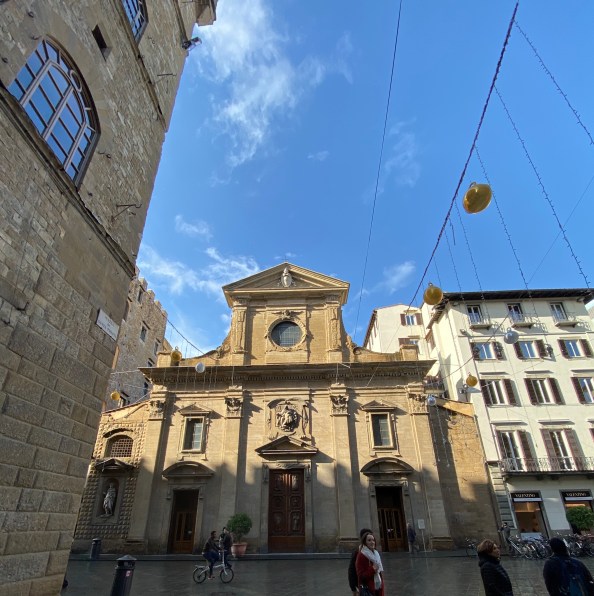
Inside the church we are fortunate to see the extant old Romanesque facade of the church. Luckily for posterity, they didn’t destroy it when they constructed the new front for the church:

One either side of the central door, inside the church are these tombstones and paintings:
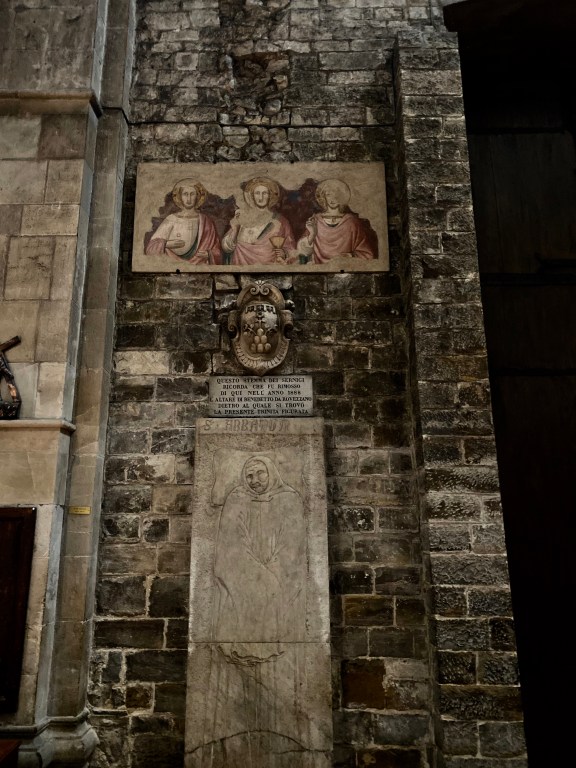
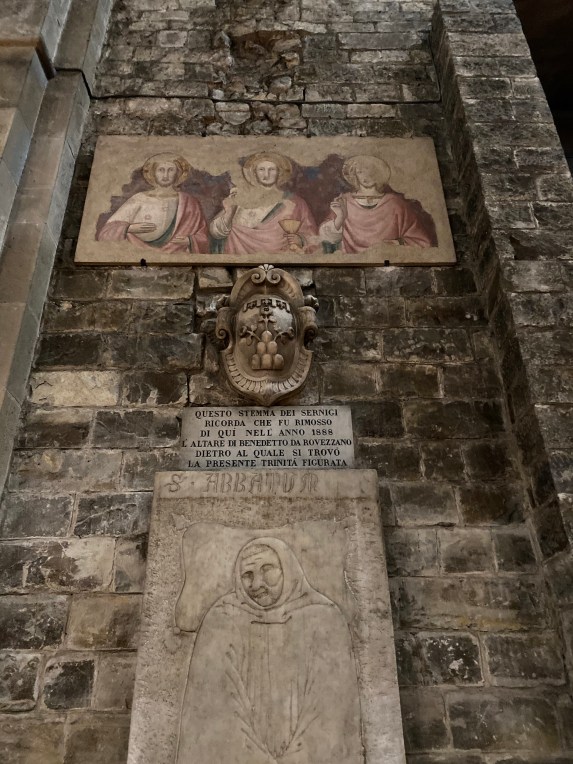
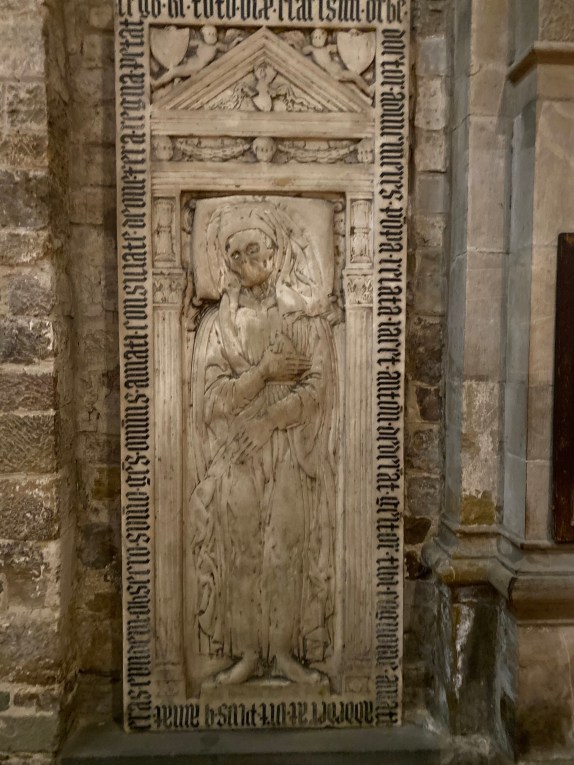
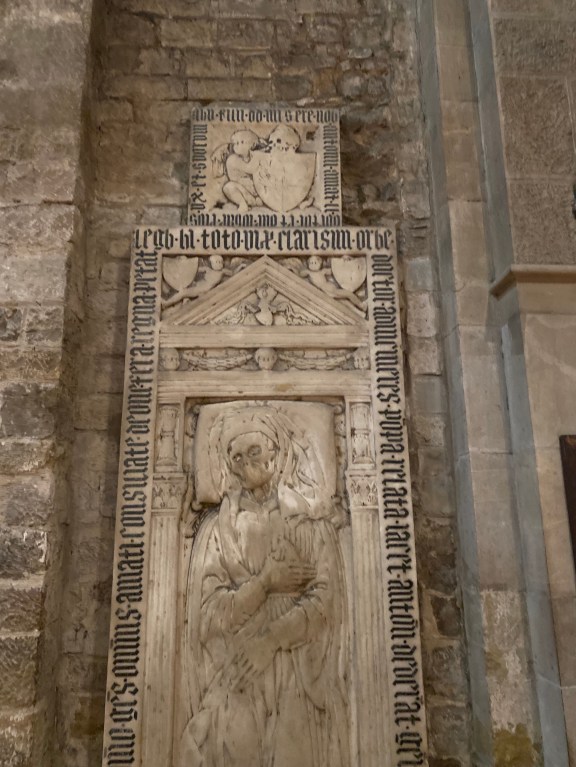
The interior:


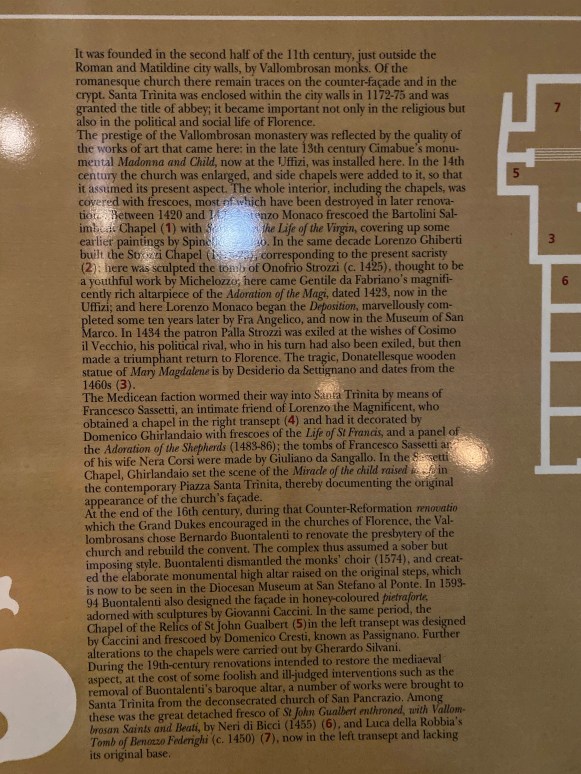
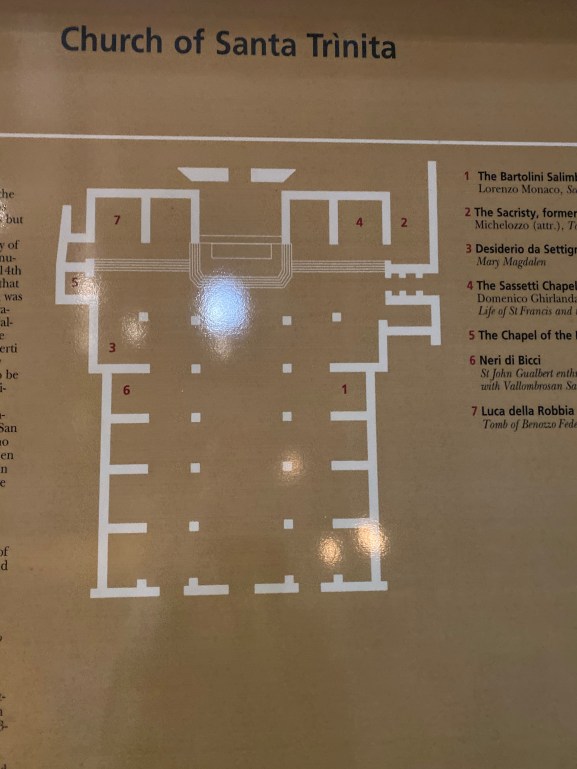
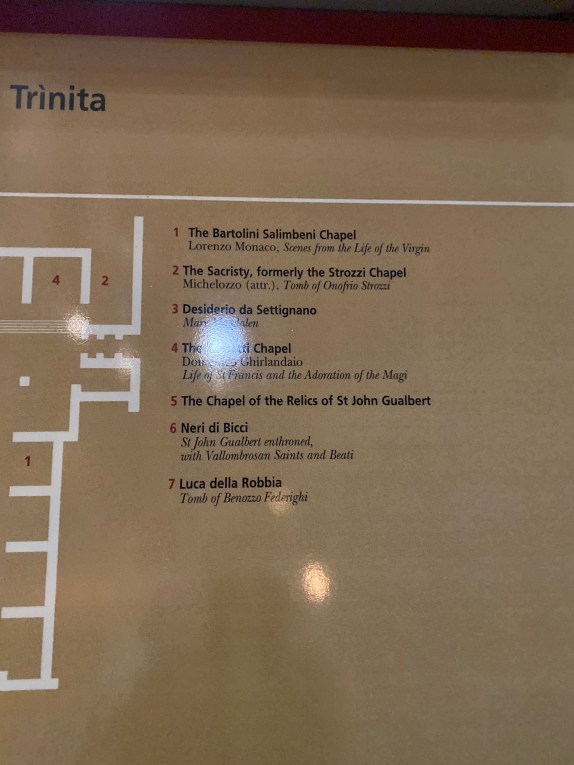
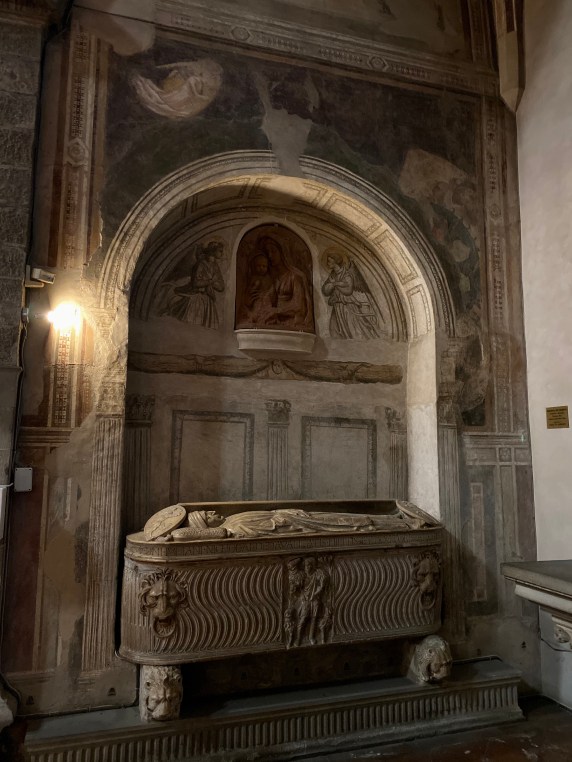
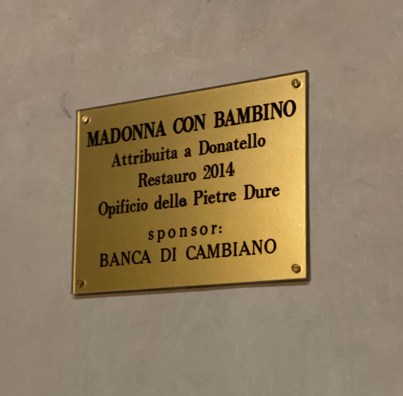
The Chapel containing the (presumed) Donatello:

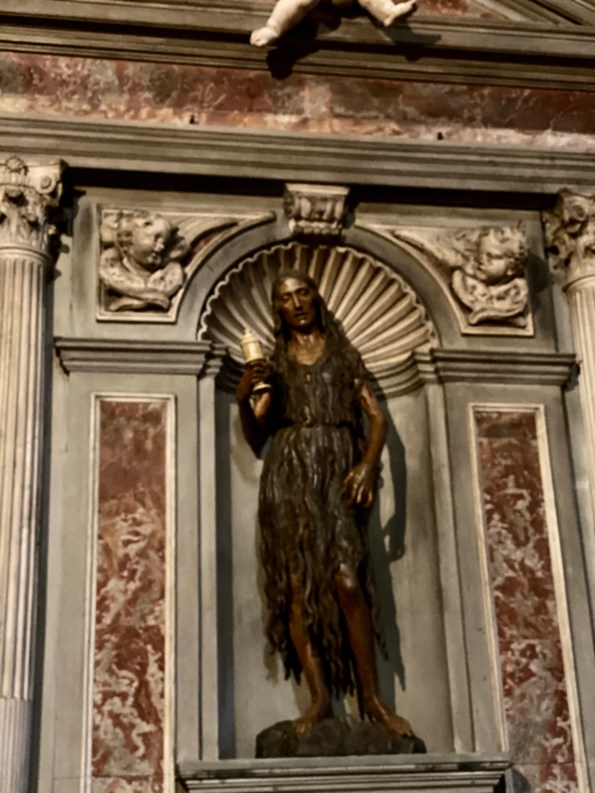
The statue of Mary Magdalene by Desiderio di Settignano:

Ginevra Cantofoli, who are you?
On a recent visit to Padova, I was arrested by some paintings in the Museo Civici, both done by Ginevra Cantofoli. I vowed to write a post on this intriguing painter, and here it is. It isn’t much…I hope someday to add more.

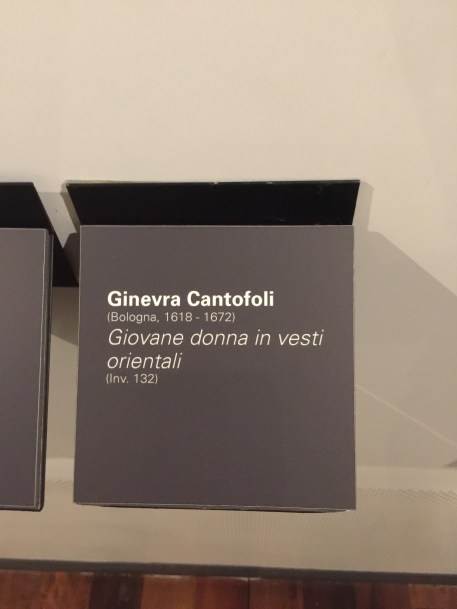


All I can add right now is this info from Wiki:
|
Ginevra Cantofoli
|
|
|---|---|
| Born | 1618
Bologna, Italy
|
| Died | 1672 (aged 53–54) |
| Nationality | Italian |
| Known for | Painting |
| Movement | Baroque |
Ginevra Cantofoli (1618–1672) was an Italian painter. She was active in the Baroque period.

Scena Allegorica. Date unknown.
Cantofoli was born in Bologna, Italy in 1618.
Cantfoli received her training as an artist from Elisabetta Sirani in Bologna. She painted works for several churches. These works included a Last Supper for the Church of San Procolo, a St. Thomas of Villanova for San Giacomo Maggiore, and a St. Apollonia for the Church of La Morte.
 |
Wikimedia Commons has media related to Ginevra Cantofoli. |
- Bryan, Michael (1886). Robert Edmund Graves (ed.). Dictionary of Painters and Engravers, Biographical and Critical(Volume I: A-K). York St. #4, Covent Garden, London; Original from Fogg Library, Digitized May 18, 2007: George Bell and Sons. p. 227.
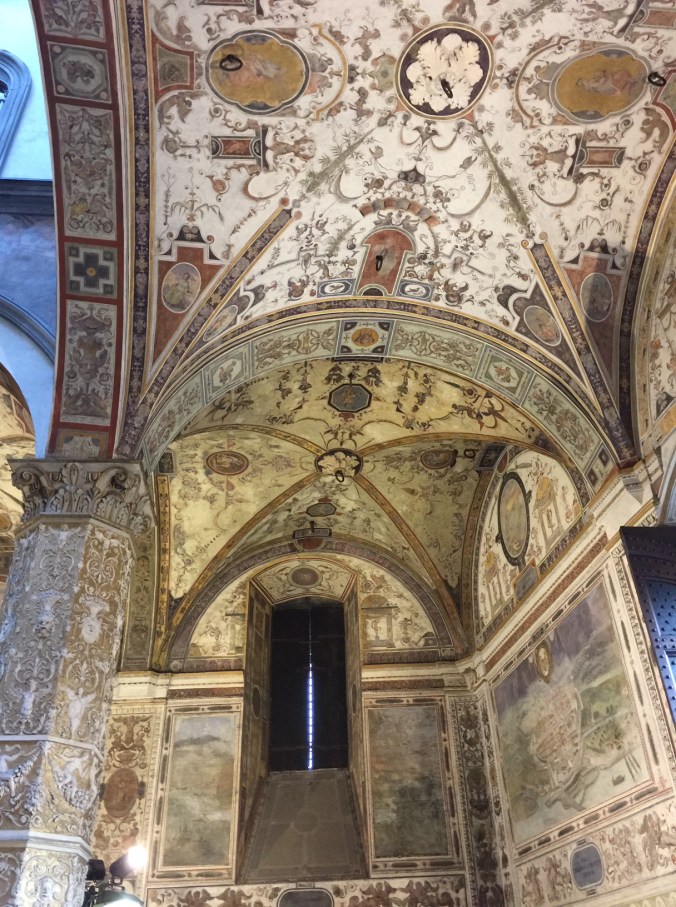
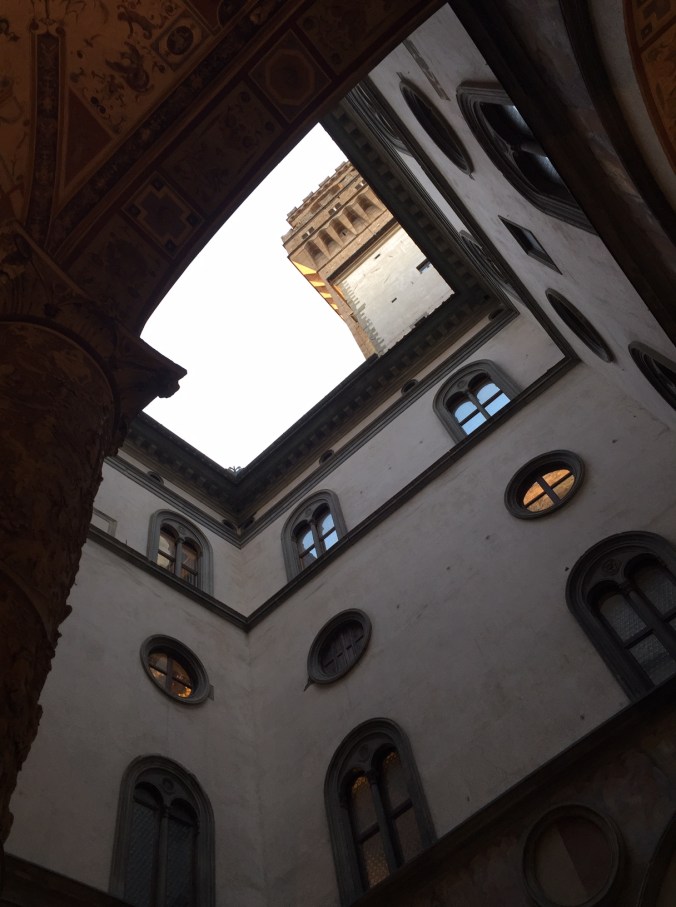
The Michelozzo cortile, Palazzo Vecchio, Florence, a snapshot





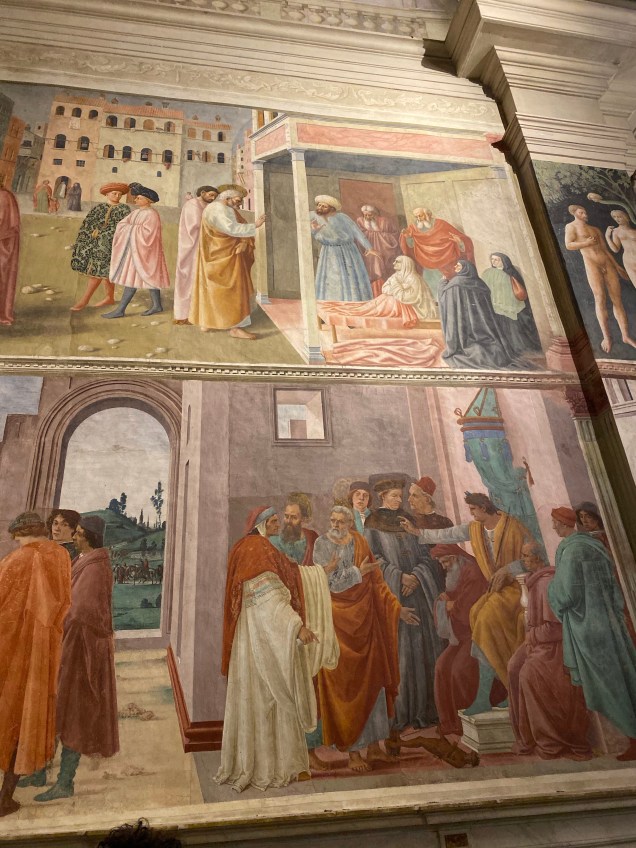
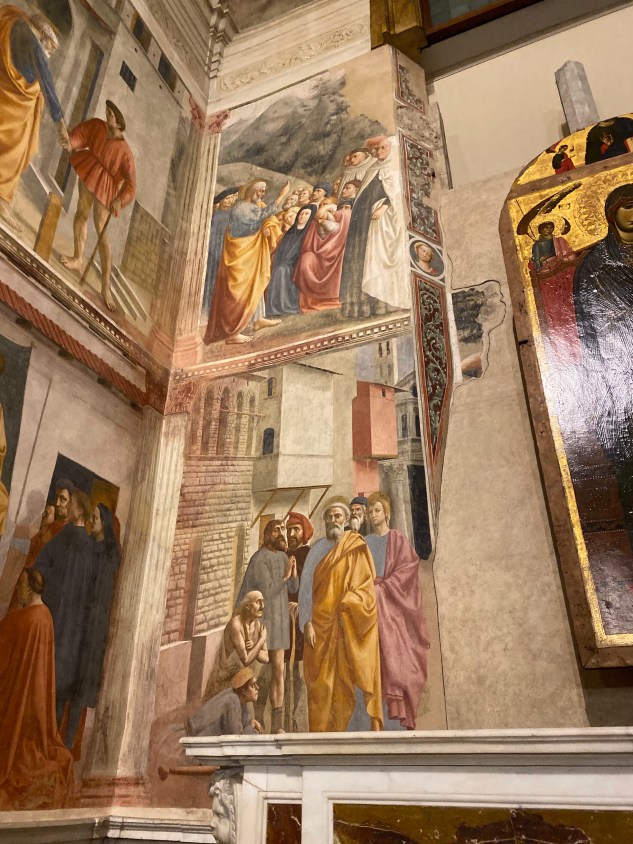
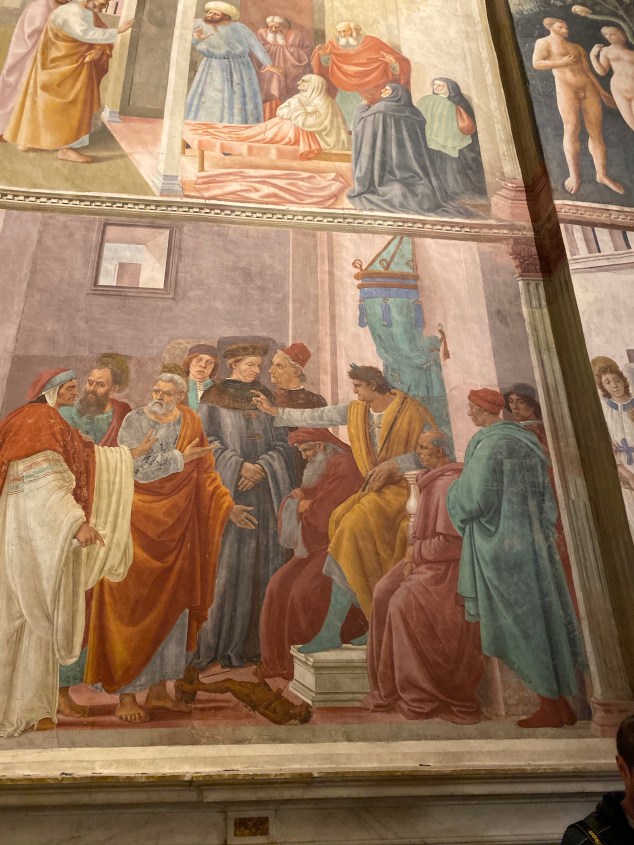
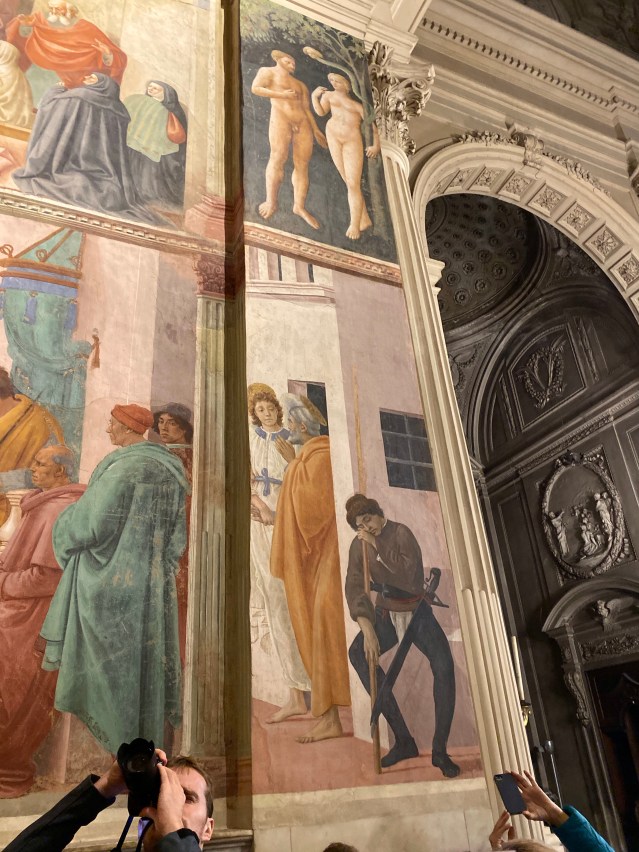
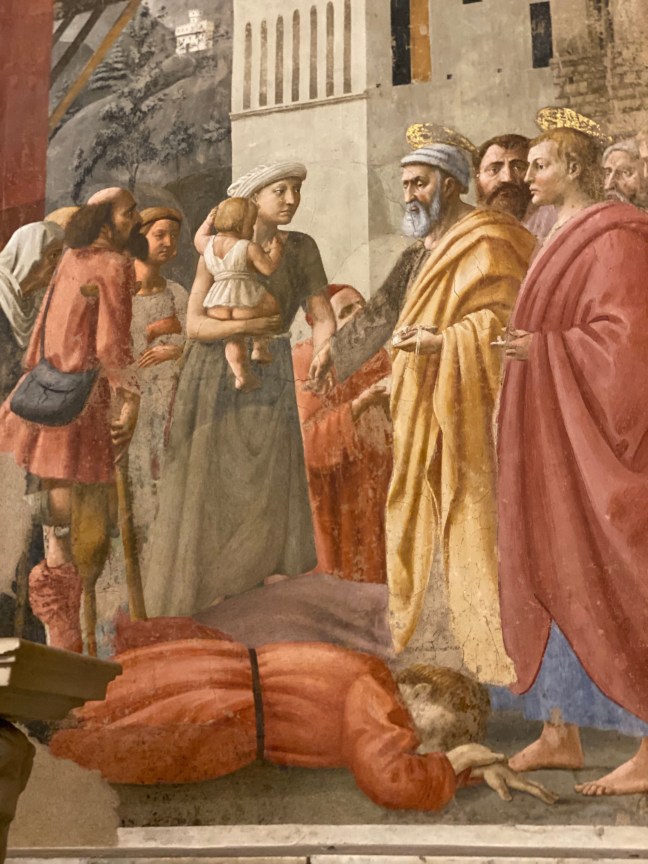
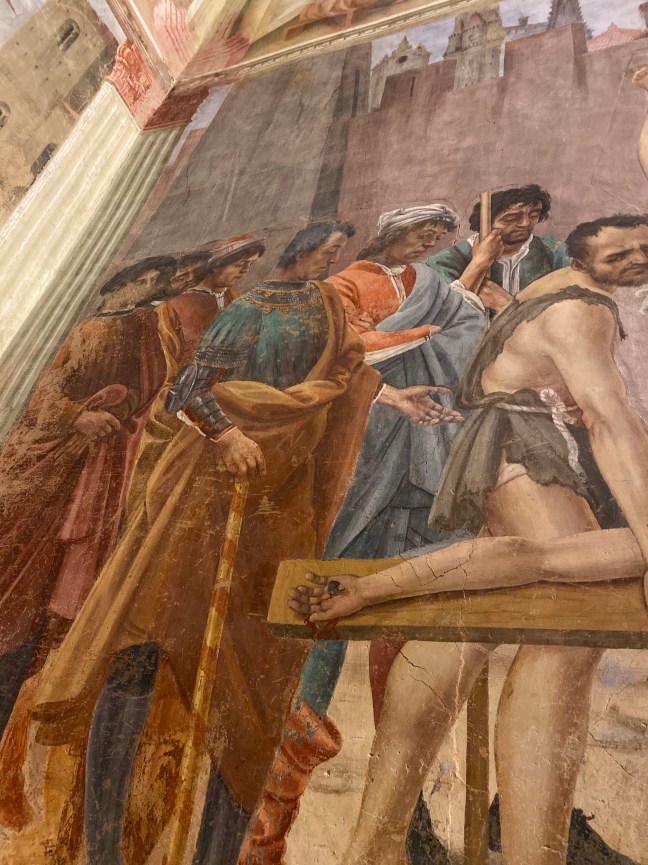
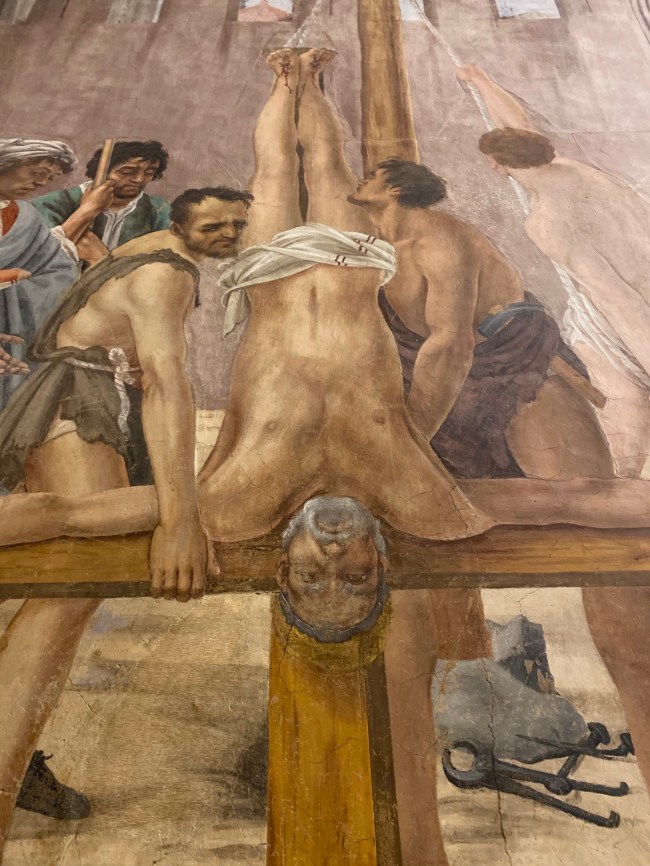
The Brancacci Chapel, Florence
How lovely to stop by and see this old friend for an hour or so on a winter afternoon. Masaccio’s work is always a joy to behold!

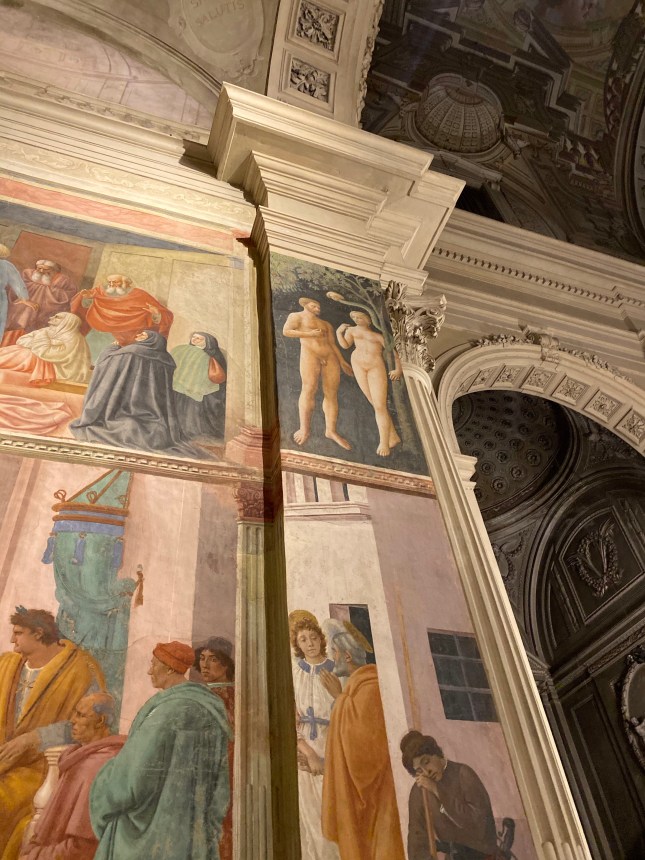
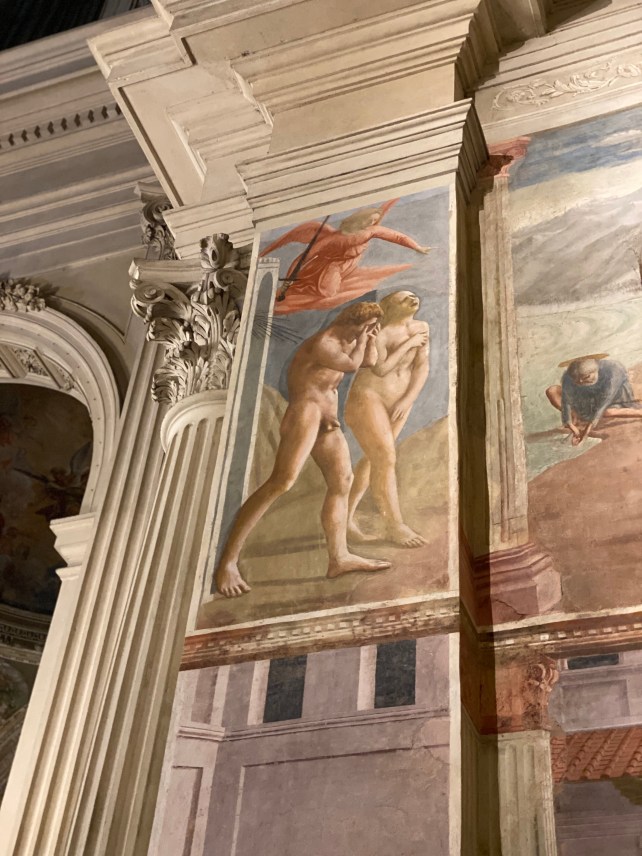
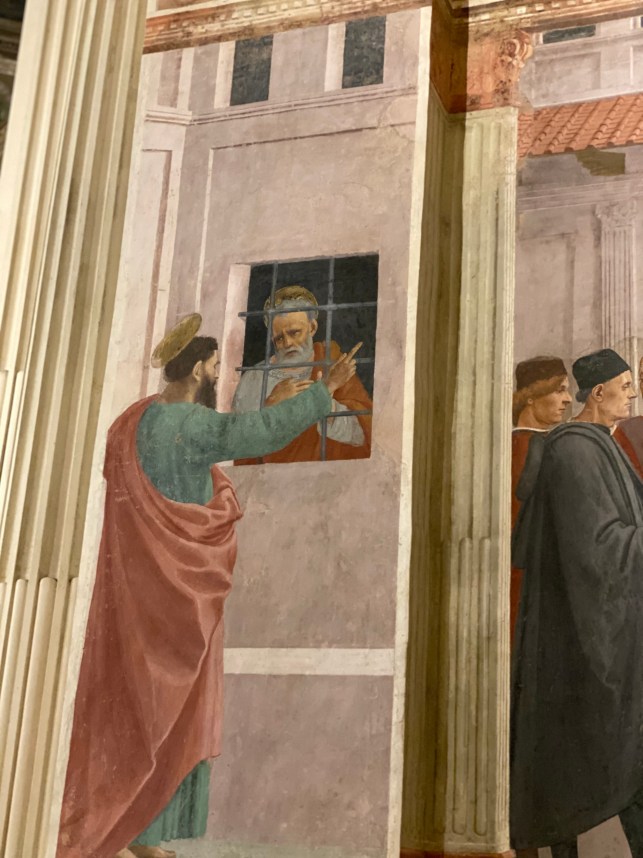
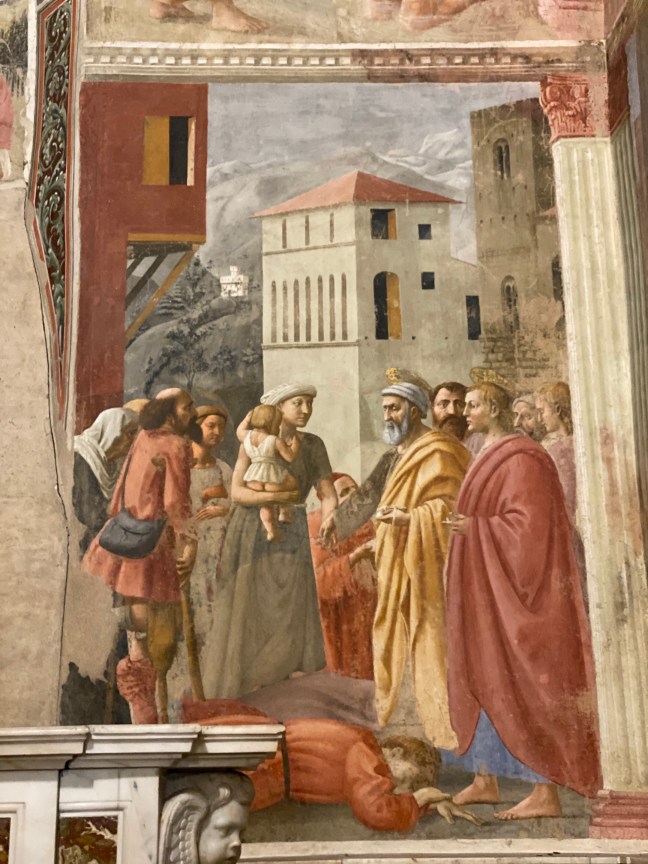
The Brenta Canal

The Brenta is an Italian river that runs from Trentino to the Adriatic Sea just south of the Venetian lagoon in the Veneto region.
During the Roman era, it was called Medoacus and near Padua it divided in two branches, Medoacus Maior and Medoacus Minor. The river changed its course in the early Middle Ages, and its former bed through Padua was by then occupied by the Bacchiglione.
The 108 mile long stretch was first channelled by the Venetian Republic in the 16th century, when a canal was built from the village of Stra to the Adriatic Sea, bypassing the Venetian lagoon.

The Brenta canal made use of the system of rivers and canals that had connected the Venetian cities with each other and with the Venice lagoon since ancient times. The goods directed from the hinterland to the Serenissima Republic of Venice passed on these river routes: building materials such as wood, marble, stones from the Vicentine Hills and trachyte from the Euganean Hills as well as grains and other agricultural products. The transport took place with barges called bùrci pulled along the horse banks.

In construction the canal, the Republic of Venice imposed hydraulic changes (which several times required the engineering advise of Leonardo Da Vinci) which diverted the main river course further south, moving it away from the Venetian lagoon and leading it to flow directly into the Adriatic Sea. These hydraulic works are represented by the cuts of the Brenta Nuova and the Brenta Nuovissima, and consist of sluices and mobile bridges that have made the river navigable.
A branch of the Brenta, named Naviglio del Brenta, was left to connect directly Venice and Padova (which was a kind of second capital of the Venice Republic). The Brenta canal runs through Stra, Fiesso d’Artico, Dolo, Mira, Oriago and Malcontenta to Fusina, which is part of the comune of Venice.
With this new stretch of the Brenta connecting Venice with Padua, it came to be called the Riviera del Brenta by the 16th century. Wealthy Venetian families began to build elaborate river houses which they called villa (“villa” in the language of the time meant “country”). This was a perfect situation for these patrician families because there new homes could be easily reached from Venice with their gondolas. In fact, it has been said that with all the new building along the Canal, it was almost as if the Brenta canal was an extension of Venice’s Grand Canal.

It also became the custom of aristocratic Venetian families to spend summer holidays in their new country houses. These homes could be reached by richly decorated, luxurious wooden burchielli, or ships.

These vessels had elegant cabins, with three or four balconies. The interiors were finely decorated and adorned with mirrors, paintings and precious carvings. On the way to the lagoon they were propelled by wind or oars, while on the route from Fusina to Padua along the Brenta Riviera, they could be pulled by horses.
Cargo was carried on traditional barges known as burci.
After 1797 , with the fall of the Venetian Republic and the consequent decline of the Venetian patriciate, the burchielli fell into disuse.

Among the first villas to be built, and one of the most important, is Casa Foscari designed by Andrea Palladio at Malcontenta (located shortly after the gates of the Moransani). The illustrious Foscari family was established by the 15th century, when a Foscari was a popular doge in the Venetian Republic for 34 years.
Another Palladian villa, which was built for Senator Leonardo Mocenigo around 1560-61, was destroyed. But its very existence, along with Casa Foscari, shows how quickly patrician settlements multiplied on the shores of the Brenta Canal. In the Mocenigo Villa, the architect created a rather original design with respect to the typical pattern of Venetian villas, which he later published in the second of his Four Books of Architecture. Sadly, that villa fell into disrepair by the late 18th century and was demolished.
After the Foscari and Mocenigo ville, most new homes along the canal were not as important architecturally. They were mostly homes of modest size. But the trend for vacationing along the canal, and the taste for villa life, was well established. Homes known as barchesse contained large rooms and were almost always ornamented with decorative frescoes. Extant examples include buildings of the Villa Valmarana, the Villa Contarini Venier in Mira (currently the seat of the Regional Institute for Venetian Villas), and the Villa Foscarini Rossi in Stra.
Thus, the villeggiatura (life of the villas) understood in its original meaning, the Riviera del Brenta has become other than a residential and productive facility, a touristic infrastructure of great importance that ideally links the Euganean Hills to the Laguna, the thermal baths of Abano to the beaches of the Lido, and again, Padua toVenice.
https://it.wikipedia.org/wiki/Naviglio_del_Brenta
http://lamalcontenta.com/index.php/en/riviera-of-brenta/description
Antonio Foscari, Acque, Terre e Ville, in “Ville Venete: la Provincia di Venezia”, I.R.V.V, Marsilio, Venezia 2005, pp. XXX-XLII
Antonio Foscari, Tumult and Order, Lars Mueller Publisher Zurigo, 2011
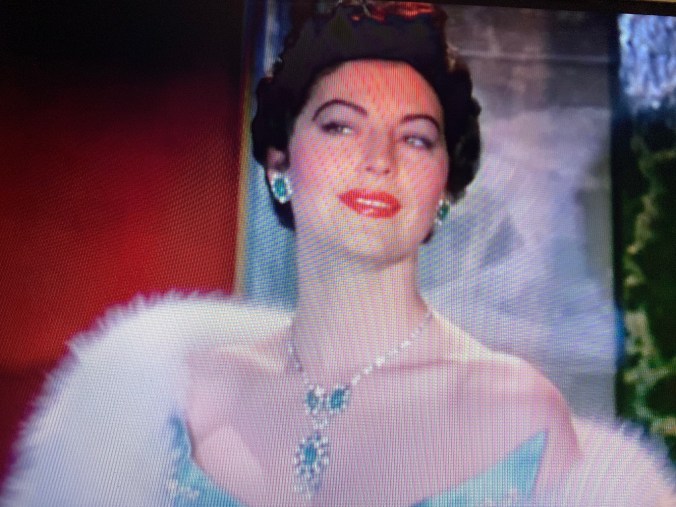
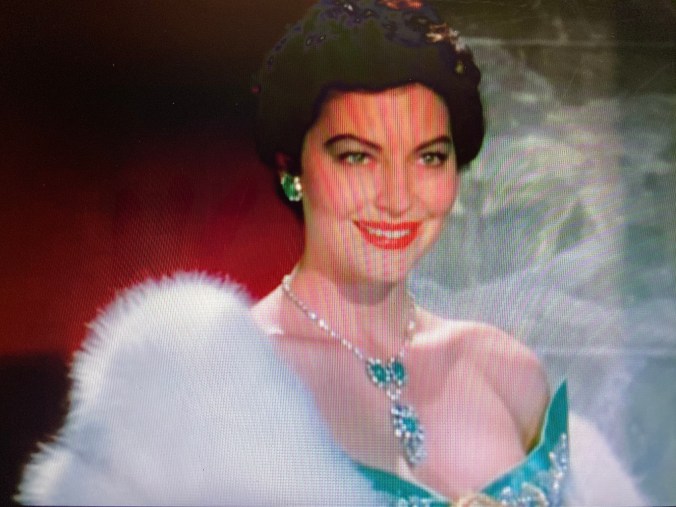
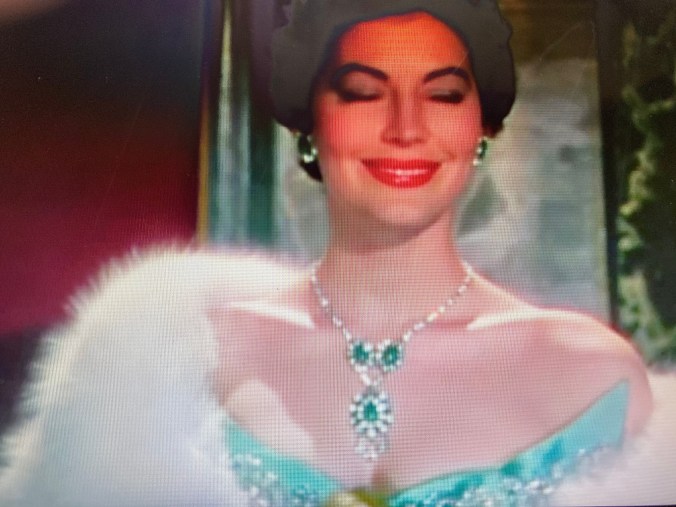
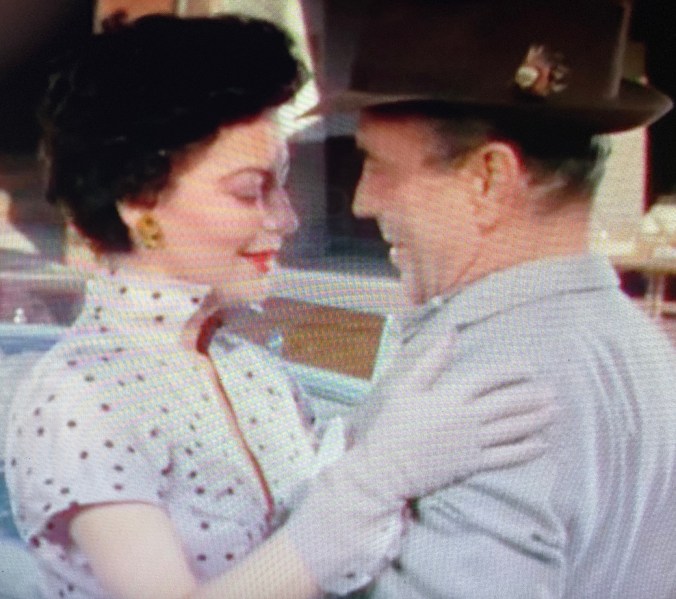
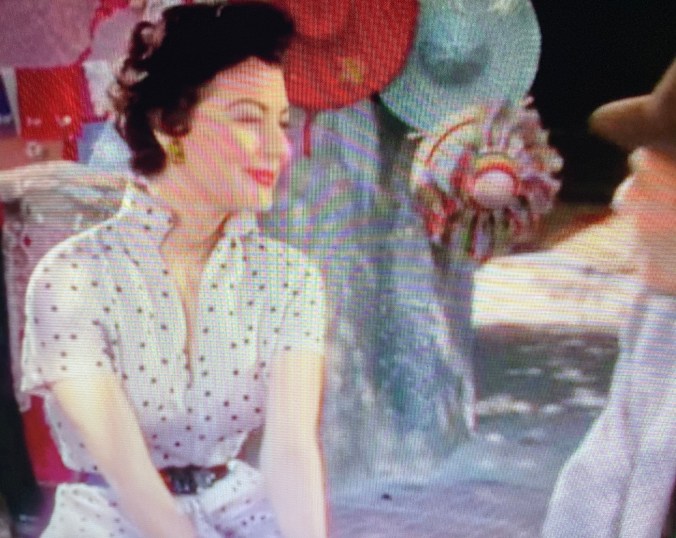
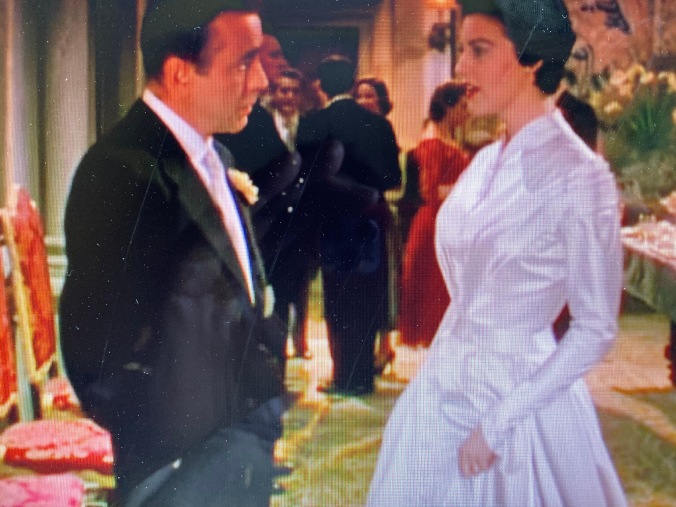
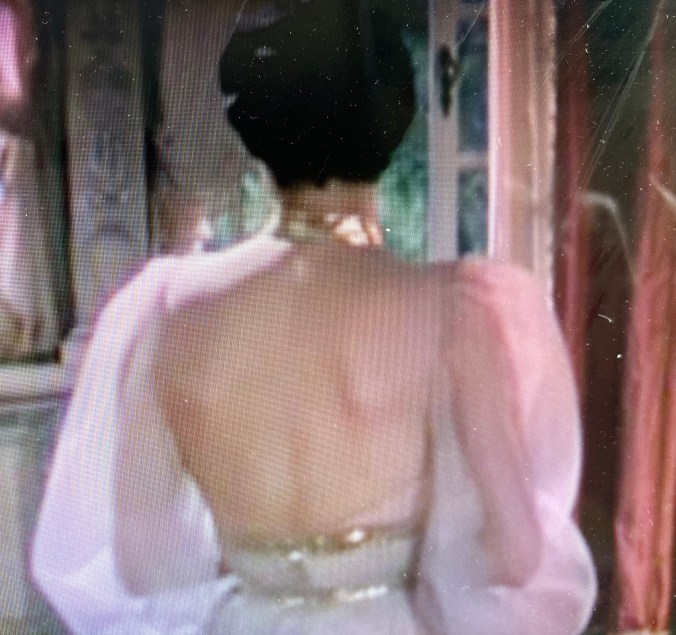
Rita Hayworth in The Barefoot Contessa; gowns by Sorelle Fontana
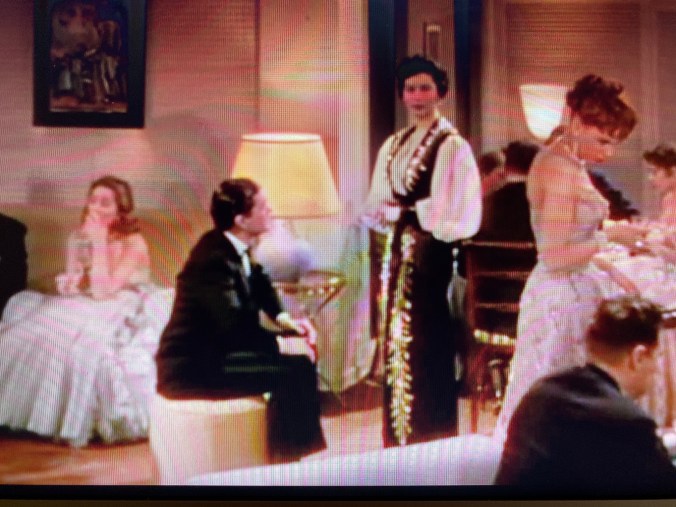
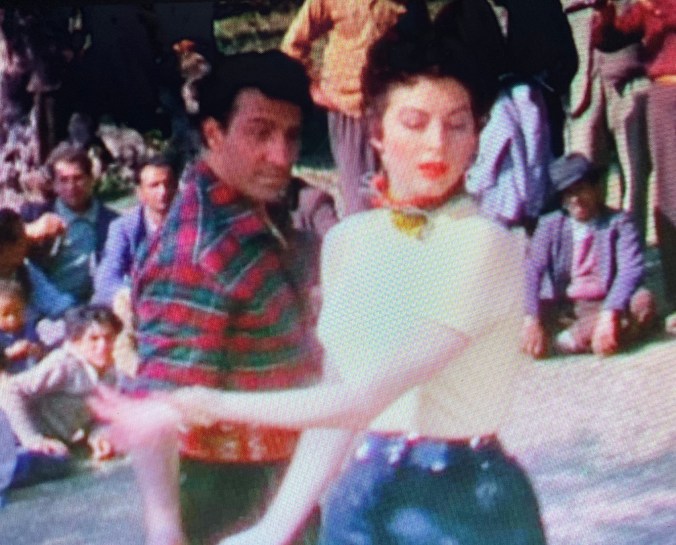
In 1954, the film The Barefoot Contessa was released, starring Rita Hayworth and Humphrey Bogart. I just watched the film on Amazon.it and loved it just for the settings and costumes. The fashion house of the Sorelle Fontana provided the gorgeous costumes worn by Hayworth and some of the other characters.

The Sorelle Fontana fashion house was founded in Rome in 1943 by three sisters and Italian designers: Zoe Fontana (1911-1979), Micol Fontana (1913-2015) and Giovanna Fontana (1915-2004). I’ll be posting strictly about the fashion house soon.

The Barefoot Contessa is considered one of director/producer Mankiewicz’s most glamorous “Hollywood” films, but it was produced out of Cinecittà Studios in Rome, Italy. The exterior scenes were shot at Tivoli (the olive grove), Sanremo, and Portofino. The film’s Italian production was part of the “Hollywood on the Tiber” phenomenon.
The Saturday Review called Ava Gardner “one of the most breathtaking creatures on earth.” It is hard to disagree.


I took a bunch of screen shots of the film to illustrate this post. The pictures aren’t great, but the costumes are.












Paris by its (beautiful) bridges and other reasons to love it
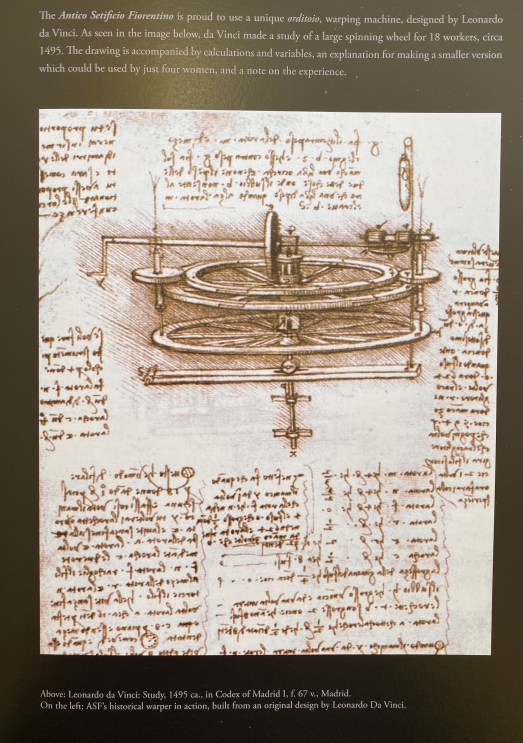
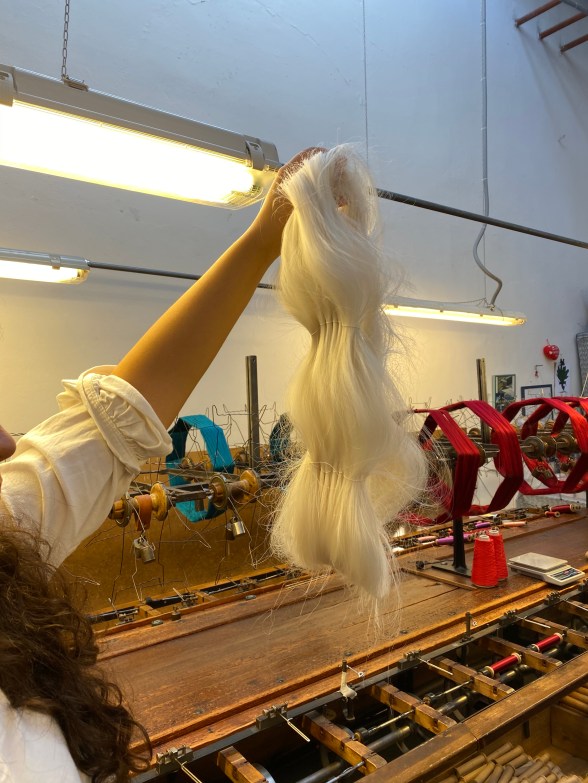
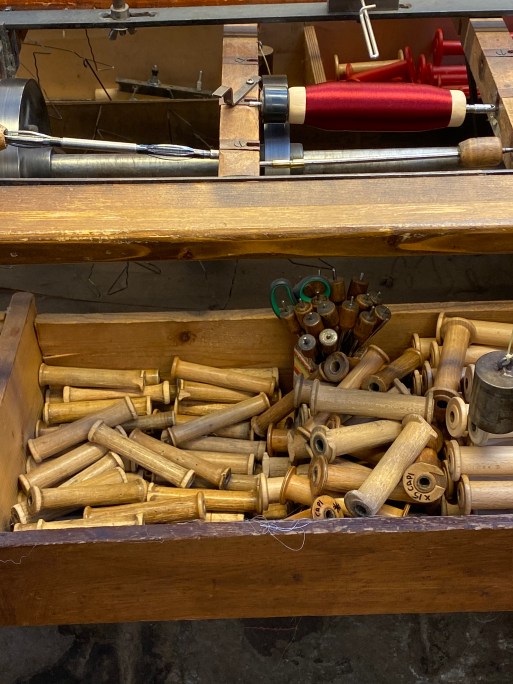
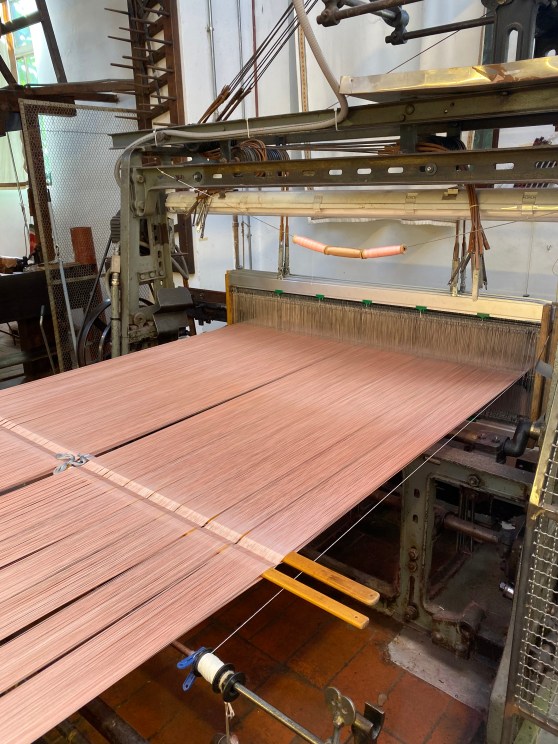
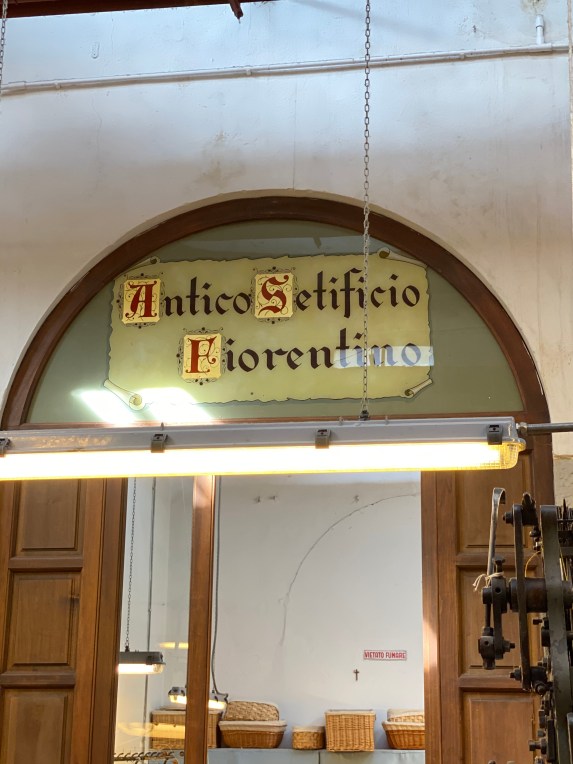
Antico Setificio Fiorentino
A visit to this amazing workshop in Florence has been on my list of things to do for several years. I finally made it recently and it was above and beyond my expectations.


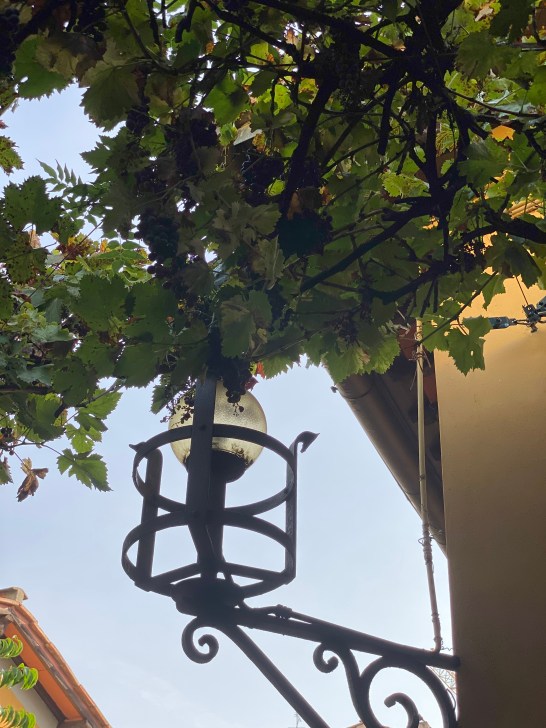
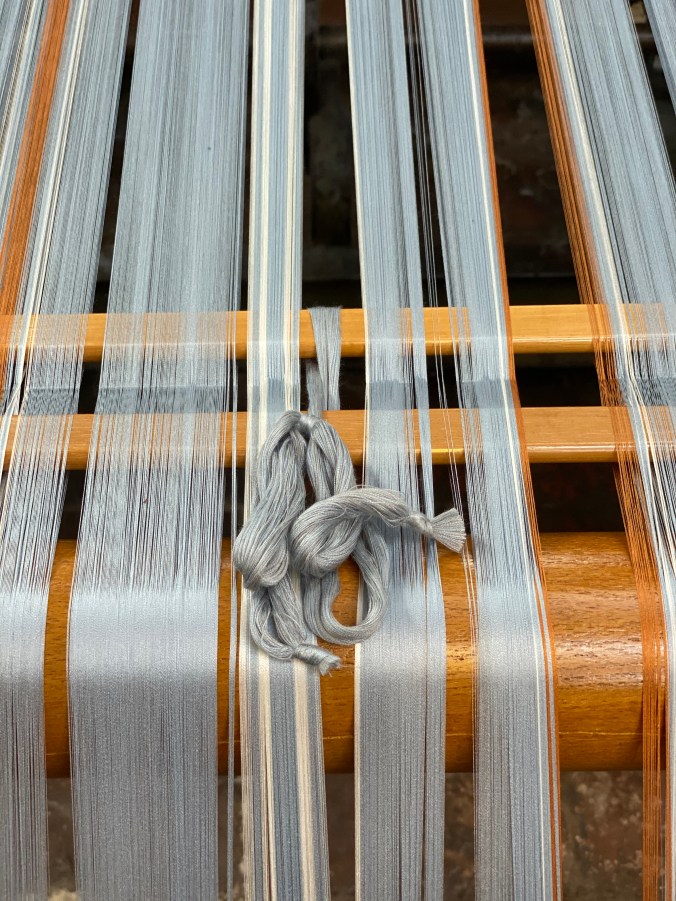
Situated in the Oltrarno, not far from the extant medieval walls of the city, the factory is open to visitors by appointment. I went with a group from Florence and we had an excellent tour, ending in the showroom where we were surrounded by their beautiful fabrics on rolls and treated to tea and pastries. A lovely experience in every sense.
















The church of Santi Michele e Gaetano, Florence
So many churches, so little time. You really have to manage your real life if you want to find time to see everything!
At least, that is my excuse as to why, before now, I have never before been in this famous Florentine church. Plus the fact that when I pass it, I am usually in a hurry to go somewhere else nearby. Like, for example, lunch or a glass of wine at the Cantinetta Antinori, one of my favorite places in this amazing city.
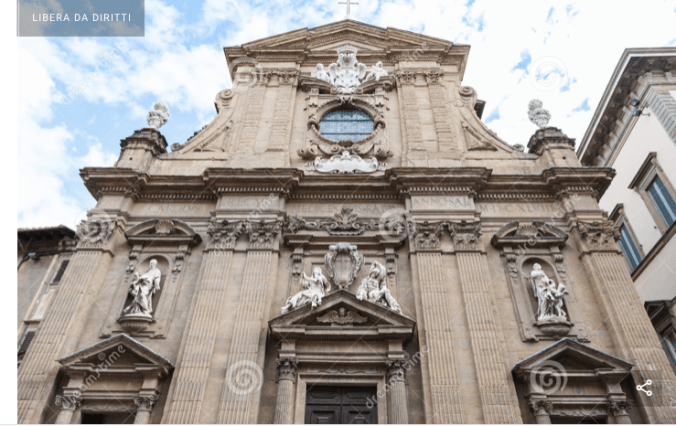

But, I did stop in and have a gander at the church recently and wow, I was blown away. First of all, it was twilight in beautiful Florence at that moment, and the streets nearby were filled with shoppers and tourists and the whole atmosphere was electric. The city felt alive.
Usually, when I happen to be in front of this church, it is closed. Just bad timing, because of course the church is open everyday, but at specific hours.
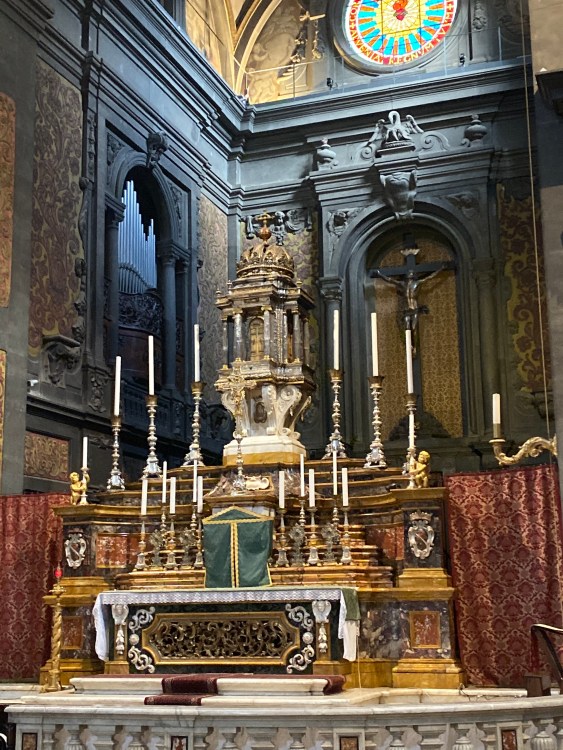
Because it was open and I had time, I entered. I felt the richness of the interior immediately. And I was sorry it took me so long to visit.
Unlike so many Italian churches, this interior was well lit and the contrast of the dark building materials with the colored marbles and gold highlights lit the place up like a Christmas tree. The effect was quite something.
The church was also full of people, unlike so many Italian churches. The church interior felt alive and it was kind of a magical moment to me. I thought of how happy the founders would have been to know that in 2019, their church was an active part of the city’s life. What more could an architect or patron hope for?
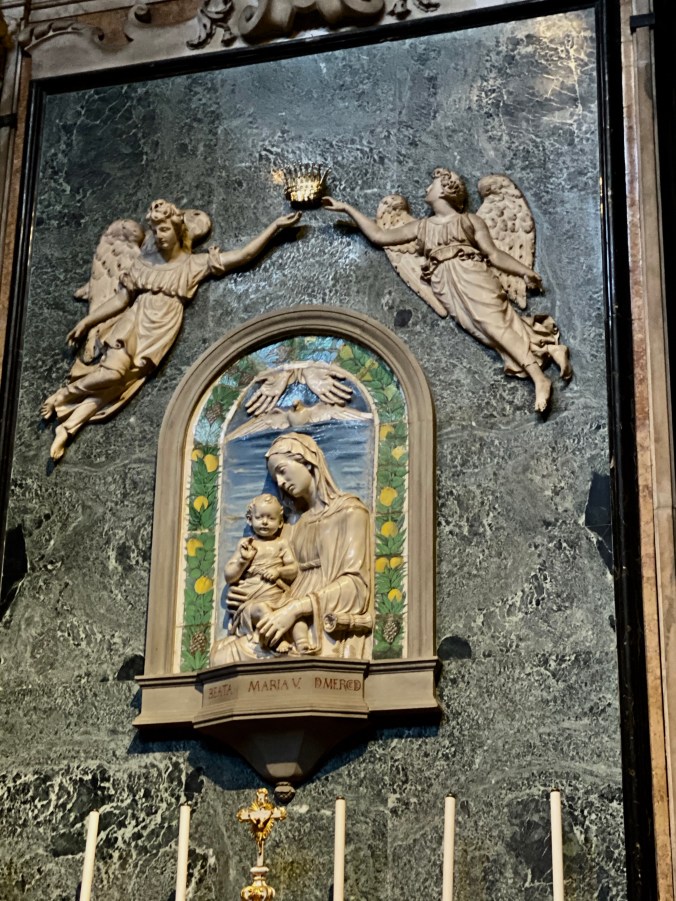

I wonder why it is that I am always, always most attracted to sculptures holding up the vases of holy water in these churches?
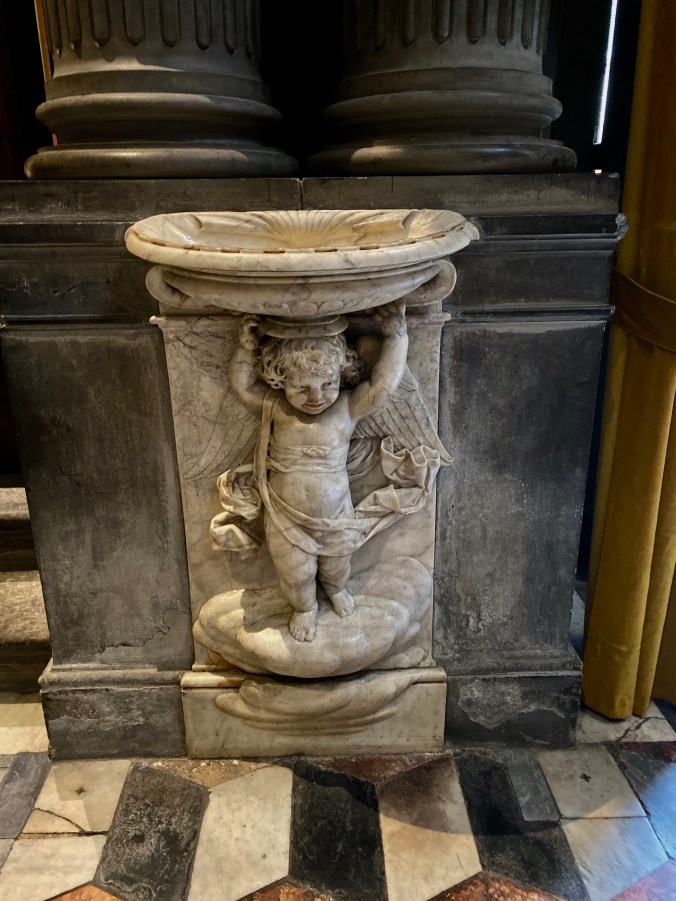
The two matching marble holy water fonts at the entrance were sculpted in the form of shells supported by angels by Domenico Pieratti.
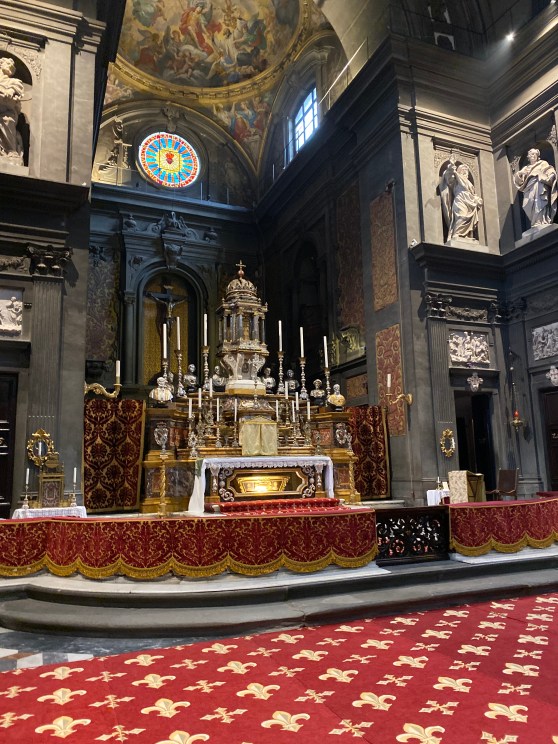

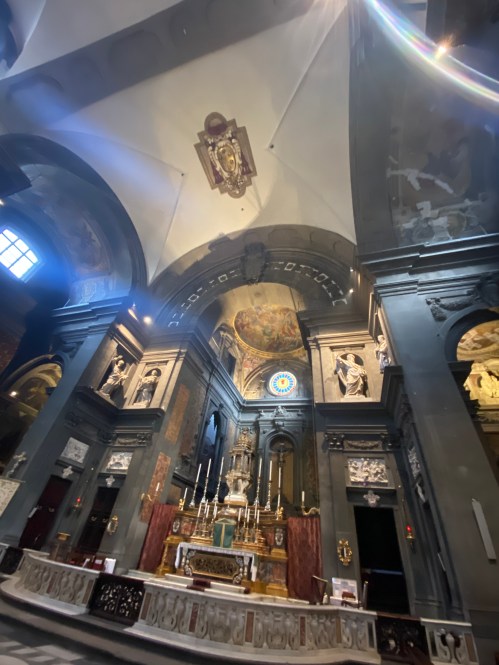
The pictures below aren’t great, but smack dab in the middle of the ceiling over the transept, was the Medici shield. Never subtle, always evident. I love the Medici family!


Let’s have a quick look at what Wikipedia tells us about the church:
San Gaetano, also known as Santi Michele e Gaetano, is a Baroque church in Florence, located on the Piazza Antinori.
A Romanesque church, dedicated solely to Saint Michael the Archangel, had been located at the site for centuries prior to its Baroque reconstruction. Patronized by the Theatine order, the new church was dedicated to Saint Cajetan, one of the founders of the order, though the church could not formally be named after him until his canonisation in 1671.
Funding for this reconstruction was obtained from the noble families in Florence, including the Medicis. Cardinal Carlo de’ Medici was particularly concerned with the work, and his name is inscribed on the façade.
Building took place between 1604 and 1648. The original designs were by Bernardo Buontalenti but a number of architects had a hand in building it, each of whom changed the design. The most important architects were Matteo Nigetti and Gherardo Silvani.
In 2008, the church was entrusted to the Institute of Christ the King Sovereign Priest, a traditional institute of clerical life which exclusively offers Mass in Latin according to the pre-Vatican II Roman Rite.
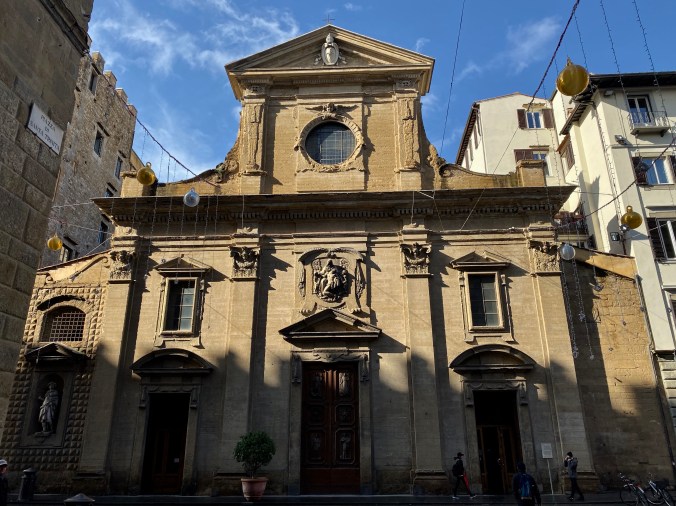
The façade has three portals: the center portal has a triangular tympanum surmounted by reclining marble statues representing Faith and Charity, sculpted by the Flemish artist, Baldassarre Delmosel. In the center above the door is the heraldic shield of the Theatine order; higher above is the shield of Cardinal Giovanni Carlo de Medici, a prominent patron. Above the side doors are a statue of St Cajetan (right, by the same Delmosel) and St Andrew Avellino (left, by Francesco Andreozzi).
The interior is richly decorated as is customary in Baroque churches (uh, hello…the interior is like a jewel box!)
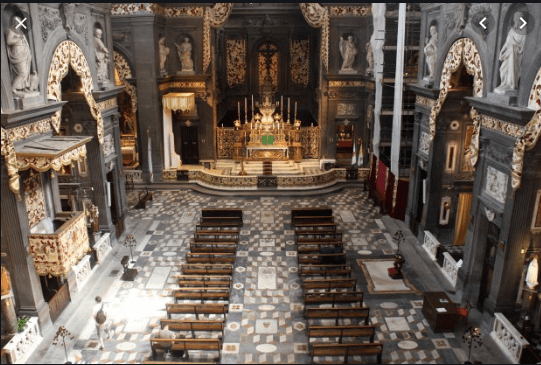
Along the cornice are 14 statues depicting apostles and evangelist, sculpted by Novelli, Caccini, Baratta, Foggini, Piamontini, Pettirossi, Fortini, and Cateni. With each of these statues is a bas-relief depicting an event in the life of each saints.
 get back, lauretta!
You must be logged in to post a comment.