The fragrance of history in Florence

fullsizeoutput_1b57

Florence is home to several historical perfumeries that make essences out of top quality, completely natural ingredients.

The best-known of these is undoubtedly Officina Profumo Farmaceutica di Santa Maria Novella (via della Scala, 16). Its extensive products  includes perfumes, soaps, cosmetics, historical pharmaceutical preparations, home fragrances, and syrups, including in its renowned Alkermes, found in many traditional Tuscan sweets. Open on Sundays, a visit will dazzle you with the wonderful scents you breathe when you step over its threshold and the endless charm of its interiors and variety of all natural products.

Screen Shot 2019-11-04 at 10.21.59


Since the 1980s, Lorenzo Villoresi (via de Bardi,14), has been designing custom fragrances for the home and perfumes designed to fit the personality of the person wearing it, like a tailor-made garment.

Screen Shot 2019-11-04 at 10.22.55


The Antica Officina del Farmacista Dottor Vranjes (via della Spada 9/R) has a great variety of home fragrances, all-natural and based on spices, flower and fruit. In addition to home fragrances, it has perfumes and body care products based on pure vitamins and minerals to treat yourself in spa style at home.

Screen Shot 2019-11-04 at 10.23.44


Antica Profumeria Inglese (via de’ Ginori 2/R) has been setting itself apart since 1843 for the quality and refinement of its products. It was here that Henry Roberts invented a something that made its way around the world: talcum powder.

Screen Shot 2019-11-04 at 10.24.33

Screen Shot 2019-11-04 at 10.25.47 Screen Shot 2019-11-04 at 10.26.31


Sileno Cheloni’s olfactory creativity spawned a new line of limited edition fragrances, called Teatro Fragranze Uniche (via Maragliano, 56), founded on the inspiration and dedication of three women with the support of profumiers.

Screen Shot 2019-11-04 at 10.27.07


Farmacia Santa Annunziata. In 1561, the chemist Domenico di Vincenzo di Domenico Brunetti was the 1st manager of the Santissima Annunziata Pharmacy. Since that time the Farmacia has always maintained a special tradition in preparing prescriptions and products for the beauty of the skin. Using ancient processes completely handmade, with pestle and mortar, to special quality controlled preparations made with modern and safe machinery, special attention is paid both with traditional and new raw products. Our ancient tradition has been mantained and the standards of our products have become better and safer.

Screen Shot 2019-11-04 at 10.28.49

Screen Shot 2019-11-04 at 10.29.38


fullsizeoutput_20b9fullsizeoutput_20bb

fullsizeoutput_20b7

Acqua dell’ Elba


fullsizeoutput_20a6

fullsizeoutput_20a8

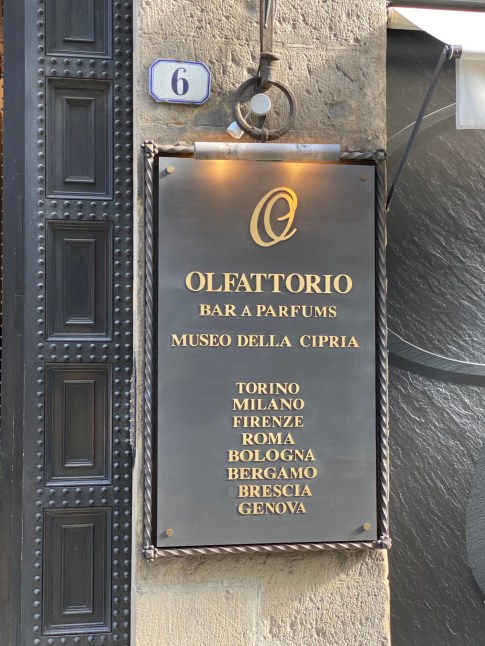
Olfattorio Bar a Parfums The experience continues outside the boutique with the olfactory glasses designed by Giovanni Gaidano.

https://firenze.flawless.life/en/olfattorio-bar-parfums/

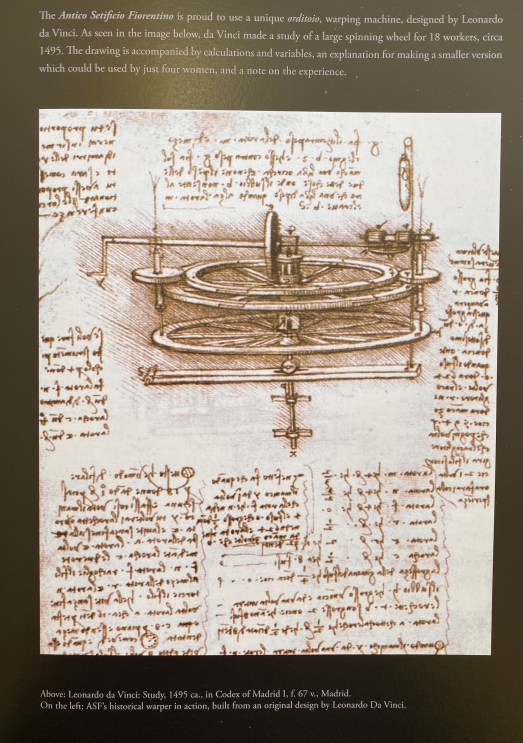
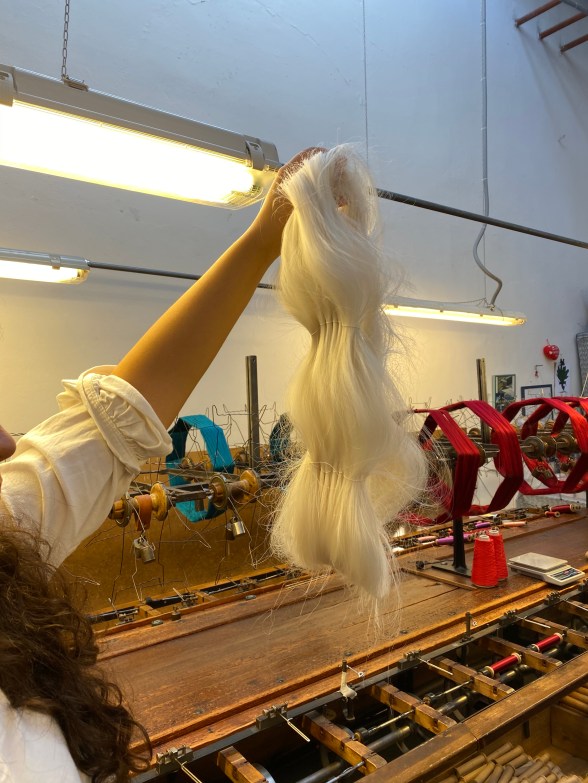
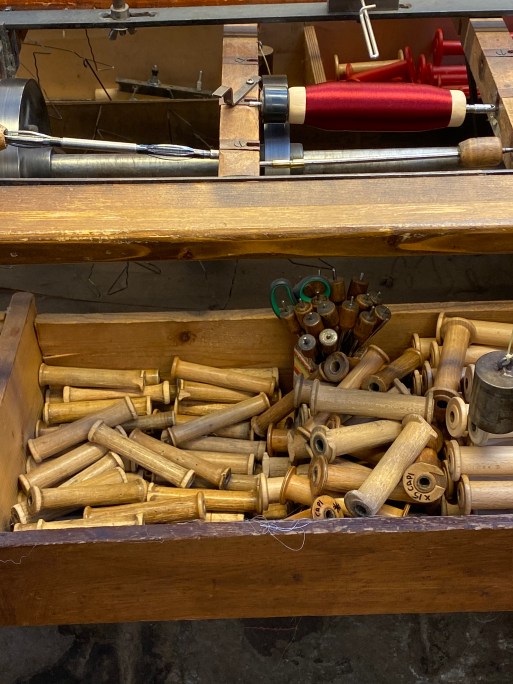
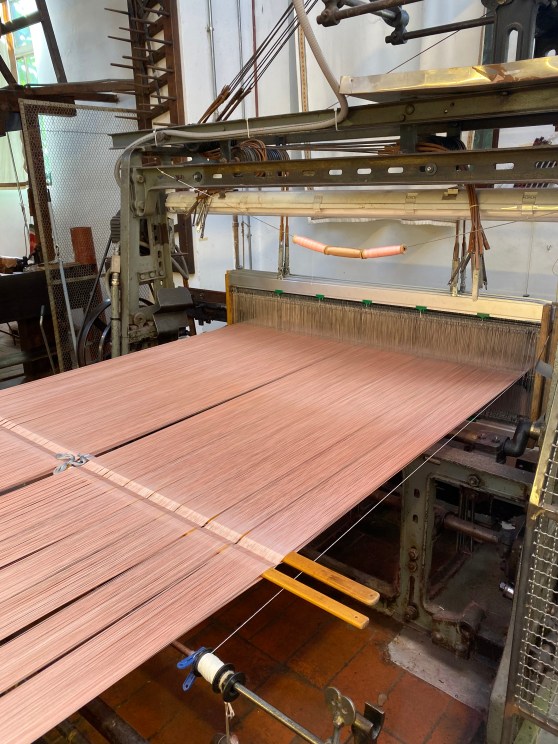
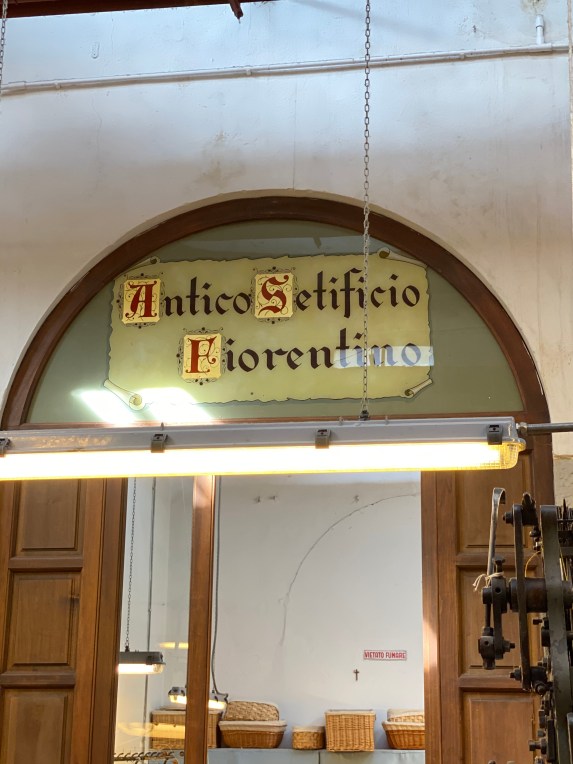
Antico Setificio Fiorentino

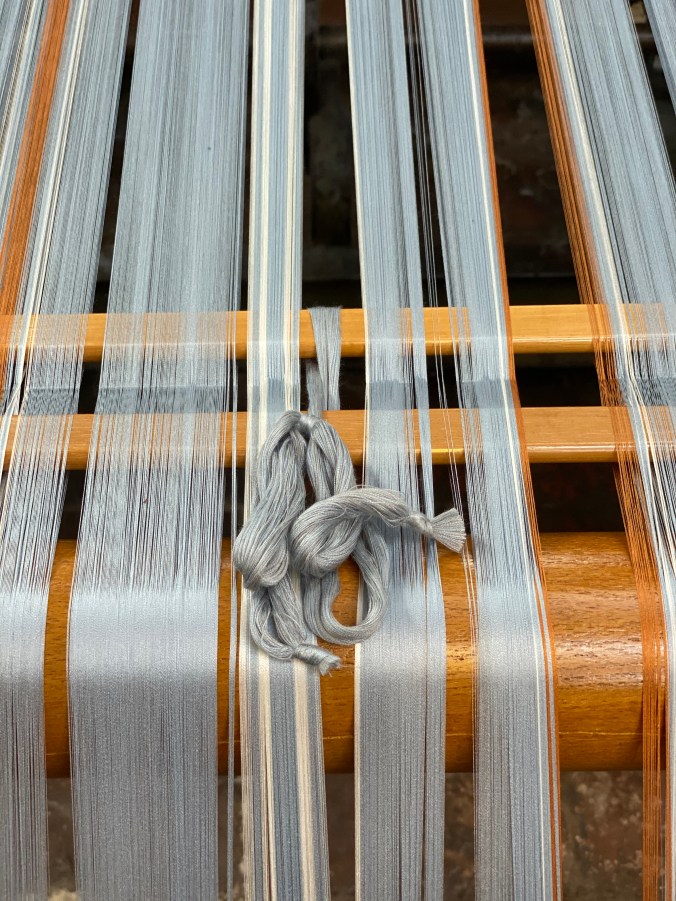
A visit to this amazing workshop in Florence has been on my list of things to do for several years.  I finally made it recently and it was above and beyond my expectations.


Situated in the Oltrarno, not far from the extant medieval walls of the city, the factory is open to visitors by appointment.  I went with a group from Florence and we had an excellent tour, ending in the showroom where we were surrounded by their beautiful fabrics on rolls and treated to tea and pastries.  A lovely experience in every sense.

img_2341


img_2340


img_2342


Shopping on the Ponte Vecchio

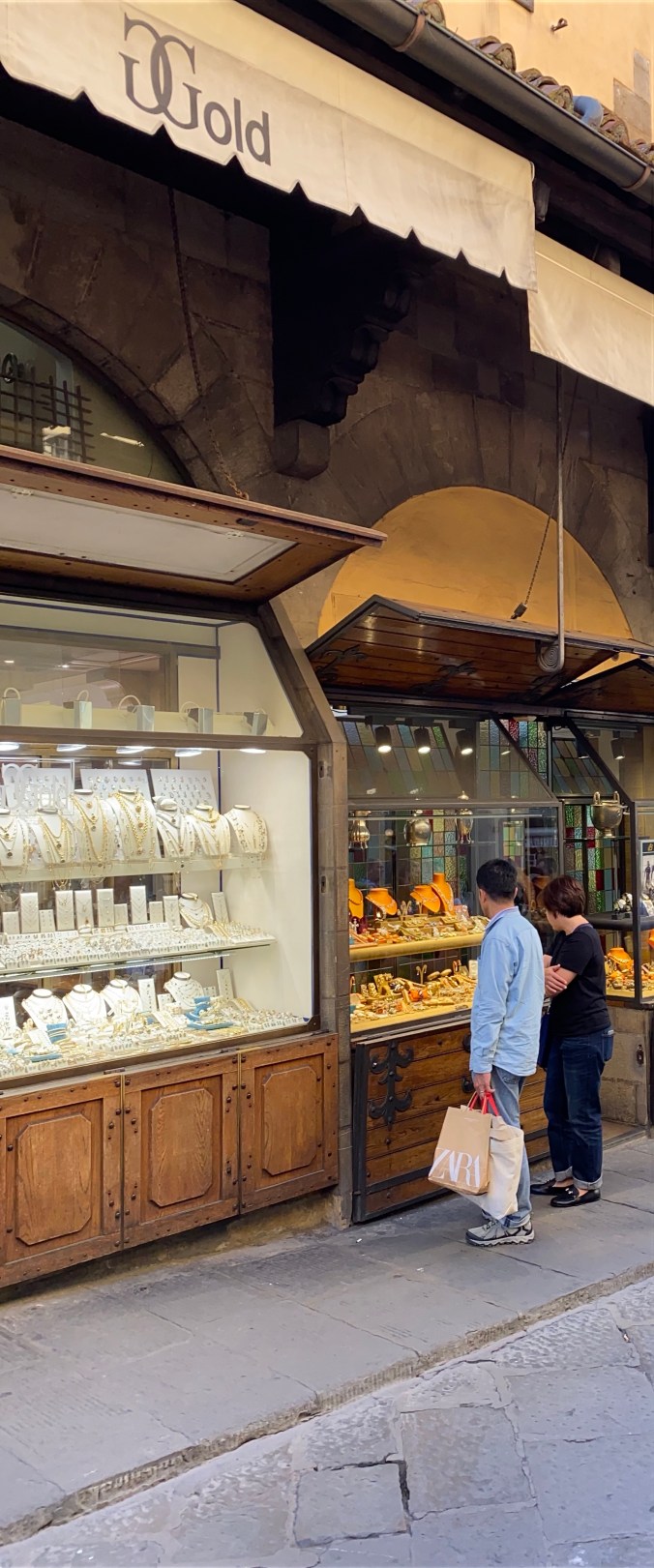
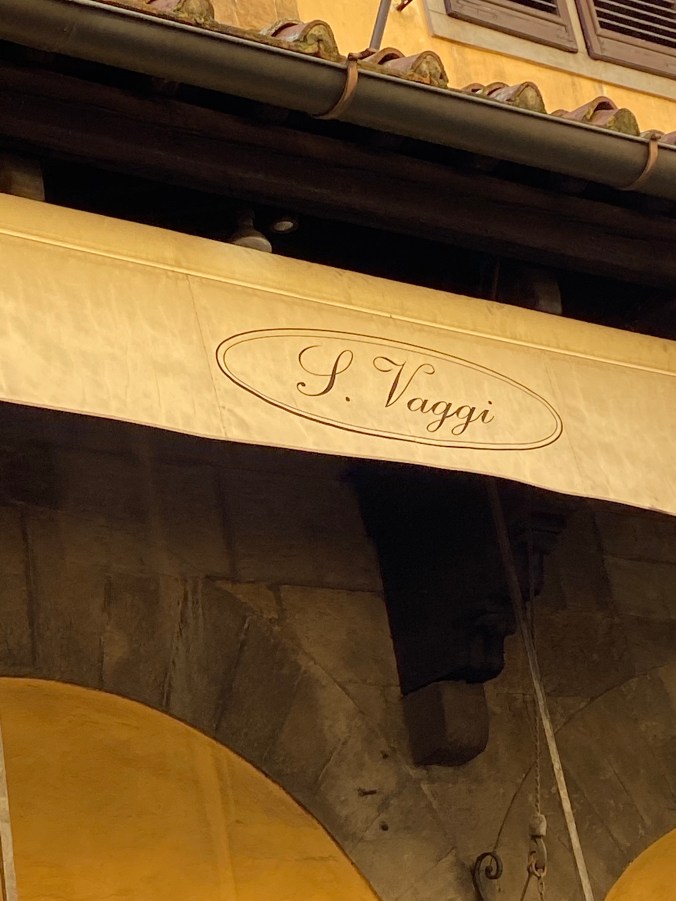
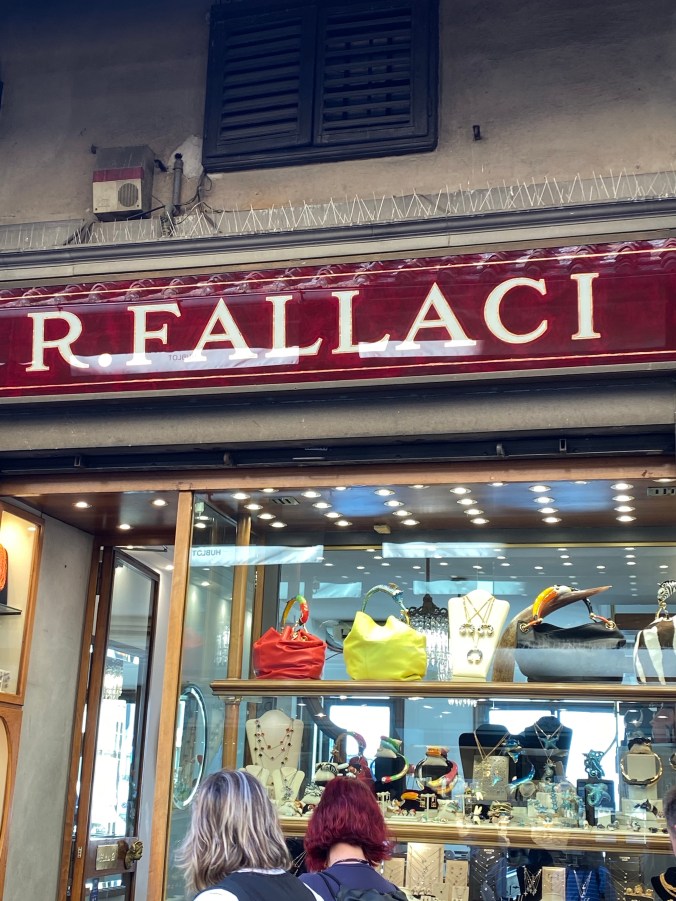
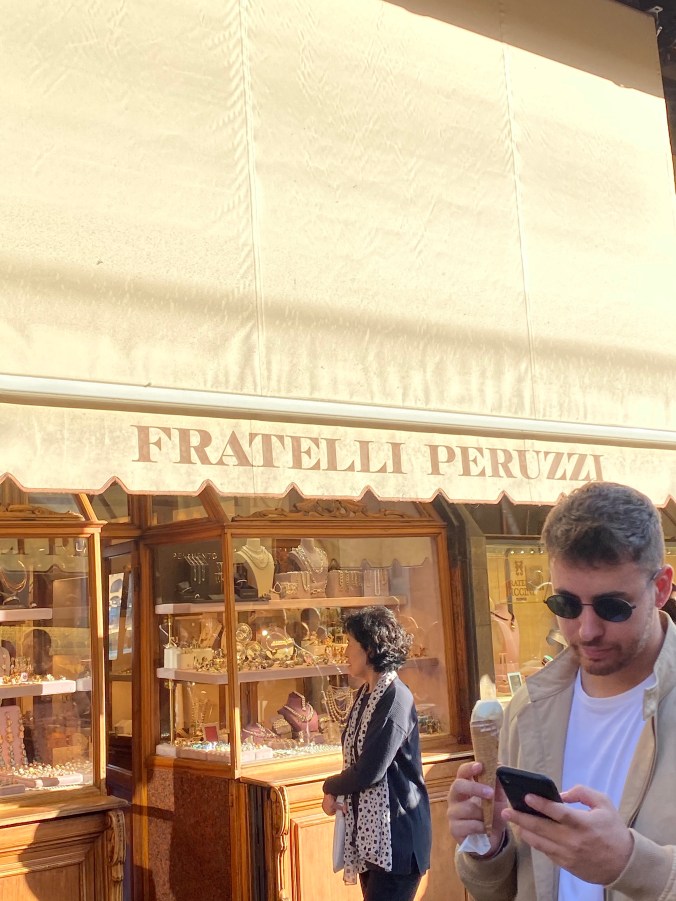
I’ve been going to and from the Ponte Vecchio for decades.  I’ve watched some of the shops change over the years (as indeed Florence has changed).  I am no expert on the jewelry shops that line the famous bridge, but I am informed by knowledgeable persons that these shops pictured below are some of the oldest and have the finest reputations.  Just my public service to my reader. :-))


haRdxPb7RLGu7l6xmQfSCQ


AgXFXY97QbqbWDvAQSThIg


WW3LhtIeT7WPiiJiCAxZqg


wJq9ooDNSwOGQ9YSuaX%PQ

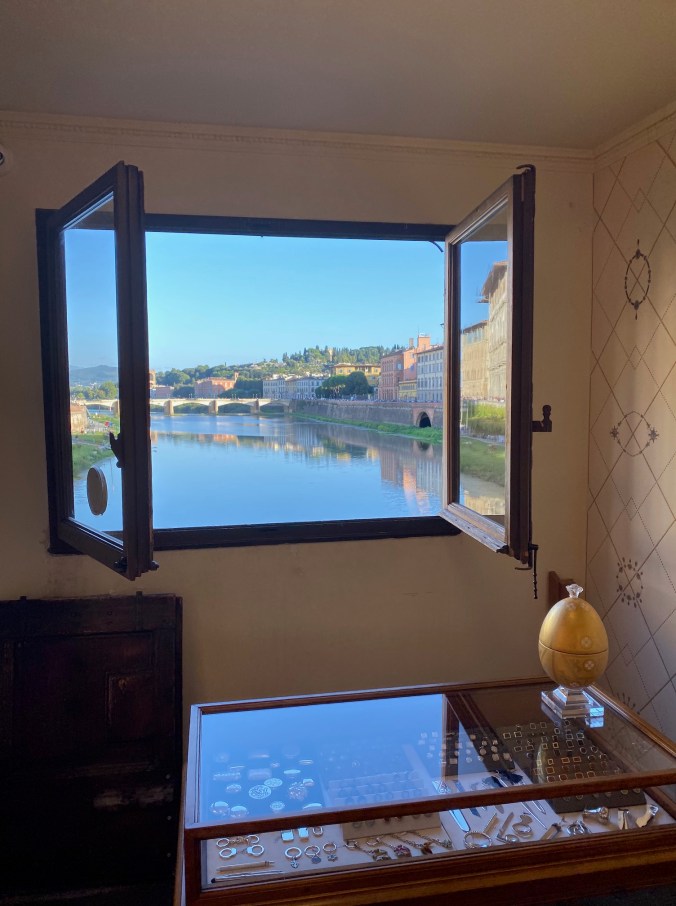
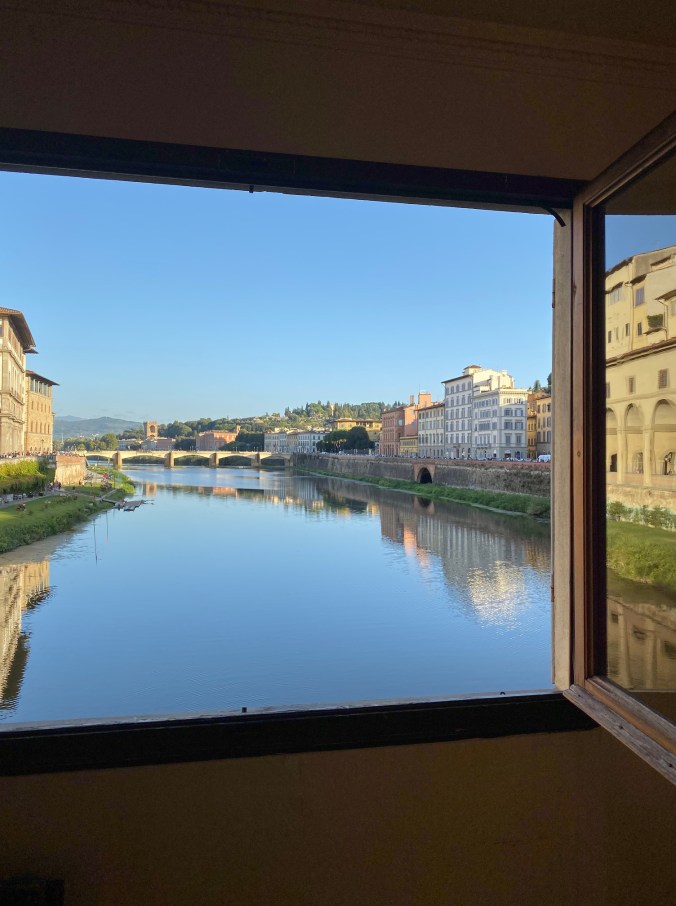
The view from an elegant Ponte Vecchio jewelry shop

Last week I did something very unusual for me. I shopped in a jewelry store on the famed Ponte Vecchio. Looking at the photos I took from that shop on that beautiful autumn day makes me wonder if I purchased because I was entranced by the view. Maybe or maybe not. I must say, I do love what I bought.

But, check it out! I think you’ll understand!

IMG_0889


IMG_0890


I was invited to go upstairs in the tiny Ponte Vecchio shop to take in the view from the terrace above.  Amazing.

IMG_0877


IMG_0879


IMG_0880


IMG_0881


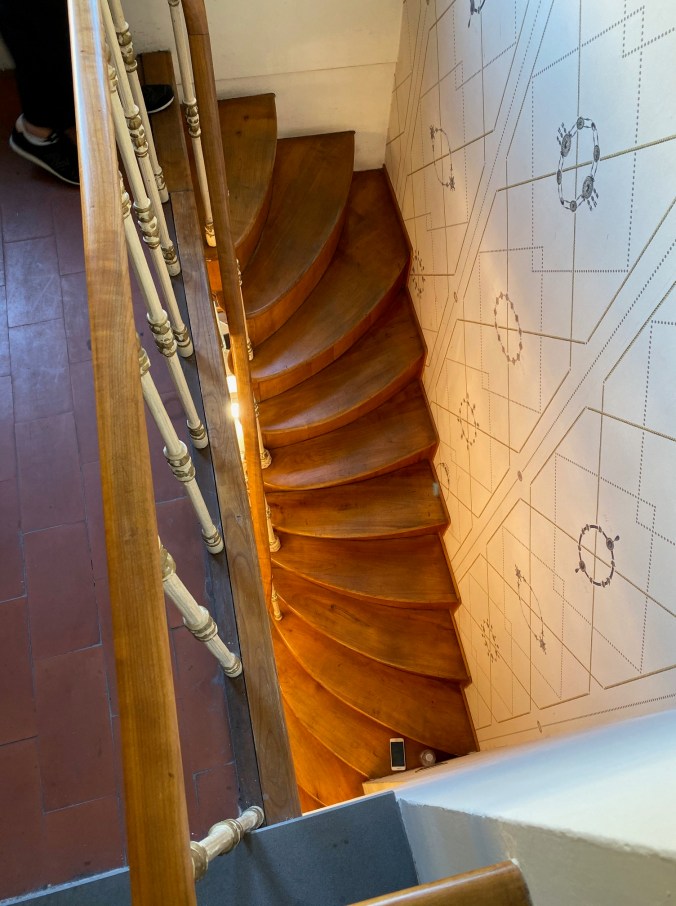
The tiny wooden stairway that led to the upper level was a work of art.  The photo below does not do it justice. It was taken from above, looking down.


IMG_0888

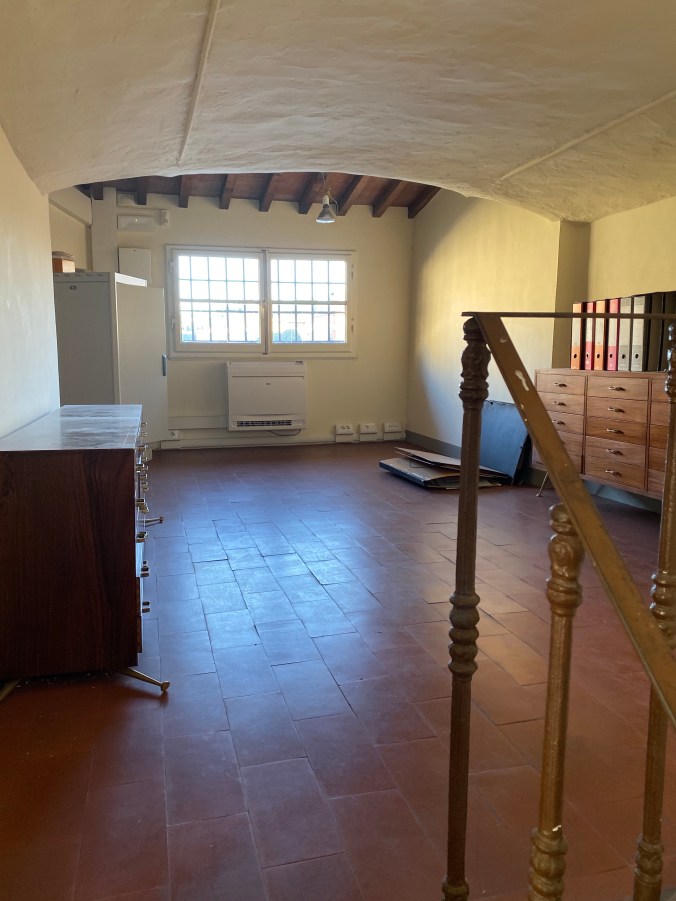
I was very surprised to see how spacious the upper level was.  I didn’t see it, but I am told that from the bathroom up here, you can see into the Vasari Corridor.


WzvBGro2Tnudh9Htguwipg

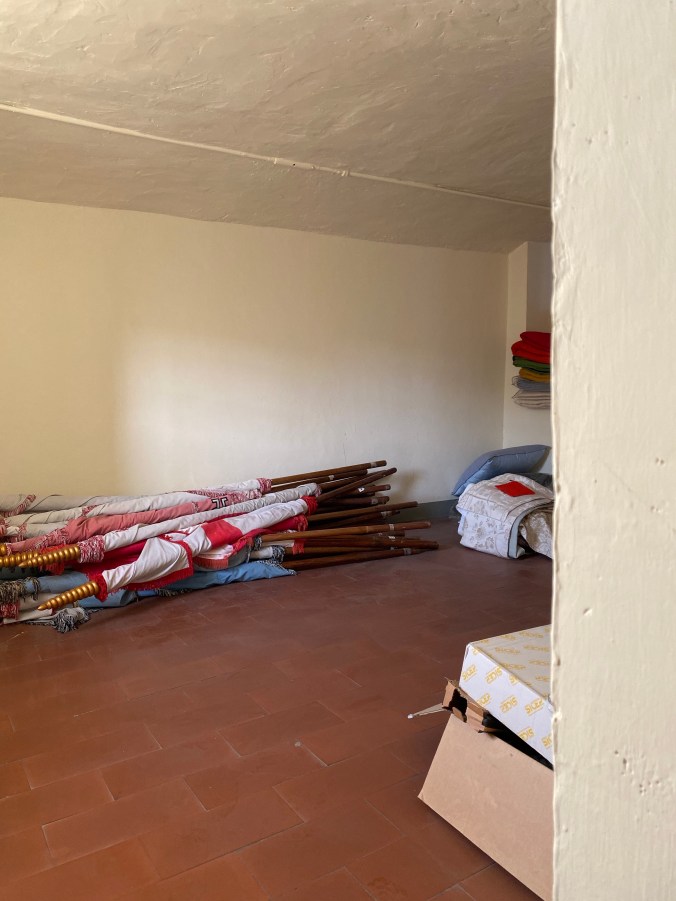
Looking at these 2 large rooms in this supremely situated space, I had to wonder about creating an apartment to live here.  A nice pipe dream.

kePFYeIoR+msffu21XVFUQ


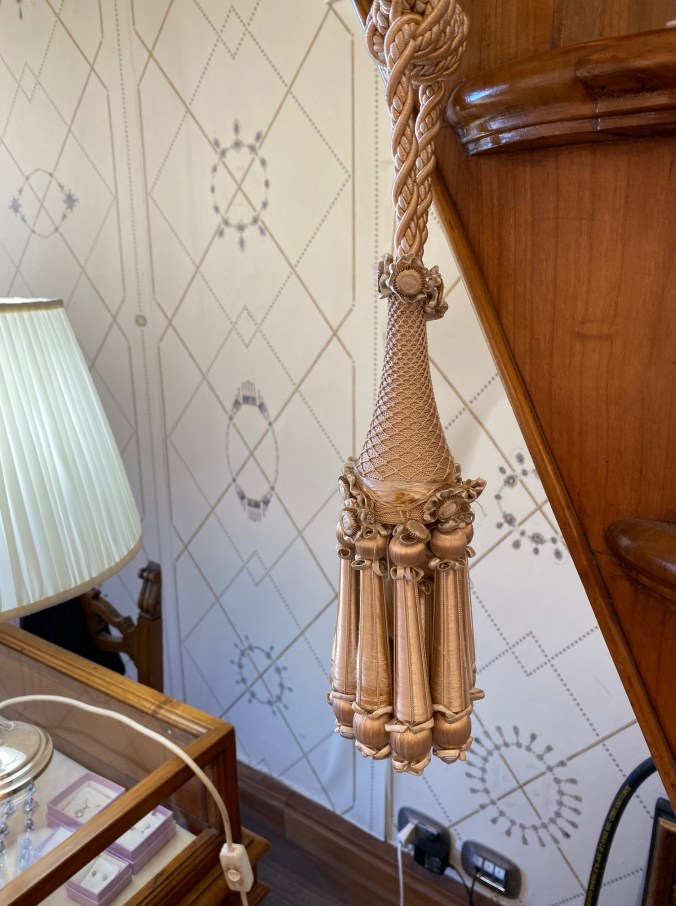
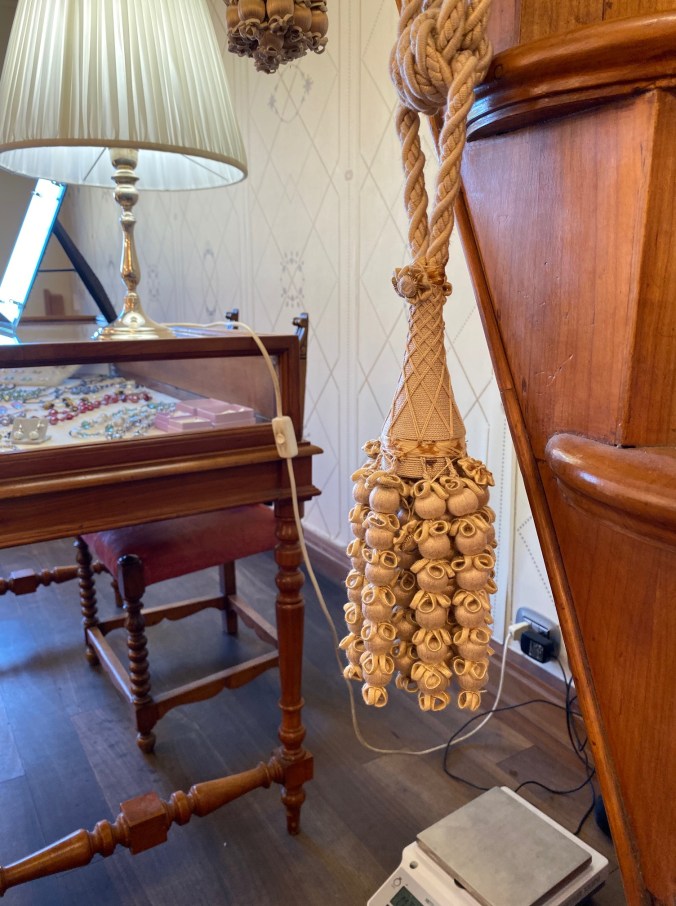
And last, but not least, I am always fascinated by the textile trim work to be found in this beautiful country!


IMG_0891


IMG_0892

6uMAQAZPSeam1CMU4S646Q

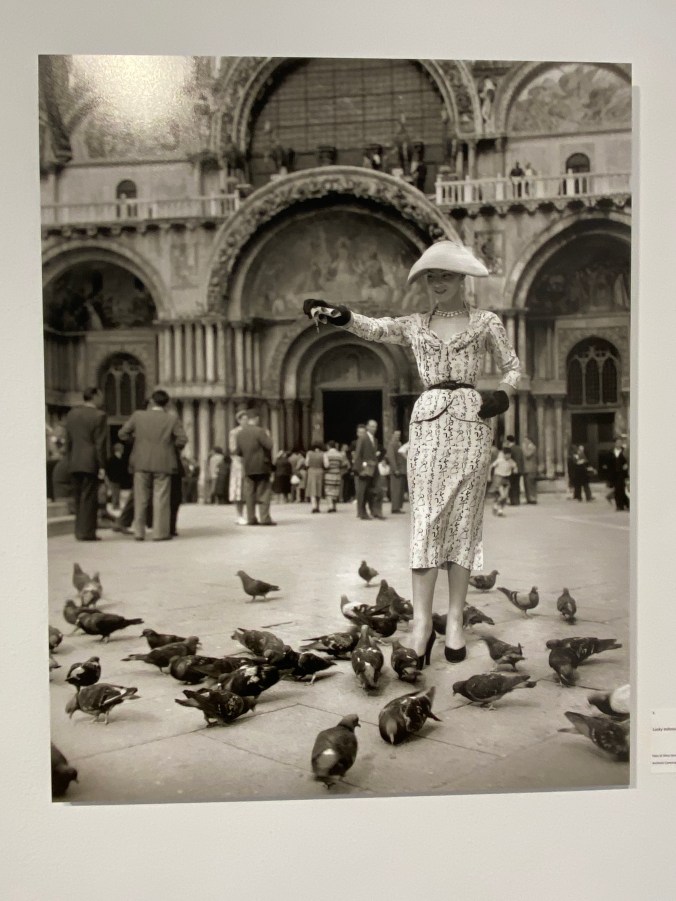
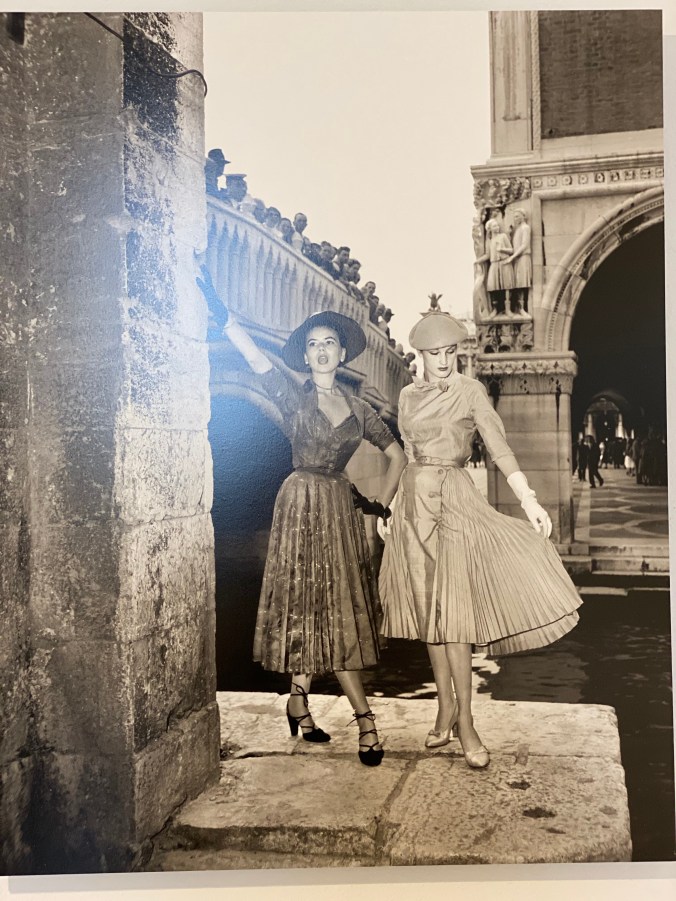
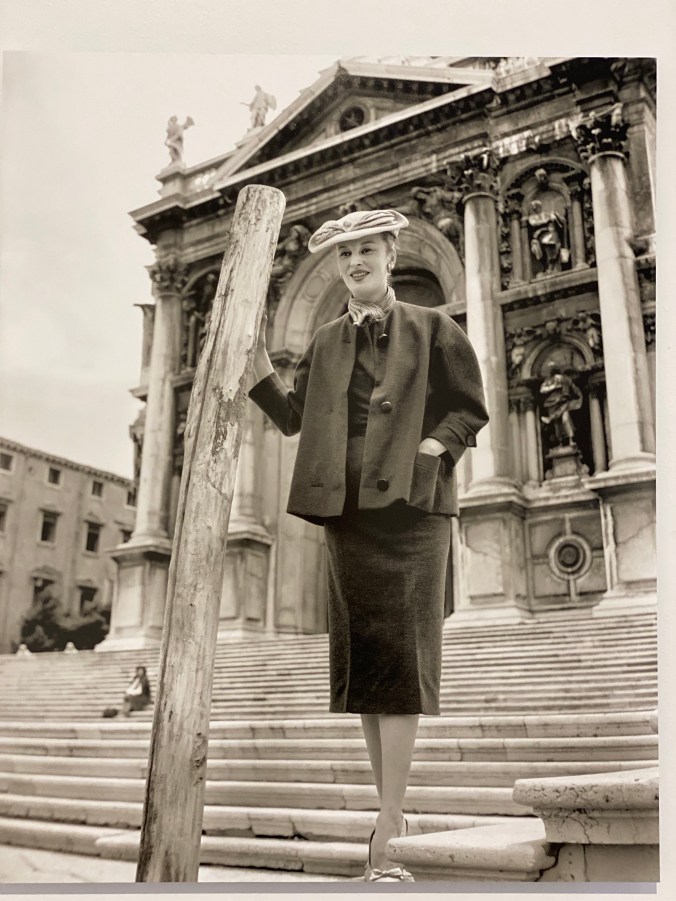
Christian Dior in Venice; current photography exhibit at Villa Pisani

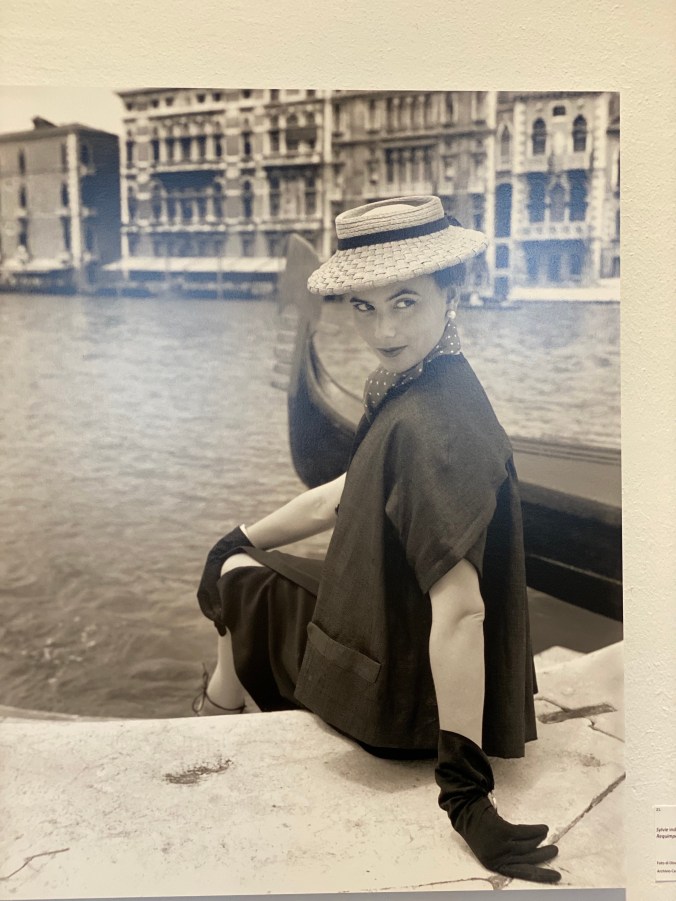
This lovely little exhibition, entitled Timeless Elegance, Dior in Venice in the Cameraphoto Archives, is currently on display at Villa Pisani, in Stra, on the Brenta Canal in the Veneto. I enjoyed seeing it very much.


fullsizeoutput_1a08


fullsizeoutput_1a09

From the website of the Villa:

1951 was a magical year for Venice. Some of the most intriguing views of the city co-starred in the campaign that publicised the creations of the couturier who was capturing all the world’s headlines at the time: Christian Dior.

On 3 September of that same year, Palazzo Labia hosted the “Ball of the Century”: the Bal Oriental, organised by Don Carlos de Beistegui y de Yturbe, attracted around a thousand glittering jetsetters from all five continents. This masked ball saw Dior, Dalí, a very young Cardin, Nina Ricci and others engaged as creators of costumes for the illustrious guests, in an event that made the splendour of eighteenth-century Venice reverberate around the world.

Silent witnesses of both of these events were the photographers of Cameraphoto, the photography agency founded in 1946 by Dino Jarach, who covered and recorded everything special that happened in Venice and beyond during those years.

We have Vittorio Pavan, the current conservator of the imposing Cameraphoto Archives (the historical section alone has more than 300,000 negatives on file) and Daniele Ferrara, Director of the Veneto Museums Hub, to thank for the project to show the photographs of those two historical events to the general public. The location chosen for them to re-emerge into the light of day is one of extraordinary significance: Villa Nazionale Pisani in Stra is the Queen of the Villas of the Veneto and it is no coincidence that it is adorned with marvellous frescoes by Giambattista Tiepolo, the same artist whose work also gazed down on the unforgettable masked ball in 1951 from the ceilings of Palazzo Labia.

For this exhibition, Pavan has chosen 40 photographs of the collection shown in Venice by Christian Dior.

In those days, every fashion show would present just under 200 models, calculated carefully to achieve the right balance between items that would be easy to wear and others that made more of a statement. Dior was the undisputed master of fashion in those post-war years. The whole world looked forward to his collections and discussed them hotly. No fewer than 25,000 people are estimated to have crossed the Atlantic every year, just to see (and to buy) his collections. Every time he changed a line (and every new season brought such a change), it was accepted with both enthusiasm and ferocious criticism: the former from his clan of admirers, the latter from those who opposed him.

In any case, no woman who aspired to keep abreast of fashion could afford to ignore the dictates issued by the couturier from his Parisian maison in Avenue Montaigne, where he already employed a staff of more than one thousand, despite having being established only five years before. Dior’s New look evolved with every passing season.

In 1950, he introduced the Vertical Line, in 1951 – as the photographs on show in Villa Pisani illustrate – no woman could avoid wearing his Oval Look: rounded shoulders and raglan sleeves, the fabrics modelled until they clung like a second skin. The essential accessory was of course the hat, for which Dior that year drew his inspiration from the kind traditionally worn by Chinese coolies.

For that autumn, though, he created the Princess line, which gave the illusion of extending below the breast.

In the breathtaking photographs from the Cameraphoto Archives, beautiful Dior-clad models perform a virtual duet with Venice, whose canals, churches and palaces are never a mere backdrop, but co-stars on a par with the great designer’s creations.

The second nucleus of this fascinating exhibition is devoted to the Grand Ball at Palazzo Labia, possibly the most glittering social event of the century.

All the bel monde flocked to Venice on that legendary 3 September. Don Carlos, popularly known as the Count of Monte Cristo, sent personal invitations to a thousand people. Dior, together with a veritable army of young tailors and accompanied by Dalí, was engaged to create the most alluring costumes, all designed to refer to the eighteenth century when Goldoni and Casanova lived here. There were costumes for men and women, but also for the greyhounds and other dogs that often accompanied their owners.

The torches that on that legendary evening illuminated the Duke and Duchess of Windsor, several Grandees of Spain, the Aga Khan, King Farouk of Egypt, Winston Churchill, many crowned heads, princes and princesses, a host of millionaires, such artists as Fabrizio Clerici and Leonor Fini, fashion designers of the calibre of Balenciaga and Elsa Schiapparelli and leading jetsetters Barbara Hutton, Lady Diana Cooper, Orson Welles, Daisy Fellowes, Cecil Beaton (whose photographs, published in Life magazine, gave the world something to dream about), the Polignacs and the Rothschilds.

Welcoming them in the midst of clouds of ballerinas and harlequins was the master of the house and host, who dominated the scene as he promenaded back and forth dressed as the Sun King on a 40 cm high platform. The heir of an immense fortune created in Mexico, Don Carlos spent some of his time living in Paris, where he owned a house designed by Le Corbusier and decorated by Salvador Dalí, and the rest at a chateau in the country. He had bought Palazzo Labia and restored it and was now offering it to his friends.

The aim of this exhibition is therefore to contribute to improving the appreciation and value of the Cameraphoto photography archives, which have been declared to be of exceptional cultural interest by the Italian Ministry of Cultural Heritage and Activities, since they constitute an inestimable legacy for the wealth and variety of images.

It was with this in mind that the curators chose this nucleus of photographs depicting the clothing designed by one of the most ingenious and iconic fashion designers in history, who in his turn, through his creations, enabled a spotlight to be focused on a tiny fragment of the more than one thousand years of history of the city of Venice, helping us reconstruct the collective memory on which our present day is based.

Curated by Vittorio Pavan and Luca Del Prete, the exhibition is organised by the Veneto Museums Hub e Munus.


uPiK4S5NSNmHmt4sJzcFfg

fullsizeoutput_19f6


w09i7Q1lSderVYGU8EEzzw

fullsizeoutput_19f7


DrtgkdaLR8e0dfHU9ScfdA

fullsizeoutput_19f8


ycCsvRrjS1muuNtUYjjgvw


H05BTmrnTQ+KGZ+UJgXHYg


fullsizeoutput_19f9


gwAbCNaoQS6m4ZCk8gdx5A

fullsizeoutput_19fa


MeakMtRMQuKQtDK741KS4g


m1AmBgRCSHus7apvbLBDcg

fullsizeoutput_19fb


KgnG2HGARn+WHuunyeQ

fullsizeoutput_19fd


Nsm1x0LdSeO+CyvTnG6Blw

fullsizeoutput_19fe


oExYW3OSQN6fXshY59dNCQ

fullsizeoutput_19ff


zu8c2Ti6RKewwLhqlw02PA

fullsizeoutput_1a00


fomHngRsTkiccr0Fu9XO6A


fullsizeoutput_1945


fullsizeoutput_1a02


Zm6AXnmBTTSz4dkx2AxPSA


SweZO1v+Rlq1V02sDmsOfw


d%FYTctpTx216stxcUweDg


fullsizeoutput_1940


Lqym%eO+Tb2jPtEnmesJDw


LoWoqKFbQPy+CRUrFAcBFg


fullsizeoutput_1a04

Villa Pisani: Cruising the Brenta Canal from Padua to Venice, part 2

I recently posted about this day-long cruise here (here, here and here) and now I pick up where I left off. Our first stop on the cruise after leaving Padua was in Stra at Villa Pisani.  This incredible villa is now a state museum and very much work a visit.  It was built by a very popular Venetian Doge.

Screen Shot 2019-10-12 at 16.03.18


The facade of the Villa is decorated with enormous statues and the interior was painted by some of the greatest artists of the 18th century.

9v1XGhyoRf20ln6VZDtyRw

Villa Pisani at Stra refers is a monumental, late-Baroque rural palace located along the Brenta Canal (Riviera del Brenta) at Via Doge Pisani 7 near the town of Stra, on the mainland of the Veneto, northern Italy. This villa is one of the largest examples of Villa Veneta located in the Riviera del Brenta, the canal linking Venice to Padua. It is to be noted that the patrician Pisani family of Venice commissioned a number of villas, also known as Villa Pisani across the Venetian mainland. The villa and gardens now operate as a national museum, and the site sponsors art exhibitions.

Screen Shot 2019-10-12 at 16.01.55


D6GnxsT0QKGwYyJtUAPaUQ

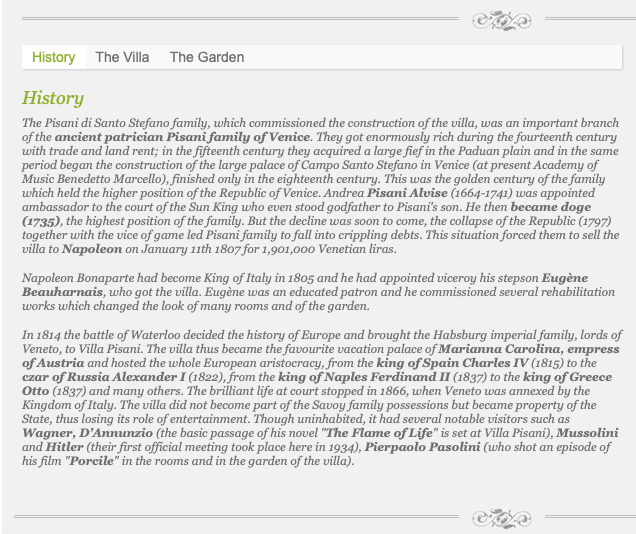
Construction of this palace began in the early 18th century for Alvise Pisani, the most prominent member of the Pisani family, who was appointed doge in 1735.

The initial models of the palace by Paduan architect Girolamo Frigimelica still exist, but the design of the main building was ultimately completed by Francesco Maria Preti. When it was completed, the building had 114 rooms, in honor of its owner, the 114th Doge of Venice Alvise Pisani.

In 1807 it was bought by Napoleon from the Pisani Family, now in poverty due to great losses in gambling. In 1814 the building became the property of the House of Habsburg who transformed the villa into a place of vacation for the European aristocracy of that period. In 1934 it was partially restored to host the first meeting of Adolf Hitler and Benito Mussolini, after the riots in Austria.


Screen Shot 2019-10-12 at 16.02.09

WXAn2duATRuBppJD41SWAQ


Q4CGc6HeT6ecf9sHsnrNfw

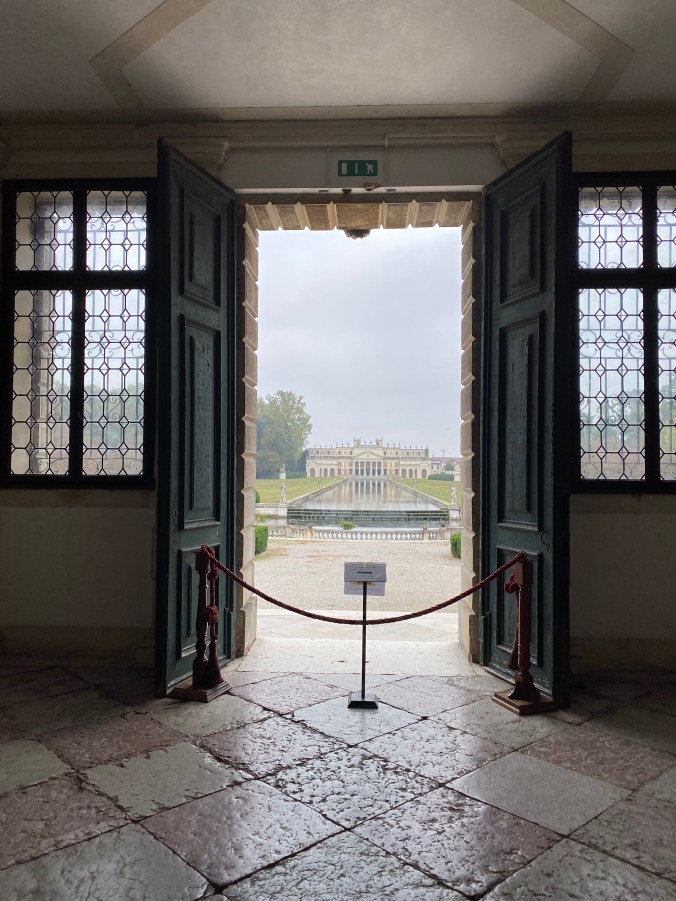
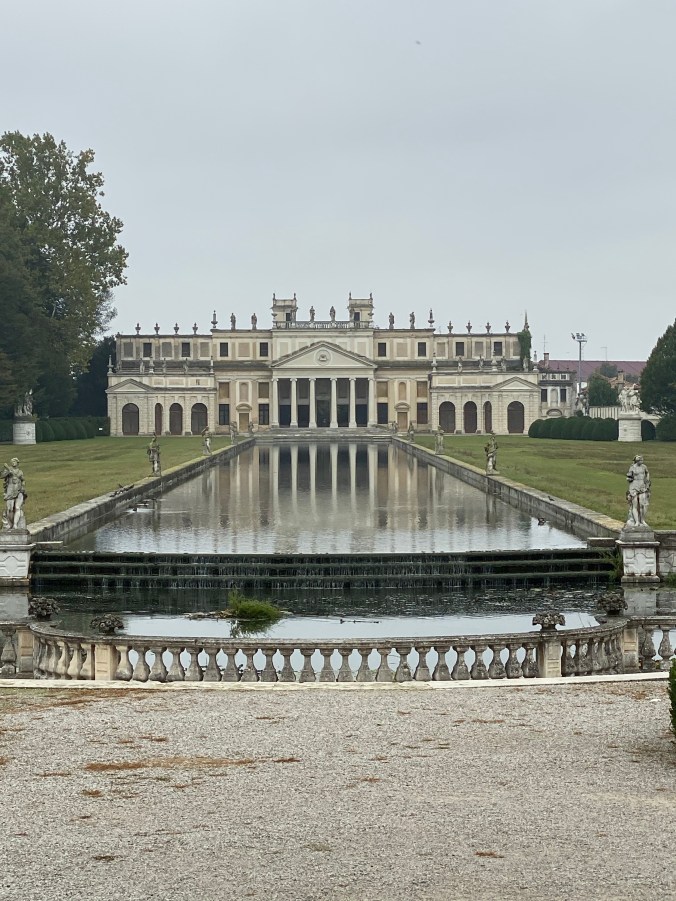
From the outside, the facade of the oversized palace appears to command the site, facing the Brenta River some 30 kilometers from Venice. The villa is of many villas along the canal, which the Venetian noble families and merchants started to build as early as the 15th century. The broad façade is topped with statuary, and presents an exuberantly decorated center entrance with monumental columns shouldered by caryatids. It shelters a large complex with two inner courts and acres of gardens, stables, and a garden maze.
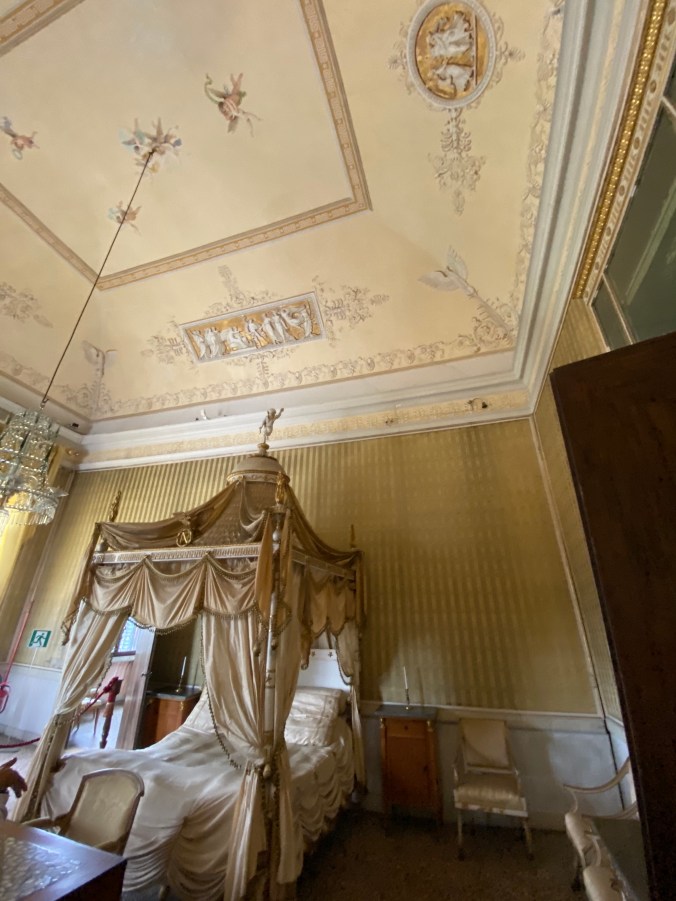
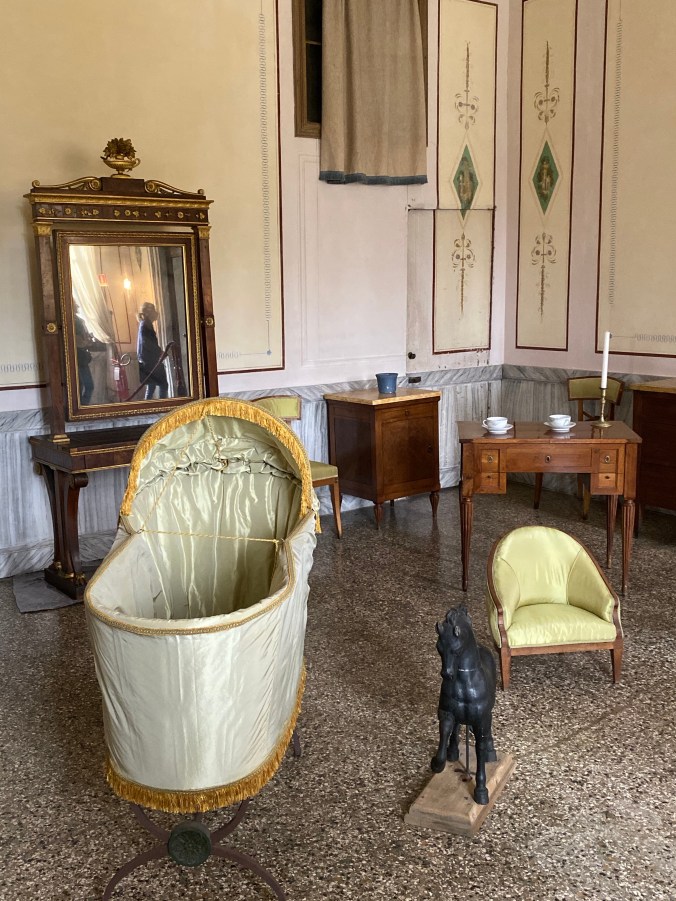
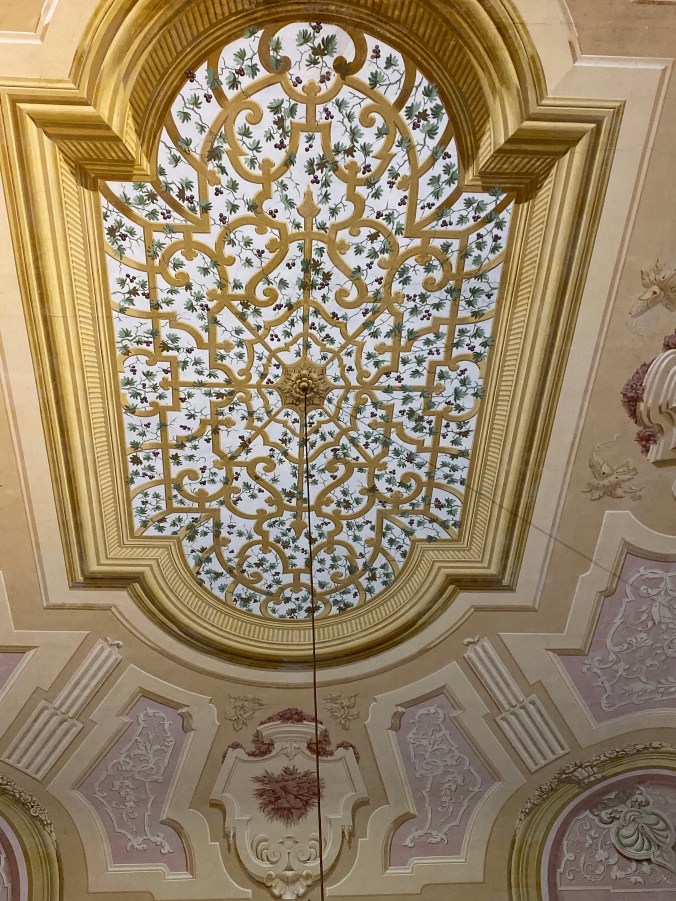
The largest room is the ballroom, where the 18th-century painter Giovanni Battista Tiepolo frescoed the two-story ceiling with a massive allegorical depiction of the Apotheosis or Glory of the Pisani family (painted 1760–1762).[2] Tiepolo’s son Gian Domenico Tiepolo, Crostato, Jacopo Guarana, Jacopo Amigoni, P.A. Novelli, and Gaspare Diziani also completed frescoes for various rooms in the villa. Another room of importance in the villa is now known as the “Napoleon Room” (after his occupant), furnished with pieces from the Napoleonic and Habsburg periods and others from when the house was lived by the Pisani.

The most riotously splendid Tiepolo ceiling would influence his later depiction of the Glory of Spain for the throne room of the Royal Palace of Madrid; however, the grandeur and bombastic ambitions of the ceiling echo now contrast with the mainly uninhabited shell of a palace. The remainder of its nearly 100 rooms are now empty. The Venetian playwright Carlo Goldoni described the palace in its day as a place of great fun, served meals, dance and shows.


R7cm9CUfTJih5iOb1Bvt+g


g42uqoniTUu+AIoO6N74Dw

Screen Shot 2019-10-12 at 16.02.09


N4niRsV7Rj+8ao7b8vVM4w

Check out this sunken bathtub below:

lkW9cAMbTvilZiqEzIh3cg


1vHCstkcQP2mIXnnHqENEQ


rsfcANiVStiv73ntHQ6lNA


uNepqZzHQz60jyWSxG0Tuw


emdujlDeQlSd3Bv%Y3sxtA


UB4+1o33R5ipPIcekk4Cow


ZGBOsJhLSjG8vQgVci0aow


cKcnvqXhSdSt+BEMNivbXw


ajAaTbPFQViFwVykcArntA


cuuLWhyCRVWaWplduKrN%g


hUCIo6XnRuesKf3Do6xzrw


DElpTJjXQmGdUpTunH6jVA


xFtQLnmaTLGC7mfWRDyStw


Uezc2+wbT0i4wj1eEGyzNg


yj2L9oVlThejieXJ7G5JaA


xGlpfdyKQoeWqb7MeDBT6w


g9oMYi9GRtyUtx%MIEsjLw


C0EIVChYRdqFwIxWXDSV+w


MjdHyPvoRPyaCLjoV7HBpg


tWX6%nNBTGusPdg%iPf7oA


dOYU%fJKQwCo3jb3Pbai8w


OOu7Ig83Q8m3wBwMGc8gMw


ckcTbW4kRc+mrneAtPo+nQ


mjUumHySQcGKg73SK8mUug


D7FX0KykTgW6IiXQt85umA


rm0Lp9oiQaK2zlxmrThJEg


aDO7Hal+S%ypA7dLlI9NRQ


tgJTmYikRxOdaQ%VtrppWQ


0oOf7HizQMS8%8IUxWAAFA


ejAV+kIoSxy2L2Jh3KomYA


iofbHUtBRBaE8bc5FzaPyA


ARfTARQZQ8ST3xgOn6m4RA


D3tLCZrEQVWNnFq%XrzBdg


aapXlR1MTgmfDhHy77e+pA


xRGHg7rURD2fQHAcug0COg


wfJwWOsJTui%8IrKhI9peQ


DiYL6EnBQoK2gX1AEYNTTA


TTyiooNCSh2tILJTP5pAkA


GsvRFnN9Q+6ol2rxN5H2+g.jpg


6uynwhC0TTWrJapsFtnTqg


rfzRVWmHSNuwsxejE3z7nQ


MofUE98%TpGRZtXsDoY3tg


gWkCvdD2ThSXD1mn3c5IhQ


hXQULujgT6y3rrjc5Kw


Bear with me: in the next few photos I am trying out all of the fancy settings on my new camera:

g7txBPI5QKOBHP7yQqtBBw


1bWjfZtvSJ6+iJt30u9YcA


fullsizeoutput_193f


fullsizeoutput_193d


fullsizeoutput_193e


fullsizeoutput_193c


BjfnsKTvTrWS6aUeegBecA


ibH75%WTTgOcO8uuLzzr9Q


V9Grlr+RT9KuW+0PYO8ljQ


p5e%uNmuSdu1Ql06TSeZjQ


+8uthxR0QjqzUgspNc2CQg


FjhsbV2bQpSkTHE81s4GPg


B4zGbnSCS8C3qP63WTrDHA


Screen Shot 2019-10-12 at 16.02.56


To be continued.

Celebrating women art patrons: Tōfukumon’in, Empress Consort of Japan

Tōfukumon’in (1607–1678)
Empress Consort of Japan

Screen Shot 2019-09-14 at 11.06.27
Following more than a century of civil war in Japan, Empress Tōfukumon’in played a pivotal role in shaping culture and aesthetic tastes in the peaceful Edo period. Tōfukumon’in used her endowment from Tokugawa leadership to rebuild prominent Kyoto temples and collect art by her era’s leading artisans. She dabbled in creative endeavors herself, writing poetry and experimenting with calligraphy, and she was particularly interested in fashion and textiles.

Together with her husband, Gomizunoo, Tōfukumon’in fostered more direct relationships between the imperial family and artisans. The empress collected pottery by famed ceramicist Nonomura Ninsei, paintings by Tosa Mitsunobu, and works by other prominent artists and workshops of the day, like Tawaraya Sōtsatu and the Kano and Tosa schools. Her chambers featured artworks that mingled classical styles with contemporary scenes featuring warrior figures and commoners.

Screen Shot 2019-09-14 at 11.06.41

Among her most notable commissions are six painted screens by court painter Tosa Mitsuoki that together comprise Flowering Cherry and Autumn Maples with Poem Slips (1654–81). Against the golden silk backdrop, the artist rendered slips of medieval poetry dangling from finely wrought leaves. The work merges Tōfukumon’in’s interests in literature and painting, and also represents the royal couple’s quest for cultural influence in an era when the feudal shogunate increasingly wrestled control from the imperial family.

Celebrating women art patrons: Hürrem Sultan, a.k.a. Roxelana

Hürrem Sultan, a.k.a. Roxelana (1505–1558)
Empress of the Ottoman Empire

Screen Shot 2019-09-14 at 11.00.31

Titian, La Sultana Rossa c. 1500. Image via Wikimedia Commons.

Through her coquetry and mastery of palace intrigue, Roxelana (meaning “the maiden from Ruthenia,” a region in what is today Belarus and Ukraine) rose from sex slavery as a concubine in Sultan Suleiman the Magnificent’s harem, eventually becoming his first (or most preferred) wife. In the harem, Roxelana learned Turkish, the principles of Islam, and the art of seduction, and she earned a new name, Hürrem—“the joyful one.” Roxelana so enchanted the sultan that he broke with tradition and had multiple children with her. A few years later, he married her—an act that granted Roxelana her freedom.

At the side of one of the most powerful rulers in Ottoman history, Roxelana wielded extraordinary influence over the empire through her philanthropy and prominent public building projects. Her Haseki complex in Constantinople featured a mosque, school, hospital, and soup kitchen. When a fire partially destroyed Suleiman’s harem, Roxelana used the opportunity to move in with her husband at the Topkapi Palace—an unprecedented move among sultanic wives that ushered in an era called “the Reign of Women.” Instead of rebuilding the harem, she encouraged Suleiman to construct a mosque.

Screen Shot 2019-09-14 at 11.03.36

The Mosque of Suleiman the Magnificent still stands as a landmark in Istanbul today. In The Women Who Built the Ottoman World (2017), Muzaffer Özgüles suggests that Roxelana “reshaped the patronage of all Ottoman women builders who came after her.”