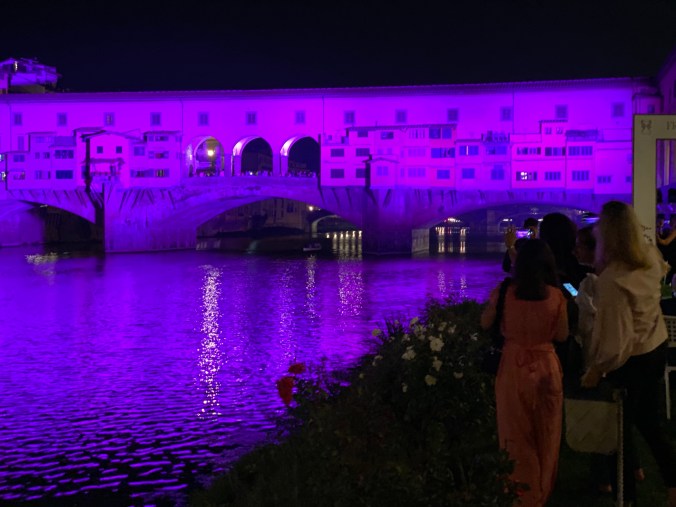
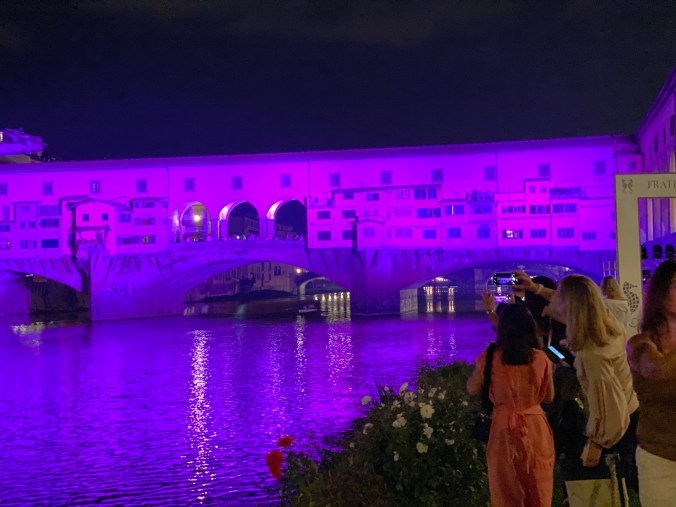
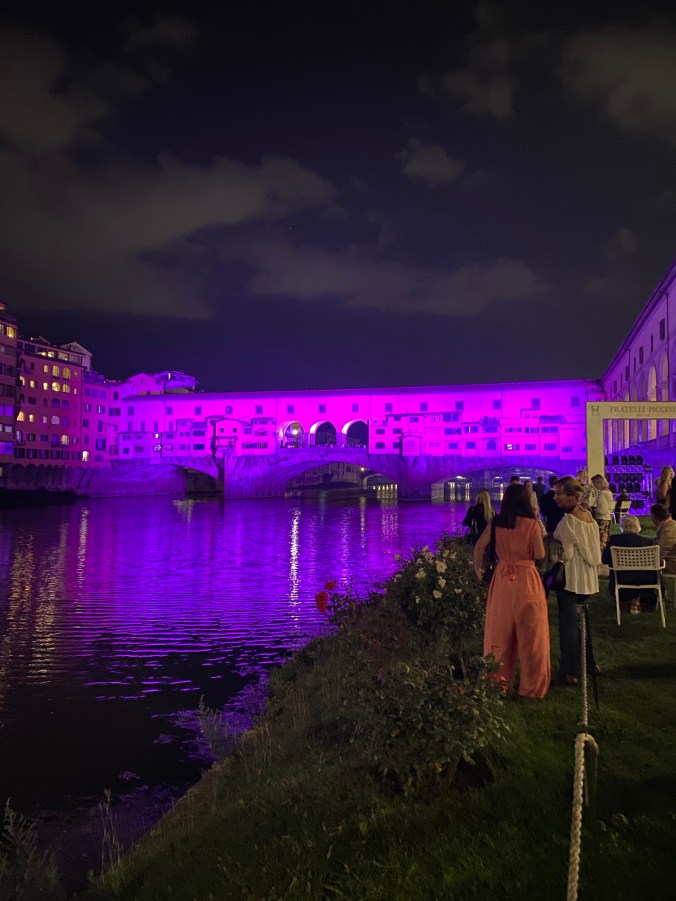
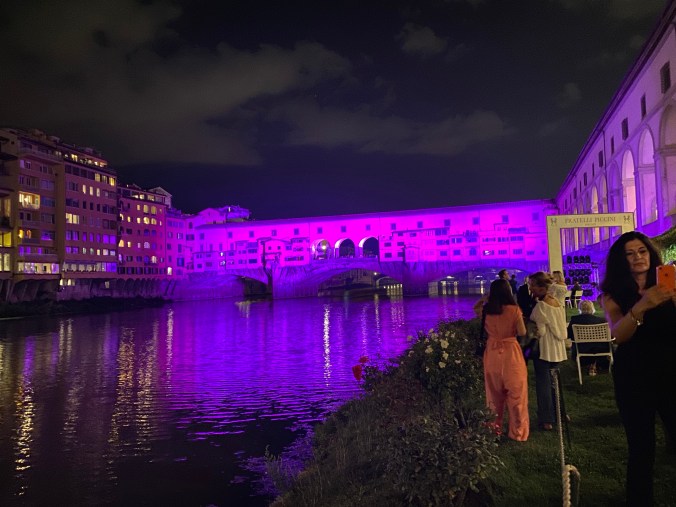
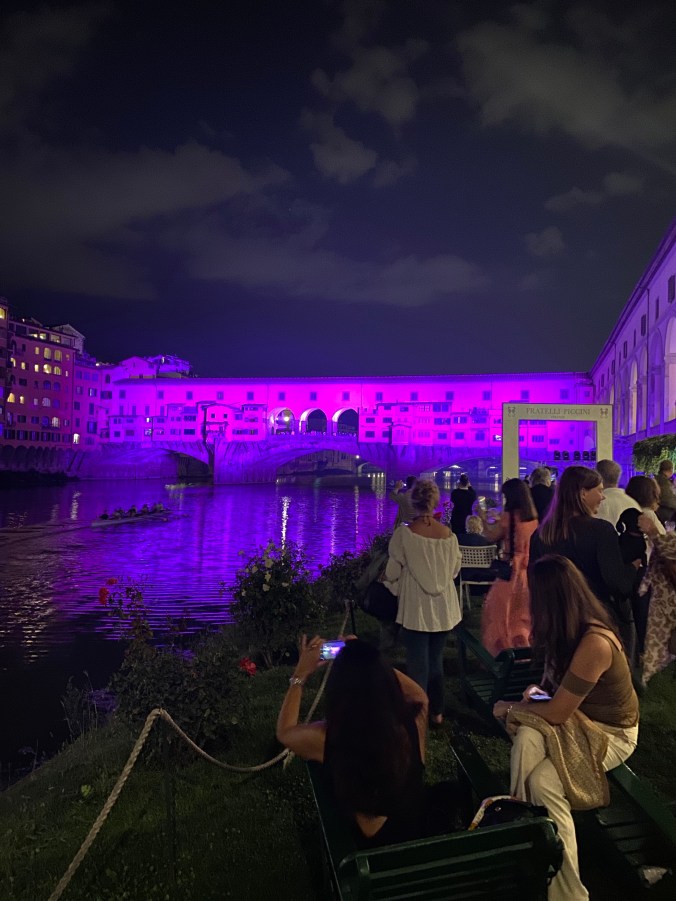
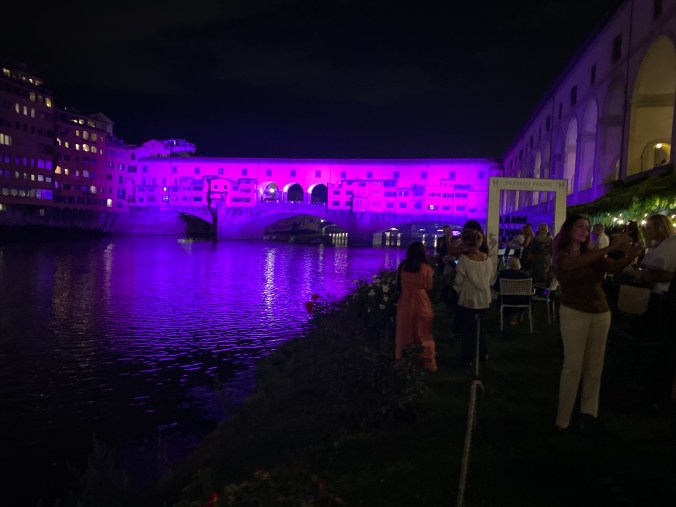
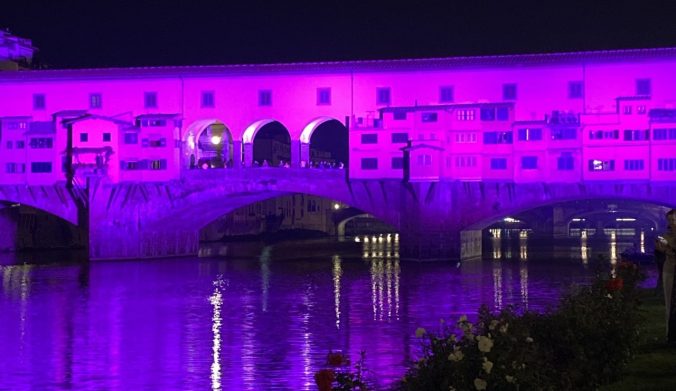
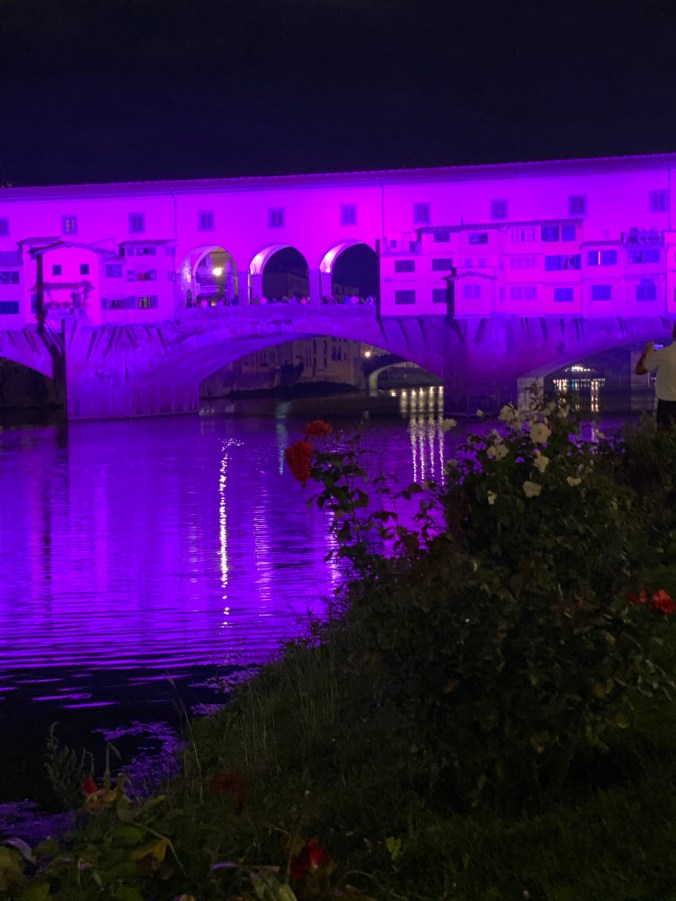
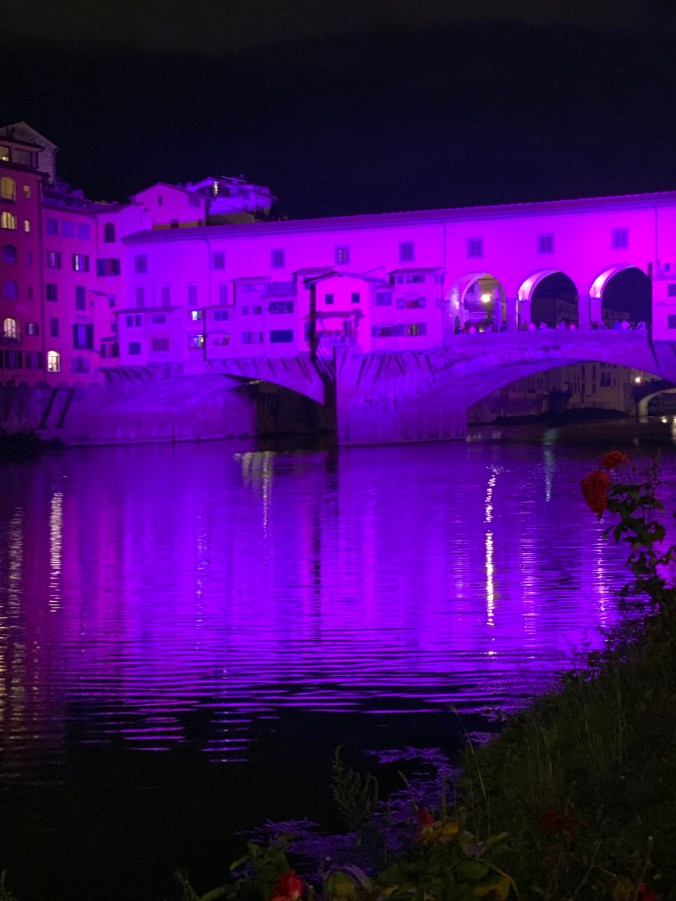
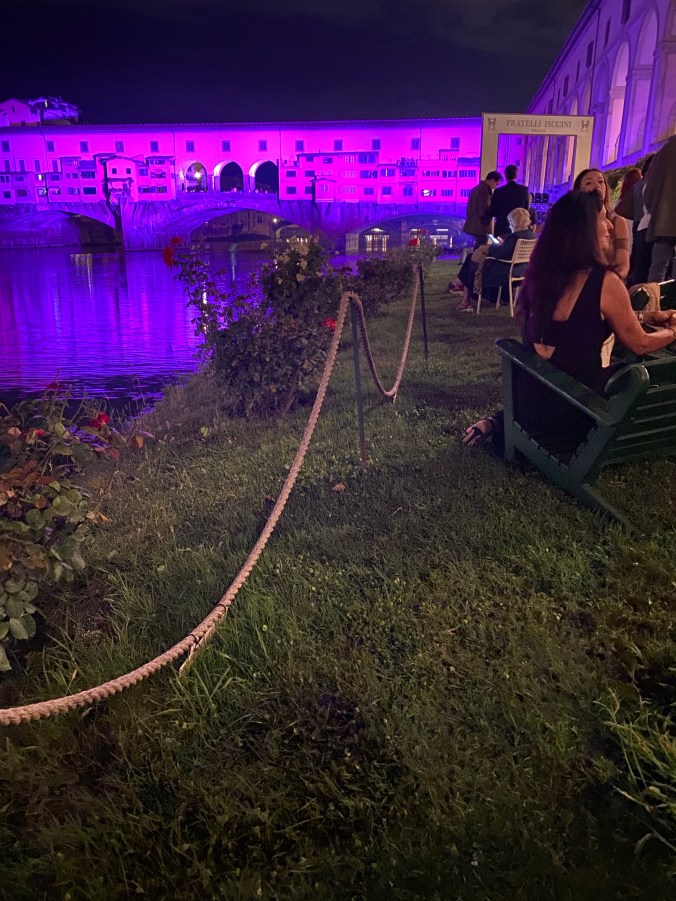
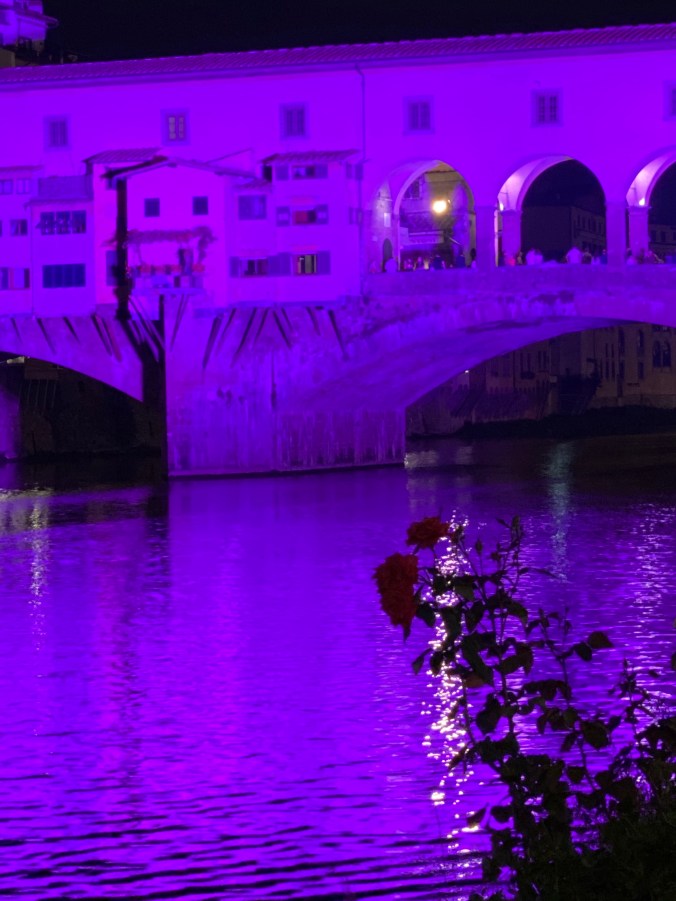
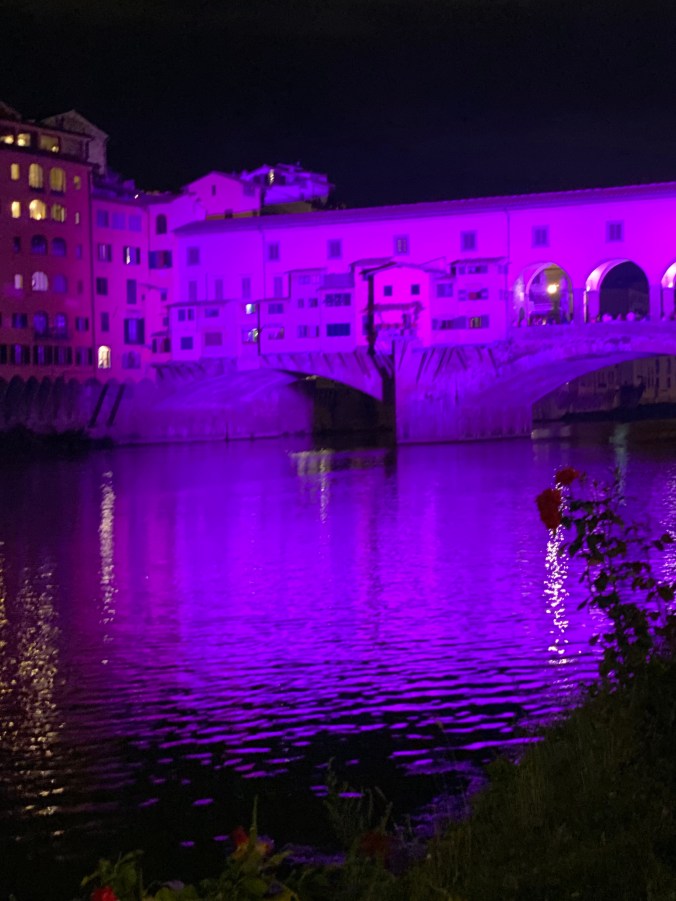
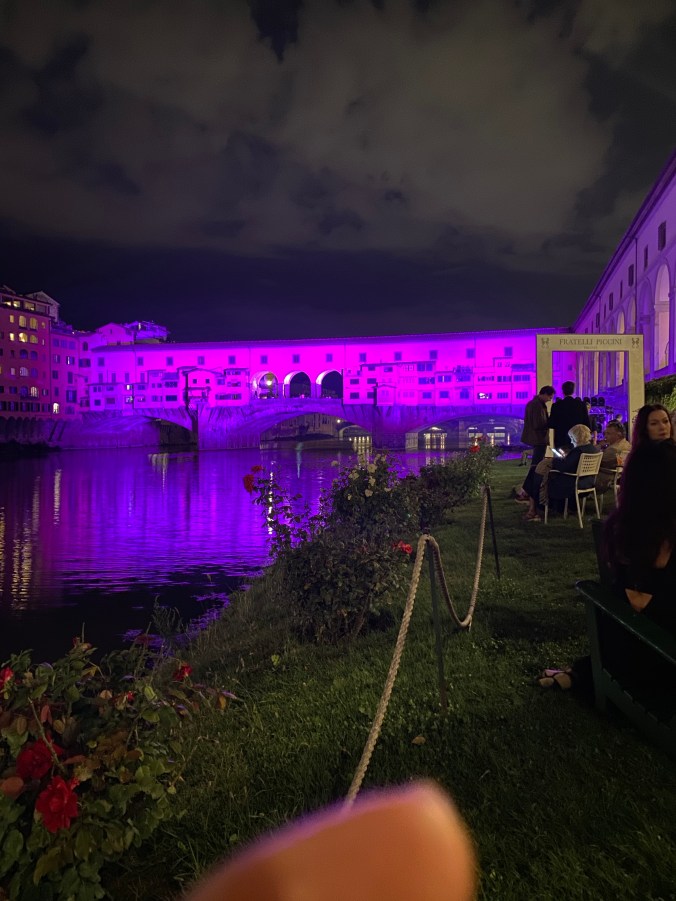
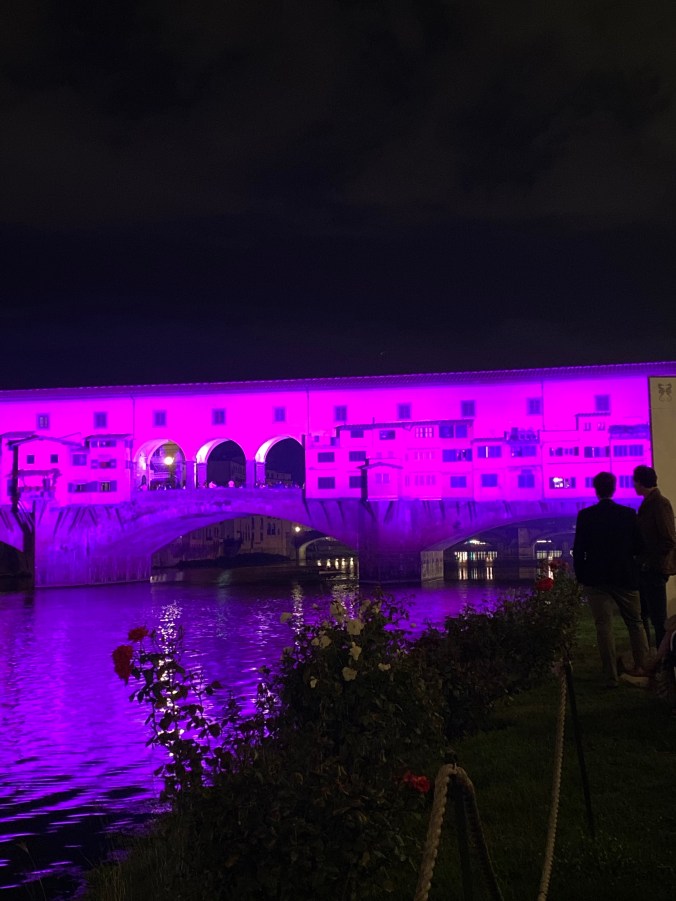
Ponte Vecchio, Florence, all lit up

etNpe+V0Rpma18MNvhCAfgOrZR0EXxSi2MEVhU8XPEbQqufckJuTQna3R+CQCSw6LwAuaJTu7BSoi7I6GdCbTN6g

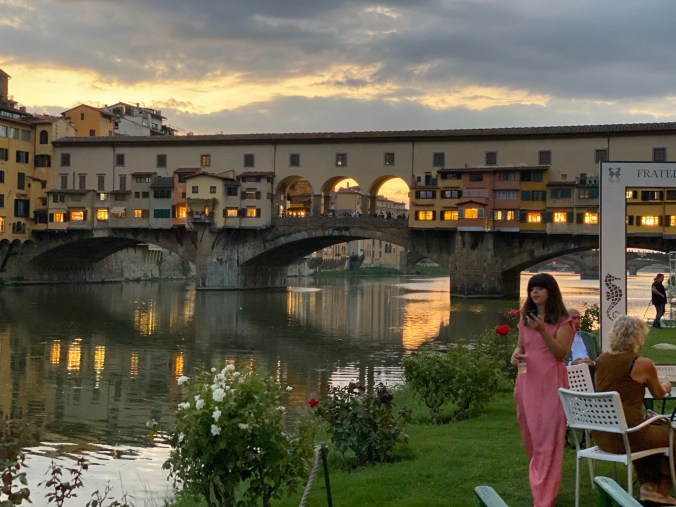
In early October, I had the good fortune to spend a lovely evening at La Società Canottieri   on the banks of the Arno in Florence.  The evening was spectacular enough, getting to visit this special place and watch afternoon fade into evening. I’ve posted about it here and here.

But, then, somebody somewhere flipped a switch the the Ponte Vecchio was illuminated in purple. We were all surprised and there were audible gasps of delight as we took in the bright lights on the old bridge.


ZGmbH5K+RV2p%+y3MPNCRw


2MKqs41kSEasC0V2Vd93WQ


cropped-cvmapkgwq4al7pnka6ikqa.jpgCvmaPKGWQ4aL7PNkA6IKQA

2VYLga8YR+iIV7weJQQhaAB4RPRPx0Q5mMiMXTnOZ6+gtg9fAI7NQOW18ge7RNkrRAXOxMQT76TuafU2staf+uIA55g7+DdkToaNgoiLOUjitg8VhyiVNMQkO58dEmVM6q8Q

s9O2WUhjRJCj3ocs5Mk8LA47EHfVyfRR6IDRkxV2mZHwQIg4xgPxQIOiVhxYOJqsHA


La Società Canottieri, Firenze, Part 2

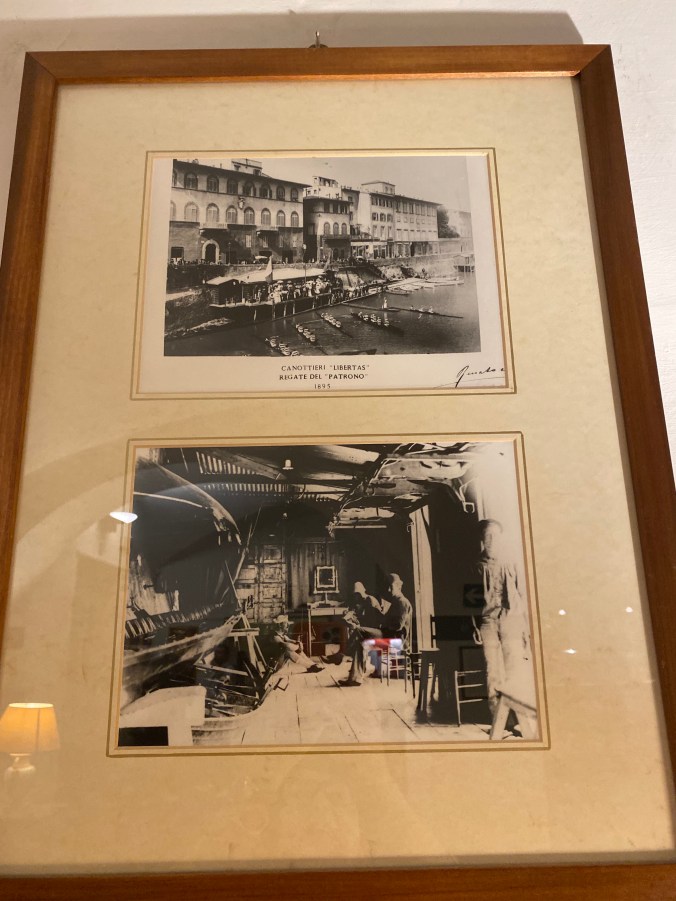
Recently I posted about my evening spent at La Società Canottieri, Firenze.  It was a special evening and satisfied a long hoped for wish.

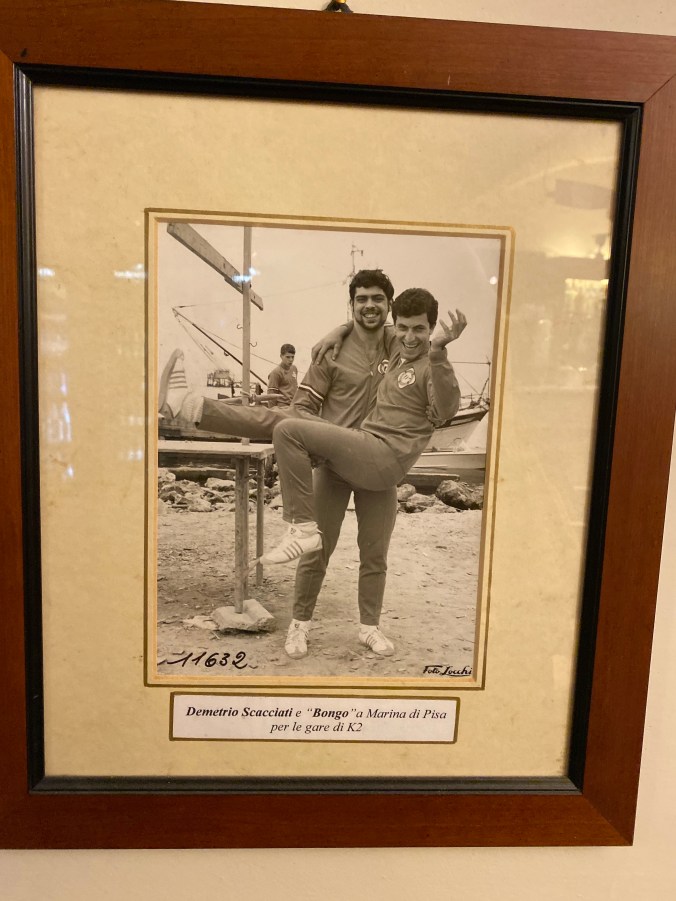
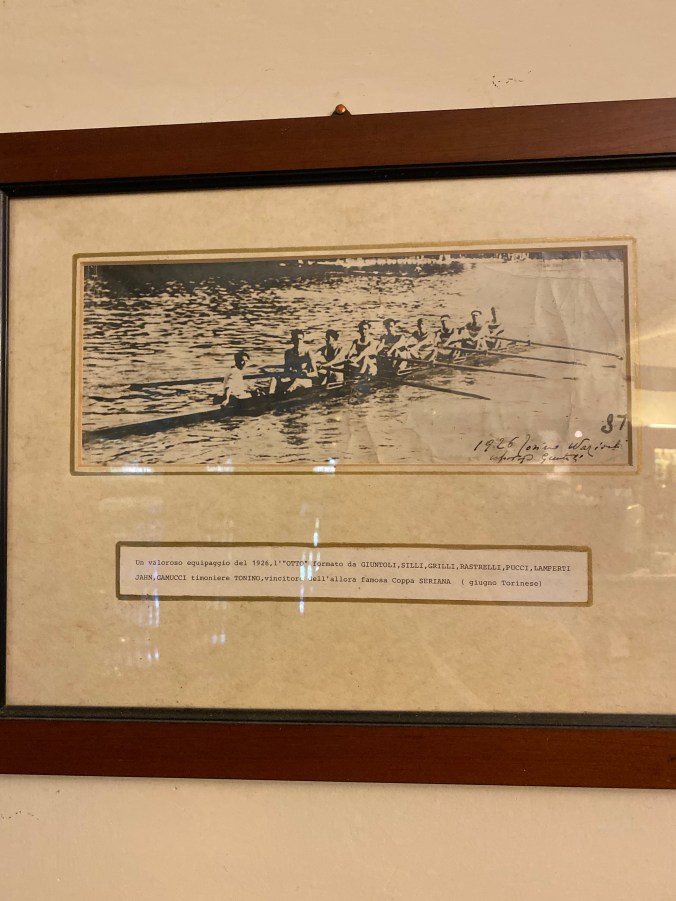
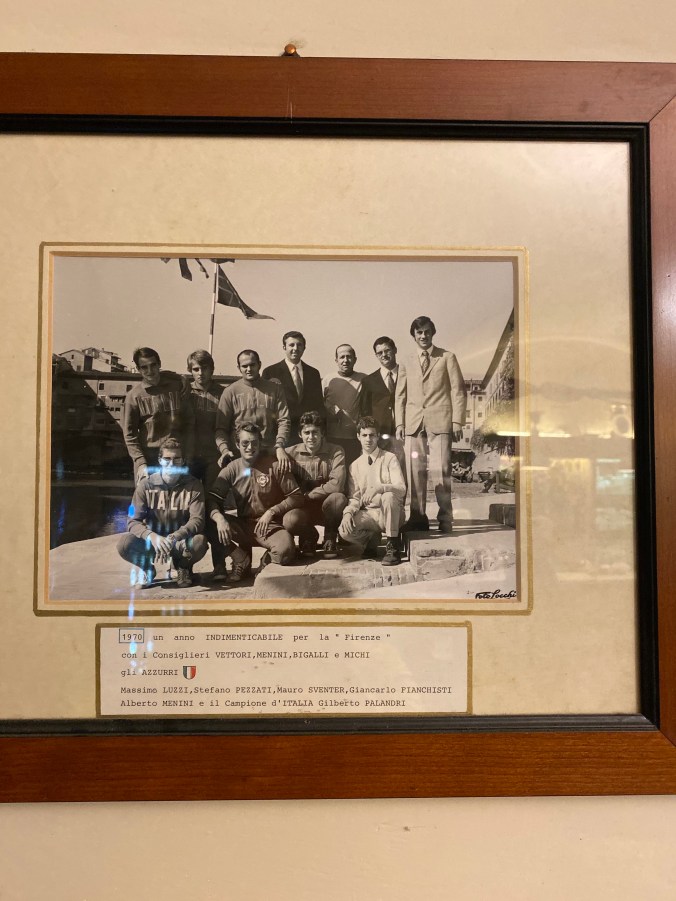
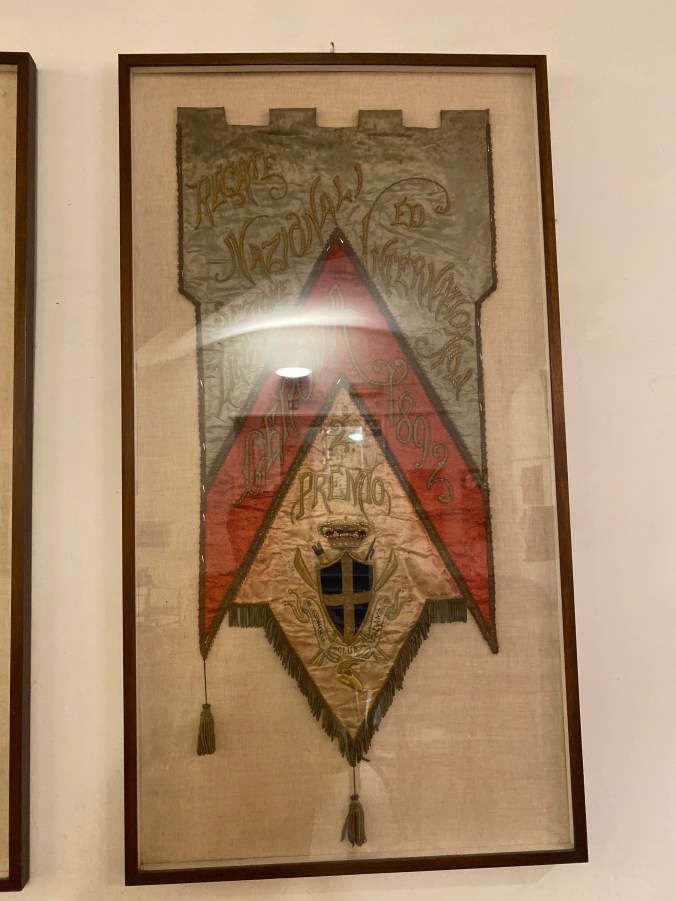
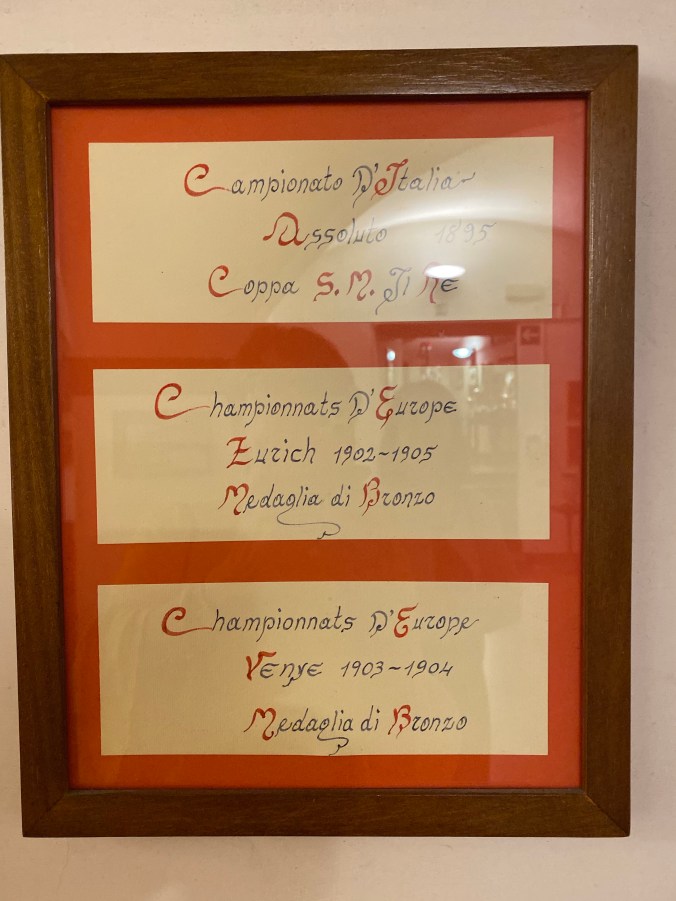
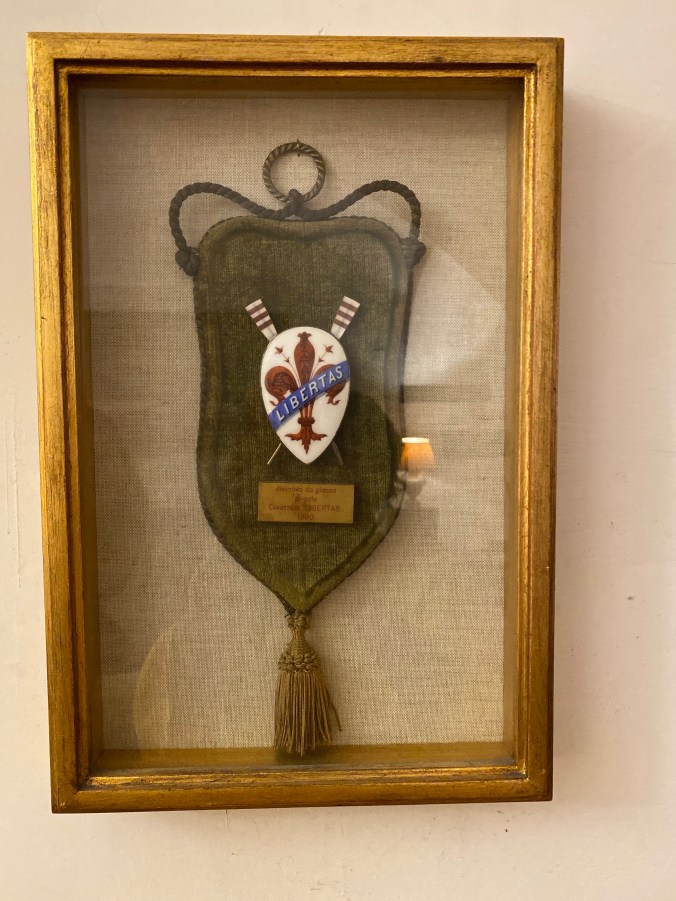
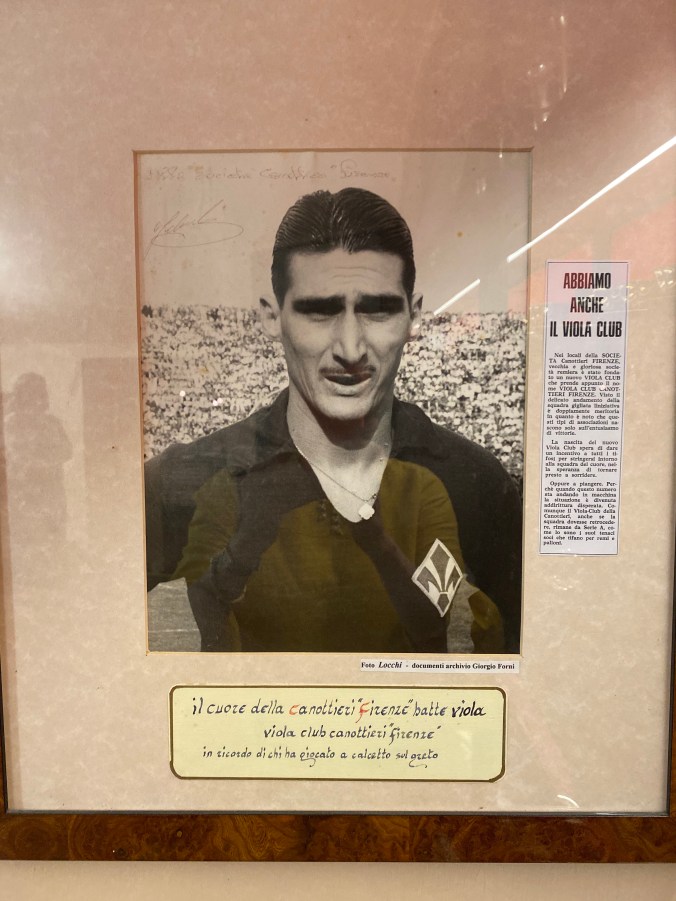
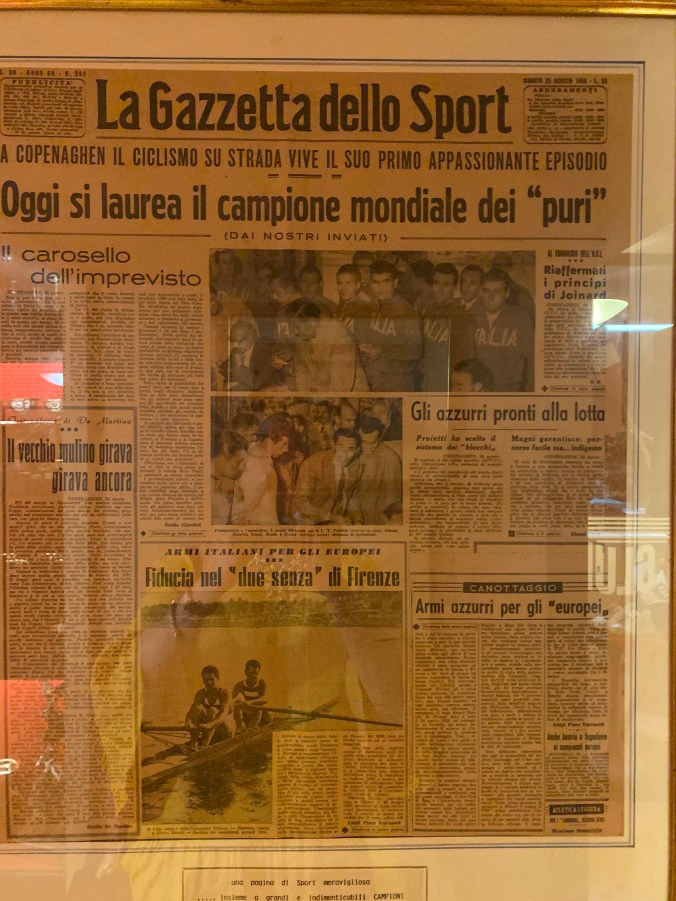
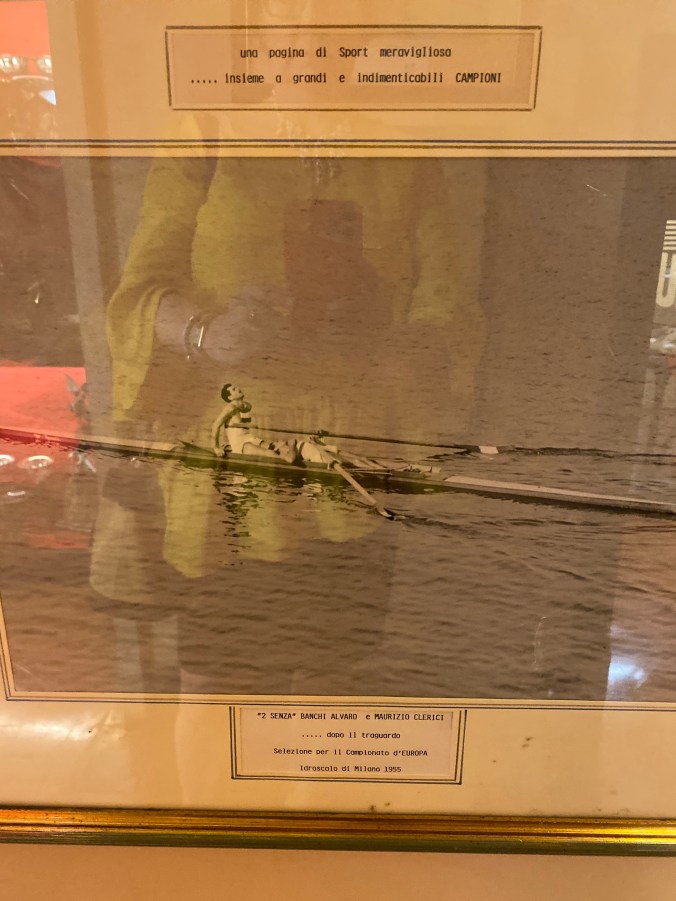
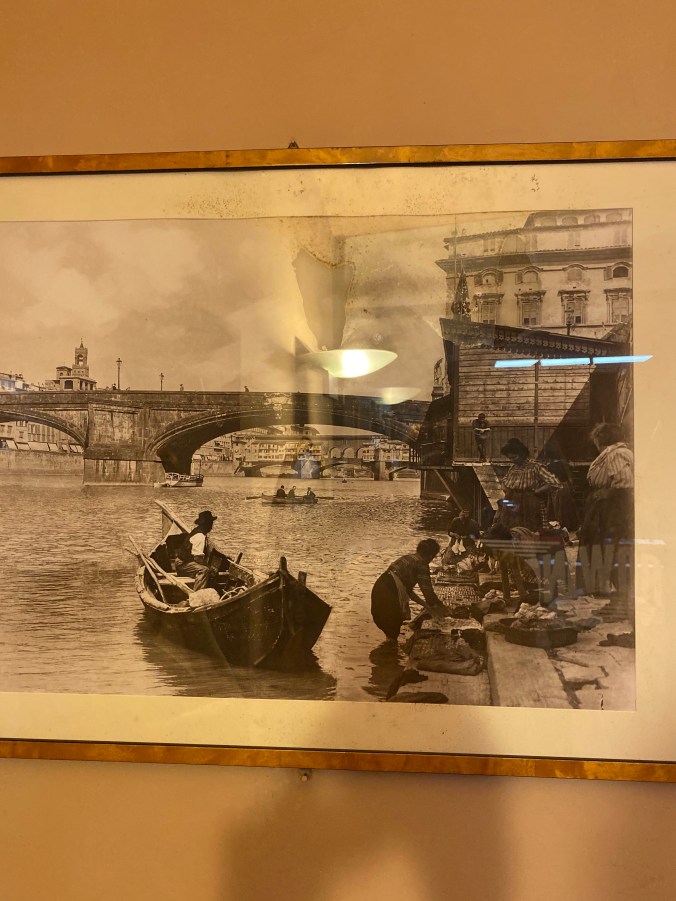
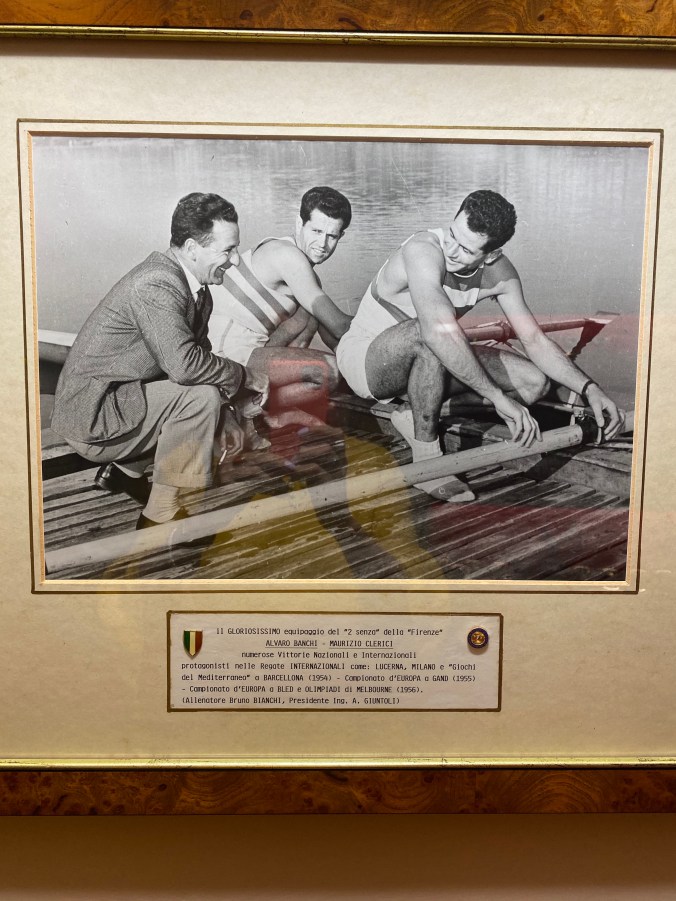
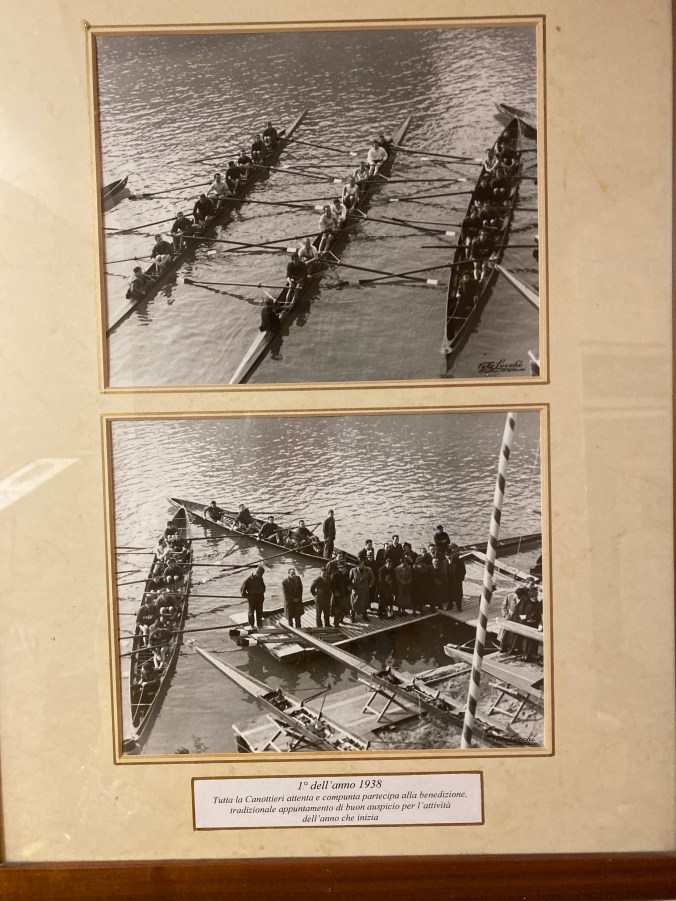
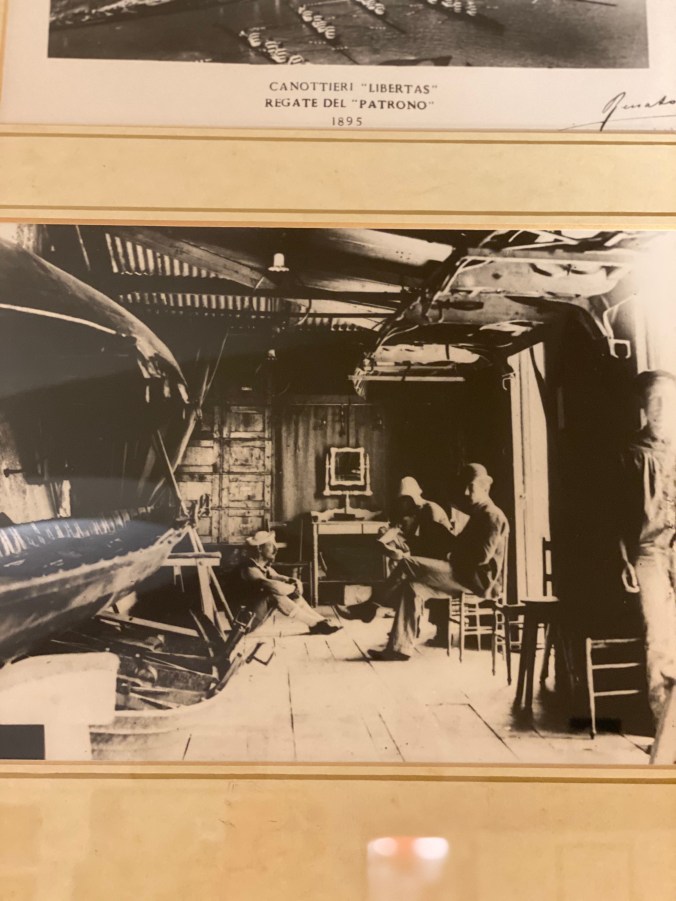
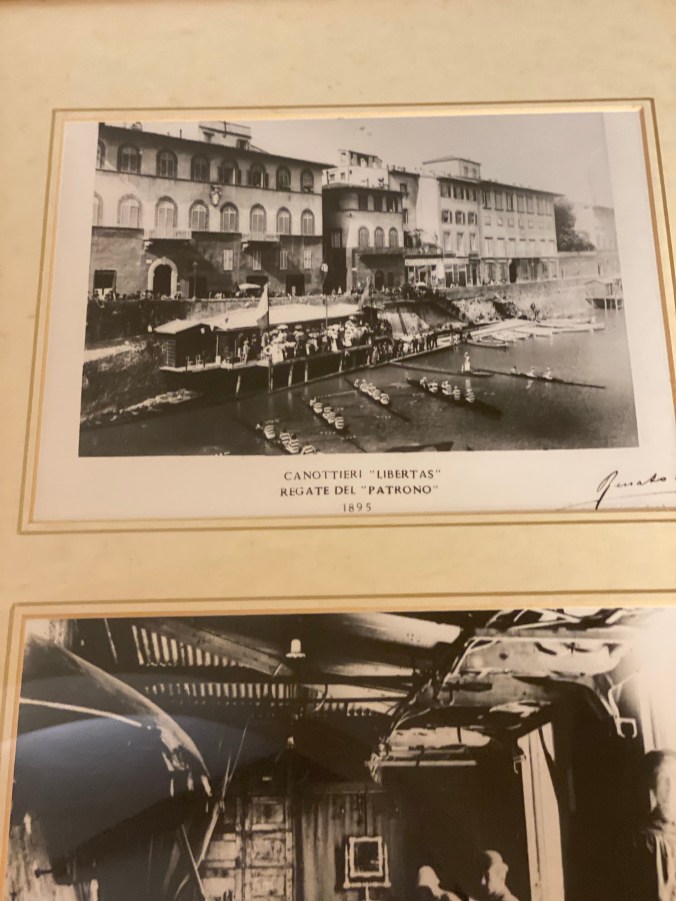
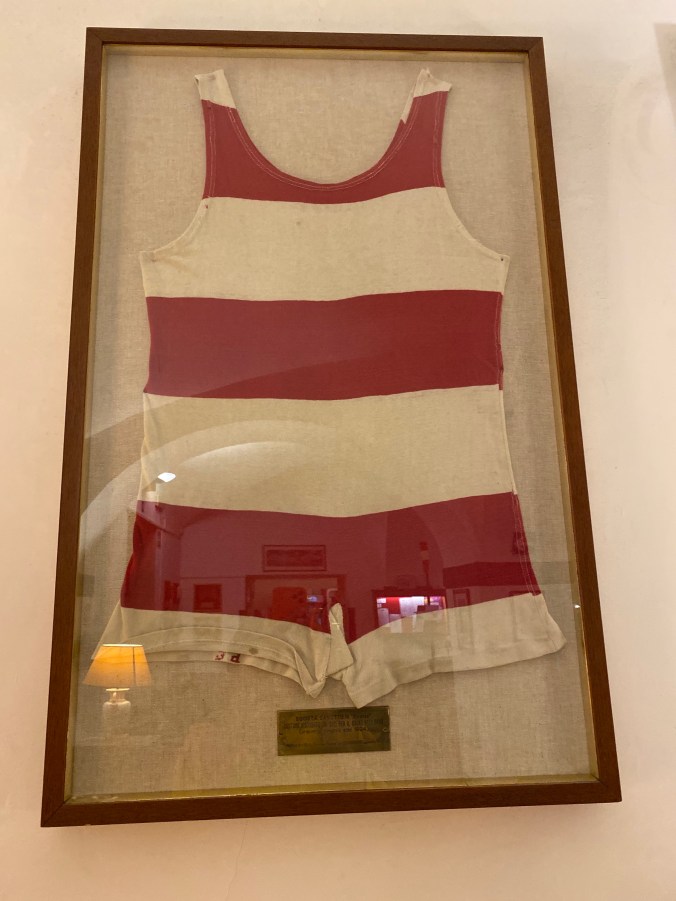
In this post I want to share some of the pictures I took that night, mostly of the club’s interior, with lots of fun memorabilia on display.

lgadMUSiTruGc7RO24XU2A


So, here we go with the memorabilia on display at the club:

rR%Vr+fuRdSTpB4gwxWAMw


Y7jU9H7+Q16oiER8wbLxPQAoFw97cLS26euFW6aHN2tAyHNM+ZQ8TDyz3CKh41J04A7+VbrLewTRiH0CVuR%9hLg32kM6MfDTcuE%jAkFZAtcwGoTTJu8pRlKQxCeNNKcZ7QXq+FSFERSMG4uMxLr4bWGwA9K6HzlRT1GR6Jwu1AYrLA%0tBkdroQPWruQuPUebFLQ

8CJxuPT9S0WdcDcAG6KC8AIBLEyun4SlGwr377gSMiZgJG8rXi4jSAOl%i4CVt9OTgTPmjCx5FRWaReyLypQRvnwrR%Vr+fuRdSTpB4gwxWAMw

J3kDDGmVRmeSaRmThJxZoQ


6gml3xiVTyq6QisrJWguXw


sIitcoOURaufqbmPhsxetg7Y8qJ2LFRQK62pwPv5M8fAfullsizeoutput_1986fullsizeoutput_19827Mt2hqQdTV+pI3N2iB%ftQjPvtXZsVTLezvXpCn1XXzw


Piazza Sant’ Ambrogio, Florence and Pope Pius VII

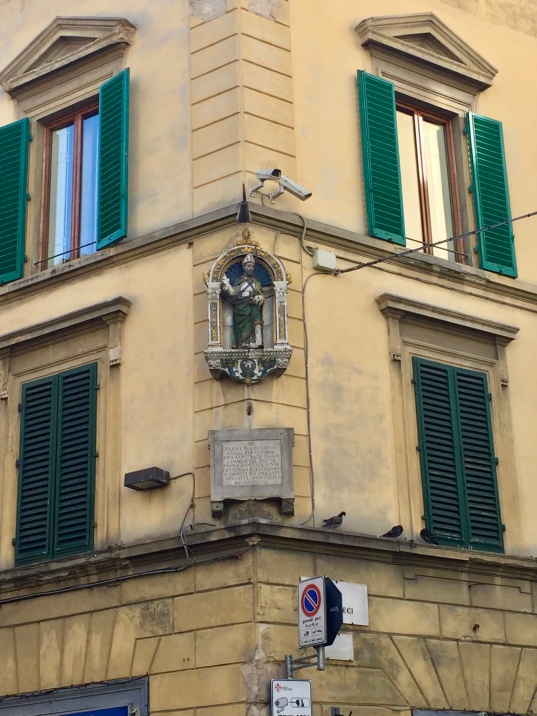
I recently met a friend in front of the church in Piazza Sant’ Ambrogio, near Santa Croce, in a spot that is the terminus for 3 streets : via de’ Pilastri, via di Mezzo, and Borgo la Croce e via Carducci.

While waiting, I noticed for the first time, although I’ve been in this piazza a hundred times before, something new.

fullsizeoutput_1853

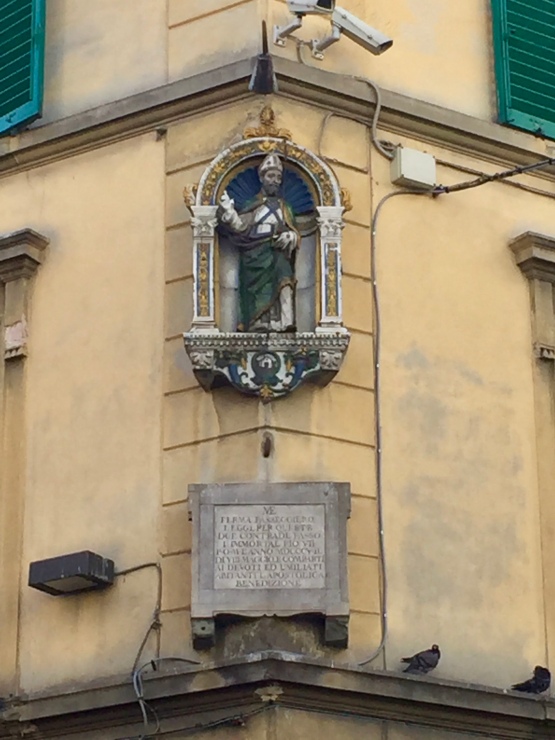
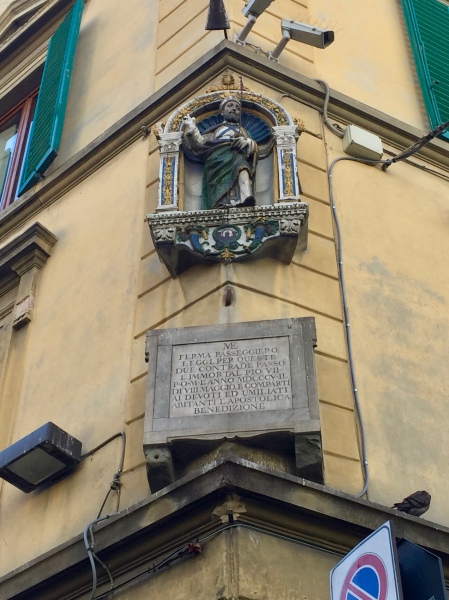
Looking a bit higher than I normally do, I saw a glazed terra-cotta tabernacle, in the style of the Della Robbia, of a figure that I assumed was a priest or even a pope, making a sign of blessing.

fullsizeoutput_1854

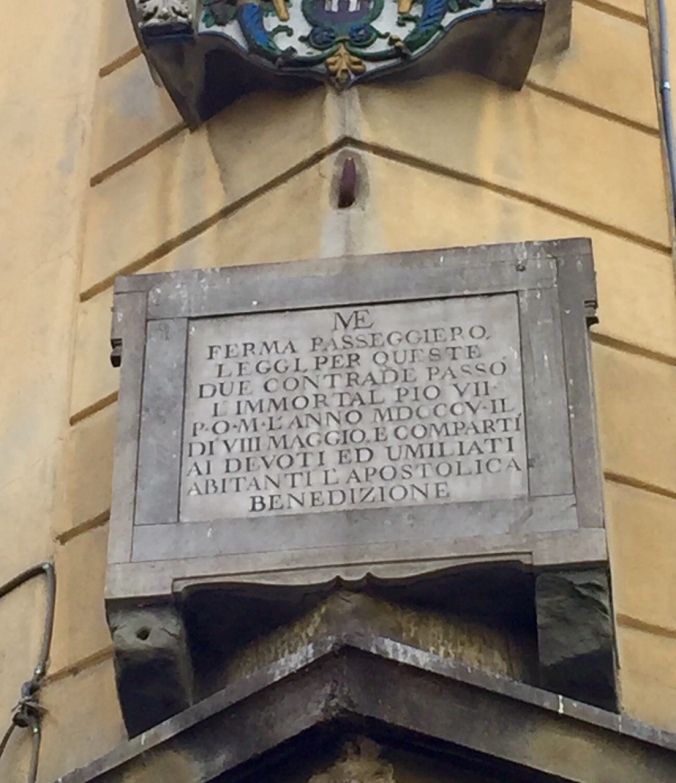
I ventured nearer to photograph the inscription below, and was rewarded with this information:

fullsizeoutput_1855

IMG_1394

Loosely translated, the inscription reads: “Stop, you passers by, and read this. Know that 2 neighborhoods were passed by the immortal Pope Pius VII on 8 May, 1807, where he devotedly and humbly gave an apostolic blessing to the inhabitants.”

I seldom have occasion to discuss the Catholic Church, that foundational stone of Italian culture, in my blog, so let’s do a little something about that now.

Who was Pope Pius VII?

Screen Shot 2019-09-17 at 14.35.54

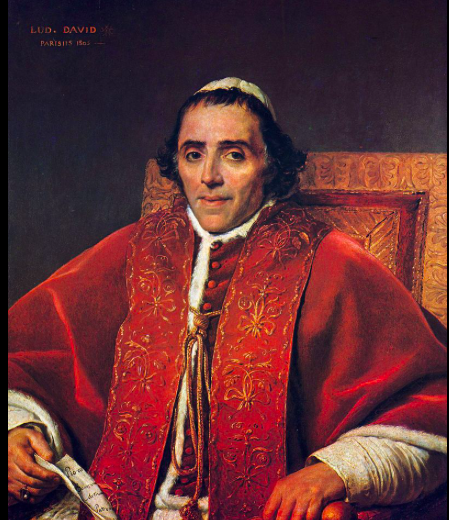
Portrait of Pius VII painted by Jacques-Louis David

He was born in 1742 as Barnaba Niccolò Maria Luigi Chiaramonti. He would rise all the way to head of the Catholic Church and ruler of the Papal States from 1800 until his death in 1823. Chiaramonti was also a monk of the Order of Saint Benedict in addition to being a well-known theologian and bishop throughout his life.

Chiaramonti was born in Cesena, about 30 miles south of Ravenna, in 1742, the youngest son of Count Scipione Chiaramonti (1698 – 1750) and Giovanna Coronata (d. 1777). His mother was the daughter of the Marquess Ghini; though his family was of noble status, they were not wealthy.

Like his brothers, he attended the Collegio dei Nobili in Ravenna but decided to join the Order of Saint Benedict at the age of 14 on 2 October 1756 as a novice at the Abbey of Santa Maria del Monte in Cesena. In 1758, he became a professed member and assumed the name of Gregorio. He taught at Benedictine colleges in Parma and Rome, and was ordained a priest on 21 September 1765.

In 1789, as the French Revolution took place, a series of anti-clerical governments came into power. During the French Revolutionary Wars, troops under Napoleon Bonaparte invaded Rome and took Pope Pius VI as a prisoner. He was taken as prisoner to France, where he died in 1799. The following year, after a sede vacante period lasting approximately six months, Chiaramonti was elected to the papacy, and took as his pontifical name Pius VII, in honor of his immediate predecessor.

He was crowned on 21 March 1800 in a rather unusual ceremony, wearing a papier-mâché papal tiara as the French had seized the tiaras held by the Holy See when occupying Rome and forcing Pius VI into exile. Pius VII then left for Rome, sailing on a barely seaworthy Austrian ship, the Bellona. The twelve-day voyage ended at Pesaro and he proceeded to Rome.

Screen Shot 2019-09-17 at 14.36.06

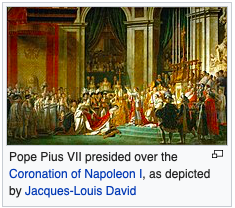
Pius at first attempted to take a cautious approach in dealing with Napoleon. He signed the Concordat of 1801, through which he succeeded in guaranteeing religious freedom for Catholics living in France, and presided over his coronation as Emperor of the French in 1804. Pius VII presided at the coronation of Napoleon I in 1804.

Screen Shot 2019-09-17 at 14.36.46

Once again, in 1809, Napoleon invaded the Papal States during the Napoleonic Wars; this earned him ex-communication. Pius VII was taken prisoner and transported to France. He remained there until Napoleon abdicated in 1813 and Pius VII returned to Rome.  He was greeted warmly as a hero and defender of the faith and immediately revived the Inquisition and the Index of Condemned Books.

His works, some notable, some to be regretted:

Pius VII joined the declaration of the 1815 Congress of Vienna, represented by Cardinal Secretary of State Ercole Consalvi, and urged the suppression of the slave trade. This pertained particularly to places such as Spain and Portugal where slavery was economically important. The pope wrote a letter to King Louis XVIII of France dated 20 September 1814 and to the King John VI of Portugal in 1823 to urge the end of slavery. He condemned the slave trade and defined the sale of people as an injustice to the dignity of the human person. In his letter to the King of Portugal, he wrote: “the Pope regrets that this trade in blacks, that he believed having ceased, is still exercised in some regions and even more cruel way. He begs and begs the King of Portugal that it implement all its authority and wisdom to extirpate this unholy and abominable shame.”

Under Napoleonic rule, the Jewish Ghetto had been abolished and Jews were free to live and move where they would. Following the restoration of Papal rule, Pius VII re-instituted the confinement of Jews to the Ghetto, having the doors closed at nighttime.

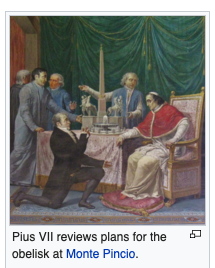
Pius VII was a man of culture and attempted to reinvigorate Rome with archaeological excavations in Ostia which revealed ruins and icons from ancient times. He also had walls and other buildings rebuilt and restored the Arch of Constantine. He ordered the construction of fountains and piazzas and erected the obelisk at Monte Pincio.

Screen Shot 2019-09-17 at 16.00.53

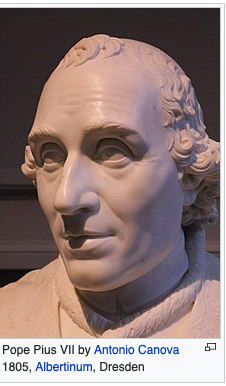
The pope also made sure Rome was a place for artists and the leading artists of the time like Antonio Canova and Peter von Cornelius. He also enriched the Vatican Library with numerous manuscripts and books.

 
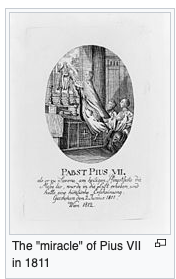
The so-called “miracle” of Pius VII. On 15 August 1811 – the Feast of the Assumption – it is recorded that the pope celebrated Mass and was said to have entered a trance and began to levitate in a manner that drew him to the altar. This particular episode aroused great wonder and awe among attendants which included the French soldiers guarding him who were in disbelief of what had occurred.

Screen Shot 2019-09-17 at 16.00.46

Relationship with the United States. On the United States’ undertaking of the First Barbary War to suppress the Muslim Barbary pirates along the southern Mediterranean coast, ending their kidnapping of Europeans for ransom and slavery, Pius VII declared that the United States “had done more for the cause of Christianity than the most powerful nations of Christendom have done for ages.”

For the United States, he established several new dioceses in 1808 for Boston, New York City, and Philadelphia. In 1821, he also established the dioceses of Charleston, Richmond and Cincinnati.

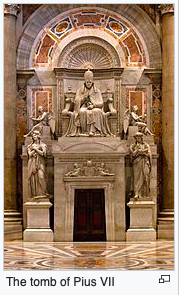
Pius VII died in 1823 at the age of 81. He was later buried in a monument in Saint Peter’s Basilica by the leading sculptor of the day, the Danish Bertel Thorvaldsen.

Screen Shot 2019-09-17 at 16.01.03

For posterity, a marker in Florence

One of the millions of things I love about Italy is:  they never miss an opportunity to mark something for posterity.  No matter how modest the contribution.

Case in point, a stone’s throw from my home on the north end of Florence is an underground parking lot in a neighborhood known as the “Parterre.”  It serves a vital function of providing parking for some of the thousands of cars that cannot enter historic Florence on any given day, because the historic center is designated a pedestrian area and does not allow entry for unauthorized vehicles.

The above-ground section marking the Parterre is nothing much to brag about:

IMG_1383

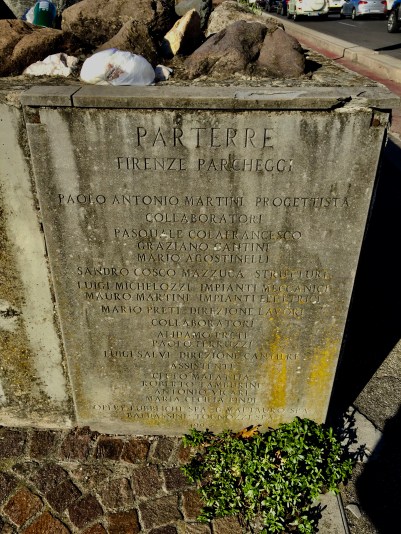
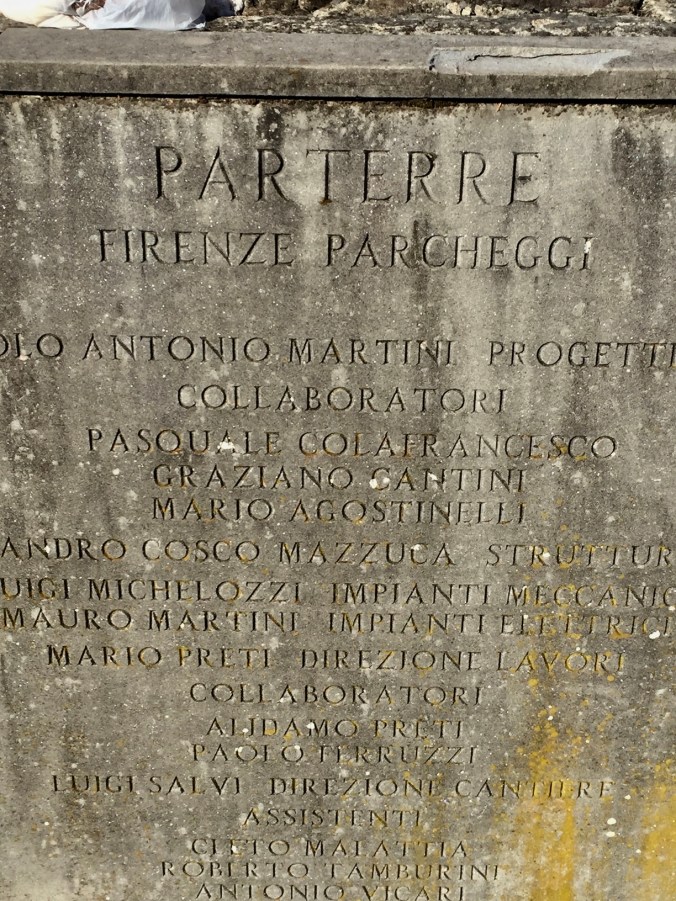
But, nevertheless, the city’s leaders wanted credit given to the masterminds behind the underground parking, and to this end they installed a very grand-sounding plaque with inscriptions lauding them all.

fullsizeoutput_1843

fullsizeoutput_1844

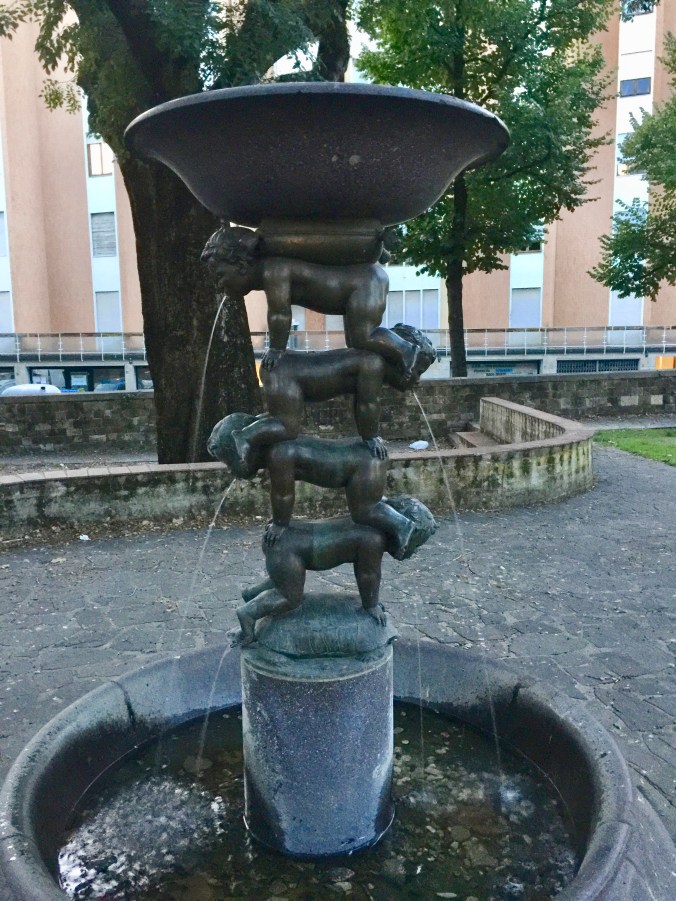
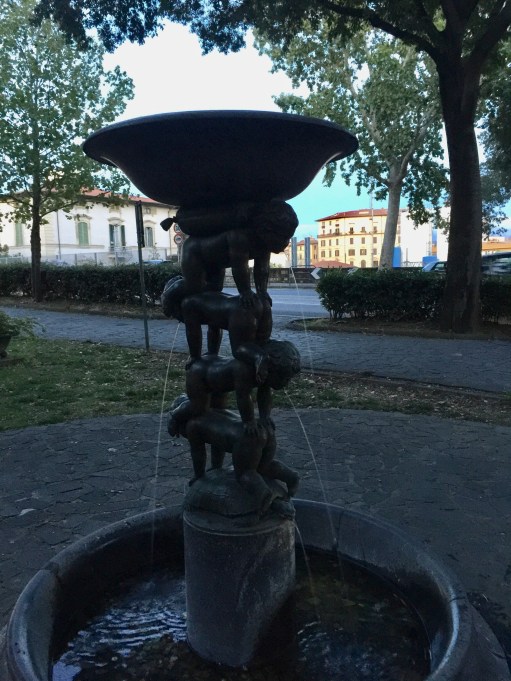
A bronze fountain composed of stacked toddlers

fullsizeoutput_1842

Poor Giorgio Vasari! I just don’t know what to make of the tiny little “piazza” that was named in Florence in his honor.  For the father of the history of art, I think he deserves something a little grander, don’t you?

Honestly, the piazza is such a throw away space that I can’t even make a screenshot of a Google Maps image to add to this post.  The location isn’t even marked, other than being a pinpoint on a short street called “Piazza Giorgio Vasari.”

So, because I am an intrepid searcher when it comes to arcane facts, here are the 3 things you should know about this unloved piazza on the north east side of Florence.

  1. It is named after Giorgio Vasari, who was a talented painter in his own right, but also the Father of Art History
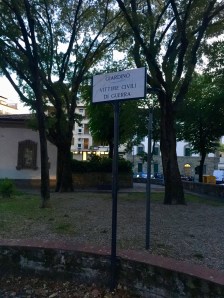
  2. It is graced with a marker dedicated to all the citizens who were victims of war (sometimes this marker has a laurel wreath placed over it)

fullsizeoutput_1841

3. It has, at it’s center, a strange bronze sculpture of stacked toddlers

fullsizeoutput_183f


fullsizeoutput_1842


The next time I walk through the piazza, I will take a note on the foundry and artist markings on the fountain.  It was too dark this time.

Strange, but true, the fountain of stacked bambini marking the Piazza Giorgio Vasari!

The French Triumphal arch in Piazza della Liberta

0XYTReQtT%KAygkw8ZQx4gTMoSIBlKR6eGAGLDSjZWVQF4PyifUPSGikhxanLoS3Cg+l8WN6xFR6yDMM28Dhvc8g

VYrwFcbNTLCd7gGDdfSjfgfullsizeoutput_1834

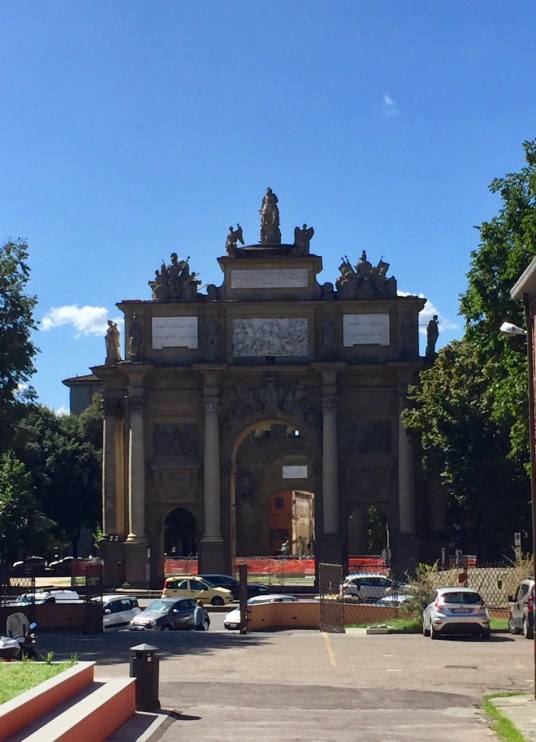
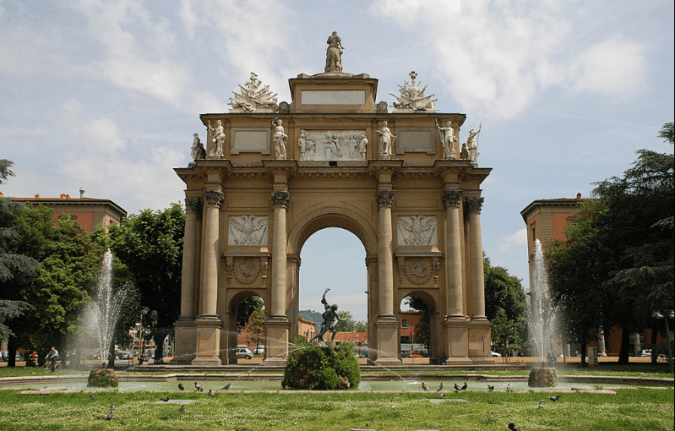
The triumphal arch of the Lorraine, a gateway to and from power in Piazza della Libertà


IMG_1377

There is a grandiose and quite ornate — at least by Tuscan standards — neoclassical arch standing in my neighborhood.  It sits not quite in the middle of Piazza della Libertà.

Based on the model of Roman triumphal arches, the arch in Florence was built for the entry of Francesco Stefano, the First Grand Duke of the House of Lorraine, a dynasty imposed on Tuscany following the death in 1737 of the last of the Medici grand dukes, Gian Gastone.

Screen Shot 2019-09-11 at 11.22.23

Ironically, in 1859, the same arch saw the exit of the last of Tuscany’s Lorraine rulers, Grand Duke Leopoldo II, after he was ousted in a bloodless revolution.

In a kind of territorial “musical chairs,” the French, Austrians and dukes of Lorraine agreed under the peace treaty that ended the war of Polish succession (1733–37) that the duchy of Lorraine be given to Stanisław I, the former king of Poland and father-in-law of France’s King Louis XV. As compensation, the dukes of Lorraine were designated the duchy of Tuscany.

Screen Shot 2019-09-11 at 11.21.18

Thoroughly mystified by these geopolitical machinations, the Tuscans did not relish the idea of foreign occupation. Witness to this, French writer and future president of Burgundy Charles de Brosses commented that they would have willingly given “two-thirds of their property to have the Medicis back, and the other third to get rid of the Lorrainers….They hate them.”

Screen Shot 2019-09-11 at 11.32.44

Screen Shot 2019-09-11 at 11.21.36

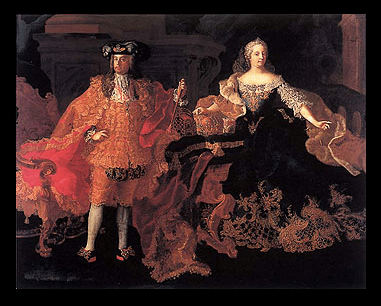
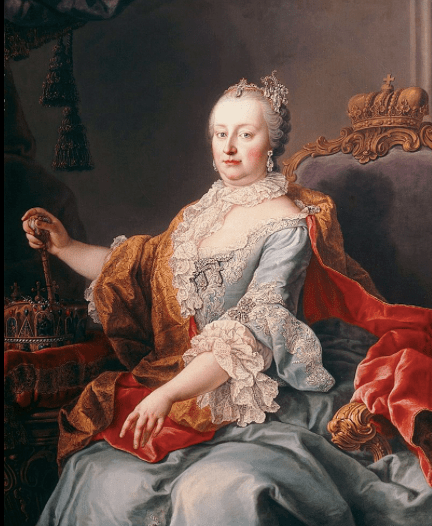
Nonetheless, to welcome the new sovereign, his young bride, Maria Theresa of Austria (the daughter and heir of the Holy Roman Emperor, Charles VI), on their first –and only–visit to Florence in January 1739, Senator Carlo Ginori, founder of a porcelain factory, proposed the construction of an arch near the ancient Porta di San Gallo gate, which was and is the main northern entrance to the city.

Here’s a double portrait of the newlyweds:

Screen Shot 2019-09-11 at 11.33.55

The arch was designed by Jean-Nicolas Jador, an architect from Lorraine. Work began on December 16, 1738, but, despite more than 400 men working day and night, it was impossible to complete the complicated edifice on schedule for the couple’s arrival.

The three main arches, a large one in the centre with two smaller ones each side, were finished, but painted wood and canvas decorated with temporary statuary covered the section above them.

As the sound of cannons boomed out from Forte Belvedere and fireworks exploded into the sky, it is likely the grand duke could barely see these improvisations as night had almost fallen by the time he reached Florence on that cold winter’s day.

Work on the arch continued for another 20 years, with many artists and artisans involved before it was completed in 1759.

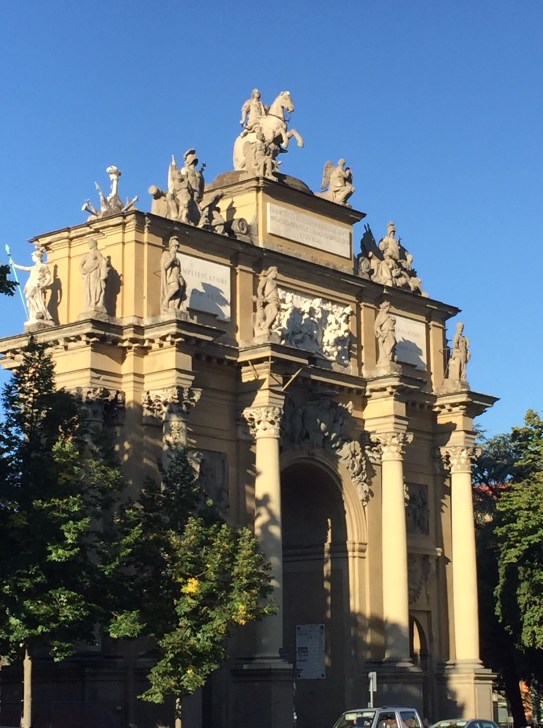
Supported by 10 Corinthian columns, the monument features 15 allegorical statues, heraldic decorations, four adornments of flags and arms, and six bas-reliefs of episodes from the life of Francesco Stefano, including his coronation.

IMG_1378

On the southern façade, two double-headed eagles symbolize the Habsburg dynasty.

IMG_1380

The monument is topped by an equestrian statue of Francesco Stefano by Florentine Baroque sculptor Vincenzo Foggini, known for his masterpiece Samson and the Philistines, now in the Victoria and Albert Museum in London. The statue faces away from the city, intended to welcome the grand duke and his entourage on his approach to the city from via Bolognese.

Screen Shot 2019-09-11 at 11.21.36

On that first visit, after celebrating mass at the Duomo, the royal couple took up residence in the Pitti Palace and spent their days sightseeing. During the carnival season, they held three lavish masked balls at the Palazzo Vecchio and even managed to attend a game of football in costume.

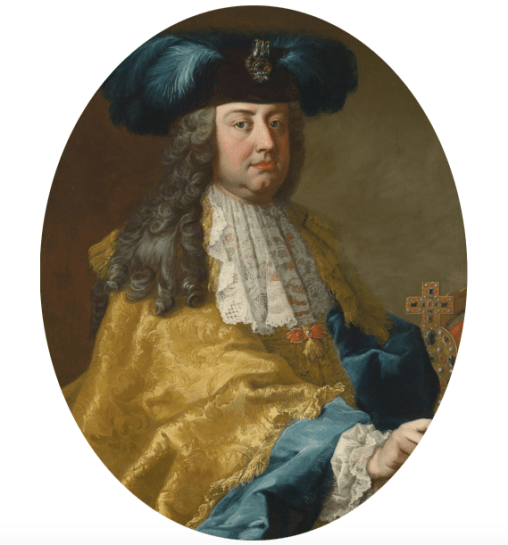
In describing Francesco Stefano in his Letters from Italy, John Boyle, the fifth earl of Cork and Orrery, wrote that he was “of a cheerful aspect, and of a most princely personage, yet something sinister and obscure may be perceived in his countenance … He is a Lorrainese, the shadow, not the substance of a sovereign.”

Here he is in a portrait:

Screen Shot 2019-09-11 at 11.28.39

And it was the shadow of Francesco Stefano that would, in fact, reign over his subjects because his stay, albeit it a pleasant one, lasted only three months, and he would never set foot in the city again. After the death of Charles VI in 1740, Maria Theresa succeeded her father and named her husband co-regent of the Holy Roman Empire.

Screen Shot 2019-09-11 at 11.30.41

For the next 27 years, Tuscany was governed in his name by a regency, first by Count Emmanuel de Richecourt and then by General Antonio Botta-Adorno.

In effect, Florence and the region simply became a convenient cash cow to be heavily taxed and plundered of its art or of whatever else could be of use to the court in Vienna for supporting its economy and the Austrian army.


http://www.theflorentine.net/art-culture/2016/05/triumphal-arch-lorraine/


Charting my progress, for the record

How’s my goal of living in Italy working out?  Pretty well.  It hasn’t been easy or fast, but it has been steady.

I came to Florence at the end of November in 2016.  I arrived with a student Visa, which let me live in Italy beyond the 90 days any American can stay in Europe as a tourist.  I stayed in Florence for 11 months and successfully obtained the all important Permesso di Soggiorno with that Visa.  The Permesso expired after 8 months, regardless of the fact that I had already paid for Italian language school for 12 months.  Lesson 1: there is no logic.

I returned to the states in October of 2017, going from Florence to Chicago where it was necessary for me to go to the Italian Consulate to apply for an elective residency Visa.  Such a Visa allows Americans like me, if we are fortunate enough to receive the Visa, to live in Italy under certain circumstances.  Chicago was necessary for me because my home is in Denver and that’s the way that cookie is divided.  I filed the myriad documents needed to show my eligibility for the elective residency Visa, and then went to Denver to wait its hoped-for arrival.

Fortunately, I received the Visa.  But, it has certain conditions. I won’t enumerate them all, but one of the most important ones is that I am not allowed to have gainful employment in Italy.  I cannot receive any payment from anyone in Italy.  Doing so could result not only in my Visa being revoked, but the Italian government could prohibit me from ever setting foot in Italy again.  It’s a powerful rule.

I returned to Florence in December of 2017, armed with my new elective residency Visa. The first step, then, once within the country, is that within 8 days, one must apply for the Permesso di Soggiorno.  I applied for this before Christmas in 2017 and then began to wait for its arrival.

Some people will receive their Permesso within a month, or so they say.  Others, like me, are not so lucky.  I waited for 8 months to receive word that my new Permesso was ready for me to pick up at the police station, or the dreaded Questura.

In July of 2018, I received a text message telling me to appear at the Questura on a certain date in early August, at a certain time.  I did as I was asked.  I turned in my old, expired, student-based Permesso, and received my new one.  Unfortunately, my new Permesso was already expired when I received it.  You read that right.  Welcome to Italy.

The true impact of this situation on my daily life was nil.  As long as one re-applies for a new Permesso within a short period, and keeps the receipt of that application with them at all times, typically no problems will result.  Fortunately, I have never been stopped by the police in Italy and asked to show my documents.  Theoretically, even if the police did stop me and ask for my documents, the receipt of the new Permesso application would suffice.

I filed my new application for a new Permesso in late September of 2018.  Of course I kept a copy of the receipt for fees paid for that application with me at all times.

And then I began the wait for my new Permesso.

So, what is the importance of this waiting period on my life?  Again, on a daily basis it is unnoticeable.  However, there are other steps that one needs to do to truly function in present day Italy after one receives the Permesso.

For example, I tried to open a bank account in Italy in the winter of 2017, while I had my student Visa and my related Permesso.  With the assistance of an Italian friend, we could not find a bank that was willing to open an account for me.  I suppose I was considered to be too transient to bother with.

At that time, I was warned about opening an Italian bank account in any case.  Still not having one, I cannot tell you exactly why people recommended I NOT open an account, should I ever find a bank that was willing to let me.  Why? As I understand it, bank accounts here are very different from what I’m used to in the USA.  For starters, it is quite costly to maintain an account here.  In any case, no bank would open an account for me if I didn’t have a current Permesso di Soggiorno.  Although I never tried to open an account with just my receipt, perhaps I could have done so.  It just didn’t seem worthwhile to try, so I didn’t.  For months I expected to receive my new Permesso and then I would try. That was my plan

Once I received my elective residency Visa and had an actual, unexpired Permesso di Soggiorno, I could follow other steps. First among these is applying for a Certificato di Residenza.  I still don’t understand why this is important to have, but it is.  There are certain things I just accept here and just accept that it makes no sense to me.  The Serenity Prayer comes in handy.

After obtaining the Certificato di Residenza, one can apply for the Carta d’ Identita, which is necessary to have before applying for an Italian health care card which would allow me to seek medical treatment in Italy should the need arise. Up until such time, it is incumbent upon me to maintain a private traveler’s health insurance policy to cover unforseen events.  As a matter of fact, proof of such a policy is a necessary document needed to apply for both the elective residency Visa and also for the Permesso di Soggiorno.

So, I’ve been waiting since last September (2018), for my new Permesso di Soggiorno.  Six months went by, 7 months, 8 months, 9 months, 10 months and then, finally, I received a text message telling me my new Permesso would be ready for me to pick up at the Questura last week.  I went with baited breath, wondering if it would already be expired again.

This time, I got lucky.  True, I had to wait 11.5 months for the thing, but at least I got one that does not expire for 12 months!  I’m suddenly completely legal, not needing any receipts for anything, at least for a year!  Then I get to do the whole thing over again.

So, how did I celebrate?  I did so by immediately (the next week) applying for my Certificato di Residenza.  I was informed by knowledgeable people and blogs that this would arrive 45 days after I applied for it.  Then I could apply for the Carta d’ Identita.

Imagine my surprise, after going to the correct government office in Florence, when the clerk told me she could produce and give it to me that same day!  She asked me if I wanted to apply for the Carta d’ Identita and I mostly certainly did.  She gave me the forms to sign and submitted them.  She said I should receive it within a week (I’ll expect it within a month, if I’m lucky).

Once I have that in hand, I intend to apply for the Italian health care card which, if I understand things correctly, will allow me to seek medical assistance if the need were to arise, which I obviously hope it will not!

And, bonus, in the meantime I met an Italian who works with a lot of English speakers, and she told me that she thought I could apply for a “bank account” with the Italian postal system.  Say what?

It turned out, she was correct.  I went into the Post Office in Florence last week and opened an account that seems to be something like a bank account…even if it is with the postal system.  I have a new debit card and the ability to wire money into this account from the US.  For the first time since I arrived in Italy in November of 2016, I will be able to pay my rent to my landlord’s bank account.  Up until now, I’ve had to take cash out of the ATM over the period of a few days to get enough money together to pay my rent.

All of a sudden, I feel like I’m living in the 21st century again.  However, I’ve been in Italy long enough to know that any number of things could and may still go wrong.  I’ll check in again once money has successfully been wired from the states to my post office bank account and I’ve paid my rent.  Fingers crossed.

And, next week, I’ll apply for a health insurance card.  Step by slow step, my life in Italy is becoming complete.

Arrividerla, L