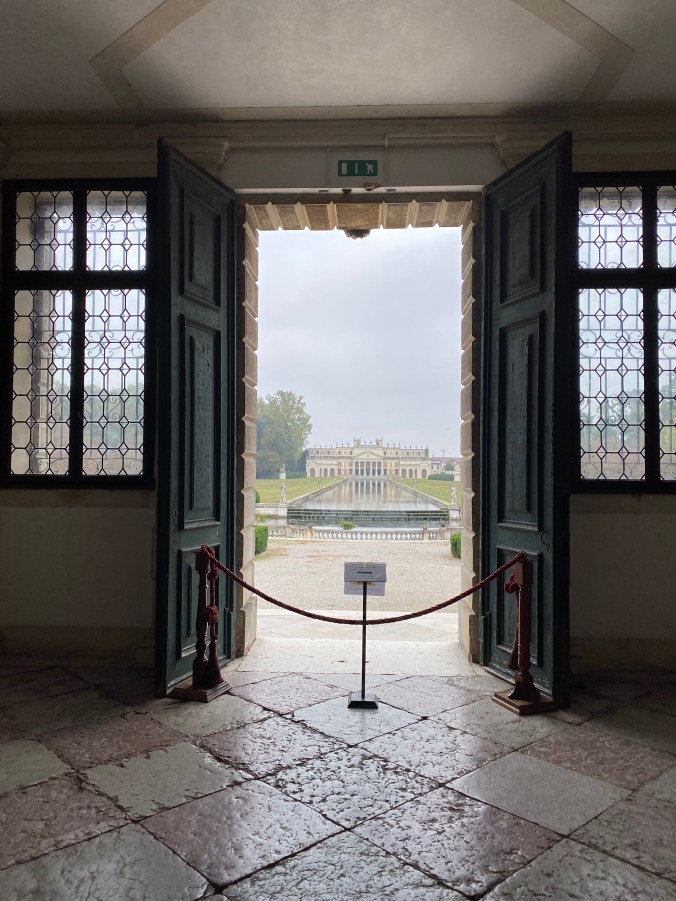
I recently posted about this day-long cruise here (here, here and here) and now I pick up where I left off. Our first stop on the cruise after leaving Padua was in Stra at Villa Pisani. This incredible villa is now a state museum and very much work a visit. It was built by a very popular Venetian Doge.
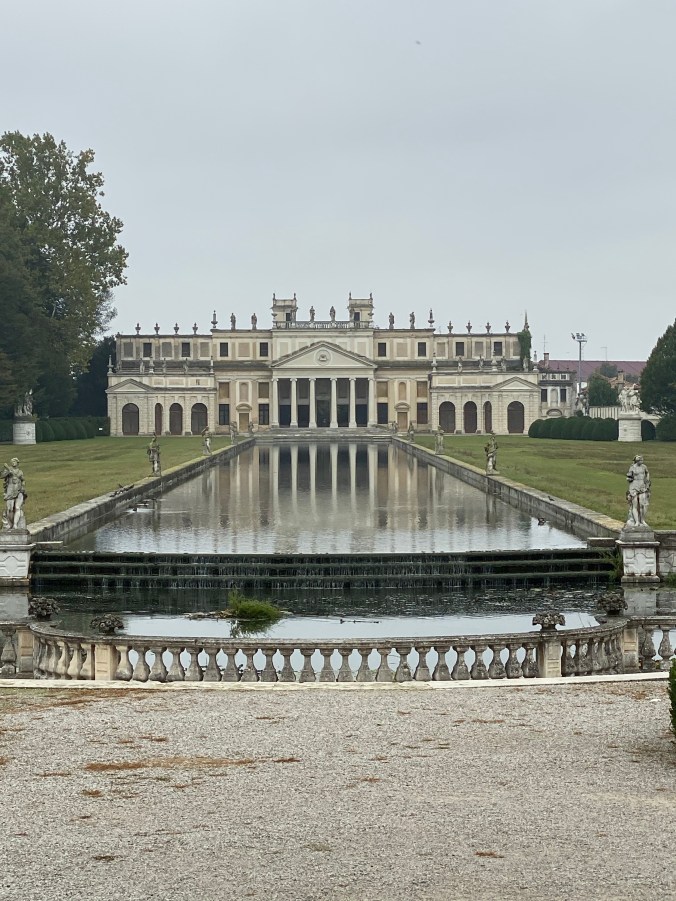
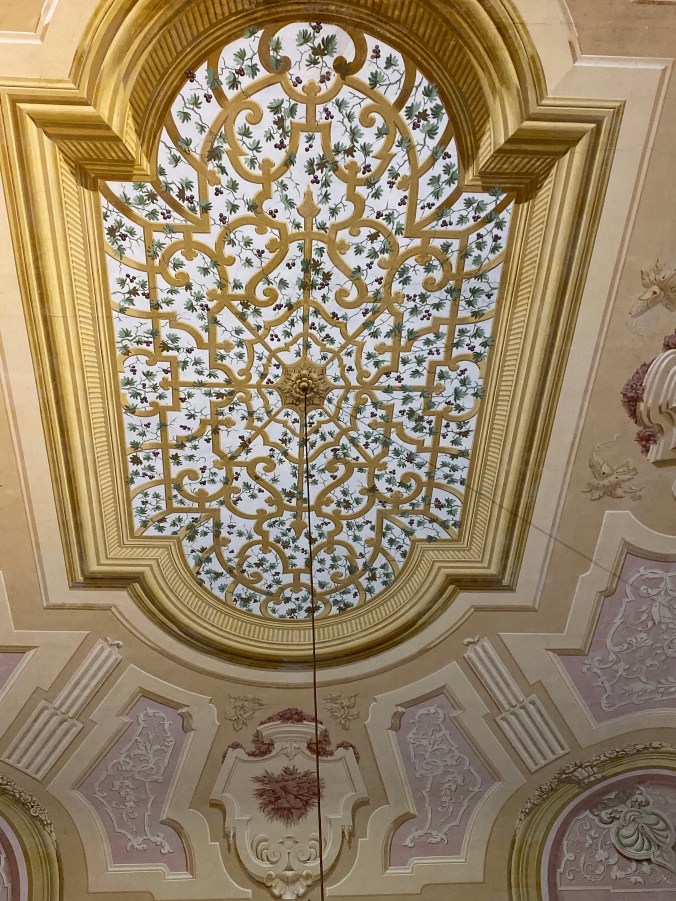
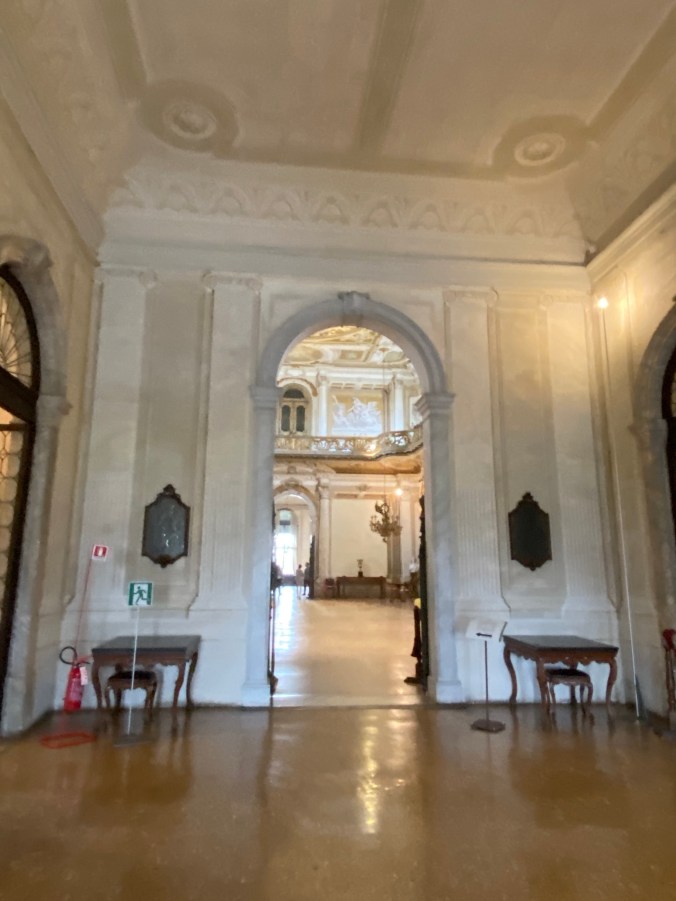
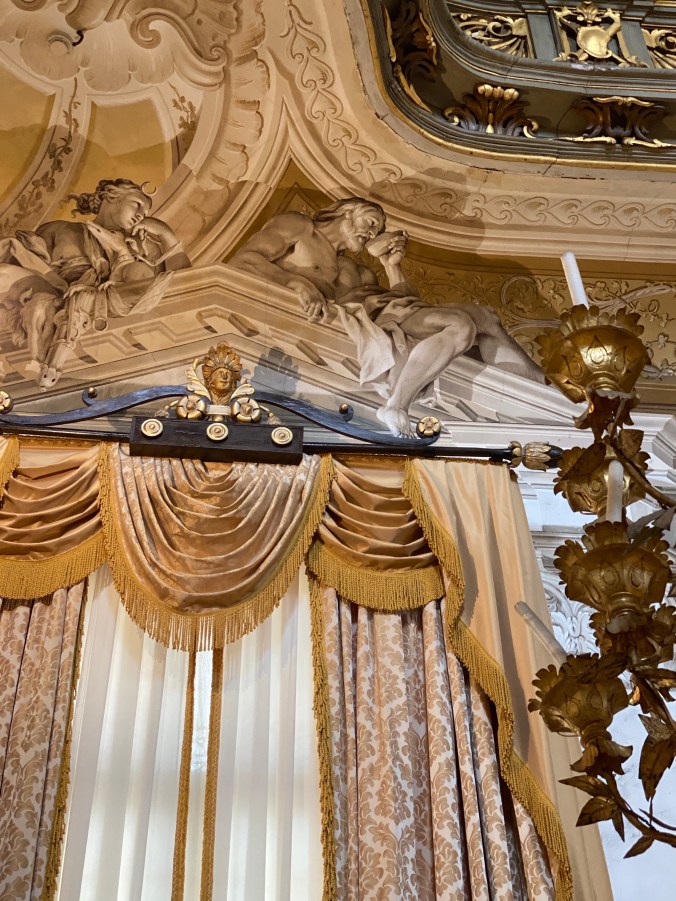
The facade of the Villa is decorated with enormous statues and the interior was painted by some of the greatest artists of the 18th century.
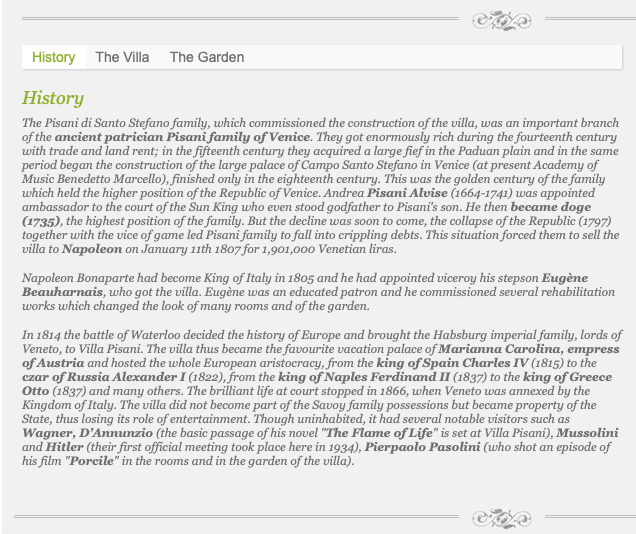
Villa Pisani at Stra refers is a monumental, late-Baroque rural palace located along the Brenta Canal (Riviera del Brenta) at Via Doge Pisani 7 near the town of Stra, on the mainland of the Veneto, northern Italy. This villa is one of the largest examples of Villa Veneta located in the Riviera del Brenta, the canal linking Venice to Padua. It is to be noted that the patrician Pisani family of Venice commissioned a number of villas, also known as Villa Pisani across the Venetian mainland. The villa and gardens now operate as a national museum, and the site sponsors art exhibitions.
Construction of this palace began in the early 18th century for Alvise Pisani, the most prominent member of the Pisani family, who was appointed doge in 1735.
The initial models of the palace by Paduan architect Girolamo Frigimelica still exist, but the design of the main building was ultimately completed by Francesco Maria Preti. When it was completed, the building had 114 rooms, in honor of its owner, the 114th Doge of Venice Alvise Pisani.
In 1807 it was bought by Napoleon from the Pisani Family, now in poverty due to great losses in gambling. In 1814 the building became the property of the House of Habsburg who transformed the villa into a place of vacation for the European aristocracy of that period. In 1934 it was partially restored to host the first meeting of Adolf Hitler and Benito Mussolini, after the riots in Austria.
From the outside, the facade of the oversized palace appears to command the site, facing the Brenta River some 30 kilometers from Venice. The villa is of many villas along the canal, which the Venetian noble families and merchants started to build as early as the 15th century. The broad façade is topped with statuary, and presents an exuberantly decorated center entrance with monumental columns shouldered by caryatids. It shelters a large complex with two inner courts and acres of gardens, stables, and a garden maze.
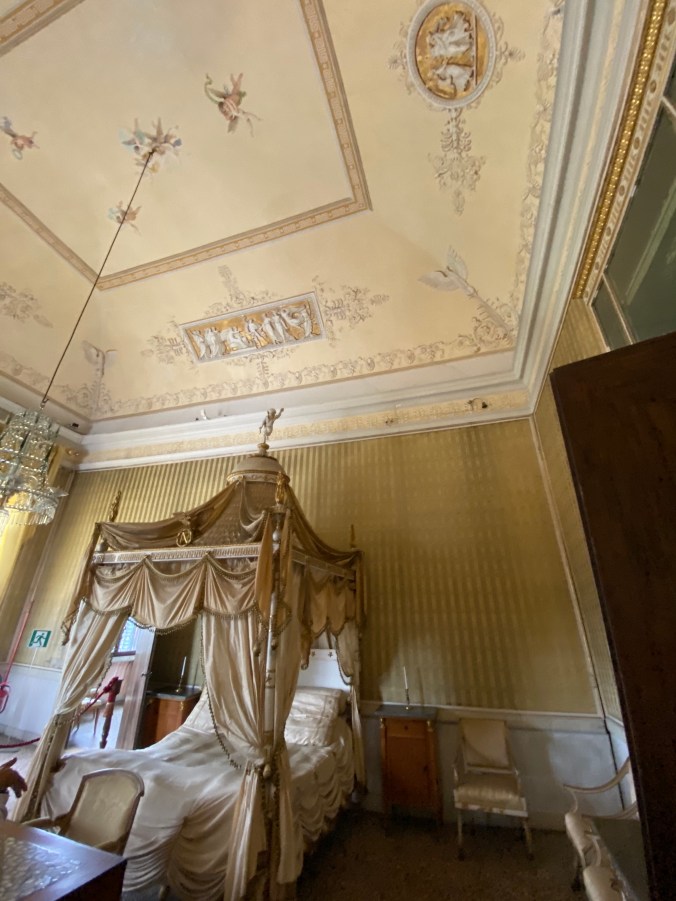
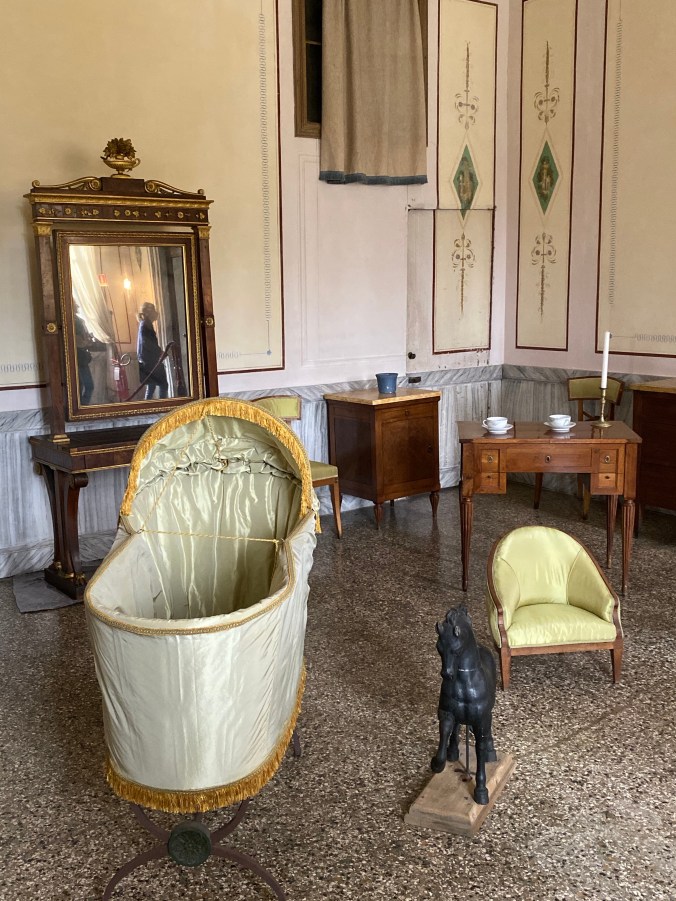
The largest room is the ballroom, where the 18th-century painter Giovanni Battista Tiepolo frescoed the two-story ceiling with a massive allegorical depiction of the Apotheosis or Glory of the Pisani family (painted 1760–1762).[2] Tiepolo’s son Gian Domenico Tiepolo, Crostato, Jacopo Guarana, Jacopo Amigoni, P.A. Novelli, and Gaspare Diziani also completed frescoes for various rooms in the villa. Another room of importance in the villa is now known as the “Napoleon Room” (after his occupant), furnished with pieces from the Napoleonic and Habsburg periods and others from when the house was lived by the Pisani.
The most riotously splendid Tiepolo ceiling would influence his later depiction of the Glory of Spain for the throne room of the Royal Palace of Madrid; however, the grandeur and bombastic ambitions of the ceiling echo now contrast with the mainly uninhabited shell of a palace. The remainder of its nearly 100 rooms are now empty. The Venetian playwright Carlo Goldoni described the palace in its day as a place of great fun, served meals, dance and shows.
Check out this sunken bathtub below:
Bear with me: in the next few photos I am trying out all of the fancy settings on my new camera:
Would you ever want to sail down a canal in Northern Italy that was built during the Renaissance? I really wanted to and I did!
The Brenta Canal stretches for many miles between Chioggia on the coast, to Padua where it turns into the Brenta River. Created in the 15th century, the canal expanded trading routes for Venice and the other major cities in Northern Italy.
I was lucky enough to cruise through the canal last week, beginning at Porta Portello in Padova and ending at San Marco, Venezia. A day to remember! It was a beautiful fall day with mild temperatures. A great day to be on the water. And, what waters! OMG.
My cruising companions and I met our boat, il Burchiello, on the stairway at Porta Portello, the ancient river port of Padua. We would cruise along the original course of the old Venetian Burchielli of the 18th century, passing in front of the beautiful Villa Giovanelli at Noventa Padovana.
Below: we are departing Padua itself, just outside the Renaissance era city walls:
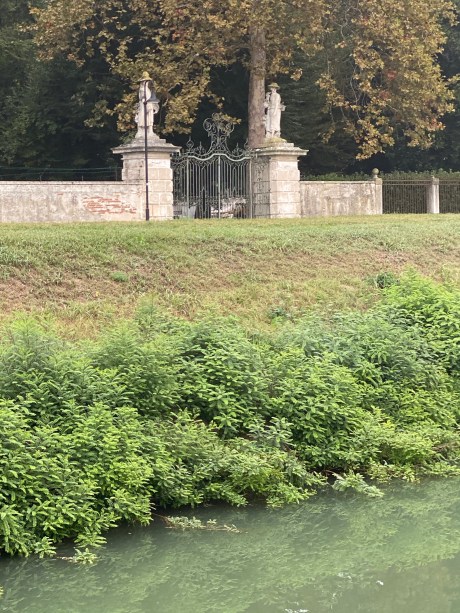
Below, coming upon the first of so many villas located along the canal.
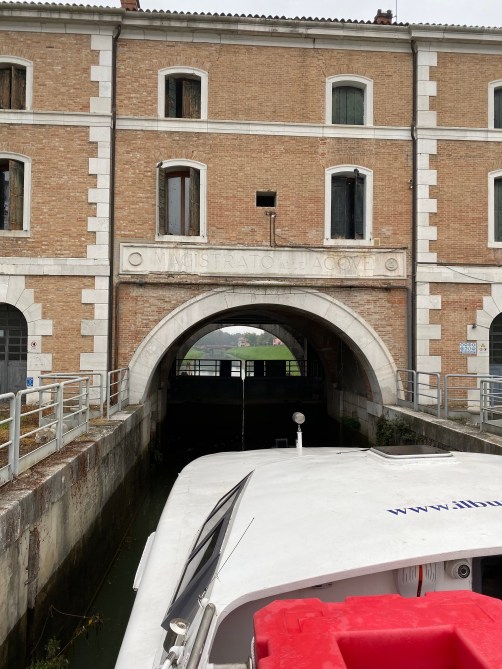
We glided through the Noventa Padovana and Stra lock systems. This system of locks on the canal were really interesting to experience and to watch from the boat. The next 2 videos show the locks closing behind the boat.
We passed under some low bridges and buildings! Watch you head!
Now, at the front of the boat, the locks are opening:
Scenes along the canal on such a peaceful September Sunday morning. A lot of fishing going on:
A sighting of the next villa:
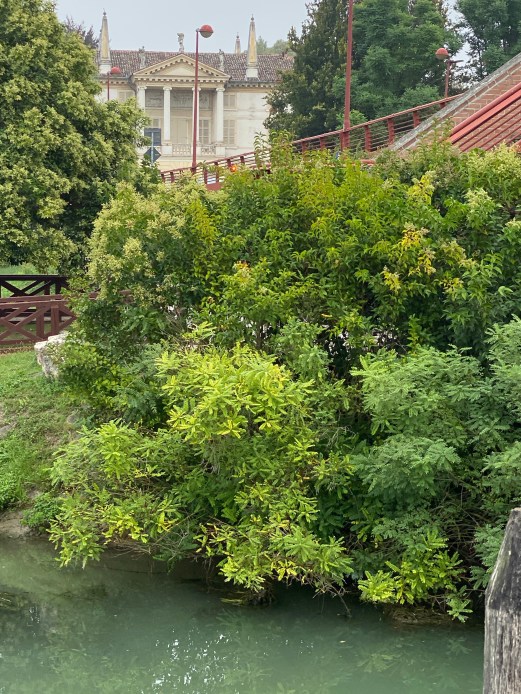
My next post will talk about the villa seen below:
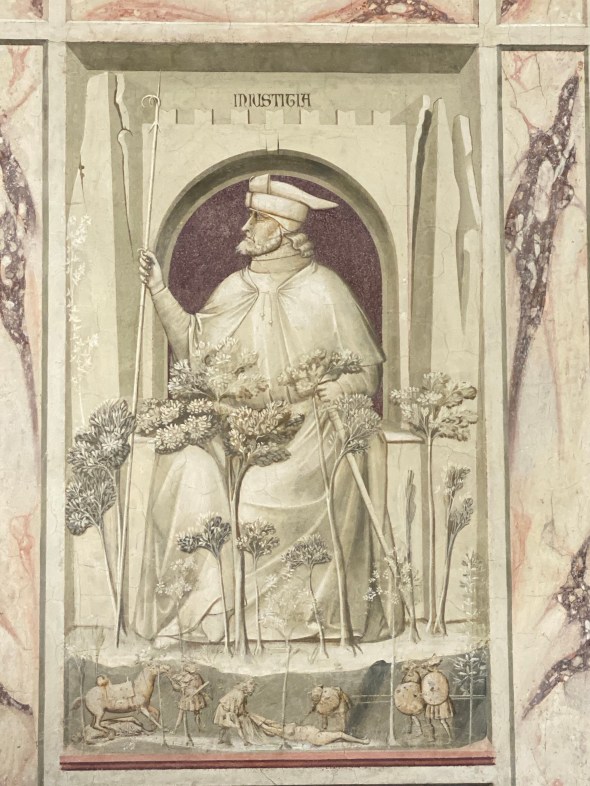
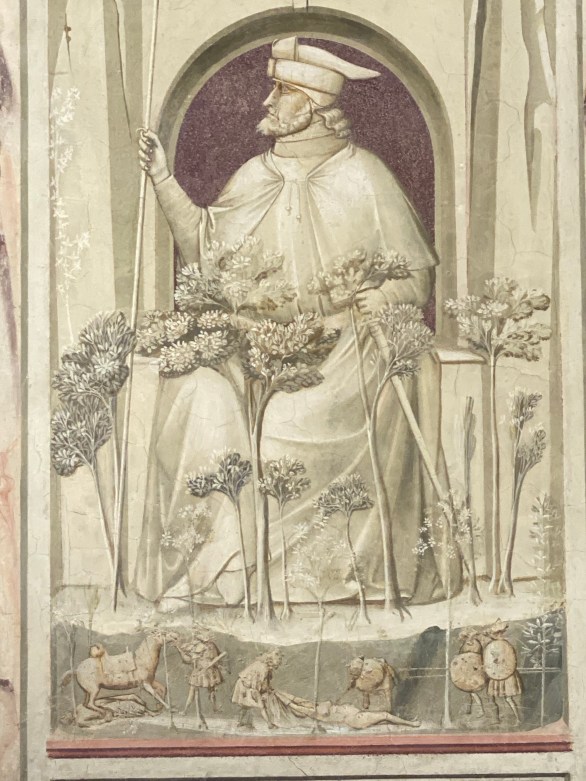
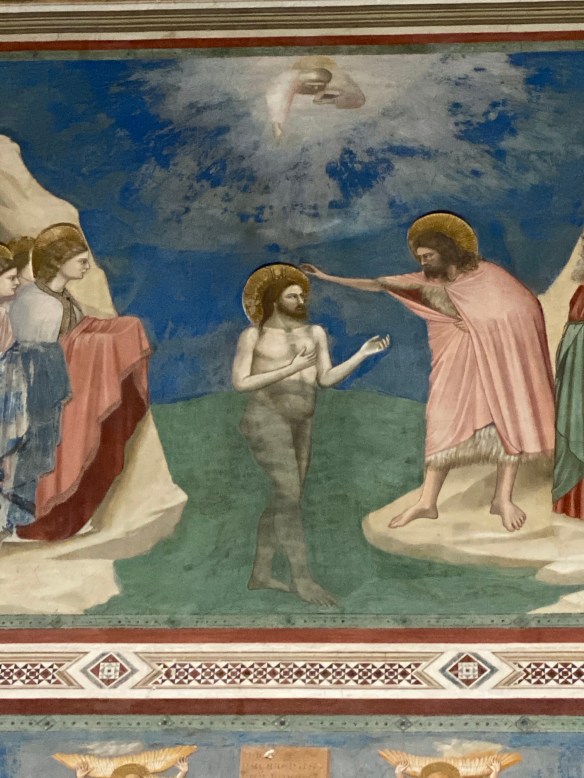
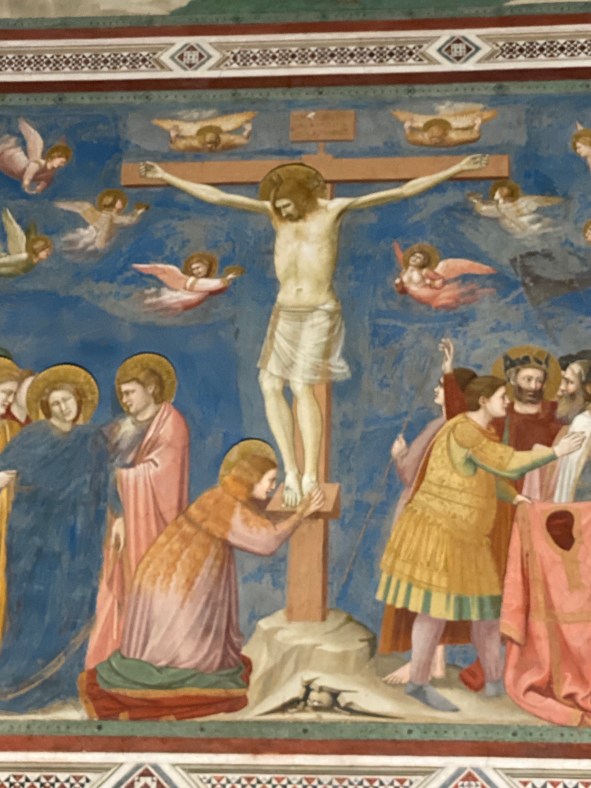
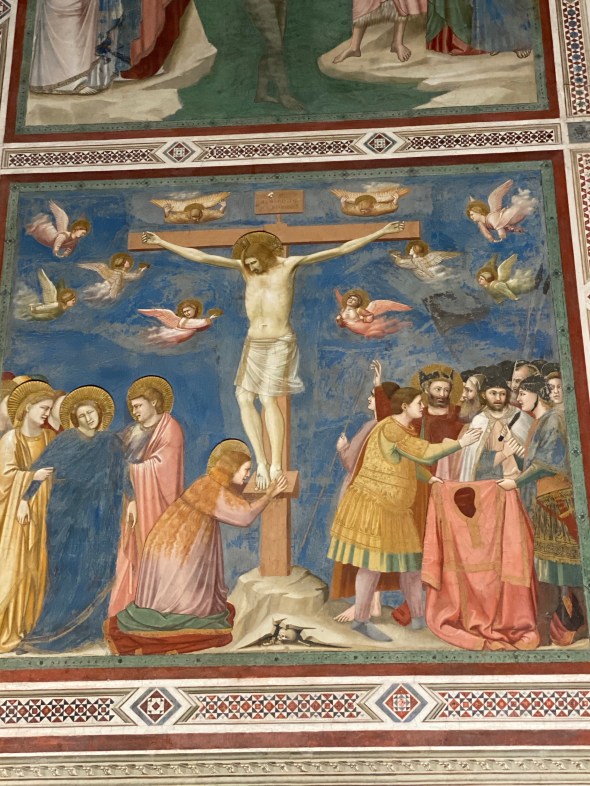
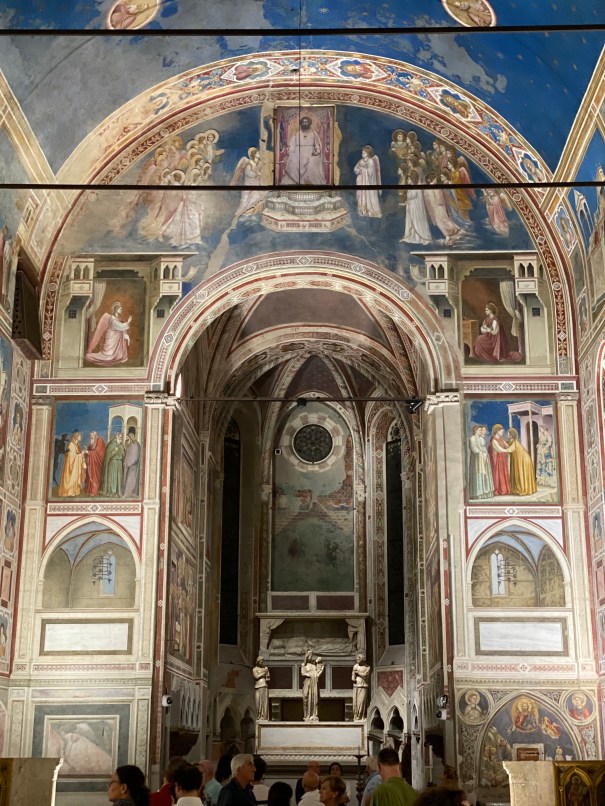
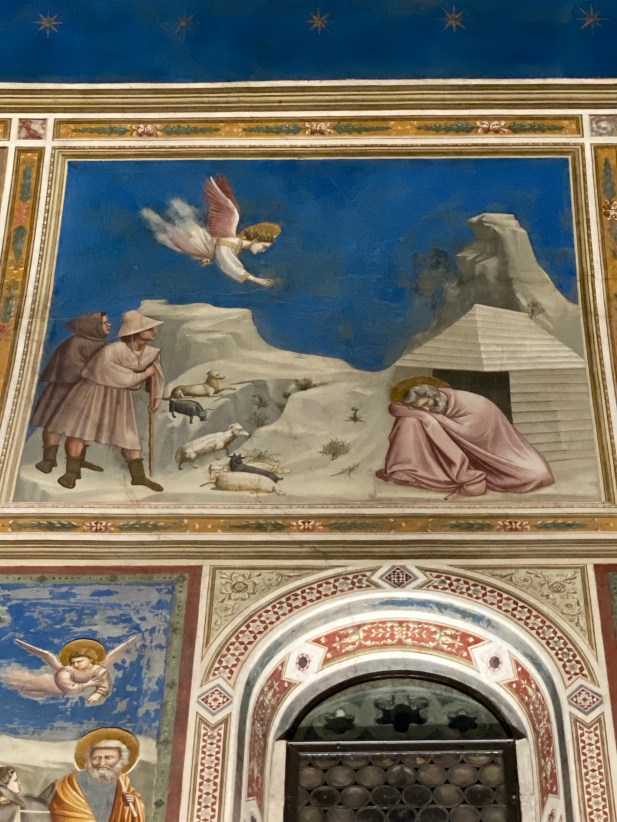
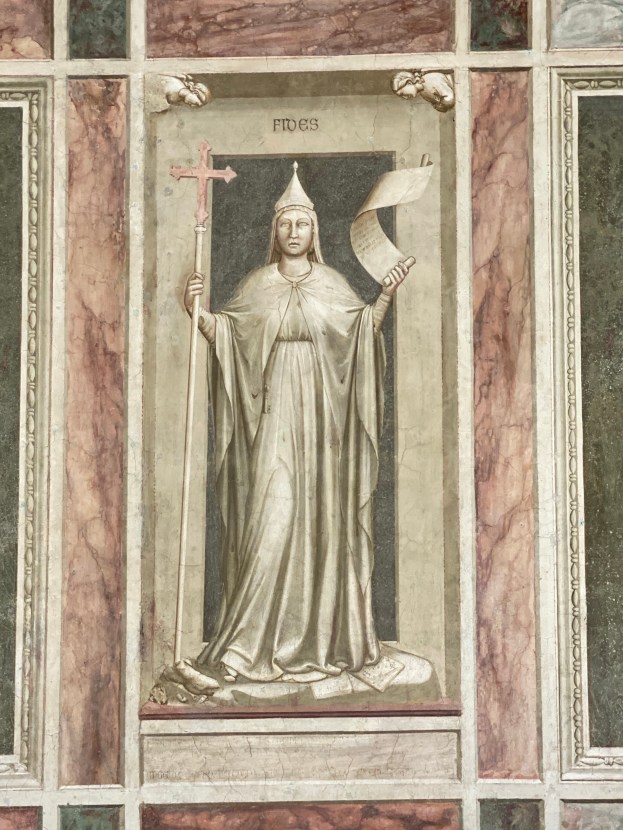
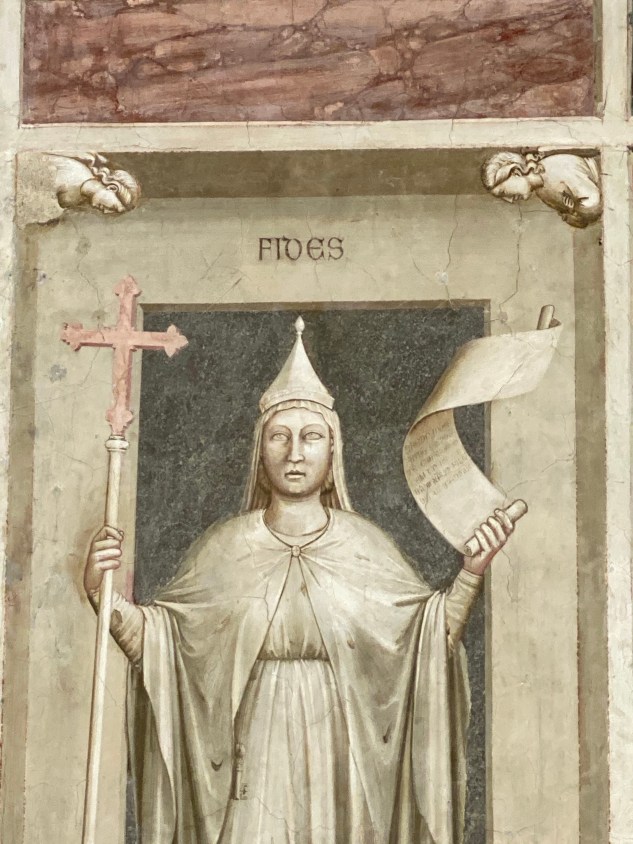
I had to go back to Padua to see the masterpiece of Medieval fresco painting and I’m so happy I did. One, two, even three times in a lifetime is not enough. I’m now at 4 times and counting.
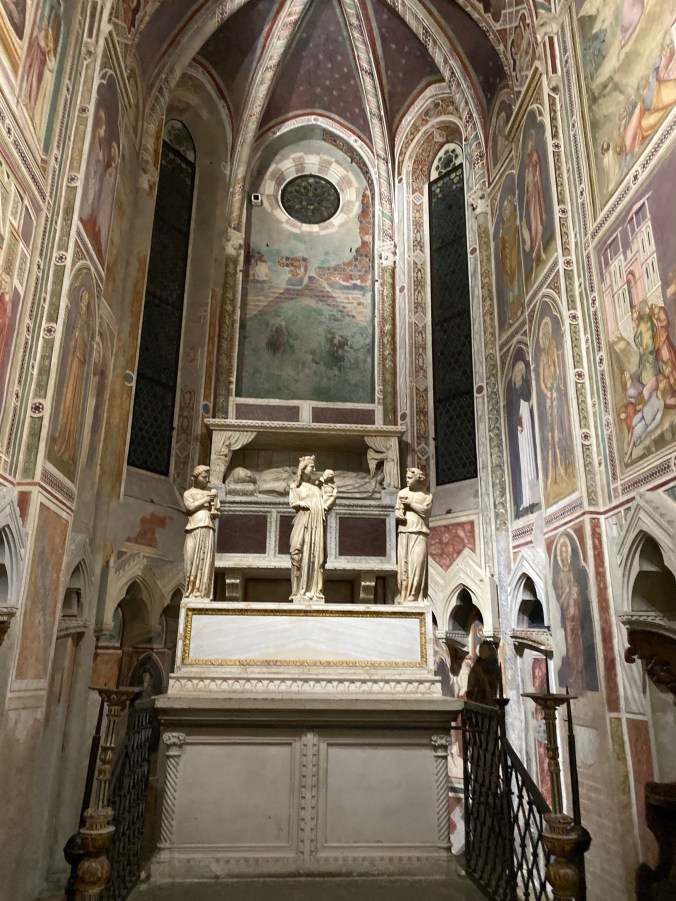
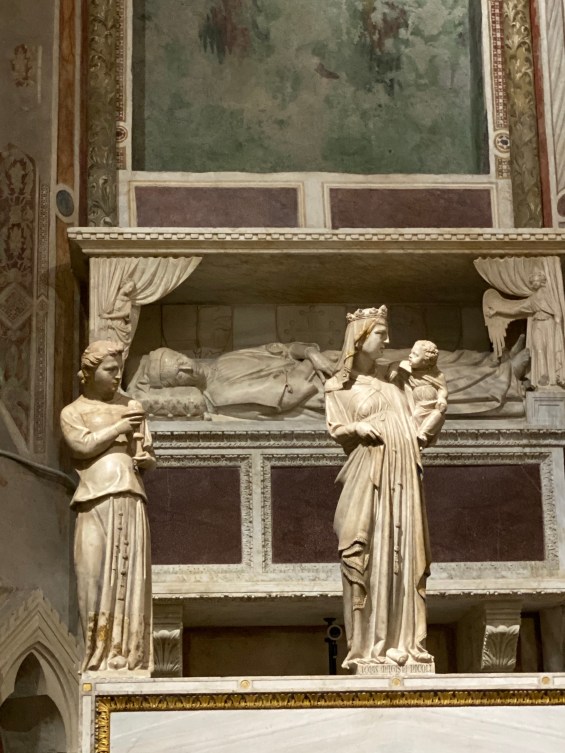
Tuscan sculptor, Giovanni Pisano, is also well-represented in the chapel.
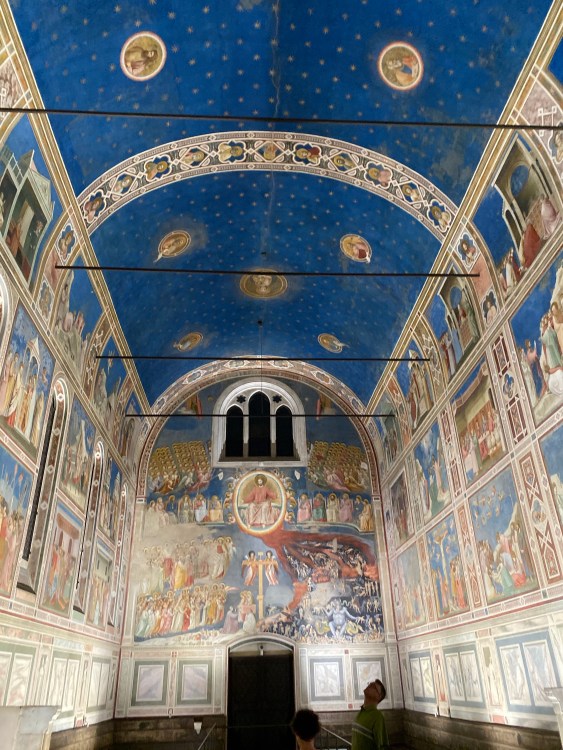
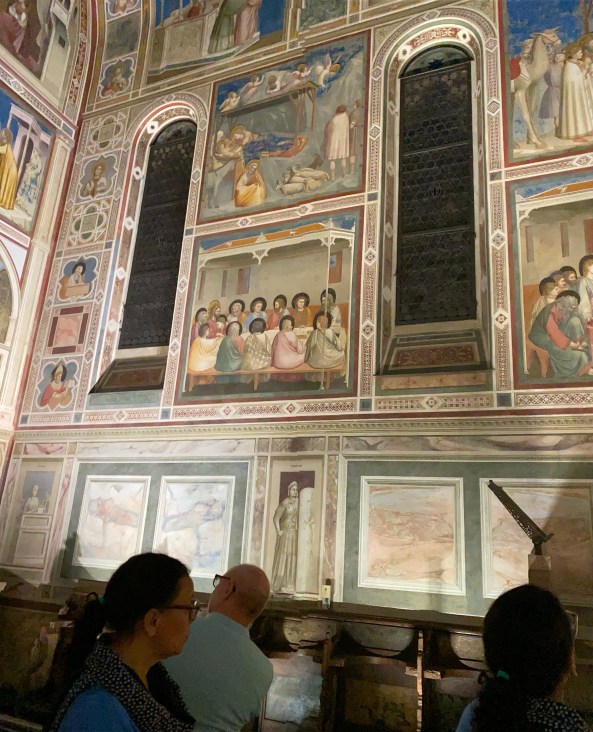
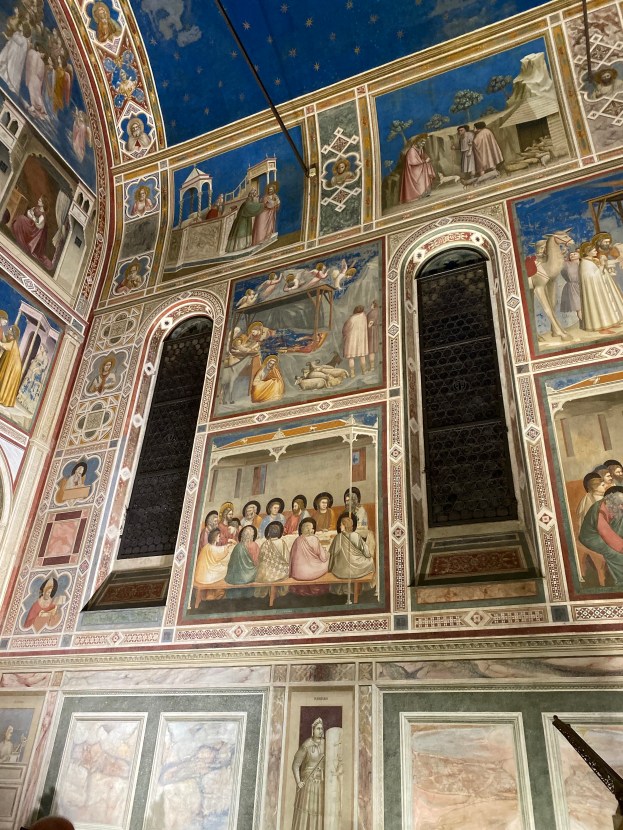
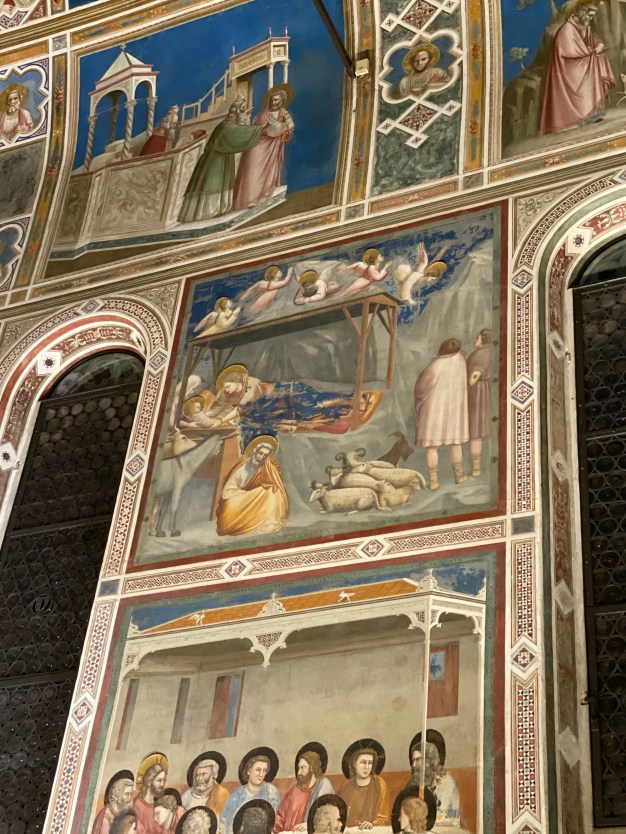
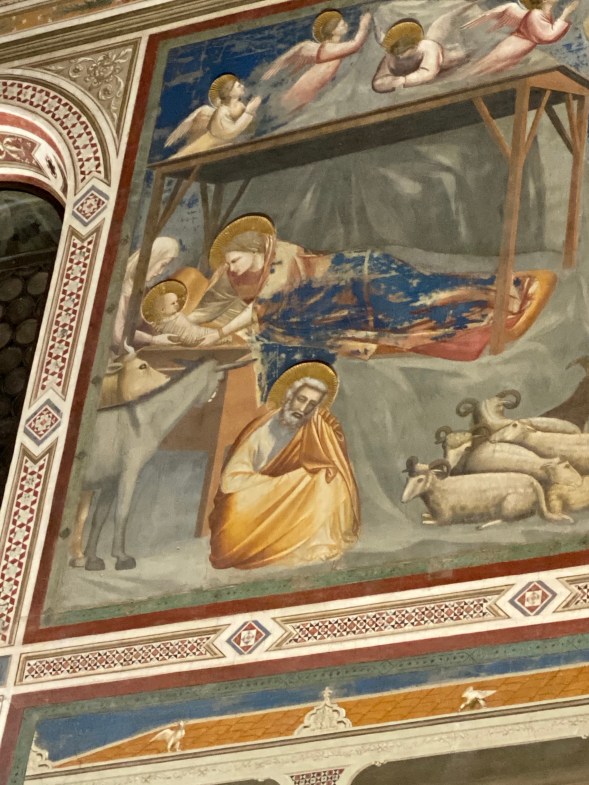
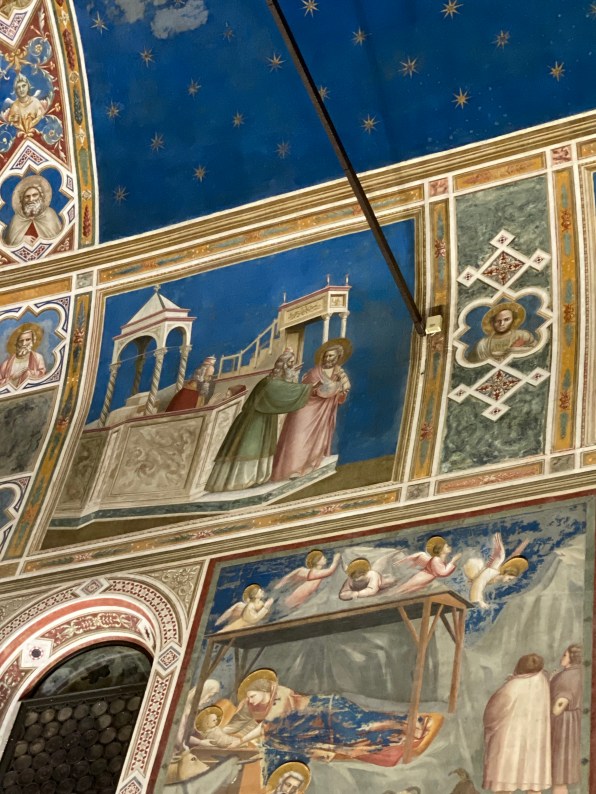
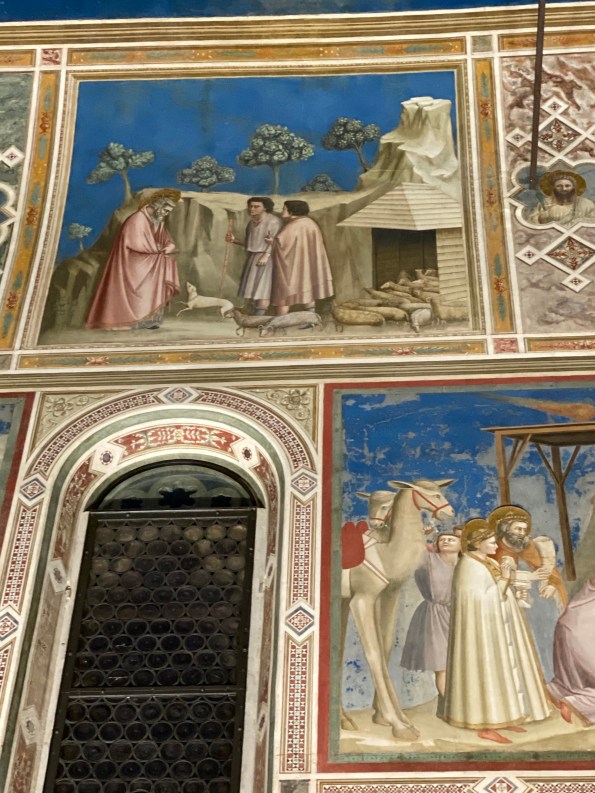
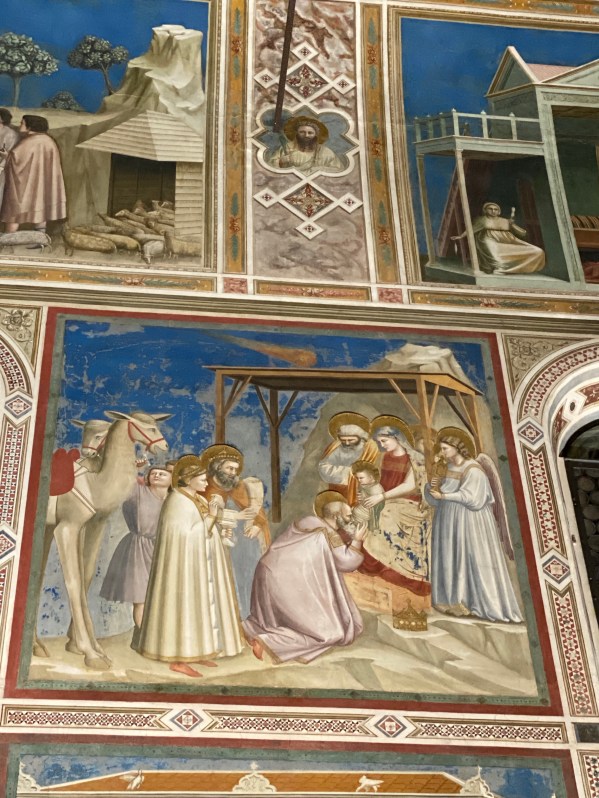
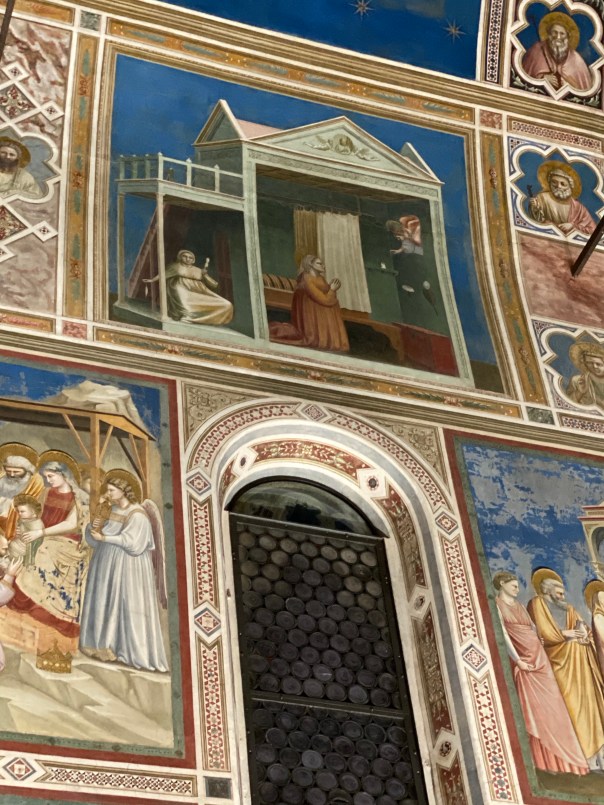
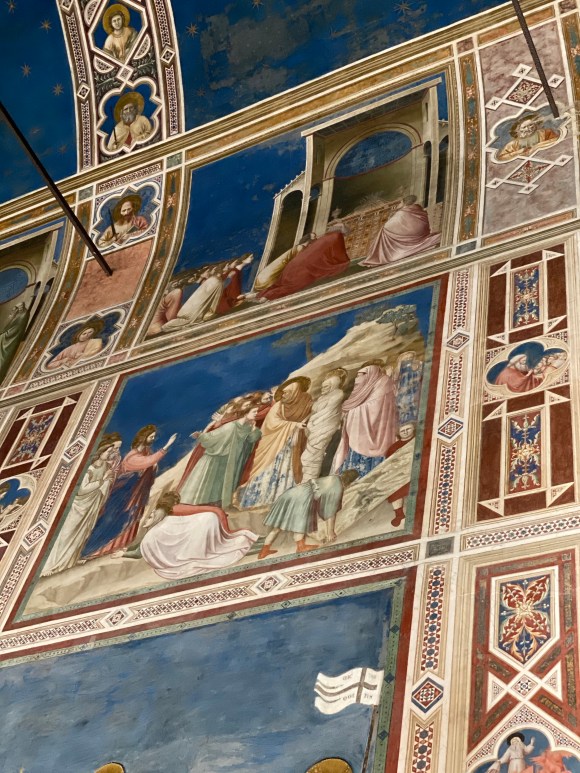
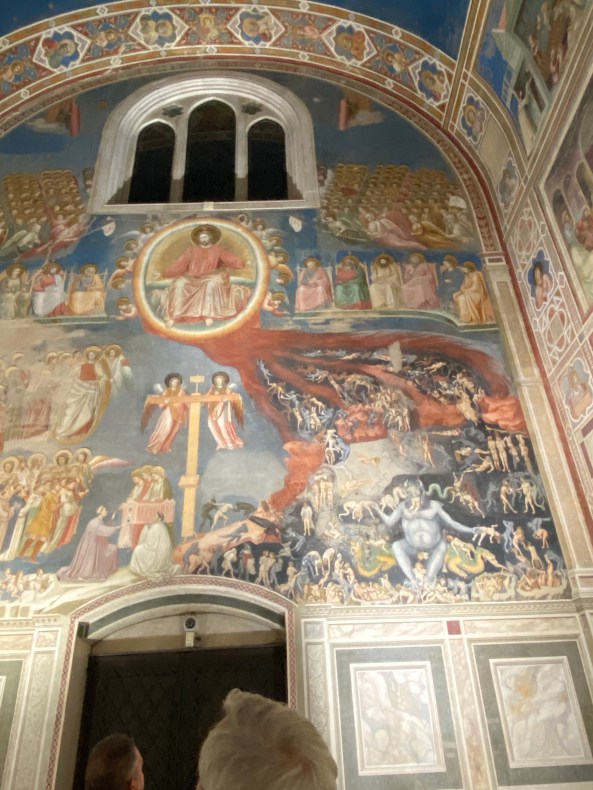
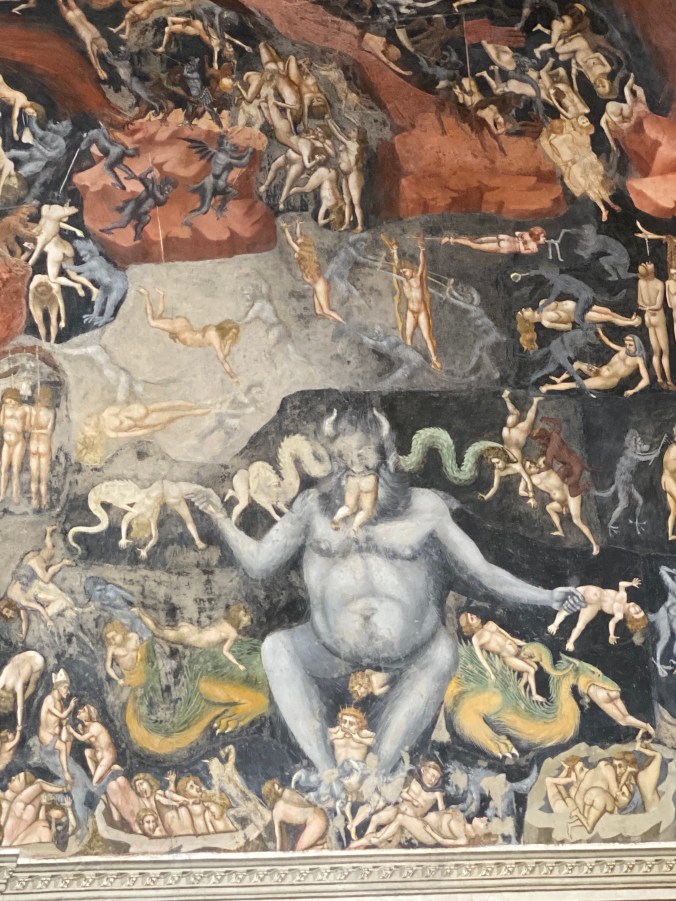
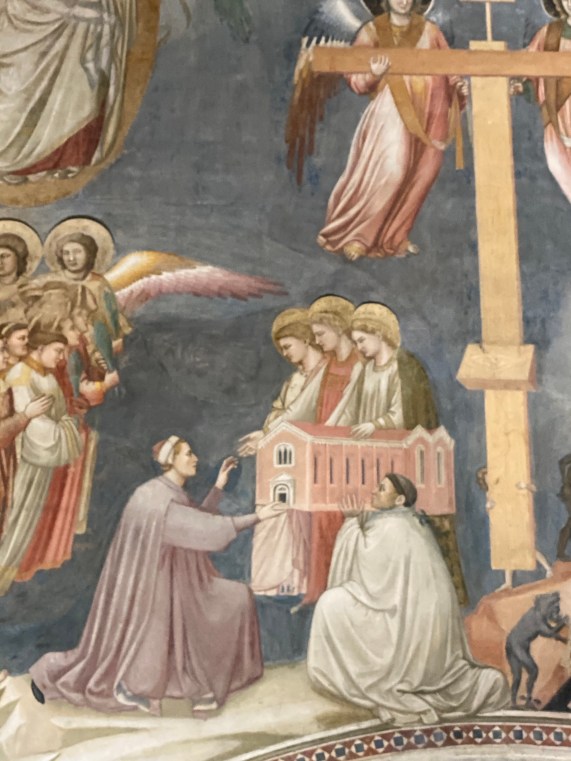
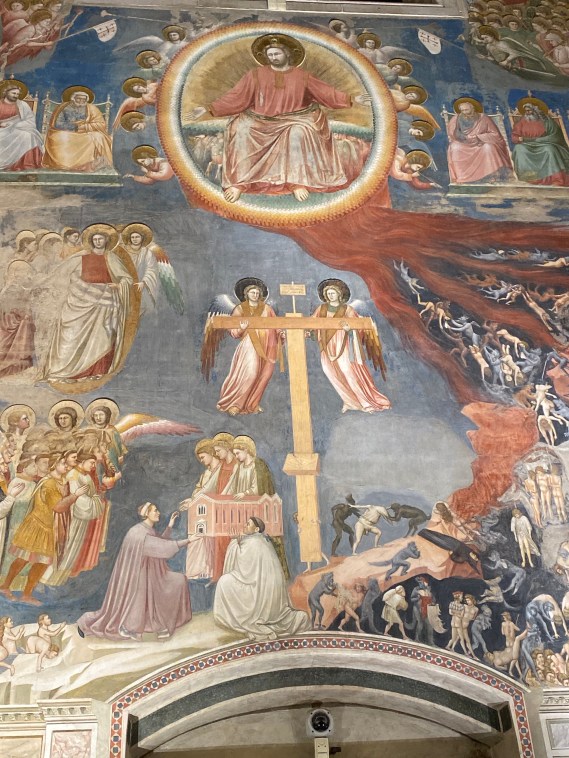
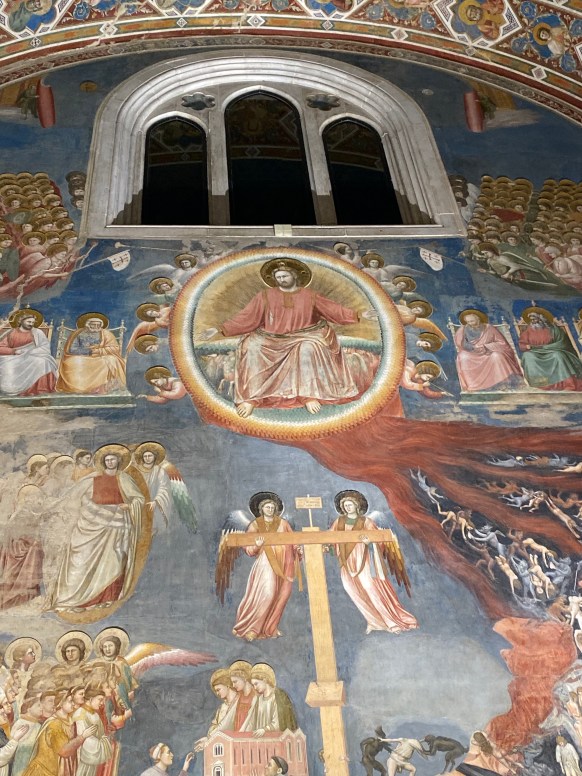
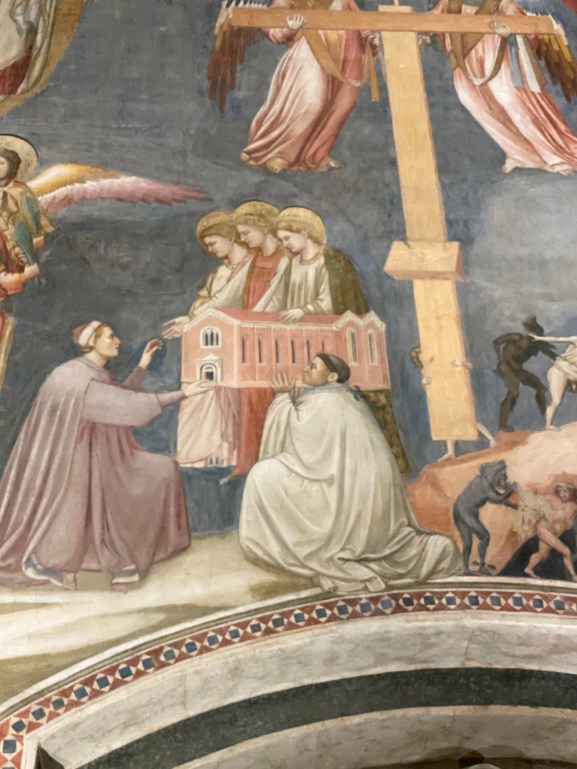
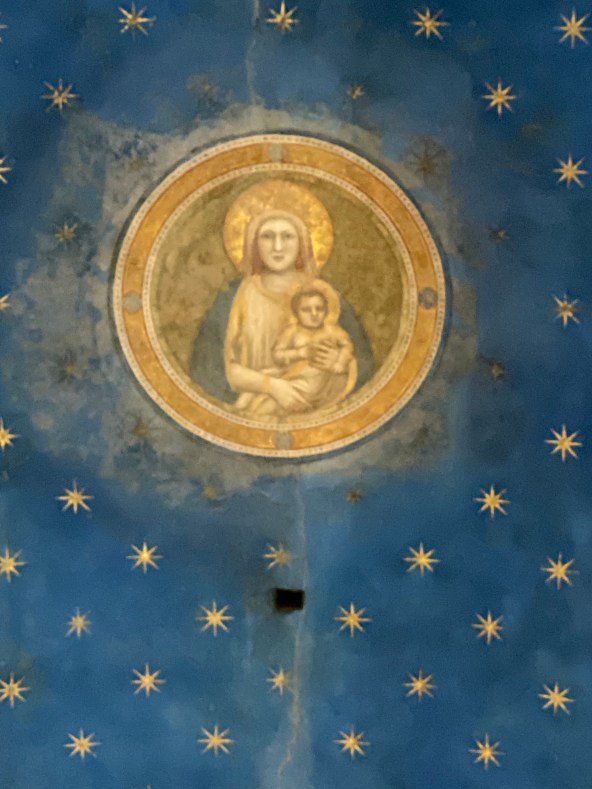
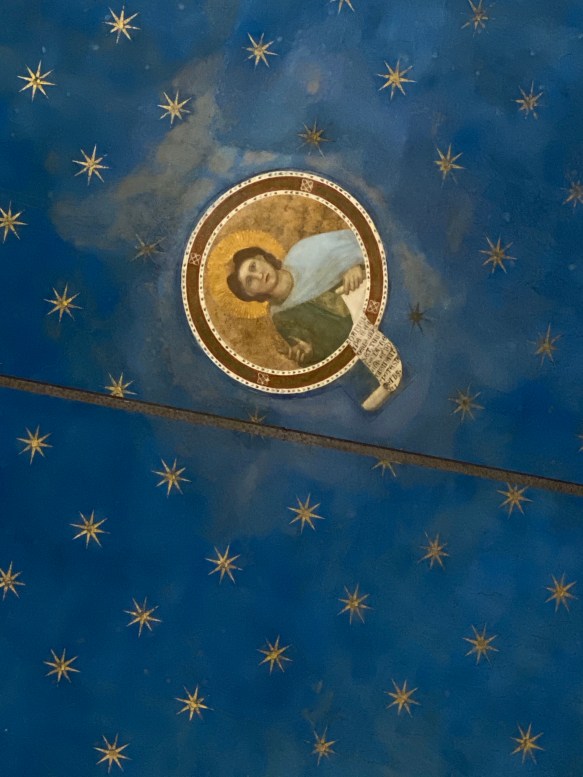
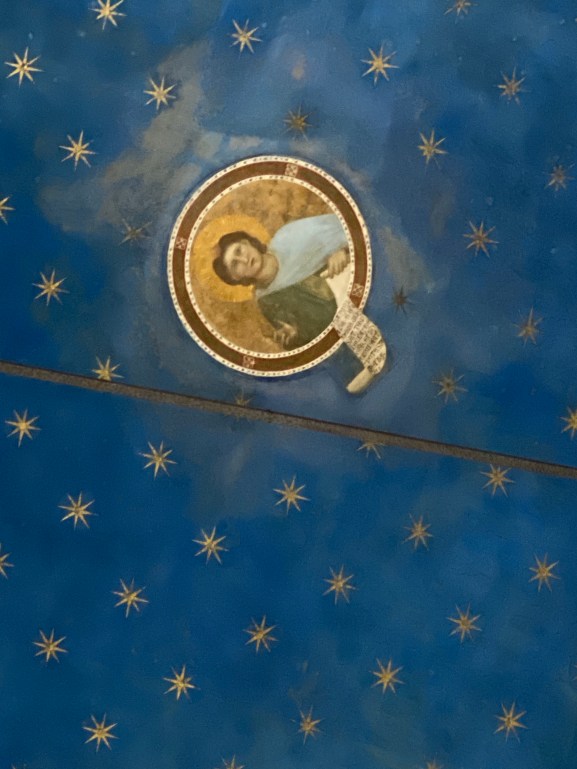
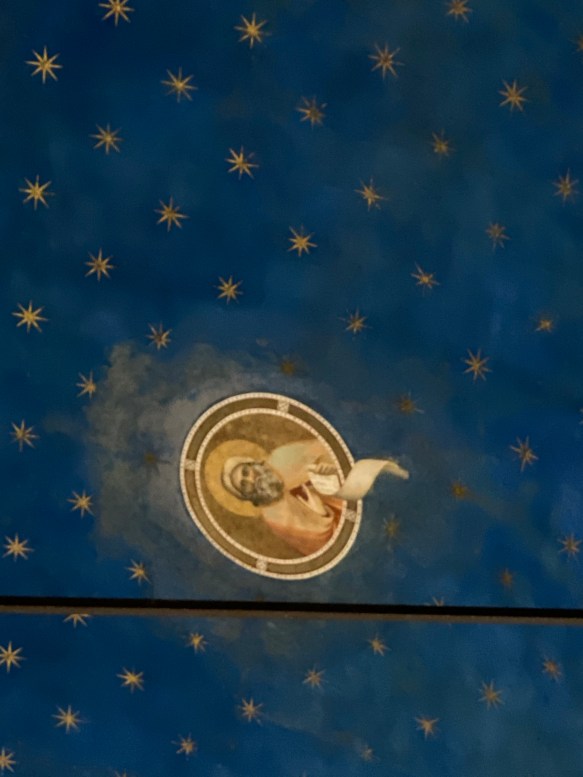
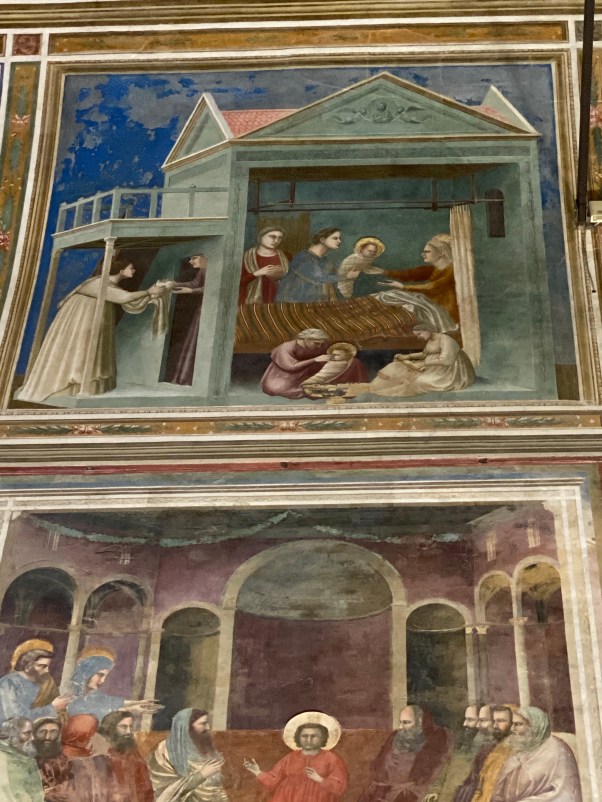
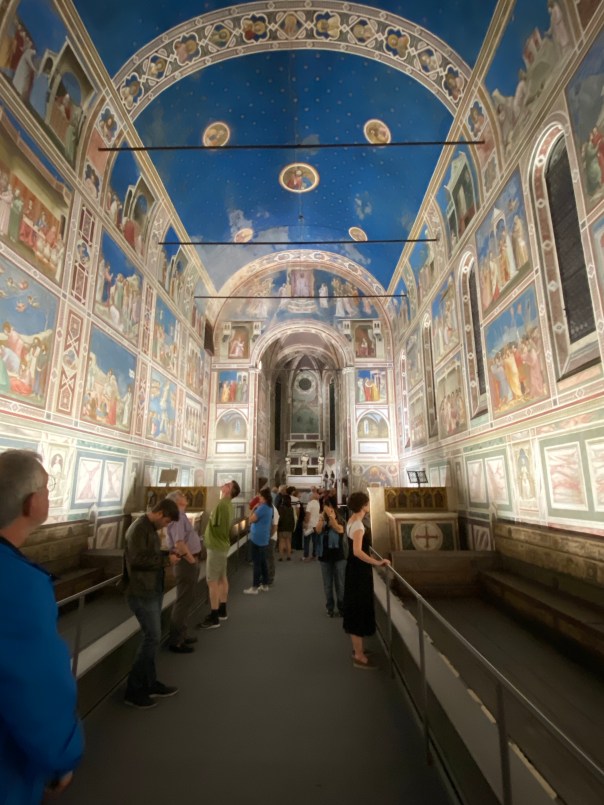
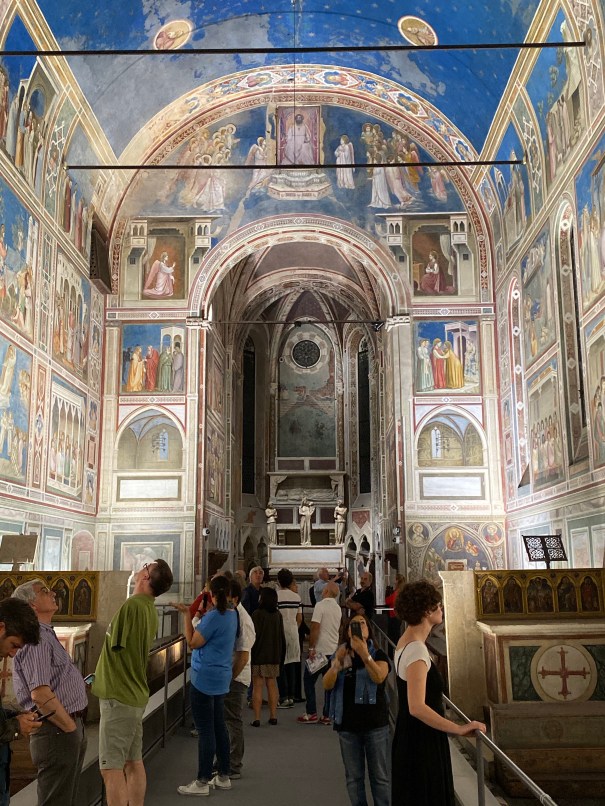
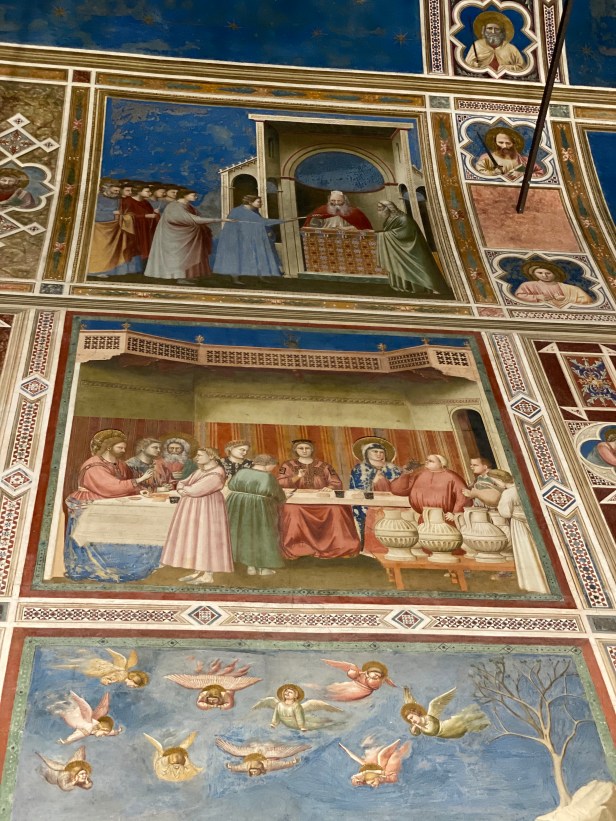
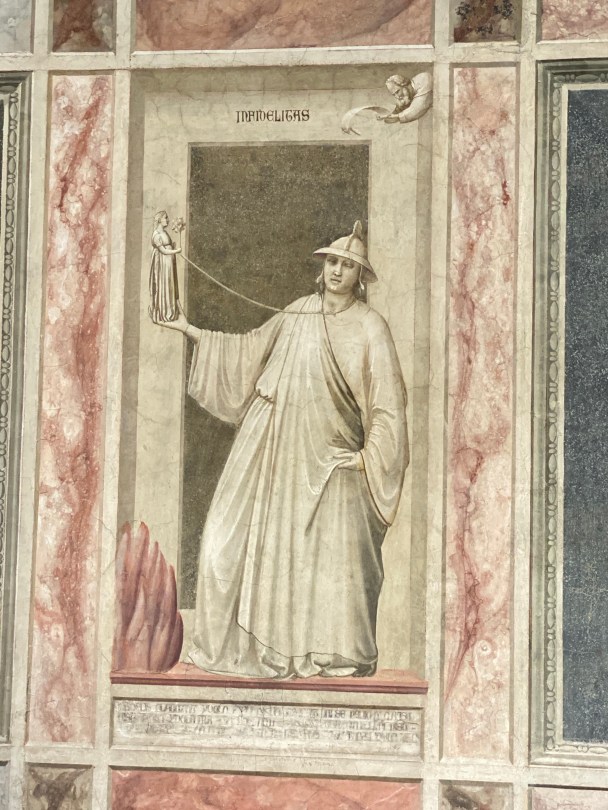
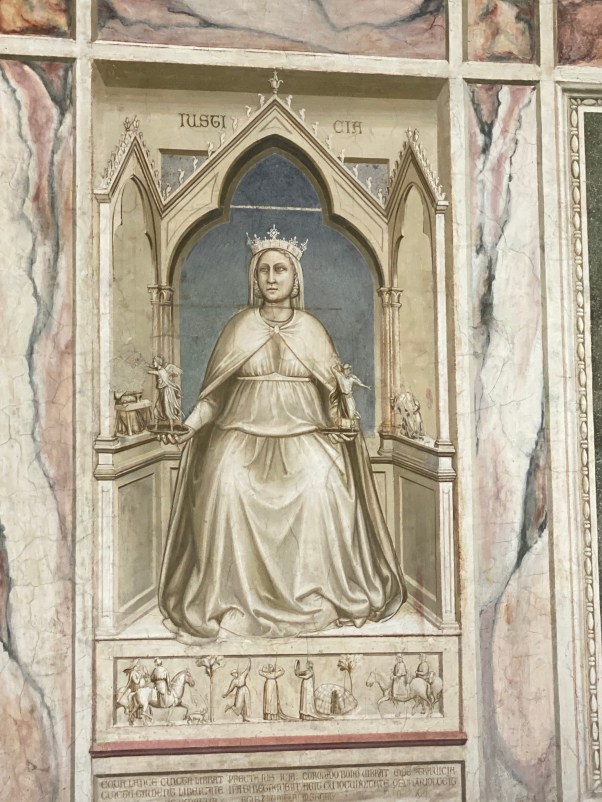
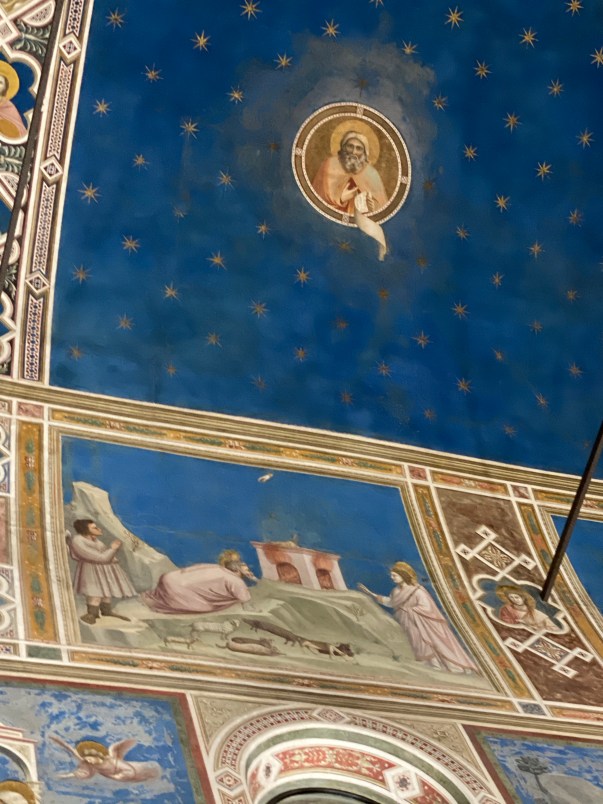
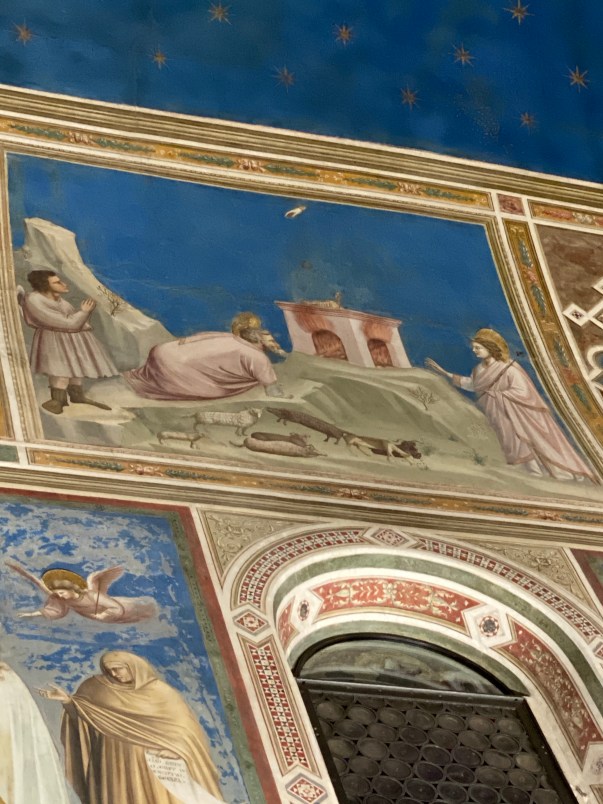
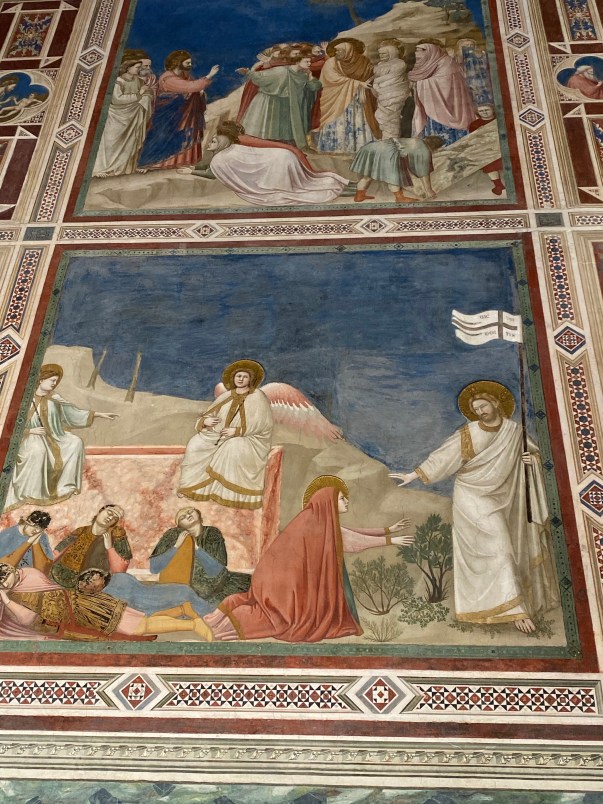
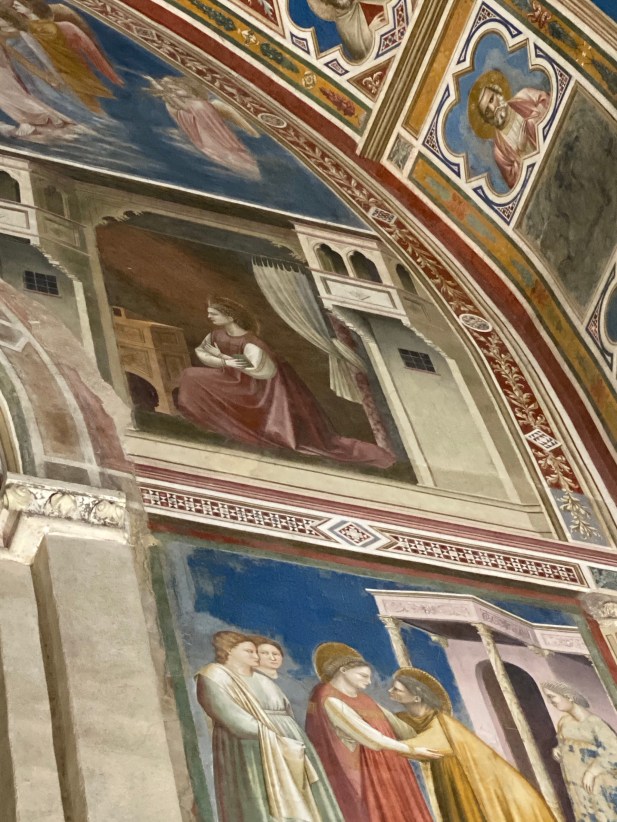
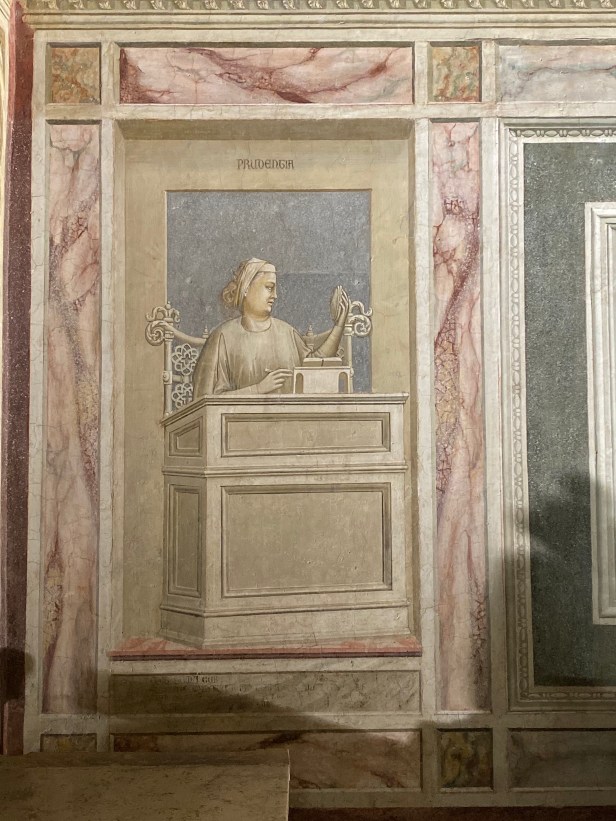
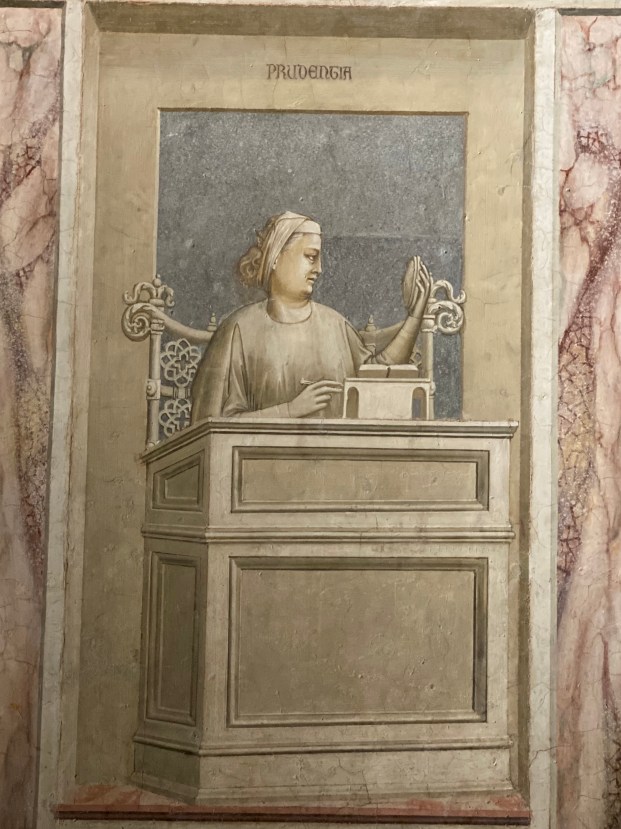
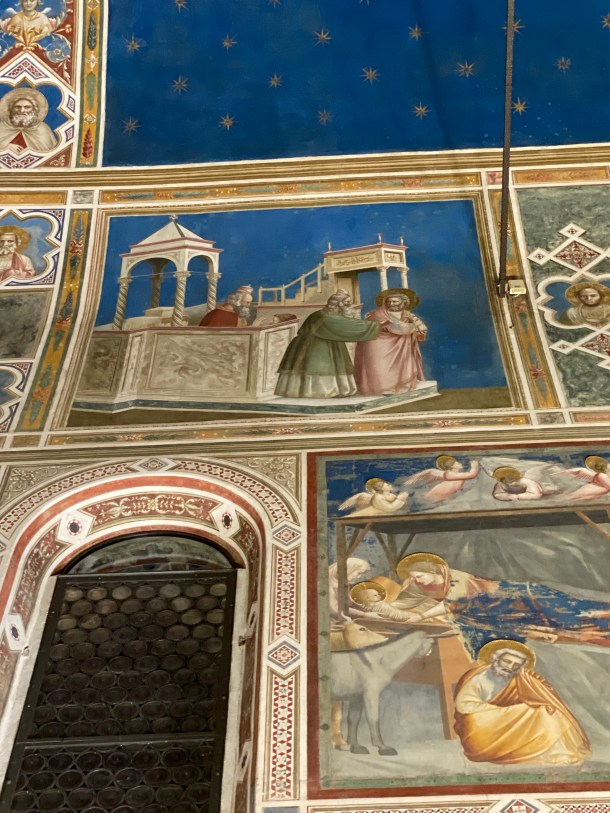
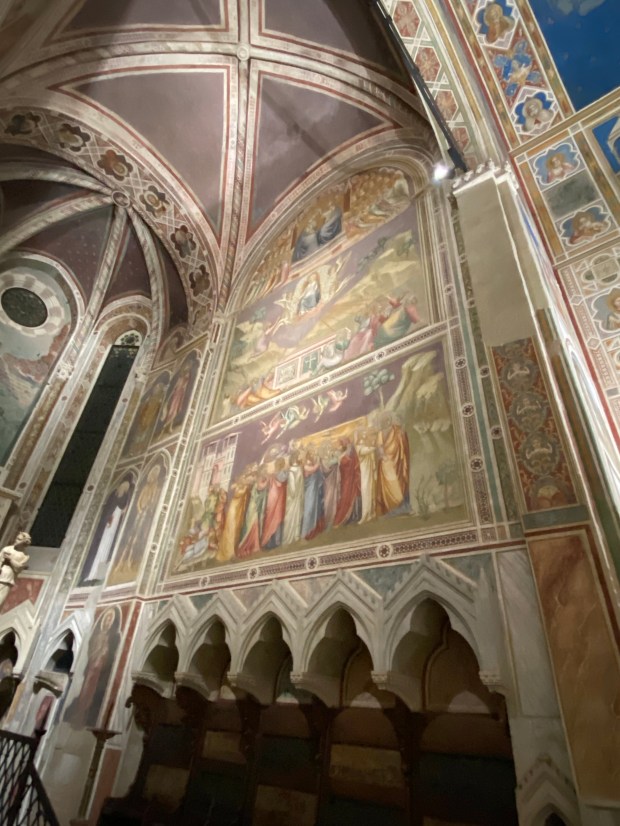
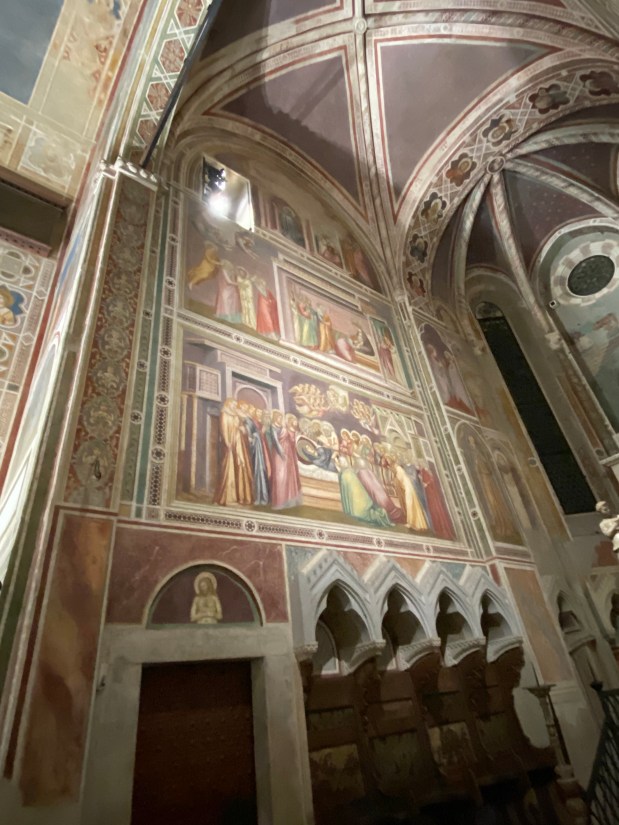
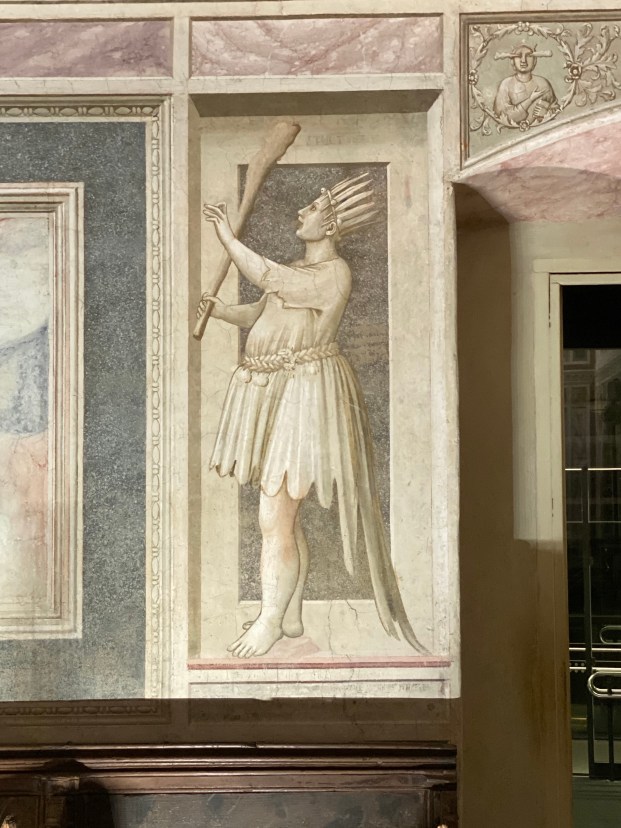
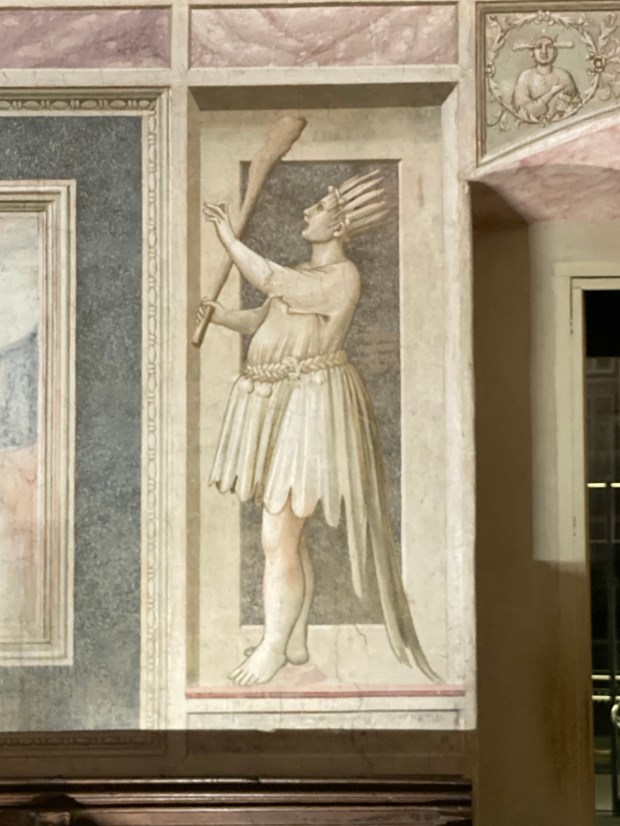
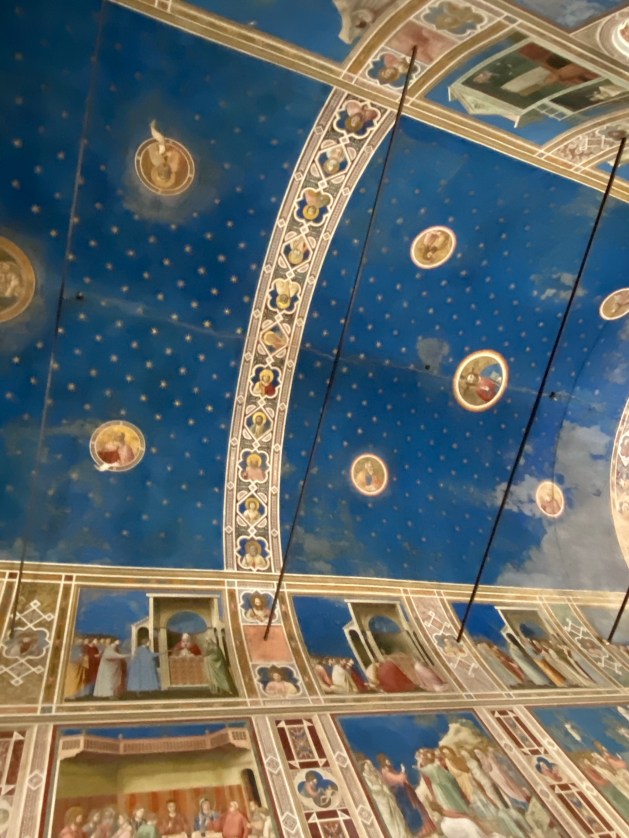
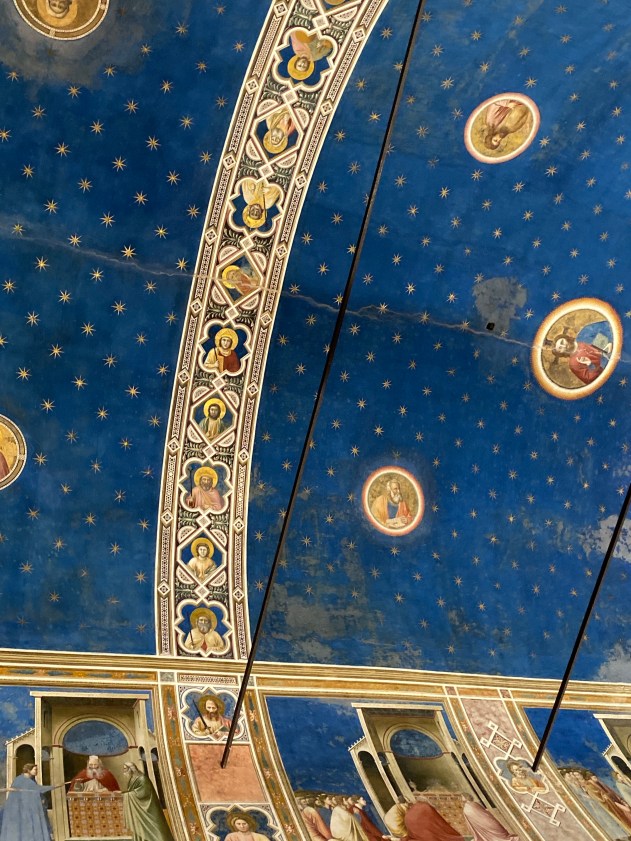
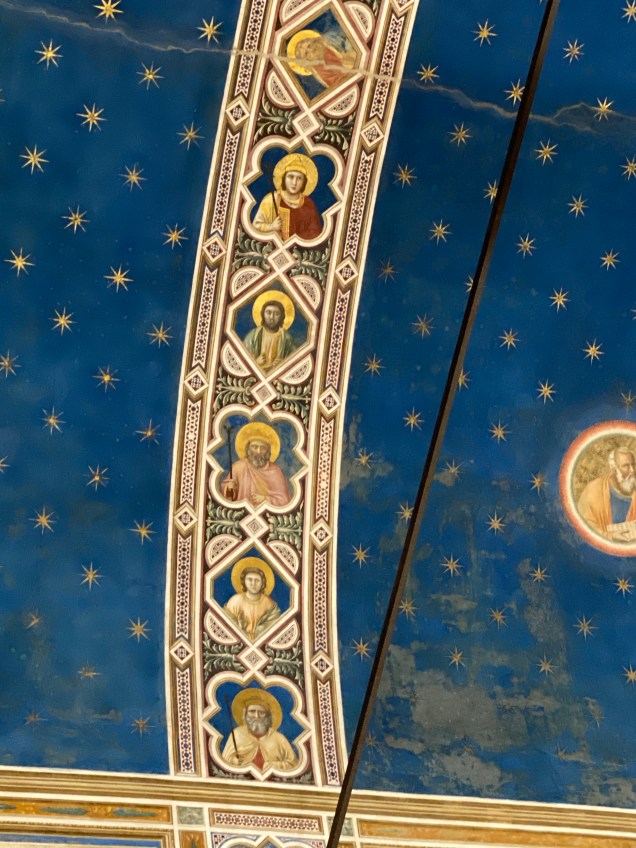
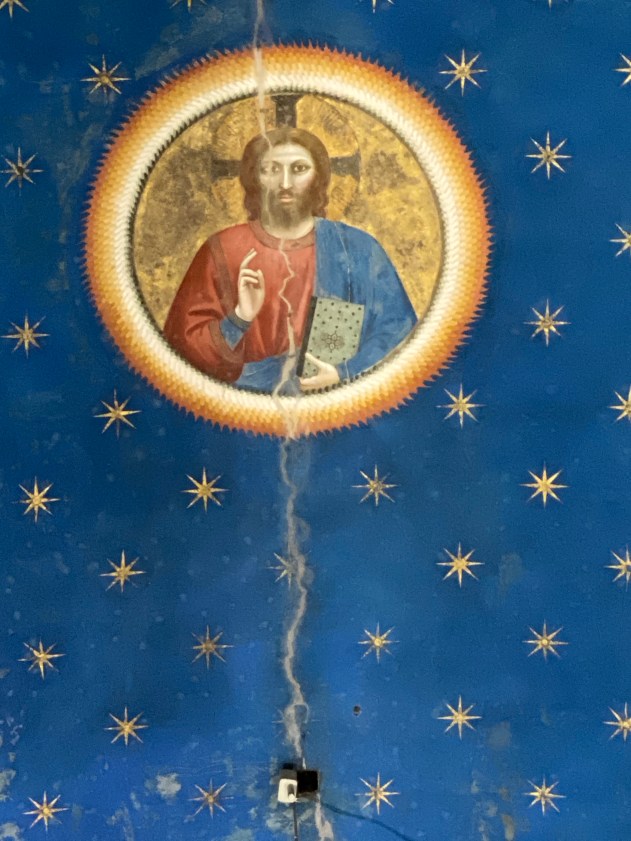
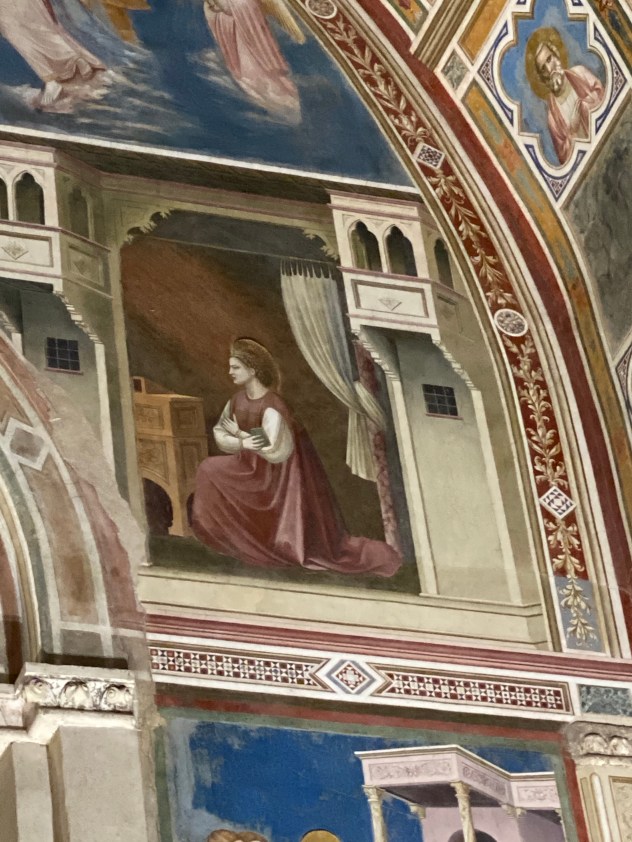
The brochure for the Chapel tells us this about the Scrovegni Chapel: “In 1300, the rich nobleman Enrico Scrovegni acquired the area of the Roman Arena [in Padova], on which he intended to build a fine town house. Next to it, he had a chapel built and dedicated to the Holy Virgin, for the soul of his father Reginaldo, the usurer mentioned in the 17th canto of Dante’s ‘Inferno.’ Scrovegni commissioned Giotto to decorate the chapel with frescoes which, according to most reliable information, was done between 1303-05. The frescoes cover the interior walls and ceiling of the building completely. The lower part of the blue star-spangled vaulted ceiling depicts the prophets and the important episodes in the lives of the Holy Virgin and Jesus Christ. Above the main door is ‘The Last Judgment:’ Christ, as judge, is surrounded by the angels and the apostles; below him, to the right, are the Blessed; to the left, the Damned are depicted as suffering eternal punishment, according to medieval tradition.”
Last weekend I returned to Padua for another opportunity to see the Giotto frescoes at the Scrovegni Chapel. Since the visits are only 20 minutes long, it takes me more than one trip to Padua to really see the frescoes as I want to see them.
But, I also wanted to return to Padua to enjoy more of the city, now that I have discovered it fully. I went armed with my new fancy smartphone and its powerful camera. Some of the pictures below are of pretty Padova and some are just experiments with my camera.
I love any city with a street named for one of my favorite sculptors, Donatello.
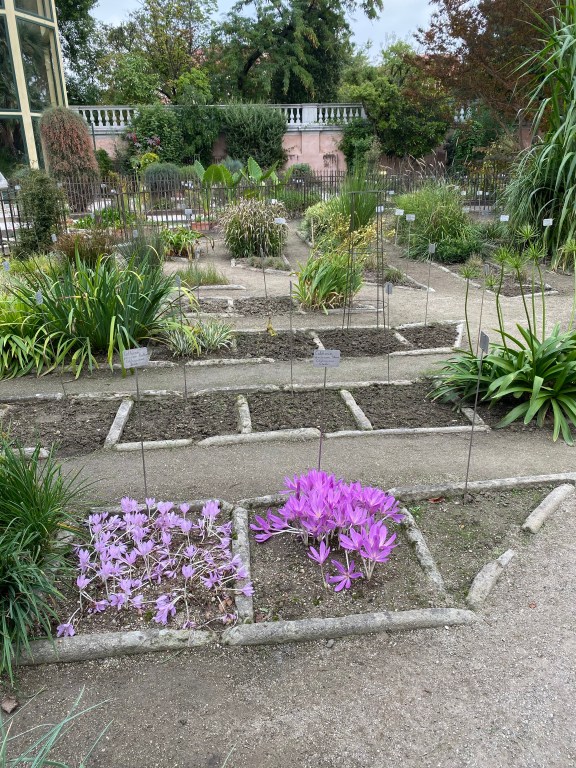
The Botanic Garden of Padua dates back to 1545 and is regarded as the most ancient university garden in the world. Founded to foster the growth of medicinal plants, in Italian called semplice, since the remedies were obtained directly from nature without any manipulation. The garden was named Hortus Simplicium. The first keeper of the garden was Luigi Squalermo called Anguillara.
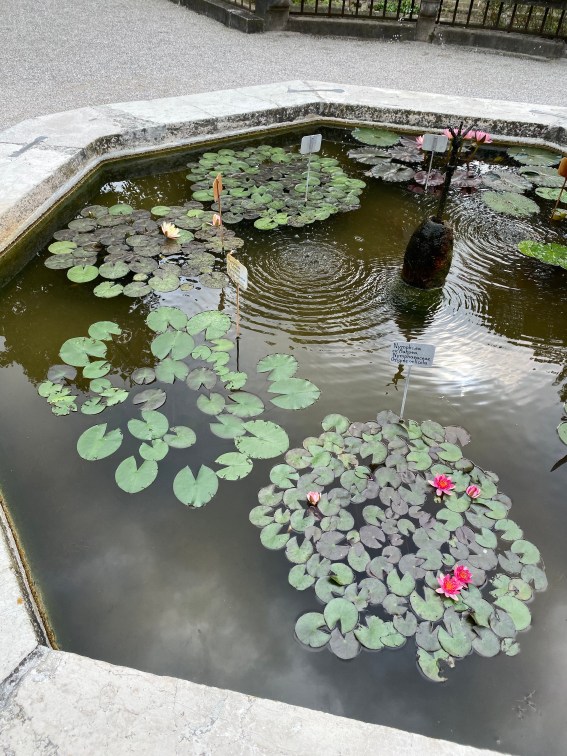
Nymphaea:
‘
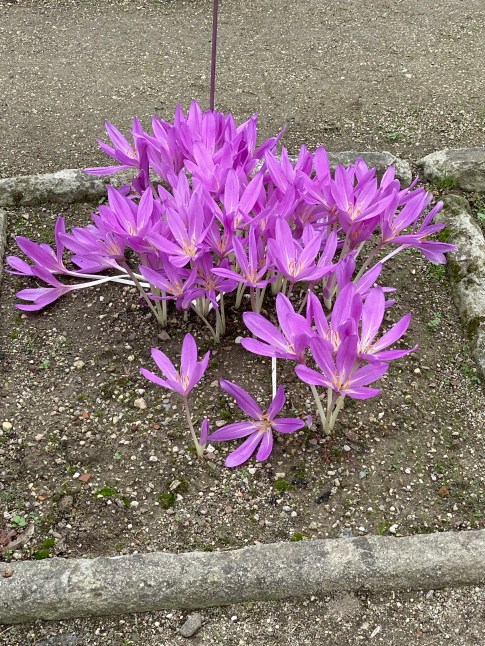
Below, fall blooming crocus:
More water lilies:
Random plant life:
Nature with a background of Italian church bells:
Gigantic lily pads:
The horticultural complex in Padua is very impressive and state of the art.
Porta Portello:
Reminders of the influence of Venice on Padua are everywhere in this city:
Padova is surrounded by water. The canals make lovely views. I love to think back to the times when people and goods moved here by gondole, burci and mascarete, all typical boats, along internal canals, following the waterways and floating under bridges.
Padua has a lot of beautiful architecture. I want to make another trip there to enjoy and photograph all the great sculptural embellishments on the palazzi.
I recently met a friend in front of the church in Piazza Sant’ Ambrogio, near Santa Croce, in a spot that is the terminus for 3 streets : via de’ Pilastri, via di Mezzo, and Borgo la Croce e via Carducci.
While waiting, I noticed for the first time, although I’ve been in this piazza a hundred times before, something new.
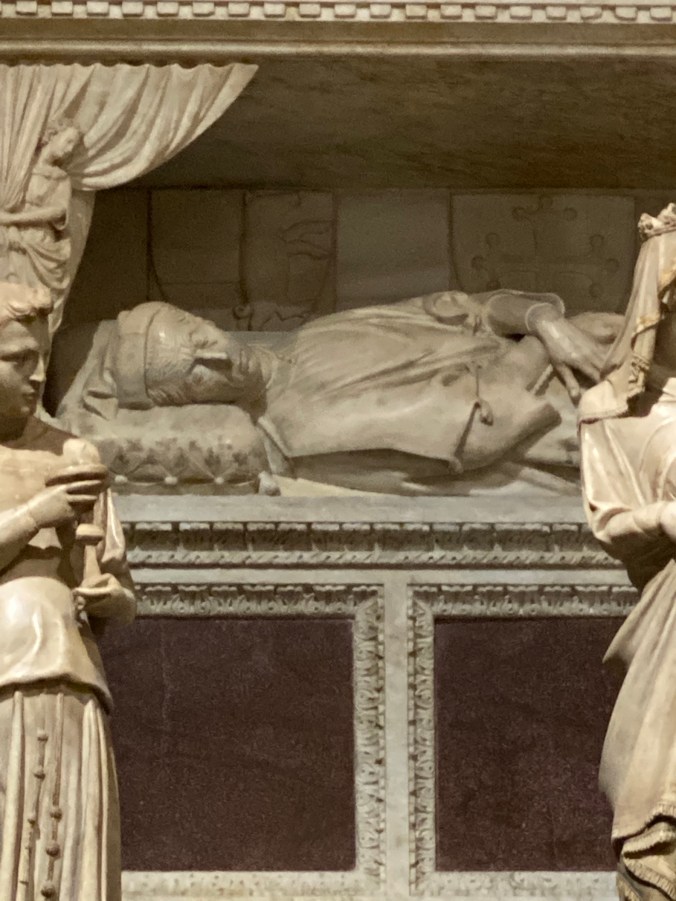
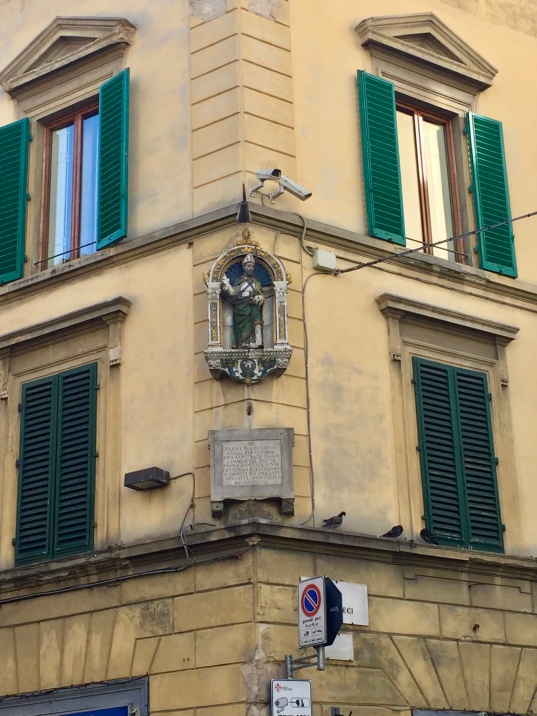
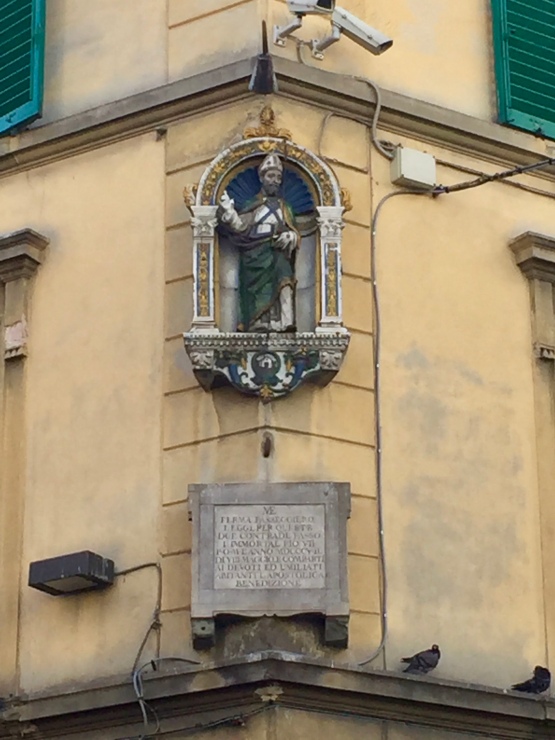
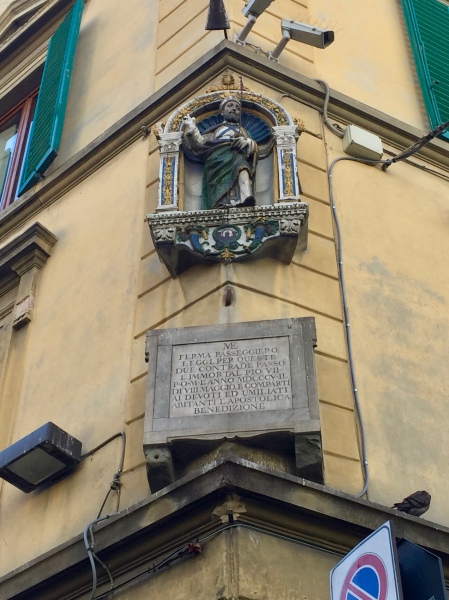
Looking a bit higher than I normally do, I saw a glazed terra-cotta tabernacle, in the style of the Della Robbia, of a figure that I assumed was a priest or even a pope, making a sign of blessing.
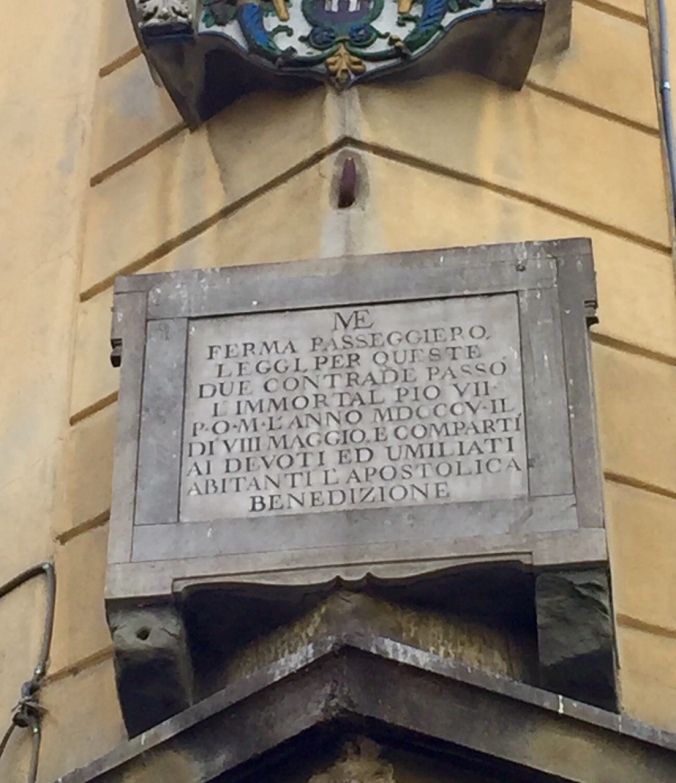
I ventured nearer to photograph the inscription below, and was rewarded with this information:
Loosely translated, the inscription reads: “Stop, you passers by, and read this. Know that 2 neighborhoods were passed by the immortal Pope Pius VII on 8 May, 1807, where he devotedly and humbly gave an apostolic blessing to the inhabitants.”
I seldom have occasion to discuss the Catholic Church, that foundational stone of Italian culture, in my blog, so let’s do a little something about that now.
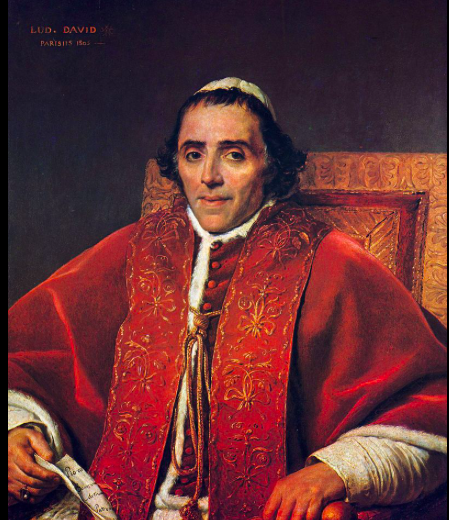
Who was Pope Pius VII?
Portrait of Pius VII painted by Jacques-Louis David
He was born in 1742 as Barnaba Niccolò Maria Luigi Chiaramonti. He would rise all the way to head of the Catholic Church and ruler of the Papal States from 1800 until his death in 1823. Chiaramonti was also a monk of the Order of Saint Benedict in addition to being a well-known theologian and bishop throughout his life.
Chiaramonti was born in Cesena, about 30 miles south of Ravenna, in 1742, the youngest son of Count Scipione Chiaramonti (1698 – 1750) and Giovanna Coronata (d. 1777). His mother was the daughter of the Marquess Ghini; though his family was of noble status, they were not wealthy.
Like his brothers, he attended the Collegio dei Nobili in Ravenna but decided to join the Order of Saint Benedict at the age of 14 on 2 October 1756 as a novice at the Abbey of Santa Maria del Monte in Cesena. In 1758, he became a professed member and assumed the name of Gregorio. He taught at Benedictine colleges in Parma and Rome, and was ordained a priest on 21 September 1765.
In 1789, as the French Revolution took place, a series of anti-clerical governments came into power. During the French Revolutionary Wars, troops under Napoleon Bonaparte invaded Rome and took Pope Pius VI as a prisoner. He was taken as prisoner to France, where he died in 1799. The following year, after a sede vacante period lasting approximately six months, Chiaramonti was elected to the papacy, and took as his pontifical name Pius VII, in honor of his immediate predecessor.
He was crowned on 21 March 1800 in a rather unusual ceremony, wearing a papier-mâché papal tiara as the French had seized the tiaras held by the Holy See when occupying Rome and forcing Pius VI into exile. Pius VII then left for Rome, sailing on a barely seaworthy Austrian ship, the Bellona. The twelve-day voyage ended at Pesaro and he proceeded to Rome.
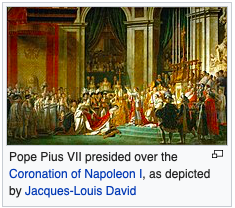
Pius at first attempted to take a cautious approach in dealing with Napoleon. He signed the Concordat of 1801, through which he succeeded in guaranteeing religious freedom for Catholics living in France, and presided over his coronation as Emperor of the French in 1804. Pius VII presided at the coronation of Napoleon I in 1804.
Once again, in 1809, Napoleon invaded the Papal States during the Napoleonic Wars; this earned him ex-communication. Pius VII was taken prisoner and transported to France. He remained there until Napoleon abdicated in 1813 and Pius VII returned to Rome. He was greeted warmly as a hero and defender of the faith and immediately revived the Inquisition and the Index of Condemned Books.
His works, some notable, some to be regretted:
Pius VII joined the declaration of the 1815 Congress of Vienna, represented by Cardinal Secretary of State Ercole Consalvi, and urged the suppression of the slave trade. This pertained particularly to places such as Spain and Portugal where slavery was economically important. The pope wrote a letter to King Louis XVIII of France dated 20 September 1814 and to the King John VI of Portugal in 1823 to urge the end of slavery. He condemned the slave trade and defined the sale of people as an injustice to the dignity of the human person. In his letter to the King of Portugal, he wrote: “the Pope regrets that this trade in blacks, that he believed having ceased, is still exercised in some regions and even more cruel way. He begs and begs the King of Portugal that it implement all its authority and wisdom to extirpate this unholy and abominable shame.”
Under Napoleonic rule, the Jewish Ghetto had been abolished and Jews were free to live and move where they would. Following the restoration of Papal rule, Pius VII re-instituted the confinement of Jews to the Ghetto, having the doors closed at nighttime.
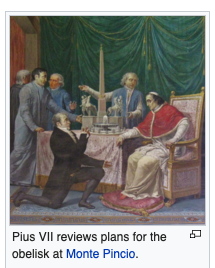
Pius VII was a man of culture and attempted to reinvigorate Rome with archaeological excavations in Ostia which revealed ruins and icons from ancient times. He also had walls and other buildings rebuilt and restored the Arch of Constantine. He ordered the construction of fountains and piazzas and erected the obelisk at Monte Pincio.
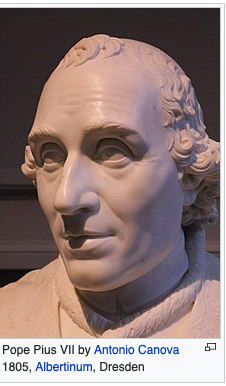
The pope also made sure Rome was a place for artists and the leading artists of the time like Antonio Canova and Peter von Cornelius. He also enriched the Vatican Library with numerous manuscripts and books.
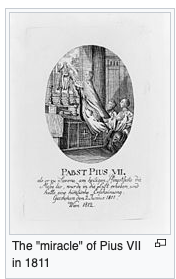
The so-called “miracle” of Pius VII. On 15 August 1811 – the Feast of the Assumption – it is recorded that the pope celebrated Mass and was said to have entered a trance and began to levitate in a manner that drew him to the altar. This particular episode aroused great wonder and awe among attendants which included the French soldiers guarding him who were in disbelief of what had occurred.
Relationship with the United States. On the United States’ undertaking of the First Barbary War to suppress the Muslim Barbary pirates along the southern Mediterranean coast, ending their kidnapping of Europeans for ransom and slavery, Pius VII declared that the United States “had done more for the cause of Christianity than the most powerful nations of Christendom have done for ages.”
For the United States, he established several new dioceses in 1808 for Boston, New York City, and Philadelphia. In 1821, he also established the dioceses of Charleston, Richmond and Cincinnati.
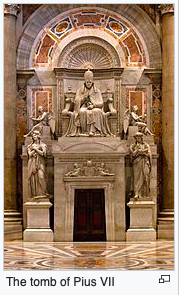
Pius VII died in 1823 at the age of 81. He was later buried in a monument in Saint Peter’s Basilica by the leading sculptor of the day, the Danish Bertel Thorvaldsen.
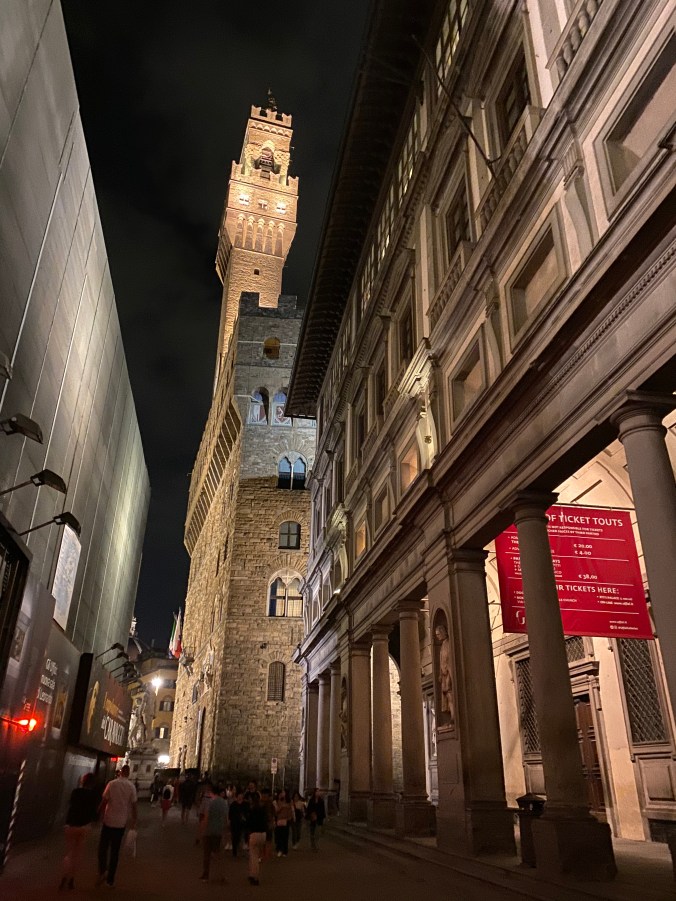
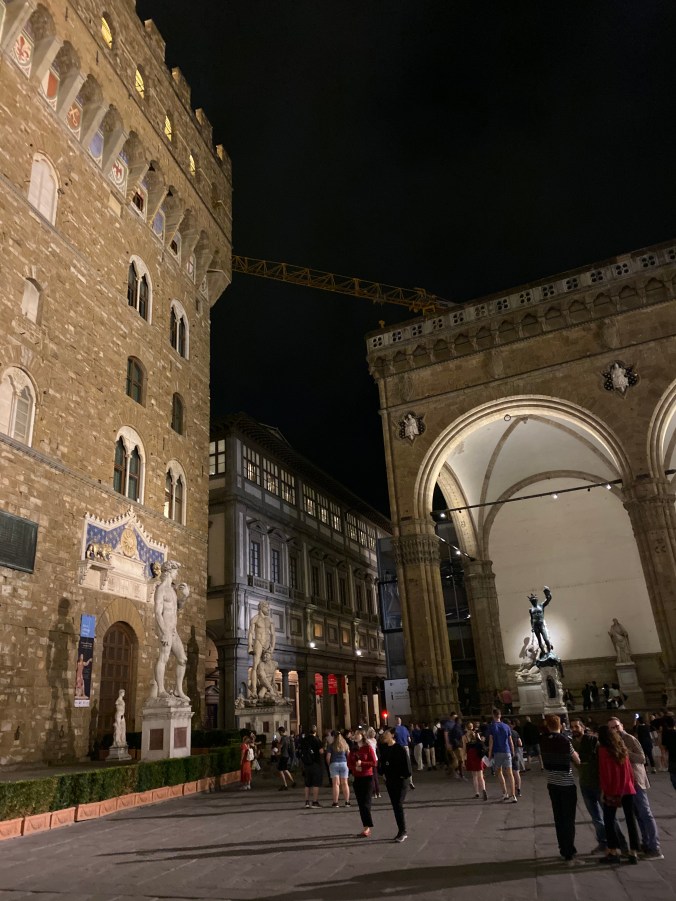
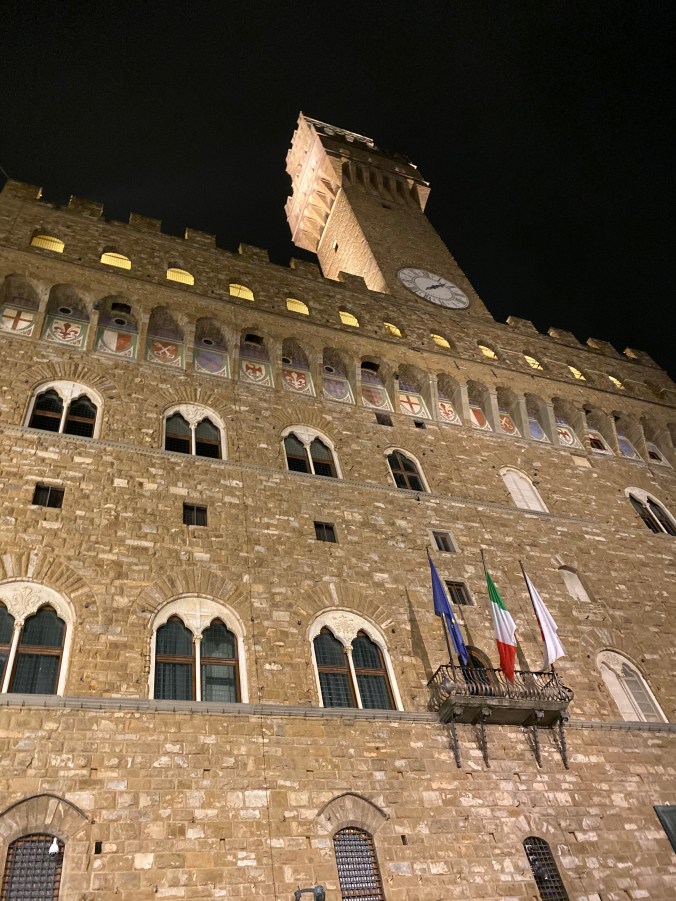
Walking through the courtyard of the Uffizi, on an average fall evening, after the hordes of international tourists have returned to their homes. I hear a collective sigh of relief and I feel bliss.
Poor Giorgio Vasari! I just don’t know what to make of the tiny little “piazza” that was named in Florence in his honor. For the father of the history of art, I think he deserves something a little grander, don’t you?
Honestly, the piazza is such a throw away space that I can’t even make a screenshot of a Google Maps image to add to this post. The location isn’t even marked, other than being a pinpoint on a short street called “Piazza Giorgio Vasari.”
So, because I am an intrepid searcher when it comes to arcane facts, here are the 3 things you should know about this unloved piazza on the north east side of Florence.
It is named after Giorgio Vasari, who was a talented painter in his own right, but also the Father of Art History
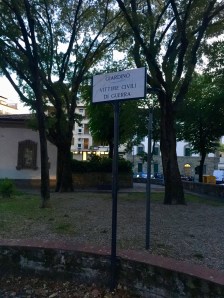
It is graced with a marker dedicated to all the citizens who were victims of war (sometimes this marker has a laurel wreath placed over it)
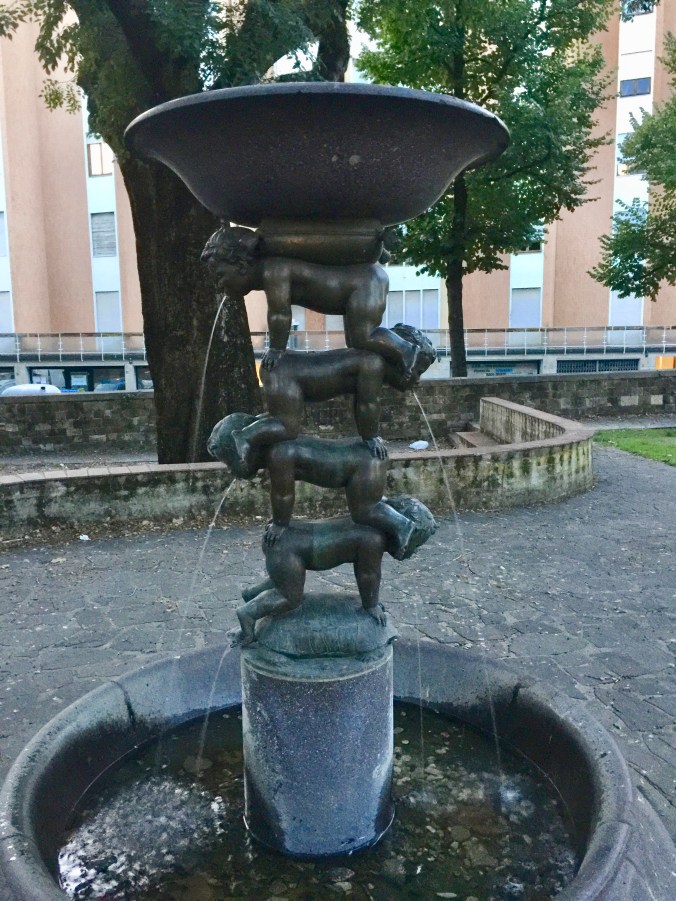
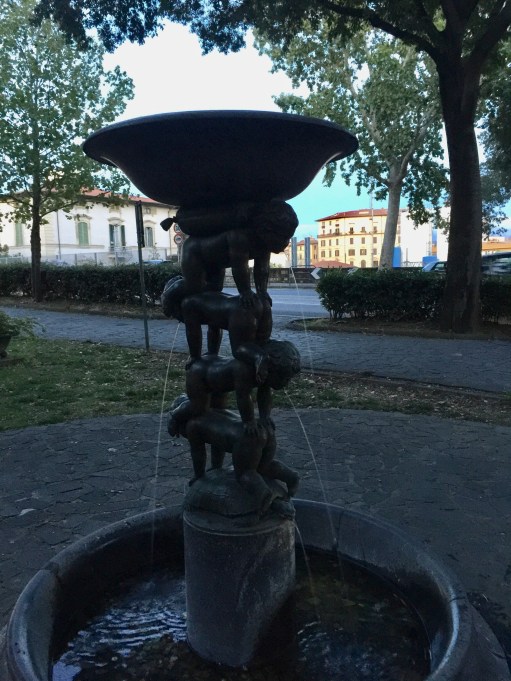
3. It has, at it’s center, a strange bronze sculpture of stacked toddlers
The next time I walk through the piazza, I will take a note on the foundry and artist markings on the fountain. It was too dark this time.
Strange, but true, the fountain of stacked bambini marking the Piazza Giorgio Vasari!
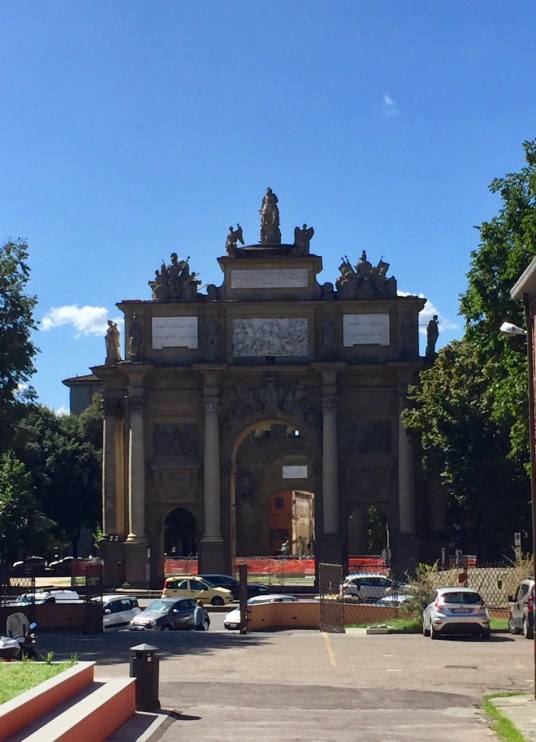
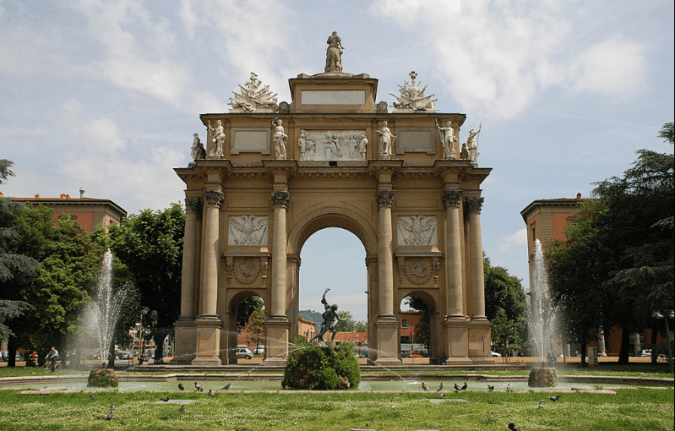
The triumphal arch of the Lorraine, a gateway to and from power in Piazza della Libertà
There is a grandiose and quite ornate — at least by Tuscan standards — neoclassical arch standing in my neighborhood. It sits not quite in the middle of Piazza della Libertà.
Based on the model of Roman triumphal arches, the arch in Florence was built for the entry of Francesco Stefano, the First Grand Duke of the House of Lorraine, a dynasty imposed on Tuscany following the death in 1737 of the last of the Medici grand dukes, Gian Gastone.
Ironically, in 1859, the same arch saw the exit of the last of Tuscany’s Lorraine rulers, Grand Duke Leopoldo II, after he was ousted in a bloodless revolution.
In a kind of territorial “musical chairs,” the French, Austrians and dukes of Lorraine agreed under the peace treaty that ended the war of Polish succession (1733–37) that the duchy of Lorraine be given to Stanisław I, the former king of Poland and father-in-law of France’s King Louis XV. As compensation, the dukes of Lorraine were designated the duchy of Tuscany.
Thoroughly mystified by these geopolitical machinations, the Tuscans did not relish the idea of foreign occupation. Witness to this, French writer and future president of Burgundy Charles de Brosses commented that they would have willingly given “two-thirds of their property to have the Medicis back, and the other third to get rid of the Lorrainers….They hate them.”
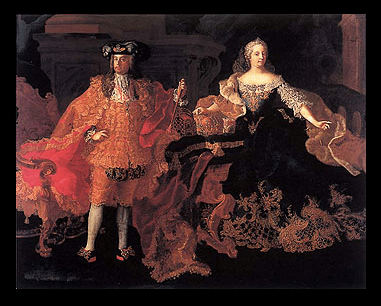
Nonetheless, to welcome the new sovereign, his young bride, Maria Theresa of Austria (the daughter and heir of the Holy Roman Emperor, Charles VI), on their first –and only–visit to Florence in January 1739, Senator Carlo Ginori, founder of a porcelain factory, proposed the construction of an arch near the ancient Porta di San Gallo gate, which was and is the main northern entrance to the city.
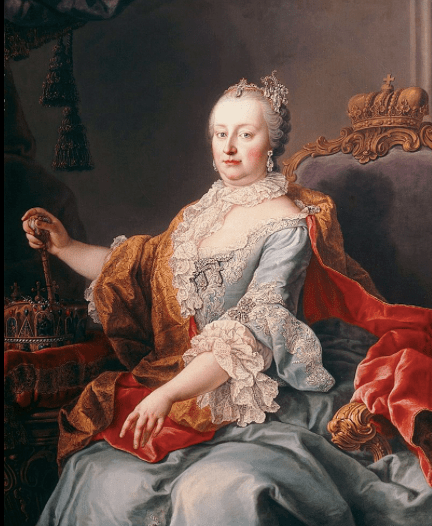
Here’s a double portrait of the newlyweds:
The arch was designed by Jean-Nicolas Jador, an architect from Lorraine. Work began on December 16, 1738, but, despite more than 400 men working day and night, it was impossible to complete the complicated edifice on schedule for the couple’s arrival.
The three main arches, a large one in the centre with two smaller ones each side, were finished, but painted wood and canvas decorated with temporary statuary covered the section above them.
As the sound of cannons boomed out from Forte Belvedere and fireworks exploded into the sky, it is likely the grand duke could barely see these improvisations as night had almost fallen by the time he reached Florence on that cold winter’s day.
Work on the arch continued for another 20 years, with many artists and artisans involved before it was completed in 1759.
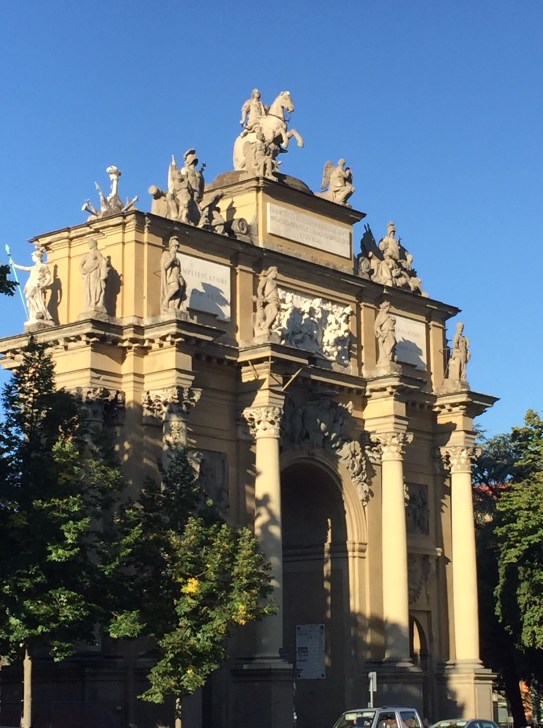
Supported by 10 Corinthian columns, the monument features 15 allegorical statues, heraldic decorations, four adornments of flags and arms, and six bas-reliefs of episodes from the life of Francesco Stefano, including his coronation.
On the southern façade, two double-headed eagles symbolize the Habsburg dynasty.
The monument is topped by an equestrian statue of Francesco Stefano by Florentine Baroque sculptor Vincenzo Foggini, known for his masterpiece Samson and the Philistines, now in the Victoria and Albert Museum in London. The statue faces away from the city, intended to welcome the grand duke and his entourage on his approach to the city from via Bolognese.
On that first visit, after celebrating mass at the Duomo, the royal couple took up residence in the Pitti Palace and spent their days sightseeing. During the carnival season, they held three lavish masked balls at the Palazzo Vecchio and even managed to attend a game of football in costume.
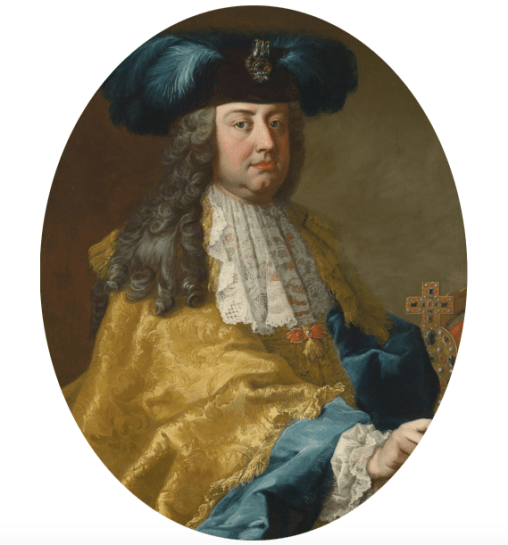
In describing Francesco Stefano in his Letters from Italy, John Boyle, the fifth earl of Cork and Orrery, wrote that he was “of a cheerful aspect, and of a most princely personage, yet something sinister and obscure may be perceived in his countenance … He is a Lorrainese, the shadow, not the substance of a sovereign.”
Here he is in a portrait:
And it was the shadow of Francesco Stefano that would, in fact, reign over his subjects because his stay, albeit it a pleasant one, lasted only three months, and he would never set foot in the city again. After the death of Charles VI in 1740, Maria Theresa succeeded her father and named her husband co-regent of the Holy Roman Empire.
For the next 27 years, Tuscany was governed in his name by a regency, first by Count Emmanuel de Richecourt and then by General Antonio Botta-Adorno.
In effect, Florence and the region simply became a convenient cash cow to be heavily taxed and plundered of its art or of whatever else could be of use to the court in Vienna for supporting its economy and the Austrian army.
Padova or Padua is a big subject! I’ve recently posted 2 times about it, here, here, here and here. And, still, I am far from done!
This post includes a list of the major features that grace this lovely, historic town. But first, a sweet little video about the town itself:
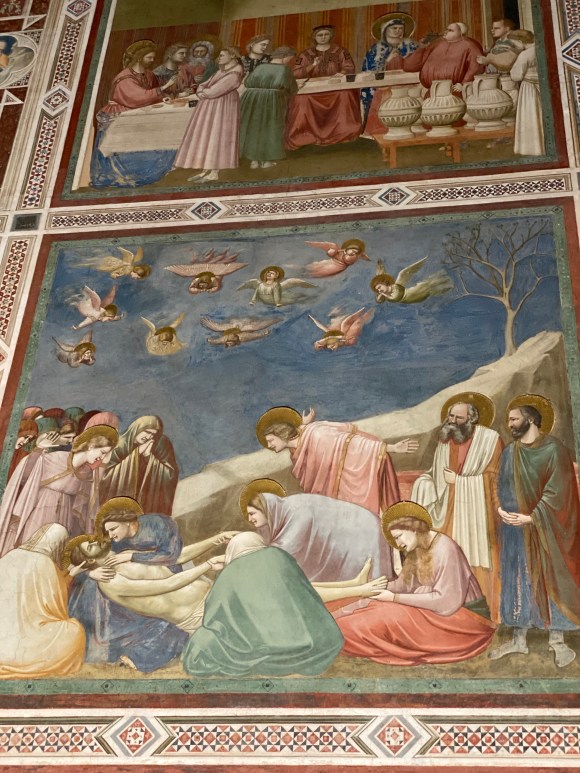
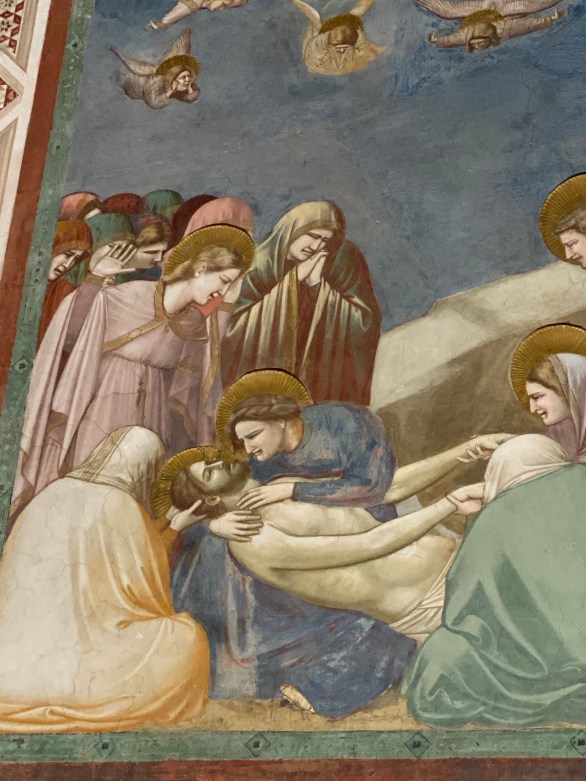
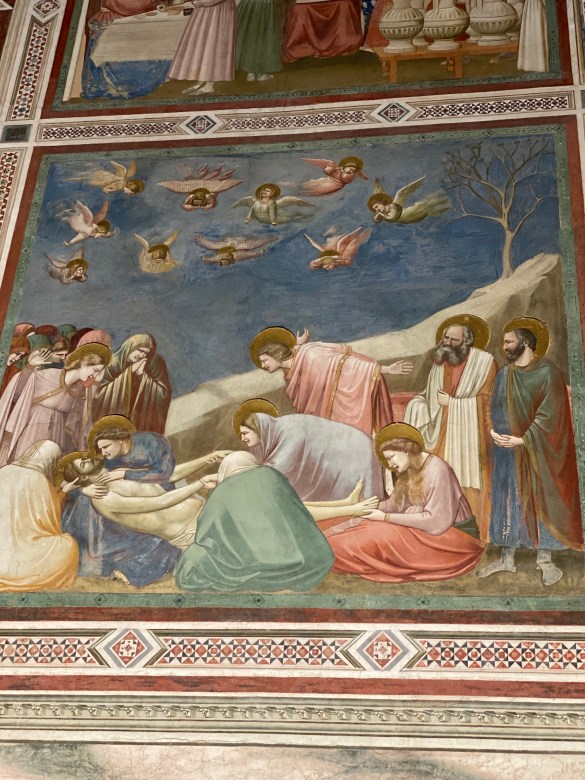
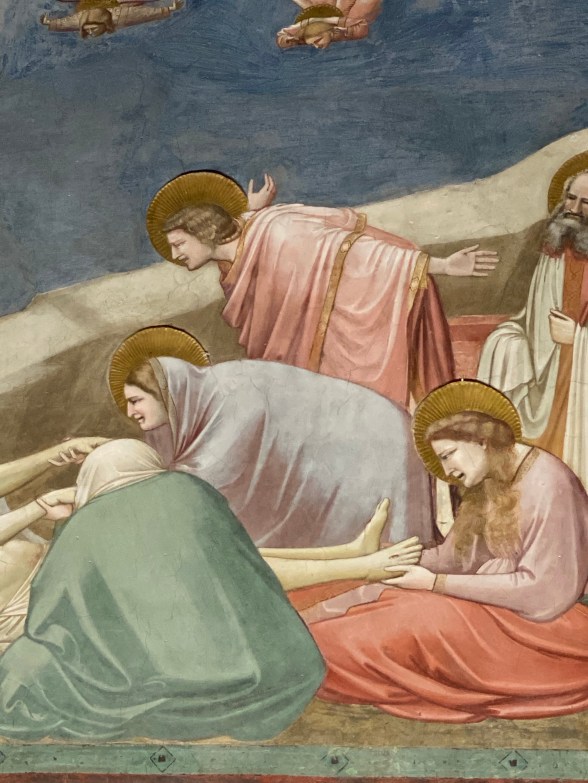
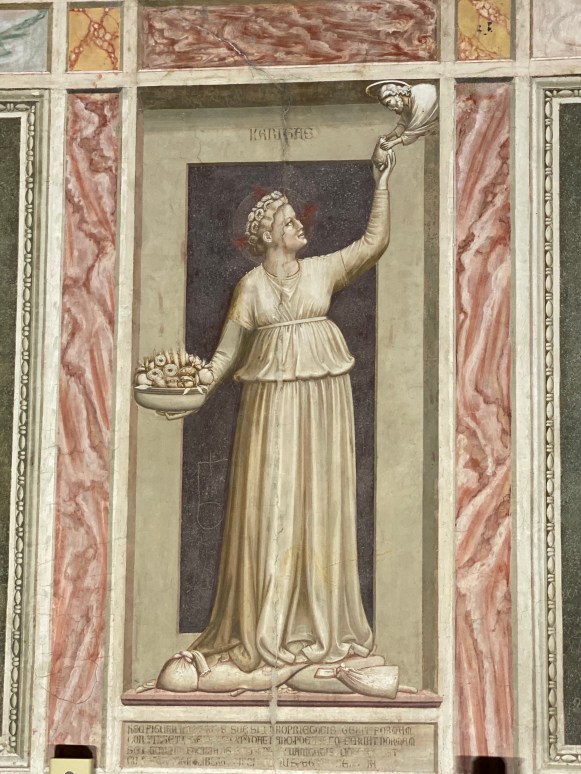
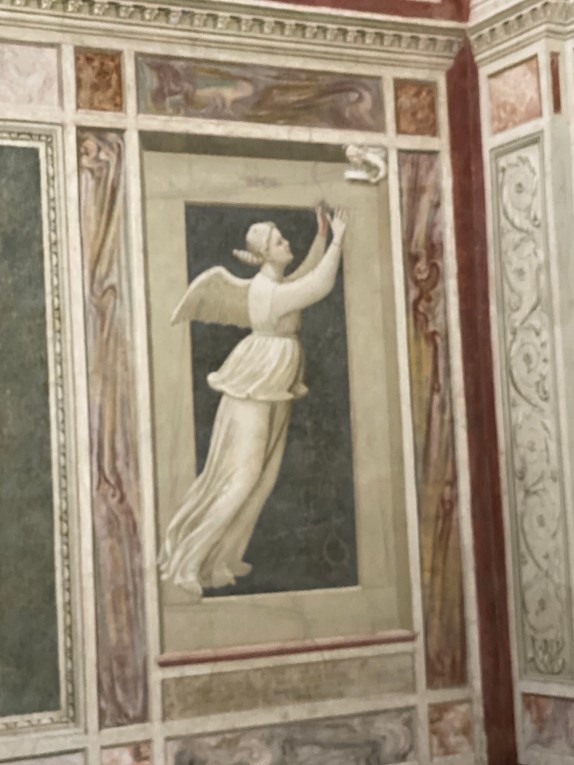
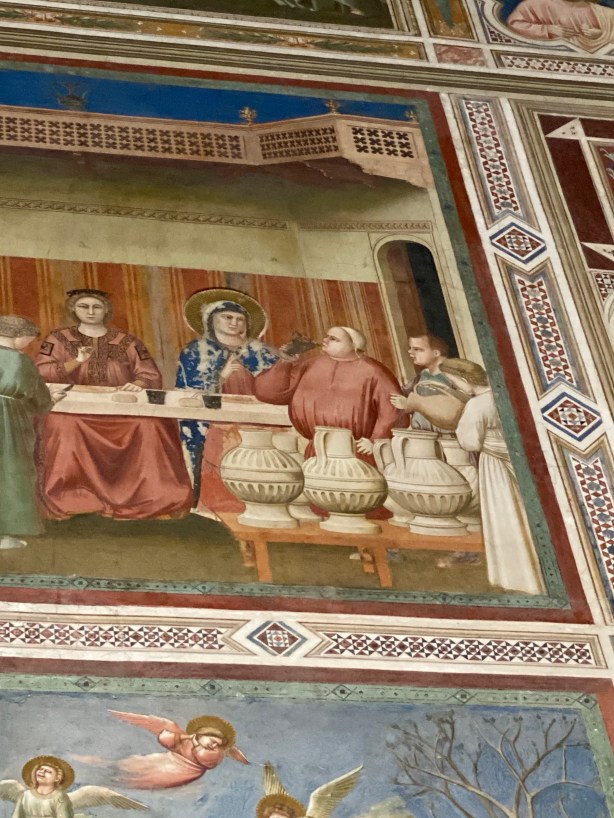
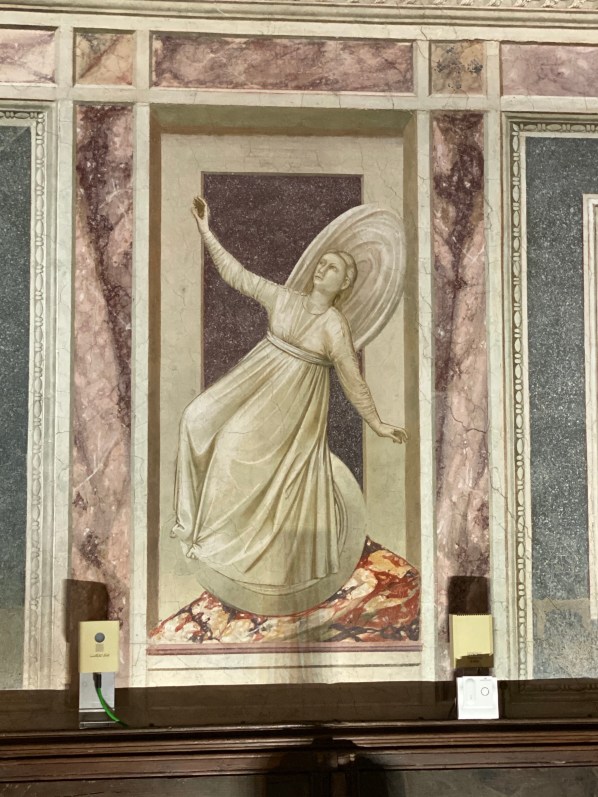
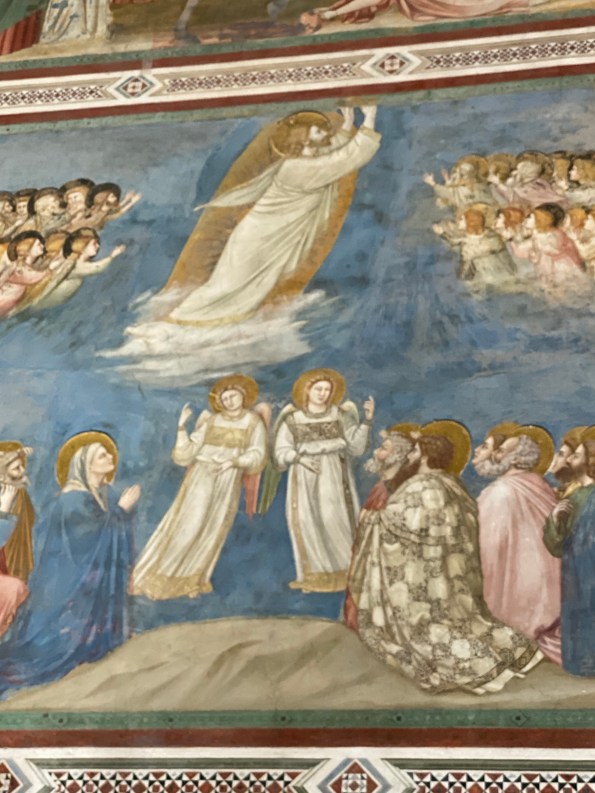
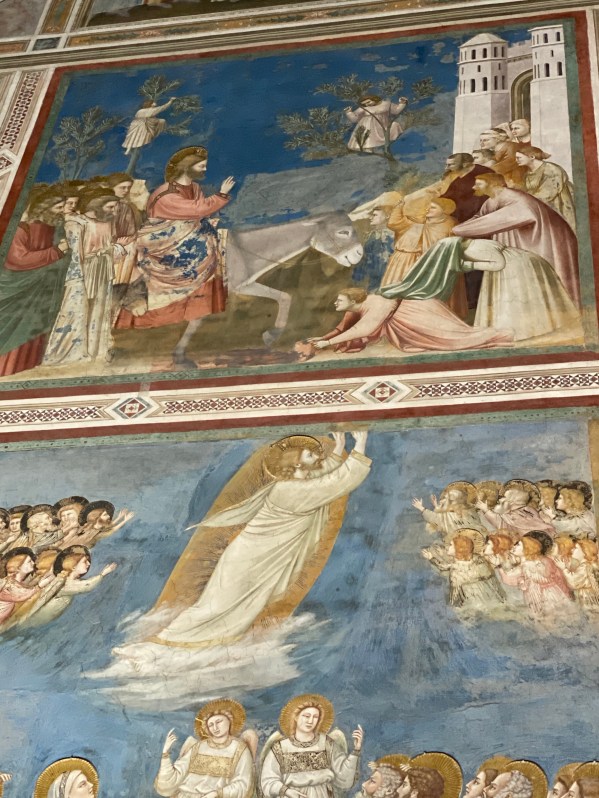
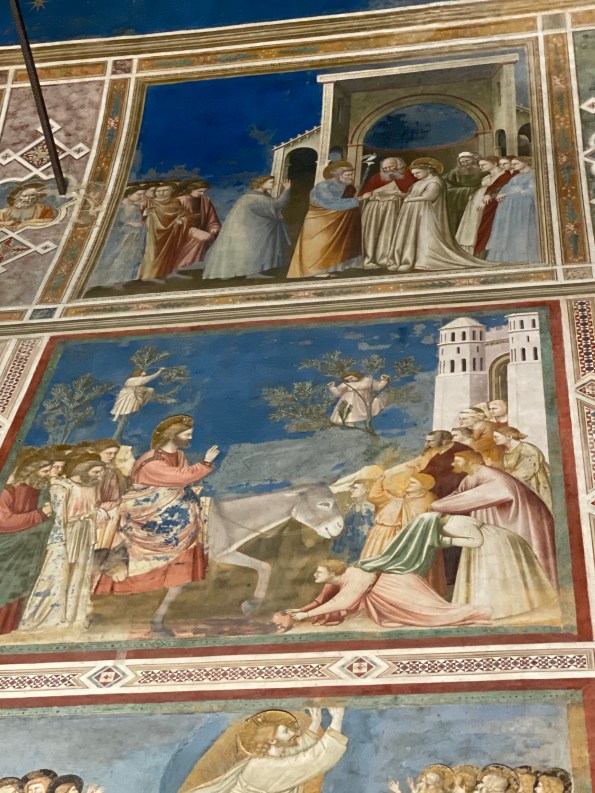
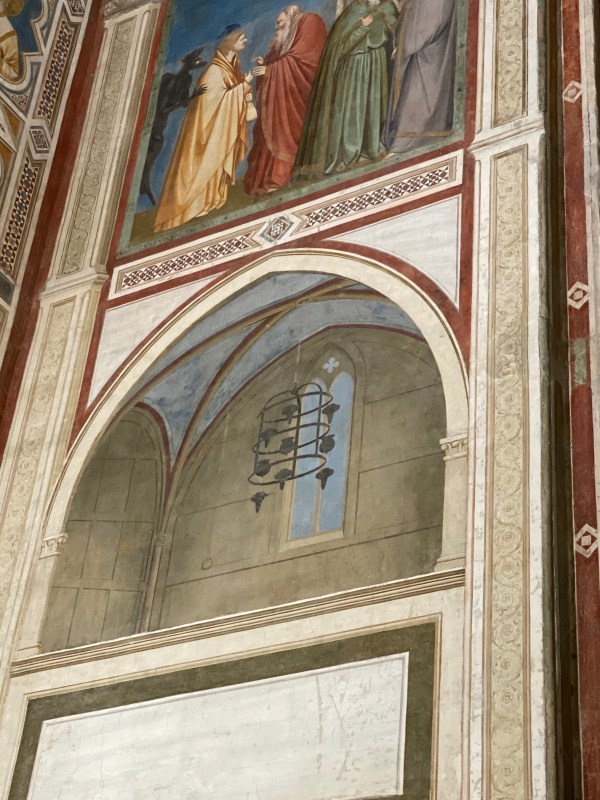
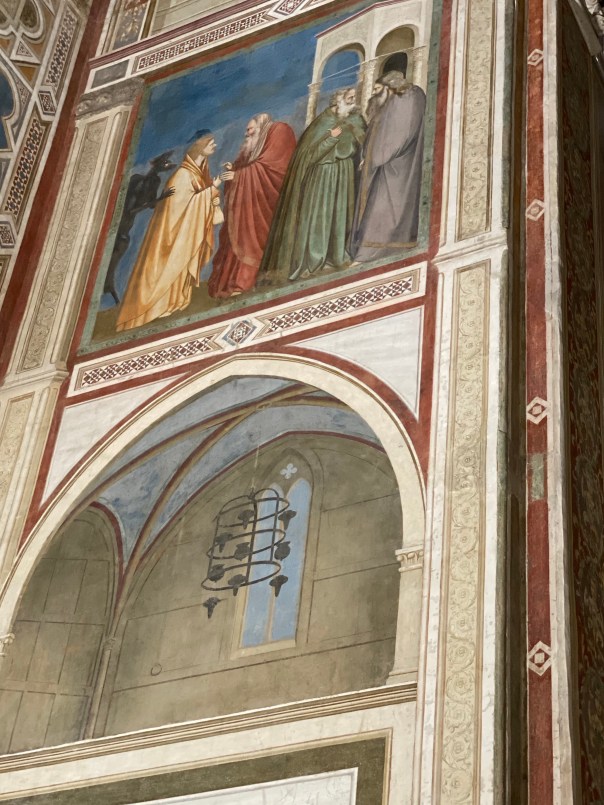
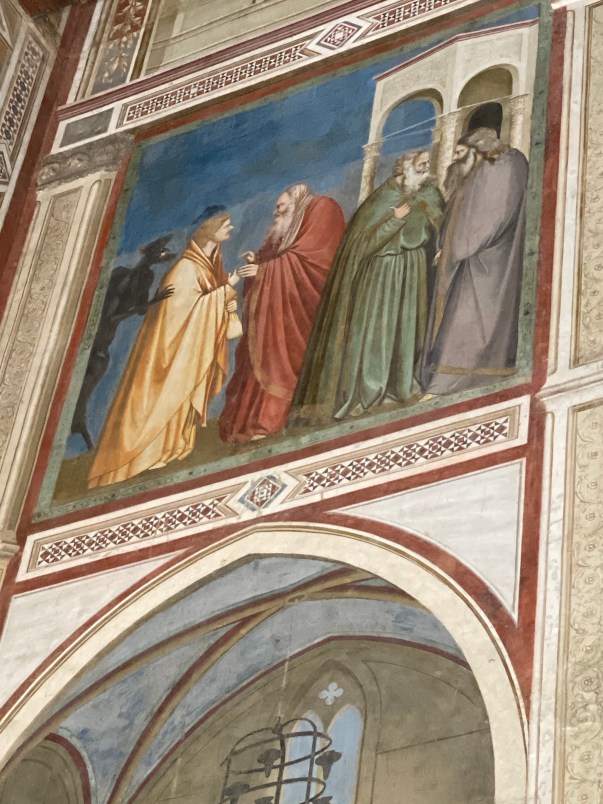
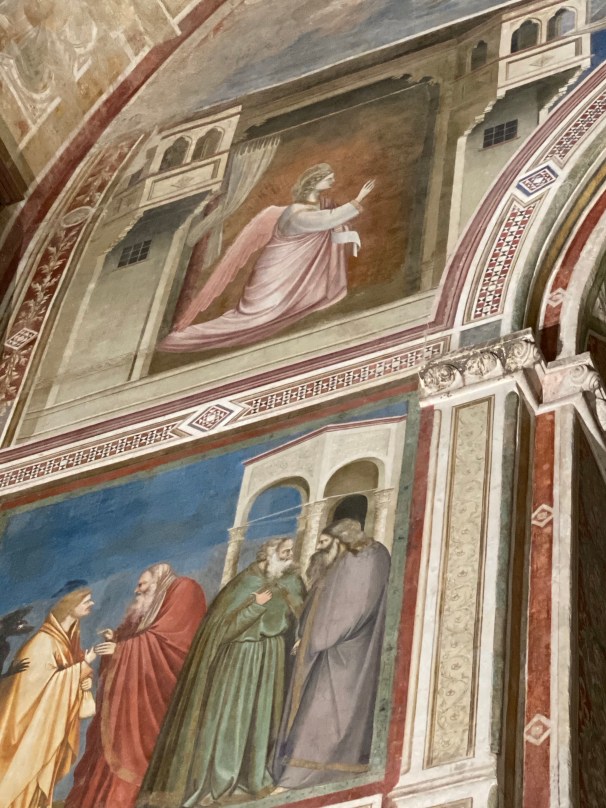
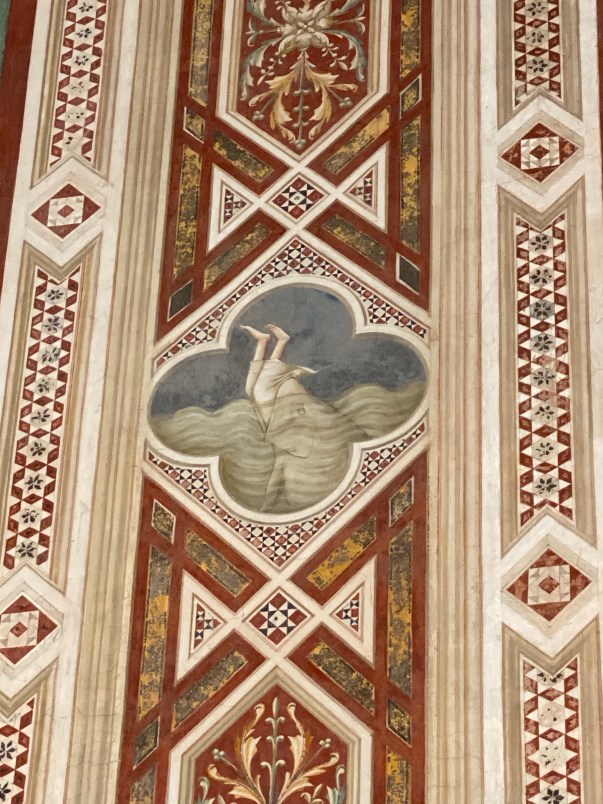
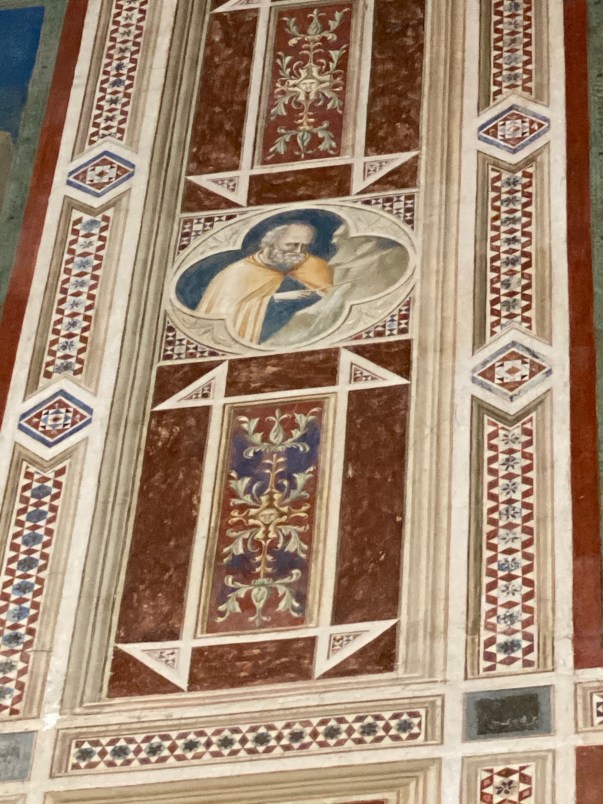
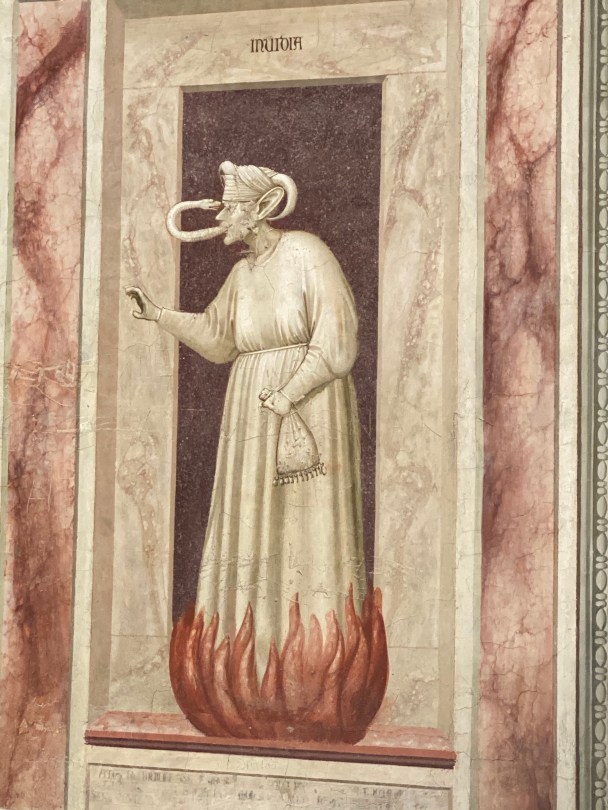
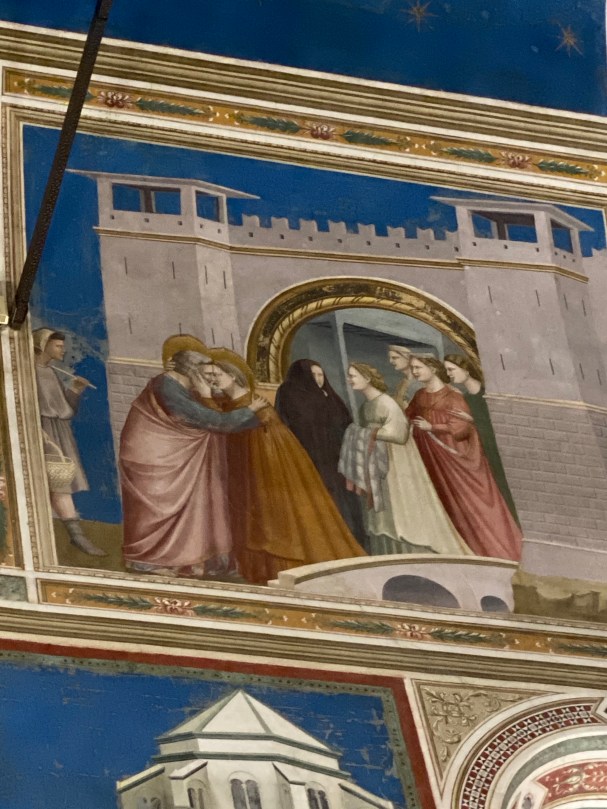
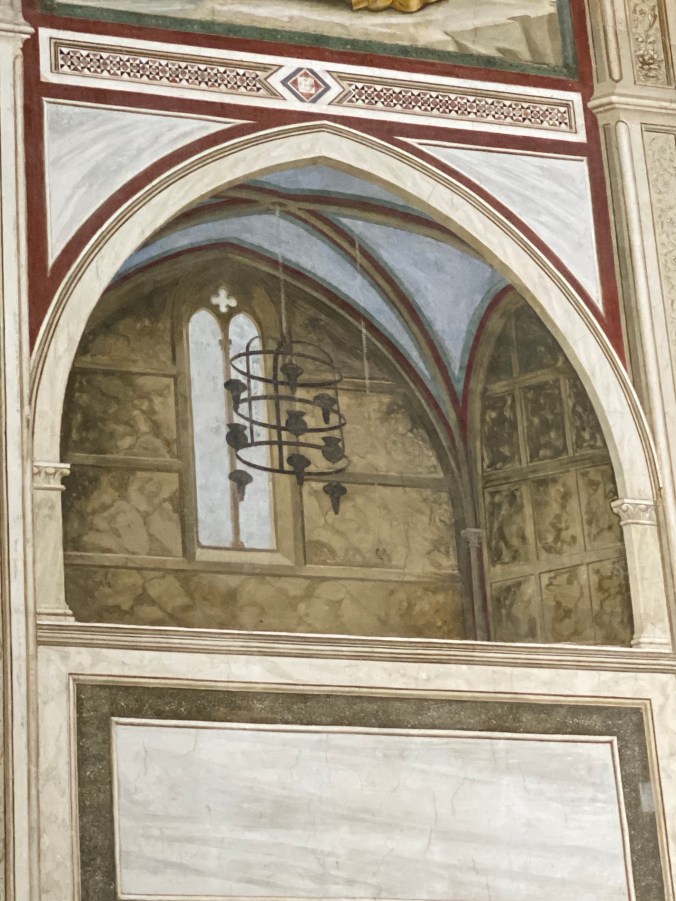
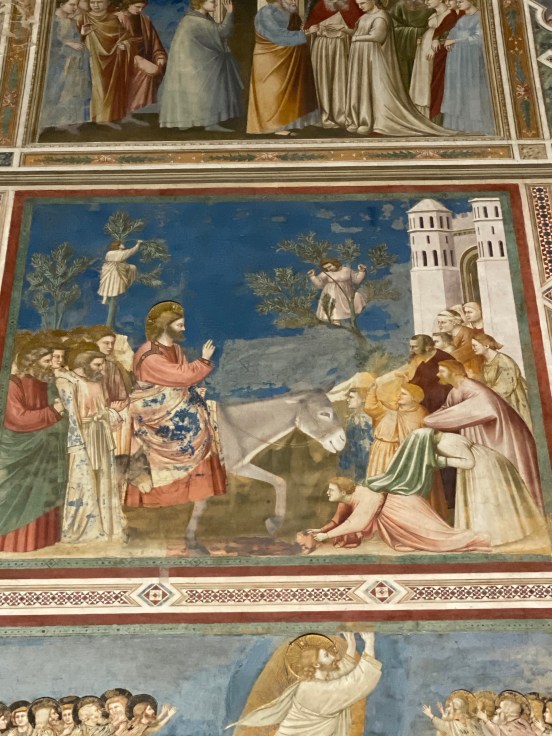
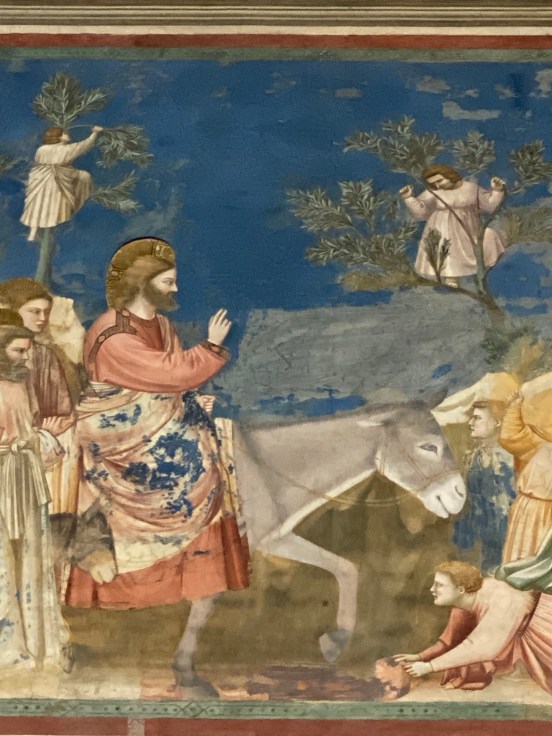
Undoubtedly the most notable things about Padova is the Giotto masterpiece of fresco painting in the The Scrovegni Chapel (Cappella degli Scrovegni). This incredible cycle of frescoes was completed in 1305 by Giotto.
It was commissioned by Enrico degli Scrovegni, a wealthy banker, as a private chapel once attached to his family’s palazzo. It is also called the “Arena Chapel” because it stands on the site of a Roman-era arena.
The fresco cycle details the life of the Virgin Mary and has been acknowledged by many to be one of the most important fresco cycles in the world for its role in the development of European painting. It is a miracle that the chapel survived through the centuries and especially the bombardment of the city at the end of WWII. But for a few hundred yards, the chapel could have been destroyed like its neighbor, the Church of the Eremitani. The Palazzo della Ragione, with its great hall on the upper floor, is reputed to have the largest roof unsupported by columns in Europe; the hall is nearly rectangular, its length 267.39 ft, its breadth 88.58 ft, and its height 78.74 ft; the walls are covered with allegorical frescoes. The building stands upon arches, and the upper story is surrounded by an open loggia, not unlike that which surrounds the basilica of Vicenza.
The Palazzo was begun in 1172 and finished in 1219. In 1306, Fra Giovanni, an Augustinian friar, covered the whole with one roof. Originally there were three roofs, spanning the three chambers into which the hall was at first divided; the internal partition walls remained till the fire of 1420, when the Venetian architects who undertook the restoration removed them, throwing all three spaces into one and forming the present great hall, the Salone. The new space was refrescoed by Nicolo’ Miretto and Stefano da Ferrara, working from 1425 to 1440. Beneath the great hall, there is a centuries-old market.
In the Piazza dei Signori is the loggia called the Gran Guardia, (1493–1526), and close by is the Palazzo del Capitaniato, the residence of the Venetian governors, with its great door, the work of Giovanni Maria Falconetto, the Veronese architect-sculptor who introduced Renaissance architecture to Padua and who completed the door in 1532.
Falconetto was also the architect of Alvise Cornaro’s garden loggia, (Loggia Cornaro), the first fully Renaissance building in Padua.
Nearby stands the il duomo, remodeled in 1552 after a design of Michelangelo. It contains works by Nicolò Semitecolo, Francesco Bassano and Giorgio Schiavone.
The nearby Baptistry, consecrated in 1281, houses the most important frescoes cycle by Giusto de’ Menabuoi.
The Basilica of St. Giustina, faces the great piazza of Prato della Valle.
The Teatro Verdi is host to performances of operas, musicals, plays, ballets, and concerts.
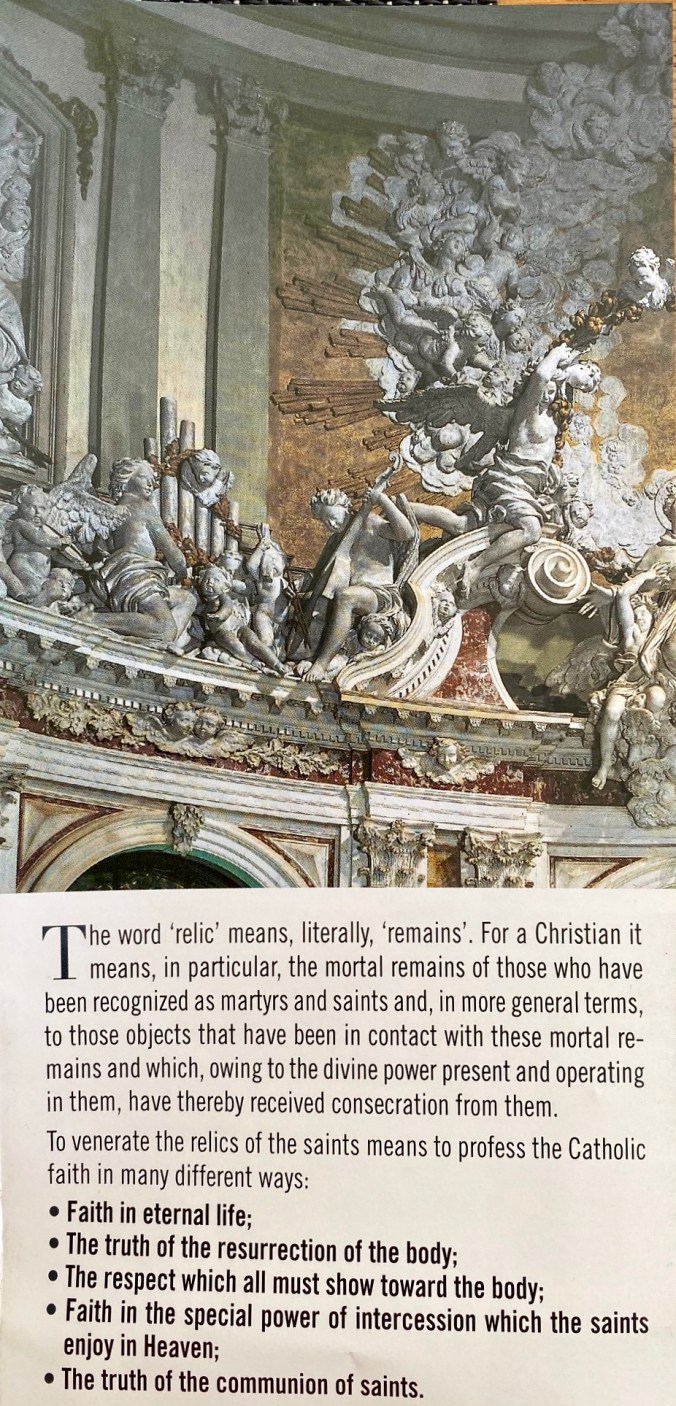
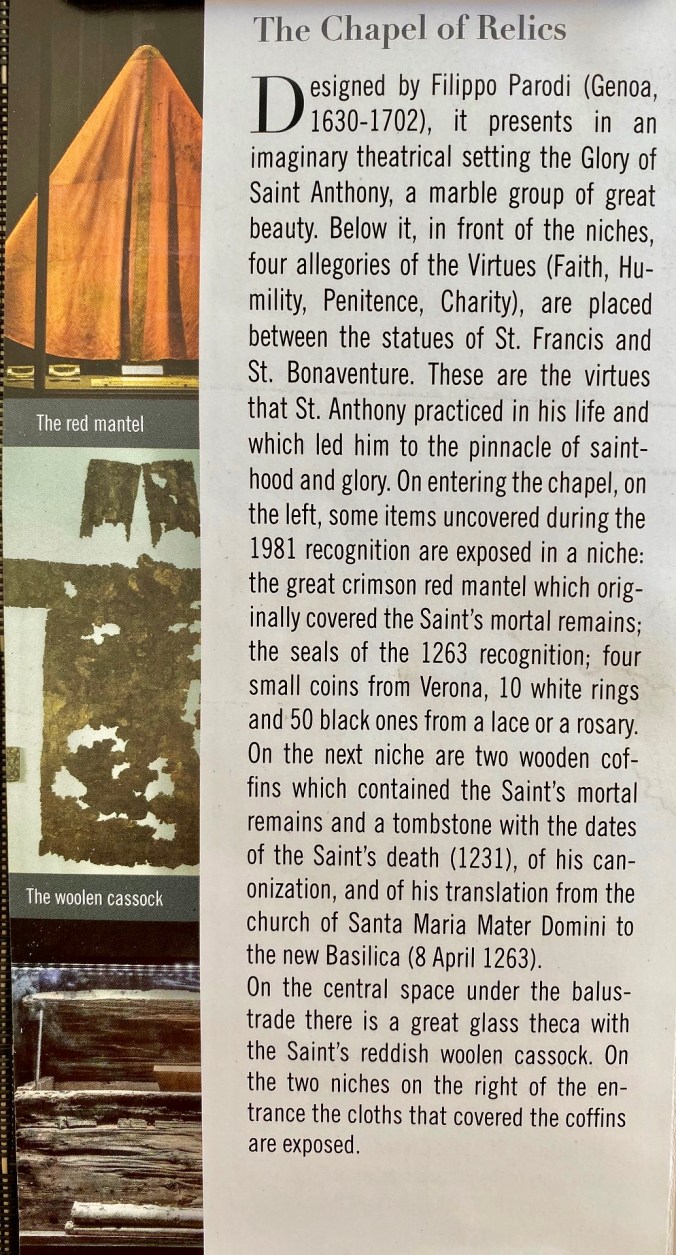
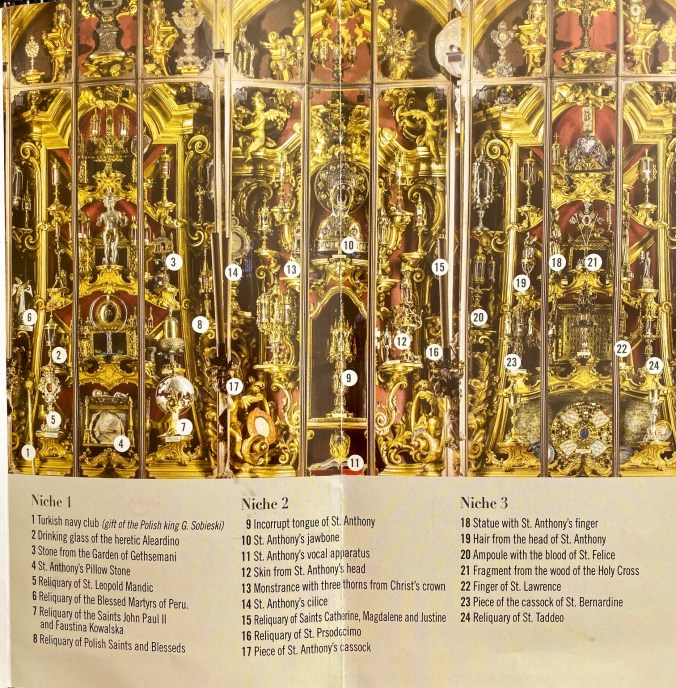
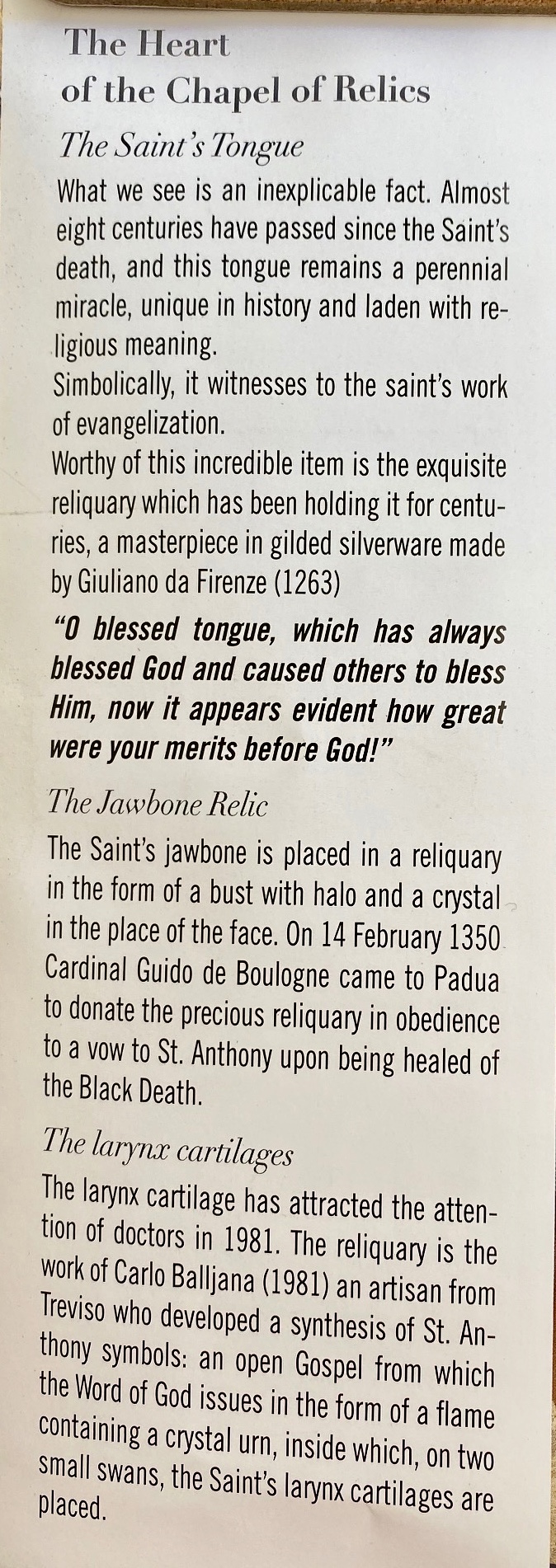
The most celebrated of the Paduan churches is the Basilica di Sant’Antonio da Padova. The bones of the saint rest in a chapel richly ornamented with carved marble, the work of various artists, among them Sansovino and Falconetto.
The basilica was begun around the year 1230 and completed in the following century. Tradition says that the building was designed by Nicola Pisano. It is covered by seven cupolas, two of them pyramidal.
Donatello’s equestrian statue of the Venetian general Gattamelata (Erasmo da Narni) can be found on the piazza in front of the Basilica di Sant’Antonio da Padova. It was cast in 1453, and was the first full-size equestrian bronze cast since antiquity. It was inspired by the Marcus Aurelius equestrian sculpture at the Capitoline Hill in Rome.
Not far from the Gattamelata are the St. George Oratory (13th century), with frescoes by Altichiero, and the Scuola di S. Antonio (16th century), with frescoes by Tiziano (Titian).
One of the best known symbols of Padua is the Prato della Valle, a large elliptical square, one of the biggest in Europe. In the center is a wide garden surrounded by a moat, which is lined by 78 statues portraying illustrious citizens. It was created by Andrea Memmo in the late 18th century.
Memmo once resided in the monumental 15th-century Palazzo Angeli, which now houses the Museum of Precinema.
The Abbey of Santa Giustina and adjacent Basilica. In the 5th century, this became one of the most important monasteries in the area, until it was suppressed by Napoleon in 1810. In 1919 it was reopened.
The tombs of several saints are housed in the interior, including those of Justine, St. Prosdocimus, St. Maximus, St. Urius, St. Felicita, St. Julianus, as well as relics of the Apostle St. Matthias and the Evangelist St. Luke.
The abbey is also home to some important art, including the Martyrdom of St. Justine by Paolo Veronese. The complex was founded in the 5th century on the tomb of the namesake saint, Justine of Padua.
The Church of the Eremitani is an Augustinian church of the 13th century, containing the tombs of Jacopo (1324) and Ubertinello (1345) da Carrara, lords of Padua, and the chapel of SS James and Christopher, formerly illustrated by Mantegna’s frescoes. The frescoes were all but destroyed bombs dropped by the Allies in WWII, because it was next to the Nazi headquarters.
The old monastery of the church now houses the Musei Civici di Padova (town archeological and art museum).
Santa Sofia is probably Padova’s most ancient church. The crypt was begun in the late 10th century by Venetian craftsmen. It has a basilica plan with Romanesque-Gothic interior and Byzantine elements. The apse was built in the 12th century. The edifice appears to be tilting slightly due to the soft terrain.
Botanical Garden (Orto Botanico)
The church of San Gaetano (1574–1586) was designed by Vincenzo Scamozzi, on an unusual octagonal plan. The interior, decorated with polychrome marbles, houses a Madonna and Child by Andrea Briosco, in Nanto stone.
The 16th-century Baroque Padua Synagogue
At the center of the historical city, the buildings of Palazzo del Bò, the center of the University.
The City Hall, called Palazzo Moroni, the wall of which is covered by the names of the Paduan dead in the different wars of Italy and which is attached to the Palazzo della Ragione
The Caffé Pedrocchi, built in 1831 by architect Giuseppe Jappelli in neoclassical style with Egyptian influence. This café has been open for almost two centuries. It hosts the Risorgimento museum, and the near building of the Pedrocchino (“little Pedrocchi”) in neogothic style.
There is also the Castello. Its main tower was transformed between 1767 and 1777 into an astronomical observatory known as Specola. However the other buildings were used as prisons during the 19th and 20th centuries. They are now being restored.
The Ponte San Lorenzo, a Roman bridge largely underground, along with the ancient Ponte Molino, Ponte Altinate, Ponte Corvo and Ponte S. Matteo.
There are many noble ville near Padova. These include:
Villa Molin, in the Mandria fraction, designed by Vincenzo Scamozzi in 1597.
Villa Mandriola (17th century), at Albignasego
Villa Pacchierotti-Trieste (17th century), at Limena
Villa Cittadella-Vigodarzere (19th century), at Saonara
Villa Selvatico da Porto (15th–18th century), at Vigonza
Villa Loredan, at Sant’Urbano
Villa Contarini, at Piazzola sul Brenta, built in 1546 by Palladio and enlarged in the following centuries, is the most important
Padua has long been acclaimed for its university, founded in 1222. Under the rule of Venice the university was governed by a board of three patricians, called the Riformatori dello Studio di Padova. The list of notable professors and alumni is long, containing, among others, the names of Bembo, Sperone Speroni, the anatomist Vesalius, Copernicus, Fallopius, Fabrizio d’Acquapendente, Galileo Galilei, William Harvey, Pietro Pomponazzi, Reginald, later Cardinal Pole, Scaliger, Tasso and Jan Zamoyski.
It is also where, in 1678, Elena Lucrezia Cornaro Piscopia became the first woman in the world to graduate from university.
The university hosts the oldest anatomy theatre, built in 1594.
The university also hosts the oldest botanical garden (1545) in the world. The botanical garden Orto Botanico di Padova was founded as the garden of curative herbs attached to the University’s faculty of medicine. It still contains an important collection of rare plants.
The place of Padua in the history of art is nearly as important as its place in the history of learning. The presence of the university attracted many distinguished artists, such as Giotto, Fra Filippo Lippi and Donatello; and for native art there was the school of Francesco Squarcione, whence issued Mantegna.
Padua is also the birthplace of the celebrated architect Andrea Palladio, whose 16th-century villas (country-houses) in the area of Padua, Venice, Vicenza and Treviso are among the most notable of Italy and they were often copied during the 18th and 19th centuries; and of Giovanni Battista Belzoni, adventurer, engineer and egyptologist.
The sculptor Antonio Canova produced his first work in Padua, one of which is among the statues of Prato della Valle (presently a copy is displayed in the open air, while the original is in the Musei Civici).
The Antonianum is settled among Prato della Valle, the Basilica of Saint Anthony and the Botanic Garden. It was built in 1897 by the Jesuit fathers and kept alive until 2002. During WWII, under the leadership of P. Messori Roncaglia SJ, it became the center of the resistance movement against the Nazis. Indeed, it briefly survived P. Messori’s death and was sold by the Jesuits in 2004.
Paolo De Poli, painter and enamellist, author of decorative panels and design objects, 15 times invited to the Venice Biennale was born in Padua. The electronic musician Tying Tiffany was also born in Padua.










































 get back, lauretta!
You must be logged in to post a comment.