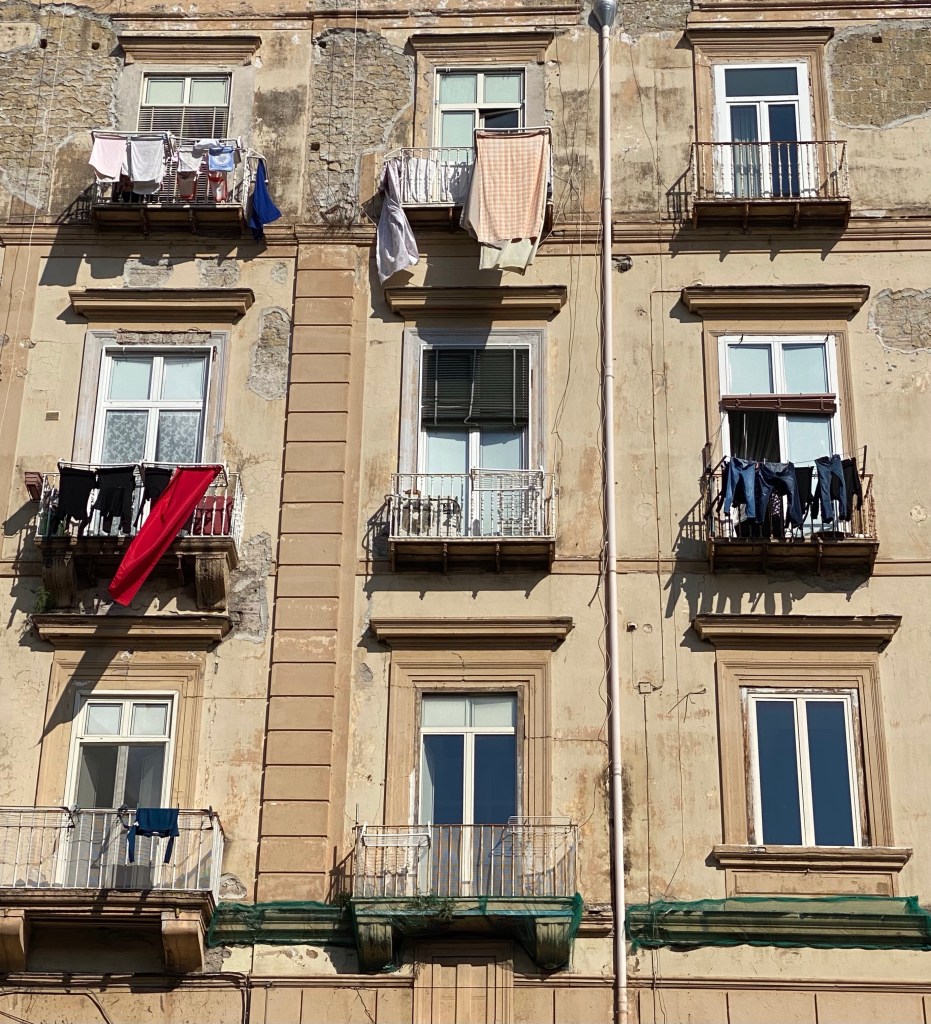
Naples.
I was here once before about 12 years ago. It was high time for another visit, to see again my favorite places and to try out new ones.
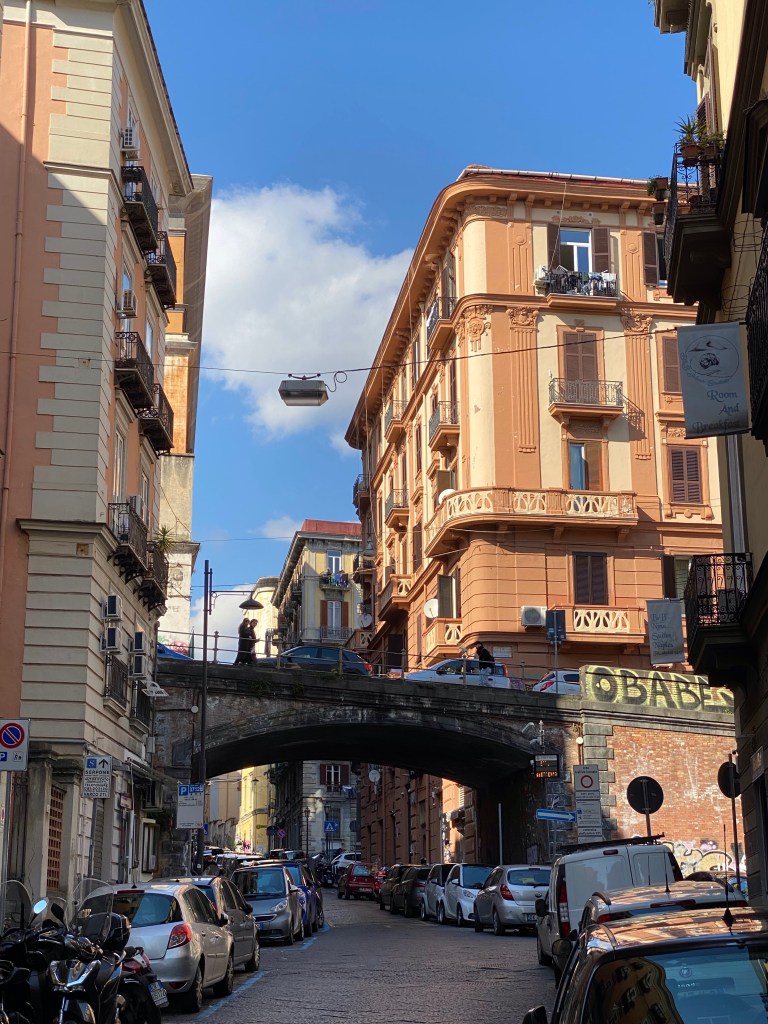
I arrived on Feb. 28, 2022 on a sunny but still chilly afternoon. I arrived by train from Florence, a 3 hour journey on the fast Italo train, and rode the Neapolitan subway for the first time. All went well except of course many of the escalators weren’t working which is only a problem when you have to lug a suitcase up. Which I did.

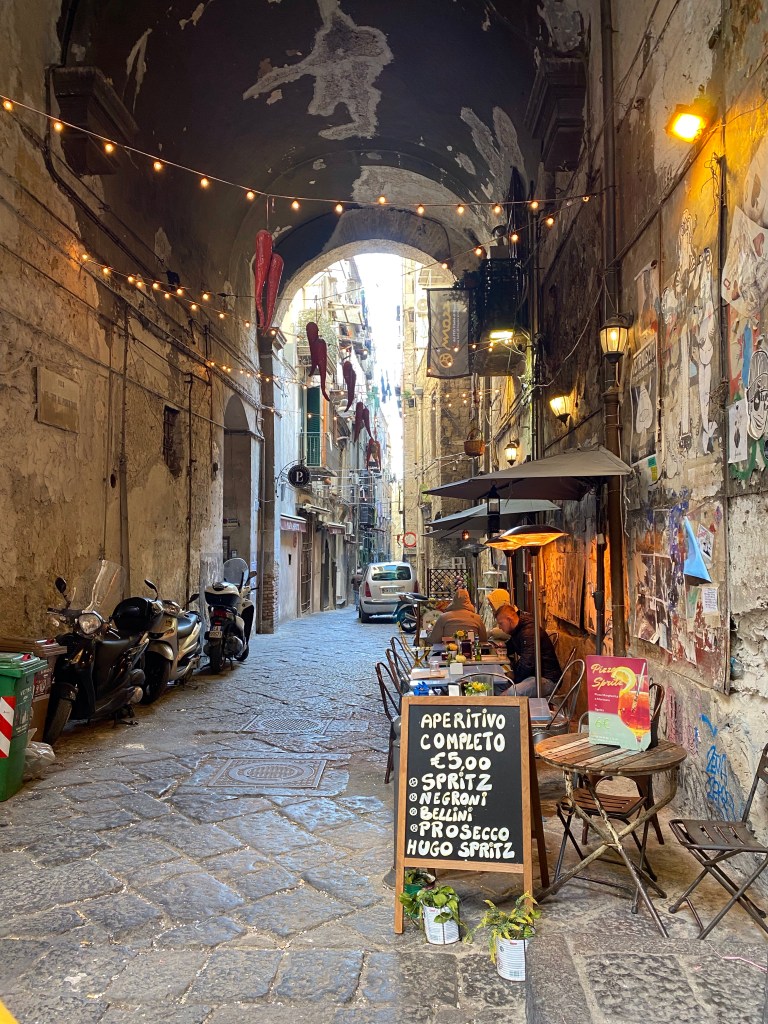
After checking into my hotel and getting settled, off I went to explore. I went straight into the heart of the historic center, spending my time on the dark and narrow central streets that are really more like allies. They often run right into an open piazza, where the February sunshine was brilliant and a bit shocking after the dark innards.
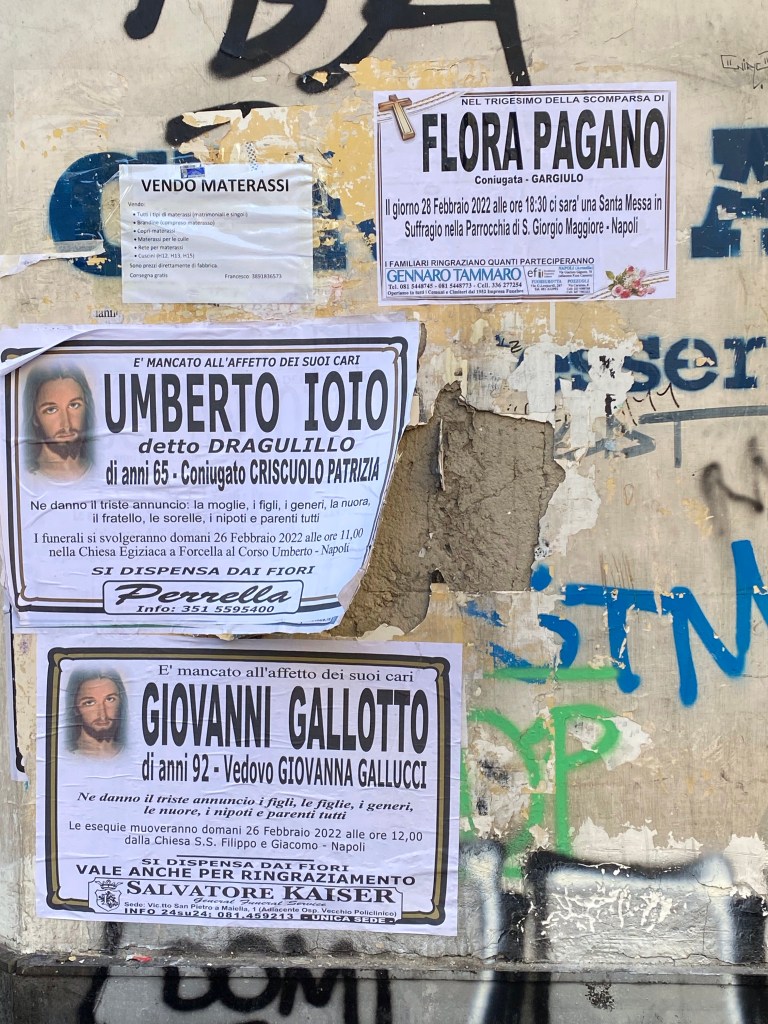

If you read my blog posts, you know I am very fond of the quaint Italian tradition of posting death notices. In the well cared for towns of the central and northern parts of Italy, the part I am fortunate to call home for the past 7 years, there are dedicated places for these notices. In Siena and Parma, for example, there are spaced designated for the notices and they are neatly hung.
But in Naples, I discovered that a death notice can be hung on any available street space and sometimes the notice for the same deceased person is hung multiple times in a single neighborhood. I’ve never seen that up north. The two photos above are not of the same wall; it’s two neighboring walls with the same notices repeated.

And then there is this death notice, glued to an electrical box. Also, as you can see by the pavement in front, Naples isn’t clean.

You’ve got to be careful when taking pictures. There aren’t sidewalks in the narrow streets and you could easily get hit by a cycle or bike. This rider zoomed into frame while I was focusing on the storekeeper and the peppers hanging above his head. Whoosh! If you aren’t careful, the next stop is the ospedale!

Lots of things here aren’t elegant. I’m spoiled by the well kept streets of Florence. Even the mom and pop stores usually have some nice design feature; items artfully displayed to catch your eye.
But, in Naples, even the store of the elegant profumery, “Carthusia, I profumi di Capri” has this tacky metal door over the front. Metal fronts are ubiquitous in Italy for securing closed businesses. But usually they are blank. This painted metal door is clearly an intentional work of art by an artist who signed it.
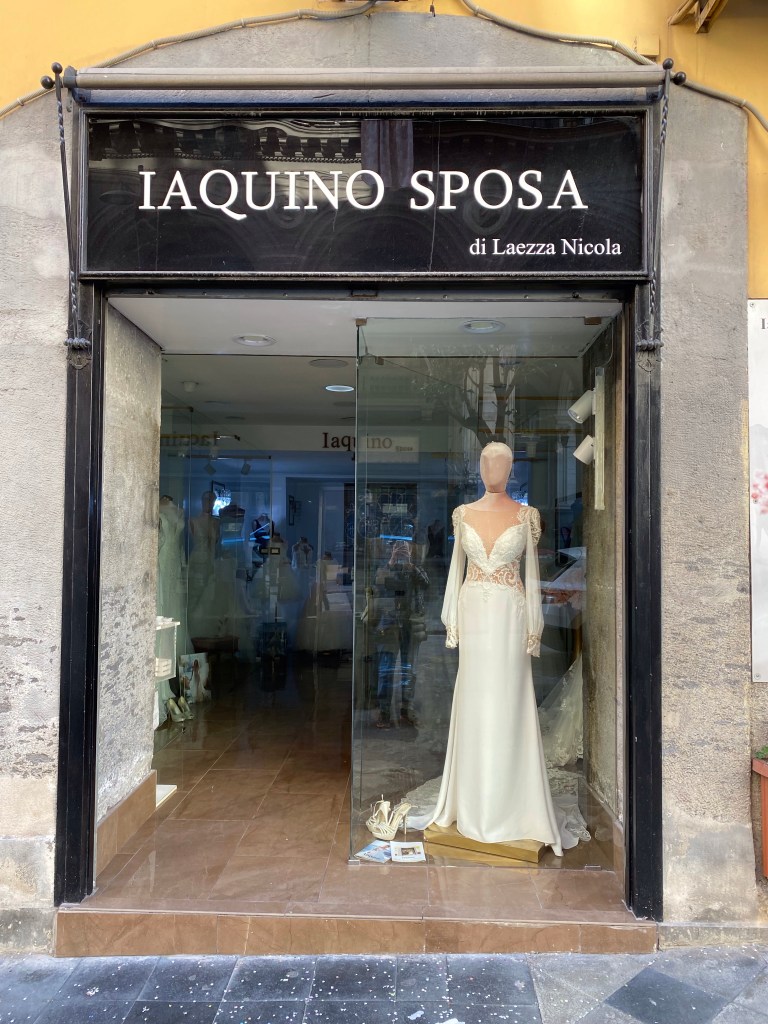
A very tacky wedding gown in a tacky store.
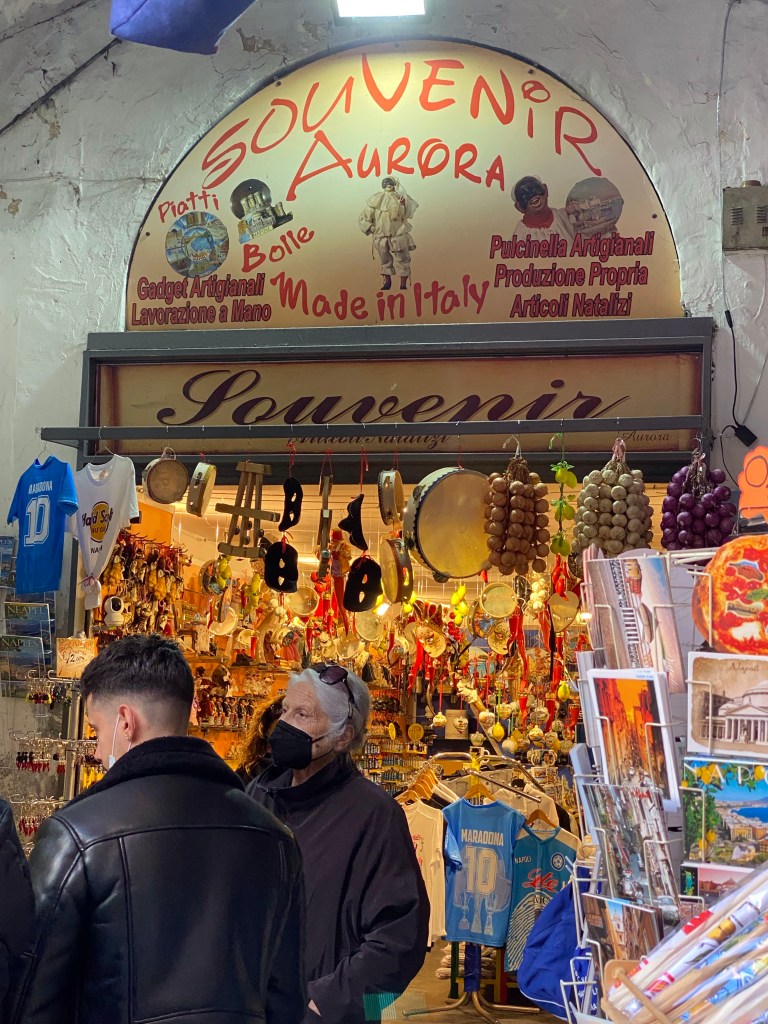
And, below, a souvenir store so unapologetically tacky that I love it!
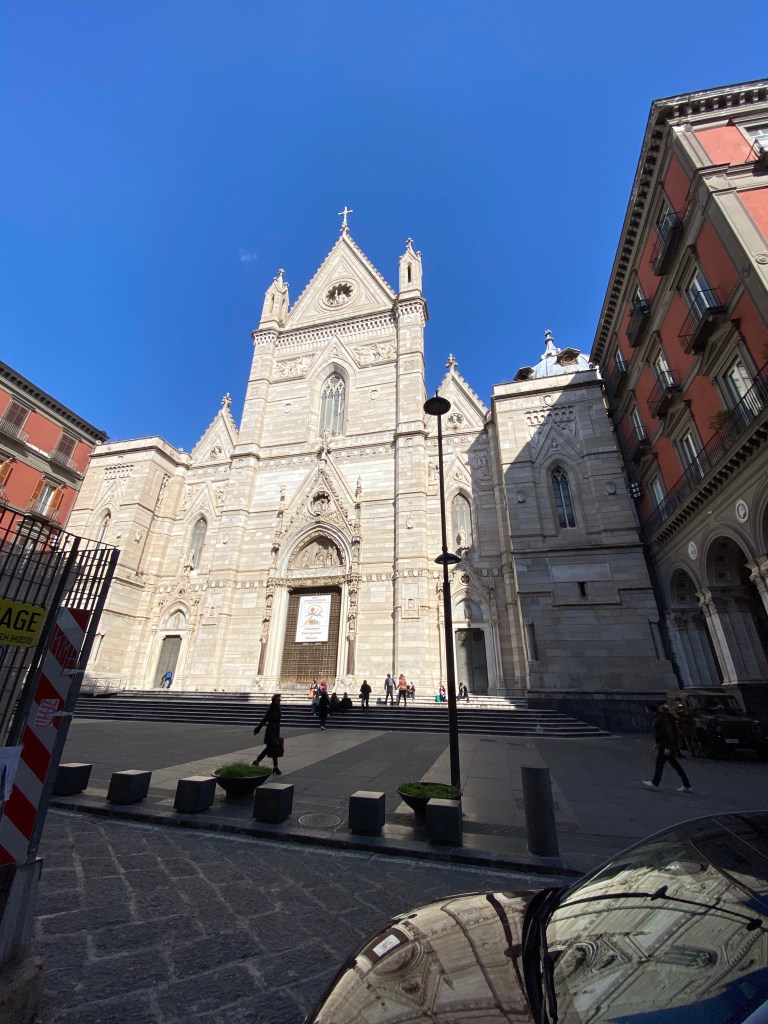
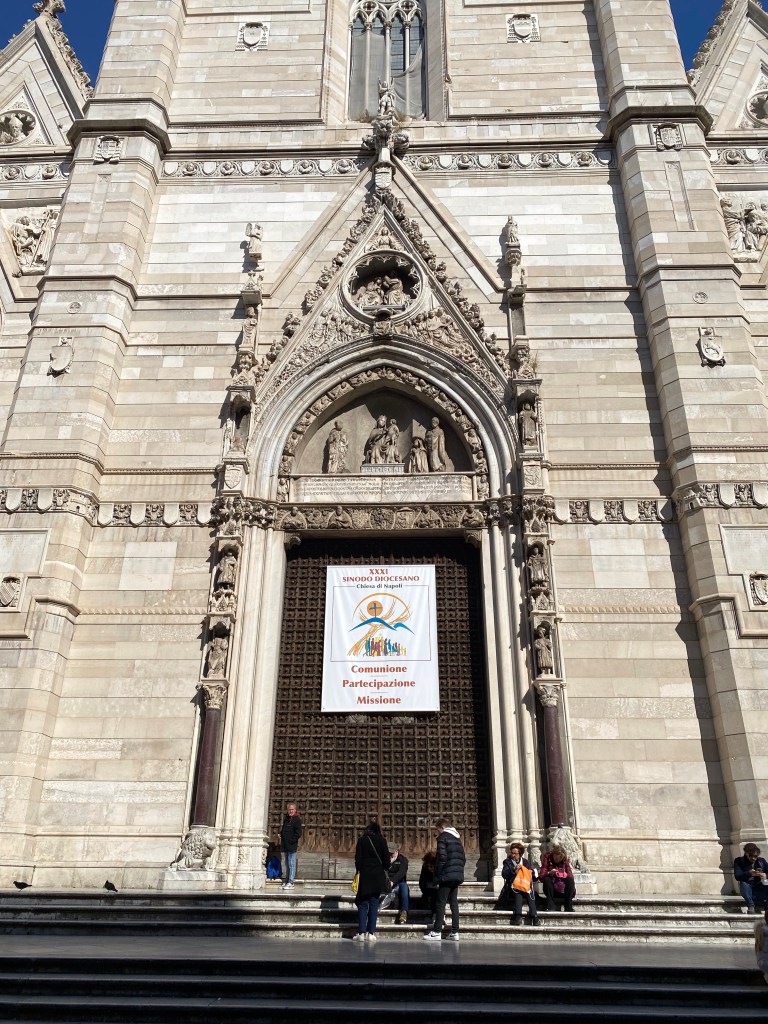
I set out to find the duomo of Naples and here it is. Very lovely, but closed of course during the time I was there. I’ll go back when it’s open.



Piazzetta Nilo


Another open, bright piazza, enjoyed to the fullest by the Neapolitans on this sunny afternoon!




Above, another bright open piazza. A Romanish river god statue graces the centerish. Pendino
















You must be logged in to post a comment.