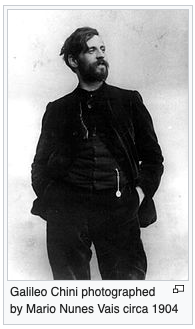
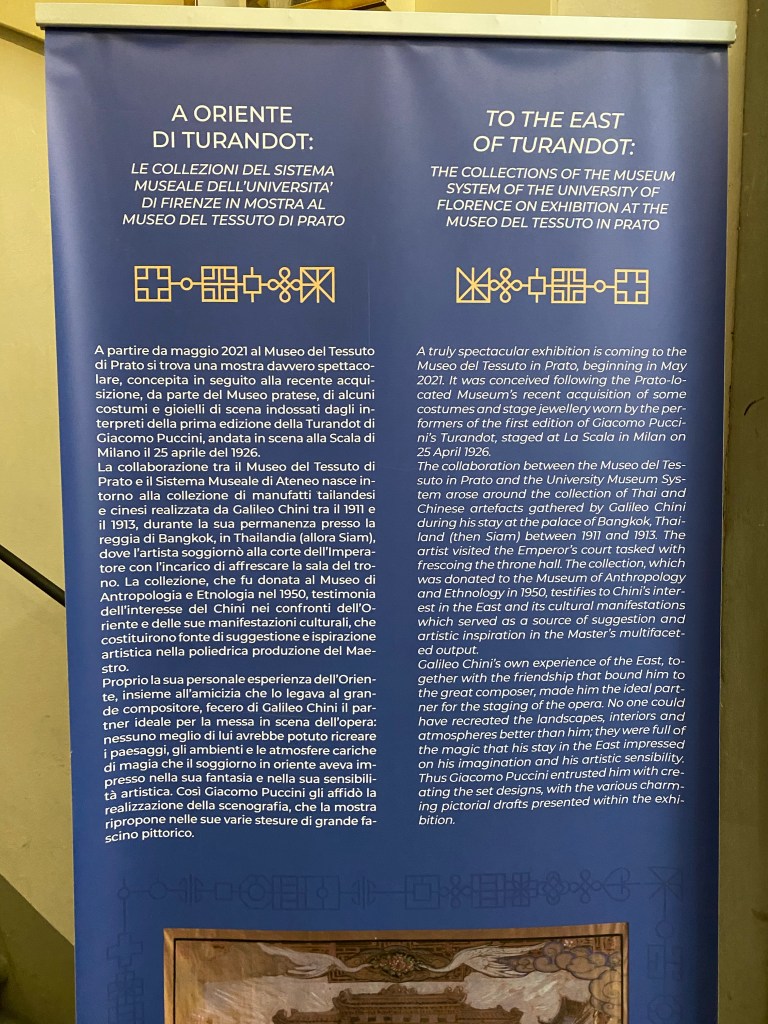
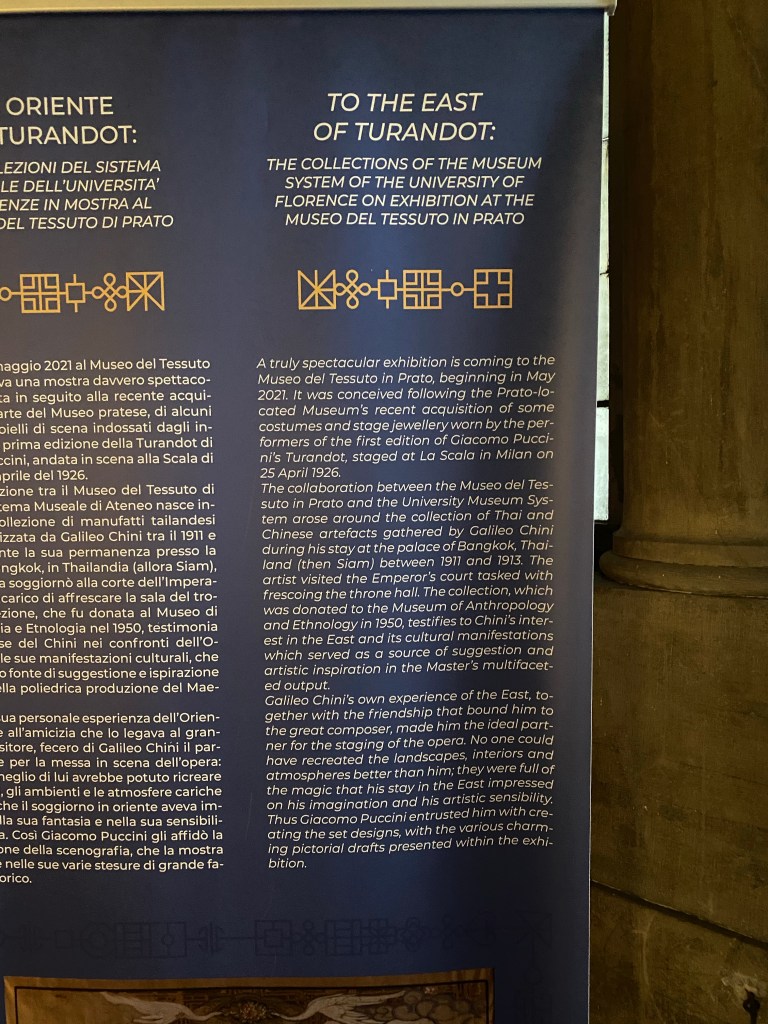
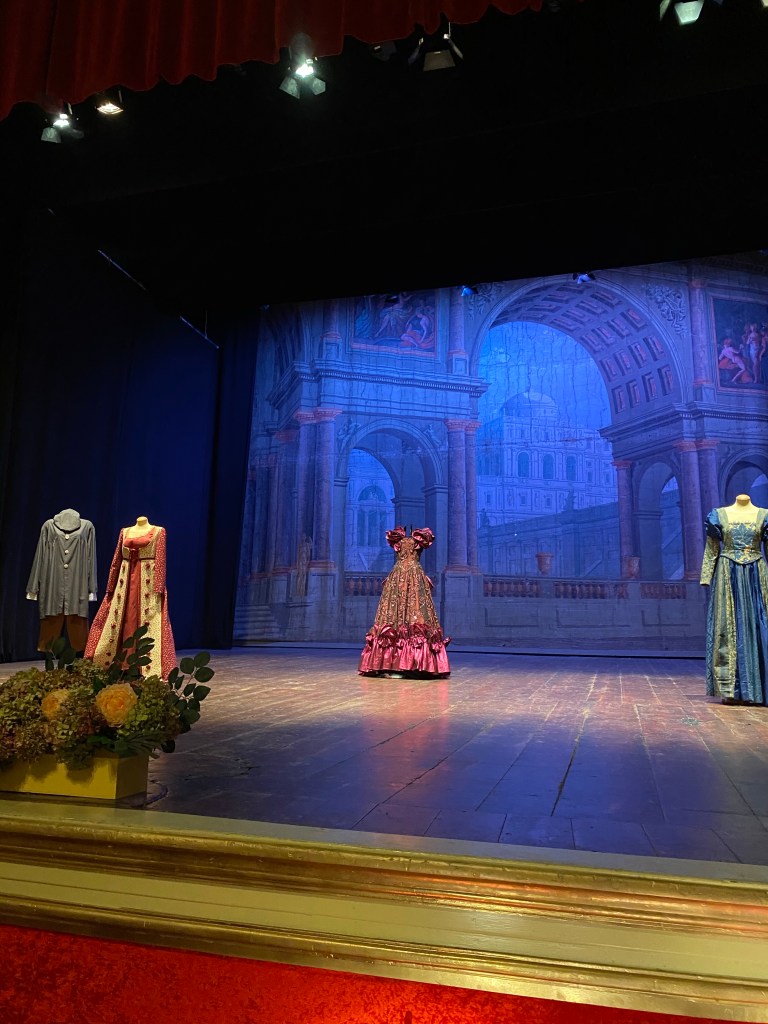
Galileo Chini (1873 – 1956) was an Italian decorator, designer, painter, and potter. A prominent member of the Italian Liberty style movement, or Italian Art Nouveau, he taught decorative arts at the Accademia di Belle Arti in Florence. He was responsible for several of the paintings and decorations in the Brandini Chapel at Castelfiorentino, the church of San Francesco de’ Ferri in Pisa, and the Ananta Samakhom Throne Hall in Bangkok. His theatrical work included designing the sets for the European premiere of Puccini’s opera Gianni Schicchi (Rome, January 1919) and the world premiere of his Turandot (Milan, 1926). He also created the sets for the premieres of Umberto Giordano’s opera La cena delle beffe (Milan, 1924) and Sem Benelli’s play of the same name on which the opera was based (Rome, 1909).
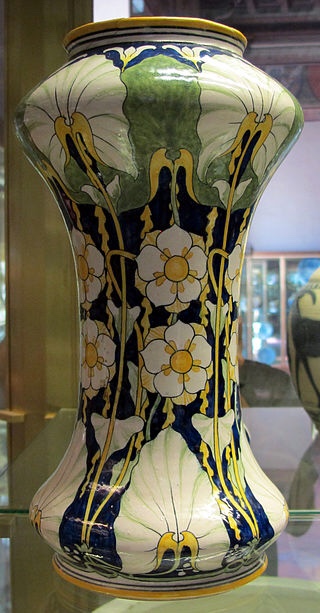
Flower vase by Chini
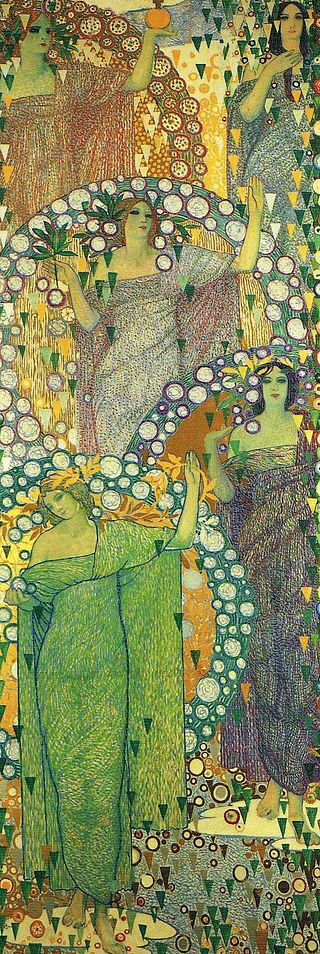
La Primavera, 1914
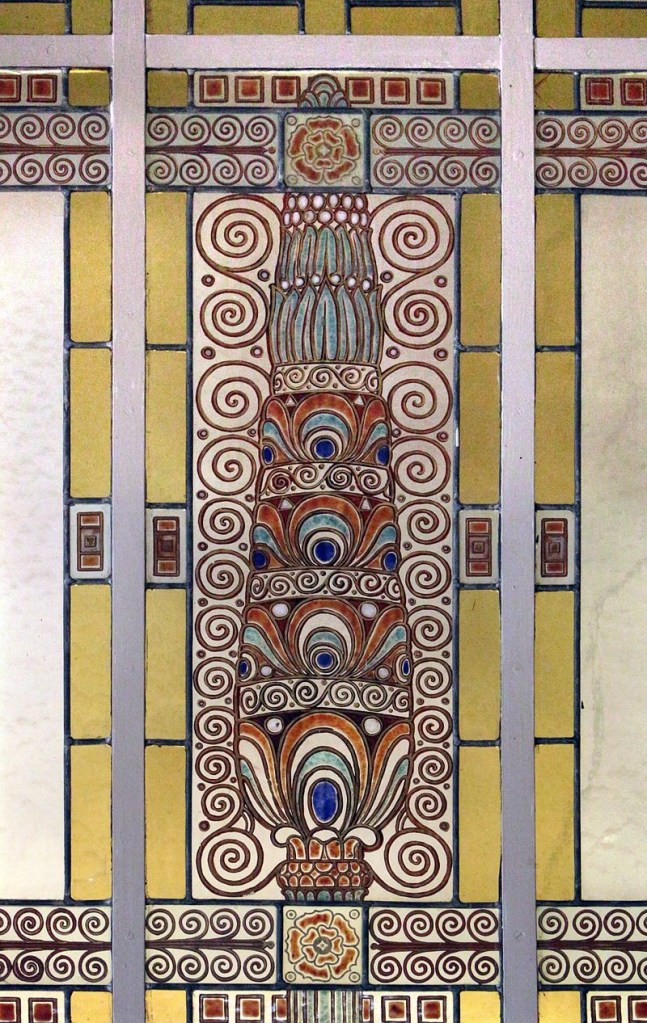
Ceramic tile façade decoration (1904)
In 1896, Chini and some of his friends founded “Arte della Ceramica.” The factory – its logo featuring a pomegranate and two clasped hands – soon gained international fame.
The large fruit, full of tasty red seeds, was a tribute to the Pre-Raphaelites and William Morris, founder of the Art and Crafts movement, who often featured the symbolic fruit in their works.
The clasped hands represent the brotherhood and unity between the founders, whose artistic partnership was similar to an Anglo-Saxon brotherhood; they felt a strong bond to the city of Florence, and wanted to preserve its art and tradition of ceramics, by contributing their modernist and innovative spirit.
In some of the vases produced by Galileo Chini, the Art Nouveau genius who understood how to harmonize experimenting with materials, the great iconographic novelties that were coming to Northern Europe at the time, and taste inspired by Florentine Renaissance masters such as Botticelli and Ghirlandaio.
With some of his splendid works, Chini and his colleagues reached unexpected celebrity, winning important awards such as the gold medal at the Turin International Exhibition of 1898, and gaining recognition around the world.
CHINI , Galileo . – He was born in Florence on December 2. 1873 by Elio, tailor and fliscorn player, and by Aristea Bastiani.
His grandfather, Pietro Alessio , painter and decorator, spent his life in Borgo San Lorenzo (Florence), where he was born on June 18, 1800 and died in 1887. The economic conditions of the family, rather modest, did not allow him regular studies: he was therefore self-taught and willing and eclectic. Equipped with good knowledge in mathematics and architecture, he designed the Giotto theater in Borgo San Lorenzo, also taking care of it in detail, from the furnishings to the decorative elements, to the machines for the stage. In his Notes … (I, 1949), C. recalls how his grandfather was interested in the conservation of the monuments of Mugello, personally intervening with restoration operations.
Having lost his father at the age of eight, and interrupted his studies in the third grade, C. was welcomed as an apprentice in the workshop of his paternal uncle Dario, a decorator, who at that time was also waiting to restore various frescoes on behalf of the Regional Office of Tuscany .
Dario, born in Borgo San Lorenzo in March 1847, was a passionate connoisseur of music (according to fliscorno), but interested above all in decoration; at the age of fifteen he had moved to Florence; and here he was welcomed by the painter and decorator Ottavio Pucci. Later he collaborated, for modest decorative cycles in private homes and public places, with the painter Annibale Gatti, until the regional office for the conservation of fine arts directed by Luigi del Moro, Guido Carocci and Giuseppe Castellazzi entrusted him with the task of restorer of ‘frescoes. So it was among the restorers of the paintings of S. Trinita ( Art and history,VII [1888], p. 127; IX [1890], p. 202) and participated in restoration works in S. Apollonia and in Orsanmichele. The technical shrewdness he achieved got him restoration assignments also outside Florence, in S. Frediano in Lucca, in S. Niccolò in Prato, in S. Biagio in Passignano. In Livorno he designed the Goldoni theater, also taking care of the decorative elements. He died in Florence on 18 Sept. 1897.
Having come into conflict with his uncle’s family, C. also began to work as a painter ( Appunti …, I, 1949), but soon returned to his relative and in 1890 participated with him in the restorations in S. Trinita in Florence. ( ibid ., F. Tarani, historical and artistic references of the church of S . Trinita …, Florence 1897, to Indicem). In that same year, at the suggestion of his friend Giulio Bargellini, he enrolled in the free nude school at the Academy of Fine Arts in Florence, attending it occasionally however: he nevertheless got to know, among others, Plinio Nomellini, Ludovico Tommasi, Giuseppe Graziosi, Libero Andreotti. By attending the Circle of artists he became friends with R. Papini, with Sem Benelli, and, in the years ’92 -’93, with Telemaco Signorini. In 1897, when his uncle Dario died, C. succeeded him in the task of restorations in Prato, Siena and San Miniato ( Arte e storia, XVII [1898], pp. 40, 88; L’Arte,I [1898], p. 214), also taking over his workshop. In the meantime he had been involved in easel painting: in 1895 he had sent one of his paintings to the first Florentine exhibition “Dell’Arte e dei Fiori”; but the work had been rejected because it was “too decorative” (so C. himself in the Appunti …, I, 1949), and then exhibited at an exhibition of the refused.
C. made his first tests as a ceramist in 1896 ( Historical Notes of the Manufactures …, ms., 1935) and between the end of that year and the beginning of the next, in cooperation with his friends Vittorio Giunti , Giovanni Montelatici, Giovanni Vannuzzi, took over a small ceramic factory in Florence that was about to close, founding the “Arte della ceramica” factory, based in via Arnolfo and sales room in via Tornabuoni (brand: a stylized pomegranate with the initials “ADC” in addition to the “F” of Florence, with two intertwined hands in the first examples).
The vases and decorative objects due to C. immediately found themselves at the forefront in Italy due to their precocious adaptation to modernist iconographic repertoires with strong oriental influences, obtaining significant awards in numerous exhibitions (gold medal at the Exposition decorative art, Turin 1898: see E. Thovez, in L’arte all’Espos . of 1898,IV, pp. 30-32; Grand Prix at the Universal of Paris, 1900; Grand Prix in Petersburg, 1901) and enjoying great success at the International Review of Decorative Arts in Turin in 1902 (Melani, 1902; Pica, 1903) where, in addition to a large number of vases, amphorae and plates, the setting of two rooms (dining room and bathroom) built with polychrome metal luster material; the façade of the exhibition sector was decorated with four stoneware bas-reliefs due to D. Trentacoste, who with C. from 1898 had the technical direction of the company ( Mostra del Liberty, 1972, p. 220). easel painting: there remain two portraits of his wife from 1899 (Lido di Camaiore, Chini heirs) and La quiete,work with a slightly scenographic layout, but lightened by the luminous tones, with which the painter began his participation in the Venice Biennale, in 1901. The first decade of the new century was a period of undisputed fortune for C. it met with stops and was profuse in the most diverse fields. In painting first of all, where, perhaps stimulated by his friend Nomellini and by the works of Segantini and Previati, he turned to symbolic themes (not entirely extraneous to his sensitivity, just think of the strong allegorical charge of his latest works), which the paintings exhibited in the various editions of the Biennale were marked: in 1903, The Sphinx and A Sunset ; in 1905, Il trionfo and La Campagna; in 1907, a fresco painted tondo , Il Battista (ill. no. 26 of the catalog), and two canvases, Icaro and Il giogo .
And with painting C. developed the activity of decorator: at the end of 1903 he began at the same time a series of pictorial decorations on the walls and ceilings of the building of the Savings Bank of Pistoia (G. Carocci, in Art and history,XXVIII [1909], pp. 333 ff.), And of the Hotel Pace in Montecatini and in the same year he participated in the decoration and furnishing of the Tuscan room at the Biennale, painting the vault, creating the terracotta and majolica frieze around the walls, designing the models of two chandeliers and two doors inlaid with semiprecious stones; in 1906 he made decorations for the Cassa di Risparmio di Arezzo. In the same turn of years, in collaboration with the architect Giovanni Michelazzi, he set about decorating numerous Florentine villas (Cresti, 1971). After having furnished the room of the “Giovine Etruria” at the 1906 Milan Exposition, and after having collaborated in the “L’arte del Sogno” room for the 1907 Biennale (among other things with a ceramic floor, together with his cousin Chino), received in 1909 theassignment to fresco the hall of the dome (main entrance) of the Biennale with the most important periods of civilization and art: the decoration was resolved in three bands, the upper one with ornamental motifs; the central one with the following eight episodes, each “explained” by a hendecasyllable by Fradeletto,The origins, The primitive arts, Greece and Italy, Byzantine art, From the Middle Ages to the Renaissance, Michelangelo, The Baroque Empire, The new civilization ; the lower one finally with motifs taken from the astrological symbol of the scarab. In the work, covered in 1936 when Giò Ponti was commissioned to renovate the building, but visible in tables 52-58 of the Decorative Art Models, II ,Milan 1909, and in the catalog of the Biennale, the taste and the happy rhythm of the story seem to prevail, even if there is no lack of compromises with the classicist rhetoric. The review of the decorative cycles still includes the arrangement of the Italian pavilion at the Universal in Brussels (1910), and participation in the celebratory exhibitions of 1911 in Rome, Turin, Florence. C. did not even interrupt his activity as a ceramist, because, if he abandoned the “Art of ceramics” in 1904, which had just moved to via Settignanese near Fontebuoni, in 1907, in partnership with his cousins Chino and Pietro, he gave birth to the “Manifattura Fornaci S. Lorenzo – Chini and C. Borgo S. Lorenzo – Ceramics and artistic glass”, whose activity lasted until the Second World War (brand:grate with or without stylized lily and written “Mugello”) with the C. artistic director and Chino director. This manufacture added to the traditional production in vases and decorative objects, with frequent use, especially until 1911, of stoneware, that of stained glass and tiles.
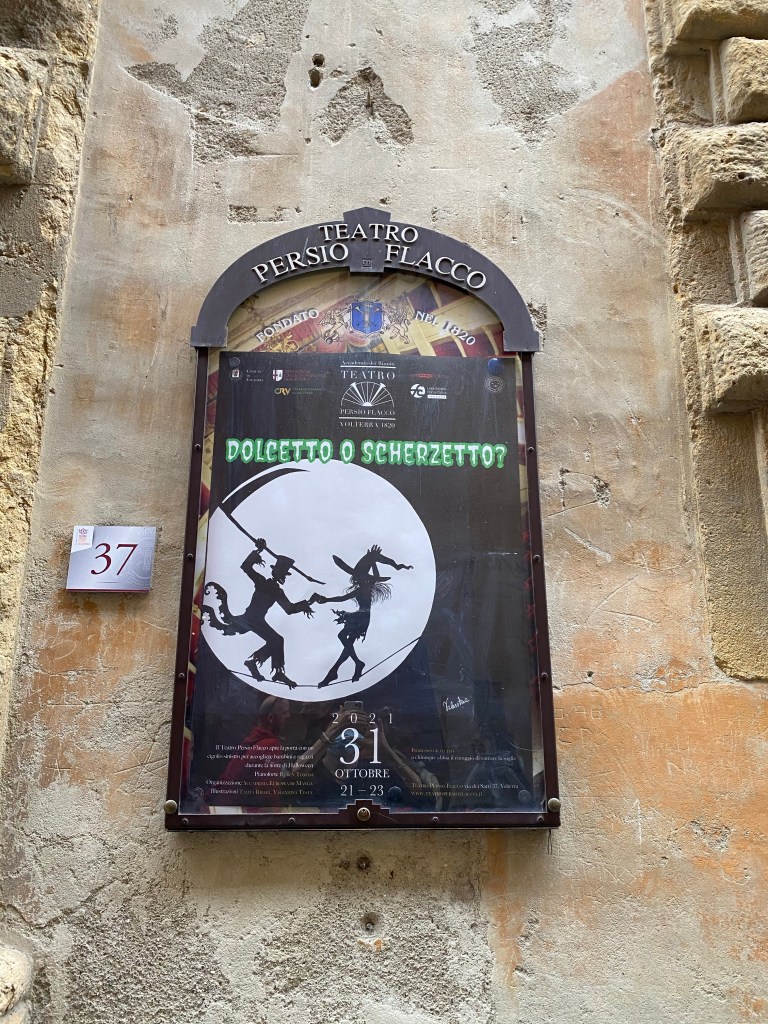
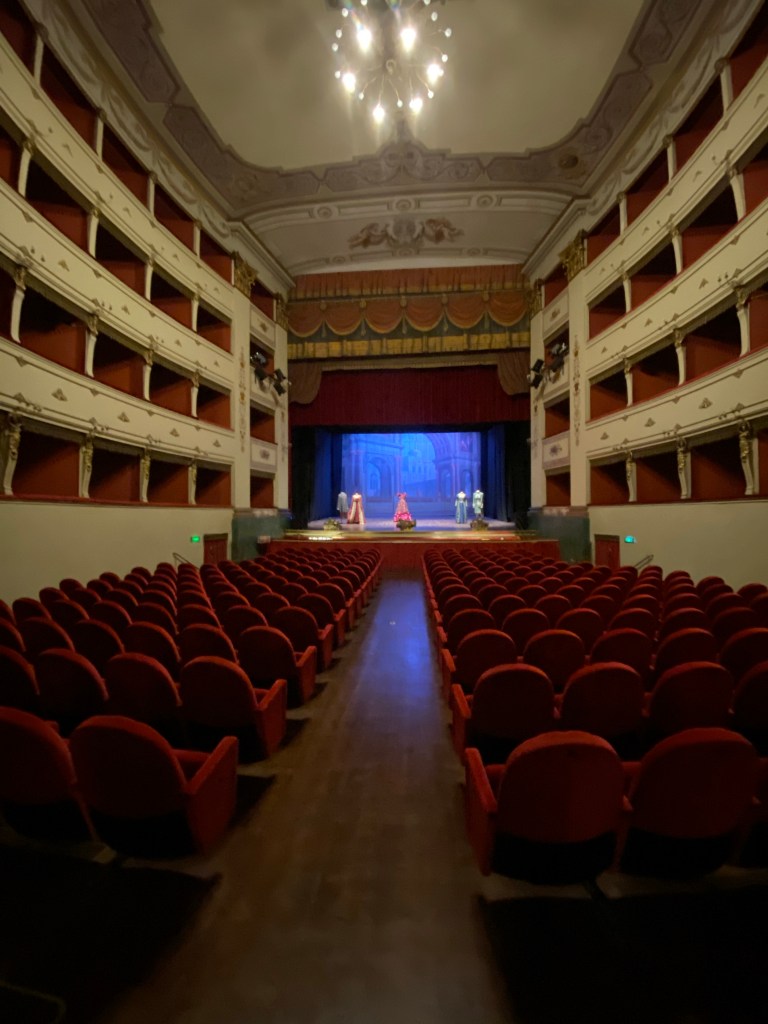
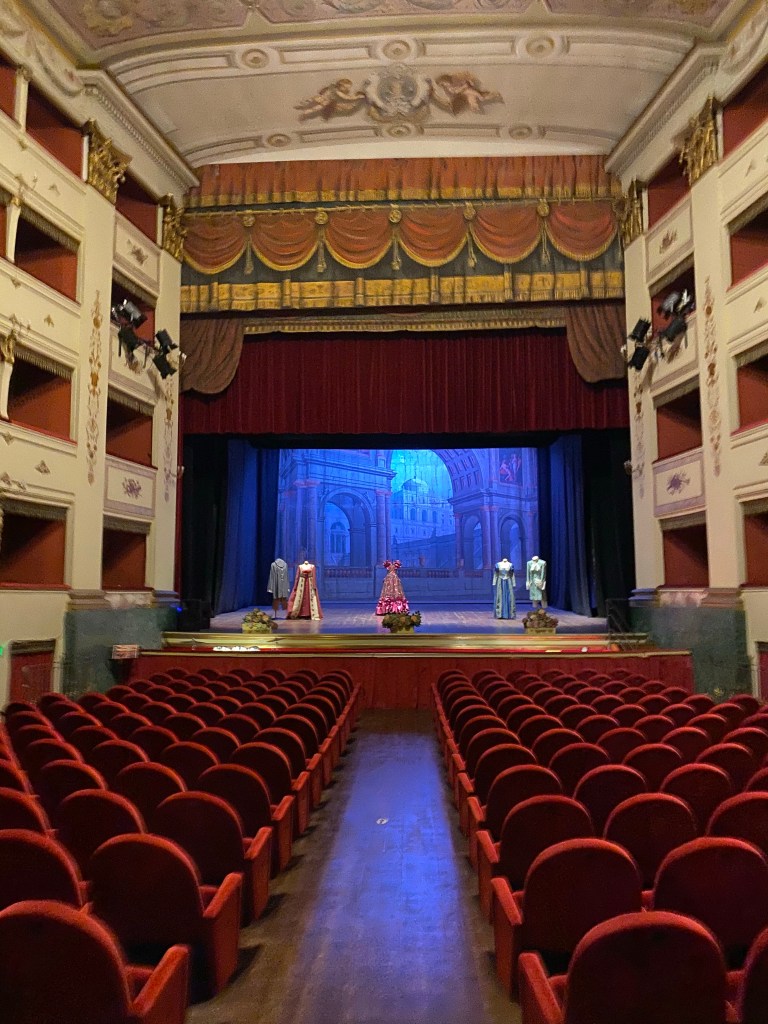
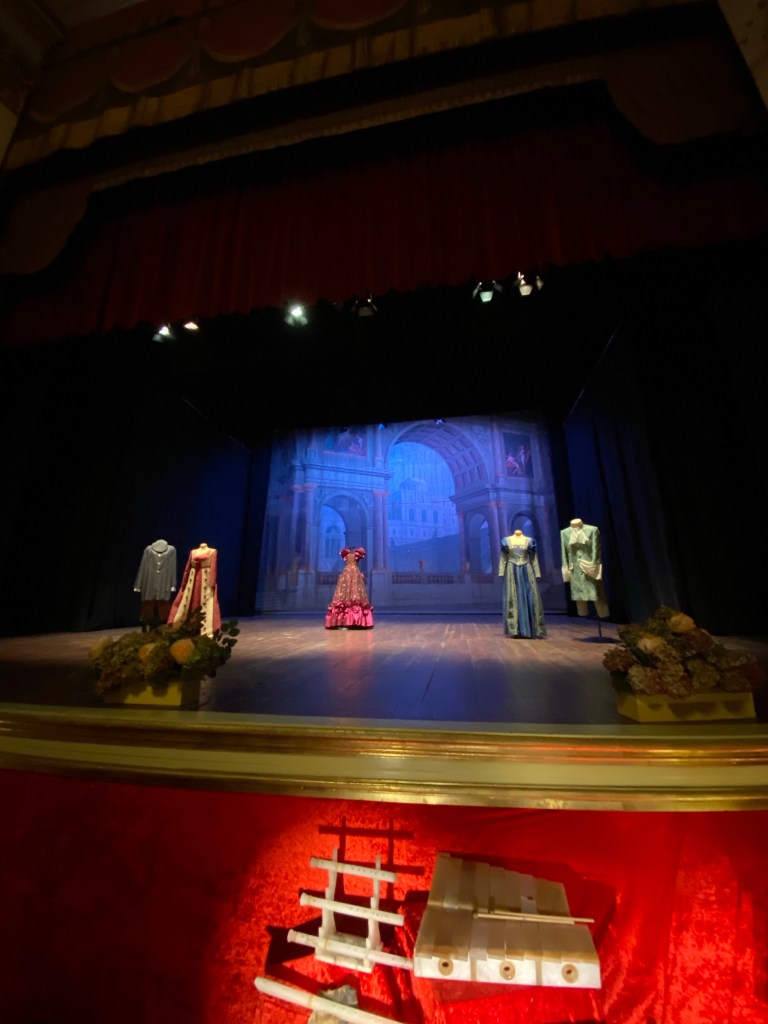
In 1908, creating the scenes for Sem Benelli’s Mask of Brutus , C. also began his activity as a scenographer, valuable for the lightening of the nineteenth-century farragine thanks to the introduction of stylistic characteristics of liberty. In 1909 he prepared the sets, costumes and “advertising posters” for the premiere, at the Argentina in Rome, of the Benelli ‘s Supper of the pranks and curated the scenes for the Midsummer Night’s Dream (also in Argentina) ; in 1910 still his were the scenes for L’Amore dei tre re, also by Benelli, and for the Orione by Ercole L. Morselli.
His action in the field of graphics and poster design is also significant: from the poster, for the “Art of ceramics” (reproduced in the advertising pages of the 1901 Biennale catalog) to those for the Cena delle mocker (1909), for the Etnografica in Rome (1911), for the Piccolo harem by G. Costa, for a dog show in 1925 and for Fiorenza del Benelli (1930) up to advertising posters (for savings, for example). He illustrated the Benellian volume (Florence, Calvelli, 1901) dedicated to the sculptors of the Biennale and L’Amore dei tre re (Milan, Treves, 1910), undergoing various influences, from Morris to Crane to Beardsley; from 1906 he collaborated with cartoons on the Giornalino della Domenica .
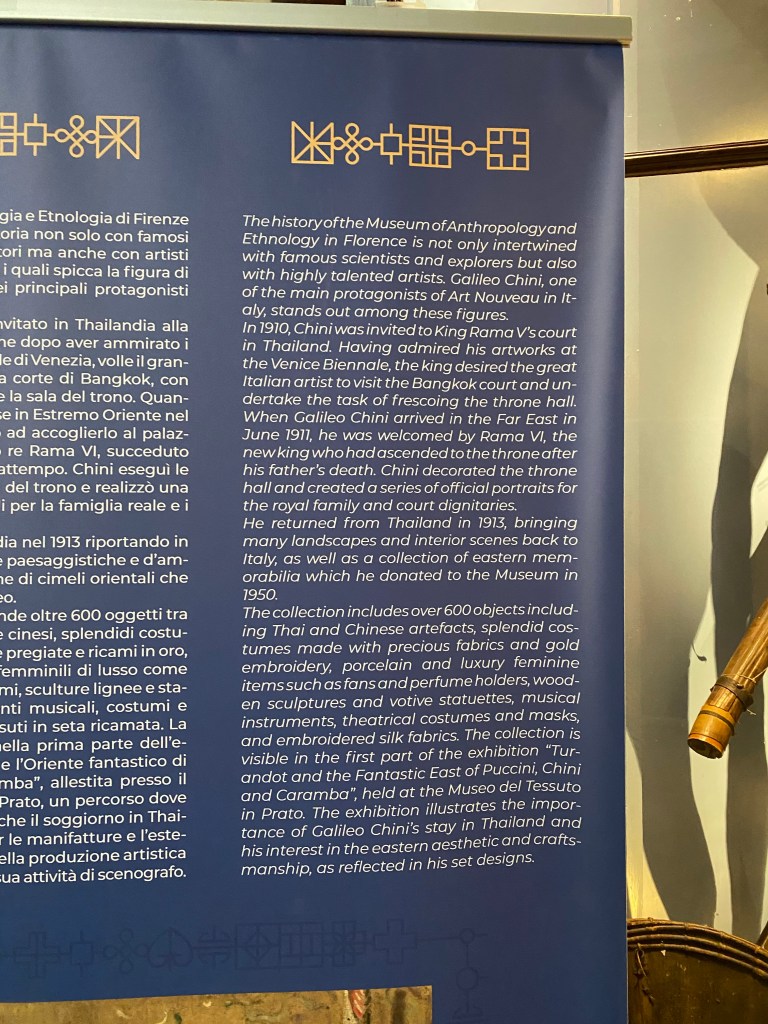
To attest to his fame came the official teaching positions: in 1908 the chair for decorative pictorial arts at the Academy of Fine Arts in Rome and in 1911 that of pictorial decoration at the Academy of Florence. In 1910 he was commissioned by the king of Siam Chulalongkorn, who had admired the decoration of the dome at the Biennale of the previous year, to decorate the royal palace in Bangkok, then in an advanced phase of construction by a group of architects ( Rigotti and Tamagno) and Italian engineers (Allegri and Gollo).
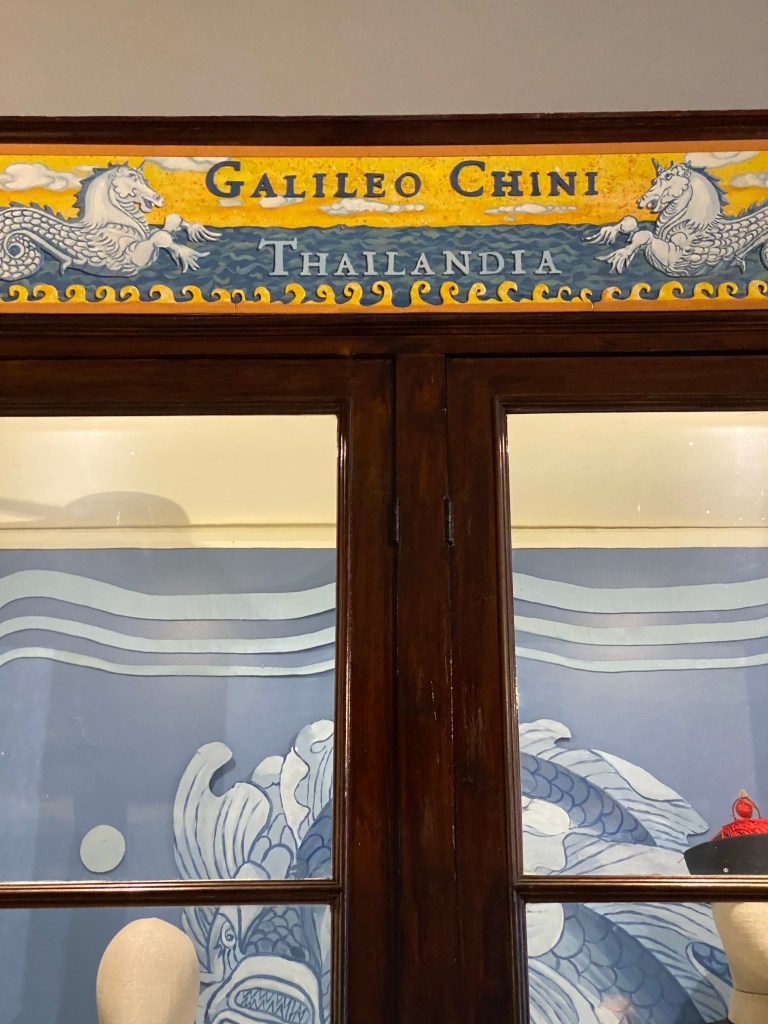
The Siamese stay lasted from 1911 to ’14 (except for a brief return to his homeland in 1913): C. painted, in the royal palace, part in fresco and part in lime (quicklime, to ensure stability to the plaster and color) , three half domes, a large lunette and the vast dome of the staircase (with historical facts and allegorical representations), and directed the ornamentation of the other parts of the building according to oriental stylistic features. But the Siamese experience is important for the harvest of impressions, images, experiments: which is immediately reflected, vividly, in a group of paintings, executed in Siam and now kept at the Chini heirs in Lido di Camaiore ( Tramonto sul Me – Nam , 1912; Full Moon on Me – Nam, 1913 ,and other similar images of the East), which present marginal points of contact with Italian Divisionism; but in reality they are irreducible to it, in their very personal synthesis of daily realism and a sense of mystery. The Chinian masterpiece shares the same atmosphere. End of the Chinese year in Bangkokfrom 1913 (currently kept by the heirs in Lido di Camaiore), a work for which a comparison with a prefuturist Boccioni around 1910 is perhaps legitimate (Vianello, 1964). A large set of studies (now at the Visconti heirs) for costumes and characters, with very bright colors, and a large number of still lifes, made with statuettes, Chinese vases, theatrical masks, of a grotesque relief, still refer to the Siamese stay. Back in Italy, C. presented at the 1914 Biennale a solo show with fifteen “impressions of the East”, a good number of ceramic and stoneware vases and oversaw the setting up of the central hall (intended for the sculptures of the Dalmatian I. ), creating eighteen mixed media panels in seventeen days (figures in oil, stucco and gold stand out on a background painted in tempera and gold).The panels, whose themes were:The life and animation of the meadows ; Nymphs and girls in the classic spring ; The spell of love and the springtime of life ; The nymphs and maidens in the forest ; The spring, which is perpetually renewed, disconcerted not a little, nor were the explanations that the author himself wrote in the catalog of the review enough: but with them C., mixing the influences of the East with the Klimtian model, reached one of the highest results of modernism in Italy, sharing a certain abstract outcome typical of certain aspects of liberty. The great war did not interrupt the activism of C., who did not disdain the stained glass windows for churches and the mosaics for cemetery chapels; then in 1917 he published the manifestoRenewing let’s renew ourselves, signed by a group of artists gathered in the artistic-industrial propaganda Association, whose main purpose was the abolition of academies and the establishment of industrial artistic schools aimed at renewing all forms of applied arts. Meanwhile (1915) he had built a house in Fosso dell’Abate, today Lido di Camaiore (he had also designed the urban plan of the place: at the Chini heirs, Lido di Camaiore), which will become his favorite residence and meeting place for some artistic personalities of the time.
In ’17 the collaboration with the Puccini theater also began to give life to the different environments of the Triptych ( Tabarro, Gianni Schicchi, Suor Angelica ) , but some differences prevented Tabarro’s sketches from being accepted, and only the scenes of Gianni Schicchi were used ( premiered at the Metropolitan in New York in 1918). After the war, resuming the Biennials, C. presented three paintings in the 1920s and took care of the pictorial decoration of the central hall with a series of panels somewhat alien to his sensibility: The glorification of the artilleryman and the daring flamethrower, of the helmsman , the aviator, the infantryman,of the lancer .
In Salsomaggiore, between ’20 and ’23, he completed the decoration of the Berzieri Baths and, later (1926) in the Grand Hotel des Termes, he took care of the preparation of the Moorish hall, the room of the caryatids and the red tavern; in the town he also decorated some rooms of the Villa Fonio (later Baciocchi), the Hotel Porro (covered later on the occasion of a modernization), the Hotel Valentini (partly covered) and a night club in Poggio Diana. Between ’21 and ’22 he decorated the Scalini villa in Carbonate (Como), illustrating the specific function of some rooms (the children’s room, the games room, etc.). In ’23 he resumed his collaboration with Puccini for Turandot,creating three series of sketches (Lido di Camaiore, Chini heirs; Casa Ricordi and La Scala Theater Museum in Milan) of which the first, in close collaboration with the composer (in the sketch for the second act, second painting, the signs of pencil drawn by the master), appears particularly lively; of ’24 were the scenes for Manon Lescaut, also by Puccini. In these years (between ’20 and ’25) he also devoted himself to huge panels for the ceilings and walls of ships (“Roma”, “Augustus”, “Ausonia”), with episodes taken from the history of the navy. The succession of awards at international exhibitions had been uninterrupted, culminating in 1925 with the awarding of the two “Granda Prizes” in Paris:one for ceramic materials and one for the production of vases.
After a last decorative cycle, performed at Villa Donegani, on Lake Como, in 1927, C., participating in a sort of “return to order”, devoted himself to a naturalistic painting, in relation to the post-Macchiaioli climate , painting still lifes, some nudes and numerous landscapes of Versilia: a painting whose distance from “secessionist decorativism and symbolism” satisfied Carrà, who wrote about it in the Ambrosiano (1932). In the 1940s, the landscapes and figures begin to take on a Fauvian inflection and a final group of works, painted between 1950 and ’54 in the drama of an impending blindness ( The heir, The waste of the sea, both by ’50; The prey, Last invitation,both of ’51; Madness macabre, from 1954, the last work: Chini heirs), takes on the tones of a tragic expressionism, on the prevailing theme of death.
C. died in Florence on 23 August. 1956 in his house in via del Ghirlandaio.
The murals decorative cycles have gone in part lost almost illegible fresco, 1914 , the Florentine house in Via del Ghirlandaio, 52, covered the dome of the 1909 Biennale (but perhaps it is possible to recover); numerous salsian decorations are dull. Some examples of painting are kept in public collections: in Cà Pesaro in Venice; at the Gallery of Modern Art in Florence; in the Uffizi Gallery of self-portraits, where a self- portrait is keptof 1935; at the Montecatini Art Academy; in the National Gallery of Modern Art in Rome. Some panels from the 14th century and numerous works from the Siamese period were collected by L. Visconti and have now passed to the heirs. But the largest number of works is still preserved by the C.’s family in the villa in Lido di Camaiore: about forty ceramic pieces (including the 1896 metal luster plate with two female profiles and butterflies which is destined for the Museum of ceramic from Faenza); among the paintings, in addition to those in the 1964 catalog , some Portraits of his wife (1899-1905); some works from the Siamese period ( Nostalgic Hour on Me – Nam, My Courtyard in Bangkok, End of the Chinese Year in Bangkok,Garden of a Buddhist temple in Bangkok ); a panel from 1914; The sun that dazzles (1916); some versions of Icarus ; numerous works performed after 1927 ( Hot Hours at Lido di Camaiore, Fosso dell’Abato, Campagna in Versilia, Zucche, all from ’28; From my window, Afternoon in the pine forest, Intimate motif, all from ’30; Landscape, from ‘ 31; Fiori, from ’32; Ruins of Florence, from ’45; The crazy dance,of ’47). Numerous ceramics are also in private collections in Milan and Florence, in Turin in the Agosti collection; in Dormelletto, owner Soc. Razza Dormello-Olgiata, as well as at the Faenza Ceramics Museum. Also in Lido di Camaiore there are some original theaters for Manon Lescaut (1924) , for L’oro del Reno, for Rossini’s Cenerentola (1936).
Nourished is the list of posthumous exhibitions (see related catalogs): Lido di Camaiore, villa Chini, 1964; Arezzo, Municipal Gallery, 1965; Florence, Saletta Gonnelli, 1967; Arezzo, Municipal Gallery, 1968; Ibid., Artistic circle, 1968; Milan, Levante gallery, 1971; Borgo San Lorenzo, Municipal Library, 1971; Florence, Palazzo Vecchio Art Gallery, 1971; Rome, Canova gallery, 1971; Città di Castello, The Well, 1971; Siena, La Mossa, 1972; Florence, Il Fiorino, 1972; Massa, Malaspina Castle, 1973; Salsomaggiore, Terme Berzieri, and Terme Zoja, 1974; Rome, La Nuova Pesa, 1974; Casola in Lunigiana, 1975; Florence, Teatro della Pergola, 1976; Milan, Pal. della Permanente, 1977; Florence, Gall. of Pal’s art. Old, 1979.
Official artist until 1920, then for a long time misunderstood, C. is undergoing a process of revision and rediscovery (Vianello, Marsan, Bossaglia, Nuzzi, Masciotta), despite the difficulty of explaining such different and irreducible experiences to a denominator common. However, its remarkable position within the Italian Art Nouveau clearly emerges, due to a not marginal action of renewal of the figurative repertoires (ceramics, decorative cycles), and perhaps pre-eminent: the panels for the 1914 Biennale, albeit late, are placed among the absolute values of liberty. The coherence of man appears indisputable, to which the lack of contact with the avant-gardes is to be referred: which did not prevent an affinity with the futurist dynamics ( End of the Chinese year in Bangkok), even if it cost him somewhat backward positions (decoration of the Berzieri and of the Grand Hotel in Salsomaggiore). Finally, the originality of the landscape painting of the 30s and 40s and of the allegorical expressionism of the very last period appears intense.
Chino , the cousin of C., head of the factory since 1889 of the “Art of ceramics”, was born to Tito, painter and decorator, in Borgo San Lorenzo on 27 July 1870 and in Borgo he attended school up to the fifth grade. He learned the art of wall decoration from his father, collaborating with him on several occasions; on his death in 1887, he continued the activity until 1899, when he moved to Florence. Hired by the “Art of Ceramics”, in 1901 he became its technical director, replacing Vittorio Giunti. He played no small part in the successes that the young factory reaped all over Europe; and in 1906 he gave life to the new factory of the “Manifattura Fornaci S. Lorenzo”. He died in Borgo San Lorenzo on February 19, 1957.




You must be logged in to post a comment.