Well, at least we aren’t in the Red Zone. A year ago we were and it was brutal. We couldn’t leave home without a good reason like a doctor’s visit or grocery shopping.
Now at least, with a mask, we can be out and about in the city. Not everything is open, such as the churches and museums I like to frequent.
But, Florence is still lovely and here are some pictures of my recent Sunday stroll.
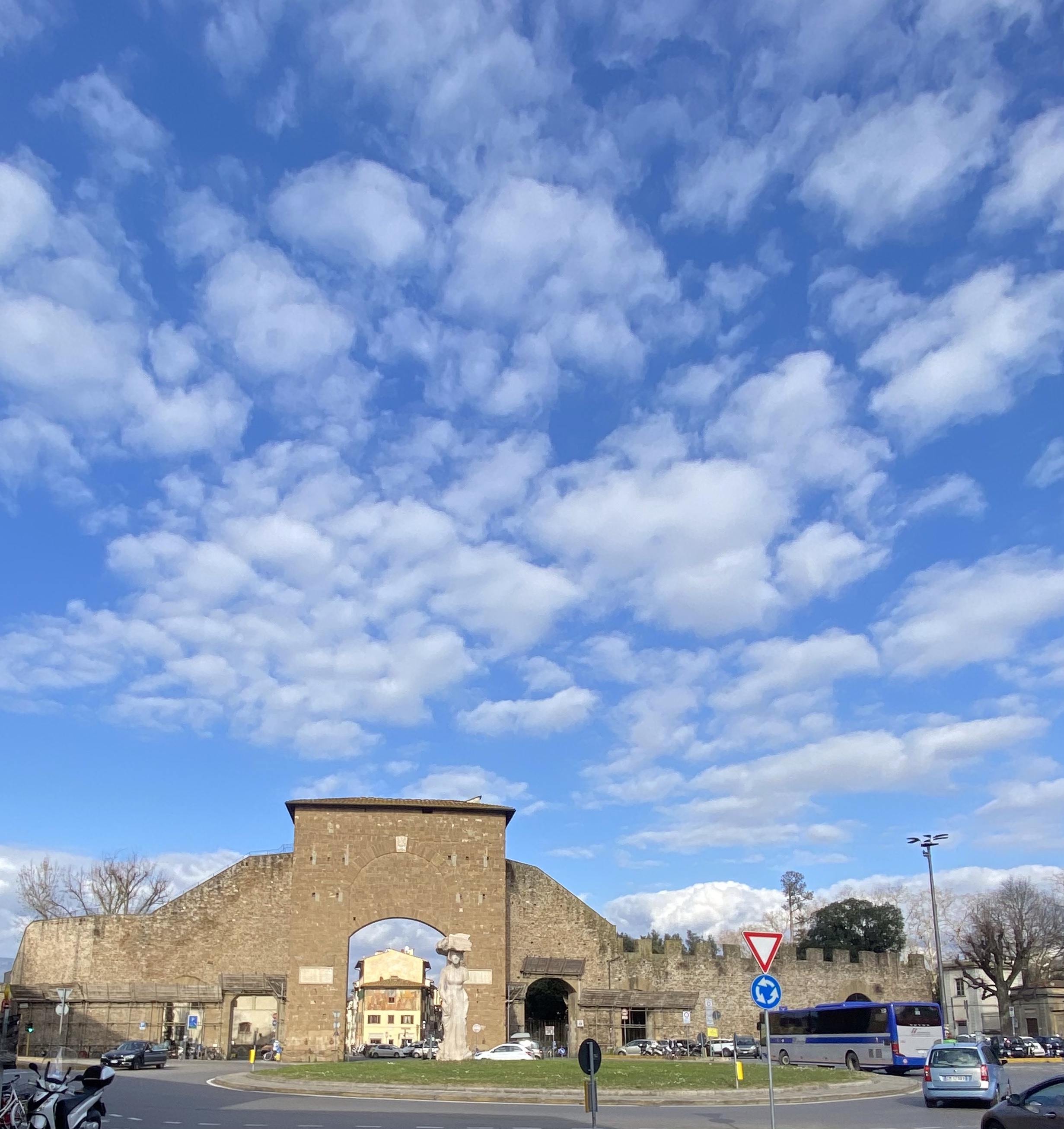
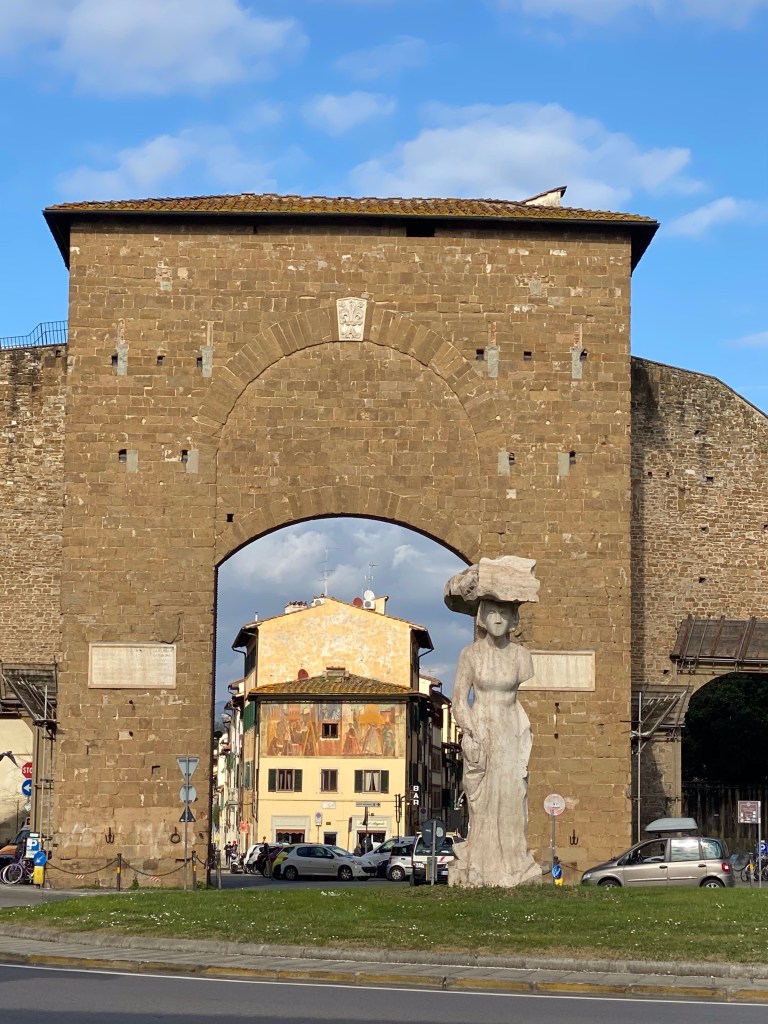
Porta Romana
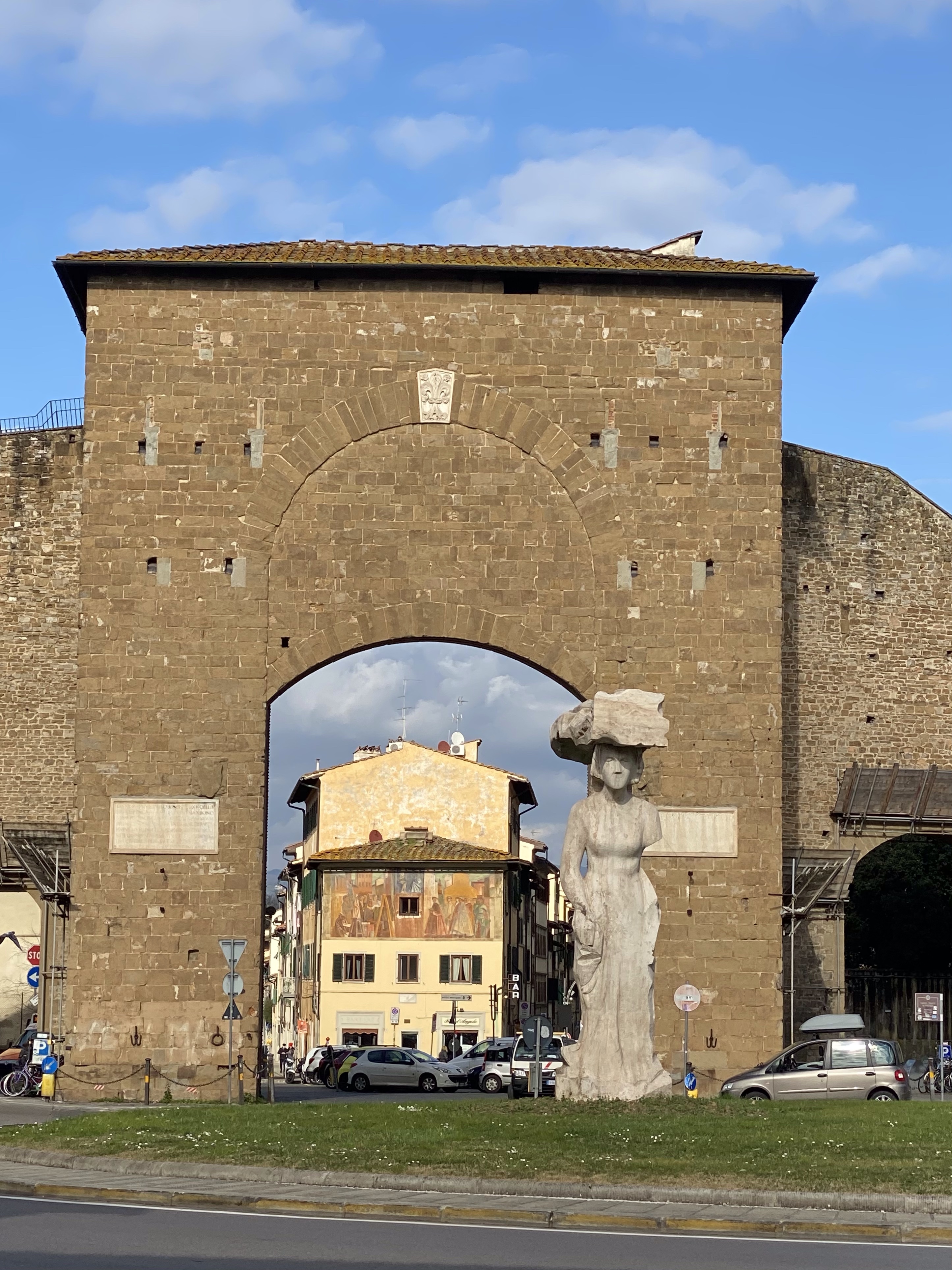
A closer look
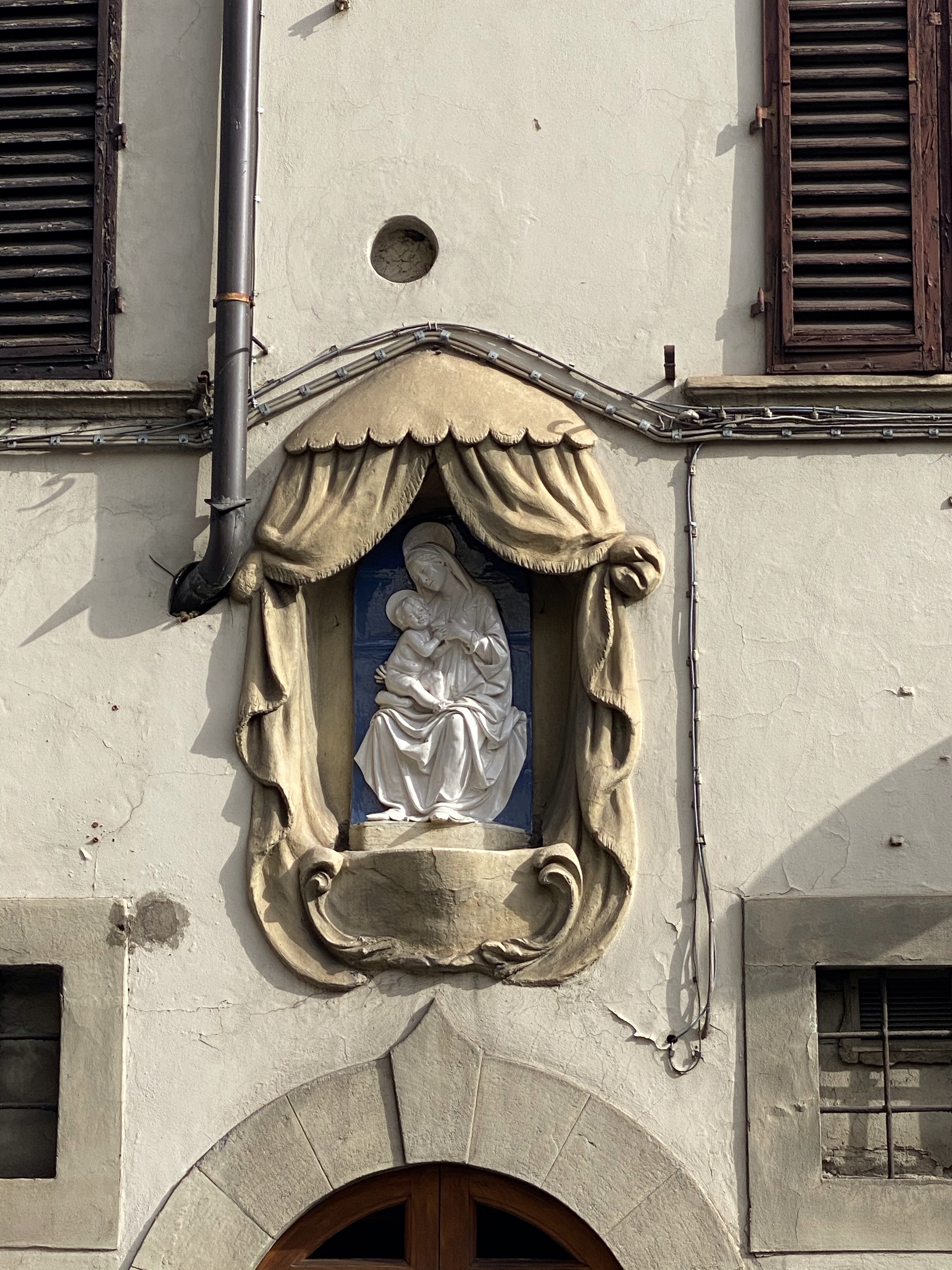
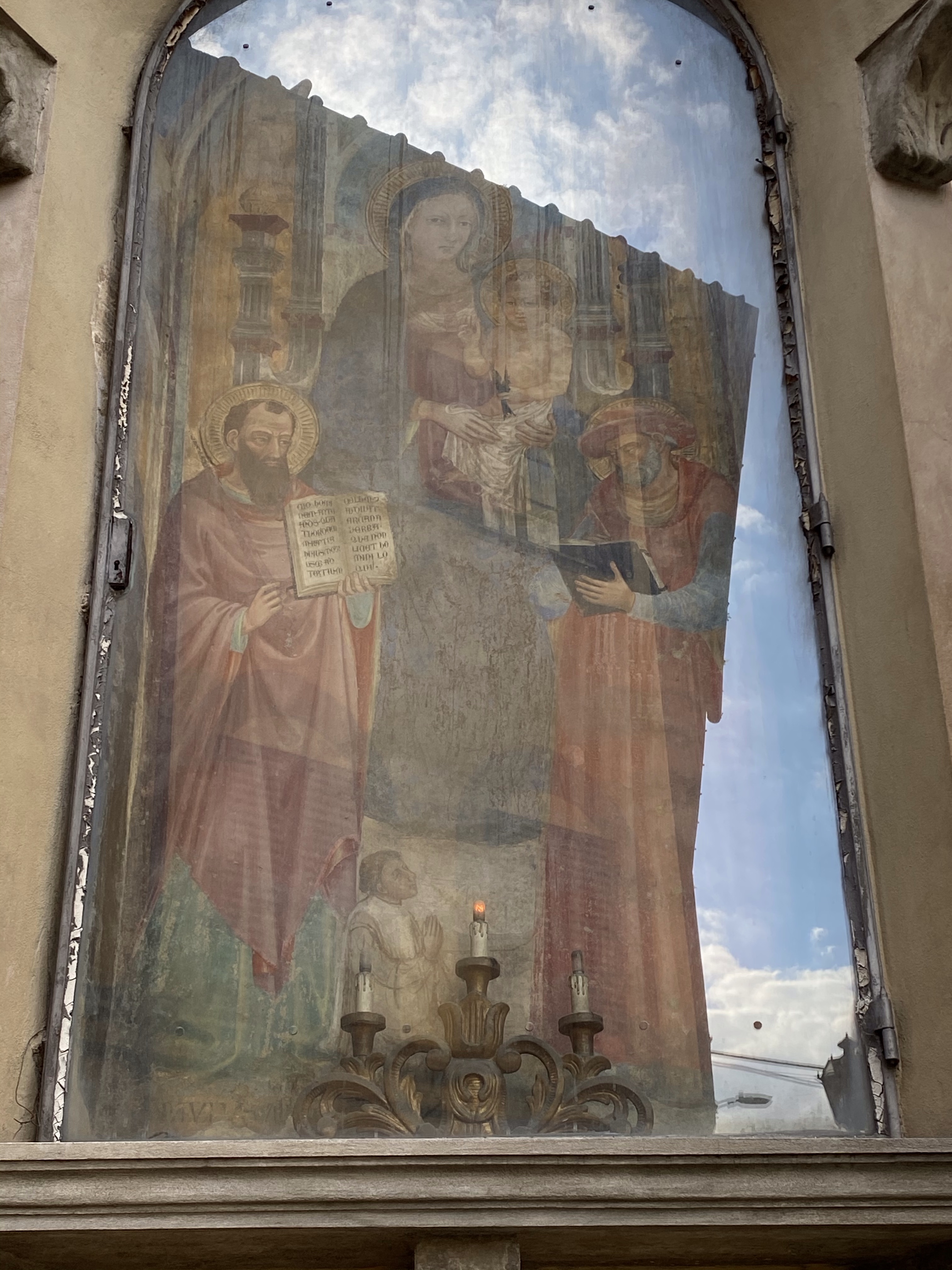
A tabernacle I’d not noticed before
What year did your bank begin? This one began in 1472!
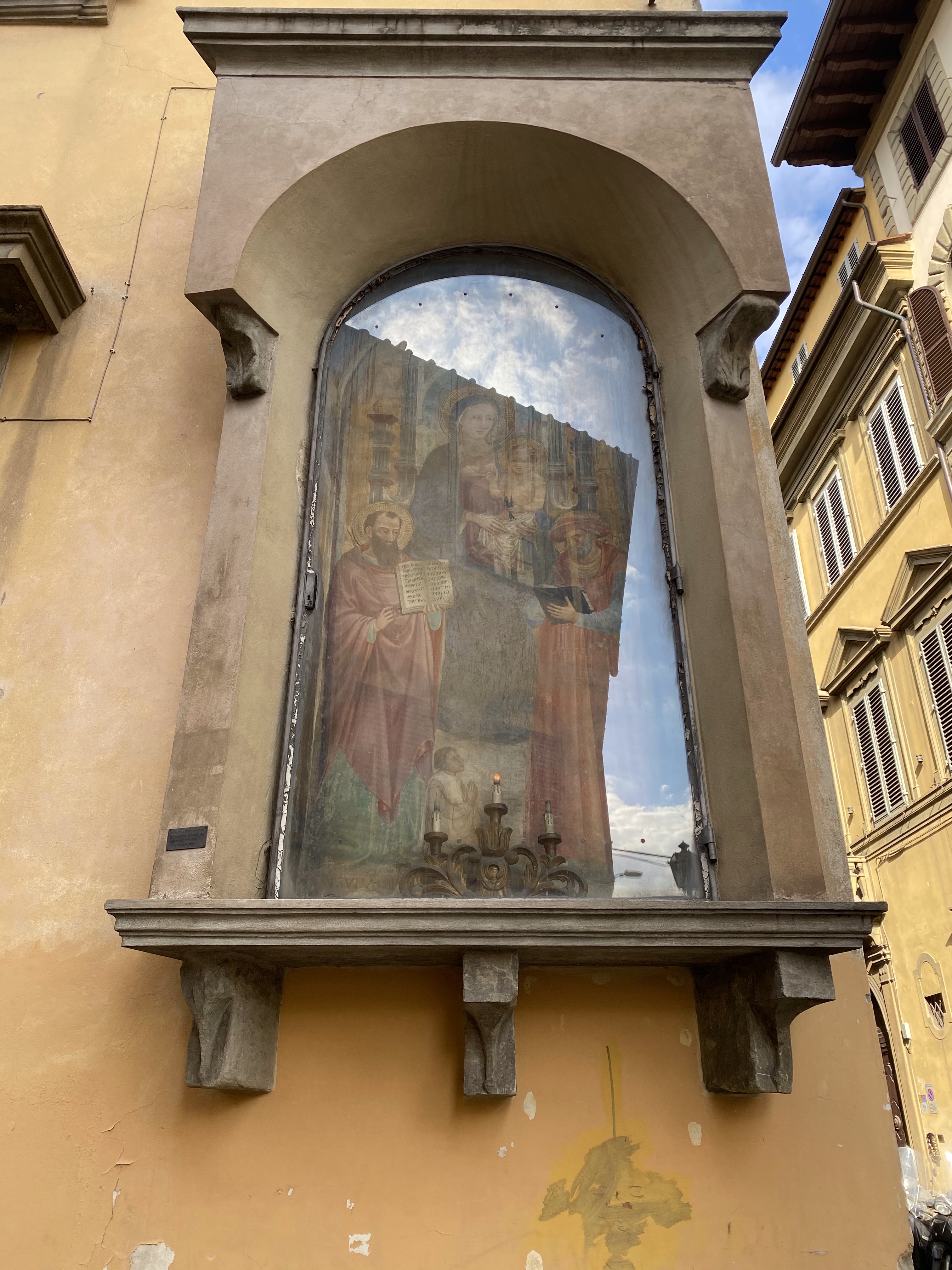
Another tabernacle
A closer look
This sign seemed hopeful. At least a museum planned an exhibition, with high hopes of someone seeing it!
In an art gallery window, this little village was composed of cardboard boxes and tubes and painted. I may have to make one to save my mind if this lockdown goes on much longer!
Forbidden from leaving Florence by Covid restrictions (damn you Orange Zone!), I’ve been challenging myself to find new and interesting things to see and do in this amazing city. Otherwise, I’m afraid I will get mighty bored. Plus, the weather has been amazing for a week. In the 60s and sunny, with nary a cloud skidding through the blue, blue sky.
I’m particularly drawn to the section of Florence known as the Viale dei Colli in the Oltrarno. I can hop on a bus near my home in the northern hills of Florence and the #13 bus will take me through the city and un the Viale dei Colli to Piazzale Michelangelo, or, if I ride further, to San Miniato al Monte. I sometimes choose to ride the bus further, to the Forte di Belvedere or, even, to the Porta Romana. As you can see, the #13 offers me a lot of options.
If you look along the bottom, just a little to the left of the middle of this image, nestled between 2 evergreen trees, you can see the tip top of the white stone top of Florence’s famous cupola.
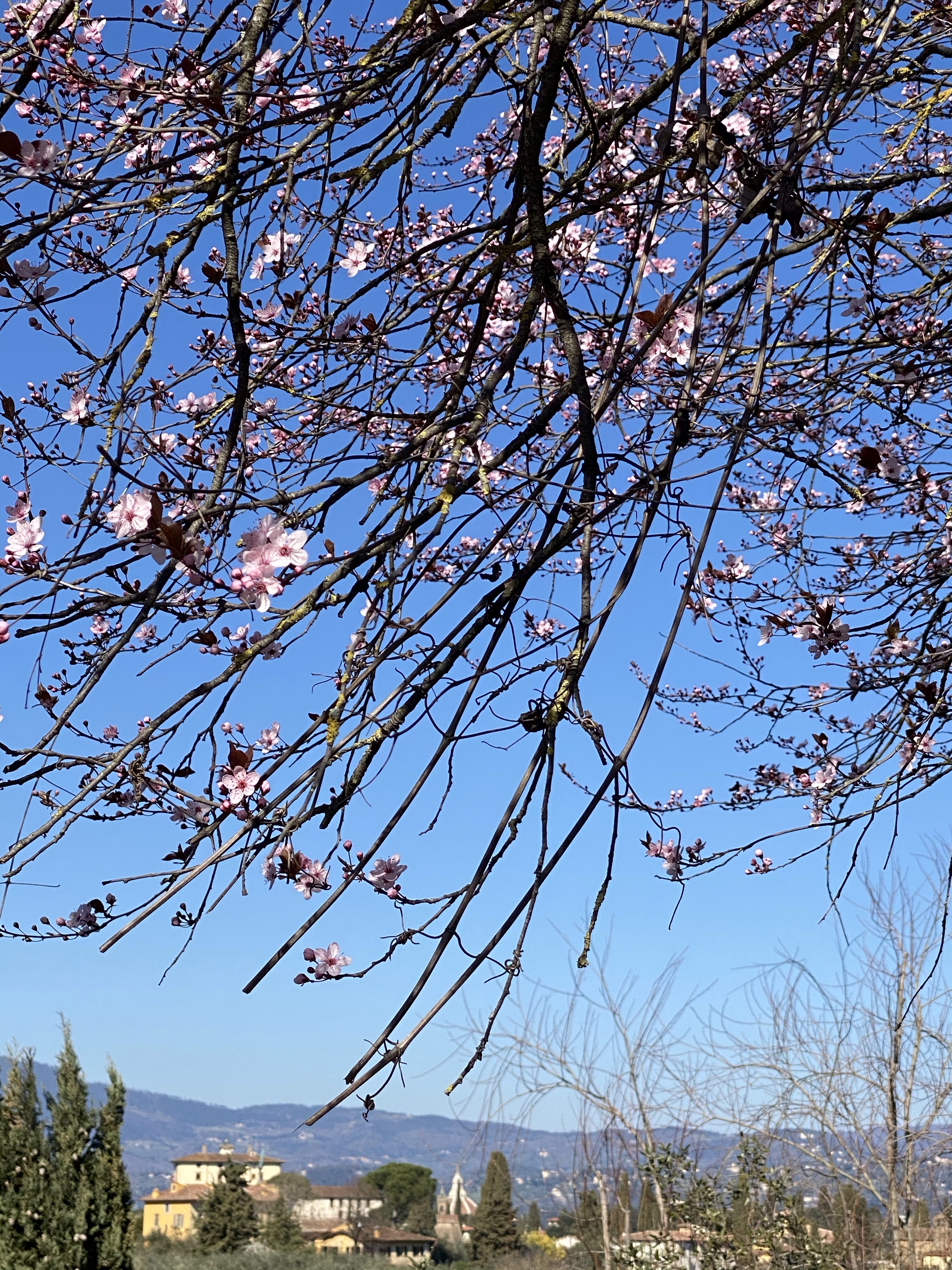
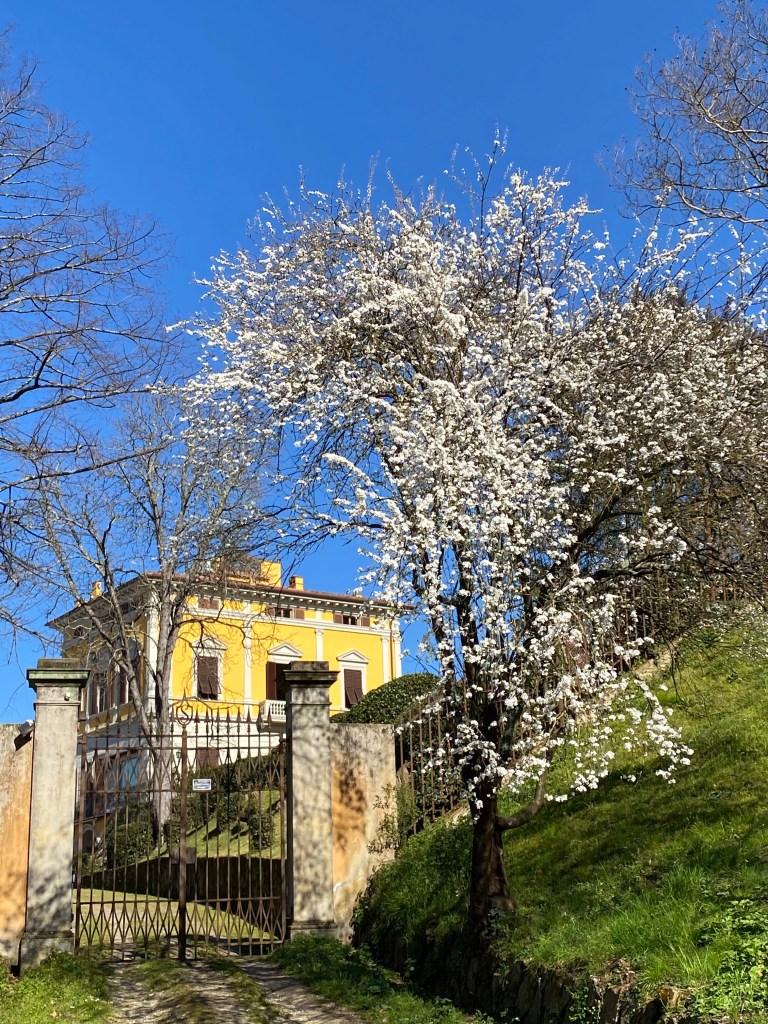
The pictures from this post are from a section of the Viale dei Colli that I’ve not previously walked. I rode the #13 bus past the Forte di Belvedere and got off at the next stop. I was welcomed with a flurry of pink and white plum blossoms, which I stopped to enjoy, while listening to birdsong.
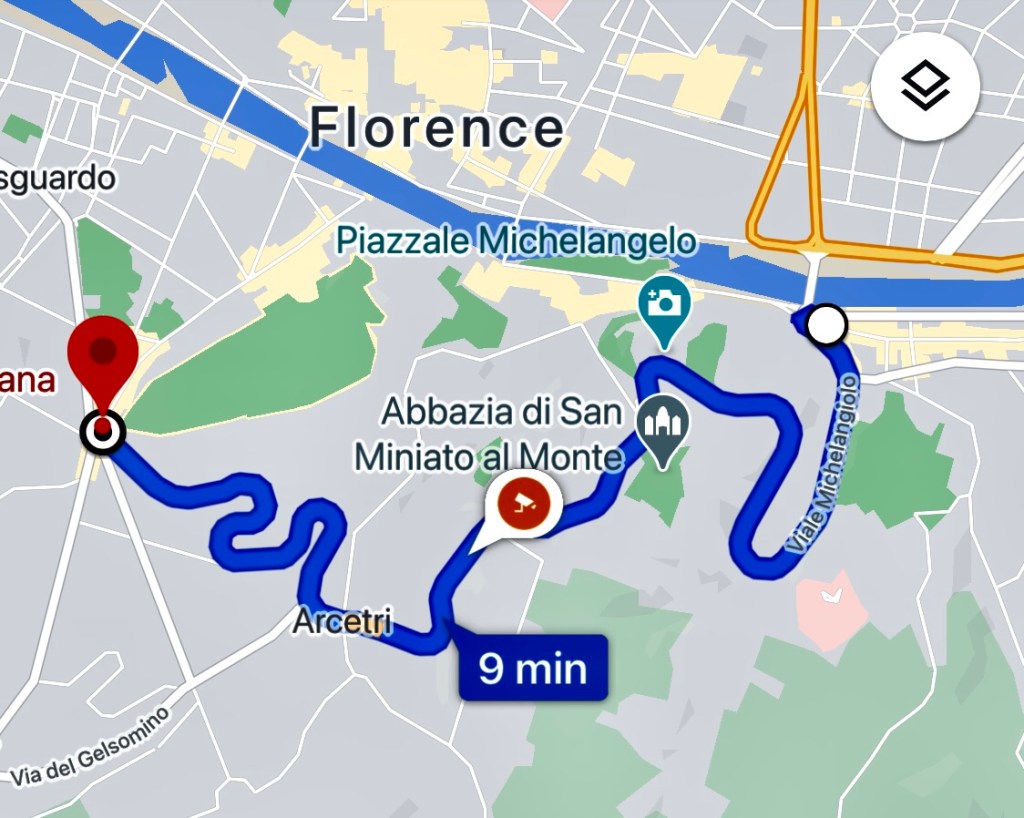
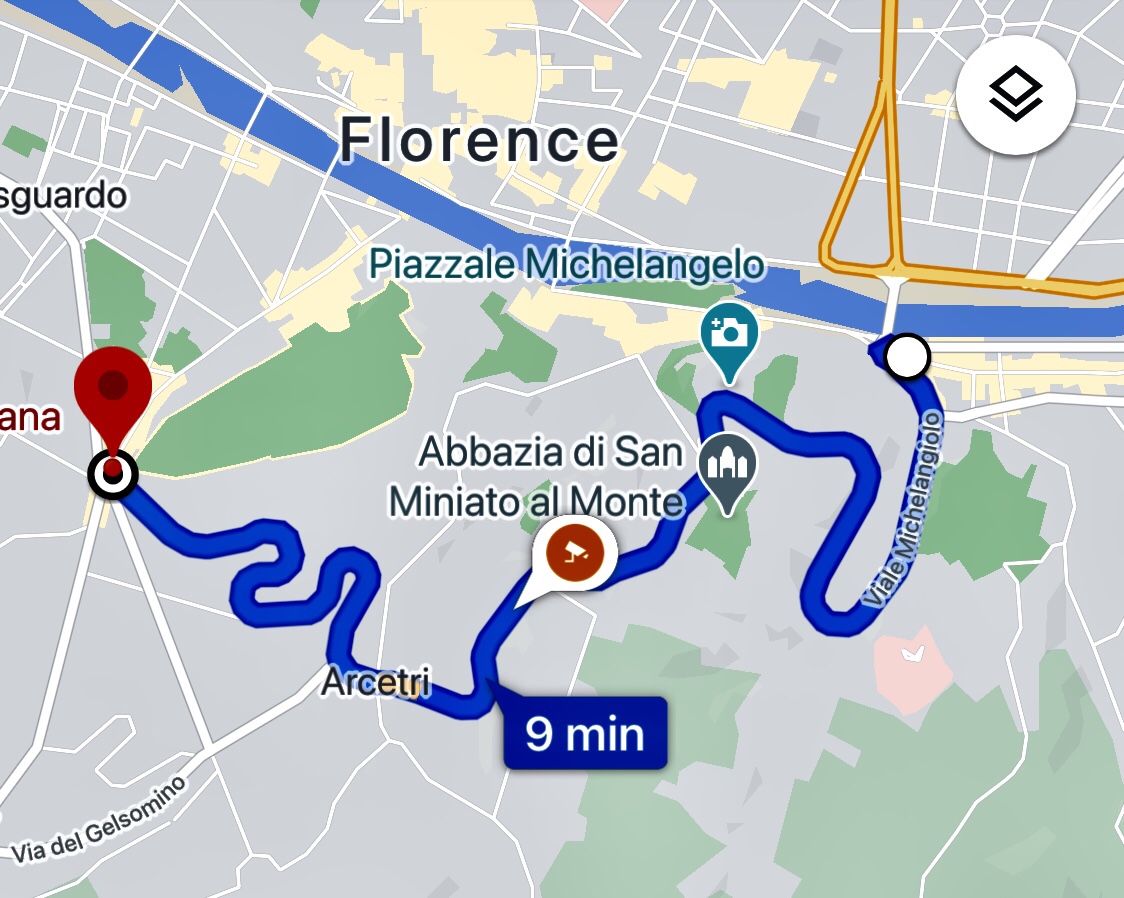
The map below shows my route through the Oltrarno; the blue line designates the gorgeous drive known as the Viale dei Colli, designed in the 19th century by landscape architect, Giuseppe Poggi.
I saw many new things on this first walk through this area. Here are some of the lovely images.
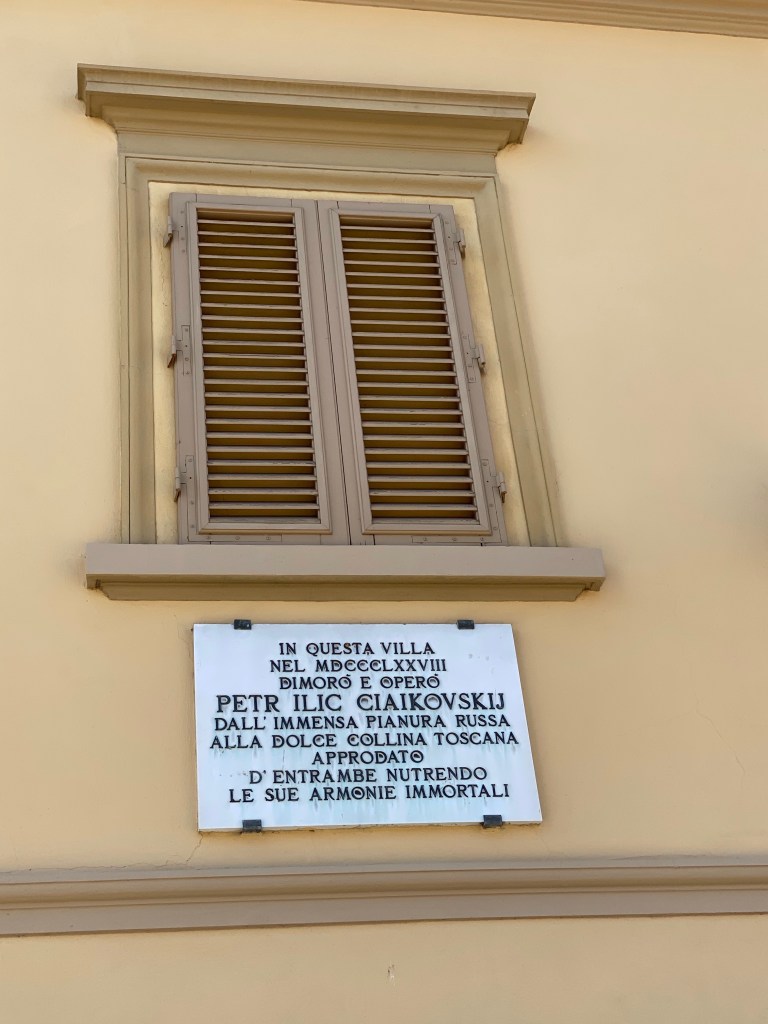
I followed some joggers off the main Viale and onto a small street, via Bonciani, where I was immediately rewarded for my effort with my first awareness of the fact that Pyotr Ilyich Tchaikovsky, the Russian composer, lived in this villa during one of his many visits to Florence. In fact, I learned later, he wrote his String Sextet in D minor “Souvenir de Florence,” Op. 70, is a string sextet scored for 2 violins, 2 violas, and 2 cellos composed in the summer of 1890. The work, in the traditional four-movement form, was titled “Souvenir de Florence” because the composer sketched one of the work’s principal themes while visiting Florence, Italy, where he composed The Queen of Spades. The work premiered in 1892.
So there you go, 15 minutes off the bus and already I’ve been rewarded with pink and white flowers and another layer of Florence’s rich history: a major Russian composer lived and worked among these hills to the south of the city. Oh my, I do love this place!
The magnificent private homes, all villas, along the Viale are a sight to behold, especially in spring with the early blossoms and bright green grass. A little later in the season and the scenes would be obscured with the tree foliage.
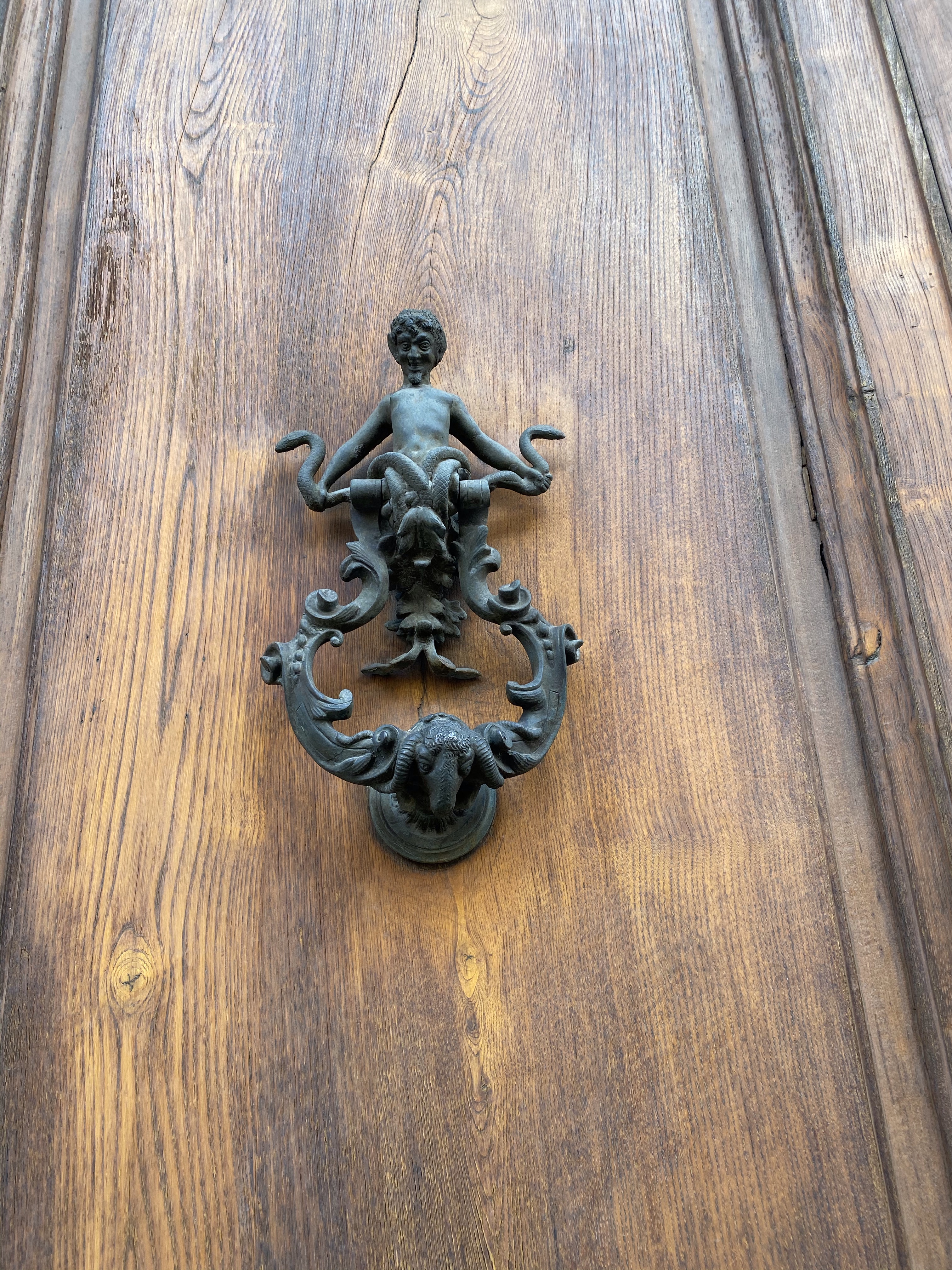
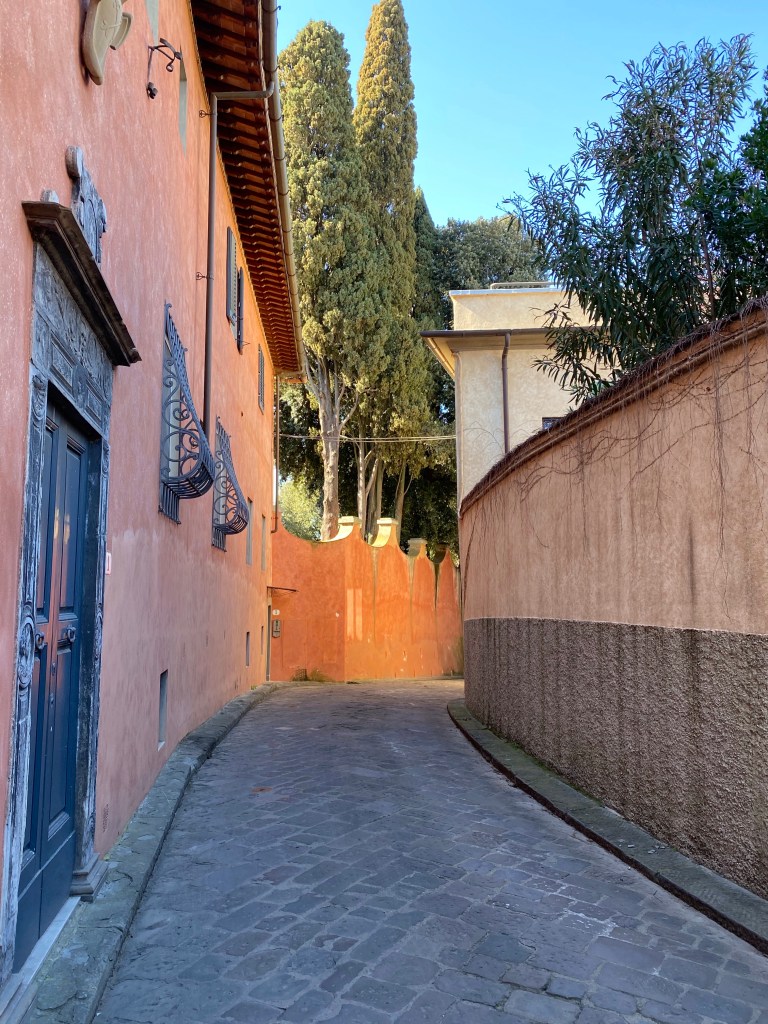
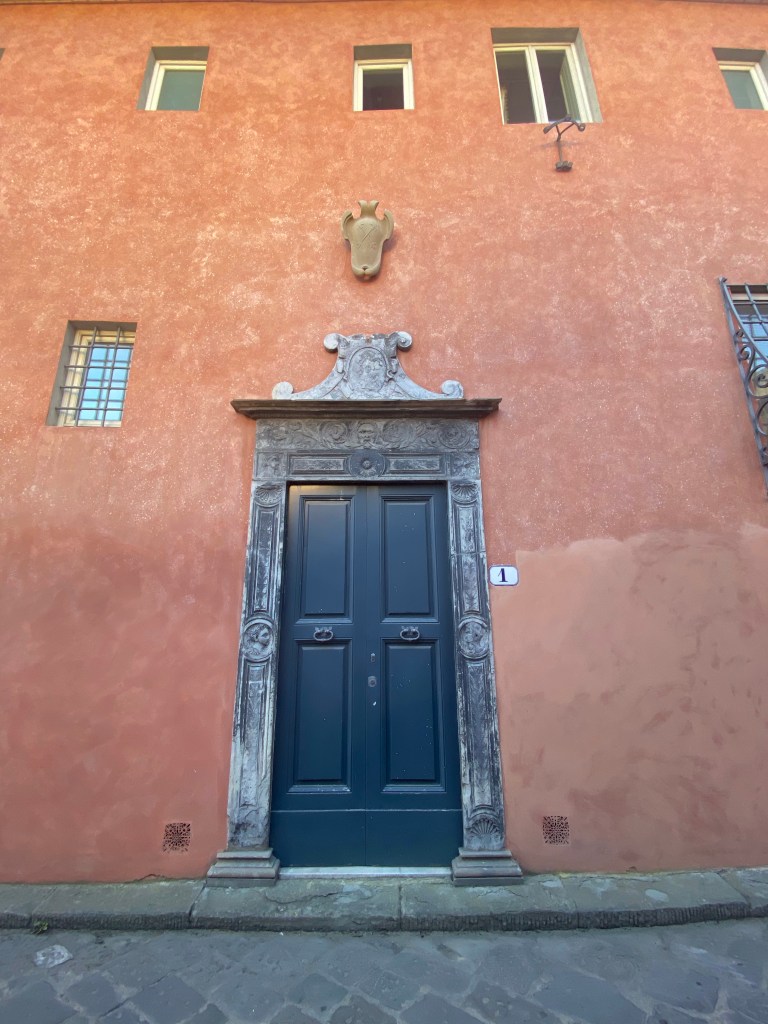
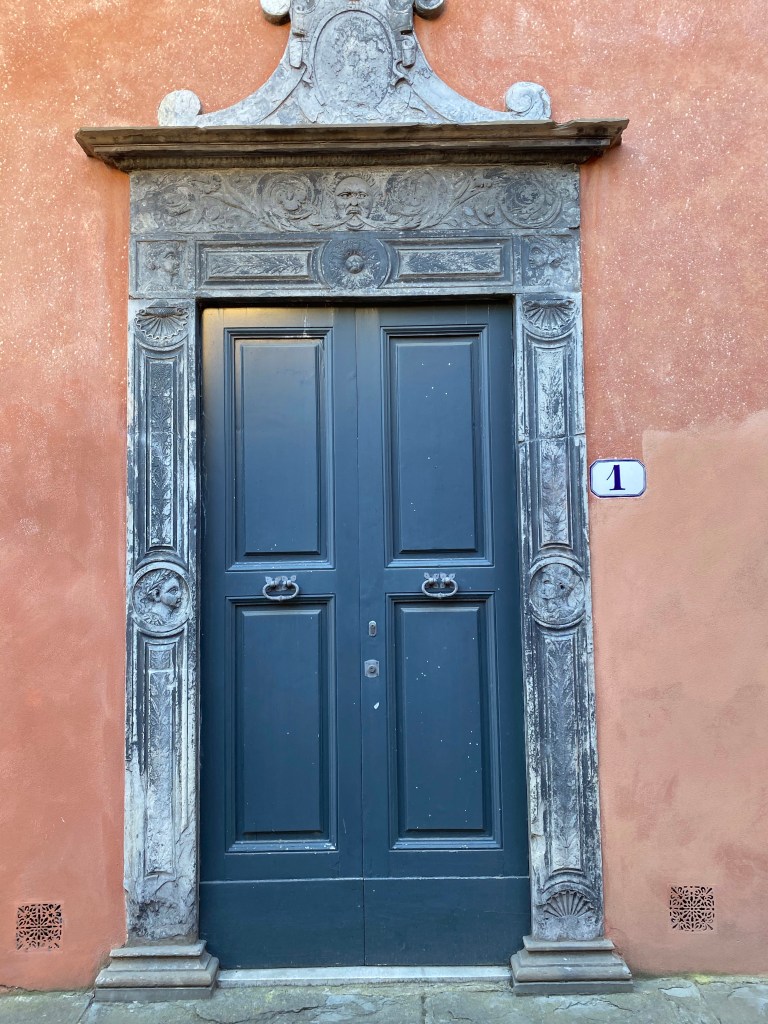
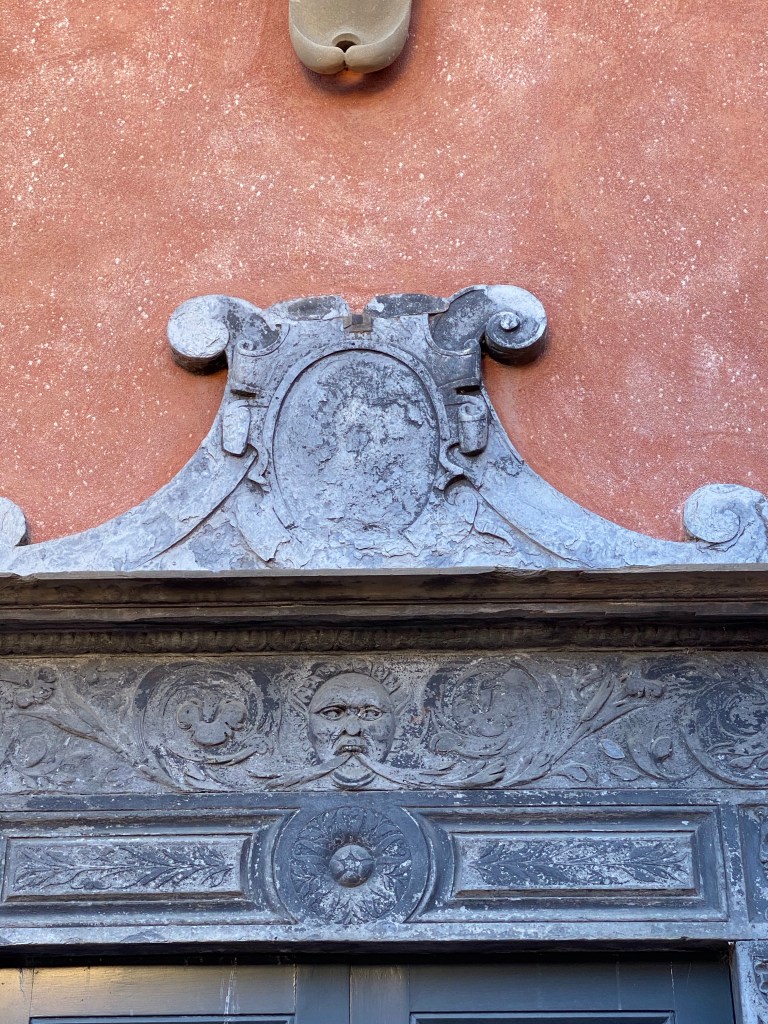
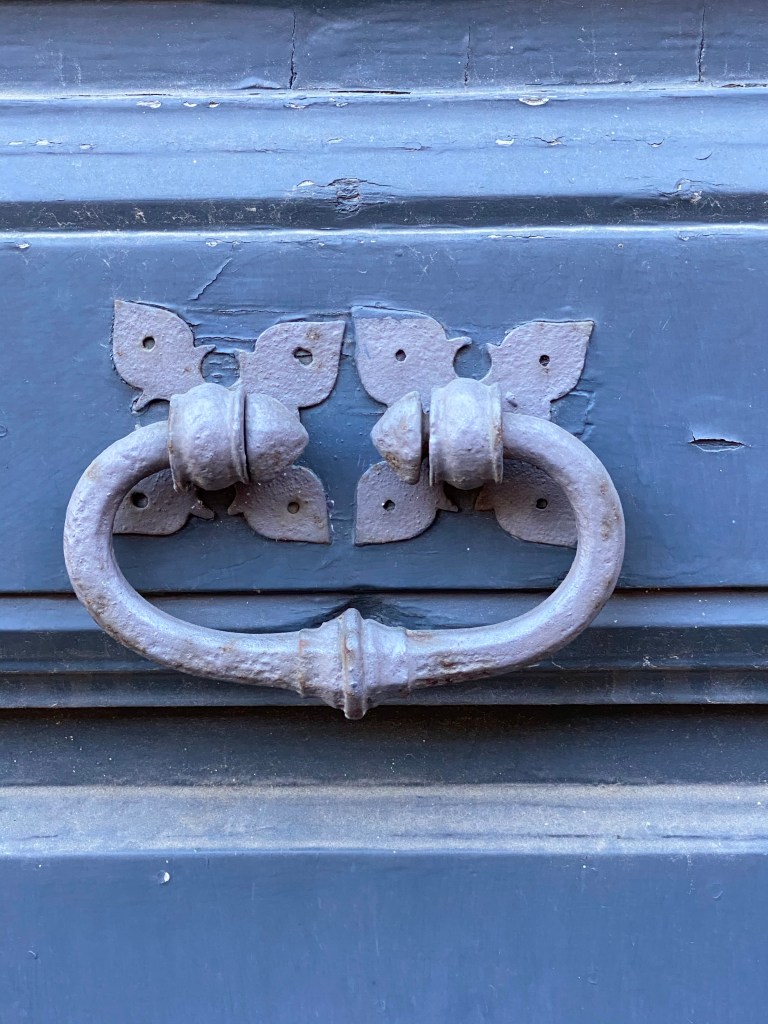
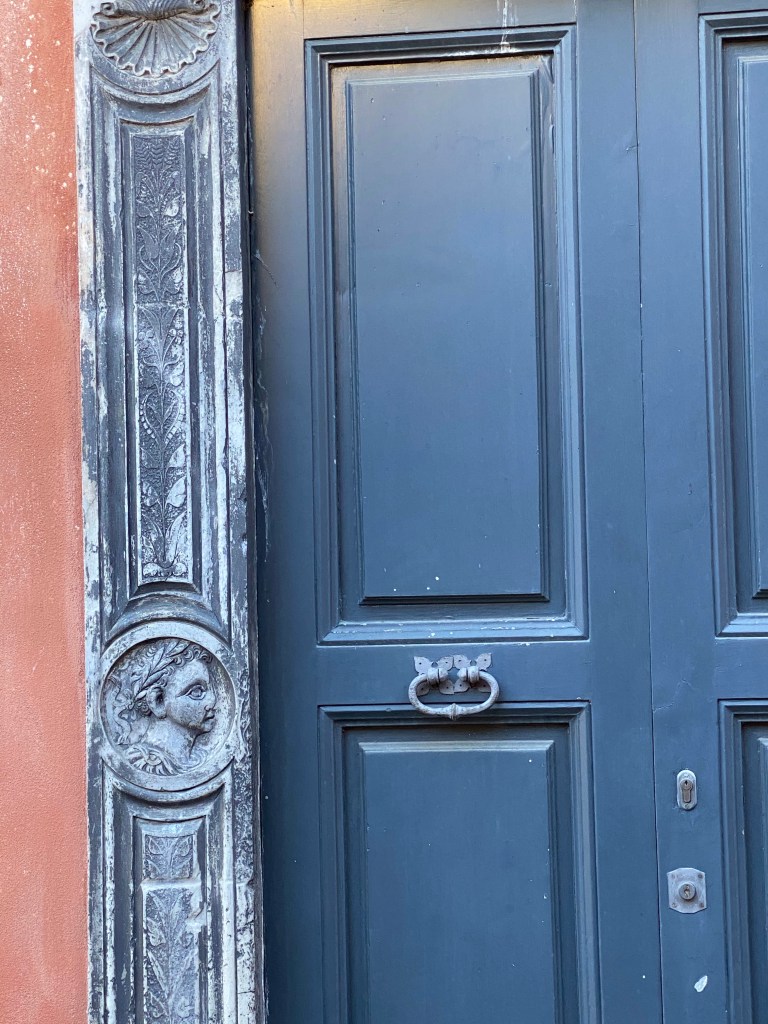
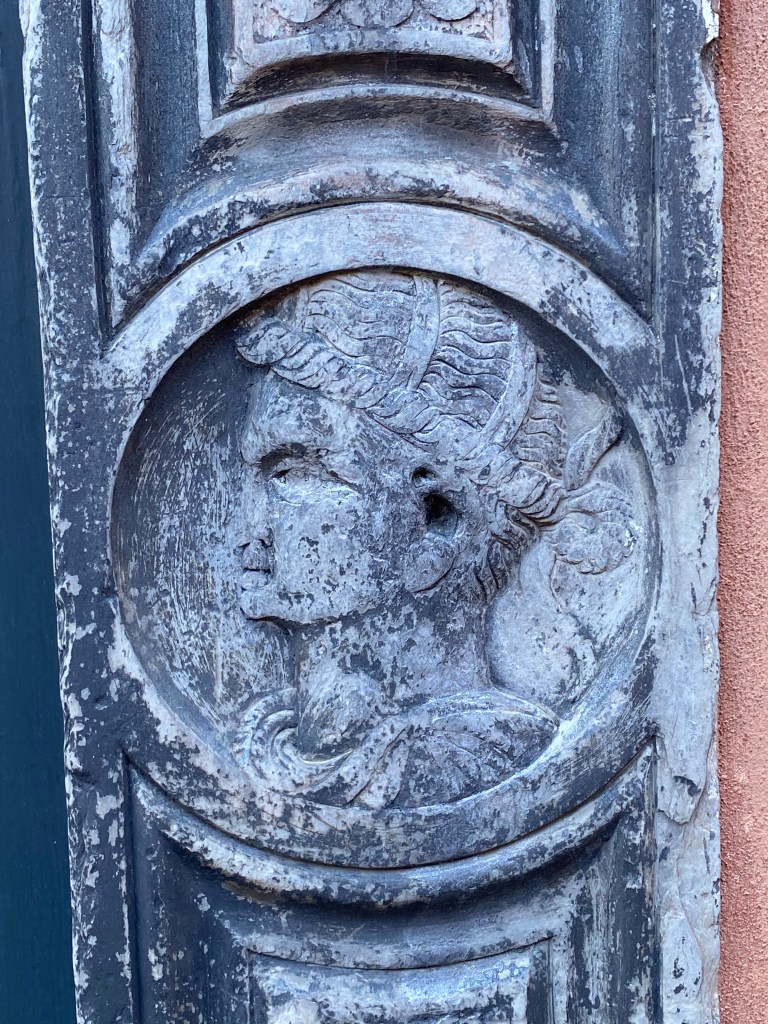
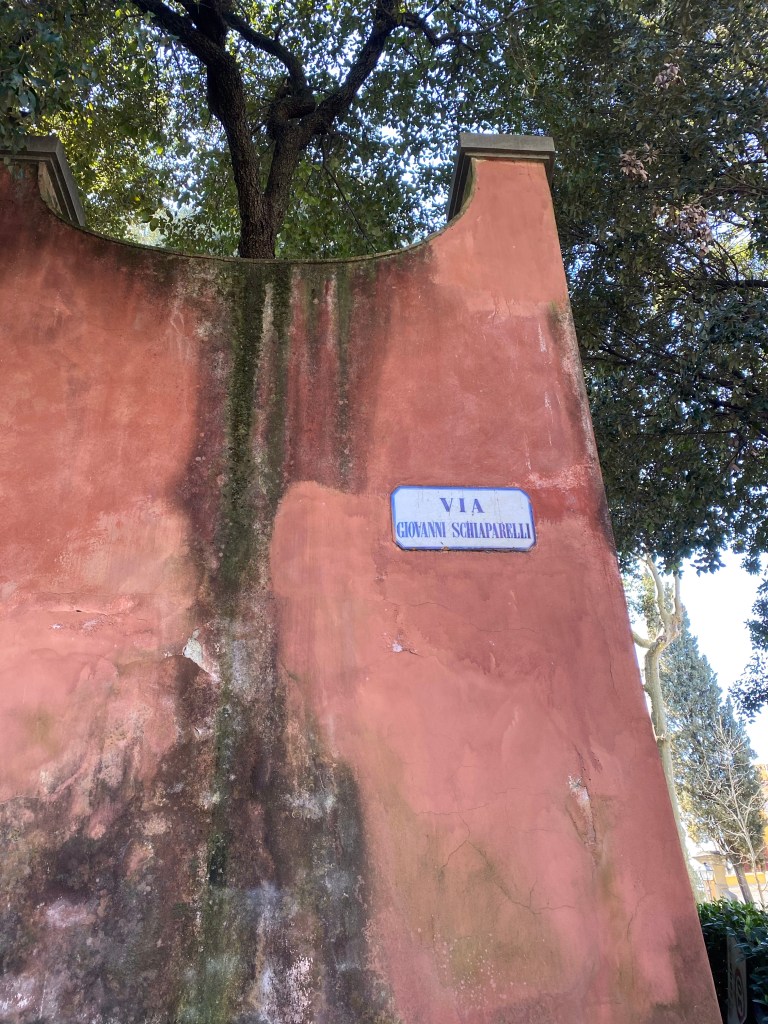
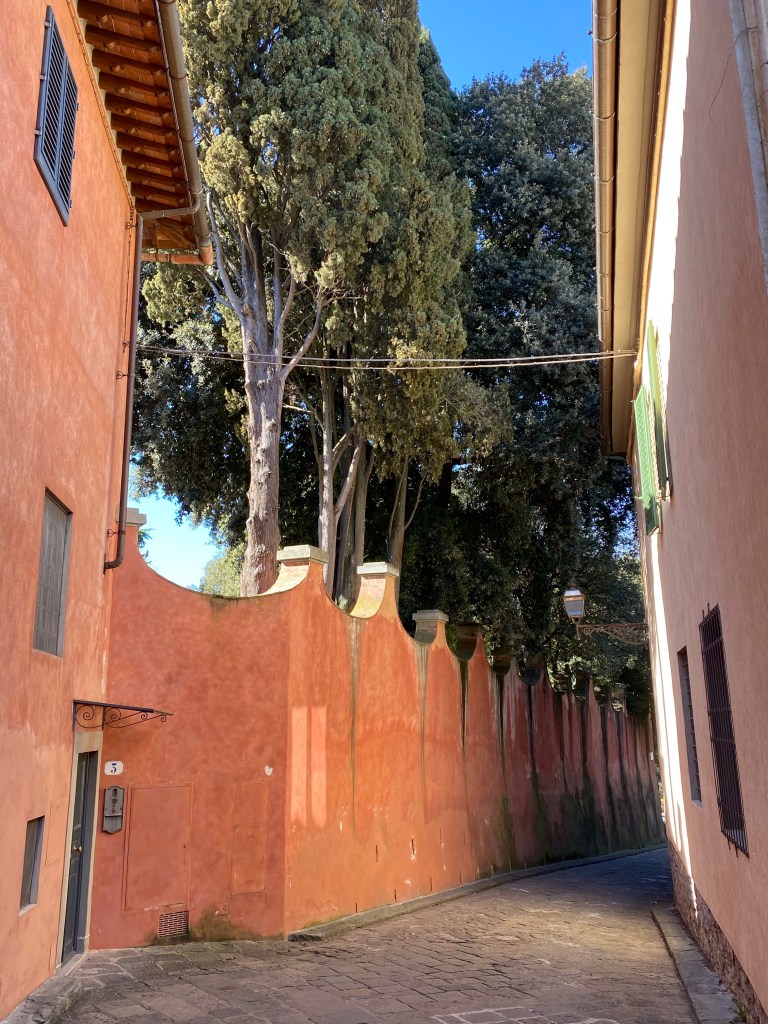
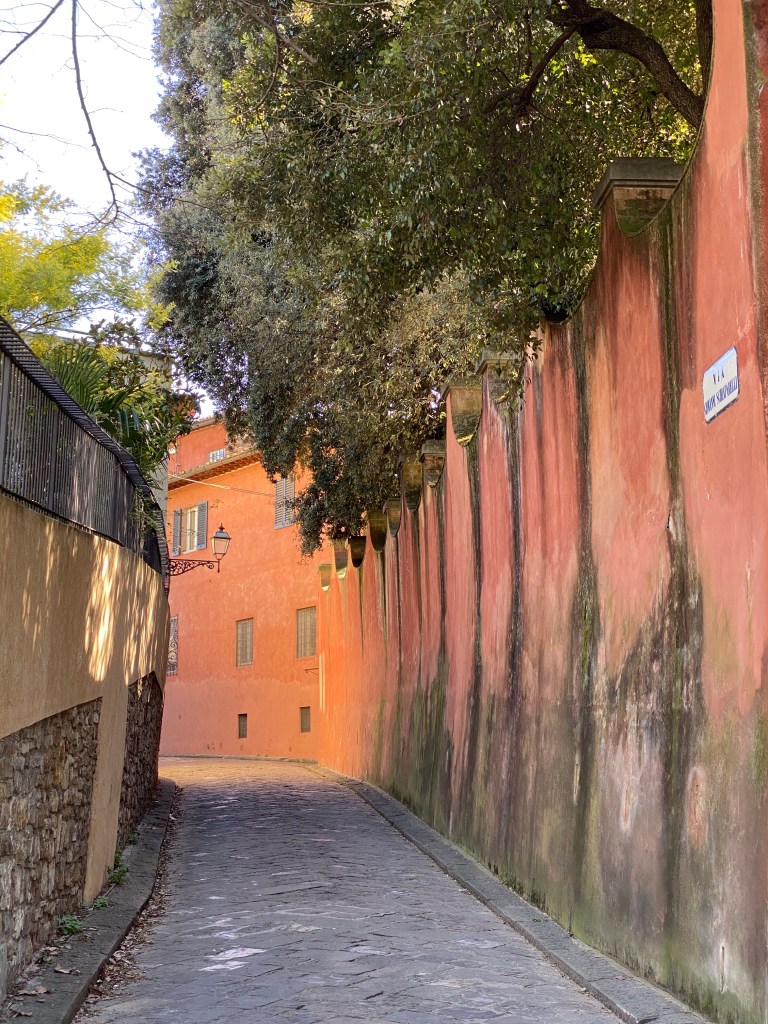
Taking a left off the Tchaikovsky street, I encountered this beautiful streetscape, highlighted with spring sunshine. The doorway on the left side is quite a mavel, as you will see next:
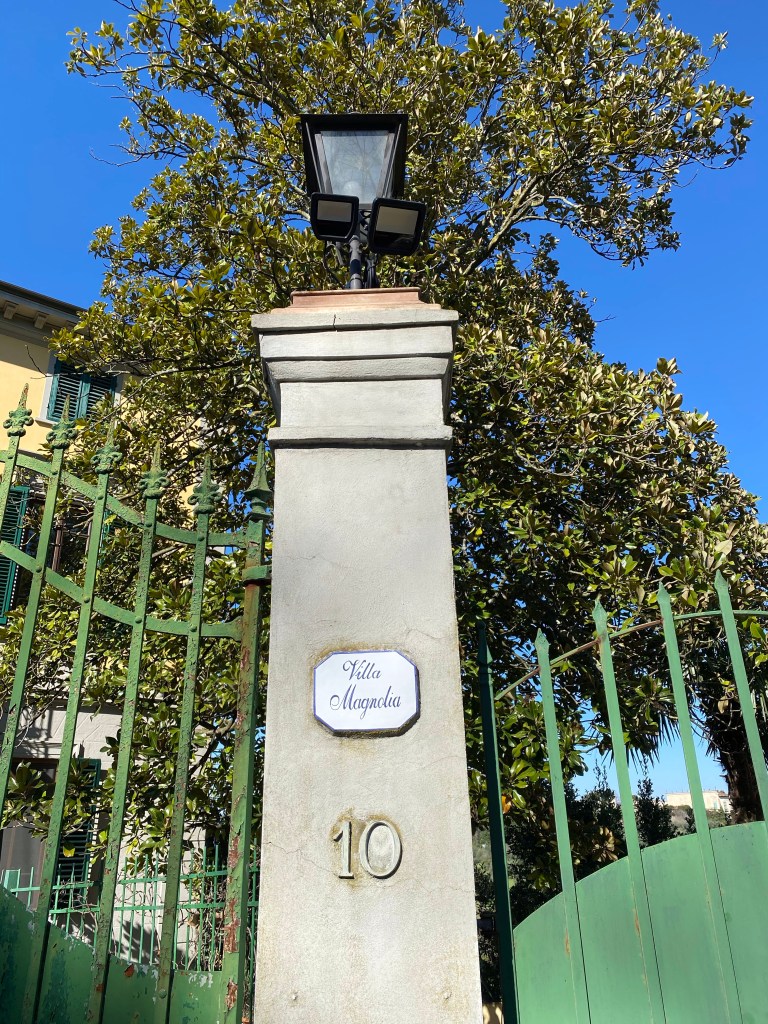
Back out on the main Viale, I encountered the lovely Villa Magnolia. One can only imagine the views these villas have of the skyline of beautiful Florence.
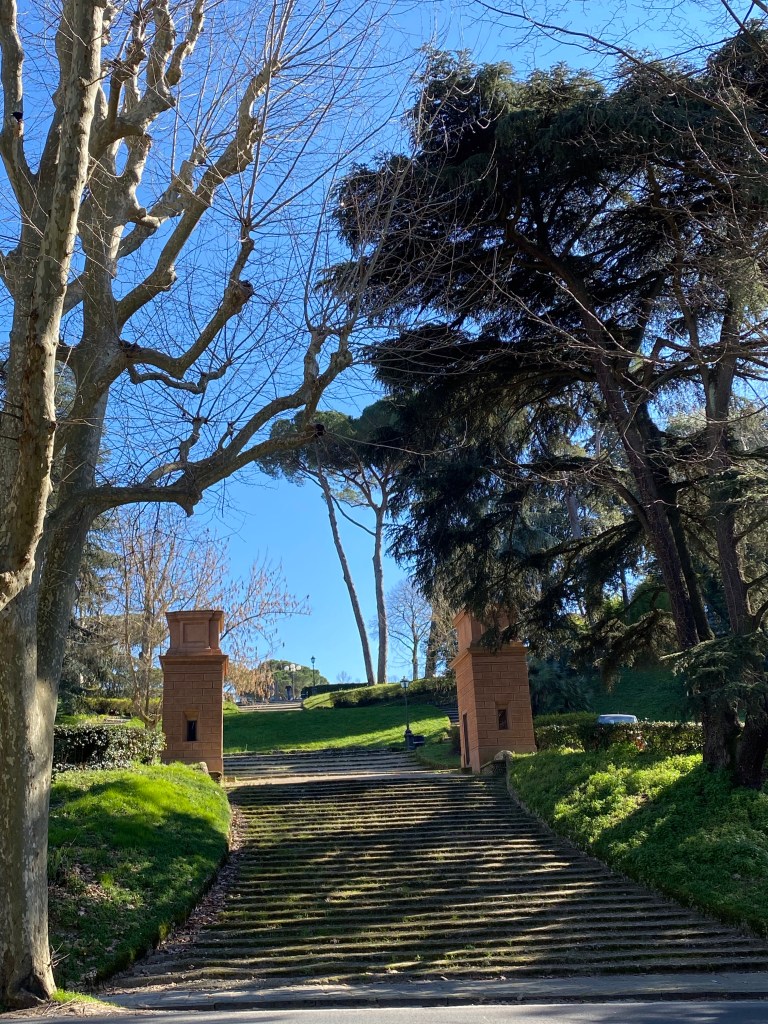
Not long after, I spied this grand staircase leading to? who knows? I had to ascend to find out.
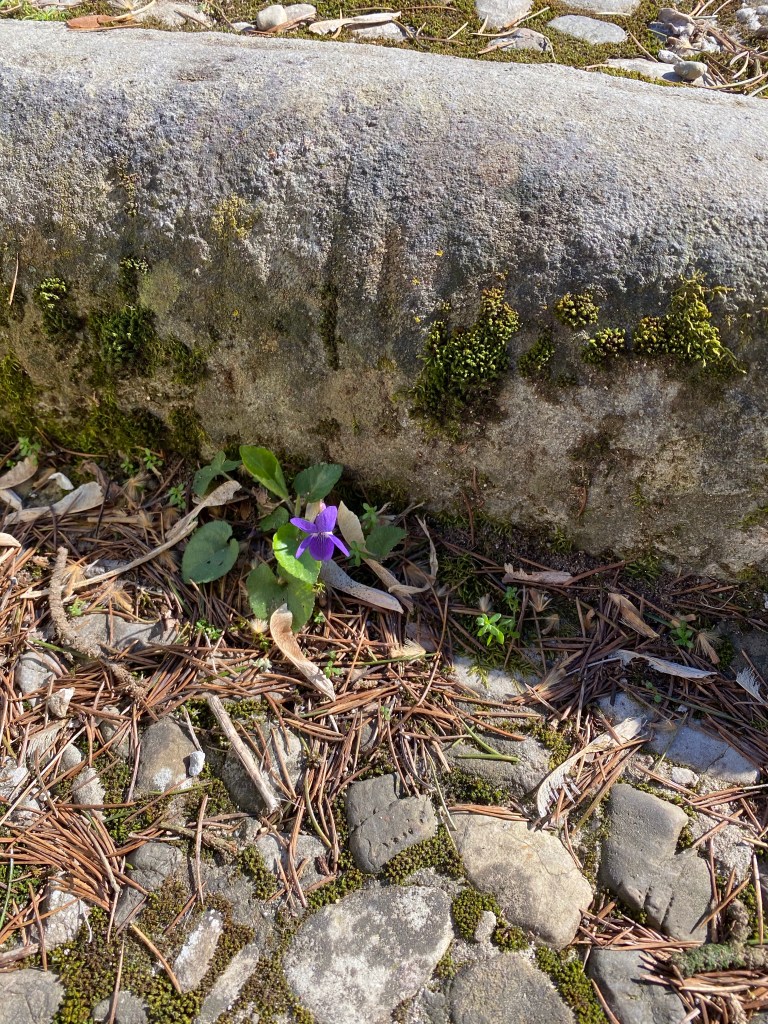
Climbing the many, many steps, I saw this tiny little volunteer violet. Be still my heart!
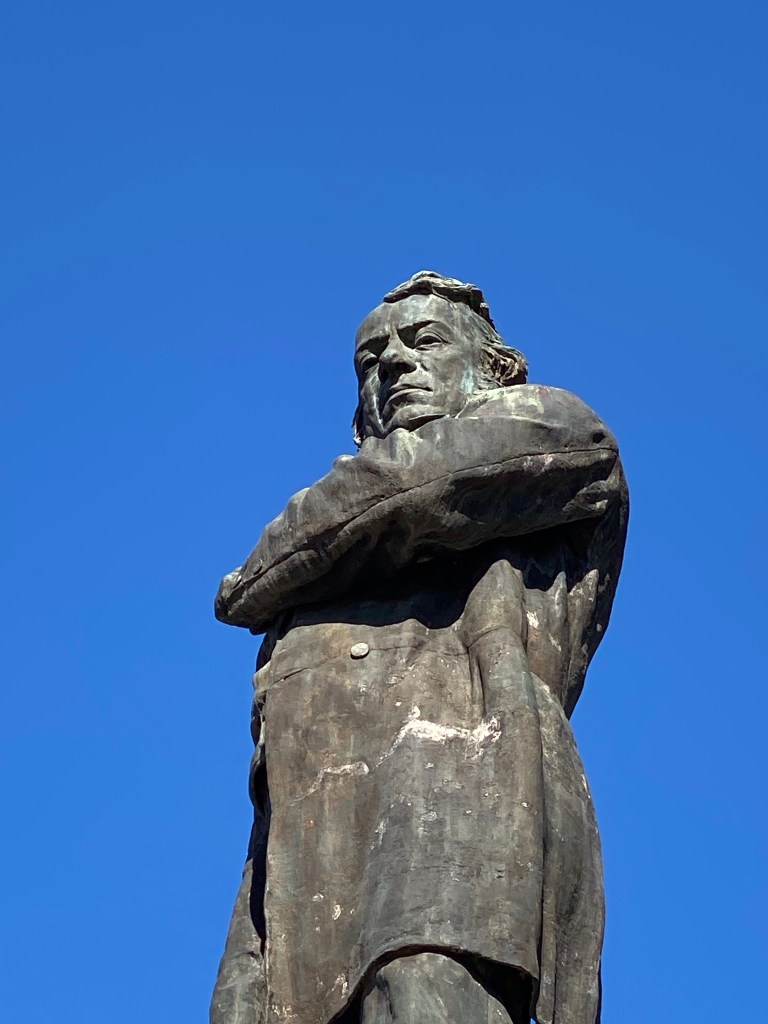
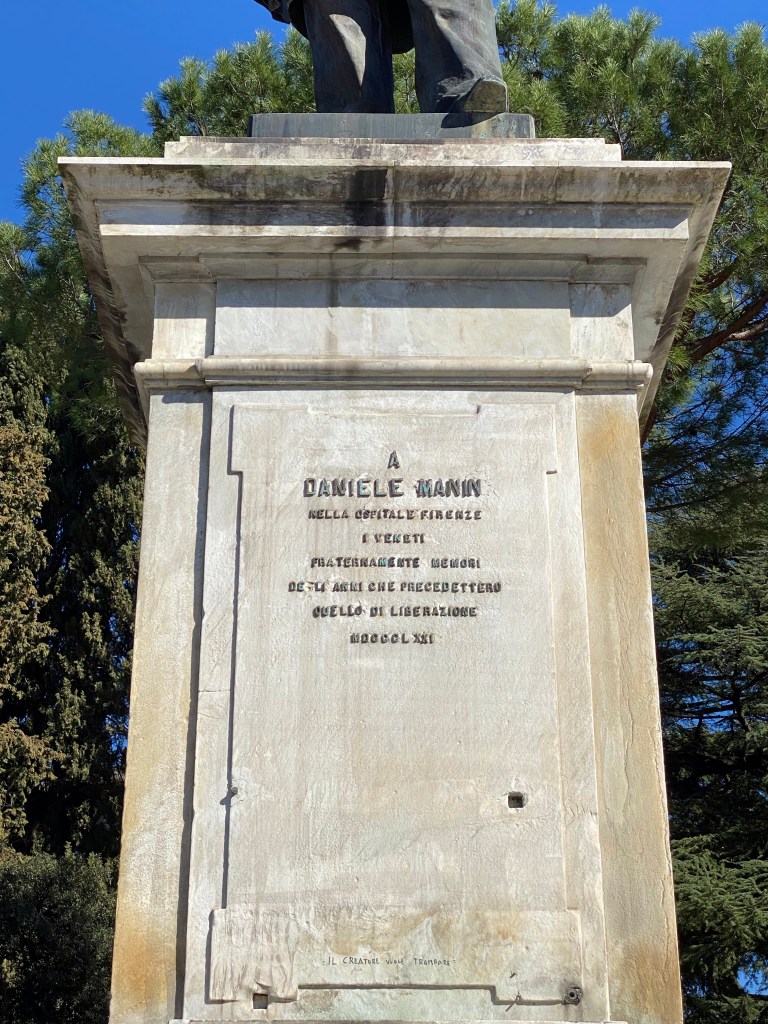
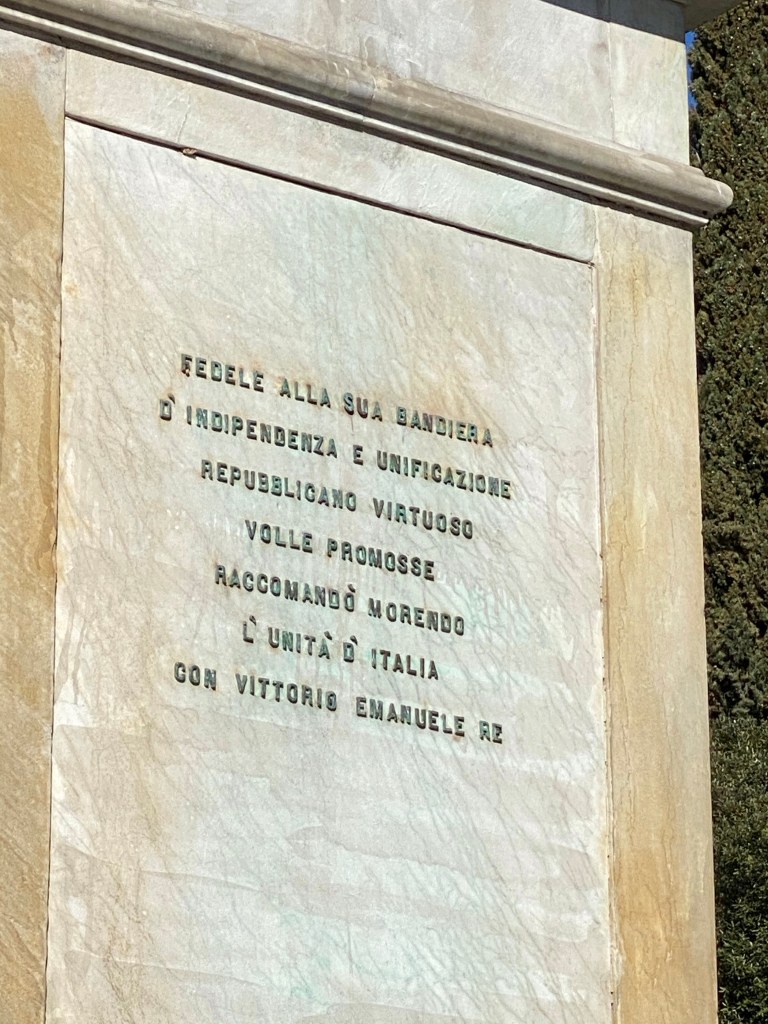
At the top, I met this tall, dark fellow, Mr. Daniele Mann, about whom I know nothing and can find nothing in Google.
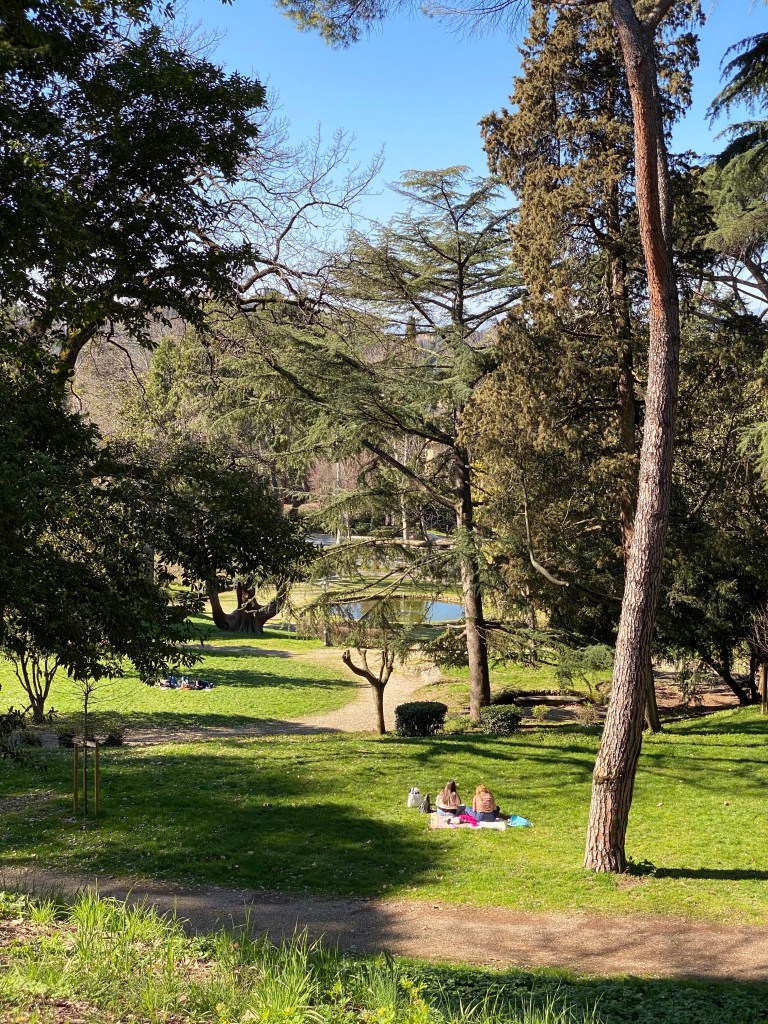
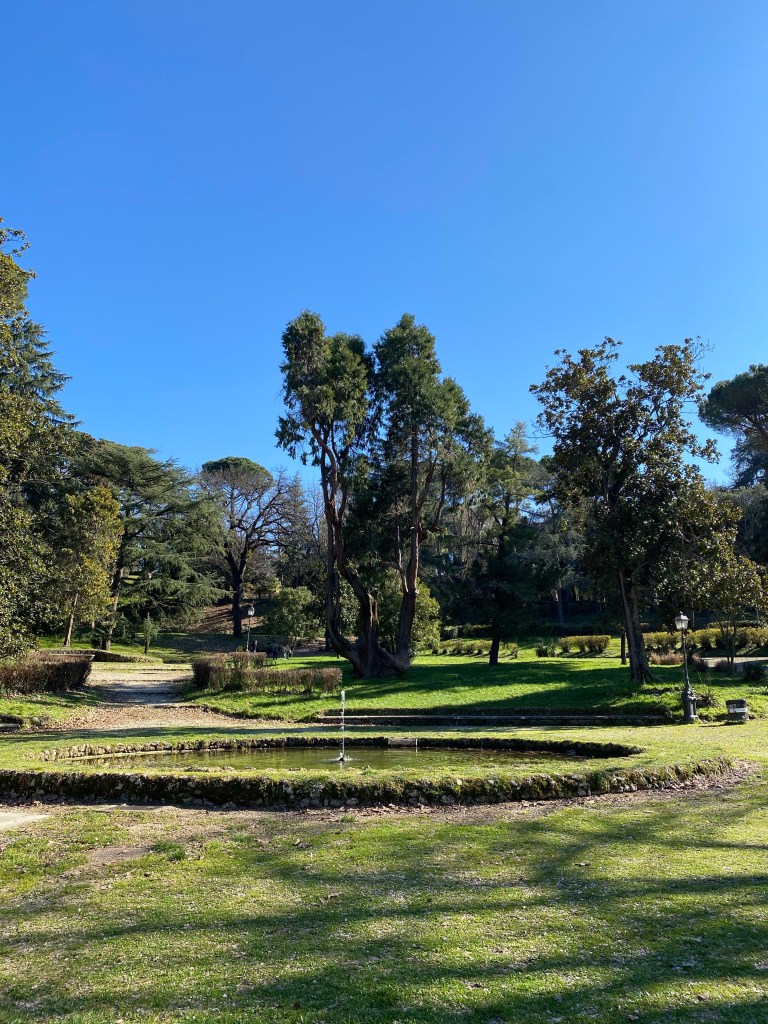
Back down the same stairs I climbed up, the next new thing I saw was this park, above and below. Complete with picnickers! I mean, who knew? Turns out this lovely little untrammeled area is known as Giardino Bobolino. I had no idea it even existed!
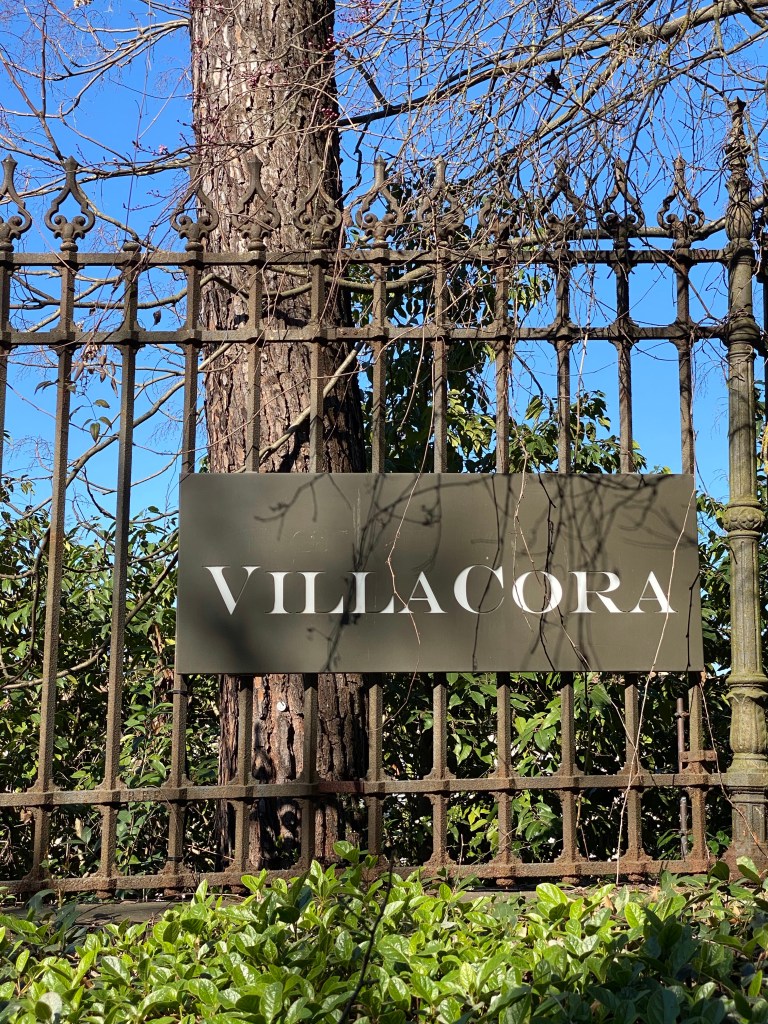
The way I understand it, the beautiful villa, now called Villa Cora, is a part of the same estate from which the Giardino Bobolino is formed. Today Villa Cora is an upscale hotel (closed for Covid, thank you very much), but the lush, verdant grounds of the Giardino are open to all.
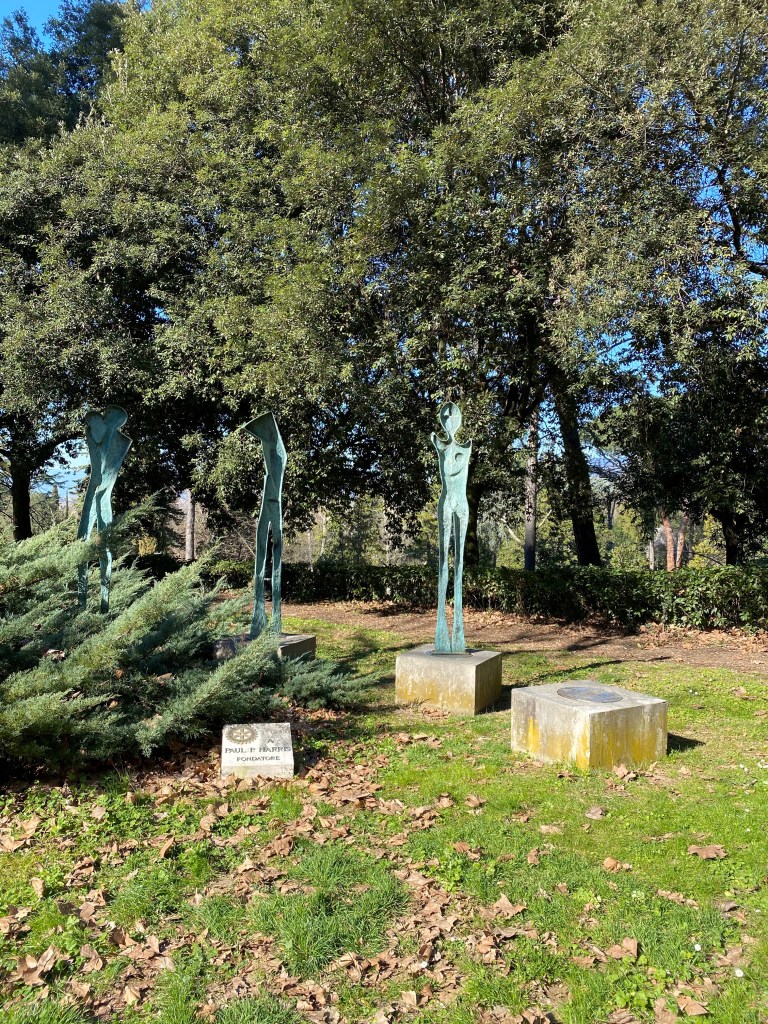
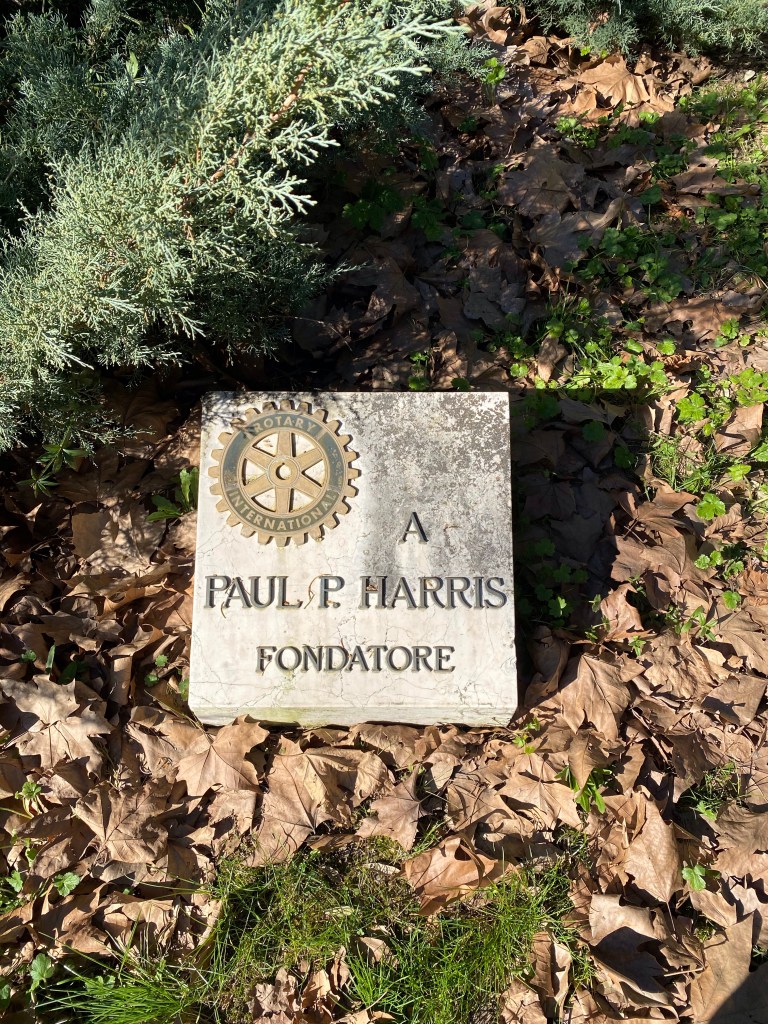
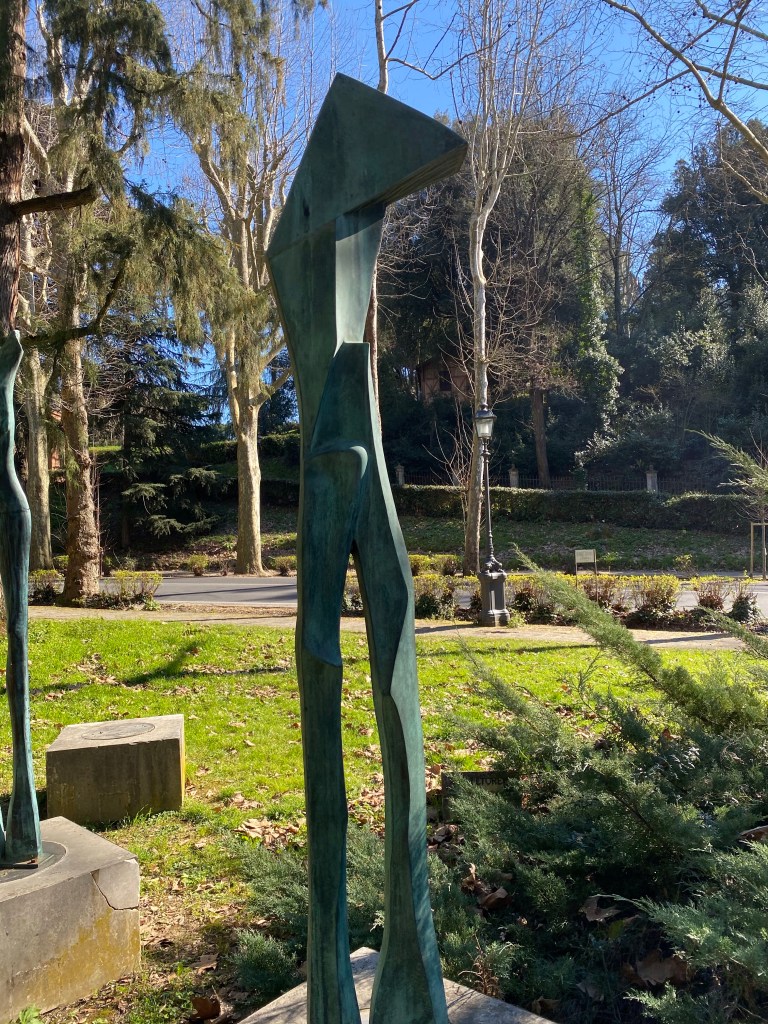
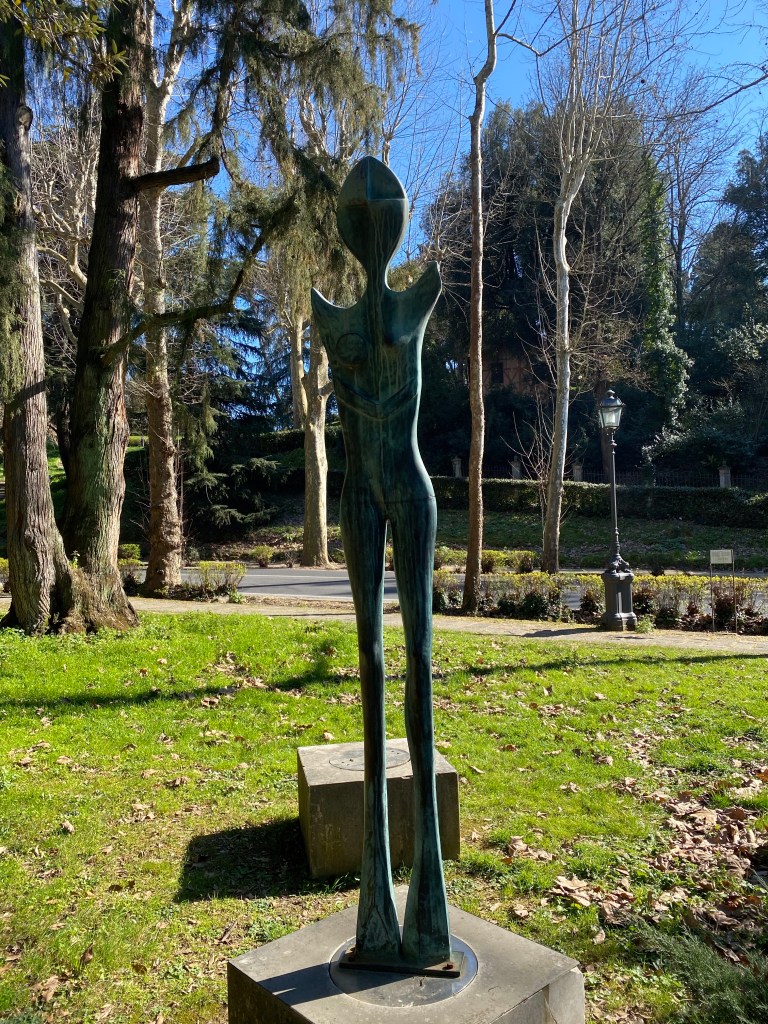
There’s a sculpture installation at the intersection of the top part of the Viale and the Giardino Bobolino, composed of 4 tall, metal abstracted human figures. With the sculptures is a plaque honoring Paul P. Harris, as founder of Rotary Clubs. I don’t quite understand this group and can’t find anything about it with a Google search. Hmm…
Following the viale downwards towards Porta Romana, I saw another view and access point to the Giardino Bobolino:
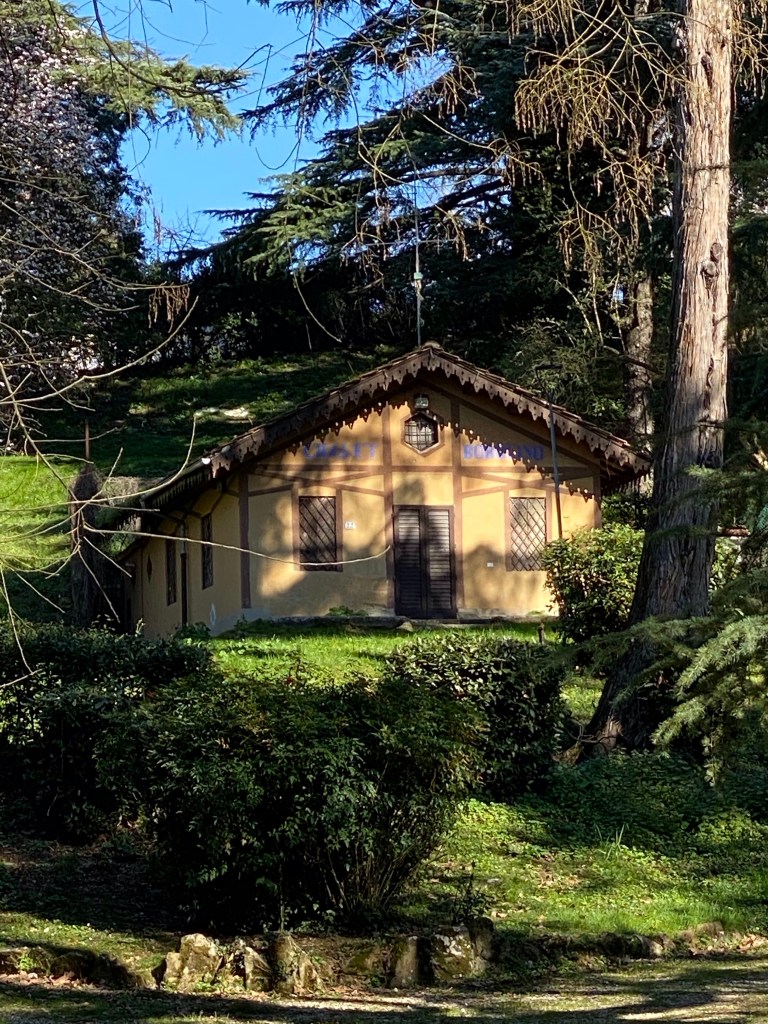
And then, off to the left and above this fountain, I noticed what I can only describe as a “Tuscan chalet,” seen below. Isn’t it odd and wonderful? I have no idea what it is used for: it is completely shut up.
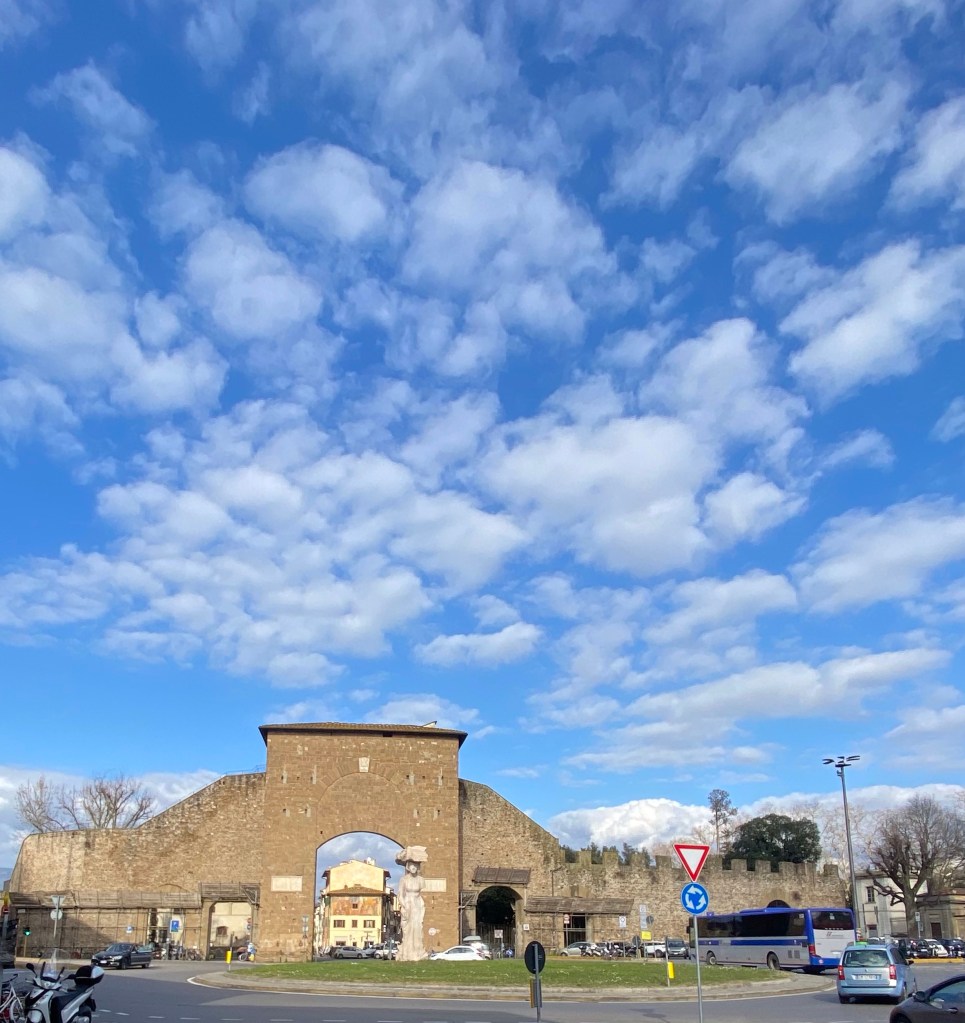
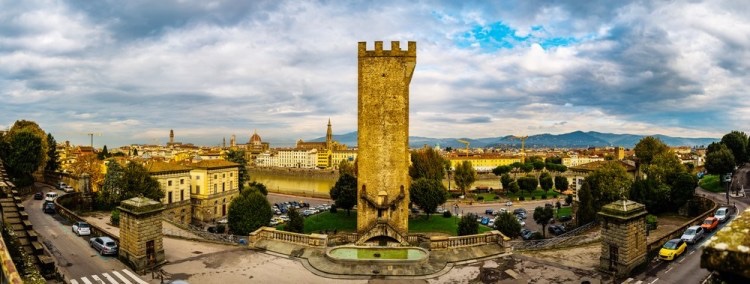
At the end of my walk, I entered Florence again through the Porta Romana. I’ll be back again soon with more discoveries found in this astounding city!
Paris had Haussmann, Rome had Valadier, Florence had Poggi. These men changed the looks of their respective cities.
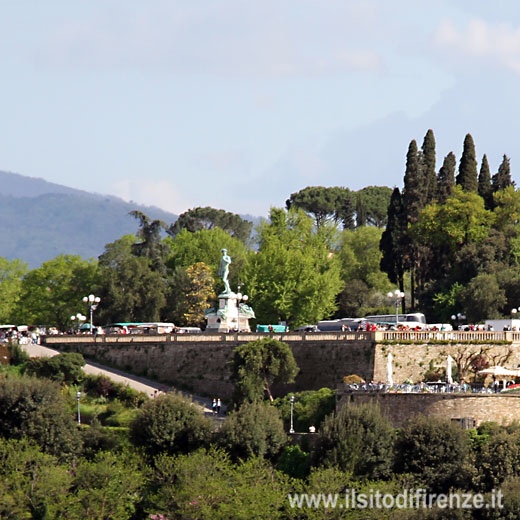
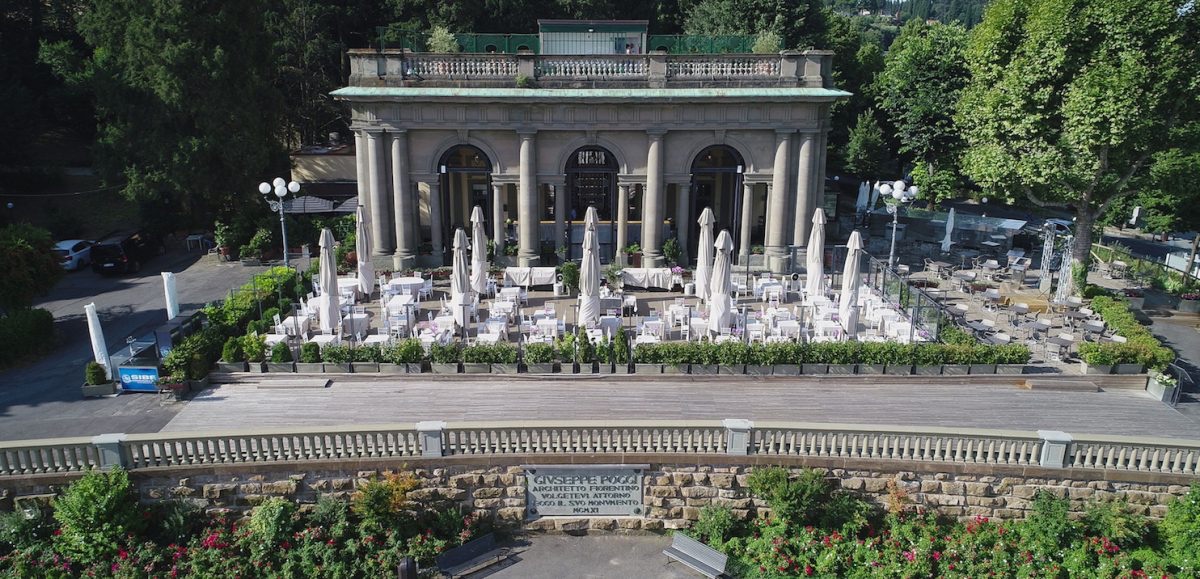
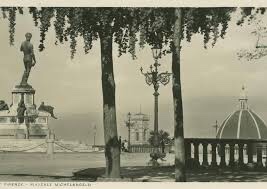
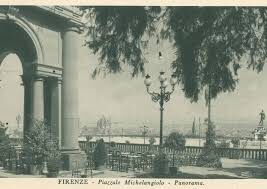
I spend a lot of time on the Viale dei Colli, the gorgeous drive through the hills to the south of the city of Florence. This is where you will find Piazzale Michelangelo (designed by Poggi) as well as the Rose Garden, San Miniato al Monte, Forte Belvedere and so much more. Poggi linked all of these sites along his magnificent Viale, which was then covered with expensive villas by wealthy citizens.
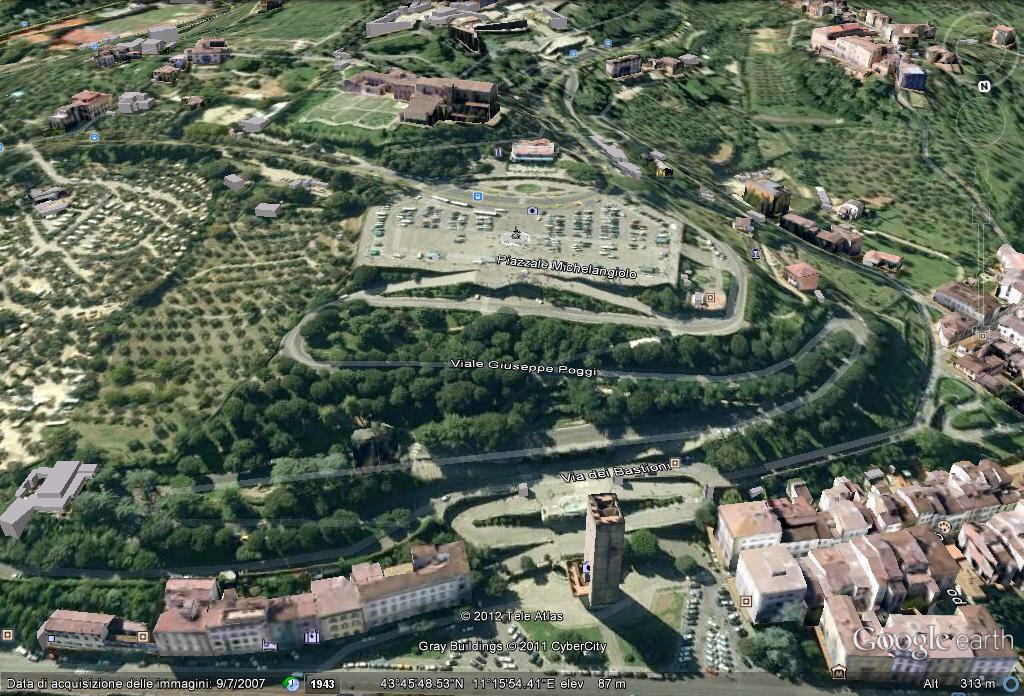
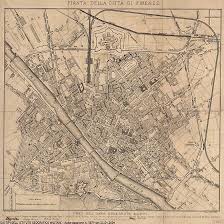
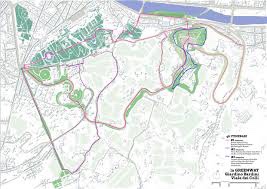
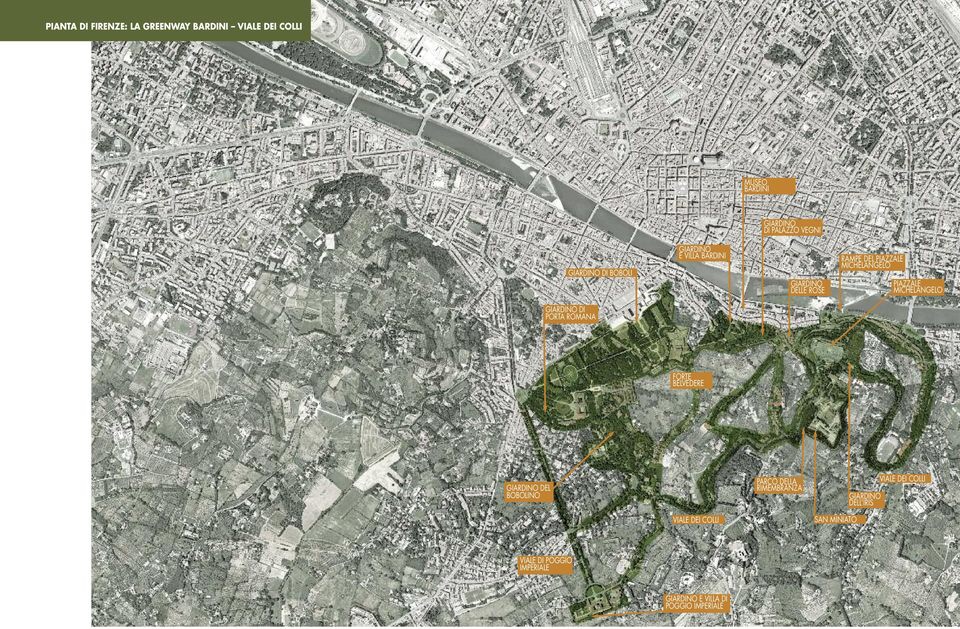
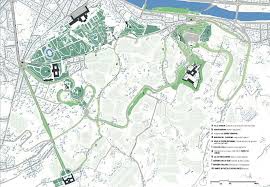
This map shows in dark blue the overall range of the Viale dei Colli.
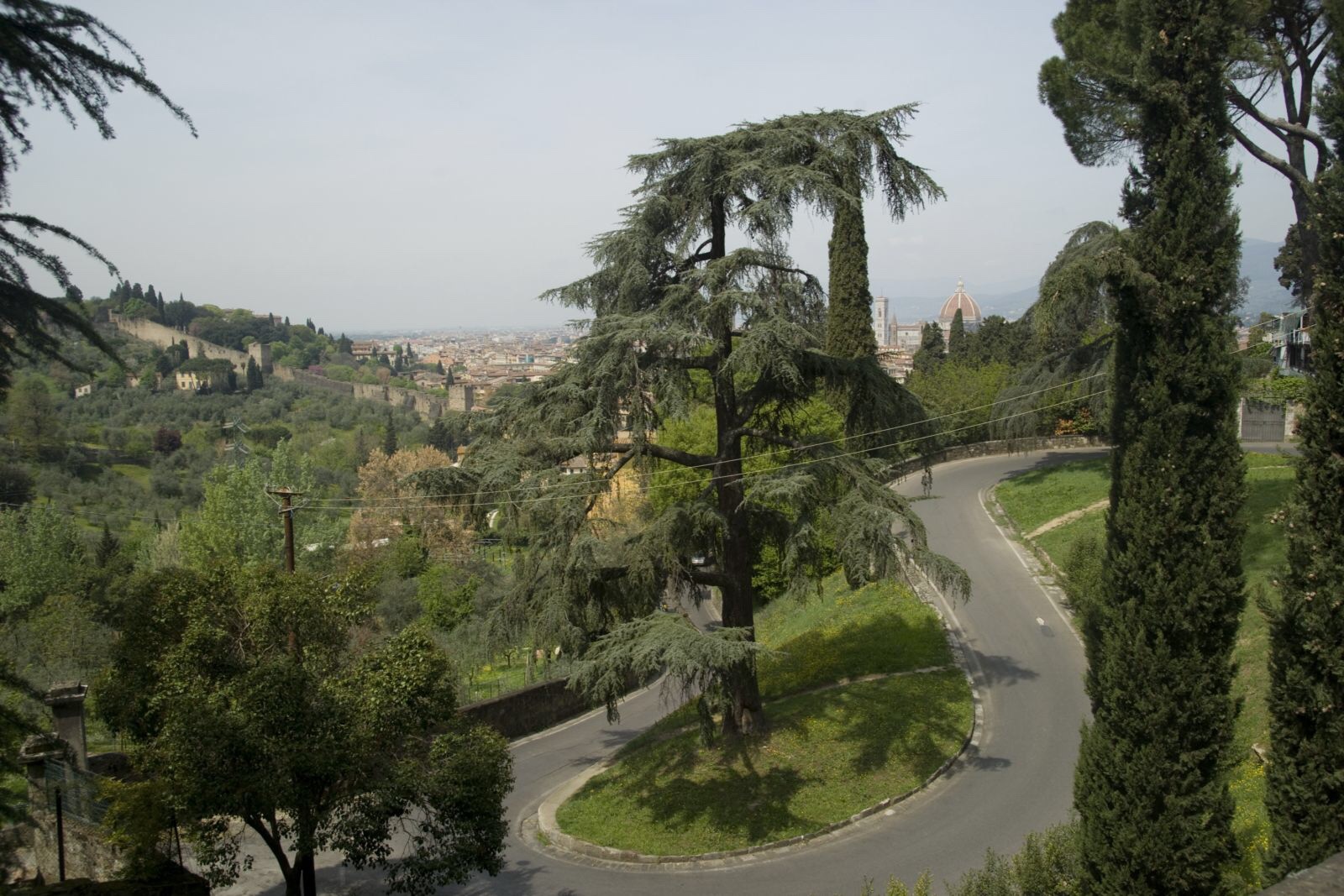
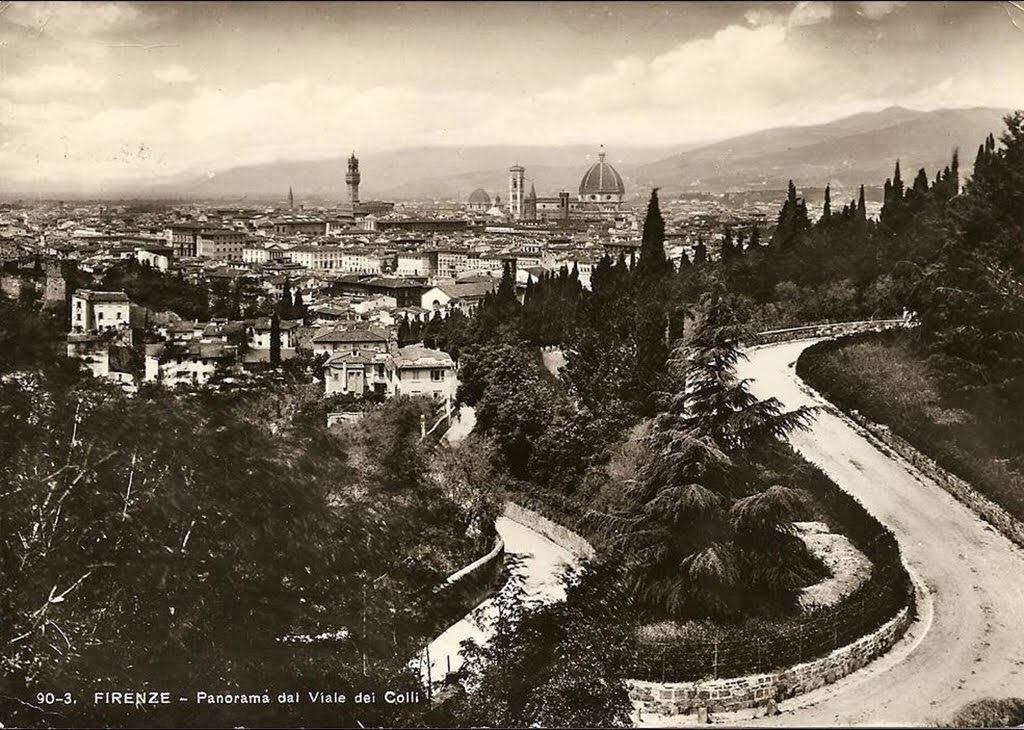
hhisThis picture shows a hairpin turn within the Viale.
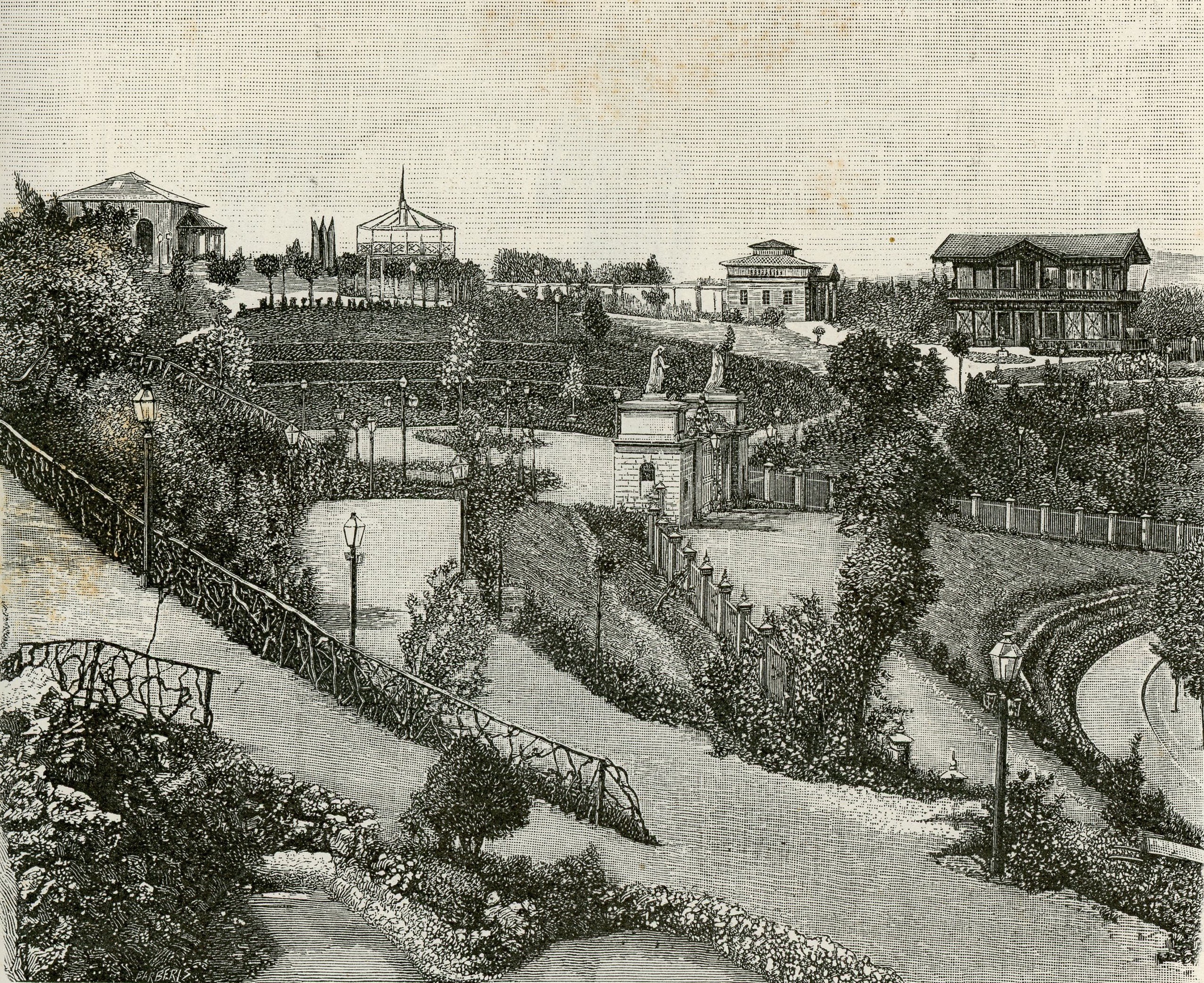
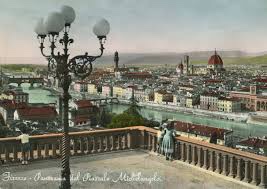
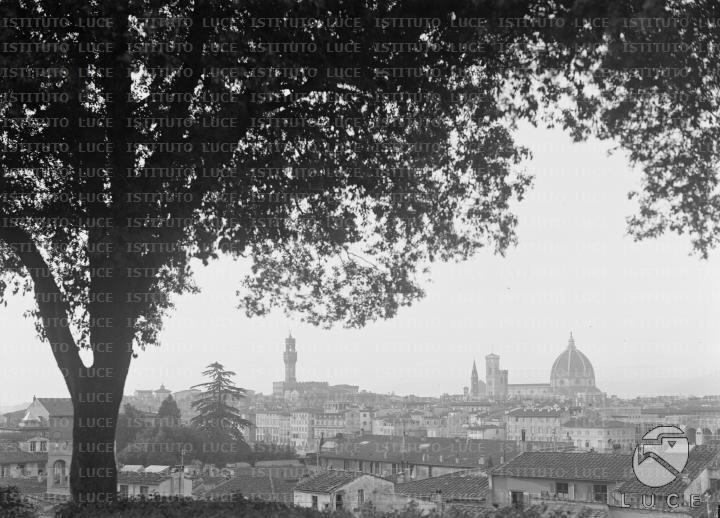
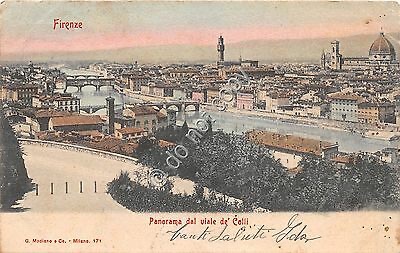
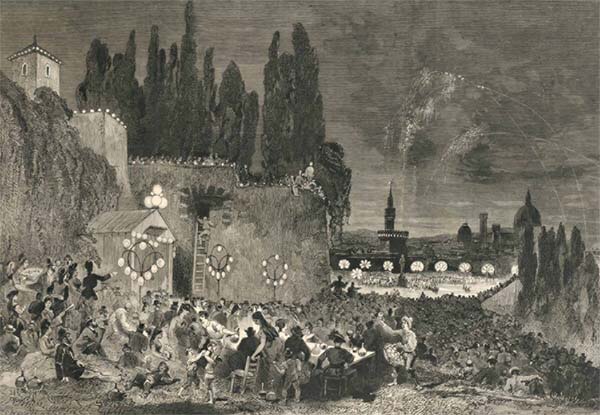
This is a drawing or early photo of the layout of the Viale.
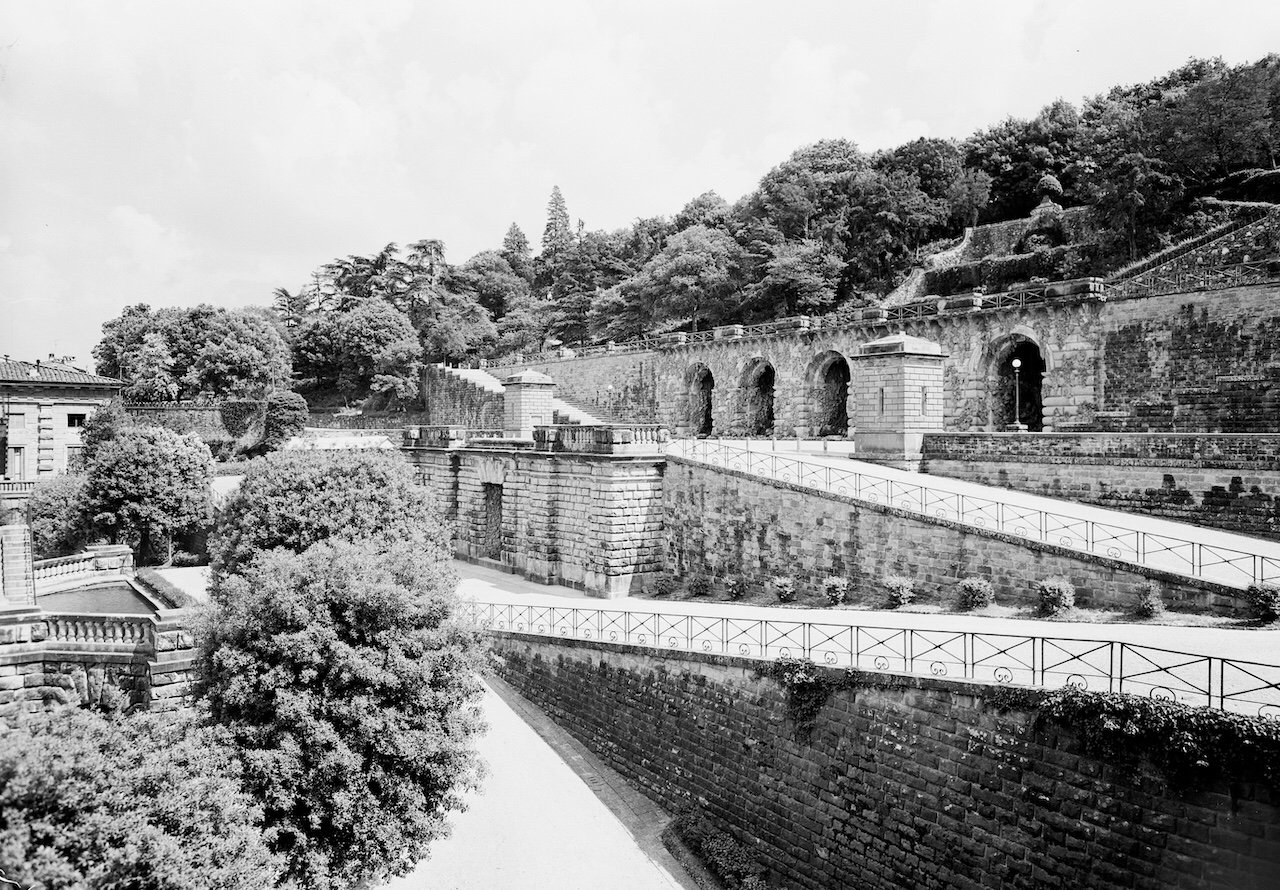
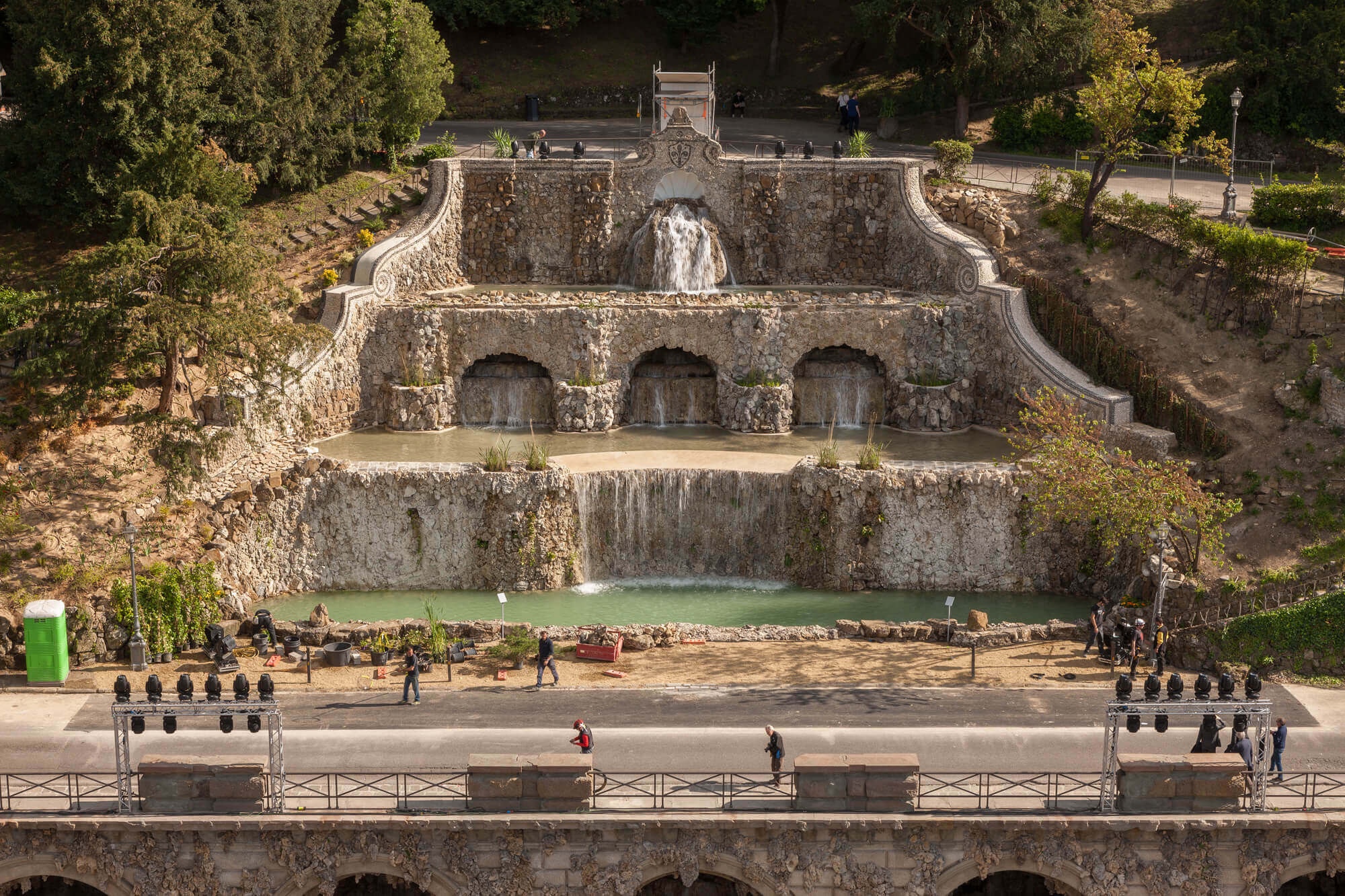
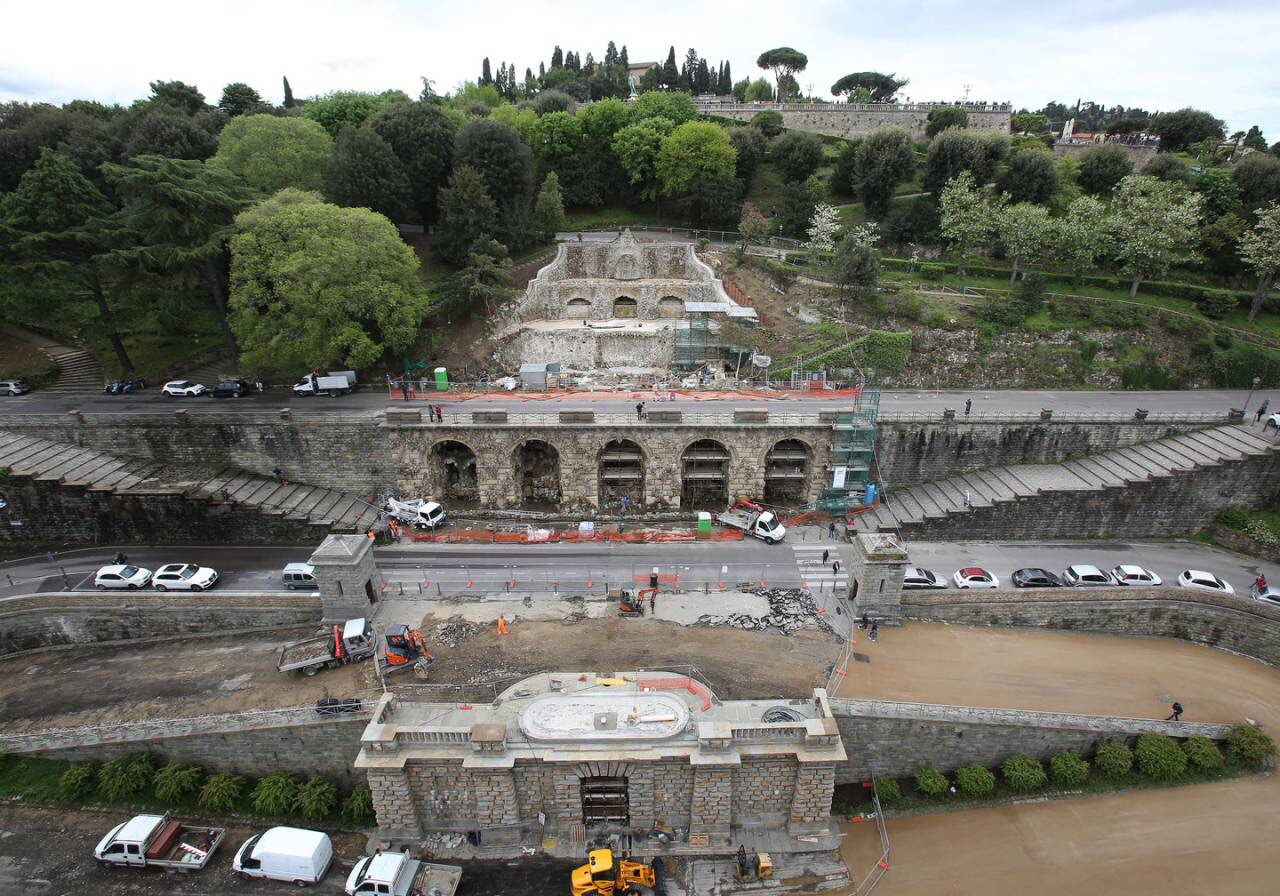
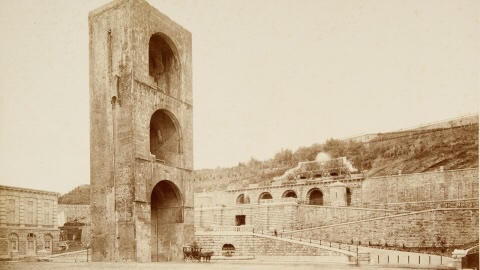
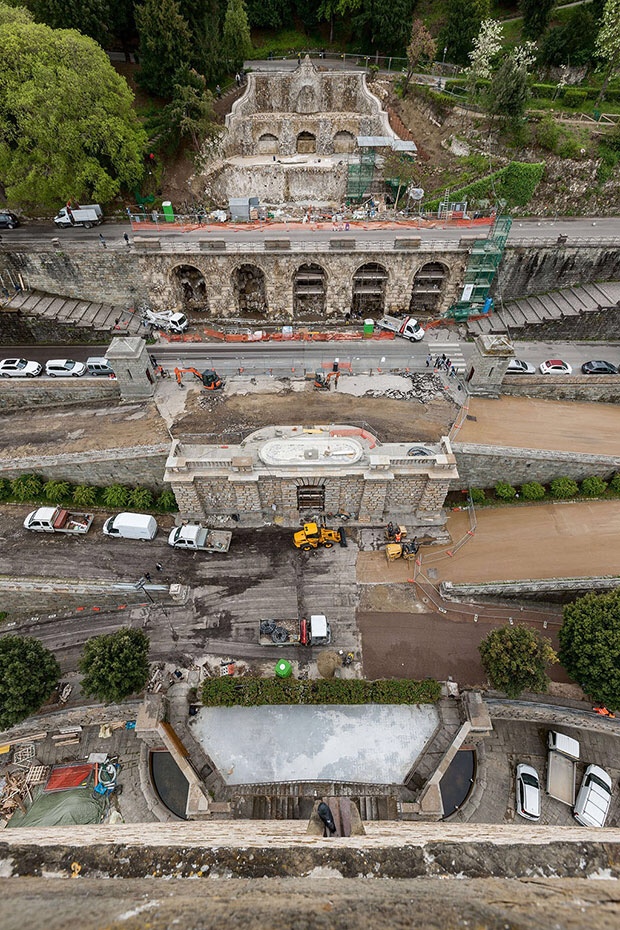
An early photo of Poggi’s grottoesque water feature leading into the Oltrarno from the Viale.
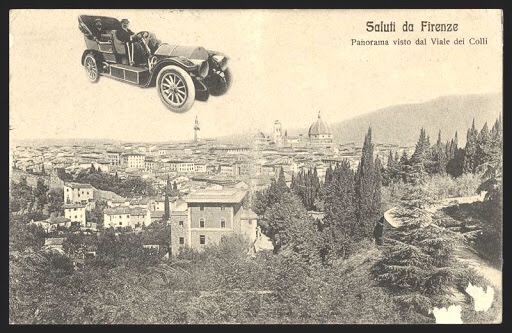
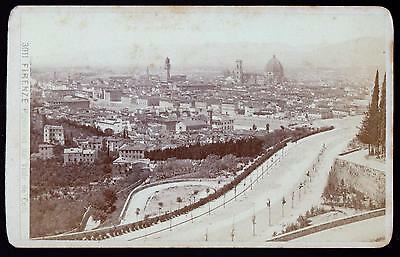
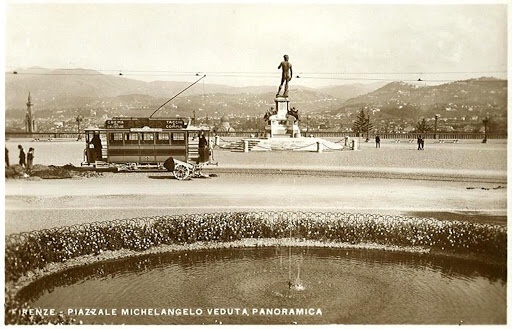
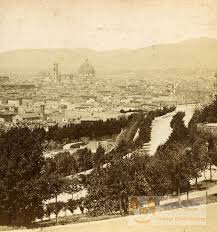
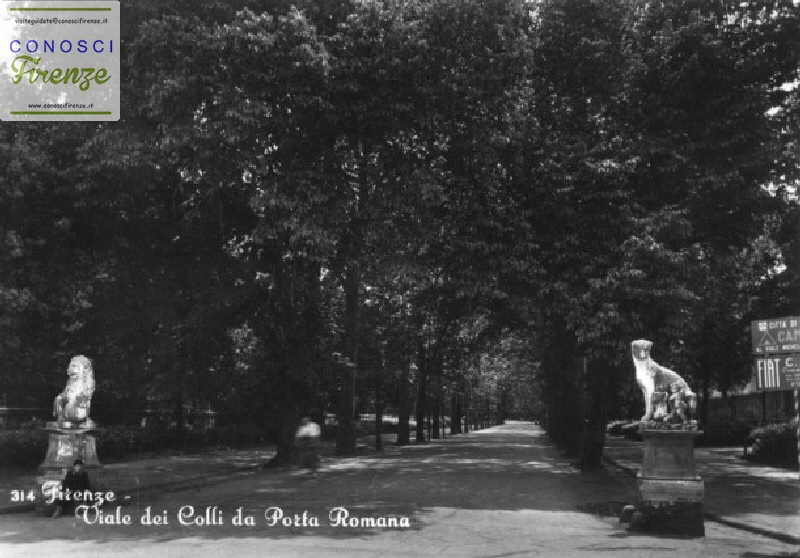
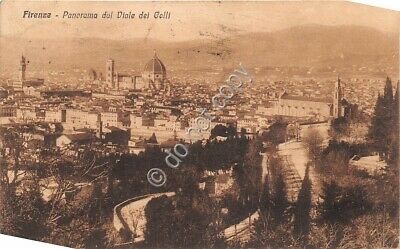
The Viale in the 19th century.
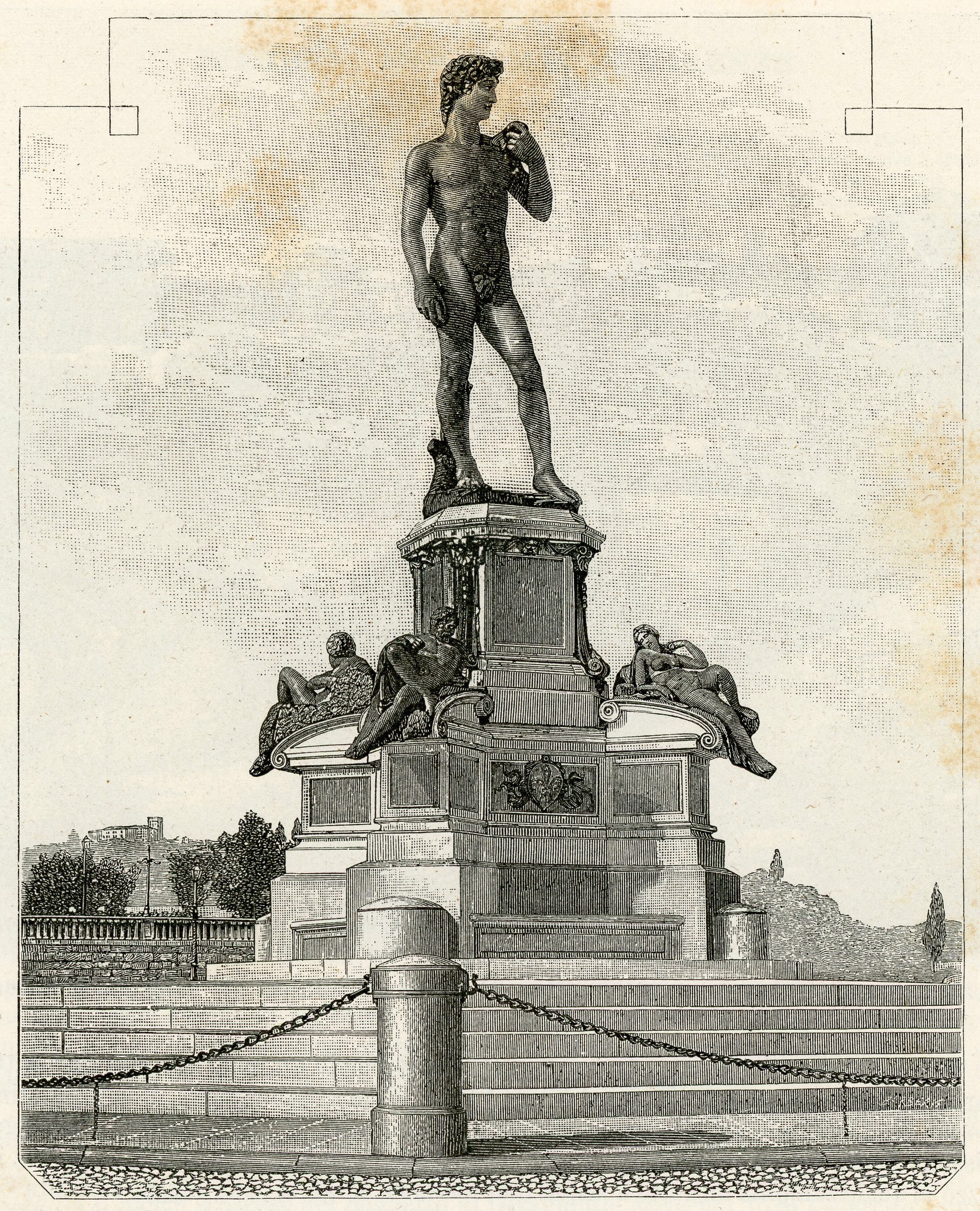
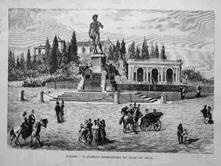
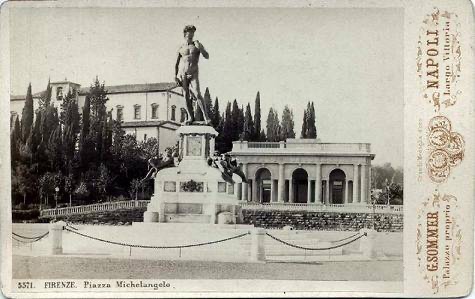
A drawing of the Michelangelo design placed in the Piazzale.
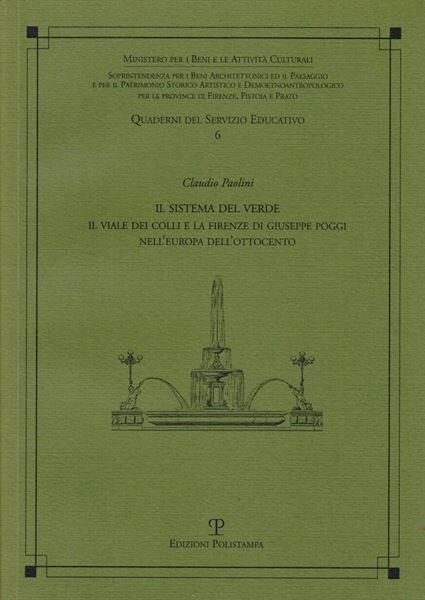
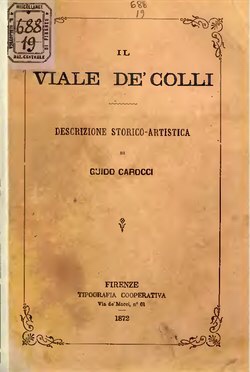
Someone should write a book in English about this gorgeous Viale and its fascinating history!
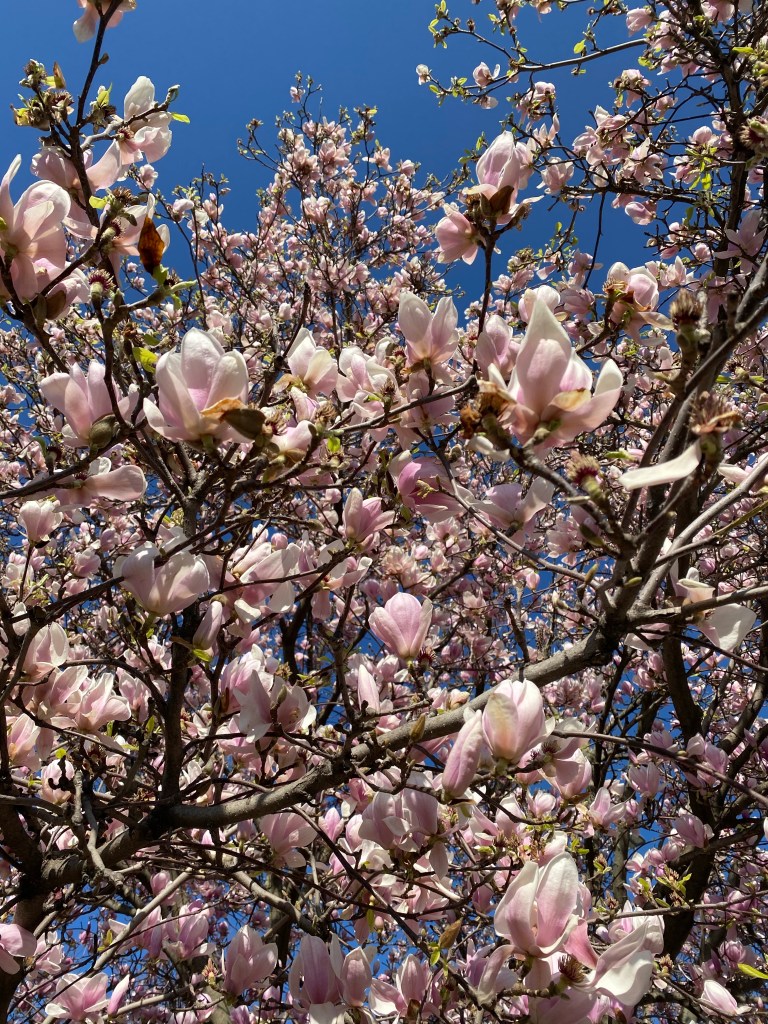
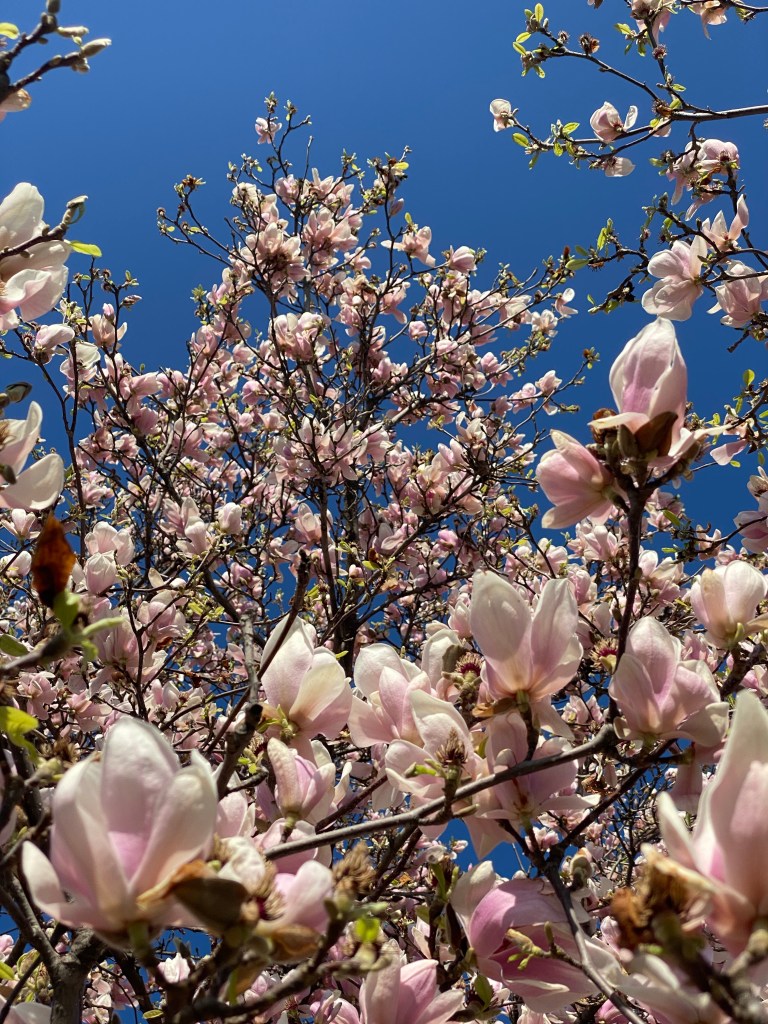
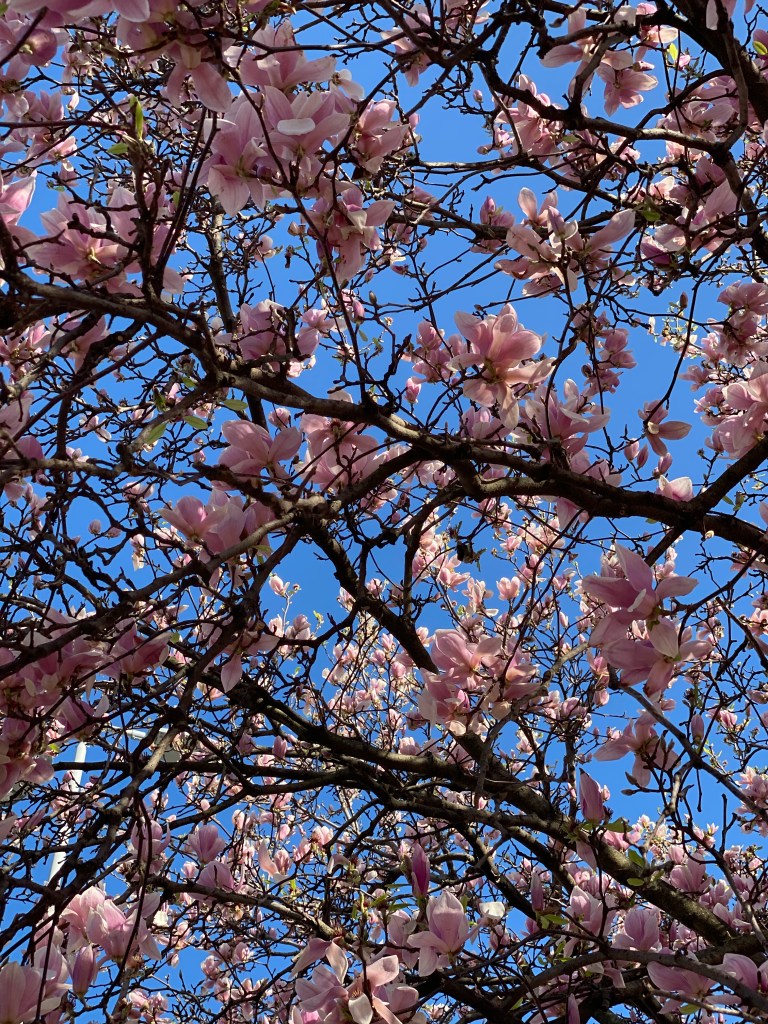
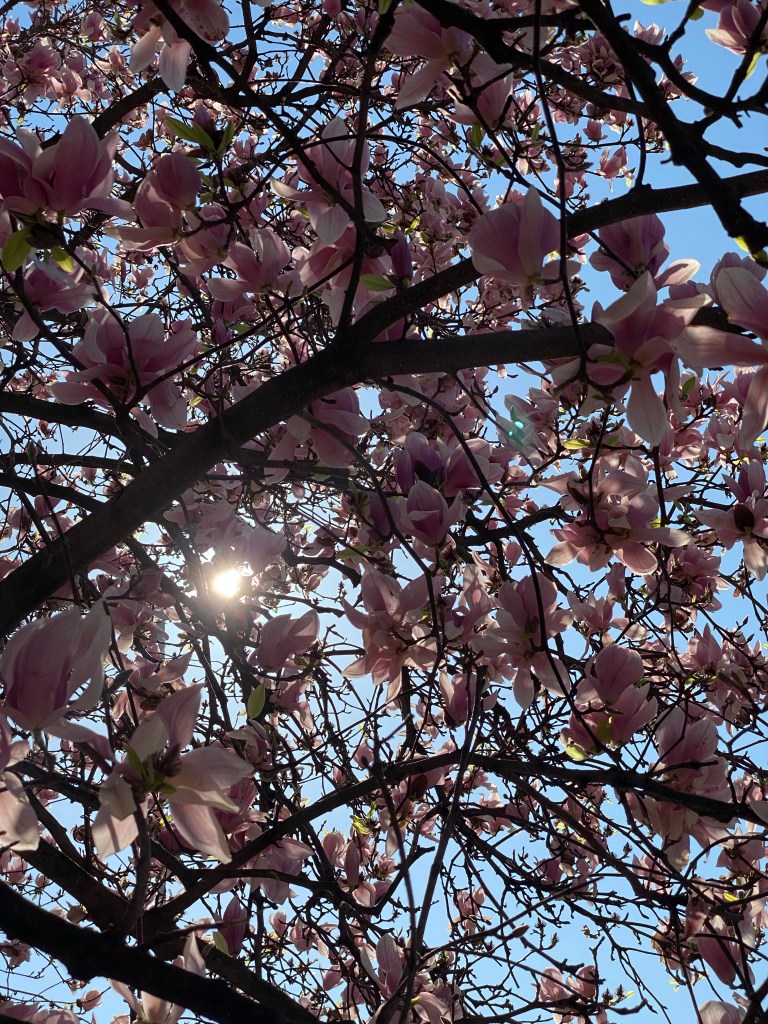
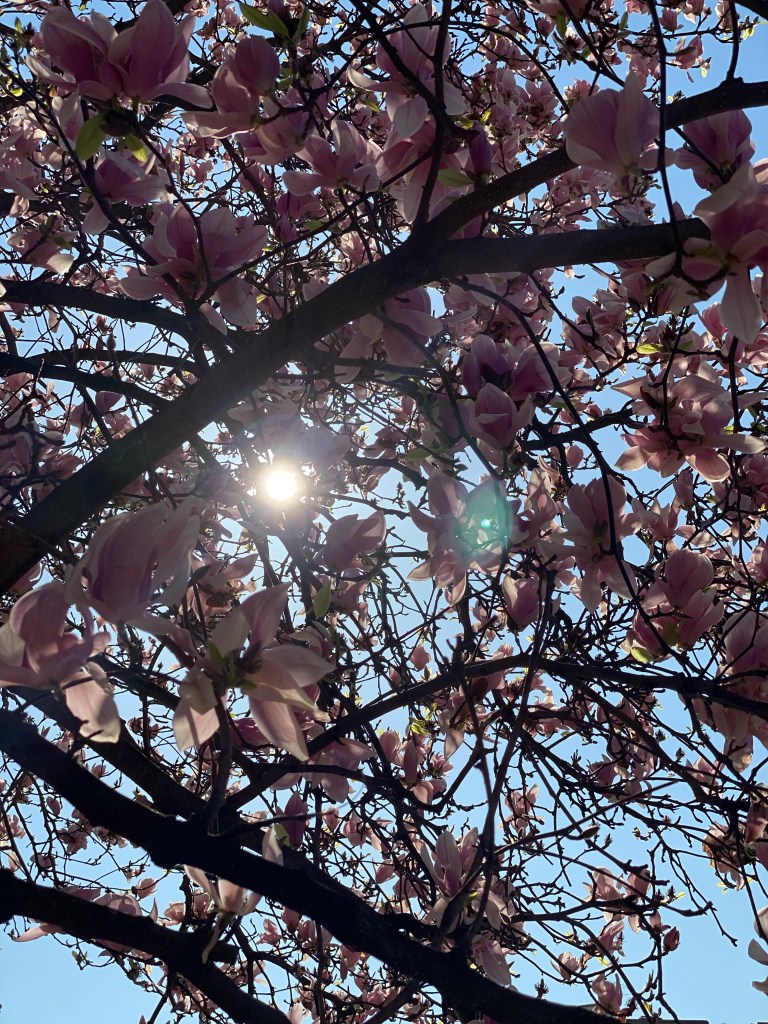
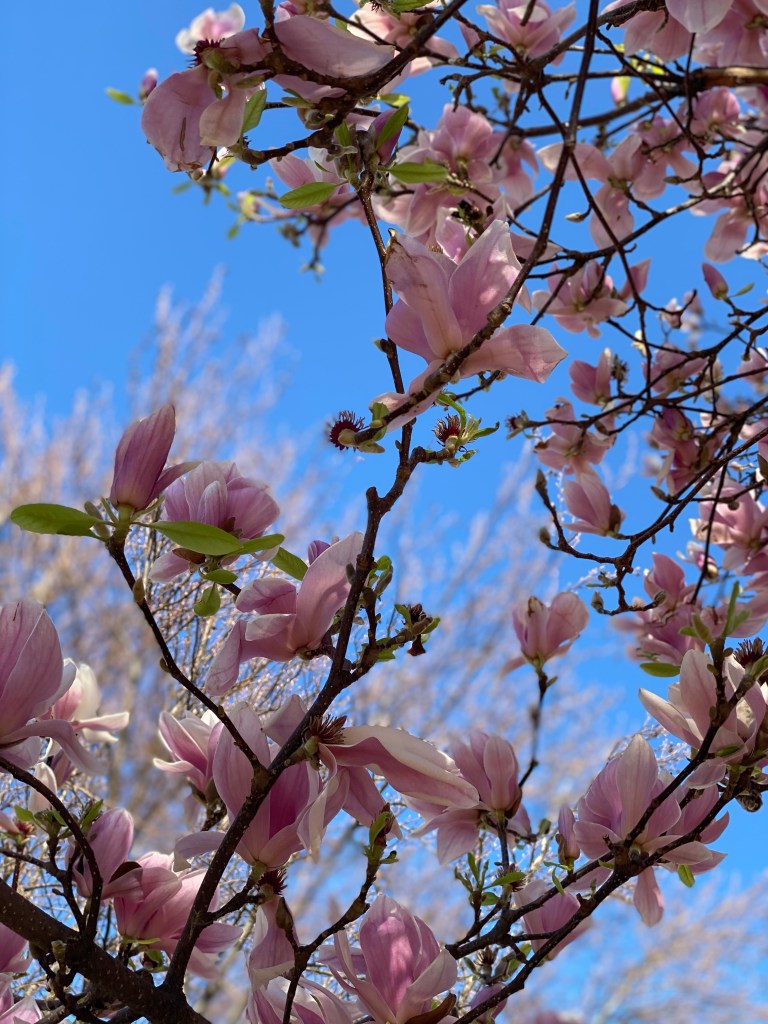
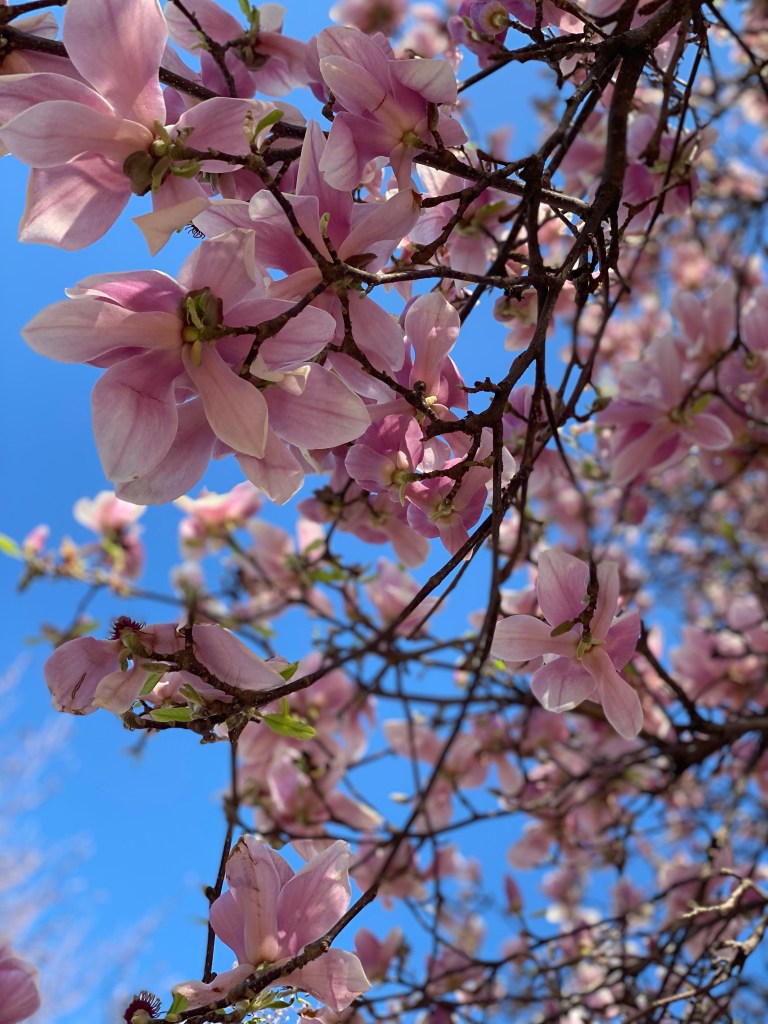
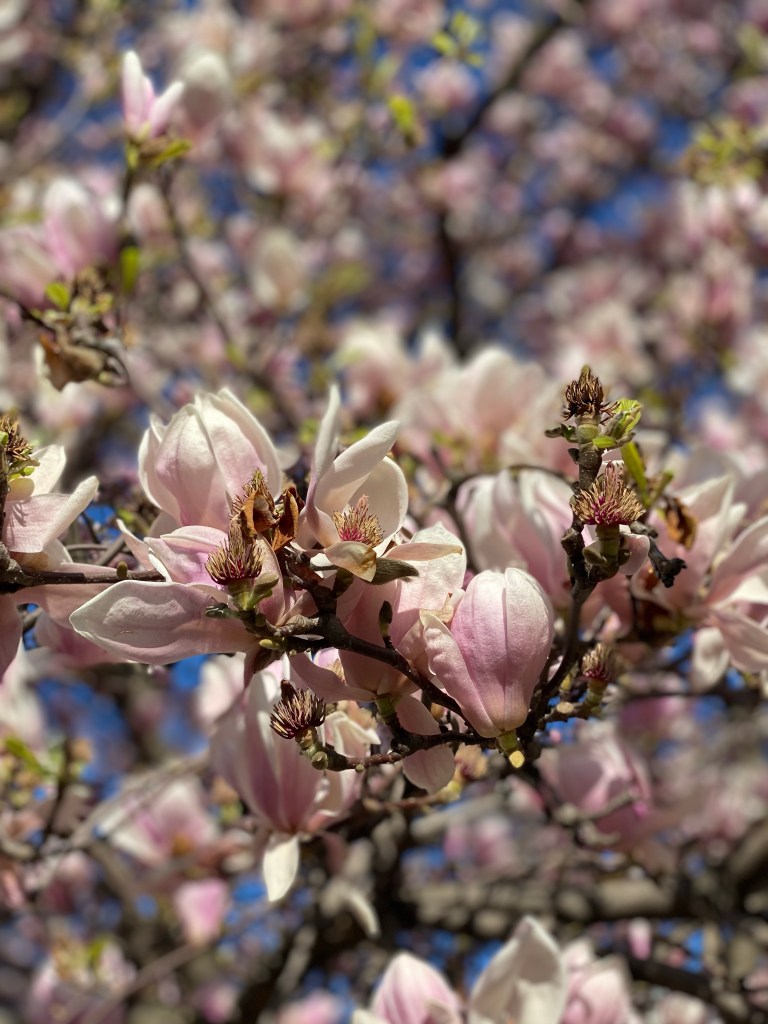
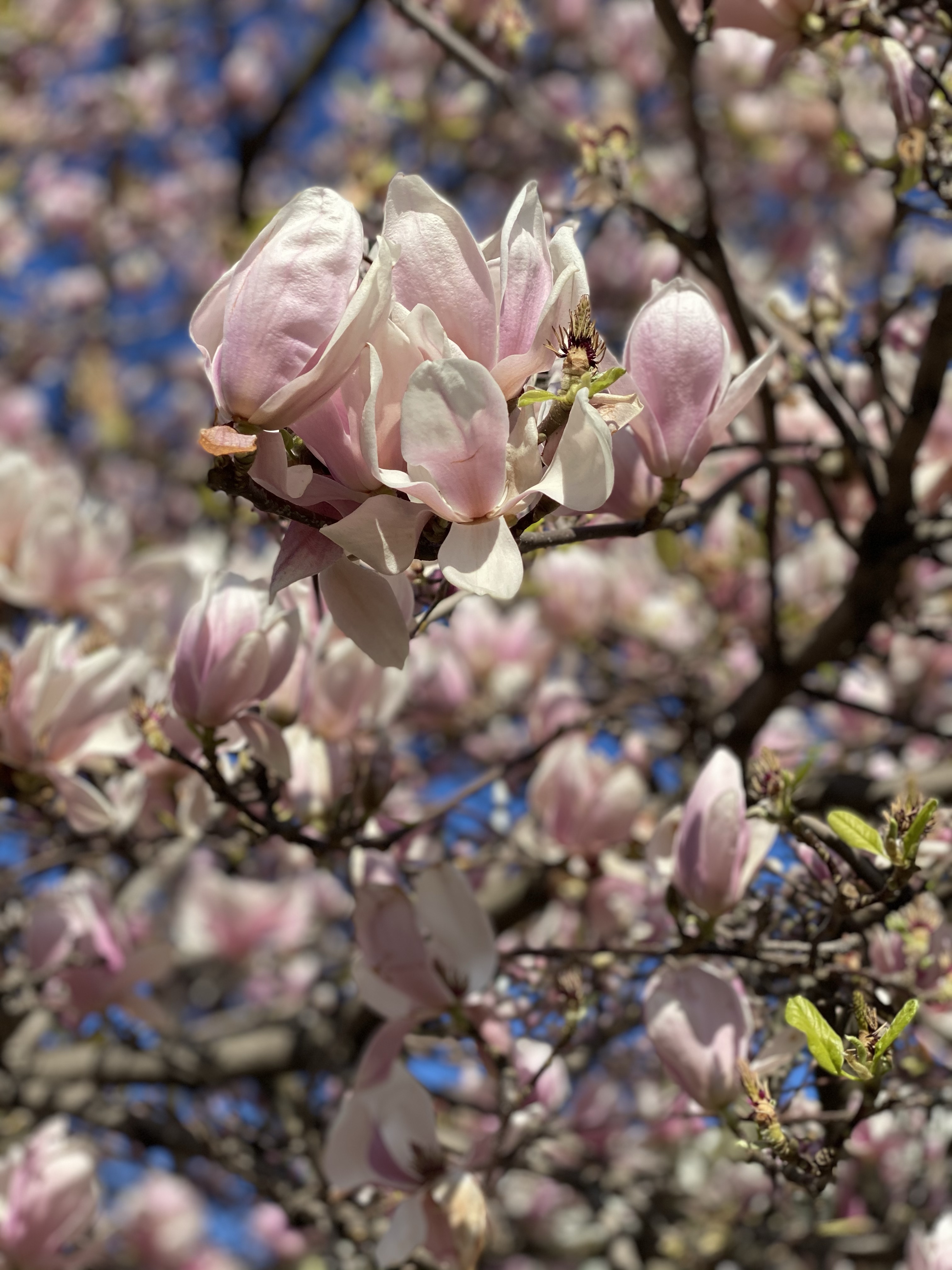
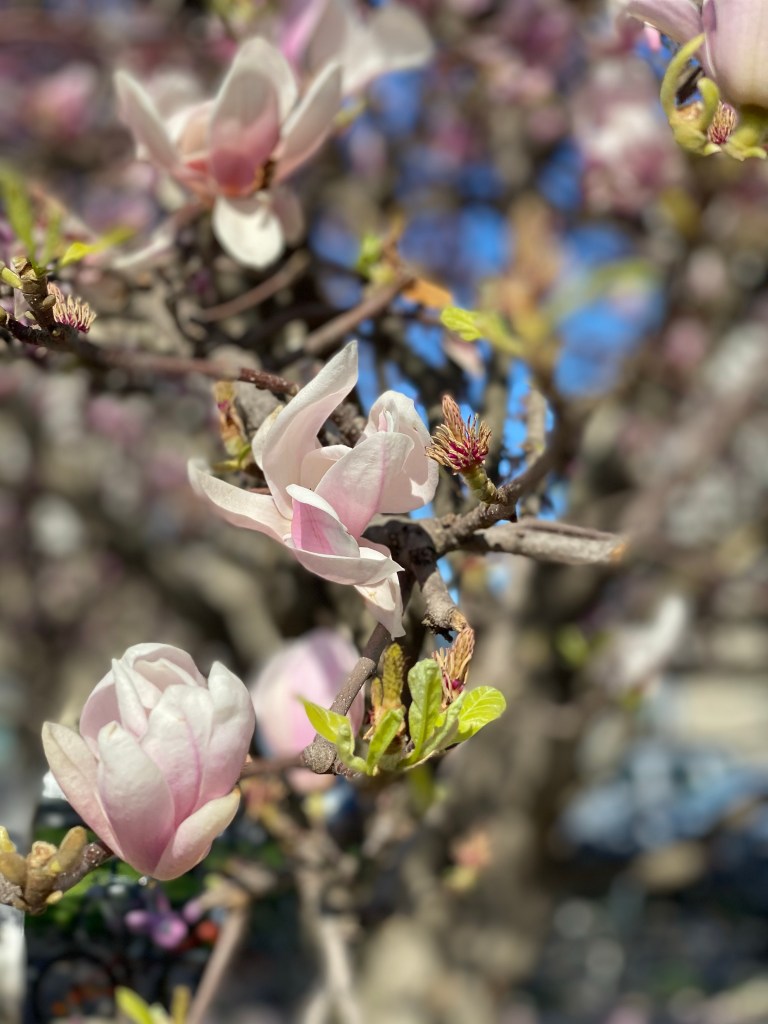
Beauty, as we all know, is ephemeral. This gorgeous pink magnolia tree in Florence is at the end of its glory for this season. We’re expecting rain and the remaining petals will soon wash away.
So, here, in all it’s pinky beauty, are my pictures taken yesterday of this phenomenon.
As you may or may not know, Tuscany is still in the Orange Zone, meaning we aren’t allowed to travel outside our city’s limits. As a result, I’ve been getting to know Florence better and better. Maybe too well. Ha ha. I joke, but I would really like to go somewhere!
Making the best of things, on a recent walk through the Cascine, I spotted these horses practicing their runs in the Cascine Racecourse, also known as the Visarno. Just an fyi: the park hosts a number of civil and sport infrastructures, such as tennis and football fields, a velodrome, shooting and archery fields, two hippodromes, a public swimming pool, the School of Air War, a visitor’s center, police offices, the Faculty of Agronomy and a public school.
There are two racecourses in the park: one for trotting (to the west) and one for galloping (in the center). The gallop racecourse covers an area of 233,000 m² of which 120,000 m² is for running and training tracks, 15,000 m² for stables and 12,000 m² for the public. A structure has 15,000 seats for the public.
The racecourse consists of an oval-shaped racing track with a length of 1961.60 meters and a width of 19.50 meters on the home straight. In addition to the large track, a system of intersection of curves also allows a shorter route: the medium track. Within this complex, there is an even shorter track, on grass.
About 25 years ago there was also an eight-shaped steeple-chase track for obstacle racing, which developed for 1396.85 meters. It was dismantled to make room for a polo field. The training track, inside the small track, is in sand, over 1350 meters long.
Since 2016 the Visarno hippodrome has also become the operational headquarters of the Part Guelph Archconfraternity which enjoys the privilege of representing the Municipality of Florence for ceremonial events on horseback as a Cavalry of the Florentine Republic and the privilege of performing honor services. during audiences and receptions of the Florentine Archdiocese.
Since the summer 2015, the racecourse has been used as an arena to host events and concerts by many important national and international artists, including: David Gilmour, Massive Attack, Einstürzende Neubauten, Sting, Duran Duran, Max Pezzali, Litfiba, and Guns N ‘ Roses. In 2017, the first edition of the Firenze Rocks festival was held there. Sadly, due to Covid, nothing was held in the summer of 2020 and who knows about 2021? although at this time some concerts are on the calendar.
Prunus mume is an East Asian and Southeast Asian tree species classified in the Armeniaca section of the genus Prunus subgenus Prunus. Its common names include Chinese plum, Japanese plum, and Japanese apricot. The flower, long a beloved subject in the traditional painting and poetry of East Asia and Vietnam, is usually called plum blossom.
This distinct tree species is related to both the plum and apricot trees. Although generally referred to as a plum in English, it is more closely related to the apricot. In East Asian cuisine (Chinese, Japanese and Korean) and Southeast Asian cuisine (Vietnamese), the fruit of the tree is used in juices, as a flavoring for alcohol, as a pickle and in sauces. It is also used in traditional medicine.
All of that Wikipedia information is fascinating, but the reason I love the plum blossom is that it is usually the earliest fruit tree to blossom in the late winter and early spring. For Florence, that is now!
Because the tree flowers in late winter and early spring, it is highly regarded as a seasonal symbol. For me, it tells me spring is coming or is nearly, almost, here! Hallelujah!
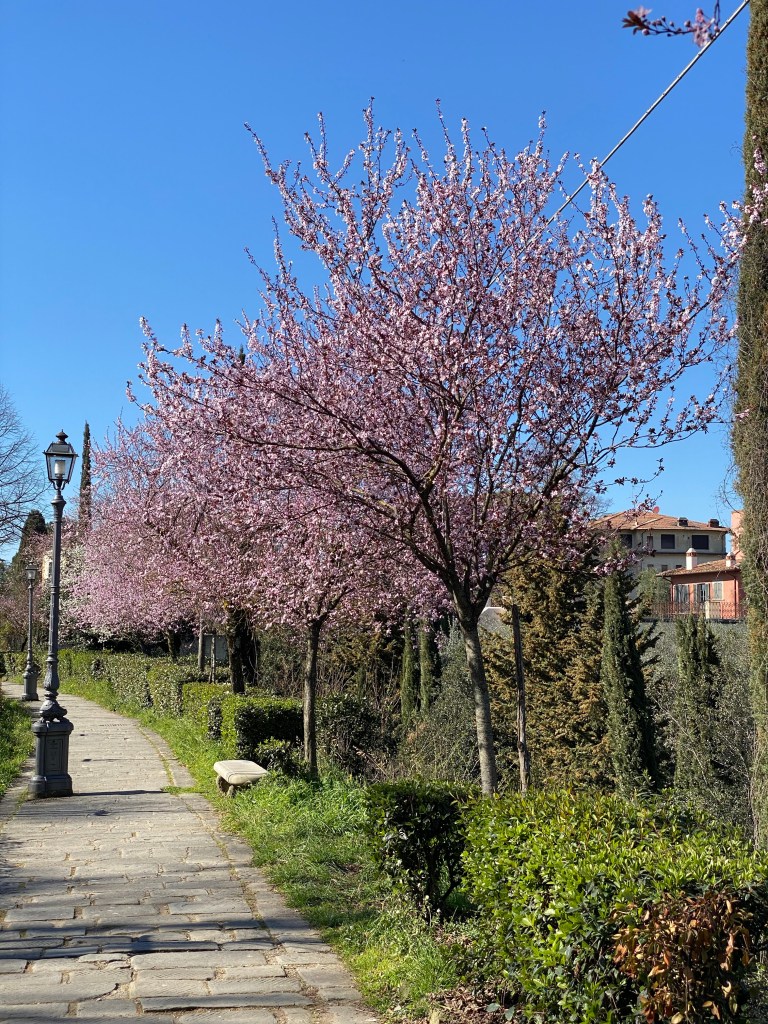
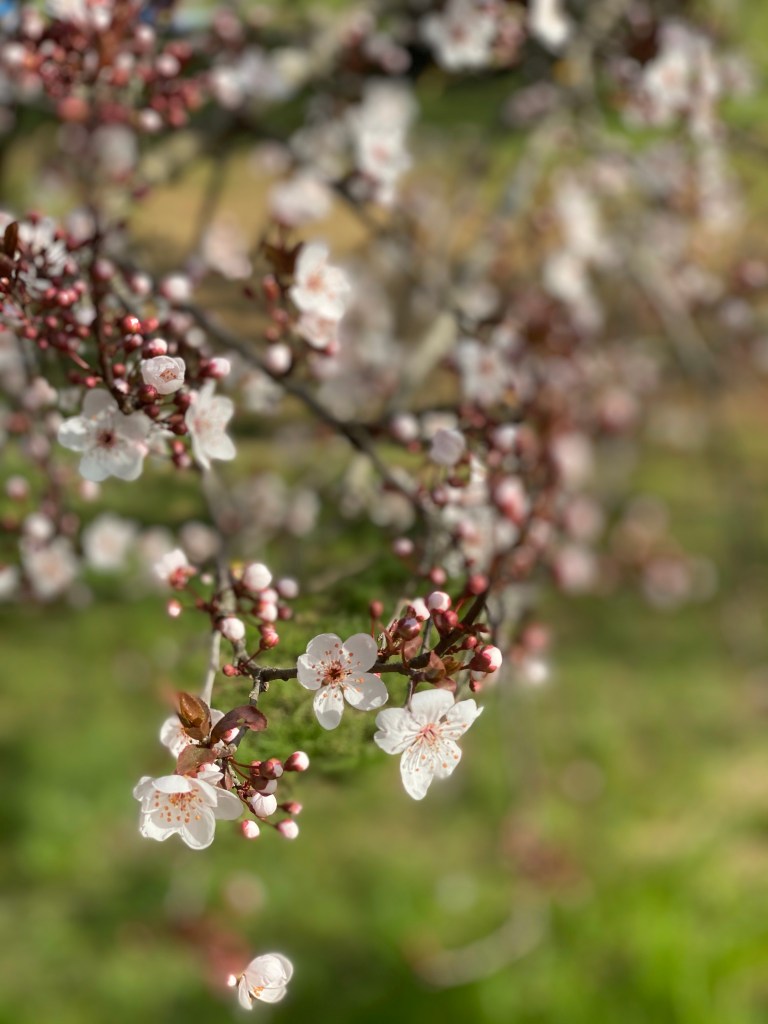
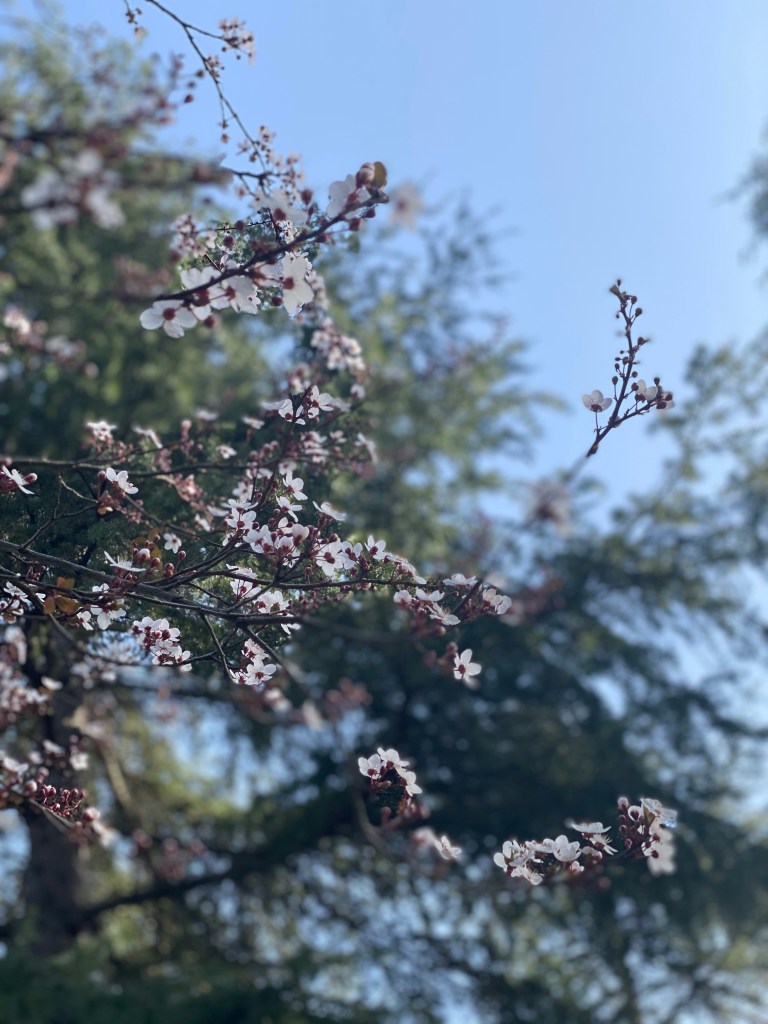
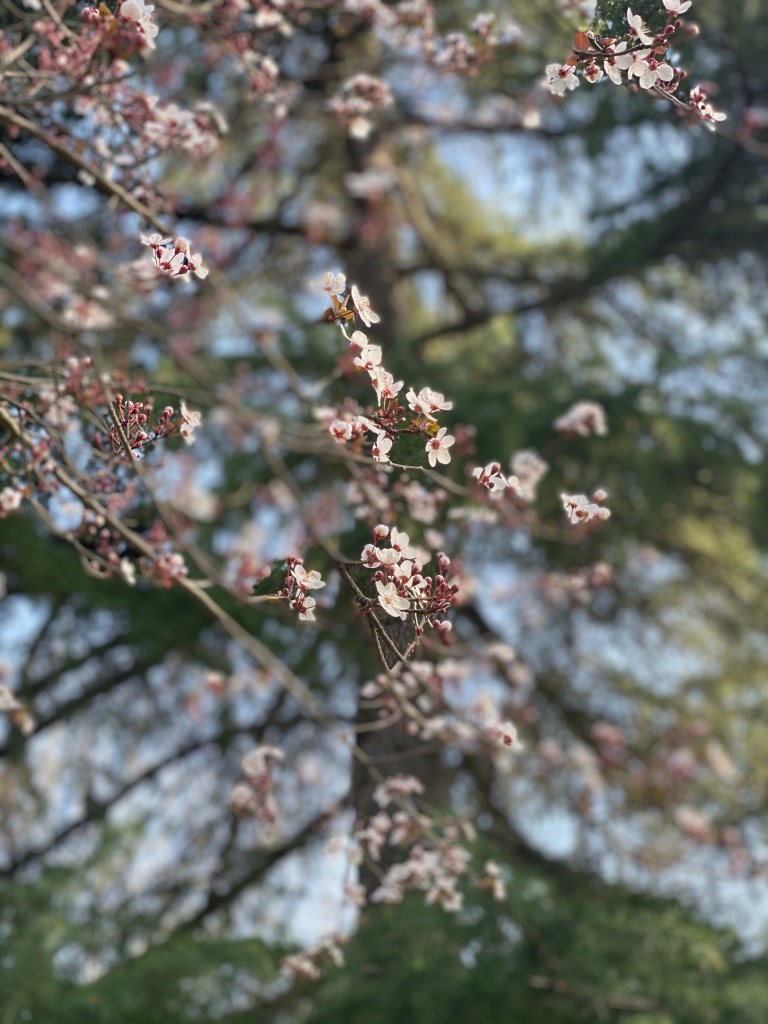
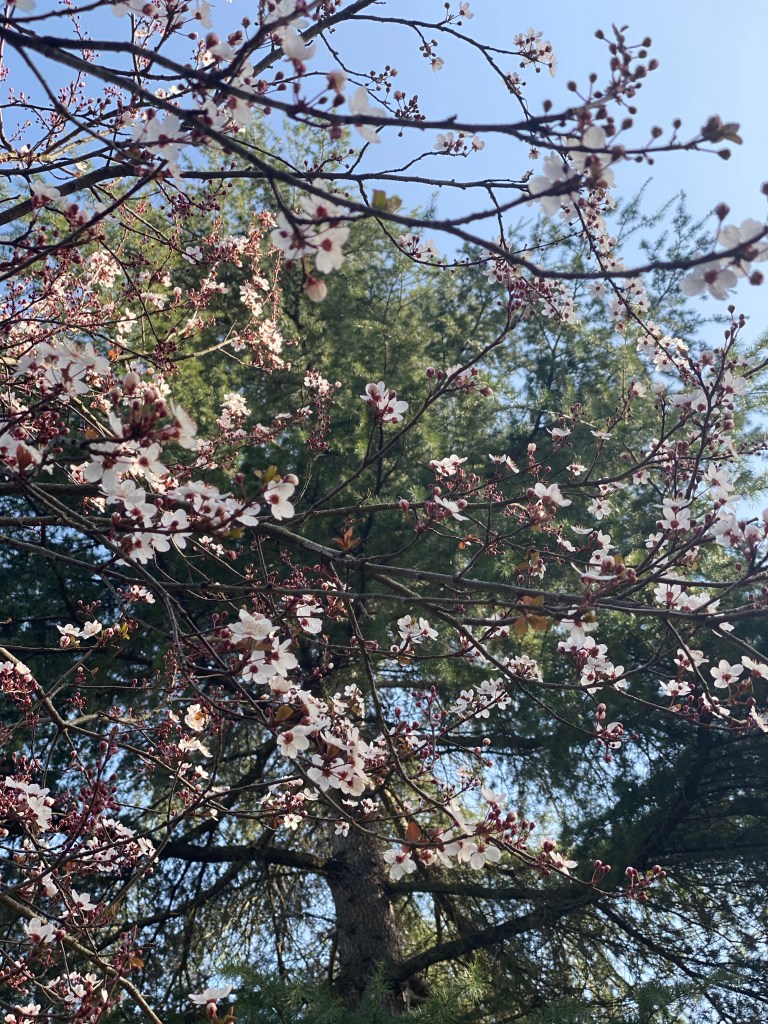
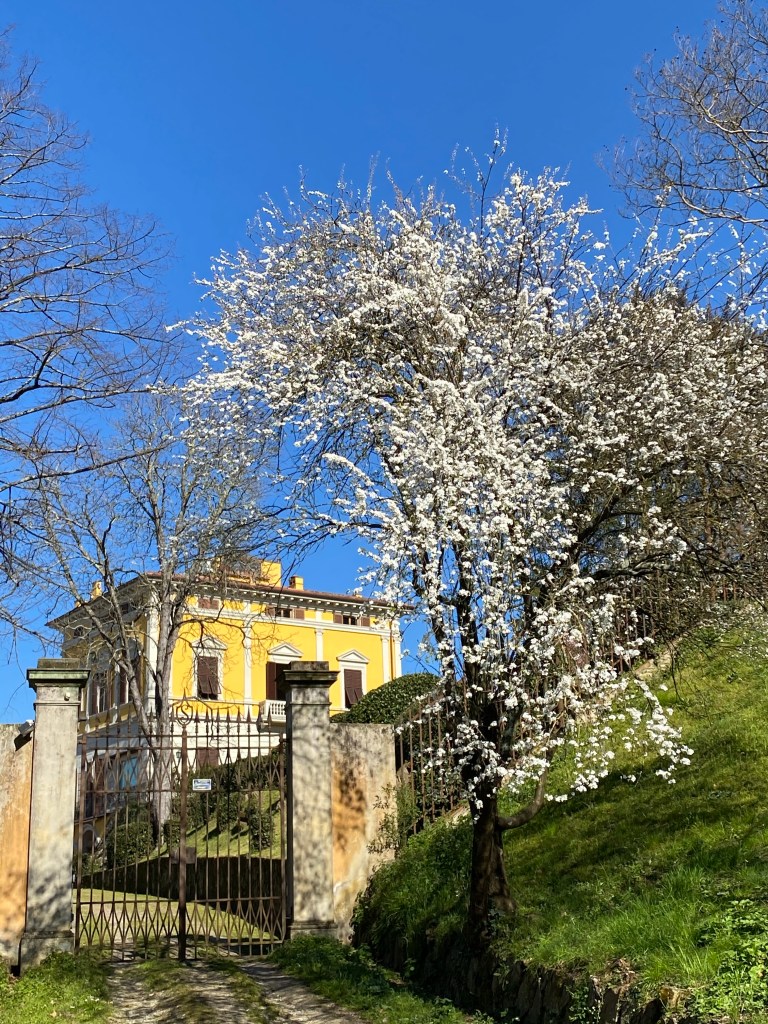
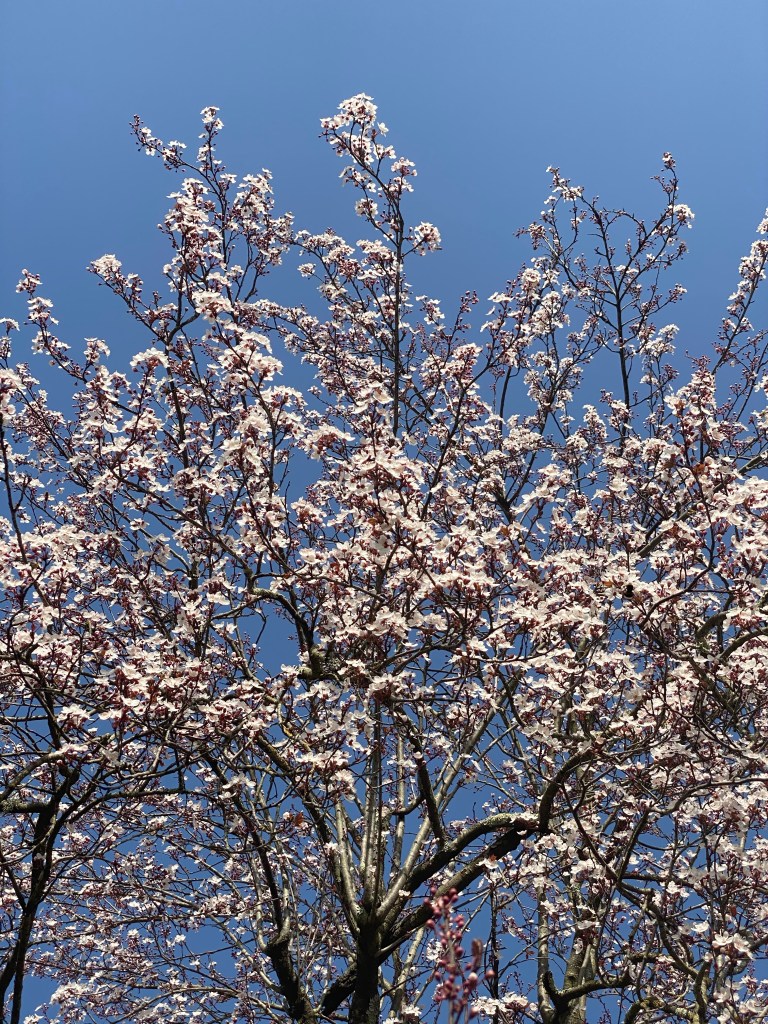
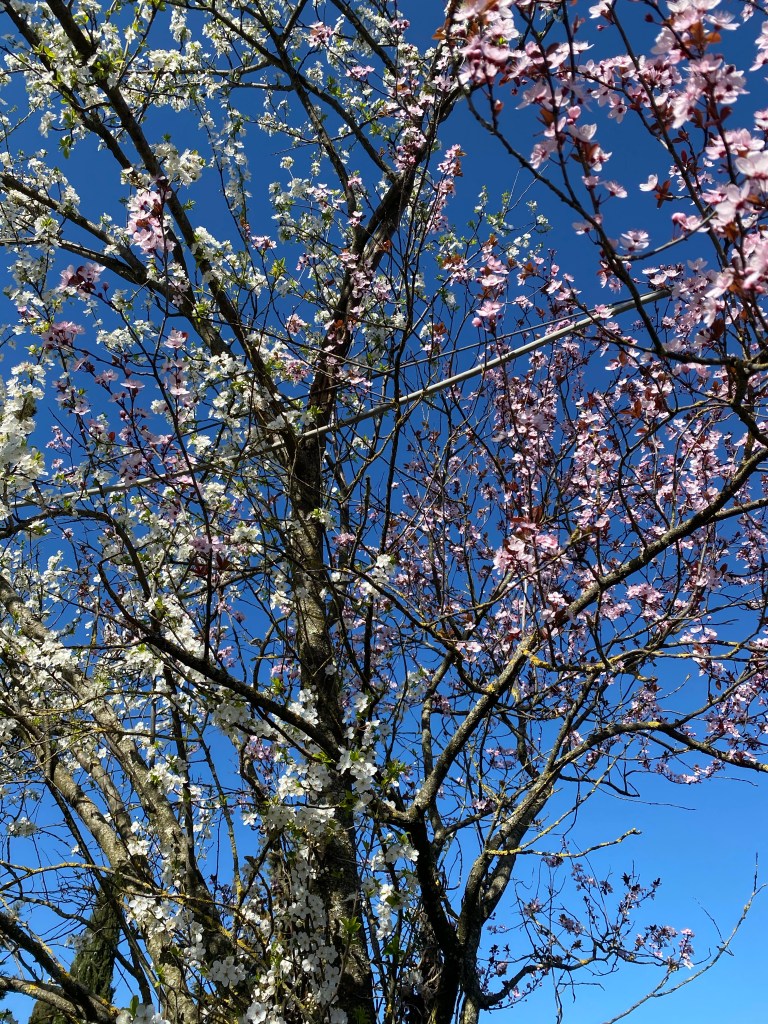
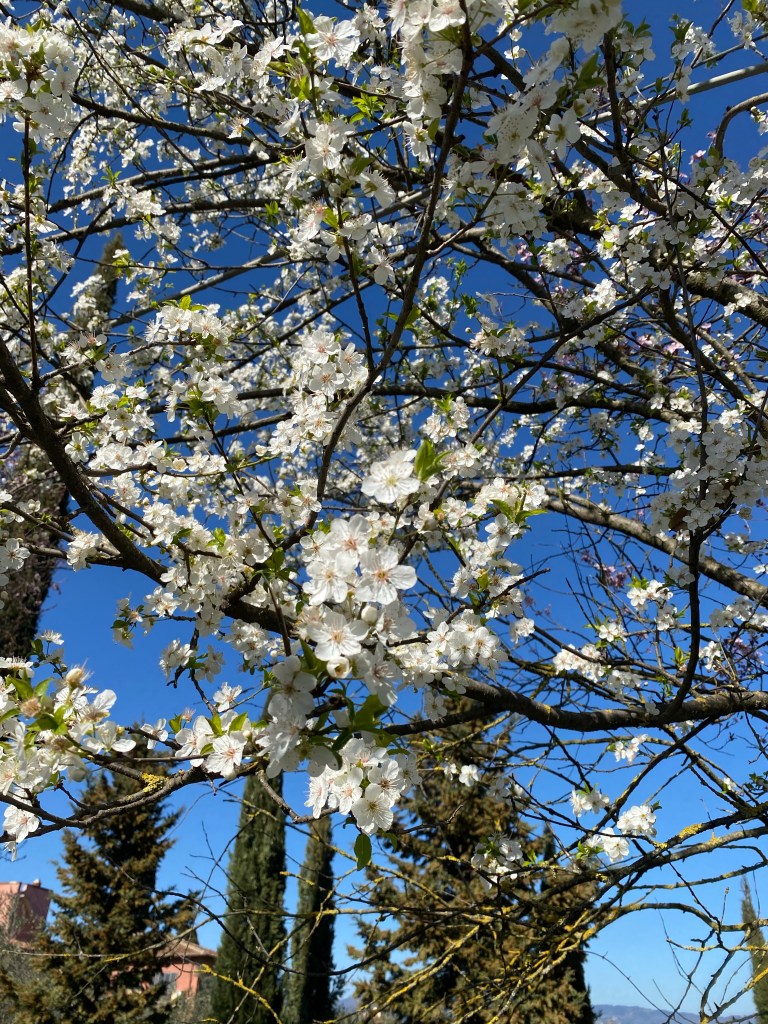
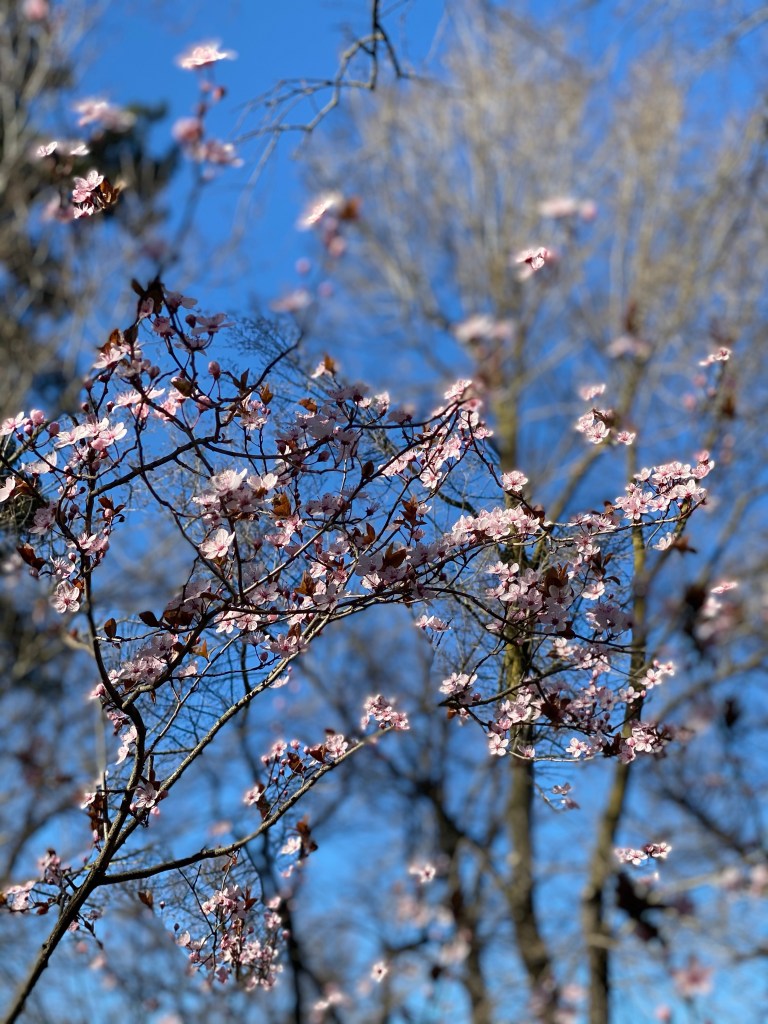
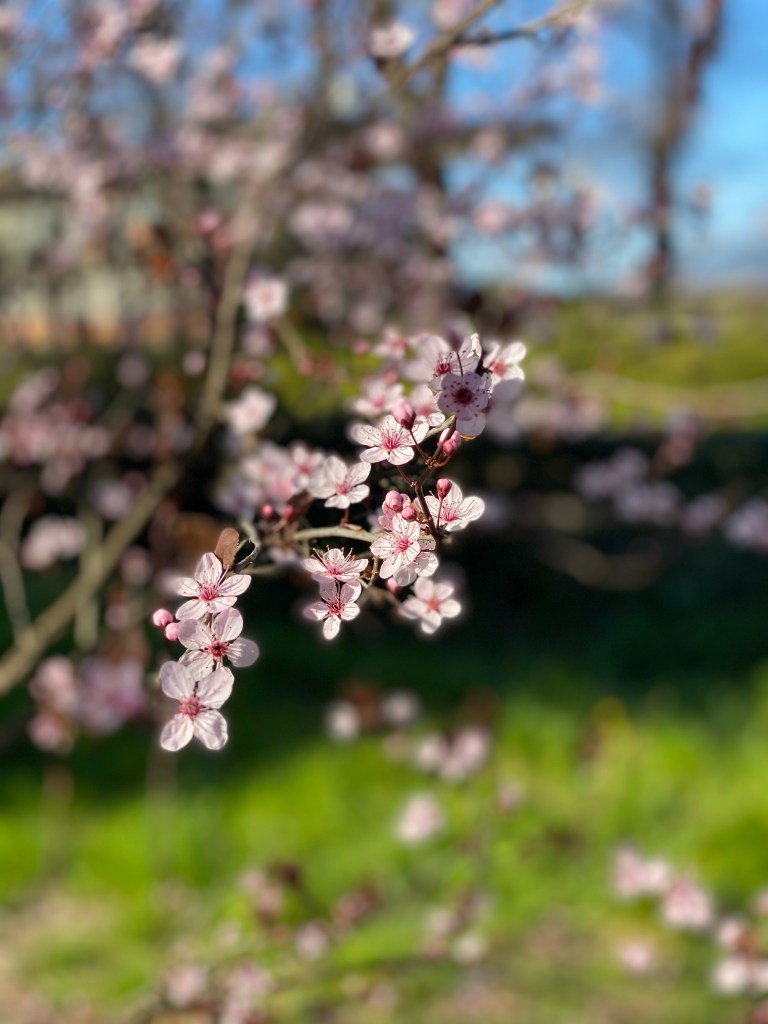
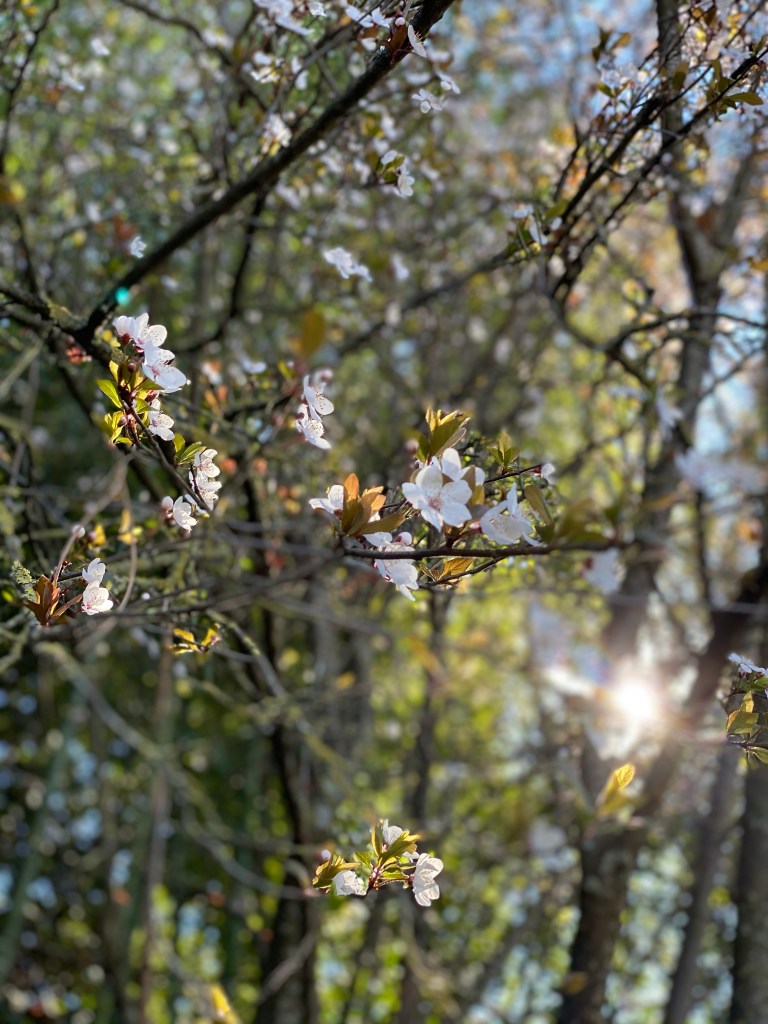
I’ve been all over the city in the past few days, east side, west side, south side…and I’ve spotted some lovely blooming plum trees here and there. Here are my best pictures of this delightful harbinger of la primavera!















You must be logged in to post a comment.