I sometimes feel as though I have run out of superlatives. I think I’ve used all of the big words that I know so many times in describing this miraculous land, that there’s nothing left.
And then there is Sirmione del Garda. I guess I’ll just start from scratch and use them all over again!

First, a map. Lake Garda, located in northern Italy (in the province of Brescia, in Lombardy) is the largest of the lakes in Italy and has a very peculiar, vertical shape.


And then, at the middle of the southern end of lake is a peninsula of land, also essentially vertical. At the north end of the peninsula is the charming village of Sirmione.

Sirmione is one of the most popular towns of all on the beautiful Lake Garda, with thousands of visitors flooding in each day to view the picturesque peninsula. Amazingly to me, it may not be the best known place to stay for a lake holiday in Italy, but with its castle and Roman ruins, not to mention its contemporary little village, it should be, because its got something for everyone.
We know that Sirmione has been settled since the Stone Age, with early finds showing that there probably was a small village of fishermen living in houses on stilts along the banks of Lake Garda.
Starting from the 1st C. BC, this area became a favorite resort for rich families coming from Verona, then the main Roman city in NE Italy. The poet Catullus praised the beauties of Sirmione and spoke of a villa he had there.
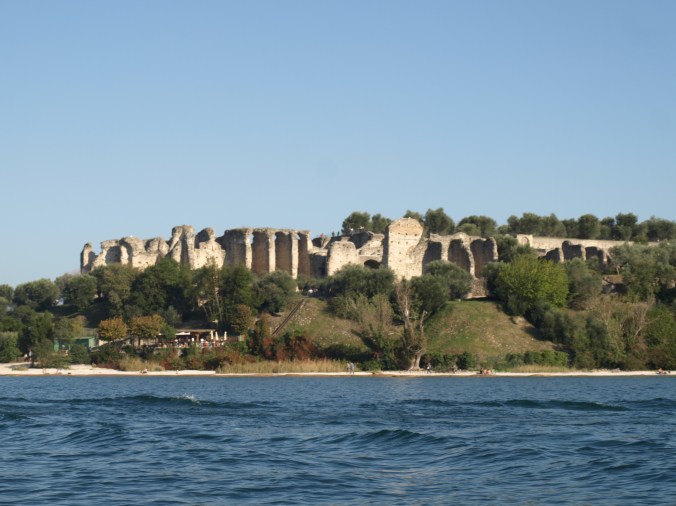
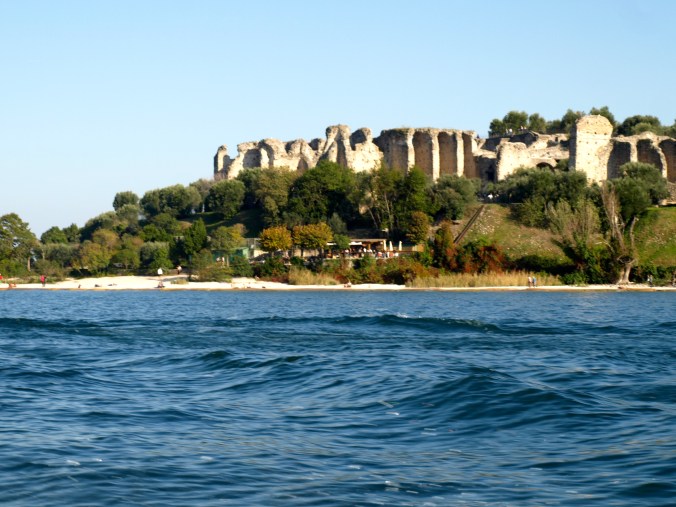
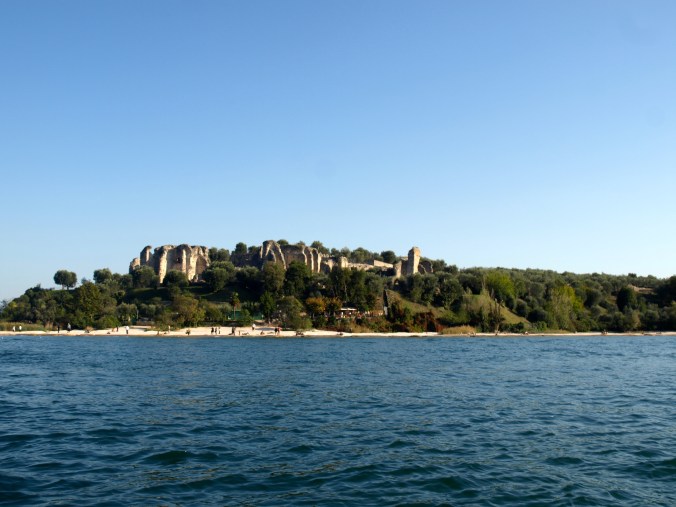
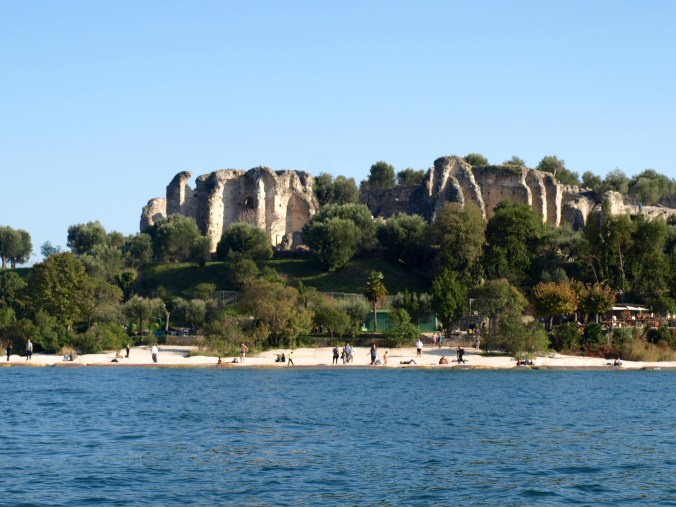
Rich Romans, for example, built holiday villas on the end of the peninsula, and one still exists: the so-called Grotte di Catullo. On the furthest point of the peninsula are these extant ruins of a patrician Roman villa. It was no doubt constructed for some rich family and includes a 3-story building, dating to c. 150 AD.
Although this extensive ruin goes by the popular name of the “Grotto of Catullus,” it is neither a grotto nor was Catullus still living (he died in 54 BC) when the villa was built. Today there’s a small museum at the site. The ruins are the most striking example of a Roman private edifice discovered in northern Italy, and had a rectangular plan and measured 167 x 105 m.
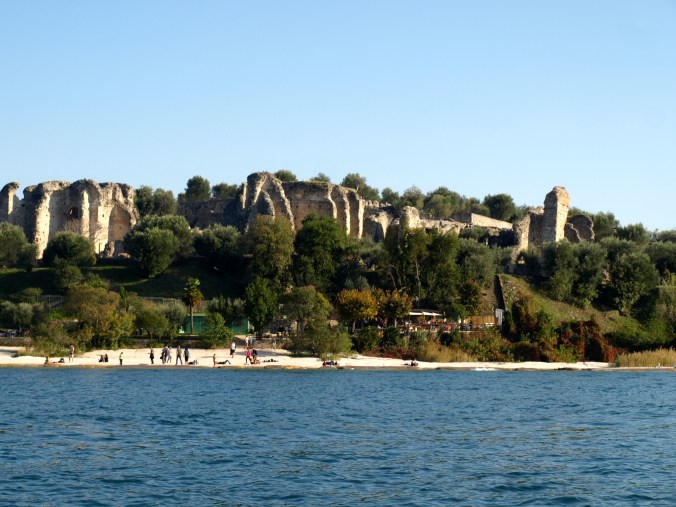
Moving forward in time, by around the year 1000, Sirmione was probably a free comune, but fell into the hands of the Scaliger by the early 13th century.
Since the town occupies such an important strategic point, the penisula was continually engulfed in the always turbulent (and sometimes hideous) history of northern Italy. It was invaded numerous times after the fall of the Roman Empire, was subject to the conflicts involved in the expansion of the Lombards, and was the site of the intricate struggles between the Guelphs and the Ghibellines in the Middle Ages).
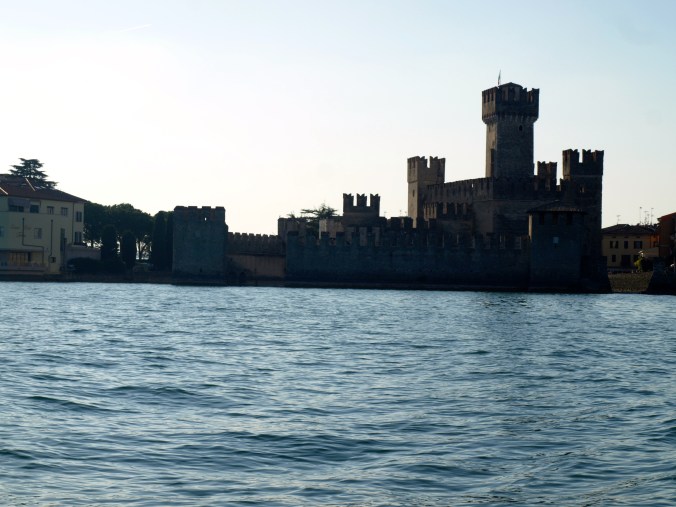
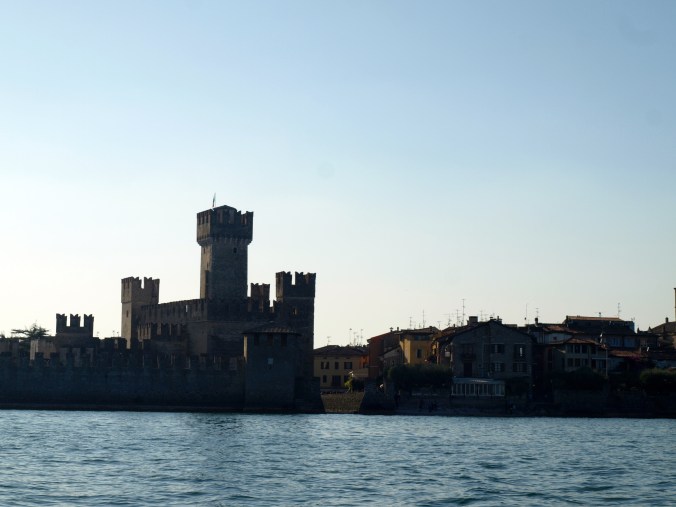
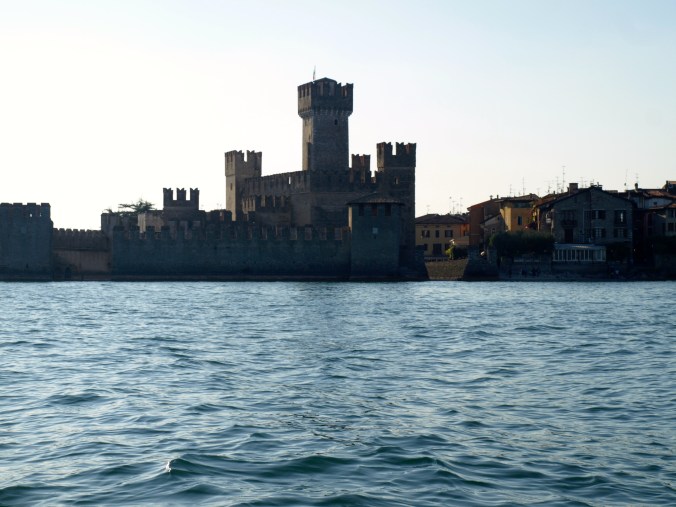
The last of those struggles left Sirmione with its major landmark: the Scaliger Castle (its proper name is the Rocca Scaligera.)
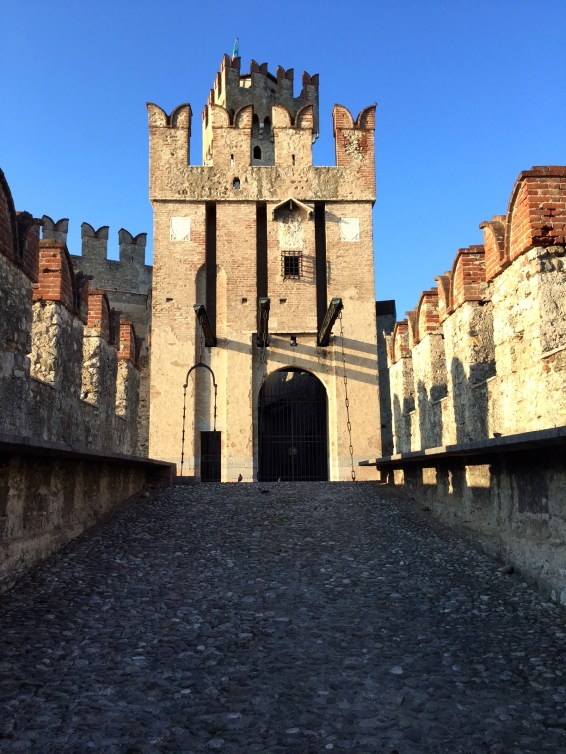
The Scaliger Castle is surrounded by water–as if in Venice– and was built in the late 12th century as part of the defensive network surrounding nearby Verona. By this time, Sirmione was home to the so-called heretical Cathars, who were to be driven out during the Guelph/Ghibelline struggle. In fact, 2,000 of the Cathars were burned at the stake in the Arena in Verona.
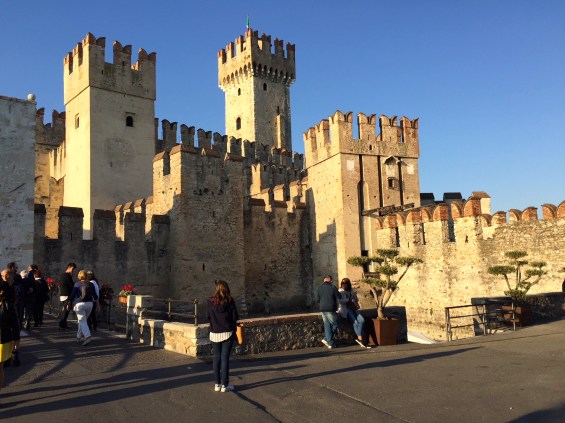
The Scaliger castle provides a rare example of medieval port fortification, and was used by the Scaliger fleet. The complex was started in 1277 by Mastino della Scala.
The walls on the inside were finished with plaster with graffiti, simulating blocks of stone.
The castle stands at a strategic place at the entrance to the peninsula. It is surrounded by a moat and it can only be entered by two drawbridges. The castle was established mainly as a protection against enemies, but also against the locals.
The main room houses a small museum with local finds from the Roman era and a few medieval artifacts.
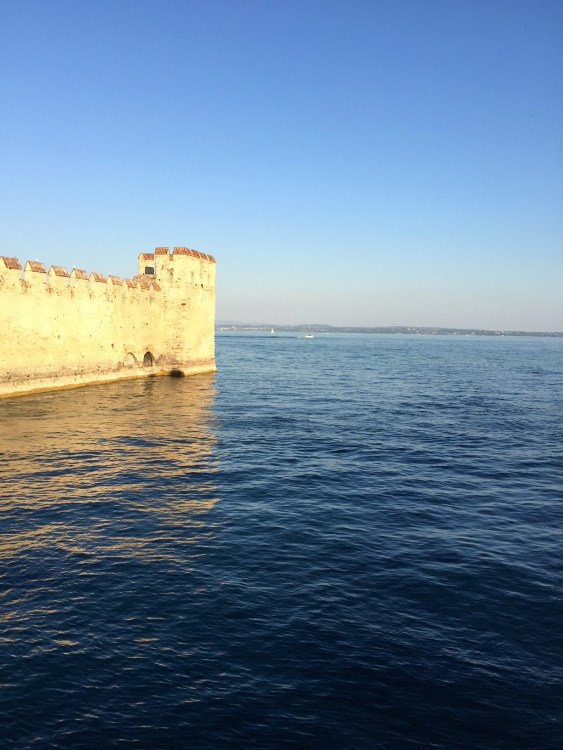
Below are shots of the extensive castle complex taken from the lake:
The castle was maintained and extended as the Veronese sought to safeguard the area from its Milanese rivals. Later Sirmione was under the control of the Venetian inland empire from 1405 until the end of the 18th century. It was acquired by the Habsburg Empire in 1797. It became a part of the Kingdom of Italy in 1860.
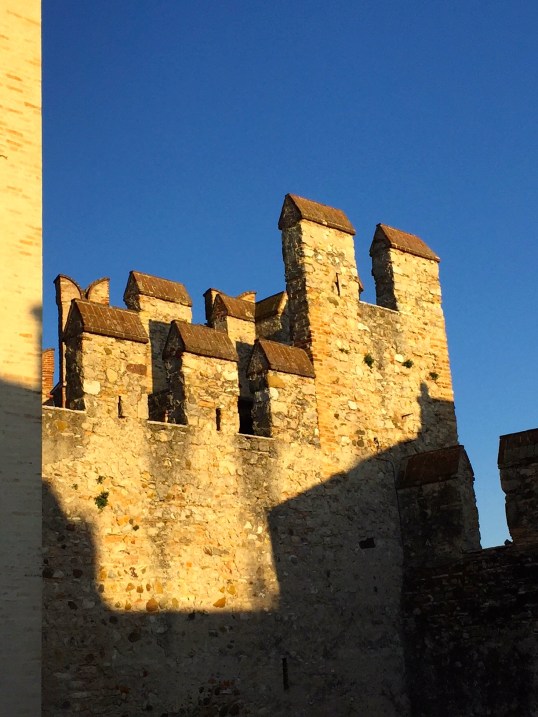
In the castle complex, we have the typical Ghibelline swallowtail merlons and the curtain-walls (with three corner towers) in pebbles alternating with two horizontal bands of brick courses.
Although its strategic position in the southern end of the lake, and the defensive qualities of the peninsula, meant that it was of military importance over the years. But the beauty of the setting also meant that it was – and still is – a popular place for recreational destination. After the fall of the Venetian Republic, Sirmione was more sedate and its fortunate citizens were able to concentrate their focus on the fruit orchards, olive groves, and lake fisheries.
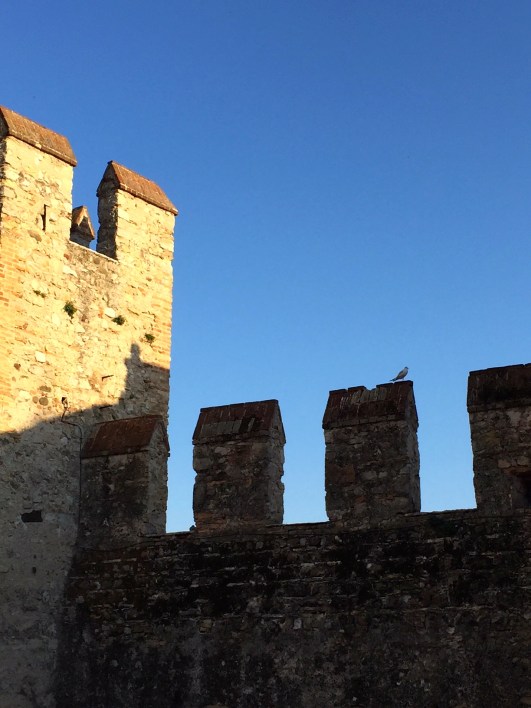
Here are just a few pictures of the pleasures of the amazingly picturesque village itself:
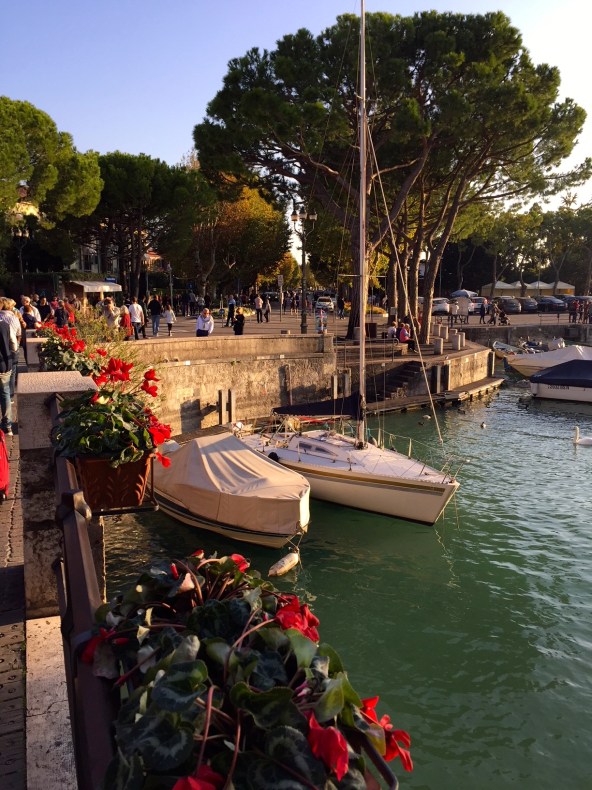


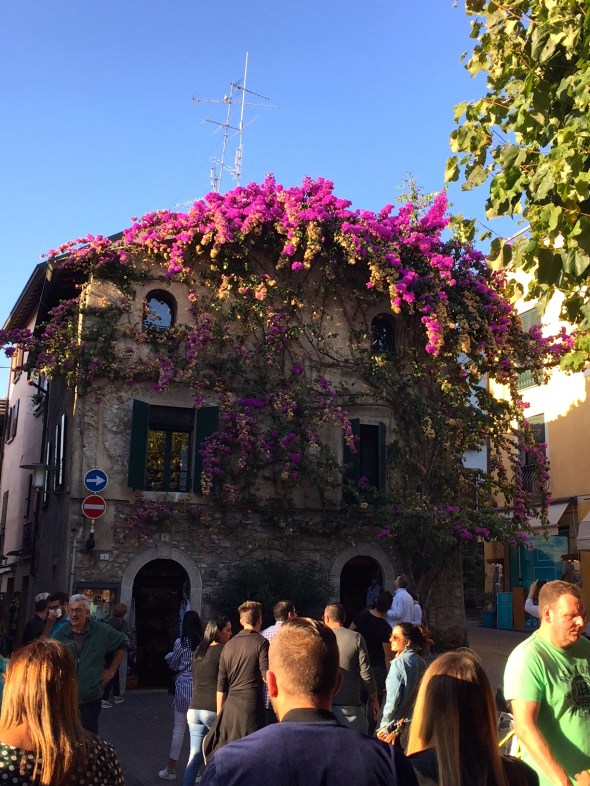
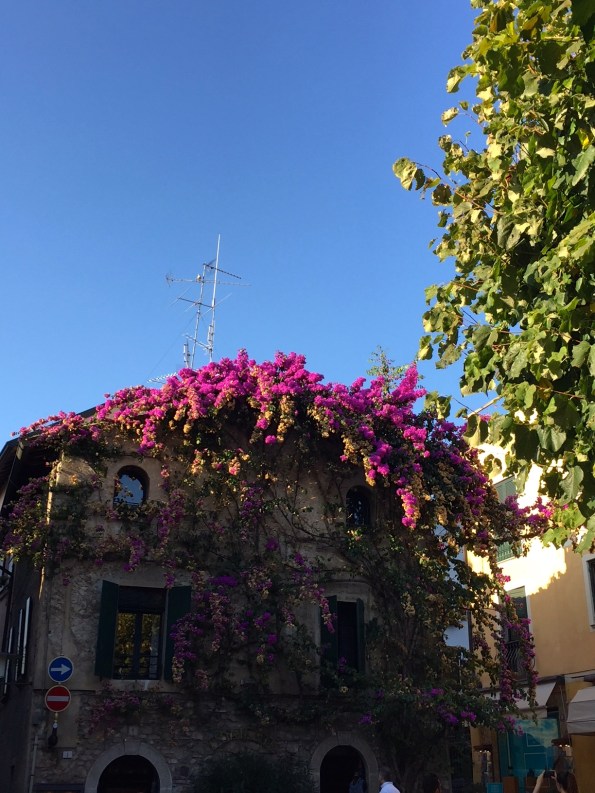
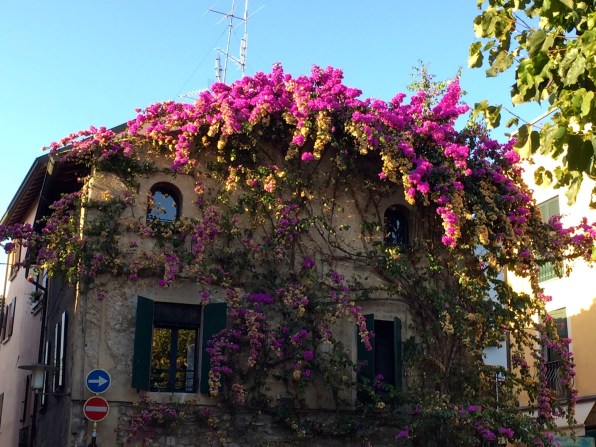
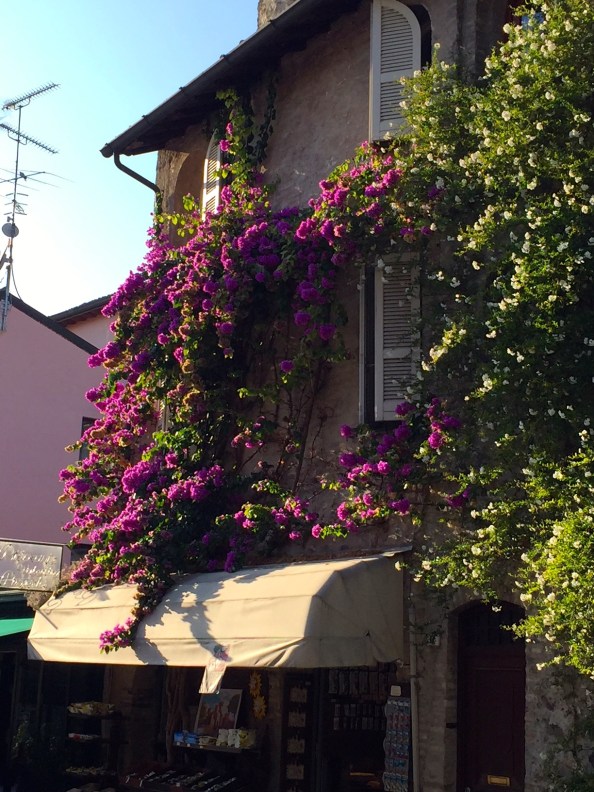
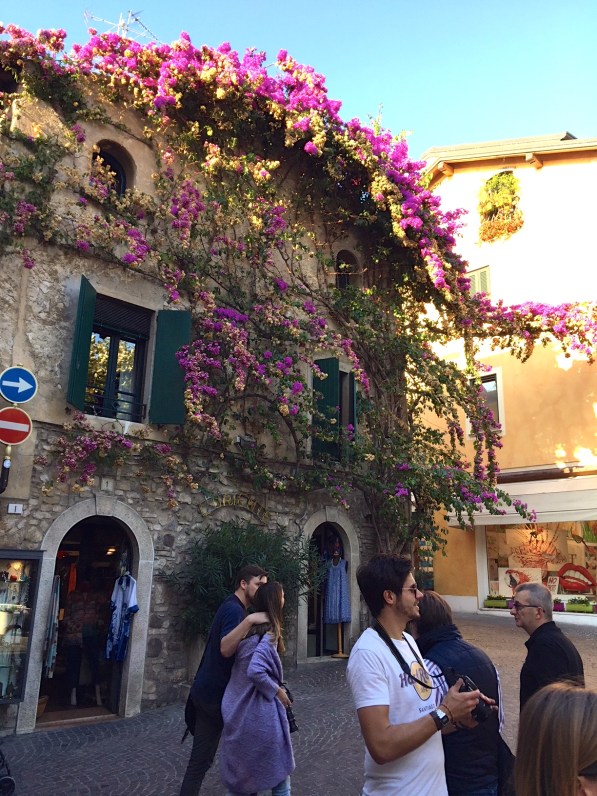
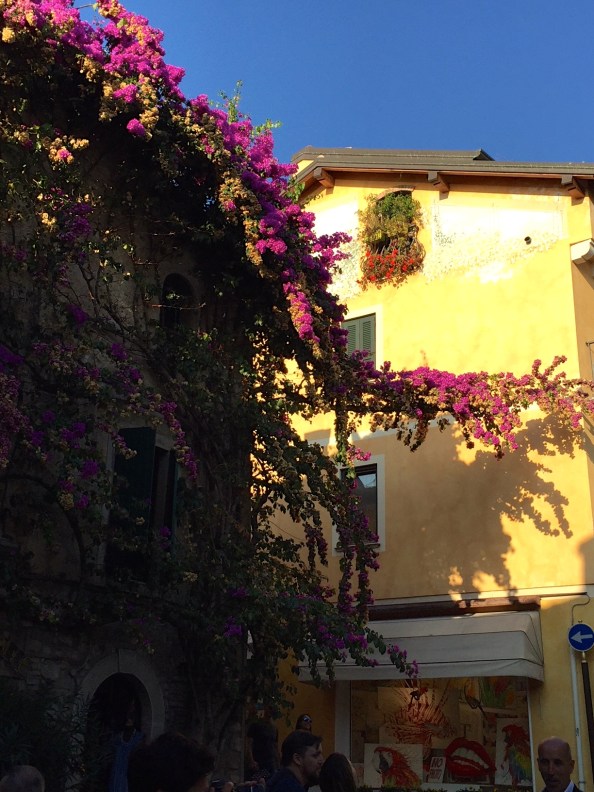
As if Sirmione wasn’t already blessed enough with an amazing location, it also has thermal baths. The town is famous for these thermal springs. The Terme di Catullo uses the water that bubbles out of Lake Garda on the northeast shoreline area.
In the late 19th-century, a diver managed to insert a metal pipe into a rock near the underwater hot-springs, and this allowed the diversion of the naturally heated water to the northern end of the peninsula. At that time, it was also discovered that the Roman Period inhabitants had already discovered and diverted (also through metal pipes) the thermal springs, and in fact, the so-called Grotto of Catullus may have been a bathhouse, not a villa. At any rate, the thermal water, which is mineral rich and naturally heated to 70 degrees Centigrade when it leaves the underwater rock, is now used for health treatments in two of the thermal baths and spas on the peninsula.
If you look hard, you can see the bubbles coming up through the water. I was on a boat and we were hovering over the underwater hot springs:

And finally for today, the Villa owned by Marie Callas:


What are you waiting for? Go to Sirmione!








 get back, lauretta!
You must be logged in to post a comment.