Autogrill shopping trips
It is well documented that I love spending time (and money!) in Italian grocery stores. No doubt about it.
But, you should see the Autogrills! Auto grills are the amazing coffee bars, cafeterias, and, of course, gas pumps, that are situated along the autostrade in Italy. I never, ever miss the opportunity to wander through one of these amazing places, not ever!
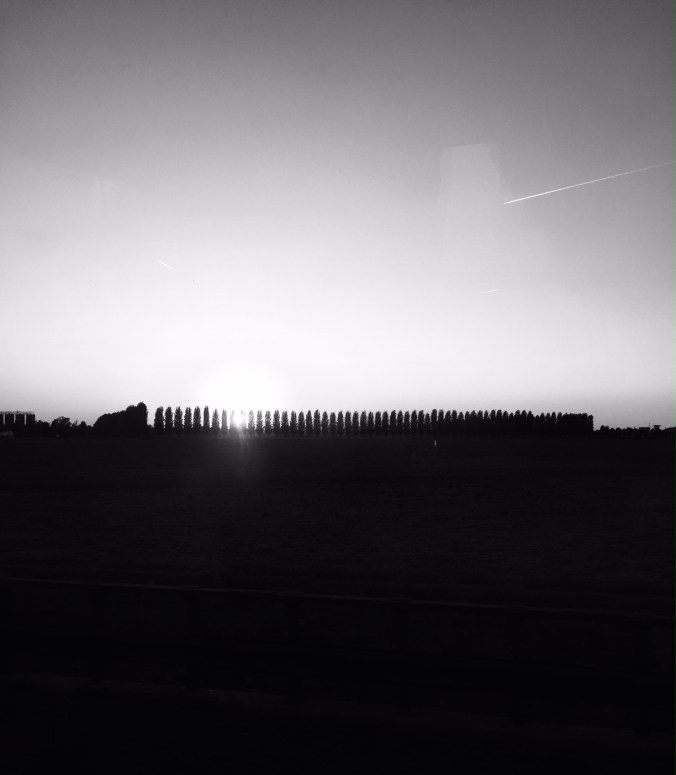
Last night I was returning to Florence from a trip to the Verona area, and stopped at an autogrill that was almost unbelievable (in its greatness.) It was late and I was tired and so, unfortunately, I didn’t take as many pictures as I normally would have.
But, I did snap a couple of pics. The following one shows the “honey section” of the autogrill. The autogrill has a honey section!! A big one!!


You can click on the “watch on Facebook” words below to see the vanilla gelato machine, in the autogrill!, at work. It was one of only 8 flavors available, of freshly made ice cream late on a Sunday evening. What the hey? Too cool for school.
I can’t wait to get back to another autogrill!
Now that’s a necklace!
As seen in a shop window in Florence this week. It would take a lot of fortitude to wear such a cool necklace.


Borgo de’ Greci, Firenze, and the Peruzzi family
Piazza della Repubblica
I walk by or through the Piazza della Repubblica in Florence at least once a day, sometimes many more times.

On a particularly fine day, such as today about noon when I took this picture, (I mean, look at that blue sky! and this photo wasn’t photoshopped, I promise!) the inscription above the impressive arch on the south end of the piazza stands out and demands to be noticed.

Translated, it tells us: The ancient center of the city / restored from age-old squalor / to new life.
The context for this bold announcement is that both the arch itself and the inscriptions speak to the 19th century re-ordering of this remarkable and very hallowed city space.
The square looks like this today:

But, originally, this key area of Florence was created by the Romans when the town was a mere Roman camp. We think it then looked something like this:

By the medieval period, the area looked something like this (Piazza del Mercato Vecchio, by Giovanni Stradono (Palazzo Vecchio, Sala di Gualdrada):

As you can see, the former Roman forum area was by now densely inhabited. The city had grown and urban crowding led to tenements with ever rising floors, including the tower houses for which the city was once famous (case di torri in Italian).
What was once a Roman forum was now a commercial center of the city, serving as a lively meeting place and home to the market. Like other Italian towns, Florence developed certain city spaces intended for precise functions; the Piazza del Duomo, for example, was where religious affairs took place and another key area in the city, known then as the Piazza del Comune, (now known as the Piazza della Signoria), was for political and civic affairs.
We know what the area looked like thanks to contemporary prints, paintings, and drawings owned by the Museo di Firenze com’ era. Later painters, such as Telemaco Signorini, depicted with melancholy the old part of town that soon disappeared.

Now, we fast forward to the 19th century.
It was decided that the square needed to be completely refigured, and that required the complete destruction of the city fabric, including warrens of zig-zagging old streets and buildings, both proletarian and aristocratic. Lost forever were some medieval towers, churches, the corporate seats of the city’s guilds, a few palaces of noble families, as well as craftsmen’s shops and residences. On the positive side, the physical place and the idea of the ghetto were also demolished.
The politicians who envisioned what became the Piazza della Repubblica, sold their radical ideas as a part of the new city planning required when Florence became the capital of the new Italy from 1865 to 1871. They determined that this unsanitary old section of the city was best completely removed. In fact, ironically, the particularly intense building activity in this Piazza took place between 1885 and 1895, well after the capital had been moved to Rome.
But it was in this period, known as the Risanamento in the 19th-century terminology (or, the sventramento or ruining, by detractors), that this large part of the city center was demolished and rebuilt into the piazza as it exists today.

Unfortunately, a plentiful number of works of art and architectural fragments were sold through the antiquarian market. Only some of them could be saved for the Museo nazionale di San Marco. Other fragments allowed the founding of the likes of the Museo Bardini and the Museo Horne. Vasari’s Loggia del Pesce, which had been a part of the market area for 400 years, was fortunately saved. It was dismantled and reassembled in the Piazza dei Ciompi. It is still there today, out of context of course, but at least it exists.
In September of 1890, with many of the future palazzoni building sites still empty, the Piazza della Repubblica was formally inaugurated. The palazzi that rose in the new square followed the eclectic fashion of the time and were planned by well-known architects including Vincenzo Micheli, Luigi Buonamici, Giuseppe Boccini.
Following the transformation, the square became a kind of recreational center for the town; it was built up with the refined palaces, luxury hotels, department stores and elegant cafes, including the Caffe’ delle Giubbe Rosse where famous scholars and artists met and debated (argued).
So, now we return to the arch, which was meant to be a triumphal arch, designed by Micheli and inspired by the Roman monuments in Rome as well as by the most courtly Florentine Renaissance architecture. The decorative elements of the arch veer far from Roman or Renaissance models. The proclamation on the arch, with which I started this post, is said to have been taken from a literary source, possibly by Isidoro del Lungo.
It’s a girl!
Here’s how you announce the birth of a child in Italy. Pink for a girl, ovviamente, and blue for a boy.


Translation of the handwritten notice: “Children know things that the major part of humanity has forgotten.” A lovely sentiment, indeed.

Benvenuta, Giulia! Welcome to the world. Lucky you, to be born in Florence!
All babies are welcomed into Italy because the country has one of the lowest birthrates in the world!
Easily entertained.
(From the sublime [Room with a View, yesterday’s post] to the ridiculous [frozen spinach}:)
I’ve said it before and I’ll say it again: I am endlessly fascinated by Italian grocery stores!
Look at this cool product in the frozen section.

It’s for those cooking moments when you want to add some healthy greens to the pot of minestrone you are whipping up, etc. I can think of endless uses for these frozen cubes of spinach! Add to smoothies, stir into sauces,…the options are many!

Absolutely ingenious!
A Room with a View, still ravishing after all these years.


| For many years, Ivory worked extensively with Indian-born film producer Ismail Merchant, his domestic as well as professional partner, and with screenwriter Ruth Prawer Jhabvala. All three were principals in Merchant Ivory Productions whose films won six Academy Awards. |
|---|
The ravishing film, of course, was based upon the book of the same title by E.M. Forster. The book is a lovely read, but honestly, I think Where Angels Fear to Tread by the same author and on the same period is far better.


Kindred spirits
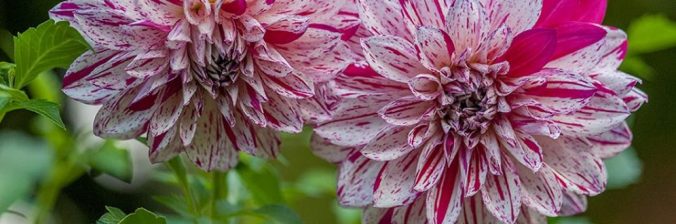
I can’t get the lovely lyrics of “Mi Chiamano Mimi” from Puccini’s La Boheme out of my mind since I saw the opera last weekend. It feels like Mimi and I share the love of beautiful things:
“Yes, they call me Mimi, but my true name is Lucia.
I love all things that have gentle sweet smells, that speak of love, of spring,
of dreams and fanciful things,
Those things that have poetic names, do you understand me?”
Italy’s immense appeal
I often think Italy is too popular for her own good. When I pass through the piazza del Duomo in the middle of the day, on a nice day I can barely move through from the sheer numbers of tourists. The trash trucks and street washers (a type of vehicle) travel up and down the streets all of time, picking up after the people.
On the flip side, Italy reacts in general to the immense tourist population by constantly opening new sites to appeal to them. As someone who has visited Italy a lot over the past 30 years, I am constantly amazed when I learn new archaeological sites, for example, are newly available to be visited. As below.
 get back, lauretta!
You must be logged in to post a comment.