Not me, but my friend Shiketsu Kou. I met this young Chinese man in language school in Florence, Italy. We immediately hit it off and became good friends. We’ve maintained our now long-distance friendship for over 6 years.
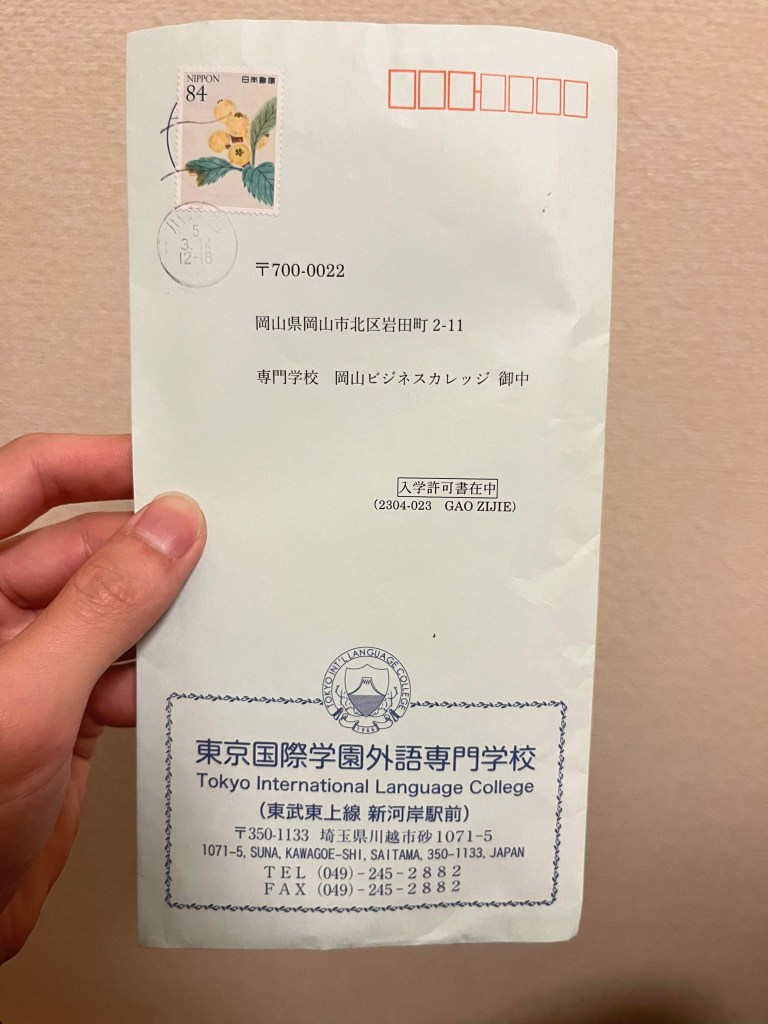
Rudy, which is his nickname, has been studying in Okayama Station, Japan for some time now and has been wanting to move to Tokyo and continue his studies. He was recently accepted in a school near Tokyo and just moved by train, while shipping his belongings in boxes through the postal system. Here is the envelope in which his acceptance was sent to him. He and I both think it is handsome, with a lovely stamp!
I’m eagerly follow his progress. It’s a big move to go near Tokyo, but Rudy is an ambitious young man who is absorbing Japanese language like a sponge.
I thought you might be interested in following his life as well, as he starts a new chapter near Tokyo. The following pictures show his move from Okayama to near Tokyo and setting up in his new student apartment.
Rudy found a new companion on the train ride! Ha ha.
The train ride.
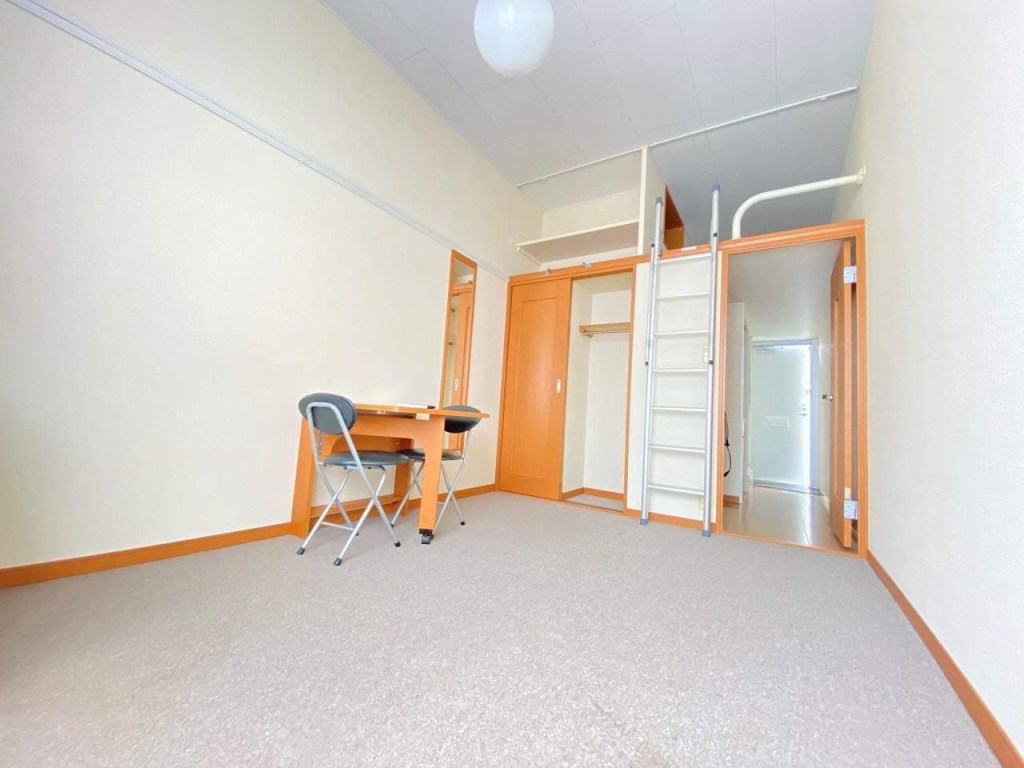
First look at his apartment. A Japanese friend in Okayama helped Rudy find this place and he rented it sight unseen. He is very happy with it.
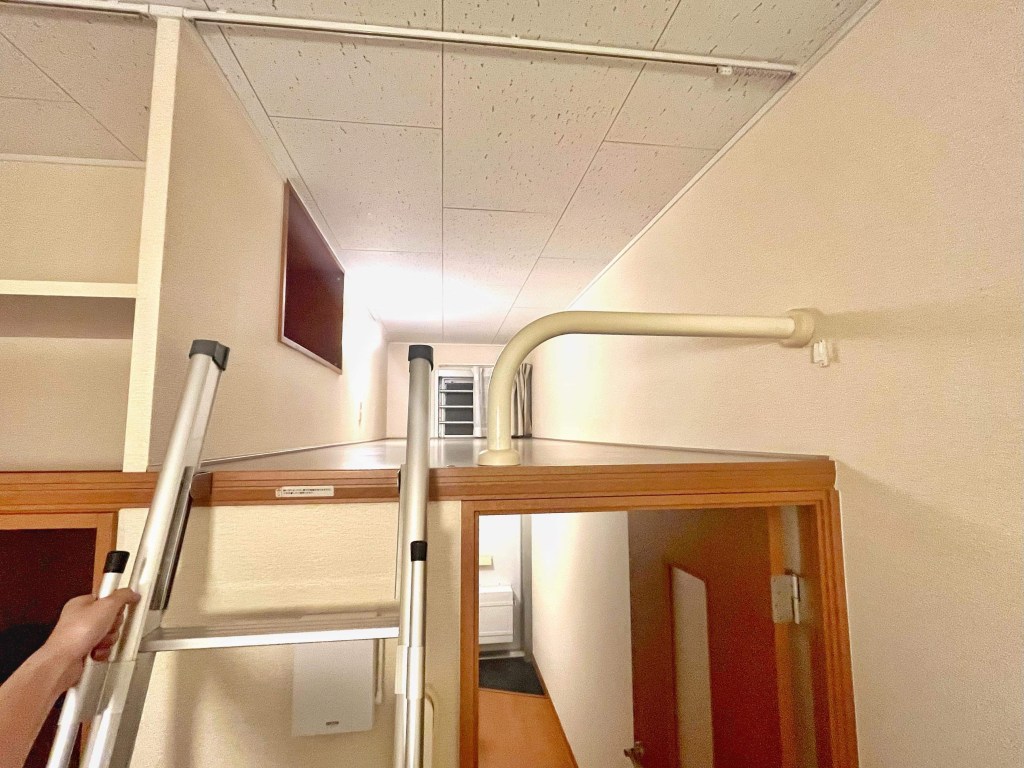
His sleeping quarters are in the attic space over the hallway. Below is a detail.
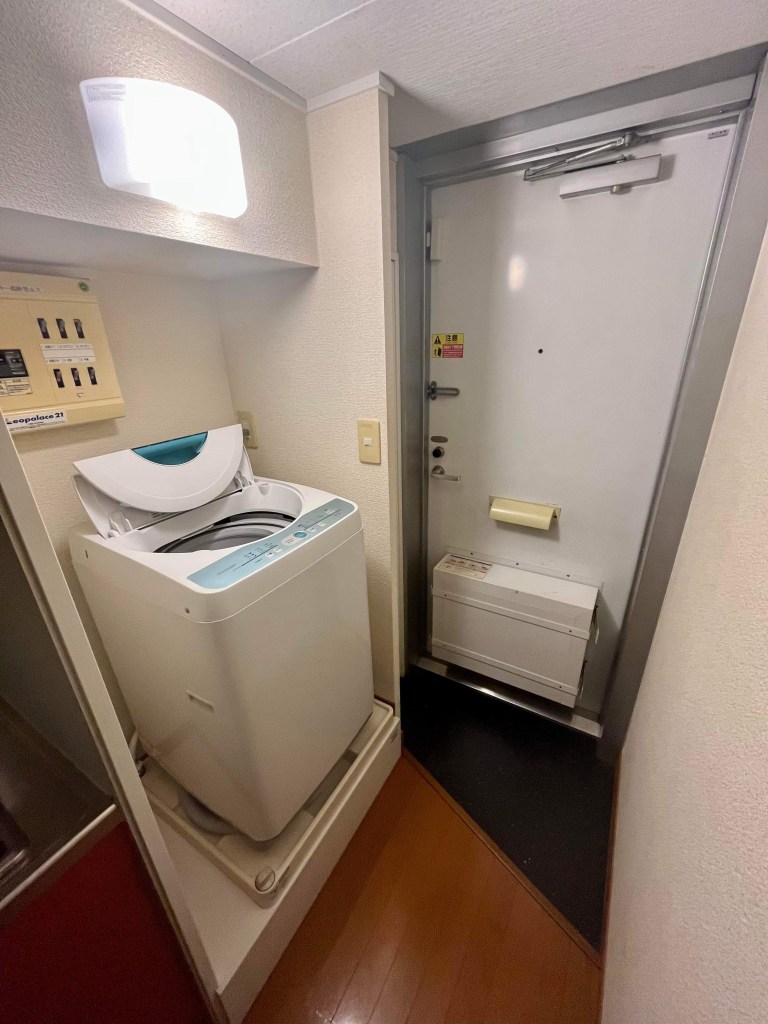
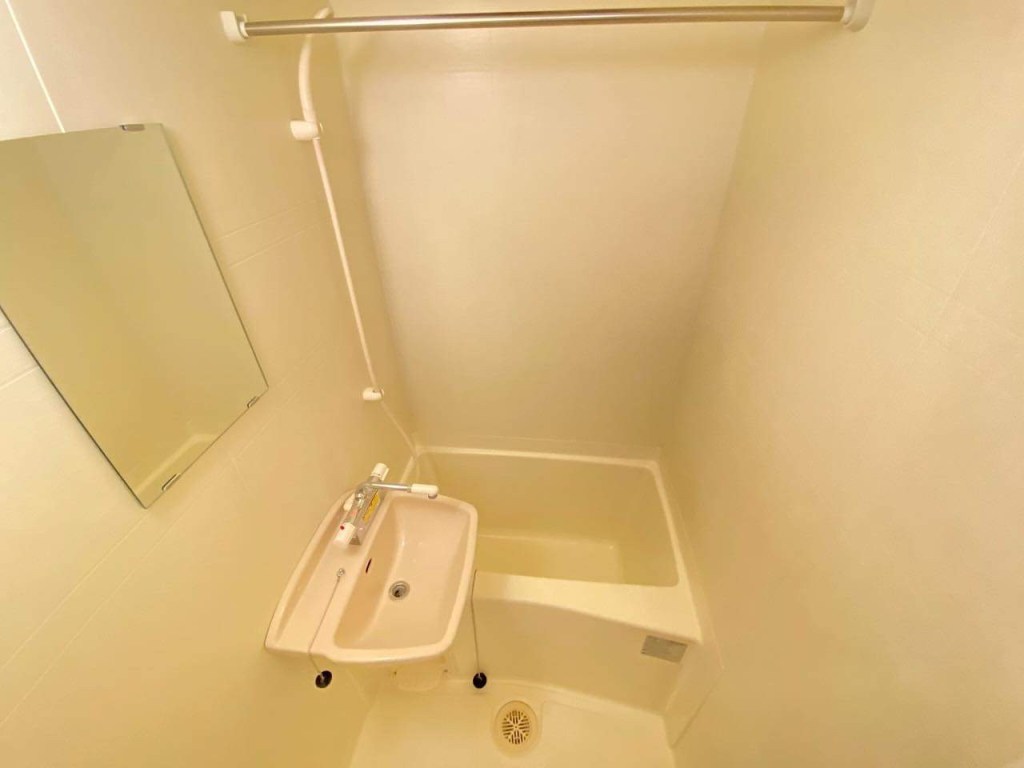
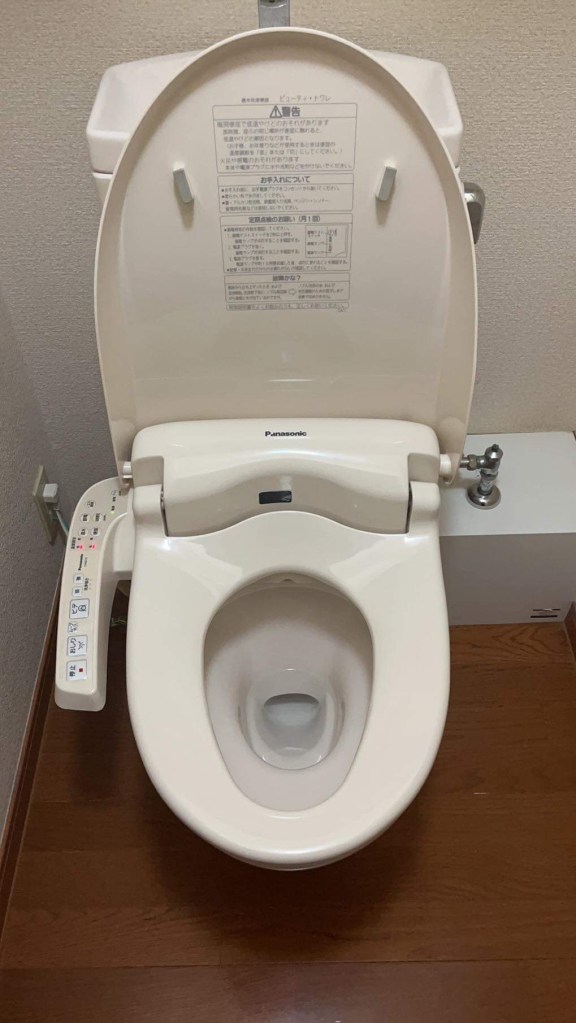
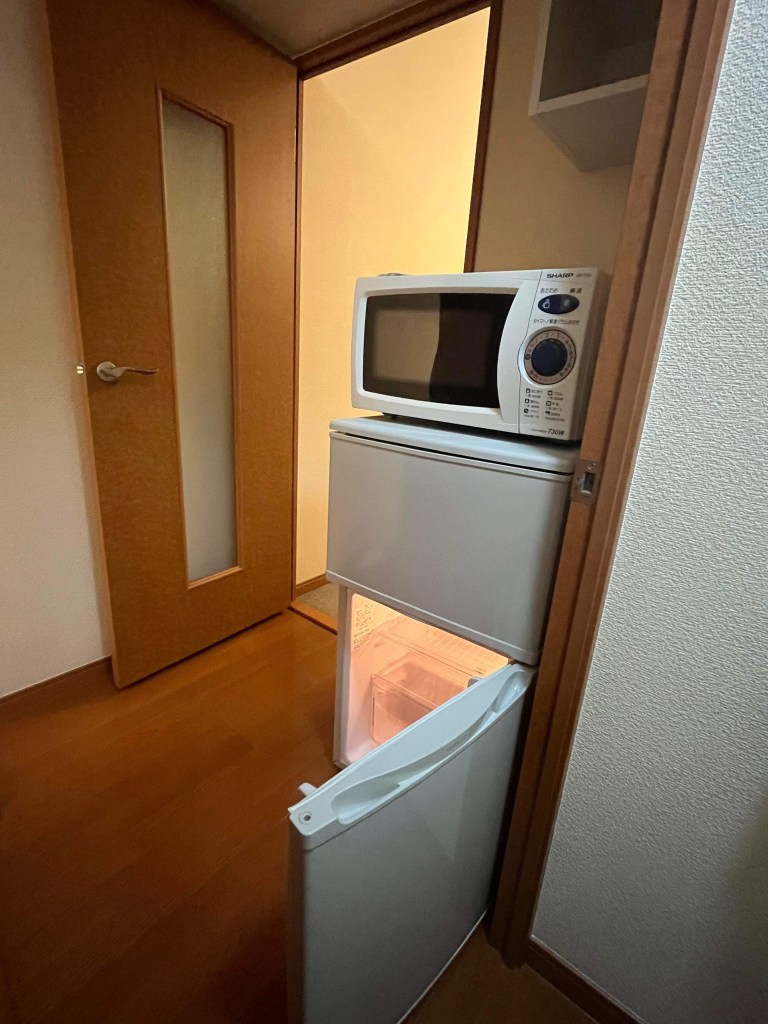
His new place has all the amenities as 20 something man needs for the student/bachelor life. He was particularly pleased with his high functioning toilet!
His building and a place to park a future bike.
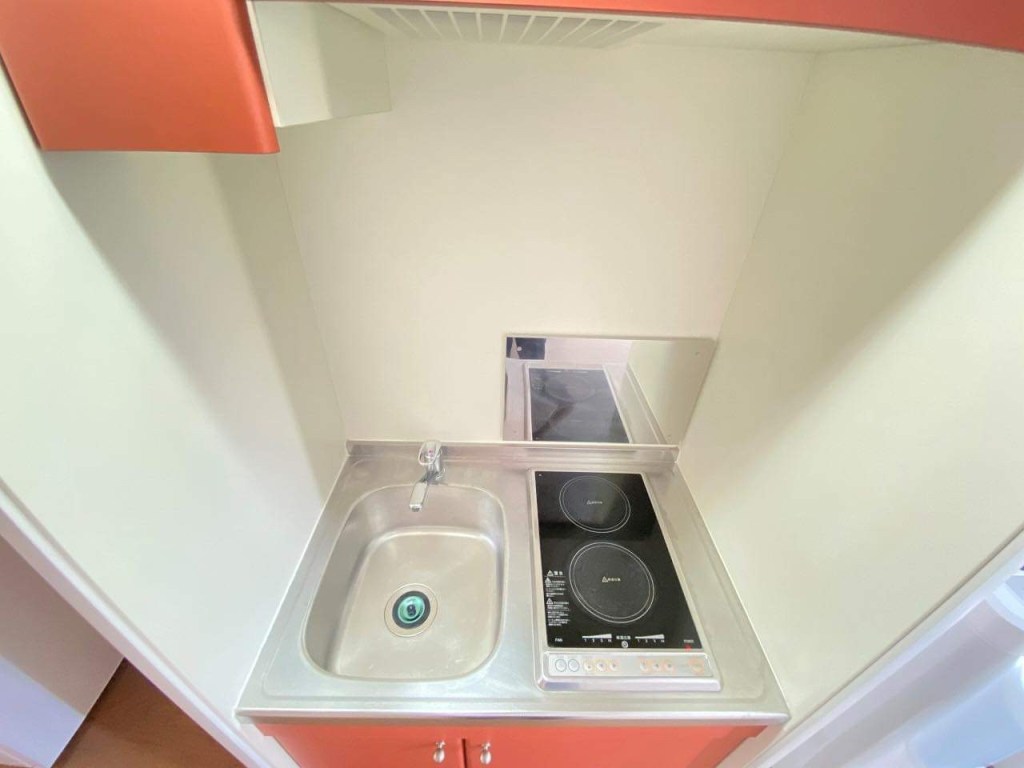
Below, his kitchen area.
Below, the Japanese postal system delivered his boxes right on schedule, on the first day of his life here. He arrived late the night before and camped out until his things arrived.
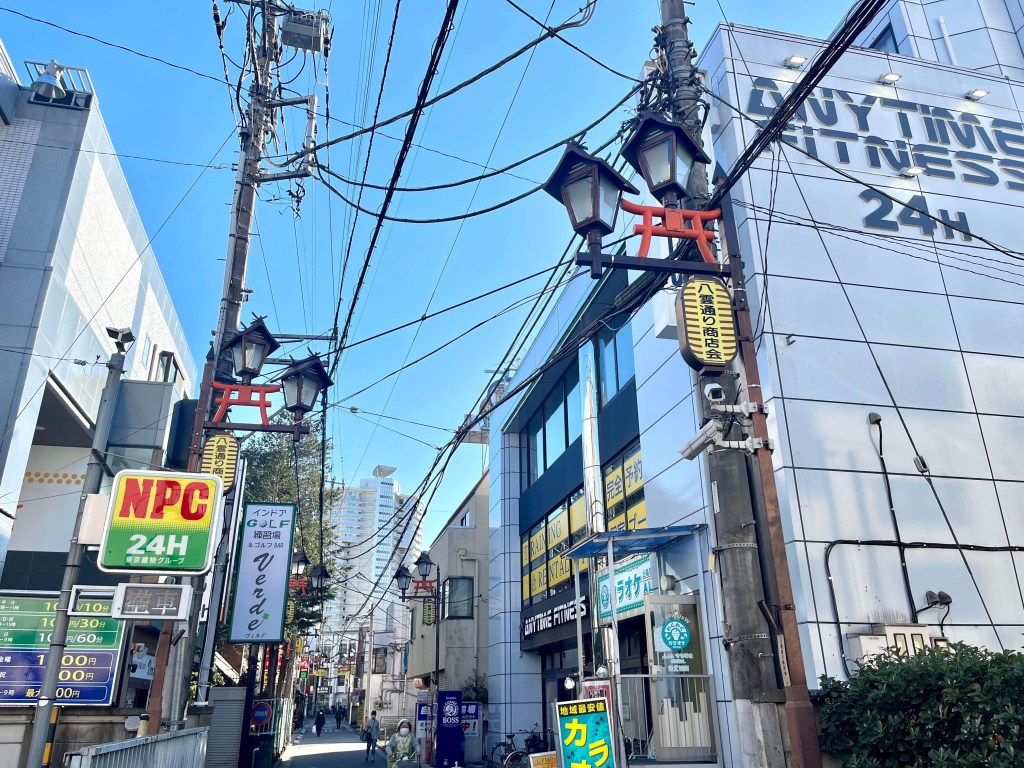
After his boxes arrived, Rudy set out to find supplies, restaurants, and begin to explore his neighborhood.
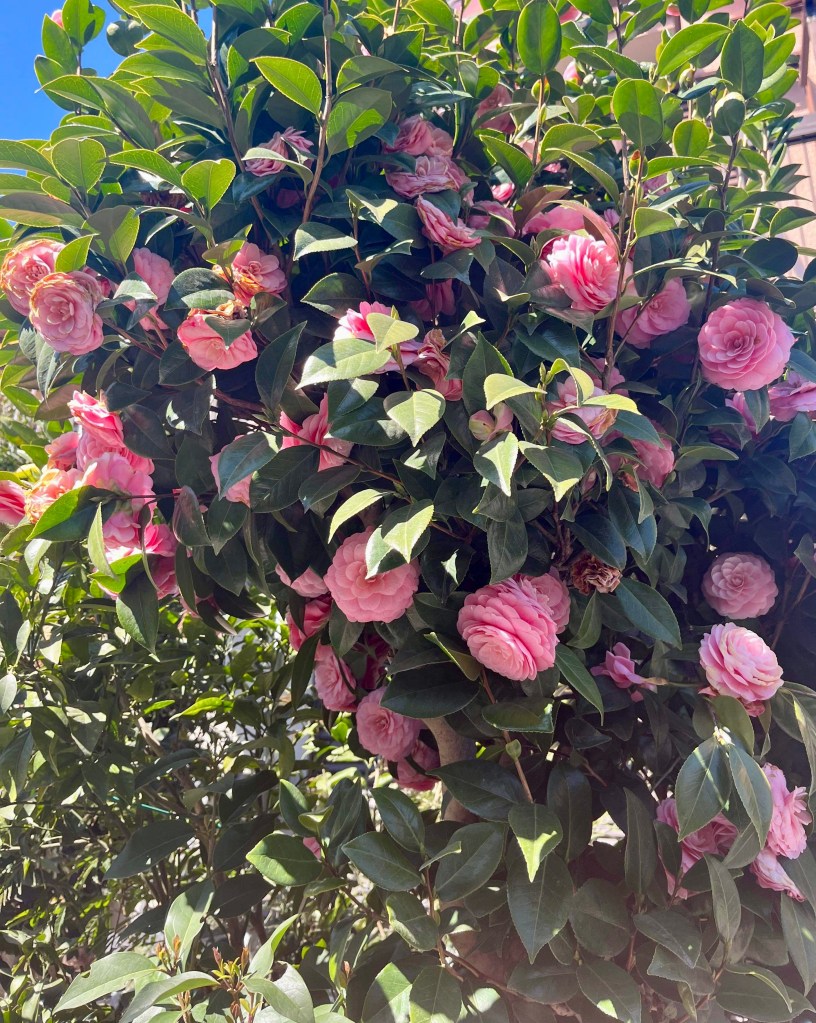
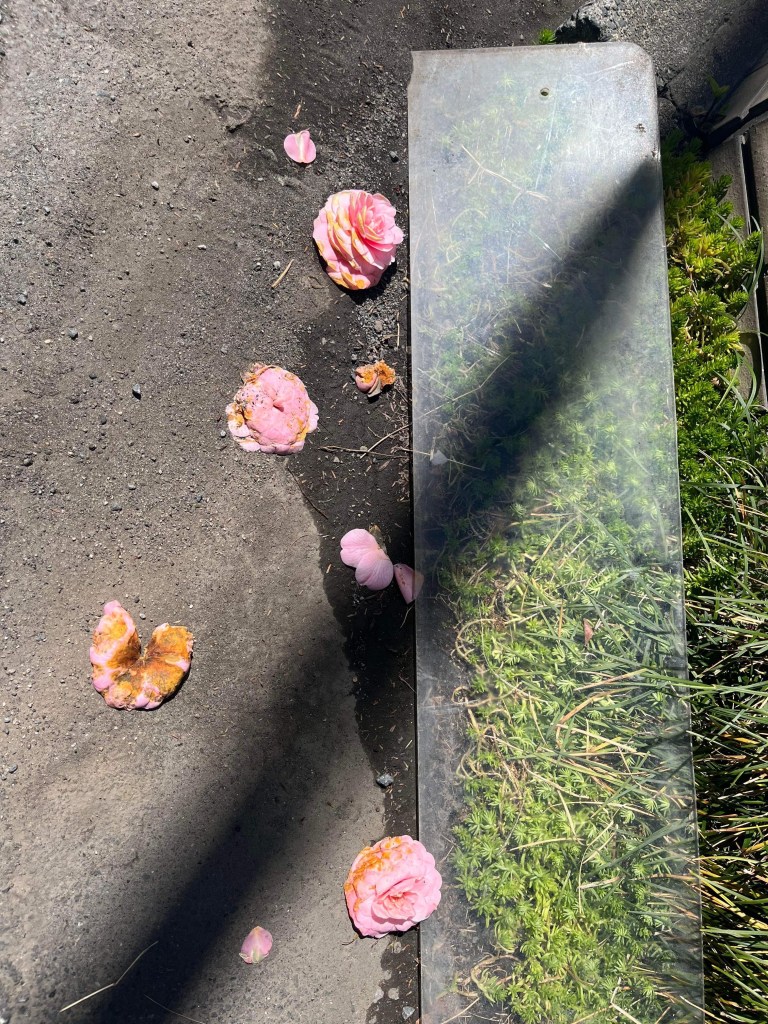
Probably explaining why Rudy and I initially hit it off and became fast friends: he notices the beauty around him. He happens to know how much I love camellia plants!
Actually, I decided the magnolia tree needs its own large spot!
Finding delicious food!
I’ll be posting more as Rudy settles in. I hope to visit him in time for next year’s cherry blossom season. Good luck, Rudy! I’m rooting for you!
not counting gelato, of course, is New York style cheesecake ! Cheesecake made with Philadelphia cream cheese Not ricotta. Philadelphia cream cheese.
.
It is on the menu at all the eating establishments: ristorante, osterie, trattorie, and Philadelphia cream cheese is readily available in all food stores.
I would imagine this is how it felt in the U.K. when tea took over.
that you would have to try really, really hard…to eat a bad meal in Italy.
To wit: At my wit’s end just before New Year’s Eve, I knew I had to make a run to my local supermercato to buy something for my pantry, just in case. I whipped a few items down from the shelves, up from their cases, in the market and wound up with some fresh fruit, some fresh veg, and these items. Store brand. I’ve found I can trust the Coop store brand in everything.
So, sure enough, on the first day of the new year, I wasn’t feeling so hot. Not from too much partying (although I can’t say the same for the rest of my building: somebody thought the interior courtyard would make the perfect backdrop of a long and loud fireworks display followed by a game of drunken soccer) but from the cold and flu that I was lucky enough to meet up with just before Christmas.
So I heated up some of the creme of asparagus soup, pictured above, and for a brief moment I thought I must have reached Nirvana. This lovely soup got me through several mealtimes in excellent shape (except for the coughing and sneezing and fever part).
And today I was actually feeling hungry, which has to be a good sign on the road to recovery, no? I opened this gorgeous package of fresh tagliatelle pasta made with eggs:
And when it was cooked to absolute perfection in a matter of minutes, I doused it in this creamy truffle sauce made with butter, cream, shaved tartufo mushrooms (which comes ready made in the regular grocery store, not that special here in Italia, I swear to you!), added a little of the pasta cooking water (about 1/4 cup), fresh black pepper and shaved parmigiana Reginana:
And then I meant to take a picture of the pasta with the sauce, but first I had to taste it to see if it tasted as good as it smelled and then, poof, before I knew what had happened, I had inhaled the entire bowl full of some of the best pasta I have ever eaten in my life and that is saying something because I am a pasta eater from way back. Only not always with truffles. But from now on, with truffles because my oh my say hello to heaven in a bowl!
Whew, just writing that and reliving it in the telling, is exhausting to me. And p.s., it turns out that these devilish little store-bought Coop brand cookies are a mighty fine accompaniement to a slice of gelato or even a nice cup of joe or tea.
Odeon Cinema, near Palazzo Strozzi in the Piazza Strozzi
Gucci Museum, Piazza della Signoria
Are you ready to get down to business? OK, pens and notebooks at the ready, let’s begin! Cominciamo!
After a beautiful, quiet Christmas Day, which brought together (virtually and actually) all of the people and things I love, today a new friend and I had a nice lunch at the restaurant inside Feltrinelli Bookstore on the Piazza della Repubblica. Certain parts of Florence are so contemporary in design that it is almost breathtaking to someone who has been coming here for over 30 years. C’est moi.
The modern little bistro inside Feltrinelli’s is called RED, which stands for Read, Eat, Dream–in English, alas–I am beginning to fear that Italian itself will be outmoded in cosmopolitan Firenze in my lifetime!
But it is holiday time and let’s not discuss the perils of the americanization da bella Firenze. Give it a rest, people!
I’ll retrace my steps today and round out the lecture with pictures and a map.
We started at the Piazza della Repubblica, which is a mighty square within the city’s fabric. You can find it here just to the left of center, 1/2 way between top and bottom:
The square looks like this from above:
Feltrinelli and RED are inside the beautiful loggia which runs across the south side of the Piazza della Repubblica. In the picture below you can see the ground-floor loggia running out both sides from the center arch.
The bookstore is located inside the loggia.
And RED is located inside the bookstore.
Are you with me?
You got it?
Good!
Okay then, let’s look inside!
Very sleek and cool, no?
RED is a chic little bistro with a small menu of great dishes. I went all American and had a hamburger served with carmelized onions and freshly home-made potatoes chips. It was great!
Our next stop was the Odeon theater near Palazzo Strozzi in Piazza Strozzi.
I wish all movie theaters could be as pretty and elegant as the Odeon! I mean, look at the interior!!
We sat in the gold velveteen covered comfortable chairs in the orchestra section. It wouldn’t have mattered what movie we saw, as it was the experience of the theater and the city we were after. But, as it happens, we saw a good film about Ireland (Jimmy’s Hall).
The theater experience in this fine Italian cinema includes a coffee bar where you can get a great cafe or cappucino, and beer or wine, certain liquors, and apperitivi, as well as snacks. The Italians know how to make the movie experience, as so many of life’s everyday events, memorable!
The two bars at either end of the lobby look something like the picture above.
We strolled through the historic center of Florence, heading back towards our apartments in the Santa Croce neighborhood and as it was dusk but still early, we decided to have a bite and a pot of tea at the elegant restaurant at the Gucci Museum on the Piazza della Signoria.
The restaurant inside is tres chic! Really modern, stylish, and gorgeous.
Even the brown and white sugar cubes are embossed into the Gucci symbol.
The ceramic tea sets and other dishes are beautiful as well, as one would expect from a world-class operation such as this!
It was a pretty amazing day and when we returned, the partridge had flown the coop. So, I guess Christmas is officially over for me.
But wait, Jan. 6, 2015 will be the day that La Befana visits, so not so fast, buster!
The best thing ever, the thing that has made me happiest throughout my life, is learning new things.
So, when one of my readers said she prefers ricciarelli over panforte, panettone or pandoro, I wondered what ricciarelli are and I set off to find out.
Thank you, universe, for Wikipedia and the internets (I like to quote brilliant {ha ha} George Bush on this one thing). Ta da: ricciarelli are light, almond Sienese cookies. For centuries they were simply called marzipan because they make use of almond flour and/or paste. And, did you know that Siena famously produced a very special marzipan of its own? It sure enough did!
It turns out that ricciarelli are a traditional sweet treat that, like panforte, originated in Siena. According to legend, Ricciardetto della Gheradesca invented them in his castle near Volterra during the 14th-century when he returned from fighting in the Crusades. I’m going to guess that his wife’s panforte was too difficult to break apart and devour while riding his horse to battle, so he devised a more manageable size product. It just makes sense!
Ricciarelli are covered with icing sugar; they are crisp on the outside but soft on the inside and the whole bite melts in your mouth. Fresh and moist, the ricciarelli produce a burst of almond flavor on your tastebuds, along with the piercing smell of bitter almonds.
The cookies are cut and baked into an almond shape. While this may be because they are made with ingredients derived from almonds, it is also said that their shapes resemble the almond shaped eyes of many painted Renaissance images of the Virgin Mary and other saints.
Any dolci made with almond paste were reserved for the sumptuous banquet of the Lords, because they were made of precious ingredients, mainly almonds and sugar. These precious ingredients were so valuable and refined that marzipan sweets were sold in the apothecaries shops along with drugs and the most exotic spices of the time.
Today, the biscuits are made using an almond base with sugar, honey and egg white. When prepared in the traditional method, the almonds are ground with a milling machine, and the finished mix is formed into numerous oval- or lozenge-shaped cookies that are set aside for two days before baking. The rough and crackled surface is usually lightly sprinkled with confectionery sugar.
My recipe comes from the grocery shop Rosi in Poggibonsi (Siena), slightly revised. I love to enter their shop during the holidays because it is full of smells of spices, happy-eyed children and chocolate… but, most importantly, it is full of people talking in code: can you give me the ricciarelli dose for three? stuff for cavallucci without candied fruit, double nuts. Gimme my usual and gimme the spices, too. It’s a turnaround of numbers, doses, tips offered in a lowered voice, small pieces of written paper and puffs of icing sugar, and the result is this! Ricciarelli di Siena.
Ingredients for about 20 ricciarelli:
2 egg whites
lemon juice, 1 drop
icing sugar, 200 g
ground almond flour, 200 g**
bitter almond extract, 2 tablespoons
seeds from 1 pod of vanilla
grated zest of 1 orange
extra icing sugar, about 200 g
white wafer, 1 large sheet (about as large as a A4 paper)
** can’t find almond flour? Make it at home with fresh almonds: shell them and remove the outer brown skin (to remove it quickly immerse them for about ten seconds in boiling water). Toast the almonds in the oven at 100°C for about 5 minutes and then let them cool down. Blend them with a tablespoon of icing sugar. Pulse the mixer several times using the pulse function or by pushing the “on” button, holding for a second, and releasing. The goal is not over heating the almonds, otherwise they will release the oil. Blend until you get the consistency of a medium – fine and coarse meal.
The night before. Whip the egg whites with a drop of lemon juice to stiff peaks. Fold in 200 g of icing sugar and the ground almond flour. Mix in the bitter almond extract, the grated peel of one orange and the vanilla seeds. Cover with cling-film and set aside in the fridge overnight (or at least for 4 hours).
The day after. Cut out about twenty (approximately 7 cm x 4 cm) ovals from the wafer sheet: they are meant to be the basis of ricciarelli. Place the extra icing sugar on a working surface. Roll the rough into a sausage and cut out small balls of dough. with powdered sugar a work plan. Shape the dough with your hands to cover the wafer oval. Make it about 1 cm thick and coat the shaped cookies with extra icing sugar (about 5 mm thick). Arrange them on a baking tin lined with parchment paper or a silicone sheet.
Bake in preheated oven to 160°C for about 18 minutes. They will resemble crinkle cookies. When you remove them from the oven, they will be still soft and moist, but don’t worry! they will reach the ideal texture once cooled down. Store them in an airtight container.. the day after they are even better.
Ricciarelli are typically consumed at Christmas, served with a desert wine such as Vin Santo or Moscadello di Montalcino. Buon appetitio!
At winter holiday time in Italia, out come the fortified breads as treats!
Some like panettone best:
Panettone (name derives from panetto which means small loaf cake) is a type of sweet bread that hails originally from Milano and is, in fact, one of the symbols of that city. As you can see in this map, Milano is way up north.
The origins of this cake appear to date back to the Roman Empire, when the ancients sweetened a type of leavened cake with honey. According to Wikipedia, through the ages this “tall, leavened fruitcake” makes cameo appearances in the arts, such as in a 16th century painting by Brueghel the Elder and possibly mentioned in a contemporary recipe book written by Bartolomeo Scappi, personal chef to popes and emperors during the time of Charles V. The first recorded association of panettone with Christmas, according to Wikipedia, can be found in the writings of 18th century illuminist Pietro Verri. He refers to it as “Pane di Tono” (luxury cake).
It wasn’t until the 20th century that Milanese baker, Angelo Motta, started producing his eponymous brand of cakes. Motta revolutionized the traditional panettone by giving it its light texture and tall domed shape, achieved by allowing the dough to rise three times, or for almost 20 hours, before baking. Another baker, Gioacchino Alemagna, further adapted the recipe around 1925 and his name still demarcates a popular brand in existence today. The two bakers continued in a very stiff competition, with the happy result that by the end of World War II, panettone was affordable for all and soon became the country’s leading Christmas sweet, even if the baking process had become quite industrialized.
Sold throughout grocery stores around the country (and indeed the world, nowadays), panettone usually has a round base and rises as it bakes into a cupola shape at the top. Candied orange, citron, lemon zest and dry raisins are added to the dough before baking and thus is often compared to fruitcake. It is usually served in slices cut vertically and taken with sweet hot beverages or a sweet Italian wine.
And with all this panettone demand, all the popular brands try to convince you theirs is the best.
For example: Maino brand, which uses American gospel music:
For another example, Tre Marie brand, which sets up a funny narrative about a family losing all its riches but still manages to have Tre Marie Panettone for Christmas. The whole thing is set to a Bing Crosby White Christmas soundtrack and is funny on many levels!
Several years ago I decided to bake one of these babies from scratch, thinking I’d like a homemade version better than the store bought; I don’t think it is worth the trouble unless you adore panettone, which I don’t. But here’s a recipe for panettone from the BBC in case you feel up to the task:
Place the flour, salt, sugar, yeast, milk and the eggs into the bowl of a free-standing mixer fitted with a dough hook.
Mix slowly for two minutes, then increase the speed to medium and mix for a further 6-8 minutes until you have a soft dough.
Add the softened butter and mix for another 5-8 minutes. Remember to scrape down the bowl periodically to ensure that the dough mixes well. It will be very soft.
Add the dried fruit and nuts. Mix until all is incorporated.
Tip the dough into a bowl, cover with clingfilm and chill overnight until the dough has firmed up enough for you to able to shape it.
Prepare a 18cm/7in panettone tin by brushing the inside generously with melted butter.
Remove the panettone dough from the fridge.
Knock back the dough, shape into a ball and place into the tin.
Leave to prove at room temperature for a further 2-3 hours, until the dough just starts to dome over the top of the tin.
Preheat the oven to 180C/350F/Gas 4.
Brush the top of the panettone with egg wash and bake for about 25 minutes. Reduce the temperature to 150C/300F/Gas 2 and bake for a further 35 minutes, or until a skewer comes out clean. Check the panettone periodically in case of oven hot spots. Bear in mind that the sugar and butter in the dough could brown too much before it is actually fully baked.
Remove the panettone from the tin immediately and allow to cool.
D’ACCORDO, MOLTO BENE! Let’s move on to panforte, shall we?
Panforte is very strictly Tuscan, originating in Siena.
The name translated means “strong bread;” its original name was “panpepato” (meaning “peppered bread”), due to the heavy use of pepper in the cake. Panforte as we know it today is very much like the fruitcakes served in the United States, with a very dense, moist crumb, loaded with candied fruits and nuts, and the use of strong spices. Legend relates that panforte was popularized during the Crusades when this naturally preserved bread helped stave off hunger among the Christian warriors. The Crusaders wives, sad to see their husbands ride off to war in far-off places, loaded their bags up with lots of this strong bread, as it traveled well. It crossed my mind that even if the Crusaders didn’t eat the panforte, they could have used it as a weapon, for it is dense and heavy for its size!
Panforte may, in fact, date all the way back to 13th-century Siena, according to Wikipedia. Documents from 1205 show that panforte was used as a payment by the monks and nuns of a local monastery for a tax which was due on February 7th of that year.
Currently there are many shops in Italy producing panforte, each recipe being a jealously guarded interpretation of the original confection and packaged in its own distinctive wrapping. Usually a small wedge is served with coffee or a dessert wine after a meal, although some people enjoy it with their coffee at breakfast. The Sienese consider their city as the panforte capital of the country and believe it should properly contain 17 different ingredients; there are 17 contrade (districts) within the city walls.
This entertaining video calls forth no less authorities than Queen Elizabeth and Prince Charles and his sons. Somehow I just never thought of these Brits as huge panforte fans, but what do I know?
It’s pretty easy to bake panforte: all you need to do is dissolve sugar in honey (see recipe below, you need runny honey!), and add various nuts, fruits and spices together with the flour. The entire mixture is baked in a shallow pan. The finished cake is dusted with powdered sugar; commercially produced panforte often have a band of rice-paper around the edge. This special Christmas treat is a lot easier to make than panettone, so if you feel like giving it a whirl, here’s a recipe:
Preheat the oven to 170C/150C fan/gas 3. Grease and line the base of a 20cm (8in) sandwich tin with baking parchment.
Place the pistachios, almonds, figs and mixed peel in a heatproof bowl. Sift over the cinnamon, mixed spice, cocoa and flour and stir to combine.
Put the butter, honey and brown sugar in a pan, over a medium heat, and stir until the mixture has melted together and just comes to the boil.
Pour on top of the dry ingredients, and mix well with a wooden spoon. Transfer to the sandwich tin and press down with the back of the spoon, making the surface level.
Place in the oven for 45 minutes, until it is bubbling slightly. Remove from the oven and leave until completely cool, before removing from the tin, and dusting with icing sugar.
ADESSO, PANDORO! Pandoro is actually the only one of the three Christmas breads I even like!
Pandoro, which means golden bread, is a Christmas cake that originated in Verona, you know, up in Shakespeare’s Romeo e Julietta land.
As its name implies, this cake has a bright yellow color achieved by the large number of egg yolks and the huge amount of butter used in the recipe; pandoro is baked in a special star-shaped mold. When dusted with confectioners’ sugar, it has the appearance of fallen snow on a tall, Alpine mountain.
Pandoro may be served with many types of creams or sauces, such as mascarpone topping, melted chocolate,
or whipped cream, perhaps with sliced berries, other diced fruits, or even pomegranate seeds. Sometimes It is served with the top cut away, the center hollowed out, and then filled with ice cream or custard. Pandoro can be sliced into vertical wedges or cut horizontally into star-shaped slices. Horizontally cut slices can be arranged into a beautiful Christmas-tree shaped presentation.
This video shows the homemaker how to take a regular pandoro and doll it up for Christmas.
Pandoro takes a while to make. First you make a sponge and then let the dough rise 3 times, much as we saw with panettone. To achieve the golden color of the best pandoro, you must use farm-fresh eggs; store-bought eggs will still give you a rich, delicious bread. If you do not wish to purchase the special pandoro mold, you can bake this bread in 6 x 9-inch pan. A recipe follows below:
Biga (Starter)
1 1/2 cups (6 1/4 ounces) All-Purpose Flour
1/2 cup (4 ounces) cool water
1/8 teaspoon instant yeast
Dough
1/4 cup (1/2 stick, 2 ounces) unsalted butter
1/2 teaspoon Fiori di Sicilia* (note to self: find out more about this lovely designated foodstuff)
2 tablespoons (1 ounce) water
2 large eggs
1 1/2 teaspoons salt
1/3 cup (2 3/8 ounces) sugar
2 cups (8 1/2 ounces) Flour; OR 1 cup (3 3/4 ounces) Italian-style flour and 1 cup (4 1/4 ounces) All-Purpose Flour
1 tablespoon instant yeast
1/2 cup (2 1/2 ounces) golden raisins
1/2 cup (2 1/2 ounces) diced dried apricots
Biga: Combine the flour, water and yeast, mix till fairly smooth and VERY stiff, and allow to rest, covered, overnight.
Dough: Next day, add the dough ingredients (except for the fruit) to the biga, mixing and then kneading–by hand, mixer or bread machine–till you’ve made a soft, very smooth dough. Allow the dough to rise, covered, for 1 hour.
Knead the fruit into the dough, trying to leave most of it inside; any fruit on the surface will tend to burn as the loaf bakes. Round the dough into a ball, and transfer it to a lightly greased pandoro pan. Allow it to rise, covered, for 2 hours; it’ll become noticeably puffy, but won’t fill the pan. Preheat the oven to 350°F towards the end of the rising time.
Bake the bread for 10 minutes. Tent it lightly with aluminum foil, and bake for an additional 35 to 40 minutes, until its interior temperature measures 190°F on an instant-read thermometer. Remove it from the oven, let it rest for 10 minutes, then gently remove it from the pan. When cool, sprinkle the bread with confectioners’ sugar or non-melting white sugar, and serve it, sliced, with mascarpone cheese, if desired. Yield: 1 loaf.
Mascarpone Topping:
8 ounces of mascarpone, room temperature
1/4 cup confectioners’ sugar
2 tablespoons milk or light cream
1 teaspoon vanilla extract
Combine all ingredients in a bowl. Serve at room temperature.
(Makes 1-1/2 cups)
Whether your sweet tooth is of the Milanese, Tuscan, or Veronese persuasion, the cakes must be made using specific ingredients to be truly traditional. If you serve panettone, panforte, or pandoro during your Christmas celebrations, you’ll be in good company– Italian bakers sell an astonishing 117 million cakes a year! That rounds out to about 579 million euro worth of cake. Buon natale and buona festa a tutti!
These pomodori were available today for sale at Sant’ Ambrogio Mercato. Are they not gorgeous? They look like rubies and garnets, only edible.
But despite the modern association of tomatoes and Italy, the tomato is of course a new world fruit and was not even known in italia until the Spanish explorers brought back all sorts of flora from the americas.















 Ingredients for about 20 ricciarelli:


 get back, lauretta!
You must be logged in to post a comment.