Wow. Just wow. I don’t know why I never paid a visit to this astounding place before now!








And, last, but certainly not least, you don’t see a lot of elephants in Italian art, but here is a big exception to the rule.


Wow. Just wow. I don’t know why I never paid a visit to this astounding place before now!
And, last, but certainly not least, you don’t see a lot of elephants in Italian art, but here is a big exception to the rule.
Milano’s beautiful Palazzo di Brera was created along with the Accademia di Belle Arti in 1776 to serve the students studying at the University.
The Jesuits built the Baroque palace at the end of the 17th century as a convent (the word convent is used for monasteries in Italy). After they were unceremoniously expelled, the Palazzo Brera was remodeled in the neoclassical style.
Napoleon took control of Italy and declared Milan the capital. He filled the Brera with works from across the territory. As a result, it is one of the few museums in Italy that wasn’t formed from private collections, but rather by the Italian state.


When the Palazzo di Brera was taken away from the Jesuits by Queen Maria Teresa of Austria, it was meant to become one of the most advanced cultural institutions in Milan. It still lives up to that status today. Besides the Academy and the beautiful Art Gallery, the palazzo holds the Lombard Institute of Science and Literature, the Braidense National Library, the Astronomical Observatory and a Botanical Garden maintained since he 1700s.
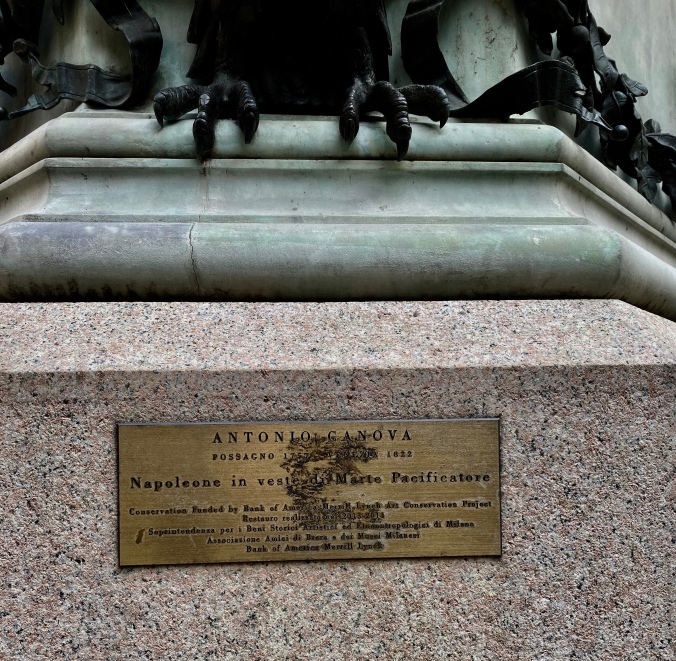
Inside the cortile, Canova’s heroic statue of Napoleon:


The entrance to the palazzo:


There is a garden at the back of the palazzo. The fortified walls and turrets of the building complex seen back here are massive and medieval, and very unlike the sophisticated facade of the palazzo. This Orto Botanico comprises a tiny corner of the hectic city has aromatic herbs, wildflowers and a small vegetable garden for research.


The Palazzo di Brera started life as a Jesuit college built on green land just outside the old city walls and its name reflects the location. In fact, the district, palace, and gallery all take their names directly from their locale as the Medieval dialect. The word “brayda” means “grassy clearing”. The word slowly evolved into “brera” or “bra;” it is also the root word of Vernona’s Piazza Bra.
Inside the Palazzo di Brera resides the beautiful Biblioteca Braidense:


More about Canova’s statue of Napoleon:

The plaster model for the bronze statue:


What caught my eye at the Brera? These works:
Andrea Solario, Madonna of the Carnations:


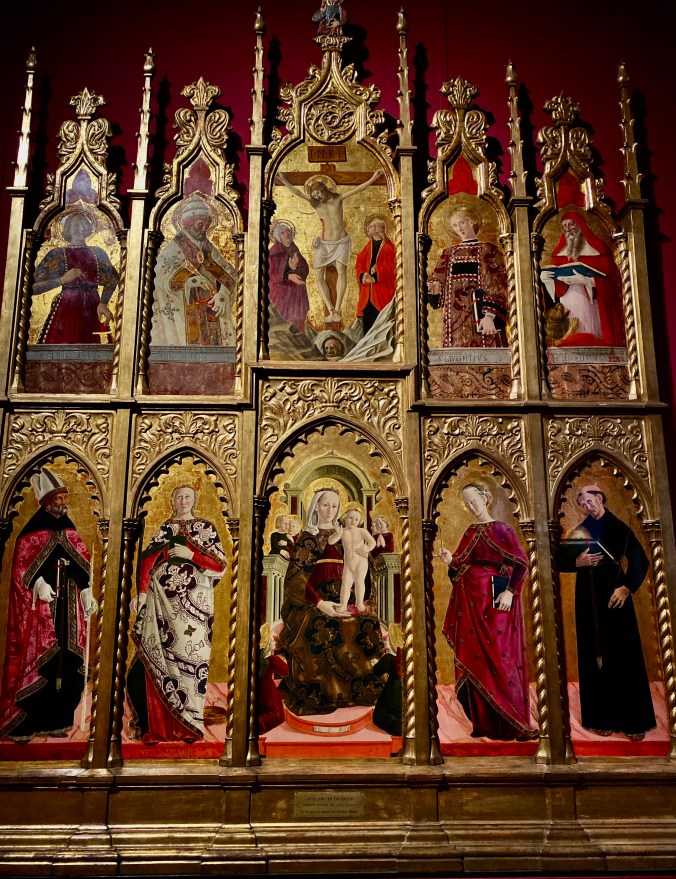
I loved Carlo Crivelli’s amazing panel paintings, which are actually somewhat 3-d. I’ve not seen that before in paintings of these kinds:


Another luscious work by Carlo Crivelli: Madonna and Child.


Some of the altarpieces in the Brera collection are sumptuously beautiful; breathtaking, actually.

This random lion caught my eye and I don’t even remember from what painting! I was a bit agog at the Brera. I started feeling the Stendhal syndrome, big time.

Raphael:


Piero della Francesca:


A ubiquitous scene, all over Europe:


For my last birthday, I climbed the 1,000,000 steps to the top of Florence’s cathedral with a friend who shares a January birthday. Even though we live in a world where the word “awesome” is overused to the point of oblivion, I can only describe the duomo experience as awesome.
Unfortunately, I have been negligent in getting my pix and videos posted! I’m trying to catch up! I’m only about a year (11.5 months to be exact) late. Oh well…I’ll try to do better in the future.
First, let me share this Youtube video with you, because it captures how I felt!!

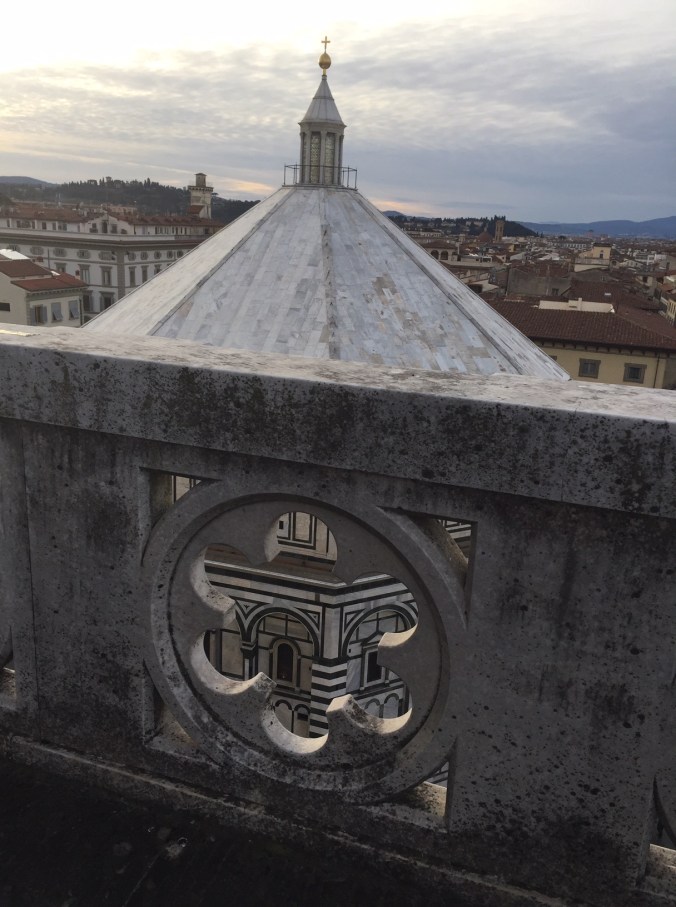


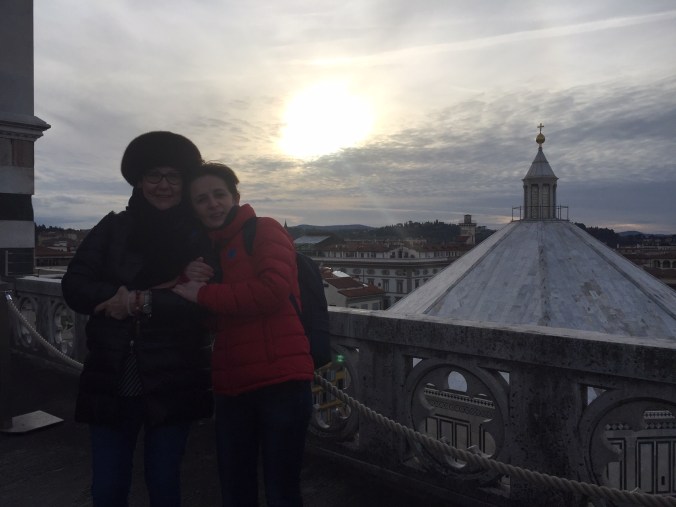


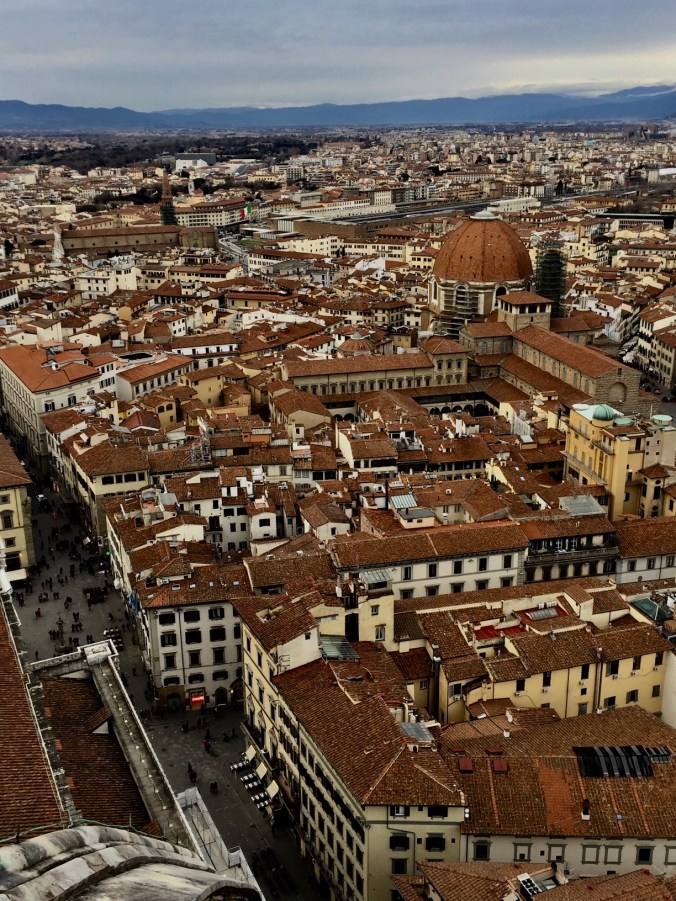


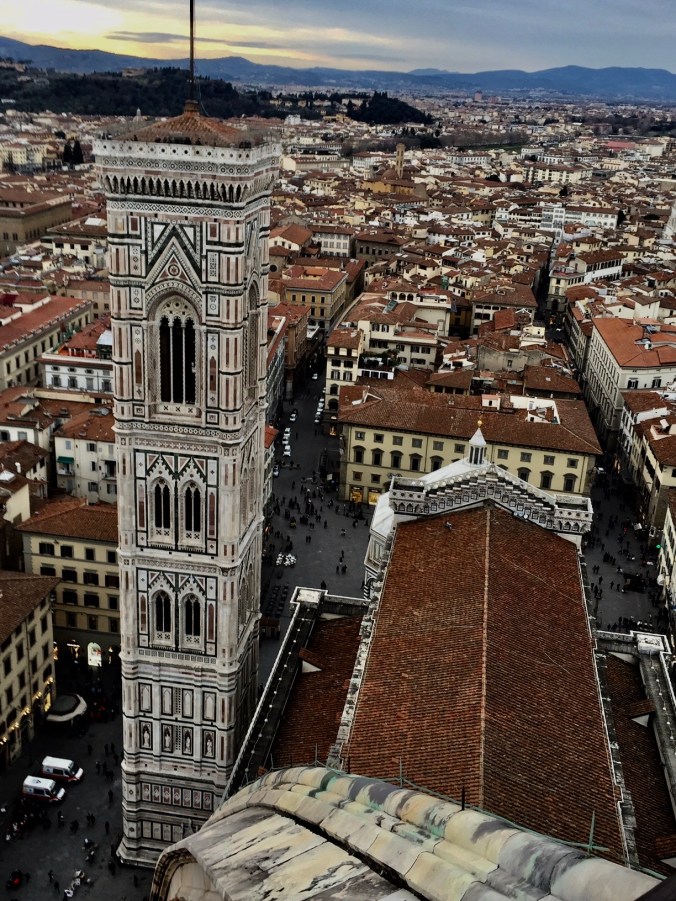


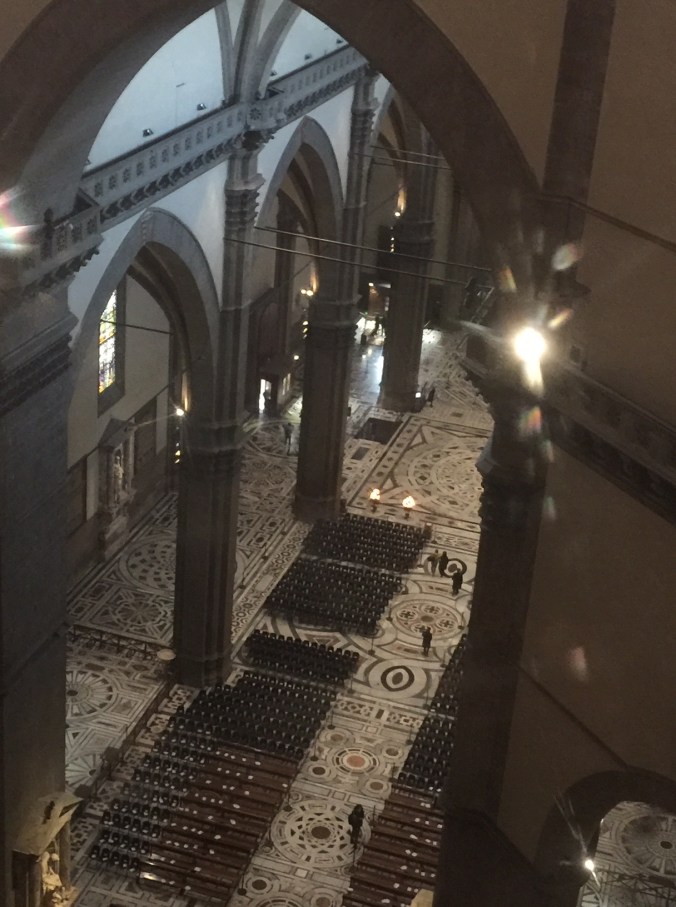


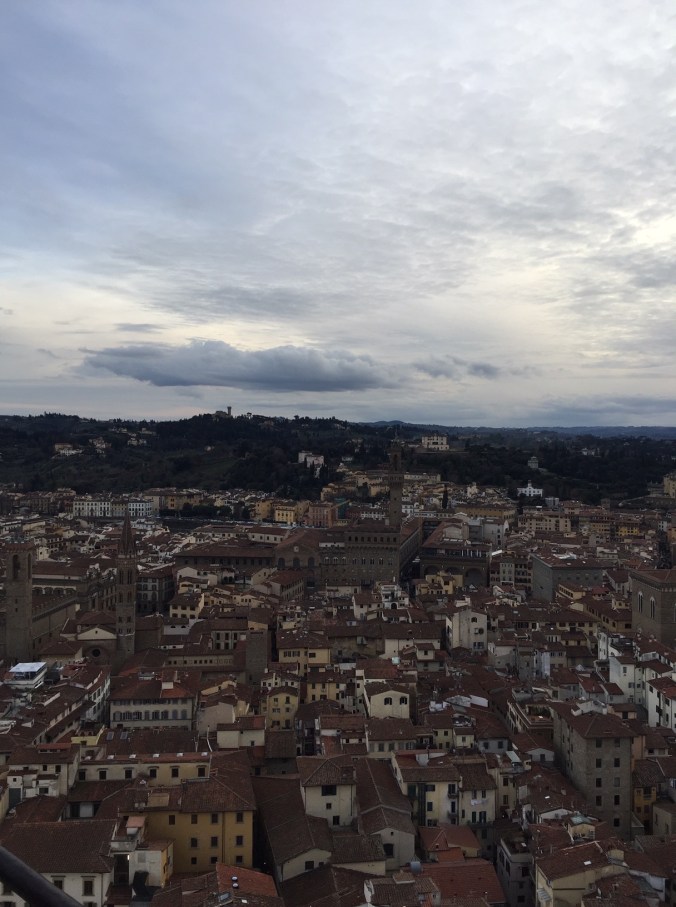


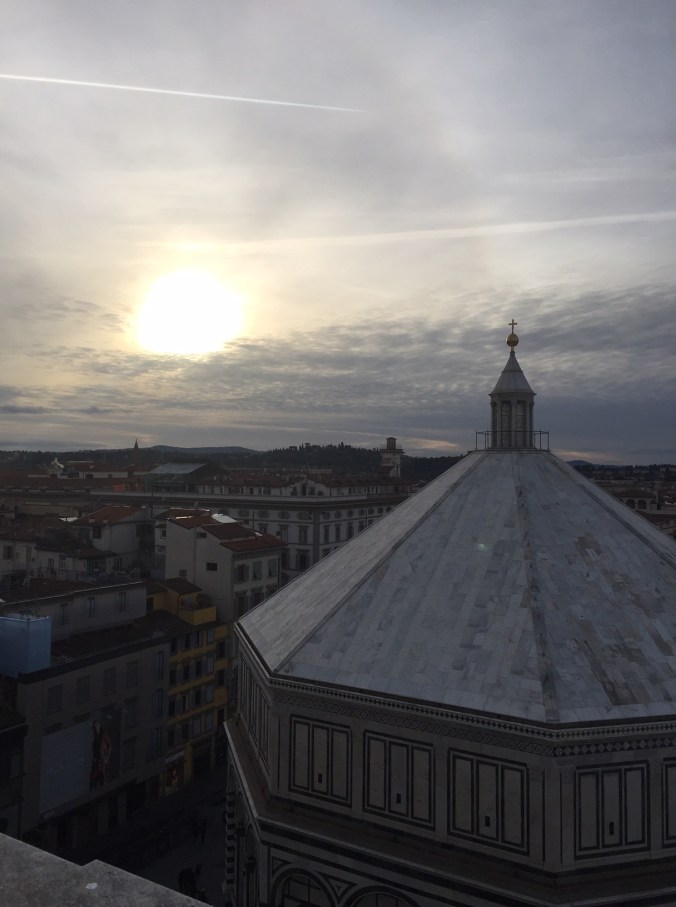


Before ending this very long post, I want to add a photo I came across of a 1940s visitor at the top of the dome

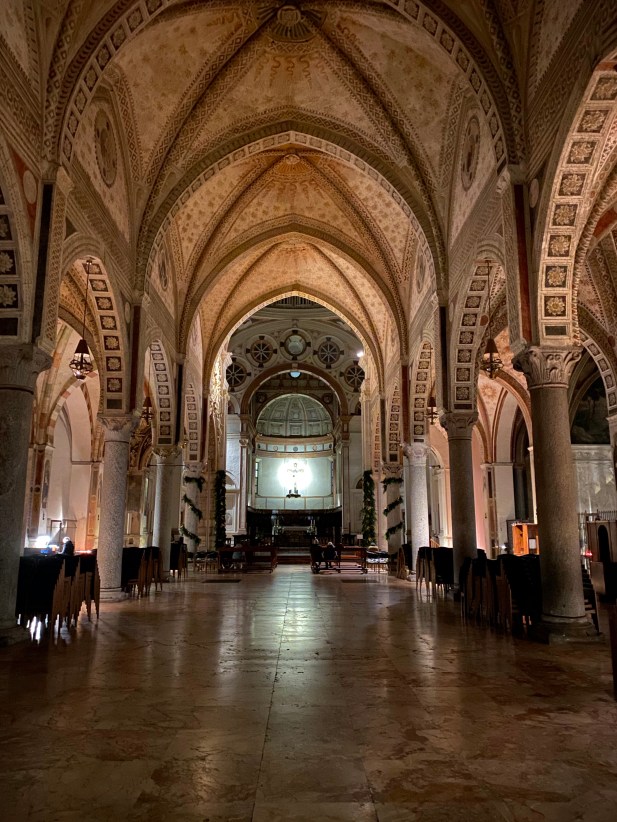
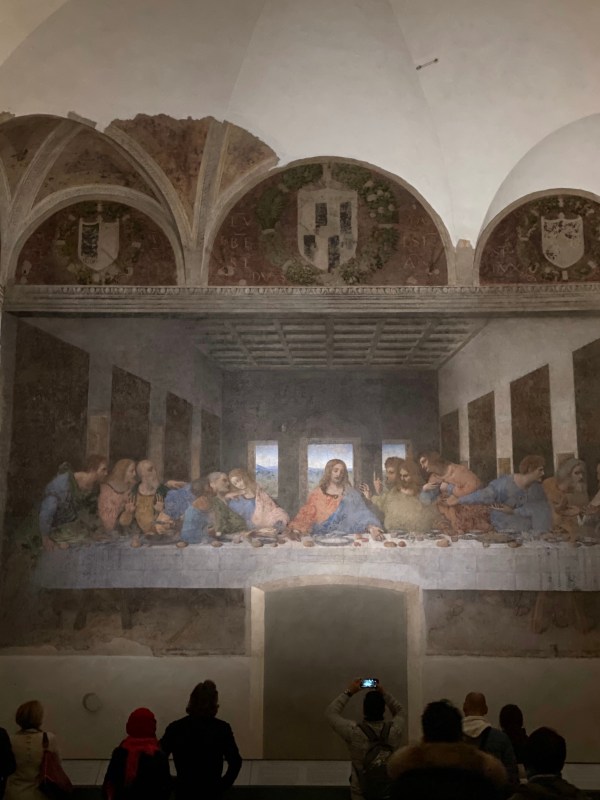
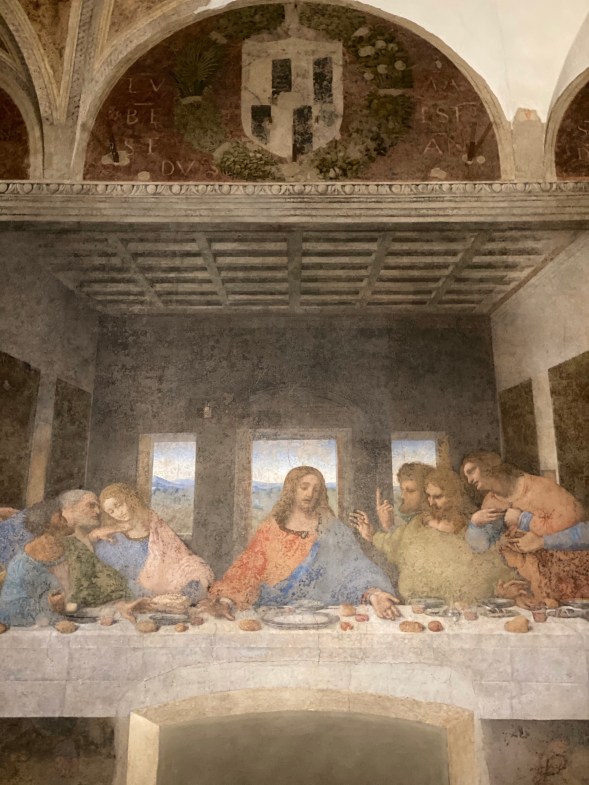
This lovely church is best-known for its attached convent refectory. You know, that little old thing known as the Last Supper and painted by Leonardo da Vinci.
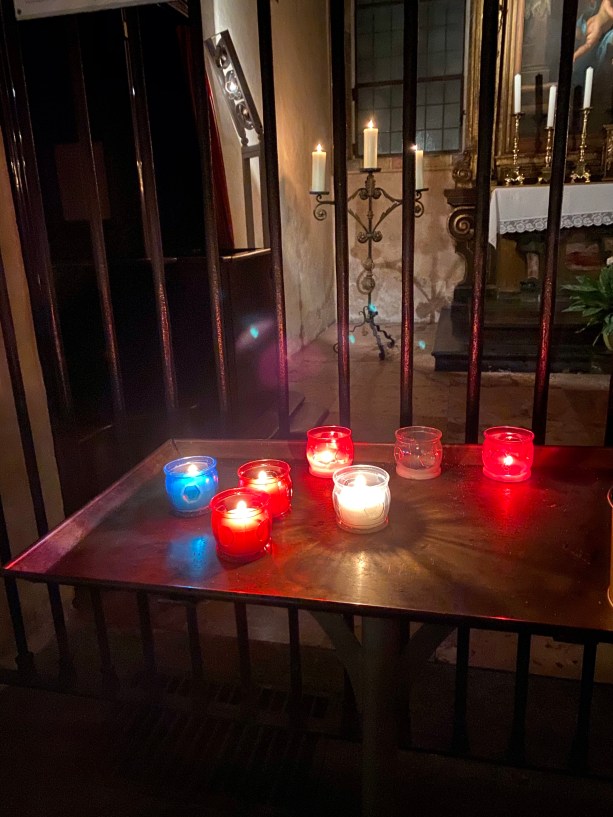
The church is beautiful in its own right:







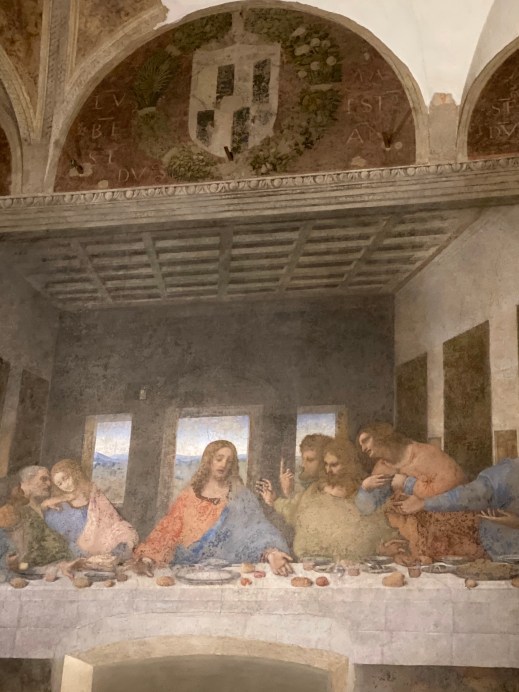


Dear Fellow Former Met Girl,
So, I think you will enjoy this. I had a ticket to visit the Last Supper for 15 minutes on Wednesday at 5 pm. That’s how they do it nowadays. You buy your ticket online if you want to be sure to get in. No more dropping by anything interesting in Italy anymore; sure, you can try, but you will most likely be disappointed.
My visits to the Scrovegni Chapel were 20 minutes long. Didn’t realize I was spoiled with that!
Anyhoo, I have a new iPhone and it has a mind of its own. Typically when I take a video, the light doesn’t come on. So, I was making a video of the last supper when I heard this screeching coming from somewhere in the refectory. I knew right away somebody had made a faux-pas.
I kept filming until I realized, when 2 Italian matrons were bum-rushing me, that the faux pas was mine. My camera light was on and that was a huge no- no.
I turned off my camera and apologized profusely, explaining that I didn’t know the light was on. Finally they stood down, but only after telling me I had to delete the video. I promised to do so and acted like I was.
But, I kept it and here it is for all the world to enjoy!
This is how a former Met girl goes to Milan. Just like a bronze foundry in Brooklyn!
xx, L


On many, many street corners in Florence you will encounter an early mode of “street art.” Of course, they are religious. Most art from these periods was religious.
I love seeing them all over the city, these combinations of painting and sculpture:


A quick visit on a winter’s Sunday afternoon; what could be better? Not much, to me.
Strolling through a few galleries, I noticed this timepiece on the wall. A way to time an hour, I suspect?




Just inside the ancient gate of Porta Romano, lies a simple church and attached convent (in Italy, convent can mean monastery or convent or both) dating to the 13th century. An almost unknown (relatively speaking, at least, to the hordes of tourists who descend on Florence every year) masterpiece of Renaissance paintings is housed here: a beautiful cenacolo, or a painting of The Last Supper. Florence is so fortunately rich in these frescoed depictions of that fateful dinner.


The church dedicated to San Giovanni Battista, in Piazza della Calza, was founded as a hospital in 1362. There were once many oratories, hospitals and shelters for pilgrims and travelers along the present via Senese and via Romana. These were major roads leading to Florence.
At the end of the 14th century, the convent was established by the Gerosolimitan nuns. They commissioned Franciabigio to paint The Last Supper in 1514 in their refectory. Unfortunately, the sisters soon had to leave the hospital, during the 1529 siege of Florence.
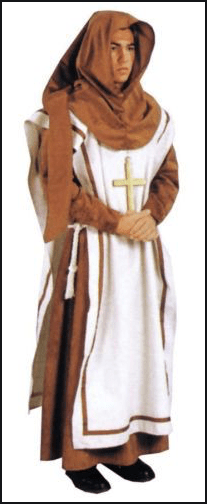
The nuns were replaced in 1531 by Jesuati friars (not Jesuits) who changed the dedication of the church from Hospital of Saint John the Baptist to San Giusto. They used the hospital as a charity for children, an ecclesiastic boarding-house, and eventually as a seminary. The church and the convent became known by the name “della calza” (sock) which was a name derived from the long white hoods that the monks wore over their left shoulders. The hood was shaped like a sock and the name stuck.
The picture below is not authentically one of the della calza habits, but it shows the shape of the hood and how it was worn.
From this nickname of “the sock” came the name of the church, the convent, and even the square.

The true hidden gem kept inside is the Cenacolo by Franciabigio, still preserved in the ancient refectory.

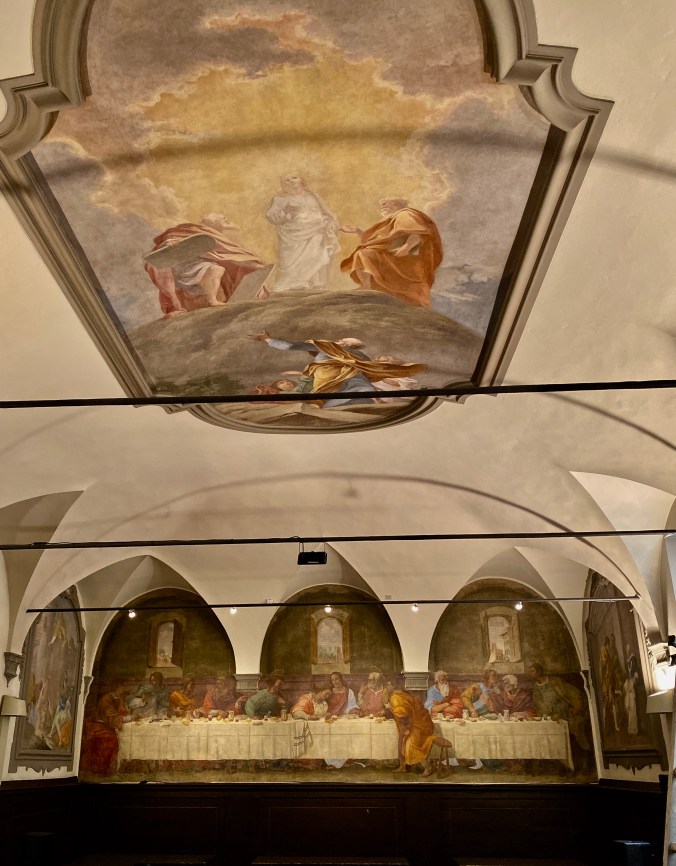

Mother Superior Antonia de’ Medici entrusted Francesco di Cristofano, called Franciabigio (1482-1525), to portray a specific scene, during the Last Supper, just after Christ says: “Truly, I tell you, one of you will betray me.”

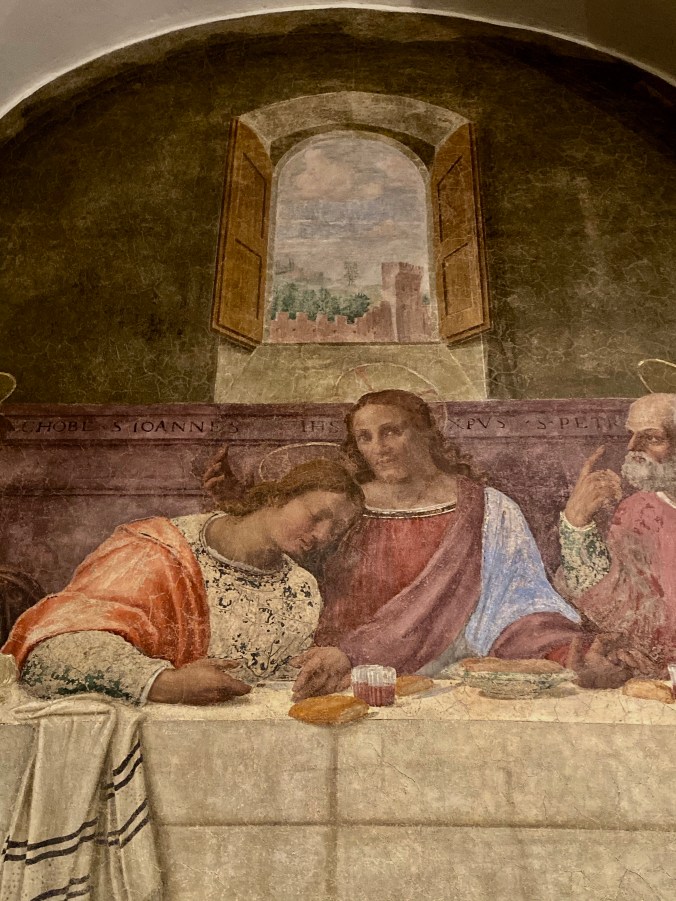

Franciabigio thus knowing, deep sadness in the countenance of Christ. Judas, the only figure on the outer side of the table, reacts strongly to the words of Jesus: his sudden movement causes his wooden stool to tip over. All around the table, the expressions of the Apostles register various states of confusion.


One can notice each reaction and recognize each Apostle because the artist added their names, painted along the strip which runs above their heads. The painter added here the date A(nno) S(alutis) MDXIIII (A.D. 1514) and his signature, through a twisted shortened monogram (FRAC).

On the painted floor, you can even distinguish the name of the Mother Superior Antonia (SVORA AN), marked on the lower left side, under the table, between the second and third Apostle.
Franciabigio carefully fashioned magnificient details; along the fine linen tablecloth you see ceramic jugs, breadrolls, glasses with red wine, and sliced watermelon. Some of the jugs feature the typical Medici coat-of-arms (the one with the red spheres) referring to Mother Superior Antonia and the Red Cross of the Order of Knights of Malta to whom the nuns originally belonged.
Giorgio Vasari describes (Lives of the Most Excellent Painters, Sculptors and Architects) how Franciabigio “was very keen on studies of perspective” and human anatomy. We see that throughout and especially in the accurate position of the wooden shutters painted along the wall.


A fascinating contrast is given by the dark green wall and the light of the crystal clear sky in the background, where the painter depicted the old Florentine town walls (the destroyed gate of San Pier Gattolino).
For the Jubilee in 2000, the fresco was restored.
Just a quick word about the Church of San Giovanni Battista della Calza:
My quick walk through the church introduced me to this arresting sculpture near the entrance to the small church.

I was alone in the church and had free rein to poke around. In a small room off the church itself I noticed an amazing della Robbia fountain. You never know what treasures you will happen upon in this fascinating city.


And, finally, I can’t leave this post without mentioning that, depict the austerity of this church, some major paintings were once a part of the church. They are now in the Uffizi:

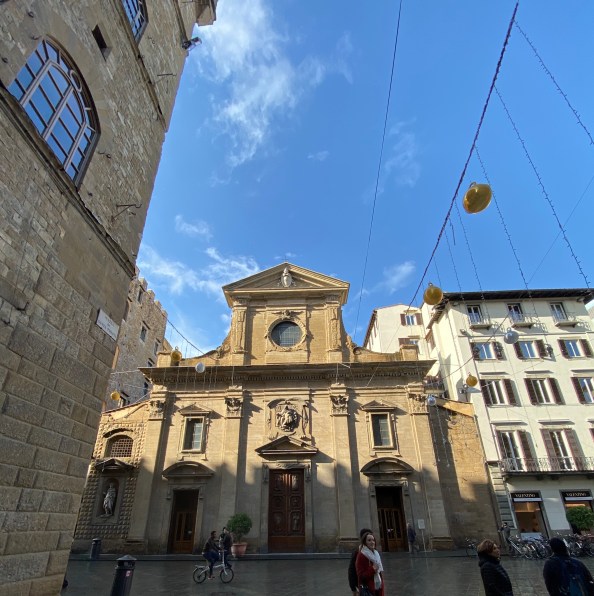
Recently I posted about Santa Trinita and I just had another chance to pay it another visit. It was a sunny day following a week of rain, and it just felt good to be out and in the sunshine. You might notice that the city of Florence has begun decorating for Christmas already!
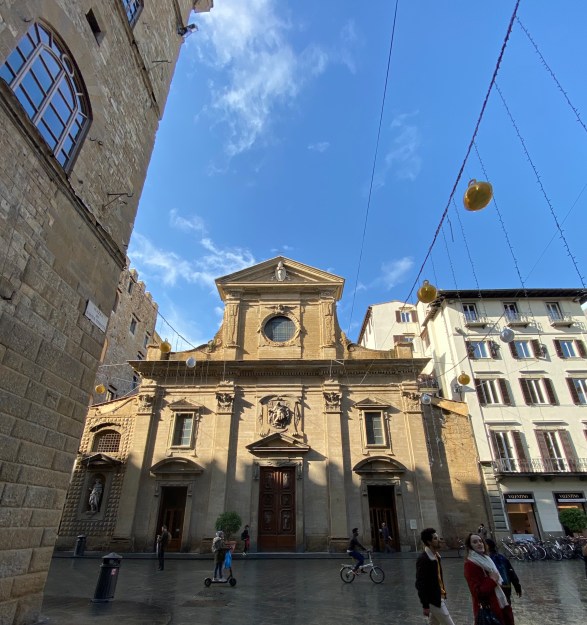
The Mannerist facade by Buontalenti:

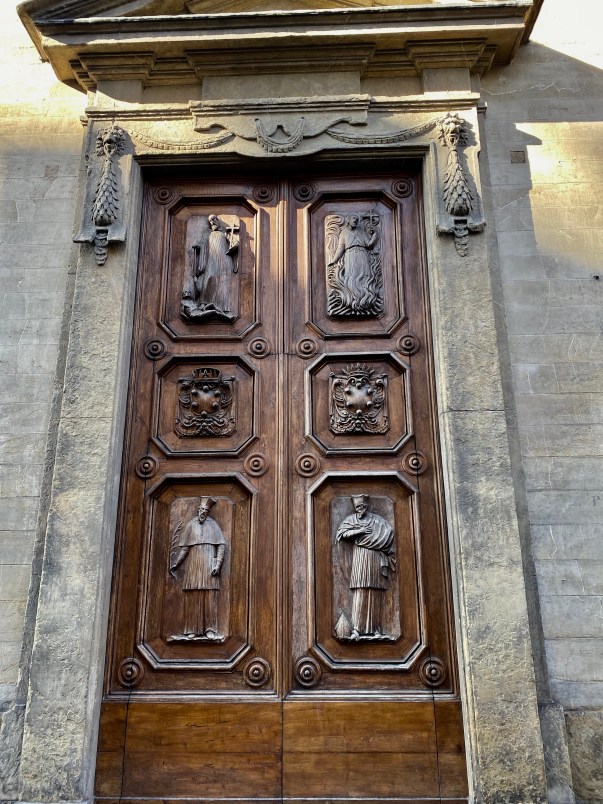
The beautifully carved central doors:
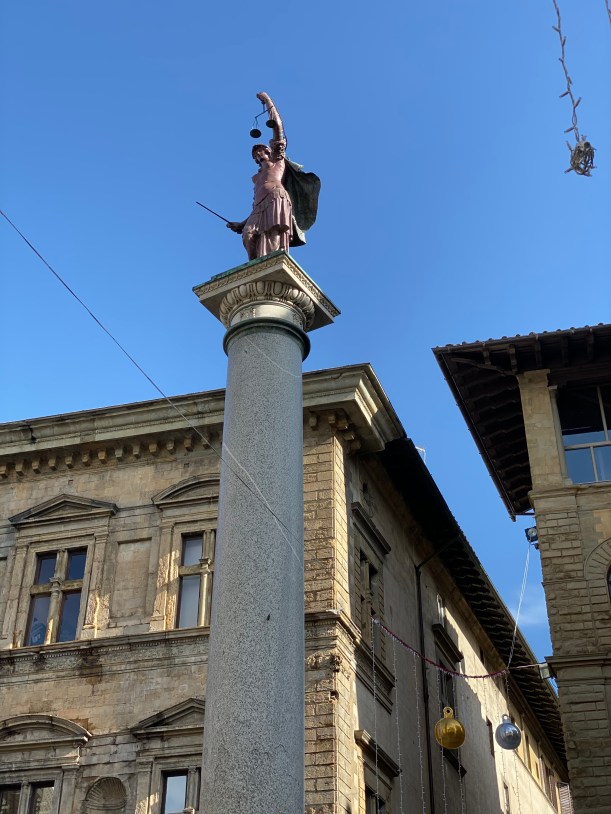
You must never forget the fabulous column and Roman statue in the piazza outside the church:
Once more, the facade:
Inside the church we are fortunate to see the extant old Romanesque facade of the church. Luckily for posterity, they didn’t destroy it when they constructed the new front for the church:

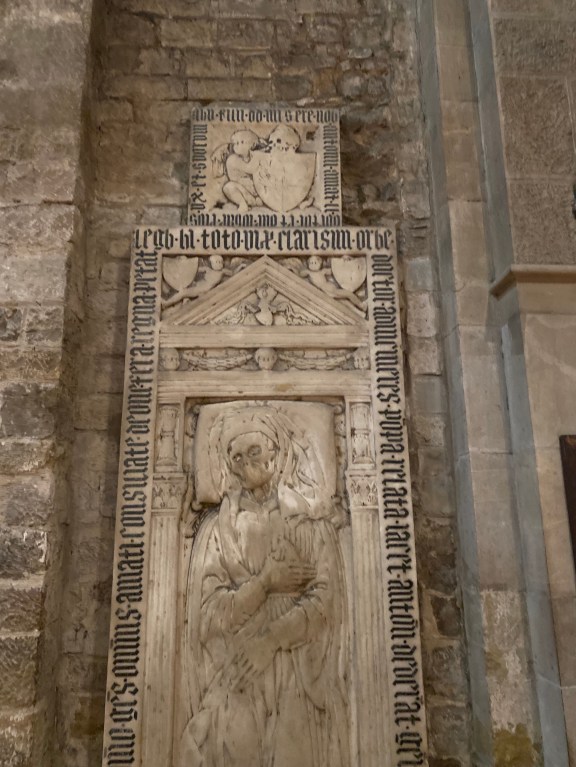
One either side of the central door, inside the church are these tombstones and paintings:
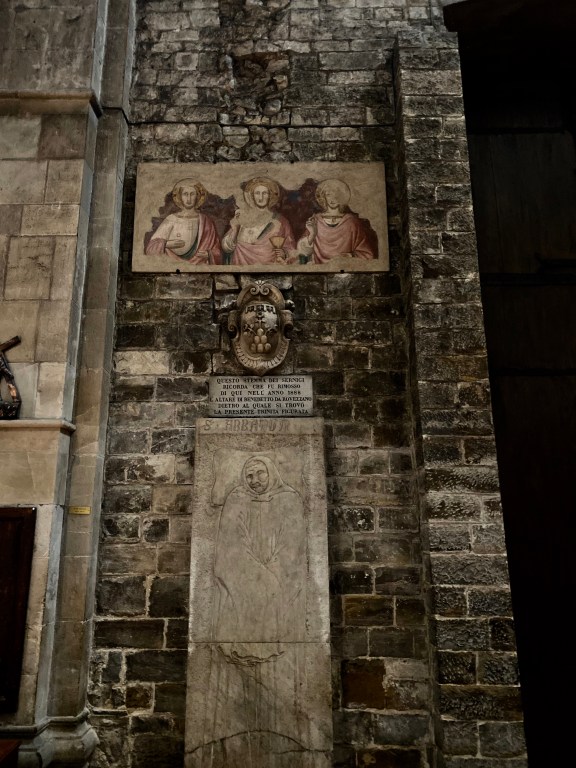
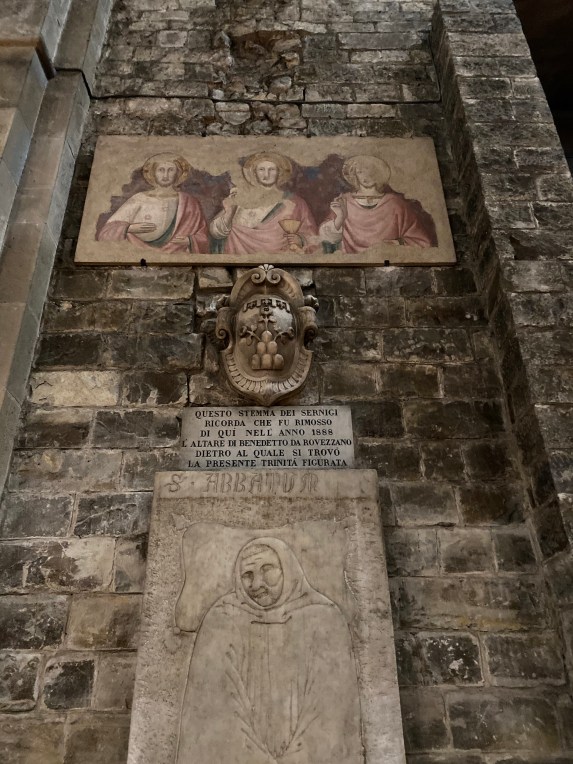
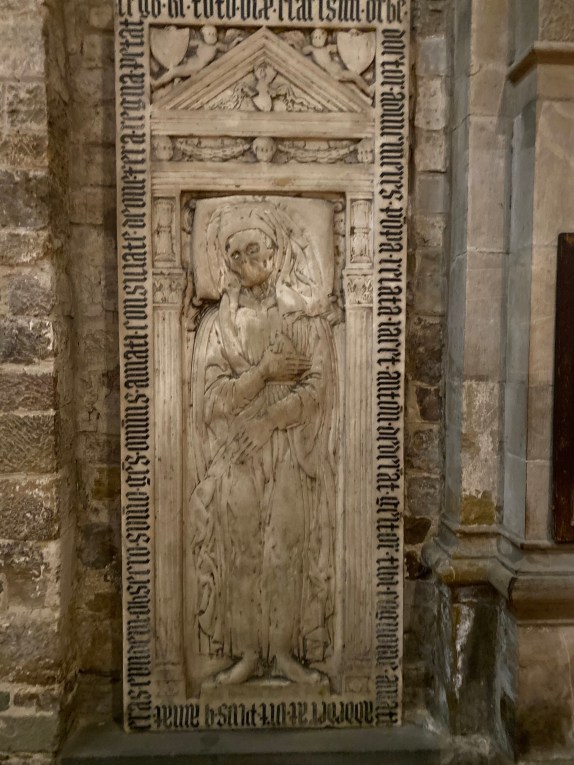
The interior:


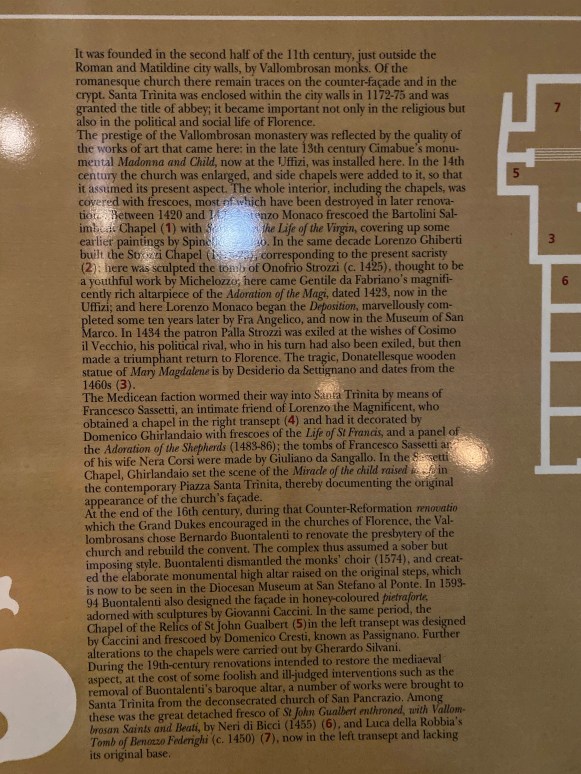
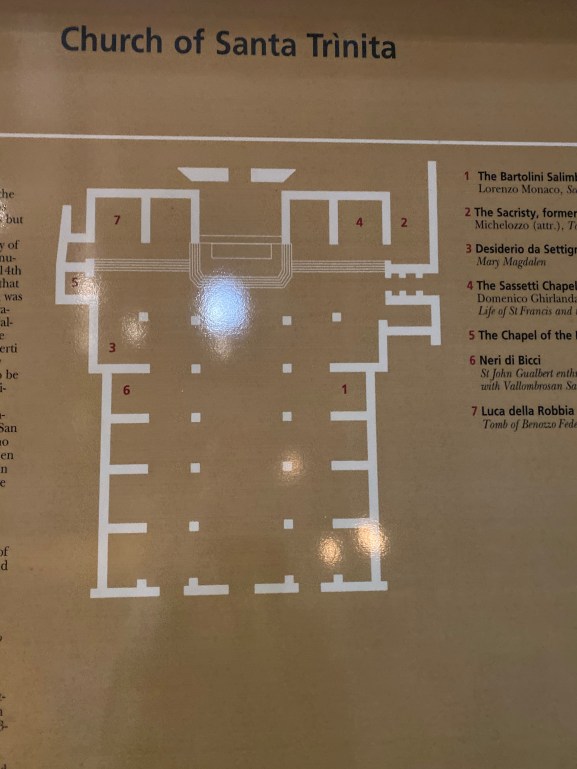
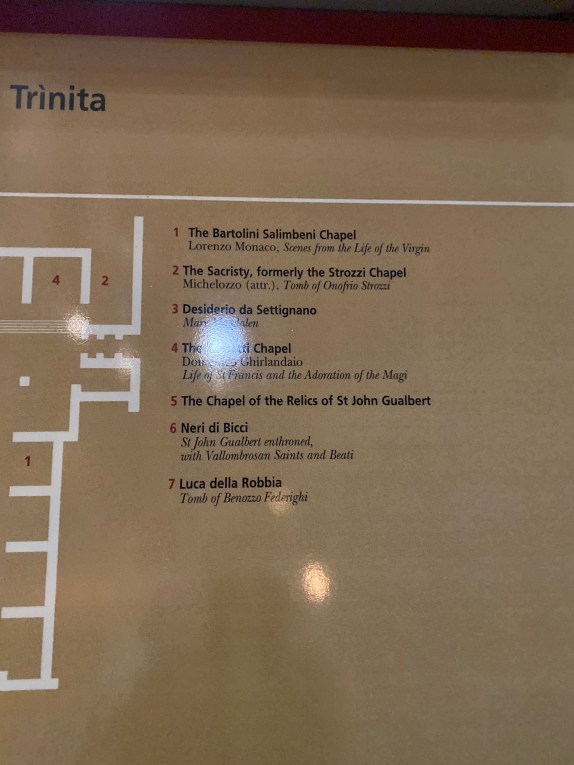
The Chapel containing the (presumed) Donatello:
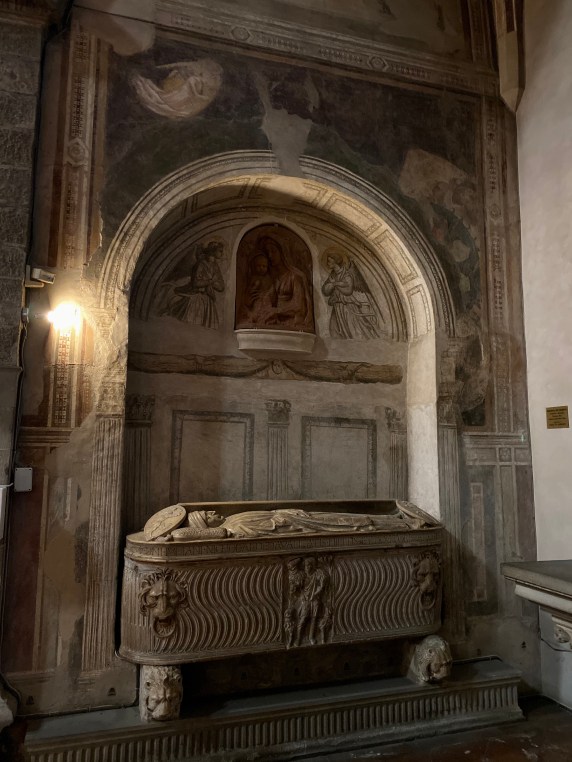
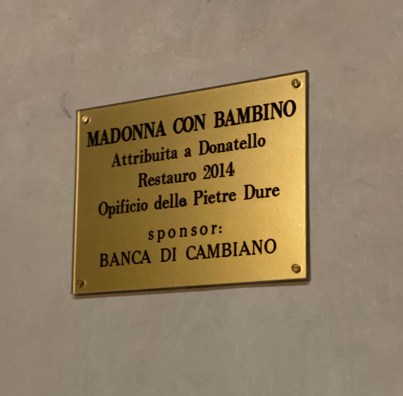

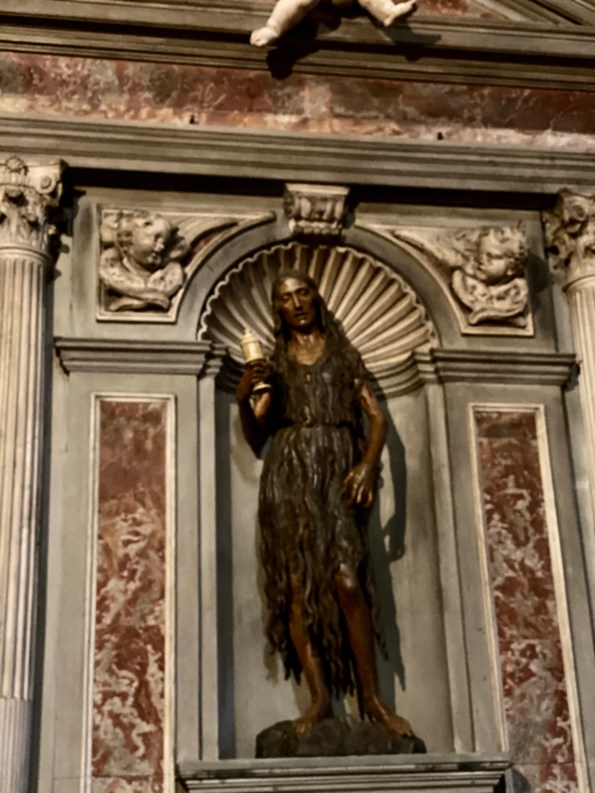
The statue of Mary Magdalene by Desiderio di Settignano:


The Brenta is an Italian river that runs from Trentino to the Adriatic Sea just south of the Venetian lagoon in the Veneto region.
During the Roman era, it was called Medoacus and near Padua it divided in two branches, Medoacus Maior and Medoacus Minor. The river changed its course in the early Middle Ages, and its former bed through Padua was by then occupied by the Bacchiglione.
The 108 mile long stretch was first channelled by the Venetian Republic in the 16th century, when a canal was built from the village of Stra to the Adriatic Sea, bypassing the Venetian lagoon.

The Brenta canal made use of the system of rivers and canals that had connected the Venetian cities with each other and with the Venice lagoon since ancient times. The goods directed from the hinterland to the Serenissima Republic of Venice passed on these river routes: building materials such as wood, marble, stones from the Vicentine Hills and trachyte from the Euganean Hills as well as grains and other agricultural products. The transport took place with barges called bùrci pulled along the horse banks.

In construction the canal, the Republic of Venice imposed hydraulic changes (which several times required the engineering advise of Leonardo Da Vinci) which diverted the main river course further south, moving it away from the Venetian lagoon and leading it to flow directly into the Adriatic Sea. These hydraulic works are represented by the cuts of the Brenta Nuova and the Brenta Nuovissima, and consist of sluices and mobile bridges that have made the river navigable.
A branch of the Brenta, named Naviglio del Brenta, was left to connect directly Venice and Padova (which was a kind of second capital of the Venice Republic). The Brenta canal runs through Stra, Fiesso d’Artico, Dolo, Mira, Oriago and Malcontenta to Fusina, which is part of the comune of Venice.
With this new stretch of the Brenta connecting Venice with Padua, it came to be called the Riviera del Brenta by the 16th century. Wealthy Venetian families began to build elaborate river houses which they called villa (“villa” in the language of the time meant “country”). This was a perfect situation for these patrician families because there new homes could be easily reached from Venice with their gondolas. In fact, it has been said that with all the new building along the Canal, it was almost as if the Brenta canal was an extension of Venice’s Grand Canal.

It also became the custom of aristocratic Venetian families to spend summer holidays in their new country houses. These homes could be reached by richly decorated, luxurious wooden burchielli, or ships.

These vessels had elegant cabins, with three or four balconies. The interiors were finely decorated and adorned with mirrors, paintings and precious carvings. On the way to the lagoon they were propelled by wind or oars, while on the route from Fusina to Padua along the Brenta Riviera, they could be pulled by horses.
Cargo was carried on traditional barges known as burci.
After 1797 , with the fall of the Venetian Republic and the consequent decline of the Venetian patriciate, the burchielli fell into disuse.

Among the first villas to be built, and one of the most important, is Casa Foscari designed by Andrea Palladio at Malcontenta (located shortly after the gates of the Moransani). The illustrious Foscari family was established by the 15th century, when a Foscari was a popular doge in the Venetian Republic for 34 years.
Another Palladian villa, which was built for Senator Leonardo Mocenigo around 1560-61, was destroyed. But its very existence, along with Casa Foscari, shows how quickly patrician settlements multiplied on the shores of the Brenta Canal. In the Mocenigo Villa, the architect created a rather original design with respect to the typical pattern of Venetian villas, which he later published in the second of his Four Books of Architecture. Sadly, that villa fell into disrepair by the late 18th century and was demolished.
After the Foscari and Mocenigo ville, most new homes along the canal were not as important architecturally. They were mostly homes of modest size. But the trend for vacationing along the canal, and the taste for villa life, was well established. Homes known as barchesse contained large rooms and were almost always ornamented with decorative frescoes. Extant examples include buildings of the Villa Valmarana, the Villa Contarini Venier in Mira (currently the seat of the Regional Institute for Venetian Villas), and the Villa Foscarini Rossi in Stra.
Thus, the villeggiatura (life of the villas) understood in its original meaning, the Riviera del Brenta has become other than a residential and productive facility, a touristic infrastructure of great importance that ideally links the Euganean Hills to the Laguna, the thermal baths of Abano to the beaches of the Lido, and again, Padua toVenice.
https://it.wikipedia.org/wiki/Naviglio_del_Brenta
http://lamalcontenta.com/index.php/en/riviera-of-brenta/description
Antonio Foscari, Acque, Terre e Ville, in “Ville Venete: la Provincia di Venezia”, I.R.V.V, Marsilio, Venezia 2005, pp. XXX-XLII
Antonio Foscari, Tumult and Order, Lars Mueller Publisher Zurigo, 2011
 get back, lauretta!
You must be logged in to post a comment.