The Poldi Pezzoli Museum, Milan

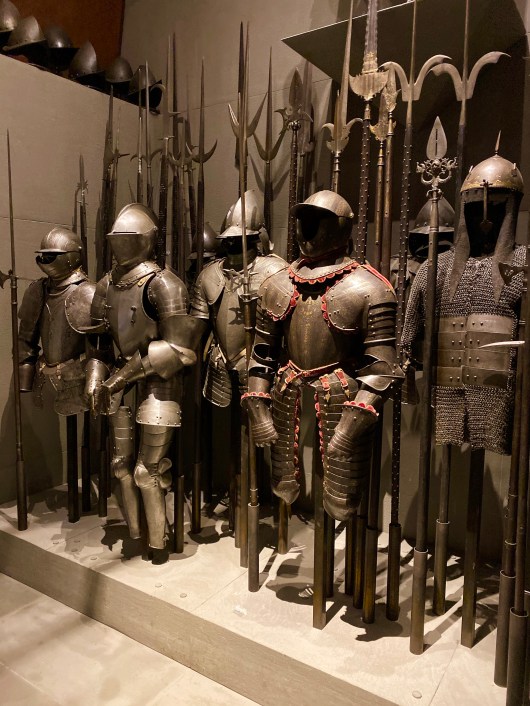
Yikes! Nothing like being met by an army! The outstanding collection of armor below is just one of the many parts of the Poldi Pezzoli Museum that will amaze you in Milan.

fullsizeoutput_277d

fullsizeoutput_2779

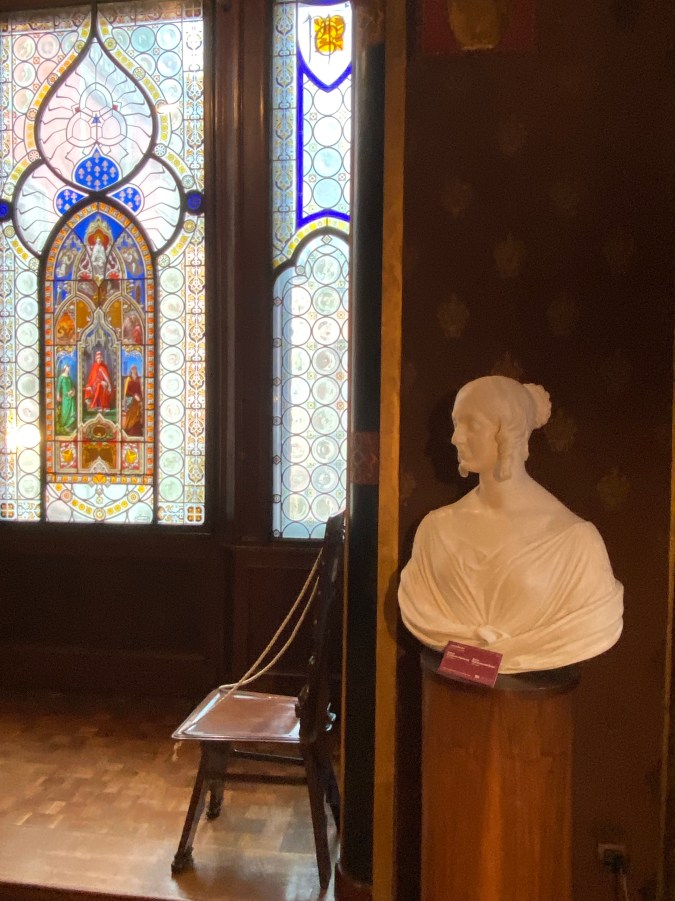
The Poldi Pezzoli Museum is housed in the original 19th-century mansion built by Milanese aristocrat, Gian Giacomo Poldi Pezzoli (1822-1879).  His parents and grandparents had already begun the family’s art collection and he built his palazzo in this tony section of Milan to house the collection it as he continued to enlarge it.  When he died, he left his collection and house to the Brera Academy. The Poldi Pezzoli Museum was opened to the public in 1881 on the occasion of the National Exposition in Milan and has since become an archetype for other famous collectors.

Screen Shot 2019-12-14 at 18.06.34

c2af768b069e4cd180c603a51f210404_400x400

The Poldi Pezzoli is one of the most important and famous house-museums in the world. Located near the landmark Teatro La Scala and the world-renowned fashion district, this house-museum is beloved by the Milanese and international public.

The Poldi Pezzoli is a member of the Circuit of Historic House Museums of Milan, a city network established in 2008 with the aim of promoting the Milanese cultural and artistic heritage.

During World War II, the museum was severely damaged and many paintings were completely destroyed. The palazzo itself was rebuilt and in 1951 it was reopened to the public.

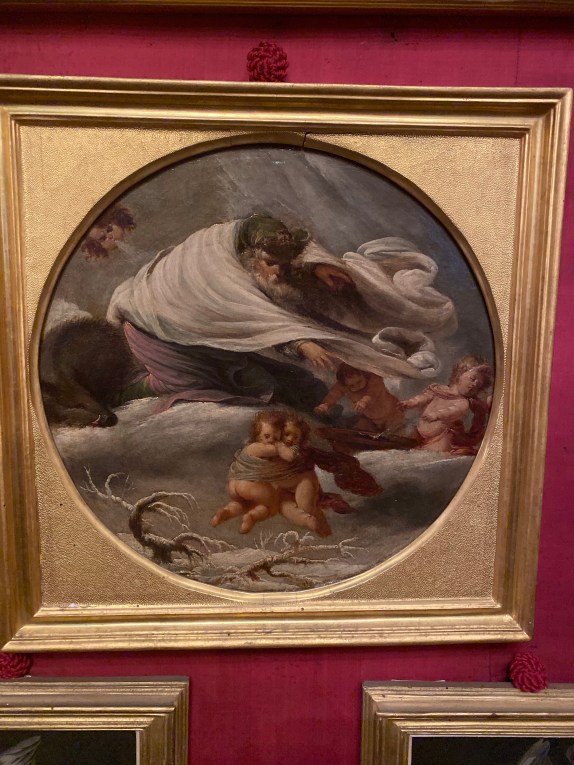
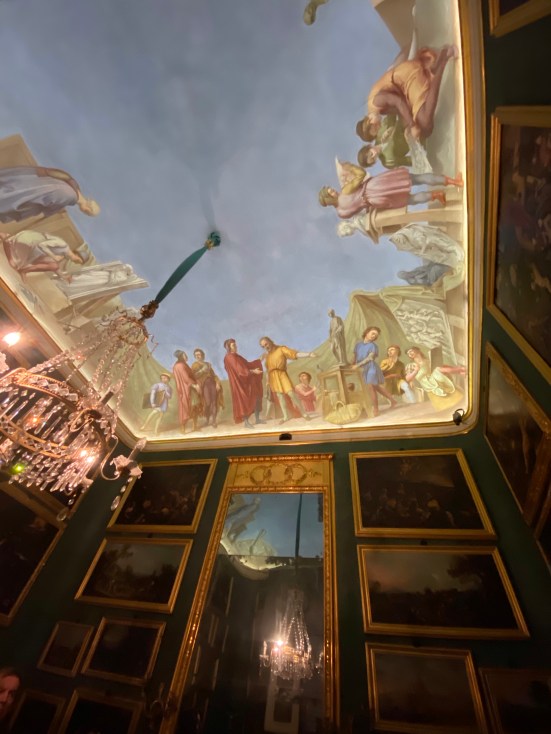
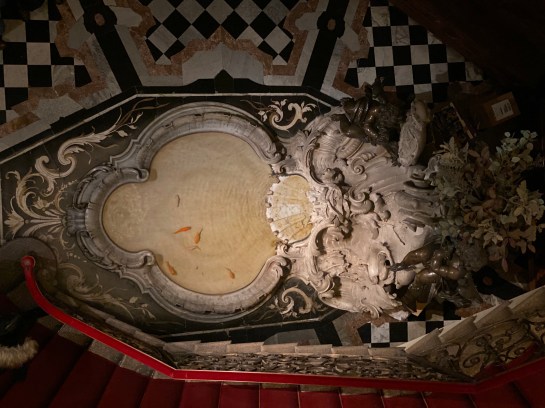
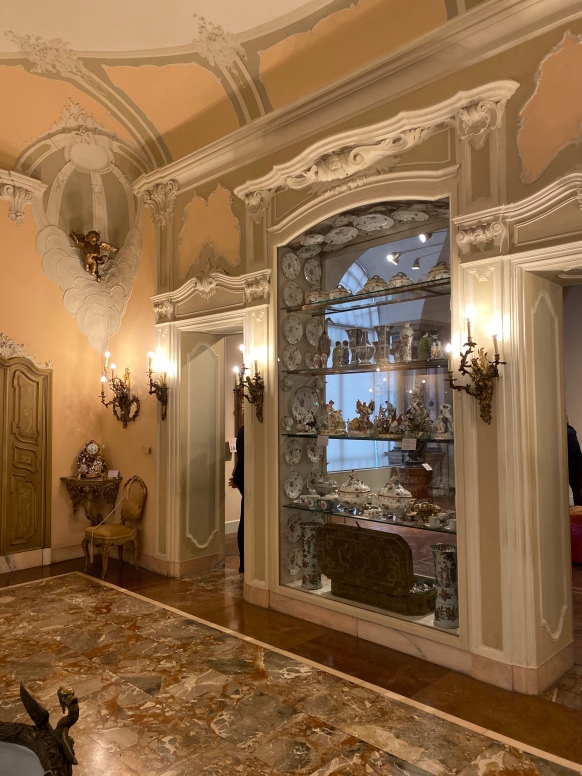
Not all of the house was restored as it appeared during Poldi Pezzoli’s life, but it was instead fitted out as a museum. The grand entryway, with its fountain filled with koi and its spiral staircase are original, as are at least 2 of the piano nobile galleries.  You’ll recognize them right away in the pictures below.

The outstanding collection includes objects from the medieval period to the 19th century, with the famous armor, Old Master paintings, sculptures, carpets, lace and embroidery, jewels, porcelain, glass, furniture, sundials and clocks: over 5000 extraordinary pieces.

Let’s begin at the entry way.  What a greeting!


Below: the view of the fountain from atop the staircase:


I was a bit obsessed by the fountain; can you tell?


Allora, moving on:

img_2806


YHd%s2tjTZipV%4qJnRlqg


Angels in the architecture:

S5P4afnARZW8hw97CfvzPw


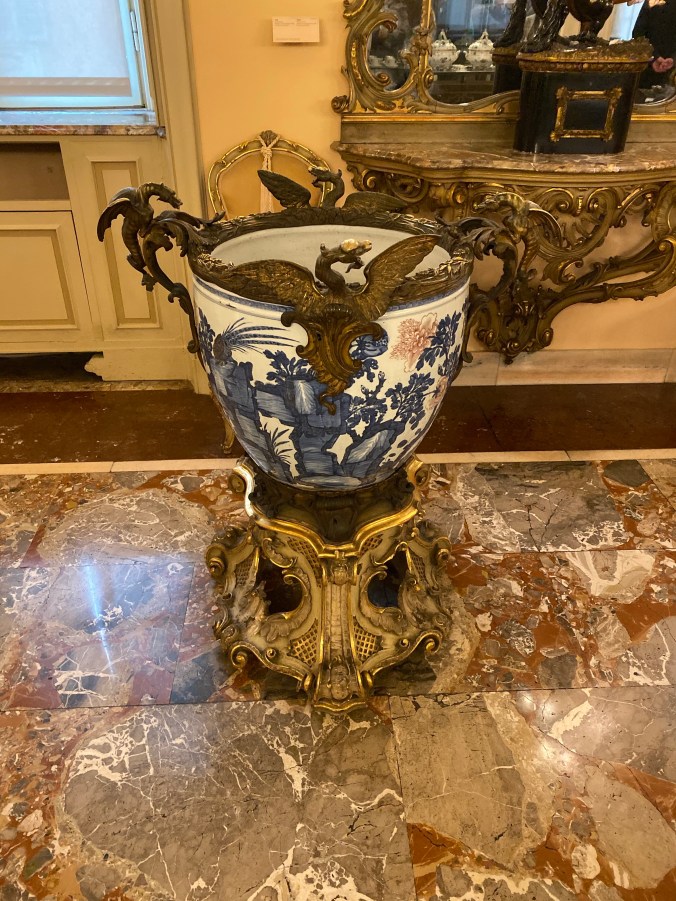
Dragons on the pottery:

Zdt4u15WS8+HiAeGLvTJbw


QKg2ZlZmTWa9A1Jb8d25lg


fullsizeoutput_27b7


I love the way they display the ceramics: why not affix objets to the ceiling?  It is a wasted flat space otherwise.  Genius.

fullsizeoutput_27b3


5RRy7FG1SZCQcyTF1b9xkg


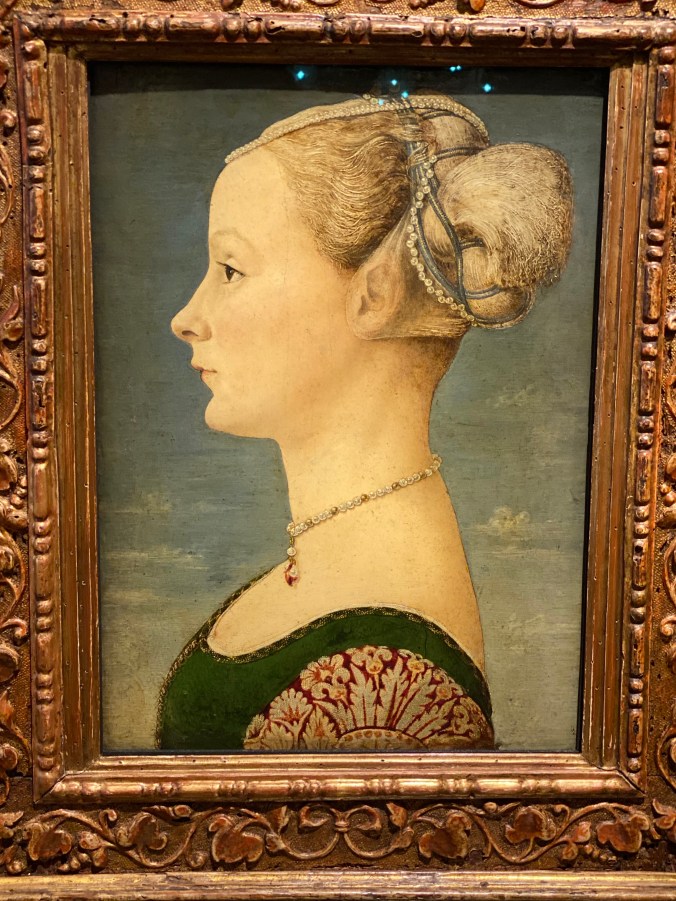
Moving on to the important objets: Piero del Pollaiuolo magnificent Portrait of a Young Lady.

fullsizeoutput_27b1


fullsizeoutput_280a


fullsizeoutput_27af


Botticelli’s The Dead Christ Mourned:

olskXBlhTY6LieIy%dg8EQ

fullsizeoutput_279e


Bellini:

fullsizeoutput_27a6

fullsizeoutput_27a2


6MhogjzwQCy5ueqVe90qhg


Q1nva4QvTfGpicIkkrVcTA


JV3uxtyqSBKRa1T26SgX1w


bcTe9zdJRNytyKdFseRrVA


l24I2suoTYG75TXaEXODEw


Ah, the glass.  It gets me every time:

fullsizeoutput_279a


YTjiGhygTxCSkyiMCdw+Yw


lNRmOuo4QCub3lEmyehJMA


fullsizeoutput_2798


fullsizeoutput_2794


fullsizeoutput_2792


VU4r8tp2Rl2MLzwHdfML9A


wdcTjLTJRH+UZ1xgGZiFfg


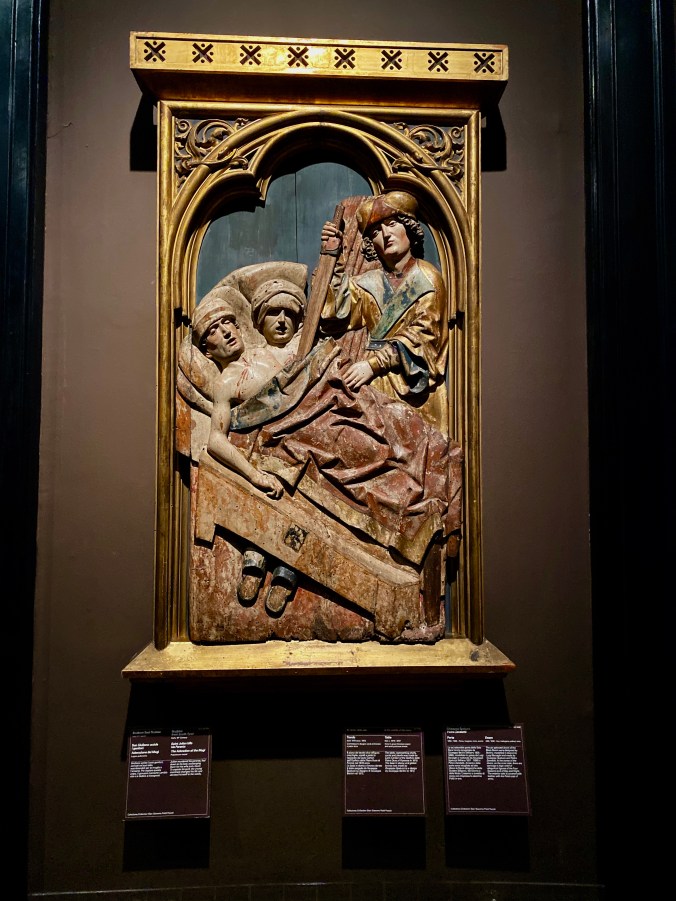
The panel below made me laugh.  I love how the sculptor included the slippers at the side of the bed! In this dastardly scene of homicide, don’t forget the slippers!

fullsizeoutput_278c


fullsizeoutput_278e


W%tbLkKwRheihzX5lKCFNg


fullsizeoutput_278a


fullsizeoutput_2788


fullsizeoutput_2786


fullsizeoutput_2784


5h1n1Fo8QOWrwYElE1rCoQ


DabU%gWCTKSdfesISEZtWQ


fullsizeoutput_268d


fullsizeoutput_2782


fullsizeoutput_2781


fullsizeoutput_277f


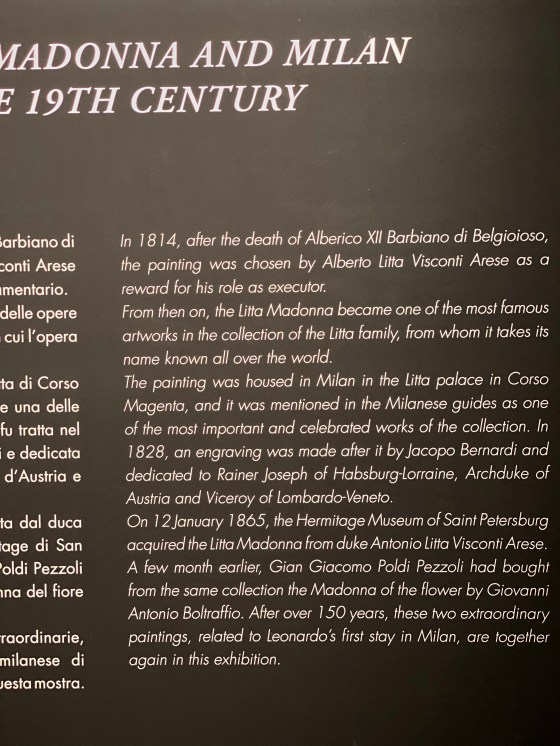
Since 2019 marks the 500th anniversary of Leonardo da Vinci’s death, the world is paying homage to the great artist with myriad exhibitions.  The Poldi Pezzoli joins them with a major painting, on loan from the Russian Hermitage Museum, just for the occasion. Leonardo painted this work during his time living in Milan.


img_2795


img_2796

img_2793

img_2797

img_2794

img_2798


Palazzo di Brera, Milano

Milano’s beautiful Palazzo di Brera was created along with the Accademia di Belle Arti in 1776 to serve the students studying at the University.

The Jesuits built the Baroque palace at the end of the 17th century as a convent (the word convent is used for monasteries in Italy). After they were unceremoniously expelled, the  Palazzo Brera was remodeled in the neoclassical style.

Napoleon took control of Italy and declared Milan the capital.  He filled the Brera with works from across the territory. As a result, it is one of the few museums in Italy that wasn’t formed from private collections, but rather by the Italian state.

When the Palazzo di Brera was taken away from the Jesuits by Queen Maria Teresa of Austria, it was meant to become one of the most advanced cultural institutions in Milan. It still lives up to that status today. Besides the Academy and the beautiful Art Gallery, the palazzo holds the Lombard Institute of Science and Literature, the Braidense National Library, the Astronomical Observatory and a Botanical Garden maintained since he 1700s.


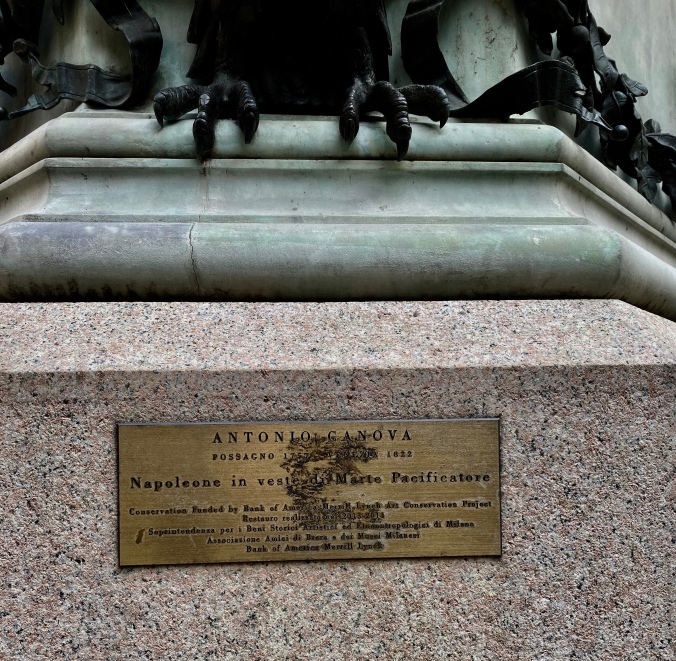
Inside the cortile, Canova’s heroic statue of Napoleon:


The entrance to the palazzo:


img_2739-1


There is a garden at the back of the palazzo.  The fortified walls and turrets of the building complex seen back here are massive and medieval, and very unlike the sophisticated facade of the palazzo. This Orto Botanico comprises a tiny corner of the hectic city has aromatic herbs, wildflowers and a small vegetable garden for research.


The Palazzo di Brera started life as a Jesuit college built on green land just outside the old city walls and its name reflects the location. In fact, the district, palace, and gallery all take their names directly from their locale as the Medieval dialect. The word “brayda” means “grassy clearing”. The word slowly evolved into “brera” or “bra;” it is also the root word of Vernona’s Piazza Bra.

Inside the Palazzo di Brera resides the beautiful Biblioteca Braidense:


More about Canova’s statue of Napoleon:


The plaster model for the bronze statue:

img_2746


What caught my eye at the Brera?  These works:


Andrea Solario, Madonna of the Carnations:

img_2749


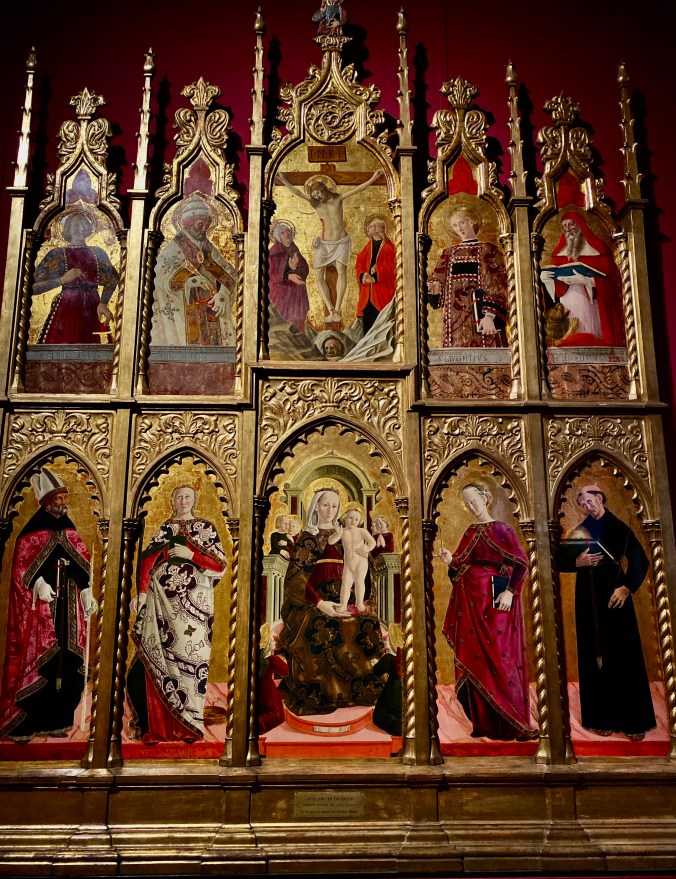
I loved Carlo Crivelli’s amazing panel paintings, which are actually somewhat 3-d.  I’ve not seen that before in paintings of these kinds:


Another luscious work by Carlo Crivelli: Madonna and Child.

img_2755


Some of the altarpieces in the Brera collection are sumptuously beautiful; breathtaking, actually.

img_2759


This random lion caught my eye and I don’t even remember from what painting!  I was a bit agog at the Brera. I started feeling the Stendhal syndrome, big time.


Raphael:


Piero della Francesca:


A ubiquitous scene, all over Europe:


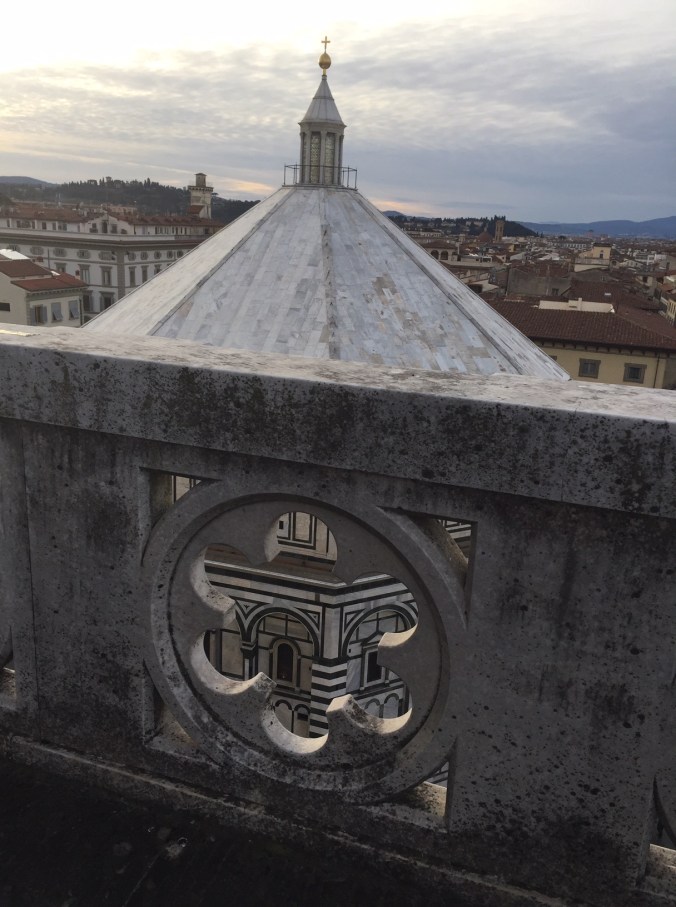
Florence’s Duomo: better late than never

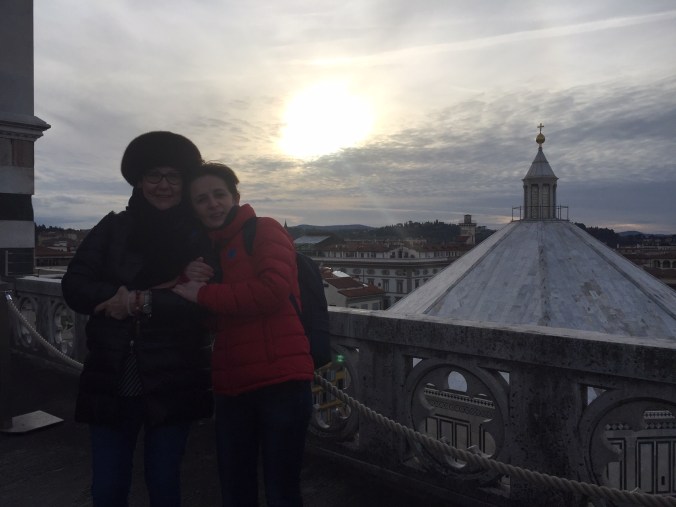
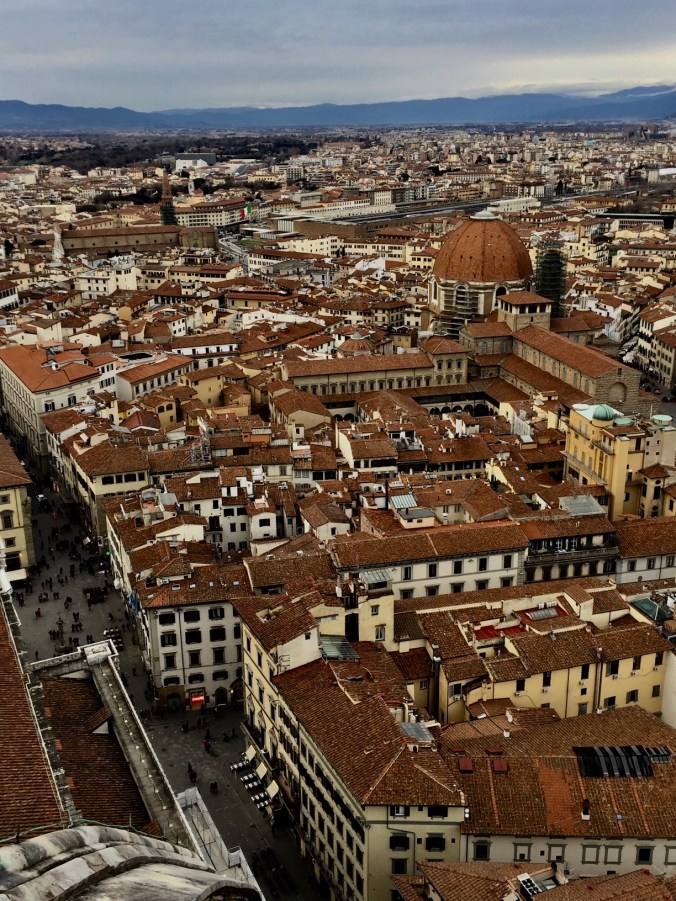
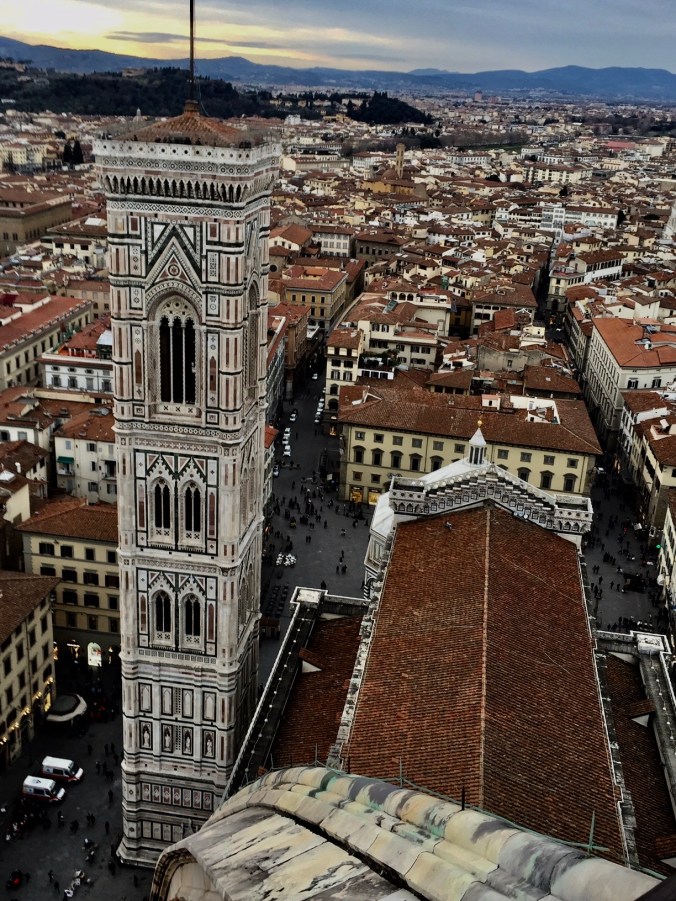
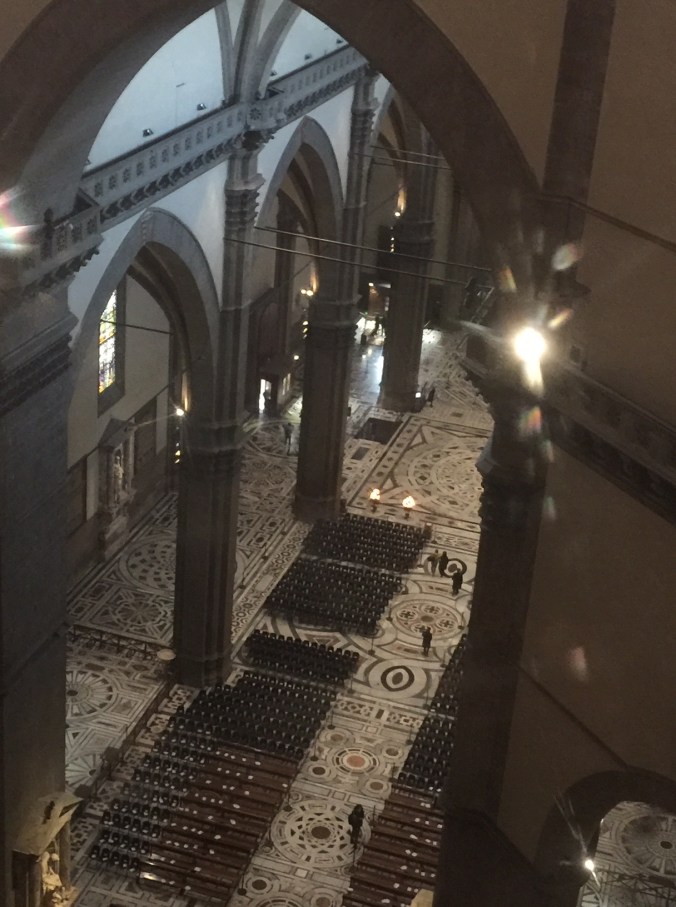
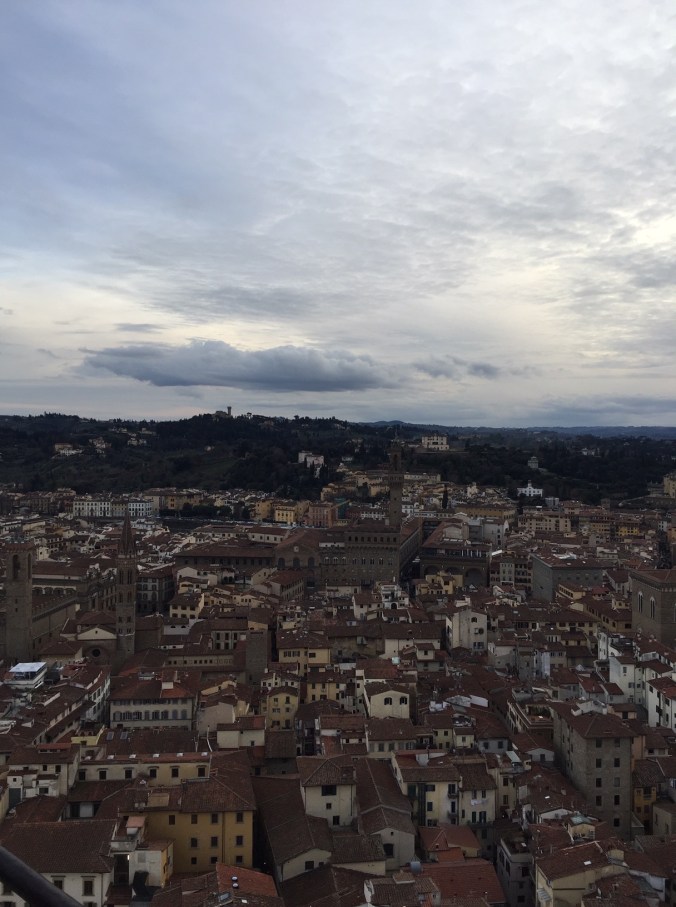
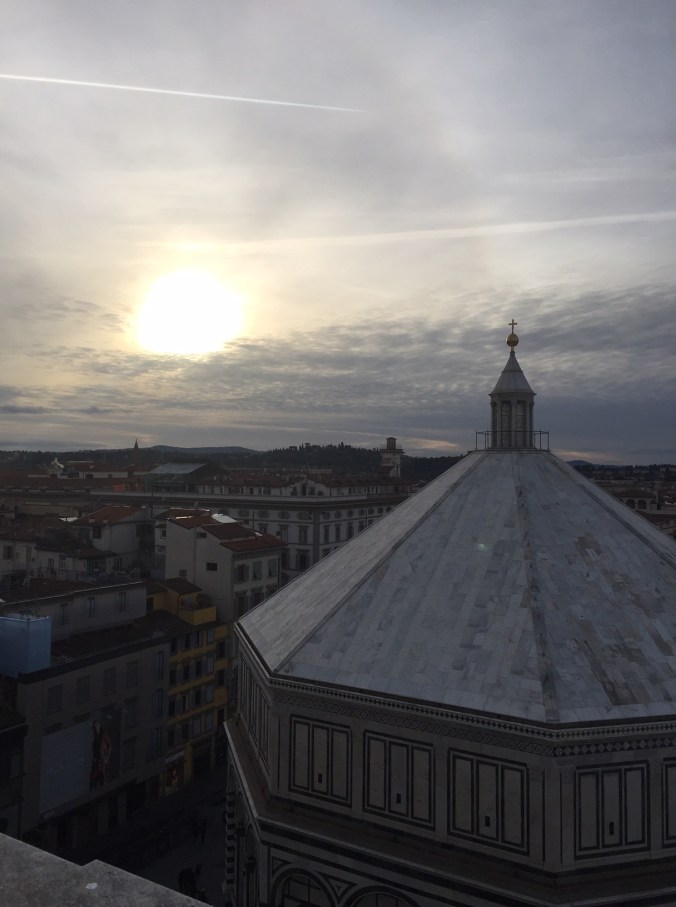
For my last birthday,  I climbed the 1,000,000 steps to the top of Florence’s cathedral with a friend who shares a January birthday.  Even though we live in a world where the word “awesome” is overused to the point of oblivion, I can only describe the duomo experience as awesome.

Unfortunately, I have been negligent in getting my pix and videos posted!  I’m trying to catch up!  I’m only about a year (11.5 months to be exact) late.  Oh well…I’ll try to do better in the future.

First, let me share this Youtube video with you, because it captures how I felt!!


Before ending this very long post, I want to add a photo I came across of a 1940s visitor at the top of the  dome

38292712_1365467610252206_8315175002815070208_n


Casa Martelli, Florence, part 1

Last month, I finally visited the Palazzo Martelli, which I’ve walked by for several years, always hoping to enter. It’s only open a few days of the week and only by guided tour, but it is so worth the visit!  I highly recommend!

For centuries–right up to the 1980s– the the Palazzo Martelli was the residence of one of Florence’s oldest noble families. A visit to this jewel of a museum takes the visitor into a suite of opulent period interiors, including the ground-floor stanze paese (landscape rooms), whose walls and ceilings are painted with trompe-l’œil scenes; an elegant grand staircase leading to the piano nobile; the spaces of the main floor, which include a chapel, a ballroom, fascinating picture galleries, and a great hall and other richly-decorated rooms.

Screen Shot 2019-11-25 at 16.38.01

Palazzo Martelli underwent a series of renovations in the early 18th century, under the care of Niccolò Martelli and his son Giuseppe Maria, who was the archbishop of Florence. Although there had been Martelli family homes on this site from at least the 13th century, it was only in 1738 that the family’s residence was transformed into the palazzo we see today.  It was designed by architect Bernardino Ciurini, and decorated by the painters Vincenzo Meucci, Bernardo Minozzi and Niccolò Contestabile, and the stuccatore (stucco artisan) Giovan Martino Portogalli.  The exterior, as shown above, presents a sober, austere image to the outside world, with only the balcony to soften the hard edges. This hard exterior is the way Florentines presented themselves to the outer world. But, oh, what lies inside is quite the opposite!

Today, Casa Martelli houses the last Florentine example, in public hands, of a well-known art collection formed largely during the 17th and 18th centuries. A visit proceeds through the rooms of the ground floor and the piano nobile, updated according to the tastes of the period, where visitors can enjoy the picture gallery—rich with masterpieces such as Piero di Cosimo’s Adorazione del Bambino, two wedding panels (pannelli nuziali) by Beccafumi, and magnificent paintings by Luca Giordano and Salvator Rosa—as well as the antique furniture, tapestries, and various decorations and objects dispersed throughout the home.

Casa Martelli remained in the Martelli family’s possession until the death of Francesca Martelli in 1986. For a brief period, the residence passed into the hands of the Florentine Curia, to whom Francesca had bequeathed the palazzo in her will, before eventually becoming property of the Italian State.

Two of the most outstanding art works that the Martelli family possessed have now been removed from the palazzo and are in the Bargello and the National Gallery of Art, Washington, D.C. Both are attributed to Donatello. The monumental coat-of-arms that Donatello created for Roberto Martelli is now in the Museo Nazionale del Bargello collection.  Today a copy hangs in the place of honor. You see it below, on the far wall with a red background.

Likewise, a statue of David also attributed to Donatello (see below) once stood in this hall; today the statue is in Washington, D.C.

Screen Shot 2019-11-25 at 16.36.17

Currently the museum is only open to visits a couple of days of the week, and then only with a guided tour.  If you get the chance, you should definitely visit the casa, or palazzo.  It is wonderful.

But, if you can’t wait or can’t get to Florence, you can fortunately take a virtual tour of the museum here: http://www.polomuseale.firenze.it/musei/visita/casamartelli/tour.html

Even accounting for the loss and dispersal of items, the collection remains impressive, including works by Piero di Cosimo, Francesco Francia, Francesco Morandini, Salvator Rosa, Giordano, Beccafumi, Sustermans, Michael Sweerts, Pieter Brueghel the Younger, Orazio Borgianni, Francesco Curradi, and collections of small bronzes, including some by Soldani Benzi. The works are displayed in the crowded arrangement typical of the period.

When you visit the casa today, you enter through large wooden doors and an iron gate, both dating to 1799.  Inside the building, at the far end of a short interior courtyard, is a mural painting with an illusory effect, done in 1802 by Gaspero Bargioni.

 
Screen Shot 2019-11-25 at 16.28.54


One enters a door to the grand staircase from this cortile:


The original ironwood of this staircase is fabulous!


Where you see the neoclassical sculpture of Psyche, imagine a statue of David by Donatello standing there.  That’s the work of art the Martelli family displayed in this place of honor.  The Donatello statue is today in Washington, D.C.

Screen Shot 2019-11-26 at 09.20.56


Below is the copy of the Donatello coat of arts made for the Martelli family.  The original is in the Bargello.


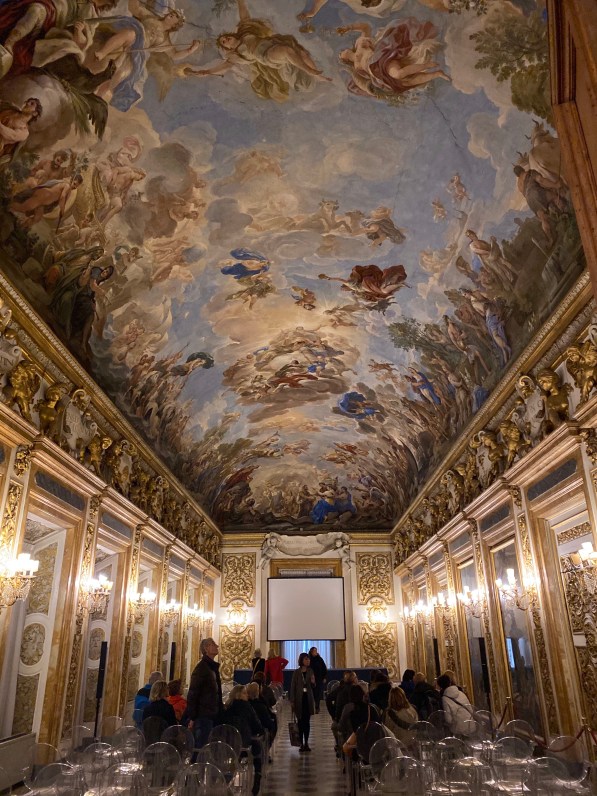
Entering the first gallery off the entrance, you begin to enjoy the art collections for which the Martelli family was renowned, including the many outstanding ceiling frescoes they commissioned over the centuries for this opulent family home.


In the painting below, we catch a glimpse of members of the Martelli family in the 17th century. A servant offers them a tray bearing cups of the hot chocolate which were a la mode at the time. Oh, to have been a fly on the wall!


Many of the doors throughout these galleries are embellished with these gilt decorations, every door with a different combination of items:


The artist signed his name on the ceiling mural, as you can see below:


I was interested in these little pops of passamaneria (trimmings) found covering the nailheads that these paintings are hung on.  I’m a huge fan of all things passamaneria, and I’ve never seen anything like these before.  I love it when I experience something completely new!


Now we enter the 2nd gallery, with its own wonderful ceiling mural.  I was enchanted by these 2 little boys in the mural.  They are busily talking pageboys,  holding the lady’s train.  What were they discussing, I need to know!


The door knobs in some of these galleries were fabulous! Butterflies!


The inlaid commesso fiorentino furniture was outstanding as well:


Next we enter the 3rd gallery, with a ceiling fresco treating the subject of Donatello as sculptor to the Martelli family.  The connection was real and it is very entertaining to see its history play out on the ceiling!


That’s Donatello in the yellow smock:


Oops, another shot of my latest obsession.


Below: my other obsession.


Also notable in this room are the very old and very elegant draperies, also with very elegant trim or passamaneria.


And, of course, this family would own some fine Manifattura Richard Ginori ceramics:


The next gallery, with another fine frescoed ceiling:


In this room, I love the way the 2 drapery rods meet in the middle in a laurel wreath.  The message is clear, the Martelli family was crowned with laurel:


That, of course, is Dante in the red, accompanied by Petrarch and Boccacio. Naturally they are crowned with laurel wreaths and the putto is sailing in with an extra, just in case:


In the next room, a private chapel was built for the last Martelli owner of the home.  It is really quite something in terms of casework.


I don’t remember ever seeing a painting of a swaddled Christchild before.  Another something new.


I’ve still got more to show you, but this post is already too long.  I’ll finish it tomorrow…stay tuned!

A fancy hotel in Florence, with splendid views

A couple of months ago, on a splendid Sunday afternoon, one of Florence’s fanciest hotels (owned by the Ferragamo company) held an open house.  I took advantage of the occasion and took a tour.  My blog isn’t meant as a travel how-to, so I don’t typically recommend hotels or restaurants, etc..

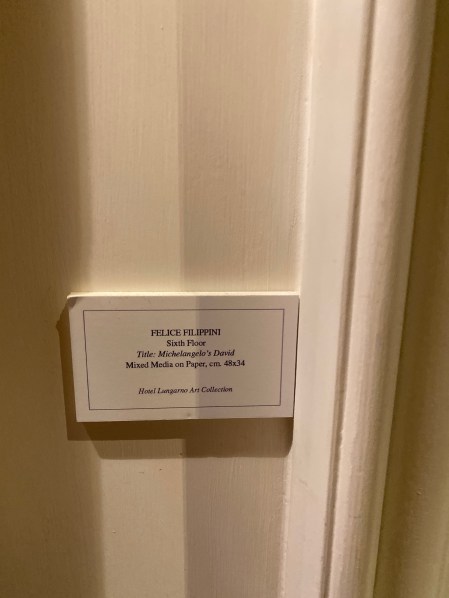
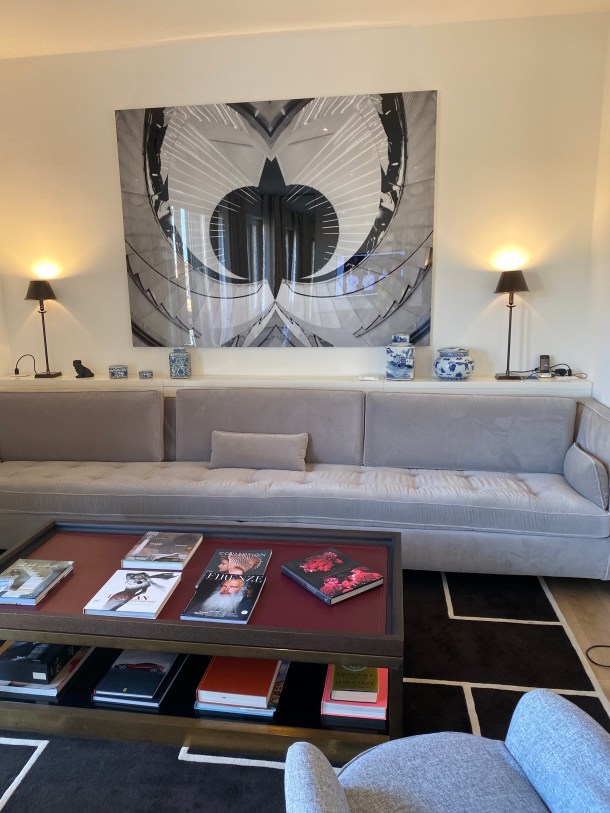
But I got some interesting images from this fine hotel and their art collection, and want to share them with my readers. Here we go:


LzpCiCI6RIyCE7beVvWJAg


Lz6733+EQZCxtoa732xCDg


9STh00rjQIOU0iG+ZF8rvg


sgHDHghdSLyXpSDr1xKCJg


3V+5JTj+V32OpgLvoJg


3cGQh+C2Sw6MesptaB%aGw


NS3swGHAQOy+RQZNc0lYJQ


9Nr25RXIToG7jGAeLvEzKw


QHjFyhG+RcaSSAcJJLt+DQ


Qke0QFeWSRuQXXZ%ONKzzA


oXQPtDzbTvCtCrDxF5Q


KKCQuwejRXuVj7c13088lg


D72kvQyBSwSPFYNjzsIijQ


6JhxIcjmSAyKRF05mCYzvg


6BXGJRmFR4WnSNqMGaxL9Q


q34snvO5R9O3ff9UjvU54w


6PB8sSyS5BC3vt9SJgQ


QwjcJLnfSQ6%olC68MF5AA


z0%FtEPOQsSJSqkS+UOGDg


++e7zxbUS1Gd586cDf0d2g


uK1I8fzRT4qDSTOxGNtyjQ


Yo2UxifFTtqs7WKRr4JlOA


Gv0aSxJVS2Cm59TWVLZ0XQ


K79qPRFgQrioRY2tkJOyww


KXqaNRGaTIyf+zXoESLvrA


lmJmQq4TRSG%n1N5e6cCyg


jYzHYf3jRqyIp637Sngt5A


WasSyDuJR9OPjuZfwIVjZA


ci2tjNAkSoyCJG5ph1fNzQ


p5CFDnIGRHGyBxj%qnZstQ


LyDvDOPNRWiEwRp5fQRFoA


u7e6y3zeRhyG84INUUWFhQ


T0jEFZExRjyk6d1OxxoWxw


dx%dizScRmibCR6Ep6m4Rg


m3q7AI15TPq%E%SJzTxRdA


BC0+tjRZTY6PEz3ueOrpcA


VcTyquQvQ8ujkO2lAUONXw


LNZxDlAYQam2Z2c+a4DcsA


OGtBBL7WR7Or3%Jet0VZ6g


02H5eBTtQhC702kJi6RiMQ


wqbvzivLS7Gi66rOHyCJAw


5KYpm2J8T9SEE75q25ztZA


wGRrMZrJQ72IXt3KE0yj2w


N7JUskGYT1uTgONBWKQ+Ww


lt6k3aQURae6OLqRfxPf8g


2eajbmfdTnSyl%XzF3j4Rw


bhLtzKIRSuqGklrpCWuv7Q


TXMhyLP2QSK83K2nUSN%7g


OQxwlcFFSQG30M2TFkEqGA


GxXIhl1TQMip0KaUnHOaSw


qhGzXGWpSz2V6eElcc9m9Q


dBMWa+CaTgWpFaTAMgI1ZA


jnYgOMjJSdyfpUrBqckKLA


BLqop32zR2mECpKbe9nOyw


%u+pAcezQy2+T9qWx0v9zQ


kWML97WmTS2KRuiCdESyRw


BMnt6M9%QQCoS4Z8UefEsA


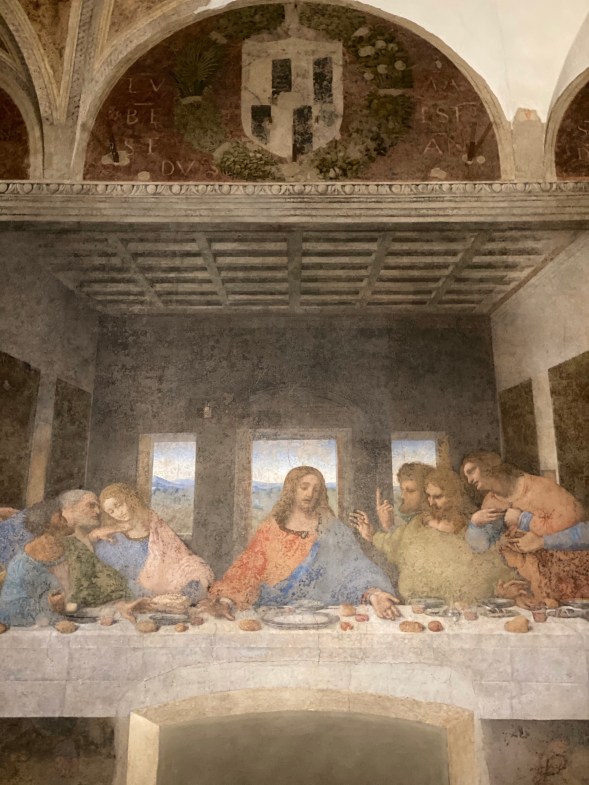
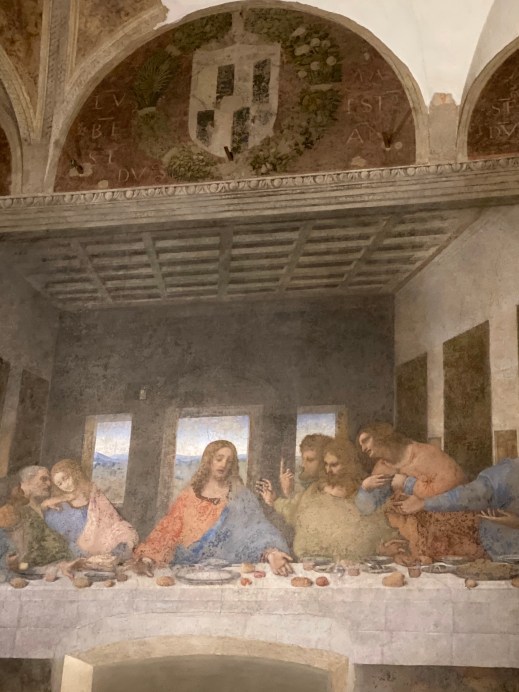
Leonardo’s Last Supper, Milan


Dear Fellow Former Met Girl,

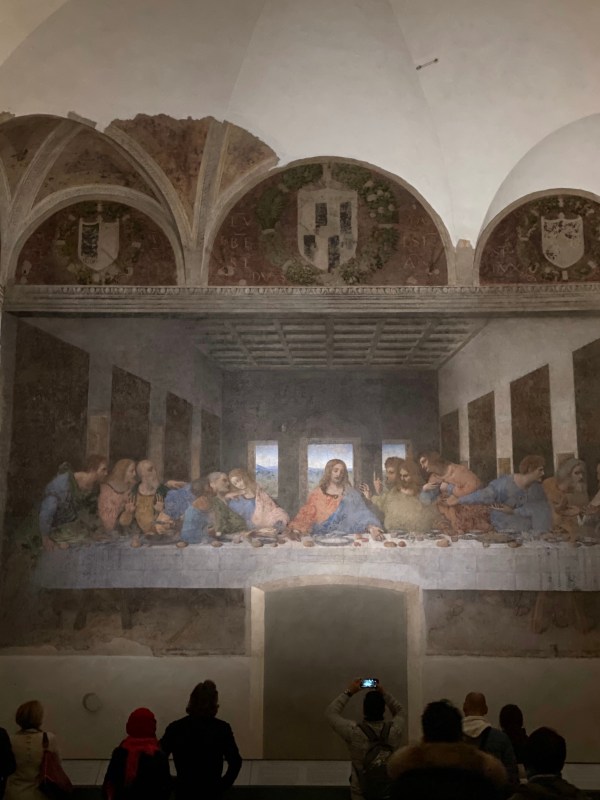
So, I think you will enjoy this. I had a ticket to visit the Last Supper for 15 minutes on Wednesday at 5 pm. That’s how they do it nowadays. You buy your ticket online if you want to be sure to get in. No more dropping by anything interesting in Italy anymore; sure, you can try, but you will most likely be disappointed.

My visits to the Scrovegni Chapel were 20 minutes long. Didn’t realize I was spoiled with that!

Anyhoo, I have a new iPhone and it has a mind of its own. Typically when I take a video, the light doesn’t come on. So, I was making a video of the last supper when I heard this screeching coming from somewhere in the refectory. I knew right away somebody had made a faux-pas.

I kept filming until I realized, when 2 Italian matrons were bum-rushing me, that the faux pas was mine. My camera light was on and that was a huge no- no.

I turned off my camera and apologized profusely, explaining that I didn’t know the light was on. Finally they stood down, but only after telling me I had to delete the video. I promised to do so and acted like I was.

But, I kept it and here it is for all the world to enjoy!

This is how a former Met girl goes to Milan. Just like a bronze foundry in Brooklyn!

xx, L


Milan, random beauty shots, December 2019

I got to enjoy a few days in Milan this week and here are some random pictures of things that caught my eye.  Some are just fun, some are quite lovely!


Milan has a lot of stunning architecture:


Italy has an endless kaleidoscope of decorative iron work:


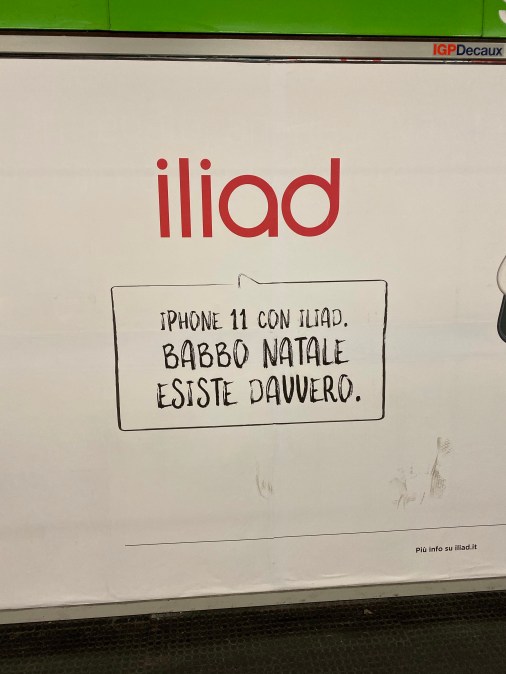
I was happy to learn that Santa really exists!


Aww….Merry Christmas!


Hello, Leo!  Everyone is celebrating the 500th anniversary of your death this year! Gone but not forgotten.


In Milan, college graduates wear the corona too. Auguri, young scholar!


Galleria Vittorio Emanuele II, you are ever so lovely:


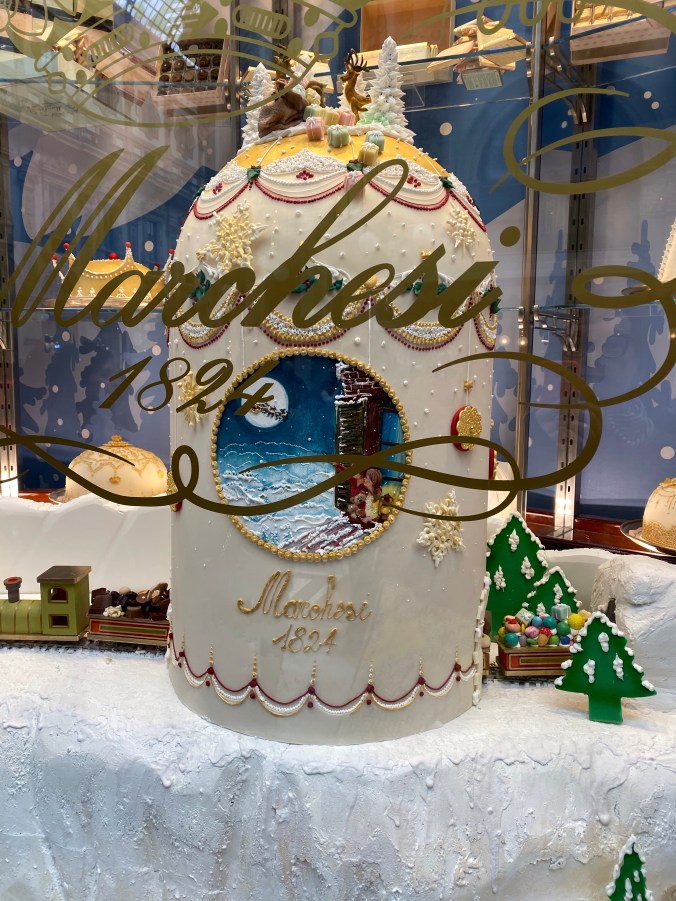
My vote for prettiest antique bakery goes to Pasticceria Marchesi, founded in 1824. I love anything from this shop (and I think there is a little something something from here under my tree at home?).


Piazza del Duomo:


Other places:


T’is the season:


From the grand train station, one of the most impressive in the world: