Celebrating women art patrons: Isabella d’Este

Isabella d’Este (1474–1539)
Marchioness of Mantua

Screen Shot 2019-09-08 at 12.18.37


As an influential and beloved politician, art patron, and fashion icon, Isabella d’Este, known as the “First Lady of the Renaissance,” turned the city of Mantua into an important cultural center. Her husband, Francesco Gonzaga, Marquess of Mantua, quickly became jealous of her popularity in the region. To escape his resentment, Isabella traveled to Rome. She spent time in the influential circles of Pope Leo X—a prominent patron himself—and met artists including Leonardo da Vinci, Raphael, Michelangelo Buonarroti, Titian, Pietro Perugino, Andrea Mantegna, Giovanni Bellini, and Giorgione. In these artists’ portraits of the patroness, Isabella appears as a pale and regal beauty with an exuberant taste in clothes.


In an unusual move for the time, Isabella arranged her apartments as a kind of museum. The studiolo and grotta in the ducal palace became places for her to entertain nobles, dignitaries, and artists, and to show off the works that she had commissioned. In this way, as scholar Rose Marie San Juan has explained, Isabella inserted herself into “spaces traditionally allotted to men.” After her husband died, Isabella became co-regent of Mantua with her son, Federigo II. Her people so admired her that they persuaded Federigo to reinstall his mother as their leader. Through her collecting and her noble background, Isabella established networks across Europe that furthered her influence.

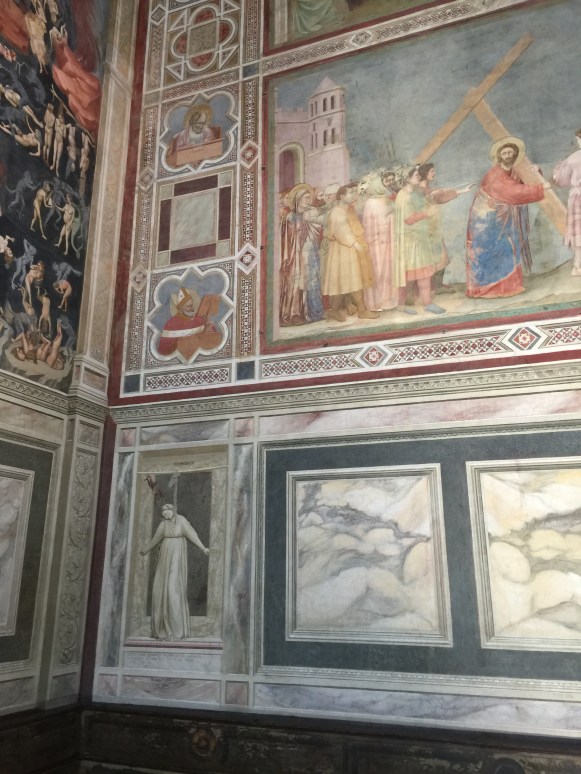
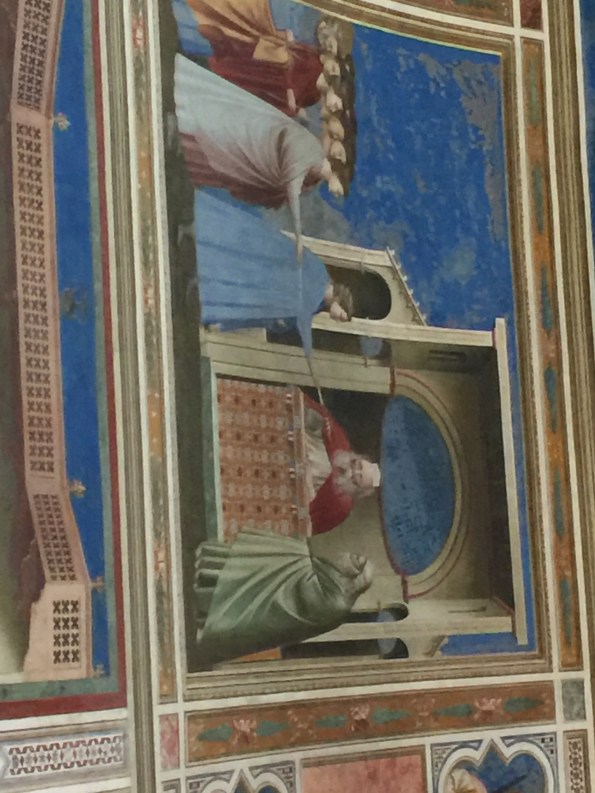
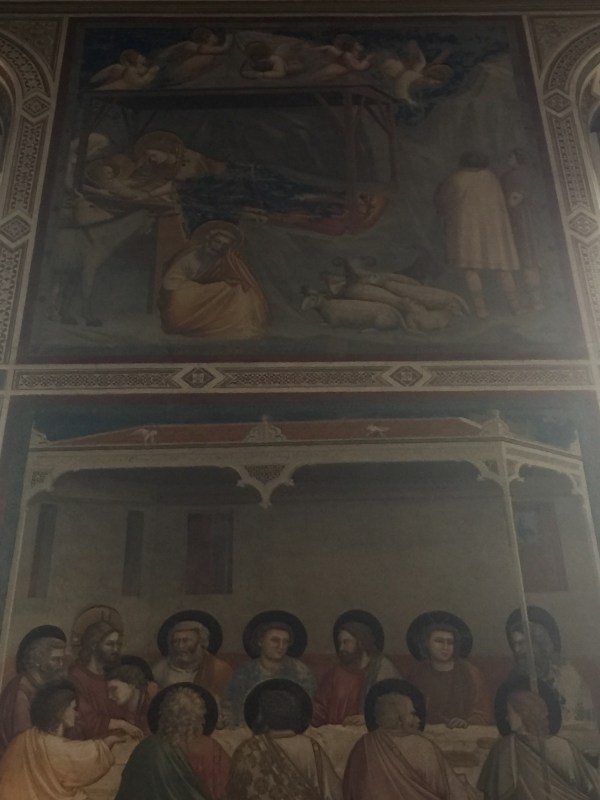
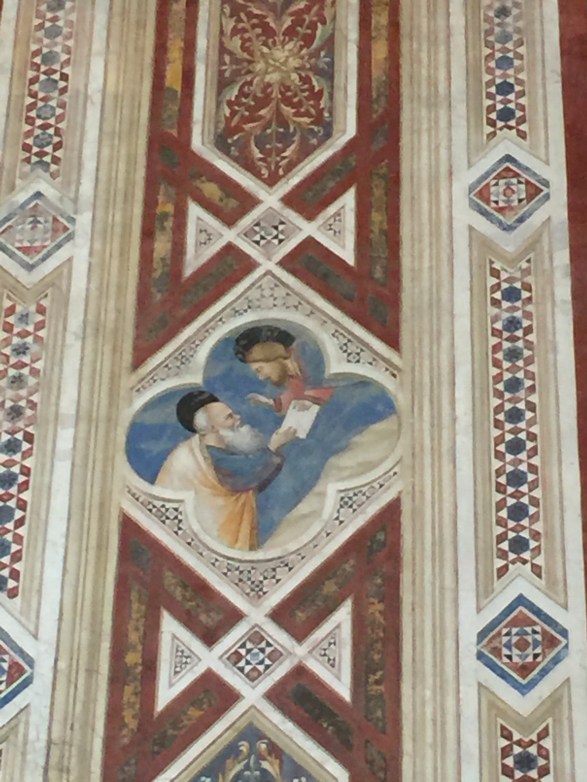
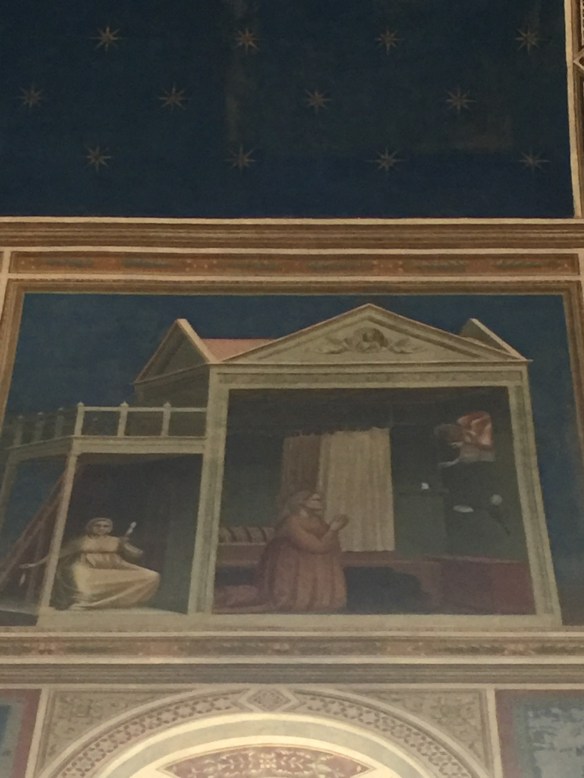
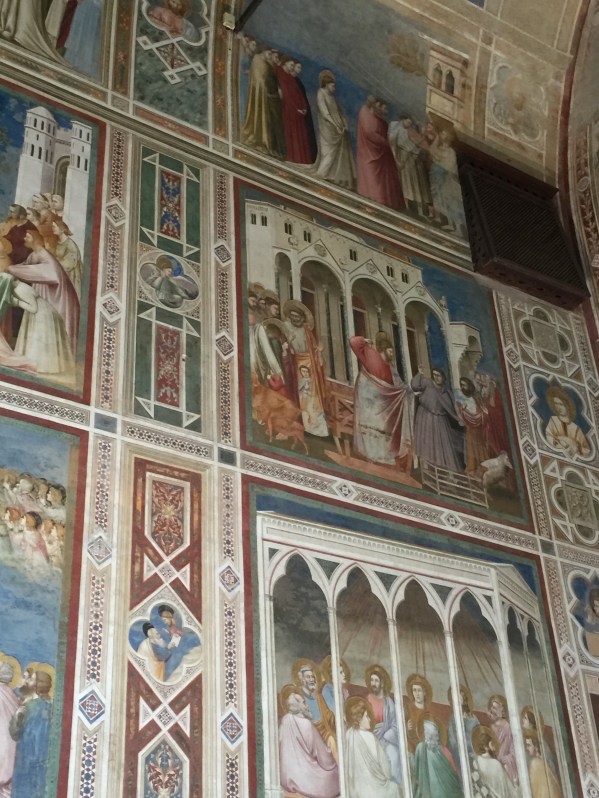
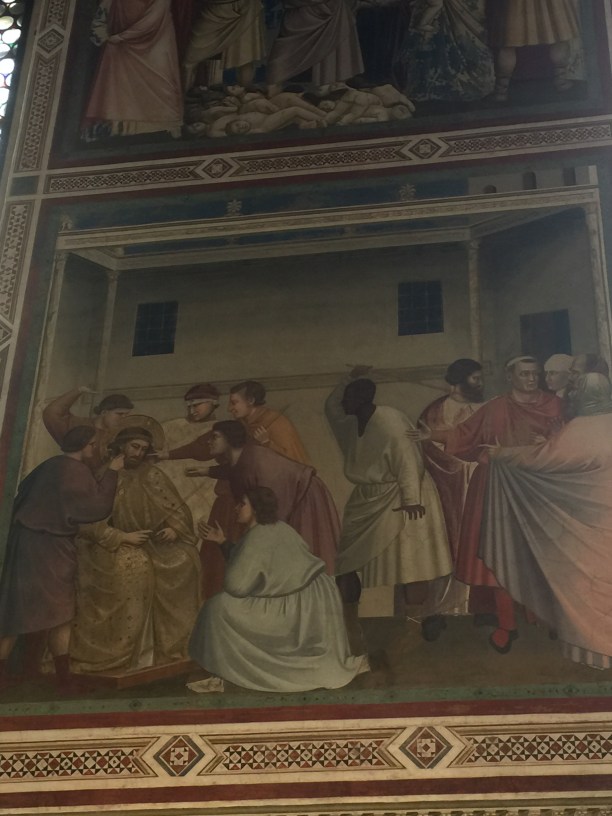
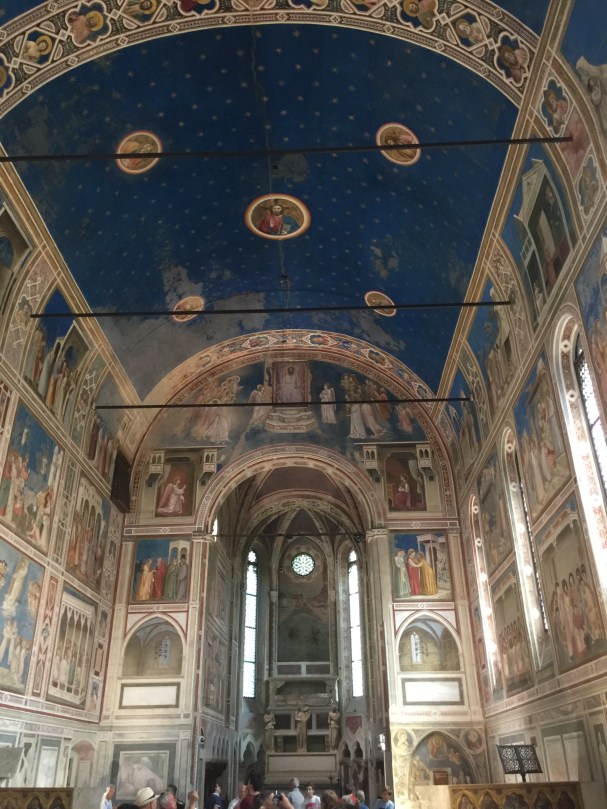
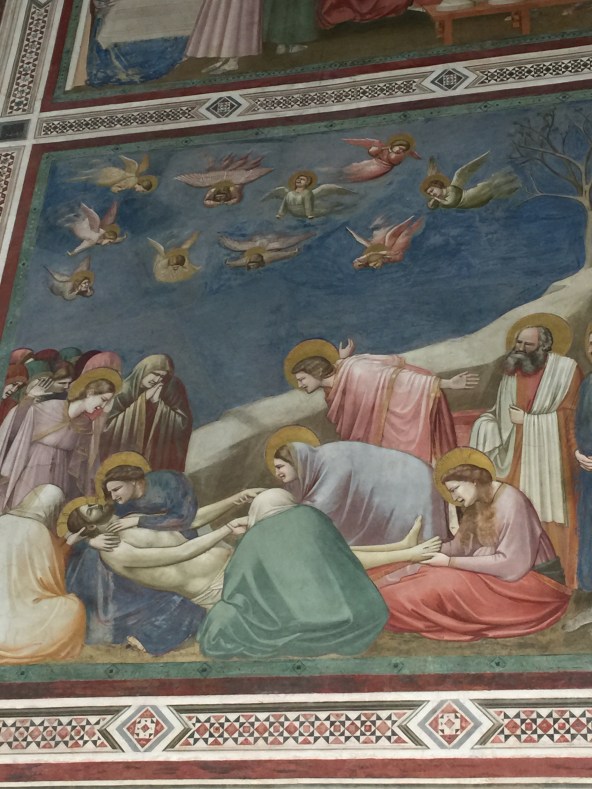
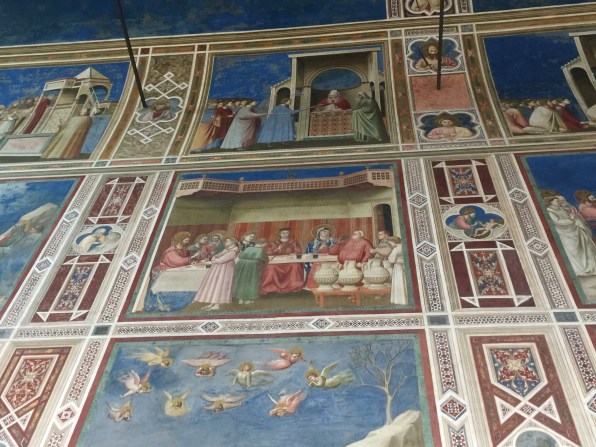
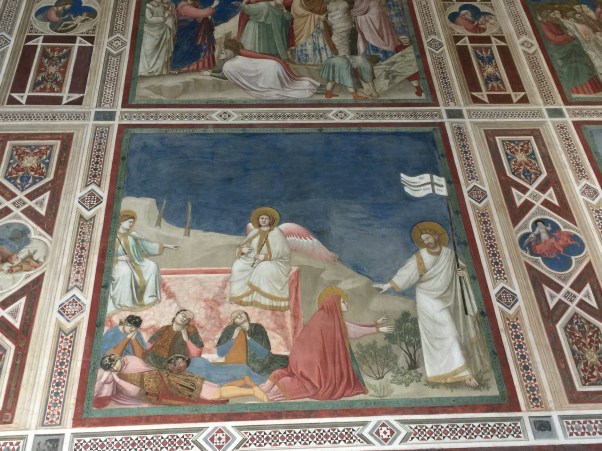
Giotto: the magnificent fresco cycle in the Scrovegni Chapel, Padua

IMG_1125

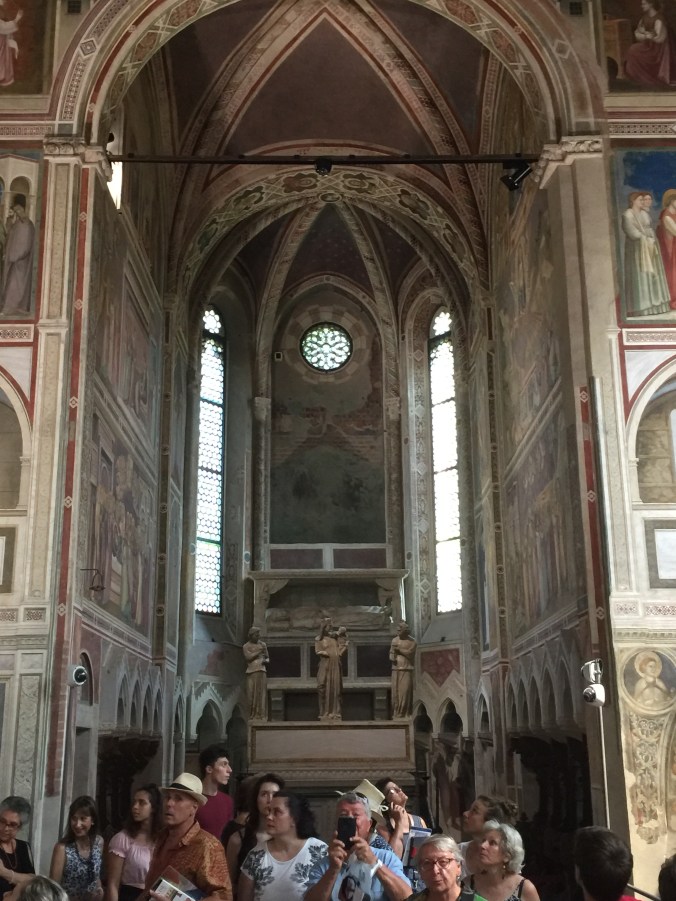
Above, looking at the altar of the Scrovegni Chapel, with marble sculpture by Giovanni Pisano.


Below: the fresco cycle


IMG_1123


IMG_1124


IMG_1121


IMG_1122


IMG_1126


IMG_1127


IMG_1130


IMG_1131


IMG_1132


IMG_1133


IMG_1134


IMG_1135


IMG_1136


IMG_1137


IMG_1138


IMG_1139


IMG_1140


IMG_1141


IMG_1142


IMG_1143


IMG_1144


IMG_1145


IMG_1146


IMG_1147


IMG_1148


IMG_1149


IMG_1150


IMG_1151


IMG_1153


IMG_1154


IMG_1155


IMG_1156


IMG_1157


IMG_1158


IMG_1159


IMG_1160


IMG_1161


IMG_1162


IMG_1163


IMG_1164


IMG_1165


IMG_1166


IMG_1167


IMG_1168


IMG_1169


IMG_1170


IMG_1171


IMG_1172


IMG_1173


IMG_1174


IMG_1175


IMG_1176


IMG_1177


IMG_1178


IMG_1179


IMG_1180


IMG_1181


IMG_1182


IMG_1183


IMG_1184


IMG_1185


IMG_1186


IMG_1187


IMG_1188


IMG_1189


IMG_1190


IMG_1191


IMG_1192


IMG_1193


IMG_1194


IMG_1195


IMG_1196


IMG_1197


IMG_1198


IMG_1199


IMG_1200


IMG_1201


IMG_1202


IMG_1203


IMG_1204


IMG_1205


IMG_1206


IMG_1208


IMG_1209


IMG_1210


IMG_1211


IMG_1212


Padova, a lovely historic town in the Veneto (Padua, part 1)

Lovely Padova, or Padua, is a city and comune in Veneto, northern Italy.  It is the capital of the province of Padua and the economic and communications hub of the area. Padua’s population is 214,000 and when the city is included, with Venice (Venezia) and Treviso, in the Padua-Treviso-Venice Metropolitan Area (PATREVE), the sum population of around 2.5 million.

Padua stands on the Bacchiglione River, 25 miles west of Venice. The Brenta River, which once ran through the city, still touches the northern districts.

Its agricultural setting is the Venetian Plain (Pianura Veneta). To the city’s south west lies the Euganaean Hills, praised from time immemorial by Lucan and Martial and later by Petrarch, Ugo Foscolo, and Shelley.

Padua was the setting for most of the action in Shakespeare’s The Taming of the Shrew and in and in Much Ado About Nothing, Benedick is named as Signior Benedick of Padua.” There is a play by the Irish writer Oscar Wilde entitled The Duchess of Padua.

The University of Padua, founded in 1222, is where later Galileo Galilei was a lecturer between 1592 and 1610.
Screen Shot 2019-09-02 at 15.20.55

I was fortunate enough to pay a 2nd visit to Padova recently. I’d been once before, at least 30 years ago, just to see the Giotto frescoes in the Scrovegni Chapel. I  had crystal clear, bright blue memories of that chapel and it has been high time, for some time, to pay another visit.  So off I went.  It was wonderful.

The main goal of my recent trip to Padua was to again see the Giotto frescoes.  Nowadays, with the continual press on all the cultural monuments in Italy due to mass tourism and inane “bucket lists,”  many sites have time limits on how long you can see the art. The Scrovegni Chapel has joined that rank.

You must book your visit at a particular time well in advance, arrive early to pick up your ticket, meet 10 mins before your time, be ushered into a waiting room and watch a (very interesting) film in Italian while you are “dehumidified”. Is this hocus pocus? I don’t know. But it’s fine.

The only issue I have is that you now enter the chapel with 19 other dehumidified persons and get to stay in the chapel for 15 minutes only and then you are ushered out and the next group is ushered in.
IMG_1125

But, before discussing the sublime Scrovegni Chapel, let me say a few words about the archaeological museum that is next door to the chapel.

In fact, the truth is that prior to my recent visit, I had not realized there was an archaeological museum in Padova, let alone attached to the same complex of buildings.  And I certainly did not know that Padova was home to such an amazing collection.

I arrived at the Scrovegni Chapel about 45 minutes early and checked in and got my ticket for my 1:00 o’clock visit.  The pleasant woman at the check-in desk suggested that I visit the museum when I was thinking aloud, hmmm…I wonder what I should do for the 45 minutes while I wait to visit the chapel.

I am so glad she made that suggestion.  I am already planning another visit to Padova later this fall, and you can bet that I’ll be spending a lot more time at this fine museum. Below are just a few pictures from my initial visit.

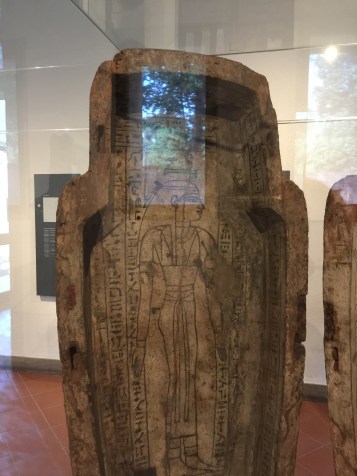
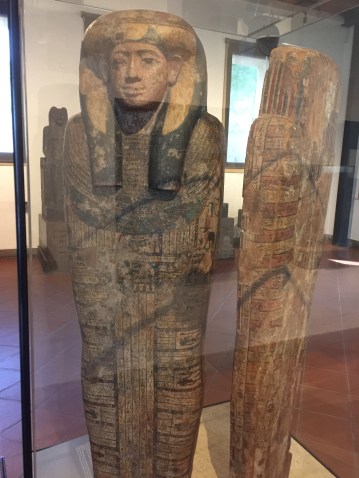
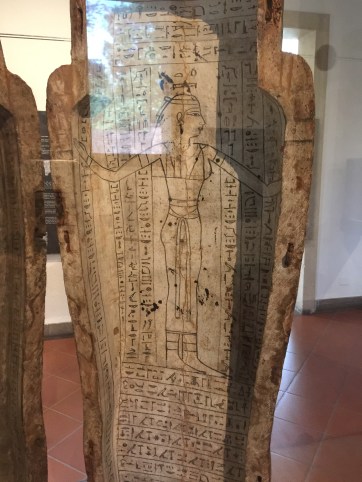
So…have you ever wondered what the inside of an Egyptian sarcophagus looks like?  I have.  Fortunately, the Padova museum exhibits one of their sarcophagi open, making both the outside and inside visible. Fascinating.

IMG_1082

IMG_1083

IMG_1084

IMG_1085


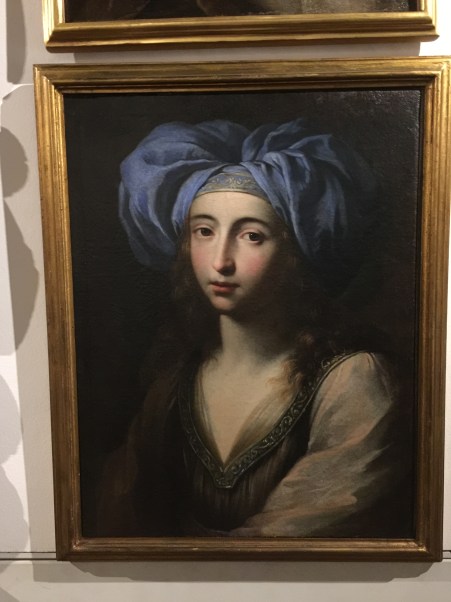
The Musei Civici has many areas of collection and I just snapped some random pictures of some of the objets that caught my eye.  For example, I want to wear the headdress in this painting:
IMG_1089

Painting above: Young Woman in Oriental Clothes by Ginevra Cantofoli, Bologna 1618-1672

IMG_1091

Painting above: Young Man with turban by Ginevra Cantofoli, Bologna 1618-1672

Check out the amazing frame on painting below.  I’ve seen a lot of frames in my day, but this was a first!

Painting below: Armed Minerva by Pietro Liberi, 1614-87. Born in Padova, died in Venezia.  This modest little frame that captured my attention and my heart!

IMG_1093


IMG_1095IMG_1096

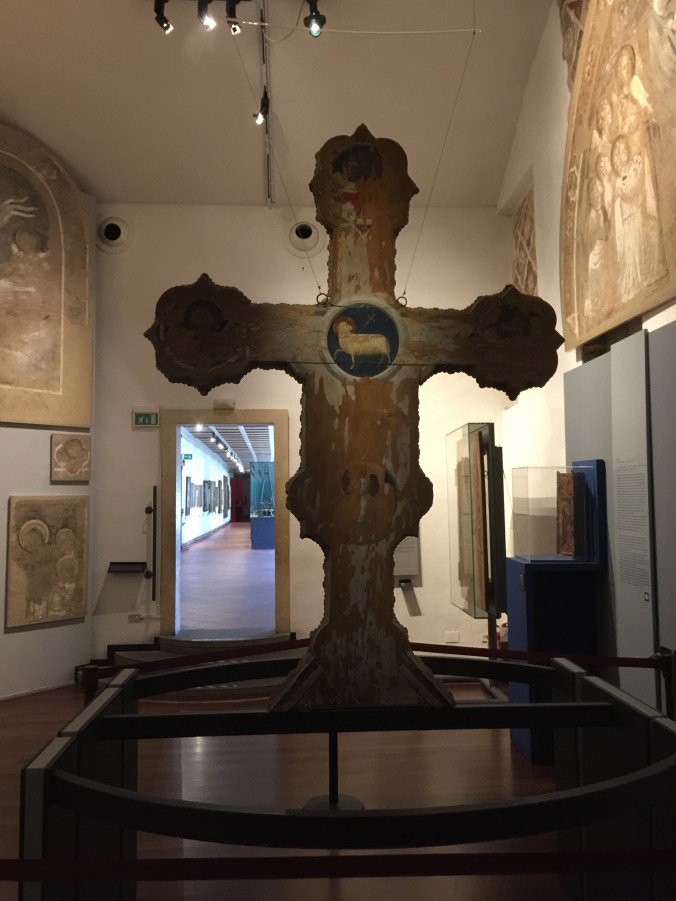
Above, the front and back of a crucifix by Giotto.

Some other strange and/or wonderful works I spied on this visit:


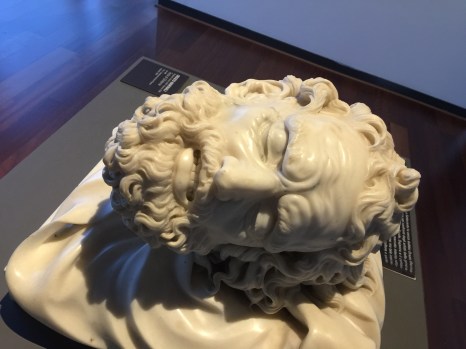
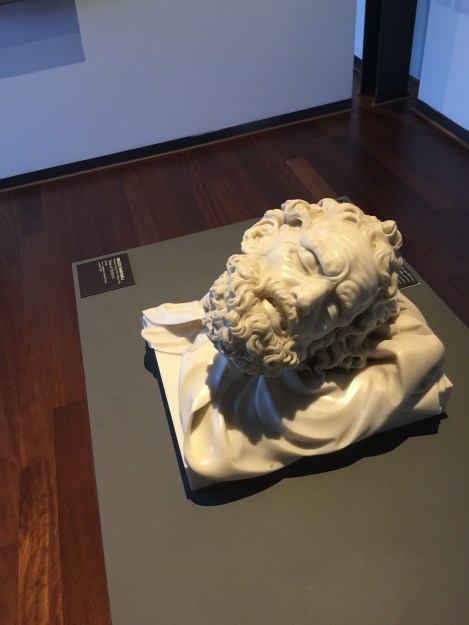
Orazio Marinali, Head of Holofernes
IMG_1119

IMG_1120

I mean, come on…anatomically correct with a severed spinal cord??

IMG_1117


IMG_1106

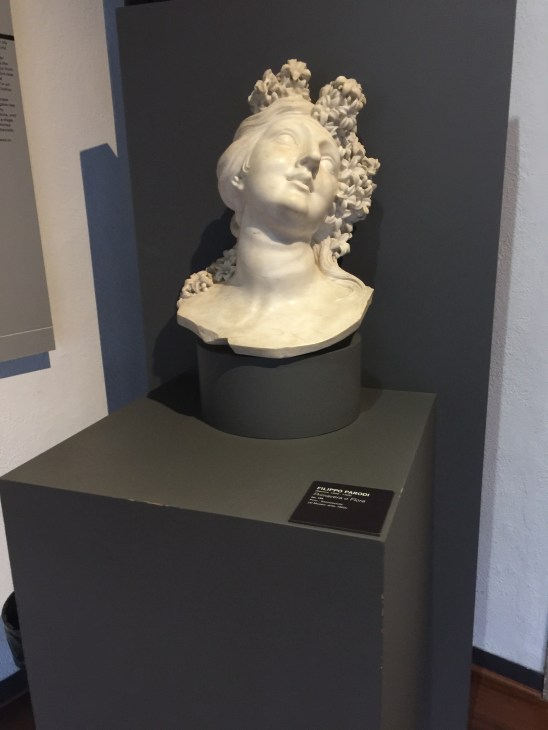
Above and below: Filippo Parodi, Head of Spring, or Flora
IMG_1108


Love this one below for the frame, the painting, meh…Baby Bacchus by Marco Liberi. But the frame carver, now that’s a masterpiece!

IMG_1109


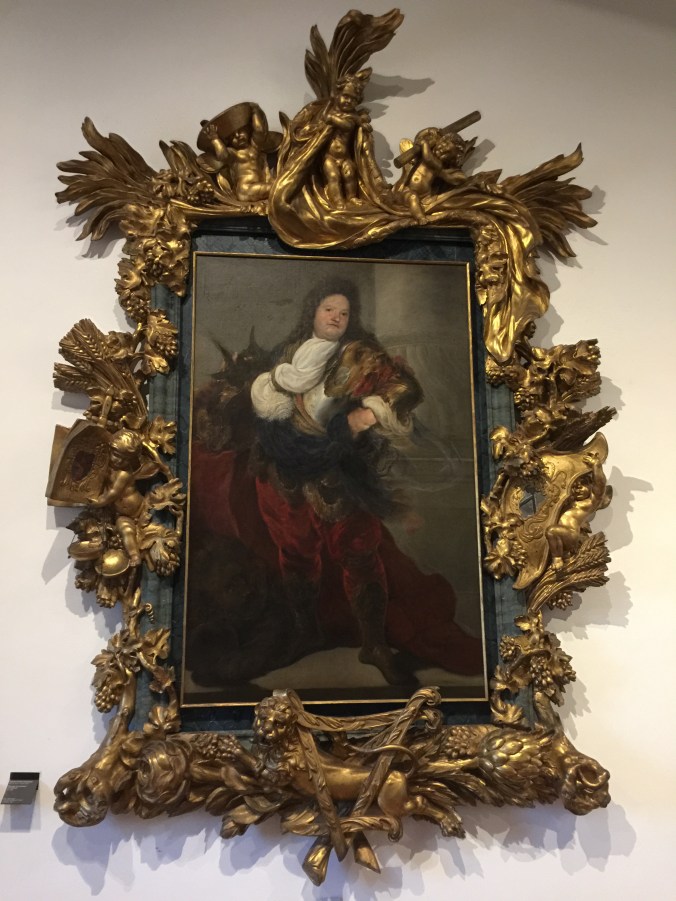
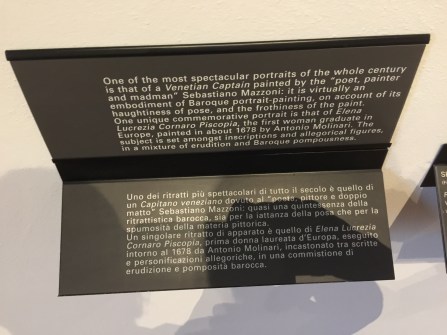
Likewise for the painting below, I can take or leave the painting (Sebastiano Mazzoni, Portrait of theVenetian Captain), but that frame…!
IMG_1111 IMG_1113


This marble piece below was freaky, the way it combines 2 angel’s heads, showing them kind of like Siamese twins.

IMG_1114IMG_1115


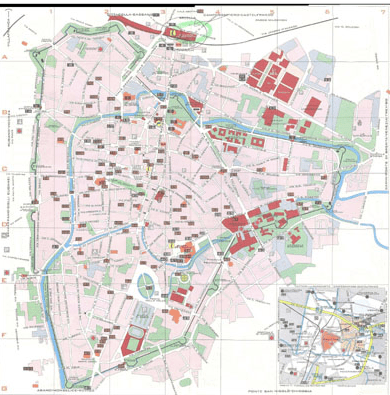
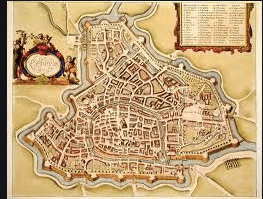
Padova’s historic center is picturesque, with a dense network of arcaded streets opening into large communal piazze, and many bridges crossing the various branches of the Bacchiglione, which once surrounded the ancient walls like a moat.

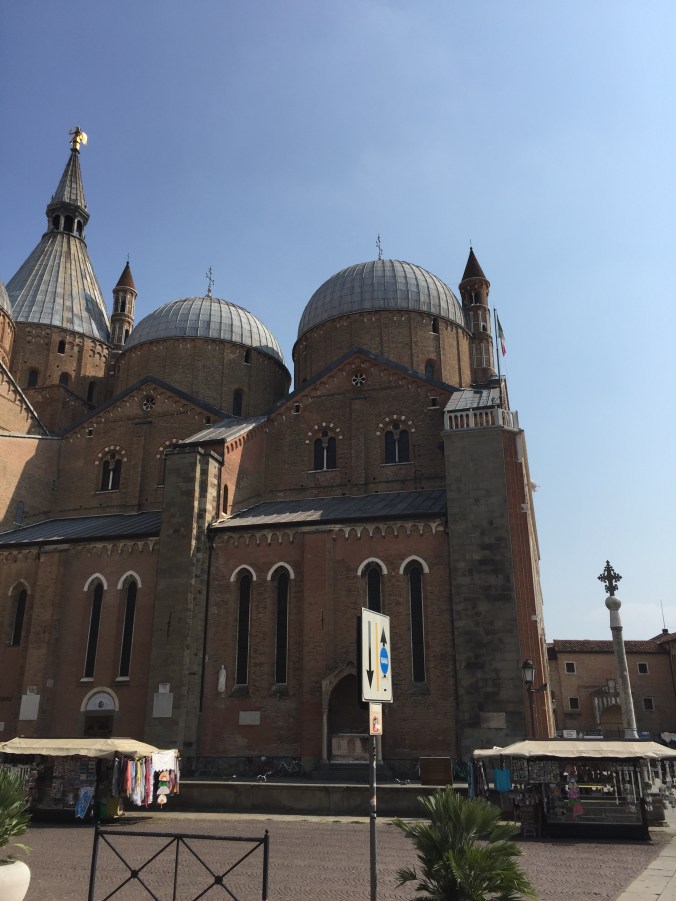
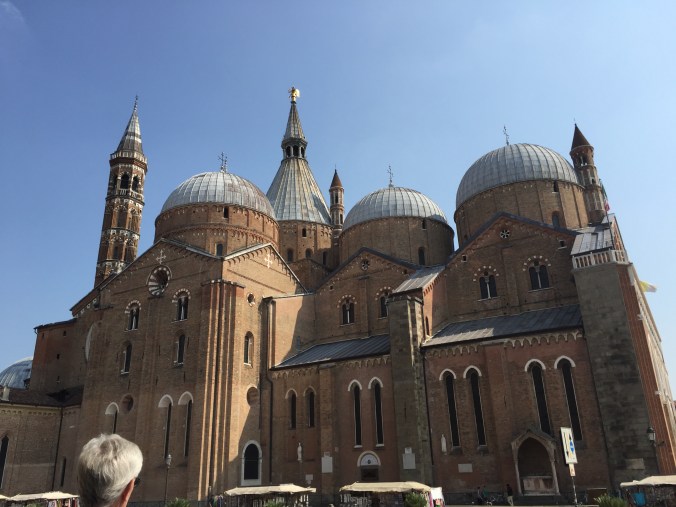
The city is also known for being the city where Saint Anthony, a Portuguese Franciscan, spent part of his life and died in 1231. The huge pilgrimage church of Sant’ Antonio is a major feature of the city’s life and skyline.
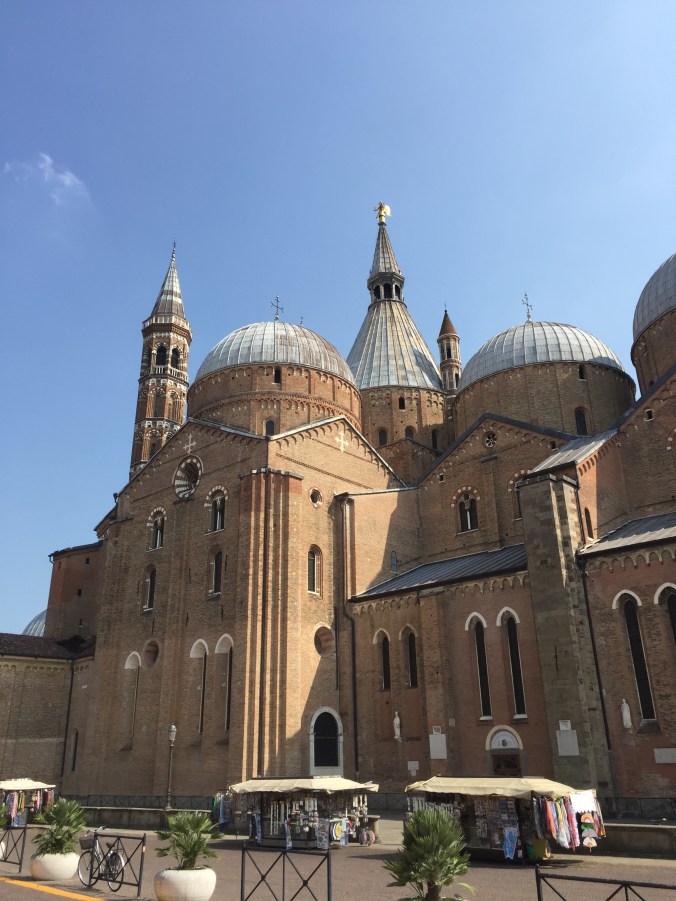
IMG_1253IMG_1254IMG_1255


Although I don’t have a clear memory of it, I know I visited the Gattemelata equestrian statue by Donatello on my first visit to Padova. I have clear memories of it from this visit. Here it is:
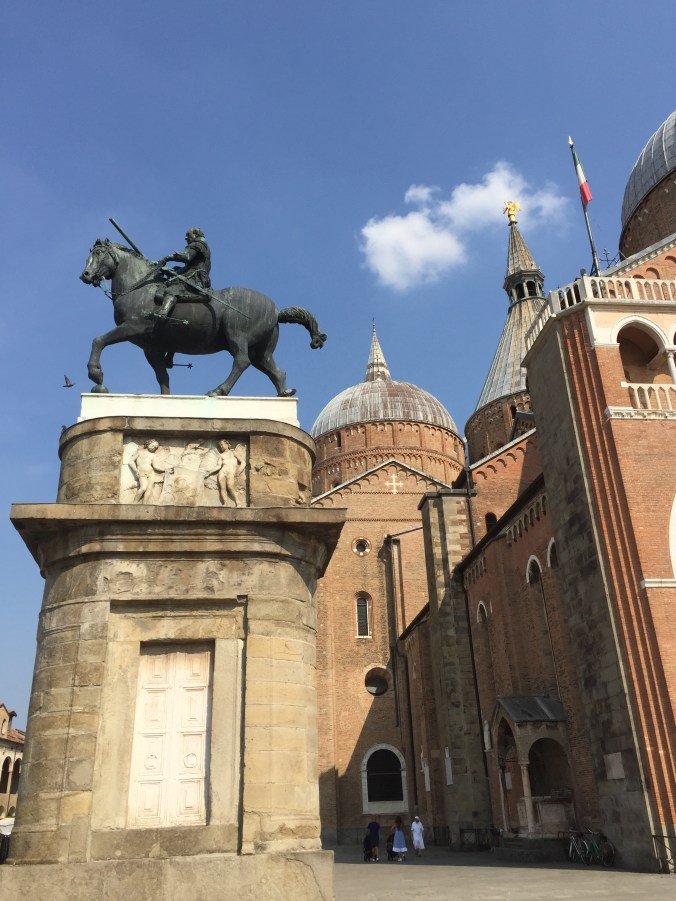
IMG_1267


The name of the city, Padova, is derived from its Roman name Patavium. Its origin is uncertain. It may be connected with the ancient name of the River Po, (Padus). The root “pat-,” in the Indo-European language, can refer to a wide open plain as opposed to nearby hills.  The suffix “-av” (also found in the name of the rivers such as the Timavus and Tiliaventum) is likely of Venetic origin, precisely indicating the presence of a river, which in the case of Padua is the Brenta.

Screen Shot 2019-09-12 at 10.52.15

Padua claims to be the oldest city in northern Italy. According to a tradition dated at least to the time of Virgil’s Aeneid and to Livy’s Ab Urbe Condita, Padova was founded in around 1183 BC by the Trojan prince Antenor.

After the Fall of Troy, Antenor led a group of Trojans and their Paphlagonian allies, the Eneti or Veneti, who lost their king Pylaemenes to settle the Euganean plain in Italy. Thus, when a large ancient stone sarcophagus was exhumed in the year 1274, officials of the medieval commune declared the remains within to be those of Antenor. An inscription by the native Humanist scholar Lovato dei Lovati placed near the tomb reads:

This sepulchre excavated from marble contains the body of the noble Antenor who left his country, guided the Eneti and Trojans, banished the Euganeans and founded Padua.

More recent tests suggest the sepulchre dates to the between the 4th and 3rd centuries BC.

Nevertheless, archeological remains confirm an early date for the foundation of the center of the town to between the 11th and 10th centuries BC. By the 5th century BC, Padova rose on the banks of the river Brenta and was one of the principal centers of the Veneti.

Screen Shot 2019-09-12 at 10.54.13

The Roman historian Livy records an attempted invasion by the Spartan king Cleonimos around 302 BC. The Spartans came up the river but were defeated by the Veneti in a naval battle and gave up the idea of conquest.

Still later, the Veneti of Padua successfully repulsed invasions by the Etruscans and Gauls. According to Livy and Silius Italicus, the Veneti, including those of Padova, formed an alliance with the Romans by 226 BC against their common enemies, first the Gauls and then the Carthaginians. Men from Padova fought and died beside the Romans at Cannae.

With Rome’s northwards expansion, Padova was gradually assimilated into the Roman Republic. In 175 BC, Padova requested the aid of Rome in putting down a local civil war. In 91 BC, Padova, along with other cities of the Veneti, fought with Rome against the rebels in the Social War.

Around 49 (or 45 or 43) BC, Padova was made a Roman municipium under the Lex Julia Municipalis and its citizens ascribed to the Roman tribe, Fabia. At that time the population of the city was perhaps 40,000.

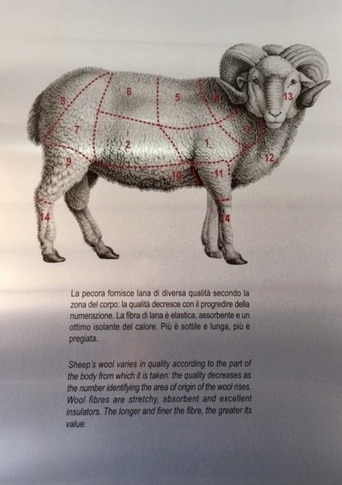
The city was reputed for its excellent breed of horses and the wool of its sheep. In fact, the poet Martial remarks on the thickness of the tunics made there. By the end of the 1st century BC, Padova seems to have been the wealthiest city in Italy outside of Rome.

The city became so powerful that it was reportedly able to raise two hundred thousand fighting men. However, despite its wealth, the city was also renowned for its simple manners and strict morality. This concern with morality is reflected in Livy’s Roman History (XLIII.13.2) wherein he portrays Rome’s rise to dominance as being founded upon her moral rectitude and discipline.

Still later, Pliny, referring to one of his Padovan protégés’ grandmother, Sarrana Procula, lauds her as more upright and disciplined than any of her strict fellow citizens (Epist. i.xiv.6).

Padova also provided the Empire with notable intellectuals. Nearby Abano was the birthplace, and after many years spent in Rome, the deathplace of Livy, whose Latin was said by the critic Asinius Pollio to betray his Patavinitas (q.v. Quintilian, Inst. Or. viii.i.3). Padova was also the birthplace of Thrasea Paetus, Asconius Pedianus, and perhaps Valerius Flaccus.

Christianity was introduced to Padua and much of the Veneto by Saint Prosdocimus. He is venerated as the first bishop of the city. His deacon, the Jewish convert Daniel, is also a saintly patron of the city.
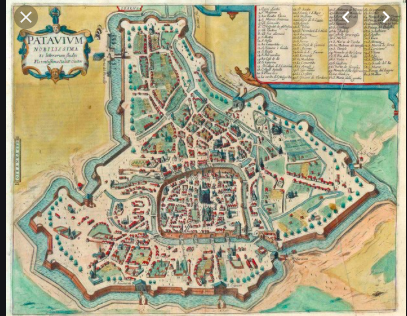
Screen Shot 2019-09-12 at 10.57.34

The history of Padua during Late Antiquity follows the course of events common to most cities of north-eastern Italy. Padua suffered from the invasion of the Huns and was savagely sacked by Attila in 450. A number of years afterward, it fell under the control of the Gothic kings Odoacer and Theodoric the Great.

It was reconquered for a short time by the Byzantine Empire in 540 during the Gothic War. However, depopulation from plague and war ensued.

The city was again seized by the Goths under Totila, but was restored to the Eastern Empire by Narses only to fall under the control of the Lombards in 568. During these years, many of Paduans sought safety in the countryside and especially in the nearby lagoons of what would become Venice.

In 601, the city rose in revolt against Agilulf, the Lombard king who put the city under siege. After enduring a 12-year-long bloody siege, the Lombards stormed and burned the city. Many ancient artifacts and buildings were seriously damaged.

The remains of an amphitheater (the Arena) and some bridge foundations are all that remain of Roman Padua today. The townspeople fled to the hills and later returned to eke out a living among the ruins; the ruling class abandoned the city for the Venetian Lagoon, according to a chronicle. The city did not easily recover from this blow, and Padua was still weak when the Franks succeeded the Lombards as masters of northern Italy.
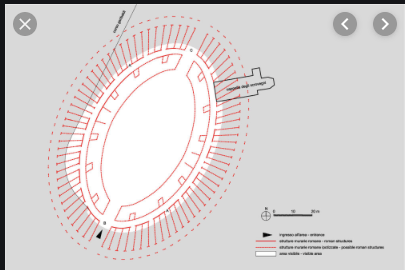
Screen Shot 2019-09-12 at 10.59.45


At the Diet of Aix-la-Chapelle (828), the duchy and march of Friuli, in which Padova lay, was divided into four counties, one of which took its title from the city of Padova.

The end of the early Middle Ages at Padova was marked by the sack of the city by the Magyars in 899. It was many years before Padua recovered from this ravage.

During the period of episcopal supremacy over the cities of northern Italy, Padova does not appear to have been either very important or very active. The general tendency of its policy throughout the war of investitures was Imperial (Ghibelline) and not Roman (Guelph); and its bishops were, for the most part, of German extraction.

However, under the surface, several important movements were taking place that were to prove formative for the later development of Padova.

At the beginning of the 11th century, the citizens established a constitution, composed of a general council or legislative assembly and a credenza or executive body.
Screen Shot 2019-09-12 at 10.58.24

During the next century they were engaged in wars with Venice and Vicenza for the right of water-way on the Bacchiglione and the Brenta. The city grew in power and self-confidence and in 1138, government was entrusted to two consuls.

The great families of Camposampiero, Este and Da Romano began to emerge and to divide the Paduan district among themselves. The citizens, in order to protect their liberties, were obliged to elect a podestà in 1178. Their choice first fell on one of the Este family.

Screen Shot 2019-09-12 at 11.01.43

A fire devastated Padua in 1174. This required the virtual rebuilding of the city.

The temporary success of the Lombard League helped to strengthen the towns. However, their civic jealousy soon reduced them to weakness again. As a result, in 1236 Frederick II found little difficulty in establishing his vicar Ezzelino III da Romano in Padua and the neighboring cities, where he practised frightful cruelties on the inhabitants. Ezzelino was unseated in June 1256 without civilian bloodshed, thanks to Pope Alexander IV.

Padova then enjoyed a period of calm and prosperity: the basilica of the saint was begun; and the Paduans became masters of Vicenza. The University of Padua (the second university in Italy, after Bologna) was founded in 1222, and as it flourished in the 13th century, Padua outpaced Bologna, where no effort had been made to expand the revival of classical precedents beyond the field of jurisprudence, to become a center of early humanist researches, with a first-hand knowledge of Roman poets that was unrivaled in Italy or beyond the Alps.
Screen Shot 2019-09-12 at 11.02.49

There is so much more to the story of Padova.  I’ll be posting about it soon.


Celebrating women art patrons: Theodora, Empress of Byzantium

Theodora (497–548)
Empress of Byzantium

Screen Shot 2019-09-08 at 12.15.05

In a classic rags-to-riches story, Theodora rose from working as an actress—a low-class profession associated with prostitution—to shaping the nascent Byzantine empire, which spanned present-day Turkey, North Africa, and the Middle East. Theodora met Justinian, the emperor’s nephew, in Constantinople when she was 21.

Despite her social status, the emperor was so enamored with her that he changed a law that would have prohibited their marriage. After ascending to the throne, Theodora used her authority to support sex workers’ rights and established anti-rape legislation. During her tenure, the empress also supported significant building projects that projected the couple and the empire’s dominance. One was the original Hagia Sophia, consecrated in 537.

The mosaic portraits of Justinian and Theodora that face opposite one another in the apse of the Basilica di San Vitale (ca. 547) in Ravenna, Italy, however, have cemented the couple’s image in history. The empress, flanked by attendants, wears dangling gems and a long, royal purple gown. In her hand, she holds a chalice that indicates her as the building’s patron. The portrait confirms Theodora’s influence, glamour, and patronage, and flies in the face of her detractors.

Writing not long after her death in 548, the historian Procopius described her as “Theodora-from-the-brothel,” a wanton temptress who once said she regretted only having three orifices for pleasure. More recently, scholar Nadine Elizabeth Korte has suggested that Procopius probably disapproved of the substantive power Theodora wielded over Justinian and the empire.

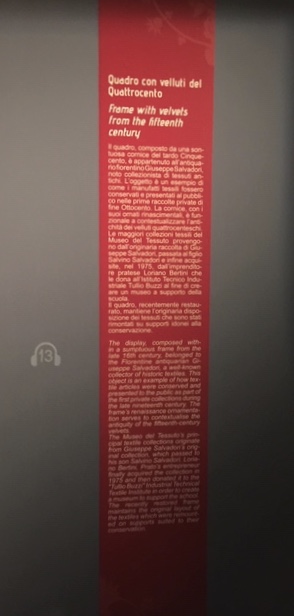
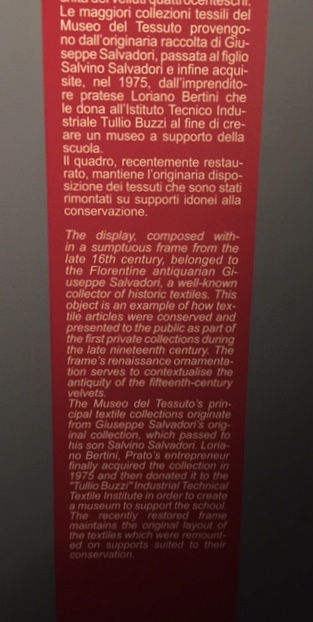
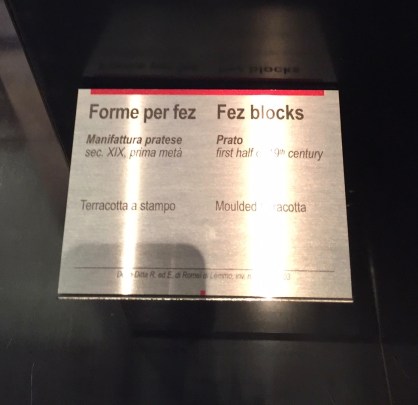
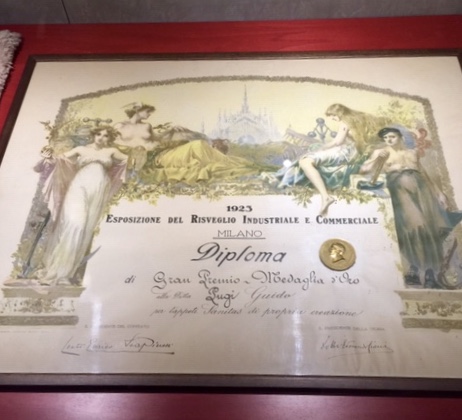
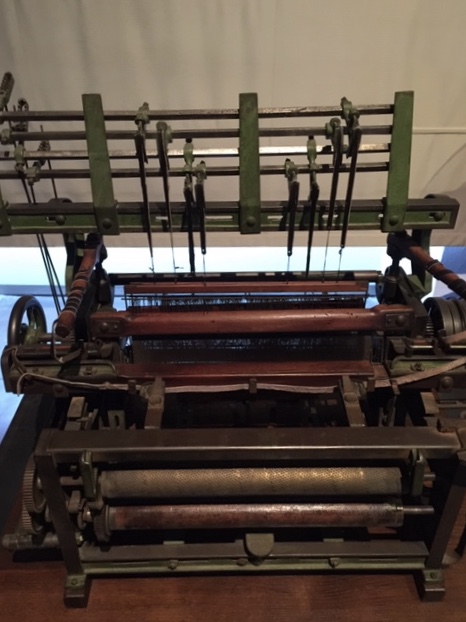
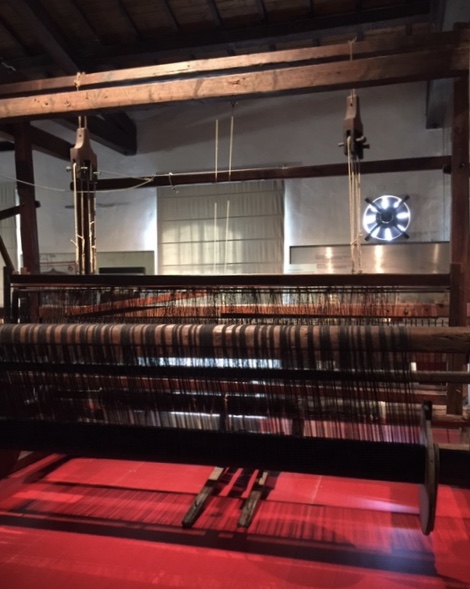
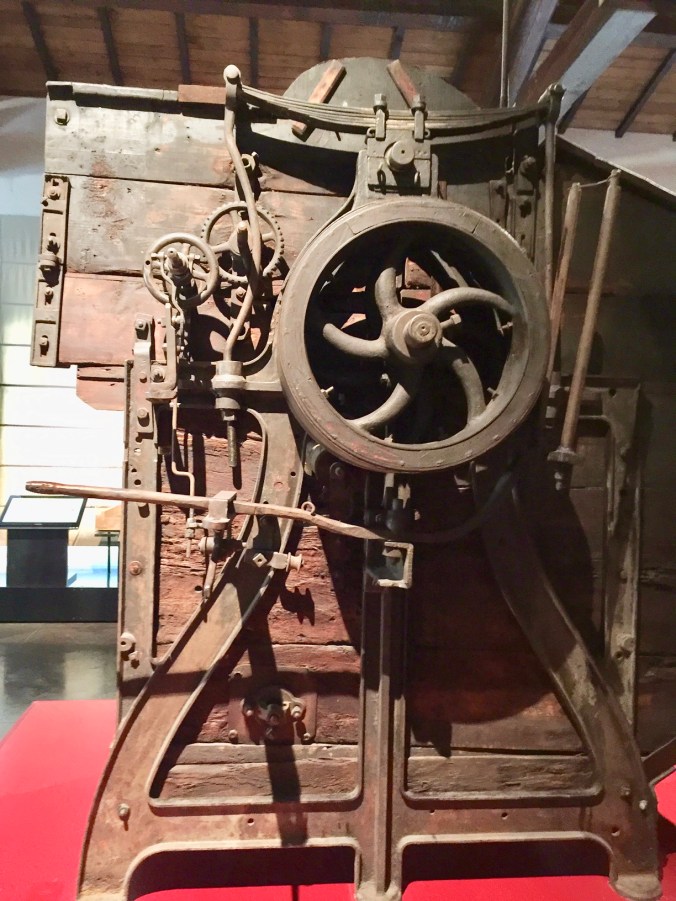
The Textile Museum, Prato

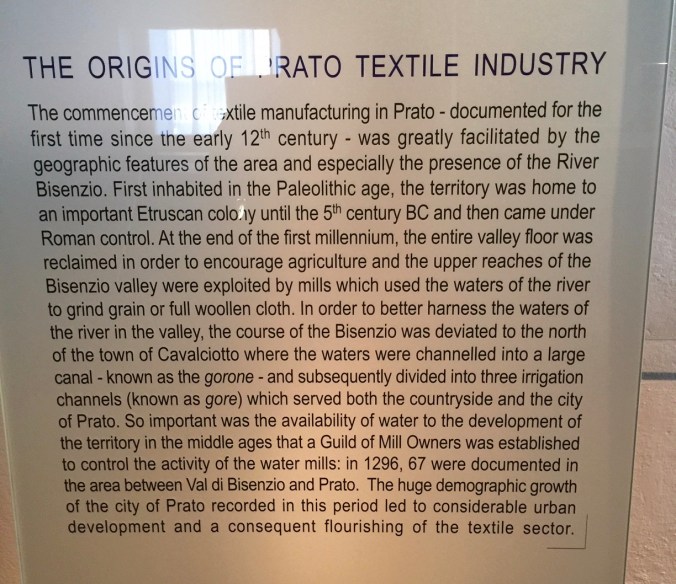
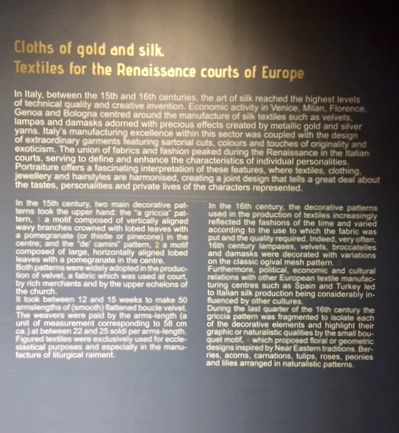
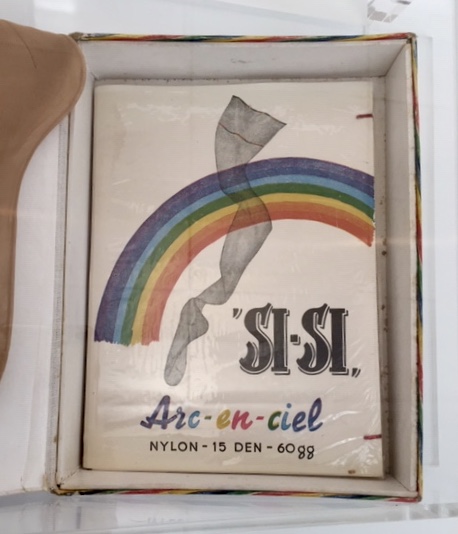
Prato, just a short distance from Florence, has a long and celebrated history of textile manufacture.

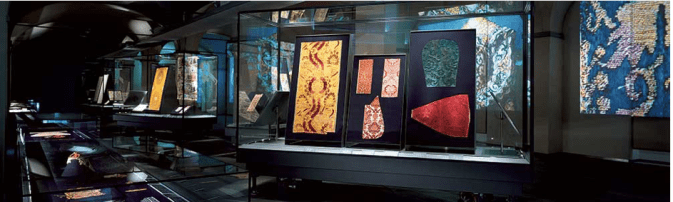
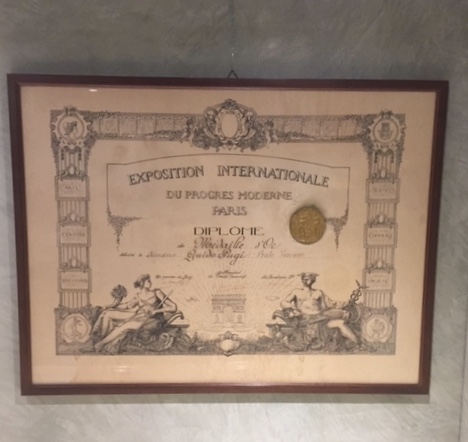
In honor of this long local tradition, Prato is also home to a fine textile museum, the Museo del Tessuto, dedicated to the city’s historical and contemporary textile production and art.

77-museo-del-tessuto

fullsizeoutput_17e9

Even today, Prato is one of the largest industrial districts in Italy, the largest textile center in Europe and one of the most important centers in the world for the production of woolen yarns and fabrics.

Screen Shot 2019-09-05 at 10.05.24

The Museo is the largest cultural center of its kind in Italy. It celebrates the Prato district, which has been identified with textile production since the Middle Ages. Today the district boasts over 7,000 companies operating in this sector.

The Museum was founded in 1975 within the “Tullio Buzzi” Industrial Technical Textile Institute, as the result of an initial donation of approximately 600 historical textile fragments.

Screen Shot 2019-09-05 at 10.06.43

These were added to examples which had been gathered over the years by the Institute’s professors for students to consult and study. Since then, the collection has  grown thanks to the contribution of the Buzzi Institute Alumni Association and other important civic institutions, such as the Municipality of Prato, Cariprato and the Pratese Industrial Union.
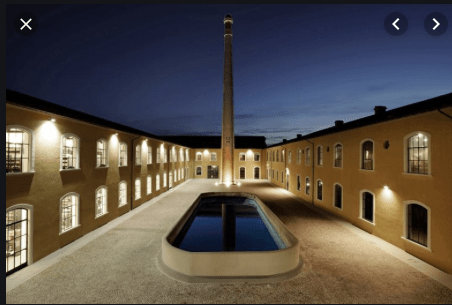
In 2003, the new, permanent home of the museum was inaugurated in the restored spaces of the former Campolmi factory, a precious jewel of industrial archaeology situated within Prato’s old city walls.

Screen Shot 2019-09-05 at 10.07.38

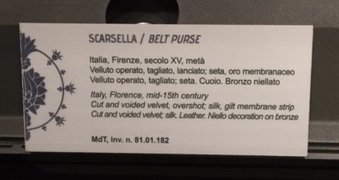
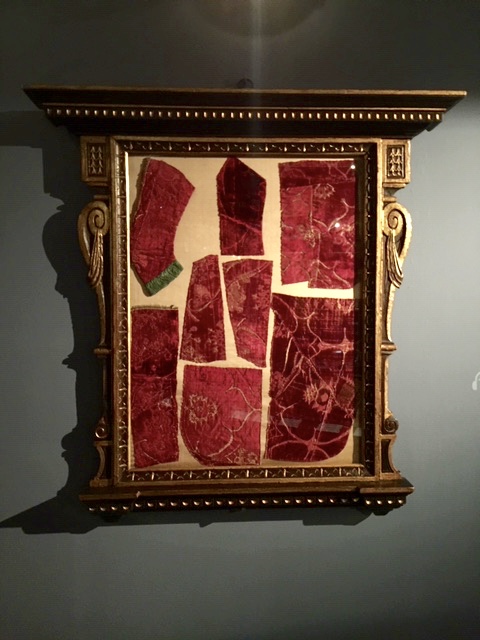
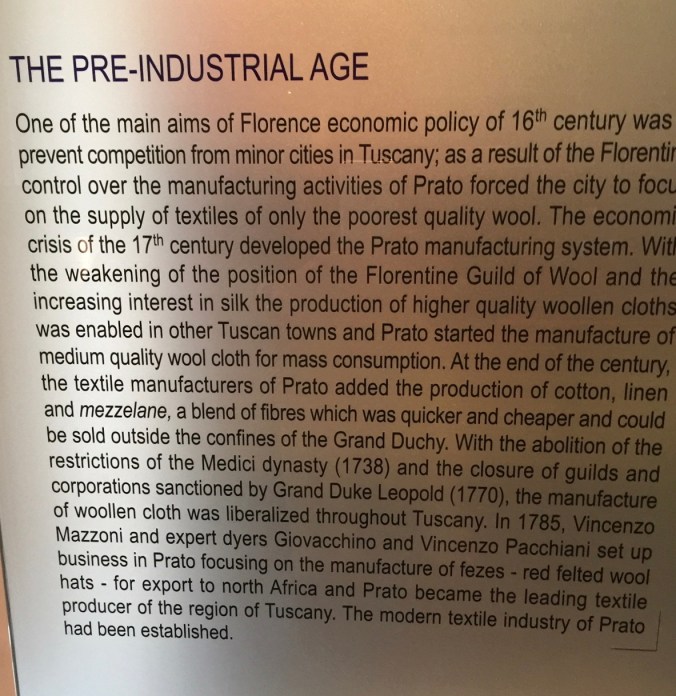
Prato began to specialize in textiles in the 12th century, when garment manufacturing was regulated by the Wool Merchants’ Guild.

fullsizeoutput_17ce


fullsizeoutput_17d0

fullsizeoutput_17d1

fullsizeoutput_17d2

fullsizeoutput_17d3fullsizeoutput_17d4

fullsizeoutput_17ca


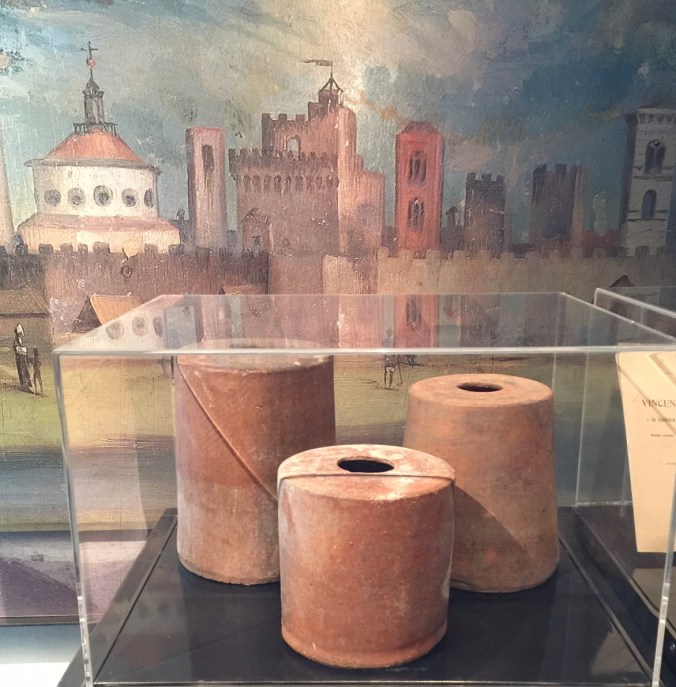
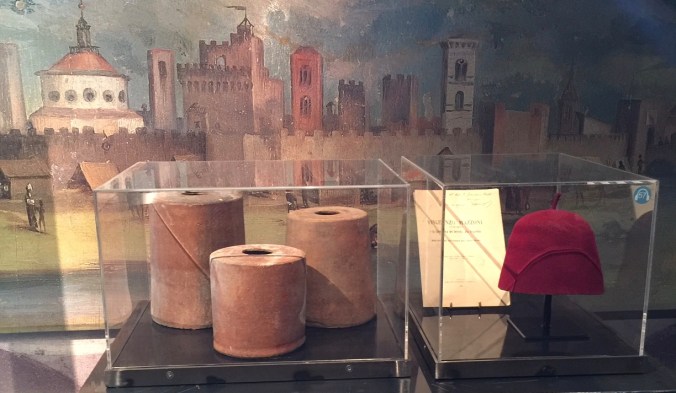
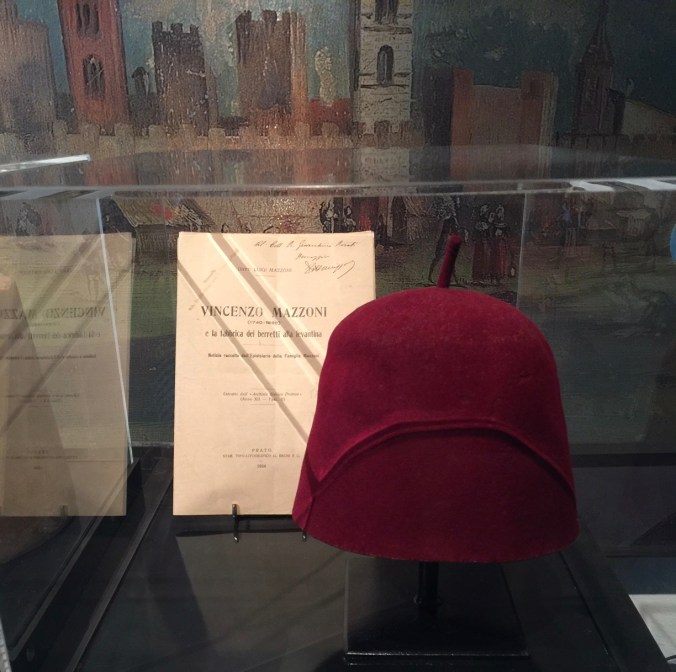
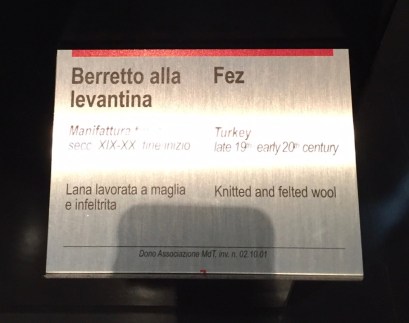
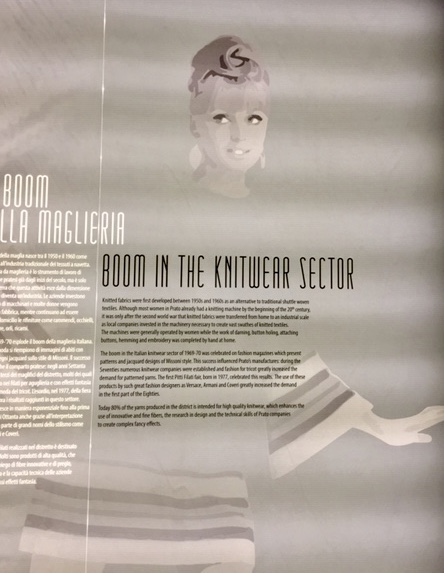
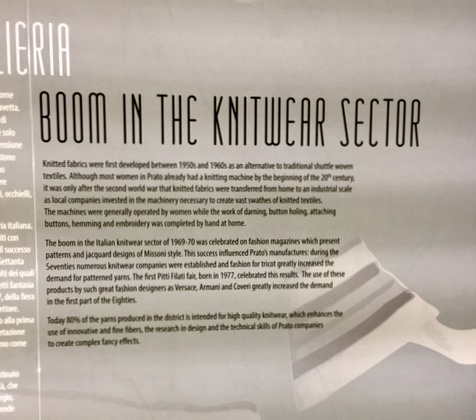
The political and economic decline experienced in Italy during the 16th and 17th centuries caused a drop in textile activities, but it resumed in the late 18th century with the production of knitted caps made for Arabian markets.

fullsizeoutput_17ee


fullsizeoutput_17ef


fullsizeoutput_17f1


fullsizeoutput_17ed


fullsizeoutput_17ec

In the Prato area, industrial activities got under way at the end of the 19th century, with the introduction of mechanization (to which the brilliant local inventor Giovan Battista Mazzoni made important contributions) and with the intensification of textile working processes. The industrial take-off was also supported by foreign investors such as the Koessler and Mayer families of Austria, who created a company that lasted for decades and became locally known as the fabbricone, the big factory.

The lower costs of carded wool processing, caused by the gradually increasing production of recovered wool obtained from shredding old clothes and industrial scraps (“combings”).

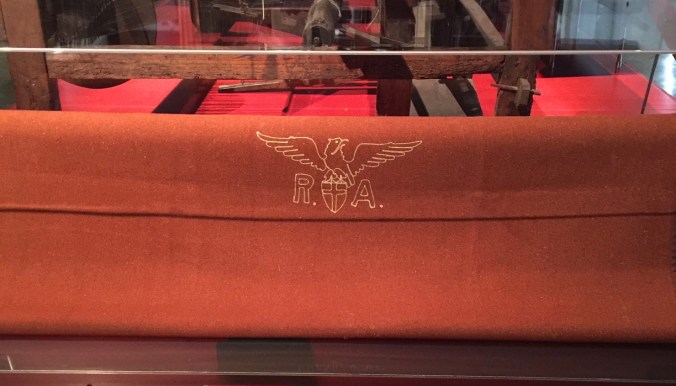
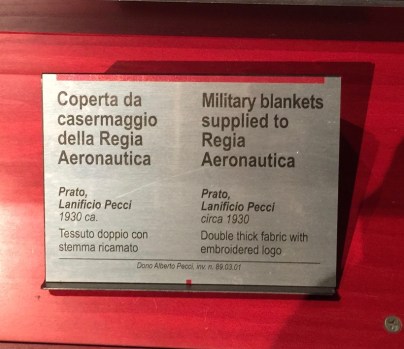
Basically, up to World War II the Prato textile industry was divided in two production circuits: one based on large vertically integrated companies with generally low-level standard productions (rugs, military blankets, etc.) made for export to the poorer markets (Africa, India, etc.); the other based on groups of firms carrying out subcontract work for the production of articles designed for the clothing markets.

fullsizeoutput_17f6


fullsizeoutput_17f5


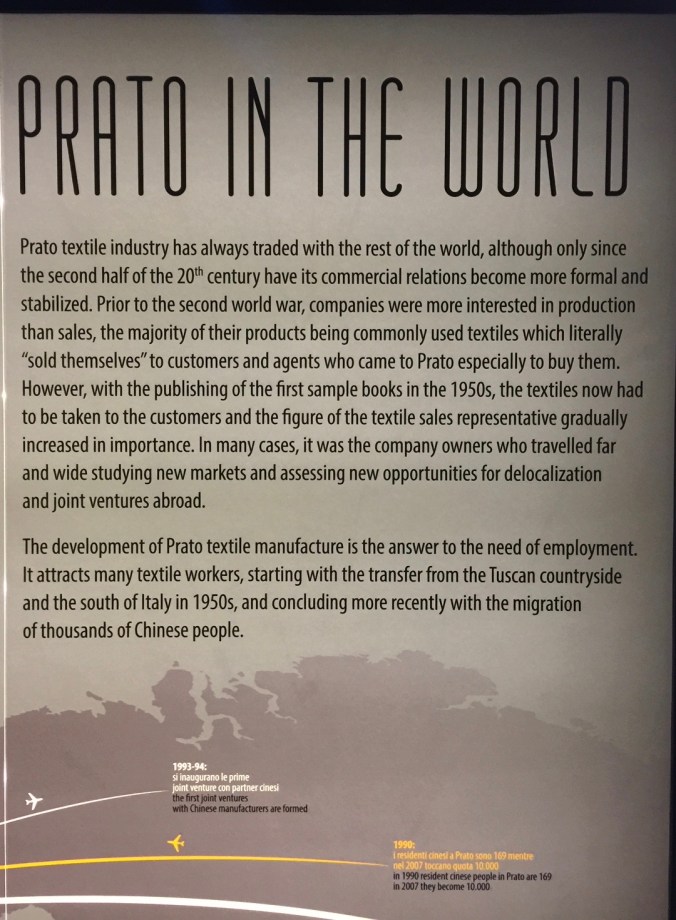
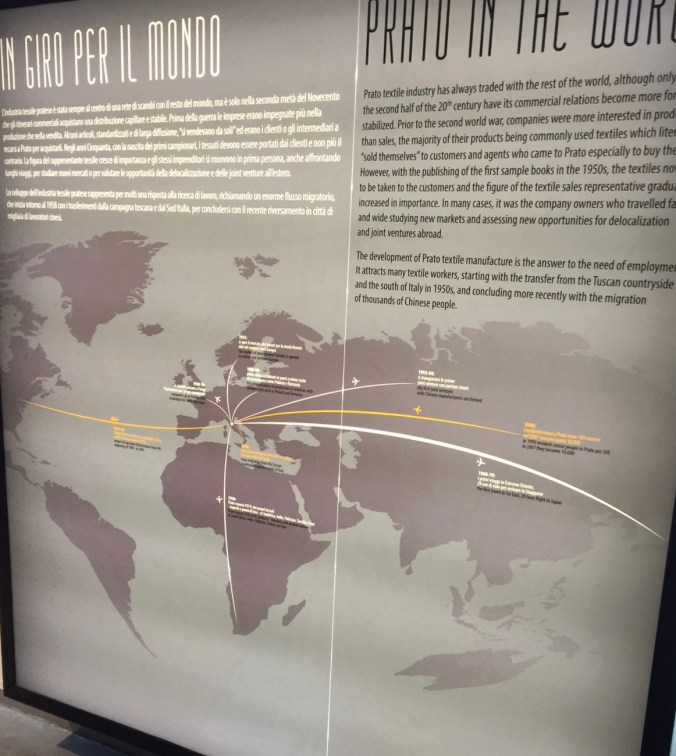
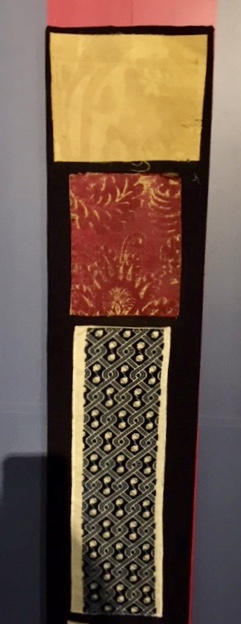
Between the postwar period and the early 1950s, the outlets towards low-level standard production markets rapidly disappeared. The production system underwent a rapid evolution, and the result was not so much the decentralization of subcontract work but an original form of reorganization largely based on the widespread distribution of work among small-scale enterprises (the so-called “industrial district”). The two dynamic factors of the new system were: (a) the subcontracting firms, which carried out the actual production and (b) the front-end firms, which were involved in product design.
fullsizeoutput_17f4

fullsizeoutput_17f3

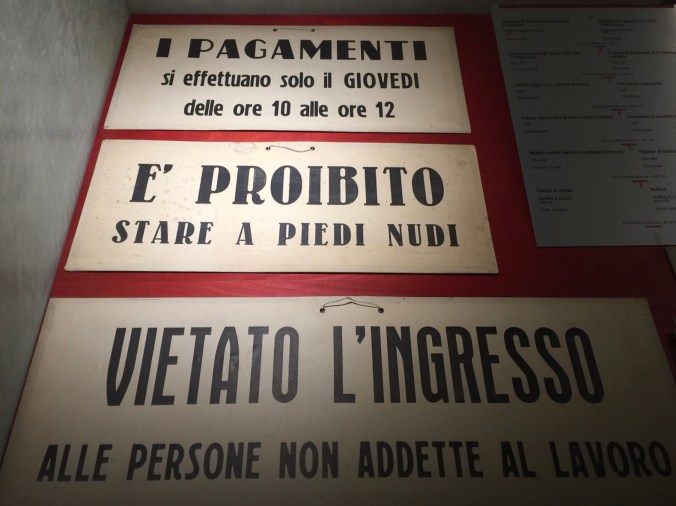
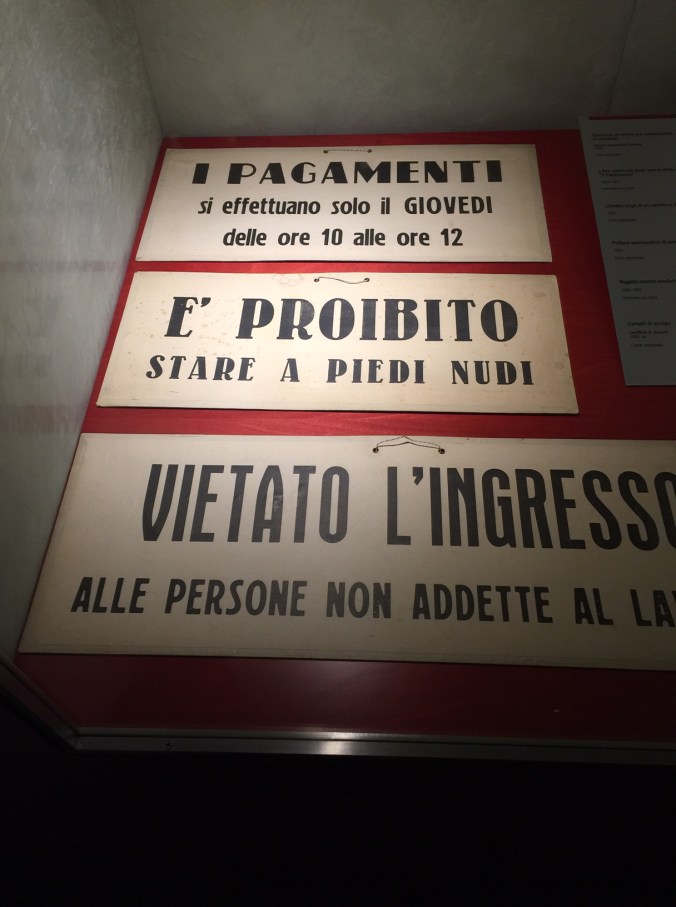
Below, some miscellaneous shots of the museum.

fullsizeoutput_17f2IMG_5441fullsizeoutput_17ebfullsizeoutput_17cc

fullsizeoutput_17d6fullsizeoutput_17d8fullsizeoutput_17dbfullsizeoutput_17dd

fullsizeoutput_17dffullsizeoutput_17e2fullsizeoutput_17e4fullsizeoutput_17e5fullsizeoutput_17e6fullsizeoutput_17e7

fullsizeoutput_17e8fullsizeoutput_17ea


Celebrating women art patrons: the Roman Empire’s Livia Drusilla

Livia Drusilla (ca. 58 B.C.E.–C.E. 29)
Empress of Rome

Screen Shot 2019-09-05 at 08.29.37

In the long-running Roman Empire, statues, portraits, and coins were the best indications of a ruler’s identity. Livia, the wife of the republic’s first emperor, Augustus, used these media to her advantage. “She looked to statuary to present her persona in Rome and the empire, relief sculpture to describe her relationship to other members of the imperial family, coins to advertise the emperor’s policies, and gems to articulate that same vision for a more selective audience,” writes art historian Diana E. E. Kleiner in Cleopatra and Rome (2005).

Screen Shot 2019-09-05 at 08.30.14

Livia was less interested in creating a uniquely individual presentation than in codifying a traditionally feminine ideal for Roman empresses and nobility in general. She took inspiration from statues depicting classical Greek goddesses and Hellenistic queens to align herself with the values of the previous Republican “golden age” that Augustus hoped to restore in his new empire. Unlike Cleopatra, her opulent predecessor in Egypt, Livia communicated virtuousness through an austere image that favored modesty and simplicity. Still, Rome’s first empress took measures to stand out among other elite women. Kleiner has suggested that the empress had artists depict her with hairdos that only a stylist could have arranged, indicating her superior taste and wealth.

Celebrating women art patrons: Gertrude Stein

Gertrude Stein (1874–1946)

Expat American writer who hosted the avant-garde art world at her Paris salons

Screen Shot 2019-09-05 at 08.18.50Through collecting art, American writer Gertrude Stein solidified her position among avant-garde artists in Paris, and found a community that was supportive of both her experimental work and her lesbian lifestyle. In 1901, Stein dropped out of Johns Hopkins Medical School and followed her aspiring-artist brother, Leo, to London and then Paris.

Through Leo, Stein began to acquaint herself with the bohemian artists living around the Montmartre neighborhood. In 1905, Stein met Pablo Picasso. He began to paint her portrait, which he finished the next year. It was a crucial step in the development of modernism: In the picture, Stein’s face adopts a flatness and mask-like quality that Picasso would soon push to the extreme in Les Demoiselles d’Avignon (1907), the firstCubist painting.

Screen Shot 2019-09-05 at 08.19.46
Stein’s patronage helped Picasso to continue painting throughout the early 1900s before he received international acclaim. His portrait of Stein is seen above her left shoulder in the photograph below.

Screen Shot 2019-09-05 at 08.20.44


Stein also collected work by Paul Cézanne, one of the great Post-Impressionist painters, renowned for his radiant landscapes, intense portraits, and complex still lifes.
,Juan Gris and Henri Matisse also benefited from her patronage. Meanwhile, Stein produced her own groundbreaking body of literature, which grew to include Three Lives (1909), Tender Buttons (1914), and The Autobiography of Alice B. Toklas (1933).

The American Memorial Chapel at London’s St. Paul’s Cathedral

Screen Shot 2019-08-29 at 20.03.41

The website of  St Paul’s proudly states that “the UK has had a long relationship with the American people, formed largely after the Second World War, a conflict in which thousands of Americans based within the UK were to give their lives.”
The most visible striking reminder of this sacrifice and subsequent deep friendship can be found beyond the High Altar at the very east end of the Cathedral, in the American Memorial Chapel, a space rebuilt after being destroyed in the Blitz and dedicated in its entirety to the American dead of WWII.


At the heart of the chapel sits a huge, 500-page, leather-bound book; a roll of honor to the 28,000 Americans – from Aaberg to Zingale – stationed in the UK who gave their lives throughout the War. The book opens:

Defending freedom from the fierce assault of tyranny

they shared the honor and the sacrifice.

Though they died before the dawn of victory their names and deed

will long be remembered where ever free men live.

Thousands of the men named in the roll of honor died on the Normandy beaches on D-Day, as well as in training operations in the lead up to the campaign and in the subsequent battles on the European mainland, right up until the day on which the Allies celebrated Victory in Europe.

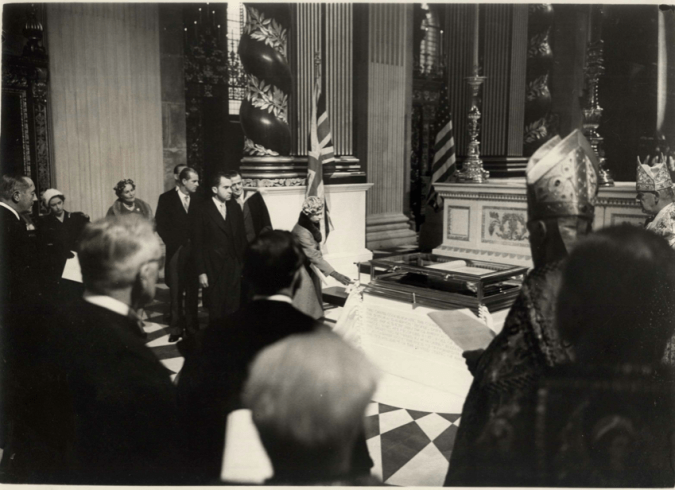
The book was unveiled in 1958 at a service to dedicate the Chapel, attended by The Queen and American Vice President, Richard M Nixon.

Screen Shot 2019-08-29 at 20.05.09


A year later, President Dwight D Eisenhower visited the Chapel and the roll of honor. Words in the book written by the President, who as a soldier commanded the Allied troops on D-Day, read:

Each name inscribed in this book is a story of personal tragedy and a grieving family; a story repeated endlessly in white crosses girdling the globe. The Americans, whose names here appear, were part of the price that free men have been forced a second time to pay in this century to defend human liberty and rights.

Fittingly, this roll of honor has been enshrined by the Mother Country of all English-speaking democracies in this special chapel of St Paul’s, once a target of barbaric attack. Here, we and all who shall hereafter live in freedom will be reminded that to these men and their comrades of all the Allies we owe a debt to be paid with grateful remembrance of their sacrifice and with the high resolve that the cause for which they died shall live eternally.

St Paul’s proudly states that the chapel itself is truly a place for all Americans. The three stained-glass windows contain the state symbols of every American state. The wood carvings contain the birds, plants and flowers of America and hidden away in one panel are a space rocket and stars – a nod to the space program that was being developed at the time the Chapel was completed.

Screen Shot 2019-08-29 at 20.07.05

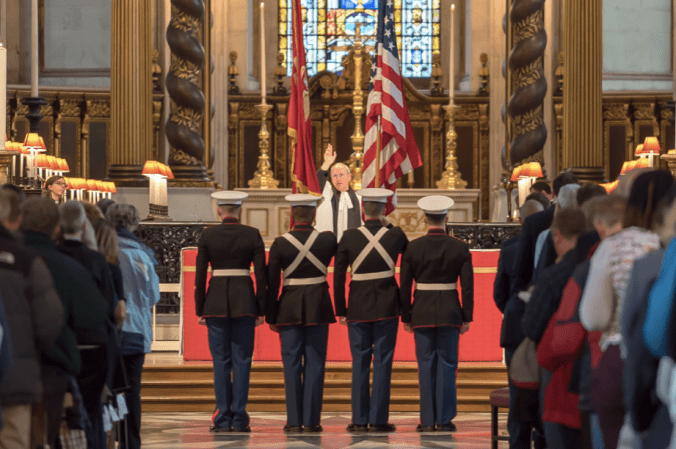
Each November, St Paul’s holds a US Thanksgiving service, to which all Americans in London are invited.

Screen Shot 2019-08-29 at 20.06.14


I visited this august memorial last month and was struck by its peaceful majesty.  In this calm, quiet space, the American war dead are remembered.  The inscription in the floor tells the story, simply and beautifully. It reads: “To the American dead of the Second World War from the People of Britain.”

Screen Shot 2019-08-29 at 20.20.26

IMG_0084


IMG_0085

img_0088